Israeli defense minister compares illegal Israeli outpost with native Palestinian villages
Ma’an – September 13, 2016
BETHLEHEM – Israeli Defense Minister Avigdor Lieberman compared the illegal Israeli Amona outpost to the indigenous Palestinian Bedouin village of Susiya and Palestinian land in Jerusalem on Monday in a speech at Ariel University in the occupied West Bank, according to Israeli media.
The Amona outpost was slated for demolition following a 2008 Israeli Supreme Court decision after eight Palestinians from neighboring villages — with the support of Israeli human rights organization Yesh Din — successfully petitioned the court to remove the outpost on grounds that the construction was carried out on privately-owned Palestinian land.
“There is no way that Amona can be left as it is built today, because most of the houses are built on private Palestinian land,” Lieberman reportedly said on Monday, referring to Amona, which was built in 1996.
After years of appeals from right-wing Israeli government officials, and attempts by Amona settlers to prove they had legally purchased the land, an Israeli police investigation in May 2014 found the entirety of the outpost to have been built on Private Palestinian lands, and that the documents used by Amona residents to try claim their “purchases” were in fact forged.
In December 2014, the Israeli Supreme Court ordered again that the outpost be demolished by December 2016.
According to Haaretz, Lieberman followed up on his comments about Amona on Monday with the stipulation that “all the rules that apply to Amona apply to every other place as well.”
Claiming that “there is only one law for both Israelis and Palestinians,” Lieberman reportedly told the audience that it was unacceptable that such rulings — as in the case of Amona, which along with every other settlement and outpost in the occupied West Bank is internationally recognized as being illegal — are unfairly enforced against Israelis but not against “other trespassers.”
The “trespassers” Lieberman was referring to were the Palestinian residents of Susiya in the southern West Bank, and the Palestinians of the area known as the “E1 corridor,” a contentious zone that the Israeli government has set up to link annexed East Jerusalem with the mega settlement of Maale Adumim, which would virtually cut the occupied West Bank in half, making the creation of a contiguous Palestinian State impossible.
“We are a nation based on law and we will honor court decisions in all circumstances,” Lieberman said, saying that “when it comes to enforcing rulings against other trespassers everyone stands up on their hind legs,” seemingly complaining about the international community’s harsh reactions to Israeli government attempts to demolish Susiya and replace it with an illegal Jewish settlement of the exact same name.
Susiya’s residents have been embroiled in a decades-long legal battle to legalize the village and have endured multiple demolitions enforced by Israeli authorities over the years, who say Palestinians lack the proper building permits to live on the land that lies between an Israeli settlement and Israel-controlled archaeological site.
The privately owned Palestinian land is located in Area C — the more than 60 percent of the occupied West Bank under full Israeli control — where building permits for Palestinians are nearly impossible to obtain.
Many of the villagers have ties to the land that predate the creation of the state of Israel, and Ottoman-era land documents to prove it.
Most recently, in mid-July, authorities from Israel’s Civil Administration abruptly halted months of dialog with Susiya’s residents over the possibility of legalizing the village, telling them that a future agreement on the village would now be the responsibility of Lieberman.
Lieberman postponed the announcement of his decision twice, first until November 2016, and then until December.
According to spokesperson for Rabbis for Human Rights (RHR) Yariv Mohar, who is assisting in Susiya’s legal battle, Lieberman’s decision on whether or not to continue the dialogue between the residents of Susiya and the Civil Administration is set to be announced on December 15, 2016.
Lieberman will be responsible for deciding whether to accept the state of Israel’s request to immediately and without prior notice demolish some 40 percent of the southern occupied West Bank village, where half of the some 200 village residents live according to RHR.
The lawyers of RHR have affirmed that there is no question as to whether the residents own the land they are on, also noting that “basic (Jewish) morality dictates it is wrong to demolish part of a village which has previously demolished without any plan or solution for the residents, while international law prohibits the forcible transfer of populations,” Mohar told Ma’an in August.
Though Lieberman has yet to formally announce a decision, his comments on Monday indicate that in his opinion, the residents of Susiya should be subject to the same treatment as the illegal settlers occupying privately owned Palestinian land in Amona.
Lieberman has previously advocated policies ranging from the overthrow of the Palestinian Authority to the deportation of Palestinian citizens of Israel into the occupied Palestinian territory, while promoting the transfer of towns in Israel that are heavily populated by Palestinians to a future Palestinian state in exchange for illegal Israeli settlements in the occupied West Bank.
Lieberman himself lives in the southern occupied West Bank Israeli settlement of Nokdim, in contravention of international law.
Since appointed as defense minister by Israeli Prime Minister Benjamin Netanyahu in May, the two have teamed up to approve hundreds of new housing units in illegal settlements in the West Bank and East Jerusalem.
Israel demolishes home in occupied Syrian Golan Heights
WAFA | September 8, 2016
MAJDAL SHAMS, GOLAN HEIGHTS – Israel, for the first time, demolished on Wednesday a home in the Israeli-occupied Syrian Golan Heights claiming it was built without a permit, a Golan-based human rights group said on Thursday.
Al Marsad, the only human rights group operating in the Golan Heights, said in a statement that hundreds of Israeli police accompanied bulldozers as they proceeded to demolish the home of Bassam Ibrahim in Majdal Shams, the largest town in the occupied Syrian Golan, under the pretext it was built without a permit.
“This is the first time that the Israeli authorities have demolished a home in Majdal Shams,” said Al Marsad. “The destruction of this home marks the adoption of a new systematic policy of home demolitions by the Israeli authorities in the remaining Syrian villages in the Occupied Syrian Golan. The Syrian owners of dozens of other homes have been threatened with similar action,” it said.
Al Marsad accused Israel of preventing the Syrian population from building in their cities while encouraging and facilitating the construction and expansion of illegal Israeli settlements in the Golan Heights.
“As a result of the severe restrictions imposed by Israeli planning and construction committees, it is close to impossible for the Syrian population to obtain the necessary building permits. Therefore, the Syrian population is forced to build homes without building permits, as this is the only way to meet their housing needs given unprecedented levels of overcrowding,’ said Al Marsad.
Israel occupied the Golan Heights in the June 1967 war.
Starbucks CEO declares support for Hillary Clinton

Starbucks “proudly serving” the occupation of Afghanistan
Press TV – September 8, 2016
Howard Schultz, the founder and CEO of Starbucks, announces support for US Democratic presidential nominee Hillary Clinton.
In an interview with CNN, Schultz let slip which way he was voting, saying, “I’m hopeful that after the election – and hopefully Hillary Clinton will be elected president – that we will begin to see a level of unity and people coming together.”
When asked if he had officially backed Clinton with that statement, the CEO responded “I guess I just did. I think it’s obvious Hillary Clinton needs to be the next president.”
Starbucks, which has over 22,500 coffee stores, is one of the companies anti-Israel activists boycott.
Throughout her campaign for the 2016 US presidential race, Clinton has advocated herself as a champion for Israel. Zionist voters have in turn showed their support to her.
According to inminds.co.uk research:
Howard Shultz, the chairman of Starbucks is an active Zionist.
In 1998 he was honoured by the Jerusalem Fund of Aish HaTorah with “The Israel 50th Anniversary Friend of Zion Tribute Award” for his services to the zionist state in “playing a key role in promoting close alliance between the United States and Israel”. The Jerusalem Fund of Aish HaTorah funds Israeli arms fairs chaired by the butcher of Jenin – General Shaul Mofaz, and the Zionist propaganda website honestreporting.com.[1]
His work as a propagandist for Israel has been praised by the Israeli Foreign Ministry as being key to Israel’s long-term PR success [2].
Recently whilst the Israeli army was slaughtering Palestinians in Jenin, Nabulus and Bethlehem he made a provocative speech blaming the Palestinians of terrorism, suggesting the intifada was a manifestation of anti- Semitism, and asked people to unite behind Israel [3].
At a time when other businesses were desperately pulling out of Israel, Starbucks decided to help Israel’s floundering economy and invest in Israel – a joint venture with Israeli conglomerate Delek Group for Starbucks outlets in Israel (Shalom Coffee Co).[4][5][6]. A bad business decision – Starbucks had heavy losses and in April 2003 Starbucks were forced to announced that all 6 Starbucks cafes in Israel will be shut down and its partnership with Delek end.[14]
It has been revealed that Starbucks still continues to support Israel by sponsoring fundraisers for Israel.[15]
See [11] for suggested action against Starbucks.
Oxfam has misguidedly partnered with Starbucks in return for £100,000 – please support our “Campaign Against Oxfam Agreement with Starbucks“.
Starbucks fully supports Bush’s war of terror and has opened a Starbucks in Afghanistan for the US invaders – they like to do their bit to help the occupation.[17]
ADDITIONAL INFO & REFs :
| [1] | Israel 50th Anniversary Friend of Zion Tribute Award
Howard Schultz was presented with “The Israel 50th Anniversary Friend of Zion Tribute Award” by the The Jerusalem Fund of Aish HaTorah in August 27, 1998. [a][e] According to the Jerusalem Fund of Aish HaTorah “The Friends of Zion award salutes leaders who have played key roles in promoting close alliance between the United States and Israel”[e] Awards Page Mystery
Its interesting that the Israel 50th Anniversary Award given to Howard Schultz was once displayed with pride on the Starbucks website on the company’s “Awards and Accolades” page but since the boycott started biting it has mysteriously disappeared from the page![a]
The Jerusalem Fund of Aish HaTorah 1. The Jerusalem Fund of Aish HaTorah sponsors Israeli military arms fairs chaired by the butcher of Jenin – General Shaul Mofaz, Israel’s Minister of Defense. It aims to “strengthen the special connection between the American, European and Israeli defense industries” and “to showcase the newest Israeli innovations in defense”.[f] 2. The Jerusalem Fund of Aish HaTorah also sponsors the Zionist propaganda website “honestreporting.com“.[g] 3. The Aish HaTorah, the main beneficiary of The Jerusalem Fund of Aish HaTorah, whilst described as an apolitical international network of Jewish education centres, produces propaganda material for Israel. One video they produce by Rabbi Ken Spiro titled “The Islamic Connection to Jerusalem” starts “The Islamic connection begins in the 7th century, thousands of years after the original Jewish connection.” and continues to belittle Jerusalem’s Islamic heritage – propaganda to justify Israeli occupation of Jerusalem.[b] Also featured on their site is “The Occupied Territories – A Primer” which denies the status of the West Bank and Gaza as “occupied” and argues that they be called “disputed territories”.[c] No wonder they were praised by Israeli Prime Minister Binyamin Netanyahu: “I congratulate Aish HaTorah for what they’re doing, where they’re doing it, and for whom they’re doing it.”[d] [a] http://www.starbucks.com/aboutus/recognition.asp |
||
| [2] | Jerusalem Report
Losing the Media Battle (April 22, 2002) “… The key to Israel’s long-term PR success, Meir(*) believes, is on the campuses of North America and Europe. Wealthy Jews like Howard Schultz, the owner of the Starbucks chain, are helping with student projects, including seminars held in both Israel and North America, in which students hear Israeli presentations on the crisis…” (*) Gideon Meir, the official in charge of the Israeli Foreign Ministry’s PR effort. |
||
| [3] | Starbucks CEO says anti-Semitism on the rise
Howard Shultz warns American Jews against complacency 04/04/2002 Reported by Elisa Hahn, KING 5 SEATTLE – Divisions within the Jewish community were on display Thursday in Seattle as Starbucks CEO Howard Schultz criticized Palestinian inaction in the Middle East while others protested the Israeli occupation of Palestinian lands. “If you leave this synagogue tonight and go back to your home and ignore this, then shame on us,” Howard Schultz told a crowded temple of Jewish Americans on Seattle’s Capitol Hill. Schultz warned other Jews against sitting back and doing nothing. “What is going on in the Middle East is not an isolated part of the world. The rise of anti-Semitism is at an all time high since the 1930’s,” he said. “The Palestinians aren’t doing their job they’re not stopping terrorism.” While reaction inside the temple to Schultz’s remarks grew from a warm reception to a standing ovation, the mood outside the temple was different. A handful of Jews gathered there to protest the Israeli government’s actions of late and their occupation of Palestinian lands. There were similar sentiments Thursday at Seattle’s Westlake center. “We only get the side that talks about Palestinians as terrorists. As if all the civilians right now living in a state of siege and terror are terrorists and they’re not,” said protestor Alethea Mundy, whose younger brother is in Bethlehem doing relief work for Palestinian refugees. She’s worried about her brother, but realizes that everything is relative. “This is what the Palestinians live with every day, two weeks is nothing for my brother,” |
||
| [4] | American-Israel Chamber of Commerce, Southeast Region e-Newsletter
JULY-AUGUST-SEPTEMBER 2001 Starbucks will open its first two cafes in Tel Aviv during the first week of September and plans to open another three branches in the area by the end of the year with 15 more throughout Israel by the end of 2002. Israel-based Delek, which recently purchased a chain of US convenience stores and established its US headquarters in Nashville, Tennessee, will be the majority shareholder in Starbucks Israel. see [13] for more on Delek’s US connection. |
||
| [5] | Starbucks next market: Israel
Starbucks Coffee Co. chairman Howard Schultz loves a challenge. He opened the Japanese market during the depths of that country’s spectacular recession, and now he’s set his sights on conflict-ridden Israel. The stores will be built through a joint venture company, Shalom Coffee Co., which will be owned by publicly traded Israeli conglomerate Delek Group and Starbucks Coffee International, Starbucks’ internationally focused wholly-owned subsidiary. No word yet on how many Starbucks stores are planned for the tiny Middle Eastern nation, which has been plagued by escalating violence between Palestinians and the Israeli military since last fall. … http://seattle.bizjournals.com/seattle/stories/2001/04/16/daily31.html |
||
| [6] | Jerusalem Post, Sunday, April 22 2001
Starbucks to open here later in year According to the agreement, which is expected to be signed in the next few weeks, Delek will hold 80.5 percent of the coffee chain, while Starbucks Coffee International will hold the remaining 19.5%. Starbucks will have the option to increase its share to 50% at a later date. Originally Delek and Burger King co-owner Yair Hason were negotiating for a 40% share each in a venture with Starbucks, but a few months ago the deal was cancelled. The announcement that Starbucks will be coming is expected to be welcomed by local coffee lovers who have long been awaiting the rumored arrival of the chain which has with 3,600 stores in the US. According to the Delek Group the plan is “to open dozens of stores.” The first stores are expected to open late this year. “We expect Israel to be an excellent market for Starbucks, with great growth opportunities,” said Peter Masien, president of Starbucks Coffee International. Delek’s investment in the coffee chain is part of its strategy to expand into new areas, said Giora Sarig, president of Delek’s Israel Fuel Corporation, one of the three subsidiaries of the Delek Group. “We are delighted to become partners with such a world-class brand as Starbucks,” he said. The coffee shops will not be connected to the Delek gas stations. The local competition is not overly concerned about the entrance of the well known chain. Aroma’s operating manager Ben Balbinder told The Jerusalem Post that “more coffee stores will raise the awareness of coffee drinking.” He added that according to his personal experience in the US, Starbucks coffee is not on the same level as that of Aroma. Aroma, which sells one and half tonnes of coffee a month, currently has eight cafes with another three are to be opened in the next two months. Balbinder said that the local coffee market is continuing to grow and has contributed to a decision to expand aggressively in the next year and a half. Starbucks , which has been traded on Nasdaq since 1992, has a current market capitalization of $7.8 billion, with more than 4,500 retail locations in the US, Europe, the Middle East, and the Pacific Rim. It is well represented in the Middle East with stores in Bahrain, Saudi Arabia, Kuwait, Lebanon, Qatar, and the United Arab Emirates. The company was founded in 1971 and also sells tea, pastries, ice creams, other food and beverages, and coffee accessories. The company also has an on-line store as well as selling directly to restaurants, businesses, airlines, and hotels. The Delek Group, which was founded in 1951, has three major subsidiaries: Israel Fuel Corporation, Delek Real Estate, and Delek Investments & Properties, a holding company for activities in automotive distribution and retailing, oil and gas exploration, biochemical manufacturing, convenience stores, and other retail operations. Delek is traded on the Tel Aviv Stock Exchange at a value of NIS 2.8b. |
||
| [7] | Two “Standard replies” activists are receiving from Starbucks when they complaint about the recent speech Howard Schultz made:
First:
Second:
|
||
| [8] | Starbucks Coffee have partnerships with:
Source: http://www.starbucks.com/aboutus/friends.asp |
||
| [9] | Starbucks Coffee has 4,709 locations around the world in the following countries (Mulsim countries are shown in bold)
Australia Source: |
||
| [10] | To locate your nearest Starbucks (internationally) see: | ||
| [11] |
|
||
| [12] | According to Yahoo Finance :
Howard Shultz’s annual pay as Chairman of Starbucks is $2.2 Million, and last year he received an additional $22.6 Million from the value on options excercised in the fiscal year.[a] Howard Shultz also has interests in the following companies:
[a] http://biz.yahoo.com/p/S/SBUX.html |
||
| [13] | Boycott Mapco Express & East Coast store-gas stations
An activist has pointed out that Delek (Starbucks Israeli partners) owns Mapco Express filling stations and convenience stores in Tennessee (198 stores) and East Coast convenience store-gas stations in Virginia (36 stores). These should be boycotted. Source: Alexander’s Gas and Oil Connections Company News, Delek completes acquisition of Mepco Express filling stations [31-05-01] Delek Group said that it has completed its acquisition of 234 gas stations and convenience stores in the US for $ 234.5 mm. The acquisition consists of 198 Mapco Express filling stations and convenience stores in Tennessee in consideration for $ 147 mm and 36 East Coast convenience store-gas stations in Virginia for $ 36.5 mm The concerns will continue to carry their respective brands names following the transaction. Delek also announced that it is in the process of establishing Delek USA, a wholly owned US-based subsidiary which will conduct the company’s American operations. The investment marks the Netanya-based company’s first entrance into the overseas retail gasoline markets. Company president Avinoam Finkelman said that the decision to enter international markets is mostly due to eroding returns in the domestic market, a product, he believes of increased competition and government regulatory activity. |
||
| [14] | Starbucks Exits Israel
April 2, 2003 All six Starbucks cafes in Israel will be shut down at the end of the week, Starbucks Coffee International and the Delek Group said as they announced the end of their brief partnership. All 120 of the coffee chain’s employees in Israel will be laid off. According to Israel’s Haaretz, poor sales and Delek’s failure to find an investor to bail it out of a losing venture caused the decision to shut down the expensive coffeehouses. Starbucks Corp., the parent of Starbucks Coffee International, told Haaretz that its decision to dissolve the joint venture was driven by “market challenges,” an allusion, the newspaper said, to “Israel’s severe recession and security problems.” |
||
| [15] | Starbucks Sponsers Israel Fundraiser
Bowl 4 Israel Starbucks sponsors “bowl 4 Israel”, one of the fund raisers for Israel organised by Elie Haller. Her last fund raiser was a barbecue that “raised $15,000 for a paratrooper unit in the Israel Defense Forces”.[a] This time the money raised – some $50,000 was to be distributed to families of “Israeli terror victims” by the Israel Emergency Solidarity Fund (OneFamily).[a] [d] Innocent enough you may think, but you’d be wrong – apparently their definition of “terror victim” includes Israeli soldiers who were killed whilst they were butchering Palestinian women and children during the Jenin massacre (April 2002). For April 2002, their spending record includes the following entry:
So the fund rewards the families of war criminals for a job well done!
No wonder the page on the web-site for bowl4israel which showed Starbucks as the sole sponsor is now mysteriously showing a blank space where Starbucks appeared.[b] A peek at the html code for the page reveals that Starbucks name and logo are still there but have been hidden – commented out – no doubt to protect it from the boycott.
[a] http://www.bowl4israel.org/article_heilman.jsp [b] http://www.bowl4israel.org/sponsors.jsp [c] http://www.onefamilyfund.org/OF_Right_2.asp?ID=377 [d] Israel Emergency Solidarity Fund(IESF) raises money in the US and its Israeli counterpart OneFamily spends it in Israel, the two organisations have officially merged together. |
||
| [16] | ADL vouches for Starbucks Zionist credentials
After Starbucks closed down its cafes in Israel[14], many Zionists were upset and accused Starbucks of succumbing to the boycott. Some even suggested boycotting Starbucks:
Its interesting to observe that it was the ultra-Zionist Anti-Defamation League (ADL) that came to Starbucks rescue[b] and put down the Zionist backlash against it. (For those unaware of the activities of the ADL see http://www.inminds.co.uk/boycott-news-0313.html ). As the New York Times put it:
It also quoted Starbucks chairman Howard Shultz, describing him as “a Jewish American who has long been supportive of Jewish organizations and causes in the United States and in Israel”, saying that the company will return to Israel in due course.[a] See also [17] for another Zionist defence of Starbucks. Many other Zionist groups also came to Starbucks defence including the Jewish Council for Public Affairs whose alert[d] states:
[a] http://urbanlegends.about.com/library/bl-starbucks_israel.htm [b] http://www.adl.org/rumors/starbucks_rumors.asp [c] New York Times, “New Economy” by Sherri Day Monday, June 2, 2003 [d] http://www.e-guana.net/organizations.php3?action=printContentItem&orgid=54& |
||
| [17] | Starbucks support War of Terror
Starbucks has donated a store to the US army to help in the occupation of Afghanistan. See photos below from Afghanistan of US troops thanking Starbucks for their donation:
Source: NB: Boycott Watch is a Zionist organisation[a] which provides the above photos as part of their campaign to support Starbucks from any possible Zionist boycott for closing its stores in Israel. [a] “Boycott Watch and the Zionist Organization of America (ZOA) are Source: http://www.boycottwatch.org/abi/divest001.htm Also according to the American Forces Press Service Nov.9 2004:
Source: Starbucks, Red Cross ‘Bring a Bit of Home’ to Overseas Troops, by Gerry J. Gilmore, American Forces Press Service, Nov. 9, 2004 |
||
| [18] | Starbucks Leaflet
One of our readers has designed a leaflet on Starbucks: Please note that we cannot take responsibility for the contents of the leaflet as we did not produce it, it does however seem to be based on the research above (thanks NEdo Sul) |


Second Turkish intervention into Syria; ISIS hands border town of Al-Rai over to Turkish army and affiliated groups
ANF News, September 3, 2016, with additional reporting
Part two of the theater play that began with the Turkish military’s occupation of Jarablus ten days ago continued today in the small border town of Al-Rai to the west.
Twelve Turkish tanks and a number of armored vehicles led a staged military offensive that began at around 13:30 local time on the afternoon of Saturday, September 3. Ground forces of the Turkish army crossed the border into Syria from Salahan village in Elbeyli district of Kilis province.
Local sources report that there has been no fighting in the town since the beginning of the military operation and that militants of Al-Qaeda affiliated groups also entered the town.
As the Turkish army pretends to be engaged in clashes with ISIS, rockets were earlier fired from the Al-Rai area into the Turkish city of Kilis, located northwest of Al-Rai five km from the Syrian border. Some reports say the rocket attack wounded some civilians [Anadolu Agency’s report on the rockets is here].
A larger target of the Turkish operation is the small city of Al-Bab, to the south of al-Rai. This is part of Turkey’s aim of separating the Kurdish-populated and controlled cantons east of the Euphrates River from the Afrin region in the west.
In mid-August, the Syrian Democratic Forces announced the formation of a military council of Al-Bab in anticipation of a drive to liberate the city from ISIS control. This was to follow the success of the hard battle in July and early August to liberate Manbij from ISIS. Manbij lies halfway between Jarablus and Al-Bab.
Turkish Allies in Syrian Opposition Drive Kurds From Settlements Near Jarabulus
Sputnik – 28.08.2016
Syrian opposition groups allied with Turkey and supported by Ankara’s forces, on Sunday drove Kurdish fighters from three settlements near the northern Syrian town of Jarabulus, a Kurdish source told Sputnik.
On Wednesday, Ankara announced that Turkish forces, backed by US-led coalition aircraft, had begun a military operation dubbed Euphrates Shield to clear Jarabulus of militants from the Islamic State jihadist group.
“Armed groups supported by Turkey have established control over the villages of Balaban, Amarna and Dabas, south of Jarabulus,” the source said.
The source added that Syrian opposition fighters supported by Ankara were fighting in the vicinity of the Bir Qusa village, with the Kurdish-led Syrian Democratic Forces (SDF) and the number of casualties already surpassing 40 people.
Syria has been mired in civil war since 2011, with government forces loyal to President Bashar Assad fighting a number of opposition factions and extremist groups.
Turkey has been shelling Kurdish militias in northern Syria along the Turkish border for months. Ankara has claimed that the Syrian Kurds have links to the Kurdistan Workers’ Party (PKK), which is considered a terrorist organization by the Turkish authorities.
Saudi Arabia Cries Foul Play in Yemen
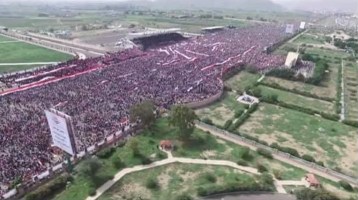
By Catherine Shakdam | New Eastern Outlook | August 27, 2015
As the Yemen International Conference in the Support of Yemen was in full swing in the British capital, London, Yemenis came in their hundreds of thousands to pledge their support to the Resistance movement this August 20, 2016 – yet another popular show of force, yet another grand display of sovereign political will in the face of foreign diktat.
To the sounds of explosions, and flying Saudi war planes it is Yemen which came to defy its invaders; a proud nation under unprecedented duress, a land united under the banner of its resistance.
“We won’t bow down to the House of Saud” chanted the crowd. “We will never bow down to the criminal House of Saud,” millions repeated in unison.
If Yemen remains in the throes of a brutal war of attrition for its dared ambition to live free under its skies, its people are quite determined to weather whatever storm Saudi Arabia will throw, so that their right to self-govern and resist oppression could be affirmed – never to be questioned again.
However one chooses to look at Yemen’s war, it would be foolish to deny still that those brave souls corporate media still label as “rebels” are in fact the carrier of a nation’s will; the very expression of a people’s inherent right to carve its own political future, regardless of what anyone else might think.
Let me be brutally honest here – Yemen neither needs foreign approval, nor does it require foreign vetting. Yemenis want what they want because they can! It is really that simple.
Yemen needs no liberating from the Houthis, for the Houthis are Yemen. Yemen is not being overrun by Shiites, Yemen is Zaidi country. There is no Iranian agenda at play either, only a desire to disappear the suffocating influence of the House of Saud.
Standing in opposition of the most violent, radical and reactionary theocracy ever to grace the pages of our history does not make Yemen an “Iranian agent”, it makes Yemen an expectant independent nation.
Media coverage of Yemen so far has been criminal at best, misleading always.
The public has been conned into a narrative which is devoid of all humanity, and democratic courtesy. The simple fact that media feel entitled to slap derogatory adjectives before the Houthis as to direct their readers’ self-righteous sense of political morality is despicable.
I read the terms Iran-backed Shia Houthis rebels too many times not take offense. How dare you define a people whom you know nothing about? How dare you speak over and at an entire nation because their will does align with yours?
Let’s play the adjective game shall we?
When have you ever read the following statement: Wahhabi-backed-Western-sold-out- twice-resigned-once-runaway-child-killer-Sunni President Abdo Rabbo Mansour Hadi? Likely never … Why? Because Saudi Arabia and its allies are still hiding behind this pale figure of a man to legitimize their odious genocidal military intervention against Yemen.
Let me tell you of this so-called legitimate political figure the West has canonised as Yemen’s forever president.
Hadi is a fraud and a traitor. Not only did he allow for the killing of his countrymen, he actually actively pursued their annihilation in the name of a chair he never truly was appointed to. Hadi was elected in a one-man election in 2012 for the duration of a 2-year’s mandate – not exactly what you call democratic.
Hadi was never the choice of the people, he was Riyadh’s choice through the GCC-brokered transition of power agreement (2011).
How can anyone speak of democracy and refuse Yemenis their own?
How can anyone still read corporate media and not deplore the stench of their abominable hypocrisy and bias?
Do not tell Yemen what it wants, but hear what it is telling you.
Hear what an entire nation is screaming from the top of its glorious lungs, and witness the rise of a Resistance which breadth will maybe crumble al-Saud tyranny.
“We won’t bow down to the House of Saud … We will never bow down to the criminal House of Saud!”
Can you hear them now? Can you not respect that a nation simply cannot bring itself to live the abomination which is Wahhabism? Can you not recognise that Yemen is the last line of defense for all free folks in Arabia?
Who will speak for democracy and political self-determination when radicalism will have nations at the mercy of their guns? Can you not see that what you refuse Yemen – free will, is exactly what you demand for yourself?
Do not tell me of the will of a people when under bombs millions have rallied before their appointed leaders.
Yemen is free today by the strength of its Resistance movement.
Yemen is dignified today for one man rose from the oppression of religious repression to reclaim pluralism his own coat of arms. Sheikh Abdel-Malek al-Houthi, one of the sons of Hamdan, Yemen’s very own legacy offered Yemen its Freedom to keep none for himself.
Sheikh al-Houthi liberated Yemen from al-Saud never to demand a seat at power’s table.
Do not speak of what you don’t know Mr corporate media. Do not define with your adjectives the nature of a land for which you have no respect for.
Yemen might be poor and battered but it is a grand and noble land.
Of course Saudi Arabia would want you to believe that Yemen’s political ambitions are illegitimate, unlawful and nefarious.
Have you ever bothered asking why? Have you even given the infamous “Houthis” the time of day before dismissing them under misapprehension?
I think not. What the public did is assume. What the public did is read those adjectives media associated ad nauseam to Yemen resistance movement, and automatically accept those labels as truths. Adjectives those days have become dangerous weapons of mass-destruction.
Adjectives have cost Yemen its freedom!
Yemenis this August 20, 2016 came to publicly offer their support to the new highest political council – and still Riyadh has cried foul play.
Millions took to the streets knowing full well that Saudi Arabia warplanes were up above to offer their voice and their arms to the Resistance, and still Western capitals have called for Hadi’s “restoration.”
What will it take for you to wake up?
Yemen has bled, burnt, exploded, pleaded, negotiated, mourned, cried and starved while you turned your nose up in disgust arguing what future a people should have instead of the one they want for themselves.
If you like the idea of a life spent in the shadow of Wahhabism why not book a ticket to Saudi Arabia and experience first-hand the type of democracy al-Saud have in mind for Yemen, you might find new respect then for the Houthis of Yemen.
One more thing before I go: no one said you had to love the Houthis, only that you respect that Yemenis do.
Catherine Shakdam is the Director of Programs of the Shafaqna Institute for Middle Eastern Studies and a political analyst specializing in radical movements.
US Okay With Surgical Strikes on Yemen Hospitals
By William Boardman | Reader Supported News | August 24, 2016
Nuremberg: “a war of aggression … is the supreme international crime”
Waging genocidal war on a defenseless country was never so baldly and honestly put on any agenda for talks among US secretary of state John Kerry, representatives of Saudi Arabia’s dictatorship, and their mutual allies, even though they are all engaged in an endless genocidal war on Yemen. This war is a war of aggression, started by Saudi Arabia in March 2015, with crucial US blessing, participation, personnel, and ordnance. The US has been a willing, guilty partner and enabler in 18 months of military atrocities in a one-sided war that everyone involved knew – or should have known – was a pure war crime based on a paranoid delusion.
American participation in this war of aggression was a war declared by press release from the National Security Council on March 25, 2015, another example of the imperial presidency’s ability to act by fiat without fear of serious objection from the public, the media, or even Congress:
President Obama has authorized the provision of logistical and intelligence support to GCC [Gulf Cooperation Council]-led military operations. [emphasis added]
The fundamental crime in Yemen is waging a war of aggression, which encompasses all the subsequent war crimes including bombing civilians, using cluster bombs, bombing hospitals, bombing food supplies, and trying to starve a population to submission or death. Yemen, with a population of 26 million people, was the poorest country in the region even before it was attacked. What the US supports and sanctions against Yemen makes any US complaint about Russian actions in Crimea sound like howling hypocrisy.
For all that the Saudis frame their war on Yemen as a defense against a threat from Iran, there has never been any credible evidence of any credible threat to Saudi Arabia from any element of the miniscule Iranian presence in Yemen. Yemen is fighting a civil war, a new version of the same old civil war Yemenis have been fighting for decades, both before and after Yemen was two separate countries. The Iran “threat” is the paranoid delusion supposedly justifying a merciless war on a civil population already beset by a four-sided civil war. There is no way that those who decided to wage this war of aggression could not have known the reality in Yemen if they had wanted to know it. Presumably they knew it all full well and chose a war of aggression anyway, recklessly, perhaps even thoughtlessly, but criminally all the same.
The Saudi goal was always to get rid of a longstanding threat on its southwestern border, where the tribal land of the Houthis lay both in Yemen and Saudi Arabia. When the long-oppressed Houthis, a Shia minority in a Sunni world, drove out the Sunni government of Yemen in 2015, the Saudis, without saying in so many words, decided on a course of action that could lead to a final solution. And everyone knew, at the time, and no one objected, according to this account by the highly reliable Andrew Cockburn on Democracy NOW! (whose piece in Harper’s Magazine for September 2016, ironically titled “Acceptable Losses,” provides an excellent exegesis of the war on Yemen, but with a more elegiac tone):
I was told, very early on in the war, Deputy Secretary of State Tony Blinken went to Riyadh to ask the—this is two weeks—yeah, it was two weeks into the war [mid-April 2015], when they had already been bombing away, using the U.S. bombs, U.S.-supplied bombs, using U.S. weapons, killing already dozens, if not certainly, you know, hundreds of civilians, destroying factories. And finally, Blinken turns up in Riyadh and asks, “By the way, what are you trying to accomplish here?” And the Saudis effectively said, or at least the Americans understood them to say, “Well, we basically want to wipe out the Houthis.” Well, they termed it as “end all Iranian influence in Yemen.” So, the Americans—Blinken was a bit shocked by that, so I’m told, and said, “Well, you know, that’s going a bit far. But it’s—you should certainly stop the Houthis taking over the country.” And that, effectively, gave the Saudis carte blanche to continue this kind of mindless carpet bombing….
By 2015, American hands were already bloody with the US drone assassination program that had killed not only innocent civilians, but American citizens, without a trace of due process of law. In effect, already enmeshed in its own nexus of war crimes in Yemen, the US green-lighted the Saudi-led war of aggression that would make American crimes pale by comparison. As American policy over the years would have it, American weapons have been dispersed all over Yemen since 2006.
Kerry to consult on terrorism, but not US or Saudi terrorism
Terror bombing, an example of which is Saudi pilots flying American planes dropping American bombs on defenseless Yemeni civilian targets, is probably not the terrorism Secretary Kerry wants to discuss – ever – with the Saudis and their allies, never mind other weapons suppliers like France and the United Kingdom. As the official State Department notice put it in deadly opaque prose:
Secretary Kerry will travel to Jeddah, Saudi Arabia, for a series of meetings with senior Saudi leaders, his counterparts from the Gulf Cooperation Council, the United Kingdom, and the United Nations Special Envoy for Yemen. His discussion will focus on the ongoing conflict in Yemen and efforts to restore peace and stability….
Those “efforts to restore peace and stability” notably include the destruction of two schools, another hospital, and a potato chip factory, along with the associated men, women, and children, especially at the schools. Perhaps the latest great military “victory” achieved by the war criminals known as the Saudi-led coalition is to drive the world’s leading medical crisis-zone organization out of Yemen by targeting its hospitals over and over and over and over since March 2015. Of course, America the Exceptional does not stand for this betrayal of human decency, and our presidential candidates of all parties have railed ceaselessly against this indiscriminate murder of patients, their families, their doctors and other medical personnel, forcing the White House to take action to bring to an end 17 months of aggressive war and other war crimes and crimes against humanity – no, wait, that’s not happening, is it?
Actually, if any presidential candidate of any political party has expressed the slightest objection to the Saudi-coalition’s genocidal war on Yemen, such evidence is so hard to come by that it may as well not exist. (In August 2015, Jill Stein of the Green Party mentioned in passing that the Saudis “are committing war crimes right now in Yemen,” and more recently she called for an end to US funding for Saudi Arabia and Israel because of their violations of human rights laws. She does not tend to make a point of the US support for a war of aggression in Yemen, but she’s better than any other candidate on Yemen.) At this point, a year and a half into our shared war of aggression, every candidate is complicit in this horrendous, unjustified war promoted and pursued with smug disdain for anything like peace by our peace prize winning President Obama. The blood drips from all their hands, their feet, their tongues and eyelashes, but most of all from every pore of our Nobel Laureate in the White House. (As the book Double Down reported in 2012: “Turns out I’m really good at killing people,” Obama said quietly, “Didn’t know that was gonna be a strong suit of mine.”)
With the US at war, Congress has nothing to say about any of it
The US is at war with Yemen, in support of the Saudi-led coalition that launched its undeclared war of aggression on March 26, 2015. US war-making includes, but is not limited to: US intelligence services providing intelligence to the aggressor nations; US military personnel participating in daily target planning and attack assessment; US tanker aircraft re-fueling aggressor nation aircraft bombing Yemen (46,500 acknowledged sorties in the first 11 months of war); US drones targeting and attacking under US control; US military contractors servicing the Saudi F-15s that bomb Yemen; US personnel training Saudi military; US military personnel operating in Yemen; and the US Navy reinforcing the Saudi blockade intent on starving Yemen into submission.
The US Congress has never debated, never authorized US participation in a war of aggression against Yemen. The US president has never asked Congress for such authorization of a war of aggression against Yemen. Neither house of Congress has acted on any bill that directly addresses the war of aggression against Yemen. More than a year after the war started, two Democratic members of Congress (joined by two Republicans) introduced identical bills intended to respond to the war. California congressman Ted Lieu (joined by Florida congressman Ted Yoho) and Connecticut senator Christopher Murphy (joined by Kentucky senator Rand Paul) asked their colleagues to address the horrors of the war (briefly enumerated in the bill), not by ending the war, but only by temporarily limiting US arms sales to Saudi Arabia. That’s it. They did not mention US participation in the war. Both their bills were referred to committee. At the time there was a spotty ceasefire in Yemen while peace talks proceeded in Kuwait (the talks were suspended in early August, leading to the Saudi escalation currently killing more civilians).
Incredibly, this non-response response to war crimes in Yemen has gotten Rep. Lieu some recent positive press coverage, in The Intercept of August 22 and elsewhere, even though his bill is designed to have no immediate impact on the carnage. Rep. Lieu is a colonel in the US Air Force Reserve. When he was on active duty he taught the law of war to other Air Force officers. His interview rhetoric, like most of his public action, is soft-edged even though he knows perfectly well his country is committing war crimes. He almost said as much in an August 15 statement objecting to the Saudi attack on a school in Haydan, Yemen, that killed 10 children:
The indiscriminate civilian killings by Saudi Arabia look like war crimes to me. In this case, children as young as 8 were killed by Saudi Arabian air strikes. By assisting Saudi Arabia, the United States is aiding and abetting what appears to be war crimes in Yemen. The Administration must stop enabling this madness now. [emphasis in original]
Rep. Lieu and others have also objected to the State Department’s certification of another arms sale to Saudi Arabia: this one is $1.15 billion for 153 tanks, hundreds of machine guns, and other war materiel. This is in addition to the record $100 billion in arms sales to the Saudis already made by the Obama administration. The latest arms deal suggested to Rep. Lieu “that the administration is, at best, callously indifferent to the mass amount of civilians dying as a result of the Saudi-led coalition’s bombing.” He did not openly consider whether 153 Abrams Main Battle Tanks and other weaponry might open the way for the air war of aggression to be matched by an escalation of the ground war of aggression as well. Twenty of those new US tanks are specifically designated as replacements for tanks lost in combat, some of them in Yemen. On the other hand, the official State Department notice of the Abrams Tank sale assures Congress: “The proposed sale of this equipment and support will not alter the basic military balance in the region.” That’s hardly reassuring in a region where wars of attrition and military quagmires are killing not only thousands of Yemenis, but Palestinians, Israelis, Lebanese, Syrians, Saudis, Turks, Kurds, Iraqis, Afghans, and god knows who else, more often than not with Made-in-USA weapons and munitions.
The proposed US tank sale has drawn the attention of several NGOs (non-governmental organizations) looking to wash American hands of the war on Yemen by blocking the sale, or at least having a debate about it in Congress. Human Rights Watch (HRW) wrote a letter to Secretary Kerry August 19, with temperate language of concern about several countries, including Yemen. HRW asked Secretary Kerry “to emphasize the potential consequences if Saudi Arabia fails to improve its conduct.” But it did not suggest what those consequences might be in light of the reality that the US has coordinated and condones all Saudi conduct to date. CODEPINK is supporting a petition to support the Congressional letter that urges President Obama to postpone the US tank sale to the Saudis.
Even The New York Times is expressing something shy of anguish over “American complicity” and “carnage” and targets that are not “legitimate” under international law as it supports efforts to block the tank sale in Congress. The Times doesn’t mention that this is the same Congress that in June – supporting a White House request – refused to block the sale of cluster bombs to Saudi Arabia for fear of “stigmatizing” cluster bombs. That’s a reflection of the American version of reality, since cluster bombs are already stigmatized by most countries of the world and using them on civilians, as US-Saudi forces do in Yemen, is widely understood to be a war crime. The solution, according to the Times :
Congress should put the arms sales on hold and President Obama should quietly inform Riyadh that the United States will withdraw crucial assistance if the Saudis do not stop targeting civilians and agree to negotiate peace.
That can’t happen in the real world, where the president and the Saudis all know they are war criminals and are, like Macbeth, so steeped in blood “that should I wade no more,/Returning were as tedious as go o’er.”
There is no reason to expect any good to come to Yemen until a whole lot more Americans face the reality of their country’s support for a genocidal war of aggression. When enough Americans recognize that, then they will have to do a lot more about it than stop selling tanks to the aggressors. Until then the US-sponsored atrocity of ethnic cleansing in a poverty-stricken country that threatens no one will continue unabated.
US drone attack kills 22 Afghan soldiers: Helmand council
Press TV – August 27, 2016
A US drone attack has killed 22 Afghan soldiers held by Taliban militants in the southern Helmand province, while Taliban have overrun a strategic district elsewhere.
Provincial officials announced the fatalities on Saturday. Taliban also confirmed the death toll, saying the airstrike had killed three of the group’s members in the Nad-e-Ali district on Thursday.
Helmand is a strategically important province for both the Afghan government and Taliban militants, who control or contest 10 of the 14 districts in the opium-rich province.
On Saturday, Taliban militants seized a strategic district in the eastern province of Paktia, from which they can surge towards several other provinces.
Officials said dozens of police and soldiers were killed as the militants captured the Jani Khel district after five days of siege.
Local governor Abdul Rahman Solamal said hundreds of militants attacked police check posts overnight, prompting security forces to flee the district.
Jani Khel sits at an intersection linking eight districts. It also connects Paktia with neighboring Khost province and Pakistan.
“If we do not retake it (Jani Khel) soon then Taliban can easily move from one province to another and can undermine security in at least three provinces,” Solamal warned.
More than 20 soldiers and police were killed and another 20 wounded in the fighting overnight, while some 200 Taliban insurgents were killed, he said.
In a statement, Taliban spokesman Zabihullah Mujahid said large amounts of equipment had been captured, including armored vehicles, light and heavy weapons and ammunition.
Taliban have regrouped since the death of former leader Mullah Akhtar Mansour earlier in the year and are reported to be currently in control of more than 65 percent of the country.
Fierce fighting is currently ongoing against the militants across the country, notably in Helmand and around the northern city of Kunduz, which they briefly seized last year.
Late last month, the United Nations Assistance Mission in Afghanistan (UNAMA) said it had recorded 1,601 civilian deaths and 3,565 injuries in Afghanistan in the first six months of 2016.
The mission warned that civilian casualties had hit a record high this year, describing them as “alarming and shameful.”
Featured Video

The Truth About the Trump Shootings with Ken Silva
or go to
Aletho News Archives – Video-Images
From the Archives
The Geopolitics behind the War in Yemen (I)
By Mahdi Darius NAZEMROAYA | Strategic Culture Foundation | 30.03.2015
The United States and the Kingdom of Saudi Arabia became very uneasy when the Yemenese or Yemenite movement of the Houthi or Ansarallah (meaning the supporters of God in Arabic) gained control of Yemen’s capital, Sanaa/Sana, in September 2014. The US-supported Yemenite President Abd-Rabbuh Manṣour Al-Hadi was humiliatingly forced to share power with the Houthis and the coalition of northern Yemenese tribes that had helped them enter Sana. Al-Hadi declared that negotiations for a Yemeni national unity government would take place and his allies the US and Saudi Arabia tried to use a new national dialogue and mediated talks to co-opt and pacify the Houthis.
The truth has been turned on its head about the war in Yemen. The war and ousting of President Abd-Rabbuh Manṣour Al-Hadi in Yemen are not the results of «Houthi coup» in Yemen. It is the opposite. Al-Hadi was ousted, because with Saudi and US support he tried to backtrack on the power sharing agreements he had made and return Yemen to authoritarian rule. The ousting of President Al-Hadi by the Houthis and their political allies was an unexpected reaction to the takeover Al-Hadi was planning with Washington and the House of Saudi. … continue
Blog Roll
 Aletho News
- Pakistan-Iran talks secure LNG shipment to Islamabad through Hormuz
- Black Sea grain crisis puts global wheat supplies under pressure
- IRGC air defenses destroy another US MQ-1 drone over Strait of Hormuz
- Imran Khan’s entire immediate family detained in Pakistan ahead of mass protest demanding his release
- EU nation detains former presidential frontrunner
- Leaked: Britain’s Sham Conviction Of Hashim Thaci
- Seyed M. Marandi: U.S. Strike Imminent – Toward Total War in the Middle East
- Russia Voted Under Fire. Washington Is Loading the Tankers.
- 12 Things Your Oncologist Was Trained Not to Tell You
- Anthrax Attacks Paved Way for COVID-Era ‘Junk Drugs and Vaccines’
- If Americans Knew
- Trump’s militarization of Washington DC as he pursues Israel’s war against Iran
- Why Israel Fears This Searing New Documentary
- Huckabee aide solicited cash gifts from Israelis
- This isn’t sci-fi, AI is already killing people
- ‘The Most Brutal Thing’: Investigation Reveals Execution of Elderly Woman in Rafah
- Inside Israel’s ‘soft’ ethnic cleansing plan for Gaza through the eyes of its victims
- New online database tracks pro-Israel political donations in the United States
- Israeli president pardons soldier convicted for killing wounded Palestinian
- Singer Ed Sheeran says his ‘heart broken’ by Gaza devastation, addresses Macklemore controversy
- Israel Has Imprisoned Female Journalist Bushra Al-Tawil Without Trial Or Charge In Solitary Confinement For Past Month
- No Tricks Zone
- 2025 Nature Paper Claiming Worsening Global Drought Gets RETRACTED …Heavily Flawed
- New Study: ‘Global Drought Shows No Detectable Recent Acceleration Under Climate Warming’
- Economic Masterminds: German Socialists Suggest Taxing Productivity Gains Stemming From Using AI
- The South China Sea Has Not Been Cooperating With The Climate Change Narrative
- Energy Crisis: Germany Enters Heating Season With Historically Low Gas Reserve Fill Levels
- New Study: The Antarctic Ice Sheet Gained Mass From 2020-2024 Due To Staggering Snow And Ice Accumulation
- Study: Ocean Heating Rates From Thousands Of Years Ago ‘Dwarf’ Modern Ocean Heating Rates
- Climate Extremists Target, Attack Large-Scale Power Grid Infrastructure In Germany!
- New Study: Antarctic Ice Melt Has Contributed Less Than 1 Centimeter To Sea Level Rise In The Last 30 Years
- Fear Of Debate: Alarmist German Climate Scientist Calls On Mainstream Media To Discredit Skeptic Voices
 Aletho News