Spanish council joins boycott of Israel
MEMO | January 12, 2016
Spain’s United Left party has adopted the call for the global boycott of Israel (BDS), with the support of the Spanish Socialist Workers’ Party, as members of the Castrillon City Council in the Asturias province voted in favour of the campaign.
Having reviewed the reasons for adopting the BDS campaign, the general coordinator of the Unified Left, Jose Luis Garrido, called on other Spanish cities to take the same action and to boycott Israel at all levels until it withdraws from the occupied territories and respects international law and the rights of the Palestinian people to independence and freedom.
In his speech before members of the municipal council he highlighted international laws and United Nations resolutions that Israel has not implemented. He also mentioned the illegality of the settlements and the Separation Wall, in addition to the issue of refugees, Israel’s racist policies and the suffering of the residents of the Gaza Strip.
This move comes in light of similar decisions to boycott Israeli which were made by other Spanish institutions, the most recent being the University of Barcelona.
Israeli forces demolish homes of 2 Palestinian attackers in Jerusalem
Ma’an – January 4, 2016
JERUSALEM – Israeli forces on Monday demolished the family home of a Palestinian attacker killed in October and sealed off the home of another attacker’s family with cement, the families told Ma’an.
The homes, in the Jabal al-Mukabbir neighborhood of East Jerusalem, belonged to relatives of Alaa Abu Jamal and Baha Elayyan who were both shot dead on Oct. 13 after carrying out separate attacks that left four Israelis dead.
Israeli forces reportedly stormed the homes and ordered the families to evacuate them before they proceeded with the demolitions.
Abu Jamal’s family told Ma’an that Israeli forces sealed with cement the home of Safa Abu Jamal, Alaa’s sister, after claiming to have secret information that it belonged to her slain brother.
The home consisted of one floor and three apartments, and was lived in by Safa, her husband, and their two children, the family said.
They added that Israeli authorities had earlier decided not to demolish the home after ruling that it belonged to Safa and not to her brother, Alaa.
Meanwhile, the father of Baha Elayyan told Ma’an that his family had been ordered to evacuate his home while Israeli forces demolished its interior walls.
The home is an apartment on the second floor of a three-story building, measuring 130 square meters and currently housing eight family members.
Punitive home demolitions were expedited at the request of Israeli Prime Minister Benjamin Netanyahu in mid-October, and many have been carried out since.
The move came despite past recommendations by an Israeli military committee that the practice does not deter attacks.
While families who receive demolition orders are given the opportunity to appeal the measures, Israel’s High Court of Justice typically rejects such appeals, according to Israeli watchdog Hamoked.
Israeli rights group B’Tselem condemned the practice in October as “court sanctioned revenge,” carried out on family members who have not committed crimes, amounting to collective punishment.
The Israeli authorities have been holding the bodies of Alaa Abu Jamal and Baha Elayyan since they were shot dead in another controversial Israeli practice that has been seen by some as further raising tensions.
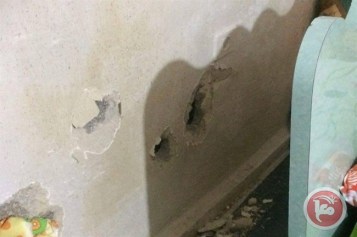
Settlers breach wall of Palestinian home in Jerusalem’s Old City
Ma’an – January 4, 2016
JERUSALEM – Israeli settlers on Sunday made a number of breaches through the wall of a Palestinian home belonging to Noura Sub Laban in the Old City of Jerusalem, family members told Ma’an.
Noura’s son, Ahmad Sub Laban, said the family was shocked to find at least six breaches through the wall, which borders a property that was taken over by settlers just two weeks ago.
Ahmad said the family called Israeli police, who arrived on the scene and asked that the settlers repair the damage without bringing any formal procedures against them, despite the settlers admitting to breaching the wall.
An Israeli police spokesperson had no immediate information on the reports.
Ahmad said: “I do not know the motivations behind this action, but this has confirmed that our house is in real danger as it is surrounded by Israeli enclaves on all sides, which means the house could be stormed at any moment.”
The far-right settlement organization Ateret Cohanim has been trying to seize the home of Noura Sub Laban, which lies in the Old City’s Oqbit al-Khalidiya area, since 2010, with the Sub Laban fighting to defend the home in Israel’s courts.
There are more than 500,000 Israeli settlers living in the West Bank, including East Jerusalem, in contravention of international law.
1,000 crack British troops deployed to Libyan oil fields to ‘halt the advance of ISIS’
RT | January 4, 2016
British Special Forces have been deployed in Libya to wrest back control of more than a dozen oil fields seized by Islamic State (IS, formerly ISIS/ISIL) militants, it has emerged.
Approximately 6,000 European and US soldiers, including 1,000 British troops, will be involved in a number of offensives set up to halt the advance of the jihadist terror group.
The operation will be led by Italian forces and supported mainly by Britain and France.
Special Forces, including military close observation experts from the Special Reconnaissance Regiment, are spearheading the major coalition offensive against the jihadist group, according to the Daily Mirror.
IS has seized several revenue-boosting oil fields in Libya and is eager to win more control over the country, as the land could provide them with millions of dollars to fund terror attacks.
The terrorist network is now targeting the Marsa al Brega oil refinery, the biggest in North Africa.
If jihadists successfully capture the oil refinery, located between Sirte and Benghazi, they would gain full control of the country’s oil.
Britain’s SAS is working with Libyan commanders to advise them on key “battle-space management” tactics to control the battlefield using troops, tanks, warplanes and navy ships.
They will also send intelligence to Ministry of Defence (MoD) chiefs that could be used to determine whether airstrikes are needed.
A senior military source told the Mirror: “This coalition will provide a wide range of resources from surveillance, to strike operations against Islamic State who have made significant progress in Libya.
“We have an advance force on the ground who will make an assessment of the situation and identify where attacks should be made and highlight the threats to our forces.”
“Moreover, the ideologies of jihadism and of political Islam are alive and well. It is far too soon to write off Islamic State and organizations similar to it.”
European Union foreign policy chief Federica Mogherini told IB Times : “In Libya, there is the perfect mix ready to explode and in case it explodes, it will explode just at the gates of Europe.”
The Libya intervention would mark the first time British troops have officially taken part in a direct ground assault against IS.
Libya has been in the throes of a chaotic civil war since the 2011 ousting of longtime leader Muammar Gaddafi. Today, two rival governments and parliaments compete for dominance amid a deepening Islamist insurgency.
More than 5,000 IS extremists are active in the country, according to the Libyan Interior Ministry.
Israeli Rabbi: Christians Not Welcome in Jerusalem
IMEMC News – January 1, 2016
 An Israeli Rabbi said, Wednesday, that Christians are not welcome in Jerusalem, and that he does not mind burning mosques and churches.
Bentzi Gopstein told Israeli TV Channel 2 that Israeli Jews practically prevent Christians from entering Jerusalem.
He also called for making obstacles towards the expansion of Christianity and Islam in annexed Jerusalem.
According to Days of Palestine, the extremist rabbi also said that he does not mind burning mosques and churches in Jerusalem, stating that Israeli authorities must arrest Christian monks and nuns.
Gopstein is the head of an notorious extremist Israeli Jewish group called Lehava, which is responsible for insulting and harassing monks and nuns in Jerusalem.
Several Israeli groups are active in the occupied holy city, with regard to extreme Judaisation activities, including the seizing of Islamic and Christian properties.
Israeli TV has previously proved that the Israeli government stands behind these groups, although it sometimes condemns their acts in token concern.
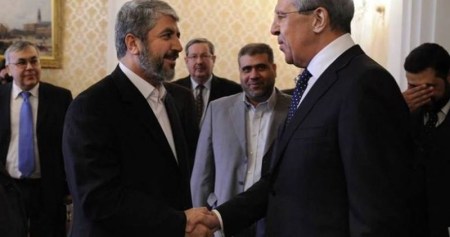
Russia refuses to blacklist Hamas as terrorist
“Occupation is in itself a form of terrorism”
Palestine Information Center – December 31, 2015
MOSCOW – Russia and the United States agree that Daesh, al-Qaeda and Jabhat al-Nusra are terrorist organizations but differ over blacklisting Hezbollah and Hamas, the Russian Foreign Ministry said.
Speaking to the Interfax news agency on Tuesday night, Russian Deputy Foreign Minister Gennady Gatilov said: “Our opinions coincide as regards to the main terrorist organizations. These are ISIS, al-Qaeda and Jabhat al-Nusra.”
But “we are not even discussing Hezbollah and Hamas with the Americans,” he added.
Moscow has routinely held senior-level contacts with Hamas officials and leaders.
Commenting on the Russian position, political analyst Abdul Sattar Qassem said: “Hamas cannot be compared to Daesh or al-Qaeda. It can only be viewed in terms of its resistance to the Israeli occupation.”
“The Israeli occupation and the USA are the real terrorists. They are fighting all those who stand in their way,” he added.
“Blacklisting Hamas as terrorist is unacceptable for Moscow. There is no evidence to corroborate the fact that Hamas is a terror group,” he said.
“Israel has been misleading the world into believing that Hamas is targeting Israeli civilians, which is not in fact the case,” the analyst stated.
“Hamas is a movement of national liberation that defends its people. It does not seek to wage wars for the sake of wars. It is engaged in a fight against an entity that colonized its motherland,” he explained.
However, “does Russia dare blacklist Israel as a terrorist entity for the crimes it has perpetrated against the Palestinians?” Qassem wondered. “It is not enough that Russia refuses to dub Hamas a terror group. It should dare include Israel on its terror list.”
“There is no colonizing power in the world but Israel. Occupation is in itself a form of terrorism,” the analyst further stated.
British MPs tout NATO’s ‘Kosovo success story’ as reason to bomb Syria
By Dan Glazebrook | RT | December 31, 2015
Kosovo is often cited by liberal interventionists as NATO’s success story and now a reason for attacking Syria. However, the ongoing lawlessness in the country shows nothing could be further from the truth.
In 1999, NATO bombed Yugoslavia for 78 days, culminating in the withdrawal of Yugoslav troops from the Serbian province of Kosovo. Tens of thousands were killed or maimed by the airstrikes, and Kosovo was carved out as a NATO statelet under the control of UNMIK (the United Nations Mission in Kosovo) in alliance with its local quislings the Kosovo Liberation Army (the KLA).
Last month’s parliamentary debate on British airstrikes in Syria witnessed several MPs citing the operation as a great success. Labour MP Ivan Lewis was “proud of the difficult choices that we made” in Kosovo and elsewhere, which he claimed “saved hundreds of thousands of lives”.
Kosovo was particularly held up by those supporting British military action in Syria as an example of how airstrikes alone, without support from ground forces, can be victorious. Mocking those who argued that “coalition action which rests almost wholly on bombing… will have little effect”, Margaret Beckett responded “well, tell that to the Kosovans, and do not forget that if there had not been any bombing in Kosovo perhaps 1 million Albanian Muslim refugees would be seeking refuge in Europe.”
Conservative MP Richard Benyon concurred, adding: “I asked one my constituents––someone who knows a bit about this, General Sir Mike Jackson––whether he could remember any conflict where air power alone made a difference. He thought and said one word: Kosovo.”
The argument is entirely fallacious. One obvious difference between the NATO bombing of Kosovo in 1999 and the British bombing of Syria today is the contrast in their stated aims. NATO was ostensibly bombing Yugoslavia to achieve a limited goal – the secession of Kosovo. In Syria today, however, the ostensible aim of airstrikes against ISIS is the destruction of ISIS. In other words, while the first aimed to force a concession from the force it was targeting; the other apparently aims at the total elimination of its target. While enough punishment might persuade someone to concede a demand, it will not persuade anyone to agree to their own eradication. There is, thus, no parallel in the logic behind the two campaigns, and anyone trying to draw one is being entirely disingenuous.
Secondly, when the actual historical record is examined it becomes clear that, even on its own terms, NATO did not actually achieve its demands. The Rambouillet ‘agreement’ was NATO’s eleventh hour diktat to Yugoslavia on the eve of bombing, designed to be rejected in order to justify the bombing raids. The key bone of contention for Yugoslavia in this document was that it demanded NATO troops be granted full access to air fields, roads, ports and railroads across the country – that is to say, an effective NATO occupation of the entire federal republic.
Obviously, as Sara Flounders and John Catalinotto of the International Action Centre have written, “no self-respecting government could accept such an ultimatum”. Instead, the Yugoslav government offered to withdraw their troops from Kosovo. This was rejected by NATO, who began bombing within days. After nearly three months of heroic resistance from the Yugoslav people, the bombing ended with Yugoslav troops withdrawing from Kosovo – without any NATO occupation of the rest of the country. That is to say, the war was brought to a close on the terms originally offered by the Yugoslavs, and not on the terms demanded by NATO at the outset: hardly the overwhelming victory claimed by the likes of British General Mike Jackson.
What really gives the lie to the ‘Kosovo success’ narrative, however, is simply the condition of NATO’s statelet today. An in-depth piece by Vedat Xhymshiti in Foreign Policy Journal last month notes that “Kosovo is the poorest and most isolated country in Europe, with millionaire politicians steeped in crime. A third of the workforce is unemployed, and corruption is widespread. Youth unemployment (those aged 25 and under) stands at 2 in 3, and nearly half of the 1.8 million citizens of Kosovo are considered to be in poverty. From December 2014 until February 2015, about 5% of the population was forced to leave the country in an effort to find a better life, studies and more dignified jobs, on their uncertain path towards wealthier countries in the EU.”
The British MPs’ argument that NATO’s takeover of Kosovo was achieved by airstrikes alone, without ground forces, is a lie. NATO’s allies in 1999 were the KLA (Kosovo Liberation Army), a violent sectarian group who openly sought the establishment of an ethnically supremacist state – much like the forces supported by NATO in Libya, Syria and Ukraine. Once NATO had destroyed the Yugoslav administration in Kosovo, effective power on the ground passed to the KLA, who set about implementing their vision of an ethnically pure Kosovo via a series of pogroms, massacres and persecutions of the province’s Serb, Jewish and Roma populations. They gained effective control of Kosovan politics, and used this power to guarantee themselves impunity both for their historic and ongoing war crimes, and for their massive expansion of organized criminality.
In December 2010, a Council of Europe report named Kosovan Prime Minister and former KLA leader Hashim Thaci “the head of a “mafia-like” Albanian group responsible for smuggling weapons, drugs and human organs through eastern Europe”, according the Guardian newspaper’s summary. Following NATO’s intervention, Thaci’s Drenica group within the KLA, according to the report, seized control of “most of the illicit criminal enterprises” in which Kosovans were involved in Albania. The report noted that “agencies dedicated to combating drug smuggling in at least five countries have named Hashim Thaçi and other members of his Drenica group as having exerted violent control over the trade in heroin and other narcotics.” The human rights investigator who authored the report, Dick Marty, commented that: “Thaçi and these other Drenica group members are consistently named as ‘key players’ in intelligence reports on Kosovo’s mafia-like structures of organised crime.”
In addition to their leading role in Europe’s heroin smuggling trade, Thaci and his group were also named as having been responsible for a professional organ smuggling operation involving the kidnapping and murder of Serb civilians in order to harvest and sell their kidneys. Currently serving as both Foreign Minister and Deputy Prime Minister, Thaci’s NATO protection guarantees he has never been brought to justice for any of these crimes.
Indeed, NATO-sponsored impunity has been a consistent theme amongst the new Kosovan elite. A report by Amnesty International published in August 2013 noted that “the UN Interim Administration Mission in Kosovo (UNMIK) singularly failed to investigate the abduction and murders of Kosovo Serbs in the aftermath of the 1998-1999 conflict” adding that “UNMIK’s failure to investigate what constituted a widespread, as well as a systematic, attack on a civilian population and, potentially, crimes against humanity, has contributed to the climate of impunity prevailing in Kosovo.” Marty’s report, too, noted the “faltering political will on the part of the international community to effectively prosecute the former leaders of the KLA”, and Carla del Ponte, former chief war crimes prosecutor at the Hague, stated that she was barred from prosecuting KLA leaders.
UNMIK’s responsibilities for police and justice came to an end in December 2008, following Kosovo’s controversial declaration of independence. It was replaced by the European Union Rule of Law Mission in Kosovo (EULEX), which, according to Amnesty International, inherited 1,187 war crimes cases that UNMIK had failed to investigate. All the signs are that the overt impunity that has prevailed up until now will be replaced by lip service to the rule of law, accompanied by the prosecution of a few low level operatives, whilst maintaining the protection for those at the top. Following the Council of Europe’s damning report, EULEX spent three years investigating the claims, eventually publishing a verdict that was a textbook case of damage-limitation whitewash. EULEX concluded that the crimes were indeed real, and were linked to leading KLA members, but refused to corroborate the names of any specific individuals involved, despite copious evidence. Thaci’s protection, it seems, is absolute.
Nevertheless, in August of this year, the Kosovan parliament finally and grudgingly approved (after initially rejecting) the establishment of a special war crimes court to prosecute KLA leaders for crimes committed between 1998 and 2000. In moves highly reminiscent of scenes outside both the Libyan and Ukrainian parliaments when tentative and tokenistic legal moves were made to end the impunity of the sectarian death squads, the parliament has come under repeated attack ever since. Riots and six separate teargas attacks by the opposition have brought the normal functioning of the Kosovan parliament to a standstill. Failed state status surely beckons.
Meanwhile, the credibility of EULEX, whose officials will be overseeing the establishment of the new court, was further thrown into doubt in November 2014 when Andrea Capussela, former head of UNMIK’s economic unit, released the results of an in-depth analysis of the most significant cases in which EULEX had been involved. Seven of these she claimed had only been brought after intense international pressure, whilst in a further eight, no investigation was carried out at all, despite “credible and well-documented evidence strongly suggesting that serious crimes had been committed.”
She noted that “Eulex’s conduct in these 15 cases – the eight ignored ones and the seven opened under pressure – suggests that the mission tended not to prosecute high-level crime, and, when it had to, it sought not to indict or convict prominent figures”. During its six years of operating, she noted, only four convictions had been secured – three of them against only secondary figures, whilst “higher-ranking figures linked to the same crimes were either not investigated or indicted”. A senior Kosovan investigator noted that “There are people killing people and getting away with it because of Unmik and Eulex,” adding that “The political elite and Eulex have fused. They are indivisible. The laws are just for poor people,” Indeed, Eulex seems to be operating increasingly like a mafia themselves, last year, putting “pressure”, according to Amnesty International, on “journalist, Vehbi Kajtazi, who had reported alleged corruption in EULEX”.
In a final twist to NATO’s ‘success story’, Kosovo has now become the largest per-capita provider of fighters for regime change in Syria. The official figure is 300 but more reliable estimates suggests the true figure is more than 1000 (from a population of 2 million), including one of the top ten ISIS commanders, Lavdrim Muhaxheri. As state education, along with most other social provision, has collapsed since 1999, Saudi-sponsored Madrasas have filled the gap, providing an extreme Wahhabi sectarian education now feeding its first generation of impoverished graduates into NATO’s new Syrian battlefields. No surprise, then, that Kosovan government’s efforts to prevent this have been “superficial and ineffective”, according to David Philips in the Huffington Post.
The ‘lesson’ of Kosovo, then, is not that “airpower works” or any other such nonsense. The real lesson is what it reveals about NATO’s formula for the destruction of independent regional powers – relying on a combination of aerial bombardment alongside the empowerment of local sectarian death squads, who come to dominate the political scene in the aftermath, obliterating the rule of law and guaranteeing a dysfunctional state incapable of providing either dignity or security to its citizens. This was the same formula that was used on Libya in 2011 and currently being attempted in Syria today. Of course, for NATO, all of this is indeed a success: Yugoslavia dismembered; its resources plundered at the expense of its desperate and impoverished people; and Kosovo turned into a provider of shock troops for regime change in Syria, and transit hub for heroin and organ trafficking. If this is what NATO calls a success, we must all pray for failure.
Dan Glazebrook is a freelance political writer who has written for RT, Counterpunch, Z magazine, the Morning Star, the Guardian, the New Statesman, the Independent and Middle East Eye, amongst others. His first book “Divide and Ruin: The West’s Imperial Strategy in an Age of Crisis” was published by Liberation Media in October 2013. It featured a collection of articles written from 2009 onwards examining the links between economic collapse, the rise of the BRICS, war on Libya and Syria and ‘austerity’. He is currently researching a book on US-British use of sectarian death squads against independent states and movements from Northern Ireland and Central America in the 1970s and 80s to the Middle East and Africa today.
Turkey rejects Iraq’s warning against Ankara troop deployment
Press TV – December 31, 2015
Turkish Prime Minister Ahmet Davutoglu has dismissed Baghdad’s warning of military action to defend Iraqi sovereignty if Ankara does not pull its troops out of northern Iraq.
“If Baghdad wants to use force, they should use it against Daesh, get rid of Daesh from Mousul. If they do so… why we would risk our army, we would withdraw to our country,” Davutoglu said in an interview with Turkish broadcaster NTV.
He made the remarks in response to Iraqi Foreign Minister Ibrahim al-Jaafari, who called on Turkey Wednesday to withdraw its troops or risk the use of military action.
Baghdad and Ankara are locked in a war of words over the presence of Turkish troops in northern Iraq.
On December 4, Turkey deployed some 150 soldiers, equipped with heavy weapons and backed by 20 to 25 tanks, to the outskirts of Mosul, the capital of Iraq’s Nineveh Province.
Ankara claimed the deployment was part of a mission to train and equip Iraq’s Kurdish Peshmerga forces in the fight against Daesh.
Baghdad has strongly condemned the presence of the Turkish battalion on the Iraqi territory, branding the uncoordinated act as a violation of Iraq’s national sovereignty.
Elsewhere in his remarks, Davutoglu claimed that Turkish troops were in northern Iraq in a bid to prevent terrorist infiltration into Turkey.
“I wish Iraq can control this area (northern parts) so that we don’t need to launch air operations there to prevent the leak of terrorists into Turkey.”
On Wednesday, Iraqi Prime Minister Haider al-Abadi held a phone conversation with Davutoglu, calling on Ankara to respect the territorial integrity of Iraq and withdraw its troops from the Arab country.
Israeli occupation authorities revoke ban on fanatic settler to enter al-Aqsa
Palestine Information Center – December 30, 2015
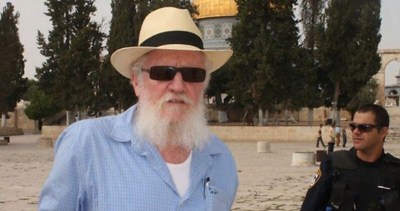 OCCUPIED JERUSALEM – Despite his dark past and his attempt oat bombing al-Aqsa Mosque in the 1980s, Israeli occupation authorities (IOA) allowed settler Yehuda Etzion to enter al-Aqsa Mosque after 30 years of prevention; he was also allowed to raise his hands as an aspect of worship while roaming the Mosque’s courtyards.
However, after the removal of the ban, Etzion breached the term of an agreement between Israel and Jordan with the sponsorship of the USA.
Etzion appealed the decision of denying him access into al-Aqsa Mosque for 15 days. The decision was issued by the Magistrate Court in Jerusalem, because he violated the “terms” of the recent Jordanian–Israeli agreement, which allows settlers to enter al-Aqsa Mosque but not to pray in it; however, Etzion raised his hands after entering the site as part of a religious ritual, prompting Israeli forces to remove him from the Mosque after Aqsa guards protested his act and insisted on him leaving the holy Islamic site.
In view of the serious unprecedented event after the Israeli judiciary allowed the settler to practice an act of worship violating the Jordanian-Israeli agreement, the Islamic Waqf management communicated with the Jordanian ambassador and Jordanian Ministry Of Awqaf and Islamic Affairs and informed them of the serious situation arising from storming the Mosque by such settlers who declare their intention to destroy the Mosque to build the alleged Temple in its place.
Escalation against al-Aqsa
The director of al-Aqsa Mosque, Sheikh Omar Kiswani told Qpress that the District Court’s decision is a serious escalation and a flagrant attack on al-Aqsa Mosque that would affect the region, stressing that the Israeli occupation must stop those settlers if it wants peace as it claims.
Lawyer and specialist of Jerusalem and Al-Aqsa affairs, Khalid Zabarqh, opined that the decision not to ban the settler Yehuda Etzion from al-Aqsa Mosque affects the legal rules that govern al-Aqsa Mosque, which acknowledge the entitlement of Muslims in the Al-Aqsa Mosque and praying there, and at the same time prevent others from doing that.
He charged that the Israeli judiciary has recently cohered with the Judaization schemes of the city of Jerusalem; as the judiciary began making decisions that help the settlement project, noting that, in conjunction with allowing Etzion to raise his hands as a signal of a prayer in al-Aqsa Mosque, the Israeli judiciary is looking into a decision to criminalize the chanting of Thakbir (Allah is the greatest) inside al-Aqsa Mosque.
Judaization dwarfs the Islamic right
Through his follow-up of the conduct of the Israeli courts, Zabarqh said that the occupation is trying through this device to widen the Judaization practice, in addition to dwarfing the Islamic right in al-Aqsa Mosque albeit in simple steps in order to endorse the occupation’s presence in it.
While the Israeli occupation allows the settlers to break into al-Aqsa Mosque knowing their plans and intentions to demolish al-Aqsa Mosque, it prevents many Palestinians from entering the Mosque, he pointed out.
Legitimize settlement
In this context, Sheikh Raed Salah, who has been barred from entering the city of Jerusalem and Al-Aqsa Mosque since 2007, confirmed that it is not permissible for any Israeli court to judge in any issue pertaining to the al-Aqsa Mosque; because it does not have sovereignty over it. Sheikh Salah believes that the Israeli court’s decision is null and void.
Sheikh Salah explained that the court is trying to legitimize through its decisions the incursions of settlers into al-Aqsa Mosque, in addition to legitimizing the construction of the alleged temple in place of the Mosque.
Regarding the renewal of his ban decision yesterday for an additional six months, Sheikh Salah said that the occupation which pretends that it respects the judiciary, issues an administrative military decision to prevent him from entering the city of Jerusalem, which he described as blatant injustice and racism.
The Israeli occupation forces prevented 12 Muslim deputies in the Israeli Knesset from entering the al-Aqsa Mosque, as well as banning 60 Palestinian women from praying in it.
Yehuda Etzion had tried to blow up the Dome of the Rock but al-Aqsa Mosque guards thwarted his attempt when a guard on one of its gates stopped him and searched the bag he was carrying and found it filled with explosives.
Etzion was a member of the Jewish secret movement that planned to assassinate the mayors of the West Bank. It adopted the bombing of the Nablus mayor Bassam Shaka’s car; the bombing resulted in the amputation of his legs.
Syria Accuses Turkey of ‘Taking Part in Military Operations’ Backing Daesh
Sputnik – 30.12.2015
Turkish forces directly assisted terrorist groups fighting in Syria, Bashar Jaafari, Syria’s envoy to the UN, wrote in a letter to the UN Secretary General and the Security Council.
Jaafari noted that armed groups have been waging an “unprecedented terrorist war” against Syria since 2011, adding that rebels receive backing from regional powers, including “the Erdogan regime,” and other countries.
Turkey’s engagement in Syria’s domestic affairs, according to Jaafari, has been multifaceted, “including the direct participation of the Erdogan regime’s armed forces in offensive military operations in support of terrorists.”
Ankara, according to the letter, has essentially helped terrorists enter Syria. Turkish troops provided “fire cover” to rebels crossing to the war-torn Arab country.
Bashar Jaafari also noted that the Turkish president wants to “revive the Ottoman colonial legacy” as evidenced by Erdogan’s explicit desire to protect ethnic Turks, even if they live in other countries.
The Syrian envoy accused Ankara of committing crimes against Syrian refugees, who fled Daesh, al-Nusra Front and other terrorist organizations fighting in the Arab country. Human trafficking, according to Jaafari, is conducted “with knowledge and direct participation” of organizations controlled by the Erdogan regime.
Jaafari has called on the international community to put an end to “violations and crimes” committed by the Turkish leadership with regard to Syria and Syrian refugees.
The Syrian envoy to the UN also mentioned the Russian bomber, which was shot out of Syrian skies by a Turkish fighter jet while on a counterterrorism mission. “No additional explanations are needed since this crime speaks for itself,” he noted.
Featured Video
Seyed M. Marandi: Toward Total War in the Middle East
or go to
Aletho News Archives – Video-Images
From the Archives
The Geopolitics behind the War in Yemen (I)
By Mahdi Darius NAZEMROAYA | Strategic Culture Foundation | 30.03.2015
The United States and the Kingdom of Saudi Arabia became very uneasy when the Yemenese or Yemenite movement of the Houthi or Ansarallah (meaning the supporters of God in Arabic) gained control of Yemen’s capital, Sanaa/Sana, in September 2014. The US-supported Yemenite President Abd-Rabbuh Manṣour Al-Hadi was humiliatingly forced to share power with the Houthis and the coalition of northern Yemenese tribes that had helped them enter Sana. Al-Hadi declared that negotiations for a Yemeni national unity government would take place and his allies the US and Saudi Arabia tried to use a new national dialogue and mediated talks to co-opt and pacify the Houthis.
The truth has been turned on its head about the war in Yemen. The war and ousting of President Abd-Rabbuh Manṣour Al-Hadi in Yemen are not the results of «Houthi coup» in Yemen. It is the opposite. Al-Hadi was ousted, because with Saudi and US support he tried to backtrack on the power sharing agreements he had made and return Yemen to authoritarian rule. The ousting of President Al-Hadi by the Houthis and their political allies was an unexpected reaction to the takeover Al-Hadi was planning with Washington and the House of Saudi. … continue
Blog Roll
 Aletho News
- HE SAVED LIVES. NOW HE FACES PRISON.
- Israeli lobby seeks to bind US fate to ‘Israel’: Araghchi
- Pakistan-Iran talks secure LNG shipment to Islamabad through Hormuz
- Black Sea grain crisis puts global wheat supplies under pressure
- IRGC air defenses destroy another US MQ-1 drone over Strait of Hormuz
- Imran Khan’s entire immediate family detained in Pakistan ahead of mass protest demanding his release
- EU nation detains former presidential frontrunner
- Leaked: Britain’s Sham Conviction Of Hashim Thaci
- Seyed M. Marandi: U.S. Strike Imminent – Toward Total War in the Middle East
- Russia Voted Under Fire. Washington Is Loading the Tankers.
- If Americans Knew
- Israeli Attacks in Gaza Kill at Least Seven Palestinians Over Three Days, including Woman and Child
- Trump’s militarization of Washington DC as he pursues Israel’s war against Iran
- Why Israel Fears This Searing New Documentary
- Huckabee aide solicited cash gifts from Israelis
- This isn’t sci-fi, AI is already killing people
- ‘The Most Brutal Thing’: Investigation Reveals Execution of Elderly Woman in Rafah
- Inside Israel’s ‘soft’ ethnic cleansing plan for Gaza through the eyes of its victims
- New online database tracks pro-Israel political donations in the United States
- Israeli president pardons soldier convicted for killing wounded Palestinian
- Singer Ed Sheeran says his ‘heart broken’ by Gaza devastation, addresses Macklemore controversy
- No Tricks Zone
- 2025 Nature Paper Claiming Worsening Global Drought Gets RETRACTED …Heavily Flawed
- New Study: ‘Global Drought Shows No Detectable Recent Acceleration Under Climate Warming’
- Economic Masterminds: German Socialists Suggest Taxing Productivity Gains Stemming From Using AI
- The South China Sea Has Not Been Cooperating With The Climate Change Narrative
- Energy Crisis: Germany Enters Heating Season With Historically Low Gas Reserve Fill Levels
- New Study: The Antarctic Ice Sheet Gained Mass From 2020-2024 Due To Staggering Snow And Ice Accumulation
- Study: Ocean Heating Rates From Thousands Of Years Ago ‘Dwarf’ Modern Ocean Heating Rates
- Climate Extremists Target, Attack Large-Scale Power Grid Infrastructure In Germany!
- New Study: Antarctic Ice Melt Has Contributed Less Than 1 Centimeter To Sea Level Rise In The Last 30 Years
- Fear Of Debate: Alarmist German Climate Scientist Calls On Mainstream Media To Discredit Skeptic Voices
 Aletho News