What’s Behind Turkey’s Repeated Calls for No-Fly Zone in Syria?
Sputnik – 29.12.2015
Turkish President Tayyip Erdogan’s calls for a safe zone in Syria are aimed at destabilizing the situation in the region, including the collapse of Syria, analysts said.
On December 27, Turkish President Recep Tayyip Erdogan announced plans to create a safe zone in Syria. In an interview with Al Arabiya he said that the safe zone could shelter refugees who live in Turkey and want to return to Syria.
The zone is initially planned to stretch 98 km along the border and span 45 km in the territory of Syria, with the possibility of further expansion, Erdogan explained. According to the president, the area will be “terrorism-free”.
He also suggested that the Turkish government could begin raising funds for the project, including building houses for refuges.
Thus, Erdogan continues to hold unofficial discussions with Washington. In early December, White House Press Secretary Josh Earnest said that projects such as a safe zone in Syria would require significant resources.
Ground forces would be necessary to protect a safe zone. But this contradicts the strategy proposed by President Barack Obama, Earnest underscored.
Meanwhile, in August, the Turkish Foreign Ministry announced that Washington had given the green light to establish a safe zone in Syria which would be protected jointly by US and Turkish troops.
In turn, Washington denounced the statement saying that the sides had agreed only on using the Turkish Incirlik airbase by US forces. It seems that the US and Turkey discussed a safe zone but in the end Washington evaded any final agreements.
Now, Erdogan has again brought up the initiative. And this time it is very likely that Turkey will act. The situation is changing in Syria where government forces have significantly advanced against terrorists. The country may be divided into “occupation zones”, so it is very important for Ankara to play one of the key roles in the process.
“Now, Erdogan needs major achievements in his foreign policy,” Alexei Fenenko, a security expert at the Russian Academy of Sciences, told Svobodnaya Pressa. “The last two months were difficult for the Turkish president. The row between Ankara and Moscow caused a crisis in tourism and in the Turkish garment industry. His attempt to invade Iraq failed. Finally, Turkey now has tensions with Greece.”
All of the above has prompted Erdogan to take decisive steps to establish a safe zone in Syria, the analyst noted.
“I’m afraid this may be the scenario. There is no one more fearless than a politician who has nothing to lose. After a series of failures a politician like Erdogan can hit badly,” Fenenko said.
Turkey is very likely to attempt to occupy part of Syria to establish a safe zone, he pointed out. At the same, the US’ actions would depend on what Ankara achieves.
At the same time, Russia will oppose such a scenario since it is committed to protecting Syria’s territorial integrity, Fesenko said.
“I believe we should once again reaffirm our readiness to protect its territorial integrity. Russia may rely on its S-400 air defense systems deployed to the Hmeymim airbase. This means there is still the possibility of a military confrontation between Russia and Turkey,” he concluded.
Erdogan has made numerous statements about his readiness to establish a safe zone in Syria, analyst Stanislav Tarasov said.
Ankara’s policy in the region is still based on the scenario which presumes the collapse of Syria and Iraq, he pointed out. But the balance has changed, and other players will not let Turkey establish a safe zone in Syria.
“Turkey will not invade Syria. There are Syrian forces backed by Russian jets. What is more, if Turkey invaded the Kurds may support Damascus,” Tarasov said. “The problem is that Ankara still relies on Syria’s collapse and is not ready for any other outcome. This is why Ankara’s calls for a safe zone in Syria are wrong.”
Kuwait to send ground troops to protect Saudi Arabia from Houthi incursions – report
RT | December 29, 2015
Kuwait, which is formally part of the Saudi-led coalition conducting a military crackdown in Yemen, is to send an artillery battalion to protect southern regions of its Gulf neighbor from cross-border attacks, according to a report.
“Kuwait decided on the participation of its ground forces, represented by an artillery battalion, in operations to strike at positions of Houthi aggression against the Kingdom of Saudi Arabia,” the Kuwaiti daily Al-Qabas reported Tuesday, citing an informed source.
Saudi Arabia has provided the bulk of the fighting forces for the Yemen campaign, with the United Arab Emirates and Bahrain also playing significant parts. Other members of the coalition were hesitant in providing ground troops.
Riyadh went to war in Yemen to put back into power ousted President Abd Rabbuh Mansur Hadi, who fled from the Shiite Houthi rebels after his two-year term expired in January. His predecessor, Ali Abdullah Saleh, who used to be an opponent of the rebels, is now their ally, assisting them with his loyal tribal troops.
Saudi Arabia sees the Houthis as a proxy force of its regional nemesis Iran, something both the rebels and Tehran deny.
The Yemeni campaign has proved to be more difficult than Saudi Arabia expected. Since it started in March, the conflict has claimed the lives of almost 6,000 people, many of them civilians killed by coalition bombings. Human rights groups have accused Riyadh of committing war crimes during the attacks.
The Houthis have staged several attacks on the Saudi regions of Najran and Jazan from their stronghold in northern Yemen. These include a number of ground incursions and several ballistic missile launches in recent months.
Israel threatens Brazil with cold diplomacy unless it accepts settler ambassador

Dani Dayan © Wikipedia
RT | December 28, 2015
Israel has warned Brazil that relations will deteriorate unless it accepts the former Israeli head of the West Bank settlement program as ambassador. The appointment was made four months ago and has still not been approved by Brazil’s government.
The country has continuously failed to give in to diplomatic pressure, leading Israel to up the stakes and issue threats.
Brazilian refusals have gone on since August, when the political appointment was made by Prime Minister Benjamin Netanyahu.
The main sticking point for Brazilian opposition to the appointment is the fact that Dani Dayan – the nominee – lives in the occupied West Bank, as well as being the former head of the Council of Jewish Communities of Judea and Samaria.
Like most [all] of the international community, Brazil’s leftist government believes the building of Israeli settlements on occupied Palestinian land to be illegal. But condemnation at all levels has not resulted in any action on the part of Israel.
Reda Mansour, Israel’s previous ambassador, left Brasilia last week, and now the Israelis are warning that if Dayan does not replace him, there will be consequences for bilateral relations.
“The State of Israel will leave the level of diplomatic relations with Brazil at the secondary level if the appointment of Dani Dayan is not confirmed,” Deputy Foreign Minister Tzipi Hotovely said in an interview to Israel’s Channel 10, according to Reuters. Israel has refused to nominate another candidate for the position.
Hotovely then said Israel would continue to press Brasilia through various means, including the Brazilian Jewish community, as well as direct appeals from Prime Minister Benjamin Netanyahu, who is one of the more outspoken defenders of Israel’s settlement-building in the West Bank.
According to Hotovely, as cited by the Jerusalem Post, this lobbying will take place with the aim of showing that Dayan is “a man who is respectable, worthy, and accepted across Israel’s political spectrum.”
Hotovely added that in the event of Brazil’s refusal, there will be “a crisis in relations between the two countries, and it is not worth going there.”
There has been no comment yet from President Dilma Roussef on whether Brasilia would cave to Israeli demands, but a senior source in the Foreign Ministry told Reuters they “do not see that happening.” And if Dayan is not, in fact, named the next ambassador, the only real alternative will be to have the next highest-ranking official acting in his stead.
Dayan for months remained silent, but on Saturday, in an interview to Channel 2, attributed Brazil’s refusal to “classic BDS” – or boycott, divestment and sanctions. He believes the entire situation owes itself to pressure from Israeli activists, Palestinians and select circles in Brazil.
Tensions between the two countries have been on the rise since the last administration, when Luiz Inacio Lula da Silva worked to warm Brazilian ties with Iran. They rose further last year when an Israeli Foreign Ministry spokesman labeled Brazil “a diplomatic dwarf.” This was after Brasilia recalled its ambassador from Israel as a show of protest over the continuing military offensive in Gaza.
Unidentified Helicopters Drop off Daesh Terrorists in Afghanistan
Sputnik – 24.12.2015
Afghan authorities are investigating reports that two unidentified helicopters have dropped off Daesh (ISIS/ISIL) terrorists in the Afghan province of Nangarhar, Afghan Senator Haji Lutfullah Baba told the Islamic Republic News Agency (IRNA) on Wednesday.”A number of people in Tor Ghar, Nangarhar Province have contacted me to say that unidentified helicopters have airlifted Daesh militants there,” Iran Front Page reported Baba as having said.
“They asked me to follow up the issue and urge security and military officials to look into the militant movements, which pose a threat to the security of the province and the entire nation.”
A spokesman for the local government in Nangarhar province confirmed reports that the helicopters had dropped off men wearing in black uniforms, and added that similar sightings had also been reported in the provinces of Kunduz, Baghlan and Badakhshan.On December 16 Afghanistan’s Khaama press news agency reported that fierce clashes between Daesh and the Taliban in eastern Nangarhar province had resulted in heavy losses for both sides.
“15 armed opponents have been killed and 36 others wounded in these clashes,” said Ataullah Khogyani, spokesman for the governor of Nangarhar province, who added that four of the dead were Daesh terrorists, and 11 were Taliban.
“Out of the 36 wounded, 11 of them belong to Daesh and 25 others were members of Taliban,” he said, adding that two civilians had also been injured in the clashes.
Turkish forces barely regrouped, far from announced partial withdrawal – Iraqi defense spokesman
RT | December 24, 2015
Despite the announcement of a “partial withdrawal” of Turkish forces from a training camp near the ISIS-controlled northern Iraqi city of Mosul, Ankara has done nothing to follow up on its empty statements, the Iraqi defense ministry says.
“In fact there is no Turkish troop withdrawal. There are just statements from Anakara,” said Iraqi defense ministry spokesman Nasir Nouri Mohammed, TASS reported. According to the spokesman, Ankara’s forces “only slightly relocated near the same positions.”
This cannot even be called a “partial withdrawal,” Nouri Mohammed said, let alone a full withdrawal of the Turkish contingent.
Tensions between the two countries have increased dramatically since Turkey reinforced its military deployment in Iraq with about 150 soldiers backed by artillery and around 25 tanks in a base near the Islamic State (IS, formerly ISIS/ISIL)-controlled northern Iraqi city of Mosul on December 4.
The Iraqi government considered this action as an hostile act in violation of its sovereignty and demanded the immediate withdrawal of Turkish troops.
Nouri Mohammed expressed hope that Turkey would follow up on its promises and will proceed to the “actual withdrawal” of its contingent. Yet, the spokesman reiterated, “no concrete steps” have been taken by Ankara so far.
On Sunday, the president of Turkey, Recep Tayyip Erdogan, announced the withdrawal of military troops from Iraq to reduce tensions following international criticism. The decision to pull out troops also came after Iraq brought the issue to the United Nations Security Council.
Yet despite the announcement made by Erdogan on December 20, Turkish Prime Minister, Ahmet Davutoglu said Tuesday that the troops will remain in Iraq to fight IS militants. According to the PM, Turkish training and equipment mission for Iraq will continue until IS-held Mosul is liberated.
“Within this framework and in line with Iraqi authorities’ demands, we have been providing training and equipment to both the Peshmerga and the local Mosul volunteers. Our support will continue until Mosul is liberated,” Davutoglu said, Hurriyet Daily News reported.
Addressing national assembly members on Tuesday, Turkish defense minister Ismet Yilmaz said that IS is a direct security threat for Turkey.
“Ensuring Iraq’s stability passes from neutralizing Daesh [the Arabic name for IS]. This can only be possible through the recapture of Mosul, which has, in the first place, strategic importance,” he said.
IS captured Iraq’s second-largest city in 2014. The United States and its allies have been carrying out air strikes against Islamist militants in Iraq since August 2014, but are yet to produce any tangible results.
The Syrian opposition circus comes to town
By Sharmine Narwani | RT | December 22, 2015
In January, the Syrian government will – ostensibly – sit across the negotiating table from ‘the Syrian opposition’ to decide on the structure and make-up of a transitional government that promises to end the 5-year Syrian conflict.
The ‘Syrian opposition,’ we are told by US Secretary of State John Kerry, will be selected by ‘Syrians’ and will therefore be ‘representative.’
“This is not about imposing anything on anyone,” Kerry remarked about the Vienna process, convened to broker a Syrian peace – which was negotiated by 20 countries, but without the involvement of Syrians.
“I want to be clear: the Syrian people will be the validators of this whole effort,” says Kerry again – lest we forget. This is just before he instructs us that Syrian President Bashar al-Assad cannot hold any long-term position in Syria: “Asking the opposition to trust Assad or to accept Assad’s leadership is simply not a reasonable request, and it is literally therefore a non-starter,” explains Kerry from his non-Syrian perspective.
Incidentally, Kerry now also calls any Syrian demand for Assad to leave before the political transition “a non-starting position.” It appears that to be part of this ‘Syrian solution,’ you must first agree with Kerry’s many nuanced positions on Syria.
But back to the ‘Syrian opposition’ – those able negotiators who will represent the ‘Syrian people’ come January.
This is where it gets really confusing. The 20 non-Syrian countries participating in the Vienna process will ultimately decide 1. which Syrians will speak for the opposition at future talks, and 2. which Syrians will instead be labelled ‘terrorists’ to be slaughtered on the battlefield.
To whittle down the ‘Syrian opposition’ to a few dozen individuals that are ‘representative’ of Syrians, several meetings were held to fight it out – mostly in foreign countries.
The Saudis shrewdly tried to grab front-runner advantage for their favorite Syrians by hosting a highly-publicized meeting in Riyadh that cobbled together a 34-member opposition ‘turnkey solution.’
But several countries balked at some of the Riyadh-cooked opposition, which consists of groups or individuals they think should be on the ‘terrorist’ list instead of the negotiating table.
Others on the Saudi shortlist don’t appear to be ‘representative’ of anybody, let alone the ‘Syrian people.’ They include several former heads of the now widely-discredited Syrian National Coalition (SNC), once viewed by Syria’s foes as the country’s ‘legitimate’ government-in-exile.
These Riyadh-backed luminaries include ex-SNC President George Sabra, who gained his Syrian ‘legitimacy’ in 2012 from a whopping 28 votes cast by 41 Syrians – in Qatar.
They also include Khaled Khoja, who squeaked through as president of the now-rebranded ‘National Coalition for Syrian Revolutionary and Opposition Forces’ with 56 votes out of 109 cast – in Turkey.
They also include the likes of Saudi-based Ahmad Jarba, who won his second term at the helm of the National Council in 2014 with 65 votes – also cast in Turkey. Jarba beat his only rival Riad Hijab by 13 whole votes. Hijab turned the tables on Jarba in Riyadh last week, however, when 34 Syrians chose him instead to represent them at peace talks in Vienna.
Hijab, of course, is best known as the highest-ranking official to defect from the Syrian government during this crisis. He was prime minister of the country at the time – and I was in Damascus sitting in a roadside café when the news of his defection first broke. It created quite a stir in the café: Half of the Syrian customers were asking “who is the prime minister?” while the other half were asking “who is Riad Hijab?”
Representative of the Syrian people? Not so much.
The ‘Terrorists’
There are two lists being drawn up per the agreement reached in Vienna: the first list is to decide the ‘Syrian opposition’ negotiators. Since 22 million Syrians will not be voting for their own representatives, this list will basically be ‘manufactured’ by a handful of influential foreign states via some frenzied horse-trading.
The second list created by the Vienna-20 will determine which Syrian opposition militias are to be designated as ‘terrorist’ organizations. It is understood that those who make this list will not be participating in any ceasefires. It is also understood that the groups on this list will be mowed down by the Syrian army, its allies and foreign coalition airstrikes – unless they flee back across the Turkish border, of course.
For years, Washington has insisted there are armed ‘moderate’ groups in Syria, but have gone to great lengths to avoid naming these ‘moderates.’ Why? Because if moderates were named and identified, the US would have to be very, very certain that no past, present or future ‘atrocity video’ would surface to prove otherwise. And the US could not guarantee this with any of the groups they have armed, trained or financed in Syria over the past five years.
The twenty countries involved in Vienna talks have already agreed that ISIS and Jabhat al-Nusra (Al Qaeda’s Syrian franchise) are on this list. The big question now is who else makes the cut. And in everyone’s sights first and foremost is Ahrar al Sham, a Turkish, Qatari and Saudi-funded extremist group whose backbone is a mix of the Syrian Muslim Brotherhood and Al Qaeda.
Earlier last summer, when I queried the US State Department about how they viewed Ahrar, I was told: “The US has neither worked with nor provided any assistance to Ahrar al-Sham. The US supports moderate Syrian opposition groups.”
Put it this way, if Ahrar were ‘moderates,’ they would have already received direct US assistance, so desperate has Washington been to find Syrian fighters to do their bidding. And influential Americans have worked overtime to whitewash Ahrar – to distance it from Al Qaeda and other extremists, even though Ahrar’s closest primary ground force ally is none other than Jabhat al Nusra.
This strange western-Turkish-GCC determination to mainstream radical Salafist militants was seen again in Riyadh in December, when Ahrar reps were invited to join the opposition deliberations. The group is reported to have signed on to the final Riyadh declaration, but this was later hotly disputed by its leadership inside Syria. Either way, Ahrar is never going to be comfortable with Vienna’s terms today – to do so will be to turn its guns on its comrades in Nusra tomorrow, and to renounce many of its core beliefs.
The Ahrar challenge is mirrored by many of the hundreds of militias fighting inside Syria right now. These are mostly Sunni Islamist fighters, who over the course of this conflict have become overtly sectarian, violent and intolerant. Are they terrorists? The Syrian state says yes, and so do its allies Iran and Russia.
And this leads us to why they are right.
Armed and foreign-backed
Whatever this Syrian crisis has been, a ‘revolution’ it is not. No revolution, borne from the heart of a genuinely popular insurrection, is financed, armed and trained by the enemies of a state. What has transpired in Syria for the past five years is a long-planned foreign conspiracy – in coordination with a small sliver of its nationals – to create regime-change on the back of the narratives of the ‘Arab Spring.’
The US military’s ‘unconventional warfare’ manual contains the blueprint for exactly this kind of regime-change operation:

But this is not the first time this trick has been tried in Syria. In the late 1970s and early 1980s, the Syrian branch of the Muslim Brotherhood launched a similar operation from inside Hama and tried to replicate it nationwide. They failed and were wiped out by Bashar al Assad’s father, Hafez, who was not constrained by the threat of today’s foreign “humanitarian intervention” and “Responsibility To Protect” (R2P) doctrines.
The US Defense Intelligence Agency (DIA) in their now-declassified 1982 report on Hama called the Muslim Brotherhood’s actions “terrorism,” and rightly so.
You cannot pick up arms against a central government, impose your will with weapons on population centers, blow up police stations, public transportation, bread factories, pipelines, waterworks, target your national army, human-shield yourself in mosques and schools, assassinate public and private figures – and imagine yourself anything but a terrorist. You are not fighting an occupation, where your right to self-defense is enshrined in law. You are fighting your state, and your state has an internationally-mandated legal duty to protect its nationals – from you.
Furthermore, no state would shelter you from lawful consequence if you were doing all these things at the behest of, and with material support from, an enemy state.
Syria’s largest militant opposition groups are – one and all – financed, armed, trained, supported by the United States, Great Britain, Saudi Arabia, Turkey, Qatar, France and a smattering of other states and nationals.
None of these groups belong at a negotiating table across from the Syrian government – for one, they do not represent ‘Syrians,’ they represent foreign interests.
Can Washington name a single of its own anti-government, US-based, armed militias that it would term “moderate?” If an enemy state was financing and arming a group of American citizens, what would the consequence be if this group burned vehicles, killed police officers, set banks ablaze?
Moderate or extremist, secular or Islamist, why should Syria’s foreign-backed armed groups sit at the table in Vienna? And, for that matter, why should Syria’s foreign-backed unarmed politicos represent ‘Syrians’ at talks either?
Foreign states that spent five years ignoring the many non-violent Syrian dissidents based in Syria who have spent decades in opposition – in order to manufacture a thoroughly unrepresentative, subservient, malleable and repressive ‘Syrian opposition’ that will serve their interests – should not be rewarded for their deeds in Vienna.
None of their hand-picked ‘Syrian opposition’ will do – these mini-tyrants, warlords and militants will just prolong Syria’s tragedy indefinitely.
Think of Vienna as a stage. Right now, several western powers are seeking a political solution in Vienna as an exit from the Syrian theater – because it has become too costly. The extremism of ISIS, terror threats on the home front, a flood of migrants and refugees, and the promise of indefinite chaos in the Middle East has created a new-found bargaining spirit in the west. For the west, Assad, the Russians and Iranians suddenly look like worthy partners today – able, potentially, to help negotiate a face-saving exit from the Syrian quagmire. It is no coincidence that the US pushed through a nuclear deal with Iran this year – or that Kerry and Russian Foreign Minister Sergei Lavrov are co-chairing the Vienna talks.
But in the east – in Saudi Arabia, Turkey and Qatar – Vienna represents potential defeat unless Assad goes. These states either believe they are facing down existential threats, or at best, political humiliations from which they are unlikely to recover.
This brings another level of complexity to the Vienna stage. Allies in east and west find themselves with vastly diverging interests. All are still looking to stack their hands with cards which can improve their fortunes at the table, but their militants in the Syrian field have been losing ground since Russian jets took to Syria’s skies. Their own anti-terror Coalition is being outed and shamed for its complicity with the very terrorists it purports to fight. And they still, five years on, cannot construct a cohesive ‘Syrian opposition.’
Vienna is unlikely to ever see a genuine Syrian political solution. But it could still act as a springboard for some new thinking. Think ‘terror’ first. Disarm militants, halt weapons transfers, shut down borders, besiege them in their strongholds, cut off their financing, sanction their supporters.
Many of these components were in last week’s UN Security Council Resolution 2254, co-sponsored by Syria, in a new twist. An important start.
Cooperate with the Syrian state; coordinate airstrikes, ground battles; share intelligence. This stage may yet arrive.
Finally, acknowledge the reforms that the state tried to implement in the first few months of the Syrian crisis – Syria shut down its military court at the same time that Jordan was establishing a new security court. Why was one derided and the other lauded? Provide the time and space – reconciliation takes time – for Syrians to gear up for new elections under international observation.
If a ‘Syrian opposition’ is the desired outcome, this can only come organically from inside Syria, when Syrians are no longer under the threat of violent conflict.
The alternative, of course, is this Syrian opposition circus that is gearing up for a fall in Vienna. You can pay these clowns through the nose, but you will never get a performance out of them.
Sharmine Narwani is a commentator and analyst of Middle East geopolitics. She is a former senior associate at St. Antony’s College, Oxford University and has a master’s degree in International Relations from Columbia University. Sharmine has written commentary for a wide array of publications, including Al Akhbar English, the New York Times, the Guardian, Asia Times Online, Salon.com, USA Today, the Huffington Post, Al Jazeera English, BRICS Post and others. You can follow her on Twitter at @snarwani
Israeli Apartheid Wall destroys Palestinian lives

Palestine Information Center
On 29 March, 2002, the Israeli Occupation Forces (IOF) conducted a large-scale military operation in the West Bank, called “Operation Defensive Shield”. During the operation, the Israeli forces raided many Palestinian towns and villages and committed heinous crimes against the Palestinians.
The operation brought to light the Israeli government’s plans to conquer more Palestinian lands and to expel the Palestinians from their own homes. A major step in these plans was to build the Apartheid Wall, or what Israel calls the Separation Wall.
The Israeli government commenced building the Apartheid Wall on 23 June, 2002, at a planned length of 770 km. Now, around 406 km, i.e. 52.7%, of the Wall is completed.
The Wall in numbers
The Wall is 60-150 meters wide in some areas. This includes a buffer zone and roads on both sides of the Wall that the Israeli military uses to watch the Wall. The Wall is 8 meters high, and it contains:
1. Barbed wire
2. A 4-meter wide and deep trench, aiming to prevent the vehicles and pedestrians from passing
3. Military patrol roads
4. A sandy road to track footsteps
5. An electric fence with an 8-meter high cement wall
6. Watchtowers with cameras and sensors
The Wall separates an area of 733 km2 of the Palestinian lands that falls behind the Wall from the West Bank. In other words, these 733 km2 would be under full Israeli control, besides the occupied lands of 1948.
The Wall would also occupy 220 km2 of Jordan Valley, east of Palestine. The Valley is a main source of food for Palestinians, and is also known as their “food basket”.
The Wall passes through eight Palestinian governorates. In Jerusalem, building the Wall accelerated in 2006-2007. It separates a number of heavily populated Palestinian neighborhoods, like Shufat and Kafr ‘Aqab.
Effects of the Wall
In spite of the claimed Israeli security motives behind building the Wall, it negatively impacts the Palestinian people and cause.
First: Effects on the Palestinian daily life
As the Wall passes through the West Bank, it negatively impacts the lives of 210,000 Palestinians, who live in 67 Palestinian towns and villages.
Because of the Wall, 13 Palestinian neighborhoods would be isolated between the green line and the Wall. Furthermore, a second wall would create a security belt, stranding 19 Palestinian neighborhoods in isolated areas.
The Wall would also hinder the Palestinians’ movement and would prevent them from reaching their farms and selling their goods and produce.
Second: Economic and environmental effects
37% of the Palestinian villages, cut with the Wall, would lose their economic resources. Moreover, 12 km of irrigation systems were destroyed.
Confiscating and bulldozing Palestinian farms would cost the Palestinians 6500 jobs, in addition to harming the olive oil industry and fruit and vegetable farming.
The Apartheid Wall would affect the Palestinian water resources, as the West Bank would lose 200 million cubic meters of the Jordan Valley water.
Third: Effects on movement
Statistics show that the Wall would violate the right of movement of two million Palestinians. They will have to seek Israeli permits to be able to reach their houses and farms in different Palestinian areas. Such restrictions would force at least 2.8% Palestinians to leave their homes and find other places to live in.
Fourth: Effects on education and medical sectors
Many Palestinian students and teachers were affected by the Wall, as it prevented them from reaching their schools, forcing 3.4% Palestinians to drop out.
On the medical level, it is getting increasingly difficult for Palestinians to reach the hospitals and medical centers to the east of the Wall, and the Palestinian villages to the west of the Wall have no medical services at all.
Fifth: Effects on Palestinian water resources
The Israeli occupation has strategically chosen the path of the Wall in order to guarantee Israel as much water as possible and thus depriving Palestinians of a basic right. Once finished, the Wall will enable Israel to confiscate and control 165 water wells and 53 springs, which in total culminate into 55 million cubic meters annually. Furthermore, the Wall now means Israel controls an additional amount of 679 million cubic meters annually.
US deliberately hindering Iraqi advances: Lawmaker
Press TV – December 19, 2015
A senior Iraqi officer says the US is deliberately hindering his country’s military advances after an American airstrike kills at least 20 soldiers in the Anbar province.
Hakim al-Zamili, the head of Iraqi parliament’s Security and Defense Committee, blamed the US for the inability of Iraqi troops to enter Ramadi and Fallujah in the western province.
The MP accused the Americans of launching airstrikes or dropping aerial packages that provide weapons and equipment to Daesh.
His strong words came after a US strike hit the Iraqi army’s 3rd Division 55th Brigade west of the Iraqi capital on Friday.
According to Iraq’s joint operations command, the strike came as Iraqi forces were advancing on terrorist positions near Amriyat al-Fallujah.
Zamili put the death toll at 20, saying the number may increase since “many were seriously injured and have not yet been taken to hospitals.”
The lawmaker asked Iraqi Prime Minister Haidar al-Abadi to conduct an investigation into the airstrike against the 55th Brigade “which had previously had huge success in the fight against Daesh terrorists.”
“We will go to court over this crime, there will be a hearing,” an apparently outraged Zamili said.
Another MP rejected US military assistance, saying it would harm the national security and cause chaos in the country.
The US has proposed to provide ground forces including Apache helicopters to help Iraq recover Ramadi. On Wednesday, US Defense Secretary Ashton Carter went to Iraq to discuss the details about sending troops and helicopter gunships, which was not approved by the Iraqi government.
Abd al-Hussain al-Zergawy, member of the Iraqi Parliament, said the US move may harm Iraq’s national security and impinge on its sovereignty.
“The actions of the special forces on the ground are not controlled by us due to the nature of the tasks, which is harmful to our national security. Because we cannot tell what they should or should not do, which may lead to new problems and infringe on Iraq’s sovereignty,” he said.
“It is not simply about Apache helicopters, but about the trust between us,” al-Zergawy added.
Iraqi army and allied paramilitary fighters maintain a heavy presence in Anbar, where they have been engaged in a massive operation against Daesh.
The Iraqi forces have managed to recapture most parts of the desert province, including several districts of its capital Ramadi, which fell into the hands of Daesh in May.
Iraq has on several occasions complained about the ineffectiveness of the airstrikes launched by the US and its allies in June 2014 allegedly targeting Daesh Takfiri terrorists in north and west of Iraq.
Iraqis say many attacks have been carried out without coordination with Baghdad, increasing the likelihood of coalition fighter jets hitting civilians and Iraqi forces.
Zerqawi said Iraq should not allow the US troops to enter as it cannot control them and they may also cause chaos.
“If they send out ground troops and you cannot control them, it will be considered a new invasion into Iraq. So we will refuse that directly. The US invasion is a painful experience to us. They just left after causing chaos in our country.
“So we cannot open our door again when we are able to make progress in fighting extremist groups,” the lawmaker said.
Deployment fail: US special ops forces arrive in Libya, immediately told to leave
© Libyan Air Forces / Facebook
RT | December 18, 2015
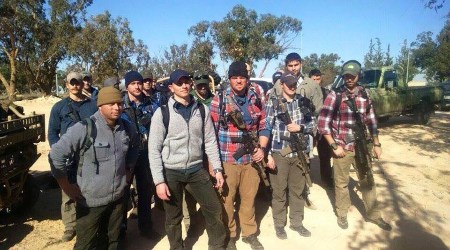
Libya’s air force said in a Facebook post that 20 US commandoes arrived at Wattiya airbase and disembarked “in combat readiness,” only to be told to leave. Pentagon sources confirmed the US had sent a special forces unit to Libya as part of a mission.
The Libyan Air Force said the 20 soldiers arrived at the airbase on Monday, but left soon after local commanders asked them to go because they had no right to be at the base “without prior coordination with protection force base.”
The Libyan air force published a Facebook post on Wednesday which included photographs of the special forces unit. It noted the 20 soldiers had disembarked “in combat readiness wearing bullet proof jackets, advanced weapons, silencers, handguns, night vision devices and GPS devices.”
When questioned by Libyan soldiers, the American troops said they were “in coordination with other members of the Libyan army,” the Libyan Air Force said. The Libyans were unconvinced.
“The response from your heroic army stationed at Wattiya base was to tell them to depart immediately and the group left, keeping their equipment with them,” the post added.
The photographs show three men armed with assault rifles, boarding a blue-and-white-striped passenger plane and driving a yellow dune buggy.
Pentagon sources confirmed to NBC News that the special forces unit was part of a mission sent this week, but it was unclear if the soldiers had left the country. Commandoes have been “in and out of Libya” for “some time now,” unnamed US officials told NBC, but the outlet reported they were there “purely to advise Libyan forces rather than conduct combat operations or training.”
According to the Associated Press, the failed debarkation happened just as Libya’s rival parliaments signed a landmark United Nations-sponsored deal to form a government in the war-torn country. Libya has been in chaos ever since Muammar Gaddafi was overthrown by NATO-backed rebels in 2011.
Read More: Fight against ISIS should be extended to Libya – French PM
Featured Video
Seyed M. Marandi: Toward Total War in the Middle East
or go to
Aletho News Archives – Video-Images
From the Archives
The Geopolitics behind the War in Yemen (I)
By Mahdi Darius NAZEMROAYA | Strategic Culture Foundation | 30.03.2015
The United States and the Kingdom of Saudi Arabia became very uneasy when the Yemenese or Yemenite movement of the Houthi or Ansarallah (meaning the supporters of God in Arabic) gained control of Yemen’s capital, Sanaa/Sana, in September 2014. The US-supported Yemenite President Abd-Rabbuh Manṣour Al-Hadi was humiliatingly forced to share power with the Houthis and the coalition of northern Yemenese tribes that had helped them enter Sana. Al-Hadi declared that negotiations for a Yemeni national unity government would take place and his allies the US and Saudi Arabia tried to use a new national dialogue and mediated talks to co-opt and pacify the Houthis.
The truth has been turned on its head about the war in Yemen. The war and ousting of President Abd-Rabbuh Manṣour Al-Hadi in Yemen are not the results of «Houthi coup» in Yemen. It is the opposite. Al-Hadi was ousted, because with Saudi and US support he tried to backtrack on the power sharing agreements he had made and return Yemen to authoritarian rule. The ousting of President Al-Hadi by the Houthis and their political allies was an unexpected reaction to the takeover Al-Hadi was planning with Washington and the House of Saudi. … continue
Blog Roll
 Aletho News
- US lawmaker admits American people footing bill for Trump’s failed aggression against Iran
- Pfizer Gave $500,000 to Groups That Lobbied to End Religious Exemption in Massachusetts
- HE SAVED LIVES. NOW HE FACES PRISON.
- Israeli lobby seeks to bind US fate to ‘Israel’: Araghchi
- Pakistan-Iran talks secure LNG shipment to Islamabad through Hormuz
- Black Sea grain crisis puts global wheat supplies under pressure
- IRGC air defenses destroy another US MQ-1 drone over Strait of Hormuz
- Imran Khan’s entire immediate family detained in Pakistan ahead of mass protest demanding his release
- EU nation detains former presidential frontrunner
- Leaked: Britain’s Sham Conviction Of Hashim Thaci
- If Americans Knew
- Israeli Attacks in Gaza Kill at Least Seven Palestinians Over Three Days, including Woman and Child
- Trump’s militarization of Washington DC as he pursues Israel’s war against Iran
- Why Israel Fears This Searing New Documentary
- Huckabee aide solicited cash gifts from Israelis
- This isn’t sci-fi, AI is already killing people
- ‘The Most Brutal Thing’: Investigation Reveals Execution of Elderly Woman in Rafah
- Inside Israel’s ‘soft’ ethnic cleansing plan for Gaza through the eyes of its victims
- New online database tracks pro-Israel political donations in the United States
- Israeli president pardons soldier convicted for killing wounded Palestinian
- Singer Ed Sheeran says his ‘heart broken’ by Gaza devastation, addresses Macklemore controversy
- No Tricks Zone
- 2025 Nature Paper Claiming Worsening Global Drought Gets RETRACTED …Heavily Flawed
- New Study: ‘Global Drought Shows No Detectable Recent Acceleration Under Climate Warming’
- Economic Masterminds: German Socialists Suggest Taxing Productivity Gains Stemming From Using AI
- The South China Sea Has Not Been Cooperating With The Climate Change Narrative
- Energy Crisis: Germany Enters Heating Season With Historically Low Gas Reserve Fill Levels
- New Study: The Antarctic Ice Sheet Gained Mass From 2020-2024 Due To Staggering Snow And Ice Accumulation
- Study: Ocean Heating Rates From Thousands Of Years Ago ‘Dwarf’ Modern Ocean Heating Rates
- Climate Extremists Target, Attack Large-Scale Power Grid Infrastructure In Germany!
- New Study: Antarctic Ice Melt Has Contributed Less Than 1 Centimeter To Sea Level Rise In The Last 30 Years
- Fear Of Debate: Alarmist German Climate Scientist Calls On Mainstream Media To Discredit Skeptic Voices
 Aletho News