The Boycott of Israel Eight Years In – An Analysis
By Lawrence Davidson | July 28, 2013
Part I – Happy Birthday, BDS
The Boycott, Divestment and Sanctions (BDS) movement directed toward Israel is eight years old. It was started back in 2005, when a coalition of Palestine-based social and economic organizations called for such a comprehensive effort.
At first the BDS movement appeared to be a long shot. Israel, with its worldwide coterie of Zionist supporters, both Jewish and Christian, seemed invincible. Particularly in the Western world, the belief in Israel’s legitimacy had reached the status of sacred tradition. The Zionists worked very hard to achieve this status by controlling the historical interpretation of events that had led from World War I and the Balfour Declaration to the creation of Israel in 1948, and beyond. They might well have been able to maintain control of Israel’s past, present and future if the Zionist leadership had not succumbed to the sin of hubris. They became so ideologically self-righteous and militarily muscle-bound that they believed their place in the world to be untouchable. Thus, as they built a country based on discrimination and colonial expansion in an age increasingly critical of such societies, they refused all compromise with the Palestinians and treated criticism of their behavior and policies as at once anti-Semitic and irrelevant. They therefore failed to notice that their stubbornness was allowing others to erode the Zionist version of the history of modern Palestine/Israel.
Eight years is not a very long time, but a surprising amount has been accomplished. Increasing numbers of people, particularly in the Western world, have been made aware of the plight of the Palestinians as well as their version of the history of Palestine/Israel. With this change in historical perspective, BDS established a foothold and started to grow. The movement has spent most of its time since 2005 coordinating a series of efforts to convince private-sector consumers, businesses, academics and artists to cut their ties with the Zionist State and its colonies. The latest success in this effort came just recently, when two of the largest supermarket chains in the Netherlands announced they would no longer sell Israeli merchandise manufactured or grown in the Occupied Territories (OT). Indeed, so successful has BDS been that the Israeli government has established an official task force to counteract it.
Part II – The European Union Makes a Move
Another recent event may be even more significant, because it suggests the potential for expanding BDS from the private to the public sphere. This was signaled when the European Union (EU) issued new rules for implementing certain categories of funding agreements with Israel. Funding of grants, prizes, loans and other financial cooperative ventures will now exclude Israeli institutions located in or doing business with the OT.
I want to emphasize the notion of “potential” because the EU move is not a boycott action as such. It is a signal to Israel that the EU will not recognize Israel’s claim to any part of the Occupied Territories without a peace settlement, and therefore this move serves as a point of pressure on the Israeli government to give up its hubris and negotiate with the Palestinian National Authority (PNA). By the way, the PNA as presently constituted is not a representative body and therefore has no legal authority to negotiate anything. However, the EU (along with the Israelis and the United States) persistently ignores this fact.
Nonetheless, this EU ruling is a step in the right direction, and some important Israelis understand the message. For instance, the Israeli peace organization Gush Shalom released a statement that said that the “EU has started to confront the government of Israel – and every citizen of Israel – with a road sign that cannot be ignored.” At least not without moving Israel toward “being an international pariah.” The renowned columnist and reporter for Israel’s newspaper Haaretz, Gideon Levy, has declared “The change [Israel needs] won’t come from within. . . . Change will only come from the outside.” Therefore, “Anyone who really fears for the future of the country needs to be in favor of boycotting it economically.” And, Israel’s justice minister, Tzipi Livni, the present government’s only minister publicly in favor of negotiations with the Palestinians, has warned that the threat of European economic sanctions extends beyond the OT. “It’s true that it will begin with the settlements,” she stated. “But their [a growing number of Europeans’] problem is with Israel, which is perceived as a colonialist country, so it won’t stop with the settlements and will reach all of Israel.”
Livni is correct. Israel’s version of history notwithstanding, the country’s origin is as a colonial settler state. As suggested above, the result was an inherently discriminatory society. This is not because most Israeli citizens are Jewish. It is because most are Zionists. Modern Zionism, which still reflects the colonial outlook of nineteenth-century imperial Europe, is the guiding ideology of Israel, and it proclaims that the country must be a Jewish State. Unfortunately, you can’t design a country for one group only, in a land where there also exists other sizable groups, and not end up with a discriminatory and oppressive society. Therefore, even if, by some miracle, the Israelis see the light and withdraw from the OT, there will still be a BDS movement agitating for an end to discrimination against non-Jews within the 1948 borders.
Part III – Israel’s Negative Reaction
Becoming a real democracy, where all citizens enjoy genuine political equality, is Israel’s only way of escaping the inevitable isolation that comes with the growing BDS movement. Yet, there is no reason to believe that the ideologues who now control the Israeli political and religious power structures are going to move in this direction. One can see this not only from the growing effort the Israeli government is putting into countering BDS, but also from the angry reaction of its political leaders to the EU decision.
Prime Minister Benjamin Netanyahu reacted to the EU decision with the temperament of a monarch. “We will not accept any external edicts on our borders.” That was, perhaps, the royal “we” he used. Then it was back to the first-person singular: “I will not let anyone harm the hundreds of thousands of Israelis living in Judea and Samaria, in the Golan Heights, or in Jerusalem – our united capital.” The prime minister was quite off base in his pronouncements. He is the head of a country that has meticulously avoided setting borders for decades just so Israel could expand at opportune moments. That sort of imperial behavior is not well accepted in today’s world. Also, unless he can greatly increase Zionist lobby leverage on the EU, he has no way to prevent the “harm” that may finally befall his compatriots for naively assuming the whole world will accept their criminal behavior forever.
The entire episode points to the fact that, both in the private and public sectors of Western society, greater numbers of people no longer follow the line of historical interpretation set down by the Zionists. This is a major shift. Many Zionists might see this as a sign of growing anti-Semitism, but it really is nothing of the sort. There is nothing inherently Jewish about discrimination and colonialism. However, the same cannot be said for modern Zionism.
Part IV – Conclusion
Again, the BDS movement is only 8 years old. We can compare this to the more than 30 years it took the boycott of South Africa to end apartheid. So, comparatively, BDS is only at the beginning of its trek. Its fast start and ongoing achievements should bring hope and pride to those involved in the movement. They should also raise some serious second thoughts in the minds of those Israelis who think Netanyahu and his government of ideologues can prevent their country’s increasing isolation.
Anger at BBC’s insistence that all of Jerusalem is Israeli city

MEMO | July 25, 2013
The BBC’s insistence on describing Jerusalem as an Israeli city, despite such a status not being recognised under international law, has been condemned by Palestine Solidarity Campaign (PSC).
In a ruling delivered this week, the BBC Trust appears to have accepted Israel’s facts on the grounds, namely that Jerusalem is a united Israeli city.
Writing to PSC, the Trust quotes the BBC’s Senior Editorial Strategy Advisor, Leanne Buckle, in her assessment of the BBC’s decision to describe Jerusalem as an Israeli city.
The Trust writes: “The advisor [Buckle] acknowledged that Israel’s sovereignty over the whole of Jerusalem was not recognized under international law. However, she considered that Israel had de facto control over the entire city in a political, administrative and military sense. She also noted that Jerusalem was administered as a single entity by the Jerusalem municipal authority which made no distinction between East and West.”
Based on this, the Trust has said it will not consider a complaint by PSC that BBC journalists are breaching the BBC’s Editorial Guidelines on Accuracy when they refer to Jerusalem as an Israeli city.
Under international law, only West Jerusalem is considered to be under Israeli de facto control, not the whole of Jerusalem. East Jerusalem is described by the UN as Occupied Palestinian Territory that has been illegally occupied and annexed by Israel.
In recent months, items on the BBC’s Today and The World Tonight programmes have described the whole of Jerusalem as being an Israeli city. The country profile page for Israel on the BBC website states that Israel’s seat of government is ‘Jerusalem’.
To date, the BBC continues to insist that it will not change this entry to ‘West Jerusalem’.
Sarah Colborne, Director of PSC, said: “The BBC’s refusal to distinguish between East and West Jerusalem flies in the face of international law and international opinion.
“Instead, Leanne Buckle’s comments reveal that Israel’s illegal creation of facts on the ground appear to have been accepted in BBC newsrooms and by BBC senior management. What’s more, the BBC seems willing to elevate this illegality above international law in its reporting. This is extremely disturbing.”
Colborne added: “The status of Jerusalem is a sensitive issue, and all reporting relating to it should be subject to the highest standards of accuracy by responsible news organisations. The BBC appears to have thrown accuracy out of the window, along with international law. Moreover, it seems to have airbrushed Palestinians and East Jerusalem out of the picture.”
“All we’re asking is that the BBC inserts the word ‘West’ before ‘Jerusalem’ when referring to the part of the divided city that is recognised under international law as being under de facto Israeli control. It’s a question of accuracy. Why is the BBC fighting so hard against it?”
Related articles
- Siam family from Sheikh Jarrah, struggling against eviction order and not giving up (palsolidarity.org)
- New Israeli Ethnic Cleansing Policy in Jerusalem (ramyabdeljabbar.wordpress.com)
Soldiers invade two Palestinian houses – for training only
International Solidarity Movement | July 25, 2013
Hebron, Occupied Palestine – Last night, Israeli occupation soldiers invaded two houses in Tel Rumeida, Hebron, one being the Sumud house and the headquarters of the Palestinian human rights organisation Youth Against Settlements.

Israeli soldier climbing fence surrounding the Palestinian home. The door was unlocked the entire time (Photo by ISM)
At 21:15 pm three groups consisting of four Israeli soldiers each invaded the Sumud house from different directions. The heavily armed soldiers took the residents of the house completely by surprise, as they had been sneaking through the nearby olive groves. After harassing the people at the Sumud house and creating some mess, the soldiers retreated into the olive groves, only to invade the neighbouring house’s back-garden using the latter to climb over the wall surrounding the property. The aim of the exercise is unclear but soldiers seemed to have practised how to break into a house.
Activists from Youth Against Settlements as well as the International Solidarity Movement who were present at the scene strongly believe the invasion to have been a training exercise, as the soldiers could not show a court order justifying the invasion, nor did they arrest anyone. The precise goal and nature of the exercise remain unclear. By 22pm, all soldiers had gone, leaving a trail of confusion and broken property.

Among the broken property was the Sumud house Argile (Photo by ISM)
Although this is the first time the Sumud house has been targeted in what is clearly a training excersise, such incidents are not uncommon in the H2 area of Hebron, where 35,000 Palestinians live under the constant presence and control of a couple of thousand Israeli soldiers. “I am not training material. I am not an object,” local human rights activist Issa Amro commented after the incident. Amro subsequently called the Israeli DCO (District Coordination Office), which did not seem to know about the harassment and were unable to offer any explanation for the invasion of the two houses.
Related articles
- Father and 7-year-old son illegally detained in occupied Hebron (alethonews.wordpress.com)
- Jabari family once again facing harassment from settlers and soldiers (alethonews.wordpress.com)
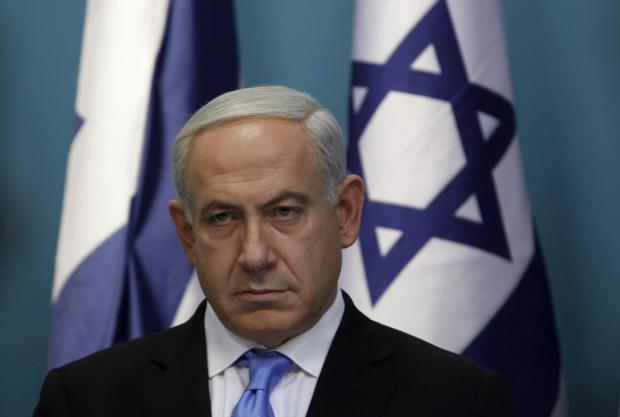
Netanyahu reminds EU that Israel is above the law
Al-Manar | July 17, 2013
Israeli Prime Minister Benjamin Netanyahu slammed a European Union directive requiring member states to boycott Israelis living in the West Bank and East al-Quds (Jerusalem).
In an emergency meeting on Tuesday, Netanyahu pledged: “We will not accept any outside diktat about our borders.”
“This issue will be decided only in direct negotiations between the sides,” he added.
The directive included conditions for future contacts between the EU and the Zionist entity.
Netanyahu said that EU was taking steps unilaterally, while paying less attention to urgent regional matters such as the Syrian conflict and Iran’s nuclear problem.
“I would expect those who truly want peace and stability in the region would discuss this issue after solving more urgent regional problems such as the civil war in Syria or Iran’s race to achieve nuclear weapons,” he said.
“As the Prime Minister of Israel, I will not allow the hundreds of thousands of Israelis who live in Judea and Samaria, on the Golan Heights and in Jerusalem, our united capital, to be harmed,” Netanyahu added.
The meeting was held at the Prime Minister’s office in al-Quds. Those in attendance included Justice Minister Tzipi Livni, Economy Minister Naftali Bennett and Deputy Foreign Minister Zeev Elkin.
Related articles
Israel to establish new settlement park in Jerusalem
Palestine Information center – 08/07/2013
OCCUPIED JERUSALEM — The Jerusalem Planning and Building Committee has approved the establishment of a new settlement park at the expense of Walaja village’s land in southern Jerusalem, Hebrew media sources said.
The boundary of the park will run along the Apartheid Wall, which separates the villagers of Walaja from their farmland, according to Haaretz newspaper.
“The Refaim Valley Park” will cover more than 5,700 dunums, or 1,425 acres, at the southern exit of Jerusalem and will be part of the large urban park to surround Jerusalem on three sides. The Green Line runs through the base of the Refaim Valley, through which the park runs, the newspaper explained.
Haaretz stated that 1,200 dunums of land of the park are terraced farmlands belonging to the villagers of Walaja. Villagers say the main threat to the ancient culture of terrace agriculture comes from the Apartheid Wall under construction.
An Israeli official said, “changing the character of the area from Palestinian farmland into an Israeli recreational site fits in with the plan to create contiguity between the holy city and the settlements surrounding.”
Related article
- Report: 100 Israeli attacks during June (alethonews.wordpress.com)
Unattainable peace…
By JAMAL KANJ | Intifada-Palestine | June 30, 2013
But for the chap from Khan Younis refugee camp in Gaza who emerged earlier this week as the winner of the “Arab Idol,” the news from Palestine is grim.
The newly appointed Palestinian Prime Minister resigned and Israel still insist it should be able to negotiate over dividing the pie while it continues to eat it.
By the end of April, US Secretary of State John Kerry succeeded in tailoring another peace plan to entice Israel. Arab ministers supposedly agreed to amend a decade-old peace plan to satisfy Israeli demands for legalizing major illegal Jewish colonies in the West Bank.
In May 2009, Israel responded to the US mediated overture by issuing permits to build 296 illegal new homes in the Jewish-only colony of Beit El near Ramallah. This week the Secretary of State was scheduled to arrive for his fifth visit since February in an attempt to restart the Palestinian and Israeli negotiations.
The visit seems to be on hold to give time to Palestine’s President to consider a new US economic peace plan and for Israel to give Abbas face-saving cover to return to the negotiation table.
Israel is already sending mixed messages.
According to news reports that have appeared in Israeli daily Ma’ariv, Netanyahu is considering a token gesture of releasing a small number of Palestinian prisoners and to issue temporary freeze “outside the settlement blocks” in the West Bank.
The deceptive “freeze” may force Abbas to succumb to American pressure while Netanyahu can claim – and rightly so – that it is irrelevant as building inside the Jewish-only “settlement blocks” will continue.
Affirming its real intentions and to pre-empt Kerry’s renewed efforts – in what is becoming traditional embarrassment for visiting US officials – the Israeli government issued earlier this month plans to build more than 1,000 new Jewish-only homes in two West Bank colonies.
Instead of addressing Israel’s inflexibility, the US is tantalizing with an economic package worth $4 billion of private American and European investment.
In fact, the new American “economic peace” is a repackaged Netanyahu plan from the 1990s, which was intended to dodge tackling the most pressing issues in the peace talks.
In theory, the proposal would expand the Palestinian economy by 50 per cent over three years while granting Israel more time to finish eating the “pie”.
But in reality, past investments were undermined by Israeli closures and military checkpoints or even destroyed as was the case for Gaza’s air and sea ports, leaving Palestinians with false promises and the only measurable expansion was in the size of Jewish colonies.
To bolster Israel’s arrogance, the US House of Representatives passed, two weeks ago, the National Defense Authorization Act in which it delegated – for the first time in US history – the power to wage war to a foreign entity when it committed the US to avail “diplomatic, military, and economic support” to Israel should it decide to strike Iran.
Along with that vote and at a time when both sides of the isle wrangled over how much more to cut from the defense budget, the US Congress was united in tripling Obama’s request to finance Israeli missile defense from $96 million to $284m.
It is indisputable that this unqualified US subservient support is directly responsible for Israel’s intransigence and the failure of the peace process. This was exemplified last week when Polish descendent and Israeli Economy Minister Naftali Bennett – an ex US multimillionaire who renounced his US citizenship – declared on June 17 the death of the Palestinian state idea and that he wasn’t an occupier and the West Bank was his “home”.
Rejecting the Palestinian state, Danny Danon, the Israel’s Deputy Defence Minister, was quoted in the Times of Israel: “The international community can say whatever they want, and we can do whatever we want”. Israeli leaders can’t be more explicit in their rejection of a viable Palestinian state, making the talk about settlement “freeze” meaningless and peace unattainable.
Related articles
- Maximum Land with Minimum Palestinians: The Annexation of Area C (alethonews.wordpress.com)
- Palestinians dubious of Kerry’s “real progress” in peace plan (alethonews.wordpress.com)
Report: 100 Israeli attacks during June
Palestine Information Center – 01/07/2013
RAMALLAH — In its monthly report, the Information Center of the Wall and Settlement documented an escalation in Israeli attacks during June including demolition notices and settlement expansion.
The report issued on Sunday monitored 98 Israeli assaults during June including 23 demolition operations mostly in Jordan alley and Jenin.
The report also pointed out 57 demolition orders in al-Khalil, 11 demolition notifications in Jerusalem, and 6 others in Bethlehem.
During June, the Israeli authorities declared the establishment of 3,341 housing units in West Bank settlements, and approved the construction of a huge building in Wadi al-Hilweh, known as Giv’ati parking, as part of the Israeli Judaization schemes in occupied Jerusalem.
Israel’s Jerusalem District Committee for Planning and Building has prepared an outline to connect the Jewish quarter in the Old Town Square with Al-Buraq Square through building underground elevators and corridors, the report added.
For its part, the Israeli Municipality has established a new road to link between the occupied city of Jerusalem and Ma’aleh Adumim settlement.
The monthly report referred to Israeli settlers’ escalated attacks where 14 Palestinian citizens were assaulted, and 30 cars were burned, in addition to stealing Palestinian monuments in Bethlehem and closing main streets that connect Palestinian villages and cities.
The Information Center also documented several Israeli break-ins into al-Aqsa mosque during June.
Related articles
- Jewish settlers attack buses filled with children in Jerusalem (alethonews.wordpress.com)
- UN statement on Israeli plan to relocate Palestinians to build houses for settlers (alethonews.wordpress.com)
- Maximum Land with Minimum Palestinians: The Annexation of Area C (alethonews.wordpress.com)
- More Israeli settler-terrorism: Settlers attack two Palestinian buses in Jerusalem (altahrir.wordpress.com)
- Report: “1790 Palestinians Kidnapped, 16 Killed, In First Half of 2013” (imemc.org)
- Palestine: Al Aqsa mosque stormed, demolition orders & more lands confiscated (realisticbird.wordpress.com)
Palestinians dubious of Kerry’s “real progress” in peace plan
Al-Akhbar | June 30, 2013
A top Palestinian official said on Sunday that there had been no breakthrough in marathon American-led efforts to revive direct peace talks, but US Secretary of State John Kerry said there had been “real progress.”
The statements come just as Israel announced that it might implement monetary incentives to encourage people to move to an illegal settlement in the West Bank.
“It was a positive and profound meeting with [Palestinian] President (Mahmoud)Abbas but there has been no breakthrough so far and there is still a gap between the Palestinian and Israeli positions,” chief Palestinian negotiator Saeb Erakat told reporters after Kerry finished talks in Ramallah with Abbas, his third meeting in as many days.
But Kerry, however, insisted he had held “very positive” discussions with both sides since starting his intense shuttle diplomacy in Jerusalem on Thursday evening, in a high-profile bid to draw the two sides back into direct negotiations after a gap of nearly three years.
And he said that with “a little more work” the start of final status talks “could be within reach.”
“I am pleased to tell you that we have made real progress on this trip and I believe that with a little more work, the start of final status negotiations could be within reach,” Kerry told reporters at Ben Gurion airport just before leaving for Brunei.
“We started out with very wide gaps and we have narrowed those considerably,” he said, describing them as “very narrow.”
“We have some specific details and work to pursue but I am absolutely confident that we are on the right track and that all the parties are working in very good faith in order to get to the right place.”
Asked if Israel’s settlement building had hampered efforts to achieve a breakthrough, he said: “The answer is no, there are any number of obstacles, but we are working through them.”
“We have to have the courage to stay at this and to make some tough decisions,” he said.
Kerry, who has over the last four days spent a total 13 hours in talks with Israeli Prime Minister Benjamin Netanyahu and another six with Abbas, said he would return to the region without saying when.
“I’m going to come back because both leaders have asked me to,” he said.
Speaking at the start of the weekly cabinet meeting, Netanyahu insisted that Israel was not blocking a return to negotiations.
“We are not putting up any impediments on the resumption of the permanent talks for a peace agreement between us and the Palestinians,” he said in remarks communicated by his office.
He also pledged to put any agreement to a referendum, saying it will be “submitted to the people for a decision.”
But Israel’s army radio said Kerry’s marathon efforts had so far failed to coax the sides back into direct negotiations after a gap of nearly three years.
Abbas is pushing Israel to free the longest-serving Palestinian prisoners, to remove roadblocks in the West Bank and to publicly agree to make the lines that existed before the 1967 Middle East war the baseline for negotiations.
Army radio said that Netanyahu was willing to consider just the first two conditions — but only after talks were under way.
So far, Israel has flatly refused to countenance any return to the 1967 lines.
Palestinian officials appeared pessimistic about Kerry’s chances of achieving a breakthrough.
“Netanyahu and his government are not serious about establishing a Palestinian state in the 1967 borders, they speak of a state without clear borders, and we need clarity according to international resolutions,” said Azzam al-Ahmad, a senior official of Abbas’s ruling Fatah party.
“We are ready to resume negotiations according to our clear guidelines,” he told Voice of Palestine.
“Even with regards to the prisoners’ issue, Israel did not provide any clear answer. We want a serious process to be launched,” he said.
In another move likely to spark tension, army radio said an Israeli committee was poised to push through a big discount for buyers of nearly 1,000 new homes which are due to be built in annexed east Jerusalem.
The plan, which will offer prospective buyers a huge discount on 930 new homes to be built in Har Homa, will be discussed by Jerusalem municipality’s finance committee on Monday, army radio and Maariv newspaper reported.
If approved, the plan will lower the price of each new home by $27,500 in a move which will be funded by the housing ministry.
Har Homa is located on east Jerusalem’s southern outskirts, and construction there is likely to have a serious impact on the sector’s boundary with the rest of the West Bank, analysts say.
Jerusalem councilor Elisha Peleg, a member of Netanyahu’s right-wing Likud party, made no effort to hide his delight.
“The temporary suspension of construction in east Jerusalem is over, despite the visit of Secretary of State Kerry,” he told army radio.
“There is no reason to halt construction any more, because it is now proved that stopping construction in east Jerusalem has not brought about a renewal of negotiations with the Palestinians but has caused a severe shortage of housing,” he said.
Last week, on the eve of Kerry’s arrival, another local committee gave final approval to build some 70 homes in the same area.
Palestinian chief negotiator Saeb Erakat said it showed which side was blocking a return to the negotiating table.
“This is Netanyahu’s response to everything Kerry said, to his ideas and to all his efforts,” Erakat told AFP.
“We on the Palestinian side tried every possible effort to help Kerry succeed but it is obvious today … that Netanyahu is putting an obstacle in front of Secretary Kerry’s efforts.”
“Netanyahu alone is responsible for ruining Kerry’s efforts and trying to abort his mission and destroying the two-state solution which is supported by the entire international community.”
Palestinians have said they will not return to direct talks unless Israel completely halts settlement construction and accepts the 1967 lines as the basis for negotiations.
Although Israel has expressed a willingness to talk, it has insisted it would only do so if there were no such “preconditions”.
Kerry, who has made the elusive goal of Middle East peace a top priority, was on his fifth visit to the region since taking over the State Department in February.
“Kerry is willing to put in the legwork necessary to move this process forward in a meaningful way,” a US official said on condition of anonymity.
US officials have been tight-lipped about the substance of Kerry’s meetings, fearing that any public statements could put at risk his efforts.
(AFP, Al-Akhbar)
Featured Video

Trita Parsi: Middle East Unraveling — Are We on the Path to World War?
or go to
Aletho News Archives – Video-Images
From the Archives
Why Saudi Ties to 9/11 Mean U.S. Ties to 9/11
By Kevin Ryan | Dig Within | September 27, 2015
Media interest in Saudi Arabian connections to the crimes of 9/11 has centered on calls for the release of the 28 missing pages from the Joint Congressional Inquiry’s report. However, those calls focus on the question of hijacker financing and omit the most interesting links between the 9/11 attacks and Saudi Arabia—links that implicate powerful people in the United States. Here are twenty examples. … continue
Blog Roll
 Aletho News
- Neria Leiter Was A Legitimate Military Target
- Integrity Initiative: UK-funded network framed dissent as Russian disinformation for years
- ‘We don’t seek permission to defend our country’: Snippets from President Pezeshkian’s UNGA address
- NATO chief wants Europeans to fight American wars [for Israel]
- German chemicals giant reveals details of downsizing
- Refaat Al-Areer Was The Canary In The Coal Mine In Israel’s War On The Truth
- Israeli election committee bars candidate from Knesset race over Gaza war opposition
- French-Lebanese man files war crimes complaint over Israeli attacks
- Mahan Air Flight Lands in China Despite US Threat against Iranian Airlines
- US eyes $10bn fund to rebuild war-battered Gulf infrastructure
- If Americans Knew
- Caught on Tape: AIPAC CEO Boasted of Controlling Trump’s National Security Officials
- Why Hamas Attacked Israel in October 2023 – Israeli professor Ilan Pappé
- They see them, then kill them: Israeli quadcopters track, deliberately target civilians in Gaza
- Winter could turn Gaza’s treacherous, war-damaged buildings into deathtraps
- Majority of Democratic Voters Want to Prosecute Both Biden and Trump Administration Officials Over Gaza
- As Gaza languishes, world leaders gather at the UN – Daily Update
- Sanctions are collective punishment: immoral and self-defeating
- Phosphorus Munitions Fired by Israel Burn Groves, Orchards in Southern Lebanon
- Israel Carries Out New Ceasefire Violations Across Gaza
- AI – Emphasis on the ‘I’: Israel Is Funding AI Chatbot Propaganda
- No Tricks Zone
- New Study: Earth And Venus Surface Warmth Largely Explained By Convection And Lapse Rate, Not CO2 Or Radiation
- 2025 Nature Paper Claiming Worsening Global Drought Gets RETRACTED …Heavily Flawed
- New Study: ‘Global Drought Shows No Detectable Recent Acceleration Under Climate Warming’
- Economic Masterminds: German Socialists Suggest Taxing Productivity Gains Stemming From Using AI
- The South China Sea Has Not Been Cooperating With The Climate Change Narrative
- Energy Crisis: Germany Enters Heating Season With Historically Low Gas Reserve Fill Levels
- New Study: The Antarctic Ice Sheet Gained Mass From 2020-2024 Due To Staggering Snow And Ice Accumulation
- Study: Ocean Heating Rates From Thousands Of Years Ago ‘Dwarf’ Modern Ocean Heating Rates
- Climate Extremists Target, Attack Large-Scale Power Grid Infrastructure In Germany!
- New Study: Antarctic Ice Melt Has Contributed Less Than 1 Centimeter To Sea Level Rise In The Last 30 Years

