Repression and resistance sharpening in Beit Ommar
By David Warren | The Electronic Intifada | 19 September 2011
Beit Ommar – With a population of 17,000, Beit Ommar has grown into more of town than a village. But the tractors struggling up the main street and the herds of sheep wandering the alleys eating rubbish and causing mischief help it retain a certain rural charm.
Beit Ommar sits alongside Route 60, the main highway between Bethlehem and Hebron, which you can reach in about 30 minutes on a good day. Like much of the rural West Bank, the area depends on agriculture, with the village’s location in the West Bank’s central highlands particularly suitable for softer fruits such as grapes, peaches and plums.
That is where the normality ends, however. If you were to climb one of the nearby hills you would notice that Beit Ommar is encircled by no less than five illegal settlements: Karmei Tsur, Kfar Etzion, Migdal Oz, Bat Ayin and Allon Shevut. In Beit Ommar, water is regularly cut off and private wells are illegal. In the settlements, swimming pools and fountains are de rigeur.
Taking a stroll down to the entrance to the village, you could not fail to notice the tallest watchtower in the West Bank looming above you — a modern-day Panopticon from Foucault’s worst nightmares — cataloguing those who come and go. The sound of low-flying jets, helicopters and even drones is an ever-constant reminder of the destructive potential of the Israeli military, a continual source of fear. That’s the point.
This is the context in which Mohammed Shtayyeh, a senior member of Fatah’s central committee admits that, even if the United Nations approves the Palestinian Authority’s bid for statehood, it will not change daily life for Palestinians. “Things on the ground are not going to be different,” he said at a recent news conference (“PLO to seek full UN recognition,” Al Jazeera English, 14 September 2011).
Week of brutality
Bearing this in mind one should consider what has happened on the ground in Beit Ommar over one September week.
On 6 September, a group of 15 farmers selling fruit beside the main highway were attacked by Israeli soldiers, who proceeded to confiscate and destroy thousands of dollars worth of grapes, peaches and plums (“Israeli soldiers, police attack Beit Ommar fruit vendors,” Palestine Solidarity Project, 7 September).
Given its strategic location beside Route 60, Beit Ommar used to have the largest fruit market in the southern West Bank. Now however, the Israeli army has blocked the entrance to the market with boulders, dissuading shoppers. This is part of the ongoing campaign to destroy Beit Ommar’s economy, as local farmers are now reduced to attempting to sell what they can to passing traffic.
A few days later, on 10 September, a small sit-in protest of little more than ten persons beside the highway was savagely repressed. The group was sprayed with military-grade mace and two international activists were dragged away to be detained without charge (“Two arrested, pepper spray used as activists try to tear down fence in Beit Ommar,” Palestine Solidarity Project, 10 September) .
The next night at around 2am, the Israeli army invaded the village, abducting three young Palestinians while firing tear gas and concussion grenades into the streets and nearby houses before vanishing into the gloom (“Israeli army raid Beit Ommar, arrest three,” Palestine Solidarity Project, 12 September).
The arrest of young people towards the end of the school year is a common, vindictive practice in the West Bank, meaning that those detained will miss their final exams and therefore have to re-sit the year at great personal expense.
Early Monday morning on 12 September, settlers hacked down grape vines that were almost ready for harvesting on an area of almost 2,000 square meters. The owner of the land had a heart attack when he saw the destruction, according to the Palestine Solidarity Project (“Settlers destroy Beit Ommar farmer’s crops,” Palestine Solidarity Project, 12 September).
On Tuesday, at around 4am, soldiers came with bulldozers and destroyed two buildings in different parts of the town (“Israeli army demolish two buildings in Beit Ommar area,” Palestine Solidarity Project, 13 September).
Given that Beit Ommar found itself in Area C after the Oslo accords, it has remained under the total control of the Israeli military. Under the Oslo accords, which were signed by the Palestine Liberation Organization and Israel in the mid-1990s, the West Bank was carved up in to areas A, B and C, the latter of which covers 60 percent of the West Bank with a population of approximately 150,000. Large areas around the village have been arbitrarily closed to agriculture and building.
Waiting for Godot
Even these relatively minor events depict a scene of continual violence being perpetrated against the civilian population, a roll-call of yet another quiet horror repeated across the West Bank for decades. On occasions, there are discussions of the United Nations’ session on recognition of a Palestinian state and what might result from this.
Mousa Abu Maria, a leader of the Beit Ommar-based National Committee Against the Walls and Settlements and co-founder of the Palestine Solidarity Project, describes how in the past few years Beit Ommar has “returned to its roots,” a path of nonviolent resistance, reminiscent of the first Palestinian intifada.
Abu Maria has spent nearly seven of the past ten years in prison, most recently for 14 months under “administrative detention” without being charged with a crime or having evidence presented against him.
Now, each Saturday, Abu Maria, alongside other members of Beit Ommar’s popular committee, leads the demonstrations which place alongside the illegal settlement of Karmei Tsur. The number of protesters is currently in the dozens, but as they have grown, so too has the violence of the Israeli response.
After a recent demonstration had been dispersed, and soldiers were pursuing Abu Maria and two others, live ammunition was fired at them. The bullets sailed over their heads. At the same demonstration, Abu Maria’s brother, Yousef, was arrested and brutally beaten (“Yousef Abu Maria brutally beaten as live ammunition used at Beit Ommar demonstration,” Palestine Solidarity Project, 20 August 2011).
What happens on 21 September, and afterwards, is anyone’s guess. Whatever happens at the UN, recognition of a state or otherwise, it seems that the violence of Israel’s occupation will continue. But so too will the popular resistance.
David Warren is an activist currently working in Beit Ommar.
Settlers Plan “Sovereignty Marches” In Palestinian Towns
By Saed Bannoura | IMEMC & Agencies | September 19, 2011
Israeli Ynet News reported that Israeli settlers living in the occupied territories are planning what they dubbed as “Sovereignty Marches” in the Palestinian territories, starting on Tuesday afternoon.
Fanatic settlers’ leader, Itamar Ben-Gvir stated that “the settlers will be taking off to the streets to show the Palestinians who really owns this land”, and that the settlers “will not wait while the Palestinians get close to the borders of the settlements”.
He added that the settlers will be marching towards Palestinian towns and villages.
A security officer at a settlement in the West Bank stated that the settlers are prepared to use live rounds against Palestinian protesters, adding that the settlers believe that the Israeli Army is too naive to believe that the Palestinian Security forces will be able to prevent massive Palestinians marches towards the settlements.
Settlement Councils in the occupied territories decided that the settler marches will be held starting from Itamar settlement to the northern West Bank city of Nablus, from Beit El near Ramallah to the closest Liaison Office, and from Kiryat Arba’ settlement in Hebron.
The settlers are also planning to distribute tens of thousands of Israeli flags to be raised in different settlements and on thousands of settlers’ cars.
Meanwhile, thousands of Israeli army soldiers and policemen started training in order to prepare to counter Palestinian protests in the West Bank. The drills are meant to prepare for massive Palestinian protests, and what was described as “Palestinian attempts to break into Israeli settlements.
The Ynet said that the Israeli Police are preparing to counter possible attacks in Israel, attacks against West Bank settlements, and homemade shells fired from the Gaza Strip.
But, Israeli army leaders believe that some local incidents will likely take place, yet, the massive popular protests conducted by the Palestinians will be largely nonviolent.
Israeli sources stated that Israel Army Central Command Chief Major-General, Avi Mizrahi, instructed the soldiers to “show restraint”, and also instructed the army to be prepared to stop Palestinians demonstrations should the Palestinian Security Forces fail to prevent marches towards the settlements.
Last Thursday, Palestinian Authority spokesperson, Dr. Ghassan Al Khatib, warned that attacks and threats by the settlers are increasing.
Palestinian legislator, Dr. Mustafa Barghouthi, said that the armed population of Israeli settlers in the occupied territories would commit massacres against the Palestinian people, and that the setters carried out several serious attacks against Palestinian villages earlier this month.
He added that the Israeli Army is participating with the settlers in the “organized crime” against the Palestinian people.
Are the Taliban Winning?
By GARETH PORTER | CounterPunch | September 16, 2011
Gen. David Petraeus wrote in his 2006 counterinsurgency manual that the U.S. command headquarters should establish a “narrative” for the counterinsurgency war – a simple storyline that provides a framework for understanding events, both for the population of the country in question and for international audiences.
But this week’s Taliban attacks on multiple targets in Kabul, including the U.S. Embassy and U.S.-NATO headquarters, are the latest and most spectacular of a long series of operations that have given the insurgents the upper hand in establishing the narrative of the war as perceived by the Afghan population.
Those attacks and other operations that generated headlines in 2010 have been aimed at convincing Afghans that the Taliban can strike any target in the country, because they have their own agents within the Afghan government’s military, police and administrative organs.
In the wake of the latest attacks, the Taliban war narrative achieved a new level of influence when a political opponent of President Hamid Karzai associated with a prominent Pashtun warlord charged that the Taliban could not have pulled off such a sophisticated set of coordinated attacks in the centre of the capital without help from within the Afghan security apparatus.
The Taliban have mounted three high-profile attacks in Kabul over the past three months involving suicide bombers and commandos with rocket- propelled grenades.
In late June, six suicide bombers attacked the Intercontinental Hotel, the favourite spot in the capital for westerners to hold conferences, which left the hotel in darkness for many hours.
And in August, the insurgents carried out a much more complex attack on the British Council, a semi-governmental agency involved in organising cultural events. The attack involving a suicide bombing at a key intersection in western Kabul followed an attack on the police checkpoint guarding the British Council, and a suicide car bomb that destroyed the wall around the Council and allowed the team of suicide attackers to enter the compound.
Attacks on the capital were supposed to have been made impossible by a “Ring of Steel” around the city. After the Taliban had carried out an attack in downtown Kabul in January 2010, the Afghan police, with funding and advice from the U.S. military, set up a system of 25 security checkpoints around the capital that is guarded by 800 officers of the Kabul City Police Command battalion.
Nevertheless, the insurgents were able to smuggle weapons, including rocket-propelled grenade launchers, through the cordon and sustained an all-day attack on the International Security Assistance Force (ISAF) headquarters.
For the first time, a prominent political figure in Kabul has charged that the attackers must indeed have had help from people within the Afghan government’s security apparatus.
Mohammed Naim Hamidzai Lalai, chairman of the Parliament’s Internal Security Committee and a political ally of powerful Pashtun warlord Gul Agha Sherzai, charged that the “nature and scale of today’s attack” showed that the Taliban had gotten “assistance and guidance from some security officials within the government who are their sympathisers”, according to the New York Times.
“Otherwise it would be impossible for the planners and masterminds of the attack to stage such a sophisticated and complex attack, in this extremely well-guarded location without the complicity from insiders,” he said.
Central to the Taliban strategy has been a series of assassinations of top Afghan government figures that has demonstrated their ability to place their own agents within the most secure spots in the country.
In mid-April, a Taliban suicide bomber wearing a policeman’s uniform was able to penetrate security outside the Kandahar police headquarters and killed the provincial police chief.
On May 28, a Taliban suicide bomber who had been able to gain access to the governor’s compound in Takhar province detonated his suicide vest in the hallway outside a meeting room and killed the police chief for northern Afghanistan, Gen. Mohammad Daud Daud.
In July, Ahmed Wali Karzai, the half-brother of President Karzai and the Mafia-style political boss of Kandahar province, was killed by the long-time head of his security detail, Sardar Mohammad. Mohammad had been trusted by U.S. Special Forces and the CIA, who had very close ties with Wali Karzai.
But Mahmoud Karzai, another brother of the president, told Julius Cavendish of The Independent a few days after the assassination that Mohammad had made a trip to Quetta and had met with the Taliban, and that he had been getting phone calls in the middle of the night. The Karzai family had concluded that Mohammad had been recruited by the Taliban to kill Wali Karzai, according to the brother.
Perhaps the most important element in building the Taliban narrative has been the constant drumbeat of attacks by Afghan soldiers and policemen on U.S. and NATO troops. According to official NATO figures, between March 2009 and June 2011, at least 57 foreign troops, including 32 Americans, were killed in at least 19 such attacks.
U.S. military and intelligence officials reluctantly concluded that that most, if not all, of the attacks had been the result of recruitment by the Taliban intelligence service of Afghan security personnel to kill U.S. and NATO troops, at obvious risk to themselves.
In June, the U.S. decided to send an unknown number of counterintelligence agents to tighten procedures for identifying troops who might be more likely to be recruited by the Taliban.
Adding to the Taliban war narrative was the carefully-planned breakout of nearly 500 prisoners from the security wing of Sarposa prison in Kandahar City after a few prisoners spent months digging a 1,000-foot tunnel. The breakout was possible only with the help of a Taliban underground agent or sympathiser who provided copies of keys to the cells, with which Taliban prisoners involved in the plan could unlock the cells of their fellow prisoners and so they could escape through the tunnel.
Two weeks later, the Taliban carried out a complex attack on key government targets in Kandahar city, including the governor’s office, the Afghan intelligence agency and the police station. The offensive in Kandahar involved seven explosions across the city, six of which were the result of suicide bombers.
The Taliban were able to strike freely in Kandahar despite what Canadian Brig.-Gen. Daniel Menard had called a “ring of stability” – a security cordon that supposed to keep Taliban fighters from getting into the city.
In February 2010, Menard, who was commander of Task Force Kandahar for ISAF, had boasted that, with a total of nearly 6,000 U.S. and Canadian troops deployed against Taliban forces in Kandahar Province, “I can literally break their back.”
But the Taliban continued to operate freely in the city. As Peter Dmitrov, a former Canadian military officer who was working as a security consultant to NGOs in Afghanistan, observed last November to The Canadian Press, “The ring hasn’t really shut closed in any way, shape or form.”
The U.S. war strategy has been based at least in part on convincing Afghans that the United States would remain in Afghanistan indefinitely, and that the Taliban would weaken. But the Taliban war narrative that it is able to penetrate even the tightest security and cannot be defeated appears to have far more credibility with Afghans of all political stripes than the narrative put forward by U.S. strategists.
~
Gareth Porter is an investigative reporter based in Washington DC. The paperback edition of his latest book, “Perils of Dominance: Imbalance of Power and the Road to War in Vietnam“, was published in 2006.
Israel violates UNSC resolutions: UNIFIL
Press TV – September 16, 2011
The United Nations Interim Force in Lebanon (UNIFIL) has accused Israel of regularly violating Security Council resolutions, Press TV has learned.
Milos Strugar, UNIFIL’s political director, said on Friday that the Israeli army violates Lebanon’s sovereignty and territorial integrity on an almost daily basis which is against the UNSC Resolution 1701.
UN Security Council Resolution 1701, which brokered a ceasefire in the war Israel launched against Lebanon in 2006, calls on Tel Aviv to respect Beirut’s sovereignty and territorial integrity.
The UNIFIL official also blamed Israel for refusing to withdraw from all Lebanese territory, including parts of Ghajar village in the south, despite the UNSC resolution.
He added that the UN mission has made several proposals with regards to an Israeli withdrawal from the village which have all been turned down by Tel Aviv.
Strugar said that the violation of Lebanese airspace by Israel not only violates UN resolutions but also undermines the status of UNIFIL, which was established in 1978 to help the Lebanese Government regain sovereignty over the southern border zone, which had been invaded by Israel.
Lebanon’s government and the Hezbollah resistance movement have repeatedly complained of Israeli violations of the country’s airspace.
Tel Aviv claims that the overflights serve surveillance purposes.
Israel escalates attacks on fishermen in the Gaza Strip
Palestinian Center For Human Rights | September 15, 2011
The Palestinian Centre for Human Rights (PCHR) condemns ongoing Israeli attacks targeting Palestinian fishermen in the Gaza Strip, and expresses grave concern regarding the escalation of these attacks in recent days
This escalation has resulted in the injury and arrest of a number of fishermen, and the confiscation of a number of fishing boats. Detained fishermen were questioned, pressured to provide security information and collaborate with Israeli forces, and subject to cruel and degrading treatment.
According to investigations conducted by PCHR, at approximately 06:15 on Sunday, 11 September 2011, two Israeli gunboats stationed opposite to al-Waha Resort, northwest of Beit Lahia in the northern Gaza Strip, surrounded two Palestinian boats.
There were eight fishermen, including two boys, on board the two boats. The gunboats opened fire on the two Palestinian boats. As a result, two fishermen were wounded by shrapnel. Israeli naval forces arrested the eight fishermen after forcing them to take their clothes off and jump into water, confiscated their boats and sailed to Ashdod Port in Israel.
Hassan Khader Hassan Baker, 53; and his sons Khader, 29; Ja’far, 27; and Mohammed, 21; and ‘Allam Naser Fadel Baker, 16, were on the first boat. Khalil Jawher Khalil Baker, 21; Mohammed Majed Fadel Baker, 19; and Mohammed Suheil Fadel Baker, 17 were on the second.
At approximately 18:00 on the same day, Israeli forces released ‘Allam Naser Baker; Mohammed Majed Baker; and Mohammed Suheil Baker, who was wounded by shrapnel in the right thigh during his arrest. They were released via Beit Hanoun (Erez) crossing.
Approximately 3 hours later, Israeli forces released Hassan Khader Baker, who was wounded by shrapnel in his left hand during his arrest, and his sons Ja’far, Mohammed and Khader; Khalil Jawhar Baker via Beit Hanoun (Erez) after they were questioned regarding their work. In his testimony to PCHR, a released fisherman stated that Israeli forces blindfolded the fishermen when transporting them to Ashdod Port and handcuffed them all with iron chains.
He added that after four hours of waiting under cruel conditions, they were subjected to questioning and that interrogators offered them money in order to collaborate with the Israeli Internal Security Service (Shin Bet).
At approximately 07:15, on 13 September 2011, Israeli gunboats sailing opposite to al-Sudaniya coast, west of Jabalia in the northern Gaza Strip, opened fire at Palestinian boats. The Palestinian fishermen were able to escape in great fear of being arrested or wounded.
The Israeli attacks against the Palestinian fishermen and their property have increased since the beginning of this year and there has been a dramatic rise in the number and form of attacks. Since the beginning of the year, PCHR has documented 61 attacks against fishermen at sea in the Gaza Strip.
PCHR has also documented 38 cases of shooting, including five that resulted in injury to eight fishermen; five cases involving chasing fishermen that resulted in arrest of 18 fishermen; and 19 cases that led to the confiscation and damage to boats and fishing tools.
It should be noted that Israeli forces have imposed more restrictions on the work of fishermen in the Gaza Strip.
Since 2000, fishermen have been prevented from exercising their right to sail and fish.. Israeli forces reduced the area of fishing from 20 nautical miles, which was agreed upon in the agreements signed between the Palestinian and Israeli sides, to six nautical miles in 2008.
Israeli forces have continued to prevent fishermen from going beyond three nautical miles since 2009. Hence fishermen are prevented from reaching areas beyond that distance where fish are abundant.
Sometimes, Israeli forces chase fishermen within three nautical miles. As a result, the Palestinian fishermen have lost 85% of their income because of limiting the fishing area.
In light of the above, PCHR:
1- Condemns the recurrence of violations recently committed by the Israeli naval forces against the Palestinian fishermen. PCHR believes that these violations are committed in the context of the escalation of collective punishment policies against civilians, and they are part of fighting the civilians in their means of subsistence, a matter that is prohibited under the international humanitarian law and international human rights law;
2- Calls upon Israeli forces to immediately stop the policy of chasing and arresting the Palestinian fishermen and to allow them to sail and fish freely;
3- Calls upon Israeli forces to return the confiscated boats to their owners immediately and compensate them for the damage of trapping the boats for a long time or for any other damage that might have incurred to them;
4- Calls for paying compensations to the victims of the Israeli violations for the physical and material damage caused to fishermen and their property;
5- Calls upon the international community, including the United Nations and its agencies, to assume their legal and moral responsibility through immediate and urgent intervention to stop all the Israeli violations, including the ongoing naval blockade imposed on the Gaza Strip and the deprival of fishermen of over 85% of their livelihood through limiting the fishing area to three nautical miles.
Without a government, Belgium buddies up to Israel
By David Cronin – The Electronic Intifada – 09/09/2011
Belgium has not had a properly functioning government for more than 450 days yet that hasn’t stopped its caretaker administration from seeking to increase trade with Israel.
Earlier this week, Yves Leterme, the acting Belgian prime minister, opened a new embassy for his country in Tel Aviv and held talks with Benjamin Netanyahu in Jerusalem. Leterme used his trip to argue “there is room for improvement of our economic relations in fields like pharmaceuticals, information technology, biotechnology.”
Leterme lacks any democratic mandate; he is only supposed to be handling essential affairs of state until leaders of the parties that fared best in a 2010 election stop bickering for long enough to form a ruling coalition. Discussing how to bolster commercial bonds with Israel amounts to an abuse of his position.
Diamonds are a war criminal’s best friend
It is especially troubling that Leterme celebrated the importance of the diamond trade between the two countries, citing estimates that it is worth more than €2 billion per year. Shir Hever, the Israeli economist and political activist, has stated that revenue from processing diamonds provides annual funding of about $1 billion (€730 million) for the Israeli military. Diamonds account for 70% of trade between Belgium and Israel, with numerous Israeli traders working in Antwerp, one of the two main centres of the diamond trade in Europe (the other one is in London). By encouraging this trade, Belgium is helping to finance the Israeli occupation of Palestine.
Leterme’s visit took place the same week that a design exhibition sponsored by the Israeli foreign ministry opened in Brussels. I am pleased to say that the gallery where this “Brand Israel” event is taking place has been the site of several protests by Palestine solidarity activists. The exhibition has also received support from the city administration in Brussels and representatives of the Francophone community and the French embassy in Belgium. All of them stand accused of helping Israel to use art and culture as a means of diverting attention from its crimes.
Jazz guitarist heedless to boycott plea
Another Belgian embracing Israel is the jazz guitarist Philip Catherine. He is scheduled to play Tel Aviv next week. Going ahead with that gig would mean he is putting his own selfish interests before a call made by representatives of a wide cross-section of Palestinian society in 2005 for people of conscience (and that includes musicians) to boycott Israel. In an interview with the Dutch-language newspaper De Morgen, Catherine said: “I play for people, not for politics. And not all Israeli people support the decisions of their government.”
Catherine should be alerted to a statement made by an Israeli government spokesman Nissim Ben-Sheetrit in 2005: “We see culture as a propaganda tool of the first rank and do not differentiate between propaganda and culture.”
Claims that music is apolitical cannot go unchallenged. Many of the finest practitioners of Catherine’s genre were African-Americans, who knew all about racial discrimination. Martin Luther King stressed the potency of jazz, when he said: “Much of the power of the freedom movement in the United States has come from this music. It has strengthened us with its sweet rhythms when courage began to fail. It has calmed us with its rich harmonies when spirits were down.”
The best thing that Catherine could do to lift the spirits of the oppressed is to cancel his show in Tel Aviv.
French Fair Trade Activist Denied Access To Palestine Through Tel Aviv Airport
By George Rishmawi | IMEMC News | September 07, 2011
Michel Besson, director of the “Andines” Cooperative, which develops Fair Trade cooperation with Palestine, was arrested Monday morning on his arrival at the airport in Tel Aviv and was placed in the retention center.
Besson is being denied entry to Palestine and is awaiting deportation, according to his lawyer Gabi Laski. Laski added that if Besson decides to fight deportation he will have to wait a few weeks in jail before he can get a trial.
Christine Sanguiñeda, Policy Officer Sustainable Development & International Solidarity says, “this act endangers the work of economic development through fair trade which is developing between France and Palestine.”
On July 8, Israeli authorities deported over 150 internationals who arrived at Tel Aviv airport and declared their intention to visit Palestine, as part of the Welcome to Palestine campaign.
Wasteland in al Walajeh: Israeli military destruction of farmland
7 September 2011 | International Solidarity Movement, West Bank
On Tuesday September 6th local Palestinians from the village of Al Walajeh gathered with international activists to protest the building of the illegal separation barrier as well as the destruction of ancient olive trees. The demonstrators succeeded in halting the razing of Palestinian land for approximately one hour before soldiers violently broke up the protest arresting one Palestinian and one Israeli activist.
On September 5th bulldozers protected by dozens of soldiers arrived at 4 AM and uprooted 50 olive trees that date back at least 100 years. The bulldozers also destroyed 18 almond trees, 27 pine trees, and 8 fruit trees. The destruction took place in an area of over 1 square mile and was declared a closed military zone, prohibiting media coverage of the devastating operation.
Mohammed Al-Atrash (Abu Wajih), the elderly farmer who owned the trees, will receive no compensation for his loss.
In the aftermath residents of Al Walajeh called for a presence of media and activists to highlight this illegal destruction carried out by the Israeli government. At approximately 10am on Tuesday several residents from the village, joined by ISM and other activists, walked down to the site of the olive grove, which is now a wasteland. Upon arriving they stood in front of the construction machines and forced them to halt their work.
Soldiers declared the area a closed military zone and disbanded the protest by force within an hour. Yousif Shakawi, a local resident in his 50’s was arrested along with one Israeli activist. The remaining protesters were held at distance so that the work could resume.
The trees were destroyed in preparation for the building of the illegal Israeli apartheid wall which is planned to run several hundred metres inside the 1967 green line, effectively seizing hundreds of dunnums of land from around Al Walajeh. If the Israeli government succeeds in completing the wall along the planned route the village will be surrounded on three sides with the army controlling entrance and exit to the village.
Sheerin Alaraj, who has lived in Al Walajeh all her life, explained to us that construction of the wall was continuing in spite of an on going appeal process in the Israeli high court with a ruling expected September 27th . However Sheerin has little confidence in the process as she explained to us “the court is just an extension of the military arm of Israel.”
In 2004 the International Court of Justice declared that the apartheid wall is illegal and Israel should tear it down immediately and compensate the victims. In spite of this ruling Israel has continued construction of the wall which annexes 8.5% of the entire West Bank territory. Since 2000 Israel has destroyed approximately 330,000 olive trees in the West Bank and Gaza. There is currently a campaign to boycott Caterpillar Inc. for its role in supplying the Israeli government with equipment used to enforce the occupation.
As the time for harvesting olives nears and Israeli military and settlers continue to destroy the main agricultural pillar of Palestinian culture and livelihood, International Solidarity Movement will be actively working throughout the harvesting season to safeguard Palestinians and assist in harvesting despite this and other events that have threatened security and access to Palestinian farmland. For more information on ISMs Olive Harvest Campaign, visit our website.
Israeli forces detain Hamas lawmaker
Ma’an – September 6, 2011
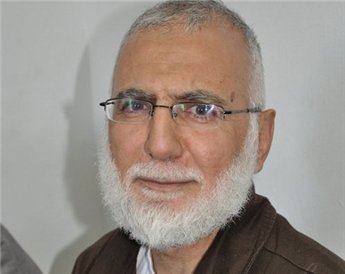 RAMALLAH — Israeli forces detained Hamas legislator Mohammed Abu Teir on Tuesday, army officials said.
Israeli soldiers ransacked Abu Teir’s home in Kafr Aqab, south of Ramallah, before detaining the elected official, a Ma’an correspondent reported.
An Israeli military spokesman said Abu Teir was detained on Tuesday but could not immediately comment on the reason for his arrest.
Former PA Minister of Jerusalem affairs Khalid Abu Arafa told Ma’an he was concerned about Abu Teir’s fate after Israel withdrew his Jerusalem identity card.
In December, an Israeli court expelled Abu Teir to Ramallah from his home in Jerusalem for the second time, after four months in jail for defying a previous ban.
He was previously arrested on June 30, 2010 for entering East Jerusalem after the interior ministry stripped him of his residence permit for his activity in Hamas.
Following Abu Teir’s deportation to Ramallah in December, UN officials expressed concern. Robert Serry, UN Special Coordinator for the Middle East Peace Process, said he was “worried” about the “potential precedent” that the trial set.
Abu Teir was elected to the Palestinian parliament from East Jerusalem in 2006 when Hamas won a landslide victory over the secular Fatah movement of Western-backed President Mahmoud Abbas.
Hamas MPs: Migron demolitions aimed at misleading public opinion
Palestine Information Center – 05/09/2011
RAMALLAH — The demolition of three homes in the Jewish Migron settlement north of Jerusalem was designed to mislead world public opinion, Palestinian MPs from the Hamas party said in a joint statement.
Israeli forces dismantled three homes in the settlement outpost built over Palestinian Mukhamas village east of Ramallah city under orders of the Israeli Supreme Court. Settlers responded to the demolition by setting fire to a mosque in Qusra village south of Nablus.
The Hamas MPs in Ramallah downplayed the settlement evacuation, saying the Israeli Supreme Court ordered the removal of the entire outpost a while back and not just a few buildings that would be restored after a short period.
What is required is to evacuate all of the settlements and the departure of Israel from all Palestinian localities in the West Bank, Gaza Strip, and occupied Jerusalem, and the territories occupied in 1948, the statement says.
Israeli police close ‘Hamas-financed’ East Jerusalem school
Ma’an – September 5, 2011
JERUSALEM — Israeli police on Sunday closed a Palestinian school in East Jerusalem claiming it was linked to Hamas, locals and police said.
Local sources said the Ahmad Samih Khalidi school in Abu Tor received a notice from the Jerusalem police that the building would be sealed until Oct. 4 at the earliest under anti-terrorism measures over suspicions the school was used for “pro-Hamas activities.”
A spokesman for Jerusalem police told Ma’an the school was closed because it was “financed by Hamas.”
Featured Video

Death Spikes & Rising Cancer In Our Youth Explained
or go to
Aletho News Archives – Video-Images
From the Archives
Politicians lie
By Mazin Qumsiyeh | Popular Resistance | August 18, 2013
There is no way to say this truth nicely: Politicians lie. That includes Japanese, American, Egyptian, Israeli, and Palestinian politicians! Is there something more common sense than that? Yet, so many citizens around the world believe their own politicians or wistfully acknowledge lies but think it is part of the job needed to run things. They believe even when politicians contradict themselves blatantly. This phenomenon is rather remarkable. It is a dissonance and disconnect from reality that many seem oblivious to. It is very dangerous because it can lead to accepting rationales for going to war. These can be deadly wars that lead to millions of lives lost as happened in what was called World War 1 and WW2. Even when incredible and declassified evidence abound, politicians continue to lie and old mythologies refuse to die. Here are just a few of the countless lies told to us over the past few decades… continue
Blog Roll
 Aletho News
- Turkish parliament to review Saudi-Pakistan defense pact next month
- DEATH SPIKES & RISING CANCER IN OUR YOUTH EXPLAINED
- Iran offers Trump deal before US election
- Merz regime wants ‘secret police’ – opposition
- Israeli settlers terrorize West Bank Palestinians with state-provided drones: Report
- They see them, then kill them: Israeli quadcopters track, deliberately target civilians in Gaza
- Debunked: Trump’s egregious UNGA claims on war against Iran crumble under scrutiny
- Europe was part of the infrastructure of US aggression against Iran: Deputy FM
- New evidence on the Bucha Massacre
- Italy and France debunk reports CIA issued ‘Russian drone threat’ warning
- If Americans Knew
- An error has occurred; the feed is probably down. Try again later.
- No Tricks Zone
- New Study: Earth And Venus Surface Warmth Largely Explained By Convection And Lapse Rate, Not CO2 Or Radiation
- 2025 Nature Paper Claiming Worsening Global Drought Gets RETRACTED …Heavily Flawed
- New Study: ‘Global Drought Shows No Detectable Recent Acceleration Under Climate Warming’
- Economic Masterminds: German Socialists Suggest Taxing Productivity Gains Stemming From Using AI
- The South China Sea Has Not Been Cooperating With The Climate Change Narrative
- Energy Crisis: Germany Enters Heating Season With Historically Low Gas Reserve Fill Levels
- New Study: The Antarctic Ice Sheet Gained Mass From 2020-2024 Due To Staggering Snow And Ice Accumulation
- Study: Ocean Heating Rates From Thousands Of Years Ago ‘Dwarf’ Modern Ocean Heating Rates
- Climate Extremists Target, Attack Large-Scale Power Grid Infrastructure In Germany!
- New Study: Antarctic Ice Melt Has Contributed Less Than 1 Centimeter To Sea Level Rise In The Last 30 Years

