Gaza deaths protest comes under heavy live fire from Israeli snipers
15 September 2010 | ISM Gaza
Over 100 rounds of live ammunition were fired at peaceful protesters in a Tuesday demonstration in the Gaza strip. The protest at the Erez border area near Beit Hanoun yesterday included Palestinian activists from the Local Initiative group, local residents and 4 members of the International Solidarity Movement who marched into the site of the recent fatal Israeli incursion. The demonstrators had a view of the area where only a few days earlier, a Grandfather Ibrahim Abu Sayed and his 17 year-old grandson were killed by Israeli tank shelling.
The peaceful demonstration was joined by several young Palestinians, who were also protesting their right to their land, much of which is now lost or out of bounds by the Israeli imposed “buffer-zone.” This buffer-zone is 300 metres wide and stretches along the entire border fence on the frontier with Israel. According to the recent United Nations Report “Between the Fence and a Hard Place” the violence used to restrict Palestinians from accessing their land covers areas up to 1500m from the border fence, meaning that over 35% of Gaza’s most agricultural land is in a high risk area causing severe losses of food production and livelihoods.
On a previous demonstration, the activists had managed to partly remove a barbed wire fence, which had prevented them from entering their own farm land. This was met by an Israeli incursion days later, in which tanks and bulldozers unearthed a huge trench in front of the fence, about one kilometre long, three meters deep and two meters wide.
Having marched to the wire fence, 100 metres from the border wall, the demonstrators chanted and waved flags, planting one Palestinian flag beyond the wire fence. They had brought shovels and begun to refill the trench, when the Israel army suddenly opened fire around them. Under heavy shooting with live ammunition, the participants stood their ground, communicating through a megaphone, some crouching low for cover amidst the gunfire that came within 5 metres.
“We attend these demonstration because of the huge border area that takes Palestinian land”, eighteen year-old Hussam told us. “We don’t want it to be separated from our own land, it’s farmland and people are killed for trying to harvest it. Because of that we came to make them feel secure again.”
The shooting created an atmosphere of terror and fear among the demonstrators, as they had no safe cover in the forcibly neglected area… Full article
Israeli occupation forces fire at peaceful march
Palestine Information Center – 14/09/2010
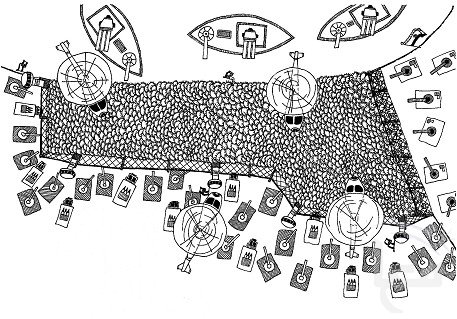
GAZA — Israeli occupation forces (IOF) opened fire on Tuesday at a peaceful march in northern Gaza Strip that was protesting the security fence and buffer zone, eyewitnesses reported.
They said that tens of demonstrators including foreign solidarity activists took part in the march that headed to the Beit Hanun (Erez) crossing.
They said that as soon as the marchers, who were hoisting Palestinian flags, approached the crossing the IOF soldiers got out of one of the trenches and opened indiscriminate machinegun fire at them.
For its part, Al-Mizan center for human rights asked the world community to swiftly provide protection for Palestinian civilians.
It said in a statement on Tuesday that the world should bridle Israel’s intention to establish a buffer zone in northern and eastern Gaza, which would entail catastrophic results on the Gaza inhabitants in general, and the inhabitants and farmers working in those areas in particular.
Mizan castigated the IOF troops for opening fire at the peaceful march earlier on Tuesday morning, noting that the march is weekly organized by the Beit Hanun residents to protest the buffer zone.
The center also condemned the IOF for opening artillery fire at farmers in Beit Hanun on Sunday killing three of them including a 91-year-old citizen and his grandson in addition to 25 heads of sheep.
PA to renew Israeli talks without settlement freeze
Press TV – September 13, 2010
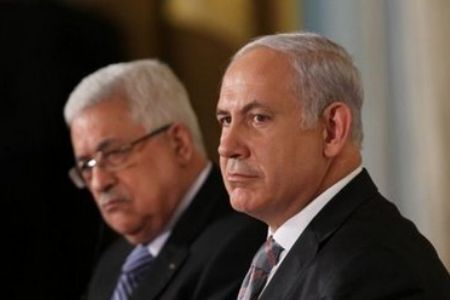
Despite Israel’s refusal to extend its settlement freeze, the Palestinian Authority (PA) will still resume the second round of direct talks with Tel Aviv. The upcoming meeting will be held at Egypt’s Red Sea resort of Sharm el-Sheikh on Tuesday.
Israeli Prime Minister Benjamin Netanyahu and acting PA Chief Mahmoud Abbas held the first round of negotiations in Washington on September 2.
Following the first meeting, Abbas warned that he would leave the negotiations should Israel resume its illegal settlement activities.
US Secretary of State Hillary Clinton and US Middle East Envoy George Mitchell will also travel to Egypt to attend the meeting. The four officials will then move to al-Quds (Jerusalem) for a second day of talks on Wednesday.
Meanwhile, US President Barack Obama will meet with Abbas and Netanyahu in New York next week during the UN General Assembly meeting.
The second round of Israeli-PA talks comes after Israel on Monday approved the construction of more than 13,000 new settler units in the occupied West Bank.
In November, the Israeli premier announced a 10-month freeze on illegal settlement expansion projects in the occupied West Bank. But Tel Aviv has repeatedly violated the freeze, which expires on September 26, by continuing to construct more settlement units.
Poll: Kashmiris want independence
Press TV – September 12, 2010
About two thirds of the people in Indian-controlled Kashmir seek independence, while six percent want their region to join Pakistan, a recent survey shows.
According to a poll conducted by the Sunday edition of the Hindustan Times, 66 percent of the respondents in Kashmir wanted “complete freedom (for the entirety of Jammu and Kashmir) as a new country.”
Only six percent of those polled wanted a “complete merger of the entire Jammu and Kashmir in Pakistan.”
Kashmir has recently been rocked by violent pro-independence protests. The demonstrations started after security forces killed a teenage protester in June.
Some 70 Kashmiris, including children, have lost their lives during three months of unrest. Thousands have been killed in volatile Indian-administered Kashmir since 1989.
The new poll shows that most Kashmiris blame the Indian government for the current wave of unrest in the region.
On Sunday, Indian security forces enforced a strict curfew in much of Kashmir, a day after a massive rally was held in protest of Indian rule.
Iftar with the army: a Hebron story
11 September 2010 | ISM Media
At about 17.00 on the 9th September 2010, right before Atta Jaber and his family were about to sit down to break the fast on the last day of Ramadan, eight soldiers appeared on the doorstep.
One of them said that they wanted to come into the house, in the Baqa’a Valley, east of Hebron, to “have a look”. Atta Jaber opened the door, and did not ask for further explanation, as over the years he has become accustomed to soldiers turning up in this way. His four kids, aged 10 to 17 have all grown up with daily harassment by soldiers and settlers. Still, they seemed anxious and stressed as eight armed soldiers made their way through the hallway and into the living room, most armed with M-16s, one with a machine gun. A couple of soldiers asked for Atta’s son’s name, and shook the 13 year old boy’s hand, before searching the house. The boy replied to the greetings politely.
The soldiers walked through the house, looked around all the rooms, opening closets. One soldier remarked, while looking out from the window over to the neighbor’s house – which has been occupied by the army for one week – that they just want to see what the Jaber family can see from their house. He then told the international that was asking him questions about their presence that the soldiers wanted to maintain the army base for an unknown amount of time, since the junction leading to Harsina settlement is a vulnerable place for the settlers. He said that they aim to protect the settlers from further attacks. The family then had to hand over their IDs, and the soldiers wrote down their information.
The Jaber family gathered in the living room to break the fast with the post-sunset meal known as Iftar. After fasting the whole day, they had to eat and drink in the presence of the army. It was a quiet meal. Normally the family would talk, laugh and share stories while eating, but this time everybody was looking down at the table, eating slowly. Some family members didn’t eat at all. While some of the soldiers were walking around the house, locking themselves into the rooms and taking notes, one soldier was standing next to the table, staring at the family with his machinegun in his arms. As one of the internationals looked back at him, the soldier told her to “back off!” in an aggressive manner. The same soldier also ordered Jaber and two of his children, who were sitting close to the window, to move closer to where he himself was standing. The family was not allowed to move freely around their own home, and they were not even told why the soldiers were there. The soldiers walked around the house, with their fingers resting on their gun triggers, speaking in Hebrew and laughing to each other.
After going through all the rooms in the house several times, writing down ID-information for the family members and the two internationals, one soldier gave Atta Jaber a piece of paper with English and Hebrew writing on it. He then read out loud that Jaber will have to meet with the Israeli intelligence, Shebak, on Thursday next week. The reason given was that his daughter had been filming the Israeli soldiers when they were taking over parts of their neighbor’s house on September 4th. The camera in question belongs to the human rights group B’tselem, and is lent to the Jaber family so that they can document human rights violations committed by soldiers and settlers – and there is never a shortage of incidents to document. Now Jaber has been summoned for interrogation because his family has tried to document the illegal activities of the Israeli army. It’s important to note that the Harsina settlement is illegal, and that this is what the army wants to protect by converting the neighbouring Palestinian house into a military base. The soldiers left the Jabers’ house after nearly two hours.
Atta Jabr and his family have lived in the area for more than three generations. Their house has been demolished twice. They have been attacked and harassed numerous times in the past, by both settlers and soldiers. Just over a week ago the family were trapped in their house when over 100 settlers started constructing a new outpost and soldiers took over the roof of the family’s house for several hours. Just two weeks before that Atta and his pre-teen daughter were attacked by six settlers.
Kabul protest demands foreign troops withdrawal
Morningstar | 06 September 2010
Around 500 citizens have rallied in central Kabul to demand the withdrawal of foreign troops from their country, chanting: “Long live Islam” and “Death to America.” The crowd outside the capital’s Milad ul-Nabi mosque listened to fiery speeches from members of parliament, provincial council deputies and Islamic clerics. Some threw rocks when a US military convoy passed.
Protesters also condemned the decision of the Florida-based Dove World Outreach church to burn copies of the Koran on church grounds to mark the ninth anniversary of the 2001 terrorist attacks in the US. They raised placards and flags emblazoned with slogans calling for the death of US President Barack Obama and held up a cardboard effigy of Dove World Outreach’s pastor Terry Jones, who made US headlines last year after distributing T-shirts that said “Islam is of the Devil.”
The US embassy in Kabul said the “United States government in no way condones such acts of disrespect against the religion of Islam and is deeply concerned about deliberate attempts to offend members of religious or ethnic groups.
“Americans from all religious and ethnic backgrounds reject this offensive initiative by this small group in Florida. A great number of American voices are protesting the hurtful statements made by this organisation,” it said in a statement.
Muslims consider the Koran to be the word of God and demand that it, along with any printed material containing its verses or the name of Allah or the prophet Mohammed, be treated with the utmost respect. Any intentional damage or show of disrespect to the Koran is considered deeply offensive.
In 2005, 15 people died and scores were wounded in riots in Afghanistan sparked by a story in Newsweek magazine alleging that interrogators at the US concentration camp in Guantanamo Bay flushed a copy of the book down the toilet to get inmates to talk. Newsweek later retracted the story.
Meanwhile, a US soldier was killed in fighting in eastern Afghanistan on Sunday, Nato has revealed. No other details were given.
The death takes the US toll to five so far this month, following the deaths of more than 220 US troops over the past three months.
Taliban: Withdrawal of oocupation forces must precede shura
Paktribune | September 6, 2010
PESHAWAR: Rejecting the formation of high council for peace by the Afghan President Hamid Karzai, the Taliban Sunday said due to occupation of the country by the foreign forces such councils could not bring any fruit.
Taliban spokesman Qari Muhammad Yousaf told the Afghan Islamic Press (AIP) about 150,000 foreign soldiers had occupied Afghanistan and the foreigners were carrying out the activities of the state from ordinary issues to the parliamentary election affairs. “In such conditions what does formation of high council for peace mean,” he questioned.
“Formation of a new shura in the name of peace is a repeat of the former failed experiences. The shura makers and its members are slaves of others and they have no power,” he remarked.
The spokesman repeatedly said that neither the Afghan authorities had the power nor the peace council would have the supremacy, adding Afghanistan had been occupied and the foreigners were running everything.
Asked by the AIP that if the aforesaid shura was given power and authority, then would the Taliban be ready for negotiations with the shura, he said the real reason behind the conflict was presence of foreign forces. “All problems are because of the presence of occupying forces. All the problems will be resolved after the withdrawal of foreign forces from Afghanistan.”
Barghouthi: “Construction Continues In Dozens of Settlements”
By Saed Bannoura – IMEMC & Agencies – September 04, 2010
Palestinian Legislator, Dr. Mustafa Barghouthi, stated that while Israel is heading to peace talks with the Palestinians, its government continues its illegal settlement activities in the occupied West Bank and in occupied East Jerusalem.
Dr. Barghouthi added that Israel never even froze its settlement activities in Jerusalem and its suburbs, and is ongoing with the construction and expansion of settlements in the West Bank.
He further stated that settlers grabbed by force 130 Dunams of Palestinian farmlands that belong to residents of Qaryout village, south of the northern West Bank city of Nablus, and that they brought construction equipment to build homes.
Dr. Barghouthi also revealed that Israel is planning to build 3000 homes for Jewish settlers in the occupied West Bank and that settlers built, three days ago, a new illegal outpost on lands that belong to Al Baq’a village near the southern West Bank city of Hebron.
He considered Israel’s declaration of freezing settlement activities as a new scam that aims at deceiving the international community especially since the Israeli government approved last month the construction of 23 school rooms in eight West Bank settlements.
Over the past several months, Israel started the construction of 390 units in different West Bank settlements, and also built 223 units in addition to 167 mobile homes placed by the settlers.
Hundreds of units are currently being constructed in Beitar Ilit settlement, Yirkan settlement, Penze settlement and Shi’are Tikva.
Israel is currently building 40 units in Givat Zeev settlement, 24 in Mitzpe Yeriho, 22 in Ariel, 21 in Maaleh Adumin, 20 in Kfar Ezion, 18 in Kfar Adumim, 12 in Itamar, 11 in Eli, 9 in Oranit, 9 in Tzufim, 7 in Beitar Ilit, 6 in Elkna, 6 in Finuel, 5 in Eliezer, and 5 in Yakir.
Dr. Barghouthi said that heading to direct talks with Israel before it halts all of its settlement activities is a wrong decision under the current circumstances.
Hebron: soldiers convert Palestinian home into military base
Israeli soldiers have erected tents on the roof of the Salayma family’s home and are occupying the building
6 September 2010 | ISM Media
Al Baqa’a, HEBRON – On Friday the Israeli army raided a Palestinian house in Hebron and converted it into a military base, forcing a family of 14 to move into the first floor of their home.
The following day the soldiers took over the roof as well. Yesterday an ISM activist visited the Salayma family in Al Baqa’a, east of Hebron, and spoke to Salem Salayma about the situation.
He said that now the roof has been taken over, soldiers have been on and off the roof constantly. Yesterday morning, at about 8am, six soldiers carried out some kind of exercise around our house, running up the hill, sitting in shooting positions and moving up and down the road. He added that sometimes the army move around in the area, walking or driving, and all the families in the area are very scared. When they see soldiers, they close the house, and stay inside because they fear the soldiers themselves – as well as the settlers who have been moving around the area regularly since the shooting of four settlers last week, and have carried out several attacks on Palestinians.
Salayma, who is in his forties, lives with his family who in total number 14, including 4 children. At present 5 family members are living on the second floor of the occupied house, and 9 are on the first floor. Now, the family has been ordered to vacate the upper floor by next Sunday, so the soldiers can expand their military base. The only reason given for the takeover of the Salayma home has been “security reasons” and no alternative provisions have been made for the family. Since their arrival soldiers have been using the house’s bathroom, water and electricity, without asking.
United Nations personnel logged a report from the family yesterday and Salayma says he wants to hire a lawyer to prevent the military from taking over his house. However, any court case would not happen for at least two weeks and by that time the military occupation of the house will likely be complete.
Salaymi, has not been out of the house since the soldiers came, because he fears for his family. He is also deeply worried however because this means he is losing the income he needs to support his family since he has not been able to go to work. He has also been unable to attend prayers.
Is the World Bank deliberately concealing disappointing West Bank economic “growth” figures?
By Ali Abunimah | September 2, 2010
An August 31 press release from the World Bank states:
The Palestinian Authority (PA) has achieved strong results in recent years, but the resurgence of growth remains dependent on donor assistance.
- in the first half of 2010, the economy saw 7% real growth;
- in the West Bank, unemployment in the fourth quarter of 2009 fell to 18% from 20% in the same quarter of 2008;
- unemployment in Gaza also dropped, falling from 45% in the fourth quarter of 2008 to 39% in the last quarter of 2009;
- the PA has unified its cash transfer programs into one consolidated program that has greatly increased the efficiency of the PA’s social safety system and is one of the most advanced in the region;
- the PA has improved its budgeting process, budget execution and financial reporting capacity; and introduced commitment controls to reduce spending.
What is very interesting is that the press release provides no breakdown for growth in the West Bank separate from the Gaza Strip. What we have instead apparently is a 7% overall growth figure.
In June a highly informed source who has since been proven correct on a number of other issues told me:
World Bank figures due to be published in coming weeks are likely to show that economic growth in the Gaza Strip in the first quarter of 2010 has exceeded that in the West Bank. While virtually all economic growth in the West Bank is a result of foreign aid, much of the growth in Gaza is attributable to a “parallel economy” that has emerged thanks to the tunnels. This has even created a small new class of nouveaux riches in Gaza.
At the time the source told me that what we’d probably see as a result is the World Bank and PA emphasizing the overall growth figure, rather than dwelling on disappointing results in the West Bank — where a huge politically-motivated aid effort has been aimed at shoring up the Israeli-backed collaborator regime of Mahmoud Abbas and illegally-appointed “prime minister” Salam Fayyad.
Could this be what is happening here? Perhaps the World Bank has provided a West Bank/Gaza breakdown somewhere else? (I haven’t had time to conduct a thorough search yet, but a quick search didn’t reveal it). But I do think its significant there is no breakdown in the press release. It’s a safe assumption that if there had been stellar performance in the West Bank, the World Bank would have emphasized it.
The whole narrative of “Fayyadist” state building depends on the notion that the West Bank economy is booming. There are claims, for example, of a “property boom” in Ramallah, which as I explained tells us nothing about the true state of the West Bank economy.
Indeed a recent Save the Children study found that outside the Ramallah bubble, poverty conditions across much of the West Bank are even worse than in Gaza. My recent Los Angeles times op-ed references that and debunks more “Fayyadist” myths.
Israel confiscates Jerusalem land to build Jewish war memorial
Palestine Information Center – 03/09/2010

OCCUPIED JERUSALEM — The Israeli occupation authorities has decided to build a war dead memorial on lands that belong to Palestinian citizens in Sheikh Jarrah suburb in the occupied city of Jerusalem, well-informed Hebrew sources revealed Thursday.
According to the sources, the Israeli administration of Jerusalem municipality wants to build the memorial to remember Israelis who were “killed at the hands of Palestinian aggressors”.
It added that members of the municipal council were set to ratify the decision during a municipal session two week from now, pointing out that the place was “the most suitable location for the memorial”.
The sources estimated the confiscated Palestinian land to be 6,500 sq meters, but Palestinians believe that the Israeli step was only part of the Israeli occupation authority policy to expand the settlement activities and to distort Arab identity in occupied Jerusalem.
“We found the place as the most suitable site for such crucial civil needs, and we found no reason to hinder the use of those lands for Israeli public needs and for matters we view as of Jewish and national values”, said Yaer Jabay, the member of the Jewish municipal council.
The Israeli decision to confiscate the land came on the eve of the kicking-off of the US-sponsored direct Israeli-Fatah negotiations, which the great majority of the Palestinian people oppose.
Mitchell’s Quick-fix Fake Peace
By Stuart Littlewood | September 2, 2010
On the eve of the silliest peace talks in history, the big question is this. What makes Obama’s envoy George Mitchell, a negotiator of high repute, say there is ‘no role’ for Hamas?
The talks are silly because they seek to overturn what the United Nations has already decided for resolving the Israel-Palestine conflict and drive a bulldozer through the building blocks of justice.
It might be music to Zionist ears, but to people of good will it’s a cruel, futile and immensely damaging ploy.
The talks are also silly because they bring together two people who by no stretch of the imagination could qualify as partners for peace. And they sit down under the auspices of a third party with an appalling track record in the Middle East and whom no-one trusts to act fairly.
So Mitchell has been dealt a terrible hand. The former US senator, we’re told, has had an illustrious career in politics. Honours have been heaped upon him for his part in the Northern Ireland ‘Good Friday’ agreement.
Accepting one of those awards – the Liberty Medal in 1998 – Mitchell said: “I believe there’s no such thing as a conflict that can’t be ended… No matter how ancient the conflict, no matter how hateful, no matter how hurtful, peace can prevail. But only if those who stand for peace and justice are supported and encouraged, while those who do not are opposed and condemned. Seeking an end to conflict is not for the timid or the tentative. There must be a clear and determined policy not to yield to the men of violence…”
How about that? Conflict can be ended only by supporting those who stand for peace and condemning those who don’t. But does he know – has he really taken the trouble to find out – who actually stands for peace and justice in the ever-escalating obscenity of the Israeli occupation of Palestine? And is he absolutely clear who “the men of violence” are? Get it wrong and matters are made worse.
Mitchell is such an awesome peace-monger that he has become a visiting Professor at Britain’s Leeds Metropolitan University’s School of Applied Global Ethics, and the University is developing a new Centre for Peace and Conflict Resolution bearing his name.
If Mitchell is so clued up you have to wonder why he took the job – a veritable poisoned chalice. And you’d think a person with his vast experience would stick to accepted rules of engagement for conflict resolution and peace-making. I’ll mention just three:
• Talk directly with the people who are concerned or with whom there are concerns.
• Attack the issues, not the people with whom there is disagreement.
• No issue can be ‘off limits’.
There is no-one more concerned than Hamas. As the democratically elected authority they are the principle stakeholder on the Palestinian side. Obviously they must be allowed to represent the Palestinian case. It matters not one jot or tittle that the White House has “identified” Hamas as a terrorist organization. They have legitimacy. Besides, millions outside the White House can point to Israel’s much worse terror crimes.
Mitchell, besides barring Hamas, bends even further to Israeli prime minister Netanyahu’s demands and has ruled there must be no pre-conditions. Which means that Israel’s criminal conduct such as settlement construction, dispossession, ethnic cleansing, the land and sea blockade of Gaza, the occupation, the strangulation of the economy and their taste for piracy and extra-judicial killing, and their trampling of human rights including those of self-determination, are allowed to continue while the hapless Palestinians face them across the table.
And never mind that Netanyahu is permitted to enter these talks with his own pre-conditions, saying that the return of Palestinian refugees to the homes they were forced to flee, and the continuing occupation of East Jerusalem including the Old City, are not for discussion, and threatening to resume the (temporarily suspended) illegal settlement building.
If Mitchell is truly a person of integrity and a champion of “global ethics” how could he show such favour to one side?
What, I wonder, will he be saying to the Israeli team about UN Resolution 181 of 1947, which deals declares that “the City of Jerusalem shall be established as a corpus separatum“ administered by the United Nations?
What will he say to them about Resolution 242 (1967) by the Security Council and therefore fully binding? This insists on:
(i) withdrawal of Israeli armed forces from territories occupied in the recent conflict;
(ii) termination of all claims or states of belligerency, and respect for and acknowledgement of the sovereignty, territorial integrity and political independence of every State in the area and their right to live in peace within secure and recognized boundaries free from threats or acts of force.
242 also emphasizes the need for:
(a) guaranteeing freedom of navigation through international waterways in the area;
(b) achieving a just settlement of the refugee problem;
(c) guaranteeing the territorial inviolability and political independence of every State in the area, through measures including the establishment of demilitarized zones.
Will Mitchell bang the table to demand long overdue action on Security Council Resolution 338 (1973), which called on the parties concerned to start immediate implementation of Security Council Resolution 242?
Security Council Resolution 446 (1979) leaves absolutely no wriggle room. It “determines that the policy and practices of Israel in establishing settlements in the Palestinian and other Arab territories occupied since 1967 have no legal validity and constitute a serious obstruction to achieving a comprehensive, just and lasting peace… Calls once more upon Israel, as the occupying Power, to abide scrupulously by the 1949 Fourth Geneva Convention, to rescind its previous measures and to desist from taking any action which would result in changing the legal status and geographical nature and materially affecting the demographic composition of the Arab territories occupied since 1967, including Jerusalem, and, in particular, not to transfer parts of its own civilian population into the occupied Arab territories.”
It’s all there, Mr Mitchell, in black and white. The UN has set it out. The world is waiting for the UN to implement it.
Israeli foreign policy is driven by manifesto promises like:
• “The Palestinians can run their lives freely in the framework of self-rule, but not as an independent and sovereign state.”
• “Jerusalem is the eternal, united capital of the State of Israel and only of Israel.”
• The claim to a national and historic right to the Land of Israel “in its entirety” and the pledge to keep Jerusalem and the settlements.
Netanyahu’s belligerent coalition government probably won’t survive unless he uses all means to achieve these unlawful and hugely provocative aims and resists demands to give back Israel’s ill-gotten gains. A thief is clearly no partner for peace.
Neither is the PLO’s Abbas, who dances to America’s tune and whose authority is in question. Any agreement he makes will be open to challenge by his own people.
Obama is US president courtesy of the pro-Israel lobby. He is like putty in their hands. And he’s so ill-informed that he told AIPAC it’s OK for Israel to grab the hallowed City of Jerusalem and turn it into the permanent headquarters of the Zionist regime. Jerusalem “will remain the capital of Israel and it must remain undivided,” he blurted. When it dawned on him that he’d made a monumental blunder he tried to wriggle out: “Well, obviously, it’s going to be up to the parties to negotiate a range of these issues. And Jerusalem will be part of those negotiations… And I think that it is smart for us to work through a system in which everybody has access to the extraordinary religious sites in Old Jerusalem, but that Israel has a legitimate claim on that city.”
A legitimate claim? Who says? And negotiate what? Has the President forgotten that the UN decided long ago that Jerusalem, along with Bethlehem, was to become an international zone?
And how can it be right for weak, unarmed and impoverished Palestinians to have to negotiate with a brutal, lawless military regime for their universal rights and freedoms, which are supposed to be guaranteed by the international community but have been denied them for decades?
Obama is clearly no genuine peace-broker.
And George Mitchell, despite his awesome reputation elsewhere, has so far failed in the Holy Land. He and his boss are getting desperate. Staging farcical, lopsided talks in order to achieve a fake, temporary peace will no doubt save a few worthless political skins for the time being. But they benefit no-one else. And they don’t do an envoy of Mitchell’s calibre any credit. He would be better employed banging heads together at the United Nations, to finish the unfinished business there and ensure all the resolutions they have passed and all the other solemn declarations they have endorsed are implemented. No need for conflict resolution, judgment has already been handed down.
Then peace talks can begin, if genuine partners and an honest broker can be found.
It’s called justice, Mr Mitchell. There’ll be no real peace until justice is delivered.
Featured Video
New positive ivermectin evidence
or go to
Aletho News Archives – Video-Images
From the Archives
Fanatical Followers of the Covid Regime: A Jim Jones-Style Cult?
By Professor Roger Watson and Dr. Niall McCrae | The Daily Sceptic | November 15, 2021
As scholars at leading British universities over recent decades, we witnessed the replacement of critical thinking and debate by narrative: facts are discrimination and scientific method is imperialism; truth, instead, is derived from ‘progressive’ values. This educational trend may be a major contributory factor to the ease in which society has been inculcated to the Covid ‘new normal’ of masking, testing, and repeated doses of vaccines for a disease of similar risk to severe influenza.
One doesn’t need much critical reasoning to observe the flawed logic of some vaccination enthusiasts, such as people who respond to experiencing any side effects, however debilitating, by saying “at least I know it’s working”, or, after contracting the disease despite their promised inoculation (over 90% effective, according to initial drug company claims), “I’d have been worse off without the jab.” … continue
Blog Roll
 Aletho News
- Arctic Scare Stories Melt Away
- Wrong, Euronews: Climate Change Has Not Created a Food, Energy, and Economic “Meta-Crisis”
- New positive ivermectin evidence
- Met Office Caught Fabricating Daily Temperature Record Claims
- Merck Virologists Admitted to Falsely Certifying Vaccine Efficacy
- Mandatory Folic Acid for every man, woman & child
- Pro-Palestine protesters arrested outside UK’s ruling Labour Conference in Liverpool
- Mauritius denies landing permit to flight from Israel, forcing cancellation: Tour operator
- Israeli finance minister calls for genocidal war on West Bank, annexation of south Lebanon
- 12 Things Your Psychiatrist Was Trained Not to Tell You
- If Americans Knew
- Israel forces Gazans to live in constant peril – Daily Update
- Deconstructing Netanyahu’s pants-on-fire UN rant – Daily Update
- Trump betrayed voters with his campaign lies and prioritized a foreign country once he took office
- Netanyahu calls Israel’s war in Gaza ‘opposite of genocide’ in UN speech to near-empty hall
- Settler Kidnappings: Torture, Sexual Abuse and Terrorisation of Palestinian Abductees as Israel Deepens Annexation of West Bank
- Gaza winter nears as 162,000 tents become unusable, raising fears of humanitarian crisis
- Netanyahu says, “It’s the opposite of genocide”; UN says Gaza economy is world’s ‘most severe crisis on record’ – Daily Update
- Israel’s US-Backed Assault on Gaza Has Created the ‘World’s Most Severe Economic Crisis on Record’: UN
- ‘Protecting U.S. Citizens’… From Israel
- ‘This is where I live now, the back of a truck’: a day in the life of a grandmother in Gaza
- No Tricks Zone
- New Study: Earth And Venus Surface Warmth Largely Explained By Convection And Lapse Rate, Not CO2 Or Radiation
- 2025 Nature Paper Claiming Worsening Global Drought Gets RETRACTED …Heavily Flawed
- New Study: ‘Global Drought Shows No Detectable Recent Acceleration Under Climate Warming’
- Economic Masterminds: German Socialists Suggest Taxing Productivity Gains Stemming From Using AI
- The South China Sea Has Not Been Cooperating With The Climate Change Narrative
- Energy Crisis: Germany Enters Heating Season With Historically Low Gas Reserve Fill Levels
- New Study: The Antarctic Ice Sheet Gained Mass From 2020-2024 Due To Staggering Snow And Ice Accumulation
- Study: Ocean Heating Rates From Thousands Of Years Ago ‘Dwarf’ Modern Ocean Heating Rates
- Climate Extremists Target, Attack Large-Scale Power Grid Infrastructure In Germany!
- New Study: Antarctic Ice Melt Has Contributed Less Than 1 Centimeter To Sea Level Rise In The Last 30 Years

