Israel Closes Gaza Trade Crossings
By Saed Bannoura – IMEMC & Agencies – June 19, 2010
Despite Israel’s Thursday decision to “ease restrictions on Gaza”, the Israeli Authorities closed all trade crossings leading to the coastal region. The closure, unless extended, will last until Sunday.
Fattouh of the Border Crossings Authority in Gaza, said that Israel declared the crossings open on Thursday and shut them down Friday, and added that Israel allowed the entry of 200 sorts of goods in recent weeks, while most goods allowed into Gaza are food products in addition to wood, aluminum and glass.
Fattouh added that the allowed goods do not fill the real need in the Gaza Strip as construction materials are still not allowed into Gaza, in addition to materials needed for factories and other basic supplies.
Israel recently agreed to allow the entry of stationary supplies for students, cooking tools, toys for children and some types of furniture.
UN: 70 percent of the refugees around the world are Muslim
10,792,095 displaced around the world originate from Muslim countries
Islamic Human Rights Commission – 17 June 2009
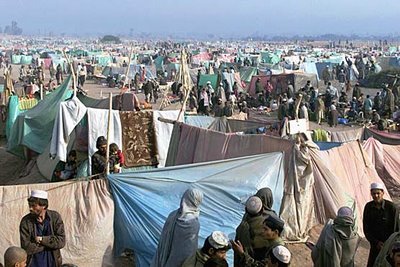
United Nations High Commissioner for Refugees (UNHCR) 2009 annual report revealed shocking figures about the world refuge community. According to the figures revealed on 16 June 2010, the total refugee population around the world reached 15.2 million which is the highest since the mid 1990s. Around 70 percent of all refugees, which amounts to 10,792,095, around the world originated from Muslim countries.
The recent figures revealed by the UNHCR have reminded the international community that the overwhelming majority of oppressed people in the world are Muslim. According to the latest report of the UNHCR, there were 15.2 million refugees worldwide and around 70 percent of them, which amounts to 10,462,095, originated from Muslim countries. With their long-lived plight, 4.8 million Palestinians were the largest refugee community in the world. Since the Palestinian refugees are under the responsibility of United Nations Relief and Works Agency (UNRWA) their statistic were not included in the report.
There UNHCR listed 2.9 million Afghani refugees scattered around the world with the majority fleeing to Pakistan. Iraqis also made up a substantial amount of the total refugee population with 1.8 million, predominantly based in the Middle East. Somalis made up the third largest refugee group with 678,000 persons and finally 368,200 Sudanese refugees, the vast majority of them from the Darfur region.
The figures show the US and its allies have turned the Muslim territories into a massive conflict zone and Muslims have become the largest single religious refugee group. Muslim refugees have been deprived of their basic rights and are going through immeasurable difficulties.
IHRC is an NGO in Special Consultative Status with the Economic and Social Council of the United Nations.
Islamic Human Rights Commission
PO Box 598
Wembley
HA9 7XH
United Kingdom
Telephone (+44) 20 8904 4222
Fax (+44) 20 8904 5183
Email: info@ihrc.org This e-mail address is being protected from spambots. You need JavaScript enabled to view it
Web: http://www.ihrc.org
Masked Attack
Palestine Monitor | 17 June 2010
On Saturday morning, 30 to 35 masked Israeli settlers stormed the village of At-Tuwani in the South Hebron Hills. Armed with metal clubs, slingshots, knives, and stones, the attackers targeted the house closest to the edge of the woods. International observers stationed in the village arrived in time to witness and document the final phases of the assault. Michael Carpenter investigated for Palestine Monitor.

Photo: Operation Dove
The rolling hills south of Hebron are home to some of the poorest Palestinian communities in the West Bank, and in recent years, some of the most radical Israeli settlers have come here. At-Tuwani is a small traditional village of about 250 residents and a focal point of the region’s tensions. At the south tip of the village, near the edge of a densely wooded hill, is Beit Juma, the large home of the Rabai extended family. At 10:45 AM, not long after Juma and one of his brothers had gone to a neighbouring village, the attack came from the trees without warning.
“There were problems before,” explains one of the younger brothers, present at the time of the attack. “But nothing like this. This is something new. First came stones, hitting the wall and flying over the house into the yard where the children were playing. Then came the settlers, 30 or 35, with faces covered, with iron sticks, smashing windows and fence. Some came this way around the house, and the others came that way. They tried to come inside, to force their way, but we pushed them back.” The brothers admit they wounded two of the settlers, knocking them to the ground and kicking them. “At that time, it’s impossible to think. Of course we fight. They are coming into our home.”

Right: Beit Juma, home of Rabai family, with woods in background, where the settler attack came from.
Photo: Michael Carpenter
The Rabais say that up to ten people from their family and village suffered minor injuries from stones or beating. One woman, four months pregnant, was hurt in a fall as she fled the violence. She was taken to the hospital and returned in good condition.

A pregnant woman is taken to hospital after minor injuries. Photo: Operation Dove.
The initial onslaught lasted only a couple minutes before the international observers and many others from the village were on the scene. “We saw the last part of the fighting around the house,” says Sirio, a member of the Italian non-violent peace corps Operation Dove. “Then the settlers—I counted at least 26—ran back to the woods. But that was not the end. They continued to throw stones from the trees for the next 20 minutes or so before disappearing deeper in the woods.”

After the initial assault, masked settlers continued to throw and launch stones from the edge of the woods. Photo: Operation Dove
Shortly after, by about 11:30, police, army, and border patrol arrived, taking statements, photos, and collecting evidence, including multiple large knives. Later in the afternoon, some of the Rabai family, accompanied by members of Operation Dove, filed an official complaint at the police station in Kiryat Arba (the Israeli settlement in Hebron). “The first thing they asked my brother,” says Musab Rabai incredulously, “was ‘Who beat the settlers?’” He laughs. “Not, ‘Why were settlers in the home?’” The residents of At-Tuwani are not confident the attackers will be prosecuted.
Although the weekend marked a dramatic escalation of Israeli settler hostility, the events were just the latest in the troubled history of the besieged village. Every year, the growing settlement of Ma’on (established 1981 on a neighbouring hill) de facto annexes more and more of the village’s pastureland. In the last several years, shepherds, school children, and international observers have been beaten, the drinking well and grazing land have been poisoned, animals have been killed, and property has been vandalised. Scores of incidents have been documented in photos and videos by international monitors such as Operation Dove.

A well that was poisoned, with the Rabai home (left) and the woods of the illegal settlement (right). Photo: Michael Carpenter.
The Italian peace corps, along with Christian Peacemaker Team (CPT), have maintained a constant presence in the village since they were invited by the Palestinians in 2004. The local community had already committed to peaceful resistance in co-operation Hafez Huraini and the South Hebron Hills Committee for popular non-violent resistance.

The illegal outpost of Havat Ma’on, Hill 833, viewed from the south west.
Photo: Michael Carpenter
Concealed in the trees, about a hundred meters from the south edge of the village, is the settler outpost known as Hill 833, or Havat Ma’on. Under international law, all Israeli settlements in the West Bank are illegal, but this outpost is also illegal under Israeli law. First established in 1999, just south-west of the woods, the outpost was quickly dismantled by Israeli authorities, but by the end of the year, the renegade settlers had relocated inside the woods. Since then, they have entrenched themselves, continued building within the trees, and continued to harass the local population, all with apparent impunity from the Israeli authorities. Equally disturbing, settlers from this outpost, including Yosef Ben Barach and its founder Yehoshefat Tor, have ties to the radical group Kach, which is a designated terrorist organisation by both the United States and Israel for inciting violence and attempting to bomb Palestinian schools in Jerusalem.
Paranoid or prescient, the Rabai brothers believe the settlers intended far worse. “They came here to kill. They tried to kill with knives, some guys, and they tried to move into the home. I’m sure they saw us when we left here, and they thought no men were here, just the women and the kids. They thought if they threw stones first, all of them will run, but when they threw stones, three brothers came out. They tried to do like they do in other villages, to take the homes.”
Whatever the settlers’ intentions, the Rabai family is deeply concerned and expects more attacks soon. They spend many nights on their rooftops, peering vigilantly into the dark woods. This is the effect of daily terror. “We try to continue the non-violent resistance with these guys,” says Juma Rabai. “But I don’t know about the future. The future is dark for a long time, so black. But now, maybe more dark.”
Written by Michael Carpenter for Palestine Monitor
WHO: Medical equipment still banned from Gaza
Ma’an – 18/06/2010
Bethlehem: Spare medical parts and replacements are, in practice, barred from entry into Gaza, or only arrive “after great delays,” a World Health Organization spokesman told Ma’an on Friday.
Following the release of a report from the WHO on Gaza City’s Ash-Shifa Hospital, the spokesman emphasized that beyond the impeded access to parts, engineers are unable to enter Gaza to service the equipment. “Life saving equipment worth hundreds of thousands of dollars has been held up in Ramallah for over six months,” the statement said.
In the WHO’s profile, it says that most of the medical diagnostic equipment in Ash-Shifa hospital, a 560-bed facility in Gaza City, remains out of order. The CT scan, MRI, mammography, endoscope and gastroscope, a statement said, have all been waiting for service or spare parts for months, in some cases years.
The blockade Israel has imposed on the territory for the past three years is affecting the functioning of medical equipment threefold, the report found, with prohibitions, delays, and lack of qualified service personnel and power cuts/surges damaging delicate machines.
The CT scanner, used to diagnose cancers, cardiovascular disease, appendicitis, and dozens of other conditions, has only been running from parts borrowed from other facilities, and, the WHO said, its “radiation levels are above international norms. Without an alternative, however, it is used about 15 times a day for emergencies.”
According to the WHO report, a replacement machine is available in a warehouse in Ramallah, only “80 kilometres from Gaza city as the crow flies,” the report noted, adding “it has been lying there for over six months,” but has yet to receive clearance from Israeli crossings officials.
WHO officials say “patients with chronic diseases are particularly hard hit by the lack of appropriate equipment,” particularly the 200 odd dialysis patients served three times every week. A lack of dialysis machines means patients receive only half their necessary treatment, exposing them to severe health risks, while others are asked to come in for treatment during the late hours of the night and early morning, the statement reported.
As Mitchell Tries To Launch Talks, Israel To Demolish 22 Homes in Jerusalem
By Saed Bannoura – IMEMC & Agencies – June 18, 2010
Amidst efforts to create a positive atmosphere for peace talks between Israel and the Palestinians, Israel to discuss demolishing 22 Palestinian homes in occupied East Jerusalem.
Last time Mitchell visited the region on May 20, some 56 members of Knesset in Israel signed a statement calling on the Israeli Prime Minister, Benjamin Netanyahu, and the Defense Minister, Ehud Barak, to resume the construction in Ariel settlement in the northern part of the occupied West Bank.
The Israeli “Planning and Construction Committee” will discuss on Monday a plan put forth by Jerusalem Mayor, Nir Barkat, to demolish dozens of Arab homes in Silwan neighborhood in East Jerusalem.
Israeli paper, Haaretz, reported that Barkat vowed to Netanyahu to delay the plan in order to finalize negotiations with the owners of the homes. The residents confirmed that they were not approached by any official or by the municipality.
The plan aims at constructing an “Archeological Garden” in Al Bustan neighbored; the neighbored contains 80 Arab homes allegedly built without a permit.
The municipality wants to demolish 22 homes and to transfer the residents to another area, an issue that was rejected by the residents as it violates their rights and violates international law.
The residents presented a plan that does not include demolishing their homes, Haaretz said, but the municipality rejected the plan and refused to hold talks with the residents.
The municipality will present its own plan on Monday without any changes and will submit it to the “Planning and Construction Committee” for approval.
UN urges Israel to ease West Bank blockades
Press TV – June 17, 2010
The United Nations warns that Israel’s easing of West Bank blockades is not sufficient and in many areas it has not created any improvement.
Philippe Lazzarini, head of the UN Office for the Coordination of Humanitarian Affairs (OCHA) said on Wednesday that the easing of roadblocks has been concentrated in central parts of the West Bank and that there is no improvement when it comes to the western and eastern areas, AFP reported.
“It hasn’t improved when it comes to moving towards the west, towards East Jerusalem or Israel, and it hasn’t improved at all when it comes to moving towards the east,” Lazzarini stressed.
He noted that Israel has removed 121 checkpoints, but 505 others and dozens of road obstacles still hinder travel in the West Bank.
Due to the existence of vast Israeli military zones, areas near occupied and annexed East Jerusalem (Al-Quds), Jewish settlements and the heavily-guarded Jordan Valley are totally inaccessible for Palestinians, OCHA warned.
Israel captured the West Bank in the 1967 Six-Day War, a move that was never recognized by the international community. Palestinians seek the territory as a part of their future state. UN resolutions stipulate that Israel must fully withdraw from the West Bank.
Afghanistan – The Longest Lost War
James Petras – 16, June 2010
Introduction:
Despite almost a decade of warfare, including an invasion and occupation, the US military and its allies and client state armed forces are losing the war in Afghanistan. Outside of the central districts of a few cities and the military fortresses, the Afghan national resistance forces, in all of their complex local, regional and national alliances, are in control, of territory, people and administration.
The prolonged unending war has become a major drain on the morale of the US armed forces and undermined civilian support in the US, limiting the capacity of the White House to launch new imperial wars. The annual multi-billion dollar military expenditures, are exacerbating the out-of-control budget deficit and forcing harsh unpopular cuts on social programs, at all levels of government. There is no end in sight, as the Obama regime keeps increasing the number of troops by the tens of thousands and military expenditures by the dozens of billions but the resistance advances, both militarily and politically.
Faced with rising popular discontent and demands for fiscal restraint by a wide spectrum of banking and citizen groups, Obama and the general command have sought “partial exit” via the recruitment and training of a large scale long term Afghan mercenary army and police force under the direction of US and NATO officers.
US Strategy: The Making of an Afghan Neocolony:
Between 2001-2010 the US military expenditures total $428 billion dollars; the colonial occupation has led to over 7,228 dead and wounded as of June 1, 2010. As the US military situation deteriorates, the White House escalates the number of troops resulting in a greater number of killed and wounded. During the past 18 months of the Obama regime more soldiers were killed or wounded than in the previous eight years.
The White House and Pentagon strategy is premised on massive flows of money, arms and an increase in the number of surrogates, mainly subsidized warlords and puppet western educated ex-pats. The White House “development aid” involves, literally, purchasing the transient loyalties of clan leaders. The White House attempts to give a veneer of legitimacy by running elections, which enhance the corrupt image of the incumbent puppet regime in Kabul and its regional associates.
On the military front, the Pentagon launches one “offensive” after another, announcing one success after another, followed by a retreat and return of the Resistance fighters. The US campaigns disrupt trade, agricultural harvests and markets, while the air assaults targeting “Taliban” and militants, more frequently than not end up killing more civilians celebrating weddings, religious holidays and shoppers at markets than combatants. The reason for the high percentage of civilian killings is clear to everyone except the US Generals: there is no distinction between “militants” and millions of Afghan civilians since the former are an integral part of their communities.
The key and ultimately decisive problem facing the US occupation is that it is a colonial enclave in the midst of a colonized people. The US, its local puppets and its NATO allies are a foreign colonial army and its Afghan military and police recruits are seen as mere instruments perpetuating illegitimate rule. Every action, whether violent or benign, is perceived and interpreted as transgressing the norms and historical legacies of a proud and independent people. In everyday life, every move by the occupation is disruptive; nothing moves except by command of the foreign directed military and police. Under threat of force, people fake co-operation and then provide assistance to their fathers, brothers and sons in the Resistance. The recruits take the money and turn their arms over to the Resistance. The paid village informants are double agents or identified by their neighbors and targeted by insurgents.
The Afghan collaborators, Washington’s closest allies, are seen as corrupt traitors; transient rulers who have their bags packed and US passports in hand, ready to flee when the US is forced to exit. All the programs, “reconstruction” funds, training missions and “civic programs” have failed to win the allegiance of the Afghan people, now as in the past as well as in the future, because they are seen as part of the US military occupation ultimately based on violence.
Ten Reasons Why the Afghan Resistance Will Win:
The Resistance has deep roots in the population – family community, linguistic and cultural ties which the US does not possess nor can “invent”; nor can these ties be bought, traded or replicated by their Afghan ‘collaborators’ or imposed by propaganda.
The Resistance has fluid borders and broad international support especially with Pakistan but also with other anti-imperialist, Islamic groups who provide arms and volunteers and who engage in actively attacking the logistical transport supply lines of US-NATO military in Pakistan. They also pressure overseas US client regimes like Pakistan and Saudi Arabia, Yemen and Somalia opening multiple fronts.
Widespread infiltration, voluntary, active and passive support of the Resistance among the US recruited and trained Afghan military and police results in crucial intelligence on troop movements. Desertions and absenteeism undermines “military competence”.
The scope and breadth of Resistance activity over-extends the imperial armies at its current strength and causes it to rely on unreliable Afghan security, who have no stomach for killing their brethren, especially when directed against communities with relatives or ethnic kin.
Resistance allies are more loyal, less corrupt and reliable because of deeply shared beliefs. US allies are loyal only because of ephemeral monetary gratification and the temporary presence of US military force.
The Resistance appeals to the people in the name of a return to law and order in everyday life, which preceded the disruptive invasion. The US promise of positive outcomes following a successful war, have no popular resonance after a decade long destructive occupation.
The US has no belief system that can compete with the religious-nationalist-traditionalist appeal of the Resistance to the vast majority of village, small town and displaced rural population.
The Resistance’s support of Iraqi, Palestinian and other anti-imperialist forces has a positive appeal among the Afghan people who have seen the destructive results of US wars in Iraq and proxy wars in Pakistan, Somalia and Yemen. The US backed Israeli assault of Lebanon and the humanitarian ship destined for Palestine and the highly visible presence of Zionist militants in the US government, repels the more politically aware opinion leaders in Afghanistan.
Afghans have, by force of circumstances, longer staying power in resisting the US military occupation, than the US people who have other, far more pressing needs and the US military with growing commitments in the Gulf.
The Afghan Resistance does not normally kill civilians in combat missions since the US troops and NATO are clearly identified. Whereas, the opposite is not true. The Afghans who are part of the villages in occupied communities are subject to assassinations by “Special Forces” and drone bombings. In these circumstances ordinary people suffer the same military assaults as Resistance fighters.
A Failed Mission: The Incapacity to Build a Reliable, Effective Afghan Mercenary Army
A US government audit published in late June of this year demolished the Obama regime’s claims that it is succeeding in building an effective Afghan mercenary army and police capable of buttressing the current client regime in Kabul. The Report, based on a detailed analysis and field observations argues that the Obama Pentagon relies on “standards [which are] woefully inadequate, inflating the abilities of Afghan units that Mr. Obama called “core to our mission” (Financial Times, June 7, 2010, p1). In other words, Obama continues to play the con game, which he inaugurated during his electoral campaign with his phony promises of ‘change’ and “ending the wars”, and continued with his bail out of Wall Street in the name of ‘saving the economy’. He followed up by escalating the war in Afghanistan by sending 30,000 more troops and increasing military and police expenditures to $325.5 billion, approximately 132% higher than the last year of the Bush Administration (Congressional Research Service, FY 2010 Supplemental for Wars … June 2010).
The Obama regime’s phony claims of progress were based on self-serving bureaucratic and technical criteria, rather than the actual fighting performance and behavior of the Afghan mercenary army. The military command’s reports and progress reports were based on how many courses were taught, the length and breadth of training and the amount and quality of arms and equipment supplied to the Afghan troops. As the number of Afghan units passing the “training missions” increased from zero to 22, between 2008 – 2009, the Pentagon claimed extraordinary progress. To correct the errors, the Pentagon has turned to “field assessments by commanders” – which is also failing, since the officials have a vested interest in inflating the performance of the Afghans mercenaries under their command in order to secure promotions and merit badges. The Obama regime plans to increase the Afghan military from 97,000 in November 2009 to 134,000 in October 2010, to 171,000 in October 2011 a 75% increase in two years (Congressional Research Service 2010, p 13). The same increase occurs with the police: from 93,800 in November 2009 to 134,000 in October 2011 a 43% increase.
Obama’s claim that the war is gradually being handed over to the US “trained” Afghan army is fully belied by two other basic facts. The White House has requested $1.9 billion – double the 2009 level under Bush – for military construction of new bases and installations for a “long term presence” (which the con-man Obama claims does not mean a “permanent presence”). Secondly, using the familiar double-talk of the Obama regime, Secretary of Defense Gates and Admiral Mullen, Chair of the Joint Chiefs of Staff now argue that Obama’s campaign promise of beginning the retirement of troops in July 2010 really means “a day we start transitioning … not a date we’re leaving”, which would be based on “conditions on the ground … a several year process” (Gates Testimony before Senate Armed Services Committee, December 2, 2009). In plain English “transitioning” is not “leaving”. It means staying, fighting and occupying Afghanistan for decades. It means adding more troops, building more bases. It means spending another $400 billion over the next 5 years. And it means doubling the number of American soldiers killed and wounded over the next 3 years, from over seven thousand to fourteen thousand.
The criteria of ‘success’ in Afghanizing the war is belied by the growing Americanizing of the bases, combat troops and expenditures. The reason is that the Afghan army figures are as phony as Obama’s promises. The number of US personnel is growing because the Afghan political puppets are so corrupt, ineffective and despised by their people that Washington has to surround them with “monitors”, “advisers” and “operatives” who in turn are totally incapable of relating to the needs and practices of the communities. Increased US “aid” has led to greater corruption, more unfulfilled promises and greater animosity from the would be popular recipients.
The fundamental problem is that this is an American war and that is why Afghan units suffer a 50% reduction of strength due to at a minimum, a 20% desertion rate, admitted by US military officials (Congressional Research, op cit, p.14). In other words, the Afghan recruits, take the money and their arms and return to their villages, neighborhoods, families, and perhaps not a few, use their military training, joining with the National Resistance. With such high levels of disaffection among Afghan recruits and even officials it is not surprising that the Resistance has such high quality intelligence on US troop movements. Given the degree of disaffection it is not surprising that some of the US intelligence collaborators are double agents or vulnerable to exposure and execution. Faced with a billion dollar recruitment program with high rates of desertion and the “turning of guns on their mentors,” the White House, Pentagon and Congress refuse to recognize the reality that the imperial occupations is the source of the resistance of almost the whole people. Instead they call for more trainees, more funds for “training programs”, more “transparent” mercenary contractors.
The reality is that with a bigger American occupation, with escalating military expenditures, the Resistance is growing, surrounding the major cities, targeting meetings in the center of Kabul and rocketing the biggest US military bases around the country. It is clear that the US has lost the war politically and is in the process of losing it militarily.
Despite the most advanced military technology, the drones, the Special Forces, the increase in the number of trainees, advisers, NGOers and the building of more military bases, the Resistance is winning. The White House by adding to the millions of displaced and murdered and maimed Afghans is increasing the hostility of the vast majority of the Afghans. Civilian killings are turning more and more of their military recruits into deserters and “unreliable” soldiers. Some of whom are ‘turned’ into committed combatants for the ‘other side’. As in Indo-China, Algeria and elsewhere, a popular, highly motivated guerrilla resistance army, deeply embedded in the national-religious culture of an oppressed population is proving more resistant, enduring and victorious over an alien high tech imperial army. Obama’s ‘rule or ruin’ Afghan War, sooner rather than later, will ruin America and end his shameful presidency.
Palestinian activist faces prison sentence
Amnesty International | 13 June 2010
Amnesty International has urged an Israeli military court not to convict a Palestinian non-violent activist who has been detained since last July, after he took part in a protest against the Israeli built fence/wall on Palestinian land.
Adeeb Abu Rahma has been charged with “being present in a declared military zone”, “incitement” and “activity against public order”. There is a real concern that the Ofer Military Court in the Israeli-occupied West Bank will convict him on Sunday.
“A guilty verdict would set a worrying precedent for other activists charged and awaiting trial, as Adeeb Abu Rahma would be the first activist against the fence/wall to be brought to a full evidential trial in a case of this kind,” said Amnesty International.
Many Palestinians who protest non-violently against the fence/wall are detained without charge or trial, others who are charged with offences such as stone-throwing will frequently enter plea bargains.
Adeeb Abu Rahma has denied all charges, other than stating that he was present on a number of different occasions in non-violent demonstrations against the fence/wall.
An initial charge made against him for inciting others to throw stones was withdrawn following arguments and evidence put forward by his legal defense.
The activist has repeatedly expressed his commitment to the principle of non-violence. Amnesty International said it is unaware of any credible evidence that he may have used or advocated violence.
“The broad scope of Israeli military orders mean that Adeeb Abu Rahma could be imprisoned solely for legitimately exercising his right to freedom of expression in opposing Israeli policies in the West Bank,” said Amnesty International.
“If this is the case, we would regard him as a prisoner of conscience who should be released immediately and unconditionally.”
Under military orders that are applied to Palestinians living under Israeli occupation in the West Bank someone convicted under “Acts of Incitement and Hostile Propaganda” can be subject to imprisonment of ten years or a fine or both. The charge of “Activity Against Public Order” can carry a prison sentence of five years.
Adeeb Abu Rahma, a taxi-driver and father of nine from the West Bank village of Bil’in, was arrested at around 1.30pm on 10 July 2009 while taking part in the weekly demonstration against the fence/wall near Bil’in.
Since March 2009, Adeeb Abu Rahma and his wife Fatima’s families have not been able to visit some 25 acres of their land to cultivate olive trees and cereals as they have been cut off by the fence/wall.
The villagers, together with Palestinian, Israeli and international supporters, have been holding weekly demonstrations for the last five years in protest against the fence/wall and the confiscation of their land by the Israeli authorities.
In March 2010, Israeli soldiers posted flyers in Bil’in declaring that the village and its surrounding area would be a closed military zone every Friday from 8am to 8pm, the day when the protests are held.
While the order applies to “Israeli citizens, foreigners and Palestinians who are not residents of the villages” it states that village residents will not be subject to it.
The arrests of three prominent activists against the fence/wall last year – Mohammed Othman, Abdallah Abu Rahma and Jamal Juma’ – indicated a crackdown on the legitimate expression of opposition to the construction of the fence/wall through the occupied West Bank.
Mohammed Othman and Jamal Juma’ were released without charge in January 2010 following international calls for the end of their detention.
Abdallah Abu Rahma head of the “Popular Committee Against the Wall” in Bil’in, who was arrested on 10 December 2009, is still in detention.
In the last two years, Israeli forces have killed eight people, including a ten-year old boy and two teenagers, at the sites of anti-wall demonstrations and injured scores more, some very seriously.
The Israeli authorities have failed to produce credible evidence that those killed posed a threat to the lives of the soldiers involved.
The Israeli 700-kilometer fence/wall runs from north to south of the West Bank, encircling Palestinian villages as well as whole neighborhoods in and around East Jerusalem.
The majority of the fence/wall is not built on the “Green Line” (the 1949 armistice line which separates the State of Israel from the occupied West Bank) but is located on Palestinian land inside the West Bank, separating Palestinian towns, villages, communities and families from each other and vital services, as well as cutting off Palestinian farmers from their land.
In June 2004 the International Court of Justice issued a unanimous advisory opinion which stated that the construction of the wall in the OPT is contrary to international law and that Israel was obliged to dismantled sections already built there and provide reparation to Palestinians affected by the construction. The Israeli government rejected these recommendations.
Furthermore, when Palestinians, together with Israeli and international supporters, have demonstrated against the fence/wall, Israeli forces have often used excessive force against them. Some demonstrations are conducted peacefully; in others, some protesters throw stones at the Israeli military or attempt to damage the fence/wall.
Wheat harvest met with live ammunition in Gaza “buffer zone”
International Solidarity Movement | 13 June 2010
Israeli forces attacked women farmworkers and international human rights activists with heavy gunfire during three days’ wheat harvest in the southern Gaza Strip. The Israel-imposed “buffer zone” illegally claims over 30% of Gaza’s arable farmland. In Khoza’a village, east of Khan Yunis, substantial wheat remains unharvested despite severe poverty and food shortages, as a result of the attacks.
Tuesday, the first day of harvest, did not take place inside the 300m “buffer zone”. However, snipers approached the harvest in Israeli military Jeeps on two occasions, shooting live ammunition around five women who were crouching to hand-collect the wheat with four International Solidarity Movement (ISM) activists. The women laid down in the wheat during the attack but did not leave, and harvest continued after the Jeeps had left. Activists communicated the non-threatening nature of the work to soldiers with a megaphone.
A more severe attack was levied Wednesday, as the harvest continued within 300 meters of the fence. 5 ISM activists and 2 journalists were present as Israeli military Jeeps approached at 7 a.m. and fired several rounds, similar to the previous day. At 8:30, the Jeeps parked on a small hill near the fence. Snipers stood atop the Jeep closest to the workers, with a clear view of the obviously non-threatening hand-harvest. Israeli snipers then rained over 50 rounds on the women, activists and journalists, causing the women to crawl along the ground and shriek with fear. Rounds of live bullets hit within a meter of
people’s heads, meaning any deviation would almost certainly hit someone. The harvest finished at 10 a.m.
Thursday, the final day of harvest, was cut short by two gunfire attacks at 8:00 and 8:30 a.m. Roughly 20 rounds were fired very close to the farmers and 3 ISM activists present. The women were evidently more fearful of attack, and those present agreed that a third attack was imminent and would target them. This proved a correct assumption as, soon after finishing at 8:45, 4 jeeps arrived and remained at the fence. The wheat will likely remain unharvested.
“We were shot at repeatedly with live ammunition; the deafening fizz and crack of the bullets flying past our ears”, states ISM activist Adie Mormech. “The women courageously returned after each attack. On the last day, after snipers had already come twice and fired many rounds quite close, it was clear that someone would be intentionally hit if we stayed. Consequently, the wheat will not be harvested. It is infuriating that this violence continues against what is clearly a peaceful endeavor to farm the third of Gaza’s arable land which is patrolled by the Israeli military.”
While unemployment levels hover near 42% in Gaza and 60% of its 1.5 million residents lack food security,¹ Israel’s illegal buffer zone greatly exacerbates the humanitarian crisis. 30% of Gaza’s arable farmland, and some of its most fertile, lies within the buffer zone.² Farmers who attempt to work in the zone face live fire and crop destruction. The number of crops grown in the zone has consequently been reduced from a diverse range to wheat and other less labor-intensive harvests, which further negatively impacts the nutrition and economic condition of Gazans. An additional 17% of farmland was destroyed in Israel’s war of aggression,³ making 47% (nearly half) of Gaza’s farmland now marginally usable.
The buffer zone has also reduced Gaza’s fishing zones to 1-3 miles offshore. In the first four months of 2010, 19 naval attacks led to two shootings and three arrests, as well as numerous confiscations of fishing equipment. The narrow fishing zone, in which over 3,600 fishermen work daily, is gravely over-fished.²
Israel’s decision to instate a 300-meter buffer zone is in violation of Oslo Accords, and people are routinely shot as far as two kilometers from the border. Israeli attacks in the buffer zone injured 50 persons and killed 14 between January and April 2010. In the past twelve months, at least 220 Israeli attacks have been carried out, with 116 coming since the beginning of 2010 (as of April 30th).²
¹ PCHR Fact Sheet: The Illegal Closure of the Gaza Strip
² PCHR Fact Sheet: The Buffer Zone in the Gaza Strip
³ Oxfam: Failing Gaza: No rebuilding, no recovery, no more excuses
New threat to Muslim cemetery
Jonathan Cook | The National | June 12. 2010
JERUSALEM // Israeli authorities are pressing ahead with plans to build a courthouse complex on a large historic Muslim cemetery in Jerusalem that is already at the centre of protest over plans to locate a museum there.
The proposed courthouse is expected to provoke stiff opposition, especially from Islamic groups, after it was revealed that an excavation last year for the Museum of Tolerance, close by, unearthed as many as 1,500 Muslim graves.
Dorit Beinisch, the president of the Supreme Court, who last year expressed reservations about the location of the new courthouse, is reported to have lifted her objections recently. According to Meir Margalit, a Jerusalem city councillor, municipal officials said they had assured the judge that no graves had been discovered at the new site during excavations.
However, a spokeswoman for the Israeli antiquities authority, which is responsible for carrying out such digs, said in an interview that ancient graves were found at the proposed courthouse site when a trial excavation was conducted two years ago, and that the discovery was reported to the government.
Archaeologists and Islamic groups point out that the courts were similarly misled when they approved the museum project in 2008, after they had been promised that only “a few dozen graves” would be found at the site, not many hundreds.
“The municipality and government simply can’t be trusted on this issue as has been amply demonstrated over the Museum of Tolerance plans,” Mr Margalit said. “They have a history of not acting in good faith.”
The courthouse plan is certain to revive a long-running controversy over what Muslim organisations have called Israel’s “desecration” of the Mamilla cemetery, which lies just outside Jerusalem’s Old City walls. The graveyard dates back 1,000 years and, according to Islamic tradition, includes the resting places of the Prophet Mohammed’s companions and tens of thousands of Saladin’s warriors.
Plans for a Museum of Tolerance, unveiled in 2004 by the Simon Wiesenthal Centre, a US Jewish group that has built a similar museum in Los Angeles, provoked a row that has yet to abate.
Palestinian families whose relatives are buried in Mamilla and the Islamic Movement, the main group representing religious Muslims in Israel, lost their legal battle against the museum in the Supreme Court in October 2008.
But they are to revive their legal action after an investigation by the liberal Haaretz newspaper last month revealed major irregularities in a dig to prepare the site for the museum’s construction. The groups also believe the investigation provides them with ammunition against the courthouse plan.
According to Haaretz, the antiquities authority oversaw a five-month excavation last year at the museum site that was carried out in record time as three teams did shifts around the clock amid great secrecy to excavate graves and rebury the remains nearby.
No Palestinians were employed, and all workers had to sign a confidentiality agreement. They were searched for any electronic devices, including phones, before entering the site, were not allowed to leave during their shift, and were watched at all times by security cameras.
The measures, the Haaretz report suggested, were designed to ensure that no word leaked out about the large number of graves found there or that promises to the courts about treating the graves with the utmost respect were being violated.
Workers told the paper that, faced with a large number of graves exposed in five layers down to the bedrock, Israeli officials cut corners and hurriedly dug out ancient skulls and bones, some of which disintegrated in the process.
The paper published photographs appearing to show that remains had been stuffed into cardboard boxes rather than removed using advanced techniques the antiquities authority had proposed.Gideon Sulimani, a senior archaeologist with the antiquities authority who carried out initial excavations, told Haaretz: “They call this an archaeological excavation but it’s really a clearing-out, an erasure of the Muslim past. It is actually Jews against Arabs.”
Rafi Greenberg, an archaeologist at Tel Aviv University, was also critical. “In another country, they would devote years to such an excavation, and also build a special lab to analyse the results.” He accused the antiquities authority of betraying its role as the guardian of the country’s historical assets.
Haaretz’s investigation has worried observers that similar deceptions may be employed in the case of the courthouse.
Kais Nasser, a lawyer for seven Palestinian families and for an Islamic charity opposed to the museum project, said he would petition the courts to reverse the museum ruling and ask them to block the courthouse plans.
“The graves have already been removed, but we hope to persuade the courts to order that the remains be returned and this uniquely important site rehabilitated,” he said.
“Be sure that, if the courthouse goes ahead, as many graves will need to be removed as the 1,500 that were unearthed for the museum.”
A new courthouse in Jerusalem has been under consideration for at least a decade, Mr Margalit said, but it had been difficult to find a large enough site in such a crowded city. A spokesman for the municipality termed the new court complex “a strategic project to strengthen the centre of the city”.
A school is currently on the site proposed for the courthouse, close to an area known as Independence Park. Mr Margalit said the authorities may have found graves when they dug the school’s foundations in the 1970s and kept the information secret.
Prof Greenberg said claims that there were no graves under or close to the school were “ridiculous”.
He added that at both sites there was a wealth of other important antiquities that were being ignored or destroyed by the current excavations. He said they included an Iron Age house, an aqueduct and a dam built across what was once a valley.
Jerusalem checkpoint victim shot at point blank range
Ma’an – 12/06/2010
Jerusalem – A report conducted by a Jerusalem rights center following the shooting death of a Palestinian man in East Jerusalem on Friday by Israeli border guards suggests he was shot at point blank.
Ziad Al-Julani, 38, was shot and killed after he allegedly failed to stop at a checkpoint in the Wadi Joz neighborhood in the occupied part of the city.
According to testimony compiled by the Jerusalem Center for Social and Economic Rights, an initial shot knocked Al-Julani to the floor, after which Israeli Special Forces “fired shots in the face and abdomen at close range.”
Witnesses said Friday he was in serious condition as he was taken to hospital, with Israeli news sites reporting that the man died en route.
Israeli media reports said the man drove toward border guards setting up in the neighborhood, crashed his pickup truck and fled on foot, at which point he was shot dead.
Sa’d Hamed As-Silwadi, from Silwan and the father of a child injured during the shooting, told the center he parked his car beside a butcher shop and saw Al-Julani driving toward the Al-Hadmi neighborhood in Wadi Joz, where he was killed.
He said he saw Al-Julani get out of his vehicle when he was first shot by Israeli forces. A relative of Al-Julani tried to help him, As-Silwadi said, but was kicked by Israeli forces. As-Silwadi returned to his vehicle to find his five-year-old child with a rubber bullet wound to the neck and head, and rushed him the Maqased Hospital on the Mount of Olives.
Ahmad Qutteneh told the center he saw Al-Julani running from four members of Israel’s Special Forces, approaching him and opening fire at close range. “Then I saw one of them come near him and shoot him in the face and body,” Qutteneh told the center.
Mahmud Othman Al-Julani, 34, his cousin, told the center that he was home when the incident happened, near the site of Al-Julani’s death, he said. “I went out of the house to see him laid on the floor, 15 meters away from me. When I tried to help him they [Israeli forces] beat me with sticks,” the center quoted him as saying.
Others told the center the shooter was seen “dancing beside the body singing and cheering ‘I killed an Arab, I killed an Arab’.”
The center called on Israeli authorities to investigate Al-Julani’s death.
A spokesman for Israel’s border guards did not immediately return calls seeking comment on the Jerusalem center’s report on Saturday.
On Friday, other testimony has the man speeding toward the hospital with an injured man in his truck. Two border guards were reportedly injured in the incident.
Following the shooting, clashes erupted in the area, with Palestinian residents angered at what they said was a day of oppression and violence enforced by Israeli soldiers.
Two women, a man, a senior citizen, and a child in a nearby car were said to have been injured in the shouting that erupted after the initial shooting, with Israeli forces using rubber-coated bullets against the crowd. The four were transferred to the Al-Maqasid Hospital for treatment.
Israeli forces sealed off the area as clashes continued.
Al-Julani was a father of four, and a tradesman living in East Jerusalem’s Shu’fat neighborhood.
It is unclear why Israeli border guards set up the checkpoint in Wadi Joz, however, some residents suggested the military installation was erected ahead of potential clashes at the Al-Aqsa Mosque compound in the Old City of East Jerusalem following Friday prayers, as Israel hosts a light show in the occupied part of the city.
Recasting the Gaza blockade as a humanitarian project
By David Samel on June 11, 2010
Israel’s efforts to control the narrative of the flotilla raid that left at least nine dead and dozens wounded have come under increasing scrutiny, with more and more contradictory evidence coming to light. Less attention has been focused on Israel’s equally ambitious campaign to recast the nature of the blockade itself.
Anyone paying even slight attention over the past few years knows that Israel implemented the policy to deprive a million and a half civilians of adequate supplies of the necessities of life, such as food, water, medicine, cooking fuel, clothing, even children’s toys. The Israelis have been allowing in enough goods that they calculate are necessary to keep people from dying of starvation. The Israelis consider anything in excess to be “luxuries” that must be kept from the Gazans until they overthrow Hamas, recognize Israel’s right to exist as a Jewish State, free Gilad Shalit, or whatever is the cause du jour. Since the object of the siege was to compel a change of leadership, it had to be rigorous enough to cause severe pain to a large majority of the civilian population; mere inconvenience or annoyance would not do. Gazans had to experience real hardship and struggle for the Israeli policy to have even a remote chance of success. (It recalls Ariel Sharon’s phrase “moderate physical pressure” used to describe garden-variety torture, as if “moderate” suffering could persuade unwilling victims to reveal secrets.)
For years, Israel made no secret of its motives. Dov Weissglas, top aide to then-Prime Minister Ariel Sharon, famously said: “It’s like an appointment with a dietician. The Palestinians will get a lot thinner, but won’t die.” In February, 2009, Senator John Kerry learned that many truckloads of pasta were denied entry because only rice, not pasta, fit the Israeli definition of humanitarian aid. Apparently, the Israelis were at least temporarily shamed into reversing this position. As recently as March, 2010, it was announced that Israel would allow in the first shipment of clothes and shoes in more than two years.
All that has changed, however, in recent weeks, as Israel and its supporters began to recast the siege as designed to prevent the importation of weapons to be used against Israeli civilians. Of course, Israel always had a policy of interdicting such arms importations. Had it merely continued that policy, there would have been virtually no controversy and no attempts to break the siege. Inspect the pasta truck and let it through.
The true (and undisputed) nature of Israel’s cruelty toward Gaza presented a potential public relations nightmare for Israel.
With unprecedented world attention drawn to the flotilla even before the lethal attack on its passengers, Israel naturally preferred to defend its position by creating an alternative reality. Rather than continue to admit that it was defending its “right” to keep purely civilian goods out of Gaza, the blockade was misrepresented as the only means to prevent the bad guys from importing weapons to be used against Israeli citizens.
Look how prominent Israelis and their supporters have changed the discourse. From the chief himself: “Mr. Netanyahu argues that the naval blockade is essential to prevent the smuggling of weapons into Gaza by Hamas, which is sworn to Israel’s destruction. But, he said Sunday: ‘We have no desire to make things difficult for the civilian population in Gaza. We would like for goods that are neither war matériel nor contraband to enter Gaza.’” This from the head of the government that has openly “desired to make things difficult for the civilian population in Gaza” by preventing the entry of “goods that are neither war matériel nor contraband.”
For sheer chutzpah, this is hard to beat. But that hasn’t stopped others from trying.
On June 3, the New York Times published two op-eds on the flotilla covering the gamut of opinion from A to B. Ambassador Michael Oren, who has expertly assumed the job requirement of designated liar, wrote: “There is little doubt as to the real purpose of the Mavi Marmara’s voyage — not to deliver humanitarian aid to the people of Gaza, but to create a provocation that would put international pressure on Israel to drop the Gaza embargo, and thus allow the flow of seaborne military supplies to Hamas. Just as Hamas gunmen hide behind civilians in Gaza, so, too, do their sponsors cower behind shipments of seemingly innocent aid.”
And Daniel Gordis of Israel’s Shalem Center, chimed in: “Life in Gaza is unquestionably oppressive; no one in his right mind would choose to live there. But there is no humanitarian crisis in Gaza; if anyone goes without food, shelter or medicine, that is by the choice of the Hamas government, which puts garnering international sympathy above taking care of its citizens. Israel has readily agreed to send into Gaza all the food and humanitarian supplies on the boats after they had been inspected for weapons.”
Then there is the comment submitted by the comically named Anti-Defamation League in response to a Huffington Post article by Josh Ruebner that compared Leon Klinghoffer to Furkan Dogan, the 19-year old Turkish-American killed on the flotilla. The ADL defamed Dogan as a terrorist, and added the following: “Israel is blockading Gaza because Hamas seeks weapons to attack Israel to fulfill its stated goal to eliminate the Jewish state. Israel stops weapons from going into Gaza; it allows basic necessities to go through after inspection. There is no humanitarian crisis in Gaza.”
Of course, one can always rely on the creativity of Alan Dershowitz to present the most imaginatively dishonest version of the events: “Israel responded to the rockets by declaring a blockade, the purpose of which was to assure that no rockets, or other material that could be used for making war against Israeli civilians, was permitted into Gaza. Israel allowed humanitarian aid through its checkpoints. Egypt as well participated in the blockade. There was never a humanitarian crisis in Gaza, merely a shortage of certain goods that would end if the rocket attacks ended.”
Wait a minute, Alan. If the purpose of the blockade was to assure that no offensive military material entered Gaza, how did that result in a shortage of certain (civilian) goods?
Which brings us to the curious use of the word “humanitarian.” In Israeli parlance, the meager scraps allowed the Gazans, theoretically enough to sustain life, are described as “humanitarian aid,” thereby allowing the Israelis to impose collective punishment on a civilian population yet still perversely claim the mantle of being “humanitarian.” If Gazans are not actually dying of starvation, and show no signs of extended bellies, there is no “humanitarian crisis” because Israel has ensured that “humanitarian supplies” enter the area. The Israeli siege of Gaza, which has at times prevented toys, clothing, and pasta from importation, has become a “humanitarian” effort to provide necessities to a people victimized by their own oppressive rulers, who would prefer that they starve to embarrass the Israelis as a means for acquiring weapons.
“Humanitarian” has become confused with “human experimentation,” which is precisely what the Israelis have been conducting in a grotesque effort to determine just how many calories are needed to keep a population alive.
Did this public relations effort really fool anyone?
Of course. Those who want to be fooled. Those who believed Israeli claims in December 2008 that an aid ship had deliberately rammed Israel’s naval vessel rather than the other way around. Those who believe that Israel has the right to sadistically deprive Gaza civilians of everyday goods, while screaming about Elvis Costello cancelling his Israel gig and other monstrous deprivations resulting from the BDS movement.
How does one make a silk purse out of a sow’s ear? I have no idea, but if you are interested, I suggest you contact the Israeli public relations machine. Piece of cake for them.
Featured Video

New positive ivermectin evidence
or go to
Aletho News Archives – Video-Images
From the Archives
Fanatical Followers of the Covid Regime: A Jim Jones-Style Cult?
By Professor Roger Watson and Dr. Niall McCrae | The Daily Sceptic | November 15, 2021
As scholars at leading British universities over recent decades, we witnessed the replacement of critical thinking and debate by narrative: facts are discrimination and scientific method is imperialism; truth, instead, is derived from ‘progressive’ values. This educational trend may be a major contributory factor to the ease in which society has been inculcated to the Covid ‘new normal’ of masking, testing, and repeated doses of vaccines for a disease of similar risk to severe influenza.
One doesn’t need much critical reasoning to observe the flawed logic of some vaccination enthusiasts, such as people who respond to experiencing any side effects, however debilitating, by saying “at least I know it’s working”, or, after contracting the disease despite their promised inoculation (over 90% effective, according to initial drug company claims), “I’d have been worse off without the jab.” … continue
Blog Roll
 Aletho News
- Najaf airport to reopen to Iranian flights within 24 hours: Ambassador
- From ‘How Will This End For Iran’ to ‘When America Walks Away’: A tale of two Economist covers
- Tehran blasts ‘baseless’ speculation linking Iran to alleged bomb plot at UK air base
- The Rise And… Rise Of ‘Color Revolutions’
- The Coming GOP Bloodbath?
- Arctic Scare Stories Melt Away
- Wrong, Euronews: Climate Change Has Not Created a Food, Energy, and Economic “Meta-Crisis”
- New positive ivermectin evidence
- Met Office Caught Fabricating Daily Temperature Record Claims
- Merck Virologists Admitted to Falsely Certifying Vaccine Efficacy
- If Americans Knew
- Netanyahu Asked UAE Leader to Deny Report on Oct. 7 Warning in Secret Visit, Sources Say
- CNN Chief Int’l Correspondent Clarissa Ward on Journalists in Gaza
- Democratic Party Consultants Surround Troy Jackson with Pro-Israel Donors
- Christian Leader Responds To Netanyahu’s Claims Regarding Palestinian Christians
- In Gaza, ‘Whoever Survives the Bombing Won’t Survive the Rubble’
- Israel kills more Palestinians, amid push to resettle Gaza – Daily Update
- Israel forces Gazans to live in constant peril – Daily Update
- Deconstructing Netanyahu’s pants-on-fire UN rant – Daily Update
- Trump betrayed voters with his campaign lies and prioritized a foreign country once he took office
- Netanyahu calls Israel’s war in Gaza ‘opposite of genocide’ in UN speech to near-empty hall
- No Tricks Zone
- New Study: Earth And Venus Surface Warmth Largely Explained By Convection And Lapse Rate, Not CO2 Or Radiation
- 2025 Nature Paper Claiming Worsening Global Drought Gets RETRACTED …Heavily Flawed
- New Study: ‘Global Drought Shows No Detectable Recent Acceleration Under Climate Warming’
- Economic Masterminds: German Socialists Suggest Taxing Productivity Gains Stemming From Using AI
- The South China Sea Has Not Been Cooperating With The Climate Change Narrative
- Energy Crisis: Germany Enters Heating Season With Historically Low Gas Reserve Fill Levels
- New Study: The Antarctic Ice Sheet Gained Mass From 2020-2024 Due To Staggering Snow And Ice Accumulation
- Study: Ocean Heating Rates From Thousands Of Years Ago ‘Dwarf’ Modern Ocean Heating Rates
- Climate Extremists Target, Attack Large-Scale Power Grid Infrastructure In Germany!
- New Study: Antarctic Ice Melt Has Contributed Less Than 1 Centimeter To Sea Level Rise In The Last 30 Years

