Why Israel Is Escalating Its War Crimes Against Lebanon
By Robert Inlakesh | The Palestine Chronicle | February 23, 2026
Key Analytical Points
- Israel’s pattern of ceasefire violations suggests a deliberate attempt to reshape deterrence rules in Lebanon rather than isolated tactical operations.
- Provocations aimed at Hezbollah appear designed to trigger a response that would justify a broader Israeli escalation under new “rules of engagement.”
- Hezbollah’s restraint signals long-term strategic patience rather than weakness, indicating preparation for a larger confrontation tied to regional dynamics.
- The northern front is increasingly linked to US–Iran tensions, raising the likelihood that Lebanon could become either a preemptive battlefield or a secondary theater in a wider war.
- The balance of power on the ground—particularly Hezbollah’s missile capabilities and ground forces—creates significant deterrent risk for Israel, limiting its escalation options despite mounting pressure.
Escalation under the Cover of Ceasefire
Since the beginning of Ramadan, Israel has notably ramped up its campaign of aggression against Lebanon. Although airstrikes committed throughout Lebanese territory have been routine since the implementation of the November 27, 2024, ceasefire agreement, what we are seeing now is a sign of panic amid rising tensions between Tel Aviv and Tehran.
Israel has committed the most violations of any ceasefire in recorded human history in Lebanon. At the tail end of November of 2025, UNIFIL – the United Nations peacekeeping forces – confirmed that Israel had committed upwards of 10,000 violations of the ceasefire agreement. This is no accident and confirms that the Zionist regime never had any intention of adhering to a cessation of hostilities with Hezbollah.
Instead, the Israelis sought to impose new equations on the ground, enabling total freedom of action, while also using their US allies to pressure the Lebanese state and its army to pursue a policy of undermining the group within the country.
It was never a realistic prospect that the Lebanese army was going to disarm Hezbollah; therefore, the only possible outcomes were going to be civil war or a campaign of pressure. Both favor Tel Aviv, with a civil war conflict being their preferred outcome.
Several times, the Israelis have attempted to provoke a reaction from Hezbollah, which has adhered to the ceasefire and not fired a single munition at their occupiers, who have now illegally established a military presence, intended to be permanent, in southern Lebanon.
These major provocations have included acts such as the assassination of Haytham Ali Tabatabai in southern Beirut. Tabatabai had taken over the role of Hezbollah’s top military chief following the assassination of Fouad Shukr the year prior. The Israelis have attacked the southern suburbs of the Lebanese capital, Dahiyeh, on a number of occasions, also committing civilian massacres in the south of the country up to the northern Bekaa Valley’s Baalbek.
Each of these waves of aggression was clearly designed to draw responses but failed to make Hezbollah bite. The idea was to set new rules of engagement, red lines, and establish a precedent for what constitutes aggression against Israel that would provoke a major bombardment of Lebanon.
Strategic Patience and Military Recalibration
On Hezbollah’s part, it appears that they understood what Israel was attempting to lure them into and instead refrained from responding, waiting for the opportune time to initiate a major war that would enable them to reclaim their territory and inflict what they see as sufficient acts of revenge on the Israeli enemy.
So, while Israel has been provoking Hezbollah and committing its daily acts of aggression against the civilian population in southern Lebanon in particular, Hezbollah has been working to rebuild and establish new battle plans. It has also become clear that the fall of Bashar al-Assad in Syria did not end the weapons transfers between Syria and Lebanon, something that both Israeli and US think tanks have themselves admitted.
Since the beginning of Ramadan, this campaign of incitement has only increased. On Friday, Israel launched an assassination strike, using three missiles, on the Palestinian refugee camp of Ain al-Hilweh, killing two members of Hamas and injuring a number of civilians. Then, later that same day, Israel bombed three populated buildings in the Bekaa Valley, killing 10, eight of whom were members of Hezbollah, and injuring 50 people.
The Northern Front
Israel and its Trump administration are now poised to enter a new conflict with Iran, as the largest US military buildup in the region since the illegal invasion of Iraq in 2003 continues. It has become clear that in the event a regime-change war is waged against the Islamic Republic, Hezbollah will very likely engage in a battle with the Israelis.
Nobody truly understands just how powerful Hezbollah currently is, yet it is clear from the final week of the 2024 Lebanon-Israel war that they possess ballistic missiles capable of successfully striking high-rise buildings in Tel Aviv, along with a large attack drone arsenal. However, their missile and drone power aside, Hezbollah’s biggest asset has proven to be their ground forces, which inflicted the largest number of military casualties during the war.
In other words, Hezbollah will act as Iran’s ground force in any regional war. If they can manage to breach the border into northern occupied Palestine, it will represent a major blow to the Israeli state, yet a battle in the heart of the Bekaa Valley and southern Lebanon could prove even more costly to the Israeli occupying forces.
It is because of this inevitable escalation in the north that the Israelis are displaying signs of panic and continue to target both Hezbollah members and civilians alike. There has even been a campaign of spraying cancer-causing chemical substances in the south, alongside a campaign of intimidation using their drone power, a similar strategy to what we saw in Gaza for decades.
If anything, the Israelis may even urge the United States to help them go after Hezbollah in Lebanon. There is a chance this could lead to a scenario where Lebanon is attacked prior to Iran, yet the inherent risks to this strategy could be that they then lose any element of surprise in their planned assault on Iran, especially in the event that Tehran comes to the aid of Hezbollah.
– Robert Inlakesh is a journalist, writer, and documentary filmmaker. He focuses on the Middle East, specializing in Palestine.
Trump eyes 350-acre US military base housing 5,000 troops in Gaza
Al Mayadeen | February 19, 2026
The Trump administration is preparing plans to construct a military base in Gaza capable of housing 5,000 personnel and covering more than 350 acres, according to “Board of Peace” contracting documents reviewed by The Guardian.
The proposed installation is designed to serve as an operational headquarters for a future “International Stabilization Force” (ISF), envisioned as a multinational military contingent made up of pledged troops. The ISF falls under the authority of the newly established “Board of Peace,” which is intended to govern Gaza. The Board is chaired by US President Donald Trump and partially led by his son-in-law, Jared Kushner.
Documents reviewed by The Guardian outline a phased construction process for a fortified compound measuring approximately 1,400 meters by 1,100 meters. The base would include 26 trailer-mounted armored watchtowers, a small-arms firing range, protective bunkers, and a warehouse for operational equipment. Barbed wire fencing would surround the entire facility.
The site is planned for a barren stretch of land in southern Gaza, marked by saltbush and white broom shrubs and scattered debris from years of Israeli bombardment. The Guardian has examined video footage of the location.
A source familiar with the planning told The Guardian that a select group of international construction firms experienced in operating in war zones has already visited the area.
‘International Stabilization Force’ and Indonesian involvement
Indonesia has reportedly offered to contribute up to 8,000 troops to the force. The Indonesian president was scheduled to attend the inaugural “Board of Peace” meeting in Washington, D.C., alongside three other Southeast Asian leaders.
The UN Security Council authorized the “Board of Peace” to establish the temporary ISF in Gaza. According to the UN mandate, the force would secure Gaza’s borders, maintain internal peace, protect civilians, and assist in training and supporting “vetted Palestinian police forces.”
However, uncertainty remains regarding the ISF’s rules of engagement in the event of renewed Israeli assaults. It is also unclear whether the force would “play a role in disarming Hamas,” an Israeli precondition for reconstruction efforts in Gaza.
Governance concerns and international skepticism
While more than 20 countries have joined the “Board of Peace,” many governments have declined participation. Although the organization was created with UN approval, its charter appears to grant Trump permanent leadership authority.
Adil Haque, a law professor at Rutgers University, criticized the structure of the body. “The Board of Peace is a kind of legal fiction, nominally with its own international legal personality separate from both the UN and the United States, but in reality it’s just an empty shell for the United States to use as it sees fit,” he stressed.
Observers have raised concerns about the Board’s funding and governance transparency. Several contractors told The Guardian that discussions with US officials frequently occur over Signal rather than official government email channels.
A source familiar with the contracting process said the military base document was issued by the Board of Peace with assistance from US contracting officials.
Infrastructure and security measures
The plans detail a network of reinforced bunkers measuring six meters by four meters and 2.5 meters in height, equipped with advanced ventilation systems for troop protection.
“The Contractor,” the document states, “shall conduct a geophysical survey of the site to identify any subterranean voids, tunnels, or large cavities per phase.” The clause appears to reference what it termed “Hamas’s extensive underground tunnel network in Gaza.”
Another section outlines a “Human Remains Protocol.” “If suspected human remains or cultural artifacts are discovered, all work in the immediate area must cease immediately, the area must be secured, and the Contracting Officer must be notified immediately for direction,” the document says. Gaza’s civil defense agency estimates that around 10,000 Palestinian bodies remain buried beneath the rubble.
Legal and political questions
Ownership of the land designated for the base remains unclear, though much of southern Gaza is currently under Israeli occupation. The UN estimates that at least 1.9 million Palestinians have been forcibly displaced during the war.
Diana Buttu, a Palestinian-Canadian lawyer and former peace negotiator, condemned the project. “Whose permission did they get to build that military base?” she asked, describing it as an act of occupation if undertaken without Palestinian governmental consent.
US Central Command declined to comment, directing inquiries to the “Board of Peace”, as per the report.
A Trump administration official also refused to discuss the contract, stating, “As the President has said, no US boots will be on the ground. We’re not going to discuss leaked documents.”
Unidentified drone downed over Lebanon airbase, US forces block authorities from crash site
The Cradle | February 18, 2026
An unidentified drone was downed in the early hours of 17 February after entering the airspace above Hamat Air Base in northern Lebanon, a Lebanese security source revealed exclusively to The Cradle.
The incident unfolded when security at the base, which also hosts US forces, intercepted the aircraft, causing it to crash into nearby woodland.
According to the source, patrols from Hamat municipal police and units of the Lebanese Armed Forces (LAF) headed to the area to examine the wreckage.
US personnel at the scene intervened to stop the inspection of the downed aircraft. According to The Cradle’s source, US troops drew their weapons and prevented Lebanese officials, including the local mayor, from approaching the crash site, asserting that the drone might have been booby-trapped with explosives.
Lebanese authorities did not take possession of the aircraft, the source said, and US officials later revealed that the drone was no longer at the location initially identified as the crash site.
A US general stationed at the base reportedly sought to contact the Hamat mayor to apologize, but the mayor refused the gesture, objecting to the behavior of the forces hosted at the base in northern Lebanon.
The drone infiltration of Lebanese airspace comes as the Israeli army continues to violate the terms of the US-sponsored “ceasefire” without repercussion.
In early February, troops from the UN Interim Force in Lebanon (UNIFIL) near Kfar Kila, southern Lebanon, observed two drones, one carrying an unidentified object assessed as an “immediate threat.” It entered close range, dropped a stun grenade, exploded about 50 meters from the UNIFIL troops, and then headed toward Israeli territory, with no injuries caused.
The UN mission assessed that the drone belonged to the Israeli army and had crossed the Blue Line “in violation of Security Council resolution 1701,” describing the use of armed drones in this manner as “unacceptable.”
Since November 2024, when Lebanese resistance movement Hezbollah ceased attacks against Israel under the terms of the US-brokered truce, the Israeli army has committed over 12,000 violations of Lebanon’s territorial sovereignty, including more than 8,000 airspace breaches and 700 airstrikes.
Israeli attacks have killed 343 Lebanese and caused nearly 1,000 injuries, with civilian casualties including dozens of women and children.
Israeli forces maintain an active military presence at several border outposts on Lebanese territory, hindering the return of more than 64,000 displaced residents after a campaign of destruction that rendered much of the southern border zones uninhabitable.
“Our presence at five points in southern Lebanon is not part of the ceasefire agreement, but we imposed it, and the United States accepted it,” Israel Defense Minister Israel Katz declared on 18 February.
His remarks come as Lebanon’s government acknowledged that the army will need at least four months to implement the next phase of a plan aimed at disarming Hezbollah.
Jeffrey Epstein’s ‘one single cause’: Israel
The Take | Al Jazeera | February 10, 2026
What do we know about Jeffrey Epstein’s ties to Israel? We talk with Craig Mokhiber, who spent decades inside the UN system, about what millions of newly released files reveal about Epstein’s effort to reshape the Middle East in Israel’s favor, why this story remains underreported, and what it means for how power operates globally.
In this episode:
Craig Mokhiber (@craigmokhiber), Human Rights Lawyer and Former UN Official
View on Rumble
Episode credits:
This episode was produced by Marcos Bartolomé, Chloe K. Li, and Tamara Khandaker, with Melanie Marich, Maya Hamadeh, Tuleen Barakat, and our guest host, Kevin Hirten. It was edited by Alexandra Locke.
Our sound designer is Alex Roldan. Our video editors are Hisham Abu Salah and Mohannad al-Melhemm. Alexandra Locke is The Take’s executive producer. Ney Alvarez is Al Jazeera’s head of audio.
World’s largest shipping firm facilitates US trade with illegal Israeli settlements
The Cradle | February 9, 2026
The world’s largest shipping firm, Mediterranean Shipping Company (MSC), has been transporting goods from the illegal Israeli settlements in the occupied West Bank to the US, including via European ports.
According to a joint investigation by Al-Jazeera and the Palestinian Youth Movement (PYM) published on 9 February, commercial documents obtained through US import databases show that between 1 January and 22 November 2025, MSC facilitated at least 957 shipments of goods from Israeli settlements to the US.
Of these shipments, more than half transited through European ports, including 390 in Spain, 115 in Portugal, 22 in the Netherlands, and two in Belgium.
MSC is privately owned by Italian billionaire Gianluigi Aponte and his Italian-Israeli wife, Rafaela Aponte-Diamant.
“Israeli settlements are widely considered illegal under international law, because they are built on occupied territory, in violation of the Fourth Geneva Convention,” noted Nicola Perugini, senior lecturer in international relations at the University of Edinburgh.
“Commercialising products from these settlements effectively supports the illegal settlements,” she affirmed.
A wide range of products are produced in the settlements, from food items and textiles to skin care and natural stones, Al-Jazeera noted.
Israel conquered the West Bank and Gaza during the Six-Day War in 1967 and has sought to oust the native Palestinian Muslims and Christians and replace them with Jewish Israelis in an effort to create “Greater Israel.”
Professor Perugini called on states to ban trade with illegal settlements entirely. “You cannot normalize the profits of an illegal occupation,” he said.
The US and EU allow imports of products from Israeli settlements, despite policies formally acknowledging the settlements are illegal.
MSC also facilitates shipments from the US and Europe to the Israeli settlements.
In 2025, MSC facilitated at least 14 shipments from the Italian port of Ravenna, listing the names and zip codes of Israeli settlements as recipients.
MSC also holds cooperation and vessel-sharing agreements with Israel’s publicly held cargo shipping company, ZIM.
Such shipments may be illegal under international law following a 2024 opinion by the International Court of Justice (ICJ) advising that third states are obliged to “prevent trade or investment relations that assist in the maintenance of the illegal situation created by Israel in the Occupied Palestinian Territory.”
The ICJ opinion does not directly address the responsibility of private corporations like MSC.
PYM, a grassroots, international pro-Palestinian movement, found last year that Danish shipping firm Maersk, the world’s second largest, also ships products to and from Israeli settlements.
According to UN estimates, businesses located in illegal settlements in the West Bank and East Jerusalem contribute about $30 billion to the Israeli economy each year.
Settlement businesses are often unusually profitable as they are established on stolen Palestinian land that the company has not paid for.
Israel has recently accelerated efforts to expand the E1 settlement project, designed sever the West Bank into two parts, isolate it from East Jerusalem, and ensure a two-state solution becomes impossible.
The plan calls for constructing 3,500 apartments next to the existing settlement of Maale Adumim.
On Sunday, the Israeli government approved sweeping changes to land registration and civil control in the occupied West Bank, which will dramatically expand settlement construction, Middle East Eye (MEE) reported on Monday.
Israeli Finance Minister Bezalel Smotrich and Defense Minister Israel Katz said the policy changes are intended to pave the way for expanded settlements and land seizures.
Under the new measures, the military will be allowed to demolish Palestinian buildings and homes for which Israel refused to issue a building permit in areas A and B of the West Bank
The changes would also open West Bank land registries to the Israeli public, enabling settlers to identify Palestinian landowners and pressure them to sell their land.
Making ownership records public could also make it easier for settlers to forge claims over Palestinian land, and thereby seize Palestinian land through Israeli courts, MEE added.
The measures also loosen restrictions on the sale of Palestinian land to Israelis, overturning a Jordanian-era law prohibiting transfers to non-Palestinians.
Why didn’t China protect Venezuela from the US?
Beijing is regrouping to adapt to the new hemispheric world order, but not retreating from Latin America
By Ladislav Zemánek | RT | February 9, 2026
The US military intervention in Venezuela in January 2026 – known as Operation Absolute Resolve – sent shockwaves far beyond Caracas. By striking targets in the Venezuelan capital and capturing President Nicolás Maduro, Washington signaled a decisive return to hard power in the Western hemisphere. The operation was not merely a tactical move against a hostile regime; it was a strategic message about influence, hierarchy, and control in the Americas. For China, which had invested heavily in Venezuela’s political and economic survival, the intervention raised immediate questions about the limits of its global reach and the evolving rules of great-power competition in an increasingly multipolar world.
China’s response to Operation Absolute Resolve was swift in tone but cautious in substance. Official statements from Beijing condemned the US action as a violation of international law and national sovereignty, framing it as destabilizing and emblematic of unilateral hegemony. Chinese foreign ministry officials repeatedly urged Washington to respect the UN Charter and cease interference in Venezuela’s internal affairs, positioning China as a defender of state sovereignty and multilateral norms.
Yet the rhetoric was not matched by escalation. Beijing avoided threats of retaliation or offers of direct military assistance to Caracas. Instead, it confined its response to diplomatic channels, reaffirmed opposition to unilateral sanctions, and issued travel advisories warning Chinese citizens to avoid Venezuela amid heightened instability. Chinese analysts emphasized that the priority was damage control: protecting long-standing economic and strategic interests without provoking a direct confrontation with US military power in the Western Hemisphere.
This measured reaction highlights a defining feature of China’s approach to Latin America. Beijing has pursued deep economic engagement and vocal support for sovereignty, but it has consistently avoided military competition with the US in a region where American power remains overwhelming. Operation Absolute Resolve exposed both the strengths and the limits of that strategy.
China’s relationship with the Maduro government was neither symbolic nor superficial. Over the past two decades, Venezuela emerged as one of Beijing’s most important partners in the Americas. In 2023, the two countries elevated ties to an “all-weather strategic partnership,” China’s highest level of bilateral designation. This status reflected ambitions for durable cooperation across energy, finance, infrastructure, and political coordination, and placed Venezuela among a small circle of states Beijing regarded as strategically significant.
Chinese policy banks extended large-scale financing to Caracas, much of it structured as oil-backed loans that allowed Venezuela to maintain access to global markets despite US sanctions. Chinese companies became involved in energy projects, particularly in the Orinoco Belt, while bilateral trade expanded substantially. Venezuelan heavy crude, though difficult and expensive to refine, accounted for a meaningful share of China’s oil imports, contributing to Beijing’s broader strategy of supply diversification.
Security cooperation also developed, albeit cautiously. Venezuela became one of the largest buyers of Chinese military equipment in Latin America, and Chinese technicians gained access to satellite tracking facilities on Venezuelan territory. At the same time, Beijing drew clear red lines. It avoided formal defense commitments, permanent troop deployments, or the establishment of military bases – signals that China did not seek to challenge US strategic primacy in the hemisphere.
Beijing’s interests in Venezuela extended well beyond oil and arms sales. The country served as a key node in China’s wider Latin American strategy, which emphasized infrastructure development, trade expansion, financial integration, political coordination, and cultural exchange within multilateral frameworks. This model sought to build influence through connectivity and economic interdependence rather than coercion or force, reinforcing China’s image as a development partner rather than a security patron.
The post-intervention reality, however, has significantly altered this equation. With Maduro removed from power, the US assumed effective control over Venezuela’s oil exports, redirecting revenues and setting the terms under which crude reaches global markets. While Washington has allowed China to continue purchasing Venezuelan oil, sales are now conducted strictly at market prices and under conditions that erode the preferential arrangements Beijing previously enjoyed. This shift directly affects China’s energy security calculations and weakens the leverage embedded in its oil-backed lending.
US control over oil flows also grants Washington influence over debt restructuring and creditor negotiations, potentially complicating China’s efforts to recover outstanding loans. The result is a sharp reduction in Beijing’s bargaining power in Caracas and a reassessment of the long-term viability of its investments. For China, the dilemma is acute: how to defend economic interests without crossing a strategic threshold that would invite confrontation with the US.
These developments align closely with the broader direction of US policy articulated in the 2025 National Security Strategy. The document places renewed emphasis on the Western Hemisphere as a core strategic priority and reflects a clear revival of Monroe Doctrine logic. It signals Washington’s determination to assert influence in the region and to limit the military, technological, and commercial presence of external powers – particularly China.
For Beijing, this creates a structural asymmetry. Decades of investment, trade, and diplomatic engagement cannot offset the reality of US military dominance in the Americas. China’s preferred toolkit – economic statecraft, infrastructure finance, and non-interference – faces inherent constraints when confronted with decisive uses of hard power. At the same time, Beijing’s emphasis on sovereignty and multilateralism continues to resonate with segments of Latin American political opinion that are wary of external intervention and eager to preserve strategic autonomy.
A comparison between US and Chinese strategies reveals different worldviews. The US approach, as outlined in the 2025 strategy, treats the hemisphere as a strategic space to be secured against external challengers through security partnerships, economic inducements, and military readiness. China’s approach prioritizes integration, development cooperation, and respect for national choice, relying on gradual influence rather than explicit enforcement.
Viewed through the lens of ‘Donroe Doctrine’ and the transition to multipolarity, the Venezuelan episode marks a critical inflection point. The US has reasserted hemispheric dominance in unmistakable terms, while China has been forced to acknowledge the limits of its reach far from home.
China may well lose ground in Venezuela, but this does not necessarily signal retreat from the region. Instead, it suggests adaptation. Diversified partnerships with countries such as Brazil and Mexico, along with continued engagement through trade and investment, offer alternative pathways forward. More broadly, the emergence of implicit spheres of influence may align with China’s interests elsewhere, particularly in Asia, where Beijing seeks greater recognition of its own strategic space.
In an international system increasingly defined by negotiated boundaries rather than universal dominance, both Washington and Beijing are testing how far their power extends – and where restraint becomes strategic. The outcome will shape not only Venezuela’s future, but also the evolving architecture of global order in a multipolar age.
Ladislav Zemánek is a non-resident research fellow at China-CEE Institute and expert of the Valdai Discussion Club.
Somalia president warns against Israeli interference, vows to prevent any military base in Somaliland
Press TV – February 8, 2026
The president of Somalia has strongly denounced the Israeli regime’s interference in his country’s internal affairs and vowed to “confront” any Israeli military presence in the breakaway region of Somaliland.
In an interview on Saturday, Hassan Sheikh Mohamud said Israel’s recognition of Somaliland as an independent state is a “reckless, fundamentally wrong and illegal action under international law.”
Somaliland is a breakaway region in northwestern Somalia, covering territory that was once part of the British Protectorate. Despite its unilateral separation, it remains internationally recognized as part of Somalia.
The region occupies a strategic position along one of the world’s most vital maritime choke points, an area already surrounded by overlapping conflicts in the Horn of Africa and West Asia.
In recent years, Somaliland has sought foreign support by developing ties with the United Arab Emirates (UAE), a signatory to the Abraham Accords with Israel, as well as Taiwan, in an effort to gain international acceptance outside Mogadishu’s authority.
Israel’s move followed reports that the regime had contacted actors in Somaliland to discuss using the territory for the forced displacement of Palestinians during its genocidal war on Gaza, which has killed more than 72,000 Palestinians and wounded another 172,000, most of them women and children.
While Israeli and Somaliland authorities rejected those reports, a Somaliland official told Israel’s Channel 12 in January that an Israeli military base is “on the table and being discussed,” with its establishment tied to specific conditions.
Somalia has described Israel’s recognition of Somaliland as a direct assault on its territorial integrity and national unity, a position endorsed by most African and Arab countries, and has demanded that Prime Minister Benjamin Netanyahu reverse the decision.
Mohamud also made clear that Mogadishu will resist any Israeli military presence on Somali soil: “We will fight in our capacity. Of course, we will defend ourselves … And that means that we will confront any Israeli forces coming in, because we are against that and we will never allow that.”
He said Israel’s actions, which are “interfering with Somalia’s sovereign and territorial integrity,” also “undermine stability, security and trade in a way that affects the whole of Africa, the Red Sea and the wider world.”
Mohamud stressed that Israel’s deadly use of force against Palestinians in Gaza cannot be separated from developments in Somaliland, saying both reflect the erosion of global norms and restraints.
“Key among the global concerns is the weakening of the established rules-based international order. That order is not intact anymore,” he said.
He warned that institutions created after World War II “are under grave threat,” as the idea that “the mighty is right” increasingly replaces respect for international law.
The administration of US President Donald Trump, meanwhile, has yet to signal a significant change in its position on Somaliland.
Israeli Merkava tank invades outskirts of Yaroun in southern Lebanon
Al Mayadeen | January 30, 2026
An Israeli Merkava tank, accompanied by two military vehicles, invaded the outskirts of the southern Lebanese town of Yaroun on Thursday, according to Al Mayadeen’s correspondent.
The correspondent said the Israeli force positioned itself near a residential home on the edge of the town. The house was inhabited prior to the arrival of the Israeli armored unit, raising concerns over civilian safety amid the incursion.
The Lebanese citizens inhabiting the house fled at the sight of the approaching occupation force.
This violation marks a further escalation along Lebanon’s southern border in recent months, where Israeli ground incursions have repeatedly violated Lebanese territory and sovereignty, as well as the ceasefire agreement, under the pretext of security operations.
Fresh attacks target southern Lebanon
Last week, Israeli occupation forces (IOF) carried out fresh attacks across southern Lebanon, targeting multiple towns including Kfar Chouba, Blida, Kfar Kila, and Odeisah, in continued violation of Lebanese sovereignty and international resolutions.
Al Mayadeen’s correspondent in southern Lebanon reported that artillery shelling targeted the outskirts of Kfar Chouba, located in the Hasbaya district. Meanwhile, occupation forces stationed at the Bayad Blida border post opened machine gun fire toward the eastern edges of the town.
Further reports confirmed that Israeli forces bombed the town of Kfarkela and carried out two additional strikes on Odeisah, located in the Nabatieh Governorate.
Continued violations of UN resolution 1701
An Israeli drone strike on the town of al-Mansouri in the Tyre district on Friday morning resulted in one martyr and one injured, according to Al Mayadeen’s correspondent in southern Lebanon.
This comes after an Israeli drone strike on Thursday targeted a vehicle traveling on the road between the towns of Zawtar and Mayfadoun in the Nabatieh district, resulting in the death of a citizen. In a separate escalation, Israeli warplanes carried out air raids on multiple locations in the Bekaa region of eastern Lebanon on Thursday.
It’s worth stressing that the repeated airstrikes and drone attacks come as part of a wider Israeli campaign targeting areas in southern Lebanon, the Bekaa Valley, and the southern suburbs of Beirut. These actions are clear violations of UN Security Council Resolution 1701, which calls for a cessation of hostilities and respect for Lebanese sovereignty.
How South Korea’s gas ambitions sustain the occupation of Gaza
By Hwanbin Jeong | MEMO | January 27, 2026
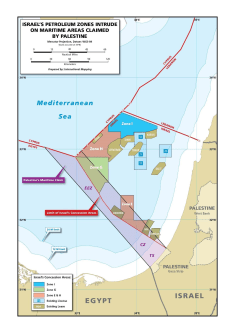 “Eni participated in a legally announced international tender for offshore exploration licences in waters located within Israel’s Exclusive Economic Zone bordering Egypt … Eni does not foresee being involved in activities in the area in the future.”
This is how Eni, a major Italian energy company, responded to a question from Italy’s national public broadcaster Radiotelevisione italiana (RAI) regarding its alleged involvement in “disputed waters off the coast of Gaza.”
In December 2022, Israel launched its fourth offshore gas exploration licencing round. The Israeli Ministry of Energy described the tender areas as “part of the Exclusive Economic Zone of the State of Israel”, while also acknowledging them as “not yet fully delimited”; some portions overlap with Gaza’s maritime boundaries.
ENI participated in the tender as the operator of a consortium, which won the bid for Zone G on 29 October, 2023. According to Adalah, an Israeli legal centre for Arab minority rights, 62.2 per cent of Zone G lies within maritime areas claimed by Palestine as part of its Exclusive Economic Zone, covering 1,063.3 square kilometres.
Since then, civil society groups have mounted sustained pressure on ENI to withdraw from cooperation with an illegal occupation. After more than two years of campaigning, ENI informed RAI on 2 December, 2025 that it would disengage from the area. Yet the struggle did not end there. The consortium includes two other companies: Israel’s Ratio Petroleum and Dana Petroleum, which was acquired through a hostile takeover in 2010 by the Korea National Oil Corporation (KNOC), a South Korean state-owned enterprise.
Recently, South Korean civil society groups have pressed KNOC to clarify its position and withdraw from the project. On 18 December, 2025, KNOC replied that, “after the end of the Israel–Palestine war, and following monitoring of the international situation, the company will review whether to proceed with exploration together with consortium partners such as ENI.” This reveals an intention to carry the project forward once international scrutiny fades, thereby reducing legal and political risk.
How pillage sustains occupation
Pillaging natural resources is a common problem many Global South states still struggle with, but Palestine’s case is uniquely profound for its political consequences. When RAI presented the issue alongside ENI’s position on 14 December, it highlighted Italy’s refusal to recognise Palestinian statehood and underscored a structural reality: “management of these resources risks consolidating the occupation rather than bringing it to an end.”
KNOC’s involvement raises a qualitatively different level of concern. KNOC’s role as a state-owned public enterprise places the issue squarely within the realm of state responsibility under international law. Thus, South Korea has a much stronger incentive to favour the continued occupation of Gaza.
South Korea presents its position on Israel–Palestine as politically neutral. In practice, however, it refers to Palestine only as “self-government”, while pursuing close cooperation with Israel in economic and defence sectors, including arms sales; it became the first Asian country to conclude a bilateral free trade agreement with Israel in 2022. South Korea has also refrained from criticising Israel’s violations of international law. In fact, it has been more muted than many Western countries and even Japan.
Consider what South Korea’s position could mean at this critical juncture in Gaza. The two years of Israeli genocide and devastating destruction have utterly deprived Gazans of any political capability. On 14 January, the USA announced moving to phase two of the Gaza ceasefire, under which Palestinian self-determination is practically nullified, with no defined timeline. Only technocratic participation is allowed, subject to the supervision of an international administering body referred to as a “Board of Peace”, chaired by US President Donald Trump.
Under this arrangement, the Board would make decisions over Gaza’s offshore gas resources, rather than the Palestinian government in the West Bank. South Korea would support this marginalisation of Palestinian self-determination for the sake of safer gas exploitation.
Decolonisation as leverage
The urgency of preventing South Korea from participating in the pillaging of Palestinian resources is clear. The problem is how. Advocacy for Palestinians within South Korea remains weak in both numbers and political influence. Public sympathy is also limited. According to a survey conducted by Korea Research in September 2025, only 39 per cent of respondents reported feeling a great deal of pity for Palestinians, compared with 19 per cent for Israelis. A plurality of respondents (41 per cent) held both sides equally responsible for the war.
It is therefore significant that the United Nations General Assembly has recently revitalised and institutionalised the concept of “colonialism in all its forms and manifestations”. This expanded framework aims to address various aspects of oppression including the illicit appropriation of natural resources. On 14 December, 2025, the UN marked the first International Day against Colonialism in All Its Forms and Manifestations. Four days later, at a high-level plenary meeting commemorating the occasion, UN Secretary-General António Guterres declared:
“Eighty years ago, the United Nations was created to save succeeding generations from war, to uphold human rights and to advance progress in larger freedom. Today, on this first International Day against Colonialism, let us renew that promise – not only by ending colonialism in its traditional forms, but by dismantling its remnants wherever they endure.”
This new phase of decolonisation did not become relevant to Palestine by coincidence. In 2024, Palestine was among the sponsoring states of General Assembly resolution A/RES/79/115, which introduced “the eradication of colonialism in all its forms and manifestations” as a formal agenda item for the 80th session of the General Assembly. Building on this, in 2025, resolution A/RES/80/106 designated 14 December as the International Day against Colonialism and placed the eradication of colonialism in all its forms and manifestations on the General Assembly’s agenda on an annual basis. With 116 votes in favour, the resolution marked the institutionalisation of an expanded decolonisation framework.
Palestine’s engagement with this framework is not primarily driven by the protection of gas resources. At stake is whether its supposedly temporary condition of occupation is recognised as a matter of decolonisation. This position has found broad resonance across the Global South. At the 18 December plenary meeting, 12 of the 33 states that took the floor explicitly referenced Palestine while advocating an expanded understanding of decolonisation. A further 10 states endorsed such positions through statements delivered by their group representatives—Venezuela for the Group of Friends in Defence of the Charter of the United Nations and Uganda for the Non-Aligned Movement. Palestine, in other words, lay at the centre of the debate.
Nearly five months have passed since the opening of the General Assembly’s 80th session with its new agenda item on the eradication of colonialism in all its forms and manifestations. Aside from resolution A/RES/80/106, however, no substantive resolutions have yet been adopted or debated under this item. Palestine is unlikely to advance the issue of gas exploitation on its own, given the risk of jeopardising relations with the South Korean government. Any meaningful challenge will therefore require a broader coalition of states with similar interests. The question is who has the courage to initiate it.
Spain Opens Probe Into Israeli Tourism Firms
IMEMC | January 26, 2026
Spain’s Ministry of Social Rights, Consumer Affairs, and Agenda 2030 has opened a formal investigation into Israeli tourism companies suspected of promoting goods or services linked to Israeli colonies built on occupied Palestinian land.
In a statement issued Sunday, the ministry said the inquiry aims to determine whether companies operating in Spain have advertised or sold tourism‑related services connected to Israeli colonies in the occupied West Bank, in violation of Spanish law.
The investigation is based on Royal Decree‑Law 10/2025, which prohibits the advertising of goods or services originating from occupied territories.
The decree was adopted in September 2025 as part of Spain’s emergency measures responding to the genocide in Gaza and to ensure that companies operating in Spain do not profit from activities tied to Israel’s occupation.
According to the ministry, the probe focuses on allegations that certain Israeli tourism firms promoted services linked to colonies illegally constructed on Palestinian land under military occupation.
Spanish officials emphasized that such activity would constitute illegal advertising under the decree, given the internationally recognized status of the West Bank as occupied territory and the illegality of Israeli colonial activity under international law.
The ministry stated that the purpose of the inquiry is to identify all companies involved and determine whether their conduct violates Spanish consumer and advertising regulations. If breaches are confirmed, authorities may impose sanctions or restrict the companies’ ability to operate commercially in Spain.
Spanish officials underscored that the investigation reflects the government’s commitment to ensuring that businesses in Spain do not contribute to or profit from Israel’s ongoing occupation of Palestinian land.
All of Israel’s colonies in the occupied West Bank, including those in and around occupied East Jerusalem, are illegal under International Law, the Fourth Geneva Convention, in addition to various United Nations and Security Council resolutions. They also constitute war crimes under International Law.
Article 33 of the Fourth Geneva Convention prohibits collective punishment and acts of terror against civilian populations.
Article 49 of the Fourth Geneva Convention states: “The Occupying Power shall not deport or transfer parts of its own civilian population into the territory it occupies.” It also prohibits the “individual or mass forcible transfers, as well as deportations of protected persons from occupied territory”.
Articles 53 and 147 prohibit the destruction of civilian property and classify pillage as a war crime.
UNRWA under attack: Ben-Gvir directs demolition in al-Quds
Al Mayadeen | January 20, 2026
Israeli occupation authorities bulldozed buildings inside the headquarters of the United Nations agency for Palestinian refugees (UNRWA) in eastern occupied al-Quds, as “Israel” intensifies restrictions on humanitarian organizations providing aid to Palestinians.
Local sources told the Palestinian news agency Wafa that Israeli troops, accompanied by bulldozers, stormed the UNRWA compound after sealing off surrounding streets and increasing their military presence. The forces then demolished structures inside the compound.
Later on Tuesday, Israeli occupation forces fired tear gas at a Palestinian trade school, marking a second incident targeting a UN facility in the same area.
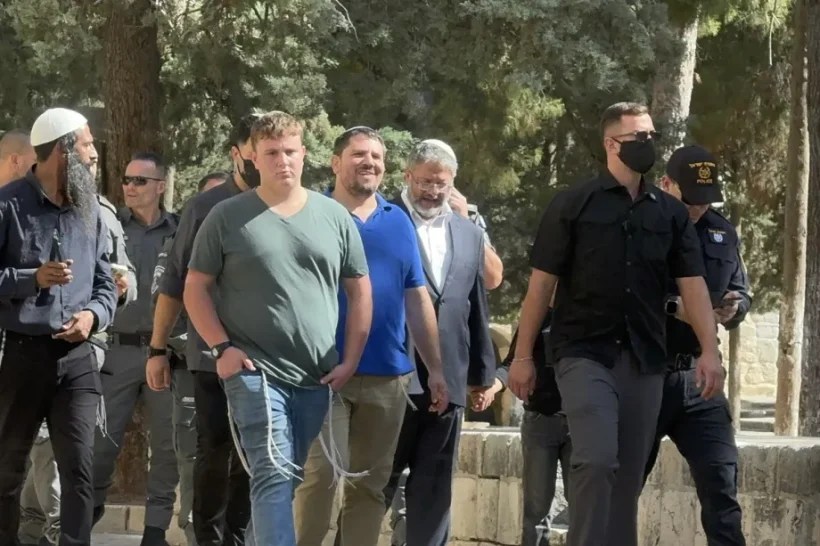
Israeli officials present during the demolition
“Israel” has repeatedly accused UNRWA of pro-Palestine bias and alleged links to Hamas, without providing evidence, claims the agency has strongly denied.
“Israel’s” Ministry of Foreign Affairs said the demolition was carried out under a new “law” banning the organization.
Extremist Israeli Police Minister Itamar Ben-Gvir said he accompanied crews to the headquarters, calling the demolition a “historic day”.
On his part, Israeli-imposed deputy mayor of occupied al-Quds Aryeh King referred to UNRWA as “Nazi” in a post on X.
“I promised that we would kick the Nazi enemy out of Jerusalem,” he wrote. “Now it’s happening: UNRWA is being kicked out of Jerusalem!”
UNRWA denounces ‘open defiance of international law’
UNRWA Commissioner-General Philippe Lazzarini described the demolition as an “unprecedented attack” and “a new level of open & deliberate defiance of international law.”
“Like all UN Member States & countries committed to the international rule-based order, Israel is obliged to protect & respect the inviolability of UN premises,” he wrote in a post on X.
He added that similar measures could soon target other international organizations.
“There can be no exceptions. This must be a wake-up call,” Lazzarini stressed. “What happens today to UNRWA will happen tomorrow to any other international organization or diplomatic mission.”
UN demands immediate cessation of demolitions
On his part, UN Secretary-General Antonio Guterres condemned “in the strongest terms” the Israeli occupation forces’ demolition of the UNRWA Sheikh Jarrah compound, spokesperson Farhan Haq said during a news conference.
Citing the inviolability and immunity of UN premises, Haq said, “The Secretary-General views as wholly unacceptable the continued escalatory actions against UNRWA, which are inconsistent with Israel’s clear obligations under international law, including under the Charter of the United Nations and the Convention on the Privileges and Immunities of the United Nations.”
“The Secretary-General urges the Government of Israel to immediately cease the demolition of the UNRWA Sheikh Jarrah compound, and to return and restore the compound and other UNRWA premises to the United Nations without delay,” he added.
Aid groups face widespread restrictions
The move comes amid international condemnation following “Israel’s” ban on dozens of international aid organizations providing life-saving assistance to Palestinians in Gaza.
“Israel” has lately revoked the operating licences of 37 aid groups, including Doctors Without Borders (MSF) and the Norwegian Refugee Council, citing non-compliance with new government regulations.
Under the new rules, international NGOs working in Gaza and the occupied West Bank must provide detailed information on staff members, funding sources, and operational activities.
Last week, UN Secretary-General Antonio Guterres warned Israeli Prime Minister Benjamin Netanyahu that “Israel” could face proceedings at the International Court of Justice if it does not repeal laws targeting UNRWA and return seized assets.
In a January 8 letter, Guterres said the UN could not remain indifferent to “actions taken by Israel, which are in direct contravention of the obligations of Israel under international law. They must be reversed without delay.”
Laws targeting UNRWA expanded
“Israel’s” parliament passed legislation in October 2024 banning UNRWA from operating in “Israel” and prohibiting Israeli officials from engaging with the agency. The law was amended last month to ban electricity and water supplies to UNRWA facilities.
Israeli authorities also occupied UNRWA’s offices in eastern occupied al-Quds last month.
UNRWA was established more than 70 years ago by the UN General Assembly to provide assistance to Palestinians forcibly displaced from their land.
Israel–Syria security pact stumbles as Tel Aviv rejects withdrawal: Report
The Cradle | January 14, 2026
Israel has refused any withdrawal from Mount Hermon and the other areas of Syria it occupied after the fall of former Syrian president Bashar al-Assad’s government, while rejecting Russian patrols in the country’s south and demanding that Damascus be prohibited from ever possessing air defenses, Hebrew media revealed.
“The Israeli position is clear and non-negotiable: there will be no withdrawal from Mount Hermon,” an Israeli official was cited as saying by Hebrew newspaper Maariv on 14 January.
According to the report, talks are stalling due to Damascus’s demand that a security agreement with Tel Aviv be linked to a withdrawal of Israeli army forces from Syria.
The Israeli report added that Tel Aviv is concerned with a Syrian attempt to re-establish a Russian military presence in southern Syria. Israel considers this move a direct threat to its “freedom of action,” Maariv claimed.
The source told the newspaper that Israel is obstructing plans to deploy Russian forces in southern Syria, and that Tel Aviv has conveyed to Damascus, Moscow, and Washington that it will not allow a Russian presence.
Russian media had reported last year that the Syrian government was requesting a resumption of Russian military patrols in the south in order to help limit continuous Israeli raids and incursions.
The sources add that Tel Aviv is following with concern reports that Damascus is hoping to purchase weapons from Russia and Turkiye.
“The Israeli message conveyed to all relevant parties [is that] Israel will not agree that in any future security arrangement, Syria will have strategic weapons, primarily advanced air defense systems and weapons that could change the regional balance of power,” according to Maariv.
“The Israeli goal is clear: freezing the existing situation – without an IDF withdrawal from Mount Hermon, without Syrian reinforcements, and without a foreign military presence that limits the IDF.”
In particular, Israel is demanding a complete demilitarization of southern Syria. “Israel’s security-strategic interest comes first. For now, Trump accepts this position.”
The report also says that the two rounds of Syrian–Israeli talks in Paris last week made “no breakthrough was achieved,” only a “limited understanding” for “the establishment of a coordination mechanism aimed at preventing clashes on the ground, with active US involvement.”
A joint statement by Washington, Tel Aviv, and Damascus on 6 January said that Syria and Israel have agreed to establish a US-supervised “joint fusion mechanism” to “share intelligence” and pursue de-escalation.
Damascus and Tel Aviv “reaffirm their commitment to strive toward achieving lasting security and stability arrangements for both countries,” the statement said, adding that they agreed to “establish a joint fusion mechanism – a dedicated communication cell.”
This mechanism aims “to facilitate immediate and ongoing coordination on their intelligence sharing, military de-escalation, diplomatic engagement, and commercial opportunities under the supervision of the US.”
“This mechanism will serve as a platform to address any disputes promptly and work to prevent misunderstandings,” according to the statement, published by the US State Department after the two rounds of Paris talks.
The Israeli army occupied large swathes of southern Syria as soon as Assad’s government fell, declaring the 1974 Disengagement Agreement null. It has since established permanent outposts and has seized control over vital water sources – practically encircling the Syrian capital.
The occupation continues to expand as Israeli forces carry out almost daily raids. In a span of one year, the Israeli army attacked Syria over 600 times.
Tel Aviv and the new Syrian government have been engaged in direct talks for nearly a year to reach a security arrangement. Damascus has vowed that it has no interest in confronting Israel and has reportedly made commitments to coordinate with Tel Aviv against Iran, Hezbollah, and the Axis of Resistance.
Despite this, Israel has shown no willingness to pull out of Syria.
Negotiations stalled for several weeks before Hebrew media reported in late December that “significant progress” had been made and that a deal could be announced “soon.”
A Syrian source told Israeli outlet i24 on 27 December that there was the possibility of a meeting between Israeli Prime Minister Benjamin Netanyahu and Syria’s self-appointed President Ahmad al-Sharaa, a former Al-Qaeda chief.
US President Donald Trump is reportedly pressuring both sides to reach a deal quickly.
Featured Video

Iran’s Next Strike May Not Explode. It Could Shut You Down
or go to
Aletho News Archives – Video-Images
From the Archive
Zionism’s Violent Legacy
By Donald Neff | Washington Report On Middle East Affairs | January 1996
On January 4, 1948, Jewish terrorists drove a truck loaded with explosives into the center of the all Arab city of Jaffa and detonated it, killing 26 and wounding around 100 Palestinian men, women and children.[1] The attack was the work of the Irgun Zvai Leumi – the “National Military Organization,” also known by the Hebrew letters Etzel – the largest Jewish terrorist group in Palestine. The Irgun was headed by Revisionist Zionist Menachem Begin and had been killing and maiming Arabs, Britons and even Jews for the previous ten years in its efforts to establish a Jewish state.
This terror campaign meant that at the core of Revisionist Zionism there existed a philosophical embrace of violence. … continue
Blog Roll
 Aletho News
- Trump’s Iran war is on an Israeli leash
- Saudi oil boss issues global supply warning
- Riyadh Says Its Oil System Is Intact. The Numbers Say Otherwise.
- Trump and Netanyahu Want to “Finish the Job” on Iran
- US ‘one-sided dictation’ not Iran’s beliefs makes rational talks impossible: Baghaei
- Iran’s Next Strike May Not Explode. It Could Shut You Down /Col Doug Macgregor
- Iran: US political targets legitimate if assassinations return
- Iraq shuts key border crossing with Iran under US pressure: Report
- Undersea Internet cables could be targeted in retaliation for attacks on Iran: IRGC deputy chief
- EU sending ‘biased’ observers to interfere in Serbian election – president
- If Americans Knew
- The Israel Lobby’s Changing Fortunes
- AIPAC has become such a political liability that it’s shifting to a more “nimble” approach to buying politicians
- At least 160 Israeli settler attacks in 2 weeks
- Will Gaza’s Ancient Christian Community Disappear Forever?
- Israel’s vision of regional security rests on keeping Arab states weak
- Heidi Levine recounts how Palestinian youths helped save her in settler attack
- DAILY UPDATE: Latest essential news on Palestine, Israel, & region
- Trump’s Intensifying Sabotage of the ICC, for Israel’s Sake
- Israeli military detain US and UK volunteers in West Bank including Democratic NY politician Brad Lander
- Americans at National Conservatism Conference held in Israel this year criticize Israel
- No Tricks Zone
- E-Cars Reduce CO2 Emissions By Only 41% Compared To Internal Combustion Engine Vehicles
- Predictions Made By Renowned Climate Professor Over Past Decades Have Been Proven To Be Poor
- New Study Suggests Large Regions Of The Pacific Ocean Have Been Cooling For The Last 80 Years
- Germany’s Green Energy Debacle: High Energy Costs Force Kahla Porzellan to Close After 182 Years!
- New Study: 50 Years Of The Most Aggressive ‘Net Zero’ Policies Can Only Affect The Global Climate By 0.03°C
- US September “Heat” Was No Record…Many Records Set Decades Ago
- Latest European Green Energy Debacle; Portugal’s Largest Flagship Solar Park Insolvent!
- Green Energy Debacle: German Expert Professor Fritz Vahrenholt Warns Of Severe Economic And Social Consequences
- Two More Paleo Reconstructions Affirm Meters-Higher Sea Levels Across Ireland, Brazil 7000-6000 Years Ago
- New Study: Earth And Venus Surface Warmth Largely Explained By Convection And Lapse Rate, Not CO2 Or Radiation

