Trump and Putin Hold a 90-Minute Telephone Call, US Liberals Go Ballistic
By Robert Bridge | Strategic Culture Foundation | May 8, 2019
Like a pit bull with its favorite chew toy, the Democrats refuse to abandon the debunked ‘Russian collusion’ script, to the point where a simple phone call between Moscow and Washington triggers rabid media hysterics.
When tasked to cover last week’s telephone conversation between Donald Trump and Vladimir Putin, the left-leaning mainstream media had a golden opportunity to prove it had moved beyond partisan politics, above intrigue, and above subjective bias. Predictably, it failed the test miserably. What the media did prove, however, came as no surprise: it is totally incapable of casting a gaze beyond the debris-strewn battlefield field known as Russiagate and report on US-Russia relations in a dispassionate and honest manner.
Instead, it obsessed over petty details, like the duration of the phone call and the fact that it was initiated by Donald Trump instead of the Russians. “Trump Initiated Putin Call, And It Was 90 Minutes, Not 60,” a snooty headline in the Huffington Post screamed, much like dozens of other unhinged outlets as if the world’s myriad problems can be sorted out in an afternoon over Twitter.
White House press secretary Sarah Sanders told the journalists that Trump and Putin discussed a number of global flash points, predominantly Venezuela, where the US, Russia and even China are jockeying for position as a showdown continues between Washington’s man in Caracas, Juan Guaido and the embattled but duly elected President Nicolás Maduro. Given that the US has long considered Latin America its private hunting grounds makes it all the more unacceptable for Washington policymakers and the media that Moscow and Beijing are nosing around in their backyard.
With no loss of irony, which we’ll come to in a moment, the US pundit class assailed Trump for taking Vladimir Putin’s word at face value when he said that Russia, as quoted by Trump, “is not looking at all to get involved in Venezuela other than he’d like to see something positive happen for Venezuela.”
In one uniformed and very agitated voice, the media bloodhounds demanded to know how it was possible that Trump placed faith in Putin, when just days earlier his Secretary of State Mike Pompeo claimed that Maduro was preparing to flee to Cuba – but was discouraged by Russia.
“He had an airplane on the tarmac, he was ready to leave this morning as we understand it and the Russians indicated he should stay,” Pompeo told CNN’s Wolf Blitzer with a remarkably straight face. “He was headed for Havana.”
Trump himself probably didn’t know exactly who or what to believe since just last month Pompeo the pompous practically fell out of his chair laughing as he told an audience from Texas A&M University about his heyday as CIA chief.
“I was the CIA director,” he began with a smile. “We lied, we cheated, we stole. We had entire training courses. It reminds you of the glory of the American experiment.”
When glory moments involve the lowest examples of human behavior it is painful to imagine what a bad day looks like. But I digress.
Regrettably, the young and impressionable students and faculty welcomed the creepy confession as some kind of a big joke, chortling as Pompeo resembled a frat boy discussing last night’s drunken endeavors. It may speak volumes about the American state of mind that no audience member thought to inquire as to what use Mr. Secretary of State was putting those “entire training courses” especially as the United States continues to employ psychological warfare against Maduro. Those methods include suggesting that top officials in his inner circle have secretly betrayed him, while disseminating the ‘news’ that he is about to flee. Such tricks from the regime change handbook may be giving the Venezuelan leader many a sleepless nights, but thus far it has failed to dislodge him from power.
Israel-Gaza deaths: 293 Gazans & 6 Israelis killed in past year
With the recent surge in violence between Israel and Gaza, it is important to examine events of the past year and to learn the chronology and details of the recent deaths among both populations…
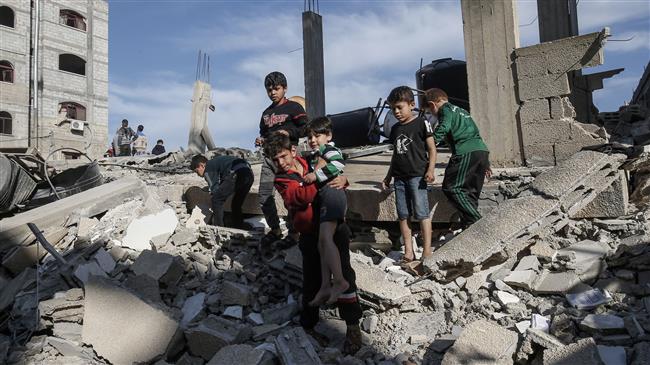
By Alison Weir | If Americans Knew | May 6, 2019
With news reports focusing on recent deaths in Israel and Gaza, it’s valuable to enlarge the time period being examined.
Israeli soldiers have been shooting Gazan men, women, and children every week for over the past year.
Israeli forces have killed approximately 290 Gazans and have injured over 29,000 since Gazans began their weekly Great March of Return on March 30th (see below about why they are marching.) A few additional Gazans died during this time period from wounds inflicted by Israeli forces earlier.
Among those killed and maimed have been numerous medics, women, children, and journalists. Approximately 126 Gazans have had legs and/or arms amputated, and others have been permanently paralyzed.
While Israeli governmental statements, often parroted by U.S. media, claim that Israel targets “terror,” the large majority of Gazans killed by Israeli forces have been civilians.
During the same time period, Gazan resistance fighters have killed 6 Israelis, one of them a Palestinian. (It is difficult to provide a number for Israelis wounded during this time since Israeli statistics for injured include those suffering from panic attacks.)
The names and details of both the Palestinians and the Israelis killed are listed on this timeline.
Deaths during the last 3 days:
On Friday, May 3, Israeli forces killed 4 Palestinians and injured 82. Among the injured were 34 children, two journalists and three paramedics.
On Saturday, May 4, Israeli forces killed 4 Palestinians (including an infant and her mother). Israeli forces also targeted and destroyed a news agency. Journalistic organizations around the world have condemned this attack. This attack was largely unreported by U.S. news media.
On Sunday, May 5, Palestinian resistance fighters killed 3 Israelis and 1 Palestinian Israeli, and Israeli military forces killed 19 Palestinians, including a 12-year-old boy and a 4-month-old girl named Maria. The Israeli shelling destroyed or damaged 600 Palestinian homes, businesses and livelihoods.
The Palestinian Israeli who died, Ziad Alhamamd, was a bedouin from the unrecognized Negev village of as-Sawaween who was working in an Israeli factory in Ashakalon when it was hit by a rocket from Gaza. Gaza’s rockets are mostly home-made and lack guidance systems.
Unrecognized villages are Palestinian villages that were in Palestine before Israel was created that are not formally recognized by the state of Israel. They have no access to Israeli services such as water, electricity, telephones, sewage systems, roads, and often schools and voting stations. Many of the villages are under Israeli demolition orders and never know when their homes will be destroyed. Alhamamd’s village of Sawaween had been denied a school for its 350 elementary school-aged children.
US media provide Israel-centric reports
U.S. news media have published a number of reports on the recent violence that emphasize the Israeli deaths, begin with Israeli victims, largely ignore the year-long killing of Gazans, and frame Israeli actions as defensive.
The New York Times lead paragraph that framed its report yesterday is an example:
“Fighting between Israel and Gaza escalated rapidly on Sunday in the worst combat since the last full-blown war in 2014, with Palestinian rocket and missile attacks killing four Israeli civilians and Israeli forces taking aim at individual Gaza militants.”
“The death toll continues to rise Sunday on both sides of the Israel-Gaza border in one of the most intense flare-ups of violence in the region in years, shattering a month-long lull in attacks.
“Palestinian militants in the Gaza Strip fired more than 600 rockets into southern Israel in less than 24 hours, killing at least four Israelis and leaving several more in critical condition.”
Below is how the Washington Post introduced its report today:
“An uneasy cease-fire settled over the cities of southern Israel on Monday after a weekend that brought a rain of 600 rockets from the Gaza Strip, but not all residents thought the truce was a good thing.
“Near the explosion-scarred house of Moshe Agadi, 58, who became the first Israeli since 2014 to die in rocket fire from Gaza, mothers took their children to play in a park after 48 hours of sheltering indoors.”
Meanwhile, the Israeli military has abducted 11 Palestinians in the West Bank, uprooted 120 Palestinian olive trees, and an Israeli NGO published a report revealing that Israeli authorities forced almost 3,000 Palestinians from their homes in East Jerusalem between 2004 and 2019, deliberately leaving them homeless, including 1,574 of minors.
Total number of Israeli and Palestinian deaths including those outside Gaza
Altogether, 343 Palestinians have died from Israeli attacks, and 16 Israelis have died from Palestinian attacks since March 30, 2018 .
At least 9,908 Palestinians and 1,267 Israelis have been killed by someone from the other side since 2000.
Alison Weir is executive director of If Americans Knew, president of the Council for the National Interest, and author of Against Our Better Judgment: The Hidden History of How the U.S. Was Used to Create Israel.
RELATED:
TAKE ACTION: Contact Congress to condemn Israeli assault on Gazans
Once again, ‘NYT’ distorts the news, dishonestly making Gazans the aggressor and Israel the victim
Fake news alert: CNN says Venezuelan opposition leader Juan Guaido ‘won election in January’
RT | May 6, 2019
CNN took the concept of “fake news” to a whole new level with a recent report on Venezuela, in which it claimed that citizens “chose” coup leader Juan Guaido over current president Nicolas Maduro in January “elections.”
In a report on Sunday’s deadly Venezuelan military helicopter crash, CNN wrote that “pressure is mounting” on Maduro to step down “following elections in January in which voters chose opposition leader Juan Guaido over him for president.”
The report was finally corrected on Monday after being published on Sunday afternoon and remaining unfixed overnight. It now reflects the fact that Guaido was not elected, but “declared himself interim president” in January.
A correction added to the bottom of the piece explains that the earlier version had “incorrectly described” the situation. Elections? Military coups? Really, who can keep up these days!?
Amazingly, the botched report which initially referenced these mysterious imaginary elections, was the product of work by no less than six journalists — two whose names appear on the main byline and four more listed as contributors at the bottom. Normal practice would see the piece run past a couple of editors too, before being published. That’s potentially eight pairs of eyes — and none of them managed to catch the glaring error.
A number of journalists and Twitter users called CNN out for the “blatant” lie and “shameful” and “terrible” reporting.
It wasn’t the first Venezuela-related embarrassment for CNN. Reporter Jake Tapper was called out on social media last week after he tweeted a link with a picture of opposition army defectors wielding guns to claim Maduro’s government “mows down citizens in streets.”
CNN likes to be known for its so-called adversarial journalism when it comes to the Trump administration, but so far, it seems fully on board with its regime change policies in Venezuela — although, even the White House hasn’t gone so far as to pretend fake elections took place in January.
“Just A Human Being”: Rachel Maddow’s Latest Resistance Hero
By Tyler Durden | Zero Hedge | May 6, 2019
This is where three years of failed Russiagate conspiracy theorizing and fixation leads you — into the arms of fanatical endless war proponent John Bolton: “John Bolton God bless you, good luck..” one can now hear on “resistance” network MSNBC prime time.
MSNBC’s Rachel Maddow is now championing neocon national security adviser John Bolton’s “humanity” given he apparently went loose cannon this past week, vowing to confront Russia over Venezuela even as his boss President Trump downplayed Moscow’s role in the crisis after a Friday phone call with Putin.
“This is what John Bolton, human being, thought his job was this week,” Maddow said on her show Friday night. Both Pompeo and Bolton had clearly gone a bit rogue with their overly bellicose Venezuela comments, while Trump appeared to be more restrained — and for Maddow this was of course cause for championing the neocon interventionist line: “Hey, John Bolton, hey, Mike Pompeo, are you guys enjoying your jobs right now?” she questioned.
On Friday Trump had said following the phone call, Putin is “not looking at all to get involved in Venezuela other than he’d like to see something positive happen in Venezuela, and I feel the same way.”
Maddow, who once prided herself on slamming and deconstructing Bush-era regime change wars, now finds Trump not jingoistic enough. She stridently questioned:
“How do you come to work anymore if you’re John Bolton? Right, regardless of what you thought about John Bolton before this, his whole career and his track record, I mean, just think of John Bolton as a human being. This is what John Bolton, human being, thought his job was this week.”
She further cut to a clip of Bolton criticizing Russia’s alleged military involvement in Venezuela to prop up Maduro, because apparently uber-hawk Bolton is now a “fearless truth-teller” in Maddow’s world.
“You thought that was your job,” Maddow said. “But it turns out not at all, not after Vladimir Putin gets done with President Trump today.”
It bears repeating that among the loudest right-leaning voices who joined the chorus of leading establishment Democrat Russiagaters included previously forgotten about neocons who were quickly rehabilitated by the “Resistance” — David Frum, Max Boot, Robert Kagan, Bill Kristol among them.
And then there was the nauseating phenomenon of watching liberals lionizing Trump-skeptical Republican Congressional leaders like Lindsey Graham, Jeff Flake, and the late Sen. McCain.
Because it’s awful, just awful! – that Trump might actually prefer peace to waging war in multiple places…
Restraint vs. war in multiple places? Maddow apparently advances the humanity of those advocating the latter.
It amounted to, at times, a picture of a President at odds with the officials who this week have called vociferously for a change in power in Caracas and have consistently declined to rule out a US military intervention.
Trump has become frustrated this week as national security adviser John Bolton and others openly teased military options and has told friends that if Bolton had his way he’d already be at war in multiple places. — CNN
And now, months into 2019, we get to hear Maddow waxing eloquent about the innocent “human side” of none other than John Bolton.
Of course, Maddow should first consider whether Bolton or his neocon ilk ever once paused to consider whether those they advocate dropping bombs on — from Iraq to Syria to Libya to Yemen to Gaza to Venezuela — are themselves actually human beings who simply wish to live out their daily lives in peace.
A Nuclear War? Over Venezuela?
By Ron Paul | May 6, 2019
Is President Trump about to invade Venezuela? His advisors keep telling us in ever-stronger terms that “all options are on the table” and that US military intervention to restore Venezuela’s constitution “may be necessary.” Secretary of State Mike Pompeo was on the Sunday news programs to claim that President Trump could launch a military attack against Venezuela without Congress’s approval.
Pompeo said that, “[t]he president has his full range of Article II authorities and I’m very confident that any action we took in Venezuela would be lawful.” The man who bragged recently about his lying, cheating, and stealing, is giving plenty of evidence to back his claim.
The president has no Constitutional authority to start a war with Venezuela or any other country that has not attacked or credibly threatened the United States without Congressional approval. It is that simple.
How ironic that Pompeo and the rest of the neocons in the Trump Administration are ready to attack Venezuela to “restore their constitution” but they could not care less about our own Constitution!
While Washington has been paralyzed for two years over disproven claims that the Russians meddled in our elections to elect Trump, how hypocritical that Washington does not even hesitate to endorse the actual overturning of elections overseas!
Without Congressional authority, US military action of any kind against Venezuela would be an illegal and likely an impeachable offense. Of course those Democrats who talk endlessly of impeaching Trump would never dream of impeaching of him over starting an illegal war. Democrats and Republicans both love illegal US wars.
Unfortunately, Washington is so addicted to war that President Trump would likely have little difficulty getting authority from Congress to invade Venezuela if he bothered to ask. Just as with the disastrous US invasion of Iraq in 2003, the mainstream media is nothing but non-stop war propaganda. Even so-called progressives like Rachel Maddow are attacking the Trump Administration not for its reckless saber-rattling toward Venezuela but for not being aggressive enough!
The real lesson is that even a “Constitutional” war against Venezuela would not be a just war. It would be a war of aggression for which Americans should be angry and ashamed. But the mainstream media is pumping out the same old pro-war lies, while the independent media is under attack from social media companies that have partnered with US government entities to decide what is “fake news.”
The latest outrage in the mainstream media is over the most sensible thing President Trump has done in some time: last week he spent an hour on the telephone with Russian President Vladimir Putin to discuss, among other things, the dangerous situation in Venezuela.
While President Trump’s neocon advisors are purposely trying to position him so that war is the only option, we can only hope that President Putin was able to explain that the Venezuela problem must be solved by the Venezuelans themselves. Certainly the US, perhaps together with the Russians, could help facilitate discussions between the government and the opposition, but the neocon road to war will surely end up like all the other neocon wars: total disaster.
The media is furious that Trump dared to speak to Putin as the two countries increasingly face-off over Venezuela. The Democrats and neocons are pushing for a direct confrontation that may even involve Russia. Republicans agree. Do they really prefer thermonuclear war? Over Venezuela?
Israel’s Terrorists: The White Helmets Receive an Award
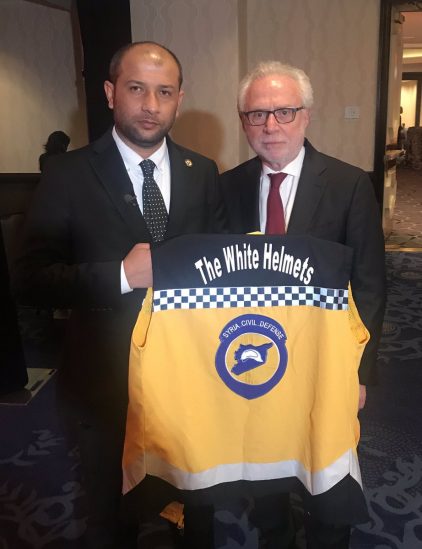
By Philip Giraldi | American Herald Tribune | May 5, 2019
Increasingly, groups and even foreign governments have pandered to Israel and its supporters in the United States because they have come to understand that success in dealing with Washington can be dependent on Jewish support. Last week, Raed Saleh, the leader of the so-called White Helmets, also referred to as the Syrian Civil Defense, a terrorist-affiliated group operating in Syria, was in the United States to “… receive the Elie Wiesel Award from the Holocaust Memorial Museum for his organization’s work in Syria.” He was also dropping by to pick up a check for $5 million courtesy of the U.S. government that “… helps us with acquiring ambulances and helps us with search and rescue operations.”
During his visit, Saleh was treated to a nauseatingly obsequious interview courtesy of National Public Radio, which, inter alia, described how the Helmets “were the subjects of an Oscar-winning documentary two years ago, which captured images of them carrying broken and bloody Syrians from dust and rubble.”
Saleh claimed that the alleged victory of the Syrian regime in the yet to be completed war is an illusion as President Bashar al-Assad presides over a broken country, yet reports from inside Syria indicate that the return of the government to areas formerly controlled by terrorists has been welcomed and refugees from the fighting are now eager to return home. Saleh also claimed, falsely, that his organization has been “providing services to all Syrians and to providing support to all Syrians. Now after six years of war, we have saved more than 116,000 people from under the rubble. We have not asked any of these 116,000 people who did they belong to? Is he a Kurd? Is he a Christian? Is he a Muslim? Is he with Assad? Is he against Assad? Is he with the Kurds? Is he against the Kurds? We have never asked anyone these questions.”
Saleh, whose group has only operated in terrorist-controlled areas, could not, however, maintain his approved narrative. He fairly quickly abandoned his non-partisan quasi-humanitarian rhetoric when asked about how he sees the Syrian conflict developing, saying “We do not call this a civil war, but we rather call it a revolution against a dictatorship… the revolution still goes on. We have not lost.”
Those who are unfamiliar with the White Helmets should understand that the group has been praised by those who hate the government of President Bashar al-Assad in Syria and want to see it removed, which includes the United States, Israel, Saudi Arabia and the Emirates. The White Helmets have played a leading role in the propaganda campaign that seeks to instigate violence or use fabricated information to depict the Damascus government as guilty of slaughtering its own citizens. The propaganda is intended to terrorize the civilian population, which is part of the definition of terrorism.
Favorable media coverage of the group has largely derived from the documentary The White Helmets, which was produced by the group itself and tells a very convincing tale promoted as “the story of real-life heroes and impossible hope.” It is a very impressive piece of propaganda, so much so that it has won numerous awards including the Oscar for Best Documentary Short two years ago and the White Helmets themselves were even nominated for the Nobel Peace Prize. More to the point, however, is the undeniable fact that the documentary has helped shape the public understanding of what is going on in Syria, describing the government in Damascus in purely negative terms.
Nine months ago, with the Syrian Army closing in on the last White Helmet affiliates still operating in the country, the Israeli government, assisted by the United States, staged an emergency “humanitarian” evacuation of the group’s members and their families to Israel and then on to Jordan. It was described in a BBC article that included “The IDF said they had ‘completed a humanitarian effort to rescue members of a Syrian civil organization and their families’, saying there was an ‘immediate threat to their lives.’ The transfer of the displaced Syrians through Israel was an exceptional humanitarian gesture. Although Israel is not directly involved in the Syria conflict, the two countries have been in a state of war for decades. Despite the intervention, the IDF said that ‘Israel continues to maintain a non-intervention policy regarding the Syrian conflict.’”
All of the Israeli assertions are nonsense, including its claimed “humanitarianism” and “non-intervention” in the Syrian war, where it has been bombing almost daily. The carefully edited scenes of heroism under fire that have been filmed and released worldwide conceal the White Helmets’ relationship with the al-Qaeda affiliated group Jabhat al-Nusra and its participation in the torture and execution of “rebel” opponents. Indeed, the White Helmets only operate in terrorist-held territory, which enables them to shape the narrative both regarding who they are and what is occurring on the ground.
The White Helmets were accustomed to traveling to bombing sites with their film crews trailing behind them. Once at the sites, with no independent observers, they are able to arrange or even stage what is filmed to conform to their selected narrative. Exploiting their access to the western media, the White Helmets thereby de facto became a major source of “eyewitness” news regarding what was going on in those many parts of Syria where European and American journalists were quite rightly afraid to go, all part of a broader largely successful “rebel” effort to manufacture fake news that depicts the Damascus government as engaging in war crimes directed against civilians, an effort that has led to several attacks on government forces and facilities by the U.S. military. This is precisely the propaganda that has been supported both by Tel Aviv and Washington.
Perhaps the most serious charge against the White Helmets consists of the evidence that they actively participated in the atrocities, to include torture and murder, carried out by their al-Nusra hosts. There have been numerous photos of the White Helmets operating directly with armed terrorists and also celebrating over the bodies of execution victims and murdered Iraqi soldiers. The group’s jihadi associates regard the White Helmets as fellow “mujahideen” and “soldiers of the revolution.”
For those interested in further details, White Helmet activities have been thoroughly exposed by Maxim Grigoriev of the Russian NGO Foundation for the Study of Democracy. Grigoriev presented his findings at a special meeting of the United Nations just before Christmas 2018. A video prepared based on the U.N. meeting includes interviews with actual witnesses of White Helmet atrocities and participants in the staged chemical attacks that were blamed on the government.
So Raed Saleh was in Washington to pick up his award and his multi-million dollar check on top of the tens of millions that his organization has already received from Congress and the White House. He also met with a number of Congressmen who support his initiatives and was praised by New Jersey’s own seriously corrupt Israel-firster Senator Robert Menendez of the Senate Foreign Relations Committee who observed “that Saleh’s group of about 3,000 volunteers has ‘saved almost 100,000 lives’ doing ‘courageous work on the ground in Syria, while being targeted by Russia.’” Yes, Russiagate is alive and well.
There is considerable irony in the fact that the National Holocaust Museum, which is taxpayer funded, has given an apparently prestigious award to a terrorist group, something which could have been discerned with even a little fact checking. And the museum also might have been sensitive to how the White Helmets have been used in support of Israeli propaganda vis-à-vis Syria. Perhaps, while they are at it, the museum’s board just might also want to check out Elie Wiesel, for whom the award is named. Wiesel, who was a chronicler of Jewish victimhood while persistently refusing to acknowledge what Israel was doing to the Palestinians, notoriously mixed fact and fiction in his best-selling Holocaust memoir Night. Ironically, the award and recipient are well matched in this case as mixing fact and fiction is what both Elie Wiesel and the White Helmets are all about.
After Venezuela coup failure, officials & mainstream media desperately spinning explanations
RT | May 4, 2019
Months of insistence in Washington that the people of Venezuela stood by the US-backed opposition leader Juan Guaido basically went up in smoke when his ‘Operation Liberty’ fizzled. The question now is whom to blame.
Senior US officials like National Security Advisor John Bolton and special envoy for Venezuela Elliott Abrams expressed confidence in “regime change” in Caracas on Tuesday, named top Venezuelan officials ready to defect, and even spoke of signed documents to that effect.
Yet literally none of this happened, and by the early evening on Tuesday, the handful of Guaido’s armed supporters were seeking sanctuary in foreign embassies.
Then came the spin. Secretary of State Mike Pompeo went on CNN and Fox News to claim that Maduro was getting ready to flee to Cuba, but “the Russians” talked him out of it. Bolton claimed Maduro was “hiding in a bunker” even as video evidence from Caracas showed him addressing supporters numbering in the thousands on May Day. The truth was inescapable, though: Guaido had failed.
“The opposition took a step backward with the military,” Rocio San Miguel, president of the Colombian NGO Control Ciudadano, told Bloomberg on Thursday. “Guaido appearing with [his mentor Leopoldo] Lopez at a single point in the city with a few dozen soldiers and no major firepower showed their weakness.”
So what happened? Several US media outlets have since sought to explain, citing anonymous sources allegedly privy to US government plots. These sources told Bloomberg they believe Maduro got wind of the coup on April 29, and Guaido rushed it ahead of schedule “or it would all collapse.”
Lopez was released from house arrest because the head of the Venezuelan intelligence agency SEBIN, General Manuel Christopher Figuera, had defected to Guaido, the anonymous and entirely unverifiable sources claimed, adding that it was Lopez resurfacing that might have spooked other senior officials – defense minister Vladimir Padrino, Supreme Court Chief Justice Maikel Moreno, and military intelligence and presidential guard head General Ivan Hernandez.
According to these sources, Figuera’s wife left Venezuela on Sunday for the safety of the US, and the general left the country as well after he was sacked on Tuesday night, though his whereabouts are unknown.
Meanwhile, AP published a long speculative piece about missed opportunities to turn senior Venezuelan officials, from Hernandez being denied a visa in 2017 for his 3-year-old son’s brain surgery, to Padrino reaching out to the US government in early 2016, after a troubled Venezuelan election.
Padrino in particular has been seen as “a potential white knight,” being a graduate of the School of the Americas. Apparently, very little US influence in the Venezuelan army had survived what the AP described as “thorough scrubbing” by Former President Hugo Chavez.
“There’s a theory that’s gaining ground, and I think there’s some credence to it, that it was all part of a big ‘rope-a-dope’ operation, whereby the Maduro officials pretended to go along with this coup to smoke out the opposition,” Daniel McAdams, executive director of the Ron Paul Institute for Peace and Prosperity, told RT.
“That’s one possibility, the other is that Pompeo’s lying” about Maduro’s attempted flight to Cuba, McAdams said, adding that neither reflects well on the US.
Whatever the truth, there is no escaping the fact that Washington has pushing for regime change in Caracas for months with sanctions and other forms of pressure, and openly since “recognizing” Guaido in January, to absolutely no avail. All the hot air coming from Bolton, Pompeo, Abrams and other high officials pushing the regime change narrative has had far more effect in the US than in Venezuela.
MSM melts down as Trump talks Venezuela with Putin… and ‘feels same way’
RT | May 4, 2019
America’s most trusted talking heads are in meltdown mode, once again accusing Donald Trump of taking orders from Vladimir Putin, after the US leader was seemingly too soft with the Russian president in a recent phone call.
Rachel Maddow, Jake Tapper, and other spirited Russiagate promoters suffered full-on meltdowns upon learning that Trump apparently hadn’t ‘properly’ discussed the issue of “election meddling” in his first phone call with Vladimir Putin since the Mueller report’s release.
Rather, the two leaders spoke about “trade, Venezuela, Ukraine, North Korea, nuclear arms control” and “the Russian hoax” during the hour-long call, according to Trump’s tweet.
Scandalously, the US president failed to press Putin about the most critical, life-and-death issue facing the United States – a massive flub-up that did not go unnoticed by the intrepid Washington press corps.
“Did you tell [Putin] not to meddle in the next election?” an unseen reporter asked the president during a Friday press conference.
“We had a good conversation about many different things,” Trump replied. “We didn’t discuss that.”
As for Venezuela, Trump had the audacity to suggest that the Russian president “is not looking to get involved at all, other than that he’d like to see something positive happen” in the South American nation. Trump then showed his true collusion colors, admitting that he “feels the same away” about the ongoing political crisis in Caracas.
His comments were received with predictable hysteria.
CNN’s Erin Burnett expertly deduced that Trump was “kowtowing” to Putin — on both “election meddling” and Venezuela.
“‘Not looking to get involved’ is just blatantly false – according to Trump’s own top team,” she sniffed, incredulous that Trump would contradict his more hawkish secretary of state, Mike Pompeo. Earlier this week, Pompeo claimed that Venezuelan President Nicolas Maduro was about to flee to Cuba and was only persuaded to remain in Caracas because Russia allegedly convinced him to stay.
Burnett’s colleague, Jake Tapper, was inconsolable as he attempted to wrap his head around the apparently unforgivable contents of a routine telephone conversation.
“He is giving Putin’s point of view, almost as if he is the spokesman for the Kremlin!” the CNN anchor fumed, referring to the Russian president as “the man who led and continues to lead cyberattacks on the US.” Not missing a beat, Tapper then proceeded to accuse Trump of “continuing to say things about the Mueller investigation that weren’t true.”
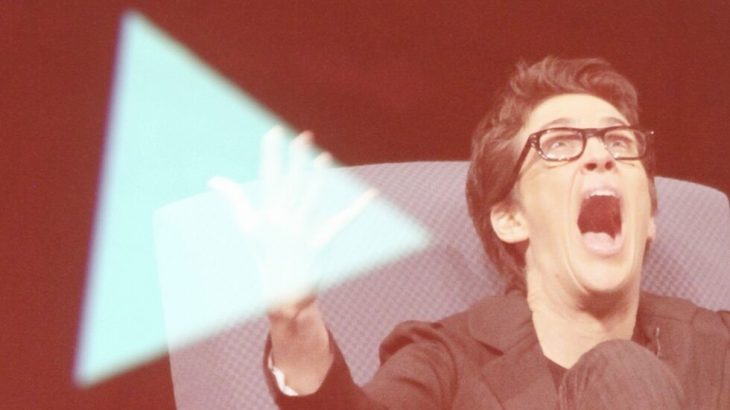
True to form, MSNBC’s Rachel Maddow came close to suffering an on-air stroke over the phone call. Still reeling from her post-Russiagate ratings slump, Maddow looked at Bolton and Pompeo as similarly unmoored kindred spirits.
The MSNBC host addressed them directly during her broadcast: “Hey, John Bolton, hey, Mike Pompeo, are you guys enjoying your jobs right now?”
“How do you come to work anymore if you’re John Bolton?” she added.
Western media outlets have repeatedly expressed indignation over any attempt by the world’s two largest nuclear powers to engage in dialogue. A meeting between Trump and Putin in Helsinki, Finland was described as constructive by both parties, but the US president was still hounded for not excoriating Putin to the media’s liking.
Likely anticipating similar hysteria over the phone call, Trump stated on Friday morning that “as I have always said, long before the Witch Hunt started, getting along with Russia, China, and everyone is a good thing, not a bad thing.”
Poynter retracts list of ‘unreliable news sources’ after listed sites prove it to be unreliable
By Helen Buyniski | RT | May 3, 2019
Journalism nonprofit Poynter has retracted a long list of supposedly unreliable news websites, admitting the list itself was unreliable – a fact ironically brought to its attention by several of the outlets it calls untrustworthy.
“We regret that we failed to ensure that the data was rigorous before publication, and apologize for the confusion and agitation caused by its publication,” Poynter’s managing director Barbara Allen wrote after removing the list from its website. Allen notably didn’t apologize for compiling the list in the first place, and it is unlikely we’ve heard the last of Poynter’s unreliability index, given that mainstream media gatekeepers have been trying to convince the public it needs an exalted class of media-whisperers to interpret the news for years.
Before deleting entirely, Poynter apologized to the Washington Examiner and FirstPost, two of several sites included on the blacklist who politely inquired as to why they’d been included. Baybars Orsek even told the Examiner that “the total number of complaints is less than 2 percent of the whole database.” By Thursday night, however, the page had vanished, and “inconsistencies between the findings of the original databases… and our own rendering” were blamed, with a promise that a “more consistent and rigorous set of criteria” was on its way. We can hardly wait!
RT made the “unreliable” list, hardly a surprise given the notable bias of neocon-affiliated “fact-checkers” like the folks at NewsGuard, but the other 515 sites held a few surprises. In addition to about 30 well-known conservative outlets like the Daily Caller (“bias,” “clickbait”) and Drudge Report (“bias”), popular progressive pages like Common Dreams (“clickbait”) and Activist Post (“conspiracy,” “unreliable”) are listed side by side with apolitical platforms like Liveleak (“fake”) among the obvious fakes (including joke sites like Clickhole and Reductress ). The list thus appears to be a PropOrNot-style “wrongthink”-tracker designed to tar legitimate dissent and other inconvenient voices with the ‘fake news’ brush.
Poynter apparently doesn’t think much of its audience’s intelligence, as the list included “satire” among the otherwise somewhat interchangeable terms it used to smear included sites – “bias,” “unreliable,” “fake,” “clickbait,” and “conspiracy.” Never mind that some conspiracies are real – Watergate, anyone? – or that their definition of “clickbait” would condemn most of the internet (“sources that provide generally credible content, but use exaggerated, misleading, or questionable headlines, social media descriptions, and/or images”). Blacklisting “satire” because you assume readers are too dim to “get it” enshrines the lowest common denominator in the driver’s seat.
The blacklist was supposedly “built from pre-existing databases compiled by journalists, fact-checkers and researchers around the country,” though Poynter admits that more than half the domains in those databases were no longer active as of November 2018. Most of the data came from OpenSources, a database run by Merrimack University’s Melissa Zimdars, whose academic work, as Breitbart (“bias, unreliable”) noted, centers almost exclusively on obesity (“Watching Our Weights: The Consequences and Contradictions of Televising Fatness in the ‘Obesity Epidemic’”), despite her self-styled credentials as a ‘fake news’ analyst.
The absence of any mainstream voices from the list despite numerous instances of fake stories parading across their pages just in recent months – Covington Catholic students harassing peaceful protesters, the hate crime against Jussie Smollett, Maduro’s government burning humanitarian aid, Donald Trump’s campaign colluding with the Russians – says all that is necessary about the real purpose of Poynter’s list, which is less about protecting readers from fake news than protecting readers from dissenting views.
Big Lie Day
By Leonid SAVIN – ORIENTAL REVIEW – 03/05/2019
2 May has gone down in modern history as the day that terrorist number one, Osama bin Laden, was killed. The official version states that, in 2011, he was shot dead by US special forces in the house where he was living with his wives and children. The house itself was in a city in Pakistan, where he had been hiding undetected ever since the senior members of al-Qaeda (a terrorist organisation banned in Russia) had fled Afghanistan following the defeat of the government of Mullah Omar, who had been sheltering them. Under cover of night, US helicopters carrying two groups of special forces flew to the operation location from Afghanistan, which was a violation of Pakistan’s state sovereignty.
Recalling the incident in his book Pakistan: A Personal History, which was published in the same year as Osama bin Laden’s official assassination, the current prime minister of Pakistan, Imran Khan, noted: “It was bad enough that the world’s most wanted man was not found in some cave but in a city only 50 kilometres from Islamabad, and a mile from Pakistan’s Military Academy. What made it worse was that the news was broken to us Pakistanis, and the rest of the world, by President Obama”.
“It was several hours later when a statement came from our government congratulating the US and taking credit for providing the US with all the information about Osama’s location. This begged the obvious question for all Pakistanis: if we knew about his whereabouts, then why did we not capture him ourselves? The media in India and the rest of the world went wild, blaming Pakistan’s ISI (in other words, the army) for having kept Osama in a safe house for the past six years. […]
“Three days later, the army chief denied all knowledge of the operation and announced that any such violation of our sovereignty would not be violated again. A week later the PM only added to the confusion when he finally gave a statement, suggesting ‘a matching response’ to any attack against ‘Pakistan’s strategic assets’. For Pakistanis, especially those living abroad, this was one of the most humiliating and painful times. The CIA chief Panetta further rubbed salt in our wounds by bluntly saying that the Pakistan government was either incompetent or complicit.”
The US propaganda machine, meanwhile, was continuing its work around the world and few now dispute the widely held view, or rather myth, that bin Laden was killed in Abbottabad. Films have been made, and books published, that back up America’s official version with an additional narrative. The Russian-language Wikipedia page on Operation Neptune Spear goes into great detail. What’s more, all of the links are to US resources or reprints of them.
The fact that everyone who took part in the raid on bin Laden’s house is now dead seems a little strange, however. Just as suspicious is the fact that Dr Shakil Afridi – who, according to official legend, obtained evidence of bin Laden’s whereabouts by running a fake vaccination programme – was arrested almost as soon as the operation was over and sentenced to 33 years for treason. Something else that gives pause for thought is the official story that bin Laden’s body was buried at sea on the same day. There had apparently been enough time for examination and identification at the US military base in Afghanistan and the Americans had got everything they needed to know.
The author of this article recently got the opportunity to go to Abbottabad and used the visit to see where bin Laden was killed and glean any details that were not published in the world’s press.
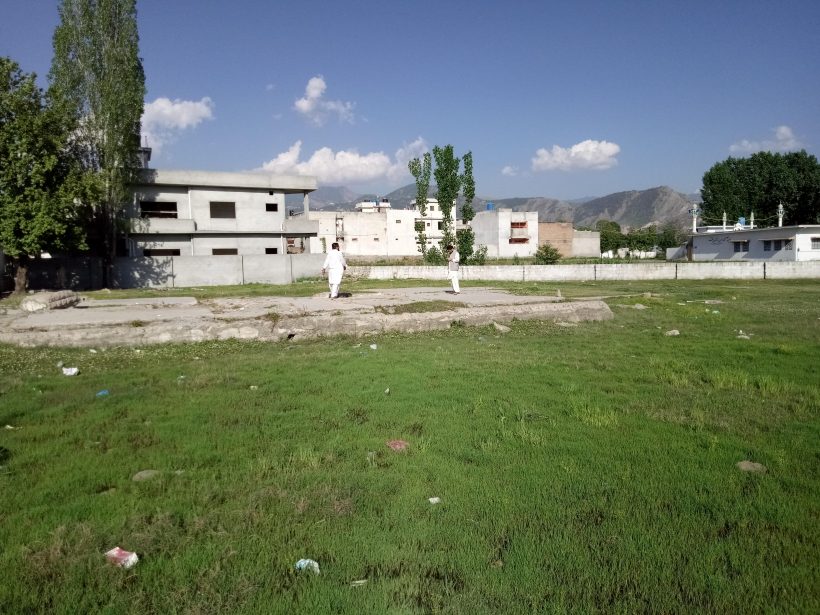
The city of Abbottabad is located in a valley surrounded by mountains and the Karakoram Highway passes close by. As well as the Military Academy in Abbottabad itself, there are a number of military bases and installations located around the city. The fence of an ordnance factory that produces a variety of weapons stretches for many kilometres along both sides of the Karakoram Highway. In other words, it is a place with a pretty high level of security requirements. In 2011, when the operation was carried out, the security measures in and around the city were probably just as strict and serious.
Almost immediately before entering the territory of the Academy, there is a single right turn that leads to the suburb of Bilal Town. We stopped alongside a small group of men outside a shop and asked for directions to bin Laden’s house. After a few seconds’ pause, one of them told us how to get there and where to turn. We stopped again outside another shop further along to clarify exactly where we were going and arrived a few minutes later.
The first person we met was an elderly gentlemen and we asked him about the house, to which he replied: “Yes, that’s the house where the Americans carried out their operation and killed people, only bin Laden wasn’t there. It’s a lie.”
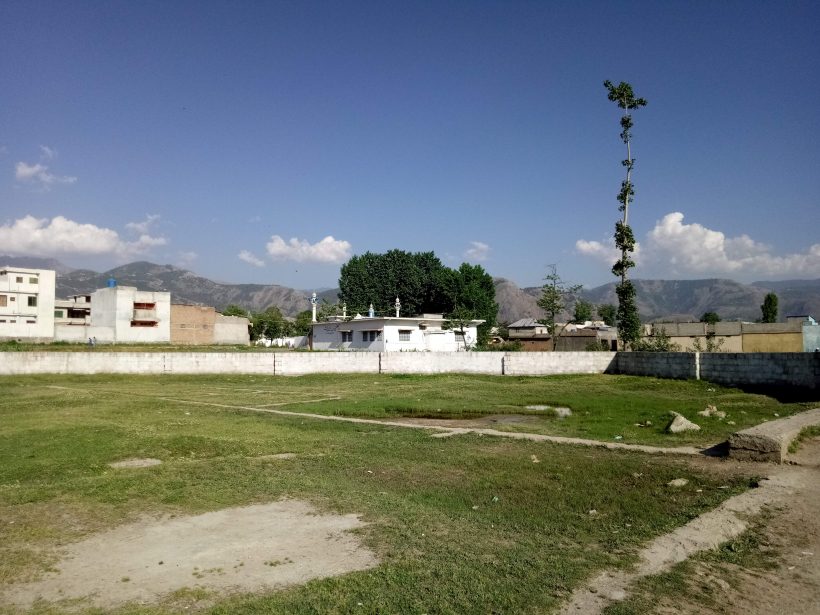
The man hurried on his way and we didn’t question him further. All that remains of the house are the foundations (the building was demolished some time after the operation – another strange fact), and the territory is surrounded by a fairly low concrete wall with a few openings. We saw two men within the walls of the compound itself and decided to talk to them. One of them willingly told us what he knew.
He lives close by and, on the night in question, he and his family heard the sound of helicopters. The sound was so loud that his father climbed up onto the roof, afraid that a helicopter might fall onto their house. A flash then lit up the sky, and explosions and gunfire rang out.
The house itself, where the operation took place, was located away from other structures. There are a few other buildings in the neighbourhood today but, in 2011, only a single-storey building stood opposite. Nevertheless, all the neighbours went up onto their roofs or outside to see what was going on.
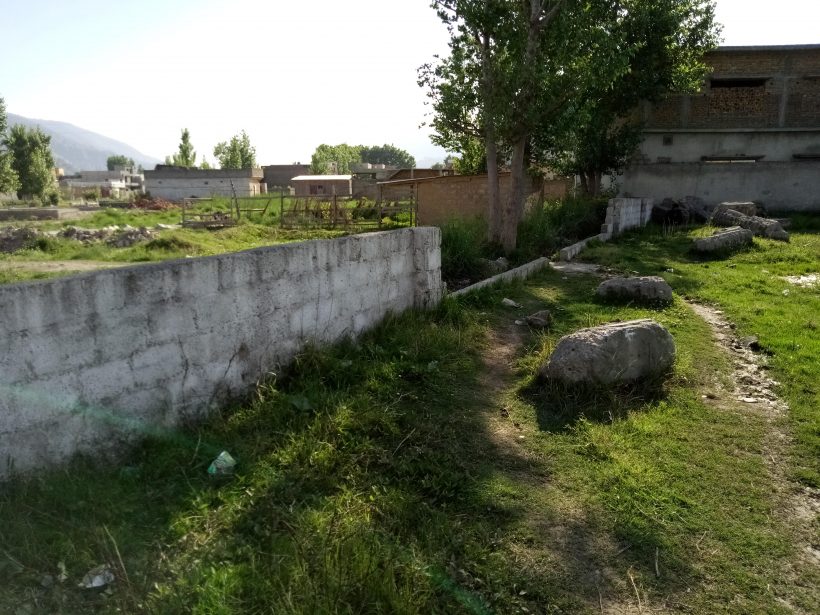
They all knew who was living in the house. According to one of the men we spoke to, it was the family of a businessman from Peshawar. All the neighbours respected him because he regularly helped the local community. The fence around his house was quite high and it’s possible that this was the deciding factor for those who had planned the operation.
“What happened next was like an Indian action movie from the 1990s,” recalls an eyewitness. One of the helicopters fell and burst into flames.
The police arrived about an hour after the first explosions and cordoned off the area, preventing anyone from getting in.
“It’s strange, because when there’s a wedding or a celebration, people often fire into the air and the police arrive in minutes, but this time it took them almost an hour,” said a neighbour.
Another helicopter arrived some time later, picked up the US special forces and flew away. While telling us about it, a young man stated several times that it was like a well-played drama, especially when you take into account what happened next.
“The elderly gentleman you met on the road back there was arrested by the Pakistani intelligence agency and then released,” added the neighbour.
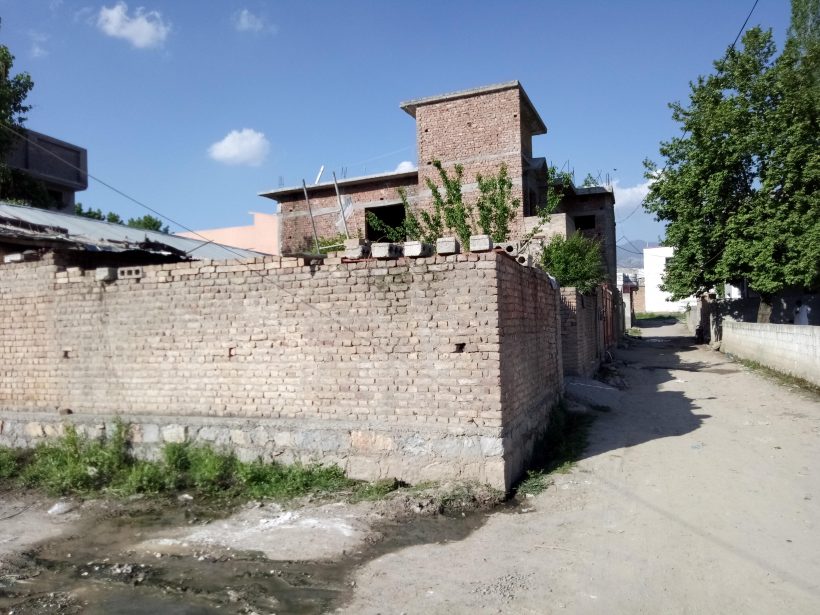
He also believes that bin Laden wasn’t there, and it was innocent people who suffered. Since the land was purchased from the state for residential development, it is legally private property. The deceased owner probably has family somewhere, but nobody has claimed it as yet. And it could be that the target was chosen intentionally so that there would be as few leads and witnesses as possible.
An interesting fate befell the wreckage of the US helicopter that crashed. The Pakistani military handed it over to China and, following relevant research, the country developed its own version of the US helicopter. So Operation Neptune Spear resulted in a leak of military technology. Such things aren’t talked about in America, however.
It should be added that, during America’s war on terror following 9/11, 36,000 people have been killed in Pakistan, including 6,000 soldiers; the country has lost approximately $68 billion; and nearly half a million people have been displaced. While it costs $1 million per year to keep an American soldier in Pakistan, the cost of one Pakistani soldier is $900 per year. And, until very recently, US combat drones repeatedly violated the airspace over Pakistan’s border with Afghanistan – often attacking civilians in the tribal area rather than militants.
However, media outlets under the control of the US State Department continue to report on the US Army’s successes in its war on terror. One needs only to recall Donald Trump’s recent statements regarding America’s victory over ISIS in Syria and Iraq. Fabricating lies and demonising America’s geopolitical opponents, as well as anyone who disagrees with the country’s global agenda, is all in a day’s work for the media lackeys of the US establishment.
Zero Percent of Elite Commentators Oppose Regime Change in Venezuela
By Teddy Ostrow | FAIR | April 30, 2019
A FAIR survey of US opinion journalism on Venezuela found no voices in elite corporate media that opposed regime change in that country. Over a three-month period (1/15/19–4/15/19), zero opinion pieces in the New York Times and Washington Post took an anti–regime change or pro-Maduro/Chavista position. Not a single commentator on the big three Sunday morning talkshows or PBS NewsHour came out against President Nicolás Maduro stepping down from the Venezuelan government.
Of the 76 total articles, opinion videos or TV commentator segments that centered on or gave more than passing attention to Venezuela, 54 (72 percent) expressed explicit support for the Maduro administration’s ouster. Eleven (14 percent) were ambiguous, but were only classified as such for lack of explicit language. Reading between the lines, most of these were clearly also pro–regime change. Another 11 (14 percent) took no position, but many similarly offered ideological ammo for those in support.
The Times published 22 pro–regime change commentaries, three ambiguous and five without a position. The Post also spared no space for the pro-Chavista camp: 22 of its articles expressed support for the end to Maduro’s administration, eight were ambiguous and four took no position. Of the 12 TV opinions surveyed, 10 were pro-regime change and two took no position.
(The Times and Post pieces were found through a Nexis search for “Venezuela” between 1/15/19–4/15/19 using each paper as a source, narrowed to opinion articles and editorials. The search was supplemented with an examination of each outlet’s opinion/blog pages. The TV commentary segments were found through Nexis searches for “Venezuela” and the name of the talkshow during the same time period, in the folders of the corresponding television network: NBC News/CBS News transcripts, ABC News transcripts, and PBS NewsHour. Non-opinion TV news segments were omitted. The full list of items included can be found here.)
Corporate news coverage of Venezuela can only be described as a full-scale marketing campaign for regime change. If you’ve been reading FAIR recently (1/25/19, 2/9/19, 3/16/19)—or, indeed, since the early 2000s (4/18/02; Extra!, 11–12/05)—the anti-Maduro unanimity espoused in the most influential US media should come as no surprise.
This comes despite the existence of millions of Venezuelans who support Maduro—who was democratically elected twice by the same electoral system that won Juan Guaidó his seat in the National Assembly—and oppose US/foreign intervention. FAIR (2/20/19) has pointed out corporate media’s willful erasure of vast improvements to Venezuelan life under Chavismo, particularly for the oppressed poor, black, indigenous and mestizo populations. FAIR has also noted the lack of discussion of US-imposed sanctions, which have killed at least 40,000 Venezuelans between 2017–18 alone, and continue to devastate the Venezuelan economy.
Many authors in the sample eagerly championed the idea of the US ousting Maduro, including coup leader Juan Guiadó himself, in the Times (1/30/19) and Post (1/15/19), and on the NewsHour (2/18/19).
The Times made its official editorial opinion on the matter crystal clear at the outset of the attempted coup (1/24/19): “The Trump administration is right to support Mr. Guaidó.” Followed by FAIR’s favorite Times columnist, Bret Stephens (1/25/19):
The Trump administration took exactly the right step in recognizing National Assembly leader Juan Guaidó as Venezuela’s constitutionally legitimate president.
It’s generally a nation’s supreme court that has the final say on who is constitutionally legitimate, but in this case they can apparently be overruled by a foreign government—or a foreign newspaper columnist.
The Post editorial board also joined Team Unelected President (1/24/19):
The [Trump] administration’s best approach would be to join with its allies in initiatives that would help Venezuelans while bolstering Mr. Guaidó.
The Times even produced an opinion video (4/1/19) with Joanna Hausmann, “a Venezuelan American writer and comedian,” as she is described in her Times bio. Between sarcastic stabs at Venezuela’s “tyrannical dictator” and cute animations of “Ruth Bader Ginsburg in workout clothes”—Hausmann’s self-described “spirit animal”—come more serious declarations about the nation’s political situation:
Juan Guiadó is not an American right-wing puppet leading an illegitimate coup, but a social democrat appointed by the National Assembly, the only remaining democratically elected institution left in Venezuela…. Let’s provide humanitarian aid and support efforts to restore democracy.
Odd that the Times didn’t find it necessary to note a blaring conflict of interest: Hausmann’s father is Ricardo Hausmann, Juan Guaidó’s appointed Inter-American Development Bank representative. Mint Press News (3/19/19) bluntly described him as the “neoliberal brain behind Juan Guaidó’s neoliberal agenda.”
It would be ludicrous to think the Times would withhold as blatant a connection to Maduro if one of his aides’ daughters made a snarky opinion video calling Juan Guaidó a would-be “brutal dictator”—even if our theoretical commentator was “an independent adult woman who has built a popular following on her own,” as Times opinion video producer Adam Ellick said in defense of the omission. Such a crucial relationship to a powerful Chavista politician would never go undisclosed—in the unlikely event that such a perspective would be tolerated in the opinion pages of an establishment paper.
These are just a few of many media pundits’ endorsements of Guaidó—someone whose name most of the Venezuelan population did not even recognize before he declared himself interim president. Put more accurately, they are endorsements of a US-backed coup attempt.
One of the more muddled regime change endorsements came from Rep. Ro Khanna’s Post op-ed (1/30/19), in which he says no! to military intervention, no! to sanctions, yet yes! to… “diplomatic efforts”:
The United States should lend its support to diplomatic efforts to find some form of power-sharing agreement between opposition parties, and only until fair elections can take place, so that there is an orderly transition of power.
“Diplomatic” is a reassuring term, until you realize that US diplomacy, as FAIR’s Janine Jackson explained on Citations Needed podcast (3/20/19), is “diplomacy where we try to get other countries to do what we want them to do”—in this case, effecting a “transition of power” in another country’s government.
Francisco Rodríguez and Jeffrey D. Sachs (New York Times, 2/2/19) envision similar efforts for a “peaceful and negotiated transition of power,” and Khanna made sure to characterize Maduro as “an authoritarian leader who has presided over unfair elections, failed economic policies, extrajudicial killings by police, food shortages and cronyism with military leaders.”
In other words, Maduro the Dictator must be overthrown—but don’t worry, the US would be diplomatic about it.
Those that didn’t take explicit positions nonetheless wrote articles blaming all or most of Venezuela’s woes on Maduro and Chávez. Economics wiz Paul Krugman (New York Times, 1/29/19) gave his spiel:
Hugo Chávez got into power because of rage against the nation’s elite, but used the power badly. He seized the oil sector, which you only do if you can run it honestly and efficiently; instead, he turned it over to corrupt cronies, who degraded its performance. Then, when oil prices fell, his successor tried to cover the income gap by printing money. Hence the crisis.
Note that Krugman failed to mention the 57 percent reduction in extreme poverty that followed Chávez’s replacement of management of the state-owned oil industry (which has been nationalized since 1976, long before Chavismo). Nor does he acknowledge the impact of US sanctions, or any other sort of US culpability for Venezuela’s economic crisis.
Caroline Kennedy and Sarah K. Smith (Washington Post, 2/5/19) did not explicitly blame Maduro and Chávez for Venezuela’s “spiral downward,” but similarly ignored evidenced US involvement in that spiral. There are only so many places where you can point fingers without naming names.
Dictatorship-talk—writers lamenting the horrific and helpless situation under an alleged “dictator”—characterized many of the ambiguous and no-position articles. In the Post (1/24/19), Megan McArdle asked:
You have to look at Venezuela today and wonder: Is this what we’re seeing, the abrupt end of Venezuela’s years-long economic nightmare? Has President Nicolás Maduro’s ever-more-autocratic and incompetent regime finally completed its long pilgrimage toward disaster?
By simply describing the declining situation of a country (Times, 2/12/19, 4/1/19) and using words like “regime” (Times, 2/14/19), “authoritarian” (Post, 1/29/19) and, of course, “dictatorship” (Post, 1/23/19; Times, 2/27/19) in reference to government officials, commentators create the pretext for regime change without explicitly endorsing it.
The Sunday talkshows and NewsHour also couldn’t find a single person to challenge the anti-Maduro narrative. They did find room, however, for three of the most passionate advocates of regime change in Venezuela: Sen. Marco Rubio (Meet the Press, 1/27/19), Donald Trump (Face the Nation, 2/3/19) and Guaidó himself (NewsHour, 2/18/19).
Other TV regime change proponents included Florida Sen. Rick Scott (Meet the Press, 2/3/19), 2020 Democratic presidential hopefuls Peter Buttigieg (This Week, 2/3/19) and Amy Klobuchar (Meet the Press, 3/17/19), Sen. Tim Kaine (Face the Nation, 3/17/19), and Guaidó-appointed, Mike Pence-approved “chargé d’affaires” Carlos Vecchio (NewsHour, 3/4/19).
But leave it to Nick Schifrin of the NewsHour (1/30/19) to bring on “two views” of the US intervention question that are both pro-regime change and pro-US intervention. View No. 1 came from Isaias Medina, a former Venezuelan diplomat who resigned from his post in protest against Maduro. Medina made the unlikely claim that 94 percent of the Venezuelan population—or 129 percent of the population over the age of 14—support US intervention to overthrow the Maduro government:
Not only I, but 30 million people, support not only the US circumstance, but also the Latin American initiative to restore the rule of law, democracy and freedom in Venezuela.
View No. 2, the ostensibly anti-regime change take, came from Benjamin Gedan, who served on the Obama administration’s National Security Council as director for Venezuela and the Southern Cone. When asked if he supported Trump’s moves to sanction Maduro and possibly use US troops to oust him, Gedan responded:
I think both of those steps are problematic. I think the sense of urgency that the United States administration has shown is absolutely correct…. The question is, how can we assist the Venezuelan people [to] promote a peaceful transition in Venezuela, without harming the people themselves, or fracturing the coalition that we have built over two administrations?
In other words, how can we overthrow the Venezuelan government without destroying the country—or “fracturing the coalition we have built”? The US has many options on the table, but none of them involve not pursuing the overthrow of Maduro.
In the “no position” camp for TV news, New York Times chief Washington correspondent David Sanger (Face the Nation, 1/27/19) noted that the problem with US support for Guaidó is one of “both history and inconsistency”:
Our history in Latin America of intervening is a pretty ugly one, and the inconsistency of not applying the same standards to places like Saudi Arabia and Egypt, where the president has embraced strong men, I think may come back to make the United States look pretty hypocritical, not for the first time.
Sanger indulged in the popular “hypocrisy takedown”: The problem, as presented, isn’t that the US disrupts democracies, destroys economies and kills people, but rather that it does so inconsistently. While vaguely acknowledging the US’s horrific track record of Latin American interventions, and Trump’s cherry-picking of governments worthy of regime change, Sanger didn’t take the logical next step of calling for the US to keep its hands off Venezuela. Instead, he called Maduro’s supporters—defined as “China, Russia and Cuba”—“not a great collection,” and failed to push back against the claim that Maduro “fixed the last” election. Without a formal declaration, Sanger did all the ideological preparation for foreign-backed regime change.
That elite media didn’t find a single person to vouch for Maduro or Chavismo, and that almost all the opinions explicitly or implicitly expressed support for the ouster of Venezuela’s elected president, demonstrates a firm editorial line, eerily obedient to the US government’s regime change policy.
This isn’t the first time that FAIR (e.g., 3/18/03, 4/18/18) has found a one-sided debate in corporate media on US intervention. When it comes to advocating the overthrow of the US government’s foreign undesirables, you can always count on opinion pages to represent all sides of why it’s a good thing. And the millions of people who beg to differ? Well, they’re just out of the question.
Featured Video

Genocide-linked firm handles Britons’ NHS data
or go to
Aletho News Archives – Video-Images
Book Review
Book review: Boiling Point, How America Brought War to Ukraine
By Tim Kirby | Strategic Culture Foundation | November 14, 2026
Did Vladimir Putin just wake up one day on the wrong side of the bed and decide to invade Ukraine in February of 2022 or is there a lot more to this single decision that has been reshaping the 21st century geopolitical landscape?
Obviously, from the way that I just posed the question you can see that I am on the side that views the causes for the war in Ukraine to be very deep, long-term, historical and consciously nefarious, and most importantly, not from within the halls of the Kremlin. So it was a pleasure to take a look at the book “Boiling Point, How America Brought War to Ukraine” by author Stephen Kinzer, who like myself, also believes that the real reasons behind military conflicts around the world are not what CNN and the BBC have been telling you. The main thesis of this book was stated clearly by its creator; the war “may have been illegal, but it was definitely not unprovoked.” … continue
Blog Roll
 Aletho News
- The 10 Disease Renamings That Rescued the Vaccine
- NATO cancels 2027 leaders’ summit
- IAEA’s politicized use of safeguards undermines its impartiality: Russian envoy
- UK must be ready to strike Russian Arctic – ex-PM
- Fico’s Two Red Lines: Russian Energy and the Next Ukraine Loan
- Thousands rally for banned NATO-skeptic presidential candidate
- Ukraine Settlement and New European Security Architecture Must Go Hand in Hand – Kremlin
- Book review: Boiling Point, How America Brought War to Ukraine
- Israel Revives The ‘Iranian Assassination Threat Against Trump’ Deception In A Desperate Bid To Restart The War
- US rewrites history to dodge blame for illegal war on Iran: Foreign Ministry spokesperson
- If Americans Knew
- An error has occurred; the feed is probably down. Try again later.
- No Tricks Zone
- New Study: Barents Sea Temperatures Were Warmer And Sea Ice Less Extensive In The 1700s Than Today
- German Authorities Start Initiative To Evaluate Public Register For Climate “Disinformation” Spreaders!
- Zonal Asymmetry of Temperature Change in the Antarctic Circumpolar Current
- New Study: The Net Fossil Fuel Contribution To Rising Atmospheric CO2 Has Been Zero For 500 Years
- Germany’s Green Energy Transition Becoming Increasingly Expensive…Another 6 Trillion Euros!
- Sudden Stratospheric Warming, Powerful El Niño Combination May Lead To Extreme Europe Cold, Energy Crisis!
- Two New Studies Find Thwaites Glacier Melt Cannot Be Driven By Human Activity Or A Warming Ocean
- E-Cars Reduce CO2 Emissions By Only 41% Compared To Internal Combustion Engine Vehicles
- Predictions Made By Renowned Climate Professor Over Past Decades Have Been Proven To Be Poor
- New Study Suggests Large Regions Of The Pacific Ocean Have Been Cooling For The Last 80 Years

