US Top General Takes to CNN to Dispute Syria Withdrawal
Sputnik – 15.02.2019
US General Joseph L. Votel, who has presided over stagnant results in America’s wars since being named commander of US Central Command last year, recently publicly disagreed with US President Donald Trump’s decision to pull US troops from Syria.
“It would not have been my military advice at that particular time,” Votel told CNN of the plan to withdraw troops. Of course, the advice of US generals has brought the country 18 years of war with nothing to show for it except the Pentagon’s expanded budget. The United States now spends about 40 percent more on the military per year than it did during the height of the Iraq War in 2005.
“I would not have made that suggestion, frankly,” said Votel, referring to the decision to bring the troops back home to the US — a process that’s evidently ongoing and also a source of mystery. Exits are notoriously dangerous military maneuvers, so the US has kept quiet on the precise number of forces it has maintained across Syria, Iraq and Afghanistan.
Some analysts have suggested that the military’s consistent refusal over the years to be transparent about troop numbers in the above-mentioned countries has backfired, leaving them with little evidence for their assertions that Trump is killing a critical mission.
The US Constitution, of course, leaves final military decisions up to the president and not the generals, who are subordinate to the office.
Trump has advocated withdrawing US personnel from costly foreign military engagements that lack clear objectives, but his administration has waffled on putting those desires into motion for about two years, variously saying Daesh has been defeated, calling out the need to prevent a Daesh resurgence and combat Iran and plainly admitting that there is nothing in Syria for the US military except “sand and death.”
On Friday, Votel was back on the Pentagon’s message that Daesh is not actually defeated, even though the terrorists’ land holdings have been reduced from the size of Britain to less than a square mile. Daesh “still has leaders, still has fighters, it still has facilitators, it still has resources, so our continued military pressure is necessary to continue to go after that network,” said Votel to CNN, as reported by The Hill.
In any event, achieving the top post in US Central Command (CENTCOM) is often seen as a boon for the careers of military officers. Former CENTCOM chiefs include retired generals David Petraeus and James Mattis, who would go on to become the head of the Central Intelligence Agency and US Secretary of Defense, respectively, after their stints as CENTCOM commanders.
Former UK Ambassador to Syria Peter Ford tells Sputnik not to read too much into Votel’s comments but instead to observe the “continuing efforts of the media and political establishment to undermine Trump,” who has expressed far more anti-interventionist sentiments than his predecessor both during his campaign and while in office.
Real ‘obscene masquerade’: How BBC depicted staged hospital scenes as proof of Douma chemical attack
By Vanessa Beeley | RT | February 16, 2019
In an extraordinary turn of events, corporate media appears to have been exposed again as an extension of state foreign policy, by a member of the establishment media cabal, manufacturing consent for regime change in Syria.
Riam Dalati is on the BBC production team based in Beirut and describes himself, on his Twitter page, as an “esteemed colleague” of Quentin Sommerville, the BBC’s Middle East correspondent. Dalati broke ranks with his UK Government-aligned media, on Twitter, to announce that “after almost 6 months of investigation, I can prove, without a doubt, that the Douma hospital scene was staged.”
The scenes in question are those manufactured by the White Helmet pseudo-humanitarian group and activists affiliated to Jaish al-Islam, the extremist armed group in charge of Douma at the time of the alleged chemical weapon attack on April 7, 2018. The scenes of children being hosed down, following a “chemical attack” were immediately accepted as credible and appeared alongside sensationalist headlines in most Western media outlets, including the BBC, CNN and Channel 4. Simon Tisdall of the Guardian wrote an opinion piece, with the headline ‘After Douma the West’s response to Syria regime must be military’ – only two days after Douma, effectively calling for all out war.
While Dalati’s tweets have clearly distressed some notables in the establishment camp, Dalati is no stranger to such controversy. Almost immediately after the alleged incident in Douma, he tweeted out his frustration that “activists and rebels” had used “corpses of dead children to stage emotive scenes for Western consumption.” The emotive wording of Dalati’s tweet, he was “sick and tired” of such manipulation of events, suggested that this was not the first time children had been used as props in a macabre war theatre designed to elicit public sympathy for escalated military intervention in Syria disguised as a necessary “humanitarian” crack down on “Assad’s gassing of his own people.”
Dalati had been referring to the arranging of two children’s corpses into a “last hug” still life composition, a photo that went viral, rocketed into the social media sphere by activists who had collaborated with the brutal Jaish al-Islam regime while it tortured and abused the Syrian civilians under its control.
Perhaps Dalati’s apparent outburst could be explained by his participation in the production of the controversial September 2013 BBC Panorama documentary, ‘Saving Syria’s Children’. An independent researcher, Robert Stuart, has made it his life’s work to present a compelling argument that “sequences filmed by BBC personnel and others at Atareb Hospital, Aleppo on August 26, 2013 purporting to show the aftermath of an incendiary bomb attack on a nearby school are largely, if not entirely, staged.” Perhaps Dalati had witnessed one too many stagings of events that would precipitate the potential for war in Syria between the US and Russia.
Whatever the reason for Dalati’s exasperation, the tweet was deleted before a watered down version appeared. Dalati claimed that a “breach of editorial policy” and lack of context was behind this alteration. Apparently BBC employees are not allowed to be “sick and tired” of the exploitation of children to promote a war that will inevitably kill more children. Simultaneously, Dalati’s account was protected, making tweets visible only to approved followers.
On two significant occasions to date, Dalati appears to deviate from the BBC narrative road map in Syria. However, Dalati had participated in the corporate media lynching of journalists and academics who had dared to question the dominant “chemical attack” narrative, at the time of the alleged incident in Douma, dismissing them as conspiracy theorists. These “conspiracy theorists” included acclaimed journalist, Robert Fisk and Uli Gack, an experienced war correspondent with ZDF, a German public media outlet. Independent journalist, Eva Bartlett, and Pearson Sharpe of One American News Network also reported evidence of staging and mainstream media distortion of events in Douma.
I visited Douma shortly after the alleged attack. I interviewed medical staff and civilians who were adamant that a chemical attack had not taken place. Doctors and nurses, some of whom were on duty on the night in question, told me that adults and children were suffering the effects of smoke inhalation. They described the panic generated by the activists and White Helmet operatives who arrived crying “chemical attack” before they hosed down the traumatised patients.
20-year-old Suleiman Saour told me: “At 7pm we had been receiving wounded people all day long. At 7pm someone came in carrying a little boy, he laid him on a bed and said he had been hit with chemical weapons. Basically I checked the boy […] he was suffering from smoke inhalation […] we washed his face, used a spray and Ventolin. Later on we found out the child had asthma and it got worse because of the smoke.”
Academics, Professors Piers Robinson and Tim Hayward, came under concerted attack as did other members of the Working Group on Syria, Propaganda and Media when they analysed the events and questioned the veracity of it being a chemical attack. In the UK, the Times published no less than four articles labeling myself and the “rogue” academics as “Assad’s useful idiots,” timed to perfection on the day that the UK, US and France launched their unlawful bombing campaign against Syria. A bombing campaign that was fully enabled by the ignominious rush to judgement by corporate media in the West.
It has taken Dalati six months to arrive at the same conclusion as those he condemned as compromised “conspiracy theorists,” therefore we must question his motives for suddenly releasing these conclusions. Peter Ford, former UK Ambassador to Syria, gave me his opinion on Dalati’s revelations.
“The UK joined Trump and Macron in illegally bombing Syria largely on the basis of a video clip shown ad nauseam on the BBC, which a BBC Syria producer has now said he has evidence was staged. The BBC in their statement are not denying the claim. The implications are shattering: firstly that the state broadcaster effectively connived at a manipulation of public opinion, and secondly that the British government launched its attack on Syria on a false and fabricated premise. This demands a public enquiry.”
Ford’s statement highlights the seriousness of Dalati’s statement which must surely raise questions about the possibility of previous “chemical attack” narratives also being manipulated, staged or fabricated. Swedish Doctors for Human Rights investigated the alleged chlorine gas attack in Sarmin, March 2015 and found the medical procedures conducted by doctors at the scene to be extremely questionable.
Dr Leif Elinder, a Swedish medical doctor and paediatric specialist, found that “after examination of the video material, I found that the measures inflicted upon those children, some of them lifeless, are bizarre, non-medical, non-lifesaving, and even counterproductive in terms of life-saving purposes of children.” This video, produced and presented by the White Helmets and their colleagues at the Syrian American Medical Society (SAMS), was shown during a UN Security Council “closed door” session to promote a no-fly zone which translates to protection for the US coalition-backed terrorist forces on the ground in Syria.
As BBC producer has stated publicly that the hospital scenes during the Douma “attack” are staged, the BBC has distanced itself by stating that these are the personal claims of an employee which do not mean an attack did not take place. The July 2018 OPCW interim report has already discredited the early sensationalism of western media reporting. “No organophosphorus nerve agents or their degradation products were detected, either in the environmental samples or in plasma samples from the alleged casualties,” it stated. No Sarin.
The OPCW Fact Finding Mission (FFM) has not yet reached a conclusion that a chemical attack of any kind took place in Douma. The environmental samples were reported to contain chlorinated organic molecules such as trichloroacetic acid and chloral hydrate, which could be attributed to something as basic as chlorinated drinking water. Despite this ambiguity, the BBC initially ran with the headline that ‘Chlorine was used’ in the Douma attack before altering to ‘Possible Chlorine at Douma Attack Site’. Another mistake? Or another deliberate attempt to mislead and shore up the UK FCO regime change storyline in Syria?
Dalati’s revelations must also be viewed in context. They follow similar conclusions arrived at by corporate media colleague and journalist, James Harkin, a Guardian contributor who published a long-winded Douma investigation in the Intercept. Harkin also conceded that the Douma hospital scenes were likely staged and that the Sarin canard was a non-starter.
It is very unlikely, despite the BBC protestation, that Dalati would risk publishing his claims without approval from BBC hierarchy. Timing is always crucial when examining events that have the potential to expose colonial media, particularly the BBC, as the refined state PR agencies they are in reality.
Based on an informed and intelligent interpretation of events with historical context, we could speculate that the OPCW is about to release its final findings on the Douma attack. A report which has the potential to lay bare the full extent of the BBC’s deception and falsification of facts in Douma. A report which could raise unpleasant questions about corporate media reporting, particularly on alleged chemical weapon use by the Syrian government, throughout the 8 year conflict in Syria. Was Dalati’s shock information release nothing more than a damage limitation tactic by the BBC or is Dalati genuinely a rogue truth-teller? Only time will tell.
What Dalati has done is highlight the hypocrisy and bias of Western media and government officials. The BBC report on the Russian “production” of Douma-chemical-attack-denying witnesses at the HQ of the OPCW in the Hague emphasises the dismissal of the event as a “despicable stunt” by the UK, US and France who boycotted the proceedings. French ambassador to the Netherlands described the Syrian civilian testimonies as an “obscene masquerade.” The Guardian ran with this statement as its headline, reducing Russia’s attempt to bring some clarity to the Douma attack to the unveiling of “supposed witnesses” in order to discredit such attempts to derail their preferred narrative.
Now, it appears that the real obscene masquerade took place in the Medical Point in Douma, was constructed by the UK FCO-financed White Helmets, and was adopted by the BBC and other state stenographers as gospel in order to further criminalise the Syrian Arab Army just as the final liberation of Douma from Jaish al-Islam brutal rule was fast approaching. This obscene masquerade resulted in the unlawful bombing of Syria by the US, France and the UK. As Peter Ford stated, “this demands a public enquiry.”
NPR misleads public in report on AIPAC vs Ilhan Omar

Washington D.C. headquarters of NPR, National Public Radio
NPR’s ‘All Things Considered’ segment underreports AIPAC’s finances, uses only Israel partisans as commentators, minimizes power of AIPAC, ignores Palestinians, and fails to inform listeners of the full scope of the Israel lobby
By Alison Weir | If Americans Knew | February 15, 2019
A recent NPR report, “Unpacking What The American Israel Public Affairs Committee Does,” misleads listeners on several points.
The report is in response to freshman Democratic Congress member Ilhan Omar’s tweet that AIPAC is the cause of U.S. politicians’ support for Israel over U.S. needs and principles. Omar has come under numerous attacks ever since.
NPR’s report, broadcast Wednesday, substantially downplays the power of AIPAC. In doing so, it suggests that Omar’s comments were “antisemitic,” while failing to interview anyone with different views.
The report was on NPR’s All Things Considered, which says it is “the most listened-to, afternoon drive-time, news radio program in the country.”
NPR’s only commentators are Israel partisans
The report largely features comments from two members of the Israel lobby: Josh Block, former AIPAC spokesman and current CEO of the Israel Project, and Ben Shnider, National Political Director for JStreetPAC, which calls itself “the largest pro-Israel PAC in the country.”
No one else is interviewed.
The show does not mention that Block was the center of a scandal several years go when it came out that he had been encouraging neoconservative journalists and pundits on a private email list to smear staffers at two progressive think tanks as supposedly “antisemitic.”
Block’s business partner publicly repudiated Block’s actions, and a Democratic-aligned organization expelled Block for using ‘mischaracterization or character attacks’.”
Wednesday’s NPR report was introduced by host Mary Louise Kelly announcing that Ilhan Omar had “repeated what are viewed as anti-Semitic characterizations” of AIPAC.
Kelly failed to mention that many people consider the accusation unjustified and Omar’s statement valid. Israel partisans regularly try to claim that proponents of Palestinian rights are “antisemitic.” An Israeli Knesset member has said that this is a frequently used “trick.”
Block and Shnider are then brought on as alleged experts on the issue. None of the groups and individuals who support Omar are quoted.
Underreports AIPAC’S budget
In the report, NPR gives AIPAC’s lobbying budget as $3.3 million, but leaves out the fact that AIPAC’s total 2017 income was over $229 million.
Commentator Josh Block emphasizes that AIPAC itself doesn’t directly donate to candidates, but doesn’t mention that AIPAC uses numerous other ways to deploy its millions of dollars to influence politicians.
NPR reporter Peter Overby briefly mentions one non-donation AIPAC activity and glancingly refers to what he terms “a small constellation of political action committees around [AIPAC],” but fails to give the full picture of AIPAC’s influence.
A fuller view of AIPAC’s power
Prominent international relations scholars John Mearsheimer and Stephen Walt provide a much fuller description of AIPAC’s importance in their 2008 book on the Israel lobby, and in a London Review of Books article on the subject.
Mearshimer and Walt state: “AIPAC itself… forms the core of the Lobby’s influence in Congress. Its success is due to its ability to reward legislators and congressional candidates who support its agenda, and to punish those who challenge it.”
They quote a former AIPAC staff member, who states: “It is common for members of Congress and their staffs to turn to AIPAC first when they need information, before calling the Library of Congress, the Congressional Research Service, committee staff or administration experts.” He says that AIPAC is “often called on to draft speeches, work on legislation, advise on tactics, perform research, collect co-sponsors and marshal votes.”

The authors, senior professors at the University of Chicago and Harvard, state:
“Money is critical to US elections…. AIPAC makes sure that its friends get strong financial support from the many pro-Israel political action committees. Anyone who is seen as hostile to Israel can be sure that AIPAC will direct campaign contributions to his or her political opponents. AIPAC also organises letter-writing campaigns and encourages newspaper editors to endorse pro-Israel candidates.
“There is no doubt about the efficacy of these tactics. Here is one example: in the 1984 elections, AIPAC helped defeat Senator Charles Percy from Illinois, who, according to a prominent Lobby figure, had ‘displayed insensitivity and even hostility to our concerns’. Thomas Dine, the head of AIPAC at the time, explained what happened: ‘All the Jews in America, from coast to coast, gathered to oust Percy. And the American politicians – those who hold public positions now, and those who aspire – got the message.’”
AIPAC, de facto agent for a foreign government
Mearsheimer and Walt state: “The bottom line is that AIPAC, a de facto agent for a foreign government, has a stranglehold on Congress, with the result that US policy towards Israel is not debated there, even though that policy has important consequences for the entire world…….. as Ariel Sharon once told an American audience, ‘when people ask me how they can help Israel, I tell them: ‘Help AIPAC. ”

While today some other pro-Israel organizations are vying with AIPAC for power, American politicians still consider AIPAC so powerful that every top 2016 presidential candidate spoke at its annual convention.
Israel as ally?
During the NPR report, Block refers to the alleged “value” of the “U.S.-Israel alliance,” and Overby fails to challenge Block’s claim.
In reality, the value is on one side only.
Israel receives over $10 million per day from hard pressed American taxpayers (likely to soon to go even higher), and is shielded by the U.S. from international actions to end Israel’s numerous violations of international law and human rights. It also receives numerous trade perks and other benefits, including U.S. legislation that requires NASA to work with Israel’s space agency, despite allegations of Israeli theft of classified U.S. research.
On the U.S. side, the alleged “value” is negative. U.S. support for Israel damages the U.S. in numerous ways: it drains money from the U.S. economy, subsidizes Israeli companies that compete with American companies, creates dangerous hostility to the U.S., pushes the U.S. into tragic and costly wars on behalf of Israel, and funds a foreign nation built on ethnic/religious discrimination that repeatedly spies on the U.S. and steals American technology.
As if that weren’t enough, Israel tried to sink a U.S. Navy ship, killing 34 Americans and injuring over 170, and then “compensated” the U.S. with a sum that was a small fraction of the destroyed ship’s worth.
What Palestinians?

Information about Palestinians and why anyone would oppose AIPAC’S support for Israel is missing from the NPR report. There is no mention of Palestinians’ forced expulsion to make way for a Jewish state, the ongoing Israeli violence against them, or the systemic discrimination inherent in Israel.
In fact, the word “Palestinian” is mentioned only once, when Shnider says that most Jewish Americans support “a Palestinian state alongside a secure Israel.” There is no mention about security for Palestinians, or that the “Palestinian state” being proposed consists of a tiny portion of Palestinians’ ancestral land.
AIPAC: tip of the iceberg
During the broadcast, Overby mentions pro-Israel billionaire Sheldon Adelson and a few other pro-Israel groups, implying these are largely the extent of the Israel lobby.
Overby and his guests fail to inform listeners of the full range and power of the Israel lobby in the United States: hundreds of organizations embedded in every state in the union and almost every campus, with a combined revenue of well over $6 billion.
Added to this are pro-Israel billionaire donors who regularly deploy their wealth on behalf of Israel, including Adelson and his Israeli wife Miriam, Israeli-American Haim Saban, Paul Singer, Norman Braman, and Larry Ellison, who have a combined net worth of close to $115 billion.
Wednesday’s report is not an isolated instance.
Analyses have shown that NPR has a long pattern of giving listeners Israel-centric reports that fail to give listeners the full, accurate picture of this profoundly important issue.
Alison Weir is executive director of If Americans Knew, president of the Council for the National Interest, and author of “Against Our Better Judgment: The Hidden History of How the U.S. Was Used to Create Israel.” Her articles have been published by MintPress News, The Link, Project Censored, Dissident Voice, Antiwar.com, CounterPunch, Z Magazine, the Washington Report on Middle East Affairs, and others, including several anthologies.
H/T to the Dissident Veteran for Peace blog, which alerted us to the NPR program and the Mearsheimer-Walt excerpts quoted above.
‘Western Media Haven’t Covered Syria the Way They Should’ – Prof
Sputnik – February 14, 2019
The video of people being treated after an alleged chemical weapons attack in the Syrian city of Douma was fabricated. This is what BBC Syria producer Riam Dalati wrote on his Twitter account on Wednesday.
Sputnik has discussed the development with Piers Robinson, co-director of the Organisation for Propaganda Studies and professor at the University of Sheffield.
Sputnik: What is your reaction to Mr Dalati’s tweets?
Piers Robinson: It’s obviously very interesting that somebody in his position is now declaring that it’s his opinion that there was some element of manipulation or fabrication occurring in the events surrounding Douma. In some ways, of course, as you see in the recent Intercept article by [James] Harkin, the message of his idea is that there was an attack of some kind and Riam Dalati is saying that there was an attack.
But what kind of attack is unclear. So we really need to hear more from him. But at the very least, if it is the case that it is established that there were staging and manipulation going on, then it really just starts to raise a whole series of further questions about staging and manipulation in the case of Douma, running all the way through to the obvious question which is whether it was some kind of a false flag event.
That it was something that was carried out by opposition groups, Jaish al-Islam, in order to try to enable a military intervention, which obviously did occur six or seven days later with the bombing against Damascus. All of that is on the table now, undoubtedly.
And in some ways what Riam is saying does confirm what myself and many other academics, independent researchers and journalists have been saying for some time that there are serious questions about the official claims being brought forward by Western governments about what happened in Douma.
Sputnik: Moscow is now waiting for an official response from BBC to this tweet. What’re your thoughts? Will the BBC respond and what we can expect from them in the way of some kind of response based on, perhaps, past incidents?
Piers Robinson: I’m really not quite sure if I can guess how the BBC might respond. I think we need to wait and see what more comes out. I mean, it’s not very clear if Riam Dalati is referring to an article he has coming out, if that’s an article which is going to go to the BBC or independently, we just don’t know.
I guess most media organisations in general when they’ve got it wrong in the past tend to be fairly mealy-mouthed in their ability to either correct the record or to apologise for what has happened. We saw that in the case of the 2003 Iraq War, with some very limited apologies about their failure to scrutinise Western governments over WMD claims in Iraq.
So, I would suspect nothing more than a very cautious response from the BBC and they will probably want to wait and see what more Riam Dalati comes out and says over the coming days and weeks.
Sputnik: It’s interesting that there aren’t really [any] mainstream media reports about this at all. Do you think it’s just too early, or do you think there are some other reasons for that nobody has really picked up on this?
Piers Robinson: I think the reasons are well-known. We know that when it comes to, especially foreign policy, war and conflict, media in Western democracies, as is the case in pretty much every other country in the world, tend to toe the line of what governments are doing and saying. This is well established across the critical political communication literature; it’s for a whole number of reasons that this occurs.
Mainstream media, in the case of Syria, haven’t been covering it in the way they should have been because they have been beholden and co-opted by the government position and so on in relation to this conflict. We see it in every war time and time again; and it’s no different in the conflict in Syria than it was on the case of Iraq or going all the way back to Vietnam in the 1960s.
You see a real timidity and lack of confidence amongst journalists and editors to really ask difficult questions of their governments when their countries are involved in some kind of war.
READ MORE:
BBC Says Its Producer Expressed ‘Personal Opinions’ on Douma Incident
BBC Producer Says Footage of Alleged Gas Attack Victims in Syria’s Douma Staged<
Venezuela & The Mighty Wurlitzer
By Joyce Nelson | CounterPunch | February 15, 2019
On February 11, Bloomberg News published an astonishing piece about the unfolding Venezuelan turmoil. It was apparently the result of a major investigative effort involving three reporters and five others providing “assistance”. You’ll notice I haven’t called it a piece of news (although that’s what it looks like), but I’m not sure what to call it. It’s a piece of something, but what?
With eight people working on it, the piece is a long one, with plenty of sources. By my count, there were 19 sources. Here are 16 of them:
1-4) “four people with knowledge of the discussions”
5) “another person”
6) “a person familiar with the thinking”
7) “a person with knowledge of the conversations”
8) “another person” (different from the previously cited “another person”)
9) “a foreign military official”
10) “a French official”
11) “another person with knowledge of the deliberations”
12) “a person with knowledge of the internal discussions”
13) “a person familiar with [Juan] Guaido’s thinking”
14) “a person familiar with the discussions”
15) “a senior Turkish official”
16) “another person” (different from the previously cited “another person” and “another person”)
A seventeenth source was Elliott Abrams, the Trump administration’s special representative for Venezuela. It’s not clear, however, that any of Bloomberg News’ three reporters or the five others providing “assistance” actually interviewed Abrams or were simply quoting from a previous press conference: “Speaking in Washington last week, Abrams said…”
So what was the focus of this piece? The intrepid reporters were picking up on a January 31st tweet by U.S. National Security Advisor John Bolton, who encouraged Venezuelan President Nicolas Maduro to retire to “a nice beach somewhere far from Venezuela” while he still had time.
The Bloomberg News piece is entitled: “As Nicolas Maduro digs in, his aides hunt for an emergency escape route out of Venezuela.” It got wide exposure, including in Canada’s National Post. [1] The eight reporters and aforementioned 16 sources imply that Maduro is frantically seeking a bolthole somewhere, anywhere – Cuba? Russia? Turkey? Mexico? France? – while appearing to hang on to power.
Their quote from Abrams is this: “’I think it is better for the transition to democracy in Venezuela that he be outside the country,’ Elliott Abrams, U.S. Secretary of State Michael Pompeo’s special representative for Venezuela, said of Maduro. ‘And there are a number of countries that I think would be willing to accept him,’ he told reporters, citing ‘friends in places like Cuba and Russia’.”
There were two more sources cited in this piece: Andrey Kortunov, head of a Moscow research organization entitled the Russian International Affairs Council, and Russian lawmaker Andrey Klimov, deputy head of the upper house of Parliament’s foreign affairs committee. Both affirmed Maduro’s resilience in the midst of the turmoil, with Klimov telling Bloomberg News that Maduro “is not planning to go anywhere.”
Indeed, Klimov “dismissed talk of Maduro’s evacuation as ‘psychological warfare’ aimed at ‘sowing panic and hysteria’” in Venezuela.
In the old days, according to persons knowledgeable on the matter, psychological warfare was conducted through the CIA’s “Mighty Wurlitzer” – massive propaganda efforts utilizing mainstream media and other outlets. These days U.S. taxpayer-funded organizations like the National Endowment for Democracy (NED) have taken over much of that function. As The Intercept (Jan. 30) informs us, Elliott Abrams is on the board of the NED. [2]
The Mighty Wurlitzer blares on, but under different management and branding. Has Bloomberg News become part of this effort? At this point, persons familiar with the company’s thinking about the question have yet to come forward.
Footnotes:
[1] Esteban Duarte, Eric Martin, Ilya Arkhipov (Bloomberg News ), “As Nicolas Maduro digs in, his aides hunt for an emergency escape route out of Venezuela,” National Post, February 11, 2019.
https://nationalpost.com/news/world/as-nicolas-maduro-digs-in-his-aides-hunt-for-an-emergecy-escape-route-out-of-venezuela
[2] Jon Schwartz, “Elliott Abrams, Trump’s Pick for Fixing ‘Democracy’ in Venezuela, Has Spent His Life Crushing Democracy,” The Intercept, January 30, 2019.
Joyce Nelson’s sixth book, Beyond Banksters: Resisting the New Feudalism, can be ordered at: http://watershedsentinel.ca/banksters. She can be reached through www.joycenelson.ca.<
BBC “Trying to Limit Damage” After Fake News of Syrian Chemical Attack – Journo
Sputnik – February 14, 2019
BBC Syria producer Riam Dalati tweeted on Wednesday that the video of people treated after an alleged chemical weapons attack in the Syrian city of Douma had been fabricated. Sputnik has discussed the development with Vanessa Beeley, an independent investigative journalist who specialises in the Middle East and Syria in particular.
Sputnik: This doesn’t really look good though, does it, for Mr. Dalati. Why do you think he decided to speak up now? He is now contradicting himself basically.
Vanessa Beeley: Well, yeah, and effectively this is a damage limitation operation. One of their own, so to speak, James Harkin, who is a mainstream journalist, he writes in the Internet and he also writes for the Guardian, and the Guardian’s Simon Tisdall I believe it was, almost immediately after the alleged attack in Douma, which has, of course, been largely discredited by the OPCW report that has told us that no organic phosphates were used, there is still an element of doubt over whether chlorine was used. But the OPCW report itself has already negated the use of sarin in this attack.
But when Harkin himself is saying that this event was staged, then, of course, the BBC and Louisa Loveluck of Washington Post are immediately, in my opinion, trying to limit damage.
Sputnik: What do you think the BBC is going to do next? Do you think that they are going to have an official statement out on this? What can we expect?
Vanessa Beeley: I guess we should be waiting for Riam Dalati’s full investigation. He’s told us on Twitter that he’s been looking into this for six months and he’ll be providing further details soon. So we should be waiting to see whether the BBC will retract its previous statements; I mean it put out a very misleading report even on the use of chlorine after the release of the OPCW interim report. It basically stated on its leading report that chlorine had been used, it later changed that but it didn’t retract its storyline.
And I’ve just checked, for example, the Telegraph, on its timeline of chemical weapon attacks or alleged chemical weapon attacks inside Syria, it’s still stating that it is alleged that sarin was used in Douma. So, that is still standing on the Telegraph website.
So, fundamentally what these mainstream outlets do is put out a narrative which, as I’ve pointed out, effectively manufactured consent for the unlawful bombing of a sovereign nation, Syria, by the US, France and the UK post- the Douma alleged attack. But these storylines and these narratives are never retracted; so it remains to be seen whether the BBC will apologise to Syria for having manufactured the consent for the bombing, and whether Riam Dalati and the BBC will apologise to academics and to independent journalists that they smeared at the time for arriving at the same conclusion they’ve now arrived at.
Sputnik: If Mr. Dalati’s tweet is proven, what will it say about the White Helmets and their trustworthiness, not to mention their, perhaps, role in the whole event?
Vanessa Beeley: Of course, this raises huge questions. I mean, I’ve proven and I’ve written an open investigation based on testimony from civilians in Eastern Ghouta of the White Helmets staging at least one chemical weapon attack one month before Douma… which was actually derailed by the civilians themselves who exposed it on social media etc. The White Helmets have been proven time and time again to be staging events in order to serve the NATO member states’ regime change narrative inside Syria. This might start to raise questions over the veracity of the White Helmets reports, bearing in mind that the UK government document has publicly stated that Amnesty International and Human Rights Watch, for example, rely extensively on the evidence of the White Helmets to produce their reports that, again, largely criminalise the Syrian government.
Sputnik: This alleged attack was actually used to justify a response, the bombing of the area by the US, UK and France; it was quite a significant military strike that was perpetrated after that attack. What would this mean for evaluating the legality or the justification of that attack?
Vanessa Beeley: The very fact that France, the UK and the US went ahead and bombed Syria, and as you said it was an extensive bombing operation that targeted alleged chemical weapons manufacturing facilities that were proven afterwards and also reported by OPCW to not be chemical weapons manufacturing facilities, brings into question the legality of that attack. It brings into question the legality of the entire regime change war that has been waged against Syria since 2011, of course instigated by those same nations that bombed after Douma.
But the fact that that the bombing went ahead without any OPCW investigation having been able to take place and based entirely on what is now proven or thought to be spurious information from groups like the White Helmets, that are being funded by the nations that carried out the bombing attack, I mean, this is an extraordinary event; this basically means that the US, the UK and France have completely violated international law time and time again inside Syria and this must be brought into the light, it must be investigated. And the media’s role in enabling this unlawful act must also be investigated.
READ MORE:
Assad Calls Douma Chemical Attack ‘British PR Stunt’ Straight to UK Media’s Face
BBC Producer Says Footage of Alleged Gas Attack Victims in Syria’s Douma Staged
Militants Engaged in Chemical Attacks Are Under Western Patronage – Sec. Council
Propaganda Blitz Against Venezuela’s Elected President
By Joe Emersberger – FAIR – February 12, 2019
The Miami Herald (2/8/19) reported, “Venezuelan leader Nicolás Maduro continues to reject international aid—going so far as to blockade a road that might have been used for its delivery.“
The “Venezuelan leader” reporter Jim Wyss referred to is Venezuela’s elected president. In contrast, Wyss referred to Juan Guaidó as Venezuela’s “interim president.”
Guaidó, anointed by Trump and a new Iraq-style Coalition of the Willing, did not even run in Venezuela’s May 2018 presidential election. In fact, shortly before the election, Guaidó was not even mentioned by the opposition-aligned pollster Datanálisis when it published approval ratings of various prominent opposition leaders. Henri Falcón, who actually did run in the election (defying US threats against him) was claimed by the pollster to basically be in a statistical tie for most popular among them. It is remarkable to see the Western media dismiss this election as “fraudulent,” without even attempting to show that it was “stolen“ from Falcón. Perhaps that’s because it so clearly wasn’t stolen.
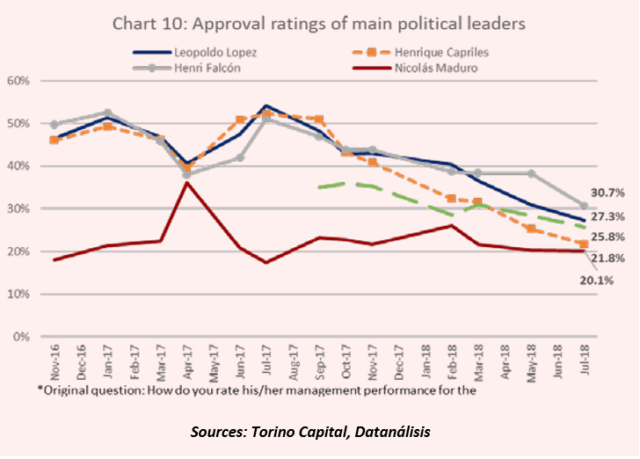
Data from the opposition-aligned pollsters in Venezuela (via Torino Capital) indicates that Henri Falcón was the most popular of the major opposition figures at the time of the May 2018 presidential election. Nicolás Maduro won the election due to widespread opposition boycotting and votes drawn by another opposition candidate, Javier Bertucci.
The constitutional argument that Trump and his accomplices have used to “recognize” Guaidó rests on the preposterous claim that Maduro has “abandoned” the presidency by soundly beating Falcón in the election. Caracas-based journalist Lucas Koerner took apart that argument in more detail.
What about the McClatchy-owned Herald‘s claim that Maduro “continues to reject international aid”? In November 2018, following a public appeal by Maduro, the UN did authorize emergency aid for Venezuela. It was even reported by Reuters (11/26/18), whose headlines have often broadcast the news agency’s contempt for Maduro’s government.
It’s not unusual for Western media to ignore facts they have themselves reported when a major “propaganda blitz” by Washington is underway against a government. For example, it was generally reported accurately in 1998 that UN weapons inspectors were withdrawn from Iraq ahead of air strikes ordered by Bill Clinton, not expelled by Iraq’s government. But by 2002, it became a staple of pro-war propaganda that Iraq had expelled weapons inspectors (Extra! Update, 10/02).
And, incidentally, when a Venezuelan NGO requested aid from the UN-linked Global Fund in 2017, it was turned down. Setting aside how effective foreign aid is at all (the example of Haiti hardly makes a great case for it), it is supposed to be distributed based on relative need, not based on how badly the US government wants somebody overthrown.
But the potential for “aid” to alleviate Venezuela’s crisis is negligible compared to the destructive impact of US economic sanctions. Near the end of Wyss’ article, he cited an estimate from the thoroughly demonized Venezuelan government that US sanctions have cost it $30 billion, with no time period specified for that estimate. Again, this calls to mind the run-up to the Iraq invasion, when completely factual statements that Iraq had no WMDs were attributed to the discredited Iraqi government. Quoting Iraqi denials supposedly balanced the lies spread in the media by US officials like John Bolton, who now leads the charge to overthrow Maduro. Wyss could have cited economists independent of the Maduro government on the impact of US sanctions—like US economist Mark Weisbrot, or the emphatically anti-Maduro Venezuelan economist Francisco Rodríguez.
Illegal US sanctions were first imposed in 2015 under a fraudulent “state of emergency” declared by Obama, and subsequently extended by Trump. The revenue lost to Venezuela’s government due to US economic sanctions since August 2017, when the impact became very easy to quantify, is by now well over $6 billion. That’s enormous in an economy that was only able to import about $11 billion of goods in 2018, and needs about $2 billion per year in medicines. Trump’s “recognition” of Guaidó as “interim president” was the pretext for making the already devastating sanctions much worse. Last month, Francisco Rodríguez revised his projection for the change in Venezuela’s real GDP in 2019, from an 11 percent contraction to 26 percent, after the intensified sanctions were announced.
The $20 million in US “aid” that Wyss is outraged Maduro won’t let in is a rounding error compared to the billions already lost from Trump’s sanctions.
Former US Ambassador to Venezuela William Brownfield, who pressed for more sanctions on Venezuela, dispensed with the standard “humanitarian” cover that US officials have offered for them (Intercept, 2/10/19):
And if we can do something that will bring that end quicker, we probably should do it, but we should do it understanding that it’s going to have an impact on millions and millions of people who are already having great difficulty finding enough to eat, getting themselves cured when they get sick, or finding clothes to put on their children before they go off to school. We don’t get to do this and pretend as though it has no impact there. We have to make the hard decision—the desired outcome justifies this fairly severe punishment.
How does this gruesome candor get missed by reporters like Wyss, and go unreported in his article?
Speaking of “severe punishment,” if the names John Bolton and Elliott Abrams don’t immediately call to mind the punishment they should be receiving for crimes against humanity, it illustrates how well the Western propaganda system functions. Bolton, a prime facilitator of the Iraq War, recently suggested that Maduro could be sent to a US-run torture camp in Cuba. Abrams played a key role in keeping US support flowing to mass murderers and torturers in Central America during the 1980s. Also significant that Abrams, brought in by Trump to help oust Maduro, used “humanitarian aid” as cover to supply weapons to the US-backed Contra terrorists in Nicaragua.
In the Herald article, the use of US “aid” for military purposes is presented as another allegation made by the vilified Venezuelan president: “Maduro has repeatedly said the aid is cover for a military invasion and has ordered his armed forces not to let it in, even as food and medicine shortages sweep the country.”
Calling for international aid and being democratically elected will do as little to protect Maduro’s government from US aggression as being disarmed of WMD did to prevent Iraq from being invaded—unless there is much more pushback from the US public against a lethal propaganda system.
BBC-staged footage on Syria’s Douma Western media’s ‘theater of absurd’: Russia
Press TV – February 14, 2019
Russia says the latest revelations by BBC that the footage of an April chemical attack near the Syrian capital was fabricated proves the “theater of absurd” in Western media’s coverage of events in the Arab country.
“Over the past few years, and not just in Syria, we have been witness to a travesty being staged by the West and its media agencies, which on [the one] hand brags about brilliant democratic goals and support for civilians of a sovereign state, but on the other does not … give a damn about … international law, various forms of freedom and rights of a nation or a certain minority,” the spokeswoman for the Russian Foreign Ministry, Maria Zakharova, told reporters in Moscow on Thursday.
The footage broadcast by BBC showed people being treated after a chemical attack in Douma.
BBC Syria producer Riam Dalati wrote on Twitter on Wednesday that the issue had been investigated for six months.
Zakharova added, “The culmination of this theater of absurd may be a statement by a BBC producer, who confirmed based on his own research that the footage [in Douma] had been staged with direct participation of [the so-called civil defense group] White Helmets.
She further pointed out that Russia wanted to listen to BBC’s explanation because it actively covered the events in favor of the US-led coalition purportedly fighting the Daesh Takfiri terrorist group.
The Western-backed White Helmets group, which has been repeatedly accused of cooperating with Takfiri terrorists and staging fictional chemical attacks, published a video in April 2018, alleging that Syrian government forces had launched a chemical assault in the city of Douma, located about 10 kilometers northeast of Damascus.
The US has warned it would respond to any possible chemical weapons attack by Syrian government forces with retaliatory strikes, stressing that the attacks would be stronger than those conducted by American, British and French forces last year.
On April 14, 2018, the US, Britain and France carried out a string of airstrikes against Syria over a suspected chemical weapons attack on the city of Douma.
Washington and its allies blamed Damascus for the Douma attack, an allegation rejected by the Syrian government.
On September 11 last year, Russian Deputy Foreign Minister Sergei Ryabkov censured the US threats to use military force against Syria as part of Washington’s blackmail policy.
“Unlike the United States, Britain and their allies, Russia provides particular facts on a daily basis through its Defense Ministry, the Foreign Ministry as well missions in New York, The Hague and Geneva. We particularly name geographical points, where preparations are underway for certain terrorist groups backed by the US and its allies to carry out provocations,” Ryabkov said.
BBC Says Its Producer Expressed ‘Personal Opinions’ on Douma Incident
Sputnik – February 14, 2019
BBC Syria producer Riam Dalati, who wrote on Twitter that he could prove the video of the victims of the alleged chemical attack in Douma being treated in hospital was staged, was expressing his own opinion and did not deny the fact of the attack itself, the broadcaster’s spokesperson told Sputnik on Thursday.
“The producer was expressing his personal opinions about some of the video footage that emerged after the attack but has not claimed that the attack did not happen”, the BBC spokesperson said.
On Wednesday, the journalist tweeted that he could “prove without a doubt” that the Douma hospital footage had been staged and no fatalities had occurred in the hospital. He said the attack did take place but without the use of sarin gas and that the nature of any chemical used would have to be verified by the Organisation for the Prohibition of Chemical Weapons.
Previously, the RT broadcaster reported that Dalati had already expressed his scepticism about the Douma hospital video in a Twitter post. However, the journalist subsequently deleted his tweet, citing a breach of editorial policy.
The same month, Hassan Diab, 11, who was featured in the White Helmets video, in an interview with a Russian media outlet alongside his father, gave a detailed description of how the footage of people treated in the hospital was filmed. Diab said, among other things, that children were given food for participating in the video.
Moreover, Douma residents, interviewed by Sputnik, were unable to confirm that the attack had taken place there. They said they knew nothing about it and were not aware of anybody having been affected by toxic chemicals.
The reports about the attack and the publication of the footage by the White Helmets were followed by missile strikes carried out by France, the United Kingdom and the United States targeting alleged chemical weapons production facilities in Damascus.
Western states have repeatedly accused the Syrian authorities of having carried out the Douma attack, while Damascus denied any involvement in the incident. The Russian Foreign Ministry has said that the claims about the alleged use of toxic chemicals by the Syrian government were aimed at justifying external military action.
READ MORE: German Journalist Federation Calls on Regulators to Deny Broadcast License to RT
The Real Motive Behind the FBI Plan to Investigate Trump as a Russian Agent
By Gareth Porter | Consortium News | February 13, 2019
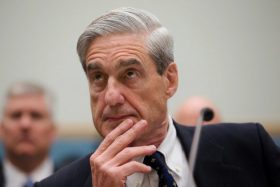 The New York Times and CNN led media coverage last month of discussions among senior FBI officials in May 2017 of a possible national security investigation of President Donald Trump himself, on the premise that he may have acted as an agent of Russia.
The episode has potentially profound political fallout, because the Times and CNN stories suggested that Trump may indeed have acted like a Russian agent. The New York Times story on Jan. 11 was headlined, “F.B.I. Opened Inquiry into Whether Trump Was Secretly Working on Behalf of Russia.” CNN followed three days later with: “Transcripts detail how FBI debated whether Trump was ‘following directions’ of Russia.”
By reporting that Russia may have been able to suborn the president of the United States, these stories have added an even more extreme layer to the dominant national political narrative of a serious Russian threat to destroy U.S. democracy. An analysis of the FBI’s idea of Trump as possible Russian agent reveals, moreover, that it is based on a devious concept of “unwitting” service to Russian interests that can be traced back to former CIA director John O. Brennan.
The Proposal That Fell Apart
The FBI discussions that drove these stories could have led to the first known investigation of a U.S. president as a suspected national security risk. It ended only a few days after the deliberations among the senior FBI officials when on May 19, 2017, the Justice Department chose Robert Mueller, a former FBI director, to be special counsel. That put control over the Trump-Russia investigation into the hands of Mueller rather than the FBI.
Peter Strzok, who led the bureau’s counter-espionage section, was, along with former FBI General Counsel James A. Baker, one of those involved in the May 2017 discussions about investigating Trump. Strzok initially joined Mueller’s team but was fired after a couple of months when text messages that he had written came to light exposing a deep animosity towards Trump that cast doubt over his impartiality.
The other FBI officials behind the proposed investigation of Trump have also since left the FBI; either fired or retired.
The entirety of what was said at the meetings of five or six senior FBI officials in the immediate aftermath of Trump’s firing of James Comey as FBI director on May 9, 2017, remains a mystery.
Closed-door Testimony
The CNN and Times stories were based on transcripts either obtained or, in the case of the Times, on portions read to it, of private testimony given to the House Judiciary and Government Oversight and Reform committees last October by Baker, one of the participants in the discussions of Trump as a possible Russian agent.
Excerpts of Baker’s testimony published by CNN make it clear that the group spoke about Trump’s policy toward Russia as a basis for a counter-intelligence investigation. Baker said they “discussed as [a] theoretical possibility” that Trump was “acting at the behest of [Russia] and somehow following directions, somehow executing their will.”
Baker went on to explain that this theoretical possibility was only “one extreme” in a range of possibilities discussed and that “the other extreme” was that “the President is completely innocent.”
He thus made it clear that there was no actual evidence for the idea that he was acting on behalf of Russia.
Baker also offered a simpler rationale for such an investigation of Trump: the president’s firing of FBI Director Comey. “Not only would [firing Comey] be an issue of obstructing an investigation,” he said, “but the obstruction itself would hurt our ability to figure what the Russians had done, and that is what would be the threat to national security.”
But the idea that Comey’s firing had triggered the FBI’s discussions had already been refuted by a text message that Strzok, who had been leading the FBI’s probe into the Trump campaign’s contacts with Russians, sent immediately after the firing to Lisa Page, then legal counsel to Andrew McCabe, formerly the bureau’s deputy director who was then acting director.
“We need to open the case we’ve been waiting on now while Andy is acting,” Strzok wrote, referring to McCabe.
As Page later confirmed to congressional investigators, according to the CNN story, Strzok’s message referred to their desire to launch an investigation into possible collusion between Trump and the Russians. Strzok’s message also makes clear he, and others intent on the investigation, were anxious to get McCabe to approve the proposed probe before Trump named someone less sympathetic to the project as the new FBI director.
Why the FBI Wanted to Investigate
The New York Times story argued that the senior FBI officials’ interest in a counter-intelligence investigation of Trump and the Russians sprang from their knowledge of the sensational charges in the opposition research dossier assembled by British ex-spy Christopher Steele (paid for by the DNC and the Clinton campaign) that the Putin government had “tried to obtain influence over Mr. Trump by preparing to blackmail and bribe him.”
But the Times writers must have known that Bruce Ohr, former associate deputy attorney general, had already given McCabe, Page and Strzok information about Steele and his dossier that raised fundamental questions about its reliability.
Ohr’s first contacts at FBI headquarters regarding Steele and his dossier came Aug. 3, 2016, with Page and her boss McCabe. Ohr later met with Strzok.
Ohr said he told them that Steele’s work on the dossier had been financed by the Clinton campaign through the Perkins-Cole law firm. He also told them that Steele, in a July 30, 2016 meeting, told him he was “desperate that Donald Trump not get elected and was passionate about him not being president,” according to Ohr’s contemporaneous notes of the meeting.
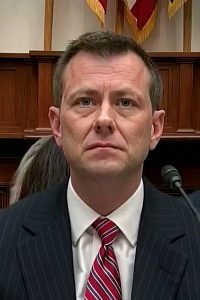 So, key figures in the discussion of Trump and Russia in May 2017 knew that Steele was acting out of both political and business motives to come up with sensational material.
Strzok and Page may have started out as true believers in the idea that the Russians were using Trump campaign officials to manipulate Trump administration policy. However, by May 2017, Strzok had evidently concluded that there was no real evidence.
In a text message to Page on May 19, 2017, Strzok said he was reluctant to join the Mueller investigation, because of his “gut sense and concern” that “there’s no big there there.”
Why, then, were Strzok, Page, McCabe and others so determined to launch an investigation of Trump at about the same time in May 2017?
A CNN article about the immediate aftermath of the Comey firing reported that Deputy Attorney General Rod Rosenstein and senior FBI officials “viewed Trump as a leader who needed to be reined in, according to two sources describing the sentiment of the time.”
That description by anti-Trump law enforcement officials suggests that the proposed counter-intelligence investigation of Trump served as a means to maintain some leverage over his treatment of the FBI in regard to the Russia issue.
That motivation would be consistent with the decision by McCabe on May 15, 2017 – a few days after the discussions in question among the senior FBI officials – to resume the bureau’s relationship with Steele.
The FBI had hired Steele as a paid source when it had earlier launched its investigation of Trump campaign official’s contacts with Russians in July 2016. But it had suspended and then terminated the relationship over Steele’s unauthorized disclosure of the investigation to David Corn of Mother Jones magazine in October 2016. So, the decision to resume the relationship with Steele suggests that the group behind the new investigation were thinking of seizing an opportunity to take off the gloves against Trump.
The ‘Unwitting Collaboration’ Ploy
The discussion by senior FBI officials of a counter-intelligence investigation of Trump has become part of the political struggle over Trump mainly because of the stories in the Times and CNN.
The role of the authors of those stories illustrates how corporate journalists casually embraced the ultimate conspiracy theory – that the president of the United States was acting as a Russian stooge.
The reporters of the CNN story — Jeremy Herb, Pamela Brown and Laura Jarrett — wrote that the FBI officials were “trying to understand why [Trump] was acting in ways that seemed to benefit Russia.”
The New York Times story was more explicit. Co-authors Adam Goldman, Michael S. Schmidt and Nicholas Fandos wrote that the FBI officials “sought to determine whether Mr. Trump was knowingly working for Russia or had unwittingly fallen under Moscow’s influence.”
The same day the Times story was published, the lead author on the piece, Adam Goldman, was interviewed by CNN. Goldman referred to Trump’s interview with NBC’sLester Holt in the days after the Comey firing as something that supposedly pushed the FBI officials over the edge. Goldman declared, “The FBI is watching him say this, and they say he’s telling us why he did this. He did it on behalf of Russia.”
But Trump said nothing of kind. What he actually said — as the Times itself quoted Trump, from the NBCinterview —was: “[W]hen I decided just to do it, I said to myself – I said, you know this Russia thing with Trump and Russia is a made-up story.” The Times article continued: “Mr. Trump’s aides have said that a fuller examination of his comments demonstrates that he did not fire Mr. Comey to end the Russia inquiry. ‘I might even lengthen out the investigation, but I have to do the right thing for the American people,” Mr. Trump added. ‘He’s the wrong man for that position.’”
Goldman was evidently trying to sell the idea of Trump as a suspected agent of Russia.
Goldman also gave an interview to The New Yorker’s Isaac Chotiner, in which the interviewer pressed him on the weakest point of the Trump-as-Russian-agent theory. “What would that look like if the President was an unwitting agent of a foreign power?” asked Chotiner.
The Times correspondent, who won a Pulitzer Prize for his coverage of the alleged Russian efforts to influence the 2016 election, responded: “It is hard to say what that would look like.” Goldman then reiterated the concept. “People were very careful to tell me that: ‘It is wittingly or unwittingly.’” And in answer to a follow-up question, Goldman referred to evidence he suggested might be held by the FBI that “perhaps suggests that the President himself may be acting as a foreign agent, either wittingly or unwittingly….”
The idea that American citizens were somehow at risk of being led by an agent of the Russian government “wittingly or unwittingly” did not appear spontaneously. It had been pushed aggressively by former CIA Director John O. Brennan both during and after his role in pressing for the original investigation.
When Brennan testified before the House Intelligence Committee in May 2017, he was asked whether he had intelligence indicating that anyone in the Trump campaign was “colluding with Moscow.” Instead of answering the question directly, Brennan said he knew from past experience that “the Russians try to suborn individuals, and they try get them to act on their behalf either wittingly or unwittingly.” And he recalled that he had left the government with “unresolved questions” about whether the Russians had been successful in doing so in regard to unidentified individuals in the case of the 2016 elections.
Brennan’s notion of “unwitting collaboration” with Russian subversion is illogical. Although a political actor might accidentally reveal information to a foreign government that is valuable, real “collaboration” must be mutually agreeable. A policy position or action that may benefit a foreign government, but is also in the interest of one’s own government, does not constitute “unwitting collaboration.”
The real purpose of that concept is to confer on national security officials and their media allies the power to cast suspicion on individuals on the basis of undesirable policy views of Russia rather than on any evidence of actual collaboration with the Russian government.
The “witting or unwitting” ploy has its origins in the unsavory history of extreme right-wing anti-communism during the Cold War. For example, when the House Un-American Activities Committee was at its height in 1956, Chairman Francis E. Walter declared that “people who are not actually Communist Party members are witting or unwitting servants of the Communist cause.”
The same logic – without explicit reference to the phrase — has been used to impugn the independence and loyalty of people who have contacts with Russia.
It has also been used to portray some independent media as part of a supposedly all-powerful Russian media system.
The revelation that it was turned against a sitting president, however briefly, is a warning signal that national security bureaucrats and their media allies are now moving more aggressively to delegitimize any opposition to the new Cold War.
Gareth Porter is an independent investigative journalist and historian writing on U.S. national security policy. His latest book, “Manufactured Crisis: The Untold Story of the Iran Nuclear Scare,” was published in 2014. Follow him on Twitter: @GarethPorter.
YouTube Will Determine What ‘Conspiracy’ Is and Stop Recommending Such Videos

By Michael Krieger | Liberty BlitzKrieg | February 11, 2019
While the evolution of Google’s YouTube from a free expression platform into something entirely different has been underway for a while, it just took another step in a very short-sighted and restrictive direction. NBC News reports:
YouTube has announced that it will no longer recommend videos that “come close to” violating its community guidelines, such as conspiracy or medically inaccurate videos… Chaslot said that YouTube’s fix to its recommendations AI will have to include getting people to videos with truthful information and overhauling the current system it uses to recommend videos.
There’s a lot to unpack here so let’s get started. First, it appears YouTube has announced the creation of a new bucket when it comes to content uploaded to the site. It’s no longer just videos consistent with company guidelines and those that aren’t, but there’s now a category for “conspiracy or medically inaccurate videos.” This is a massive responsibility, which neither YouTube or anyone else seems fit to be judge and jury. In other words, YouTube is saying it’s comfortable deciding what is “conspiracy” and what isn’t. Which brings up a really important question.
So no videos of government officials lying the public into wars, or is that the Silicon Valley approved type conspiracy? https://t.co/mUEQGMlLyr
— Michael Krieger (@LibertyBlitz) February 11, 2019
“Conspiracy” and covering up conspiracies is a fundamental part of the human experience, and always has been. It demonstrates extreme hubris for a tech giant to claim it can differentiate between a legitimate conspiracy to explore, versus an illegitimate one. One person’s righteous investigation is another’s conspiracy theory, with Russiagate serving as an obvious contemporary example.
Going back to the early 21st century, we witnessed a major conspiracy to start a war in Iraq based on lies; lies which were endlessly repeated uncritically throughout the mass media. Even worse, General Wesley Clark described an even larger conspiracy which consisted of starting multiple additional wars in the aftermath of 9/11. This conspiracy is ongoing and has continued to move forward in the years since, through both Republican and Democratic administrations.
It’s pretty clear what will end up happening as a result of this tweaking to YouTube’s recommended videos AI. The “conspiracies” of your average person will be pushed aside and demoted, while government and mass media lies will remain unaffected. Google will assume mass media and government are honest, so government and billionaire approved propaganda will be increasingly promoted, while the perspectives of regular citizens will be pushed further to the margins. YouTube is simply not a platform anymore, but rather a self-proclaimed arbiter of what is ridiculous conspiracy and what is truth.
The most dangerous and consequential liars on planet earth are those in government, yet I guarantee YouTube will gladly recommend such liars and their lies.
— Michael Krieger (@LibertyBlitz) February 11, 2019
While YouTube says videos it deems conspiracy will still be available via search, it’s not a stretch to imagine this is just the first step and before you know it certain categories will be banned from the site entirely. Either way, I think there’s a silver lining to all of this.
As I outlined in a recent post, U.S. tech giants, particularly Facebook, Google and Amazon, aren’t simply private companies. They appear more akin to quasi-government entities that increasingly view themselves as instrumental gatekeepers for a discredited status quo. Moreover, their primary business models consist of mass surveillance and violating our privacy.
Ultimately, I think the increasingly nefarious and desperate behavior of these tech giants will lead to their demise. More and more of us have looked under the hood and seen the seedy and privacy-destroying nature of these entities. We’ve also seen what it’s like to have genuine free expression on the internet and we don’t want to turn the web into another cable news where Facebook, Google and Amazon become the new CBS, NBC and ABC. If we do, then the entire promise of the internet will have turned out to be a giant waste.
But I don’t think that’s going to happen. I think most of us have had a taste of what’s possible, and agree that free speech and expression on the internet, the good, the bad and the ugly, is better than an internet censored by tech companies and their billionaire executives, who will always be biased toward the status quo point of view. It’s still not clear which platforms will emerge to replace the tech giants, but it seems fairly clear to me the best days are over for these companies, and it cannot come a moment too soon.
Featured Video
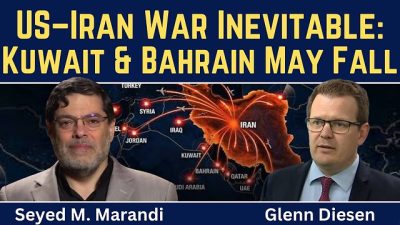
Seyed M. Marandi: US-Iran War Inevitable: Kuwait and Bahrain May Fall
or go to
Aletho News Archives – Video-Images
From the Archives
USS Liberty Massacre: A Pivotal Moment in the Hostile Takeover of America
By Kevin Barrett | Crescent | Dhu al-Qa’dah 24, 1445
In corporate America, hostile takeovers are commonplace. They occur when an aggressor—a larger corporation or rich individuals—seizes control of a smaller corporation without asking permission.
What few recognize is that the United States itself has been subjected to a hostile takeover. Since the aggressor, the illegitimate settler colony known as “Israel,” is much smaller than the US, the takeover has necessarily been surreptitious.
As of June, 2024, Israel’s gradual takeover of the US has become obvious and undeniable—a proverbial “elephant in the living room.” … continue
Blog Roll
 Aletho News
- Seyed M. Marandi: US-Iran War Inevitable: Kuwait and Bahrain May Fall
- Leaders Condemn Ansarallah Attack on Saudi Arabia While Ignoring Illegal War Against Yemen
- Leaked: Britain’s Covert Iraqi Psyops Network
- Yemeni Armed Forces Warn Airlines Against Using Saudi Airports, Exempt Mecca and Medina
- Iran security chief says powers greater than US tried to conquer Iran but ended in ‘dustbin of history’
- Europe’s mounting social chaos… chickens coming home to roost for proxy war against Russia
- US-Russia Diesel Deal Becomes Massive Defeat for Ukraine
- Hormuz and the Looming Economic Catastrophe
- Dhubab offensive, media blitz and the rapid unraveling of Saudi-backed coalition’s new gambit
- Putin Conveys to Trump Iran’s Vision on Possible Conflict Resolution – Kremlin
- If Americans Knew
- Gaza: Ceasefire Anniversary Marks Year of Failed Promises
- The American Conservative: Mike Huckabee Should Resign
- A C-Section in Shackles: A Palestinian Woman’s Harrowing Birth in Israeli Detention
- ‘He’s Desperate’: AIPAC Begins Spending Against Abdul El-Sayed to Boost Mike Rogers:
- Trump, Hormuz, and the Looming Economic Catastrophe
- For three years, Israel has killed a child in Gaza every 71 minutes – Daily Update
- Israeli forces kill another child in Gaza – Daily Update
- Gaza ceasefire exists in name only, say more than 100 organizations
- Nearly 2 Million in Gaza Need Urgent Shelter Assistance as Winter Looms: IOM Chief Warns
- Suppressing Palestinian resistance: US charity under fire for AI monitoring of Gaza classrooms
- No Tricks Zone
- Germany’s Green Energy Debacle: High Energy Costs Force Kahla Porzellan to Close After 182 Years!
- New Study: 50 Years Of The Most Aggressive ‘Net Zero’ Policies Can Only Affect The Global Climate By 0.03°C
- US September “Heat” Was No Record…Many Records Set Decades Ago
- Latest European Green Energy Debacle; Portugal’s Largest Flagship Solar Park Insolvent!
- Green Energy Debacle: German Expert Professor Fritz Vahrenholt Warns Of Severe Economic And Social Consequences
- Two More Paleo Reconstructions Affirm Meters-Higher Sea Levels Across Ireland, Brazil 7000-6000 Years Ago
- New Study: Earth And Venus Surface Warmth Largely Explained By Convection And Lapse Rate, Not CO2 Or Radiation
- 2025 Nature Paper Claiming Worsening Global Drought Gets RETRACTED …Heavily Flawed
- New Study: ‘Global Drought Shows No Detectable Recent Acceleration Under Climate Warming’
- Economic Masterminds: German Socialists Suggest Taxing Productivity Gains Stemming From Using AI

