Regime Change In Venezuela: Army Defectors, Russian Mercenaries And Disappearing Gold
South Front | January 31, 2019
Over the past few days, the intensity of anti-government protests in Venezuela has declined despite attempts of the US-led bloc to warm them up through both public and clandestine measures. However, the conflict continues to develop amid the acute standoff in the media sphere between the Maduro government and its opponents backed by the US-led bloc.
On January 29, CNN released an interview with two “Venezuelan army defectors” who appealed to US President Donald Trump to arm them to defend “freedom” in Venezuela. They claimed to be in contact with hundreds of willing defectors via WhatsApp groups and called on Venezuelan soldiers to revolt against the government of President Nicolas Maduro.
“As Venezuelan soldiers, we are making a request to the US to support us, in logistical terms, with communication, with weapons, so we can realize Venezuelan freedom,” one of the alleged defectors, Guillen Martinez, told CNN. Another one, Hidalgo Azuaje, added: “We’re not saying that we need only US support, but also Brazil, Colombia, Peru, all brother countries, that are against this dictatorship.”
During the entire clip, these persons were presented in a manner alleging that they had just recently defected and are now calling on others to follow their step. However, therein lies the problem. The badges on their uniform say FAN – Fuerza Armada Nacionales. This is an outdated pattern, which has been dropped. Now, Venezuela’s service members have a different badge – FANB, which means Fuerza Armada Nacional Bolivariana. So, either the “Venezuelan army defectors” somehow lost the letter B from their uniform, or the entire interview is a staged show involving former Venezuelan service members, who have been living for a long time outside the country, or in the worst case – actors.
The interview came amid increasing US political, media and sanction pressure on the Maduro government. White House National Security Adviser John Bolton was even spotted with a mysterious note about the deployment of 5,000 US troops to Colombia, the US ally which borders Venezuela. In this situation, a large-scale military uprising or at least formation of some opposition within the army would become a useful tool in a wider effort to overthrow the country’s government. On the other hand, the use of such CNN-styled content shows that so far the US and its proxies have achieved little success in buying the support of Venezuelan service members.
On January 29, Venezuelan lawmaker Jose Guerra claimed via Twitter that a Boeing 777 of Russia’s Nordwind Airlines landed in Caracas on January 28 to spirit away 20 tons of gold bars, worth some $840 million, from the country’s central bank. When asked how he knew this, Guerra provided no evidence. By January 30, these items of breaking news had rocked the headlines of most of the mainstream media.
Another version, which was also quite popular among pro-opposition media, is that the plane, which reportedly made the trip directly from Moscow, moved in a group of Russian private military contractors to support the Maduro government. This version is fueled by reports claiming up to 400 Kremlin-linked private military contractors may have arrived in Venezuela.
The developing crisis is also accompanied by the growth of citizen journalism. Bellingcat members already created a Twitter page named “In Venezuela”, which provides field news about the crisis from Toronto, Canada. It’s easy to expect some “open source intelligence investigations” revealing crimes of the Maduro government against peaceful protesters very soon if the conflict escalates further.
Roughly speaking, the mainstream media presents the audience with the following story: The Maduro government is about to fall and is already moving the country’s gold reserves somewhere via Russian planes. At the same time, Vladimir Putin sent his mercenaries to rescue Maduro and to keep the corrupt regime in power in order to secure Russia’s economic and political interests. This, as well as the oppressive nature of the regime, are the only reason why the forces of good have not yet achieved victory.
Fortunately, there is the shining knight of democracy, Juan Guaido, who was democratically appointed as the Interim President of Venezuela from Washington. He, his Free Venezuelan Army consisting of hundreds of WhatsApp defectors and a group of unbiased US/NATO-funded citizen journalists and investigators are ready to stand against the Maduro-Putin alliance and to defend freedom and democracy in Venezuela… with a bit of help from the Trump administration for sure.
There are no doubts that modern Venezuela is allied with Russia and Moscow will employ its existing influence to resolve the crisis and thus defend its investments and oil assets. Furthermore, Maduro and his supporters showed that they are not going to give in to the US-led pressure. At the same time, The level of MSM hysteria, including an open disinformation campaign against the Maduro government and attempts to demonize it through various means, including its ties with Moscow, show that the Washington establishment is serious in its regime change efforts and may even be ready to instigate a Syria-style “proxy war” in the country in order to achieve own goals.
CNN Goes ‘Undercover’ To Manufacture Consent For Coup Attempt In Venezuela
By Kevin Gosztola | ShadowProof | January 29, 2019
A CNN “exclusive” report from inside Venezuela aired multiple times on the network on January 28. It is a prime example of how influential media outlets in the U.S. effectively create propaganda for the opposition, which now is receiving funds from President Donald Trump’s administration.
For the four-minute report, CNN correspondent Nick Paton Walsh went “undercover” amidst what the network described as the “deepening crisis in Venezuela” in order “to capture the desperation gripping the nation.”
The segment highlighted hyperinflation at grocery chains, Venezuelans lined up in queues for fuel and food, particularly in Caracas, and opposition demonstrations on January 23, when opposition leader Juan Guaido declared himself president of the country.
“This was the day when change was meant to come,” Walsh stated.
It suggested President Nicolas Maduro’s government has given “handouts” to Venezuelans for years to buy their loyalty, but now “handouts” are no longer enough. Opponents like to equate social programs to “handouts” because corporate elites favor de-nationalization and privatization of services.
Walsh interviewed a rank-and-file officer in the Venezuela military and granted him anonymity. The officer stated, “I would say 80 percent of soldiers are against the government. Some even go to demonstrations. But the big fishes, the senior officers, are the ones eating, getting rich while the bottom we have it hard.”
Video showed the opposition throwing stones at a military airfield in a standoff that apparently has lasted “for months.” One part of the barricade was on fire.
Sitting with his back against what appeared to be a concrete barricade, like he was part of the opposition hurling objects, Walsh declared, “They may be throwing stones here, but what they really need is the army to switch sides.”
Walsh offered no comment on what it would mean for democracy in Venezuela if the military played an instrumental role in helping Guaido and a U.S.-led group of countries oust Maduro.
Another part of the report featured street children in Caracas. A 14 year-old boy recounted how his brother was killed in July by a member of a gang. He said he has to go through the garbage for food and beg so he does not go hungry.
Walsh did not show a cause-and-effect relationship, yet the boy’s poverty was wryly attributed to a “socialist utopia that now leaves nearly every stomach empty.”
On the surface, the report may have seemed balanced and neutral because CNN spoke to citizens caught in the middle of the political crisis. Yet, there was no clips of the tens of thousands of Maduro supporters who marched through Caracas the same day that Guaido claimed he was the country’s interim president.
CNN also omitted the role of U.S. sanctions and other measures in making Venezuela’s economic recovery nearly impossible.
According to Mark Weisbrot, co-director of the Center for Economic and Policy Research (CEPR), sanctions did not create hyperinflation in the country. However, they have made it incredibly difficult for the government to restructure their debt for a recovery.
In 2017, weeks before the Trump administration imposed new sanctions, a former top State Department official predicted they would cause the government to “default on their bonds and a collapse of internal investment and oil production.” They would spur “civil unrest, refugee flows across their borders, and a cutoff of Venezuelan financial support to Cuba and Haiti that could lead to migration flows to the United States.” (Note: It was estimated in June 2018 that about 35,000 refugees were crossing from Venezuela to Colombia each day.)
The same day that CNN aired their report the U.S. Treasury Department sanctioned the country’s state-owned oil company, Petroleos de Venezuela, S.A. (PdVSA). The company is a “primary source of Venezuela’s income and foreign currency,” including U.S. dollars and Euros, according to the Department.
National security adviser John Bolton said the sanctions would block $7 billion in assets and result in the loss of $11 billion in proceeds from exports over the next year.
Even after the Trump administration announced oil sanctions, CNN still largely ignored the potential effect of sanctions when it aired this “undercover” report another time.
Oil sanctions are likely to intensify the suffering for Venezuelans, not make their lives better. In the 1990s, Iraq faced sanctions from the United Nations on their oil exports as well as restrictions on other foreign trade. To many, it was “one of the decade’s great crimes” because the sanctions contributed to the deaths of 500,000 Iraqi children.
In Iran, the poor bear the brunt of sanctions on oil that were re-imposed by the Trump administration. Financial Times reported in October on millions of Iranians, who were already stretched as “the value of the rial” had “plunged more than 70 per cent against the US dollar over the past year.”
“The sharp drop has pushed up import costs and stoked inflation, eroding purchasing power and leaving the most impoverished struggling to pay for basic goods such as meat, dairy products, and fruit,” FT noted.
As journalist Gregory Shupak previously highlighted for Fairness and Accuracy In Reporting (FAIR), “When Venezuelan President Nicolas Maduro in November 2017 proposed a meeting with creditors to discuss a restructuring of the country’s public debt, the Trump administration warned U.S. bondholders that attending this meeting could put them in violation of U.S. economic sanctions against Venezuela, which can be punished with 30 years in jail and as much as $10 million dollars in fines for businesses.”
“That same month, the U.S. government added further sanctions that prevent Venezuela from doing what governments routinely do with much of their debt, which is ‘roll it over’ by borrowing again when a bond matures. The sanctions also made it difficult if not impossible for Venezuela to undertake debt restructuring, a process wherein interest and principal payments are postponed and creditors receive new bonds, which the sanctions explicitly prohibit.”
Additionally, Francisco Rodriguez noted for Foreign Policy in 2018, “Ninety-five percent of Venezuela’s export revenue comes from oil sold by the state-owned oil company. Cutting off the government’s access to dollars will leave the economy without the hard currency needed to pay for imports of food and medicine. Starving the Venezuelan economy of its foreign currency earnings risks turning the country’s current humanitarian crisis into a full-blown humanitarian catastrophe.”
This is not the first time that the opposition in Venezuela has destroyed the economy to help it win power. Back in 2002, the same year that President Hugo Chavez faced a coup backed by the U.S. government, his opponents “called for a massive strike in the country’s oil sector.”
“The strike brought oil production to a standstill and caused a double-digit recession in an attempt to get Chavez to resign,” Rodriguez recalled. “This event single-handedly convinced Venezuelans that they could not trust a political movement that was willing to destroy the economy in order to attain power. In a recall referendum held two years later, voters resoundingly backed Chavez.”
None of this history seems to matter to CNN anchors, who subscribe to the Washington bipartisan foreign policy consensus on Venezuela. Nor do they mention that it is not only Maduro’s security forces that commit violence. The opposition was involved in lynchings, burning people alive, and erecting barricades that cause deadly accidents in 2017. Some opposition leaders, including exiles like Lorent Saleh, have ties to neo-fascists.
When CNN anchor Jim Sciutto introduced the report, he mentioned Guaido had again urged the people of Venezuela to “hit the streets to demand new elections” in an effort to oust Maduro. It is easy to see how playing the report after this statement might help gin up sympathy for Guaido’s calls to action.
But apparently there is reason to believe the opposition may have the support of leaders from several Latin American and Western countries but still be struggling to win over the people.
Walsh noted the country is not seeing daily mass street protests. Guaido’s message may be resonating with some of the middle class, but it is not a message that inspires those in the slums, who have their own “poverty-based fight.”
In other words, it is likely that lower classes in Venezuela remain skeptical of the opposition because they fear it will mean inviting outside corporate interests to raid government assets and natural resources so they may enrich themselves. This would potentially lead to cuts or an end to social welfare programs that they utilize to help them survive.
This skepticism toward the opposition among Venezuelans is not something CNN wants to feature in its limited coverage of the attempted coup. But it should be viewed as a key reason to doubt the consensus around support for the opposition, which news networks are working to manufacture.
A Rational Take On Why Daesh Is Targeting US Troops In Syria At This Specific Time
By Andrew KORYBKO – Oriental Review – 28/01/2019
Two Daesh suicide attacks recently took place in Syria over a period of just five days, suggesting that they’re part of a coordinated strategy being employed by the terrorists against the withdrawing American troops. The “qui bono” principle has led to many observers suspecting that the whole point is to either delay Trump’s promised draw-down or inflict political damage on him at home by shaping the narrative that he’s “retreating” in the face of what he’s previously described as “radical Islamic terrorism”. This puts the President on the horns of a classic dilemma because there’s no perfect approach to dealing with this problem, though a so-called “compromise solution” could be to gradually replace American troops with a combination of regional proxies and mercenaries per the “Lead From Behind” strategy of outsourcing geopolitical responsibilities to like-minded partners.
While one can speculate on whether the Kurds encouraged these attacks as a false flag excuse for their American patrons to continue protecting them from the Turks or whether Trump’s “deep state” foes had a hand in this in order to undermine his planned withdrawal, most responsible analyses would probably nevertheless conclude that Daesh likely has some so-called “sleeper cells” all throughout Syria and is waiting to operationalize them at opportune moments such as now in order to achieve political objectives like the two that were just described. Seeing as how it’s almost impossible to discover these plots until they’re already in motion, it’ll be difficult to prevent reoccurrences of what just happened and the priority should therefore be shifted to tactical responses that could be employed in the field.
The two latest “sleeper cell” attacks targeted joint US-Kurdish patrols in Northeastern Syria, and while these “hard” military targets might remain in the crosshairs, it can’t be ruled out that “soft” civilian ones won’t soon be victimized too. In the interests of the local population’s security, proactive measures might have to be undertaken during certain times to limit freedom of movement and access to certain sites, though a fine line must be drawn between implementing responsible policies and imposing a “national security state”. These new security concerns have yet to interfere with the US’ planned withdrawal because they don’t require American troops to enter into force, though it should be expected that any follow-up attacks of this nature will be exploited by Trump’s foes in a last-ditch infowar effort to keep “boots on the ground” in Syria.
The post presented is the partial transcript of the CONTEXT COUNTDOWN radio program on Sputnik News, aired on Friday Jan 25, 2019.
Three Reasons Macron is a Hypocrite when it Comes to Venezuela
By Jim Carey | Geopolitics Alert | January 29, 2019
Paris – French President Emmanuel Macron recently voiced support for protesters in Venezuela as his own country has been ground to a halt by protests every weekend.
There is an overused saying that “people in glass houses shouldn’t throw stones.” While these few words may be cliche there is definitely one man that they can be applied to after this weekend: Emmanuel Macron.
Even though the French President is into the third month of protests against his government, he has decided to weigh in on the legitimacy of another country’s government and his latest outrageous statements just highlight the hypocrisy of Macron and Western leaders in general.
Macron: Maduro is ‘illegitimate’
Emmanuel Macron is a very unpopular man. Yet, if the French President is to be believed, there is a man who is more unpopular than him that needs to be removed from office immediately. This man is, of course, Venezuelan President Nicolas Maduro whose approval rating is estimated somewhere around twenty percent by Western media outlets (many with no journalists or pollsters in Venezuela).
The irony of Emmanuel Macron saying these approval ratings make a President “illegitimate” is that his own aren’t looking much better. Following the eleventh weekend of the ‘Gilets Jaunes’ protests, Macron has seen a slight bump in approval ratings (according to pro-Macron media) to a paltry thirty percent.
Thirty percent isn’t much better than 20 but there were also polls during the earlier stages of the Gilets Jaunes protests where just over seventy percent of French citizens polled did not have faith in Macron’s government. This means that at one point during the protests that are still sweeping through Paris every weekend, Macron was just as “illegitimate” as he claims Nicolas Maduro is.
Approval ratings aren’t the only thing Western powers use to paint Maduro as illegitimate. Another common tactic often deployed against the Venezuelan President is to claim that his latest electoral victory can’t be verified and this makes Maduro illegitimate.
One statistic cited to prove that the last Venezuelan election was “fraud” is the voter turnout. The voter turnout during last years presidential election in Venezuela was 46.1% but this statistic without context is misleading.
A key variable that has to be factored into the Venezuelan elections is that the now-“interim President” Juan Gauido’s own party called for a boycott. Apparently, most of the party got the message, listened to the leadership and just didn’t vote, meaning it’s impossible to tell if the re-election of Maduro would have gone differently.
One election that nobody was calling for a boycott of, is the French Presidential election in 2017 where only about 35% of the French electorate voted. This is the lowest turnout for any French election and modern history, and more than ten percentage points less than the turnout in Venezuela. If low turnout is the key to spotting a “rigged” election where the opposition is de facto barred from voting, perhaps international observers should examine the legitimacy of the French President.
Violence against protesters
Another major trope across western media used to try to characterize Nicolas Maduro as a tyrant is some of the responses of the Venezuelan security services to massive protests. At the same time, however, it seems strange for Emmanuel Macron to point to massive protests during “economic turmoil” as some kind of evidence a leader must step down.
As stated above, Macron is dealing with his own “pro-democracy” protests – or a bunch of Russian-manipulated fascists if western media is to believed – the Gilets Jaunes. While Macron has openly voiced his support for those protesters in the streets of Caracas, he has spent several weeks brutalizing and arresting protesters on the streets of Paris.
While networks all over the west love to point out the totals of dead or injured during riots in Venezuela, they usually fail to report when similar things happen in the west, and France is no different. Macron, much like what he says of Maduro, is also killing protesters and reached double-digit body count late last year.
Obviously, western media would like you to believe these two things are different, and obviously, they are in many ways. For instance, the Venezuelans protesting in Caracas work on behalf of western interests while those in Paris work against it.
There is also another key difference between the situations. In France, Macron has done nothing to hold any police accountable for the deaths of protesters in Paris. Unlike Macron, the Maduro government has actually prosecuted police found guilty of abuses against the opposition. Meanwhile, Macron’s police recently blinded a prominent Gilets Jaunes activist for life with their non-lethal weapons a day after the latest Venezuelan protests kicked off.
Counter-protesters
One thing you will not see in any western media coverage of Venezuela are those citizens of the country that do support President Nicolas Maduro. The western media has no problem repeatedly showing protests against the current government but almost no media covered the fact that thousands also mobilized in pro-Maduro protests to counter the opposition over the weekend.
Large Pro Maduro demonstrations taking place thoughout Venezuela. pic.twitter.com/23KfTrvSl3
— Warrior Reports (@WarriorReports) January 23, 2019
While the media ignore these pro-PSUV protests over the weekend though, they did fall in love with another new group of “pro-order” protesters, the Foulards Rouge, or Red Scarves. Although this movement didn’t explicitly say they back Macron, they did support something mainstream media love even more, the “institutions” of liberal democracy.
Unlike the yellow vests, who the western media did their best to ignore for weeks, these red scarf protesters were blasted all over mainstream media. This coverage is despite the fact that the red scarves were estimated to have been around 10,000 strong whereas some yellow vest protests have drawn hundreds of thousands to Paris from around France.
“More Than 100,000” Yellow Vests Protest in France #GiletsJaunes #ActeIX – @lifttheveil411 – LIVE NOW https://t.co/7yFaWNdj3n
— Jami 🇺🇸 (@Raven_Wren) January 12, 2019
These red scarf protests are being hailed as France’s silent majority, who may be unhappy with the state but still don’t wish for further instability. The same can likely be said about many of the pro-Maduro protesters who likely have some grievances but know much of this is caused by outside factors and anything besides the Bolivarian revolution will further destabilize Venezuela.
None of this matters to the western media or Emmanuel Macron who are still ramping up their anti-Maduro smear campaign at this very minute. Emmanuel Macron can “support” the protesters in Venezuela all he wants but he might want to worry about keeping his own house in order.
Fake News: ‘Hundreds Killed In Clashes Between Pro-Iranian, Pro-Russian Forces’
Syrian War Report – January 29, 2019
A fake-news story about large-scale clashes between pro-Russian and pro-Iranian factions in Syria is making jitters in English- and Russian-language mainstream media outlets. According to these reports citing anonymous sources and each other, “the pro-Russian Tiger Forces and 5th Assault Corps” clashed with “the pro-Iranian 4th Division” near the villages of “Shahta, Bredidg, Innab and Haydariye” in northern Hama.
Most of the reports claimed that there were casualties among the sides providing “precise” numbers varying from a dozen to 200 fighters from the both sides. No source was able to provide details into how clashes had started but the versions are varying from “some differences” to “a campaign to limit Iranian influence”.
Most of the media outlets presented these reports as some kind of breaking news. However, in fact, this is a week-old story. First such reports appeared in several pro-militant social media accounts and a local media outlet, al Modon Online. Later this rumor was reposted by anti-Assad, anti-Iranian and anti-Russian bloggers also citing anonymous sources to show the story look more reliable. By January 29, this rumor has reached large mainstream media outlets, but no evidence has appeared to confirm this kind of developments. However, the lack of factual data was ignored because this story is contributing to the US-Israeli-backed media efforts designed to undermine cooperation between Iran and Russia or at least to show that there are significant tensions between the sides.
The similar situation was observed in 2018 when various mainstream media outlets and even top US leadership like President Trump and Secretary of State Pompeo were claiming that “hundreds” of “Russian fighters” were killed by the US-led coalition in the province of Deir Ezzor. Both of these stories demonstrate how media forgery could reach the wide international audience and start being repeated as facts despite zero evidence supporting them.
On January 27, Russian forces launched at least three surface-to-air missiles at unidentified aerial objects near the Hmeimim airbase. According to local sources, at least 3 UAVs apparently launched from the Idlib de-escalation zone were intercepted.
The Syrian Arab Army deployed reinforcements at frontlines near the Idlib de-escalation zone and carried out a series of artillery strikes on militant positions in northwestern Hama and southern Idlib on January 28 and 29.
The US-backed Syrian Democratic Forces continue to claim dozens of casualties among ISIS members in the Euphrates Valley. However, a few remaining ISIS positions remaining there are still not captured.
NewsGuard: A Neoconservative Contrivance Which Promotes an Establishment View
By Philip Giraldi | American Herald Tribune | January 28, 2019
There’s a new thought policeman in town. He calls himself NewsGuard and he promises to restore “Trust and Accountability” to what one reads online. His website elaborates that “NewsGuard uses journalism to fight false news, misinformation, and disinformation. Our trained analysts, who are experienced journalists, research online news brands to help readers and viewers know which ones are trying to do legitimate journalism—and which are not… Our Green-Red ratings signal if a website is trying to get it right or instead has a hidden agenda or knowingly publishes falsehoods or propaganda.”
One might well stop reading immediately after running into “our trained analysts” with all that implies, but that would deny the greater pleasure derived from considering news-sites that have “… a hidden agenda or knowingly [publish] falsehoods or propaganda.” Excuse me, but hidden agendas, lies and propaganda are what the mainstream media is all about, note particularly the recent feeding frenzy over the Covington school incident at the Lincoln Memorial. Catholic racist white boys vs. elderly Native American war hero was how the story was framed all over the mainstream media before it became clear that the entire chosen narrative was upside down. Only a couple of news outlets bothered to apologize when the truth became known.
NewsGuard claims to have a staff of 50 that evaluates 2,000 websites in something like real time. How exactly it does that is not clear, but The New York Times repeats company claims that “the sites it rates account for 96% of online news and information engagement in the U.S.” NewsGuard also told The Times that it intends to quadruple its vetting of sites and seeks to make its coverage “ubiquitous.”
Make no mistake, NewsGuard is a neoconservative contrivance which promotes an establishment view of what is true and what is false. Its co-founder Gordon Crovitz is an ex-editor of The Wall Street Journal, who has enthused over the project, saying that it is “a milestone in the fight to bring consumers the information they need to counter false information, misinformation and disinformation online.” Crovitz has also been associated with the leading neocon foundation The American Enterprise Institute while the NewsGuard advisory board includes Tom Ridge, who was head of the Department of Homeland Security under George W. Bush, and Michael Hayden, who directed both the CIA and NSA. It is as government-establishment in orientation as it is possible to be.
In a sense seeking to establish “accuracy” in news reporting is nothing new as the social media, to include Facebook and Twitter, have had that objective for some time, but NewsGuard defines itself as having as its target the screening of the entire media in a politically impartial fashion, as “an information resource.” And the real danger is that it will soon be appearing on your computer or phone whether you want it there or not. It is already installed on local library computers in Hawaii and Ohio and is working with university and even high school libraries to include its software on all public computers. Worse still, NewsGuard is in partnership with Microsoft as part of the latter’s Defending Democracy Program. Microsoft currently has NewsGuard on its Edge browser and it intends to install the tool on its Microsoft 10 operating system as a built-in feature. Microsoft 10 is the standard operating system on nearly all computers sold in the United States.
When you go to a news site NewsGuard has a little shield that pops up in the corner of your screen that will tell you whether that site is a reliable source or not. A green tag displays for approved and red for not compliant. Similarly, if you do a search the responses that come up will feature a green or red shield as part of the results. The site for NBC news shows green, approved, with the heading “this website generally maintains basic standards of accuracy and accountability.” It then uses what it calls a “nutrition label” to break down the nine specific areas that were assessed, each of which also receives and individual green check for NBC. Under “Credibility” appears “Does not repeatedly publish false content; Gathers and presents information responsibly; Regularly corrects or clarifies errors; Handles the difference between news and opinion responsibly; and Avoids deceptive headlines.” Under “Accountability” appears “Website discloses ownership and financing; Clearly labels advertising; Reveals who’s in charge including any possible conflict of interest; and The site provides names of any content creators along with either contact or biographical information.”
The first thing one might observe about the system is that it is designed to favor large, well-funded establishment news sources that are staffed to go through the motions of fact checks and corrections. All of the major news networks are approved, including Fox, MSNBC and CNN, all of which editorialize heavily, almost constantly, in their news coverage. Voice of America, which is a U.S. government propaganda instrument by design, also is approved. NewsGuard also has approved all major newspapers to include The New York Times, which frequently gets the story wrong, and The Washington Post, where news stories are nearly indistinguishable from editorials through the use of evocative headlines and slanted narrative. All the U.S. media currently lead off, for example, with stories about Russia that include the assertion that the Kremlin interfered in the 2016 election, a claim that has yet to be confirmed through actual evidence.
Russian media operating in the U.S. including RT America and Sputnik get red ratings with a warning “Proceed with caution: this website fails to basic standards of accuracy and accountability.” RT is apparently guilty of “repeatedly publishing false content,” “not gather[ing] and publish[ing] information responsibly,” “not handl[ing] the difference between news and opinion responsibly” and “not provid[ing] the names of creators.” Al-Jazeera, another news service that often criticizes the United States and its governmental policies also is rated red, suggesting that the true criterion for rejection by NewsGuard is one’s relationship to the official establishment and globalist/interventionist line being promoted by the United States.
A glaring example of NewsGuard’s political bias relates to BuzzFeed, which is an approved site. The Washington Post reported recently how a BuzzFeed story about Michael Cohen and President Trump claimed that the president had directed his lawyer to lie to Congress regarding a proposed office tower project in Moscow, which would have been both a crime and impeachable. A day later Special Counsel Robert Mueller’s office intervened and described the story as untrue. The New York Times ran the first story on page one but the retraction that followed appeared on page 11.
And it was not the first major bit of fake news for BuzzFeed. The same two journalists had previously reported that Russia had financed the 2016 election.
CNN, another NewsGuard green authority, inevitably bemoaned possible consequences arising from the Cohen-Trump story by complaining that it would be used to justify “bad stereotypes about the news media,” had its own Russiagate misstep when it falsely claimed that Donald Trump Jr had had access to WikiLeaks’ DNC emails before their 2016 publication.
The BBC, yet another reliable source approved by NewsGuard, reported back in September that the U.S. government had evidence that the Syrian “regime” was continuing to develop chemical weapons. It added an assessment from the completely befuddled U.S. envoy for Syria James Jeffrey that “President Assad had ‘no future as a ruler’ in Syria… Right now [the Syrian government] is a cadaver sitting in rubble with just half the territory of Syria under regime control on a good day.”
The fact is that Jeffrey was completely wrong about developments in Syria, where the government had been extremely successful in re-asserting control over nearly all of the country, while the claims of chemical weapons use have been rebutted many times, including by actual witnesses and journalists on the ground during the alleged attack at Douma in April.
Reuters news agency, yet another NewsGuard green light, is also into the game. In November 2013 it published an article, part of a series, entitled “Khamenei controls massive financial empire based on property seizures,” which claimed that an Iranian government charitable foundation called Setad (also known as EIKO) actually exists to take control of property for the use of the government’s religious leadership.
A subsequent news report that appeared in January in the alternative media revealed that the investigative journalists who wrote the story did so from Dubai, London and New York and never visited the properties they identified, in most cases completely misrepresenting what could be seen on the ground.
Robert Fontina at Counterpunch has also rejected the depiction of Setad as anything but a charitable foundation. The truth is that Setad engages in major social projects, including rural poverty alleviation, empowering women, home and school building, and provision of healthcare. Fontina observes that American sanctions against it and similar entities hit ordinary Iranians’ lives by producing food insecurity while also restricting the supplies of needed medications. Ahmad Noroozi of the Barakat Foundation claims that numerous Iranians have already been affected by U.S.-initiated sanctions directed against his country, restricting access to cancer treatments and other pharmaceuticals.
So who gets the endorsement from NewsGuard? Those who toe the line on U.S. policy and the establishment globalist/interventionist agenda. It would be interesting to know what NewsGuard’s staff of analysts is really looking for when it researches a site or media outlet. As the examples cited above demonstrate, NewsGuard has nothing to do with taking pains to report the news accurately, nor is there any evidence of real accountability. It is all about who pays the bills and who is in charge. They give the orders and one either falls in line or goes out the door. That is the reality of today’s mainstream media.
Philip M. Giraldi is a former CIA counter-terrorism specialist and military intelligence officer who served nineteen years overseas in Turkey, Italy, Germany, and Spain.
Of Suspected Spies & Cathedrals… and Western Media Hypocrisy

By Finian CUNNINGHAM | Strategic Culture Foundation | 27.01.2019
It’s hilarious to see the double standards of Western media applied in the case of alleged American spy Paul Whelan who is being detained in Russia and facing trial.
Whelan, a former US marine, was denied bail this week in a Moscow court after it emerged that he had been found in possession of state secrets while supposedly holidaying in Russia.
Western media widely aired the theory that the American man has been “set up” by Russian state security after he had received a USB computer stick from someone while staying in a Moscow hotel last month. The person whom he received the disk from has not been identified, but presumably he or she was known to the American, otherwise why would he have accepted the item?
Whelan claims he was in Russia as a tourist and that he didn’t check the contents of the computer mini-disk at the time because he assumed it contained “images of a cathedral he had visited”. He was reportedly arrested soon after receipt of the disk, on December 28, by Federal Security Service (FSB) officers.
This sounds eerily familiar. Remember the two Russian men who visited Salisbury in March last year at around the time of the alleged poisoning of former Kremlin spy Sergei Skripal? Months later, those two men were identified as “suspects” on British CCTV cameras whose images were broadcast by media. Both then promptly came forward to give an interview to Russian media in order to clear their names, which they confirmed as Alexander Petrov and Ruslan Boshirov.
Petrov and Boshirov claimed they were in Salisbury around March 4 as tourists, not as Kremlin assassins as the British media were sensationally alleging. Asked why they were in Salisbury, the pair said it was to visit the medieval English town’s “famous cathedral” and its 123-meter spire.
The immediate reaction by British media in particular was to pour scorn and ridicule on the men’s story. The British government rubbished their claim as “obfuscation and lies”. Journalists and pundits lambasted the pair with guffaws and mockery.
Petrov and Boshirov denied they had any involvement in the alleged poisoning of Skripal – supposedly with a deadly Soviet nerve agent – and they said they were not Kremlin agents but rather worked in the sports nutrition business.
There is no indication thus far that the men’s story is false. Also, what really happened to Skripal and his daughter Yulia remains a mystery since the British authorities won’t reveal where they are – 10 months after the alleged poisoning incident.
The only follow-up media report on the Russian men’s alleged security service affiliation was by the dubious UK-based Bellingcat website, which has a history of fabricating anti-Russian propaganda, such as alleged chemical weapons attacks in Syria and the alleged shooting down by Russian-backed separatists of a Malaysian civilian airliner in eastern Ukraine in 2014.
In the case of Paul Whelan, a former US elite soldier who possesses four passports and who apparently visited Russia several times and had become familiar with the country, he is permitted by Western media to plead his innocence invoking an interest in cathedrals and churches. Not a wink of skepticism here.
However, in the case Petrov and Boshirov, who have no known background in military, they are immediately scoffed at for their declared interest in Salisbury’s medieval cathedral, which by the way is world famous and attracts thousands of visitors every year, including many Russian tourists.
What’s more, in the case of Whelan, the Western media has gone further to report that he is being set up by Russian agents, who planted the state secrets in the USB disk. It is speculated in the Western media that the Kremlin is using the American as a bargaining chip in a potential prisoner-exchange deal for Russian citizen Maria Butina. Butina was jailed at the end of last year in the US after she pleaded guilty to espionage charges, following months of isolated detention. The Kremlin said she had no association with its agencies.
Moscow categorically denies that there is an ulterior agenda for doing a prisoner swap. Russian authorities have said that Whelan was simply “caught red-handed” with state secrets and is being prosecuted accordingly. The classified information is believed to contain the names of individuals who work for Russian secret services.
Whelan’s family back in the US maintain he is innocent and that he was in Russia to attend the wedding of a friend. If found guilty, he could be facing up to 10-20 years in jail.
Who knows, maybe the American was set up in a dirty game of state intrigue.
The case of Maria Butina appears to be a disturbing one of the American state framing up a Russian citizen to bolster a political agenda of alleged Russian interference in US elections. Her pre-trial detention in solitary confinement certainly amounts to a form of psychological torture to pressure a confession. Butina is facing several years in prison, despite many observers considering her to be innocent.
But one thing seems glaringly obvious: the double standard being used by Western media which is borne out of its relentless Russophobia.
A former US marine is seen as a plausible tourist interested in viewing cathedrals whom, the Western media claim, is now being persecuted by despotic Russian authorities; while two Russian civilians are pilloried for plying a “ridiculous cover story” about Salisbury’s 123-meter spire.
More Child Exploitation as the Globalist Climate Project Creates its very own Bana Persona

By Barbara McKenzie | December 15, 2018
People who followed with awful fascination the Bana account, designed to facilitate the destruction of Syria, will have a sense of deja vu at the arrival on the ‘climate’ scene of another shocking example of cynical child exploitation and manipulation: that of Swedish girl Greta Thunberg.
The Bana Alabed twitter account tweeted ostensibly from Aleppo in the months leading up to its liberation from terrorist forces. Her task was to claim war crimes on the part of “Assad” and Russia and demand action on Syria from world leaders, WIII if necessary, but at least a Libya-style “no-fly-zone”.

From the age of seven Bana Alabed has been shamelessly exploited by the world’s media, forced to dissemble, to take part in bogus interviews where she clearly had no idea of what she was saying, and to pose with a series of mature men from terrorists to Erdogan to UNICEF’s Justin Forsyth. Although she became a citizen of Turkey, there is no evidence that Bana has ever been to school in Turkey, or given the opportunity to learn the Turkish language,. Instead, she has been given the star treatment, appearing at conferences and flying all over the world (The Crucifixion of Bana Alabed). At the same time her role as a puppet exposes her to eternal ridicule.
We are now being treated to another gruesome spectacle of child abuse, the creation of the Greta Thunberg persona. At 15 Greta is older than Bana, but is self-described as suffering from Asperger’s syndrome, a fact which if anything appears to make the exploitation more acceptable in the eyes of the mainstream and ‘alternative’ media). Bana has been a media star from the age of seven – all the signs indicate that normal life is over for Greta Thunberg too. (For further information on Greta, she now has her own Wikipedia page, in eight languages.)
Greta Thunberg’s function is not to call for destruction, but on the contrary, to warn of impending doom for the planet if we do not do something about CO2 – presumably something which gives more power to the United Nations and helps pave the way for global government. She first hit the headlines with a call to school children to strike to save the climate.
Being both older and a citizen of Sweden, many of the flaws in the Bana accounts are not obvious with Greta. When her account opened Bana’s spoken English was non-existent, and so the contrast between the speech in her videos and the perfectly idiomatic English of her tweets was positively embarrassing. In the case of Greta, however, one could argue that a well-educated Swedish girl might just have the immaculate English of her speeches. Furthermore, the completely passionless delivery of her claims of ‘climate breakdown’ and fast-approaching ‘extinction’ can be put down to her Asperger’s Syndrome.
As with the Bana account, but even more so, Greta’s social media accounts are completely focused on the task in hand (creating ‘climate panic’ in defiance of the facts), and certainly nothing like what might be expected from a 15 year-old, Aspergers or no Aspergers. The Facebook account is series of self-promotional posts with no interraction with comments. The list of people that Greta follows on twitter parallels in an eerie fashion those favoured by Bana Aalbed: world leaders and major political figures such as Antonio Guterres and Bernie Sanders, climate and environment accounts like Soros-funded Greenpeace and WWF (i.e. all supporting the UN’s climate/world government project), like-minded celebrities such as Michael Moore and Ricky Gervais, and like-minded media such as the Guardian.
Bana was never more than media and political spin, promoted by the likes of the New York Times and the BBC, as well of course by the United Nations, but without any mass following. Although she bought up thousands of twitter followers, the majority of comments on her tweets came either from critics or from obvious trolls or bots with a handful of followers. At the very least the same thing will happen with Greta, however the plan is more ambitious. There are clearly genuine hopes of galvanising the world’s youth in her support.
Greta works in tandem with Extinction Rebellion (XR), which appears to be the climate cult’s Antifa, promoting civil disobedience in order to force action on the ‘climate emergency’ (see Frances Leader, From Occupy to Extinction Rebellion: Exposing the Common Purpose).
Within a few short months Greta’s stature was such that she was invited to address the UN’s Climate Change Conference at Katowice, making her plea for ‘climate justice’.
Extinction Rebellion and Greta are both heavily promoted by media specialising in climate catastrophism, from the Guardian’s George Monbiot
to ‘independent analysts’ Media Lens.
Greta was motivated, it seems, by a heatwave in Sweden, due of course to “climate change” -never mind the fact that Swedish high temperature records go back many decades, still unbroken by July 2018, which is hardly consistent with runaway global warming whatever may have happened later that summer.

Greta’s very first tweet back in June 2018 was to post an article (in English of course) which warned that climate change will wipe out all of humanity unless we stop using fossil fuels over the next five years.
For the first time in 33 million years, it seems, we are almost at a point where there is no ice at either pole. ‘The chance that there will be any permanent ice left in the Arctic after 2022 is essentially zero,[…] with 75 to 80 percent of permanent ice having melted already in the last 35 years’.
This is obviously claptrap, the Arctic was never anywhere melting away, and latest reports indicate that the poles are putting on ice. The earth has not returned to the temperatures of the Medieval Warm Period when Greenland was colonised – how can we be approaching temperatures not seen in 33 million years?
Being both older and a citizen of Sweden, many of the flaws in the Bana accounts are not obvious with Greta. When her account opened Bana’s spoken English was non-existent, and so the contrast between the speech in her videos and the perfectly idiomatic English of her tweets was positively embarrassing. In the case of Greta, however, one could argue that a well-educated Swedish girl might just have the immaculate English of her speeches. Furthermore, the completely passionless delivery can be put down to her Asperger’s Syndrome.
As with the Bana account, Greta’s social media accounts are completely focused on the task in hand (creating ‘climate panic’ in defiance of the facts), and certainly nothing like what might be expected from a 15 year-old, Aspergers or no Aspergers. The list of people that Greta follows on twitter parallels in an eerie fashion those favoured by Bana: world leaders and major political figures such as Antonio Guterres and Bernie Sanders, climate and environment accounts like Soros-funded Greenpeace and WWF (i.e. all supporting the UN’s climate/world government project), like-minded celebrities such as Michael Moore and Ricky Gervais, and like-minded media such as the Guardian.
As with the Bana account, there is growing concern at the unashamed exploitation of Greta Thunberg:
The spectacle of the globalist media using a young girl in order to panic the world into giving more power to the United Nations is both bizarre and horrifying.
Thousands of the world’s scientists (see here and here) have called climate alarmism a hoax. However, ludicrous as it may seem, we are expected to ignore the facts about geological history, Co2 and global climate, and to follow the lead of a 15 year old who parrots arrant nonsense embedded in unending cliché, on the say-so of the likes of George Monbiot and Media Lens, the very people who have themselves been parroting the same nonsense for years.
And as with Bana Alabed, the media serving the globalist agenda have absolutely no qualms about the callous exploitation and manipulation of a child in order to further the goal of world government.
See also:
Jamie Spry, Global Warming Is The Greatest And Most Successful Pseudoscientific Fraud In History
Windows on the World have produced a series of articles and videos on Extinction Rebellion, see Globalist Fake Revolution
A large number of people have pointed out the function of the climate scare is actually to scare the world’s populace into accepting an ever increasing role for the United Nations, and eventually global government by the Club of Rome elite that control the corrupt United Nations bureaucracy. See for example Agenda 21: The Plan for a Global Fascist Dictatorship. or Maurice Newman, The Corrupted UN Must Not Be Allowed to Lecture Us.
Russian Ambassador Says Reports on Alleged Russian Mercenaries in Venezuela Hoax
Sputnik – 26.01.2019
Russian Ambassador in Caracas Vladimir Zaemsky slammed on Friday in a conversation with Sputnik media reports about alleged presence of “private military contractors” from Russia in Venezuela as “another hoax.
“I don’t know about the presence of any Russian private military companies in Venezuela. This is another hoax,” Zaemskiy said.
Earlier in the day, Reuters news agency reported, citing anonymous sources, that “private military contractors who do secret missions for Russia” had recently arrived in Venezuela, which is currently going through a political crisis, to boost safety of the country’s incumbent president, Nicolas Maduro.
Kremlin spokesman Dmitry Peskov told Reuters that Kremlin had “no such information.”
On Tuesday, the opposition-run Venezuelan National Assembly adopted a statement declaring President Nicolas Maduro a “dictator.” On Wednesday, opposition leader Juan Guaido proclaimed himself the country’s interim president at a mass rally in Caracas. The United States, Argentina, Brazil, Canada, Chile and Colombia, among others, have recognized Guaido as Venezuela’s interim president, while some other countries, including Russia and Mexico, expressed support for incumbent President Maduro.
Toxic femininity: ‘Badass’ US women demand right to torture and kill for Empire… just like men

© Global Look Press / Marvel Studios
By Michael McCaffrey | RT | January 25, 2019
Thanks to a new wave of feminism and its call for equality, it isn’t just toxic men who can kill, torture and surveil in the name of US militarism and empire, women can now do it too!
This past weekend was the third annual Women’s March, which is a protest originally triggered by Donald Trump’s defeat of Hillary Clinton in the 2016 presidential election that encourages women across America to rise up against misogyny and patriarchy.
As sincere as these women are in their outrage, in their quest for power they are inadvertently reinforcing the immoral and unethical system that they claim to detest. This is most glaringly apparent when this new feminism boldly embraces the worst traits of the patriarchy in the form of militarism and empire.
The rise of #MeToo, Time’s Up and the anti-Trump Women’s Movement, has brought forth a new wave of politically and culturally active neo-feminists. This modern women’s movement and its adherents demand that “boys not be boys”, and in fact claim that the statement “boys will be boys” is in and of itself an act of patriarchal privilege and male aggression. The irony is that these neo-feminists don’t want boys to be boys, but they do want girls to be like boys.
The inherent contradiction of that ideology was on full display recently when the American Psychological Association (APA) put out a guide to treating men and boys. In the guide’s summary the APA makes the extraordinary claim that “traditional masculinity – marked by stoicism, competitiveness, dominance and aggression – is, on the whole, harmful.”
These APA guidelines blatantly turn “traditional masculinity” and “toxic masculinity” into synonyms, and never once mention testosterone, revealing a staggering ignorance of male biology. The APA is in essence blaming the bull for his horns.
Further diminishing their credibility, how can anyone look at the mess that is the current emotional state of our world and think we need less stoicism and not more?
The hypocrisy of the APA guidelines are glaringly evident because everywhere you look nowadays girls and young women are constantly being urged to be more competitive, dominant and aggressive. I guess when women do it, it is empowering, but when men do it, it is dangerous.
Women, and some men, often tell me that if women were in power, the world would be a better and safer place. But that old trope, which obviously animates the feminist movement of today, is foolishness. I mean have none of these people ever heard of that pernicious beast Margaret Thatcher? And does anyone think that Hillary Clinton’s proposed no-fly zone over Syria or her tough talk about Russia would have led to more peace and less war?
Another example of the vacuity of this ideology is the group of Democratic women with military and intelligence backgrounds who won seats in Congress in 2018. These women, who have dubbed themselves “The Badasses”, how toxically masculine of them, are being touted as the “antidote to Trump.”
No doubt these former military and intelligence “badasses” will be so much less toxic than their male counterparts when they demand the US “get tough” by militarily intervening across the globe to further American interests. This sort of star-spangled belligerence is no less toxic in a pantsuit than a three-piece suit, and will only lead to more victims of America’s “competitiveness, dominance and aggression” around the world.
Other toxically-masculine women in government are also being hailed as great signs of women’s empowerment.
Gina Haspel is the first female director of the CIA and women now also hold the three top directorates in that agency. Ms. Haspel proved herself more than capable of being just as deplorable as any man when she was an active participant in the Bush-era torture program. No doubt the pussy-hat wearing brigade would cheer her “competitiveness, dominance and aggression” when torturing prisoners… most especially the traditionally masculine ones.
Hypocritical Hollywood has long been a haven for toxic masculinity, be it in the form of depraved predators like Harvey Weinstein or Woody Allen or counterfeit tough guys like John Wayne. Hollywood has also long been the propaganda wing of the US military machine. It is well established that for decades Hollywood and the Department of Defense have worked hand in hand in creating movies that tout muscular American militarism and empire.
Now Hollywood and the Department of Defense (DoD) are using the social justice calling card of “diversity and inclusion” to take the next step in indoctrinating young people with the noxious ideology of American exceptionalism and aggression… but this time they are targeting girls and young women.
The latest product of the Hollywood and DoD propaganda machine is the Disney/Marvel movie, Captain Marvel, which comes out this March. The film, which has a budget worth $150 million and stars one of the leading feminist voices in Hollywood, Academy Award winner Brie Larson, tells the story of Carol Danvers, a former Air Force pilot who “turns into one of the galaxy’s mightiest heroes.”
With Robert Downey Jr. and Chris Evans set to potentially leave their roles as Iron Man and Captain America respectively, Disney is positioning itself to replace them as the face of the multi-billion dollar Marvel Cinematic Universe with Brie Larson’s Captain Marvel, who is described as a “badass superheroine”… one more flag-waving, badass lady for the girls to look up to!
The movie has been described as “the recruiting tool of the Air Force’s dreams”, and will no doubt be a huge boost to female recruitment, much like Tom Cruise and Top Gun boosted male military recruitment in the 1980’s.
The DoD has reportedly been partnered with Marvel since 2008’s Iron Man. The DoD and Air Force demand that any film project with which they assist “portrays the Air Force and military in an accurate way and that it is in the service’s interest to partner on the project.”
It is good to know that feminist Brie Larson is cashing in by partnering with the Air Force to make a movie that indoctrinates millions of US kids, specifically girls, with the dream of being able to bomb innocent people across the globe from miles up in the sky and look really “badass” while doing it.
I’m sure Ms. Larson, a public and outspoken advocate for abuse victims here in America, has meticulously weighed the pros and cons of being a recruitment tool for the US military, which in recent years has aided and abetted, or been directly responsible for, the murder of women and children in Yemen, Iraq, Afghanistan, Syria, Libya and elsewhere.
The cacophony of feminist voices in the public sphere has effectively challenged some minds about some things, but not the right minds about the right things. The mendacious US establishment and its virulent military industrial complex have co-opted this current feminist moment and are using it to further solidify their deadly stranglehold on the American consciousness and Brie Larson is now an accomplice to that crime.
Is this what the new wave of feminism is all about, putting lipstick on the pig of American empire and militarism and calling it a victory for equality? If so, I’ll pass on that toxic femininity.
I’ll stick with traditional masculinity, you know, the stoic kind, whose adherents, principled men like Martin Luther King Jr., Cesar Chavez, Daniel Ellsberg, Pat Tillman and Edward Snowden, among many others, all did the right thing in the face of enormous opposition, and who didn’t tout themselves as “badass,” didn’t start fights but finished them, didn’t torture, didn’t spy and didn’t bomb innocent women and children into oblivion.
The bottom line is this, I fervently believe that men and women should be equal in their rights and opportunities, but I believe just as fervently that regardless of gender, no one has the right to kill, maim and torture for the American empire.
Michael McCaffrey is a freelance writer, film critic and cultural commentator. He currently resides in Los Angeles where he runs his acting coaching and media consulting business. mpmacting.com/blog/
Read more:
The Pentagon & Hollywood’s successful and deadly propaganda alliance
Featured Video
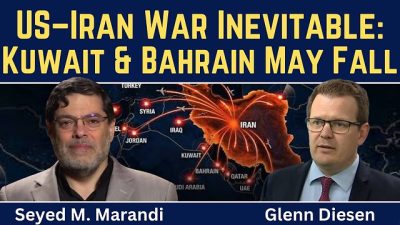
Seyed M. Marandi: US-Iran War Inevitable: Kuwait and Bahrain May Fall
or go to
Aletho News Archives – Video-Images
From the Archives
USS Liberty Massacre: A Pivotal Moment in the Hostile Takeover of America
By Kevin Barrett | Crescent | Dhu al-Qa’dah 24, 1445
In corporate America, hostile takeovers are commonplace. They occur when an aggressor—a larger corporation or rich individuals—seizes control of a smaller corporation without asking permission.
What few recognize is that the United States itself has been subjected to a hostile takeover. Since the aggressor, the illegitimate settler colony known as “Israel,” is much smaller than the US, the takeover has necessarily been surreptitious.
As of June, 2024, Israel’s gradual takeover of the US has become obvious and undeniable—a proverbial “elephant in the living room.” … continue
Blog Roll
 Aletho News
- Seyed M. Marandi: US-Iran War Inevitable: Kuwait and Bahrain May Fall
- Leaders Condemn Ansarallah Attack on Saudi Arabia While Ignoring Illegal War Against Yemen
- Leaked: Britain’s Covert Iraqi Psyops Network
- Yemeni Armed Forces Warn Airlines Against Using Saudi Airports, Exempt Mecca and Medina
- Iran security chief says powers greater than US tried to conquer Iran but ended in ‘dustbin of history’
- Europe’s mounting social chaos… chickens coming home to roost for proxy war against Russia
- US-Russia Diesel Deal Becomes Massive Defeat for Ukraine
- Hormuz and the Looming Economic Catastrophe
- Dhubab offensive, media blitz and the rapid unraveling of Saudi-backed coalition’s new gambit
- Putin Conveys to Trump Iran’s Vision on Possible Conflict Resolution – Kremlin
- If Americans Knew
- Gaza: Ceasefire Anniversary Marks Year of Failed Promises
- The American Conservative: Mike Huckabee Should Resign
- A C-Section in Shackles: A Palestinian Woman’s Harrowing Birth in Israeli Detention
- ‘He’s Desperate’: AIPAC Begins Spending Against Abdul El-Sayed to Boost Mike Rogers:
- Trump, Hormuz, and the Looming Economic Catastrophe
- For three years, Israel has killed a child in Gaza every 71 minutes – Daily Update
- Israeli forces kill another child in Gaza – Daily Update
- Gaza ceasefire exists in name only, say more than 100 organizations
- Nearly 2 Million in Gaza Need Urgent Shelter Assistance as Winter Looms: IOM Chief Warns
- Suppressing Palestinian resistance: US charity under fire for AI monitoring of Gaza classrooms
- No Tricks Zone
- Germany’s Green Energy Debacle: High Energy Costs Force Kahla Porzellan to Close After 182 Years!
- New Study: 50 Years Of The Most Aggressive ‘Net Zero’ Policies Can Only Affect The Global Climate By 0.03°C
- US September “Heat” Was No Record…Many Records Set Decades Ago
- Latest European Green Energy Debacle; Portugal’s Largest Flagship Solar Park Insolvent!
- Green Energy Debacle: German Expert Professor Fritz Vahrenholt Warns Of Severe Economic And Social Consequences
- Two More Paleo Reconstructions Affirm Meters-Higher Sea Levels Across Ireland, Brazil 7000-6000 Years Ago
- New Study: Earth And Venus Surface Warmth Largely Explained By Convection And Lapse Rate, Not CO2 Or Radiation
- 2025 Nature Paper Claiming Worsening Global Drought Gets RETRACTED …Heavily Flawed
- New Study: ‘Global Drought Shows No Detectable Recent Acceleration Under Climate Warming’
- Economic Masterminds: German Socialists Suggest Taxing Productivity Gains Stemming From Using AI

