The major Western mainstream media outlets have been running a “shock and awe” propaganda offensive against the Syrian government of President Bashar Al Assad for nearly 16 months. The misinformation has been unrelenting, monolithic, unverified, one-sided and, frankly, increasingly preposterous.
With the suppression of mounting facts that Western governments are waging a covert war of aggression in Syria, the Western public is right to treat the conventional media sources with skepticism and outright contempt. Such media are seen as “politicized” and “unreliable”, serving a naked imperialist agenda for Western regime change. In a word, they are damaged goods.
This is where a segment of the so-called alternative media can play a valuable propaganda function for Western powers. Because such media are supposed to be independent, critical, non-corporate, the public tends to consider their reports as objective and unbiased. One such “alternative” news service is “Democracy Now” hosted by Amy Goodman. Goodman is seen as something of a campaigning critical journalist shedding the light of truth on the depredations of the US government, corporations and the Pentagon. But a closer look at what Goodman’s “Democracy Now” is reporting on Syria shows that the purported critical broadcaster has become a purveyor of Western government propaganda. While the mainstream media’s propaganda function is obvious to the informed public, Goodman’s “Democracy Now” plays a more subtle role. Camouflaged with the trappings of critical, independent journalism, “Democracy Now” serves to sow powerful seeds of misinformation in a way that the “compromised” mainstream media cannot.
This misinformation from “Democracy Now” is valuable to the ruling elite because to many of its readers it is not seen as misinformation.
Rather, the “news” on “Democracy Now” is viewed as reliable and representing the views of the anti-war, anti-imperialist constituency. In this way, Goodman is a valuable asset to Washington and Wall Street because her broadcasts can serve to disorient and undermine a constituency that is normally opposed to Western warmongering and imperialism. Many of the subscribers to “Democracy Now” may see through the misinformation. Many, though, may not, and therefore will become embedded with the imperialist agenda. The fact that Democracy Now ratings appear to be holding up would indicate that a lot of its followers are oblivious to the insidious effect of such misinformation. As such, Democracy Now is more valuable to the powers-that-be than, say, the New York Times or the Financial Times. “Democracy Now” ensures that the agenda of the powerful becomes infiltrated in a constituency that would otherwise be opposed to that agenda.
First, let’s recap on the mainstream propaganda offensive against Syria.
Since mid-March 2011, when violence was initially reported in that country, the Western mainstream television, radio and press studiously ignored the evidence of covert foreign-backed subversion and terrorism. Instead these outlets have sought to portray the protests as part of the pro-democracy Arab Spring popular movements that were seen in Egypt, Tunisia, Yemen and Bahrain. The mainstream media have run saturation coverage to demonise the government in Damascus as a “brutal, authoritarian regime” that is cracking down mercilessly on its civilian population demanding democratic reforms. The narrative is monolithic in the major media outlets on both sides of the Atlantic. Whether the New York Times, Washington Post, CNN, or the Financial Times, Guardian, Independent, Le Monde, BBC, ITN, the Irish national broadcaster RTE or the Middle East’s much-vaunted Al Jazeera – the “story” on Syria is uncannily uniform. A noble, civilian mass-based movement is being savagely crushed by a tin-eared dictator, so the story goes.
Every possible smear campaign against the Assad government has been indulged in and indeed fabricated. From the alleged killing of innocent civilians by the national armed forces, to the perpetration of massacres by pro-government militias, to self-inflicted car bombs in urban centres by Assad secret services, to the feckless shopping habits of the president’s wife. Russia Today, Press TV, Der Spiegel, the Frankfurter Allgemeine Zeitung, the Vatican News Service (Agenzia Fides), to name a few, have been honorable exceptions in mainstream media journalism for conveying a more accurate picture of what is really happening inside Syria – showing that “protesters” are far from peaceful civilians, and much of the violence is actually stemming from Western, Turkish and Arab-backed mercenaries that have infiltrated the country. As the facts of US and NATO-backed violence in Syria become more transparent and harder to conceal owing to the sheer volume of covert involvement, the Western public has rightly become more skeptical about what the mainstream media outlets are telling them. Indeed, the blatant misinformation and lies that are being sold as journalism is increasingly seen as contemptible.
The Houla massacre on 24 May is a case in point. The BBC and other mainstream media outlets have been shown to be outrageously wrong in their initial rush to blame the atrocity on Syrian government forces when the evidence has slowly emerged that it was most likely the grisly work of Western-backed mercenaries.
It is all the more disquieting when a supposedly informed, alternative news service, Democracy Now, peddles such blatant misinformation – more than six weeks after the massacre occurred and after evidence has been reported that points convincingly to Western-backed perpetrators. On 9 July, Goodman broadcast an interview with Rafif Jouejati, a spokesperson for a Syrian opposition group called the Syrian Local Coordination Committees, based in Washington DC. Despite the mounting evidence of Western, Turkish and Saudi/Qatari covert operations, Goodman gave her guest a free rein to regurgitate the litany of mainstream media calumnies on Syria. Without a hint of scepticism from Goodman, her guest said:
“The bottom line is that the majority of the country is engaged in a popular revolution for freedom, for democracy, for dignity… We have mountains of evidence indicating that [Assad’s] armed forces have been engaged in systematic torture, rampant detentions, massacres across the country.”
Really? The majority of the country engaged in a popular revolution for freedom, democracy and dignity? That sounds more like the fanciful imagination of someone safely based in Washington DC. By contrast, sources in Syria have confirmed that people are terrified by Western-armed gangs running amok in their communities, kidnapping, murdering, evicting families from their homes and burning down business premises. According to the leaked Arab League Observer Mission Report, which had initially been commissioned by the Arab League at Washington’s request:
“In Homs, Idlib and Hama, the Observer Mission witnessed acts of violence being committed against Government forces and civilians that resulted in several deaths and injuries. Examples of those acts include the bombing of a civilian bus, killing eight persons and injuring others, including women and children, and the bombing of a train carrying diesel oil. In another incident in Homs, a police bus was blown up, killing two police officers. A fuel pipeline and some small bridges were also bombed.”
According to the Frankfurter Allgemeine Zeitung (FAZ):
“Those killed were almost exclusively from families belonging to Houla’s Alawi and Shia minorities. Over 90% of Houla’s population are Sunnis. Several dozen members of a family were slaughtered, which had converted from Sunni to Shia Islam. Members of the Shomaliya, an Alawi family, were also killed, as was the family of a Sunni member of the Syrian parliament who is regarded as a collaborator. Immediately following the massacre, the perpetrators are supposed to have filmed their victims and then presented them as Sunni victims in videos posted on the internet.” (Neue Erkenntnisse zu Getöteten von Hula.Abermals Massaker in Syrien, Frankfurter Allgemeine Zeitung, June 7, 2012 translated from the German)
The FAZ report quoted above echoes eyewitness accounts collected from refugees from the Houla region by members of the Monastery of St. James in Qara, Syria. According to monastery sources cited by the Dutch Middle East expert Martin Janssen, armed rebels murdered “entire Alawi families” in the village of Taldo in the Houla region.
Also of significance is the report of Der Spiegel(March 29, 2012) entitled “An Executioner for Syria’s Rebels Tells His Story”. A system of “burial brigades” for those executed confirms an organized process of mass-murder and extra-judicial killings. This single “burial brigade”, according to the executioner’s testimony, was responsible for the arbitrary execution of 350-400 people including “prisoners” and “traitors”. The “traitors” are Sunni civilians within the occupied urban and rural areas, who express their opposition to the rule of terror of the Free Syrian Army (FSA):
“Since last summer, we have executed slightly fewer than 150 men, which represents about 20 percent of our prisoners,” says Abu Rami. … But the executioners of Homs have been busier with traitors within their own ranks than with prisoners of war. “If we catch a Sunni spying, or if a citizen betrays the revolution, we make it quick,” says the fighter. According to Abu Rami, Hussein’s burial brigade has put between 200 and 250 traitors to death since the beginning of the uprising.” (Der Spiegel, March 29, 2012)
The Vatican News Service Agenzia Fides largely confirms that the Western backed “opposition forces” rather than the Al Assad government were responsible for countless atrocities:
“In Homs, called the “martyred city”, “opposition forces have occupied two areas, Diwan Al Bustan and Hamidieh, where there are all the churches and bishoprics,” the Archimandrite told Fides. “The picture for us – he continues – is utter desolation: the church of Mar Elian is half destroyed and that of Our Lady of Peace is still occupied by the rebels. Christian homes are severely damaged due to the fighting and completely emptied of their inhabitants, who fled without taking anything. The area of Hamidieh is still shelter to armed groups independent of each other, heavily armed and bankrolled by Qatar and Saudi Arabia. All Christians (138,000) have fled to Damascus and Lebanon, while others took refuge in the surrounding countryside.
The Syrian soldiers in fact, continue to face foreign fighters, mercenaries Libyans, Lebanese militants from the Gulf, Afghans, Turks. “The Sunni Salafist militants – says the Bishop – continue to commit crimes against civilians, or to recruit fighters with force. The fanatical Sunni extremists are fighting a holy war proudly, especially against the Alawites. When terrorists seek to control the religious identity of a suspect, they ask him to cite the genealogies dating back to Moses. And they ask to recite a prayer that the Alawites removed. The Alawites have no chance to get out alive.” (Agenzia Fides, Vatican News Service, 4 June 2012)
These reports were known to the alternative media. “Democracy Now” chose to ignore them.
Overblown Casualty Figures, Blamed on the Government
Goodman also indulged in the overblown casualty figures from dubious Syrian opposition sources as if they were verifiable accurate data. She even sounded like Hillary Clinton in talking up the “defection” of the hapless former Syrian Brigadier General Manaf Tlass as “significant” when informed sources discount that news as a minor irrelevance.
In the interview between Goodman and her guest (whom sources describe as belonging to a family formerly aligned with the Syrian government), Bashar Al Assad was portrayed as an unhinged leader who is in denial over massacres – massacres, as we have noted, that have most likely been carried out by Western-backed death squads as confirmed by numerous reports.
“I would like to think that we will proceed with full prosecution in the International Criminal Court. I think the longer this issue goes on and the more violence he [Assad] commits, the more likely he will wish to have a fate such as Gaddafi’s.”
Recall that the Libyan leader was lynched on a roadside by a NATO-directed mob, and sodomised with a knife before being shot dead. It may also be recalled that “Democracy Now” gave prominent broadcasts supporting NATO’s intervention in Libya and justifying the criminal subversion of that country. Going by the latest coverage on Syria, Democracy Now is acting once again under a “progressive” cloak as a propaganda tool for US-led imperialist intervention. Given the misplaced respect among many of the public seeking independent, alternative, accurate news and analysis, this insidious role of Democracy Now is reprehensible. May it be suggested, in the name of media transparency, that the programme be aptly renamed “Imperialism Now”.
I was appalled that the U.N. Secretary General, Ban Ki-moon, has decided to attend an international gathering in Iran, despite the vociferous objections of the United States. Mr. Ban can accomplish nothing with this trip beyond hindering efforts to pressure Iran into giving up its nuclear weapons program.
Never mind Mr. Rosenthal’s imperial, we-own-the-world mentality that expects senior officials of international bodies to dutifully adhere to American commands.
What is most surprising is that Rosenthal, who has held his post since 2007 and is a member of the Council on Foreign Relations, apparently doesn’t read his own paper.
Back in January, New York Times Public Editor Arthur Brisbane responded to reader complaints that the paper’s reporting on Iran’s nuclear program was misleading and that “The Times should avoid closing the gap with a shorthand phrase that says the IAEA thinks Iran’s program ‘has a military objective.'”
Brisbane agreed:
I think the readers are correct on this. The Times hasn’t corrected the story but it should because this is a case of when a shorthand phrase doesn’t do justice to a nuanced set of facts. In this case, the distinction between the two [a nuclear energy program and a nuclear weapons program] is important because the Iranian program has emerged as a possible casus belli.
Just days later, National Public Radio‘s ombudsman Edward Schumacher-Matos concurred with this assessment. “Shorthand references are often dangerous in journalism, and listeners are correct to be on the alert for them,” he wrote. “Repeated enough as fact – “Iran’s nuclear weapons program“– they take on a life of their own.” He added that, at the behest of NPR’s Senior Editor for National Security Bruce Auster, “NPR’s policy is to refer in shorthand to Iran’s ‘nuclear program’ and not ‘nuclear weapons program'” and concluded, “This is a correct formula.”
Perhaps Rosenthal could have read the statement by Brisbane and Schumacher-Matos’ counterpart at The Washington Post, ombudsman Patrick B. Pexton, who challenged his own paper’s irresponsible reporting in December 2011, writing that the IAEA “does not say Iran has a bomb, nor does it say it is building one,” and warned that such misleading characterizations of such an important issue “can also play into the hands of those who are seeking further confrontation with Iran.”
Clearly, by expressly ignoring the advice of his own public editor, Andrew Rosenthal – and presumably the editorial page of the most influential newspaper in the country which he runs – has no problem playing into the hands of warmongers. Regrettably, it appears quite clear that he is, in fact, one of them.
“Injustice anywhere is a threat to justice everywhere.”
– Martin Luther King, Jr., April 16, 1963
The rhetoric used in recentspeeches by top Iranian officials has garnered much attention in the mainstream media. In addition to the outrage expressed over the statement that the Israeli governmental system and guiding Zionist ideology is an “insult to humanity,” comments that the “Zionist regime” is a “cancerous tumor” have also met fierce condemnation.
The Israeli Ministry of Foreign Affairs has compiled a list of recent reported statements made by Iranian officials. National Security Council spokesman Tommy Vietor told the press that the United States government “strongly condemn[s] the latest series of offensive and reprehensible comments by senior Iranian officials that are aimed at Israel,” adding, “The entire international community should condemn this hateful and divisive rhetoric.”
Rabbi David Wolpe took to the pages of The Los Angeles Times to specifically condemn the cancer analogy. Wolpe incidentally did so by presenting a litany of outrageous statements of his own. He writes that the “state of Israel” is 3000 years old, thus absurdly conflating an ancientBiblicalminoritycommunity with a modern, settler-colonial nation-state. He insists Israel is notexpansionist, a claim that doesn’tstand up to even the most cursory awareness of basic facts, the historical record and current aggressive Israeli policy.
Wolpe also states that the cancer analogy “leads inevitably, inexorably, to the prospect of genocide,” which he obviously follows up by invoking the Holocaust and asserting that “Iran eagerly pursues nuclear weapons,” thereby ignoring the consistent conclusions of U.S. intelligence and IAEA inspections. He concludes by suggesting that, were Israel not to maintain such a destructive military capability, segregationist occupation infrastructure, rampant legal discrimination, and a two-tiered justice system, the result would be the “wholesale slaughter” of Jewish Israelis, presumably by vengeful Arab hordes.
Such a characterization recalls the ludicrous fears that beset the vast majority of white South Africans just years before Apartheid ended, many of whom were consumed by “physical dread” at the prospect of equality and their loss of racial dominance and superiority and foresaw a future full of “violence, total collapse, expulsion and flight.” Even in 1987, as Apartheid was becoming increasingly untenable, about 75% of white South Africans feared that their “physical safety…would be threatened” as a result of “black rule.” Nearly 73%, including over 85% of Afrikaners, believed “white women would be molested by blacks.” Incidentally, as recently pointed out in Ha’aretz, in 1987, “Israel was the only Western nation that upheld diplomatic ties with South Africa” and was one of the last countries to join the international boycott campaign.
Southern whites in the antebellum United States nurtured the same irrational apprehension, fearful that the violent and successful 1791 slave rebellion in Haiti would be replicated across the Gulf of Mexico, especially in states like South Carolina where slaves outnumbered whites two to one. Following emancipation, and in reaction to the Civil Rights Act of 1866, southern states enacted “black codes” restricting the voting, land ownership, and speech of former slaves. Whites feared that their loss of racial dominance and an enslaved labor force would not only ruin the southern economy, but also that the newly-freed black population would seek revenge on their masters and rape white women; this led to numerous race riots and the rise of the Ku Klux Klan that same year.
In April 1868, Alabama newspaper editor Ryland Randolph praised the Klan for opposing what he called the “galling despotism” of the federal government over the southern states, which he “deemed a fungus growth of military tyranny” with the goal of “degrad[ing] the white man by the establishment of negro supremacy.”
Forrest G. Wood writes in Black Scare: The Racist Response to Emancipation and Reconstruction:
Although white men certainly feared for their jobs and income, they were more alarmed by the threat to their physical safety that the “savage African” presented… Pointing to the absence of an advanced (by Western standards) African civilization, extremists described the Negroes as primitive, barbaric, and cruel… Freedom, the white supremacist now asserted, would stimulate the black man’s worst passions, leading him to crimes of arson, murder, and rape.
Newspapers often deliberately published grossly exaggerated or wholly fictitious stories of criminal acts and violence committed by blacks, stoking even more fear in the racist white population. For these white supremacists, rape was “the most frightful crime which negroes commit against white people” and the accusation of sexual assault (or even consensual interracial relationships) was a surefire way to spark a lynch mob.
Just this past Spring, Israel’s Interior Minister Eli Yishai said that many Israeli women have been raped by African migrants and refugees, “but do not complain out of fear of being stigmatized as having contracted AIDS,” insisting that “most of the African infiltrators are criminals.” At an anti-African rally, Tel Aviv resident Carmela Rosner held a sign that read: “They rape girls and elderly women, murder, steal, stab, burglarize. We’re afraid to leave home.”
Yishai said that Africans, “along with the Palestinians, will bring a quick end to the Zionist dream,” while Israeli Prime Minister Benjamin Netanyahu warned that the growing population of African immigrants “threatens our existence as a Jewish and democratic state,” as well as “the social fabric of society, our national security and our national identity.” Palestinians in Israel along with their actual and potential offspring are regularly referred to as a “demographic threat” and a “demographic bomb,” a racist construction that exposes the discriminatory and supremacist nature of Zionism itself.
The Israeli Education Ministry is currently attempting to overturn a district court ruling that “migrant children… be fully integrated in the municipal school system and not be taught in a separate school.” The state appeal in favor of segregation claims that the education of Israeli children will suffer if done alongside the children of African immigrants. Meanwhile, extremist Jewish groups continue to try to “rescue” Jewish Israeli girls who date Palestinian men and threaten Palestinians with violence if they flirt with Jews.
In 2008, a Jewish Israeli woman filed a police report after discovering that a man she had just had consensual sex with was Palestinian and not Jewish, as she had assumed. After spending two years under house arrest, an Israeli court convicted the man of “rape by deception” and sentenced him to 18 months in prison. A former senior Justice Ministry official was quoted as saying, “In the context of Israeli society, you can see that some women would feel very strongly that they had been violated by someone who says he is Jewish but is not.”
This is to be expected, as The Palestine Center‘s Yousef Munayyer explains: “An ideology that seeks to build a society around a certain type of people defined by ethnicity or religion is inevitably going to feature racism, supremacy and oppression—especially when the vast majority of native inhabitants where such an ideology is implemented are unwelcomed.”
Unsurprisingly, commentators who routinely denounce cancer analogies when they come from Iranian officials blatantly avoid addressing the use of the identical rhetoric by Israelis themselves when referring to the growingpresence of non-Jewish communities within areas controlled by Israel. When IDF chief Moshe Ya’alon referred to Palestinian babies as “cancerous manifestations” and Likud Knesset member Miri Regev called African migrants and refugees “a cancer in our body,” they were silent.
While calling the government and founding ideology of a state a “cancerous tumor” is certainly not a nice thing to say and supporters of that state’s policies have every reason to take offense to such a description, it is quite obviously a political statement. Iranian rhetoric attacks a political entity, namely the “Zionist regime“, which systematically discriminates against and oppresses people based solely on their ancestry and religious affiliation. In contrast, Ya’alon and Regev’s statements employ the cancer analogy to defend the concept of ethnic-religious exclusivity and have everything to do with people, whether Palestinian or African, who somehow threaten the continued dominance of a deliberately demographically engineered and maintained state.
To be sure, regardless of its intended target, this kind of rhetoric is purposefully harsh and often gratuitous. Yet, like Ahmadinejad’s “insult to humanity” line, the cancer analogy is neither new nor original. While Iranian officials have been employing it since 2000, it has long been wielded for the express purpose of condemning a political system or ideology one vehemently opposes.
In the 1820s, former president John Adams wrote to Thomas Jefferson that “slavery is a cancer to be isolated.” On October 16, 1854, in an stridently abolitionist speech in Peoria, Illinois, Abraham Lincoln likened the Constitution’s vague references to slavery to a “cancer,” hidden away, which an “afflicted man… dares not cut out at once, lest he bleed to death; with the promise, nevertheless, that the cutting may begin at the end of a given time.”
A New York Times article from September 8, 1863 quoted then-Tennessee Governor Andrew Johnson as telling a Nashville crowd in late August, “Slavery is a cancer on our society, and the scalpel of the statesman should be used not simply to pare away the exterior and leave the roots to propagate the disease anew, but to remove it altogether.” Johnson endorsed the “total eradication” of slavery from Tennessee.
In the final chapter of the first volume of Das Kapital (1867), entitled “The Modern Theory of Colonization,” Karl Marx excoriated British politician Edward Gibbon Wakefield for his efforts “to heal the anti-capitalistic cancer of the colonies.”
The 1968 platform of Bermuda’s first political party, the Progressive Labor Party, proclaimed, “No government can be either responsible or democratic while under the rule of another country, ” adding, “Colonialism is a cancer.”
A February 23, 1962 article in Time Magazine profiled U.S. General Paul Donal Harkins, the commander of a newly created U.S. Military Assistance Command in South Vietnam, which is described as “the first step in a more broadly based anti-Communist campaign.” Harkins is quoted early in the piece as defining his mission as “doing all we can to support the South Vietnamese efforts to eradicate the cancer of Communism.”
In early June 1983, just a few months after Ronald Reagan delivered his “Evil Empire” speech in which he declared his belief that “Communism is another sad, bizarre chapter in human history whose last pages even now are being written,” Illinois Representative Henry Hyde told the House Foreign Affairs Committee that, because “Communism is a cancer,” Congress should support covert action and assistance to Contras and anti-Sandinista forces in Latin America in an effort to “fight for freedom.”
Hamas reportedly used “Communism is a cancer inside the nation’s body and we will cut it out” as a political slogan in opposition to Fatah soon after its establishment in the late 1980s.
Perhaps most applicable, however, are the comments made by South African Reverend Allan Boesak who, in 1983, formed the United Democratic Front, a legal umbrella organization for hundreds of anti-Apartheid groups. In his opening address to the UDF, Boesak stated:
Apartheid is a cancer on the body politic of the world. A scourge on our society and on all human kind. Apartheid exists only because of economic greed and political oppression maintained by both systemic and physical violence and a false sense of racial superiority. So many have been forced into exile. So many have been thrown into jail. Too many of our children have been shot down mercilessly on the streets of our nation.
In the same speech, Boesak called Apartheid “a thoroughly evil system” that “can never be modernized or modified, it must be totally eradicated” and, in 1985, denounced the white South Africans who continued to support Apartheid as the “spiritual children of Adolf Hitler.”
In 1988, Jim Murray echoed Boesak in the Los Angeles Times,writing that “apartheid is a cancer on the world body politic–to say nothing of its soul. You combat it the best way you can.”
Just as many others, including numerous Israelis, have described the state of Israel as practicing Apartheid, Boesak himself has endorsed such a comparison, and has gone even further.
In a November 2011 interview, Boesak reaffirmed his statement that the oppression of and discrimination against Palestinians by Israel is “in its practical manifestation even worse than South African apartheid,” adding, “It is worse, not in the sense that apartheid was not an absolutely terrifying system in South Africa, but in the ways in which the Israelis have taken the apartheid system and perfected it, so to speak; sharpened it.”
He cited the physical barriers, travel and employment restrictions, and the “two separate justice systems” for Palestinians and Israelis in the West Bank as examples of why “in many ways the Israeli system is worse.” He offered his wholehearted support for the Palestinian civil society call for boycott, divestment, and sanctions to impel Israel to comply with international law.
When asked whether Palestinians could ever be expected to recognize Israel as a “Jewish State,” Boesak replied:
They can’t. There is no such thing as a specifically Jewish state. You can’t proclaim a Jewish state over the heads and the bodies and the memories of the people who are the ancient people who live there. That is Palestinian land we are talking about. Most of the Jews who are there come from Europe and elsewhere and have no claim on that land and we mustn’t allow it to happen to the Palestinians what happened to my ancestors who were the original people in this land (South Africa) but now there are hardly enough of them to be counted in the census. That is Palestinian land and that should be the point of departure in every political discussion.
Similarly, official Iranian state policy maintains that the international community must “allow the Palestinian nation to decide its own future, to have the right to self-determination for itself” and that in “the spirit of the Charter of the United Nations and the fundamental principles enshrined in it… Jewish Palestinians, Muslim Palestinians and Christian Palestinians [must] determine their own fate themselves through a free referendum. Whatever they choose as a nation, everybody should accept and respect.”
Hysteria over Iranian phraseology (rhetoric with a long political history) relies solely on the presumption – repeated ad nauseum by politicians and the press – that the nation’s leadership has threatened to attack Israel militarily and wipe it off the map. But Iran has never made such threats. Quite the contrary.
Speaking to Wolf Blitzer in April 2006, Iran’s representative to the IAEA, Ali Ashgar Soltanieh directly addressed claims that Iran seeks the physical destruction of Israel (whatever that means). Blitzer asked, “Should there be a state of Israel?,” to which Soltanieh replied, “If Israel is a synonym and will give the indication of Zionist mentality, no. But if you are going to conclude that we have said the people there have to be removed or they have to be massacred, this is a fabricated, unfortunate selective approach to what the mentality and policy of Islamic Republic of Iran is.”
In a June 2006 letter to The Washington Post, a spokesman for the Iranian Mission to the United Nations wrote, “Iran’s position is very clear: We have not threatened to use force nor have we used force against any country or government in the past 250 years. We’ve never done that in the past, and we’ll never do it in the future,” adding, “We wonder whether Israel or the United States can make the same statement.”
The letter also noted that, the same month, Iranian leader Ayatollah Ali Khamenei declared that “We have no problem with the world. We are not a threat whatsoever to the world, and the world knows it. We will never start a war. We have no intention of going to war with any state.”
In October 2006, President Ahmadinejad stated, “Nuclear weapons have no place in Iran’s defense doctrine and Iran is not a threat to any country… We are not a threat to anybody; even our solution to the Zionist regime is a referendum.” The following year, Ahmadinejad was asked by the Associated Press whether Iran “would ever make a first strike against Israel.” He replied, “Iran will not attack any country,” and insisted Iran has “always maintained a defensive policy, not an offensive one” and has no interest in territorial expansion, something Israel could never seriously claim.
In a 2008 CNN interview with Larry King, Ahmadinejad stated bluntly that “we don’t have a problem with the Jewish people,” and added, with specific reference to Israel, “We are opposed to the idea that the people who live there should be thrown into the sea or be burnt.”
The same year, at a news conference during the D8 Summit in Kuala Lumpur, Ahmadinejad told reporters that because he believes the Zionist enterprise of ethnic cleansing and colonization is “inherently doomed” to failure, “there is no need for Iranians to take action” to hasten the inevitable political outcome in Palestine. He also assured the press, “You should not be concerned about a new war.”
He also made his position clear in an NPR interview, saying, “Let me create an analogy here — where exactly is the Soviet Union today? It did disappear — but exactly how? It was through the vote of its own people. So therefore in Palestine too we must allow the people, the Palestinians, to determine their own future.”
During an October 2011 interview, Ahmadinejad told Al Jazeera that Iran “will never enter any war against the U.S. or against any other country. This is our policy… We have never attacked anybody. Why should we do that? Why should we start a war?”
This past July, Mohammad Khazaee, Iran’s ambassador to the United Nations said, “We will react if there is any provocative act from the other side. We will not initiate any provocative steps.”
Officialassessments by both Director of National Intelligence James Clapper and Lieutenant General Ronald Burgess, Director of Defense Intelligence Agency have affirmed that “Iran is unlikely to initiate or intentionally provoke a conflict or launch a preemptive attack.”
The alarmism that inevitably follows boilerplate speeches by Iranian officials serves an agenda of decontextualized demonization that paints the Islamic Republic as a genocidal, eliminationist aggressor and Israel as a victim, just one spinning centrifuge away from eradication. In fact, it is Israel that consistentlythreatensIran with an illegalmilitaryassault, not the other way around.
But it is not a military attack that actually threatens the future of Israel, it is exactly the kind of struggle undertaken by those like Allen Boesak, who fought against an unjust system of ethnocentrism and supremacy and prevailed.
Were Israel to finally respect international law, put an end to decades of racism, occupation and Apartheid, and begin to consider each and every human being as equal and worthy of the same human rights and dignity, freedom of movement and opportunity, it would no longer be subject to the harsh analogies that have for so long been directed at the most oppressive and inhumane ideologies the world has ever known.
Israeli media and press circles were predicting an all-out civil war in Lebanon this week as fighting continues to rage in the northern Lebanese city of Tripoli.
The violence in the port city has so far killed 15 people, including women, children and religious leaders.
“The Syrian civil war has indeed and unprecedentedly infiltrated into Lebanon, and this time it appears to last. It will not stop so long as the Syrian crisis continues,” Channel 10 of Israeli news quoted unnamed Israeli political sources as saying.
“The fall of Assad’s regime would lead to a new era in Lebanon which will fluctuate between civil war and semi-stable security,” the source added.
It’s an oft-repeated prophecy told by Israeli politicians, particularly since the assassination of Lebanese political giant Rafik Hariri in 2005, which propelled the country into sporadic bouts of turmoil.
Lebanon’s civil war of 1975 to 1990 provided fertile ground for Israeli intervention, with the Jewish state invading the country from 1978 until well after the civil war in 2000. The Israeli occupation covered half the state at its peak in 1982.
A new study released by the National Security Studies Center in Tel Aviv concluded that “it would be inaccurate to consider that Lebanon survived the Arab spring, and regional shifts have definitely taken their toll on the country”.
Noting that Syrian events “which are unlikely to end any time soon, affect Lebanon negatively on many levels including economy, security and national unity”.
“The fall of Assad’s regime would certainly weigh heavily on Lebanon, since the departure of Assad and his group from the political scene would reshape the political map in Lebanon, and give those who led the Cedar Revolution, new-found strength and confidence,” the study added. … Full article
On August 17, America’s two leading newspapers featured strikingly similar opinion pieces, providing further evidence of a coordinated effort by Israel and its American partisans to induce the United States into waging another disastrous Middle East war. In the Washington Post, former chief of Israeli military intelligence Amos Yadlin helpfully suggested “5 steps Obama can take to avert a strike on Iran”; while President Obama’s former top Middle East advisor Dennis Ross advised readers of the New York Times “How America Can Slow Israel’s March to War.” Perhaps the most notable difference between the two op-eds was that the latter proposed a mere four steps Washington supposedly needs to take in order to appease the allegedly trigger-happy Israelis.
Yadlin and Ross both begin by citing recent Israeli statements such as Benjamin Netanyahu’s warning that “Time to resolve this issue peacefully is running out,” conveying the impression that Tel Aviv’s patience with diplomacy is wearing thin, and that, as a consequence, this autumn, as Yadlin put it, “all the boxes will be checked for an Israeli attack on Iran’s nuclear facilities.” Three months ago, Ross admitted during a panel discussion with Yadlin on “U.S.-Israel Relations in a Changing Middle East” at a conference held by the Washington Institute for Near East Policy, where he is now a counselor, that such alarmist public pronouncements by Israeli officials should be understood not as an indication of the Jewish state’s likelihood to strike the Islamic Republic but as a ploy “to motivate the rest of the world to act.” Now, however, he confidently asserts: “The words of Israeli leaders are signaling not just increasing impatience with the pace of diplomacy but also Israel’s growing readiness to act militarily on its own against Iranian nuclear facilities.”
Both op-ed contributors also make it a point to stress that the United States shares Israel’s strategic goal of preventing Iran from acquiring nuclear weapons capability, while noting that they only differ over, in the words of Yadlin, “the timeline for possible military action against Iran.” Like the former Israeli intelligence chief, Ross touts Israeli Defense Minister Ehud Barak’s “zone of immunity” argument that Israel must act while Iran’s nuclear facilities are still vulnerable to an Israeli military strike.
Framing their arguments as attempts to prevent, or at least postpone, an Israeli attack, Yadlin and Ross offer, respectively, their five- and four-point plans for “peace.” Yadlin, currently director of Israel’s Institute for National Security Studies, urges the Obama administration to take “five immediate steps to convince allies and adversaries alike that military action is real, imminent and doable,” which he assures are “key to making it less likely”:
First, Obama should notify the U.S. Congress in writing that he reserves the right to use military force to prevent Iran’s acquisition of a military nuclear capability. This would show the president’s resolve, and congressional support for such a measure is likely to be strong. Forty-four senators signed a bipartisan letter to Obama in June, urging him to “reevaluate the utility of further talks at this time” and focus instead on sanctions and “making clear that a credible military option exists.”
Second, Washington should signal its intentions via a heightened U.S. military presence in the gulf, military exercises with Middle East allies and missile defense deployment in the region. Media coverage of these actions should be encouraged.
Third, Washington should provide advanced military technology and intelligence to strengthen Israel’s military capabilities and extend the window in which Israel can mortally wound Iran’s program. This support would be contingent on Israeli pledges to give sanctions and diplomacy more time to work.
Fourth, U.S. officials should speak publicly about the dangers of possible Iranian nuclear reconstitution in the wake of a military strike. Perhaps the most cogent argument against a unilateral Israeli strike is that it would quickly lead to the disintegration of Western sanctions. Without the inhibitions of a sanctions regime, Iran could quickly reconstitute its nuclear program — this time bunkered entirely underground to protect against aerial strikes. If Iran sees military action by Israel or the West as an absolute end to its nuclear ambitions, it will be more reluctant to risk things.
Fifth, Obama should publicly commit to the security of U.S. allies in the gulf. This would reassure jittery friends in the region and credibly anchor the U.S. last-resort military option to three powerful interests: U.S. national security, Israeli security and the security of allied states.
Living up to his reputation as a reliable “advocate” for Israel, Ross presents his remarkably similar four-step plan which he claims is necessary in order “to extend the clock from an Israeli standpoint” as well as “to synchronize the American and Israeli clocks so that we really can exhaust diplomacy and sanctions before resorting to force”:
First, the United States must put an endgame proposal on the table that would allow Iran to have civil nuclear power but with restrictions that would preclude it from having a breakout nuclear capability — the ability to weaponize its nuclear program rapidly at a time of Tehran’s choosing. Making such a proposal would clarify whether a genuine deal was possible and would convey to Israel that the American approach to negotiations was not open-ended.
Second, America should begin discussions with the permanent members of the United Nations Security Council and Germany (the so-called P5+1) about a “day after” strategy in the event that diplomacy fails and force is used. This would signal to both Israel and Iran that we mean what we say about all options being on the table.
Third, senior American officials should ask Israeli leaders if there are military capabilities we could provide them with — like additional bunker-busting bombs, tankers for refueling aircraft and targeting information — that would extend the clock for them.
And finally, the White House should ask Mr. Netanyahu what sort of support he would need from the United States if he chose to use force — for example, resupply of weapons, munitions, spare parts, military and diplomatic backing, and help in terms of dealing with unexpected contingencies. The United States should be prepared to make firm commitments in all these areas now in return for Israel’s agreement to postpone any attack until next year — a delay that could be used to exhaust diplomatic options and lay the groundwork for military action if diplomacy failed.
While noting that these proposals may be seen as making war more likely next year, Ross claims “they are almost certainly needed now in order to give Israel’s leaders a reason to wait.” Similarly, Yadlin argues that “if the United States wants Israel to give sanctions and diplomacy more time, Israelis must know that they will not be left high and dry if these options fail.”
“A long-standing principle of Israeli defense doctrine,” Yadlin asserts, “is that it will never ask the United States to fight for it.” While it may be technically true that Tel Aviv never directly asks Washington to dispose of regional rivals on its behalf, these two op-eds attest that the Jewish state has more subtle ways of inducing America to do its dirty work for it.
There’s an interesting Politico story (8/22/12) about Andrea Seabrook, who until recently was a Capitol Hill reporter for NPR. She’s moved on to a new independent reporting project, but it’s what she said about her previous gig that’s most revealing:
“I realized that there is a part of covering Congress, if you’re doing daily coverage, that is actually sort of colluding with the politicians themselves because so much of what I was doing was actually recording and playing what they say or repeating what they say,” Seabrook told POLITICO. “And I feel like the real story of Congress right now is very much removed from any of that, from the sort of theater of the policy debate in Congress, and it has become such a complete theater that none of it is real…. I feel like I am, as a reporter in the Capitol, lied to every day, all day. There is so little genuine discussion going on with the reporters…. To me, as a reporter, everything is spin.”
She says her new web-based project will try to “decipher Washington’s Byzantine language and procedure, sweeping away what doesn’t matter so listeners can focus on what does.”
Seabrook seems pretty clear that the problem isn’t the media: “I think the problem is the Congress itself. And we’re all in the same positions, scrambling to figure out how the hell to cover these a*sholes.”
So if a reporter is covering politicians who are lying to her every single day, what is preventing that reporter from saying as much? Why just repeat the lies?
The crystal clear implication here is that, for whatever reason, an NPR journalist doesn’t feel comfortable challenging lies and spin. It’s a pretty important admission, and one that NPR listeners–and management– should think about.
The BBC has sensationally censored a news story and a video showing Syrian rebels forcing a prisoner to become a suicide bomber, a war crime under the Geneva Conventions, presumably because it reflected badly on establishment media efforts to portray the FSA as glorious freedom fighters.
The video, a copy of which can be viewed above (the original BBC version was deleted), shows Free Syrian Army rebels preparing a bomb that is loaded onto the back of a truck to be detonated at a government checkpoint in the city of Aleppo.
The clip explains how the rebels have commandeered an apartment belonging to a Syrian police captain. The rebels are seen sneering at photos of the police captain’s family while they proclaim, “Look at their freedom, look how good it is,” while hypocritically enjoying the luxury of the man’s swimming pool.
The video then shows a prisoner who the rebels claim belonged to a pro-government militia. Bruises from torture on the prisoner’s body are explained away as having been metered out by the man’s previous captors. The BBC commentary emphasizes how well the rebels are treating the man, showing them handing him a cigarette.
However, the man has been tricked into thinking he is part of a prisoner exchange program when in reality he is being set up as an unwitting suicide bomber. The prisoner is blindfolded and told to drive the truck towards a government checkpoint.
“What he doesn’t know is that the truck is the one that’s been rigged with a 300 kilo bomb,” states the narrator.
The clip then shows rebels returning disappointed after it’s revealed that the remote detonator failed and the bomb did not explode.
The BBC narrator admits that forcing prisoners to become suicide bombers “would certainly be considered a war crime.”
New York Times reporters who shot the video claim they had no knowledge of the plot. A longer version of the clip is posted on the New York Times You Tube channel. The title of the clip glorifies the rebel fighters as “The Lions of Tawhid”.
Within hours of the story being published, it was subsequently sent down the memory by the BBC. Attempts to reach the original article URL are greeted with a 404 Not Found page.
In addition, a You Tube version of the same video originally posted on the official BBC News 2012 channel was also removed. Although the You Tube page for the video states that it was removed after a “copyright claim by British Broadcasting Corporation” this is a bogus reason, because the video was not uploaded by a third party, it was posted on the official BBC channel, as the screenshot below proves.
“Copyright claim” is a bogus reason for the video’s removal because it originally appeared on the official BBC News Channel, and was not uploaded by a third party.
It seems clear that the only reason for the video to be removed would be because senior BBC news editors felt the story reflected badly on the propaganda campaign to characterize the Syrian rebels as venerable and proud freedom fighters, when in reality as we have documented they have been guilty of massacres, kidnappings, torture and other acts of brutality.
In addition, the fact that the rebels, under the direction of Al-Qaeda fighters, are building bombs and carrying out terrorist attacks is something the NATO-aligned media is keen not to emphasize.
This is by no means the first time the BBC has been caught manipulating the news in an effort to propagandize for western military involvement in Syria.
Back in May we exposed how the BBC has used a years-old photo of dead Iraqi children to depict victims of an alleged government assault in the town of Houla.
The photographer who took the original picture, Marco Di Lauro, posted on his Facebook page, “Somebody is using my images as a propaganda against the Syrian government to prove the massacre.” Di Lauro told the London Telegraph he was “astonished” the BBC had failed to check to authenticity of the image.
Should the copy at the top of this article also be deleted, an alternate version of the BBC video with added commentary under fair use is embedded below.
TEHRAN – Foreign Ministry spokesman Ramin Mehmanparast emphatically rejected claims on Sunday that Iran engineered a series of suicide bomb attacks earlier this week that killed at least 28 people in Afghanistan.
Afghanistan’s spy agency, the National Directorate of Security (NDS), killed two alleged insurgents and detained three more this week for what they said was their involvement in the bombings this week in Afghanistan’s Nimroz province.
The NDS claimed the five were Iranian citizens, and that they had been trained for suicide bomb missions in Iran, which borders Afghanistan to its west.
World champions in arbitrary detention, the United States and the European Union, are now behind a campaign to free a person convicted for drug trafficking in Nicaragua. The US is notorious for its prisons at Guantanamo and Abu Ghraib and for its global network of secret detention centers. Its overseas accomplice, the EU, is also notorious, for having collaborated in setting up that network as well as for its own detention centers wherein tens of thousands of undocumented immigrants languish. Their support for the Puracal campaign is just one more political ploy, another clear example of the US-EU tandem at work to co-opt and corrupt the entire international human rights system.
“Midnight Express” in Central America
On August 2011, U.S. citizen Jason Puracal Zachary was convicted in a Nicaraguan Court of Justice to 22 years in prison for narcotics trafficking and money laundering along with 10 Nicaraguans, also sentenced to long prison terms.
Nine months earlier, Puracal’s home and office had been raided by Nicaraguan authorities without a warrant, an extraordinary procedure permitted in the country’s criminal code for serious cases in which there is suspicion that the investigation risks having evidence destroyed or concealed. Using the latest technology (provided, incidentally, by the United States) traces of narcotics were found in Puracal’s vehicle along with extensive documentation supporting the investigation, which the Nicaraguan judicial authorities argue justifies the charges against him and the other members of the network in which he participated.
As a U.S. national, Puracal has appealed the sentence and hearings begin this week in the district appeals court in Granada.
Jason Puracal is a former Peace Corps volunteer for the United States in Nicaragua. After having met and married a Nicaraguan, he decided to stay in the country, buying a real estate franchise after his volunteer service tour ended. His arrest has led to an unprecedented international campaign in the form of a petition organized in favour of his release which has gathered more than 90 thousand signatures on the internet.
The sentiment is understandable given the ease with which the situation can be turned into a parallel of the famous film Midnight Express (1978), by Alan Parker, from the screenplay by Oliver Stone. In the film, an American drugs trafficker is sentenced to 30 years in a Turkish prison. Over the decades the film, based on a true story, has become a classic of Islamophobia with all the clichés that portray countries of the non-Western “periphery” as lawless places where whites are exposed to all kinds of torture, including sexual abuse, at the hands of corrupt, ruthless and unpredictable locals. After years of enduring inhumane conditions and abandoning all hope of support from the U.S. government, Billy Hayes, the film’s protagonist, decides to escape from prison on his own.
Puracal’s case has been supported by groups in U.S. such as the Innocence Project and has received support from such influential persons as the former director of the U.S. Drug Enforcement Agency (DEA) Tom Cash (who helped prosecute Colombian narcotics kingpin Pablo Escobar) and Irwin Cotler, former Canadian justice minister and Attorney General. Cotler wrote an inflammatory letter to Nicaraguan President Daniel Ortega referring to the Puracal case as one of “arbitrary detention” and “a serious abuse of justice”, according to Nicaragua Dispatch. Even the supposedly prestigious UN Working Group on Arbitrary Detentions recommends the “immediate release” of Jason Puracal.
According to the version of events put forward by the defenders of Puracal, Puracal’s rights were violated by Nicaraguan authorities in their failure to produce a search warrant when entering his home and business office. They also argue that he was denied the right to a proper defense and that his prison sentence is longer than Nicaraguan law allows. Finally they allege that he has been forced to live with seven other prisoners in the same cell, and that at one point he suffered burns from a water kettle used in the prison.
All of these allegations have been rejected outright by the President of the Court of Appeal, Dr. Norman Miranda Castillo, who in turn accused the U.S. Embassy in Managua of interfering in the course of Nicaraguan justice.
“Responsibility to Protect” the Narcos
This past May 24, the Secretary for the UN’s Working Group on Arbitrary Detentions, Miguel De la Lama, sent a letter in response to a request by Jared Genser, on behalf of the “non-profit organization” Perseus Strategies LLC. In the letter, Lama informs Genser that the Working Group on Arbitrary Detention in its sixty-third session issued a “text of opinion”, number 10/2012 on Puracal.
The Working Group on Arbitrary Detention was established by Resolution 1991/42 of the now superseded UN Commission on Human Rights, among other things to investigate cases of arbitrary detention inconsistent with the Universal Declaration of Human Rights, a task that according to the United Nations should be carried out “with discretion, objectivity and independence.”
The “text of opinion“, sent by the UN Group to the Government of Nicaragua, clarifies that the human rights body cannot comment on the charges against Puracal, nor about the evidence presented against him by the State of Nicaragua. However, given that the Nicaraguan government did not respond to the allegations made by the group within the stipulated period of two months, the Council recommended Puracal’s immediate release, and for a new trial to be conducted if deemed necessary, along with with an indemnity to Puracal for alleged damage to his person. Clearly, this letter from the UN body immediately became a powerful media weapon.
The Working Group’s members are Malick El Hadji Sow from Senegal, Shaheen Sardar Ali from Pakistan, Roberto Garreton of Chile, Mads Andenas from Norway and Vladimir Tochilovsky, from the Ukraine. It is not difficult to discern the influence of the European Union and NATO prevalent in this UN Working Group.
The Working Group chairman Malick Sow, is a Supreme Court judge in Senegal, a strong regional ally of France and a country lauded as a “strong and stable democracy” by the European Union. Senegal ranks 155th of the 169 countries that make up the Human Development Index, and is heavily reliant on EU aid, which exceeds 10% of the national budget. Meanwhile, the Working Group’s Pakistani vice-president is actually a law professor at the University of Warwick in England and at the University of Oslo, in Norway. It is hardly possible to expect actions deviating from the official line by a Chilean representative who, although a recognized human rights defender during the Pinochet era, today represents a state that practices arbitrary detention of indigenous Mapuche of all ages, as if it were a sport. Nor can one expect independent action from a Ukrainian trial lawyer involved in the first stages of organizing the International Criminal Court, widely criticized for its bias against any head of State identified by Washington as an enemy, and for its reluctance to investigate the crimes by allies of the White House.
Lastly, the Norwegian, Andenas is, like the Pakistani Shaheen Ali, a professor at the University of Oslo’s Law Faculty, but he has also been a member of the board of a very exclusive organization, the Association of Human Rights Institutes (AHRI) of the European Union. This group, funded by the European Cooperation in Science and Technology (COST) organization, brings together some 41 universities in Europe to conduct research in the area of human rights. In December 2010, with funding from COST, AHRI conducted the seminar “International Criminal Court and the Responsibility to Protect – Synergies and Tensions.” One of the seminar themes was the suggestive name of “The Way Ahead”, a “discussion of the ways in which the “international community could coordinate their future actions” to implement the doctrine known as R2P.
The Responsibility to Protect, or R2P, is an idea that NATO countries have been promoting for several years within the United Nations. The basic concept of R2P is that when a state fails to protect its population, either deliberately or through being unable to, it is the responsibility of the “entire international community” to intervene, even when this is in contradiction with one of fundamental principles of the United Nations: non-interference in the internal affairs of other States. At the UN World Summit in September 2005, a majority of member states, under pressure from NATO countries accepted the idea of R2P in principle, but recommended a more extensive discussion of the topic. Little more than five years later, that doctrine would be put into practice by NATO forces through a war of aggression against the Libyan people.
Within the stretch of a few days in March 2011, Soliman Bouchuiguir of the Libyan League for Human Rights (LLHR) released a statement to an assembly of more than 70 NGOs for the 15th Special Session of the UN’s Human Rights Council beginning February 25, 2011. The session for the first time in its history decided to expel a member state, Libya, for alleged bombings against its civilian population. A few weeks later would mark the beginning of a NATO slaughter against the North African country.
“To be honest, it’s was not a very difficult undertaking because all these NGOs are known to each other (…) and finally, the session of the UN Human Rights Council made it all come together in Geneva, and so the statement was launched, signed by all members,” said Bouchuiguir interviewed for the documentary film “The Humanitarian War”, directed by Julien Teil.
The figures that Bouchuiguir convinced the other members of the Council of were shocking: March 17, 2011, reported 6,000 dead, 12,000 wounded, 500 missing, 700 rapes and 75,000 refugees. Just two weeks later, Bouchuiguir spoke of 18,000 dead, 46,000 wounded, 28,000 missing, 1600 sexual assaults. It was these figures that were used to justify the “no fly zone” and NATO bombing that resulted in a veritable slaughter. All these figures were invented.
Remember that on March 2, the Joint Chiefs of Staff of the U.S., Mike Mullen, testified before Congress: “we could not confirm that Libyan planes had opened fire on their own population.” Around the same time, the Russian Joint Chief of Staff reported that satellite monitoring over Libyan territory since the crisis’ beginning in mid-February, failed to detect any kind of bombing.
“There is no way to do it”, replied Bouchuiguir to Teil’s question about how to check whether the figures he had given the UN were true. “The Libyan government never, ever, gives information on human rights (…) so you have to do an estimate,” he said. “… his information (on the number of civilian casualties in Libya) I did not receive from just anyone. I received it from The Libyan Prime Minister – on the other side,” added Bouchuiguir referring to the National Transitional Council (NTC) sponsored by the so-called “rebels” in turn supported by NATO.
“It was Mr. Mahmoud… of the tribe Warfallah. It was he who gave me these figures. I used them, though with some caution,” he adds. Bouchuiguir was referring to Mahmoud Jibril, the “Prime Minister” of the “Libyan rebels” designated by NATO and the CIA.
Ali Zeidan, introduced in early March as the LLHR spokesman, would also become spokesman for the NTC. Later, when pressed by Teil, Bouchuiguir recognized that several members of the NTC were also members of the above mentioned “human rights” organization. “You know, these people in the government (the NTC), we are all part of the same group! They are members of the Libyan League for Human Rights! The Minister of Information, for example, the Education Minister, the Minister for Oil, the Finance Minister, all are members of our league! … None occupy positions of responsibility, but are members of our league,” he explains.
The true scale of the slaughter committed against the Libyan people may some day be known. For now, though, through some heavily embellished figures from NATO itself, detailing the use of 7,700 missiles and bombs on some more than 10,000 flights, one can get an idea, one that would very probably pale against the horror of the true facts. As long as those in charge of the task of counting the bodies on the ground continue to show the same unethical behaviour as individuals such as Bouchuiguir Soliman and the officials of the 70 “human rights” NGOs – who without even thinking voted so that others would execute their “responsibility to bomb” the Libyan people – the truth may never be known, simply because there are interests to ensure it never does.
All this begs the question: If these kinds of humanitarian bureaucrats have no qualms about inventing a genocide so as to sanction their own genocide in accordance with the interests of Western powers, why would they refrain from demanding the release of a convicted drug dealer like Jason Puracal?
What are the chances that the UN Working Group will deal seriously with these issues? None whatsoever, because its members are totally supportive of countries that are known human rights violators. Israel, arguably the closest ally of the United States, and it’s largest recipient of military aid, is also a de facto member of the European Union under generous trade and other agreements of cooperation and association.
Rising stars
Nothing happens spontaneously in the corrupt world of institutional “human rights”, controlled by NATO. As an example, one should ask, who is the person charged with requesting the UN Working Group to investigate the case of Jason Puracal?
Jared Genser, named by the National Law Journal as one of the “40 rising stars under 40 in Washington”, is the manager of Perseus Strategies, LLC and founder of Freedom Now, an “independent”, “non-profit ” organization devoted to defending alleged prisoners of conscience worldwide. Genser worked for the law firm DLA Piper LLP and the famous consulting firm McKinsey & Company, among whose clients are several multinational companies and governments along with their militaries. One detail in this bright star’s career: In 2006-2007 he was a visiting professor at the National Endowment for Democracy (NED), one of whose founders, Allen Weinstein, said back in 1991, “much of what we do today is what the CIA was doing covertly 25 years ago.” Another detail: amongst his official clients are former Czech president Vaclav Havel, Myanmar’s Aung San Suu Kyi, the Chinese Nobel prize winner Liu Xiaobo, South African Bishop Desmond Tutu, and the Hungarian-Jewish Nobel Prize winner Elie Wiesel. Genser is a graduate from prestigious universities such as Cornell, Harvard and Michigan. Nor should one omit from his curriculum a year spent as Raoul Wallenberg Scholar at the Hebrew University of Jerusalem.
Genser is also the author of “Review and Practical Guide” for the UN Working Group on Arbitrary Detention (to be published in 2013) and co-editor of another work on the R2P doctrine: “The Responsibility to Protect: The Promise of Stopping Mass Atrocities in Our Times “(Oxford University Press, 2012). Who was the editor of that book? None other than the former Canadian justice minister who sent the inflammatory letter to President Daniel Ortega demanding the immediate release of drug trafficker Jason Puracal in the first place: Irwin Cotler. With such a backdrop, it’s not surprising that the Nicaraguan Government has not paid much attention to the Puracal campaign, nor replied to the letter from the UN Working Group on Arbitrary Detention. When a group of influential allies with close contacts within the most powerful circles of the empire begin a campaign of letters and statements to the media, this is not a social movement, but a conspiracy.
One of Genser’s partners in Perseus Strategies, LLC, is Chris Fletcher, more a CIA agent than an idealistic lawyer. Fletcher is an expert on human rights and corporate social responsibility with office experience within the UN, he participated in the trials of the Khmer Rouge in Cambodia and worked for the NGO Oxfam in the United States among other organizations. Furthermore, Fletcher has been involved in “Tibet Forum, Governance and Practice”, at the University of Virginia. This university is a well-knownCIA recruiting ground with professors active in national security and intelligence circles for decades, such as Frederick P . Hitz, at the university’s law school. Other temporary appointments of Chris Fletcher have been at the State Department and the World Bank.
Perseus Strategies, LLC, is a company dedicated to providing legal consulting services to large NGOs, multinational corporations and governments in the field of human rights, corporate social responsibility and the implementation of R2P. Their activities often include the promotion of U.S. interests in various countries, and the preparation of various documents to justify the application of imperialist aggression under the guise of R2P against target, as in the case of North Korea.
In parallel, or indeed as a special division within the organization, Genser and Fletcher operate a sui generis “social movement”, Freedom Now. This organization works to free “prisoners of conscience” from around the world by giving them “pro bono” legal assistance. It is no surprise that the list of Freedom Now defendants fails to include cases such as the Cuban-American citizens René González and his four Cuban comrades unjustly incarcerated in maximum security prisons for working to obtain information in order to prevent terrorist acts against Cuba from Miami. Incidentally, this August 13, within three days of Puracal initiating his appeal in Nicaragua, René González turned 56 years old somewhere in the U.S., unable to be with most of his family still living in Cuba.
These cases are of little or no interest or concern for the UN Working Group, for Genser, or for Fletcher and other individuals like them. They are only interested in cases that promote US government interests: for now, these include Chinese dissidents, Iranian “activists”, perhaps some journalists in some dark nether region of the Third World, or convicted U.S. drug traffickers in countries like Nicaragua, or some other nation being targeted by White House smear campaigns.
Genser is just one member of the Freedom Now board. Another, the president of Freedom Now, is the lawyer Jeremy Zucker, a former law clerk at the International Criminal Court and a member of the influential Council on Foreign Relations, where the elite of American power, both Democrats and Republicans, decide United States and allied foreign policy. In Norway, the Cuban-American Teresita Alvarez-Bjelland, works as a specialist “non-profit” consultant with the directors of the Norwegian-American Association, positioned to exert pressure on the UN Working Group through their strong Norwegian influence there. Peter Magyar, the attorney in charge of expanding the activity of Freedom Now in Europe, is an influential lawyer in the fields of privatization and international capital markets.
Freedom Now does not defend just anybody. Their work is designed “strategically” so as to promote political changes in the countries where they have selected defendants. Nor is their work limited to the courts, but is also devoted to developing public relations and propaganda campaigns with a broad range of agents and actors.
Freedom Now say they only defend prisoners of conscience. But in the case of Jason Puracal, convicted for drug trafficking, it is difficult if not impossible, to use that argument. In short, their activity is merely one more way, under the guise of human rights campaigns, to intervene with political motives in countries targeted by the United States.
Innocence? What innocence?
One of the most influential organizations sponsoring the campaign for Puracal is the group called the Innocence Project, whose mission is to protect the rights of American citizens unjustly imprisoned inside and outside the United States. In addition to media support, the organization has given Puracal legal support through its network of lawyers in the United States. This organization in 2011 received a grant of $ 400,000 for two years for overhead as part of US financial magnate George Soros’ “Open Society Foundations”, belonging to his Open Society Institute.
According to U.S. investigator Eva Golinger, the Open Society Institute has been involved in the destabilization of governments that have withstood the post-Soviet colour revolution offensive. The Open Society Institute was active in Yugoslavia, Ukraine and Georgia, working closely with both Freedom House and the Albert Einstein Institution (AEI) to overthrow governments by financing media and opposition groups. While the area of most interest for the Open Society Institute is Eastern Europe and the Caucasus, it is also very active in Africa and Latin America.
According to Barry C. Scheck in the New York Times late last year, the new director of Soros’ “philanthropic empire”, Christopher Stone, “has a passion to change things and a great vision and understanding of how to build institutions and re-engineer them to endure”. Scheck, co-director of the Innocence Project, is notorious as O. J. Simpson’s lawyer in the highly publicized 1995 case.
Scheck’s organization is just another in the dozens of NGOs and other groups that Soros has co-opted throughout the world to follow the empire’s agenda with his millions, last year alone, some 860 of them. An expert in breaking central banks around the world via speculative attacks on vulnerable national currencies, Soros criticizes the excesses of the financial system and advocates regulation, yet, he says, “not excessive regulation. Regulators are human beings who are fallible and are also bureaucrats who make decisions slowly and are subject to political influence.”
Soros’s speech about open societies, free markets and his criticisms of Bush have made him popular among Democrats, but he is by no means progressive. With respect to the strategy of empire, Soros is a leading player among the global power elite. He is a member of the Council on Foreign Relations, Bilderberg, the International Crisis Group and Human Rights Watch, all organizations working to achieve U.S. geopolitical goals, often using “human rights” as a pretext for US and NATO interventions.
The white rags of the DEA
The “recommendation” by the UN Working Group on Arbitrary Detention turned out to be political engineering at the highest levels of the U.S. government’s self-interested, politicized, corrupt “human rights” network. The former Canadian Justice Minister who so severely criticized Commandante Daniel Ortega, turns out to be an old friend of Jared Genser, the network’s orchestrator. Soros provides far-from-innocent funding to the international human rights “Innocence” organization
Likewise, there is more than meets the eye to former DEA chief Tom Cash as regards his support for Puracal. Thomas V. Cash is one of the men who helped prosecute Pablo Escobar. When he left the DEA, Cash went to work at the information and intelligence consulting company Kroll Inc., becoming head of it’s Miami office. Among its services Kroll offers advice to governments of various tax haven countries on how to improve their image and get themselves removed from the anti-money laundering lists of the Organization fro Economic Cooperation and Development.
Kroll hires former intelligence officers when they leave public office to go into the private sector. Kroll assigned Cash to whitewash the tax haven of Antigua by giving it a financial facelift and creating the loopholes through which contemporary Pablo Escobars can continue flushing drug revenues. What made Tom Cash fall from grace, however, was a different matter.
Last June, the fraudster R. Allen Stanford was sentenced to 110 years in prison. An investigation into his Ponzi scheme found that over a period of 20 years he stole $7 billion from 30,000 depositors, promising fabulous interest rates on their deposits at the Stanford International Bank in Antigua. The case first burst open three years ago, in 2009, when federal authorities raided the offices of the Stanford Group to investigate fraud.
In late July of that year, Cash left his position at Kroll. The reason? As a consultant working for Kroll, Cash gave investors the green light to invest in Stanford, but never bothered to report that his company had once been “hired and paid” as a consultant for Stanford. An electricians’ organization which lost more than $6 million in the Ponzi scheme then denounced Cash. Cash never told the electricians that Stanford had been penalized by the Financial Industry Regulatory Authority. Nor did he inform them that a former Stanford employee had sued the company charging that the scheme was all a scam.
Among Cash’s credentials, according to the New York Post, he has served as chairman of the Fraud Prevention International Bankers Association of Florida. The newspaper adds that the connections amongst the circles between Cash and state police were so large that a judge assigned to the electricians’ demand against Kroll, had to give up the case because he had been a personal friend of Cash for many years.
Blatant interference
On August 16th the appeal hearing begins in Nicaragua in the case of Jason Puracal. The Granada district appeal court will decide whether or not there are enough elements to declare a mistrial in the original trial that ended with his prison sentence of 22 years based on the procedures in Nicaragua’s Constitution and Penal Code. Even so, via their networks of political interference, false US human rights groups are using Puracal’s case for blatant anti-Nicaraguan propaganda. That in its turn does very little to help Puracal’s defense.
The campaign to free Jason Puracal, a convicted narcotics dealer, perfectly illustrates, yet again, the extent of the corrupt manipulation of human rights by the United States and its allies around the world.
“I’m constantly annoyed that people are distracted by false conspiracies such as 9/11, when all around we provide evidence of real conspiracies, for war or mass financial fraud.” – WikiLeaks founder Julian Assange, from the article, “Wanted by the CIA: Julian Assange – Wikileaks founder,” Belfast Telegraph, July 19, 2010.
“The US war on whistleblowers must end.” – Julian Assange, in a speech given from the balcony of the Ecuadorian embassy in London on August 19, 2012.
Since when did WikiLeaks become the tip of the spear in the global war for truth, transparency, knowledge, and freedom? Did I miss something? An organization that rejects the truth that 9/11 was an inside job is not working to promote transparency, free speech, and truth, but more nefarious causes.
Those who seek to marginalize the global 9/11 truth and justice movement are not on the right side of history. Assange lost all credibility when he made the statement in 2010 to the Belfast Telegraph that the 9/11 conspiracy theory is an example of “false conspiracies.” Reality disagrees.
People can choose to reject 9/11 conspiracy theories all they want, but they will not go away because they are based on hard facts and scientific data. The official 9/11 fable does not rest on solid foundations, but on totalitarian propaganda and trauma-based collective brainwashing.
By endorsing the 9/11 fable, WikiLeaks proved itself to be a compromised organization that has no interest in revealing secret truths to the masses of the world.
WikiLeaks is False Advertising
It is very suspicious that WikiLeaks is interested in releasing secret diplomatic cables that should not be aired out in public, rather than in broadcasting open source truths like the one about 9/11 being an inside job.
Assange has the world’s ear and what does he say? He gives empty, generic slogans, and says nothing specific.
On the WikiLeaks pulpit, Assange has never addressed the biggest scandal of modern intelligence operations and espionage, which is the 9/11 fraud and its subsequent cover-up. Objective truth-tellers cannot take such a person seriously.
If the objective is to “embarrass the U.S. government” then WikiLeaks has been victorious. But this is a hollow and dishonorable victory. To me, embarrassing U.S. officials is not a worthy or noble objective. It is childish.
Besides, top U.S. officials like Clinton, Holder, Geithner, and Obama embarrass themselves daily, and they do so just by speaking. You don’t even have to take their words out of context. Examples: all of Clinton’s remarks on the situation in Syria; and all of Obama’s remarks on the Wall Street fraud crisis.
The objective of the global 9/11 truth and justice movement is not to embarrass U.S. officials, but to awaken the international community to its feet and discredit the mythical “clash of civilizations” that has caused the destruction of numerous innocent countries. This movement is educational and it is not at war with any government. It transcends petty loyalty to states and ideologies.
Putting A Hole In The Well-Crafted Mythos of WikiLeaks
It is easy to be deceived by the hype surrounding WikiLeaks. Its founder, Assange, says all the right words, claims to be at war with the American government and the powers that be, and presents himself as a knight in shining armor.
But what kind of Knight of Truth disowns the biggest truth movement in the world and mocks them as chasers after “false conspiracies”?
This is not a knight I can follow and trust in these dark woods.
Assange says the U.S. is engaged in a witch hunt against WikiLeaks. This may be true, but it would be a mistake to believe that WikiLeaks is synonymous with truth-telling and whistleblowing. It is not.
The video of the U.S. pilots who killed Reuters journalists in an Iraqi neighbourhood that was released by WikiLeaks in April 2010 was not an example of real journalism, but a cheap shot at the men in the U.S. military. Real journalism exposes the big lies that lead to war, not the honourable men who fight in them.
In case people need to be reminded, WikiLeaks is not the center of the world. The world of truth-telling and journalism does not revolve around Assange.
The hijacked U.S. government is conducting an idiotic and illegal worldwide witch hunt against the people of the Middle East along with its psychopathic brother-in-arms, Israel, not against Assange and WikiLeaks.
The real victims of this witch hunt are not affiliated with WikiLeaks. The real victims are hazardly defined “terrorists,” and “militants,” who are innocent villagers, many of whom had never heard about 9/11 until Western journalists mentioned it to them.
To understand the true nature of Washington’s post-9/11 witch hunt, read: “The CIA’s Inquisition: How Terrorism And Conspiracy Theory Became The New Blasphemy And Heresy,” and, “The Propaganda Battlefield: Militants Abroad, Conspiracy Theorists At Home.”
The claim made by WikiLeaks that it is defending the interests of those who are being illegally persecuted, jailed, and bombed under the rubric of the “war on terror” is false since it fails to expose the biggest lie told by Washington that justifies this illegal global war: the 9/11 lie.
Has the Wiki-Knight Assange ever brought up the fact in his widely publicized speeches that extremist Islamic terrorists like Al-Qaeda are being funded and armed by Washington, London, and Tel Aviv in Syria and across the region to destabilize it? No? Why is that? Is it because WikiLeaks does not care about the truth? Is that why?
Back in January 2011, historian Webster Tarpley put a big hole in the well-crafted mythos of WikiLeaks, writing, “Assange’s various document dumps tell us nothing of importance about 9/11, the Rabin assassination, Iran-contra, the 1999 bombing of Serbia, the Kursk incident, the various CIA color revolutions, or many of the other truly big covert operations of the past decades.” Also, read Tarpley’s article, “Wikileaks helps West to justify attack on Syria,” that was written last month.
Shining a light on the realities that Al-Qaeda is a child of the CIA and that USraeli state terrorists were behind the false flag 9/11 events should be the top objective of every truth-telling individual, website, and organization. This is a global and non-violent fight for the restoration of truth, freedom, sanity, and peace.
Having mocked and ridiculed 9/11 truth-tellers, WikiLeaks is obviously not part of this historic fight.
As tends to happen whenever Mahmoud Ahmadinejad delivers a speech, especially one in commemoration of Al-Quds Day that explicitly rejects the ideology of Zionism and condemns the Israeli government for its inherently discriminatory, exclusivist, and ethnocentric policies and actions, all hell broke loose after the Iranian President addressed a large crowd at Tehran University on Friday.
“The existence of the Zionist regime is an insult to all humanity,” Ahmadinejad said, adding that “confronting the existence of the fabricated Zionist regime is in fact protecting the rights and dignity of all human beings.”
United Nations Secretary-General Ban Ki-moon referred to the remarks as “offensive and inflammatory.” The European Union’s foreign policy chief Catherine Ashton, who is leading nuclear negotiations with Iran, also denounced Ahmadinejad’s speech as “outrageous and hateful.”
Naturally, Ahmadinejad’s words also sparked the usual shock and horror from the usual people, the same people who still insist that (1) Ahmadinejad called for Israel to be “wiped off the map” and (2) believe that such a comment constituted a direct threat of military action against the superpower-backed, nuclear-armed state of Israel.
Without delving into the persistent myths and deliberate falsehoods surrounding that particular talking point (one that hasbeensufficientlydebunkedcountlesstimes though obviously never seems to cut through the hasbara) or seeking to justify anything said by Ahmadinejad, a few things should be noted:
First: While Associated Press described Ahmadinejad’s comment as “one of his sharpest attacks yet against the Jewish state,” which seemed to indicate that this is the first time such language has been used, they failed to point out that Ahmadinejad has used this exact same phrase before.
After Ahmadinejad delivered a speech at a “National and Islamic Solidarity for the Future of Palestine” conference in February 2010, Ha’aretz reported he had said that “the existence of ‘the Zionist regime’ is an insult to humanity, according to Iranian news agency IRNA.”
Second (and more important): The “insult to humanity” phrase was not coined by the Iranian President to describe a political power structure defined by demographic engineering, colonialism, racism, and violence.
For example, a December 11, 1979 editorial in California’s Lodi News-Sentinel stated clearly, “Apartheid is an insult to humanity” and “must be ended.”
But the phrase has far deeper roots – roots with which the UN Secretary-General himself should be well acquainted.
A joint declaration by 20 Asian and African countries issued to the General Conference of the International Atomic Energy Agency (IAEA) on October 1, 1963 called upon the agency to reject the membership of South Africa due to its racist and discriminatory regime of Apartheid. It noted “with grave concern that the South African Government continues stubbornly to disregard all United Nations and Security Council resolutions and to maintain its apartheid policies in defiance of the United Nations General Assembly, of the Security, and consequently of the IAEA Statute.”
The declaration stated:
1. We condemn categorically the apartheid policies of the Government of South Africa, based on racial superiority, as immoral and inhuman;
2. We deprecate most strongly the South African Government’s irresponsible flouting of world opinion by its persistent refusal to put an end to its racial policies;
3. The apartheid policies of the Government of South Africa are a flagrant violation of the principles of the United Nations Charter, as well as being an insult to humanity.
The very first International Conference on Human Rights, held by the UN in (get this) Tehran from April 22 to May 13, 1968, “condemned the brutal and inhuman practice of apartheid,” “deplore[d] the Government of South Africa’s continuous insult to humanity,” and “declare[d] that the policy of apartheidor other similar evils are a crime against humanity.”
On February 15, 1995, the UN High Commissioner for Human Rights adopted a resolution praising the end of “the era of apartheid in South Africa” which also reaffirmed that “apartheid and apartheid-like practices are an insult to humanity…”
The UN General Assemblyhasrepeatedlyreaffirmed “that the conclusion of an internal convention on the suppression and punishment of the crime of apartheid would be an important contribution to the struggle against apartheid, racism, economic exploitation, colonial domination and foreign occupation” and, more specifically, the UN has affirmed time and again that “the inalienable rights of all peoples, and in particular… the Palestinian people, to freedom, equality and self-determination, and the legitimacy of their struggles to restore those rights.”
No one can accuse Mahmoud Ahmadinejad of having any affinity whatsoever for Zionism or the government of Israel. Clearly he believes that Israel practices its own form of Apartheid against the Palestinian people. And he is not alone.
In April 1976, just two months before the Soweto Uprising, South African Prime Minister (and known former Nazi sympathizer) John Vorster took an official state visit to Israel, where he was hosted by Israeli Prime Minster Yitzhak Rabin. A number of friendship pacts and bilateral economic, military and nuclear agreements were signed. At a banquet held in Vorster’s honor, Rabin hailed “the ideals shared by Israel and South Africa: the hopes for justice and peaceful coexistence” and praised Vorster as a champion of freedom. Both Israel and South Africa, Rabin said, faced “foreign-inspired instability and recklessness.”
Vorster lamented that both South Africa and Israel were victims of the enemies of Western civilization. Only a few months later, an official South African Government document reinforced this shared predicament: “Israel and South Africa have one thing above all else in common: they are both situated in a predominantly hostile world inhabited by dark peoples.”
Michael Ben-Yair, Israel’s attorney general from 1993 to 1996, has written that following the Six Day War in June 1967,
We enthusiastically chose to become a colonial society, ignoring international treaties, expropriating lands, transferring settlers from Israel to the occupied territories, engaging in theft and finding justification for all these activities. Passionately desiring to keep the occupied territories, we developed two judicial systems: one ‑ progressive, liberal ‑ in Israel; and the other ‑ cruel, injurious ‑ in the occupied territories. In effect, we established an apartheid regime in the occupied territories immediately following their capture.
That oppressive regime exists to this day.
Avraham Burg, Israel’s Knesset Speaker from 1999 to 2003 and former chairman of the Jewish Agency for Israel, has long determined that “Israel must shed its illusions and choose between racist oppression and democracy,” insisting the only way to maintain total Jewish control over all of historic Palestine would be to “abandon democracy” and “institute an efficient system of racial separation here, with prison camps and detention villages.” He has also called Israel “the last colonial occupier in the Western world.”
Yossi Sarid, who served as a member of the Knesset between 1974 and 2006, has written of Israel’s “segregation policy” that “what acts like apartheid, is run like apartheid and harasses like apartheid, is not a duck – it is apartheid.”
Yossi Paritzky, former Knesset and Cabinet minister, writing about the systematic institutionalization and legalization of racial and religious discrimination in Israel, stated that Israel does not act like a democracy in which “all citizens regardless of race, religious, gender or origin are entitled to equality.” Rather, by implementing more and more discriminatory laws that treat Palestinians as second-class citizens, “Israel decided to be like apartheid‑era South Africa, and some will say even worse countries that no longer exist.”
Shulamit Aloni, another former Knesset and Cabinet member, has written that “the state of Israel practices its own, quite violent, form of Apartheid with the native Palestinian population.”
In 2008, the Association of Civil Rights in Israel released its annual human rights report which found that the dynamic between settlers, soldiers and native Palestinians in the occupied West Bank was “reminiscent, in many and increasing ways, of the apartheid regime in South Africa.”
Ehud Olmert, when he was Prime Minister, told a Knesset committee meeting, “For sixty years there has been discrimination against Arabs in Israel. This discrimination is deep‑seated and intolerable” and repeatedlywarned that if “we face a South African-style struggle for equal voting rights (also for the Palestinians in the territories), then, as soon as that happens, the State of Israel is finished.”
Ehud Barak has admitted that “[a]s long as in this territory west of the Jordan river there is only one political entity called Israel it is going to be either non-Jewish, or non-democratic. If this bloc of millions of Palestinians cannot vote, that will be an apartheid state.”
Shlomo Gazit, former member of Palmach, an elite unit of the Haganah, wrote in Ha’aretz that “in the present situation, unfortunately, there is no equal treatment for Jews and Arabs when it comes to law enforcement. The legal system that enforces the law in a discriminatory way on the basis of national identity, is actually maintaining an apartheid regime.”
Last summer, Knesset minister Ahmed Tibi told the Jerusalem Post that “keeping the status quo will deepen apartheid in Israel as it did in South Africa,” while Gabriela Shalev, former Israeli ambassador to the UN, toldThe Los Angeles Times last year that, in terms of public opinion of Israel, “I have the feeling that we are seen more like South Africa once was.”
Council on Foreign Relations member Stephen Roberts, after returning from a trip to Israel and the West Bank, wrote in The Nation that “Israel has created a system of apartheid on steroids, a horrifying prison with concrete walls as high as twenty-six feet, topped with body-ravaging coils of razor wire.”
In April 2012, Benjamin Netanyahu’s own nephew, Jonathan Ben Artzi wrote that Israel’s “policies of segregation and discrimination that ravaged (and still ravage) my country and the occupied Palestinian territories” undoubtedly fit the definition of Apartheid.
Linguist, cultural anthropologist, and Hebrew University professor David Shulman wrote in May 2012 in The New York Review of Books that there already exists “a single state between the Jordan River and the sea” controlled by Israel and which fits the definition of an “ethnocracy.” He continues,
Those who recoil at the term “apartheid” are invited to offer a better one; but note that one of the main architects of this system, Ariel Sharon, himself reportedly adopted South African terminology, referring to the noncontiguous Palestinian enclaves he envisaged for the West Bank as “Bantustans.”
These Palestinian Bantustans now exist, and no one should pretend that they’re anything remotely like a “solution” to Israel’s Palestinian problem. Someday, as happened in South Africa, this system will inevitably break down.
Whether those who get hysterical over Ahmadinejad’s rhetoric agree with the above assessments – all of which were made by prominent Israeli and Jewish politicians, officials, and academics – is irrelevant. It’s clear that Ahmadinejad himself would agree.
Consequently, his reference to Israel (which he sees as an Apartheid state) as an “insult to humanity” (which repeats the same verbiage used repeatedly by the United Nations itself) appears to be far less inflammatory then the outrage that followed would suggest.
By Donald Neff | Washington Report On Middle East Affairs | January 1996
On January 4, 1948, Jewish terrorists drove a truck loaded with explosives into the center of the all Arab city of Jaffa and detonated it, killing 26 and wounding around 100 Palestinian men, women and children.[1] The attack was the work of the Irgun Zvai Leumi – the “National Military Organization,” also known by the Hebrew letters Etzel – the largest Jewish terrorist group in Palestine. The Irgun was headed by Revisionist Zionist Menachem Begin and had been killing and maiming Arabs, Britons and even Jews for the previous ten years in its efforts to establish a Jewish state.
This terror campaign meant that at the core of Revisionist Zionism there existed a philosophical embrace of violence. … continue
This site is provided as a research and reference tool. Although we make every reasonable effort to ensure that the information and data provided at this site are useful, accurate, and current, we cannot guarantee that the information and data provided here will be error-free. By using this site, you assume all responsibility for and risk arising from your use of and reliance upon the contents of this site.
This site and the information available through it do not, and are not intended to constitute legal advice. Should you require legal advice, you should consult your own attorney.
Nothing within this site or linked to by this site constitutes investment advice or medical advice.
Materials accessible from or added to this site by third parties, such as comments posted, are strictly the responsibility of the third party who added such materials or made them accessible and we neither endorse nor undertake to control, monitor, edit or assume responsibility for any such third-party material.
The posting of stories, commentaries, reports, documents and links (embedded or otherwise) on this site does not in any way, shape or form, implied or otherwise, necessarily express or suggest endorsement or support of any of such posted material or parts therein.
The word “alleged” is deemed to occur before the word “fraud.” Since the rule of law still applies. To peasants, at least.
Fair Use
This site contains copyrighted material the use of which has not always been specifically authorized by the copyright owner. We are making such material available in our efforts to advance understanding of environmental, political, human rights, economic, democracy, scientific, and social justice issues, etc. We believe this constitutes a ‘fair use’ of any such copyrighted material as provided for in section 107 of the US Copyright Law. In accordance with Title 17 U.S.C. Section 107, the material on this site is distributed without profit to those who have expressed a prior interest in receiving the included information for research and educational purposes. For more info go to: http://www.law.cornell.edu/uscode/17/107.shtml. If you wish to use copyrighted material from this site for purposes of your own that go beyond ‘fair use’, you must obtain permission from the copyright owner.
DMCA Contact
This is information for anyone that wishes to challenge our “fair use” of copyrighted material.
If you are a legal copyright holder or a designated agent for such and you believe that content residing on or accessible through our website infringes a copyright and falls outside the boundaries of “Fair Use”, please send a notice of infringement by contacting atheonews@gmail.com.
We will respond and take necessary action immediately.
If notice is given of an alleged copyright violation we will act expeditiously to remove or disable access to the material(s) in question.
All 3rd party material posted on this website is copyright the respective owners / authors. Aletho News makes no claim of copyright on such material.

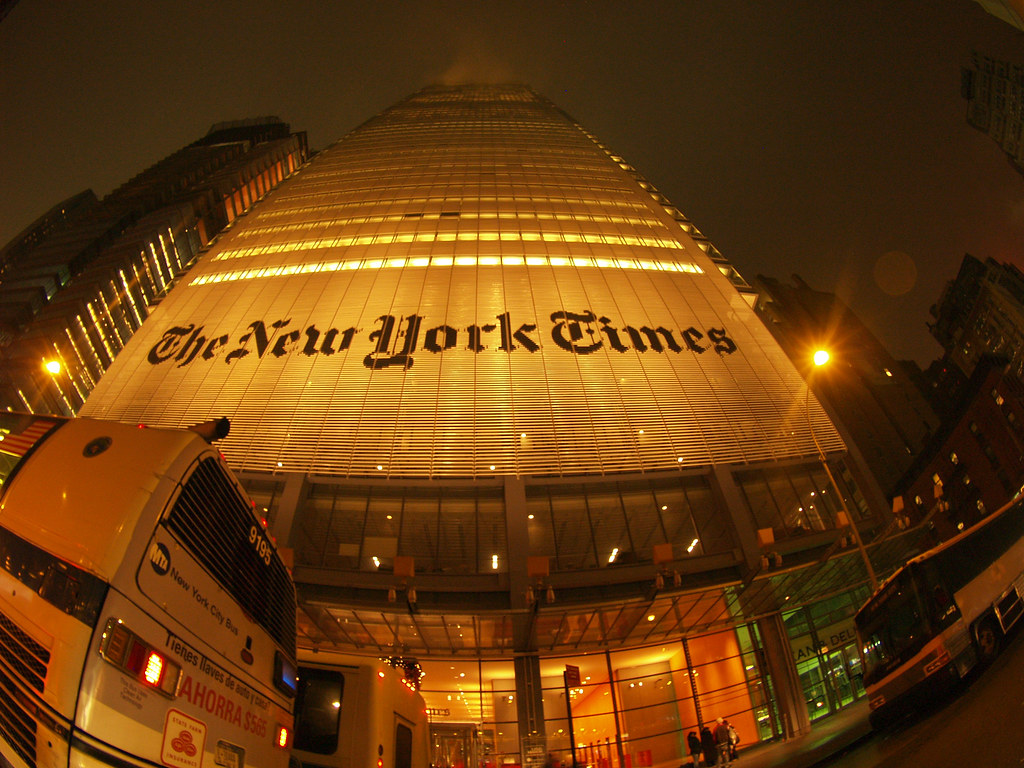
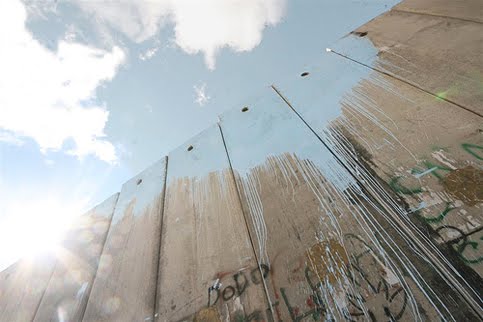
 She says her new web-based project will try to “decipher Washington’s Byzantine language and procedure, sweeping away what doesn’t matter so listeners can focus on what does.”


 Aletho News
