Georgia Is Targeted For Regime Change Over Its Refusal To Open A “Second Front” Against Russia
By Andrew Korybko | March 8, 2023
The former Soviet Republic of Georgia experienced a serious Color Revolution attempt Tuesday night after radical pro-Western rioters tried to storm parliament in response to its passing of a bill requiring all organizations with at least 20% foreign funding to register with the authorities. The US-led Western Mainstream Media (MSM) artificially manufactured the false narrative in the run-up to events alleging that the law is based on Russia’s related system even though it’s explicitly inspired by the US.
This well-intended attempt to protect Georgia’s fledging and admittedly imperfect democracy from foreign meddling per its sovereign right was subsequently exploited as the pretext for organizing a violent regime change against Prime Minister Irakli Garibashvili. The West wants to punish him for his pragmatic refusal to open up a “second front” in the US’ proxy war on Russia after he publicly exposed this plot in early December while also pledging never to arm Kiev either.
President Salome Zurabishvili, who was visiting the UN in New York during the unsuccessful regime change against Garibashvili on Tuesday night, threw her full support behind the riots in a video that peddled the West’s false information warfare narrative alleging that the bill is backed by Russia. Readers should be aware that she served most of her career as a French diplomat after having been born there and was previously that country’s Ambassador to Georgia up until 2004.
She only received Georgian citizenship at that time due to a deal between those two governments proposed by Mikhail Saakashvili following his successful Color Revolution the year prior in order for her to become his Foreign Minister. For all intents and purposes, Zurabishvili has since functioned as one the Golden Billion’s top “agents of influence” in Georgia. Despite the Prime Minister nowadays holding more power due to prior reforms, the Presidency still provides her with some sway over society.
It was within this context that Tuesday night’s violent seizure of power against Garibashvili was attempted, though Russia was already prepared for this scenario after Foreign Minister Sergey Lavrov warned in early February that something foul was indeed afoot in that former Soviet Republic. He told a popular TV anchor at the time that “The fact that they would like to turn Georgia into another irritant, to roll the situation back into the aggressive condition of the Saakashvili era is beyond doubt.”
It also deserves mentioning that the West’s latest Color Revolution attempt in the region took place amidst continued Russian gains around Artyomovsk/“Bakhmut”, which prompted Ukrainian President Vladimir Zelensky to warn that Russia could roll through the rest of Donbass if it captures that city. Earlier that same day and just hours before the attempted storming of parliament in Tbilisi, Russian Defense Minister Sergey Shoigu confirmed that a victory there would smash Kiev’s regional defenses.
To summarize the strategic dynamics on the eve of Tuesday night’s unsuccessful regime change in Georgia, the MSM had already manufactured the false narrative ahead of parliament voting on that country’s US-inspired foreign agents bill alleging that it symbolizes the country’s tilt towards Russia. This information warfare campaign is waged against its premier for his refusal in early December to open up a “second front” against that Eurasian Great Power to relieve pressure upon the US’ Ukrainian proxies.
The Georgian President, who’s arguably always functioned as one of the Golden Billion’s top “agents of influence”, happened to be in New York when everything unfolded and threw her full support behind those regime change riots. Earlier that same day, both Defense Minister Shoigu and Zelensky informed everyone that Russia could roll through the rest of Donbass if it captures Artyomovsk/“Bakhmut”. The stage was therefore set for attempting to violently overthrow Zurabishvili on Tuesday night.
It would be premature to declare that he’s secure in his position despite the security services successfully defending parliament from the rioters since a lot could still happen to advance the US’ regime change agenda. Georgia is a deeply divided country that’s been under immense Western influence for the past two decades, during which time the Golden Billion managed to manipulate a sizeable proportion of the population into doing its geopolitical bidding.
There’s no dearth of “useful idiots” who can easily be misled into destabilizing their country to the detriment of its objective national interests due to their liberal–globalist ideology. This means that Georgia is therefore expected to become the latest front in the New Cold War seeing as how it’s unlikely that its latest crisis will be resolved anytime soon. The situation is extremely serious and the outcome of the US’ undeclared Hybrid War on Georgia could directly affect developments in Donbass.
Ukraine responds to Nord Stream claims
RT | March 8, 2023
Kiev had nothing to do with the sabotage of the Nord Stream pipelines, the Ukrainian defense minister has said in response to media reports blaming last September’s explosions in the Baltic Sea on a “pro-Ukraine” group.
“For me, it’s a little bit strange story,” Aleksey Reznikov replied when asked about the issue after his arrival at an informal meeting of EU defense ministers in Stockholm on Wednesday.
“This story has nothing [to do] with us,” he said, expressing confidence that “the investigation [by] the official authorities will describe every detail” of what had happened.
The claims of Ukrainian involvement in the sabotage are “like a complement for our special forces, but this is not our activity,” the minister added.
Journalists asked Reznikov if he was concerned that the latest media reports could lead to a reduction in EU support for Kiev amid the conflict with Moscow. “No, I’m not concerned. Everything would be OK,” he said.
On Tuesday, the New York Times reported, citing US officials and unspecified new intelligence, that a “pro-Ukrainian group” may have been behind the September attack that disabled the Nord Stream 1 and 2 pipelines, which were built to deliver Russian gas to Europe via Germany. The US paper’s anonymous sources stressed that “no American or British nationals were involved” in the sabotage.
A few hours later, several German outlets claimed the country’s investigators looking into the Nord Stream blasts had found that a yacht reportedly used in the attack belonged to a Polish-based firm, owned by two Ukrainians.
Kremlin press-secretary Dmitry Peskov described the reports in the US and German media as “a coordinated media hoax campaign,” aimed at diverting attention from the actual “masterminds” of the sabotage.
Last month, veteran American investigative journalist Seymour Hersh released a bombshell report blaming Washington for destroying the Nord Stream pipelines. According to an informed source who talked to Hersh, explosives were planted on the pipelines in the Baltic Sea back in June 2022 by US Navy divers under the guise of a NATO exercise, and detonated remotely two months later. The White House has denied the report by the Pulitzer Prize-winning reporter, calling it “utterly false and complete fiction.”
CDC’s Attempt Get Mainstream Media to Spread False Information
CDC Falsely Claims To Major Media Outlet That the 7.7% Medical Care Figure Was Wrong!
By Aaron Siri | Injecting Freedom | March 6, 2023
After ICAN obtained the v-safe data and published to the world that 7.7% of v-safe users sought medical care (and that the CDC hid this number from the public for two years), Reuters reached out to my firm stating it had received comment from the CDC regarding this figure.
Incredibly, CDC told Reuters that the 7.7% figure was grossly inflated because it claimed there were 10 million records in v-safe, not 10 million users. Here is the exact email I received from Reuters:
“CDC says v-safe has 10 million records, not 10 million users, and that one person could submit multiple records of seeking medical care for the same adverse event. Which makes the 7.7% statistic problematic… Is that something ICAN was aware of or able to adjust for?”
Based on the CDC’s claim, the major news outlet asked if ICAN would be modifying its claim of 7.7%. But it was the CDC’s claim that was categorically false!
ICAN was correct: there were 10 million v-safe users, not 10 million records; and the 7.7% also did not double-count because it was the number of unique v-users who submitted one or more reports of seeking medical care.
The CDC was plainly pushing the major news to declare ICAN’s claim false and, hence, characterize it as misinformation.
Had Reuters just accepted the CDC’s claim, as typically occurs, it likely would have published a story declaring ICAN’s 7.7% figure to be false information.
Luckily, to its credit and because one of its reporters proceeded objectively and with integrity, this news outlet did not just take the CDC’s word for its claim. It actually gave us an opportunity to respond to this claim. (Albeit not by asking if ICAN believed it was wrong but by asking if it would adjust the figure it published.)
CDC Proven Wrong
Showing that the CDC was wrong was simple. All we had to do was use the CDC’s own data it provided to ICAN!
The data the CDC provided to ICAN clearly and without any doubt showed that ICAN was using the precise and correct number of v-safe users and the number of unique v-safe users who reported needing medical care. Meaning, the 7.7% was absolutely accurate – without any doubt.
We sent this proof and asked Reuters to please ask that CDC substantiate with actual proof, not just conclusory assertions, how ICAN was supposedly wrong and spreading misinformation. And again, to Reuter’s credit, because it demanded proof from the CDC, the CDC eventually relented!
The CDC finally conceded that v-safe did in fact have approximately 10 million users and, hence, the 7.7% figure of those who reported seeking medical care was accurate.
With that, I expected that interaction would be one heck of a story in and of itself! I foresaw a Reuters story that disclosed this CDC behavior – here was the CDC trying to get a major news outlet to publish false information! It was trying to get it to write that the 7.7% figure was incorrect.
That should have been its own major story. And although Reuters did publish a story about v-safe, thus far, these behind-the-scenes communications have not been published. I expect they never will, other than in this article.
CDC Asks Reuters to Ask ICAN for a Copy of CDC’s V-Safe Data
It gets even worse. Making plain that the CDC officials communicating with Reuters were not concerned about the facts, and instead were focused solely on pushing their “safe and effective” mantra which is typically not questioned, they further revealed the agency’s disfunction: the CDC officials asked Reuters if it could get a copy of the v-safe data from ICAN and send it back to the CDC representatives Reuters were dealing with so they can review that data. If that sounds nutty, it is because it is.
Just so you don’t think you misread the foregoing, let me repeat: CDC asked Reuters to get the v-safe data that CDC had given to ICAN days before, and then send that data back to the CDC to review.
You can’t make this stuff up. Mind you, the data had already all been made public on ICAN’s website.
What this shows is that these CDC officials were driving forward to push a major news outlet to claim to the world that ICAN’s claim of 7.7% was false without actually looking at the data to assure their claim was accurate. It also shows an incredible level of disfunction at the CDC; instead of getting the data internally, they had to ask a news outlet to get its own data produced to ICAN to then send it back to CDC.
And these are the folk that have effectively dictated what level of civil and individual rights most Americans would have over the last three years!
CDC Seeks to Deceive Again
When the foregoing gambit by the CDC did not work, it had a new gambit. It tried to get Reuters to publish that the 7.7% figure was misleading by claiming to Reuters that “[i]n the first week after vaccination, reports of seeking any medical care … range from 1-3% (depending on vaccine, age group and dose).”
But as we explained to Reuters, even this is not true. For example, 3.36% of those younger than 3 years old reported receiving medical care within one week of receiving the Moderna vaccine.
Even if all combinations of vaccine, age group, and dose resulted in between 1% to 3% of infants, children, or adults seeking medical care within one week, that is not necessarily an insignificant figure! Why is this somehow comforting? Especially in the context of vaccinating the entire country.
And why should the reports of medical care on days 14 or 21 or 28 be ignored? Is it because the CDC thought it was not relevant information? And, if so, why in the world ask v-safe users to submit this information on these days? Or is it because the CDC did not like what the numbers showed? I will let you be the judge.
As noted above, and a sad irony, when medical care is sought during the first seven days, the CDC presumably attributes that to expected reactogenicity and tells the public to not be concerned. And if it occurs beyond seven days, it pretends as if that data does not exist – even though harms from COVID-19 vaccines, as the CDC well knows, can occur well after the first seven days, as discussed in depth in part 7 of this v-safe substack series.
Also, here, we are talking about a novel medical product, hence heightening the need for assessing its long-term safety – certainly beyond 7 days post-vaccination.
This shows how the sausage is made in mainstream media. But for the actual tenacity – I would even say courageous – pushback from a Reuters reporter, the story around ICAN’s v-safe claims could have ended very differently.
The real story I can only imagine this reporter would have liked to publish, the one I told above, however, would no doubt be a step too far for Reuters as an organization – at least for now, until brave journalists become the typical journalist.
How Could Western Intelligence Have Got It Wrong, Again? They Didn’t. They Had Other Purposes
By Alastair Crooke | Strategic Culture Foundation | March 6, 2023
Larry Johnson, an ex-CIA analyst, writes “I no longer hold clearances and have not had access to the classified intelligence assessments. However, I have heard that the finished intelligence being supplied to U.S. policymakers continues to declare that Russia is on the ropes – and their economy is crumbling. Also, analysts insist that the Ukrainians are beating the Russians”.
Johnson responds that – lacking valid human sources – “western agencies are almost wholly dependent today on ‘liaison reporting’” (i.e., from ‘friendly’ foreign intelligence services), without doing ‘due diligence’ by cross-checking discrepancies with other reporting.
In practice, this largely means western reporting simply replicates Kiev’s PR line. But there does occur a huge problem when marrying Kiev’s output (as Johnson says) to UK reports – for ‘corroboration’.
The reality is UK reporting itself is also based on what Ukraine is saying. This is known as false collateral – i.e., when that which is used for corroboration and validation actually derives from the same single source. It becomes – deliberately – a propaganda multiplier.
In plain words however, all these points are ‘red herrings’. Bluntly, so-called western ‘Intelligence’ is no longer the sincere attempt to understand a complex reality, but rather, it has become the tool to falsify a nuanced reality in order to attempt to manipulate the Russian psyche towards a collective defeatism (in respect not just to the Ukraine, but to the idea that Russia should remain as a sovereign whole).
And – to the extent that ‘lies’ are fabricated to accustom the Russian public to inevitable defeat – the obverse edge clearly is intended to train the western public towards the ‘groupthink’ that victory is inevitable. And that Russia is an ‘unreformed evil Empire’ which threatens all Europe.
This is no accident. It is highly purposeful. It is behavioural psychology at work. The ‘head-spinning’ disorientation created throughout the Covid pandemic; the constant rain of ‘data-driven’ model analysis, the labelling of anything critical of the ‘uniform messaging’ as anti-social disinformation – enabled western governments to persuade their citizens that ‘lockdown’ was the only rational answer to the virus. It was not true (as we now know), but the ‘pilot’ behavioural nudge-psychology trial worked better – better even than its own architects had imagined.
Professor of Clinical Psychology, Mattias Desmet, has explained that mass disorientation does not form in a vacuum. It arises, throughout history, from a collective psychosis that has followed a predictable script:
Just as with lockdown, governments have used behavioural psychology to instil fear and isolation to mass large groups of people into herds, where toxic sneering at any contrariness cold-shoulders all critical thinking or analysis. It is more comfortable being inside the herd, than out.
The dominant characteristic here is remaining loyal to the group – even when the policy is working badly and its consequences disturb the conscience of members. Loyalty to the group becomes the highest form of morality. That loyalty requires each member to avoid raising controversial issues, questioning weak arguments, or calling a halt to wishful thinking.
The ‘Groupthink’ allows some self-imagined reality to detach; to drift further and further from any connection to reality, and then to transit into delusion – always drawing on like-minded peer cheerleaders for its validation and extended radicalisation.
So, it’s ‘goodbye’ to traditional Intelligence! And ‘welcome’ to western Intelligence 101: Geo-Politics no longer revolves around a grasp on Reality. It is about the installation of ideological pseudo-realism – which is the universal installation of a singular groupthink, such that everyone lives passively by it, until it is far too late to change course.
Superficially, this may seem clever new psyops – even ‘cool’. It is not. It is dangerous. By deliberately working on deeply ingrained fears and trauma (i.e. the Great Patriotic War for Russians (WW2)), it awakens a type of multi-generational existential plight within the collective unconscious – that of total annihilation – which is a danger that America has never faced, and towards which there is zero American empathetic understanding.
Perhaps, by resurrecting long, collective memories of plague in European countries (such as Italy) western governments have found that they were able to mobilise their citizens around a policy of coercion, that otherwise ran wholly against their own interests. But nations have their own distinct myths and civilisational mores.
If that were the purpose (to acclimatise Russians to defeat and ultimate Balkanisation), Western propaganda has not only failed, but it has achieved the converse. Russians have coalesced closely together against an existential western threat – and are prepared to ‘go to the wall’, if necessary, in defeating it. (Let those implications sink in.)
On the other hand, falsely promoting a picture of inevitable success for the West inevitably has raised expectations of a political outcome that is not only not feasible, but which recedes further into the far horizon, as these fantastical claims of Russian setbacks persuade European leaders that Russia can accept an outcome in line with their constructed false reality.
Another ‘own goal’: The West now faces the task of de-fusing the landmine of their own electorate’s conviction of a Ukraine ‘win’, and of Russian humiliation and decomposition. There will be anger and further distrust for the Élites in the West to follow. Existential risk ensues when people believe nothing the élites say.
Plainly put, this resort to clever ‘nudge theories’ has succeeded only in toxifying the prospect for political discourse. Neither the U.S. nor Russia can now move directly to pure political discourse :
Firstly, the parties inevitably must come to some tacit psychological assimilation of two quite dis-connected realities, now hyped into palpable, vital beings through these psychological ‘Intelligence’ techniques. There will be no acceptance by either side of the validity or moral rightness of the Other Reality’s, yet its emotive contents must be acknowledged psychically – together with the traumas underlying them – if politics is to be unlocked.
In short, this western exaggerated psyops perversely is likely to lengthen the war until facts-on-the ground finally grind the contrasting expectations closer to what may be the ‘new possible’. Ultimately, when perceived realities cannot be ‘matched’ and nuanced, war rubs one or the other into more emollient form.
The degeneracy in western intelligence did not start with the recent collective ‘excitement’ at the possibilities of ‘nudge-psychology’. The first steps in this direction began with a shift in ethos reaching back to the Clinton/Thatcher era in which the intelligence services were ‘neo-liberalised’.
No longer was the role of ‘devil’s advocate’ – of bringing ‘bad news’ (i.e. hard-edged Realism) to the relevant political leadership valued; instead what was inserted was a radical shift towards ‘Business School’ practice of services being tasked with ‘adding value’ to existing government policies, and (even) of creating ‘a market’ system in Intelligence!
The politician-managers demanded ‘good news’. And to make ‘it stick’, funding was tied to the ‘value added’ – with administrators skilled at managing bureaucracy moved into leadership jobs. It marked the end to classical Intelligence – which always was an art, rather than science.
In short, it was the outset to fixing the intelligence around policies (to add value), rather than the traditional function of shaping policies to sound analysis.
In the U.S., the politicisation of intelligence reached its apex with Dick Cheney’s initiation of a Team ‘B’ intelligence unit reporting personally to him. It was intended to furnish the anti-intelligence to combat the intelligence service output. Of course, the Team ‘B’ initiative shook confidence amongst the analysts, and by-passed the work of the traditional cadre – just as Cheney had intended. (He had a war (the Iraq war) to justify).
But there were separately other structural shifts. Firstly, by 2000, woke narcissism had begun to eclipse strategic thought –creating its own novel groupthink. The West just could not shake off the sense of itself at the centre of the Universe (albeit no longer in a racial sense, but via its awakening to ‘victim politics’ – requiring endless redress and reparations – and such woke values serendipitously seemed to anoint the West with a renewed global ‘moral primacy’).
In a parallel shift, U.S. neo-cons piggy-backed on this new woke universalism to cement the meme of ‘Empire matters primordially’. The unspoken corollary to this, of course, is that original values of the American Republic or of Europe, cannot be re-conceived and brought forward into the present, as long as ‘liberal’ Empire groupthink configures them as a threat to western security. This conundrum and struggle lies at the heart of U.S. politics today.
Yet the question remains just how can the intelligence being supplied to U.S. policymakers insist that Russia is imploding economically, and that Ukraine is winning – against what can be easily observed facts on the ground?
Well, no problem; Washington think-tanks have big, big finance from the Military Industrial World, with the preponderance of these funds going to the neo-cons – and their insistence that Russia is a small ‘gas-station’ posing as a state, and not a power to be taken seriously.
Neo-con claws tear at anyone gain-saying their ‘line’ – and think-tanks employ an army of ‘analysts’ to turn out ‘academic’ reports suggesting that Russia’s industry – to the extent it exists at all – is imploding. Since last March, western military and economic experts have been regularly-as-clockwork, predicting that Russia has run out of missiles, drones, tanks and artillery shells – and is expending its manpower throwing human-waves of untrained troops upon the Ukrainian siege lines.
The logic is plain, but again flawed. If a combined NATO struggles to supply artillery shells, Russia with the economy the size of a small EU state (logically) must be worse off. And if only we (the U.S.) threaten China hard enough against supplying Russia, then the latter will ultimately run out of munitions – and NATO supported Ukraine ‘will win’.
The logic then is that a war prolonged (until the money runs out) must deliver a Russia bereft of munitions, and NATO-supplied Ukraine ‘wins’.
This framing is entirely wrong because of conceptual differences: Russian history is one of Total War that is fought in a long, ‘all-out’, uncompromising engagement against an overwhelming peer force. But inherent to this idea, is its all-important grounding in the conviction that such wars are fought over the course of years, with their outcomes conditioned by the capacity to surge military production.
Conceptually, the U.S. shifted in the 1980s away from its post-war military-industrial paradigm, to off-shore manufacturing to Asia and to ‘just-in-time’ supply lines. Effectively, the U.S. (and the West) shifted in the opposite direction to ‘surge capacity’, whereas Russia did not: It kept alive the notion of sustainment which had contributed to saving Russia during the Great Patriotic War.
So, western intelligence services again got it wrong; they misread the reality? No, they didn’t get it ‘wrong’. Their purpose was different.
The few who got it right were mercilessly caricatured as stooges to make them seem absurd. And Intelligence 101 was re-conceived as the purposeful denialism of all off-Team thinking, whilst the majority of western citizens would live passively in the embrace the groupthink – until too late for them to awaken, and to change the dangerous course on which their societies were embarked.
Unverified Ukrainian reports (liaison reporting) served up to western leaders therefore is not a ‘glitch’ – it is a ‘feature’ of the new Intelligence 101 paradigm intended to confuse and dull its electorate.
War and Propaganda in the Russia-Ukraine Conflict
BY RON UNZ • UNZ REVIEW • MARCH 6, 2023
We recently passed the first anniversary of the Russia-Ukraine war and the Wall Street Journal published a lengthy review of the twelve months of the conflict, summarizing what had happened and describing future prospects, an article that attracted more than 2,500 comments.
- Ukraine Is the West’s War Now
The initial reluctance of the U.S. and its allies to help Kyiv fight Russia has turned into a massive program of military assistance, which carries risks of its own
Yaroslav Trofimov • The Wall Street Journal • February 25, 2023 • 2,800 Words
Although hardly critical of our involvement, the writer noted that America and its allies had already provided Ukraine with an astonishing $120 billion in military equipment and money, a figure far larger than Russia’s entire defense budget, with further massive outlays still to come.
As the title of the piece indicated, the West had effectively now taken over control of the war, and if the effort to defeat Russian President Vladimir Putin failed, American global influence might be undermined and the future of the NATO alliance called into question. Indeed, such notable foreign policy luminaries as John Mearsheimer, Jeffrey Sachs, Douglas Macgregor, and Lawrence Wilkinson have all recently raised the possibility that NATO risks disintegration, especially in the wake of Seymour Hersh’s bombshell disclosure that President Biden had illegally destroyed the Nord Stream pipelines, some of Europe’s most important civilian energy infrastructure.
So in effect, America is at war with Russia on Russia’s own border, and if we lose that war, the era of our global dominance that followed the 1991 collapse of the Soviet Union might come to an end. Since the earliest days of the fighting, our electronic and social media have functioned as unrestrained cheerleaders, hailing Ukrainian victories and Russian defeats, but this WSJ article could not avoid providing a much more sobering perspective.
Although this war has been of enormous world importance, I’ve actually written very little about the details of the conflict.
I lack any military expertise and doubted that I could contribute anything useful about the fighting, which was anyway obscured by the fog of war. America’s reigning Neocon establishment totally controls the Western mainstream media and over the last few decades they have made propaganda, dishonest or otherwise, one of their most frequently deployed political weapons. Indeed, no sooner had the war broken out than social media was awash with the heroic exploits of “the Ghost of Kyiv” and “the Martyrs of Snake Island,” outright hoaxes that were widely disseminated and believed at the time.
We live in the era of smartphones, so video clips showing Russian tanks destroyed or Russian troops defeated and retreating were widely promoted by partisans of the Ukrainian side. But such anecdotal evidence seemed totally meaningless to me. In 1940 the French army suffered one of history’s most lop-sided defeats at the hands of the Germans, yet if smartphones had been around at the time, it would have been easy for pro-French activists to provide hundreds of clips showing destroyed German panzers or small German units suffering defeat. Such war-porn seems more like entertainment for political partisans than anything having serious value.
This obvious problem soon led some observers to search out a means of more objectively determining combat losses. Many of them began relying upon the Oryx website, run by a purportedly independent “open source” organization that organized and displayed images of destroyed tanks and other military vehicles, thereby allowing analysts to total up the losses suffered by each side in the conflict. Journalists and others soon used this photographic evidence to conclude that the Russians had suffered enormous, almost catastrophic losses, with the under-gunned but highly-motivated Ukrainian defenders destroying huge numbers of Russian tanks and other military vehicles, a result that also suggested very high Russian casualties.
The alleged loss of Russian hardware documented by Oryx seems absolutely staggering. One of the main website pages itemizes nearly 9,500 Russian armored vehicles lost, of which 6,000 were destroyed and nearly 2,800 captured. Those losses included nearly 1,800 tanks, with well over 500 of these captured by the plucky Ukrainians. Each of these listed items is linked to a photograph, most of them either being uploaded separately or contained within a Tweet. For example, 244 destroyed or captured T-72B tanks are listed, all individually numbered and linked to the photographic evidence. Obviously, not all destroyed Russian vehicles would have been swept up, so the true scale of Russia’s apparent losses must surely have been considerably greater. Ukraine’s hardware losses were also cataloged, but they only totaled about 3,000 armored vehicles.
Throughout most of the last year, our mainstream media outlets have been filled with stories of Ukrainian victories and Russian defeats, and surely the large compendium of factual material provided by the Oryx website has been an important reason for this. The Oryx Wikipedia entry runs only three short paragraphs, but explains that the website has been regularly cited by Reuters, the BBC, the Guardian, the Economist, Newsweek, CNN, and CBS, with Forbes hailing Oryx as “outstanding” and “the most reliable source in the conflict so far.” My impression is that many writers on military affairs are enthralled by such photos of heavy equipment, whether intact or destroyed, and Oryx provides many thousands of such striking images, thus capturing their rapt attention.
If the Russians had indeed suffered more than three times the Ukrainian losses in armored vehicles, with well over 500 of their tanks captured by the latter, a Ukrainian military triumph might have seemed very likely, so the Americans and their allies naturally rewarded their victorious proteges with a tidal wave of financial and military support that easily topped a hundred billion dollars.
The supposed Ukrainian achievement was certainly a remarkable one. According to Wikipedia, the largest land offensive in human history was Germany’s 1941 Operation Barbarossa, which involved fewer than 7,000 armored vehicles. But if we credit Oryx, over the last twelve months Ukraine’s doughty patriots have totally annihilated a far greater Russian mechanized force, while their own losses have been just a fraction of that. Individuals should decide for themselves how plausible such total numbers sound.
I only very recently looked at the Oryx website, and the first issue that came to mind was how anyone could possibly determine whether the images were real, faked, or duplicated. According to Wikipedia, the Ukrainian military possessed thousands of tanks, many of them being the same models used by the invading Russians. So if Ukrainian activists uploaded a photo of a destroyed T-72B to Oryx, how can we really be sure it was a Russian tank rather than one of their own? What if several different photos of the same wrecked vehicle were taken from different angles, and separately uploaded? The fighting in the Donbass began in 2014, and can we be sure that the photographs provided are from the current fighting rather than from battles fought years ago?

Is This a Destroyed Russian T-72B or a Destroyed Ukrainian T72B? They Look Much the Same to Me.
None of the military enthusiasts whom I asked had any ready answers to those questions, perhaps because they had never even previously considered such troubling possibilities.
During recent decades, Hollywood special effects wizards have displayed great technical skill in showing Spiderman swinging between skyscrapers and the Incredible Hulk undergoing a transformation. Surely producing simple photographs of destroyed military equipment would be a triviality, with the costs almost invisibly small compared to a movie budget. But consider that those simple photographs uploaded to a Dutch website have been a crucial factor in attracting many tens of billions of dollars of financial support from American and allied governments, giving each single image on the Oryx website a potential value of $10 million or more. Producing fake photographs is certainly much safer and easier than destroying Russian tanks in real life, and doing so on an industrial scale would seem a very cost-effective propaganda strategy, so it’s difficult to believe that neither the Ukrainians nor their Neocon/CIA/MI6 mentors ever decided to employ such methods.
Putting the issue in very crude terms, I doubt whether Russian losses may be accurately estimated by aggregating and analyzing what amounted to Ukrainian propaganda-Tweets.
Furthermore, an examination of Oryx’s origins raised other troubling issues.
From the Iraq War onward, the credibility of the American government has steadily deteriorated, considerably weakening the effectiveness of its international propaganda campaigns, a central pillar of its international influence.
Then in 2014 a British blogger named Eliot Higgins established Bellingcat, supposedly an independent research organization that relied upon the objective analysis of open source materials. However, in practice his efforts seemed to almost invariably produce conclusions closely aligned with American foreign policy interests in Syria, Ukraine, and other international flashpoints. This notably including the shoot-down of Malaysian Airlines Flight 17 and the alleged gas attack in Syria that Higgins himself had covered the previous year, always pinning the blame upon governments that were the targets of American hostility.
Numerous distinguished international journalists and other experts, notably including Seymour Hersh, Theodore Postol, and Karel van Wolferen often came to totally different conclusions, but their views were usually ignored by the media, while Bellingcat was heavily quoted in the Western outlets as fully confirming the accusations of the American government. As a consequence, there have been widespread suspicions that Bellingcat merely operated as a tool of Western intelligence services, very similar to how the CIA had established other such front-organizations for propaganda purposes during the original Cold War.
According to the Wikipedia page on Oryx, both its founders were Bellingcat alumni, raising serious questions about whether they are really as independent-minded as they claimed to be.
Meanwhile, other American military experts have provided very different assessments of the course of the war.
For decades, Col. Douglas Macgregor has been regarded as a leading conservative military strategist, authoring several well-regarded books and having many dozens of guest appearances on FoxNews. After having a long career in NATO, he had been a finalist for the position of National Security Advisor, served as a Senior Advisor to the Secretary of Defense, and was nominated as U.S. Ambassador to Germany. He is obviously very well-connected in such establishment military circles, and based upon his Pentagon contacts, he has repeatedly stated that it is actually the Ukrainian forces that have suffered horrendous casualties, including as many as 160,000 combat deaths compared to far lower Russian losses of perhaps 20,000 or so. Other military experts such as Scott Ritter and Larry Johnson have expressed very similar views.
Across all of his numerous interviews, Macgregor comes across as quite persuasive and confident in his assessments of the military situation.
Given the enthusiastic, almost uniform support of powerful Western political, financial, and media interests for the Ukrainian side, I find it difficult to understand why Macgregor, Ritter, Johnson, and others would be taking such contrary positions unless they sincerely believed that they were correct. Indeed, a BBC research effort recently used social media and other open sources to identify 14,709 individual Russian service members killed in the war, a figure that seems quite consistent with Macgregor’s total estimate of 20,000.
So we have diametrically conflicting positions, with Ukrainian officials and the Oryx website claiming Russian losses have been several times greater than Ukrainian ones, while Macgregor and his allies put the ratio at perhaps 8-to-1 in the opposite direction.
I personally lean much more towards Macgregor’s perspective, but I actually doubt that the issue matters much in strategic terms. From the beginning, I’ve never regarded the operational-level details of the fighting in Ukraine as very interesting or important, and haven’t paid much attention to it. This explains why I had never looked at the Oryx website until just a few days ago.
If the Russian army were completely defeated by the Ukrainians and lost control of Crimea and the Donbass, that sort of military disaster for Russia would have major global consequences. But I consider that possibility exceptionally unlikely and doubt that anyone sensible thinks otherwise.
Instead, it seems almost certain that the war will either become roughly stalemated, as many Western analysts seem to believe, or that the Russians will eventually crush the Ukrainians, as predicted by Macgregor and some other Western experts. But unless the latter result draws in NATO forces and leads to a wider war, with possible risk of a nuclear confrontation, I don’t think the strategic consequences are much different in those two contrasting scenarios.
Before the war began, the Russians were widely expected to overwhelm Ukrainian resistance in a matter of weeks, and compared to those early expectations, the war has already been stalemated for a full year.
In hindsight, Russia’s failure to win a quick, decisive victory should not have been too surprising. For example, I’d been entirely unaware that Ukraine actually had an enormous regular army, more than three times the size of Germany’s, and far larger than that of any European NATO country. Much of Ukraine’s military was fully trained to NATO standards, and including reserves and the National Guard, Ukraine deployed more than a half-million ground troops, outnumbering the attacking Russian forces by around 3-to-1, with many of its best units heavily entrenched in strong defensive positions. Under such challenging circumstances, it’s quite understandable that the Russians have required a year of heavy fighting to gain ground against the stubborn Ukrainian defenders, with the latter heavily backed by supplies and assistance from America and the rest of NATO.
But although Russia’s operational progress on the battlefield has been slow and mixed, on the geostrategic level, the Russians have already won a series of major victories. China, Iran, India, Saudi Arabia, and most of the other non-Western countries have clearly moved towards Russia, which also easily surmounted the unprecedented sanctions that most had expected would cripple her economy. The reckless American destruction of the Nord Stream pipelines and the European energy crisis may eventually cause the collapse of NATO. Putin’s domestic approval rating is in the 80s, probably as high as it has ever been. And I don’t see any of these results changing if the military stalemate continues.
One year ago, just after the war broke out, I’d outlined my broader perspective in a long article:
For more than a hundred years, all of America’s many wars have been fought against totally outmatched adversaries, opponents that possessed merely a fraction of the human, industrial, and natural resources that we and our allies controlled. This massive advantage regularly compensated for many of our serious early mistakes in those conflicts. So the main difficulty our elected leaders faced was merely persuading the often very reluctant American citizenry to support a war, which is why many historians have alleged that such incidents as the sinkings of Maine and the Lusitania, and the attacks in Pearl Harbor and Tonkin Bay were orchestrated or manipulated for exactly that purpose.
This huge advantage in potential power was certainly the case when World War II broke out in Europe, and Schultze-Rhonof and others have emphasized that the British and French empires backed by America commanded potential military resources vastly superior to those of Germany, a mid-size country smaller than Texas. The surprise was that despite such overwhelming odds Germany proved highly successful for several years, before finally going down to defeat…
Consider the attitude taken during the current conflict with Russia, a severe Cold War confrontation that might conceivably turn hot. Despite its great military strength and enormous nuclear arsenal, Russia seems just as out-matched as any past American foe. Including the NATO countries and Japan, the American alliance commands a 6-to-1 advantage in population and 12-to-1 superiority in economic product, the key sinews of international power. Such an enormous disparity is implicit in the attitudes of our strategic planners and their media mouthpieces.
But this is a very unrealistic view of the true correlation of forces…just two weeks before the Russian attack on Ukraine, Putin and Chinese leader Xi Jinping held their 39th personal meeting in Beijing and declared that their partnership had “no limits.” China will certainly support Russia in any global conflict.
Meanwhile, America’s endless attacks and vilification of Iran have gone on for decades, culminating in our assassination two years ago of the country’s top military commander, Qasem Soleimani, who had been mentioned as a leading candidate in Iran’s 2021 presidential elections. Together with our Israeli ally, we have also assassinated many of Iran’s top scientists over the last decade, and in 2020 Iran publicly accused America of having unleashed the Covid biowarfare weapon against their country, which infected much of their parliament and killed many members of their political elite. Iran would certainly side with Russia as well.
America, together with its NATO allies and Japan, does possess huge superiority in any test of global power against Russia alone. However, that would not be the case against a coalition consisting of Russia, China, and Iran, and indeed I think the latter group might actually have the upper hand, given its enormous weight of population, natural resources, and industrial strength.
Since the fall of the Soviet Union in 1991, America has enjoyed a unipolar moment, reigning as the world’s sole hyperpower. But this status has fostered our overweening arrogance and international aggression against far weaker targets, finally leading to the creation of a powerful block of states willing to stand up against us.
Then last October, I’d updated my analysis and I think that the subsequent developments have generally confirmed my appraisal:
I wrote those words just two weeks after the war began, and as is inevitable in any conflict, various matters have gone differently than anyone originally predicted.
The Russians had been widely expected to sweep the Ukrainians before them, but instead they have encountered very determined resistance, suffering heavy casualties as they made slow progress. Generously resupplied with advanced weaponry from NATO stockpiles, the Ukrainians recently launched successful counter-attacks, forcing Russian President Vladimir Putin to call up 300,000 reserves.
But although Russia’s military efforts have only been partially successful, on all other fronts, America and its allies have suffered a series of strategic geopolitical defeats.
At the start of the war, most observers believed that the unprecedented sanctions imposed by America and its NATO allies would deal a crippling blow to the Russian economy. Instead, Russia has escaped any serious damage, while the loss of cheap Russian energy has devastated the European economies and severely hurt our own, resulting in the highest inflation rates in forty years. The Russian Ruble was expected to collapse, but is now stronger than it was before.
Germany is the industrial engine of Europe and the sanctions imposed on Russia were so self-destructive that popular protests began demanding that they be lifted and the Nord Stream energy pipelines reopened. To forestall any such potential defection, those Russian-German pipelines were suddenly attacked and destroyed, almost certainly with the approval and involvement of the U.S. government. America is not legally at war with Russia let alone Germany, so this probably represented the greatest peacetime destruction of civilian infrastructure in the history of the world, inflicting enormous, lasting damage upon our European allies. Our total dominance over the global media has so far prevented most ordinary Europeans or Americans from recognizing what transpired, but as the energy crisis worsens and the truth gradually begins to emerge, NATO might have a hard time surviving. As I discussed in a recent article, America may have squandered three generations of European friendship by destroying those vital pipelines.
- American Pravda: Of Pipelines and Plagues
Ron Unz • The Unz Review • October 3, 2022 • 3,900 WordsMeanwhile, many years of arrogant and oppressive American behavior towards so many other major countries has produced a powerful backlash of support for Russia. According to news reports, the Iranians have provided the Russians with large numbers of their advanced drones, which have been effectively deployed against the Ukrainians. Since World War II, our alliance with Saudi Arabia has been a linchpin of our Middle Eastern policy, but the Saudis have now repeatedly sided with the Russians on oil production issues, completely ignoring America’s demands despite threats of retaliation from Congress. Turkey has NATO’s largest military, but it is closely cooperating with Russia on natural gas shipments. India has also moved closer to Russia on crucial issues, ignoring the sanctions we have imposed on Russian oil. Except for our political vassal states, most major world powers seem to be lining up on Russia’s side.
Since World War II one of the central pillars of global American dominance has been the status of the US dollar as the world’s reserve currency and our associated control over the international banking system. Until recently we always presented our role as neutral and administrative, but we have increasingly begun weaponizing that power, using our position to punish those states we disliked, and this is naturally forcing other countries to seek alternatives. Perhaps the world could tolerate our freezing the financial assets of relatively small countries such as Venezuela or Afghanistan, but our seizure of Russia’s $300 billion in foreign reserves obviously tipped the balance, and major countries are increasingly seeking to shift their transactions away from the dollar and the banking network that we control. Although the economic decline of the EU has caused a corresponding fall in the Euro and driven up the dollar by default, the longer-term prospects for our continued currency hegemony hardly seem good. And given our horrendous budget and trade deficits, a flight from the dollar might easily collapse the US economy.
Soon after the outbreak of the Ukraine War, the eminent historian Alfred McCoy argued that we were witnessing the geopolitical birth of a new world order, one built around a Russia-China alliance that would dominate the Eurasian landmass. His discussion with Amy Goodman has been viewed nearly two million times.
Related
The ‘fact checkers’ can’t find the target never mind hit it
By Norman Fenton | Where are the numbers? | March 3, 2023
One of the most tiresome features of the covid era has been the growth industry of ‘fact-checkers’ generously funded by Government, Pharma companies and the likes of Bill Gates to silence anybody challenging the ‘official narrative’. The Law, Health and Technology Newsletter has covered this extensively.
There have been a few ludicrous attempts to ‘fact-check’ my own work but, as an example of how biased and incompetent these people are, I present a request I received today from an AFP fact-checker asking me to help ‘debunk’ something …. and my self-explanatory response to it (I have spared the ‘fact-checker’ personal embarrassment by removing their name).
From: XXXXXX
Sent: Thursday, March 2, 2023 9:17 PM
To: Norman Fenton
Subject: Media Request (AFP) – Addressing Misinterpretations of ONS Covid-19 DataHello professor,
I hope you are well. I am a fact-check reporter at AFP based in Washington DC. I am working to debunk online articles that claim English health data indicates that fully vaccinated people are far more likely to die of Covid-19 than those who have not received the shots. Several articles have made this allegation, citing this ONS dataset: https://www.ons.gov.uk/peoplepopulationandcommunity/birthsdeathsandmarriages/deaths/datasets/deathsbyvaccinationstatusengland
For reference, I will archive examples of these articles making the claims here and here.
Based on this ONS insight and a previous bulletin, which says the data is not intended to show vaccine efficacy, it seems like the article is misinterpreting the dataset. Would you be able to offer comment with a brief explanation as to how this sort of data is supposed to be read and used?
Thank you for your consideration,
XXXXXXXX
Agence France-Presse (AFP)
Office #: (202) 414-0527
From: Norman Fenton
Sent: Thursday, March 2, 2023 9:44 PM
To: XXXXXXX
Subject: RE: Media Request (AFP) – Addressing Misinterpretations of ONS Covid-19 Data
Dear XXXXX
Like all mainstream “fact checkers” you clearly have no understanding of what it is you are checking.
The ONS dataset is so flawed and biased that even the Statistics Regulator agreed with us that it could not be used to make any inferences about vaccine efficacy or safety. But you are missing the big problem here.
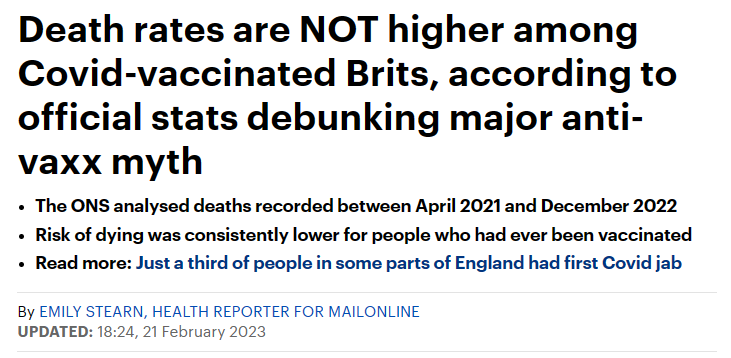
Instead of focusing on those who are using the data to suggest the vaccine is not as safe and effective as claimed, what you should be focused on are the government and mainstream media who (against the advice of the Statistics Regulator) are using the ONS data to claim the vaccine is safe and effective. Have a look at this article in the Daily Mail – this is one you should be fact checking. Why aren’t you doing that?
Our most recent article covers this whole issue of the ONS data:
In fact, if you make adjustments for the multiple flaws and biases in the ONS data, then it is increasingly clear that the vaccinated have a higher all-cause mortality in many age groups, especially the under 50’s. In other words, the evidence increasingly points to the need for the covid vaccine programme to be shut down completely. But that isn’t the message you want to portray is it, because your funders are the ones pushing the vaccines?
Only one of the links to examples of reports you were seeking to ‘debunk’ seems to be working, namely the article in The Expose. The claim there is that the ONS report reveals that “the Vaccinated account for 9 in every 10 COVID Deaths over the past TWO Years”. Based on the ONS dataset this is correct. Of course, without knowing the true proportion of vaccinated in each age group, we still cannot conclude that the vaccinated are at higher risk of death from covid. But the article is not claiming that, it is simply stating the FACT that a far higher number of vaccinated people have died of covid than unvaccinated since Jan 2022. That the number of vaccinated people who have died of covid is 25,768 is relevant, because we were told by people like you that this could not possibly happen; the vaccines were supposed to have ‘stopped hospitalisation and death from covid’.
Yours
Norman Fenton
Powerless and ridiculous for US to cry for its recognition as regional leader
Global Times | March 2, 2023
“Being powerful is like being a lady. If you have to tell people you are, you aren’t,” said former UK prime minister Margaret Thatcher. From this, we know how powerless and ridiculous it is when the US tries to persuade others by repeating, “I am still a leader, and you have to believe and admit it!”
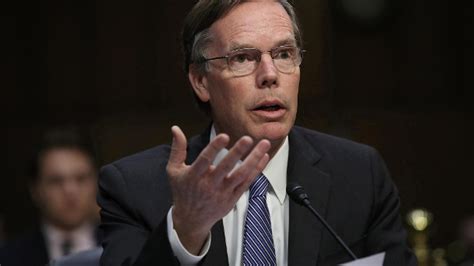
In a video released Tuesday by NBC News, Nicholas Burns, the US Ambassador to China, who spoke by video link at a US Chamber of Commerce event, said Beijing must accept that Washington is a leader in Asia. He declared that China must now understand that “the US is staying in this region – we’re the leader in this region in many ways.”
What the US politician said implies two messages. First, he seems to criticize China for not understanding US’ presence in the Asia-Pacific. Second, Burns wants Beijing to acknowledge Washington’s leadership in the region. Yet, both are far from the truth.
Washington has always had the strategic miscalculation: It believes Beijing wants to push it out of the Asia-Pacific region. But China not only recognizes US’ presence in the area, but also seeks peaceful coexistence and win-win cooperation with the US on the premise of mutual respect. What Beijing refuses is to be led by anyone else, including Washington.
Burns’ words are extremely US-centric, as they come entirely from Washington’s perspective of its regional role while ignoring the actual opinions of other Asia-Pacific nations. Such arrogance aims to satisfy the US’ strategic need for maintaining global hegemony.
“US continues to live in an alternative reality fuelled by hubris,” one tweet said, commenting on Burns’ remarks. This hits the nail on the head regarding US’ current status.
Washington has to understand that most Asia-Pacific countries do not want to be stuck in a Cold War-like confrontation again, nor do they want to see conflicts between major powers. The US’ desire to lead regional affairs and get the recognition of other countries is wishful thinking, which is completely at odds with the trend of development in Asia-Pacific.
Besides, against the backdrop of the deteriorating domestic problems and the relative decline in US’ national power, there’s also a sense of lack of confidence in Burns’ remarks: In fact, it actually sounds like a self-affirmation the US has to make.
“In the past, the US could confidently intervene in the affairs of any region and use force or coercion to maintain its leadership. But now it is increasingly incapable of acting as a leader, because Washington finds it more difficult to focus on other regions,” Zhang Tengjun, deputy director of the Department for Asia-Pacific Studies at the China Institute of International Studies, told the Global Times.
Almost one year in office, Burns has increasingly fueled the deterioration of China-US relations. As Washington’s megaphone for Beijing, the ambassador has frequently criticized China’s policies in public, including on social media. Many of his comments are damaging to US-China relations and inappropriate to his ambassadorship.
For instance, an exclusive report by the Global Times on Monday noted that Burns recently sparked discontent among the attendees of the 22nd Annual Appreciation Dinner American Chamber of Commerce when he criticized China in his address to the event.
The US Ambassador to China is the executor of US policy toward China. After taking office, Burns has been following Washington’s order on many China-related issues tightly and expressing what the White House wants him to say. Therefore, it is easy to see that Burns’ actions of fueling the fire essentially stem from the hysteria of the US’ containment policy toward China.
Over the past year, it seems that condemning China has become an instinctive reaction of any US official when dealing with China, especially in the current US political environment that promotes anti-China sentiments.
Nevertheless, politicians like Burns should understand that “pride and prejudice” toward China will only bring more danger and chaos to the region and the world. No matter how harsh they want to sound when talking about China and how assertive when talking about the US, they can never fool other countries by trying to sugarcoat US hegemony as “leadership.”
TREATING PUTIN AS AN IRREDEEMABLE IMPERIALIST HAS PAINTED THE WEST INTO A DANGEROUS CORNER

By Larry Johnson | Son Of the New American Revolution | February 27, 2023
When it comes to imperialism — i.e., “the policy, practice, or advocacy of extending the power and dominion of a nation especially by direct territorial acquisitions or by gaining indirect control over the political or economic life of other areas” — the United States and Europe are quick to label Putin as a rabid practitioner who must be stopped or else he will conquer the world.
This is lazy propaganda on the part of the West and it is a bullshit accusation. Putin is an old school nationalist and an Eastern Orthodox Christian who eschews the Soviet Communist legacy. Since taking power in 1999, Putin has not led unprovoked conquests of adjacent territory. Russia’s military engagements with Georgia in 2008 and with Ukraine are a direct result of U.S. and NATO interference in the region.
But the U.S. and Europe persist in describing Putin as Stalin reincarnated and a man hell bent on imposing Russian sovereignty over the world. This just a 21st century version of the Domino Theory. It is Domino 2.0 and Putin is the new Vietnam. The truth of the matter is that the U.S. and Europe are bona fide imperialists and are ignoring Putin’s actual record. Instead, the West is engaging in gross hypocrisy and psychological projection — attributing to Putin what they themselves have done and are doing.
Here are some recent examples of the imperialist meme the West is pushing with regards to Putin and Russia:
Many observers quickly picked up on one of Putin’s more provocative lines, in which he compared himself to Peter the Great, Russia’s modernizing tsar and the founder of St. Petersburg – Putin’s own birthplace – who came to power in the late 17th century.
“Peter the Great waged the Great Northern War for 21 years,” a relaxed and apparently self-satisfied Putin said. “On the face of it, he was at war with Sweden taking something away from it… He was not taking away anything, he was returning. This is how it was.”
Foreign Policy magazine, an establishment mouthpiece, pushes the same meme:
Mikhail Mamedov, an Azeri by birth who fled Russia in 1996, offers an unintentionally ironic perspective on Russian imperialism:
“Russia’s concept of empire was different from that of the Western powers. Russia did not possess ‘distant colonies’ but expanded across its borders into the depths of Eurasia. It had a better opportunity for the closer integration of native and Russian nobility into one body.”
Did you catch that last paragraph? Mamedov apparently has not studied American history. If Russia is an imperialist because it “expanded across its borders” and exerted authority over adjacent territory, then what is the United States? Texas, New Mexico, Arizona and California were not independent free states who voted to join the U.S. They came under U.S. control thanks to the Treaty of Guadalupe Hidalgo, which officially ended the Mexican–American War and “required Mexico to cede 55 percent of its territory including the present-day states of California, Nevada, Utah, New Mexico, and most of Arizona and Colorado. Mexico also relinquished all claims for Texas and recognized the Rio Grande as the southern boundary of Texas.”
After sixty years of failed foreign military expeditions, the political class in Washington, D.C. clings tenaciously to the childish notion that if you can just get rid of the “bad man” you can usher in a political utopia. Just consider the list of villains the United States has targeted in repeated bids to change governments and create “democracy or eliminate terrorism, etc. How have those worked out? Did it make the world safer? Is the United States more secure?
- Mossadegh, Iran
- Arbenz, Guatemala,
- Castro, Cuba
- Diem, Vietnam
- Mao, China
- Noriega, Panama
- Saddam Hussein, Iraq
- Bashir Assad, Syria
- The Shah, Iran
- The Ayatollah Khomeni, Iran
- Osama Bin Laden, ???
- Vladimir Putin, Russia
I am amazed that so many so-called foreign policy experts adhere to the magical belief that eliminating a leader will provide a political solution that favors the West. Just listen to Hillary Clinton pleading for the Russian elite to eliminate Putin:
The notion that getting rid of Putin will neuter Russia and make it an obedient serf of the West is profoundly stupid and myopic. Just because people like Clinton and Biden insist that Putin is a dictator in the mold of Stalin, it does not magically transform delusional belief into reality.
The Latin American Information Agency (ALAI) shares my scorn for the West’s double standard when it comes to portraying modern Russia as an amalgam of Nazi Germany and Stalin’s Soviet Union:
The main Western governments and media outlets question Moscow’s incursions while justifying similar actions carried out by their own camp. The deployment of troops in Ukraine, Georgia or Syria is presented as an unacceptable act, but the occupations of Afghanistan, Iraq or Libya are interpreted as routine events. The annexation of Crimea is categorically repudiated, but the appropriation of land in Palestine is warmly welcomed.
This hypocrisy is combined with implausible allegations that seek to frighten the population. They describe a gigantic Russian power with immeasurable capacity for harm. Moscow’s manipulation of the US elections through infiltrators and algorithms has been the most absurd accusation in this campaign.
Every diabolical conspiracy is attributed to Putin. The media often portrays him as the embodiment of evil. He is depicted as a despot rebuilding an empire that rests on brutal methods of internal totalitarianism (Di Palma, 2019). Comparisons are never made with the lauded plutocracies of the United States or Europe, which enforces validation of the domination exercised by ruling elites.
Why should you care? If the West persists in demonizing Putin it is creating potentially insurmountable obstacles for future negotiations. This approach makes a diplomatic solution virtually unattainable and is likely to increase Putin’s doubts that the West can be trusted to uphold any agreement short of unconditional surrender.
Hurricane activity not getting worse, new paper shows
By Paul Homewood | Not A Lot Of People Know That | February 24, 2023
The Global Warming Policy Foundation has today published its periodic review of hurricane activity around the world. The author, climate writer Paul Homewood, says that official data is absolutely clear: they are not getting worse. Indeed, there is some evidence that they are less active in recent years.
Homewood says:
“2021 and 2022 recorded the lowest number of both hurricanes and major hurricanes globally for any two year period since 1980, and this comes against long-term hurricane activity trends that are essentially flat.”
And Homewood calls on journalists to start reporting these undisputed facts to the public:
“While scientists are quite clear that we are not seeing a dramatic increase in hurricanes, or even any increase at all, the public have been conned into thinking that tropical storms are getting worse. It’s high time the mainstream media came clean and told people what is really going on.”
Executive summary
It is widely believed that hurricanes are getting worse as a consequence of climate change. This belief is fuelled by the media and some politicians, particularly when a bad storm occurs. This belief is reinforced because the damage caused by hurricanes is much greater nowadays, thanks to increasing populations in vulnerable coastal areas and greater wealth more generally.
But is this belief correct, or is it a misconception? This study has carefully analysed official data and assessments by hurricane scientists, and finds:
• 2021 and 2022 recorded the lowest number of both hurricanes and major hurricanes globally for any two year period since 1980.
• The apparent long-term increase in the number of hurricanes since the 19th century has been due to changes in observational practices over the years, rather than a real increase.
• Data show no long-term trends in US landfalling hurricanes since the mid-19th century, when systematic records began, either in terms of frequency or intensity.
• Similarly, after allowing for the fact that many hurricanes were not spotted prior to the satellite era, there are no such trends in Atlantic hurricanes either.
• Globally there are also no trends in hurricanes since reliable records began in the 1970s.
• Evidence is also presented that wind speeds of the most powerful hurricanes may now be overestimated in comparison to pre-satellite era ones, because of changing methods of measurement.
• The increase in Atlantic hurricanes in the last fifty years is not part of a long-term trend, but is simply a recovery from a deep minimum in hurricane activity in the 1970s, associated with the Atlantic Multidecadal Oscillation.
These findings are in line with those of hurricane scientists generally, as well as official bodies such as NOAA and the IPCC.
Study Finds Zero Loss of Antarctica Sea Ice – But BBC Spins as “New Record Low”
BY CHRIS MORRISON | THE DAILY SCEPTIC | FEBRUARY 21, 2023
The catastrophisation of natural events and weather is relentless across the mainstream media as populations continue to be nudged towards an elitist command-and-control Net Zero future. The BBC recently copied a headline from the U.S.-based National Snow and Ice Data Center (NSIDC) claiming Antarctica sea ice had hit a “new record low”. Inexplicably missing from the story was the later observation from the NSIDC that since accurate satellite records began in 1979, the trend in the minimum ice extent is “near zero”. Any loss was said to be “not statistically significant”.
To be fair to the writer, BBC science correspondent Jonathan Amos, he did report later in the story that scientists consider the behaviour of Antarctica sea ice to be a “complicated phenomenon which cannot simply be ascribed to climate change”. Of course, as regular Daily Sceptic readers are aware, the Antarctic is a difficult hunting ground for climate catastrophists since over the last seven decades there has been little or no warming over large areas of the continent.
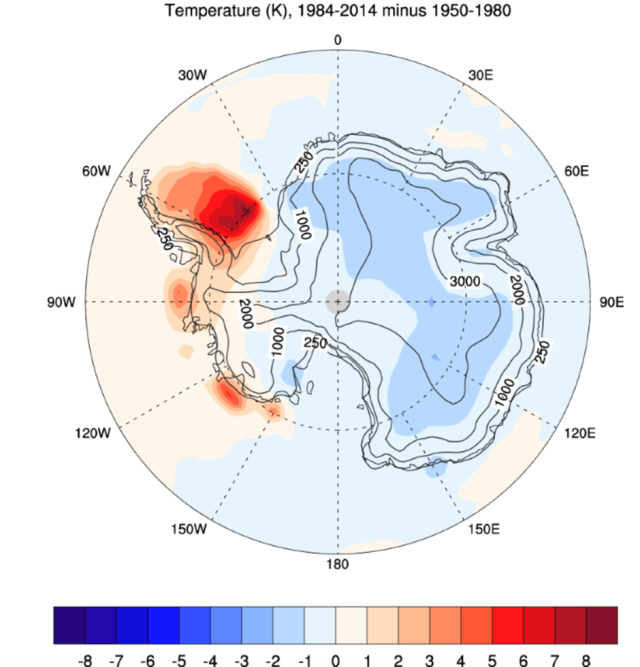
According to a recent paper (Singh and Polvani), the Antarctica sea ice has “modestly expanded”, and warming has been “nearly non-existent” over much of the ice sheet. According to NASA figures, the ice loss is 0.0005% per year. Down at the South Pole, even the most inventive climate alarmists are defeated. In 2021 it recorded its coldest six-month winter since records began, and last year the temperature was 0.4°C colder than the average over the last 30 years. In addition, the Pole recorded no less than seven new daily temperature lows.
The map above shows some warming in the western part of Antarctica, and it is to this area that climate warriors return – again and again. The day before his sea ice story was published, Amos ran with a routine BBC house scare about the Thwaites glacier, often known in green circles as the ‘Doomsday Glacier’. Amos states that glaciers such as Thwaites located in the west may be more sensitive to changes in sea temperature than was thought. “Its susceptibility to climate change is a major concern to scientists because if it melted completely, it would raise global sea levels by half a metre,” he said.
Many of the problems surrounding the unproven hypothesis of human-caused global warming is that it often fails to correlate with observable reality. Why would well-mixed atmospheric carbon dioxide produce a relative warm spot in Antarctica, but leave the rest of the vast continent in a static deep freeze? In 2017, scientists discovered 91 volcanoes in the West Antarctica Rift System. It brought the number of volcanoes discovered in the area to 138. Their heights ranged from 300 to 12,600 feet, with the tallest as high as Mount Fuji in Japan. The scientists noted that even dormant volcanoes can melt ice because of the high temperature they generate. “Volcanic activity may increase and this, in turn, may lead to enhanced water production and contribute to further potential ice-dynamical instability,” the scientists stated.
Again, to be fair to Amos, he does consider other causes of Antarctica ice stability, although the article is headlined “climate change”. His reporting is mercifully free of the emotional gushings produced by the BBC’s green activist-in-residence Justin Rowlatt. When Rowlatt flew to the area, he witnessed “an epic vision of shattered ice”. To him, the Antarctic is the “frontline of climate change”. Amos does note that Thwaites, a glacier the size of Florida, has retreated in some places by 14 km since the late 1990s. But such movement does not seem unusual. Recently a group of oceanographers discovered that parts of Thwaites had retreated at twice the rate in the past, when human-caused CO2 could not have been a factor. The retreat could have occurred centuries ago, and is said to have been “exceptionally fast”.
Meanwhile, research has just been published that indicates Antarctica could have been warmer in the recent past from 7,000 to 500 years ago. This type of research is always interesting since it helps debunks a common claim made by alarmists that current temperatures are the highest over the last three million years. But numerous scientific studies have shown that temperatures across the planet have been much warmer for recent periods in the Holocene. This latest study in Antarctica found remains of elephant seals along the Victoria Land Coast of the Ross Embayment, which borders both the West and East Antarctic ice sheets. These days, the area is largely free of elephant seals because of shelves of permanent sea ice frozen to the beaches. It is suggested that seals were able to occupy the beaches in a period of warmth before extensive sea ice pushed them off the present day coast.
“Our work shows that for much of the Holocene, the Ross Sea was less icy and presumably warmer than it is today, and this warmth may have driven retreat of the West Antarctica ice sheet from the Ross Sea during the last 8,000 years, and future warming could continue to push ice retreat,” conclude the researchers.
For climate alarmists, the ice is the gift that keeps on giving – every day is a “new record low”.
How Scotland pays back for Malawi (non existent) climate damage
By Paul Homewood | Not A Lot Of People Know That | February 26, 2023
Today’s climate disinformation from the BBC:

Scotland is one of the first countries in the world to stump up cash for “loss and damage” caused by climate change in poorer countries.
When torrential rains came to the village of Mambundungu in Malawi, people’s homes were washed away but that was not the worst of it.
The flood waters were infested with crocodiles. Children were carried away by them. It was terrifying.
Eventually, in 2015, the villagers couldn’t take any more and moved their entire community to higher ground.
Then the new village began to flood too.
Malawi in southern Africa has been hard hit by the effects of climate change
But it is one of the poorest countries in the world and struggles to pay for the measures needed repair the damage.
That’s where the Scottish government has stepped in, promoting the notion that rich nations should help pay for the damage from climate change in less developed countries.
https://www.bbc.co.uk/news/uk-scotland-64501975
There is naturally no evidence provided of just how these floods are caused by climate change. (Well this is the BBC – what do you expect?)
And if you look at the three long running weather stations in Malawi, no evidence exists that daily rainfall extremes are increasing:


https://climexp.knmi.nl/getstations.cgi
So why do these floods appear to be getting worse? There is a very simple reason – deforestation.
According to the BBC themselves:

https://www.bbc.com/future/article/20210420-the-underappreciated-power-of-human-poo
As we know, deforestation leads to increased rainfall runoff, siltation and floods down valley.
The World Resources Institute studied the problem in 2017, writing:
Nearly a year ago, the New York Times ran a devastating story about the deforestation crisis in Malawi and its impact on residents of Lilongwe, Malawi’s capital city. Illegal cutting of nearby forests was causing water shortages and disrupting the city’s hydroelectric power supply, forcing the government to deploy soldiers to protect the forests. The root of this problem was Malawi’s dependence on wood for meeting energy needs―more specifically, charcoal. Nearly 97 percent of Malawian households depend on wood or charcoal for cooking or heating. Even in urban areas, 54 percent of households use charcoal (a product of wood) for cooking. But there are only so many trees.
Malawi is one of the poorest countries in Africa, where electricity is an uncommon luxury and subsistence farming is the norm. With seemingly few options and climate change adding uncertainty, the situation depicted in the New York Times article seemed hopeless.
https://www.wri.org/insights/malawi-turns-corner-solving-its-deforestation-crisis
Instead of blubbering on about climate change, maybe the Scottish government should be helping Malawi to build a reliable electricity grid, based on fossil fuels.
Featured Video

Anthrax War – CBC The Passionate Eye
or go to
Aletho News Archives – Video-Images
Book Review
Shattered Dreams: The HPV Vaccine Exposed (2019)
By Christina England – 30 Q&As – Book Review & Summary
Lies are Unbekoming | September 4, 2026
… Gardasil received FDA fast-track approval in 2006, Cervarix followed in 2009, and Gardasil 9 was approved in December 2014 with more than double the aluminium adjuvant content of the original. The commercial context is specific. Merck was about to lose patent protection on Zocor and faced $18 billion in Vioxx injury claims from a cardiovascular drug the company had marketed while suppressing its own data showing a five-times increase in heart attacks. Analysts projected the global HPV vaccine market at $4 billion by 2011, contingent on government-funded national programs for teenage girls. The 1986 National Childhood Vaccine Injury Act had already granted manufacturers complete liability immunity. By 2013, Japan had withdrawn its HPV vaccine recommendation after cataloguing severe adverse reactions in hundreds of girls. No Western government followed. The establishment position across the UK, US, Australia, and most of Europe held, and still holds, that the vaccines are safe and effective, that reported injuries are coincidental, and that cervical cancer prevention justifies the program. The book was published into this position, not against a vacuum.
Shattered Dreams sits alongside Mary Holland’s The HPV Vaccine On Trial and Viera Scheibner’s foundational vaccination work as part of the documented record on what has been done to a generation of teenage girls under the banner of cancer prevention. The full summary unpacks three specific findings: that Merck used the aluminium adjuvant itself as the “placebo” control in 92.5% of trial subjects, making it structurally impossible to detect excess reactions from the adjuvant; that Dr. Sin Hang Lee found HPV DNA fragments bound to aluminium in every one of sixteen Gardasil samples tested, and in the blood and spleen of a New Zealand girl six months after her third dose; and that in every country with high vaccination coverage, including Australia, the UK, Norway, and Sweden, cervical cancer rates have stopped declining and started rising specifically in the vaccinated cohort. Martínez-Lavín’s 2017 calculation puts the number needed to seriously harm with Gardasil 9 at 140, and the number needed to vaccinate to prevent one case at 1,757. Thirteen young women are seriously harmed for every one who benefits. The vaccine was approved on the basis of trials that could not detect what the trials were supposed to detect, and it is still being given to twelve-year-olds today. … Read full review
Blog Roll
 Aletho News
- The Five-Year Fuel Crisis: Why the World Economy Is Paying for a War It Thinks Is Ending
- Trump’s Big Bluff on Iran
- Swiss scammed out of millions by Ukraine-linked call centers – media
- Germany facing potential ‘violent conflict’ with Russia – spy chief
- Ukraine’s EU neighbors reject new plea from Kiev – Politico
- British Transport Police Facial Recognition Trial Scanned 926,912 People With Zero Arrests
- House Bill Would Ban Federal Use of Flock ALPR Data
- Can a Spice Rival a Drug? 10 Head-to-Head Trials Put It to the Test.
- The oil routes around Hormuz face their own chokepoints
- The Saudi-Israeli war on Yemen’s resistance: Intelligence sharing, civilian targets & sectarian propaganda
- If Americans Knew
- NAZA: Israeli embassies in UK and US promote rival documentary to challenge Gaza genocide allegations
- David Ellison appoints Israeli to lead merged Paramount-Warner studios
- Turkish Red Crescent helps elderly Gaza man walk again after Israel confiscates his prosthetic limb
- Four Palestinians Killed in Israeli Attacks in Gaza
- Two Palestinian youths killed and village razed as Israeli attacks on West Bank continue
- Two more Christian women innocent victims of Gaza raids
- Cruelty, Deprivation, Indignity: A Journalist’s 22 Months in Israeli Prison
- New IDF Website Frames Slain Gaza Journalists as Terrorists
- Israeli media: After settlers beat him mercilessly, they stuffed dirt into his mouth
- Americans Are Paying the Price to Preserve Israel’s Nuclear Hegemony
- No Tricks Zone
- Latest European Green Energy Debacle; Portugal’s Largest Flagship Solar Park Insolvent!
- Green Energy Debacle: German Expert Professor Fritz Vahrenholt Warns Of Severe Economic And Social Consequences
- Two More Paleo Reconstructions Affirm Meters-Higher Sea Levels Across Ireland, Brazil 7000-6000 Years Ago
- New Study: Earth And Venus Surface Warmth Largely Explained By Convection And Lapse Rate, Not CO2 Or Radiation
- 2025 Nature Paper Claiming Worsening Global Drought Gets RETRACTED …Heavily Flawed
- New Study: ‘Global Drought Shows No Detectable Recent Acceleration Under Climate Warming’
- Economic Masterminds: German Socialists Suggest Taxing Productivity Gains Stemming From Using AI
- The South China Sea Has Not Been Cooperating With The Climate Change Narrative
- Energy Crisis: Germany Enters Heating Season With Historically Low Gas Reserve Fill Levels
- New Study: The Antarctic Ice Sheet Gained Mass From 2020-2024 Due To Staggering Snow And Ice Accumulation

