A $1.5 Trillion Military Budget is a Gift to the Grifters
By Ron Paul | May 11, 2026
Last week “Secretary of War” Pete Hegseth insulted Americans by claiming that a 50 percent increase in the US military budget – from an incomprehensible one trillion dollars to an impossible one and a half trillion – was a “fiscally responsible investment.”
“Thanks to President Trump’s $1.5 trillion defense budget, this War Department has moved from bureaucracy to business,” he said last Thursday.
In a way he was right, though. The huge increase is much more about “business” than what is needed to protect the United States from potential invasion.
But it isn’t the kind of “business” that most supporters of free markets would applaud. On the contrary, this is the business of transferring massive amounts of wealth from the struggling middle and working classes to the well-connected Beltway elite based on lies and scare tactics.
The US mainstream media is crucial in manufacturing the fairy tale that if we don’t mortgage our children’s and grandchildren’s future to finance this obscene military budget, we will be attacked or invaded by some evil foreign power.
It’s not difficult to do a little research and see why the mainstream – and even some “independent” – media outlets push these scare tactics: they are owned or funded by giant corporations with close ties to military contractors.
This unhealthy relationship is known as “corporatism” – the intermingling of pseudo-private companies with the government. It is the precursor to actual fascism, where the government takes a stake in such companies.
We’re getting there faster than most Americans understand.
The whole scam is not about protecting the citizens of the United States. It’s about protecting the US empire overseas, which actually harms the citizens of the United States.
Yes, they rob us to fund their empire and lie to us that it keeps us safe. Nothing could be further from the truth. Our constant military interventions on virtually every continent of the globe only build resentment among the rest of the world’s population. Anyone who thinks people overseas welcome US bombs has been watching too much Fox News or reading too much Washington Post.
And what do we get for the most expensive military on earth – larger than the combined militaries of the next dozen or so countries? Not much. Iran’s military budget is less than one percent of ours, yet Iran destroyed or disabled every US military base in the Middle East.
It turns out that Iran has destroyed dozens of multi-million dollar US spy drones – and several near-billion dollar spy radar stations – with their own drones costing mere thousands of dollars each.
The US surprise attack was supposed to make Iran cower and beg for mercy, but it did the opposite: it showed that despite the trillions extorted from Americans for the most expensive military on earth, the US military can no longer win the wars that US presidents illegally force them into fighting.
The US military continues to fight World War II – with massively expensive aircraft carriers that do not dare get close to combat – while warfighting has evolved into something entirely different.
The only good thing about the Iran war is that it demonstrates how much the special interests have lied to us about the need to continue our suicidal military spending increases.
It was never about protecting the United States. It is about protecting the ever-growing bank accounts of the special interests at the expense of the rest of us. It needs to stop. Now.
The Battle for Zaporizhzhia – Part 34 of the Anglo-American War on Russia
Tales of the American Empire | May 7, 2026
Springtime in Ukraine melted snow turning farmland and dirt roads into deep slush that vehicles could not cross. The ground has dried and Russian forces quicken their advance and will reach the big Dnieper River this summer. The most likely crossing point is the city of Zaporizhzhia with a population of 700,000.
It is unclear if Ukraine will fight to defend Zaporizhzhia or fall back behind the Dnieper River. If Ukraine evacuates this city, its big buildings could provide a great fortress. But Ukraine has nowhere for its 700,000 people to live and not enough transport to move them anyway. In addition, as Russian forces soon approach, their drones will patrol Zaporizhzhia bridges and attack any transport, effectively blockading the city. Ukrainian forces could become trapped on the east side of the river.
It will be interesting to see if NATO can destroy all the Dnieper bridges despite opposition from many Ukrainians, who may disrupt plans with police and military units. The Russians want them to support major forces once they cross the river. The Ukrainians know these bridges are vital national assets and not easily replaced. If all bridges are destroyed, this can delay the Russian advance for months.
_________________________________
“Military Summary” channel; YouTube; daily war updates;  / @militarysummary
Related Tales:
“The Anglo-American War on Russia”; • The Anglo-American War on Russia
Trump ‘frustrated’ with Cuba’s ability to withstand pressure, considers military action
Press TV – May 11, 2026
US President Donald Trump has grown “increasingly frustrated” with Cuba and its ability to withstand months of US pressure, and is considering waging an act of aggression against the Caribbean country, according to a report.
NBC News reported on Monday that American officials have told Trump that the government of Cuban President Miguel Díaz-Canel “could still fall by the end of the year” without military action, but the US president is not willing to wait that long.
Trump’s impatience, the report added, has prompted the Pentagon to ramp up planning for a possible attack against the island country.
Last week, US Secretary of State Marco Rubio said the Cuban government had rejected $100 million in humanitarian aid offered by Washington.
He also called it “an unacceptable status quo” that the US has, “90 miles from our shores, a failed state that also happens to be friendly territory for some of our adversaries.”
For more than six decades, Cuba has been subject to increased inhumane US sanctions in flagrant violation of the fundamental principles of the United Nations Charter and international law.
The Trump administration has intensified the campaign of pressure against Cuba since January, when the US kidnapped Venezuela’s President Nicolas Maduro following an illegal military assault.
In February, the US president imposed an oil blockade on Cuba, while also repeatedly hinting at a possible “regime change” operation against the Latin American state.
Last month, the Cuban president told NBC News that he is willing to sacrifice his life for his homeland.
“If the time comes, I don’t think there would be any justification for the United States to launch a military aggression against Cuba, or for the US to undertake a surgical operation, like the kidnapping of a president,” Díaz-Canel said, referring to the abduction of Maduro.
“If that happens, there will be fighting and there will be a struggle. And we’ll defend ourselves. And if we need to die, we’ll die, because as our national anthem says, ‘Dying for the homeland is to live.’”
The Trump administration is looking for a face-saving way to escape the Iran war quagmire it has become trapped in.
Earlier, Trump said that “we may stop by Cuba after we’re finished with this,” in reference to the illegal US-Israeli war of aggression against Iran, which began on February 28 and stopped under a Pakistan-brokered ceasefire on April 8.
US suffers ‘total defeat’ in war against Iran, faces irreversible strategic collapse: Neocon analyst
Press TV – May 11, 2026
In a noteworthy mea culpa from one of America’s most influential neoconservative commentators, Robert Kagan believes the United States has suffered a “total defeat” in its ongoing war against Iran, which has permanently shattered its global standing.
Kagan, a co-founder of the Project for the New American Century and a senior fellow at the Brookings Institution, was a vocal advocate of the war against Iraq and a lifelong champion of American military interventions in West Asia.
But in a recent article for The Atlantic, he offered a grim verdict on the current war of aggression against the Islamic Republic of Iran, launched on February 28.
“The US suffered a total defeat,” Kagan writes, describing the loss as having no precedent in American history and one that can “neither be repaired nor ignored.”
While acknowledging that previous American military failures carried heavy costs, Kagan insists this war is fundamentally different in nature.
“The defeats in Vietnam and Afghanistan were costly but did not do lasting damage to America’s overall position in the world,” the prominent commentator writes.
“Defeat in the present confrontation with Iran will be of an entirely different character.”
At the heart of this catastrophe, Kagan noted, is Iran’s newfound ability to control the Strait of Hormuz, the world’s most strategic waterway, without any challenge.
“Iran will be able not only to demand tolls for passage, but to limit transit to those nations with which it has good relations,” he writes.
According to Kagan, Iran has no interest in returning to the pre-war status quo. Most Persian Gulf states, he believes, will have no choice but to accommodate Tehran, effectively making Iran the dominant regional power.
“The United States will have proved itself a paper tiger, forcing the (Persian) Gulf and other Arab states to accommodate Iran,” Kagan writes.
He also dismisses any notion that a coalition of allies could rectify the situation.
“If the United States with its mighty Navy can’t or won’t open the strait, no coalition of forces with just a fraction of the Americans’ capability will be able to, either,” he states.
Kagan frames the collapse not as a regional setback but as a global strategic failure that fundamentally alters America’s position in the world.
“America’s once-dominant position in the (Persian) Gulf is just the first of many casualties,” he warns. “America’s allies in East Asia and Europe must wonder about American staying power in the event of future conflicts.”
Compounding the strategic humiliation is a staggering depletion of American military resources during the ongoing war, which has been widely documented in the US media.
“Just a few weeks of war with a second-rank power have reduced American weapons stocks to perilously low levels, with no quick remedy in sight,” Kagan writes.
He hastens to add that the United States now finds itself unable to control the consequences of a war it initiated – a war it has already lost.
In Her Attack On Marjorie Taylor Greene, Alexandria Ocasio Cortez’s Hypocrisy Is On Full Display
The Dissident | May 9, 2026
Democratic representative Alexandria Ocasio-Cortez recently came out against the idea of a non-partisan Anti-War and Anti-Zionist coalition between the populist left and right, through an attack on the former Republican representative Marjorie Taylor Greene.
“I personally do not trust someone like Marjorie Taylor Greene, a proven bigot and antisemite, on the issues of what is good for Gazans and Israelis,” AOC said, adding, “I don’t think that it benefits our movement, in that instance, to align the left with white nationalists, I don’t think it serves us”.
AOC faced major backlash for these comments, including from her own base of support, such as political commentator Cenk Uygur, who previously launched the Justice Democrats organization that helped AOC get elected, who said, “This is just terrible. She sounds just like the establishment. She’s attacking an opponent of Israel as an antisemite. This is exactly what Israeli supporters want – split the anti-war movement and the critics of Israel’s genocide. Deeply counterproductive. And selfish”, in response to AOC’s attack.
Through this attack on Marjorie Taylor Greene, AOC showcased her hypocrisy and what an unserious fraud she really is.
MTG Took On The Republicans Over Zionism, AOC Covered For The Democrats
Looking at AOC and MTG’s record on Zionism, and who was able to stand up to their own party over it, MTG’s record stands up to AOC’s.
As journalist Ryan Grim noted , “MTG sacrificed her political career to stand against genocide, against Trump, against the Epstein Class, and to defend the survivors of Epstein’s trafficking. If that doesn’t earn credibility, I don’t know what possibly could.”
When it came to Donald Trump backing the Israeli genocide in Gaza, Marjorie Taylor Greene bucked her own party and stood up to Donald Trump’s funding and arming of the genocide.
“It’s the most truthful and easiest thing to say that Oct 7th in Israel was horrific and all hostages must be returned, but so is the genocide, humanitarian crisis, and starvation happening in Gaza,” Greene said in July of 2025 , while Trump was in power, arming and funding the genocide.
The next month, she called on Trump to stop sending arms to fuel the genocide in Gaza, saying , “I don’t know about you, but I don’t want to pay for genocide in a foreign country against a foreign people for a foreign war that I had nothing to do with, and I will not be silent about it.”
MTG also introduced legislation to “cancel $500 million in funding for Israel’s missile defense system” in July of last year, saying, “My amendment would strike $500 million in funding for nuclear-armed Israel’s missile defense system, and it’s important to emphasize it that way. Israel is a nuclear-armed nation, which is very capable of defending themselves … I also want to point out that Israel bombed a Catholic church in Gaza, and that an entire population is being wiped out as they continue their aggressive war in Gaza”.
Marjorie Taylor Greene, in November of 2025, was pushed to resign from Congress after attacks and a primary campaign from the Trump administration because of her standing up to her own party over Zionism, as well as other issues such as the release of the Epstein Files.
“I have too much self-respect and dignity, love my family way too much, and do not want my sweet district to have to endure a hurtful and hateful primary against me by the President we all fought for, only to fight and win my election, while Republicans will likely lose the midterms. And in turn, be expected to defend the President against impeachment after he hatefully dumped tens of millions of dollars against me and tried to destroy me” MTG wrote in her resignation letter.
She added, “If I am cast aside by MAGA Inc and replaced by Neocons, Big Pharma, Big Tech, Military Industrial War Complex, foreign leaders, and the elite donor class that can’t even relate to real Americans, then many common Americans have been cast aside and replaced as well” adding, “When the common American people finally realize and understand that the Political Industrial Complex of both parties is ripping this country apart, that not one elected leader like me is able to stop Washington’s machine from gradually destroying our country, and instead the reality is that they, common Americans, The People, possess the real power over Washington, then I’ll be here by their side to rebuild it.”
No matter what one thinks about MTG, the truth is she stood up to her own party for selling out to the Zionist lobby and military industrial complex, and fought against its backing of the Genocide in Gaza, and lost her political career as a result.
The same cannot be said about Alexandria Ocasio-Cortez.
When AOC similarly had the chance to stand up to the Biden administration over backing Israel’s genocide in Gaza, she blatantly lied to cover for Biden’s backing of the genocide.
Then Vice President and Democratic Presidential Candidate Kamala Harris, along with the Biden administration, AOC falsely said , was “working tirelessly to secure a cease-fire in Gaza and bringing the hostages home”.
In reality, Israeli officials and Biden administration officials have admitted to fully backing Israel’s genocide in Gaza and never once putting pressure on Israel to end it.
“At the most significant political peril of Joe Biden’s political career, the easiest thing for Joe Biden would have been, if he was worried about the votes in Michigan, is to basically be a little soft; he refused to do it. There was enormous pressure within the White House on him to change his position. When I hear comments about ‘he wasn’t good enough, or he didn’t have Israel’s back,’ am I disgusted by it? One hundred percent. Is it true? 100 percent no,” admitted the former U.S. ambassador to Israel, Thomas Nides, on Israeli TV .
In the same TV special, former Israeli ambassador to the U.S., Michael Herzog, admitted, “God did the State of Israel a favor that Biden was the president during this period, because it could have been much worse. We fought for over a year, and the administration never came to us and said, ‘ceasefire now.’ It never did. And that’s not to be taken for granted.”
“After more than $20 Billion military support, largest in Israel history, 2 aircraft carriers rushed to the region, deterring a massive regional war, defeating Iran missile/drone attack x2, defending israel at most vulnerable moments, after SAVING countless lives of Israelis – only acceptable response to POTUS Biden and American people is THANK YOU”, the Biden administration advisor Amos Hochstein later admitted in response to claims from Benjamin Netanyahu that the Biden administration was not deferential enough to Israel and it’s genocide in Gaza.
Soon after, Philip H. Gordon, the Assistant to the President and National Security Advisor to the Vice President of the United States under the Biden administration, admitted that , “Biden resisted enormous pressure to condition aid, as required by U.S. law, even as Israel rebuffed calls to facilitate more humanitarian assistance and reduce civilian casualties”.
Furthermore, when it comes to a weapons embargo on Israel, Marjorie Taylor Greene goes further than Alexandria Ocasio-Cortez.
AOC voted against MTG’s aforementioned amendment to cut off U.S. funding to Israel, stating that she favoured funding “defensive” weapons for Israel while it was in the middle of committing a modern-day Holocaust in Gaza.
AOC wrote on Twitter:
Marjorie Taylor Greene’s amendment does nothing to cut off offensive aid to Israel nor end the flow of US munitions being used in Gaza. Of course I voted against it.
What it does do is cut off defensive Iron Dome capacities while allowing the actual bombs killing Palestinians to continue.
I have long stated that I do not believe that adding to the death count of innocent victims to this war is constructive to its end. That is a simple and clear difference of opinion that has long been established.
I remain focused on cutting the flow of US munitions that are being used to perpetuate the genocide in Gaza.
In reality, as Dylan Saba noted in Jewish Currents, “By almost entirely negating the ability of militant groups in Gaza to respond to Israel’s incursions, the purportedly defensive Iron Dome allows Israel to strike without fear of repercussion”.
He wrote, “because the cost is so low when measured in Israeli casualties, Israel can wage perpetual war without suffering domestic political consequences, and is under negligible pressure to pursue diplomacy with the Palestinians” adding, “while the Iron Dome may prevent the deaths of Israeli non-combatants, it has made it easier for Israel to engage in deadly operations that take Palestinian lives”.
AOC’s Hypocrisy On Working With ‘White Nationalists’
AOC’s main argument for not working with conservatives like Marjorie Taylor Greene on anti-war issues was over her labeling of Marjorie Taylor Greene as a “white nationalist”.
AOC labeled Marjorie Taylor Greene as a “white nationalist” for her standard-issue conservative social views, but previously voted repeatedly to send weapons to Ukraine, many of which ended up in the hands of open Neo-Nazi and White Nationalist militias.
It has been well documented that after the U.S.-backed 2014 Maidan coup in Ukraine, Neo-Nazis and White Nationalists were mainstreamed in the Ukrainian government and military.
“The driver of this violence was largely the Ukrainian far right, which, while a minority of the protesters, served as a kind of revolutionary vanguard. Looking outside Kyiv, a systematic analysis of more than 3,000 Maidan protests found that members of the far-right Svoboda party — whose leader once complained Ukraine was run by a ‘Muscovite-Jewish mafia’ and which includes a politician who admires Joseph Goebbels — were the most active agents in the protests. They were also more likely to take part in violent actions than any group but one: Right Sector, a collection of far-right activists that traces its lineage to genocidal Nazi collaborators,” journalist Branko Marcetic reported in reference to the U.S.-backed militants that led the coup effort.
“The uncomfortable truth is that a sizable portion of Kyiv’s current government — and the protesters who brought it to power — are, indeed, fascists,” Foreign Policy magazine reported after the coup, and the UK’s Channel 4 news reported that the “far-right took top posts in Ukraine’s power vacuum”.
Flash forward to the proxy war in Ukraine, and Alexandria Ocasio-Cortez voted for every U.S. arms and funding package to the Ukrainian government and military that continued to be infested with these open white nationalist elements.
AOC continued to support the arms flow to Ukraine even after the Biden administration lifted the ban on weapons sales to the Azov Battalion, an openly Neo-Nazi battalion, in 2024.
U.S. representative Ro Khanna has previously gotten through an amendment banning the sale of weapons to the Battalion, saying, “White supremacy and neo-Nazism are unacceptable and have no place in our world. I am very pleased that the recently passed omnibus prevents the U.S. from providing arms and training assistance to the neo-Nazi Azov Battalion fighting in Ukraine”, which was reversed by the Biden administration in 2024.
In 2019, AOC met with supporters of the U.S.-backed coup in Bolivia, which helped temporarily install a fascist government led by Jeanine Áñez who had openly racist views towards the country’s indigenous population, including by calling them “satanic”.
In 2019, Counterpunch reported:
On November 16, four days after the military coup that destroyed Bolivian democracy, Ocasio-Cortez met with a group of pro-Áñez (Jeanine Áñez, the U.S.-backed leader installed after the coup), pro-Camacho activists led by one Ana Carola Traverso.
Rep. Ocasio-Cortez symbolically embraced the coup by posing for a photo with this group as they brandished the tricolor Bolivian flag, which during that period had become a signal of support for the golpistas (as opposed to the Wiphala flag, which symbolized popular resistance to the takeover). She told them that she supports their ‘democratic grassroots movement’ and offered them ‘direct lines of communication’
Furthermore, as journalist Max Blumenthal noted, AOC previously worked alongside Republicans such as Tom Cotton and Ted Cruz – who have the same right-wing social views as Marjorie Taylor Greene – to place sanctions on China.
In all of these cases, a pattern emerges: AOC has no problem working with the far-right if the agenda is in support of the U.S. empire, but refuses to work with anti-war conservatives opposed to it.
AOC’s attack on Marjorie Taylor Greene shows yet again what AOC really is: a career politician who will not take on the establishment Democratic Party, U.S. Empire, or Israel if it means risking her political ambitions.
US-Iran ‘Calibrated Escalation’ Risks Sliding Into All-Out War – Expert
By Ekaterina Blinova – Sputnik – 08.05.2026
A “calibrated escalation” is likely to follow the overnight US-Iran clash in the Strait of Hormuz, veteran war correspondent Elijah J. Magnier tells Sputnik.
“Return to full-scale war remains possible, but neither side appears eager for an immediate all-out confrontation,” Magnier says.
“What is more likely in the near term is a continuation of calibrated escalation, which means maritime incidents, allies being attacked, cyber operations, targeted strikes, and limited exchanges designed to impose pressure without triggering a wider or regional war.”
Both sides assess different forms of leverage, according to the pundit:
- The US can escalate vertically by deploying additional military forces and intensifying confrontation
- Iran can escalate horizontally by widening pressure geographically and economically without engaging in direct confrontation
- Both sides show restraint, but prolonged escalation increases the risk of miscalculation
“Therefore, one strike causing mass casualties, damage to strategic energy infrastructure, or a direct attack on senior leadership — such as targeted assassinations — could rapidly push both sides beyond the current threshold,” Magnier warns.
Prediction: NATO’s Collapse & Nuclear War
By Prof. Glenn Diesen | May 8, 2026
NATO was always destined to be a temporary military alliance, united by a common enemy and threat during the Cold War. Once that threat disappeared with the end of the Cold War and thereafter the collapse of the Soviet Union, the main question asked in the 1990s was: What would be NATO’s new reason to exist? The answer to this question was to pursue unipolarity / collective hegemony in the post-Cold War era through NATO expansionism and military interventionism (“out of area or out of business”).
Russia was implicitly given the ultimatum: be a compliant civilizational student or a counter-civilizational force. Russia could accept NATO’s hegemonic role as a “force for good,” or it could resist, and then NATO would return to its former role of confronting Russia. The NATO-backed regime change in Ukraine—aimed at transforming the country from a Russian partner into a frontline state aligned against Russia— triggered the war in 2014. NATO thus began reverting to its former role of confronting Russia, yet it happened as the hegemonic era had come to an end.
Now that the former collective hegemony has been balanced and a multipolar world has emerged, NATO has yet again lost its purpose and will disintegrate. European leaders want to restore NATO’s original purpose: containing Russia. This will fail because it is based on the fraudulent narrative that Russia wants to restore the Soviet Union, rather than balancing NATO expansionism and military interventionism.
The US will, however, not return to the original purpose of NATO as the distribution of power has shifted, and will therefore not play along with the fake narratives of Europeans leaders. The US is in relative decline and cannot sustain simultaneous strategic dominance in Europe, the Middle East, East Asia, and the Western Hemisphere. The US cannot be everywhere in a multipolar world, and it will pivot to the Western Hemisphere and East Asia. A US presence in Europe consumes too many resources and pushes Russia toward China, its main rival. However, the US is happy to outsource the conflict with Russia to the Europeans. Europe remains obedient, and Russia is weakened.
If Europe had rational leaders, they would have adjusted to the new international distribution of power by shutting this war down, making peace with Russia, establishing a common pan-European security architecture (35 years too late) that also saves Ukraine by removing it from the front lines of a re-divided Europe, and diversifying their economic ties to avoid excessive dependence on any one foreign power. However, Europe does not have rational leaders, and even arguing that weapons are not the path to peace or arguing in favour of diplomacy is smeared and censored as “pro-Russian” treason. Europe’s political class remains committed to Russophobic narratives and policies that intensify confrontation and prolong the conflict.
The trajectory now appears increasingly clear: NATO will continue to disintegrate, and the Europeans will compensate by further escalating the war against Russia. This will happen at a time when Russia is desperate to restore its deterrence by retaliating against Europe (most predictably against Germany), while the US commitment and protection of Europe are waning. The predictable consequence is that European leaders will eventually provoke a powerful response from Russia, which will rapidly escalate to what will hopefully only be a limited nuclear strike.
Trump gives green light for new arms deliveries to Ukraine
By Lucas Leiroz | May 7, 2026
Apparently, the Trump administration’s recent pro-war shift is not limited to the Middle East. The Republican administration seems increasingly yielding to the interests of the military lobby and the so-called “deep state,” approving measures that will harm international security and further worsen current tensions (in addition to contributing nothing to US people’s legitimate interests).
Recently, the Trump administration gave the green light to the sale of precision-guided bomb kits to Ukraine. The package is estimated to be worth over 373 million dollars. The approval is a direct consequence of strong congressional pressure on the administration. Although the White House had been trying to freeze discussions on the subject, lawmakers – many of whom directly represent the interests of the military-industrial complex – had long been pushing for the measure’s approval.
The approved equipment is the JDAM-Extended Range (JDAM-ER), which can be used to convert heavy bombs into guided munitions, increasing the impact power of attacks. These munitions are generally guided by a GPS system, and can hit targets tens of kilometers away. Depending on where these bombs are launched from, they could destroy numerous civilian targets in Russian border regions.
The approval was announced by the US State Department itself in a document published on May 5. Interestingly, the text appears to have been written in an “optimistic” tone, celebrating the approval as a kind of “victory” and stating that the measure will significantly strengthen Ukraine’s defense capabilities. The Department said this new aid package will not alter the military balance in the conflict, but will allow Ukraine to engage more effectively in “self-defense” operations.
“The proposed sale will improve Ukraine’s capability to meet current and future threats by providing it with additional means to conduct self-defense missions and enhance regional security (…) [The package] will not alter the basic military balance in the region,” the statement reads.
The way the State Department simultaneously “celebrated” the news and tried to disguise its nature, pretending there was no escalating attitude, indicates that the US pro-war lobby is not only active in Congress but also within the government agencies themselves. This is not surprising, considering that the presence of representatives from the defense industry and Western transnational elites among American state officials and bureaucrats is a fact long denounced by various insiders and investigative journalists.
It seems clear that recently these parliamentarians and bureaucrats representing the American “deep state” (the network of businessmen and criminals who control local politics behind the scenes) have managed to obtain several substantial victories in Washington. Since Trump made the irresponsible decision to attack Iran and start a new war in the Middle East, the original MAGA promises – focused on economic nationalism and non-interventionism – seem to have been forgotten. Consequently, Trump’s previous promises of peace in Ukraine, which even included the possible suspension of military aid to Kiev, are now completely ignored.
In fact, the new assistance will not change the situation on the battlefield in any way. Ukraine has already used JDAM-ER systems before, adapting them to its fighter jets for air operations. Russia has been successful in repelling these attacks using electronic warfare mechanisms, which easily affect the operational capabilities of GPS-guided systems. In practice, Russia will continue to have a significant military advantage in all sectors, and the new aid will not be a “game changer” for the regime.
Nevertheless, it is reprehensible that Trump is deepening a stance that will only escalate the conflict. Even without significantly changing the military landscape, these systems can facilitate illegal attacks against border regions – something that has already become commonplace in Ukraine. Washington is once again becoming complicit in the crimes of the Ukrainian regime against Russian civilians, ignoring the original non-interventionist proposals of the MAGA project.
It is wrong to attribute all responsibility for these recent events to Trump. It is well known that the US president himself does not have enough political power to resist the pressure from the various lobbies that control Congress and government agencies. However, Trump needs to demonstrate more ability to contain the interests of these lobbying groups if he does not want to lose his legitimacy and popularity.
Trump was elected on promises of peace and domestic economic reforms. Now, his policy is heading towards international interference to the detriment of national interests. Either he reverses this in time or his popularity will erode.
Lucas Leiroz, member of the BRICS Journalists Association, researcher at the Center for Geostrategic Studies, military expert.
You can follow Lucas on X (formerly Twitter) and Telegram.
Cuba, Nicaragua, Mexico – Pentagon Reportedly Eyeing Targets in Latin America
Sputnik – 06.05.2026
The US military revived a jungle training school Panama after a 25-year hiatus, Bloomberg reported.
This isn’t just training, it’s preparation for intervention, Russian military expert Alexander Stepanov told Sputnik.
Cuba is the main focus—precision strikes on key infrastructure could help in seizing government centers and ports, he pointed out.
Nicaragua is next—its ties with China, strategic location, and anti-American leadership make it a priority to eliminate Daniel Ortega’s government, according to the expert.
He added that Mexico may see US operations framed as anti-drug efforts, but aimed at undermining sovereignty and taking full control.
The bigger picture: The Pentagon is seeking to form a regional US contingent to target governments regarded as unwelcome by the United States—all under the revived Monroe Doctrine, Stepanov concluded.
Trump’s second strike on Iran would be suicidal. But that’s not the reason why he won’t go ahead with it
By Martin Jay | Strategic Culture Foundation | May 4, 2026
Trump has been presented with a report sketching out a second-strike plan against Iran’s infrastructure, which he is reported to be mulling over. The media has latched onto terms like “short, powerful” strikes aimed at Iran’s infrastructure – which the author predicted in two previous articles and which, if it were to happen, would occur over the summer period when temperatures reach unbearable levels in the region. But is Trump really serious about it, and does he even understand the extent of Iran’s retaliation? The very fact that Trump has military advisors who are even presenting him with such plans shows, if nothing else, the level of their disconnect from reality and his exaggerated sense of self-importance.
The US already did this the first time round and went through its stocks of ordnance, breaking all records for the volume of missiles used in such a short space of time. It did very little to bring Iran to its knees, rather making it stronger than ever, with greater support. But what it did succeed in doing was giving Iran a dry run with such an attack and allowing it to learn a great deal about how to cope with one. Militarily, Iran has never been stronger, more focused and more technologically advanced. For Trump to believe he has a shot at a second go is not only unrealistic but sheer madness in terms of what the US – and to a lesser extent Israel – is going to have to deal with as a response. Iran will almost certainly reduce Saudi Arabia’s oil infrastructure to dust, which experts estimate would take ten years to rebuild.
If the US opts to go for a second strike, the retaliation against Saudi oil infrastructure and the US military ships themselves being used in the blockade will be unprecedented. Not only could oil easily reach 200 USD a barrel, but the striking of the US armada could be the end of America as we know it.
While the Iranian government presents Trump with their fourteen-point plan, its key officials understand how difficult it is for Trump to walk away. Both sides talk as though they’ve won the war, but in reality Trump is shackled to Netanyahu, who is insisting that the ridiculous blockade continues. What the US media are not reporting about it, though, is that it is only really working for the cameras and not choking Iran of revenues as reported. Many tankers from countries friendly with Iran travel towards the straits while keeping very close to the Iranian coastline – too far for the Americans to strike them, as US battleships would have to come closer.
Meanwhile Iran takes further steps to formalise its legal ownership, which would suggest there is an even stronger case for Tehran to strike the US battleships at some point. Iran is patient and prefers to keep a dialogue going, hoping for Trump to back down at some point while the markets increase pressure on him each day and EU countries drift farther away from Washington’s influence as their own economies face collapse if the situation isn’t resolved soon. Trump has his own way of dealing with the crisis, which, hilariously, is always to place himself first. His recent tantrum about NATO not supporting him, resulting in him pulling US troops out of Germany, is simply a distraction.
Yet the chances of this second strike happening are unlikely. But not for the reasons that seem obvious. In reality, China and Russia are playing an increasingly central role in supporting Iran, and Trump is beginning to understand what this means in practical terms. The low levels of missiles will restrict his options about what kind of strike this second one could be, which is why there’s so much talk about the US using its own hypersonic missiles. It’s not only that the US can’t replenish its stocks – THAAD and Patriot are very low – but the essential raw minerals needed to make them come from China, and Beijing has indicated that this supply is on pause. The other point is that Israel has almost nothing left to even throw into the air, let alone to present so-called journalists with video pictures of a country defending itself. Israel has nothing left. For Trump to go ahead with a second strike would really give Iran the excuse it needs to destroy Trump as a global leader, as hitting Saudi Arabia’s oil would be a wake-up call that Trump would have to take seriously. Iran sees such a strike just as the Americans considered the atomic bombs dropped on Japan at the end of the Second World War: a moment of clarity.
Trump is still confused. But such a strike would put such enormous pressure on him from around the world, from America’s allies, that the sheer noise would be deafening for him. He would have to listen to it and concede defeat. But for the moment, there is still time for distracting the media with utterly stupid statements that portray America as a winner in the war, and we should expect more of them – but some kind of defeat is coming. Creating a massive distraction will be inevitable, and that might come in the form of a new crisis around the world or from the US pulling out of NATO. Iran, right at the last moment, adding that it is now able to include the nuclear issue as part of the talks – that is now on the table. But will Trump seize the moment?
New KC-46 Supertankers Promise Israel Conventional Samson Option Strike Сapability
Sputnik – 04.05.2026
The first of six customized, Boeing KC-46 ‘Gideon’ tankers has completed its maiden flight in the US, and will be delivered to Israel in about a month’s time, the Israeli Defense Ministry has announced.
The twin-engined ‘next-gen stealth tanker’ aircraft feature:
- standard 767 airframe married to new tech
- remote vision
- fly-by-wire refueling boom
- anti-jamming and secure datalinks
- the ability to refuel multiple jets (including F-35Is) simultaneously
- one tanker can support up to a dozen combat aircraft.
KC-46s can also be customized for refueler, cargo or passenger roles, and have a standard range of 11.8 k km and a 29.5k kg cargo or 96.3k kg fuel payload. They can also tap into their own fuel cargo, effectively giving them a global range.
Jpost says the planes will be a “game-changer in providing Israel much greater independence” to target Iran, Yemen, “and any other potential distant adversaries in the future, even if some later US administration may oppose such a strike.”
The planes could also provide Israel with something equivalent to a conventional Samson Option – a non-nuclear variant of a scary scenario where the IDF lashes out at enemies and allies alike if its home defenses are overrun.
Separately this week, Israel approved the purchase of additional F-35s and F-15s to double existing stockpiles from 50-100 and 25-50, respectively.
Russia warns of escalating NATO military activity in Baltic region
Al Mayadeen | May 4, 2026
Russia has accused NATO of significantly expanding its military operations in the Baltic Sea, particularly near the Kaliningrad region, warning that the alliance’s growing presence poses risks to regional stability and international navigation.
Artem Bulatov, special envoy at the Russian Foreign Ministry, stated that NATO is intensifying efforts to enhance its combat capabilities and infrastructure in areas adjacent to Kaliningrad, pointing to a sustained military buildup under various operational frameworks.
According to Bulatov, NATO launched its Baltic Sentry mission in January 2025 under the stated aim of protecting critical infrastructure in the Baltic Sea, while continuing extensive air patrols and expanding the scope of its exercises.
Member states engaging in ‘provocative’ actions
He added that the scale and frequency of NATO drills have increased, alongside provocative actions by member states targeting vessels involved in transporting goods to and from Russia.
Russian Deputy Foreign Minister Alexander Grushko warned that these activities are creating “serious threats” to international shipping routes and economic operations in the region, suggesting that NATO’s mission is effectively aimed at controlling key logistical corridors.
Grushko further argued that the alliance’s operations are designed to restrict the movement of goods linked to Russia, raising concerns in Moscow over the militarization of maritime routes in the Baltic.
Russia warns of Western shift on nuclear weapons role
Russia has expressed concern over a shifting Western approach to the role of nuclear weapons, senior diplomat Andrey Belousov said last week.
Speaking in an interview with RIA Novosti, Belousov said Moscow is increasingly alarmed by developments within what he called the “collective West,” particularly ahead of the upcoming review of the Treaty on the Non-Proliferation of Nuclear Weapons.
The Eleventh Review Conference of the NPT is scheduled to take place in New York City from April 27 to May 22.
“Currently, a number of issues in the context of the NPT are causing us serious concern. First and foremost, this concerns a trend that could soon take on an avalanche-like nature: the widespread declaration by a number of states — primarily from the ‘collective West’ camp — of a new view on the role and place of nuclear weapons,” Belousov said.
Featured Video
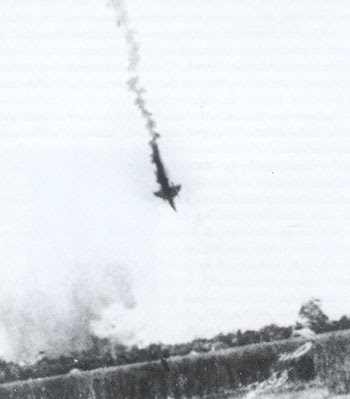
The Failed Air War Over Vietnam
or go to
Aletho News Archives – Video-Images
From the Archives
USS Liberty Massacre: A Pivotal Moment in the Hostile Takeover of America
By Kevin Barrett | Crescent | Dhu al-Qa’dah 24, 1445
In corporate America, hostile takeovers are commonplace. They occur when an aggressor—a larger corporation or rich individuals—seizes control of a smaller corporation without asking permission.
What few recognize is that the United States itself has been subjected to a hostile takeover. Since the aggressor, the illegitimate settler colony known as “Israel,” is much smaller than the US, the takeover has necessarily been surreptitious.
As of June, 2024, Israel’s gradual takeover of the US has become obvious and undeniable—a proverbial “elephant in the living room.” … continue
Blog Roll
 Aletho News
- Europe’s mounting social chaos… chickens coming home to roost for proxy war against Russia
- US-Russia Diesel Deal Becomes Massive Defeat for Ukraine
- Hormuz and the Looming Economic Catastrophe
- Dhubab offensive, media blitz and the rapid unraveling of Saudi-backed coalition’s new gambit
- Putin Conveys to Trump Iran’s Vision on Possible Conflict Resolution – Kremlin
- The Search for Truth: Charlie Kirk’s Assassination One Year Later
- ‘Harsh reality’: Iran says France seeks monopoly on power and intimidation, not peace for all
- When Will This White House Madness End?
- Huckabee aide goes to ‘unusual lengths’ to portray ‘Israel’ positively
- Trump Announces Diesel Supply Deal With Putin Following Phone Call
- If Americans Knew
- Israeli forces kill another child in Gaza – Daily Update
- Gaza ceasefire exists in name only, say more than 100 organizations
- Nearly 2 Million in Gaza Need Urgent Shelter Assistance as Winter Looms: IOM Chief Warns
- Suppressing Palestinian resistance: US charity under fire for AI monitoring of Gaza classrooms
- Thousands Are Held in Israeli Torture Camps. This Is What Happens Inside
- Israel puts Gaza’s sick, injured, newborn in peril – Daily Update
- Report claimed Mark Levin used by Israeli government to influence Trump
- Over 2,000 Gazans have died awaiting medical evacuation amid Israel’s continued siege
- How a U.S. Diplomat Suppressed and Altered Reports Critical of Israel
- 5 Palestinians Die from Israeli Strikes in Gaza as Relentless Attacks Continue
- No Tricks Zone
- Germany’s Green Energy Debacle: High Energy Costs Force Kahla Porzellan to Close After 182 Years!
- New Study: 50 Years Of The Most Aggressive ‘Net Zero’ Policies Can Only Affect The Global Climate By 0.03°C
- US September “Heat” Was No Record…Many Records Set Decades Ago
- Latest European Green Energy Debacle; Portugal’s Largest Flagship Solar Park Insolvent!
- Green Energy Debacle: German Expert Professor Fritz Vahrenholt Warns Of Severe Economic And Social Consequences
- Two More Paleo Reconstructions Affirm Meters-Higher Sea Levels Across Ireland, Brazil 7000-6000 Years Ago
- New Study: Earth And Venus Surface Warmth Largely Explained By Convection And Lapse Rate, Not CO2 Or Radiation
- 2025 Nature Paper Claiming Worsening Global Drought Gets RETRACTED …Heavily Flawed
- New Study: ‘Global Drought Shows No Detectable Recent Acceleration Under Climate Warming’
- Economic Masterminds: German Socialists Suggest Taxing Productivity Gains Stemming From Using AI

