Kiev’s Security Chief Is Freaking Out That A Growing Number Of Ukrainians Want Peace
By Andrew Korybko | March 10, 2023
Head of the National Security and Defense Council Aleksey Danilov claimed that the growing number of his compatriots that want peace with Russia supposedly constitutes a dangerous trend. In his own words uttered during his latest appearance on the TV show “Greater Lvov Speaks”, “One should] bear in mind that those [people advocating talks with Russia] are growing in numbers. It is a very dangerous tendency when even people in western Ukraine are starting to talk about such things”
It’s been very difficult for observers to get accurate information out of Ukraine ever since Zelensky exploited Russia’s special operation over the past year to impose a full-blown dictatorship by banning independent media and opposition parties. Prior to Danilov freaking out about this trend and thus inadvertently confirming that it veritably exists, all such claims were dismissed by the West as so-called “Russian propaganda”, but now there’s no denying it any longer after what he just revealed.
His fascist regime’s secret police obviously have their finger on the population’s pulse, hence why he became aware that a growing number of people want peace with Russia, including those that reside in Ukraine’s traditionally hyper-nationalist western regions like Lvov. The SBU, which also runs the troll network known as “NAFO” that wages information warfare aimed at manipulating Western perceptions about this proxy war in Kiev’s favor, brutally suppresses even the mildest expressions of dissent.
It should therefore be taken for granted that the secret police’s assessment about the growing number of people that want peace with Russia is derived from the information fed to them by their informants as well as what they themselves surmised upon spying on their own people’s digital communications. The SBU can’t slaughter everyone, nor do they want to since it’s in their regime’s interests to force dissidents into fighting on the front line against Russia as cannon fodder.
The fact that this trend towards peace still remains in effect despite the secret police’s efforts to brutally suppress it proves that it’s a powerful force reverberating throughout Ukrainian society, one which was clearly shaped by recent developments. In particular, Russia’s gradual on-the-ground gains around Artyomovsk/“Bakhmut” and Zelensky’s candid admission last month that he’ll abandon that geostrategic city in the worst-case scenario likely played a major role in this.
He later walked back the aforementioned remark in an exclusive interview with CNN where he claimed that Russia might roll through the rest of Donbass if it successfully captures that city, but the damage was already done. Moreover, in spite of the regime’s denials, their side’s losses are likely astronomical by this point and many Ukrainians probably already know someone who died in this conflict. That also must have certainly played a major role in shaping popular perceptions in the direction of peace.
Russia made it clear on many occasions that the resumption of peace talks is predicated on Kiev recognizing the new ground realities related to Ukraine’s former regions reunifying with their historic homeland, which the population in that rump former Soviet Republic presumably isn’t against. After all, if they were truly opposed to this sort of compromise, then they wouldn’t still be in favor of peace and their country’s security chief therefore wouldn’t have just freaked out about this trend on TV.
Skeptics can’t claim that the population is ignorant of Russia’s requirement since it’s repeated this multiple times over the past few months, which in turn prompted Ukrainian officials to publicly reject its offer to recognize the new ground realities in return for resuming peace talks. Kiev’s refusal to do so thus goes against the rising trend in their society, which impressively remains strong in the face of the SBU’s brutal suppression of anyone who expresses even the mildest form of dissent.
So-called “Russian propaganda” has been rooted out of Ukrainian society as a result of their fascist regime’s fierce censorship so skeptics also can’t dismiss the aforesaid trend as supposedly stemming from a “foreign influence operation”. It’s truly the will of the Ukrainian people, and those Westerners who insisted over the past year that “everyone needs to listen to Ukrainians” should therefore remember what they themselves demanded and finally start warming up to the scenario of peace talks.
The coming spring offensives in Ukraine
BY STEPHEN BRYEN | ASIA TIMES | MARCH 8, 2023
As it looks now, there are two potential spring offensives in Ukraine. Either of these offensives would be laden with significant risks for both sides. Predicting the outcome is difficult because outside players may intervene, especially US and NATO forces.
The first offensive is fairly well known. It is the spring offensive being organized by the Russian army. Considerable preparations have been made over many months. The Russians have honed their tactics, brought in new offensive weapons and replaced equipment so far lost in the war, especially tanks and infantry fighting vehicles.
One report suggests that Russian production of tanks, including T-90s and T-14 Armtas, is running at a high level. Manufacturing of other weapons, especially ammunition of all types, also appears to have been accelerated.
What isn’t known is how the Russians will use the large force they have assembled, numbering between 200,000 to 300,000. One theory is they will move out from the south and east in a wide encirclement trying to trap Ukrainian forces.
Another is that they will use the encirclement to tie down the Ukrainians while making a dash for Kyiv from three sides (south, east and north). This may be their best bet, but it is questionable whether they have the manpower to do the job, or enough mobility to escape Ukrainian counterattacks.
The other spring offensive is the one that Ukraine is preparing for in earnest. This offensive probably has been planned in the Pentagon rather than in Kyiv.
NATO is rapidly bolstering its forces. This past Saturday the US-flagged vehicle carrier Liberty Pride sailed into the port of Alexandroupolis, Greece, carrying military equipment destined for NATO forces.
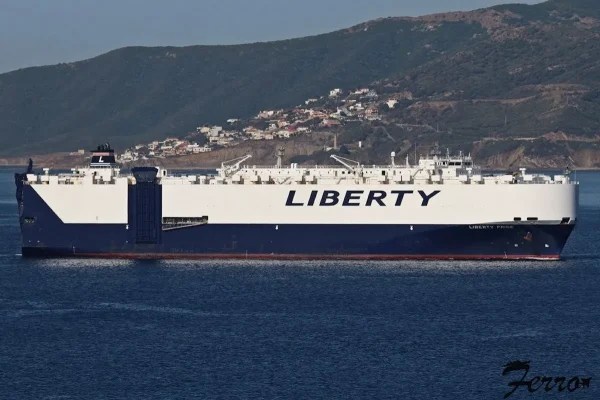
The US-flagged vehicle carrier Liberty Pride. Photo: Ships Nostalgia
How many other US ships are in the ocean at the moment or arriving at other ports, isn’t yet known. But what is known is that NATO is girding itself for a spillover, once the Ukrainian offensive gets underway.
The main focus of the Ukrainian spring offensive likely is an assault on Crimea and on Russian forces in the south. The objective is to cut them off (Kherson area across to Zaphorizia) and systematically destroy them, followed by a big push into Crimea.
The US is supplying a huge amount of war materiel for this assault. It includes bridging equipment that can support German-origin Leopard II tanks, which weigh more than 62 tons (roughly the same as the phantom M1 Abrams tanks that won’t arrive until next year, if ever).
Ukraine will have its hands full in such an operation and is dependent on US intelligence and, very likely, US airpower. There is not enough time to train Ukrainian pilots on F-16s, and there are not any spare up-to-date F-16s to throw into the battle – unless, of course, US fighter squadrons are in the mix.
One can expect that US aircraft will be painted over with Ukrainian insignia and flown by US or NATO pilots. These planes will operate as standoff assets, firing long-range air-to-air and air-to-ground weapons.
By staying wide of Russian air defense systems, but protected by what remains of Ukrainian air defenses, the F-16s could target Russian armor, command centers, troop formations, caravans, jammers and air defense radars.
The Ukrainian offensive also is likely to appear to the Russians as a casus belli involving NATO direct participation. How Russia might respond to a direct challenge is hard to say. The most likely Russian response could be to attack stockpiles and massing areas in Poland and Romania – and, almost certainly, airfields supporting the war.
Russian strategists have the opinion that Polish forces might also move into Ukraine, perhaps taking Lviv (Lvov) or other prizes, hedging that the Ukrainian offensive might fail or that the Russians are successful in toppling Kyiv’s government.
If these prognostications on the two spring offensives are anywhere near correct – and there is plenty of evidence suggesting both offensives are being prepared – then Europe is on the brink of a great catastrophe.
Stephen Bryen is a senior fellow at the Center for Security Policy and the Yorktown Institute.
North Korea Warns of ‘Realistic’ Risk of Nuclear War

By Kyle Anzalone | The Libertarian Institute | March 7, 2023
As the US and South Korea prepare for massive war games next week, North Korea is forewarning nuclear war on the peninsula. In a fiery statement, Pyongyang declared the chances of nuclear war are “a realistic one due to the irresponsible deeds of the US and South Korea.”
Last week, Washington and Seoul announced their largest joint war games in five years. The “Foal Eagle” military drills will involve American strategic assets being deployed to the Korean peninsula. Reaper drones will be deployed to South Korea for the war games as well which run from March 13-23.
Last month, Pyongyang warned if Washington and Seoul resumed their annual spring-time war games North Korea would turn the Pacific Ocean into a firing range. In 2018, the US and South Korea elected to cancel the Foal Eagle military drills to promote diplomacy with North Korea.
On Monday, the North Korean foreign ministry issued a statement in response to the joint war games. Pyongyang blasted Washington and Seoul for increasing the chance of nuclear war. “The danger of a nuclear war on the Korean peninsula is turning from an imaginary stage to a realistic one due to the irresponsible deeds of the US and South Korea keen on the bellicose armed demonstrations,” it said.
Though Washington and Seoul claim Foal Eagle is a defensive exercise, Pyongyang views the war games as preparation for an attack on North Korea. The military operations “clearly shows that the U.S. scheme to use nuclear weapons against the DPRK is being carried out on the same footing as an actual war,” the foreign ministry stated.
Kim Yo Jong, the sister of Supreme Leader Kim Jong-un, said the war games would force Pyongyang to respond. “The demonstrative military moves and all sorts of rhetoric by the U.S. and South Korea, which go so extremely frantic as not to be overlooked, undoubtedly provide (North Korea) with conditions for being forced to do something to cope with them,” she said.
Additionally, Kim warned Washington and Seoul against shooting down any missiles test-fired by Pyongyang. She expressed such a move would be considered a “declaration of war.”
In a separate statement by a spokesman for the General Staff of the Korean People’s Army (KPA), Pyongyang claimed artillery drills in South Korea are further “aggravating” tensions. “On the morning of March 7, the enemy fired more than 30 artillery shells. This is a very grave military provocation further aggravating the prevailing situation,” it said.
North Korean forces were placed on “alert posture for attack,” the spokesperson added.
The Cold War Racket Is Back
By Jacob G. Hornberger | FFF | March 7, 2023
Chinese leader Xi Jinping has issued a direct critique against the U.S. government’s policy of containment when it comes to China. According to an article in the Wall Street Journal, the critique is unusual in that it comes directly from China’s leader rather than indirectly through governmental spokespersons.
The Journal article quotes Shirley Martey Hargis, fellow at the Washington think tank Atlantic Council, who suggests that Xi might just be shifting the blame for economic problems in China. “It’s either take the blame or shift it,” she said.
Notwithstanding China’s economic problems, however, the fact is that Xi is right. There is no denying that U.S. national-security establishment, led by the Pentagon and the CIA, have been pursuing a Cold War policy of containment against China, with the aim of renewing its old Cold War racket.
Of course, as the Russians will attest, the Pentagon and the CIA have been doing the same with them — doing everything they can to gin up their old Cold War racket against Russia, just as they are doing against China.
Take a look at this map. You might be shocked, or maybe not. It displays the number of U.S. military bases near China. Tom Orsag, a freelance leftist journalist, points out that “China is effectively encircled by US bases all across the Pacific.” Orsag adds, “The U.S. is the biggest bully in the Pacific, with rings of military bases blocking and threatening China.”
Now, take a look at this map. It depicts the number of Chinese military bases near the United States. Number? Zero! In fact, according to an article at Eurasia Times entitled “Over 750 Military Bases Across 80 Countries: How US Military Overshadows China In Projecting Power Overseas,” China has the grand total of one foreign military base — in Djibouti, which is more than 7,000 miles away from the United States.
Take a look at this map. It shows the number of U.S. military bases near both Russia and China.
Now, take a look at this map again. It shows the number of Russian military bases near the United States. Number? Zero!
Let’s just imagine that the situation was reversed. Let’s assume that the United States had no military bases overseas whatsoever and had a non-empire, non-interventionist foreign policy. And let’s imagine that the United States was encircled by the same number of Russian and Chinese military bases that the Pentagon and the CIA have encircling Russia and China.
What do you think would be the reaction of U.S. officials? My hunch is that they would be going ballistic and directly objecting to China’s and Russia’s policy of encircling and containing the United States, just as Russia and China are currently objecting to U.S. encirclement and containment of their countries.
Are China and Russia justified in their concern over the Pentagon’s encirclement of their nations? Martin Luther King, whose birthday U.S. officials honor each year with a federal holiday, pointed out that the United States was the greatest purveyor of violence in the world. And that was before the U.S. invasions and wars of aggression against Afghanistan and Iraq! Given such, why wouldn’t China and Russia be concerned about being encircled and contained by the Pentagon and the CIA?
The Wall Street Journal article cited above quotes Jessica Chen Weiss, a Cornell University professor and former State Department advisor, saying in response to the escalating tensions between China and the U.S., “The current tit-for-tat spiral serves no one.”
Is Weiss really that innocent and naive? Serves no one? Are you kidding me? It serves the entire U.S. national-security establishment, including its army of “defense” contractors who eat out our substance by feeding voraciously at the public trough. The current tit-for-tat gives the U.S. national-security establishment its old — and extremely lucrative — Cold War racket back.
China warns of ‘critical juncture’ in Ukraine conflict
RT | March 7, 2023
The conflict in Ukraine will spin of control if a peace process does not start soon, Chinese Foreign Minister Qin Gang has said.
The fighting between Russia and Ukraine has reached a “critical juncture,” Qin stated during his annual press conference in Beijing on Tuesday.
“There will either be cessation of hostilities, restoration of peace and a move towards political settlement, or fuel will be added to the fire, the crisis will expand, and the situation will get out of control,” he warned.
The diplomat pointed out that now is the time for “calmness, sanity and dialogue,” insisting that talks “should start as soon as possible.”
“The legitimate security concerns of all parties should be respected” during the negotiations, as this is the only way to achieve long-term peace and stability in Europe, he said.
Qin also expressed regret that previous attempts to launch a peace process to end the conflict had been “repeatedly undermined.”
“There is an ‘invisible hand’ pushing the conflict towards escalation and trying to use the Ukrainian crisis to serve a certain geopolitical agenda,” he said.
Moscow has repeatedly said the conflict in Ukraine is a “proxy war” waged against Russia by the US and its NATO allies, which provide Kiev with weapons, funds and intelligence.
Last week, Russian Foreign Minister Sergey Lavrov reiterated that Moscow was ready to consider peace proposals “that are made out of sincere desire to find a political solution” to the crisis. However, Lavrov pointed out that there haven’t been any such serious peace offers coming from either Kiev or its Western backers since last March. On the contrary, “Ukraine is being persuaded to continue the fighting,” he said.
During his press conference, Qin also spoke about the significance of relations between Russia and China. Over the past year, Beijing resisted Western pressure to condemn and sanction Moscow, while consistently calling for a peaceful resolution of the crisis.
“The more turbulent the world is, the more steadily the Chinese-Russian relations should move forward,” the Chinese FM said.
Cooperation between Beijing and Moscow will “provide impetus for multipolarization of the world and democracy in international relations; global strategic balance and stability will be assured through it,” he stated.
What they are talking about on the Russian talk shows today: full war mobilization!
By Gilbert Doctorow | March 7, 2023
A month ago I was asked by a retired U.S. lieutenant colonel in a private email correspondence whether Vladimir Putin would be announcing general mobilization in his State of the Union address on 21 February. I answered with full confidence that this was unfounded speculation, that the Russian war effort was going well in the estimation of the Kremlin, that they expect the imminent capture of Artyomovsk (Bakhmut), opening the way for Russia to assume full possession of the Donbas.
Indeed, the fighting in and around Artyomovsk today continues to favor the Russians, notwithstanding the latest dispatch of 10,000 or more Ukrainian army forces to keep open supply lines to their comrades in the nearly surrounded city, who number perhaps 20,000.
Meanwhile, the United States and its NATO allies have come to agreement on what further heavy equipment they can ship to Ukraine in support of Kiev’s planned counteroffensive later this spring. Several Leopard tanks have already been delivered by Poland; more are on their way from other countries. And, as Russian television has been showing for the past 24 hours, there is an enormous stock of American armored personnel carriers, self-propelled artillery, HIMARS launchers and other equipment now stored on the quays of the Polish port of Gdansk awaiting delivery to Ukraine.
In this context, the discussion in Washington and European capitals over how far they can go without crossing Russia’s red lines and triggering a hot war between Russia and NATO is being bypassed by events. As the latest editions of prime news and discussion programs Sixty Minutes and Evening with Vladimir Solovyov indicate, Russia’s political elites consider that these lines have been crossed, with or without delivery of the F-16 fighter jets requested by Zelensky; with or without the latest version of the Leopards or the Abrams tanks promised by the USA. The Russians also speak openly on television about the Polish, French and Italian ‘mercenaries’ whom their troops in Donbas are overhearing daily on the front lines, and there is no question but that these are in effect NATO officers, not volunteers from the street.
The ‘fog of war’ distortions and blatant propaganda over the status of the Ukraine war that we see daily in mainstream electronic and print media in the West are being cleared away by very realistic assessments of the intentions and capabilities of the sides that I now see on the aforementioned talk shows. The information being broadcast is coming from war correspondents in the field, from front line commanders themselves and from expert analysts-Duma members of various parties, as well as from among academics and think tank directors.
The Financial Times may be just a sounding board for the Zelensky regime. Sixty Minutes and the Solovyov show are far more nuanced, self-critical and helpful for the broad Russian public to understand the challenge their country is facing as it goes up against the entire U.S.-led West in economic and military warfare.
These programs are unquestionably preparing the Russian public for mobilization of the economy to a full war footing and for further call-ups of reservists and recruits to join the fight. At the same time, I see demands that the government adopt a much more repressive policy at home to purge the country of fence-sitters, implementing a policy well-known to Americans from the time of President George W. Bush: ‘you are either with us or you are against us.’
The recent cases of sabotage and attempted political assassinations within Russia perpetrated by treasonous Russian nationals or by teams of Ukrainians who passed through the porous border have given rise to demands to ‘get tough’ and follow the practices put in place by Stalin, namely summary execution of saboteurs and ‘enemies of the people.’
It must be stressed that until now the Russian government has been lenient towards its domestic critics and enemies. Western talk of an ‘authoritarian’ or ‘autocratic’ Kremlin has just been libelous propaganda. However, by encouraging the Kiev regime to deploy every kind of despicable attack on Russia up to and including use of chemical and biological weapons on the field of battle, as the Russians now report is the case, Washington is making a mockery of international law and inviting Russia to wage all-out war.
In this regard, I point to the remarks of Belarus president Alexander Lukashenko before and during his visit to Beijing a week ago: he remarked that the present moment should not be lost, that all sides should be pressuring the warring parties to declare a cease-fire and enter into peace negotiations. Lukashenko argued that Russia had not yet unleashed its military potential, had not yet mobilized its economy and its society for total war, but that was sure to come if the conflict is allowed to proceed and thus to escalate further.
©Gilbert Doctorow, 2023
Spain Asks US to Remove Soil Contaminated With Radiation After Accident in 1966
Sputnik – 06.03.2023
MADRID – The Spanish Foreign Ministry has submitted a formal request to the United States for the removal of soil that was contaminated with radiation 57 years ago in the province of Almeria, a Spanish newspaper reported on Monday, citing sources.
In 1966, land near the town of Palomares was contaminated with plutonium-239 after a US B-52 bomber with thermonuclear bombs on board collided with a KC-135 tanker aircraft. As a result of the plane crash, seven people were killed and four thermonuclear bombs were lost.
The Spanish government reminded the US of a political commitment that Madrid and Washington had signed in October 2015 on the removal of the contaminated soil to the Nevada desert, the report noted.
So far, a total of 50,000 cubic meters of contaminated soil has been scattered across several plots of land covering about 40 hectares (98,8 acres), which were fenced off in 2007 due to high levels of radiation, the report added.
During the Cold War, the US Air Force had been carrying out Operation Chrome Dome. It included the continuous presence in the air of strategic bombers with nuclear weapons, which were ready to strike predetermined targets on the territory of the USSR. However, the accident in Spain caused a serious diplomatic crisis and led to the cessation of US nuclear bombers’ flights over Europe and the Mediterranean. However, such flights were finally stopped only in 1968 when another nuclear accident occurred over the Thule base in Greenland.
Silence is not an option, and sending weapons to Ukraine perpetuates the war
By Ramzy Baroud | MEMO | March 6, 2023
As is usually the case in long wars, the warring parties and their affiliated media in the Russia-Ukraine conflict have painted each other using uncompromising language, making it nearly impossible to offer an unbiased view of the ongoing tragedy that has killed, wounded and displaced millions of people.
While it is understandable that wars of such horror and near complete disregard for the most basic human rights often heighten our sense of what we consider to be moral and just, parties involved and invested in such conflicts often manipulate morality for political and geopolitical reasons. This logic is underway in Ukraine. Both sides are adamant that nothing less than a comprehensive victory is acceptable. The Ukrainian view is fully supported by western countries in word and deed, sending billions of dollars’ worth of modern weapons that have done little except make an already bloody conflict worse. They perpetuate the war, not end it.
The Russians hardly see their war in Ukraine as a war against Ukraine itself. In his speech on the first anniversary of the war, Russian President Vladimir Putin presented the war as an act of self-defence. “They are the ones who started this war, and we are using our forces to put a stop to it,” said Putin in a joint session of the Russian Parliament and Kremlin officials.
NATO members have also characterised the war using similar language. “We are fighting Russia,” said Germany’s Foreign Minister Annalena Baerbock. Although her statement was withdrawn later on, Baerbock was actually being honest: NATO and Russia are, indeed, at war.
The narratives of both sides, however, are both complex and polarised. To even attempt to offer a third view on the war, or to even approach the subject in a purely analytical manner, immediately qualifies one to be accused of being “biased” one way or the other. Each side believes that its version of the truth is moral, historically defensible and consistent with international law. As a result, many reasonable people find themselves retreating in silence.
Silence is an immoral position, especially during times of war and human suffering. Anyone who thinks otherwise should think again. In Islamic theology, it is accepted that, “Anyone who refrains himself from speaking the truth is a mute devil.” This maxim is shared by most modern philosophies and political ideologies. Among many such statements addressing the matter, one of the most powerful assertions by Dr Martin Luther King Jr. was, “The day we see truth and cease to speak is the day we begin to die.”
Yet, there is no single truth on the Ukraine war that can remain fully truthful after being placed within a larger context. The war on Ukraine is indeed illegal; but the preceding civil war in Donbas and the violated Minsk agreements at the behest of Western powers — as admitted by former German Chancellor Angela Merkel — were also immoral and illegal. In fact, none of these acts can be analysed accurately or understood fairly, without considering the others.
A year after the war started, more fuel has been added to the fire, as if the main goal behind the war is prolonging it. Concurrently, very few proposals for peace talks have been advanced or considered. Even a proposal made by former US Secretary of State Henry Kissinger, hardly a peacenik, was dismissed almost immediately by the pro-Ukraine camp. When someone like Kissinger is accused of being a compromiser, we can be certain that the political discourse on the war has reached a degree of extremism unprecedented in decades.
Aside from the morality of speaking out against the continued war, and the immorality of silence, there is another matter deserving of our attention. It is not simply a dispute between Russia and its allies on one hand, and Ukraine and NATO on the other. It is affecting all of us.
A comprehensive study conducted by researchers from the Universities of Birmingham, Groningen and Maryland examined the possible effect of the war on household incomes in 116 different countries. The study created a model for the future, based on what millions of people around the world, especially in the Global South, are already experiencing. It looks bleak. Just the fact that energy prices could force an individual household to spend anywhere between 2.7 to 4.8 per cent more is enough to push 78 to 114 million people into extreme poverty. Since hundreds of millions already live in extreme poverty, a massive section of the human race will no longer be able to afford proper food, drinkable water, education, healthcare or shelter.
Hence, our silence on the inhumanity and futility of the war in Ukraine is not only immoral, but also constitutes a betrayal of the fate of hundreds of millions of people around the world. This is why the war in Ukraine must end, even if one party is not fully and comprehensively defeated; even if NATO’s geopolitical interests are not served; and even if not all of Russia’s goals, whatever they are, are achieved.
The war should end because, regardless of the outcome, long-term instability in that region will not cease completely any time soon; and because millions of innocent people are suffering and will continue to suffer, in Ukraine and around the world as a direct result of the conflict. And because only political compromises through peace negotiations can put an end to this horror.
War and Propaganda in the Russia-Ukraine Conflict
BY RON UNZ • UNZ REVIEW • MARCH 6, 2023
We recently passed the first anniversary of the Russia-Ukraine war and the Wall Street Journal published a lengthy review of the twelve months of the conflict, summarizing what had happened and describing future prospects, an article that attracted more than 2,500 comments.
- Ukraine Is the West’s War Now
The initial reluctance of the U.S. and its allies to help Kyiv fight Russia has turned into a massive program of military assistance, which carries risks of its own
Yaroslav Trofimov • The Wall Street Journal • February 25, 2023 • 2,800 Words
Although hardly critical of our involvement, the writer noted that America and its allies had already provided Ukraine with an astonishing $120 billion in military equipment and money, a figure far larger than Russia’s entire defense budget, with further massive outlays still to come.
As the title of the piece indicated, the West had effectively now taken over control of the war, and if the effort to defeat Russian President Vladimir Putin failed, American global influence might be undermined and the future of the NATO alliance called into question. Indeed, such notable foreign policy luminaries as John Mearsheimer, Jeffrey Sachs, Douglas Macgregor, and Lawrence Wilkinson have all recently raised the possibility that NATO risks disintegration, especially in the wake of Seymour Hersh’s bombshell disclosure that President Biden had illegally destroyed the Nord Stream pipelines, some of Europe’s most important civilian energy infrastructure.
So in effect, America is at war with Russia on Russia’s own border, and if we lose that war, the era of our global dominance that followed the 1991 collapse of the Soviet Union might come to an end. Since the earliest days of the fighting, our electronic and social media have functioned as unrestrained cheerleaders, hailing Ukrainian victories and Russian defeats, but this WSJ article could not avoid providing a much more sobering perspective.
Although this war has been of enormous world importance, I’ve actually written very little about the details of the conflict.
I lack any military expertise and doubted that I could contribute anything useful about the fighting, which was anyway obscured by the fog of war. America’s reigning Neocon establishment totally controls the Western mainstream media and over the last few decades they have made propaganda, dishonest or otherwise, one of their most frequently deployed political weapons. Indeed, no sooner had the war broken out than social media was awash with the heroic exploits of “the Ghost of Kyiv” and “the Martyrs of Snake Island,” outright hoaxes that were widely disseminated and believed at the time.
We live in the era of smartphones, so video clips showing Russian tanks destroyed or Russian troops defeated and retreating were widely promoted by partisans of the Ukrainian side. But such anecdotal evidence seemed totally meaningless to me. In 1940 the French army suffered one of history’s most lop-sided defeats at the hands of the Germans, yet if smartphones had been around at the time, it would have been easy for pro-French activists to provide hundreds of clips showing destroyed German panzers or small German units suffering defeat. Such war-porn seems more like entertainment for political partisans than anything having serious value.
This obvious problem soon led some observers to search out a means of more objectively determining combat losses. Many of them began relying upon the Oryx website, run by a purportedly independent “open source” organization that organized and displayed images of destroyed tanks and other military vehicles, thereby allowing analysts to total up the losses suffered by each side in the conflict. Journalists and others soon used this photographic evidence to conclude that the Russians had suffered enormous, almost catastrophic losses, with the under-gunned but highly-motivated Ukrainian defenders destroying huge numbers of Russian tanks and other military vehicles, a result that also suggested very high Russian casualties.
The alleged loss of Russian hardware documented by Oryx seems absolutely staggering. One of the main website pages itemizes nearly 9,500 Russian armored vehicles lost, of which 6,000 were destroyed and nearly 2,800 captured. Those losses included nearly 1,800 tanks, with well over 500 of these captured by the plucky Ukrainians. Each of these listed items is linked to a photograph, most of them either being uploaded separately or contained within a Tweet. For example, 244 destroyed or captured T-72B tanks are listed, all individually numbered and linked to the photographic evidence. Obviously, not all destroyed Russian vehicles would have been swept up, so the true scale of Russia’s apparent losses must surely have been considerably greater. Ukraine’s hardware losses were also cataloged, but they only totaled about 3,000 armored vehicles.
Throughout most of the last year, our mainstream media outlets have been filled with stories of Ukrainian victories and Russian defeats, and surely the large compendium of factual material provided by the Oryx website has been an important reason for this. The Oryx Wikipedia entry runs only three short paragraphs, but explains that the website has been regularly cited by Reuters, the BBC, the Guardian, the Economist, Newsweek, CNN, and CBS, with Forbes hailing Oryx as “outstanding” and “the most reliable source in the conflict so far.” My impression is that many writers on military affairs are enthralled by such photos of heavy equipment, whether intact or destroyed, and Oryx provides many thousands of such striking images, thus capturing their rapt attention.
If the Russians had indeed suffered more than three times the Ukrainian losses in armored vehicles, with well over 500 of their tanks captured by the latter, a Ukrainian military triumph might have seemed very likely, so the Americans and their allies naturally rewarded their victorious proteges with a tidal wave of financial and military support that easily topped a hundred billion dollars.
The supposed Ukrainian achievement was certainly a remarkable one. According to Wikipedia, the largest land offensive in human history was Germany’s 1941 Operation Barbarossa, which involved fewer than 7,000 armored vehicles. But if we credit Oryx, over the last twelve months Ukraine’s doughty patriots have totally annihilated a far greater Russian mechanized force, while their own losses have been just a fraction of that. Individuals should decide for themselves how plausible such total numbers sound.
I only very recently looked at the Oryx website, and the first issue that came to mind was how anyone could possibly determine whether the images were real, faked, or duplicated. According to Wikipedia, the Ukrainian military possessed thousands of tanks, many of them being the same models used by the invading Russians. So if Ukrainian activists uploaded a photo of a destroyed T-72B to Oryx, how can we really be sure it was a Russian tank rather than one of their own? What if several different photos of the same wrecked vehicle were taken from different angles, and separately uploaded? The fighting in the Donbass began in 2014, and can we be sure that the photographs provided are from the current fighting rather than from battles fought years ago?

Is This a Destroyed Russian T-72B or a Destroyed Ukrainian T72B? They Look Much the Same to Me.
None of the military enthusiasts whom I asked had any ready answers to those questions, perhaps because they had never even previously considered such troubling possibilities.
During recent decades, Hollywood special effects wizards have displayed great technical skill in showing Spiderman swinging between skyscrapers and the Incredible Hulk undergoing a transformation. Surely producing simple photographs of destroyed military equipment would be a triviality, with the costs almost invisibly small compared to a movie budget. But consider that those simple photographs uploaded to a Dutch website have been a crucial factor in attracting many tens of billions of dollars of financial support from American and allied governments, giving each single image on the Oryx website a potential value of $10 million or more. Producing fake photographs is certainly much safer and easier than destroying Russian tanks in real life, and doing so on an industrial scale would seem a very cost-effective propaganda strategy, so it’s difficult to believe that neither the Ukrainians nor their Neocon/CIA/MI6 mentors ever decided to employ such methods.
Putting the issue in very crude terms, I doubt whether Russian losses may be accurately estimated by aggregating and analyzing what amounted to Ukrainian propaganda-Tweets.
Furthermore, an examination of Oryx’s origins raised other troubling issues.
From the Iraq War onward, the credibility of the American government has steadily deteriorated, considerably weakening the effectiveness of its international propaganda campaigns, a central pillar of its international influence.
Then in 2014 a British blogger named Eliot Higgins established Bellingcat, supposedly an independent research organization that relied upon the objective analysis of open source materials. However, in practice his efforts seemed to almost invariably produce conclusions closely aligned with American foreign policy interests in Syria, Ukraine, and other international flashpoints. This notably including the shoot-down of Malaysian Airlines Flight 17 and the alleged gas attack in Syria that Higgins himself had covered the previous year, always pinning the blame upon governments that were the targets of American hostility.
Numerous distinguished international journalists and other experts, notably including Seymour Hersh, Theodore Postol, and Karel van Wolferen often came to totally different conclusions, but their views were usually ignored by the media, while Bellingcat was heavily quoted in the Western outlets as fully confirming the accusations of the American government. As a consequence, there have been widespread suspicions that Bellingcat merely operated as a tool of Western intelligence services, very similar to how the CIA had established other such front-organizations for propaganda purposes during the original Cold War.
According to the Wikipedia page on Oryx, both its founders were Bellingcat alumni, raising serious questions about whether they are really as independent-minded as they claimed to be.
Meanwhile, other American military experts have provided very different assessments of the course of the war.
For decades, Col. Douglas Macgregor has been regarded as a leading conservative military strategist, authoring several well-regarded books and having many dozens of guest appearances on FoxNews. After having a long career in NATO, he had been a finalist for the position of National Security Advisor, served as a Senior Advisor to the Secretary of Defense, and was nominated as U.S. Ambassador to Germany. He is obviously very well-connected in such establishment military circles, and based upon his Pentagon contacts, he has repeatedly stated that it is actually the Ukrainian forces that have suffered horrendous casualties, including as many as 160,000 combat deaths compared to far lower Russian losses of perhaps 20,000 or so. Other military experts such as Scott Ritter and Larry Johnson have expressed very similar views.
Across all of his numerous interviews, Macgregor comes across as quite persuasive and confident in his assessments of the military situation.
Given the enthusiastic, almost uniform support of powerful Western political, financial, and media interests for the Ukrainian side, I find it difficult to understand why Macgregor, Ritter, Johnson, and others would be taking such contrary positions unless they sincerely believed that they were correct. Indeed, a BBC research effort recently used social media and other open sources to identify 14,709 individual Russian service members killed in the war, a figure that seems quite consistent with Macgregor’s total estimate of 20,000.
So we have diametrically conflicting positions, with Ukrainian officials and the Oryx website claiming Russian losses have been several times greater than Ukrainian ones, while Macgregor and his allies put the ratio at perhaps 8-to-1 in the opposite direction.
I personally lean much more towards Macgregor’s perspective, but I actually doubt that the issue matters much in strategic terms. From the beginning, I’ve never regarded the operational-level details of the fighting in Ukraine as very interesting or important, and haven’t paid much attention to it. This explains why I had never looked at the Oryx website until just a few days ago.
If the Russian army were completely defeated by the Ukrainians and lost control of Crimea and the Donbass, that sort of military disaster for Russia would have major global consequences. But I consider that possibility exceptionally unlikely and doubt that anyone sensible thinks otherwise.
Instead, it seems almost certain that the war will either become roughly stalemated, as many Western analysts seem to believe, or that the Russians will eventually crush the Ukrainians, as predicted by Macgregor and some other Western experts. But unless the latter result draws in NATO forces and leads to a wider war, with possible risk of a nuclear confrontation, I don’t think the strategic consequences are much different in those two contrasting scenarios.
Before the war began, the Russians were widely expected to overwhelm Ukrainian resistance in a matter of weeks, and compared to those early expectations, the war has already been stalemated for a full year.
In hindsight, Russia’s failure to win a quick, decisive victory should not have been too surprising. For example, I’d been entirely unaware that Ukraine actually had an enormous regular army, more than three times the size of Germany’s, and far larger than that of any European NATO country. Much of Ukraine’s military was fully trained to NATO standards, and including reserves and the National Guard, Ukraine deployed more than a half-million ground troops, outnumbering the attacking Russian forces by around 3-to-1, with many of its best units heavily entrenched in strong defensive positions. Under such challenging circumstances, it’s quite understandable that the Russians have required a year of heavy fighting to gain ground against the stubborn Ukrainian defenders, with the latter heavily backed by supplies and assistance from America and the rest of NATO.
But although Russia’s operational progress on the battlefield has been slow and mixed, on the geostrategic level, the Russians have already won a series of major victories. China, Iran, India, Saudi Arabia, and most of the other non-Western countries have clearly moved towards Russia, which also easily surmounted the unprecedented sanctions that most had expected would cripple her economy. The reckless American destruction of the Nord Stream pipelines and the European energy crisis may eventually cause the collapse of NATO. Putin’s domestic approval rating is in the 80s, probably as high as it has ever been. And I don’t see any of these results changing if the military stalemate continues.
One year ago, just after the war broke out, I’d outlined my broader perspective in a long article:
For more than a hundred years, all of America’s many wars have been fought against totally outmatched adversaries, opponents that possessed merely a fraction of the human, industrial, and natural resources that we and our allies controlled. This massive advantage regularly compensated for many of our serious early mistakes in those conflicts. So the main difficulty our elected leaders faced was merely persuading the often very reluctant American citizenry to support a war, which is why many historians have alleged that such incidents as the sinkings of Maine and the Lusitania, and the attacks in Pearl Harbor and Tonkin Bay were orchestrated or manipulated for exactly that purpose.
This huge advantage in potential power was certainly the case when World War II broke out in Europe, and Schultze-Rhonof and others have emphasized that the British and French empires backed by America commanded potential military resources vastly superior to those of Germany, a mid-size country smaller than Texas. The surprise was that despite such overwhelming odds Germany proved highly successful for several years, before finally going down to defeat…
Consider the attitude taken during the current conflict with Russia, a severe Cold War confrontation that might conceivably turn hot. Despite its great military strength and enormous nuclear arsenal, Russia seems just as out-matched as any past American foe. Including the NATO countries and Japan, the American alliance commands a 6-to-1 advantage in population and 12-to-1 superiority in economic product, the key sinews of international power. Such an enormous disparity is implicit in the attitudes of our strategic planners and their media mouthpieces.
But this is a very unrealistic view of the true correlation of forces…just two weeks before the Russian attack on Ukraine, Putin and Chinese leader Xi Jinping held their 39th personal meeting in Beijing and declared that their partnership had “no limits.” China will certainly support Russia in any global conflict.
Meanwhile, America’s endless attacks and vilification of Iran have gone on for decades, culminating in our assassination two years ago of the country’s top military commander, Qasem Soleimani, who had been mentioned as a leading candidate in Iran’s 2021 presidential elections. Together with our Israeli ally, we have also assassinated many of Iran’s top scientists over the last decade, and in 2020 Iran publicly accused America of having unleashed the Covid biowarfare weapon against their country, which infected much of their parliament and killed many members of their political elite. Iran would certainly side with Russia as well.
America, together with its NATO allies and Japan, does possess huge superiority in any test of global power against Russia alone. However, that would not be the case against a coalition consisting of Russia, China, and Iran, and indeed I think the latter group might actually have the upper hand, given its enormous weight of population, natural resources, and industrial strength.
Since the fall of the Soviet Union in 1991, America has enjoyed a unipolar moment, reigning as the world’s sole hyperpower. But this status has fostered our overweening arrogance and international aggression against far weaker targets, finally leading to the creation of a powerful block of states willing to stand up against us.
Then last October, I’d updated my analysis and I think that the subsequent developments have generally confirmed my appraisal:
I wrote those words just two weeks after the war began, and as is inevitable in any conflict, various matters have gone differently than anyone originally predicted.
The Russians had been widely expected to sweep the Ukrainians before them, but instead they have encountered very determined resistance, suffering heavy casualties as they made slow progress. Generously resupplied with advanced weaponry from NATO stockpiles, the Ukrainians recently launched successful counter-attacks, forcing Russian President Vladimir Putin to call up 300,000 reserves.
But although Russia’s military efforts have only been partially successful, on all other fronts, America and its allies have suffered a series of strategic geopolitical defeats.
At the start of the war, most observers believed that the unprecedented sanctions imposed by America and its NATO allies would deal a crippling blow to the Russian economy. Instead, Russia has escaped any serious damage, while the loss of cheap Russian energy has devastated the European economies and severely hurt our own, resulting in the highest inflation rates in forty years. The Russian Ruble was expected to collapse, but is now stronger than it was before.
Germany is the industrial engine of Europe and the sanctions imposed on Russia were so self-destructive that popular protests began demanding that they be lifted and the Nord Stream energy pipelines reopened. To forestall any such potential defection, those Russian-German pipelines were suddenly attacked and destroyed, almost certainly with the approval and involvement of the U.S. government. America is not legally at war with Russia let alone Germany, so this probably represented the greatest peacetime destruction of civilian infrastructure in the history of the world, inflicting enormous, lasting damage upon our European allies. Our total dominance over the global media has so far prevented most ordinary Europeans or Americans from recognizing what transpired, but as the energy crisis worsens and the truth gradually begins to emerge, NATO might have a hard time surviving. As I discussed in a recent article, America may have squandered three generations of European friendship by destroying those vital pipelines.
- American Pravda: Of Pipelines and Plagues
Ron Unz • The Unz Review • October 3, 2022 • 3,900 WordsMeanwhile, many years of arrogant and oppressive American behavior towards so many other major countries has produced a powerful backlash of support for Russia. According to news reports, the Iranians have provided the Russians with large numbers of their advanced drones, which have been effectively deployed against the Ukrainians. Since World War II, our alliance with Saudi Arabia has been a linchpin of our Middle Eastern policy, but the Saudis have now repeatedly sided with the Russians on oil production issues, completely ignoring America’s demands despite threats of retaliation from Congress. Turkey has NATO’s largest military, but it is closely cooperating with Russia on natural gas shipments. India has also moved closer to Russia on crucial issues, ignoring the sanctions we have imposed on Russian oil. Except for our political vassal states, most major world powers seem to be lining up on Russia’s side.
Since World War II one of the central pillars of global American dominance has been the status of the US dollar as the world’s reserve currency and our associated control over the international banking system. Until recently we always presented our role as neutral and administrative, but we have increasingly begun weaponizing that power, using our position to punish those states we disliked, and this is naturally forcing other countries to seek alternatives. Perhaps the world could tolerate our freezing the financial assets of relatively small countries such as Venezuela or Afghanistan, but our seizure of Russia’s $300 billion in foreign reserves obviously tipped the balance, and major countries are increasingly seeking to shift their transactions away from the dollar and the banking network that we control. Although the economic decline of the EU has caused a corresponding fall in the Euro and driven up the dollar by default, the longer-term prospects for our continued currency hegemony hardly seem good. And given our horrendous budget and trade deficits, a flight from the dollar might easily collapse the US economy.
Soon after the outbreak of the Ukraine War, the eminent historian Alfred McCoy argued that we were witnessing the geopolitical birth of a new world order, one built around a Russia-China alliance that would dominate the Eurasian landmass. His discussion with Amy Goodman has been viewed nearly two million times.
Related
Massive US, South Korean War Games Set to Inflame Tensions with North Korea
By Kyle Anzalone and Will Porter | Libertarian Institute | March 5, 2023
Washington and Seoul announced their largest war games in five years. Last month, North Korea warned the US and South Korea that Pyongyang would take “unprecedentedly persistent and strong counteractions.”
American and South Korean forces will engage in two different military exercises in mid-March, dubbed “Warrior Shield.” A portion of the war games will involve a computer simulation, while the live-fire military operations are named “Foal Eagle.” The combined drills will run from March 13-23.
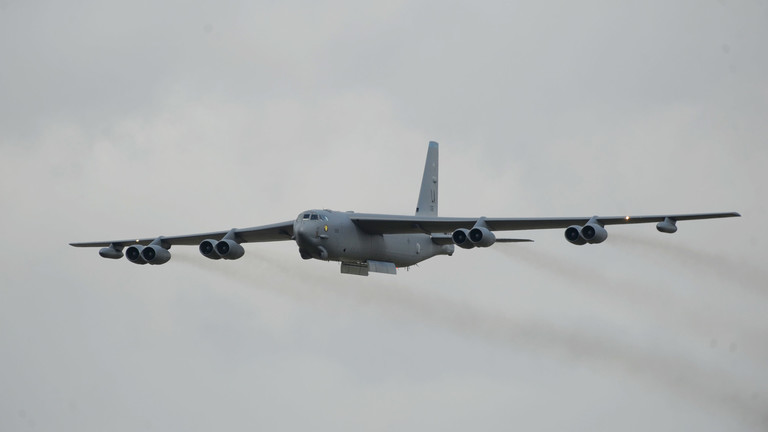
The drills were announced on the same day the US sent a B-1B bomber over the Korean Peninsula. Pyongyang views the bombers as provocative because of the large payloads the planes can carry.
This year’s Foal Eagle will be the largest joint American and South Korean war games in five years. The Department of Defense claims the military operations are “defensive.” “We’ve conducted routine training like UFS (Ulchi Freedom Shield) and Freedom Shield for decades that have been defensive in nature,” US Forces in Korea spokesperson Col. Isaac Taylor said.
Washington will deploy an aircraft carrier and other strategic assets to the region for the war games, according to the Korean Herald. Additionally, the Pentagon is sending MQ-9 Reaper armed drones to the Korean Peninsula for the first time.
The Foal Eagle war games were last conducted in 2018. Then-South Korean President Moon Jae-in and American President Donald Trump canceled the military drills to help foster diplomacy with North Korea. Pyongyang views the war games as practicing for a regime change against Supreme Leader Kim Jong-un.
Last month, Kim Yo Jong, Kim’s sister, blasted Washington and Seoul for considering resuming the war games. “There is no change in our will to make the worst maniacs escalating the tensions pay the price for their action.” She warned North Korea would turn the Pacific Ocean into a “firing range” if the US and South Korea conducted the drills.
More recently, the DPRK warned that it would soon consider continued US military action on the peninsula as a “declaration of war.”
The US and South Korea say they are prepared to respond to increased North Korean military activity by further escalating tensions. “Our military will not tolerate North Korea’s provocations that threaten the life and safety of our people.” South Korean military spokesperson Col. Lee Sung-jun said. “We will sternly respond to such acts with the alliance’s overwhelming capabilities.”
In a press release issued by the North Korean Foreign Ministry on Saturday, Pyongyang cautioned, “the Korean peninsula is turning into the world’s biggest powderkeg and war practice field due to a military expansion scheme led by the United States and its followers.”
On Sunday, North Korea demanded the United Nations take action against US military provocations. “The UN and the international community will have to strongly urge the US and South Korea to immediately halt their provocative remarks and joint military exercises,” a statement from the foreign ministry said, adding that tensions on the Korean Peninsula have reached an “extremely dangerous level.”
Netanyahu claims special right to strikes on nuclear facilities
RT | March 6, 2023
Israeli Prime Minister Benjamin Netanyahu has insisted that the option of attacking an Iranian nuclear facility in “self-defense” must be left on the table, arguing that the chief of the UN’s International Atomic Energy Agency (IAEA) made an “unworthy” statement when he declared that any such strikes are banned.
“Are we forbidden to defend ourselves?” Netanyahu said on Sunday in a cabinet meeting. “Of course, we are allowed, and of course, we are doing this… Nothing will prevent us from protecting our country and preventing oppressors from destroying the Jewish state.”
Netanyahu’s rant came a day after IAEA Director-General Rafael Mariano Grossi was asked by a reporter about US and Israeli threats to attack Iran if it doesn’t agree to curb its nuclear program.
“Any military attack on a nuclear facility is outlawed, is out of the normative structures that we all abide by,” Grossi said at a press briefing in Tehran after meeting with Iranian leaders. That principle applies to all nuclear facilities, including Europe’s biggest atomic facility in Zaporozhye.
Netanyahu said no such prohibition could apply to Israel. “Rafael Grossi is a worthy person who made an unworthy remark,” he said. “Outlawed by what law? Is Iran, which publicly calls for our extermination, allowed to protect its weapons of destruction that will slaughter us?”
Grossi’s trip to Tehran apparently paid dividends, as Iranian officials agreed to restore the UN watchdog’s access to some surveillance tools at the country’s nuclear facilities. The IAEA also was granted an increase in inspections at the Fordo nuclear site, as well as additional verification and monitoring activities.
“These are not words,” Grossi told reporters upon his return to Vienna on Saturday. “This is very concrete.”
Tehran has denied having any ambition to acquire nuclear weapons. Iran signed a deal with the US and other world powers in 2015, agreeing to impose restrictions on its nuclear industry, including uranium enrichment, to allay fears about its potential for warhead development. Washington reneged on the agreement in 2018, when then-US President Donald Trump said he would instead apply “maximum pressure” through sanctions on Iran to contain its nuclear program.
Featured Video
Trump asks Iran not to retaliate after he strikes Pickaxe Mountain
or go to
Aletho News Archives – Video-Images
Book Review & Summary
Calling of an Angel: The True Story of Rene Caisse and an Indian Herbal Medicine Called Essiac (1988)
Dr. Gary L. Glum – 30 Q&As – Book Review & Summary
Lies are Unbekoming | October 17, 2026
On June 10, 1975, Dr. Chester Stock, a vice president at Memorial Sloan-Kettering Institute for Cancer Research, wrote to a Canadian nurse named Rene Caisse: “Enclosed are test data in two experiments indicating some regressions in sarcoma 180 of mice treated with Essiac.” The sentence sat in a letter from one of the world’s largest private cancer research centers, concerning an herbal tea an elderly English woman had learned from an Ojibwa medicine man at a northern Ontario mining camp in the 1890s. The tests were terminated the following year after Sloan-Kettering admitted, in sworn affidavit three years later, that they had prepared the injectable solution improperly from the dried material supplied — freezing and thawing the herb rather than boiling it as Rene had instructed. By the time Calling of an Angel was published in 1988, Rene Caisse had been dead for a decade, having treated thousands of cancer patients across fifty-six years in her Bracebridge, Ontario kitchen, never charging a fee, and refusing every offer — from Memorial Sloan-Kettering, the National Cancer Institute, Merck, Parke Davis, and private corporations dangling contracts up to $1 million — to release her formula before the medical establishment admitted her remedy had merit. … continue
Blog Roll
 Aletho News
- Trump asks Iran not to retaliate after he strikes Pickaxe Mountain – w/ Prof. Marandi
- Vice President J.D. Vance’s Deceptive ‘Antiwar’ Campaign Speech
- Iran: Palestinians’ rights must not be compromised in Gaza’s future; US, Israel to blame for Hormuz situation
- Ongoing tales of Syrian chemical weapons
- Moscow blasts UN for ignoring torture of Russian POWs
- Millions of Books Could Have Been Destroyed in Lebanon During Israeli Bombings
- Moscow warns of ‘hunt for Russians’
- Calling of an Angel: The True Story of Rene Caisse and an Indian Herbal Medicine Called Essiac (1988)
- South Korean Assistance to the U.S. in the War with Iran: Between Allied Duty and National Interests
- Pharma- and Gates-Funded GAVI Seeks to Assure Parents
- If Americans Knew
- Israeli soldiers debunk Israel’s talking points
- In West Bank, Israeli settlers are totally out of control – Daily Update
- NPR investigation finds evidence of widespread fraud at mall kiosks tied to Israeli skincare brand
- Tucker Carlson exposes Israeli Lies about the Oct 7th attack, Charlie Kirk, and the U.S.
- Israel has detained thousands of Palestinian children since Oct 7th – over half spent time in solitary, many uncharged
- Israeli Analysis: Is Netanyahu Planning an ‘October Surprise’ Attack Before Israel’s Election?
- Israeli settlers brutally attack Palestinians and Washington Post female photographer, 65
- Words Have Changed, Occupation Continues: The Reality of the Gaza Ceasefire
- Gaza’s child amputees are growing faster than their prosthetics allow
- Israel keeps Palestinians struggling just to survive–Daily Update
- No Tricks Zone
- New Study Suggests Large Regions Of The Pacific Ocean Have Been Cooling For The Last 80 Years
- Germany’s Green Energy Debacle: High Energy Costs Force Kahla Porzellan to Close After 182 Years!
- New Study: 50 Years Of The Most Aggressive ‘Net Zero’ Policies Can Only Affect The Global Climate By 0.03°C
- US September “Heat” Was No Record…Many Records Set Decades Ago
- Latest European Green Energy Debacle; Portugal’s Largest Flagship Solar Park Insolvent!
- Green Energy Debacle: German Expert Professor Fritz Vahrenholt Warns Of Severe Economic And Social Consequences
- Two More Paleo Reconstructions Affirm Meters-Higher Sea Levels Across Ireland, Brazil 7000-6000 Years Ago
- New Study: Earth And Venus Surface Warmth Largely Explained By Convection And Lapse Rate, Not CO2 Or Radiation
- 2025 Nature Paper Claiming Worsening Global Drought Gets RETRACTED …Heavily Flawed
- New Study: ‘Global Drought Shows No Detectable Recent Acceleration Under Climate Warming’