France increases hostilities against China in the South China Sea
By Paul Antonopoulos | February 25, 2021
The French Navy days ago announced that the Tonnerre amphibious assault ship and the Surcouf frigate departed from the port of Toulon on February 18 and would travel to the Pacific for a three-month mission. According to Naval News, the French warships will pass through the South China Sea twice and in May participate in joint military exercises with the U.S., Australia, India and Japan. China has strongly criticized this French move.
The fact that the French Navy sent the Surcouf and the multi-purpose landing craft Tonnere to patrol the South China Sea, which is over 10,000 kilometers away from France, proves that the disputed sea region is one of the most important geopolitical hotspots in the world. The French claim that attention is focused on ensuring navigational security as the South China Sea is a particularly important bridge between the Indian and Pacific Oceans, and has influence on geopolitics and geoeconomics, not only within Asia-Pacific and the Indo-Pacific region, but for the entire world.
By sending modern warships to Asia-Pacific, France proved that they have a new approach to Vietnam, a former French colony. The recent moves by Paris marks the return of the French to Southeast Asia, not as an invader like in the previous century, but as a country willing to challenge and provoke China in its own backyard. This is something that would also appeal to Vietnam as it has centuries long enmity with China that continues to this day and is far deeper compared to the relatively short-lived French colonial era of Indochina. Another point to note is that the French energy company Total is one of the most important partners for Vietnam in the oil and gas sector. The French company is currently cooperating with Vietnam and some other countries in the region to exploit resources.
Since 2018, France has built an Indo-Pacific strategy. France is the first European country to make this move. In addition, in 2015 and 2017, French warships also passed through the South China Sea. It is likely that France will now step up its position against Beijing’s claims in the South China Sea by increasing the frequency of its activities in the region, including military exercises.
Four permanent members of the United Nations Security Council send their fleets on irregular or periodic patrols in the South China Sea, proving how important this region is for the global economy and the world’s superpowers. It should be emphasized that having a major power from outside the region deploy its modern weapons in the South China Sea is a major provocation. France, whose closest territory to the South China Sea is New Caledonia over 6,500 kilometers away, has no business in being involved in the region’s problems. But none-the-less, the French are most likely motivated to be interested in South China Sea affairs to support Total’s business plans in the area.
In the words of French Defense Minister Florence Parly, the patrol of French warships in the South China Sea is “evidence of the French navy’s ability to deploy operations in remote areas in the long run with strategic partners,” making reference to the U.S., Japan and Australia. It can be seen that France is ready to strengthen cooperation with QUAD, a coalition consisting of the U.S., India, Japan and Australia whose aim is to challenge China in the Indo-Pacific region.
France is not a member of QUAD; however, the European country can strengthen its ties with the alliance on the basis of bilateral military agreements signed with the U.S. and the other three countries. On the other hand, France is an ally of the U.S. through NATO, in which Japan and Australia are also considered Major non-NATO allies. The dispatch of two important warships to the South China Sea shows that France is ready to stand alongside the U.S., Japan, India and Australia in Indo-Pacific geostrategic, political and military issues with a focus against China.
For the U.S., the introduction of French warships to the South China Sea is an important step towards establishing an anti-China alliance on a global scale, not just at a regional level. Although China has denounced these recent provocations emanating from non-regional powers, it has not yet revealed how they may respond.
Although the French Colonial Empire is long gone, Paris is still attempting to maintain its global influence through its former colonies, not only in Southeast Asia through countries like Vietnam, but also in Africa, the South Pacific, South America and the Caribbean. However, despite France’s antagonizations, Paris does not have the capabilities to be able to challenge China unilaterally in the South China Sea, hence why it is relying on former colonial possessions like Vietnam and partners like the U.S., Australia and India. For now, there is no indication that France will successfully deter China from pursuing its interests in the South China Sea.
Paul Antonopoulos is an independent geopolitical analyst.
US Navy held three FONOP in the South China Sea since Biden’s inauguration
By Lucas Leiroz | February 24, 2021
Tensions in the South China Sea are intensifying as American interference in the region increases. The so-called “freedom of navigation operations” (FONOP) have been taking place with an increasingly shorter interval between operations, demonstrating a strong interest on the part of Washington to permanently occupy the region, forcing China to retreat its maritime positions on its own zone of influence.
Recently, for the third time since Biden took office as President, a US flag warship conducted an operation in the disputed South China Sea. The ship used this time was the guided missile destroyer Arleigh Burke USS Russell, which skirted the Paracel Islands on February 17. The ship’s intention is simply to promote a FONOP, with no major military objectives publicly specified. In a statement on the case, Lieutenant Joe Keiley, spokesman for the American Navy, stated that “The United States upholds freedom of navigation as a principle. As long as some countries continue to assert maritime claims that are inconsistent with international law as reflected in the 1982 Law of the Sea Convention and that purport to restrict unlawfully the rights and freedoms guaranteed to all States, the United States will continue to defend those rights and freedoms”.
Beijing had previously said it would take the necessary steps to ensure its security and prevent further American military operations in its maritime zone, but such measures have not been announced yet. There is still a war of narratives, as Beijing claims that American ships that have passed by the Sea this year have been expelled by Chinese security forces (without any American reaction or confrontation, however), which is denied by Americans, who claim to have carried out their operations without any hindrance. Clearly, we can see that both countries desperately try to create a dominant narrative. China wants to show the world that it has its own special interests in the region, and the US says it wants more nations to feel safe to cross the Sea without the Chinese endorsement, showing that “nothing will happen”.
Washington sees Chinese territorial claims in the South Sea as a threat to freedom of navigation and therefore justifies the sending of warships to the region. According to American military thinking, this attitude does not represent a real affront to China, as Americans believe they have the right to monitor international maritime standards, acting as “global maritime police”. This type of thinking had begun to suffer some criticism from Trump, who changed the focus of confronting Chinese growth from a military confrontation path to a commercial and tariff dispute. But, with Biden and his administration, it is highly likely that Washington will not only resume the ideal of global police but will also act in a much more aggressive way in this regard, especially in the seas, where the US has historically had a hegemonic status.
The justifications used by Washington are always full of legalism. Warships are sent to the coast of a foreign power “in the name of international law”. The American armed forces, accustomed to exercising the function of global police, believe to play an important role in complying with international navigation standards. In this way, if a territorial dispute is preventing the movement of people and goods and hampering the flow of trade, Washington can simply conduct a “FONOP”. But this view of international standards is absolutely distorted. International law has its own methods for dealing with violations of international norms and for no country is given the function of a controller of the global order.
The very validity of the “FONOP” concept is absolutely questionable. There is, in fact, the principle of “freedom of navigation” (FON) in international law, but at no time do international documents provide for such a thing as a “freedom of navigation operation”, this being a narrative invented by countries interested in winning space in areas claimed by other countries. Washington is the only country that currently has an official and complex military program focused on promoting such operations in all disputed areas of the world, which is absolutely contrary to international law. Such disputes must be resolved with the means available at the UN, not through unilateral US action.
Therefore, the “legal” justification for maritime interventionism must be ignored and the case must be analyzed from a strictly political point of view. Biden on several occasions, both during the campaign and after the election, affirmed his commitment to deepen US ties with his Asian allies – which are precisely the countries that have disagreements or disputes with China. Sovereignty over the South China Sea is included in this issue, as it is one of the most controversial topics in Asian geopolitics. China has historically claimed sovereignty over the South Sea, but this has been condemned by several neighboring countries. Philippines, Malaysia, Brunei, Indonesia, Singapore, and Vietnam criticize the Chinese sovereignty in the region and claim their space, considering that they also have access to the Sea and therefore should supposedly have the right to occupy it.
Moreover, a highlight that makes the region the subject of major disputes is its commercial importance. The South China Sea is a key route for world maritime trade, where a cargo volume of 5.3 trillion dollars passes annually. With China controlling the region, Beijing gains an extremely advantageous position economically – which provokes interests and criticism on the part of the other countries with access to the Sea. Even more emphatically, the country that is most opposed to the Chinese presence is the Philippines, which is the reason for a historical rivalry. The dispute between Beijing and Manila has reached several peaks of tension in recent years – mainly last year, when the Philippines felt threatened by several Chinese operations in the region and the Philippine government said it would request American military support to face China. In that occasion, Trump remained silent; Biden would certainly do something.
Certainly, no tension between China and the US can be elevated to a status of war, since any confrontation between powers with such nuclear apparatus becomes impossible, but that does not prevent several conflicts from arising. Recently, Biden announced the formation of a Pentagon-led task force to deal with China and its “diverse problems” – which include issues such as the maritime dispute, alleged human rights violations, “unfair” trade rules, among others. Beijing, for its part, denied the American accusations that would justify Biden’s attitude and even made promises of greater economic openness, showing a more peaceful stance. But how long will this posture last? With three FONOPs held in less than a month with the new American government, what can Beijing expect for the near future? How far will American naval interventionism reach in the Chinese coast?
In addition to the American presence in the Sea, regional tensions will certainly increase. Encouraged by American actions, naval forces of the countries that claim the South Sea will carry out more and more operations. With emphasis on the Philippines, which have the greatest interest in the Sea and are willing to increase the confrontation with China, provided they receive international aid.
Expectations are not good and Chinese responses can be varied. If these operations become a real problem for Chinese interests, Beijing can respond severely and even a conflict could occur between the two countries.
Lucas Leiroz is a research fellow in international law at the Federal University of Rio de Janeiro.
US Marines “Stay Put” In Norway, Russia Responds With Bomber ‘Warning’ Flights In Arctic
By Tyler Durden | Zero Hedge | February 21, 2021
In a hugely significant move that will put Russia-Europe relations further on edge amid an ongoing build-up of NATO forces along sensitive border regions, the large contingent of Marines that arrived in Norway last month are now expected to stay for an indefinite period.
“About 1,000 Marines who arrived in Norway last month — only to have their military exercises canceled due to the pandemic — will remain in the country for arctic training,” Military.com reports based on Marine Corps statements.
They plan to stay and engage in “valuable arctic and mountain warfare training” through at least the springtime. The deployed units are mostly from the 3rd Battalion, 6th Marines but will now essentially “stay put”.
Marines have been training on a rotational basis in Norway for years, but the reality is their stays and rotations have been increasingly extended over the past years. Moscow has meanwhile condemned a ‘Cold War’ style build-up near the Arctic Circle, where it also frequently conducts military exercises.
The AFP wrote that Russia is “fuming”, citing a Russian ambassador to say:
“Nobody in the Arctic is preparing for an armed conflict. However, there are signs of mounting tension and military escalation,” Russia’s ambassador to the Arctic Council, Nikolai Korchunov, said.
The current militarization in the region “could turn us back decades to the days of the Cold War,” he told Russia’s RIA news agency in early February.
As we described earlier this month, the US Air Force for the first time ever sent multiple B-1 Lancer bombers along with 200 airmen to Norway, which came amid greater NATO calls to “confront Russia”.
And now just days ago, Forbes detailed that in response “the Russian air force is mobilizing its own warplanes. Fighters to intercept the B-1. And bombers to strike back.”
Here’s more on Russia’s response:
After the U.S. Air Force announced the B-1 deployment, the Russian air force wasted no time sortieing its own bombers. Two of the service’s Tu-160 heavy bombers flew an epic, 12-hour sweep of Northern Europe, the Kremlin announced on Feb. 9.
The 6,000-mile round-trip took the swing-wing Tu-160s from their base at Engels in western Russia north to the Arctic Ocean then west to Svalbard, south into the Norwegian Sea, east along the Norwegian coast and finally south back to Engels.
A pair of MiG-31 interceptors flying from Rogachevo air base in northern Russian briefly escorted the bombers as they roared across the Kara Sea toward the Arctic.
And not helping this Cold War style throwback, President Biden on Friday warned a global audience of Russian “bullying” and “autocracy”.
“The trans-Atlantic alliance is back,” he said before the Munich Security Conference in words intended to restore trust from European allies in NATO.
US must choose: new ICBMs & nightmare of nuclear deterrence OR meaningful disarmament through arms control
By Scott Ritter | RT | February 21, 2021
The US wants Russia and China to rein in their respective strategic nuclear arsenals while it modernizes its own nuclear defenses at the same time. When it comes to strategic nukes, the US can’t have its cake and eat it too.
The US Senate recently passed the 2021 National Defense Authorization Act (NDAA), allocating some $1.5 billion for research and development of a new generation of intercontinental ballistic missiles (ICBM) known as the Ground Based Strategic Deterrent (GBSD).
The funding of the GBSD occurred despite pressure to divert some or all of the current allocation to support emergency Covid-19 contingencies. One of the major factors behind the decision was a concerted effort on the part of the US Air Force and the commander of US Strategic Command to convince Congress that a failure to fund the GBSD would be tantamount to unilateral disarmament, given that the current US ICBM force, comprised of Minuteman III missiles, will begin “aging out” as the missiles reach their operational expiration dates.
The proponents of the GBSD, however, have a major policy hurdle before them – namely the desire on the part of President Joe Biden to undertake a review of the current US nuclear posture with the view of breathing new life into strategic arms control negotiations that could potentially reduce the size of the US nuclear arsenal.
Many arms control advocates believe that the logical choice for any significant reduction in the US strategic nuclear arsenal would be to do away with ICBMs altogether, eliminating the need for the GBSD. The supporters of the GBSD believe such a move would put the US in danger by increasing the risk of a nuclear attack by limiting the number of targets any potential nuclear foe would need to strike in an effort to preemptively neutralize the US nuclear deterrent.
There is an urgency in this debate driven by two hard-wired calendar dates. The first is the expiration of the recently extended New START treaty.
While the US and Russia agreed to extend this treaty by five years, the fact is this treaty will expire for good come February 2026, leaving the two nations a scant five years to negotiate a follow-on agreement. The other hard date is in 2030, when the Minuteman III ICBM force will begin aging out.
The current GBSD funding authorization envisions the deployment of a fully operational replacement missile by 2029, but this is contingent upon continued funding at ever-increasing levels in the years to come. If a commitment is made to continue fully funding the GBSD with an eye on operational deployment by 2029, it will handicap US arms control negotiators who will have zero flexibility when it comes to devising a negotiating strategy capable of convincing their Russian, and possibly Chinese, counterparts to agree to meaningful cuts in their respective nuclear arsenals.
ICBMs role as ‘warhead sponge’
Land-based ICBMs have been a critical part of the nuclear Triad that has underpinned the US nuclear deterrence posture since the 1960s (the other two components being manned bombers and submarine-launched ballistic missiles, SLBMs.)
Today the US maintains a force of 450 hardened missile silos containing 400 Minuteman III ICBMs scattered across Montana, North Dakota, Colorado, Nebraska and Wyoming. This force has been designed to respond on short notice to any nuclear attack. But its most important characteristic today is its role as a warhead “sponge”. Any potential nuclear-armed foe would need to allocate at least two nuclear warheads to each silo to have any chance of destroying the Minuteman III force. The only nation capable of carrying out such an attack today is Russia, which would have to allocate 900 of its 1,600 deployed warheads to have any chance of taking out the US ICBM leg of the nuclear Triad.
Supporters of the current nuclear Triad contend that without the land-based ICBM “sponge”, any potential foe would only need to focus on attacking five targets in the US—three strategic bomber bases, and two submarine bases. These same experts note that the pressure on the most survivable and lethal component of the Triad – the SLBM – will increase as force restructuring limits the number of submarines that are on patrol at any given time, and as new possible technologies emerge that can detect submarines more easily, increasing the chances that some or all of the deployed SLBM-carrying submarines could be preemptively targeted. Only by retaining the land-based ICBM, these experts argue, can the US guarantee a high degree of certainty that any nuclear attack against the US or its allies would result in a massive retaliation that no aggressor could hope to survive.
The Minuteman III missile has been in service for more than 50 years, despite being designed to last ten. It has achieved this level of longevity through a series of service life extension programs (SLEP) which, in their aggregate, have resulted in a missile very different from the one originally deployed, possessing upgraded booster rockets, new avionics and guidance systems, and more modern nuclear warheads. But the current fleet of Minuteman III ICBMs will begin to expire beginning in 2029, when many of the upgraded rocket boosters expire, followed by the guidance systems, which will begin to expire in 2031. If nothing is done to extend the life of the Minuteman III missiles, the arsenal of operational missiles will be reduced to 350 by 2033, and less than 100 by 2037.
All-or-nothing approach
Proponents of the GBSD argue that the fifty-year lifecycle costs associated with fielding a new ICBM, estimated at $159.2 billion, are actually cheaper than the fifty-year lifecycle cost of a new Minuteman III SLEP, with a baseline cost of $160.3 billion. They also point out that the GBSD costs go beyond simply putting a new missile in the ground, but also incorporate silo refurbishment and other ground infrastructure improvements, including a new nuclear command and control system designed to survive in a modern environment where cyber attacks are a real possibility. The new GBSD also incorporates a modular design that allows for rapid-retargeting, and flexibility when it comes to the payload carried, allowing for the introduction of new, improved delivery systems.
The scenario painted by the supporters of the GBSD is based upon an all-or-nothing approach—either spend the money of a new ICBM or lose the ground-based leg of the nuclear Triad forever. This logic mitigates both against the loss of ICBMs, and for a newer, more capable missile (the GBSD.) But it also ties the hands of arms control negotiators trying to come up with a formula that would result in the reduction of Russian and Chinese nuclear arsenals. By keeping the US nuclear Triad intact, and by deploying a new, more capable ICBM in the form of the GBSD, the US would eliminate any incentive on the part of either Russia or China to reduce the size and capability of their respective nuclear arsenals. Indeed, the exact opposite would happen—Russia would continue its current nuclear modernization programs, and China would have every reason to invest in enlarging their own ICBM force.
Moreover, there is virtually no chance that the US would unilaterally disarm its ICBM force by allowing the Minuteman III ICBM to age out without a replacement. The solution to this quandary is how to best manage the US ICBM force in a manner that retains the potential for viable force retention while keeping the door open for the possibility of elimination through new arms control agreements. In this light, the GBSD is the least favorable option, as its funding cycle calls for the production of some 650 new missiles sustained over the course of fifty years. Once this production level is funded and underway, it will be virtually impossible to stop it from reaching completion.
However, the US could seek to extend the life of the existing Minuteman III ICBM force, and then use arms control negotiations as a way to leverage their continued existence as a means of getting the Russians to agree to meaningful reductions in their own arsenal—the heavy Sarmat ICBM comes to mind.
Similar trade-offs could be negotiated with the Chinese, with a reduction/elimination of the US ICBM arsenal offered up in exchange for China agreeing not to field any new generation ICBMs. These negotiations, if they are to have any chance of success, must be concluded in the next five years—a very short time frame when it comes to arms control negotiations. The flexibility afforded by a Minuteman III SLEP would enable and enhance these negotiations, while an irreversible commitment to fund and deploy the GBSD would guarantee their failure. Seen in this light, there really isn’t much of a debate. The key question is who will prevail in the future internal US debate over nuclear force posture—the advocates for a continuation of the nightmare of nuclear deterrence predicated on mutually assured destruction (a self-fulfilling prophecy if there ever was one), or the proponents of meaningful nuclear disarmament through viable and verifiable arms control agreements.
Satellite images reveal Israel quietly expanding secretive Dimona nuclear site
Press TV – February 19, 2021
Newly-released satellite images have revealed that the Israeli regime — the sole possessor of nuclear arms in the Middle East — is conducting “significant” constructive activities at the highly-secretive Dimona nuclear facility in the Negev Desert.
Citing commercial satellite imagery of the facility, the International Panel on Fissile Material (IPFM), a group of independent nuclear experts from 17 countries, reported Thursday that “significant new construction” had been underway at the Dimona complex.
The construction site sits “in the immediate vicinity of the buildings that house the nuclear reactor and the reprocessing plant,” the report said.
The IPFM’s website said the construction had “expanded and appears to be actively underway with multiple construction vehicles present,” adding, however, that the purpose was not known.
It was unclear when the construction work began, but Pavel Podvig, a researcher with the program on science and global security at Princeton University, told The Guardian that the project had apparently been launched in late 2018 and 2019.
“But that’s all we can say at this point,” he added.
Israel has tightly withheld information about its nuclear weapons program, but the regime is estimated to be keeping at least 90 nuclear warheads in its arsenal, according to the non-profit organization Federation of American Scientists (FAS).
The warheads, FAS said, had been produced from plutonium obtained at the Dimona facility’s heavy water reactor.
Dimona, which is widely believed to be key to Israel’s nuclear arms manufacturing program, was built with covert assistance from the French government and activated sometime between 1962–1964, according to reports.
Israel has acknowledged the existence of the Dimona nuclear reactor, but neither confirms nor denies the purpose of the facility, which is assumed to be widely assumed to be the manufacturing of nukes.
Meanwhile, environmentalists have warned that Dimona — one of the world’s oldest nuclear facilities —could pose enormous environmental and security threats those living in the area and to the entire Middle East, calling on the regime to shut down the complex.
Turning a deaf ear to international calls for nuclear transparency, the regime has so far refused, with the US’s invariable support, to join the Non-Proliferation Treaty (NPT), which is aimed at preventing the spread of nuclear weapons.
No decision on any NATO withdrawal from Afghanistan: Stoltenberg
Press TV – February 18, 2021
NATO Secretary-General Jens Stoltenberg says defense ministers from the Western military alliance made no decision at a recent meeting in Brussels on whether or when to pull out of war-torn Afghanistan.
“At this stage, we have made no final decision on the future of our presence,” Stoltenberg said after a video conference with allied defense ministers on Thursday.
The defense ministers met to discuss the possibility of staying in Afghanistan beyond the May withdrawal deadline agreed between the Taliban militant group and the United States under the administration of former US President Donald Trump.
Key on the agenda at the two-day virtual conference in Brussels was the future of the US-led forces in the war-torn country.
The NATO chief said US Defense Secretary Lloyd Austin promised to consult with partners on the way forward.
“As the May 1 deadline is approaching, NATO allies will continue to closely consult and coordinate in the coming weeks. We are faced with many dilemmas, and there are no easy options,” Stoltenberg said.
“If we stay beyond the first of May, we risk more violence, more attacks against our own troops … But if we leave, then we will also risk that the gains that we have made are lost.”
The administration of President Joe Biden is reviewing whether to stick to the looming deadline to withdraw or risk a bloody backlash from the Taliban.
Other NATO members have signaled a desire within the alliance to stay in Afghanistan beyond the deadline. They are willing to remain in Afghanistan if Washington does so.
German Defense Minister Annegret Kramp-Karrenbauer said on Wednesday that the Taliban must do more to meet the terms of a 2020 agreement with Washington on the withdrawal of US.forces to allow a pullout of the foreign troops.
“We can already say that we are not yet in a position to talk about the withdrawal of international forces from Afghanistan,” the German minister said as she arrived for the meeting.
“This also means a changed security situation, an increased threat for the international forces, also for our own forces. We have to prepare for this, and we will certainly discuss this.”
Nearly two decades after the US-led invasion, Trump struck a deal with the Taliban in the Qatari capital of Doha early last year.
The former White House tenant reached the accord in February 2020, under which the US and its NATO allies are expected to withdraw all troops in 14 months in exchange for the Taliban to halt attacks on foreign forces.
President Biden, however, has said his administration would not commit to a full withdrawal by May.
The United Nations says more than 100,000 civilians have been killed or injured over the past decade across Afghanistan.
Biden’s Interventionism Meets Russia-China Multilateralism

By Salman Rafi Sheikh – New Eastern Outlook – 18.02.2021
In his first major foreign policy speech, the newly elected US president made it clear that the era of US’ traditional interventionist and confrontationist policy is going to take over Donald Trump’s “America First”, a controversial policy that emphasized economic nationalism and a reduced US involvement in conflicts. In his last speech as president, Trump took a lot of pride in the fact that he is the first president in last many decades who completed his tenure without starting a new war. Biden’s approach, however, shows that US interventionism and the bid to re-establish US supremacy are going to be the new cornerstones of US global politics. Anti-China and anti-Russia elements within the US establishment see Trump’s “America First” as one primary reason that allowed US rivals to take advantage of US political retreat and project themselves in many crucial regions including the Middle East and Europe, which were under US exclusive influence until a few years ago. Therefore, the foremost goal of the Joe Biden administration is going to be reclaiming the lost US supremacy. As it stands, the new administration is already projecting this policy without mincing any words, calling it a ‘great reset.’
Biden’s speech was unambiguous when he addressed Russia, saying,
“I made it clear to President Putin, in a manner very different from my predecessor, that the days of the United States rolling over in the face of Russia’s aggressive actions — interfering with our elections, cyberattacks, poisoning its citizens — are over. We will not hesitate to raise the cost on Russia and defend our vital interests and our people. And we will be more effective in dealing with Russia when we work in coalition and coordination with other like-minded partners.”
Outlining his confrontation with China, Biden said,
“And we’ll also take on directly the challenges posed by our prosperity, security, and democratic values by our most serious competitor, China. We’ll confront China’s economic abuses; counter its aggressive, coercive action; to push back on China’s attack on human rights, intellectual property, and global governance.”
Of course, these “warnings” are a part of Biden’s policy to re-build American supremacy. As he said,
“It’s going to take time to rebuild what has been so badly damaged. But that’s precisely what we’re going to do.”
The Joe Biden administration, as it stands, is being facilitated by the presence of hawks in the broader US-led defense establishment including NATO. A recent paper written by an anonymous author for the NATO-funded think-tank, The Atlantic Council, said that “The single most important challenge facing the United States and the democratic world in the twenty-first century is the rise of an increasingly authoritarian and aggressive China under Xi Jinping.” What the US needs to do is, the author argues, compel China’s “ruling elites to conclude that it is in China’s best interests to continue operating within the US-led liberal international order rather than building a rival order, and that it is in the Chinese Communist Party’s best interests to not attempt to expand China’s borders or export its political model beyond China’s shores.”
This policy stands in complete contrast to what China’s Xi had only recently said in his World Economic Forum speech. To quote him, “To build small circles or start a new Cold War, to reject, threaten or intimidate others, to willfully impose decoupling, supply disruptions or sanctions, and to create isolation or estrangement will only push the world into division and even confrontation,” Xi stressed, adding that, “We cannot tackle common challenges in a divided world, and confrontation will lead us to a dead end.”
Russia’s Putin in his address to the same forum outlined an identical approach, signifying how a de-facto Russia-China alliance exists with a primary aim to counter US unilateralism and supremacy.
Putin clearly foresaw Biden’s approach when he said, “We can expect the nature of practical actions to also become more aggressive, including pressure on the countries that do not agree with a role of obedient controlled satellites, use of trade barriers, illegitimate sanctions and restrictions in the financial, technological and cyber spheres. Such a game with no rules critically increases the risk of unilateral use of military force.”
Pre-empting Biden’s aggressive drive towards US unilateralism, Putin pointed out, “… the era linked with attempts to build a centralised and unipolar world order has ended. To be honest, this era did not even begin. A mere attempt was made in this direction, but this, too, is now history. The essence of this monopoly ran counter to our civilisation’s cultural and historical diversity.”
While the win-win and multipolar vision given by Russia-China shows their resolve to resist US unilateralism and build a more inclusive global political system, it also underscores the fact that the centre of global political and economic gravity has significantly shifted to Asia. An increasing number of countries are subscribing to the logic of win-win, rejecting the zero-sum competition that hawks in the US espouse, cherish and aim to impose on the whole world.
A “war of narratives”, with win-win and zero-sum competition as its two faces, has therefore begun with full force.
And, in this war, the US is not just resisting China and Russia; it is primarily resisting its own inevitable downfall both internally and externally. The events leading to the virtual occupation of the US Congress by Trump’s supporters signifies how the US democracy, internally divided and deeply polarized between the so-called liberals and white supremacists, is no longer a “role model” for the rest of the world. On the external front, China and Russia signify how a US led global economic system is not the only path to global salvation.
Salman Rafi Sheikh is a research-analyst of International Relations and Pakistan’s foreign and domestic affairs.
Washington’s Energetic Generals and the Emphasis on Preparation for Nuclear War
By Brian Cloughley | Strategic Culture Foundation | February 16, 2021
Some senior generals and admirals in and around Washington have been very busy recently, and their activities, while aggressive, have not been associated with directing current combat operations. Rather, they have been directed at attempting to influence the Administration of newly-elected President Joe Biden to restructure military forces, expand the nuclear arsenal and magnify specific warfighting capabilities. All of this is what might be expected of those whose business and dispositions are aimed at organising destruction and death, but the manner in which their aspirations are expressed are not consistent with what is expected of military personnel in a democracy.
The U.S. Department of Defence is now headed by a Biden-appointed retired general who has not voided the directive concerning “Political Activities by Members of the Armed Forces” which notes that “members on active duty should not engage in partisan political activity.”
This long-standing instruction was last reiterated in 2008 but it cannot be said that generals and admirals have followed its letter or spirit, and the present echelons of senior officers appear determined to flout it by wide publication of their personal points of view concerning the military posture of their country. This, by any interpretation, is “partisan political activity.” No government should tolerate meddling by the military.
On February 2 the chief of staff of the U.S. Air Force, General Charles Q Brown, and the Commandant of the Marines Corps, General David H Berger, had an opinion piece published in the Washington Post in which they expressed overall support for the 2018 National Defense Strategy but complained that “it has not changed defence investment priorities at the scale or scope necessary to prepare the U.S. military for great power competition.” In other words, they consider their enormous armed forces, on which some 740 billion dollars are to be spent this year, are not ready for war in spite of that allocation of taxpayers’ money being 11 times that of Russia and three times that of China.
Not to be outdone in public pronouncements, the following day the commander of U.S. Army forces in Europe and Africa, General Christopher Cavoli gave a speech in which he said that “the U.S. military needs more long-range artillery and other advanced weaponry in Europe to be able to take on enemy forces . . .”, and it is reasonable to ask if this sort of policy indicator is approved by the new President.
Then the head of Strategic Command, the element responsible, among other things, for “strategic deterrence; nuclear operations and space operations”, Admiral Charles Richard, published his personal take on the future use of nuclear weapons. In the February edition of the Naval Institute’s magazine Admiral Richard wrote that Russia and China “have begun to aggressively challenge international norms and global peace using instruments of power and threats of force in ways not seen since the height of the Cold War.” This person accountable for employment of nuclear weapons holds that “There is a real possibility that a regional crisis with Russia or China could escalate quickly to a conflict involving nuclear weapons, if they perceived a conventional loss would threaten the regime or state…”
It could hardly have been a coincidence that in early February the Pentagon ordered two U.S. carrier strike groups, led by the USS Theodore Roosevelt and the USS Nimitz, to conduct manoeuvres in the South China Sea.
Navy Times reported that “the Roosevelt’s carrier strike group includes Carrier Air Wing 11, guided-missile cruiser Bunker Hill, Destroyer Squadron 23 [six ships], and guided-missile destroyers Russell and John Finn. The Nimitz’s carrier strike group includes Carrier Air Wing 17, guided-missile cruiser Princeton, guided-missile destroyer Sterett, and staff from Destroyer Squadron 9 and Carrier Strike Group 11.”
The mission of this enormous force (which has a total of 120 attack aircraft), according to Admiral James Kirk, commanding the Nimitz Strike Group, was to ensure “the lawful use of the sea that all nations enjoy under international law,” and he was echoed by his colleague, Admiral Douglas Verissimo of the Roosevelt Strike Group, saying “we are committed to promoting a free and open Indo-Pacific.” Obviously neither of them is aware that the United States refuses to ratify the United Nations Convention on the Law of the Sea which is considered “the ‘constitution of the oceans’ and represents the result of an unprecedented, and so far never replicated, effort at codification and progressive development of international law.” But this does not prevent Strike Group admirals holding forth about their missions of provocation in the South China Sea that appear intended to push China to react.
In this context it is disturbing that the head of U.S. Strategic Command declared “There is a real possibility that a regional crisis with Russia or China could escalate quickly to a conflict involving nuclear weapons, if they perceived a conventional loss would threaten the regime or state…”
U.S. forces are threatening China in the South China Sea and confronting Russia all round its borders — and most recently in the Black Sea where the U.S. Navy deployed two guided missile destroyers in January. According to U.S. European Command, these ships are from the Sixth Fleet which is based in the Mediterranean “in order to advance U.S. national interests and security and stability in Europe and Africa.” These same interests are being furthered by the Pentagon’s “China Task Force” whose establishment President Biden announced on 10 February. The mission of this war-planning body is to conduct a review of U.S. “strategy and operational concepts, technology, and force posture” in line with Biden’s declaration that “That’s how we’ll meet the China challenge and ensure the American people win the competition of the future.”
So Uncle Joe has apparently joined the generals in their never-ending pursuit of global military ascendancy. Further, it seems he has accepted the new “Ground-Based Strategic Deterrent” or GBSD, which the Bulletin of the Atomic Scientists described on 8 February as “a new weapon of mass destruction, a nuclear missile the length of a bowling lane. It will be able to travel some 6,000 miles, carrying a warhead more than 20 times more powerful than the atomic bomb dropped on Hiroshima. It will be able to kill hundreds of thousands of people in a single shot. The U.S. Air Force plans to order more than 600 of them.”
This imminent leap towards global catastrophe is consistent with the declaration of Strategic Command’s Admiral Richard that “the U.S. military must shift its principal assumption from ‘nuclear employment is not possible’ to ‘nuclear employment is a very real possibility,’ and act to meet and deter that reality.”
The country’s senior military officers are preparing citizens for a terminal nuclear holocaust — for there can be no such thing as a limited nuclear war — and Uncle Joe Biden is permitting them to convey their personal policies directly to the people. This is endorsement of “partisan political activity”, because there are many millions of Americans who, for example, disagree with the GBSD programme and, indeed, a very large number who support their elimination of all nuclear weapons.
The Pentagon’s energetic generals are beating their war drums and the President has as yet done nothing to rein them in. Will he take action to stop this relentless drive towards nuclear war?
Argentina Denounces Presence of US Submarine

teleSUR | February 13, 2021
The Argentine Foreign Ministry, through an official statement published on its website expressed Friday its “serious concern” about the presence in the South Atlantic of the U.S. nuclear submarine USS Greeneville.
“The Argentine government expresses its serious concern over information that emerged from the official Twitter account of the Commander, Submarine Force Atlantic, by which it is pointed out that they would have recently operated with British support in the South Atlantic,” the Foreign Ministry expresses.
The statement also recalls that “carrying and using nuclear weapons” in the mentioned area contradicts resolutions of the United Nations Organization and urged to respect the region as a “zone of peace and cooperation.”
“The presence of ships capable of carrying and using nuclear weapons in the South Atlantic contradicts Resolution 41/11 of the United Nations General Assembly (Zone of Peace and Cooperation in the South Atlantic),” the communiqué stresses.
The official document recalls that the aforementioned resolution “calls upon States of all other regions, especially militarily important States, to scrupulously respect the South Atlantic region as a zone of peace and cooperation.”
“It is not the first time that Argentina” denounces “the presence of a British military base in the Malvinas Islands”, which is contrary to “various United Nations resolutions such as 31/49, which calls on the Governments of Argentina and the United Kingdom of Great Britain and Northern Ireland to expedite negotiations on the sovereignty dispute.”
NATO’s Road To Perdition With Ukraine
Strategic Culture Foundation | February 12, 2021
Despite repeated and long-standing warnings by Russia, the US-led NATO military alliance has indicated it is moving ever closer to accepting Ukraine as a new member. This is an incredibly incendiary step towards war that could escalate into a nuclear conflagration. And, risibly, this reckless initiative is being driven by an alliance which proclaims to be about upholding peace and security.
This week NATO secretary general Jens Stoltenberg hosted Ukrainian prime minister Denys Shymhal at the organization’s headquarters in Brussels. At a joint press conference, both men were upbeat about Ukraine joining NATO. Stoltenberg admitted that the former Soviet Republic has been eyed for membership of the alliance since 2008, a timescale which puts more recent conflict over the past nearly seven years in perspective. He also confirmed that NATO forces have been building up their presence in the Black Sea in coordination with Ukrainian counterparts. In recent weeks, three US warships have been training with Ukrainian naval vessels in order to counter what Stoltenberg says is “Russian aggression”.
Officially, Ukraine is designated as an “Enhanced Opportunities Partner” by NATO. Which makes one wonder, ironically, what kind of “opportunities” are being contemplated?
For all intents and purposes, Ukraine is already virtually a member of NATO. It has participated in overseas joint military operations and, as noted, it receives military aid, training and logistical support.
But if Ukraine were to be formally admitted to the NATO alliance then that opens up a legalized and inevitable path to war. Under the organization’s rules, any individual member nation is entitled to invoke a general defense clause which obliges other NATO members to support militarily. Since the governing authorities in Kiev continually claim that Russia is an aggressor – a view shared by NATO – then the potential for a generalized war with Russia is a wide open danger if Ukraine were to officially join the alliance.
Undoubtedly, NATO leaders are aware of this potential catastrophe and are also well aware of Russia’s deep concerns. That would explain their cautious delay in admitting Ukraine to the alliance. Germany and France in particular are understood to be against adding the country to NATO’s membership out of fear that it would provoke Russia.
It is interesting to speculate why Stoltenberg – a former Norwegian premier and nominal civilian head of NATO – this week appeared to give new impetus to Ukraine’s ambitions. Could it be related to the change of administration in the United States? Senior members of the Biden administration have publicly stated during Senate hearings a willingness to increase military support for the Kiev government in its conflict with pro-Russian separatists in Eastern Ukraine. American and European envoys at the UN Security Council this week reiterated strident accusations against Russia claiming that Moscow was responsible for prolonging the conflict in Ukraine. Russia’s envoy Vassily Nebenzia countered that it was the Kiev regime and its Western allies who have not implemented the previously agreed Minsk peace accord signed in 2015.
But surely even the most diehard NATO jingoists must realize that admitting Ukraine to the ranks would a be dangerous bridge too far. The same too for Georgia, another former Soviet Republic, which is also in the queue for joining the military alliance. Both countries are already in political conflict with Russia because of NATO expansionism, not as they or NATO would have it, because of “Russian aggression”. NATO pushed Georgia into a brief war with Russia in 2008 over the disputed territories of South Ossetia and Abkhazia. Then in 2014, a NATO-backed coup d’état in Kiev against an elected president led to the ongoing low-intensity war in Eastern Ukraine. That coup also led to Crimea voting in a referendum to secede and join the Russian Federation which the West continually refers to disparagingly as “annexation”.
Professional, well-paid shills like Jens Stoltenberg like to spin the deluded yarn that NATO expansion is a “success” for democracy and the rule of law. Since the end of the Cold War in 1991 following the demise of the Soviet Union, NATO did not pack up and dissolve. In the ensuing 30 years it has doubled its membership from 16 to the present 30 constituent nations. This was in spite of earlier vows by American leaders that they would not permit NATO enlargement beyond the old frontiers of the Cold War and Warsaw Pact. The most recent additions include Montenegro and North Macedonia. Bosnia and Herzegovina are being considered under Membership Action Plans, and Ukraine and Georgia presumably after that.
NATO’s relentless expansion towards Russia’s borders, including the stationing of missile systems, in conjunction with baseless provocative, rhetoric accusing Moscow of aggression are patently posing an existential threat to Russian security. Yet NATO apologists talk blithely and in Orwellian fashion about promoting security, defense and rule of law.
Lest we forget, Russia came close to annihilation – within living memory – from military aggression by Nazi Germany and its eastern European satellites when up to 27 million Soviet people were killed in the Second World War (1939-45).
NATO’s own purported rules forbid the organization from admitting countries which are involved in border disputes or internal conflicts. That clearly should forbid Ukraine and Georgia. Yet the US-led NATO is turning a blind eye to its own rules, distorting its interventions in these countries as actions of defense against “Russian aggression”.
It would be ludicrous if it were not so gravely serious. NATO “justifies” the expansion to Ukraine and Georgia “because” Russia has forces in the Black Sea and the Barents Sea. Those regions are integral to Russia’s sovereign territory. This is while the United States from a distance of over 6,000 kilometers away stations B-1 strategic bombers for the first time in the Barents and sends increasing numbers of warships to the Black Sea in violation of maritime treaties. What next? Russia is accused of occupying Moscow?
The precedents and historical pattern show that the American imperial catspaw known officially as the North Atlantic Treaty Organization is incapable of intelligent reasoning and dialogue. It is a machine geared for confrontation. Russia may therefore have to consider using another form of language in conveying its wholly legitimate security concerns.
For the present trajectory is a road to perdition.
“Swift and Meaningful Response” on Human Rights of LGBTQ, and Intersex Persons Around the World
An end to staged chemical attacks?
MEMORANDUM FOR THE HEADS OF EXECUTIVE DEPARTMENTS AND AGENCIES
This memorandum reaffirms and supplements the principles established in the Presidential Memorandum of December 6, 2011 (International Initiatives to Advance the Human Rights of Lesbian, Gay, Bisexual, and Transgender Persons). That memorandum, for the first time, directed executive departments and agencies (agencies) engaged abroad to ensure that United States diplomacy and foreign assistance promote and protect the human rights of lesbian, gay, bisexual, and transgender persons everywhere. This memorandum builds upon that historic legacy and updates the 2011 memorandum.
All human beings should be treated with respect and dignity and should be able to live without fear no matter who they are or whom they love. Around the globe, including here at home, brave lesbian, gay, bisexual, transgender, queer, and intersex (LGBTQI+) activists are fighting for equal protection under the law, freedom from violence, and recognition of their fundamental human rights. The United States belongs at the forefront of this struggle — speaking out and standing strong for our most dearly held values. It shall be the policy of the United States to pursue an end to violence and discrimination on the basis of sexual orientation, gender identity or expression, or sex characteristics, and to lead by the power of our example in the cause of advancing the human rights of LGBTQI+ persons around the world.
Through this memorandum, I am directing all agencies engaged abroad to ensure that United States diplomacy and foreign assistance promote and protect the human rights of LGBTQI+ persons. Specifically, I direct the following actions, consistent with applicable law:
Section 1. Combating Criminalization of LGBTQI+ Status or Conduct Abroad. Agencies engaged abroad are directed to strengthen existing efforts to combat the criminalization by foreign governments of LGBTQI+ status or conduct and expand efforts to combat discrimination, homophobia, transphobia, and intolerance on the basis of LGBTQI+ status or conduct. The Department of State shall, on an annual basis and as part of the annual report submitted to the Congress pursuant to sections 116(d) and 502B(b) of the Foreign Assistance Act of 1961 (22 U.S.C. 2151n(d) and 2304(b)), report on human rights abuses experienced by LGBTQI+ persons globally. This reporting shall include anti-LGBTQI+ laws as well as violence and discrimination committed by both state and nonstate actors against LGBTQI+ persons.
Sec. 2. Protecting Vulnerable LGBTQI+ Refugees and Asylum Seekers. LGBTQI+ persons who seek refuge from violence and persecution face daunting challenges. In order to improve protection for LGBTQI+ refugees and asylum seekers at all stages of displacement, the Departments of State and Homeland Security shall enhance their ongoing efforts to ensure that LGBTQI+ refugees and asylum seekers have equal access to protection and assistance, particularly in countries of first asylum. In addition, the Departments of State, Justice, and Homeland Security shall ensure appropriate training is in place so that relevant Federal Government personnel and key partners can effectively identify and respond to the particular needs of LGBTQI+ refugees and asylum seekers, including by providing to them adequate assistance and ensuring that the Federal Government takes all appropriate steps, such as potential increased use of Embassy Priority-1 referrals, to identify and expedite resettlement of highly vulnerable persons with urgent protection needs.
Sec. 3. Foreign Assistance to Protect Human Rights and Advance Nondiscrimination. Agencies involved with foreign aid, assistance, and development programs shall expand their ongoing efforts to ensure regular Federal Government engagement with governments, citizens, civil society, and the private sector to promote respect for the human rights of LGBTQI+ persons and combat discrimination. Agencies involved with foreign aid, assistance, and development programs should consider the impact of programs funded by the Federal Government on human rights, including the rights of LGBTQI+ persons, when making funding decisions, as appropriate and consistent with applicable law.
Sec. 4. Swift and Meaningful United States Responses to Human Rights Abuses of LGBTQI+ Persons Abroad. The Department of State shall lead a standing group, with appropriate interagency representation, to help ensure the Federal Government’s swift and meaningful response to serious incidents that threaten the human rights of LGBTQI+ persons abroad. When foreign governments move to restrict the rights of LGBTQI+ persons or fail to enforce legal protections in place, thereby contributing to a climate of intolerance, agencies engaged abroad shall consider appropriate responses, including using the full range of diplomatic and assistance tools and, as appropriate, financial sanctions, visa restrictions, and other actions.
Sec. 5. Building Coalitions of Like-Minded Nations and Engaging International Organizations in the Fight Against LGBTQI+ Discrimination. Bilateral relationships with allies and partners, as well as multilateral fora and international organizations, are key vehicles to promote respect for and protection of the human rights of LGBTQI+ persons and to bring global attention to these goals. Agencies engaged abroad should strengthen the work they have done and initiate additional efforts with other nations, bilaterally and within multilateral fora and international organizations, to: counter discrimination on the basis of LGBTQI+ status or conduct; broaden the number of countries willing to support and defend the human rights of LGBTQI+ persons; strengthen the role, including in multilateral fora, of civil society advocates on behalf of the human rights of LGBTQI+ persons; and strengthen the policies and programming of multilateral institutions, including with respect to protecting vulnerable LGBTQI+ refugees and asylum seekers.
Sec. 6. Rescinding Inconsistent Policies and Reporting on Progress. Within 100 days of the date of this memorandum or as soon as possible thereafter, all agencies engaged abroad shall review and, as appropriate and consistent with applicable law, take steps to rescind any directives, orders, regulations, policies, or guidance inconsistent with this memorandum, including those issued from January 20, 2017, to January 20, 2021, to the extent that they are inconsistent with this memorandum. The heads of such agencies shall also, within 100 days of the date of this memorandum, report to the President on their progress in implementing this memorandum and recommend additional opportunities and actions to advance the human rights of LGBTQI+ persons around the world. Agencies engaged abroad shall each prepare a report within 180 days of the date of this memorandum, and annually thereafter, on their progress toward advancing these initiatives. All such agencies shall submit these reports to the Department of State, which will compile a report on the Federal Government’s progress in advancing these initiatives for transmittal to the President. The Department of State shall make a version of the compiled annual report available to the Congress and the public.
Sec. 7. Definitions. (a) For the purposes of this memorandum, agencies engaged abroad include the Departments of State, the Treasury, Defense, Justice, Agriculture, Commerce, Labor, Health and Human Services, and Homeland Security, the United States Agency for International Development (USAID), the United States International Development Finance Corporation (DFC), the Millennium Challenge Corporation, the Export-Import Bank of the United States, the Office of the United States Trade Representative, and such other agencies as the President may designate.
(b) For the purposes of this memorandum, agencies involved with foreign aid, assistance, and development programs include the Departments of State, the Treasury, Defense, Justice, Agriculture, Commerce, Labor, Health and Human Services, and Homeland Security, USAID, DFC, the Millennium Challenge Corporation, the Export-Import Bank of the United States, the Office of the United States Trade Representative, and such other agencies as the President may designate.
Sec. 8. General Provisions. (a) Nothing in this memorandum shall be construed to impair or otherwise affect:
(i) the authority granted by law to an executive department, agency, or the head thereof; or
(ii) the functions of the Director of the Office of Management and Budget relating to budgetary, administrative, or legislative proposals.
(b) This memorandum shall be implemented consistent with applicable law and subject to the availability of appropriations.
(c) This memorandum is not intended to, and does not, create any right or benefit, substantive or procedural, enforceable at law or in equity by any party against the United States, its departments, agencies, or entities, its officers, employees, or agents, or any other person.
(d) The Secretary of State is authorized and directed to publish this memorandum in the Federal Register.
JOSEPH R. BIDEN JR.
Featured Video
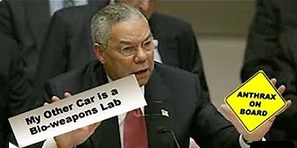
From Anthrax to Iraq
or go to
Aletho News Archives – Video-Images
Book Review
New paperback: Butchered by “Healthcare”
Lies are Unbekoming | October 20, 2026
 Butchered by “Healthcare” is Robert Yoho’s plain-spoken account of how American medicine stopped being a profession and became an industry. 341 pages. Over a thousand references. Thirty-eight chapters.
“Screening Tests Are Useless”, on tests that find diseases that would never have hurt you. “The FDA Protects the Big Drug Companies”, on an agency funded by the companies it regulates. “The Journals’ Sins Are the Editors’ Sins”, on ghostwritten studies and captured peer review. “Opioids and ‘Pain Management’”, on how a generation was prescribed its way into addiction. “Prozac and Relatives” and “Antipsychotics Are Disastrous”, on what psychiatry does to adults and children. “Surgery: Money Before Patients”. “Failed Cancer Treatments”. “Futile CPR and Overprescribing”. “Billing Scams & Specialty Warfare”. “Hospitals Are Sharks”. Each with a Patient Tips section at the end on how to survive it.
If you have ever walked out of a doctor’s office with a prescription you didn’t ask for, or watched a parent put through a treatment that made them worse, this is the book you want on your shelf before the next appointment. … Full review
Butchered by “Healthcare” is available on Lulu now.
Blog Roll
 Aletho News
- EU sending ‘biased’ observers to interfere in Serbian election – president
- White House envoy declares kinetic action against Yemen ‘fruitless’
- Ukraine deployed thousands of microdrones in Iraqi Kurdistan: Tasnim
- Iran calls for emergency UNSC meeting over Trump’s ‘brazen’ bomb talk, Israeli threats
- Iranian sources reveal details of Russia-China Hormuz proposal
- Plan for more US-Israel integration puts our military tech at risk
- Another Round Against Iran Will Break What Is Left of the Gulf
- SVR Report on Ukraine’s Mexican Drug Gang Links Could Pressure Zelensky, Won’t Change US Policy
- British Government Employees Were Fact-Checking the News at the BBC. Nobody Told You.
- Albania on fire: who’s behind the riots?
- If Americans Knew
- Gaza’s hospitals are running out of life-saving fuel – Daily Update
- Mysterious bot accounts reportedly spread fake ‘man on the street’ videos for Michigan Senate candidate
- Israeli Defense Minister Katz Says Over 60 Lebanon Villages Have Been Destroyed
- Why Is Israel Running TV Ads in Iowa Ahead of the Midterms?
- Hind Rajab’s Alleged Killer Is in the United States. HRF Demands His Arrest.
- US Officials Face Fresh Pressure After Another American ‘Brutalized’ by Israeli Settlers in West Bank
- Israel-Backed Palestinian Militias Terrorize Displaced Families in Gaza
- FBI subpoenas pro-Palestine activists over Israeli weapons plant disruption
- Fourth winter arrives in wartorn Gaza, too early – Daily Update
- More on how Bari Weiss is using CBS on behalf of Israel
- No Tricks Zone
- Predictions Made By Renowned Climate Proifessor Over Past Decades Have Been Proven To Be Poor
- New Study Suggests Large Regions Of The Pacific Ocean Have Been Cooling For The Last 80 Years
- Germany’s Green Energy Debacle: High Energy Costs Force Kahla Porzellan to Close After 182 Years!
- New Study: 50 Years Of The Most Aggressive ‘Net Zero’ Policies Can Only Affect The Global Climate By 0.03°C
- US September “Heat” Was No Record…Many Records Set Decades Ago
- Latest European Green Energy Debacle; Portugal’s Largest Flagship Solar Park Insolvent!
- Green Energy Debacle: German Expert Professor Fritz Vahrenholt Warns Of Severe Economic And Social Consequences
- Two More Paleo Reconstructions Affirm Meters-Higher Sea Levels Across Ireland, Brazil 7000-6000 Years Ago
- New Study: Earth And Venus Surface Warmth Largely Explained By Convection And Lapse Rate, Not CO2 Or Radiation
- 2025 Nature Paper Claiming Worsening Global Drought Gets RETRACTED …Heavily Flawed

