US’ successful ICBM intercept test brings us closer to a nuclear war and proves Moscow’s concerns were well grounded
By Scott Ritter | RT | November 17, 2020
The US has long dismissed Russian concerns over the deployment of the Aegis Ashore missile defense system on European soil. This week’s test of the SM-3 Block IIA interceptor against an ICBM has proven Russian concerns correct.
On Tuesday, the US Missile Defense Agency (MDA) announced it conducted a test of an Aegis Ballistic Missile Defense (BMD) System-equipped Arleigh Burke-class destroyer, the USS John Finn, against what was termed a “threat-representative Intercontinental Ballistic Missile (ICBM) target” using a Standard Missile-3 (SM-3) Block IIA interceptor. The test object was launched from Kwajalein Atoll, in the Republic of the Marshall Islands, toward an area of the Pacific Ocean northeast of Hawaii. According to the MDA, the SM-3 Block IIA missile successfully intercepted its target.
The successful test is but the latest in a series intended to prepare the SM-3 Block IIA missile and its associated systems–the Aegis Baseline-9 Weapons System and Command and Control Battle Management Communications (C2BMC) network–for operational duty as America’s frontline missile defense capability.
Previously, the Aegis weapons system had been advertised by the US as being limited against short- and intermediate-range missile threats. This reasoning was cited by both US and NATO officials as a counter to long-standing Russian concerns that the Aegis Ashore missile defense systems installed in Romania and Poland represented a threat to Russian strategic missile capabilities. The shooting down of an ICBM-like target by the Aegis BMD System has shown that Russia’s concerns were, in fact, well grounded.
The Aegis system tested off the coast of Hawaii is identical to those recently made operational in Romania and under construction in Poland, having been specifically designed to use the Aegis Baseline 9 Weapons System, and are interoperable with the US C2BMC European network. As such, there is no reason the European Aegis Ashore sites cannot be used to intercept ICBMs. Indeed, while the Romanian Aegis Ashore is currently equipped with the less-capable SM-3 Block IB interceptor, the Polish Aegis Ashore site will use the SM-3 Block IIA interceptor, providing an ICBM-killing capability for the European continent.
Russia has long held that the deployment of anti-ballistic missile systems in Europe represented a major alteration of the strategic balance of power, insofar as it empowered a potential US/NATO nuclear first strike scenario, in which US nuclear-armed missiles would be launched against Russian strategic nuclear forces in an effort to preemptively destroy them. Europe would then avoid the certainty of mutually assured destruction by hiding behind the US missile defense shield, which in theory would be capable of shooting down the handful of Russian missiles that might survive such an attack.
In response to the initial deployment of Aegis Ashore in Europe, Russia forward-deployed short-range nuclear missiles into Kaliningrad as a deterrent.
The SM-3 Block IIA interceptor represents a great threat to Russia. When deployed from aboard Baseline-9 equipped Arleigh Burke-class destroyers integrated into the C2BMC network, the SM-3 Block IIA interceptor becomes the anchor of a potentially global missile defense shield capable of nullifying the ICBM strike potential of all would-be adversaries–including Russia.
The US Navy currently bases four Arleigh Burke-class destroyers at its Naval Base in Rota, Spain, and has plans to increase this number to six in the near future. These destroyers have begun patrolling the Barents Sea, above the Arctic Circle, putting them in a position to shoot down Russian ICBMs trying to reach the US by overflying the Arctic.
The threat posed to Russia by the SM-3 Block IIA is real. Russia has long linked further progress in arms control to the need for the US to agree to limitations on its ballistic missile defense capabilities to prevent the very situation that is unfolding today.
By putting the SM-3 Black IIA interceptor to the test as an anti-ICBM weapon, the US has made the New START treaty irrelevant overnight, testing the willingness of Russia to agree to an extension. Even if Russia does allow the New START treaty to be extended, there is little doubt that it will insist on meaningful and verifiable limits to US ballistic missile defense capabilities, including the SM-3 Block IIA interceptor, before Russia could sign on to a new follow-on strategic arms reduction treaty.
More critically is what the new SM-3 Block IIA does to the current Russian nuclear posture, which is already being re-evaluated in light of the decision by the US to deploy low-yield nuclear warheads onboard US missile-carrying submarines.
The combination of low-yield nuclear weapons on board US submarines lurking off Russia’s coast with US destroyers equipped to shoot down Russian ICBMs is the stuff of any Russian nuclear planner’s worst nightmare. Russia will most likely be compelled to reexamine its alert posture to account for the increased possibility that the US may seek to launch a preemptive decapitation attack using low-yield nuclear weapons.
This means that Russia will be compelled to react quickly to any detection event suggestive of such a strike, reducing the time for leaders to consider the possibility of error before giving the order to launch. In short, while the US may claim that the SM-3 Block IIA is a defensive weapon that creates stability in regional and global security, the exact opposite is the case–the SM-3 Block IIA increases the chance for inadvertent nuclear war between the US and Russia. This is never a good outcome.
Scott Ritter is a former US Marine Corps intelligence officer and author of ‘SCORPION KING: America’s Suicidal Embrace of Nuclear Weapons from FDR to Trump.’ He served in the Soviet Union as an inspector implementing the INF Treaty, in General Schwarzkopf’s staff during the Gulf War, and from 1991-1998 as a UN weapons inspector. Follow him on Twitter @RealScottRitter
Acting US Def Sec Miller Formally Announces Plans to Cut Troops in Afghanistan, Iraq to 2,500 Each
By Daria Bedenko – Sputnik – 17.11.2020
Earlier on Monday, CNN reported, citing two US officials, that Pentagon anticipated President Donald Trump to issue an order this week regarding troop withdrawal from Iraq and Afghanistan by 15 January.
Acting Defence Secretary Christopher Miller announced on Tuesday that President Trump will cut the number of American troops in Iraq and Afghanistan to 2,500 each by 15 January 2021.
“By 15 January, 2021, our forces, their size in Afghanistan will be 2,500 troops. Our force size in Iraq will also be 2,500 by that same day,” Miller told reporters during a Defence Department briefing.
The decision falls in line with Trump’s intention to finish “endless wars”, as Miller said the moves were announced to “bring the wars in Afghanistan and Iraq to a successful and responsible conclusion and to bring our brave service members home”.
“This is consistent with our established plans and strategic objectives, supported by the American people, and does not equate to a change in US policy or objectives”, Miller outlined.
Reaction to Troop Reduction Announcement
Shortly after the decision was announced, White House national security adviser Robert O’Brien said Trump hopes to bring all US troops from Iraq and Afghanistan home “safely and in their entirety” by May.
Republican Senate Majority Leader, Mitch McConnel, reacted to the announcement moments later, warning against any major changes in the US foreign or defence policy, including the troops drawdowns, in the coming months.
“It is extremely important here in the next couple of months not to have any earthshaking changes in regard to defense or for policy”, McConnell said.
Reports about the order to reduce troops in Afghanistan and Iraq emerged earlier on Monday, saying that a “warning order” to start planning the troops reduction was already released by Pentagon, despite warnings by then-Defence Secretary Esper against rapid withdrawal of the US forces from the countries.
Esper was replaced with Director of the National Counterterrorism Center Christopher Miller by Trump earlier this month.
Trump vs ‘Endless Wars’
It has been one of the key Trump’s pledges in his campaign to put an end to American “endless wars” in foreign countries, as he vowed to reduce the number of the US military forces in Iraq and Afghanistan.
In October, Trump tweeted that all US troops should be home by Christmas, with US National Security Adviser Robert O’Brien later saying that thousands of American servicemen were “on path” to, on the contrary, remain there.
In Iraq, there are estimated 3,000 US troops, and roughly 4,500 American military forces are stationed in Afghanistan.
After Washington reached a deal with the Taliban* in February, Trump began to withdraw troops from the country, with further withdrawal coinciding with September peace talks between the Taliban and the Afghan government in Qatar.
Obama’s Failed Mideast Policies Likely to Make a Comeback if Biden Wins Presidency
By Ekaterina Blinova – Sputnik – 16.11.2020
If Joe Biden finds his way to the White House the world is likely to witness the continuation of Barack Obama’s interventionist policy in the Middle East and North Africa, suggests Mideast expert and political analyst Ghassan Kadi.
As the US mainstream media calls former Vice President Joe Biden the projected winner of the 2020 presidential race, the Democratic nominee’s foreign policy team has come into the spotlight.
The American press has named former Bill Clinton and Barack Obama administration officials Antony Blinken, Jake Sullivan, Colin Kahl, Michele Flournoy, and Susan Rice, among those who could be tapped to shape the potential administration’s foreign strategy in the coming four years in case Biden wins.
Biden’s Foreign Policy Team: ‘a Horror Show’
“Globally speaking, a Biden administration will push for easing the tension with China and the EU NATO states, up-scaling the rhetoric against North Korea and imposing more sanctions on Russia, Iran, and Syria for any reason they can conjure up”, says Ghassan Kadi, a Middle East expert and political analyst of Syrian descent.
Biden’s foreign policy team has brought together over 2,000 people, including 20 working groups, to determine his foreign policy agenda and “turn back” some of President Donald Trump’s foreign policies. Supporters of Bernie Sanders, however, have expressed concerns over Biden’s inner circle mostly consisting of Clinton and Obama administration veterans who previously endorsed US military interventions in the Middle East, North Africa, and Central Asia.
In August 2020, over 275 delegates to the Democratic National Convention, most of whom had previously pledged allegiance to Senator Sanders, wrote an open letter which called Biden’s foreign policy entourage “a horror show” of aides with long records of backing “disastrous” US military invasions.
“We ask you not to rely on foreign policy advice from those who may have a conflict of interest as a result of their relationships and lobbying on behalf of merchants selling weapons and surveillance technology”, the letter read as quoted by the Huffington Post.
Biden Aide Kahl: Advocate of US Military Deployment in Syria
If Biden wins the presidency, the US will not withdraw from Syria, Iraq, or Afghanistan anytime soon, believes Kadi. He does not rule out an increase in the US military contingent in Syria under a potential Biden administration, adding that the former VP is unlikely to engage in a dialogue with Damascus.
“The simple answer is no, not because they shouldn’t, but because they will be too arrogant to realise that there is no way out of the stalemate without negotiations”, the Middle East expert believes. “If anything, any new adviser or team of advisers will push to demonstrate that Trump’s policy in Syria was wrong, they will likely be advocating sending more troops into Syria.”
For instance, Colin Kahl, an informal adviser to the Biden campaign, is known for his “progressive engagement” strategy which envisaged the long-term deployment of a “right-sized” US military contingent to Mideast countries in the aftermath of the Arab uprising to oversee “democratic reforms” there.
Kahl, who served as deputy assistant secretary of defence for the Middle East from 2009 to the end of 2011, was largely regarded as the architect of the Pentagon’s response to the Arab Spring – a series of armed rebellions that spread across the Arab world in the early 2010s and later hijacked by terrorist groups, such as the Muslim Brotherhood*, al-Qaeda*, and later Daesh in some Arab states.
Responding to the GOP criticism of Obama’s strategy in the Middle East and North Africa, Kahl insisted in 2012 that the radical jihadist uprising would eventually be replaced by an alliance between “moderate Islamists” and secular Arab parties, something that has never occurred, nearly a decade after the initial events.
Obama’s critics argued that his administration’s foreign policy was marred by grave mistakes, including the drastic increase in the US military presence in Afghanistan which only exacerbated the ongoing war, the invasion of Libya which turned a once flourishing country into a failed state, and the support of so-called “moderate” Islamists in Syria which translated into a nine-year war.
Since Donald Trump assumed the presidency Kahl has repeatedly subjected the president’s Mideast policy to criticism. He lashed out at Trump for the latter’s decision to immediately withdraw from Syria after the defeat of Daesh terrorists: according to Kahl, Washington’s goals in the Arab Republic were not limited to thwarting the terror threat.
At the beginning of Trump’s term, the US had 3 cards to play to influence the Syria endgame:
—Aid to the opposition
—Conditional reconstruction assistance
—Troops & allies controlling 1/3 of the country & key oil/gas resourcesTrump has now given them all away for…nothing.
— Colin Kahl (@ColinKahl) December 19, 2018
In contrast, the former national security adviser hailed Biden’s plan to preserve limited military contingents in the Middle East and Afghanistan.
However, according to Kadi, the situation on the ground in the Middle East and beyond has changed dramatically over the past few years. Besides this, Syria is no longer a crumbling state like it was five years ago.
“If [Kahl] really wants to have ‘progressive engagement’ with the Syrian people, he should then support the idea of withdrawing from Syria unconditionally because America simply has no business in Syria or legitimacy for its presence”, he stresses.
Let’s Not Jump the Gun, Withdrawal May Still be on Trump’s Table
Touching upon Trump’s failure to pull out from the Arab Republic, the analyst refers to some Pentagon officials deliberately misleading President Trump about the actual size of the US military contingent on the ground and covertly disrupting his strategy.
Jim Jeffrey, outgoing US special representative for Syria and special presidential envoy for the Western coalition against Daesh (ISIS), told Defense One on 12 November how they tricked the president while maintaining the US military presence in the region.
That does not mean, however, that that’s how the story ends, says Kadi adding that the 2020 US election is not over yet.
“Let us not jump the gun”, the Mideast expert says. “The official results of the US presidential elections are still to be known. Furthermore, it has been touted that in preparation for an outcome that declares Trump a loser, he is possibly pulling the carpet from underneath Biden’s feet and planning to withdraw American troops from a number of overseas posts including Syria”.
Last Monday, Trump sacked Secretary of Defence Mark Esper, replacing him with National Counterterrorism Centre Director Christopher Miller. Top White House counterterrorism official Kash Patel, who was reportedly dispatched to Damascus earlier this year at Trump’s behest, was appointed as chief of staff to the acting head of the DoD.
Miller, who is known as an advocate of ending America’s overseas wars, recently wrote a letter to all Pentagon employees: “We met the challenge; we gave it our all. Now, it’s time to come home“, the acting US defence secretary stated, falling short, however, of providing any specific schedule.
Who’s World Order??
By Matthew Ehret for the Saker Blog | November 16, 2020
In his Foreign Policy article of April 2020, Biden states that he will reverse Trump’s embarrassing foreign policy record by standing up to both China, Russia and other totalitarian nations which represent the three-fold plague of “authoritarianism, nationalism and illiberalism” and “once more have America lead the world”.
Biden went further promising to undo the harm Trump has done to NATO by re-enforcing the military body, extending its influence to the Pacific (which sounds a lot like the Esper/Pompeo doctrine for the Pacific), and even demanded that NATO go harder on Russia stating that “the Kremlin fears a strong NATO, the most effective political military alliance in modern history.”
Considering Biden’s nearly 45 year political record supporting every military intervention in American history, opposing de-segregation, eulogizing pro-KKK Senator Strom Thurmond, passing bills that incarcerated petty drug dealers for life on behalf of the cheap labor prison industrial complex and supported the rampant growth of both Wall Street, Big Pharma and the Big Tech run surveillance state, we should think twice before celebrating this man’s possible entry into the halls of the highest office in the USA.
Biden’s call for renewing the NATO alliance in opposition to Russia and China, his support for reversing Trump’s calls for military reduction in the Middle East and his support for extending NATO in the Pacific mixed with his lifelong track record, forces us to ask if Glen Greenwald was right when he quit the Intercept on November 1 saying:
“If Biden wins, that’s going to be the power structure: A democratic party fully united with neocons, Bush/Cheney operatives, CIA/FBI/NSA Wall Street and Silicon Valley: presenting itself as the only protection against fascism. And much of the left will continue marching behind it.”
As it turns out, Greenwald’s warning was absolutely on point, as the entire intelligence apparatus, Big Tech and mainstream media complex which worked desperately to oust President Trump for 4 years and is currently running a vast voting fraud operation as this is written has given its full backing to the narrative of “an inevitable Biden presidency”.
In a Nov. 11 article from Antiwar.com entitled Biden’s Pentagon Transition Team Members Funded by the Arms Industry, journalist Dave DeCamp demonstrates that of the 23 members of Biden’s Pentagon Transition Team, over one third are directly tied to NATO and the Military Industrial Complex.
As facts continue to emerge of the corrupt deep state structure which totally dominates the geriatric hologram known as Joe Biden, it has become obvious that even the few positive remarks Biden made in support of renewing the START treaty with Russia carry little weight.
Ignoring the very real danger of a new civil war due to the fact that either result will be denied its legitimacy by half of the nation, the question must be asked: If Trump is replaced by a Biden Presidency on January 20th, then what will be the effects both on world stability and US-Russia-China relations?
It is good that Biden supports START’s renewal, but an increasing majority of nations are opting for a multipolar alliance premised on the defense of national sovereignty, the right to use protectionism, and the construction of large scale megaprojects such as the New Silk Road, Polar Silk Road, advanced space exploration and North South Transportation Corridor.
The very protectionist measures which allowed the USA (and every nation of the world for that matter) to build up their industrial base and economic sovereignty are attacked directly by Biden who demands the “taking down of trade barriers and resisting dangerous global slide toward protectionism” (which he goes so far as to assert without evidence “caused the great depression” and “lead to World War II”).
Attacking Trump for being soft on China’s imperial Belt and Road Initiative which Biden states is only an “outsourcer of pollution to other countries by financing billions of dollars worth of dirty fossil fuel energy projects”, Biden then asks: “who writes the rules that govern trade?” and answers: “the United States, not China, should be leading that effort.”
Beyond carbon reduction plans, and information technology investments (AI, 5G, Quantum Computing), there is very little in Biden’s “development outlook” that brings the USA into harmony with this multipolar consensus. His program to support cutting America’s carbon emissions to net zero by 2050 as outlined by the Green New Deal and Great Reset crowd at Davos might appear on the surface to be pro-infrastructure, professing to “create 10 million good new jobs”, but the reality on further inspection is very different.
The sorts of large scale BRI-oriented development projects now transforming more than half of the world which is increasingly operating under a completely different non-US dominated banking paradigm, are based on capital intensive heavy industry, the use of fossil fuels and also nuclear power.
Without these energy sources, then the New Silk Road and its’ sister projects could never work (much like Modi’s anti-BRI OSOWOG doppelganger has proven a total failure both scientifically and economically).
The sort of “green energy revolution” which the Davos technocrats running Biden want to impose onto the world might create short term jobs, but once the solar panels and windmills are built, the quality of energy available to nations stupid enough to walk into this cage will forever suffocate their capacity to sustain their populations and growth potential. In short, it is a green mirage obscuring a very ugly design.
In opposition to this depopulation agenda, Trump’s tendency support for space exploration, reviving protectionism to rebuild America’s lost manufacturing and his supporting large scale infrastructure programs in resolving conflict abroad (including his support for building rail in the Arctic, rail in Serbia and Kosovo, nuclear power in South Africa and Poland etc) is certainly synergistic with the multipolar system led by Russia and China and undeniably brings the USA into harmony with its own better traditions.
Additionally, Trump’s defunding of color revolutionary “civil society” groups in Hong Kong and Belarus won him many enemies from both sides of the pro-Soros isle while supporting the concept of national sovereignty which were major steps towards stability and trust-building with nations of the world who demand their sovereignty be respected as outlined in the UN Charter itself.
Compare this with Biden’s statement that we must “stand with Russian civil society which has bravely stood up time and again against President Vladimir Putin’s kleptocratic authoritarian system” and Biden’s call to host “a global summit for democracy” featuring “civil society organizations from around the world that stand on the frontlines of democracy” including “the private sector, technology companies and social media giants.”
These are the same “Big tech, and media giants” that have given their full backing to the imposition of Biden into the Presidency which have also been used to overthrow nationally elected governments in color revolutionary regime change operations for decades. These are the same networks that have suppressed all evidence of systemic vote fraud in the American elections of 2020 and are stoking the fires of a potential new civil war and regime change inside the republic itself.
Whatever the case may be, the coming weeks and months will feature fierce battles that will shape the outcome of world history.
India and US signed a game-changer defence deal, amid the rise of what could be a new bipolarity
By Uriel Araujo | November 16, 2020
After the third annual “2+2” high-level US-Indian talks in Delhi on October 27, a very important defence pact was signed: the Basic Exchange and Cooperation Agreement (BECA). With so much focus on the American election, little attention has been given to this crucial deal. Last Tuesday, the Australian navy joined Indian, American, and Japanese warships for the annual Malabarar exercises. This is yet another sign of the growing convergence between the four QUAD countries (Quadrilateral Security Dialogue). Both events must be seen in light of Indian and US intentions to “counter” China.
The BECA was signed nearly a week before the US elections – and it certainly was a kind of diplomatic victory for Trump’s administration. Regarding a future administration, we should not expect any major change. Joe Biden, who has declared victory in the US election (Trump is contesting the outcome), is on the record stating in 2006 that his “dream” is for the US and India to be the “two closest nations in the world”. According to a policy paper released by the Biden campaign during the election, India is a “high priority” and, among other things, the US should support Indian aspirations to become a permanent member of the United Nations Security Council.
After the two previous 2+2 talks in 2018 and 2019, the US and India signed the Logistics Exchange Memorandum of Agreement (LEMOA) and the Communications Compatibility and Security Agreement (COMCASA). The former gave mutual access to each other’s military facilities for the purpose of refueling, while the latter provides New Delhi with classified information from the US Navy. The latest BECA, in its turn, takes such cooperation to a whole new level. This was made possible and even fast-tracked partly because both Trump’s Indo-Pacific Strategy and the COVID-19 outbreak have brought India and the US closer.
The deal will give New Delhi access to American geospatial data and intelligence – for its missiles and drones. It will also enhance Indian automate hardware systems and weapons and will improve New Delhi’s navigation capabilities and its military targeting. On the other hand, some have voiced concerns with Indian sovereignty.
The agreement, after all, also gives the US a high degree of control over Indian operations. According to security analyst Bharat Karnad, a former member of India’s National Security Council and an emeritus professor at the Centre for Policy Research in Delhi, it could even open the possibility of Washington tampering with data and misdirecting Indian missiles. The full texts (and even official summaries) of the agreements the US has with some of its allies, such as the Philippines, remain classified and it fuels suspicions and reservations among part of Indian strategic analysts. According to a 2018 paper by Abhijnan Rej, a Fellow with Observer Research Foundation’s Strategic Studies Programme, some Indian officers fear that becoming part of any military communication network with the US would make India vulnerable to Pakistan tapping – because Pakistan, India’s main rival, is a member of the US Central Command (CENTCOM) Partner Network. The US claims such networks do not necessarily interface with each other but such claim is met with some skepticism.
If some sectors in India are concerned about being part of a military network together with Pakistan, the US worries about Indian-Russian relations and cooperation. From the American point of view, the fact that Russia remains India’s top supplier of weapons – and has been so since Cold War era – is in itself a concern. Moreover, Moscow is eager to sell New Delhi its S-400 Triumf anti-aircraft weapons system by 2021. Washington fears that the presence of any Russian defense system into an Indian military network (where US hardware and data is also present) would expose some features of American platforms to Moscow.
That is probably why the US has even threatened India with sanctions over its decision to purchase such system from Russia – top diplomat Alice Wells, Principal Deputy Assistant Secretary of State for South and Central Asian Affairs, claimed in May that could be possible. From Washington’s perspective, however, there is plenty to be concerned: one should also remember that the Kudankulam nuclear power plant (KKNPP) counts heavily on future nuclear cooperation with Moscow.
The BECA agreement holds tremendous geopolitical importance for the future of the region, especially when we consider the tensions between India and China – as well as Chinese-Japanese tensions, Indian-Japanese relations and concerns over QUAD becoming a kind of a “new Asian NATO” in the Indo-Pacific region. Washington and New Delhi certainly have an area of common interest regarding Beijing’s growing power. The US, in turn, have been engaged in a trade war with China and in what many describe as a new cold war.
For India, such a game-changing deal brings also a kind of dilemma. In Indian political landscape, the anti-American left – which has always opposed the Indian-US strategic partnership – has been largely irrelevant for a while. The hegemonic Hindu right has traditionally rejected Western and American cultural influence while reaffirming Indian national culture and values. BECA will demand a closer political relationship with the US. Will such relationships be informed by narratives of common values like democracy and the rule of law?
As for the future, India could further strengthen its ties with the US (potentially damaging its relationship with Russia by doing so). It would confirm the fears of many about the QUAD becoming a “new NATO” and it would dramatically increase tensions regionally and globally – this scenario would represent the further rise of a supposed “new bipolarity” in global politics instead of multipolarity.
Or will India continue pursue its own traditional “middle path” way, engaging with both the US and Russia. In this case, together with allies such as Indonesia, and as part of the on-going “conceptual war” – over what the Indo-Pacific Region (IPR) must be – India could try and push its own view of the IPR.
Uriel Araujo is a researcher with a focus on international and ethnic conflicts.
Susan Rice has blood on her hands: Journalist

By Don DeBar | Press TV | November 15, 2020
Susan Rice is another one of the recycled Clinton people, and in fact the Democratic Party had her going back even before that.
Her mother has been around. She helped design Pell Grants. She had been with Brookings since ‘92 which is about when Susan graduated into the Clinton administration (in 1993) and went directly to the National Security Council.
She was with Bill Clinton for his administration. Obama had her – first at the UN, and then as his National Security Adviser (I think). She’s about as inside as it gets. She has blood on her hands in Africa, Rwanda.
The people’s understanding of the Rwandan genocide in the United States is exactly upside down. There was a genocide there, but it was the side that the US-backed, not surprisingly, and that was Susan Rice’s project. She was a member of the National Security Council to do international affairs and that was one big act of the Clinton administration – that move to pivot to Africa, around Rwanda.
It was also the enabling of their so-called humanitarian interventions, and in any way that’s her child.
At the United Nations, she helped bring us the destruction of Libya, enabled the situation in Syria to the extent that she could, and tried to sell authority for the US to bomb the hell out of Syria as well.
It’s going to be more war, really.
Let me remind people when Trump took office in January of 2017 the foreign policy that Susan Rice and Barack Obama and the Clintons, and John Kerry had set in motion had us where we were having war games at Russia and China’s borders from the Baltics to the Korean peninsula, on a constant basis, with a number of international incidents – including NATO members shooting down Russian pilots over Syria – any of which could have escalated, and really turning on a dime into a global thermonuclear war.
Trump for all the things he has done does not leave us – if he’s leaving – in that situation. But what they’re doing is installing the very people who created that condition to start from day one to bring us right back to the brink with Russia and China.
I think it’s very scary that Susan Rice is being considered for this. I don’t think it’s a surprise at all. Anyone who knows who Joe Biden is not surprised.
Don DeBar is an American journalist and political commentator based in New York.
‘Bidenism’ domestically: no free press, no lawyer, one-party state?
By Ramin Mazaheri | Press TV | November 15, 2020
For months the United States’ corporate-dominated media has terrified everyone with promises of right-wing militias taking to the streets, but here’s the thing: the pressures currently being put on 70 million Trump supporters is exponentially raising the possibility of that actually occurring, not reducing it.
It is ghastly illuminating to see just how quickly – and with such disregard for modern human rights – both the elite and the highly partisan citizens of the United States are attacking those who refuse to fall at the feet of Joe Biden, and even before all the votes are counted in a very narrow and highly-disputed election.
It is not an exaggeration, as I will list them below, but the tactics being used to push Biden into office are akin to wartime, yet the US is most emphatically not at war – all this derangement is over merely trying to vote as equals. I am not reporting from 1917 USSR, or 1949 China, or 1959 Cuba, or 1979 Iran – there are no foreign armed forces meddling in a revolution/civil war.
“Bidenism” is most emphatically not a revolutionary force. It is openly and proudly the exact opposite: a return to the “normalcy” embodied in the 2015 status quo. Nor is the US at civil war, but it seems some never-trumpets are actually hell-bent on starting one rather than do what every nation does: rely on a calm judicial review when there is a contested and very narrow vote. There is simply no other way out for the US than to follow normal democratic procedures, even if their electoral process is routinely called the worst among the Western core democracies by Harvard think-tanks.
(The US goes one step too far, as usual – other nations at least wait until the votes are actually mostly counted until a candidate declares victory, unlike Donald Trump and Joe Biden.)
If this does turn out to be the “Biden presidential(-elect) era” the world can easily grasp what a terrible, very Trumpian start it is. Americans, I think, cannot.
It’s just very unclear what Americans in 2020 truly believe in anymore?
We know that many American elite don’t truly believe in free press or free speech:
Part 1 of this article, “CNN’s Jake Tapper: The foreman/overseer keeping all journalists in line” discussed how one of the nation’s top news anchors threatened lesser-privileged journalists with blacklisting if they don’t side with Biden immediately. His intimidation went uncommented upon/tacitly condoned by his top colleagues, when his pathetic careerism amid social instability should cost him at least some of his privileges.
Censorship is one way to prevent dissenting journalism, but informal censorship is another: The US doesn’t need formal government censors when their own journalists enforce such obvious suppression informally.
The goal of censorship is conformity. The US media which is corporate dominated – from the (fake) left New York Times to right-wing Fox News – is producing coverage which seemingly exclusively conforms to the false idea that it’s good journalism to exclude the massive number of Americans who feel the vote was not “fair and free”.
Since this troubled election began that number includes a stunning 70% of Republicans, per recent polls, but also independents and leftists. Since the election I interviewed both the Party for Socialism & Liberation and the Socialist Alternative Party (you have never heard of them because of the duopoly which strangles American elections) and both of them said the same thing: this is a terribly antiquated system in America, but in any democracy you count all the votes and litigate any contentious problems.
We know that many Americans don’t believe in the right to an attorney:
The anti-Trump and totally mainstream PAC/think tank The Republican Project has been lauded from the (fake) left to the far-right Washington Post for successfully harassing Trump’s Pennsylvania election lawyers into abandoning their client. The tactics used were not rhetorical and moral but mere intimidation, harassment and doxxing (releasing private information about people into public).
Trump is appalling, but does he not even deserve a lawyer?
Do people who associate with Trump, such as his lawyers, deserve such treatment? How far does this go – that’s the question those engaged in a witch-hunt are too fanatical to ask themselves.
Trump’s legal grievance is obviously supported by too large a democratic minority to ignore without causing lasting damage to the integrity of the American system.
By denying the right to an attorney these rabid anti-Trumpers do not technically betray the letter of their 1776 Revolution, that anti-imperialist event, but they certainly do seem to betray the spirit. It seems to violate the spirit if not the letter of the 6th amendment (ratified in 1791), which guarantees a lawyer in all criminal prosecutions, as well as the Due Process and Equal Protection clauses of the 14th amendment (ratified in 1868).
Congratulations to rabid anti-Trumpers for being so very progressive that they have made it to just past the slavery era?
1868 is a good place mark for the mentality of US Democrats, who remain obsessed with race and totally untouched by any of the anti-imperialist and class-based analyses which began to prevail worldwide since 1917.
We know that some American lawmakers don’t believe in open elections:
Earlier this month I reported on the blacklist of Iranian media by the Bernie Sanders-affiliated Democratic Socialists of America, so we shouldn’t have expected much from this fake-leftist faction openly committed to working within the Democratic Party.
But many Americans were shocked that DSA’s most powerful member, Representative Alexandria Ocasio-Cortez, actually doubled down when a tweet of hers suggested that lists should be compiled of pro-Trumpers who have committed no crime other than supporting not her party.
When top elected officials vaguely threaten citizens with “the idea of being responsible for their behavior over last four years” and their behaviour is just working for a democratically-elected candidate, what else is this but massively undemocratic intimidation? That would make free elections in the future impossible.
AOC is seemingly advocating for a one-party state, without knowing it, perhaps, but incompetence is no excuse. It’s certainly another sign of the widespread hysteria of rabid anti-Trumpers.
Directly after AOC’s call sprang up the “Trump Accountability Project”, headed by former Democratic National Committee press secretary Hari Sevugan, which is seemingly looking to blacklist all those that worked for the (possibly) outgoing administration. Would Mr. Sevugan approve of a “Biden Accountability Project” in 2024 for Biden’s staff? Or is that a superfluous question because Democrats are preordained to rule in an unbroken, 1,000-year dynasty?
Why would anybody of merit want to go into public service anymore if they are just going to get blacklisted for doing so?
All the above: This is all wartime-era stuff.
And Chicago, where I am currently based, has been boarded up like it was wartime since the election. (And in August/September. And in May/June.)
It’s as if America can’t help but inexorably draw itself to conflict, because this is all totally self-imposed. This is not the 1960s – there is no peace movement here anymore.
America is acting like what it is: half-full of rabid imperialists
Of course, “neo-imperialism” means colonising your own nation for an international 1%, as the European Union – that supremely US-guided project; that project which is more American than even America – proves.
Of course America is in a state of xenophobia (hostility or fear towards different cultures or strangers) and witch-hunting: this is exactly what the Democratic Party has normalised via their failed Russophobia campaign since 2016.
Did they think they could just turn that off?
Many current Biden supporters failed to stand up against this phony campaign designed to deflect from the Democrats 2016 election failures (2020 saw an even bigger “Blue Wave” failure, but isn’t this anti-Trump supporter hysteria deflecting attention from that for now?), and the most vociferous of them are now aiming their pitchforks at the people who dared to vote differently. The problem is that there are so very many of such persons.
We should add that for four years on US social media this hate mongering has to be multiplied by millions, maybe even billions of time-wasting, venomous posts and spiteful “likes” about veritable political nonsense. It’s practically a justification for state-sponsored censorship, because what kind of society can be healthy towards their neighbors, much less foreigners, when there have these been daily witch-hunts in the phony online world?!
So these lists can go on and on, but our tolerance of such intimidation should not.
(And, yes, before Russophobia there was Islamophobia, and before that it was socialism-phobia, Blackphobia, Indianphobia, etc.)
What’s going on in America is that the most Trump-hating Democrats are acting exactly like what they are: not fascists, as is so often alleged of the other side in Western discourse, but imperialists, which is so rarely discussed in Western discourse.
Like Jake Tapper, they are not just careerists who aspire to outdo everyone in extremism in order to rule from atop the pyramid, they also want to believe they also have the moral high ground despite that. It is arrogance combined with a lust for power and a hysterical, unreasoning rage which comes from we know not where?
Half of the US is so hysterical about being doubted that they can’t recognise themselves in the mirror, but many of those they have colonised, blockaded, sanctioned, brutalised and impoverished sure can.
It’s absolutely appalling and the solution is not simply, “Say that Biden is the president.”
Any nation which has a culture willing to go to such lengths to get others to accept their view – rather than relying on reasoned, secure reflection and some sort of litigation or vetting process – is deeply messed up.
But, as the US proved with their murderous meddling in Iran’s 2009 election: many in the US don’t just not care about anyone’s else’s rules, judges or systems of conflict resolution – the 2020 election proves that many Americans don’t even care about their own.
They are the law-giver and the life-taker and the president-maker, because they say so. Better side with “they”, or else.
‘Forever war’ returns: Biden’s Pentagon team puts the military-industrial complex back in command
RT | November 14, 2020
Despite campaign-trail overtures to progressives, a Joe Biden presidency seems to spell a return to normalcy in the most time-honored American way: by placing the military-industrial complex in charge of the country’s defense.
Joe Biden’s campaign message focused almost entirely on Donald Trump, and on Biden’s supposed ability to “unify” a polarized electorate and “restore the soul of America.” Since he claimed victory last week, Biden’s prospective administration has begun to take shape, and the reality behind the rhetoric has started to emerge.
On matters of defense, restoring America’s “soul” apparently means placing weapons manufacturers back in charge of the Pentagon.
Biden announced his Department of Defense landing team on Tuesday. Of these 23 policy experts, one third have taken funding from arms manufacturers, according to a report published this week by Antiwar.com.
A knot of hawks
Leading the team is Kathleen Hicks, an undersecretary of defense in the Obama administration, and an employee of the Center for Strategic and International Studies (CSIS), a think tank funded by a host of NATO governments, oil firms, and weapons makers Northrop Grumman, Boeing, Lockheed Martin, Raytheon, and General Atomics. The latter firm produces the Predator drones used by the Obama administration to kill hundreds of civilians in at least four Middle-Eastern countries.
Hicks was a vocal opponent of President Donald Trump’s plan to withdraw a number of US troops from Germany, claiming in August that such a move “benefits our adversaries.”
Two other members of Biden’s Pentagon team, Andrew Hunter and Melissa Dalton, work for CSIS and served under Obama in the Defense Department.
Also on the team are Susanna Blume and Ely Ratner, who work for the Center for a New American Security (CNAS). Another hawkish think-tank, CNAS is funded by Google, Facebook, Raytheon, Northrop Grumman and Lockheed Martin. Three more team members – Stacie Pettyjohn, Christine Wormuth and Terri Tanielian – were most recently employed by the RAND corporation, which draws funding from the US military, NATO, several Gulf states, and hundreds of state and corporate sources.
Michele Flournoy is widely tipped to lead the Pentagon under Biden. Flournoy would be the first woman in history to head the Defense Department, but her appointment would only be revolutionary on the surface. Flournoy is the co-founder of CNAS, and served in the Pentagon under Obama and Bill Clinton. As under secretary of defense for policy under Obama, Flournoy helped craft the 2010 troop surge in Afghanistan, a deployment of 100,000 US troops that led to a doubling in American deaths and made little measurable progress toward ending the war.
‘Forever war’ returns
President Trump, who campaigned on stopping the US’ “forever wars” in the Middle East and remains the first US president in 40 years not to start a new conflict, has nevertheless also staffed the Pentagon with hawkish officials. Recently ousted Defense Secretary Mark Esper was a top lobbyist for Raytheon, while his predecessor, Patrick Shanahan, worked for Boeing. Trump’s appointment this week of National Counterterrorism Center Director Christopher Miller as acting secretary of defense, coupled with combat veteran Col. Douglas MacGregor as senior adviser, looked set to buck that trend, given MacGregor’s vocal opposition to America’s Middle Eastern wars.
Yet Miller and MacGregor may not be in office for long, if Trump’s legal challenges against Biden’s apparent victory fail. Should that happen, Biden’s progressive voters may be in for a rude reawakening when the former vice president returns to the White House.
Many of these progressives were supporters of Bernie Sanders during the Democratic primaries, while others likely held their nose and voted for Biden out of opposition to Trump. Reps. Barbara Lee (California) and Mark Pocan (Wisconsin), two notable progressives, wrote to Biden on Tuesday asking him not to nominate a defense secretary linked to the weapons industry.
Lee and Pocan cited President Dwight D. Eisenhower’s 1961 farewell address, in which he warned of the “disastrous rise” of the “military-industrial complex.”
Given Biden’s fondness for Flournoy, whom he tapped in 2016 to head the Pentagon under a potential Hillary Clinton administration, the former vice president appears unconcerned about curtailing the influence of the armaments industry.
The industry apparently roots for Joe, too. As Donald Trump surged ahead of Biden on election night, stocks in Raytheon, Lockheed Martin, General Dynamics, and the Carlyle Group all plummeted. Only when counting in swing states stopped and resumed, giving Biden the advantage, did they climb again.
It’s probably fine that all the big arms contractor stocks plummeted when it looked like Trump won but then skyrocketed once it became clear Biden would be the one to take office. pic.twitter.com/CKEZNS53Gx
— Hillary Fan (@HillaryFan420) November 7, 2020
Should a Biden administration make good on running mate Kamala Harris’ post-election promise to return to regime-change operations in Syria, these firms and their supporters in the Pentagon stand to make a killing.
However, anti-war leftists, progressives, and Bernie Sanders supporters may soon realize that voting for a Democrat who supported the Iraq War, instead of a Republican who called it “the worst single mistake ever made in the history of our country,” might just benefit the military-industrial complex more than the “soul of America.”
New Pentagon Top Adviser Wants US Troops Out Of Syria “Immediately”
By Tyler Durden – Zero Hedge – 11/12/2020
With Esper out the door, Trump’s newly in office acting Secretary of Defense is already making waves given who he’s just brought on board.
The new acting Pentagon chief, Christopher Miller, has just brought on as his senior adviser Ret. Army Col. Douglas Macgregor. Crucially Macgregor is on record as wanting American troops out of Syria immediately (gasp, the horror!), and further wants a rapid draw down in Afghanistan as well as in places like the Korean Peninsula.
“President Trump’s newly installed acting Pentagon chief is bringing on a senior adviser in a sign the administration wants to accelerate the withdrawal of U.S. troops from the Middle East before the end of his presidency in January, three people familiar with the move told Axios,” Jonathan Swan writes.
It appears Trump has finally and much belatedly put someone at the helm whose own views reflect those of the 2016 Trump campaign trail. He had been the first Republican nominee in history to lambast Bush’s Iraq War as a huge “disaster” while running on a ‘bring the troops home’ non-interventionist message.
Of course critics then and now have mischaracterized the president as “isolationist” – which has long become a negative slur in establishment foreign policy circles.
Currently it’s believed there’s anywhere from 800 to possibly up to 2,000 US personnel in northeast Syria, where according to past Trump statements they are there to “secure the oil” and ensure the permanent defeat of ISIS. Increasingly they’ve been bumping up against both Russian and Syrian Army patrols in a mission that doesn’t seem to have a defined end goal or exit strategy.
Here’s how Axios presented the supposedly “worrisome” and “divisive” views of Macgregor:
In a 2019 interview with Fox’s Tucker Carlson, Macgregor said he would advise the president to get out of Afghanistan “as soon as possible,” including removing the U.S. embassy from Kabul, and that talking to the Taliban was unnecessary.
- Macgregor also said the U.S. needs to pull its troops out of Syria immediately and America had no national interest there.
- He said, “We need to listen very carefully to the Iranians … find out what their interests are and look for areas where we can cooperate” and that the U.S. needs to “turn the operational control of the [Korean] Peninsula militarily over to President Moon and the Koreans.”
Already Biden’s transition team is strongly signaling it would reverse course on some Trump draw downs, most notably the reduction of about 12,000 US soldiers from Germany.
Meanwhile The Intercept published a story on Wednesday citing an unnamed administration official who said the latest Pentagon shake-up was preparation for significant troop draw downs across various hotspots.
“The president is taking back control of DoD. It’s a rebirth of foreign policy. This is Trump foreign policy,” the official said.
Lee Fang at The Intercept underscored that “The personnel changes, the official claimed, would help clear the way for a more loyal Pentagon apparatus to carry out Trump’s goals, including the last-minute withdrawal of troops from foreign conflicts.”
Trump’s anti-ISIS envoy admits he MISLED president about US troop numbers in Syria to keep them there
RT | November 13, 2020
When President Donald Trump ordered all but a few hundred US troops withdrawn from Syria, his own diplomats hid the true number of American forces from the president, envoy Jim Jeffrey has revealed in a new interview.
“We were always playing shell games to not make clear to our leadership how many troops we had there,” Jeffrey, envoy to the global coalition against Islamic State (IS, formerly ISIS) told Defense One on Thursday. Jeffrey added that the actual number of troops in northeastern Syria is “a lot more” than the 200-400 that Trump agreed to leave behind last year.
Trump’s withdrawal appeared to make good on his campaign-trail promise to extricate the US from its “forever wars” in the Middle East. Trump, who referred to Syria in 2018 as “sand and death,” angered a host of Pentagon chiefs and diplomats when he announced the near-total pullout from the country last October. Defense Secretary Jim Mattis resigned in protest when Trump first announced withdrawal plans in 2018, and Jeffrey said on Thursday that the decision was “the most controversial thing in my fifty years in government.”
Jeffrey’s predecessor, Brett McGurk, also handed in his notice when Trump revealed the pullout. Taking over from McGurk, Jeffrey and his team routinely misled the president to ensure that “there was never a Syria withdrawal.”
Even before he signed up to work for the Trump administration, Jeffrey’s opposition to the president was well known. Shortly after Trump was named as the Republican candidate in 2016, Jeffrey signed a letter declaring that the businessman and TV host “would be the most reckless president in American history.” The letter’s other signatories included a host of Bush administration security officials, who helped shape the policies that destabilized the Middle East and gave rise to Islamic State.
Despite his open and secret opposition to Trump’s policies, Jeffrey told Defense One that the president’s “modest” approach to the Middle East has yielded better results than George Bush’s military interventionism or Barack Obama’s apologetic overtures to Muslim leaders while arming extremist militias in Syria.
Trump, by contrast, has managed to put together a political alliance between Israel and a number of Gulf states, while maintaining relations with Iraq and focusing pressure on Iran. Conflict in the region is frozen in a “stalemate,” Jeffrey noted.
“Nobody really wants to see President Trump go, among all our allies,” he said. “The truth is President Trump and his policies are quite popular among all of our popular states in the region. Name me one that’s not happy.”
Trump’s withdrawal plans throughout the region have earned him the scorn of policy hawks in Washington. When the New York Times published an anonymously sourced report in June accusing Russia of paying Taliban fighters to kill American troops in Afghanistan, the Democrat-controlled House Armed Services Committee voted to deny Trump the funding for a withdrawal from the war-torn country. Before the Times’ report was published, Trump signed a deal with the Taliban to end the 19-year conflict, and White House plans for a withdrawal by fall were leaked. The report was later debunked by the Pentagon itself.
Trump has since moved to withdraw from Afghanistan again, tweeting last month that “we should have the small remaining number of our BRAVE Men and Women serving in Afghanistan home by Christmas!”
A number of rapid-fire personnel changes at the Pentagon seem to confirm that Trump intends to withdraw further from the Middle East. Retired Army Col. Douglas Macgregor – a long-time proponent of ending the war in Afghanistan – was appointed on Wednesday to serve under new Acting Defense Secretary Christopher Miller. CNN reported that departing Defense Secretary Mark Esper had been pushing back against Trump’s withdrawal plans, calling them “premature.”
However, the results of this month’s election are still unclear, and Trump’s tenure in the White House may be coming to an end. Should Joe Biden eventually be declared president, Jeffrey advised the Democrat to stick to the Trump doctrine in the Middle East. “I think the stalemate we’ve put together is a step forward and I would advocate it,” Jeffrey said.
Featured Video
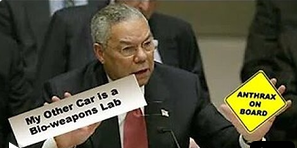
From Anthrax to Iraq
or go to
Aletho News Archives – Video-Images
Book Review
New paperback: Butchered by “Healthcare”
Lies are Unbekoming | October 20, 2026
 Butchered by “Healthcare” is Robert Yoho’s plain-spoken account of how American medicine stopped being a profession and became an industry. 341 pages. Over a thousand references. Thirty-eight chapters.
“Screening Tests Are Useless”, on tests that find diseases that would never have hurt you. “The FDA Protects the Big Drug Companies”, on an agency funded by the companies it regulates. “The Journals’ Sins Are the Editors’ Sins”, on ghostwritten studies and captured peer review. “Opioids and ‘Pain Management’”, on how a generation was prescribed its way into addiction. “Prozac and Relatives” and “Antipsychotics Are Disastrous”, on what psychiatry does to adults and children. “Surgery: Money Before Patients”. “Failed Cancer Treatments”. “Futile CPR and Overprescribing”. “Billing Scams & Specialty Warfare”. “Hospitals Are Sharks”. Each with a Patient Tips section at the end on how to survive it.
If you have ever walked out of a doctor’s office with a prescription you didn’t ask for, or watched a parent put through a treatment that made them worse, this is the book you want on your shelf before the next appointment. … Full review
Butchered by “Healthcare” is available on Lulu now.
Blog Roll
 Aletho News
- Undersea Internet cables could be targeted in retaliation for attacks on Iran: IRGC deputy chief
- EU sending ‘biased’ observers to interfere in Serbian election – president
- White House envoy declares kinetic action against Yemen ‘fruitless’
- Ukraine deployed thousands of microdrones in Iraqi Kurdistan: Tasnim
- Iran calls for emergency UNSC meeting over Trump’s ‘brazen’ bomb talk, Israeli threats
- Iranian sources reveal details of Russia-China Hormuz proposal
- Plan for more US-Israel integration puts our military tech at risk
- Another Round Against Iran Will Break What Is Left of the Gulf
- SVR Report on Ukraine’s Mexican Drug Gang Links Could Pressure Zelensky, Won’t Change US Policy
- British Government Employees Were Fact-Checking the News at the BBC. Nobody Told You.
- If Americans Knew
- Christiane Amanpour exits CNN with a legacy shaped by the debate over Israel
- Israel’s war on Iran is the final move in a decades-old strategy
- Israel Denies Entry to French Journalist, U.S. Researcher Amid Rise in Entry Denials
- Gaza’s hospitals are running out of life-saving fuel – Daily Update
- Mysterious bot accounts reportedly spread fake ‘man on the street’ videos for Michigan Senate candidate
- Israeli Defense Minister Katz Says Over 60 Lebanon Villages Have Been Destroyed
- Why Is Israel Running TV Ads in Iowa Ahead of the Midterms?
- Hind Rajab’s Alleged Killer Is in the United States. HRF Demands His Arrest.
- US Officials Face Fresh Pressure After Another American ‘Brutalized’ by Israeli Settlers in West Bank
- Israel-Backed Palestinian Militias Terrorize Displaced Families in Gaza
- No Tricks Zone
- E-Cars Reduce CO2 Emissions By Only 41% Compared To Internal Combustion Engine Vehicles
- Predictions Made By Renowned Climate Professor Over Past Decades Have Been Proven To Be Poor
- New Study Suggests Large Regions Of The Pacific Ocean Have Been Cooling For The Last 80 Years
- Germany’s Green Energy Debacle: High Energy Costs Force Kahla Porzellan to Close After 182 Years!
- New Study: 50 Years Of The Most Aggressive ‘Net Zero’ Policies Can Only Affect The Global Climate By 0.03°C
- US September “Heat” Was No Record…Many Records Set Decades Ago
- Latest European Green Energy Debacle; Portugal’s Largest Flagship Solar Park Insolvent!
- Green Energy Debacle: German Expert Professor Fritz Vahrenholt Warns Of Severe Economic And Social Consequences
- Two More Paleo Reconstructions Affirm Meters-Higher Sea Levels Across Ireland, Brazil 7000-6000 Years Ago
- New Study: Earth And Venus Surface Warmth Largely Explained By Convection And Lapse Rate, Not CO2 Or Radiation

