NATO’s ‘hysteria’ over Russia stalking their satellites is only to get more money – MPs
RT | February 8, 2020
Claims that Russia is using its spacecraft to spy on NATO satellites have no real backing and are used to justify funding requests as the US and its allies are militarizing space, Russian MPs said.
Earlier this week, French General Andre Lanata, who is NATO’s supreme allied commander transformation, sounded the alarm over a recently-launched Russian satellite synchronizing its orbit with an American surveillance spacecraft.
“It is a threat to our allies,” Lanata told the Washington Examiner. “It’s a key question. We need to be sure that we give to our forces this space asset support.”
The commander went on, saying that space used to be considered “a safe haven,” but now, thanks to the actions of Russia and China, “it’s not the case anymore.”
Washington and NATO have been increasingly accusing Moscow and Beijing of developing technologies for space warfare in order to cripple the US military communications and GPS networks, but as often happens the claims were never backed by any convincing proof.
“We can imagine many different ways and many different kinds of aggression in space,” Lanata said.
A Russian satellite stalking his NATO counterpart really was a figment of the French general’s imagination, Aleksey Chepa, the deputy head of the foreign affairs committee in the Russian parliament, said, explaining that that the spacecraft in question was “a civilian satellite, which was carrying out activities needed for its own readjustment.”
The “hysteria” artificially raised by the NATO commanders is really directed at the parliaments of their countries in order to make them increase defense budgets, including military space programs, he added.
Anton Morozov, another foreign affairs committee member, reminded that Russia consistently supports the demilitarization of space and its use for solely peaceful purposes.
He noted that Russian satellites can record the elements of American military infrastructure in space and the words of the NATO general should be viewed as “a revelation of own malign intentions.”
“They prove that… they [the US and NATO] keep militarizing space, which can lead to very sad consequences,” Morozov said.
Erdogan’s biggest gamble yet
The Turkish president’s misguided dispatch of troops to Syria risks an unwinnable showdown with Russia
By Abdel Bari Atwan | Rai al-Youm | February 4, 2020
The Turkish-Syrian clash in Idlib province – resulting in the death of six Turkish soldiers when their convoy was shelled by the Syrian army near the town of Saraqeb – ultimately reflects Russia’s growing frustration with President Recep Tayyip Erodgan. Moscow has lost patience with the Turkish leader’s failure to evacuate terrorist-designated groups and factions from Idlib city under the terms of the 2017 de-escalation agreement.
The Syrian army’s advance in the Idlib countryside, retaking a succession of towns and villages from the Turkish-backed Hay’ at Tahrir ash-Sham (the former Nusra Front) and its allies, left Erdogan in a predicament. With the recapture of the strategic town of Maarat al-Numan and the imminent fall of Saraqeb, he faced the prospect of his allies being ejected from Idlib city too – which would, in turn, cause the flight of tens of thousands of its inhabitants across the Turkish border.
This prompted him to make his biggest gamble since he began his intervention in the Syrian conflict nine years ago. He sent a 350-vehicle military convoy to Saraqeb and fresh arms supplies to the opposition forces defending the town, effectively trashing his understandings with his Russian allies.
The official Russian account, given by Kremlin spokesman Dmitri Peskov, is that the Turks did not inform Moscow of their incursion, and their troops came under fire from Syrian forces targeting terrorists to the west of Saraqeb. Moscow also denied Erdogan’s claim that Turkey launched retaliatory airstrikes in which up to 35 Syrian troops were killed, as did Syria’s official news agency – basically accusing him of lying.
In short, when forced to choose between its Syrian and Turkish allies, Russia opted for the former, having grown weary of Erdogan’s foot-dragging and failure to live up to his commitment in the 2018 Sochi agreement to clear Idlib of terrorist groups.
Erdogan could not, or rather would not, curb Hay’ at Tahrir Ash-Sham and stop it from attacking the Syrian army in the Idlib an Aleppo countrysides. It even launched repeated drone strikes against the Russian airbase at Hmeimim near Latakia. This enraged the Russians and prompted then to launch a joint offensive with the Syrian army to capture Idlib, resorting to the military option after the political option failed.
It is hard to predict how events will unfold. But it is clear that if Turkey persists with its intervention it well end up clashing with the Russians as well as the Syrians – unless Erdogan backs down, as he has done in the past, and seeks a deal or truce with President Vladimir Putin. This would have to be based on a renewed commitment to implementing the Sochi agreement and abandoning the Nusra Front and its allies.
All the makings of a showdown are in place. The Russians and Syrians are not prepared to halt their campaign to retake Idlib, and Erdogan is not prepared to see his allies there defeated and bloodily decimated. Moscow, meanwhile, no longer feels bound by the Sochi agreement after it was broken by Ankara and its clients.
Erdogan is in escalation mode for now. His visit to Kyiv, where he denounced Russia’s annexation of Crimea, was a deliberate jibe, which Putin may not take lightly.
The death and injury of Turkish soldiers in Syria for the first time since the start of Ankara’s intervention in the crisis will also have domestic repercussions for Erdogan. The Turkish public is becoming increasingly hostile to Syrian migrants, and critical of the ruling AK Party in general. It will not easily put up with Turkish boys losing their lives in Syria. The risk of sustaining military casualties prompted a majority of Turks to oppose military intervention in Libya. How about a war of attrition in Syria, against both the Russians and the Syrians?
And what would it be for? Nine years of fighting sponsored by an array of world and regional powers – entailing the expenditure of tens of billions of dollars and the recruitment of 250,000 fighters – failed to bring down the Syrian regime. The despatch of a few thousand Turkish troops to Saraqeb cannot change that reality.
France’s exposure of Turkish arms shipments to Libya and its arrest of Jaish al-Islam spokesman Islam Alloush, and Russia’s bombing of the Nusra Front in al-Bab, serve as a message to Turkey. They signal that times have changed and that its adversaries are growing in number.
But will the message be received and acted upon? Or will Turkey continue walking into the traps set for it by the US – first in Syria, now in Libya, with Russia as a principal adversary in both cases – with eyes wide open?
Step to nuclear doomsday: US puts low-yield nukes on submarines to counter made-up Russian ‘strategy’
By Scott Ritter | RT | February 5, 2020
The US has deployed “low-yield” nuclear missiles on submarines, saying it’s to discourage nuclear conflict with Russia. The move is based on a “Russian strategy” made up in Washington and will only bring mass annihilation closer.
In a statement released earlier this week, US Under Secretary of Defense for Policy John Rood announced that “the US Navy has fielded the W76-2 low-yield submarine launched ballistic missile (SLBM) warhead.” This new operational capability, Rood declared, “demonstrates to potential adversaries that there is no advantage to limited nuclear employment because the United States can credibly and decisively respond to any threat scenario.”
The threat underpinning justification for this new US nuclear deterrent had its roots in testimony delivered to the House Armed Services Committee in June 2015 by US Deputy Secretary of Defense Robert Work, who declared that “Russian military doctrine includes what some have called an ‘escalate to deescalate strategy’ – a strategy that purportedly seeks to deescalate a conventional conflict through coercive threats, including limited nuclear use.”
However, any review of actual Russian nuclear doctrine would have shown this to be a false premise. Provision 27 of the 2014 edition of ‘Russian Military Doctrine’ states that Russia “shall reserve the right to use nuclear weapons in response to the use of nuclear and other types of weapons of mass destruction against it and/or its allies, as well as in the event of aggression against the Russian Federation with the use of conventional weapons when the very existence of the state is in jeopardy. The decision to use nuclear weapons shall be taken by the President of the Russian Federation.”
Russian threat, made in America
Despite this, the concept of ‘escalate to deescalate’ as official Russian military doctrine had become ingrained in official US nuclear doctrine by 2018, with the publication of the US Defense Department’s Nuclear Posture Review (NPR). Moscow, the 2018 NPR claimed, “threatens and exercises limited nuclear first use, suggesting a mistaken expectation that coercive nuclear threats or limited first use could paralyze the United States and NATO and thereby end a conflict on terms favorable to Russia. Some in the United States refer to this as Russia’s ‘escalate to deescalate’ doctrine.”
In response to this “made in America” Russian threat, the 2018 NPR identified a requirement to modify a number of submarine-launched ballistic missiles (SLBMs) with low-yield nuclear warheads to strengthen US nuclear deterrence by providing US military commanders with a weapon that addresses “the conclusion that potential adversaries, like Russia, believe that employment of low-yield nuclear weapons will give them an advantage over the United States and its allies and partners.”
As was the case with Robert Work’s 2015 congressional testimony, the 2018 NPR did not provide the source for the existence of a Russian ‘escalate to deescalate’ doctrine, except to note that it originated in the US – not Russia. Nonetheless, based upon the 2018 NPR, President Donald Trump requested that the Defense Department acquire a new low-yield nuclear warhead for the Trident SLBM, setting in motion a process which culminated in the recent announcement that this new warhead had reached operational capacity.
Voices of reason fall on deaf ears
In response to President Trump’s request, a letter, signed by a laundry list of notable American statesmen, politicians and military officers, including former Secretary of State George Schultz, former Secretary of Defense William Perry and the former Vice Chairman of the Joint Chiefs, General James Cartwright, was sent to the Senate Majority Leader, Mitch McConnell, stating that there was no need for this new “low yield” warhead. The letter furthermore noted that the premise of this warhead — the so called ‘escalate to deescalate’ Russian doctrine — was derived from a “false narrative” combining non-existent Russian intent with an equally fictitious “deterrence gap” that could only be filled by the new nuclear weapon. This letter fell on deaf ears.
At a meeting of the Valdai Club in October 2018, Russian President Vladimir Putin addressed the issue of Russian nuclear doctrine, prompted by questions raised by the publication of the 2018 NPR. “There is no provision for a pre-emptive strike in our nuclear weapons doctrine,” Putin declared. “Our concept is based on a reciprocal counter strike. There is no need to explain what this is to those who understand, as for those who do not, I would like to say it again: this means that we are prepared and will use nuclear weapons only when we know for certain that some potential aggressor is attacking Russia, our territory…[o]nly when we know for certain — and this takes a few seconds to understand — that Russia is being attacked we will deliver a counter strike. This would be a reciprocal counter strike. Why do I say ‘counter’? Because we will counter missiles flying towards us by sending a missile in the direction of an aggressor.”
There’s no such thing as ‘limited’ nuke use
In a 1982 article published in Foreign Affairs entitled ‘Nuclear Weapons and the Atlantic Alliance’, four senior American statesmen (McGeorge Bundy, George F. Kennan, Robert S. McNamara and Gerard C. Smith) who had a hand in crafting US nuclear policy declared that “No one has ever succeeded in advancing any persuasive reason to believe that any use of nuclear weapons, even on the smallest scale, could reliably be expected to remain limited.”
This fact holds as true today as it did when the article was written. Perhaps there is no better voice to emphasize this point than Russian President Vladimir Putin, again addressing the 2018 Valdai Conference.
“Of course, [the decision to launch nuclear weapons in defense of Russia] amounts to a global catastrophe, but I would like to repeat that we cannot be the initiators of such a catastrophe because we have no provision for a pre-emptive strike. Yes, it looks like we are sitting on our hands and waiting until someone uses nuclear weapons against us. Well, yes, this is what it is. But then any aggressor should know that retaliation is inevitable, and they will be annihilated.”
“And we as the victims of an aggression, we as martyrs would go to paradise while they will simply perish because they won’t even have time to repent their sins.”
The Trump administration would do well to ponder these words as they embrace the false deterrence of the new “low yield” nuclear-armed Trident SLBM. The fact of the matter is it deters nothing, and only invites global annihilation.
Scott Ritter is a former US Marine Corps intelligence officer. He served in the Soviet Union as an inspector implementing the INF Treaty, served in General Schwarzkopf’s staff during the Gulf War, and from 1991-1998 served as a Chief Weapons Inspector with the UN in Iraq. Mr. Ritter currently writes on issues pertaining to international security, military affairs, Russia and the Middle East, and arms control and nonproliferation. Follow him on Twitter @RealScottRitter
Also on rt.com:
US says it won’t rule out nuclear first strike, because allies wouldn’t trust it otherwise
UAE, Israel officials conspiring against Iran at secret White House meeting
Press TV – February 5, 2020
The US, Israel and the UAE held a secret meeting at the White House to conspire against Iran, a report reveals.
According an Axios report on Tuesday, the secret meeting was held on December 17, 2019.
The sit-down, which involved a nonaggression pact between Abu Dhabi and Tel Aviv, was referred to as an attempt to forge closer ties between the two.
The Israeli team was led by Prime Minister Benjamin Netanyahu’s national security adviser, Meir Ben-Shabbat, and the UAE was represented by Yousef al-Otaiba, the country’s envoy to the US, who maintains close ties with Emirati Crown Prince Mohammed bin Zayed.
The American officials engaged in the process were national security adviser Robert O’Brien, his deputy, Victoria Coates, and US special envoy for Iran Brian Hook.
In a tweet on December 21, UAE Foreign Minister Abdullah bin Zayed pointed to what he called “Islam’s reformation,” adding that, “an Arab-Israeli alliance is taking shape in the Middle East.”
The tweet was responded by the Israeli premier a day later, urging Abu Dhabi to remain reticent over the matter for now.
“The UAE Foreign Minister, Abdullah bin Zayed, spoke about a new alliance in the Middle East: An Israeli-Arab alliance. … I can only say that this remark is the result of the ripening of many contacts and efforts, which at the moment, and I emphasize at the moment, would be best served by silence,” Netanyahu said at the start of a weekly cabinet meeting.
The UAE-Israel alliance comes as no surprise in the wake of the Muslim country’s support for the US so-called “peace” initiative between Israel and Palestinians, dubbed “deal of the century.”
Rejected by Palestinians and the world’s Muslim population, the deal recognizes Jerusalem al-Quds as the “undivided capital” of the Zionist regime.
It also amounts to violation of the fundamental rights of the Palestinians by disregarding UN resolutions and international law.
Washington has previously voiced support for closer ties between its allies in West Asia, namely the Israeli regime, United Arab Emirates, and Saudi Arabia.
As a senior White House official put it, “while the United States would certainly welcome expanding relationships between our critical allies and partners in the Middle East, we’re not going to detail private diplomatic conversations, nor do we have anything to announce.”
Democrats’ Dubious Impeachment Subtext of Treason
By Michael Tracey | Real Clear Politics | January 28, 2020
Less than 72 hours before Donald Trump was impeached last month, the House Judiciary Committee released a behemoth 658-page report outlining the rationale for the final articles produced by the Democratic majority. It would be interesting to conduct a secret ballot asking members of Congress — and indeed, members of the media — to confide whether they actually read the report before the vote took place. Based on the woefully incomplete public discussion of what this impeachment really entails, one has to conclude that few, if any, bothered.
Because if they did read it, they’d know these impeachment articles were never strictly about punishing Trump for mentioning Joe Biden on a phone call with Ukrainian President Zelensky. That’s the popular bite-sized depiction of Trump’s purported wrongdoing, but by the House Judiciary Committee’s own telling, the scope of their impeachment went far beyond just that one narrow allegation — and is fraught with highly ideological assumptions that have so far gone largely ignored.
Even if the Senate trial fails to result in a conviction (as is exceedingly likely) the long-term implications of what the House of Representatives has already ratified by way of its impeachment vote in December are highly ominous.
For instance — and the fact that this has been overlooked is especially mind-blowing — the first article alleges that Trump “betrayed the Nation.” Grave stuff. No president has ever been impeached for “betraying the Nation” before. What does this mean, exactly? The Judiciary Committee report helpfully provides a definition of the relevant terms. In a section describing what they believe constitutes “impeachable treason,” the Democratic majority writes, “At the very heart of ‘Treason’ is deliberate betrayal of the nation and its security.” There’s that phrase: “betrayal of the nation.” According to the drafters of the impeachment articles, then, Trump has been effectively impeached for treason — except the drafters presumably recognized that inserting the word “treason” in the actual text might prove a tad controversial. So instead they just heavily insinuate it, and confirm that they are charging the president with treason in supporting materials that few will ever read.
“Such betrayal would not only be unforgivable,” the report’s explication of treason reads, “but would also confirm that the President remains a threat if allowed to remain in office. A President who has knowingly betrayed national security is a President who will do so again. He endangers our lives and those of our allies.” This language is then imported into the impeachment articles almost verbatim: “Wherefore President Trump, by such conduct, has demonstrated that he will remain a threat to national security and the Constitution if allowed to remain in office.”
So let’s be clear on what was done here. The Democrats set forth a definition of treason in their lengthy impeachment report, and then inserted that same definition into the final impeachment articles — except without using the actual word “treason” in the text. This would seem like a rather significant development, but most of the media discussion has blithely glossed over it.
Having established that treason was a central element of the impeachment articles, a number of troubling implications become clearer. First, in order to have engaged in treason, one must have acted to further the interests of a nation with which the U.S. is in a state of war — thereby “endanger[ing] our lives and those of our allies,” in the words of the report’s authors. Clearly, the “ally” in this scenario is Ukraine, and the “adversary” is Russia. The designation of Russia as an “adversary” is sourced to what the impeachment report’s authors describe as the official “national security policy” of the United States. (Underpinning the logic of the entire impeachment exercise is the notion that Trump defied so-called “official” U.S. foreign policy — a characterization attributed to witness George Kent in the report — as if presiding over “official” policy is the purview of unelected members of the national security state bureaucracy, not the elected president.)
The report’s authors cite impeachment witness Tim Morrison, the former National Security Council operative under Trump, as saying: “The United States aids Ukraine and her people so that they can fight Russia over there, and we don’t have to fight Russia here.” (Adam Schiff directly cited this quote during one of his trial soliloquies.) Central to the reasoning behind these impeachment articles, then, is the presumption that the U.S. is engaged in direct hostilities with Russia, and taking any steps to interrupt these hostilities — such as temporarily withholding (but not actually rescinding) future dispersals of military aid — constitutes a treasonous betrayal of the American people. Only in the minds of the most hardened and conspiratorial Cold Warriors does that prospect have even the slightest plausibility.
And the idea, asserted almost in passing by the report’s authors, that the lives of Americans are “endangered” by the temporary withholding of military aid to Ukraine is of course another incredibly fraught proposition, seeing as it conflates U.S. national security with that of Ukraine. Assuming that sending lethal weaponry into Ukraine’s eastern provinces actually does enhance its long-term national security (another disputed premise), the concept that U.S. and Ukrainian interests are one and the same is not some objective statement of fact but a highly ideological proposition devised to justify an interventionist U.S. policy. An illuminating challenge for these pro-impeachment advocates would be to go to Ohio and ask voters whether they believe their security interests are interchangeable with those of Ukraine. After the blank quizzical stares set in, the advocates might come to realize that this belief is a fairly niche one.
Another under-analyzed element of the impeachment articles is the assertion that Trump’s actions with regard to Ukraine “were consistent with [his] previous invitations of foreign interference in United States elections.” The objective here, then, is to emphasize that the Ukraine matter must not be understood as a standalone episode, but part of a broader pattern that heightens the urgency of impeachment. What are these “previous invitations of foreign interference”? The Judiciary Committee report again provides an answer.
“These previous efforts include inviting and welcoming Russian interference in the 2016 United States Presidential election,” the report reads. So we are now back to the Mueller investigation, which was widely presumed to have been discarded. Far from it: the report’s authors state that Trump’s conduct vis-a-vis the 2016 election confirms that there are “sufficient grounds” for impeachment. Past instances of “inviting and welcoming Russian interference” include the infamous Trump wisecrack on July 27, 2016 about Hillary Clinton’s private email server (“Russia, if you’re listening, I hope you’re able to find the 30,000 emails that are missing”). They also include Trump exclaiming, “I love WikiLeaks!” on the campaign trail and the allegation that members of the Trump campaign “were maintaining significant contacts with Russian nationals.” (Yes, Russian “nationals” are supposed to be seen as sinister, even if such “nationals” have no connection to any government body.) There is even a reference to George Papadopoulos and his purported discussion with Joseph Mifsud about “dirt” related to Hillary Clinton.
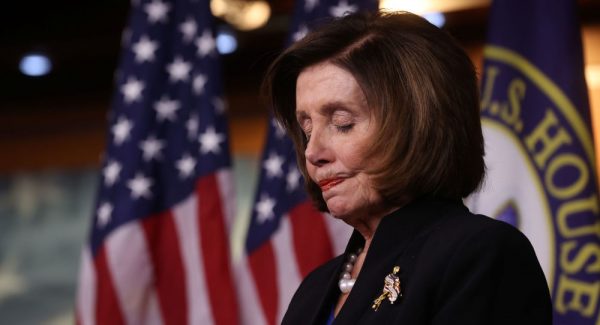
These were all core tenets of the Mueller investigation and they were all exhaustively analyzed, and summarily debunked as constituting any illicit or conspiratorial relationship between Trump and Russia. But Democrats in their zeal still managed to smuggle Mueller back in. When Nancy Pelosi proclaimed that impeachment was never fundamentally about Ukraine, but about Russia — exclaiming “All roads lead to Putin” as her justification for the endeavor — she wasn’t kidding.
Again, Democrats who voted for these impeachment articles voted not simply to punish Trump for soliciting an investigation of Biden. Rather, they also voted to impeach him for committing treason at the behest of Russia. And in turn, they ratified a number of extremely fraught New Cold War assumptions that have now been embedded into the fabric of U.S. governance, regardless of what the Senate concludes.
It’s crucial to emphasize that this is the first impeachment in American history where foreign policy has played a central role. As such, we now have codified by way of these impeachment articles a host of impossibly dangerous precedents, namely: 1) The U.S. is in a state of war with Russia, a nuclear armed power; 2) the sitting president committed treason on behalf of this country with which the U.S. is in a state of war; 3) the president lacks a democratic mandate to conduct foreign policy over the objections of unelected national security state bureaucrats.
Is the reality of what was done here going to set in any time soon?
Turkey failed to notify of convoy movements in Syria’s Idlib before getting shelled by Damascus troops – Russian military
RT | February 3, 2020
A shelling incident in Syria in which Ankara said six of its soldiers were killed may have been caused by the failure of the Turkish side to warn about the movement of their convoy, the Russian military said.
“Units of the Turkish military conducted movement within the Idlib de-escalation zone during the nighttime from February 2 to February 3 without informing the Russian side and came under fire by the Syrian government troops, which were targeting terrorists west of Saraqib,” the Russian center for Syrian reconciliation said on Monday.
The statement stressed that there are established lines of communications between Russian forces in Syria and the Turkish command. It added that Turkish aircraft did not enter the Syrian airspace after the incident, contrary to some reports in the Turkish media, which said Ankara ordered airstrikes at Syrian positions in retaliation for the shelling.
The Turkish Defense Ministry earlier reported that four soldiers were killed and nine others injured in the shelling incident. The death toll rose to six later in the day.
President Recep Tayyip Erdogan responded quickly, promising to continue retaliating heavily to any attacks against Turkish forces in Syria’s Idlib Province.
Omer Celik, spokesman for Turkey’s ruling party, rejected the words of the Russian ministry, saying it was “not correct.”
“Turkey is providing regular and instant information to Russia. It also informed them of this latest event,” he tweeted. “It is not true to say information was not shared. The mechanisms in place were utilized as always.”
Kremlin spokesman Dmitry Peskov responded to the incident by stressing that Turkish and Russian military commanders are “in a constant contact” over Idlib, reiterating the military’s remarks.
Idlib governorate is a designated “de-escalation zone” under agreements between Russia, Turkey and Iran. Ankara is expected to use its influence among anti-government fighters controlling it to prevent hostilities with Damascus troops, eventually leading to a peaceful resolution. In practice, some jihadists in Idlib continue attacks at government-held parts of Syria and on several occasions launched drone attacks on the Russian air base in Latakia, ensuring continued fighting.
The previous major incident of similar nature happened in Idlib in August 2019. Three people traveling with a Turkish military convoy were reported killed and a dozen more injured by a Syrian airstrike, infuriating Ankara. Damascus said at the time that it believed the convoy was transporting weapons and ammo to jihadist forces in Khan Sheikhoun, which has since been captured by the Syrian government forces. The incident was made more confusing by Turkey’s insistence that the people hurt in it were all civilians.
Sudanese promised jobs in UAE but taken to war in Libya, Yemen

Job seekers wait outside the Amanda travel agency in order to get their money back in Khartoum. (Photo by MEE)
Press TV – February 2, 2020
Sudanese youths have revealed that the UAE pledged them jobs with high salaries in the Persian Gulf small country, but instead took them to Libya which is embroiled in a war between rival groups.
The United Arab Emirates is the key supporter of renegade general Khalifa Haftar which is leading a grueling military offensive against the government in the Libyan capital of Tripoli.
Several Sudanese youths have told the Middle East Eye that they were promised to work as security guards in the UAE on a salary of around $2,175 per month, but were instead sent to hostile areas in Libya.
Abdul Rahman Alzaki, a 34-year-old IT engineer, went to visit the Amanda travel agency in the center of the Sudanese capital that had placed the advertisement.
He was told the work was for the Emirati security firm Black Shields and would be located in Abu Dhabi or another UAE city.
Following several job interviews, Alzaki paid around 80,000 Sudanese pounds ($950) to Amanda after he was told the salary had been confirmed and that the travel agency would transport him to the UAE.
He traveled to the Emirates, but his dream soon turned into a nightmare after he discovered that he would in fact be receiving three months of military training and then be sent to Libya or Yemen.
The UAE wanted him and other Sudanese youths to protect oil refineries and strategic locations in the area held by Haftar, he told the MEE.
The UAE is among several countries supporting Haftar in his campaign to oust the UN-recognized government in Tripoli. The Arab country is also a key party to a Saudi-led coalition waging war on Yemen.
Around 3,000 Sudanese are believed to have been deceived by Black Shields, which sub-contracted companies such as Amanda advertising for the Emirati company.
“When we reached the Emirates we realized that we had been cheated, as the company had taken our passports, mobile phones and everything, and sent us to a military training camp called Zayed Military City” in Abu Dhabi, Alzaki said.
The MEE said it visited the Amanda travel agency in downtown Khartoum on Wednesday, but the agency was closed and phone calls to the manager and other employees of the agency went unanswered.
Dozens of job seekers were waiting outside the agency in order to try to get their money back, the online website said.
Boraey Mohamed Ahmed said he and other Sudanese youths had been subjected to extensive cheating by mafia companies working between the UAE and Sudan.
Circulation of the story on social media has ignited protests against the UAE and its policies in Sudan and in the region.
Thousands of Sudanese protesters have waged a wide campaign on social media against UAE policies, calling on the government to maintain the dignity of the Sudanese.
On Tuesday, hundreds of protesters demonstrated outside the UAE embassy and the Sudanese Foreign Ministry in Khartoum, demanding the return of the Sudanese youths.
Chanting anti-Emirate slogans, the protesters also called for the return of Sudanese soldiers from the war in Yemen.
Protester Marwa Hassan criticized the policies of the UAE on Sudan and the region as whole.
“Why do they want to use our people as mercenaries in Yemen and Libya, we have nothing to do with their interests in these countries, why are they exploiting the poverty of our youth to use them badly like this,” she shouted.
US, Israel ramp up nuclear weapons testing, deployment amid regional provocations
Press TV – February 1, 2020
Israel says it has ramped up the deployment and testing of nuclear and nuclear-capable weapons amid heightened regional tensions after the US assassinated top Iranian General Qassem Soleimani and unveiled a biased Middle East plan.
The ministry of military affairs of the Israeli regime on Friday announced that it had conducted a launch test of a “rocket propulsion system from a base in the center of the country”.
The ministry refused to disclose any additional details regarding the nature of the missile, contrary to its usual conduct following satellite launcher and missile interceptor tests.
The little information revealed about the test prompted speculation among observers that the tested projectile may have been related to Israel’s long-range ballistic missile program, which Israel seeks to not acknowledge publicly.
Tel Aviv conducted a similar rocket engine test last December with Israeli media reporting that the test was meant to be a “show of force” of the Israeli regime’s “nuclear deterrent system especially aimed at Iran”.
The Stockholm International Peace Research Institute (SIPRI) said last year that the Israeli regime is in possession of approximately 100 atomic warheads, noting that it has 30 gravity bombs which can be delivered by fighter jets – some of which are believed to be equipped for nuclear weapon delivery.
The regime has refused to allow inspections of its military nuclear facilities or sign the the Non-Proliferation of Nuclear Weapons (NPT).
US deploys new nuclear warhead
The Federation of American Scientists also warned that Washington was deploying the recently developed W76-2 low-yield nuclear warhead as part of a new generation of less-destructive yet more “usable” nuclear weapons.
The report said the W76-2 warhead, which has an explosive yield of about a third of the atomic bomb dropped on the Japanese city of Nagasaki in August 1945, was supplied to Ohio-class USS Tennessee ballistic missile submarines last month.
The authors of the report, military analyst William Arkin and Federation of American Scientists Nuclear Information Project director Hans Kristensen, warned that such weapons increase the likelihood of a nuclear armed conflict.
In a Newsweek article published earlier this month, Arkin and Kristensen said that the development of the W76-2 warhead is the result of Pentagon planning for potential first strike scenarios “against adversaries, especially Iran”.
The article noted that Washington simulated a nuclear strike against Iran in the Global Thunder 17 nuclear exercise in October 2016 during the tenure of then-US President Barack Obama.
It pointed that the newly-deployed W76-2 warhead “is intended for exactly the type of Iran scenario that played out in the last days of the Obama administration”.
Israel and Washington’s provocative military deployments and weapons testing come at a time of major regional tensions resulting from Washington’s recent unveiling of the “deal of the century” and notably its assassination of General Soleimani.
Iran retaliated to the January 3 assassination with a volley of ballistic missiles launched at the US-occupied Ain Al Assad base in Iraq and another outpost in Erbil, the capital of the semi-autonomous Iraqi Kurdistan.
Iran, which has noted that Tel Aviv played a part in the assassination of Lieutenant General Soleimani, had threatened to target Israel if the US were to respond to Iran’s retaliatory attack.
Seeking to downplay the attack and deny any casualties, the Trump administration has since backed down from earlier pledges to respond to Iran’s retaliatory attack.
Bats, Gene Editing and Bioweapons: Recent DARPA Experiments Raise Concerns Amid Coronavirus Outbreak
DARPA recently spent millions on research involving bats and coronaviruses, as well as gene editing “bioweapons” prior to the recent coronavirus outbreak. Now, “strategic allies” of the agency have been chosen to develop a genetic material-based vaccine to halt the potential epidemic.
By Whitney Webb | The Last American Vagabond | January 30, 2020
WASHINGTON D.C. – In recent weeks, concern over the emergence of a novel coronavirus in China has grown exponentially as media, experts and government officials around the world have openly worried that this new disease has the potential to develop into a global pandemic.
As concerns about the future of the ongoing outbreak have grown, so too have the number of theories speculating about the outbreak’s origin, many of which blame a variety of state actors and/or controversial billionaires. This has inevitably led to efforts to clamp down on “misinformation” related to the coronavirus outbreak from both mainstream media outlets and major social media platforms.
However, while many of these theories are clearly speculative, there is also verifiable evidence regarding the recent interest of one controversial U.S. government agency in novel coronaviruses, specifically those transmitted from bats to humans. That agency, the Pentagon’s Defense Advanced Research Project Agency (DARPA), began spending millions on such research in 2018 and some of those Pentagon-funded studies were conducted at known U.S. military bioweapons labs bordering China and resulted in the discovery of dozens of new coronavirus strains as recently as last April. Furthermore, the ties of the Pentagon’s main biodefense lab to a virology institute in Wuhan, China — where the current outbreak is believed to have begun — have been unreported in English language media thus far.
While it remains entirely unknown as to what caused the outbreak, the details of DARPA’s and the Pentagon’s recent experimentation are clearly in the public interest, especially considering that the very companies recently chosen to develop a vaccine to combat the coronavirus outbreak are themselves strategic allies of DARPA. Not only that, but these DARPA-backed companies are developing controversial DNA and mRNA vaccines for this particular coronavirus strain, a category of vaccine that has never previously been approved for human use in the United States.
Yet, as fears of the pandemic potential of coronavirus grow, these vaccines are set to be rushed to market for public use, making it important for the public to be aware of DARPA’s recent experiments on coronaviruses, bats and gene editing technologies and their broader implications.
Examining the recent Wuhan-Bioweapon narrative
As the coronavirus outbreak has come to dominate headlines in recent weeks, several media outlets have promoted claims that the reported epicenter of the outbreak in Wuhan, China was also the site of laboratories allegedly linked to a Chinese government biowarfare program.
However, upon further examination of the sourcing for this serious claim, these supposed links between the outbreak and an alleged Chinese bioweapons program have come from two highly dubious sources.
For instance, the first outlet to report on this claim was Radio Free Asia, the U.S.-government funded media outlet targeting Asian audiences that used to be run covertly by the CIA and named by the New York Times as a key part in the agency’s “worldwide propaganda network.” Though it is no longer run directly by the CIA, it is now managed by the government-funded Broadcasting Board of Governors (BBG), which answers directly to Secretary of State Mike Pompeo, who was CIA director immediately prior to his current post at the head of the State Department.
In other words, Radio Free Asia and other BBG-managed media outlets are legal outlets for U.S. government propaganda. Notably, the long-standing ban on the domestic use of U.S. government propaganda on U.S. citizens was lifted in 2013, with the official justification of allowing the government to “effectively communicate in a credible way” and to better combat “al-Qaeda’s and other violent extremists’ influence.”
Returning to the subject at hand, Radio Free Asia’s recent report on the alleged origins of the outbreak being linked to a Chinese state-linked virology center cited only Ren Ruihong, the former head of the medical assistance department at the Chinese Red Cross, for that claim. Ruihong has been cited as an expert in several Radio Free Asia reports on disease outbreaks in China, but has not been cited as an expert by any other English-language media outlet.
Ruihong told Radio Free Asia that:
“It’s a new type of mutant coronavirus.They haven’t made public the genetic sequence, because it is highly contagious…Genetic engineering technology has gotten to such a point now, and Wuhan is home to a viral research center that is under the aegis of the China Academy of Sciences, which is the highest level of research facility in China.”
Though Ruihong did not directly say that the Chinese government was making a bioweapon at the Wuhan facility, she did imply that genetic experiments at the facility may have resulted in the creation of this new “mutant coronavirus” at the center of the outbreak.
With Radio Free Asia and its single source having speculated about Chinese government links to the creation of the new coronavirus, the Washington Times soon took it much farther in a report titled “Virus-hit Wuhan has two laboratories linked to Chinese bio-warfare program.” That article, much like Radio Free Asia’s earlier report, cites a single source for that claim, former Israeli military intelligence biowarfare specialist Dany Shoham.
Yet, upon reading the article, Shoham does not even directly make the claim cited in the article’s headline, as he only told the Washington Times that: “Certain laboratories in the [Wuhan] institute have probably been engaged, in terms of research and development, in Chinese [biological weapons], at least collaterally, yet not as a principal facility of the Chinese BW alignment (emphasis added).”
While Shoham’s claims are clearly speculative, it is telling that the Washington Times would bother to cite him at all, especially given the key role he played in promoting false claims that the 2001 Anthrax attacks was the work of Iraq’s Saddam Hussein. Shoham’s assertions about Iraq’s government and weaponized Anthrax, which were used to bolster the case for the 2003 invasion of Iraq, have since been proven completely false, as Iraq was found to have neither the chemical or biological “weapons of mass destruction” that “experts” like Shoham had claimed.
Beyond Shoham’s own history of making suspect claims, it is also worth noting that Shoham’s previous employer, Israeli military intelligence, has a troubling past with bioweapons. For instance, in the late 1990s, it was reported by several outlets that Israel was in the process of developing a genetic bioweapon that would target Arabs, specifically Iraqis, but leave Israeli Jews unaffected.
Given the dubious past of Shoham and the clearly speculative nature of both his claims and those made in the Radio Free Asia report, one passage in the Washington Times article is particularly telling about why these claims have recently surfaced:
“One ominous sign, said a U.S. official, is that the false rumors since the outbreak began several weeks ago have begun circulating on the Chinese Internet claiming the virus is part of a U.S. conspiracy to spread germ weapons. That could indicate China is preparing propaganda outlets to counter future charges the new virus escaped from one of Wuhan’s civilian or defense research laboratories (emphasis added).”
However, as seen in that very article, accusations that the coronavirus escaped from a Chinese-state-linked laboratory is hardly a future charge as both the Washington Times and Radio Free Asia have already been making that claim. Instead, what this passage suggests is that the reports in both Radio Free Asia and the Washington Times were responses to the claims circulating within China that the outbreak is linked to a “U.S. conspiracy to spread germ weapons.”
Though most English-language media outlets to date have not examined such a possibility, there is considerable supporting evidence that deserves to be examined. For instance, not only was the U.S. military, including its controversial research arm — the Defense Advanced Research Projects Agency (DARPA), recently funding studies in and near China that discovered new, mutant coronaviruses originating from bats, but the Pentagon also became recently concerned about the potential use of bats as bioweapons.

Bats as bioweapons
As the ongoing coronavirus outbreak centered in China has spread to other countries and been blamed for a growing number of deaths, a consensus has emerged that this particular virus, currently classified as a “novel [i.e. new] coronavirus,” is believed to have originated in bats and was transmitted to humans in Wuhan, China via a seafood market that also traded exotic animals. So-called “wet” markets, like the one in Wuhan, were previously blamed for past deadly coronavirus outbreaks in China, such as the 2003 outbreak of Severe Acute Respiratory Syndrome (SARS).
In addition, one preliminary study on the coronavirus responsible for the current outbreak found that the receptor, Angiotensin-converting enzyme 2 (ACE2), is not only the same as that used by the SARS coronavirus, but that East Asians present a much higher ratio of lung cells that express that receptor than the other ethnicities (Caucasian and African-American) included in the study. However, such findings are preliminary and the sample size is too small to draw any definitive conclusions from that preliminary data.
Two years ago, media reports began discussing the Pentagon’s sudden concern that bats could be used as biological weapons, particularly in spreading coronaviruses and other deadly diseases. The Washington Post asserted that the Pentagon’s interest in investigating the potential use of bats to spread weaponized and deadly diseases was because of alleged Russian efforts to do the same. However, those claims regarding this Russian interest in using bats as bioweapons date back to the 1980s when the Soviet Union engaged in covert research involving the Marburg virus, research that did not even involve bats and which ended with the Soviet Union’s collapse in 1991.
Like much of the Pentagon’s controversial research programs, the bats as bioweapons research has been framed as defensive, despite the fact that no imminent threat involving bat-propagated bioweapons has been acknowledged. However, independent scientists have recently accused the Pentagon, particularly its research arm DARPA, of claiming to be engaged in research it says is “defensive” but is actually “offensive.”
The most recent example of this involved DARPA’s “Insect Allies” program, which officially “aims to protect the U.S. agricultural food supply by delivering protective genes to plants via insects, which are responsible for the transmission of most plant viruses” and to ensure “food security in the event of a major threat,” according to both DARPA and media reports.
However, a group of well-respected, independent scientists revealed in a scathing analysis of the program that, far from a “defensive” research project, the Insect Allies program was aimed at creating and delivering a “new class of biological weapon.” The scientists, writing in the journal Science and led by Richard Guy Reeves, from the Max Planck Institute for Evolutionary Biology in Germany, warned that DARPA’s program — which uses insects as the vehicle for as horizontal environmental genetic alteration agents (HEGAAS) — revealed “an intention to develop a means of delivery of HEGAAs for offensive purposes (emphasis added).”
Whatever the real motivation behind the Pentagon’s sudden and recent concern about bats being used as a vehicle for bioweapons, the U.S. military has spent millions of dollars over the past several years funding research on bats, the deadly viruses they can harbor — including coronaviruses — and how those viruses are transmitted from bats to humans.
For instance, DARPA spent $10 million on one project in 2018 “to unravel the complex causes of bat-borne viruses that have recently made the jump to humans, causing concern among global health officials.” Another research project backed by both DARPA and NIH saw researchers at Colorado State University examine the coronavirus that causes Middle East Respiratory Syndrome (MERS) in bats and camels “to understand the role of these hosts in transmitting disease to humans.” Other U.S. military-funded studies, discussed in detail later in this report, discovered several new strains of novel coronaviruses carried by bats, both within China and in countries bordering China.
Many of these recent research projects are related to DARPA’s Preventing Emerging Pathogenic Threats, or PREEMPT program, which was officially announced in April 2018. PREEMPT focuses specifically on animal reservoirs of disease, specifically bats, and DARPA even noted in its press release in the program that it “is aware of biosafety and biosecurity sensitivities that could arise” due to the nature of the research.
DARPA’s announcement for PREEMPT came just a few months after the U.S. government decided to controversially end a moratorium on so-called “gain-of-function” studies involving dangerous pathogens. VICE News explained “gain-of-function” studies as follows:
“Known as ‘gain-of-function’ studies, this type of research is ostensibly about trying to stay one step ahead of nature. By making super-viruses that are more pathogenic and easily transmissible, scientists are able to study the way these viruses may evolve and how genetic changes affect the way a virus interacts with its host. Using this information, the scientists can try to pre-empt the natural emergence of these traits by developing antiviral medications that are capable of staving off a pandemic (emphasis added).”
In addition, while both DARPA’s PREEMPT program and the Pentagon’s open interest in bats as bioweapons were announced in 2018, the U.S. military — specifically the Department of Defense’s Cooperative Threat Reduction Program — began funding research involving bats and deadly pathogens, including the coronaviruses MERS and SARS, a year prior in 2017. One of those studies focused on “Bat-Borne Zoonotic Disease Emergence in Western Asia” and involved the Lugar Center in Georgia, identified by former Georgian government officials, the Russian government and independent, investigative journalist Dilyana Gaytandzhieva as a covert U.S. bioweapons lab.
It is also important to point out the fact that the U.S. military’s key laboratories involving the study of deadly pathogens, including coronaviruses, Ebola and others, was suddenly shut down last July after the Center for Disease Control and Prevention (CDC) identified major “biosafety lapses” at the facility.
The U.S. Army Medical Research Institute of Infectious Diseases (USAMRIID) facility at Fort Detrick, Maryland — the U.S. military’s lead laboratory for “biological defense” research since the late 1960s — was forced to halt all research it was conducting with a series of deadly pathogens after the CDC found that it lacked “sufficient systems in place to decontaminate wastewater” from its highest-security labs and failure of staff to follow safety procedures, among other lapses. The facility contains both level 3 and level 4 biosafety labs. While it is unknown if experiments involving coronaviruses were ongoing at the time, USAMRIID has recently been involved in research borne out of the Pentagon’s recent concern about the use of bats as bioweapons.
The decision to shut down USAMRIID garnered surprisingly little media coverage, as did the CDC’s surprising decision to allow the troubled facility to “partially resume” research late last November even though the facility was and is still not at “full operational capability.” The USAMRIID’s problematic record of safety at such facilities is of particular concern in light of the recent coronavirus outbreak in China. As this report will soon reveal, this is because USAMRIID has a decades-old and close partnership with the University of Wuhan’s Institute of Medical Virology, which is located in the epicenter of the current outbreak.
The Pentagon in Wuhan?
Beyond the U.S. military’s recent expenditures on and interest in the use of bats of bioweapons, it is also worth examining the recent studies the military has funded regarding bats and “novel coronaviruses,” such as that behind the recent outbreak, that have taken place within or in close proximity to China.
For instance, one study conducted in Southern China in 2018 resulted in the discovery of 89 new “novel bat coronavirus” strains that use the same receptor as the coronavirus known as Middle East Respiratory Syndrome (MERS). That study was jointly funded by the Chinese government’s Ministry of Science and Technology, USAID — an organization long alleged to be a front for U.S. intelligence, and the U.S. National Institute of Health — which has collaborated with both the CIA and the Pentagon on infectious disease and bioweapons research.
The authors of the study also sequenced the complete genomes for two of those strains and also noted that existing MERS vaccines would be ineffective in targeting these viruses, leading them to suggest that one should be developed in advance. This did not occur.
Another U.S. government-funded study that discovered still more new strains of “novel bat coronavirus” was published just last year. Titled “Discovery and Characterization of Novel Bat Coronavirus Lineages from Kazakhstan,” focused on “the bat fauna of central Asia, which link China to eastern Europe” and the novel bat coronavirus lineages discovered during the study were found to be “closely related to bat coronaviruses from China, France, Spain, and South Africa, suggesting that co-circulation of coronaviruses is common in multiple bat species with overlapping geographical distributions.” In other words, the coronaviruses discovered in this study were identified in bat populations that migrate between China and Kazakhstan, among other countries, and is closely related to bat coronaviruses in several countries, including China.
The study was entirely funded by the U.S. Department of Defense, specifically the Defense Threat Reduction Agency (DTRA) as part of a project investigating coronaviruses similar to MERS, such as the aforementioned 2018 study. Yet, beyond the funding of this 2019 study, the institutions involved in conducting this study are also worth noting given their own close ties to the U.S. military and government.
The study’s authors are affiliated with either the Kazakhstan-based Research Institute for Biological Safety Problems and/or Duke University. The Research Institute for Biological Safety Problems, though officially a part of Kazakhstan’s National Center for Biotechnology, has received millions from the U.S. government, most of it coming from the Pentagon’s Cooperative Threat Reduction Program. It is the Kazakhstan government’s official depository of “highly dangerous animal and bird infections, with a collection of 278 pathogenic strains of 46 infectious diseases.” It is part of a network of Pentagon-funded “bioweapons labs” throughout the Central Asian country, which borders both of the U.S.’ top rival states — China and Russia.
Duke University’s involvement with this study is also interesting given that Duke is a key partner of DARPA’s Pandemic Prevention Platform (P3) program, which officially aims “to dramatically accelerate discovery, integration, pre-clinical testing, and manufacturing of medical countermeasures against infectious diseases.” The first step of the Duke/DARPA program involves the discovery of potentially threatening viruses and “develop[ing] methods to support viral propagation, so that virus can be used for downstream studies.”
Duke University is also jointly partnered with China’s Wuhan University, which is based in the city where the current coronavirus outbreak began, which resulted in the opening of the China-based Duke Kunshan University (DKU) in 2018. Notably, China’s Wuhan University — in addition to its partnership with Duke — also includes a multi-lab Institute of Medical Virology that has worked closely with the US Army Medical Research Institute for Infectious Diseases since the 1980s, according to its website. As previously noted, the USAMRIID facility in the U.S. was shut down last July for failures to abide by biosafety and proper waste disposal procedures, but was allowed to partially resume some experiments late last November.
The Pentagon’s Dark History of Germ Warfare
The U.S. military has a troubling past of having used disease as a weapon during times of war. One example involved the U.S.’ use of germ warfare during the Korean War, when it targeted both North Korea and China by dropping diseased insects and voles carrying a variety of pathogens — including bubonic plague and hemorrhagic fever — from planes in the middle of the night. Despite the mountain of evidence and the testimony of U.S. soldiers involved in that program, the U.S. government and military denied the claims and ordered the destruction of relevant documentation.
In the post World War II era, other examples of U.S. research aimed at developing biological weapons have emerged, some of which have recently received media attention. One such example occurred this past July, when the U.S. House of Representatives demanded information from the U.S. military on its past efforts to weaponize insects and Lyme disease between 1950 and 1975.
The U.S. has claimed that it has not pursued offensive biological weapons since 1969 and this has been further supported by the U.S.’ ratification of the Biological Weapons Convention (BWC), which went into effect in 1975. However, there is extensive evidence that the U.S. has continued to covertly research and develop such weapons in the years since, much of it conducted abroad and outsourced to private companies, yet still funded by the U.S. military. Several investigators, including Dilyana Gaytandzhieva, have documented how the U.S. produces deadly viruses, bacteria and other toxins at facilities outside of the U.S. — many of them in Eastern Europe, Africa and South Asia — in clear violation of the BWC.
Aside from the military’s own research, the controversial neoconservative think tank, the now defunct Project for a New American Century (PNAC), openly promoted the use of a race-specific genetically modified bioweapon as a “politically useful tool.” In what is arguably the think tank’s most controversial document, titled “Rebuilding America’s Defenses,” there are a few passages that openly discuss the utility of bioweapons, including the following sentences:
“… combat likely will take place in new dimensions: in space, “cyber-space,” and perhaps the world of microbes… advanced forms of biological warfare that can “target” specific genotypes may transform biological warfare from the realm of terror to a politically useful tool.”
Though numerous members of PNAC were prominent in the George W. Bush administration, many of its more controversial members have again risen to political prominence in the Trump administration.
Several years after “Rebuilding America’s Defenses” was published, the U.S. Air Force published a document entitled “Biotechnology: Genetically Engineered Pathogens,” which contains the following passage:
“The JASON group, composed of academic scientists, served as technical advisers to the U. S. government. Their study generated six broad classes of genetically engineered pathogens that could pose serious threats to society. These include but are not limited to binary biological weapons, designer genes, gene therapy as a weapon, stealth viruses, host-swapping diseases, and designer diseases (emphasis added).”
Concerns about Pentagon experiments with biological weapons have garnered renewed media attention, particularly after it was revealed in 2017 that DARPA was the top funder of the controversial “gene drive” technology, which has the power to permanently alter the genetics of entire populations while targeting others for extinction. At least two of DARPA’s studies using this controversial technology were classified and “focused on the potential military application of gene drive technology and use of gene drives in agriculture,” according to media reports.
The revelation came after an organization called the ETC Group obtained over 1,000 emails on the military’s interest in the technology as part of a Freedom of Information Act (FOIA) request. Co-director of the ETC Group Jim Thomas said that this technology may be used as a biological weapon:
“Gene drives are a powerful and dangerous new technology and potential biological weapons could have disastrous impacts on peace, food security and the environment, especially if misused, The fact that gene drive development is now being primarily funded and structured by the US military raises alarming questions about this entire field.”
Though the exact motivation behind the military’s interest in such technology is unknown, the Pentagon has been open about the fact that it is devoting much of its resources towards the containment of what it considers the two greatest threats to U.S. military hegemony: Russia and China. China has been cited as the greatest threat of the two by several Pentagon officials, including John Rood, the Pentagon’s top adviser for defense policy, who described China as the greatest threat to “our way of life in the United States” at the Aspen Security Forum last July.
Since the Pentagon began “redesigning” its policies and research towards a “long war” with Russia and China, the Russian military has accused the U.S. military of harvesting DNA from Russians as part of a covert bioweapon program, a charge that the Pentagon has adamantly denied. Major General Igor Kirillov, the head of the Russian military’s radiation, chemical and biological protection unit who made these claims, also asserted that the U.S. was developing such weapons in close proximity to Russian and Chinese borders.
China has also accused the U.S. military of harvesting DNA from Chinese citizens with ill intentions, such as when 200,000 Chinese farmers were used in 12 genetic experiments without informed consent. Those experiments had been conducted by Harvard researchers as part of a U.S. government-funded project.

Hand inserts a molecule into DNA concept design.
DARPA and its partners chosen to develop coronavirus vaccine
Last Thursday, the Coalition for Epidemic Preparedness Innovations (CEPI) announced that it would fund three separate programs in order to promote the development of a vaccine for the new coronavirus responsible for the current outbreak.
CEPI — which describes itself as “a partnership of public, private, philanthropic and civil organizations that will finance and co-ordinate the development of vaccines against high priority public health threats” — was founded in 2017 by the governments of Norway and India along with the World Economic Forum and the Bill and Melinda Gates Foundation. Its massive funding and close connections to public, private and non-profit organizations have positioned it to be able to finance the rapid creation of vaccines and widely distribute them.
CEPI’s recent announcement revealed that it would fund two pharmaceutical companies — Inovio Pharmaceuticals and Moderna Inc. — as well as Australia’s University of Queensland, which became a partner of CEPI early last year. Notably, the two pharmaceutical companies chosen have close ties to and/or strategic partnerships with DARPA and are developing vaccines that controversially involve genetic material and/or gene editing. The University of Queensland also has ties to DARPA, but those ties are not related to the university’s biotechnology research, but instead engineering and missile development.
For instance, the top funders of Inovio Pharmaceuticals include both DARPA and the Pentagon’s Defense Threat Reduction Agency (DTRA) and the company has received millions in dollars in grants from DARPA, including a $45 million grant to develop a vaccine for Ebola. Inovio specializes in the creation of DNA immunotherapies and DNA vaccines, which contain genetically engineered DNA that causes the cells of the recipient to produce an antigen and can permanently alter a person’s DNA. Inovio previously developed a DNA vaccine for the Zika virus, but — to date — no DNA vaccine has been approved for use in humans in the United States. Inovio was also recently awarded over $8 million from the U.S. military to develop a small, portable intradermal device for delivering DNA vaccines jointly developed by Inovio and USAMRIID.
However, the CEPI grant to combat coronavirus may change that, as it specifically funds Inovio’s efforts to continue developing its DNA vaccine for the coronavirus that causes MERS. Inovio’s MERS vaccine program began in 2018 in partnership with CEPI in a deal worth $56 million. The vaccine currently under development uses “Inovio’s DNA Medicines platform to deliver optimized synthetic antigenic genes into cells, where they are translated into protein antigens that activate an individual’s immune system” and the program is partnered with U.S. Army Medical Research Institute of Infectious Diseases (USAMRIID) and the NIH, among others. That program is currently undergoing testing in the Middle East.
Inovio’s collaboration with the U.S. military in regards to DNA vaccines is nothing new, as their past efforts to develop a DNA vaccine for both Ebola and Marburg virus were also part of what Inovio’s CEO Dr. Joseph Kim called its “active biodefense program” that has “garnered multiple grants from the Department of Defense, Defense Threat Reduction Agency (DTRA), National Institute of Allergy and Infectious Diseases (NIAID), and other government agencies.”
CEPI’s interest in increasing its support to this MERS-specific program seems at odds with its claim that doing so will combat the current coronavirus outbreak, since MERS and the novel coronavirus in question are not analogous and treatments for certain coronaviruses have been shown to be ineffective against other strains.
It is also worth noting that Inovio Pharmaceuticals was the only company selected by CEPI with direct access to the Chinese pharmaceutical market through its partnership with China’s ApolloBio Corp., which currently has an exclusive license to sell Inovio-made DNA immunotherapy products to Chinese customers.
The second pharmaceutical company that was selected by CEPI to develop a vaccine for the new coronavirus is Moderna Inc., which will develop a vaccine for the novel coronavirus of concern in collaboration with the U.S. NIH and which will be funded entirely by CEPI. The vaccine in question, as opposed to Inovio’s DNA vaccine, will be a messenger RNA (mRNA) vaccine. Though different than a DNA vaccine, mRNA vaccines still use genetic material “to direct the body’s cells to produce intracellular, membrane or secreted proteins.”
Moderna’s mRNA treatments, including its mRNA vaccines, were largely developed using a $25 million grant from DARPA and it often touts is strategic alliance with DARPA in press releases. Moderna’s past and ongoing research efforts have included developing mRNA vaccines tailored to an individual’s unique DNA as well as an unsuccessful effort to create a mRNA vaccine for the Zika Virus, which was funded by the U.S. government.
Both DNA and mRNA vaccines involve the introduction of foreign and engineered genetic material into a person’s cells and past studies have found that such vaccines “possess significant unpredictability and a number of inherent harmful potential hazards” and that “there is inadequate knowledge to define either the probability of unintended events or the consequences of genetic modifications.” Nonetheless, the climate of fear surrounding the coronavirus outbreak could be enough for the public and private sector to develop and distribute such controversial treatments due to fear about the epidemic potential of the current outbreak.
However, the therapies being developed by Inovio, Modern and the University of Queensland are in alignment with DARPA’s objectives regarding gene editing and vaccine technology. For instance, in 2015, DARPA geneticist Col. Daniel Wattendorf described how the agency was investigating a “new method of vaccine production [that] would involve giving the body instructions for making certain antibodies. Because the body would be its own bioreactor, the vaccine could be produced much faster than traditional methods and the result would be a higher level of protection.”
According to media reports on Wattendorf’s statements at the time, the vaccine would be developed as follows:
“Scientists would harvest viral antibodies from someone who has recovered from a disease such as flu or Ebola. After testing the antibodies’ ability to neutralize viruses in a petri dish, they would isolate the most effective one, determine the genes needed to make that antibody, and then encode many copies of those genes into a circular snippet of genetic material — either DNA or RNA, that the person’s body would then use as a cookbook to assemble the antibody.”
Though Wattendorf asserted that the effects of those vaccines wouldn’t be permanent, DARPA has since been promoting permanent gene modifications as a means of protecting U.S. troops from biological weapons and infectious disease. “Why is DARPA doing this? [To] protect a soldier on the battlefield from chemical weapons and biological weapons by controlling their genome — having the genome produce proteins that would automatically protect the soldier from the inside out,” then-DARPA director Steve Walker (now with Lockheed Martin) said this past September of the project, known as “Safe Genes.”
Conclusion
Research conducted by the Pentagon, and DARPA specifically, has continually raised concerns, not just in the field of bioweapons and biotechnology, but also in the fields of nanotechnology, robotics and several others. DARPA, for instance, has been developing a series of unsettling research projects that ranges from microchips that can create and delete memories from the human brain to voting machine software that is rife with problems.
Now, as fear regarding the current coronavirus outbreak begins to peak, companies with direct ties to DARPA have been tasked with developing its vaccine, the long-term human and environmental impacts of which are unknown and will remain unknown by the time the vaccine is expected to go to market in a few weeks time.
Furthermore, DARPA and the Pentagon’s past history with bioweapons and their more recent experiments on genetic alteration and extinction technologies as well as bats and coronaviruses in proximity to China have been largely left out of the narrative, despite the information being publicly available. Also left out of the media narrative have been the direct ties of both the USAMRIID and DARPA-partnered Duke University to the city of Wuhan, including its Institute of Medical Virology.
Though much about the origins of the coronavirus outbreak remains unknown, the U.S. military’s ties to the aforementioned research studies and research institutions are worth detailing as such research — while justified in the name of “national security” — has the frightening potential to result in unintended, yet world-altering consequences. The lack of transparency about this research, such as DARPA’s decision to classify its controversial genetic extinction research and the technology’s use as a weapon of war, compounds these concerns. While it is important to avoid reckless speculation as much as possible, it is the opinion of this author that the information in this report is in the public interest and that readers should use this information to reach their own conclusions about the topics discussed herein.
Whitney Webb is a staff writer for MintPress News and a contributor to Ben Swann’s Truth in Media & The Last American Vagabond. Her work has appeared on Global Research, the Ron Paul Institute and 21st Century Wire, among others. She has also made radio and TV appearances on RT and Sputnik. She currently lives with her family in southern Chile.
Die Linke Lawmaker Reveals How NATO Fooled Gorbachev About Bloc’s Eastward Expansion Plans
Sputnik – January 31, 2020
In the 30 years since US Secretary of State James Baker’s famous “not one inch eastward” verbal commitment to Soviet leader Mikhail Gorbachev in February 1990 not to expand NATO beyond German lands, the alliance has swallowed up every member of the former Warsaw Pact, along with half a dozen former Soviet and Yugoslav republics.
NATO broke all of the promises it made to Moscow, encouraged by the ‘blindness’ of Soviet leaders, Die Linke lawmaker and Bundestag Defence Committee member Alexander Neu, has stated.
In an op-ed regarding the upcoming Defender 2020 Europe drills, touted by NATO as the largest US deployment in Europe in 25 years, the opposition lawmaker argued that the alleged ‘Russian threat’ which the drills are meant to deter was imaginary, and that NATO is the side acting like the real aggressor.
Taking a retrospective look into the foreign and security policy developments in Europe over the past three decades which have led to the current impasse, Neu recalled that while Western leaders appeared to show support for General Secretary Gorbachev’s ‘new thinking’ about a common security policy in the Euro-Atlantic area ‘from Vladivostok to Vancouver’, their support proved superficial.
“With the end of the Cold War, German unification, the dissolution of the Warsaw Pact and the collapse of the Soviet Union, the West was suddenly seen as the winner of the confrontation. All ideas about a collective understanding and common security were swept aside. The promises made by the United States during negotiations on German unity stipulating that NATO would not expand beyond Germany if the Soviet Union accepted a united Germany turned out to be a lie and a fraud,” the lawmaker argued.
According to Neu, “the Soviet side,” for its part, “proved to be blinded and refrained from asking for a contractual promise – this was an unforgivable mistake made by the then increasingly incapable Soviet leadership under Gorbachev.”

Talks between Mikhail Gorbachev and US Secretary of State James Baker, 1990. © Sputnik / Sergey Guneev
The rest is history, the German opposition lawmaker wrote, with NATO beginning its eastward expansion in 1999, and the process continuing ever since. “Even post-Soviet republics were admitted into the alliance. Protests by the Russian side against these gains in security policy, contrary to the 1990 US commitment, have been and will continue to be coolly brushed aside,” Neu noted.
Ultimately, Neu suggested that amid the ongoing tensions between the West and Russia, whether over Ukraine, Georgia or Syria, instead of trying to take de-escalatory steps, the self-proclaimed winners of the Cold War “continue to claim their right to the geostrategic loot,” with Russia portrayed as an aggressor which has insolently refused to remain subordinate to the ‘New World Order’ proclaimed by George H.W. Bush.
“In short: NATO is moving its military infrastructure further and further toward Russia’s borders, breaking the promise it made in 1990. And Russia’s reactions to these offensive actions by the US-led alliance are called aggression and threats. This is the wrong perception, but unfortunately is also widespread among most media and journalists in the West, who are full of conviction that we are the good guys. And since Russia is no longer willing to stand by and watch the geopolitics and imperialism-driven policies of the US and its vassals, NATO countries are massively increasing military spending (to 2 percent of GDP) and training as close to Russia’s borders as possible to show who is in charge.”
The Defender 2020 Europe drills were another demonstration of this, Neu noted, but promised that he, as a lawmaker, and member of the Bundestag Defence Committee, would “call for resistance” to the drills.
The Defender 2020 drills are expected to kick off in February and will continue until August, and will involve the participation of about 37,000 troops from 18 countries.
A New US Air Force Video Game Lets You Drone Bomb Iraqis and Afghans
By Alan MacLeod – MintPress News – January 31, 2020
The United States Air Force has a new recruitment tool: a realistic drone operator video game you can play on its website. Called the Airman Challenge, it features 16 missions to complete, interspersed with facts and recruitment information about how to become a drone operator yourself. In its latest attempts to market active service to young people, players move through missions escorting US vehicles through countries like Iraq and Afghanistan, serving up death from above to all those designated “insurgents” by the game. Players earn medals and achievements for most effectively destroying moving targets. All the while there is a prominent “apply now” button on screen if players would like to enlist and conduct real drone strikes all over the Middle East.
The game has failed to win over David Swanson, director of the anti-war movement World Beyond War, and the author of War is a Lie.
“It is truly disgusting, immoral, and arguably illegal in that it is recruitment or pre-recruitment of underage children to participate in murder. It is part of the normalization of murder that we have been living through,” he told MintPress News.
Tom Secker, a journalist and researcher into the influence of the military on popular culture was similarly unimpressed by the latest USA.F. recruitment strategy, telling us:
The drone game struck me as sick and demented… On the other hand, many drone pilots have described how piloting drones and killing random brown people is a lot like playing a video game, because you’re sat in a bunker in Nevada pushing buttons, detached from the consequences. So I guess it accurately reflects the miserable, traumatised, serial killing life of a drone pilot, we can’t accuse it of inaccuracy per se.”
Game Over
Despite the fact that they are rarely, if ever in any physical danger, the military has considerable difficulty recruiting and retaining drone pilots. Nearly a quarter of Air Force staff who can fly the machines leave the service every year. A lack of respect, fatigue and mental anguish are the primary reasons cited. Stephen Lewis, a sensor operator between 2005 and 2010 said what he did “weighs on your conscience. It weighs on your soul. It weighs on your heart,” claiming that the post traumatic stress disorder he suffers from as a consequence of killing so many people has made it impossible for him to have relationships with other humans.
“People think it is a video game. But in a video game you have checkpoints, you have restart points. When you fire that missile there’s no restart,” he said. “The less they can get you to think of what you’re shooting at as human the easier it becomes to you to just follow through with these shots when they come down,” said Michael Haas, another former USAF sensor operator. The Airman Challenge game follows this path, using red dots on the screen to represent enemies, sanitizing the violence recruits will be meting out.
“We were very callous about any real collateral damage. Whenever that possibility came up most of the time it was a guilt by association or sometimes we didn’t even consider other people that were on screen,” Haas said, noting that he and his peers used terms like “fun sized terrorist” to describe children, employing euphemisms like “cutting the grass before it grows too long,” as justifications for their extermination. The constant violence, even from afar, takes a heavy toll on many drone operators, who complain of constant nightmares and having to drink themselves into a stupor every night to avoid them.
Others, with different personalities, revel in the bloodshed. Prince Harry, for example, was a helicopter gunner in Afghanistan and described firing missiles as a “joy.” “I’m one of those people who loves playing PlayStation and Xbox, so with my thumbs I like to think I’m probably quite useful,” he said. “If there’s people trying to do bad stuff to our guys, then we’ll take them out of the game.”
A Nobel Cause
Drone bombing is a relatively new technology. Barack Obama came into office promising to end President Bush’s reckless aggression, even being awarded the Nobel Peace Prize in 2009. While he slashed the number of American troops on the ground in Iraq and Afghanistan, he also greatly expanded US wars in the form of drone bombings, ordering ten times as many as Bush. In his last year in office, the US dropped at least 26,000 bombs – around one every twenty minutes on average. When he left office, the US was bombing seven countries simultaneously: Afghanistan, Iraq, Syria, Libya, Yemen, Somalia, and Pakistan.
Up to 90 percent of reported drone casualties were “collateral damage,” i.e. innocent bystanders. Swanson is deeply concerned about the way in which the practice has become normalized: “If murder is acceptable as long as a military does it, anything else is acceptable,” he says, “We will reverse this trend, or we will perish.”
History did not exactly repeat itself with the election of Donald Trump in 2016, but it did rhyme. Trump came to power having made multiple statements perceived as anti-war, strongly criticizing Obama and the Democrats’ handling of the situation in the Middle East. Egged on even by so-called “resistance” media, Trump immediately expanded drone bombings, increasing the number of strikes by 432 percent in his first year in office. The president also used a drone attack to kill Iranian general and statesman Qassem Soleimani earlier this month.
Killing in the Game of
In 2018, the armed forces fell well short of their recruitment targets, despite offering a package of benefits very attractive to working-class Americans. As a result, it totally revamped its recruitment strategy, moving away from television and investing in micro-targeted online ads in an attempt to reach young people, particularly men below the age of thirty, who make up the bulk of the armed forces. One branding exercise was to create an Army e-sports team entering video game competitions under the military brand. As the gaming website, Kotaku wrote, “Positioning the Army as a game-friendly environment and institution is crucial, or even necessary, to reach the people the Army wants to reach.” The Army surpassed its recruitment goal for 2019.
Although the Airman Challenge game is a new attempt at recruitment, the armed forces have a long history being involved in the video game market, and the entertainment industry more generally. Secker’s work has uncovered the depths of collaboration between the military and the entertainment industry. Through Freedom of Information requests, he was able to find that the Department of Defense reviews, edits and writes hundreds of TV and movie scripts every year, subsidizing the entertainment world with free content and equipment in exchange for positive portrayals. “At this point, it’s difficult to effectively summarise the US military’s influence on the industry, because it’s so varied and all-encompassing,” he said.
The US Army spends tens of millions a year on the Institute for Creative Technologies, who develop advanced tech for the film and gaming industries, as well as in-house training games for the Army and – on occasion – the CIA. The Department Of Defense has supported a number of major game franchises (Call of Duty, Tom Clancy games, usually first or third-person shooters). Military-supported games are subject to the same rules of narrative and character as movies and TV, so they can be rejected or modified if they contain elements the Department Of Defense deems controversial.”
The video games industry is massive, with hyper-realistic first person shooters like Call of Duty being among the most popular genres. Call of Duty: WWII, for example, sold $500 million worth of copies in its opening weekend alone, more money generated than blockbuster movies “Thor: Ragnarok” and “Wonder Woman” combined. Many people spend hours a day playing. Captain Brian Stanley, a military recruiter in California said, “Kids know more about the army than we do… Between the weapons, vehicles, and tactics, and a lot of that knowledge comes from video games.”
Young people, therefore, spend huge amounts of time effectively being propagandized by the military. In Call of Duty Ghosts, for instance, you play as a US soldier fighting against a red-beret wearing anti-American Venezuelan dictator, clearly based on President Hugo Chavez, while in Call of Duty 4, you follow the US Army in Iraq, shooting hundreds of Arabs as you go. There’s even a mission where you operate a drone, which is distinctly similar to the Airman Challenge. US forces even control drones with Xbox controllers, blurring the lines between war games and war games even further.
Cyber Warfare
Although the military industrial complex is keen to advertise opportunities for pilots, they go to great lengths to hide the reality of what happens to the victims of airstrikes. The most famous of these is likely the “Collateral Murder” video, leaked by Chelsea Manning to Wikileaks co-founder Julian Assange. The video, which made worldwide news, laid bare the callousness towards civilian lives Haas described, where Air Force pilots laugh at shooting dead at least 12 unarmed civilians, including two Reuters journalists. While those commanders ultimately in charge of military operations in the Middle East appear on television constantly, trying to sanitize their actions, Manning and Assange remain in prison for helping to expose the public to an alternative depiction of violence. Manning has spent the majority of the last decade incarcerated, while Assange awaits possible extradition to the United States in a London prison.
The Airman Challenge video game, for Secker, is merely “the latest in a long line of insidious and disturbing recruitment efforts by the US military.” “If they feel they have to do this just to recruit a few hundred thousand people to their cause, maybe their cause isn’t worth it,” he said.
Afghanistan will need ‘billions in foreign aid,’ US agency warns
RT | January 31, 2020
A US agency warned on Friday that Afghanistan will need vast amounts of foreign funding to keep its government afloat through 2024. International money pays for roughly 75 percent of all of Afghanistan’s costs, while government revenue covers barely a quarter of Afghan public expenditures.
The warning comes as foreign donors become increasingly angry over the cost of corruption and the US seeks a peace deal with the Taliban to withdraw its troops from the country. The Special Inspector General for Afghan Reconstruction (SIGAR), which issues reports quarterly to US Congress, monitors all US spending relating to the 18-year war in Afghanistan.
According to the SIGAR report for the last quarter of 2019, international donors, led by Washington, provide the Afghan government with $8.5 billion annually to cover everything from security to education and health care. The US is paying $4.2 billion yearly just for Afghanistan’s security and defense forces.
SIGAR also said that “enemy-initiated attacks” rose sharply last year, with the fourth quarter seeing a total of 8,204 attacks – up from 6,974 during the same period in 2018.
Featured Video

Iran’s Next Strike May Not Explode. It Could Shut You Down
or go to
Aletho News Archives – Video-Images
From the Archive
Zionism’s Violent Legacy
By Donald Neff | Washington Report On Middle East Affairs | January 1996
On January 4, 1948, Jewish terrorists drove a truck loaded with explosives into the center of the all Arab city of Jaffa and detonated it, killing 26 and wounding around 100 Palestinian men, women and children.[1] The attack was the work of the Irgun Zvai Leumi – the “National Military Organization,” also known by the Hebrew letters Etzel – the largest Jewish terrorist group in Palestine. The Irgun was headed by Revisionist Zionist Menachem Begin and had been killing and maiming Arabs, Britons and even Jews for the previous ten years in its efforts to establish a Jewish state.
This terror campaign meant that at the core of Revisionist Zionism there existed a philosophical embrace of violence. … continue
Blog Roll
 Aletho News
- Riyadh Says Its Oil System Is Intact. The Numbers Say Otherwise.
- Trump and Netanyahu Want to “Finish the Job” on Iran
- US ‘one-sided dictation’ not Iran’s beliefs makes rational talks impossible: Baghaei
- Iran’s Next Strike May Not Explode. It Could Shut You Down /Col Doug Macgregor
- Iran: US political targets legitimate if assassinations return
- Iraq shuts key border crossing with Iran under US pressure: Report
- Undersea Internet cables could be targeted in retaliation for attacks on Iran: IRGC deputy chief
- EU sending ‘biased’ observers to interfere in Serbian election – president
- White House envoy declares kinetic action against Yemen ‘fruitless’
- Ukraine deployed thousands of microdrones in Iraqi Kurdistan: Tasnim
- If Americans Knew
- Americans at National Conservatism Conference held in Israel this year criticize Israel
- Christiane Amanpour exits CNN with a legacy shaped by the debate over Israel
- Israel’s war on Iran is the final move in a decades-old strategy
- Israel Denies Entry to French Journalist, U.S. Researcher Amid Rise in Entry Denials
- Gaza’s hospitals are running out of life-saving fuel – Daily Update
- Mysterious bot accounts reportedly spread fake ‘man on the street’ videos for Michigan Senate candidate
- Israeli Defense Minister Katz Says Over 60 Lebanon Villages Have Been Destroyed
- Why Is Israel Running TV Ads in Iowa Ahead of the Midterms?
- Hind Rajab’s Alleged Killer Is in the United States. HRF Demands His Arrest.
- US Officials Face Fresh Pressure After Another American ‘Brutalized’ by Israeli Settlers in West Bank
- No Tricks Zone
- E-Cars Reduce CO2 Emissions By Only 41% Compared To Internal Combustion Engine Vehicles
- Predictions Made By Renowned Climate Professor Over Past Decades Have Been Proven To Be Poor
- New Study Suggests Large Regions Of The Pacific Ocean Have Been Cooling For The Last 80 Years
- Germany’s Green Energy Debacle: High Energy Costs Force Kahla Porzellan to Close After 182 Years!
- New Study: 50 Years Of The Most Aggressive ‘Net Zero’ Policies Can Only Affect The Global Climate By 0.03°C
- US September “Heat” Was No Record…Many Records Set Decades Ago
- Latest European Green Energy Debacle; Portugal’s Largest Flagship Solar Park Insolvent!
- Green Energy Debacle: German Expert Professor Fritz Vahrenholt Warns Of Severe Economic And Social Consequences
- Two More Paleo Reconstructions Affirm Meters-Higher Sea Levels Across Ireland, Brazil 7000-6000 Years Ago
- New Study: Earth And Venus Surface Warmth Largely Explained By Convection And Lapse Rate, Not CO2 Or Radiation

