US destroyer crossed course of Russian Navy ship in Arabian Sea, Defense Ministry says
Russian Defense Ministry: Unprofessional actions by US destroyer crew “are an intentional violation of international regulations of safety of navigation”
TASS | January 11, 2020
MOSCOW – The US destroyer crossed traffic lane of the Russian Navy ship in the Arabian Sea, as the American crew was acting unprofessionally, the Russian Defense Ministry said in a statement on Friday.
The Defense Ministry pointed out that the 1972 Convention on the International Regulations for Preventing Collisions at Sea defines that “when two power-driven vessels are crossing so as to involve risk of collision, the vessel which has the other on her own starboard side shall keep out of the way.”
“Therefore, on January 9, 2020 the US Navy destroyer, which was on the left from the traffic lane of the Russian Navy ship sailing ahead, grossly violated the international regulations for preventing collisions at sea, by maneuvering to cross its course,” the Defense Ministry said.
According to the Russian Defense Ministry, unprofessional actions by the US destroyer crew “are an intentional violation of international regulations of safety of navigation.”
Along with this, Russia’s Defense Ministry said the US Fifth Fleet’s statement that a Russian Navy ship “aggressively approached” USS Farragut is not true.
“A widely publicized statement by representatives of the US Navy’s 5th Fleet that a Russian Navy ship allegedly ‘aggressively approached’ USS Farragut destroyer in the Arabian Sea is not true,” the statement said.
The Russian Defense Ministry pointed out that “the crew of a Russian naval ship acted professionally making a maneuver which made it possible to prevent collision with the intruder ship.” The fact was filmed by onboard cameras of the US Navy Fifth Fleet’s destroyer posted on Twitter, according to the Russian Defense Ministry.
Earlier, the US Fifth Fleet released a statement accusing the Russian warship of “aggressively approaching” USS Farragut. Footage showing the Ivan Hurs, a Russian Project 18280-class intelligence-gathering vessel, was attached to the post.
US interventionist presence in region has to end as soon as possible: Iran defense chief
Press TV – January 10, 2020
Iranian Defense Minister Brigadier General Amir Hatami says Washington’s “interventionist presence” in the region has to end as soon as possible for a de-escalation to take place after recent US provocations.
“Achieving de-escalation, stabilization and security in the region requires the immediate end of Washington’s occupation and interventionist presence,” Hatami said in a phone call with his Japanese counterpart Taro Kono on Thursday.
The talks between the two defense chiefs came after Tokyo announced last month that it has sought to send a warship and a number of patrol aircraft to the Middle East region in order to ensure security amid heightening tensions.
Tokyo receives nearly 90 percent of its oil imports from the Middle East.
Speaking on Thursday, Hatami said “those who seek to assist in de-escalation and achieving regional stability have to remind the Americans, which are a source of regional insecurity, to leave the region.”
The Iranian defense chief added that Iran, being the largest country with an access to the Persian Gulf and the Gulf of Oman, has always fulfilled its role in ensuring security in regional waterways.
Hatami’s call for the expulsion of US forces comes a week after Washington assassinated the Middle East’s most prominent anti-terror commander Lieutenant General Qassem Soleimani in Iraq.
Speaking to his Japanese counterpart, Hatami called on independent countries to condemn Washington’s “state terrorism”.
He described Soleimani’s assassination as an unprecedented and major crime where a foreign government has acted to kill a senior Iranian military officer in another country.
Speaking on his part, Kono stressed that Japan’s military deployment in the region seeks to ensure regional peace and that it does not intend to take part in a so-called US-led Persian Gulf coalition, which commenced its operations last November.
According to Japan’s public broadcaster NHK, Kono also gave out orders for the Japanese military deployments to begin on Friday.
Earlier last year, Washington called for the formation of the maritime coalition in response to a series of mysterious explosions targeting vessels in the Persian Gulf and the Sea of Oman.
US officials were quick to blame Iran for the incidents without providing conclusive evidence.
Iran has roundly rejected the accusations, describing the attacks as being part of “false flag operations” seeking to pressure Iran.
Following the tensions, Japan, which has sought to maintain positive ties with both Tehran and Washington, has stressed that it has opted to form its own maritime operation rather than join the US-led mission.
According to The Japan Times, the Japanese operation will operate in the Red Sea and the Gulf of Aden east of Saudi Arabia and will exclude the Strait of Hormuz and the Persian Gulf due to Iran’s concerns regarding the presence of the US-led initiative.
Iran’s Strikes Against the U.S. Demonstrate the Unipolar System Is Truly Over
By Paul Antonopoulos | January 9, 2020
When U.S. President Donald Trump ordered the assassination of Iranian General Qassem Soleimani, he certainly had not expected that Iran would respond in the way it did by bombarding two U.S. military bases in Iraqi territory. It is likely that his advisers had convinced him that no country in the world had the courage to attack the U.S. so blatantly as no one else had since the Japanese attack on Pearl Harbor during World War II. The Iranians did of course, as was expected by those who understand the ideology of the Islamic Republic that has a deeply ingrained martyrdom complex that stretches back to 680AD when Imam Ali Ibn al-Husayn was killed in Karbala, Iraq.
Trump has claimed that there were no American casualties while Iran has claimed there were at least 80. With the Erbil and Ain al-Assad bases bombarded and several U.S. aircraft, drones and helicopters destroyed, it is unlikely that there were no U.S. casualties – however there is no way in knowing at this time whether there were 80. We can expect Washington to keep the true number of casualties a secret, in complete opposition to Iran who openly celebrate their martyrs.
The Ain al-Assad military base is the largest and most equipped U.S. base in the region, and one of a few U.S. special bases around the world, at the size of about half of Lebanon. The fact that the Americans have deployed their most sophisticated radar systems in Iraq, many of which have been destroyed, demonstrates the ineffectiveness of the Patriot missile defense system. This was despite U.S. forces in the region being put on high alert. This will only be in Russia’s favor as it continues to offer the S-400 system to potential buyers.
Not only did the attack on the Ain al-Assad military base expose the ineffectiveness of the Patriot system, Iran also targeted the Erbil base in Iraqi Kurdistan. This base was a center to try and encourage the Iraqi Kurds to rebel against the central government in order to put pressure on the central Iraqi government. The attack on the Erbil base was a warning that even a U.S. withdrawal into Kurdistan does not make them safe.
It was expected by most commentators that Iran’s retaliation for the martyrdom of Soleimani would be in the form of utilizing its regional paramilitary allies on U.S. positions. By directly attacking U.S. forces brazenly and openly, Tehran has demonstrated that the U.S. are not safe in any part of the region. However, Iran had no choice but to retaliate as not doing so would demonstrate the country’s leadership only had empty rhetoric in defending itself. The U.S. would certainly be more inclined to carry out further attacks against Iran and its allies if Tehran did not respond.
If there is a war going on in Iraq between the U.S. and Iran, it probably will not be limited to one country and will engulf the whole region, and potentially, across the world. Washington cannot be counted on to abide by international laws and regulations. The countries in the region, particularly the Gulf States, should also bear in mind that the presence of U.S. bases on their land will not only fail to provide security, but will also endanger their national security as all states who assist the U.S. in any aggression against Iran will become legitimate targets, as Tehran has already warned.
Rather, the murder of Soleimani has only united Iranians, including those who have been protesting across the country since November, blaming the government for the increased fuel prices and difficult economic situation, ignoring the crippling U.S. enforced sanctions. The major demands of the Iranian people are now for the expulsion of the U.S. military from the region, something that the Islamic Republic’s leadership has loudly and clearly demanded as well.
Since Iran has made its first response to the U.S. so directly, Trump for now is refusing to respond militarily and will impose greater sanctions against Iran. However, Iran has already made the demand that the U.S. withdraw from the region. To achieve this without directly provoking Trump again, Iran is likely to employ the militias it backs in Syria and Iraq to target U.S. military installations. With any Israeli involvement in this war effort, Iran can use Hezbollah and various Palestinian militias to pressure the Jewish state internally and externally.
Therefore, since Iran has already promised to expel the U.S. from the region, the next phase of the anti-U.S. war effort will be asymmetrical warfare by Iran. If Iran engages in asymmetrical warfare, the return of dead and wounded American soldiers will severely hamper Trump’s re-election campaign this year as he originally ran on the ticket of criticizing wars in West Asia when he was competing for the presidency against Hillary Clinton years earlier. The Iranian leadership are now in control of the future of the West Asia and have demonstrated they are willing to retaliate against the U.S. who is seeking to maintain the unipolar hegemonic world order that emerged with the collapse of the Soviet Union in 1991. Iran has once again shown that the 21st century is not one of unipolarity that Washington hopes to maintain, but rather multipolar with several strong middle and Great Powers.
Paul Antonopoulos is a Research Fellow at the Center for Syncretic Studies.
Operation Kayfabe: How Trump and Iran avoided war while both claiming victory
By Nebojsa Malic | RT | January 8, 2020
For a moment there, as missiles were flying, it looked like a US-Iran war was inevitable. Then, just as suddenly, both sides walked away. What happened? The key to figuring it out might just lie in professional wrestling.
Last night, Iran launched two volleys of missiles at two bases in Iraq that house US troops and equipment, calling it revenge for the drone strike that killed General Qassem Soleimani, head of the Islamic Revolutionary Guard Corps (IRGC) Quds Force. US President Donald Trump called him a “terrorist” and a “monster,” but Iranians considered him a beloved war hero, and there was no way the IRGC could let his death go unavenged.
Trump, however, threatened to strike 52 targets in Iran – the same as the number of US embassy staff taken hostage after the 1979 revolution – if any “Americans or American assets” were harmed. Throughout Tuesday, the US president kept oddly quiet on Twitter, choosing only to amplify the anti-Iran messaging of the most hawkish senators, and let the Pentagon and State Department chiefs take the lead in saying there will be no withdrawal from Iraq. It seemed like any Iranian action would guarantee a war.
Democrats, media talking heads and antiwar activists alike were absolutely convinced that Trump was getting into a war with Iran. Everything pointed to it. Any hope that the situation could de-escalate seemed like wishful thinking. Some Hollywood celebs were even pleading with Tehran “please do not kill us,” and asking the Iranian government to hold out till November so Trump can be voted out of office.
So when the US president walked up to the White House podium and addressed the nation on Wednesday – only to announce that his response will be more sanctions and calling for greater NATO involvement, rather than unleash the might of the US military – a lot of people were were left confused, to say the least.
That’s because the American chattering classes forgot what in retrospect seems like a very important detail from Trump’s biography: before he ran for president, before he had a hit reality TV show… he was a superstar of professional wrestling. That’s not surprising, because they believe themselves too elite and too educated for that lowbrow form of entertainment – but Trump’s base does not.
Unlike the internationally known sport, professional wrestling is a specifically North American form of performance art, in which everything is staged but everyone pretends it is real and true. There is even a specific term for maintaining this pretense before the general public: kayfabe.
What if Trump’s threats of bombing Iranian heritage sites or refusing to withdraw from Iraq – even though he campaigned on doing just that – were all part of kayfabe, an act intended to gull the gullible into believing it was all real? Moreover, what if Iran was in on the act and chose to launch the missiles at largely empty warehouses, while giving Americans ample warning via the Iraqis ahead of time, so as to avoid any deaths?
It sounds unbelievable, right? Yet there is no denying that it is precisely how events played themselves out.
Speaking on Wednesday, Trump used standard rhetoric about Iran to bury two very important points that pundits largely missed. One is that the US is now energy independent and therefore far less vulnerable to events in the Middle East than in the 1970s, during the Arab Oil Embargo or the Iran hostage crisis. The other was his direct repudiation of the ‘Albright doctrine’ of US interventionism established in the 1990s with a glib remark.
“The fact that we have this great military and equipment, however, does not mean that we have to use it,” Trump declared.
Those two things, I am fairly confident, were not kayfabe. Expect both to be largely ignored by the chattering classes, though, as they focus on who “caved” first and slowly get back to routine.
What matters at this moment is that the war that seemed inevitable did not actually happen. The IRGC got to tell the Iranian people that their brave soldiers avenged “martyr Soleimani” by smiting the “Great Satan.” Trump got to tell the American people that, since no lives were lost, he could shrug it off as insignificant and walk away. Both of them ended up looking triumphant, while their hysterical critics and doomsayers ended up looking like fools. And let’s remember, in politics and pro wrestling alike, perception is everything.
UK defence secretary ‘reserves the right’ to ‘strike’ Iran
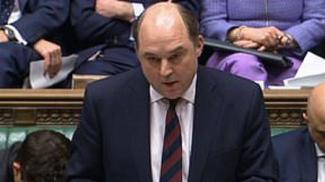
Ben Wallace in a combative mood in the House of Commons
Press TV – January 7, 2020
British defence secretary, Ben Wallace, has put up a spirited defence of the US decision to assassinate Iranian Quds force General Qassem Soleimani in a terrorist-style drone strike outside Baghdad airport.
Delivering a statement in the House of Commons, Wallace claimed that General Soleimani was “no friend of the UK or our allies in the region”.
Wallace tried to justify the assassination on dubious legal grounds by saying: “the UK will always defend the right of countries to defend themselves”.
Wallace’s claim flies in the face of all pertinent facts, notably credible reports that General Soleimani was on a peace mission to Baghdad to try to diffuse tensions with Saudi Arabia.
At any rate, the US accusation that General Soleimani had been planning attacks against US interests hasn’t been backed up by any evidence.
On a more ominous note, Wallace threatened that “aggressive behaviour” from Iran “was never going to go unchallenged”.
Wallace didn’t explain what he meant by “aggressive” behaviour, and the irony of his words was lost on him. After all, Iran was the victim of US aggression when the latter decided to kill the country’s top military commander.
The defence secretary claimed that the UK is “changing the readiness of our forces in the region” by placing “helicopters and ships on standby to assist if the need arises”.
Wallace didn’t address credible reports of the UK adopting an aggressive posture vis-à-vis Iran, in order to assist the US in any potential military action.
The Sun newspaper reported two days ago that a British nuclear-powered submarine was in “striking position” of Iran, ready to fire Tomahawk cruise missiles at Iranian targets.
During the question and answer phase, Wallace was asked by acting Liberal Democrats leader, Sir Ed Davey, whether he would rule out “any UK involvement in any attack in any site in Iran”.
“I’m not going to rule out anything”, said a combative Wallace.
“We cannot say what’s in the minds of Iran or anybody else in the future – that’s why we will always reserve that right to take the decision at the time of it”, he added.
Wallace’s aggressive tone towards Iran is in keeping with the positions of both the Prime Minister, Boris Johnson, and foreign secretary, Dominic Raab, both of whom have defended US actions in recent days.
But Wallace goes a step further by introducing for the first time the strong possibility of the UK taking military action against Iran.
‘Middle East Will Become a Graveyard for US’: Pyongyang Apprehensively Eyes Iran Crisis
Sputnik – January 6, 2020
Following the US assassination of Iranian general Qassem Soleimani, the Democratic People’s Republic of Korea has taken measure of the international situation, which is expected to excercise new caution. However, North Korean dailies noted Washington’s course was destined for disaster.
North Korean cultural publication Arirang Meari put the issue in no uncertain terms, saying on Sunday that the “Middle East will become a graveyard for the US.”
“Global military experts recently analyzed that the US is being bogged down in a war in the Middle East,” Meari wrote, according to the South Korean-based Yonhap News Agency. “Even pro-American countries have been passively answering the US’s request for sending troops on account of their internal politics and economic challenges, driving the US into despair.”
The Korean Central News Agency (KCNA), the DPRK’s state-run news outlet, noted on Monday that Moscow and Beijing had taken strong stances against the US drone strike that killed Soleimani in Baghdad early Friday morning.
“China and Russia emphasized that they not only object to abuse of military power in international relations but also cannot tolerate adventurous military acts,” KCNA wrote, according to Yonhap, describing a Saturday phone call between Chinese Foreign Minister Wang Yi and his Russian counterpart Sergey Lavrov, noting they “expressed concerns over regional situations being worsened by the US’ illegal acts.”
Kim ‘Pressured Psychologically’ by Soleimani Killing
However, despite the rhetoric, experts have noted the episode is likely to shake Pyongyang’s leaders.
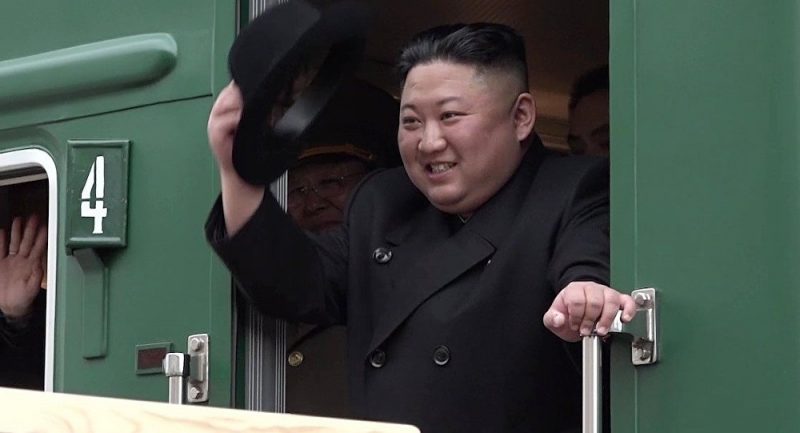
Yang Moo Jin, a professor at Seoul’s University of North Korean Studies, told the Korea Herald that as a result of the Baghdad airstrike, DPRK leader Kim Jong Un “will be pressured psychologically.”
Former South Korean Unification Minister Jeong Se Hyun said during a television appearance on Sunday the DPRK would be even more careful than before about revealing Kim’s precise whereabouts.
Andrei Lankov, a Russian scholar and expert on Korean affairs, noted in NK News on Sunday that Soleimani’s assassination showed US President Donald Trump was willing to take greater risks than North Korean strategists had previously believed, casting the “fire and fury” rhetoric of his presidency’s earlier years in a much starker light.
“As time went by, more and more observers were inclined to see the 2017 as a simple bluff, and it became widely accepted that Donald Trump did not have the guts to deliver on his threats of a military operation in a highly unstable part of the world,” Lankov wrote. “But last week’s killing of General Soleimani demonstrated that the world has underestimated Trump’s desire to take risks (or, perhaps, overestimated his ability to make rational decisions).”
“No doubt the North Koreans have taken note, and, most likely, see it as a warning sign.
Soleimani’s death reminded them that excessively risky behavior might result in a US drone quietly approaching some targets in Pyongyang suburbs,” Lankov added.
A Cautious But Steadfast Approach in 2020
As 2019 drew to a close, so did Pyongyang’s patience for negotiations with Washington, which after 18 months of talks had failed to yield significant results beyond a June 12, 2018, promise from Trump at his first summit with Kim in Singapore. In his New Year’s address, given several days before Soleimani’s killing, Kim had already taken a more cautious tone than in December, when North Korean publications promised a return to bellicose posturing.
Kim had previously promised a “Christmas gift” to Washington, which analysts widely predicted would be Pyongyang’s first long-range ballistic missile test since its self-imposed moratorium in 2017. However, no such “present” was delivered. Instead, Kim noted Washington’s delaying tactics were designed to prolong the harmful effects of economic sanctions on the DPRK, advising North Koreans to buckle their belts more tightly, since relief seemed unlikely anytime soon.
“If the US fails to keep the promises it made before the world, if it misjudges the patience of our people and continues to use sanctions and pressure against our republic, then we’ll have no choice except to seek a new path to secure the sovereignty and interests of our country,” Kim said on January 1.
Similar Struggles in Iran, DPRK
Like Pyongyang, Tehran has been engaged in a prolonged struggle to forge an independent path from Washington amid attempts to frustrate its ability to ensure its self-defense. Both countries have been subjected to strangling economic sanctions in an effort to force them into compliance, but unlike Iran, the DPRK has nuclear weapons as well as means of delivering them.

Kim Yong Nam, president of the Presidium of the Supreme People’s Assembly of North Korea, meets with Iranian President Hassan Rouhani in August 2018
Iranian leaders have long been accused by Washington of pursuing an atomic bomb and not merely nuclear power and medical research, as they have claimed. Tehran signed the Joint Comprehensive Plan of Action in 2015 to lower those sanctions in exchange for accepting tight constraints on the volume of nuclear fuel it could possess, but Trump reimposed them in 2018, accusing Iran of secretly pursuing a nuclear bomb – a conclusion not shared by other signatories to the agreement.
As a consequence, Tehran has slowly stepped back from the commitments it made in the 2015 deal, announcing on Sunday it would scrap the last ones it still followed.
The two countries’ experiences negotiating with Washington have long informed each other, and in the face of intransigence and doubletalk by the Trump administration, experts like Lankov have predicted US belligerence toward Iran, despite its obedience to the 2015 deal, was likely only to embolden those who hold hard-line positions in Pyongyang, opposing negotiations and concessions to Washington.
Why I Don’t Trust Trump on Iran
By Ron Paul | January 6, 2020
President Trump and his Secretary of State Mike Pompeo told us the US had to assassinate Maj. Gen. Qassim Soleimani last week because he was planning “Imminent attacks” on US citizens. I don’t believe them.
Why not? Because Trump and the neocons – like Pompeo – have been lying about Iran for the past three years in an effort to whip up enough support for a US attack. From the phony justification to get out of the Iran nuclear deal, to blaming Yemen on Iran, to blaming Iran for an attack on Saudi oil facilities, the US Administration has fed us a steady stream of lies for three years because they are obsessed with Iran.
And before Trump’s obsession with attacking Iran, the past four US Administrations lied ceaselessly to bring about wars on Iraq, Afghanistan, Syria, Libya, Serbia, Somalia, and the list goes on.
At some point, when we’ve been lied to constantly and consistently for decades about a “threat” that we must “take out” with a military attack, there comes a time where we must assume they are lying until they provide rock solid, irrefutable proof. Thus far they have provided nothing. So I don’t believe them.
President Trump has warned that his administration has already targeted 52 sites important to Iran and Iranian culture and the US will attack them if Iran retaliates for the assassination of Gen. Soleimani. Because Iran has no capacity to attack the United States, Iran’s retaliation if it comes will likely come against US troops or US government officials stationed or visiting the Middle East. I have a very easy solution for President Trump that will save the lives of American servicemembers and other US officials: just come home. There is absolutely no reason for US troops to be stationed throughout the Middle East to face increased risk of death for nothing.
In our Ron Paul Liberty Report program last week we observed that the US attack on a senior Iranian military officer on Iraqi soil – over the objection of the Iraq government – would serve to finally unite the Iraqi factions against the United States. And so it has: on Sunday the Iraqi parliament voted to expel US troops from Iraqi soil. It may have been a non-binding resolution, but there is no mistaking the sentiment. US troops are not wanted and they are increasingly in danger. So why not listen to the Iraqi parliament?
Bring our troops home, close the US Embassy in Baghdad – a symbol of our aggression – and let the people of the Middle East solve their own problems. Maintain a strong defense to protect the United States, but end this neocon pipe-dream of ruling the world from the barrel of a gun. It does not work. It makes us poorer and more vulnerable to attack. It makes the elites of Washington rich while leaving working and middle class America with the bill. It engenders hatred and a desire for revenge among those who have fallen victim to US interventionist foreign policy. And it results in millions of innocents being killed overseas.
There is no benefit to the United States to trying to run the world. Such a foreign policy brings only bankruptcy – moral and financial. Tell Congress and the Administration that for America’s sake we demand the return of US troops from the Middle East!
Copyright © 2019 by Ron Paul Institute
Some War Truth In A Single Photograph
By Bill Willers | Dissident Voice | January 5, 2020
Once I realized to my dismay that I couldn’t believe a word of what our media and political leaders said about major events in the here and now, their credibility on controversial happenings so long ago and far away entirely disappeared.” — Ron Unz, 2018
The 100th anniversary of Armistice Day, November 11, 1918, generated renewed interest in the First World War, its beginnings, its aftermath, and the lead up to World War II. For anyone brought up with the carefully-crafted narratives that constitute “popular” history, a dive into details of the World Wars can shake one’s faith in the validity of all generally accepted history. A good introduction to long buried aspects of the era of the World Wars is Patrick J. Buchanan’s 2008 book “Churchill, Hitler and the Unnecessary War“, in which all roads lead back to Britain’s 1914 declaration of war on Germany, which soon involved much of the world. Germany’s rising power had threatened British imperial dominance within a Rube Goldberg complexity of formal alliances and secret agreements. A Serbian shot an Austrian archduke, Serbia allied with Russia, but Austria-Hungary allied with Germany, and Russia with Britain and France, etc. Ultimately, the “Great Men” leading the masses appeared powerless to stop the WW I slaughter: 8 million dead, 20 million wounded. Thereafter, the Treaty of Versailles imposed on Germany grossly unjust reparations, this leading ultimately to a humiliated Germany embracing Hitler’s rise, thence to a war with a price tag of more than 50 million human lives.
Massive works on Churchill and Hitler by the towering historian David Irving are based on every conceivable information source down to personal diaries and interviews. Irving’s departure from widely accepted “mainstream” story lines has irked some fellow historians, and because he has not been perfectly in synch with Holocaust dogma, he, like so many, has suffered unwarranted accusations of anti-semitism. He writes that many details in the generally-accepted history of WW II, apparently like much of history itself, are simply wrong. His depiction of Winston Churchill is as a central causative agent of both world wars. What’s that? you say! Churchill, during his lifetime considered the greatest living Englishman, a war monger? Likewise, Adolph Hitler struggled to avoid war? Are these too shocking to accept? Research for yourself, and you may find yourself in agreement with Caitlin Johnstone: “Our species fought two world wars (or arguably one world war with a long intermission to grow more troops) for no justifiable reason at all.”
Insight into how governmentally-sanctioned histories might be managed for mass consumption is offered by Ron Unz who cites an amazing number of A-list commentators (scroll down to subtitle “Purging our Leading Historians and Journalists”) who, on diverging from authorized accounts, were simply blacklisted, thereafter unable to get published. It seems that a thread of decency runs through the human family such that elaborate lies must be maintained by governments in order to justify and generate and perpetuate wars. If the Spanish-American War, the two World Wars, Vietnam and both invasions of Iraq have anything in common, it is that all six involved official lies used to bring We The People on board: Remember the Maine, the Lusitania, Pearl Harbor, the Gulf of Tonkin, Kuwaiti babies, Weapons of Mass Destruction. Lies.
During Christmas, 1914, certain British and German soldiers of WW I got the urge for a truce. Shouts of “Merry Christmas!” across “no man’s land” of the front led to troops emerging from trenches, exchanging food and trinkets, playing a bit of soccer. Photos are easy to find on the Internet, but one in particular crystalizes a truth about humanity, regardless of what contorted propaganda might be coming down from the damned stuffed shirts who send humans to slaughter. Historians necessarily focus on political power players and the decision makers of war, but it is decent folk within the powerless masses who are the ones driven to do the killing and the dying. The two youths in the photo — not many years beyond childhood — could be any soldiers from any period of time, of any ethnicity, in any war. Like healthy people everywhere, they would have greatly preferred to be friends, and it shows.
Dwight Eisenhower, a General turned President, is quoted as having said “I think that people want peace so much that one of these days governments had better get out of the way and let them have it.” Such a day is not yet visible on the horizon.

Bill Willers is an emeritus professor of biology, University of Wisconsin at Oshkosh. He can be contacted at willers@uwosh.edu.
US Long-Planned Assassination of Soleimani Lacks Legal, Strategic Justification – Ex-Envoy
Sputnik – 04.01.2020
WASHINGTON – The Trump administration’s unlawful execution of Iranian Quds Force Commander Qasem Soleimani is a strategic blunder of mammoth proportions that has now turned every American military official into a target, former US Ambassador to Saudi Arabia Chas Freeman told Sputnik.
Soleimani, considered the second most powerful person in Iran’s leadership structure, was killed in a US drone strike in Baghdad on Thursday in the wake of attacks on the American embassy in Iraq. Abu Mahdi al-Muhandis, the deputy head of the Iran-backed Iraqi Popular Mobilization Forces (PMF), was also killed in the strike.
“This was not retaliation as claimed, but the pre-planned exploitation of a pretext to assassinate a foreign official designated as an enemy,” Freeman said on Friday. “It was an act of war that will inevitably evoke reprisal.”
President Donald Trump claims he ordered the strike because Soleimani and the militia chief had allegedly been plotting “imminent” attacks against US interests.
Freeman, who also served as US Assistant Secretary of Defence for International Security Affairs, said there is no concrete evidence to corroborate Trump’s claims or justify preemptive action.
“The charge that these two were planning attacks on American soldiers and officials could equally well be leveled at US Secretary of Defense Mark Esper, Secretary of State Mike Pompeo, White House officials, and US military commanders at all echelons,” he said.
Freeman called the attack an “extrajudicial execution” and further departure from the rule of law in the United States.
The former diplomat observed how the escalation began Sunday with suspicious US strikes against Iranian-backed militia groups in Iraq, which sparked the attacks against the embassy in Baghdad.
“[Soleimani’s death] was preceded by three airstrikes on elements of Kataeb Hezbollah for the death of a civilian contractor in Kirkuk. None of these [US] airstrikes was anywhere near Kirkuk,” Freeman said. “They bore the marks of a pre-planned operation looking for a pretext to launch.
“Meanwhile, Iran has already promised to exact “savage” retribution, he noted.
“Soleimani was the equivalent of the US national security adviser or the commanders of CENTCOM, SOCOM, and SOCCENT. All are now potential Iranian targets,” Freeman warned.
Meanwhile, Kataeb Hezbollah is likely to be joined in its campaign against US forces and officials in Iraq by other patriotic militias including some historically hostile to Iran, the former envoy added.
Although likely a welcome distraction to the impeachment proceedings, in foreign policy terms Trump’s decision “makes no sense at all,” he said.
“It is not a deterrent to Iran so much as a provocation. It pushes Iraq further into the arms of Iran and invites the humiliating expulsion of US forces from Iraq. It makes every American in Iraq a target for murder or hostage taking,” Freeman said.
Trump’s “strategy-free” decision is tantamount to beginning a game of chess with only an opening move in mind, he said.
“It is thus a reminder to the word of the witless hubris and violence with which the United States now conducts its international relations,” Freeman concluded.
Trump’s Fatal Mistake in Iraq and Beginning of End for US Occupation
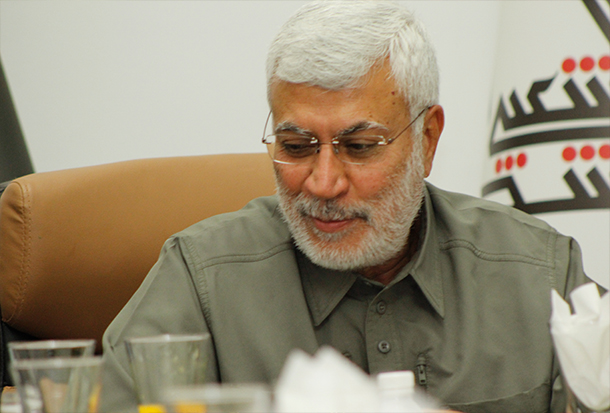
Iraqi PMU commander Abu Mahdi al-Muhandis in Baghdad following their defeat of ISIS in 2017 (Photo: Patrick Henningsen 2017©)
By Patrick Henningsen | 21st Century Wire | January 3, 2020
The United States may have just worn out its welcome in Iraq. Whatever comes next will be laid at the feet of the Trump Presidency.
As a result of a series of disastrous moves by US central command, the region now faces the very real prospect of another multinational conflagration in the Middle East, which could include a direct military confrontation between the US and Iran.
How It Began
This past Sunday December 29th, just before the New Year rang in, President Donald Trump gave the order to bomb an Iraqi military base, killing and wounding a number of Iraqi military personnel, including Iraqi Army officers, Iraqi police, as well as soldiers belonging to the People’s Mobilization Unit (PMUs). US Air Force F-15E fighters struck five targets located in Iraq and along the Syria-Iraq border, all said to be controlled by an ‘Iranian-backed paramilitary group,’ according to the Pentagon.
According to Washington defense spokespersons, Sunday’s US airstrike was supposedly in response to a rocket attack which struck the “K1” joint US-Iraqi military base located in Kirkuk in north Iraq, which happened just two days before on Friday December 27th, killing one U.S. defense contractor, and one Iraqi police officer, as well as wounding a further 4 US defense contractors, and 3 Iraqi Army officers. US officials claim they had intelligence which confirmed that Friday’s rocket attack near Kirkuk was the work of “Iranian militia,” therefore holding the Islamic Republic of Iran responsible. However, no evidence was presented by the US in relation to the claim.
In response to the US bombing its facility on Sunday, Iraqi protesters, including friends and family of fallen soldiers killed in the US bombing raid, and led by Iraqi PMU members and their supporters, stormed the outer perimeter of the US embassy in Baghdad located inside the infamous US-controlled Green Zone. Many US embassy staff were evacuated or airlifted from the compound, and an additional detachment of 100 US Marines were called in as reinforcements, along with an additional 750 troops from fast battalion 82nd Airborne Division sent to Kuwait preparing to go into Iraq. US combat helicopters circled overhead, as well as around the entire Green Zone and over civilians neighborhoods in Baghdad. This move was not received well by the Iraqi government who forbid such US military patrols as part of their status of forces agreement for the country. The siege lasted until News Years Eve on December 31st, before the Iraqi Army and Iraqi Mukhabarat internal security eventually arrived to disperse the angry crowds.
Following the embarrassing scenes at the US embassy on New Years Eve, Washington promised retribution. What followed could very well be the trigger for a renewed war in Iraq, and which may likely result in US forces and personnel eventually being asked (or forced) to leave the country. On Wednesday January 2, 2020, the US launched another airstrike, targeting an access road leading to Baghdad International Airport, and reportedly killed Iranian Quds Force leader, General Qasem Soleimani, as well as senior Iraqi PMU commander, Abu Mahdi al-Muhandis, according to reports by Iraqi TV.
Both Soleimani and al-Muhandis are considered to be among Iran and Iraq’s most revered military figures, and their targeted assassinations by the US government will certainly be viewed as an act of war by a large portion of the Iraqi and Iranian populations, as well as their respective military and security apparatuses. In particular, al-Muhandis is regarded by many a hero in Iraqi’s hard-fought victory over ISIS in 2017.
Iraqi cabinet officials and parliamentarians have been meeting over the last 48 hours to discuss reviewing the status of their cooperation agreement with the United States which allows for intelligence sharing and US training and technical assistance for Iraqi military divisions. Whether this escalates into officials calling for the US military and its 20,000 troops and defense personnel to pack up and leave the country – remains to be seen.
It should go without saying that this provocative military action by the United States means that US troops and personnel may no longer be safe operating in Iraq.
Questioning US ‘Intelligence’
In order to grasp the full gravity of what the Trump Administration has just done, it’s essential to consider these events in historical context, as the latest reckless move in a long line of US failures in Iraq.
According to veteran Middle East correspondent Elijah Magnier, “The United States of America has fallen into the trap of its own disinformation policy, as exemplified by the work of one of its leading strategic study centres, a neocon think tank promoting war on Iran.”
Magnier adds, “Analysts’ wishful thinking overwhelmed their sense of reality, notably the possibility of realities invisible to them. They fell into the same trap of misinformation and ignorance that has shaped western opinion since the occupation of Iraq in 2003. The invasion of Iraq was justified by the presence of ‘Weapons of Mass Destruction’ which never existed.”
According to Iraqi officials, at the time of the initial rocket attack on Dec 27th, it was not clear who had actually fired on the K1 joint base. Regardless, a number of data points strongly indicate that the US had already decided who it would be targeting.
According to the New York Times, “President Trump was briefed by Defense Department leaders on Saturday, and allowed the strikes to proceed. Senior officials including Defense Secretary Mark T. Esper and Secretary of State Mike Pompeo traveled to Mr. Trump’s Mar-a-Lago resort in Florida on Sunday for discussions with the president, American officials said.”
The US had already taken the decision to bomb Iraq before any joint investigation could be conducted between the Iraqi Ministry of Defense and the US authorities. Soon after the Mar-a-lago meeting, Secretary of Defense Mark Esper called acting Iraqi Prime Minister Adil Abdul-Mahdi to inform him the US was not interested in working with Baghdad to find out what happened and who had fired the rockets. Esper told the Iraqi PM that Washington had already received “intelligence” from its trusted sources which said the rocket attack was carried out by a branch of the Iraqi PMUs known as Katiab Hezbollah (no relation to Lebanon’s Hezbollah defense force). It should be noted that these PMU brigades are composed of Iraqi citizens who serve under the official Iraqi military command headquartered in Baghdad. Because this PMU division’s membership is composed of Shia Muslims, United States officials and the US mainstream media have taken the liberty of labeling them as “Iranian militia” – a blatant falsehood, but one which has been disseminated by US officials in order to infer these are somehow ‘Iranian proxies’ and proceeded to pin the alleged responsibility of the initial rocket attack on Iran, in effect, justifying the heavy-handed US retaliation on Sunday, and Washington’s targeted assassinations of Qasem Soleimani, and Abu Mahdi al-Muhandis on January 2nd.
To date, US officials have provided no evidence to support their claim that the rocket attack on Dec 27th was carried out by Katiab Hezbollah PMUs, nor has the US given any specifics as to the provenance of its ‘intelligence’ which attributed blame to PMUs. If this was indeed a rush to judgement, it would not be the first time the US has perpetrated an act of war against a sovereign state based on faulty, and less than credible intelligence. The recent OPCW leaks have demonstrated beyond any doubt that the US-led airstrikes against Syria in April of 2018 were based on misinformation of a supposed ‘chemical attack’ just days earlier in Douma, Syria on April 7, 2018.
Upon closer review, it’s now clear that what the US claimed it was doing, does not actually match the actions which it had undertaken on Dec 29th. In addition, the US bombing raid on Dec 29th will also have aided ISIS. Magnier explains the obvious US disconnect here:
Mr Abdel Mahdi asked Esper if the US has “proof against Kataeb Hezbollah to share so Iraq can arrest those responsible for the attack on K1”. No response: Esper told Abdel Mahdi that the US was “well-informed” and that the attack would take place “in a few hours”.
In less than half an hour, US jets bombed five Iraqi security forces’ positions deployed along the Iraqi-Syrian borders, in the zone of Akashat, 538 kilometres from the K1 military base (that had been bombed by perpetrators still unknown). The US announced the attack but omitted the fact that in these positions there were not only Kataeb Hezbollah but also Iraqi Army and Federal Police officers. Most victims of the US attack were Iraqi army and police officers. Only 9 officers of Kataeb Hezbollah – who joined the Iraqi Security Forces in 2017 – were killed. These five positions had the task of intercepting and hunting down ISIS and preventing the group’s militants from crossing the borders from the Anbar desert. The closest city to these bombed positions is al-Qaem, 150 km away.
Interestingly, this is not the first time that the US and allies have targeted an Iraqi PMU facility and tried to label it as “Iranian.” Back in September, 21WIRE reported how Israel and Saudi Arabia were reported to have launched supposed ‘retaliatory’ airstrikes against “pro-Iranian militias” stationed along the border between Syria and Iraq. This was reported by the Jerusalem Post at the time:
“Saudis, Israel attack pro-Iran militias on Syria-Iraq border,” and adding that,“Saudi fighter jets have been spotted along with other fighter jets that have attacked facilities and positions belonging to Iranian militias.”
21WIRE also noted how the Jerusalem Post had compiled their report citing multiple sources, including pieces of information from the Independent Arabia, Lebanese outlet Al Mayadeen and the Syrian Observatory for Human Rights. They reported air strikes hitting targets over the course of that week, killing 31, after hitting what they called “Iranian-backed” Iraqi Hash’d Shaabi (PMUs) positions along the Iraqi-Syria border.
“On Wednesday, five people were killed and another nine were wounded in an airstrike carried out by unidentified aircraft that targeted positions of the Iranian-backed Iraqi Popular Mobilization Forces militia in Albukamal, according to Sky News Arabia.”
Why this is crucial, is because it demonstrates previous form by Israel and Saudi Arabia – against near identical targets which the US bombed on Dec 29. It stands to reason then, that the ‘intelligence’ source for both attacks, on Sept 19th, and Dec 29th, seem to be related, deriving from either Israel or Saudi Arabia – both of which are heavily biased against Iran, and viewed it as an existential threat to their own regional geopolitical and military hegemony. In the case of Israel, it has played a visible role in directing US policy regarding Iran since the onset of the Trump Administration. It was Israeli PM Benjamin Netanyahu who boasted about his role in convincing the White House to unilaterally withdrawal from the JCPOA Iran nuclear deal in May 2018.
It’s also important to note with the US bombing raid on Sunday Dec 29th, the Iraqi bases hit along the Syrian-Iraqi border are located approximately 540km from Kirkuk, far away from where the US claim that Kaitab Hezbollah PMUs had fired the initial rocket attack on Dec 27th – which means that those US targets played no role in Friday’s rocket attack on K1, and more likely had already been selected in advance of Dec 27th, and the US was simply waiting for the right ‘incident’ to green-light a military attack on what it claims to be “Iranian” military targets.
Again, the fact that the US insists on mislabeling its supposed enemy means that nothing productive can come out of the latest series of events – unless Washington considers another full-scale war in Iraq a productive endeavor – a proposition which many would not find that far-flung considering America’s tawdry record in the region.
Iraqi PMUs Defeated ISIS in 2017
In order to properly understand the Iraqi military and PMU’s reaction to this ham-fisted US attack on Iraqi soil, it is important to understand who are the Iraqi People’s Mobilization Units (PMUs), aka the Hash’d al-Shabbi, or ‘Hasheed’ for short. This is the new national militia of Iraq and are the very same soldiers who have fought and died against ISIS for ultimately defeating their terrorist occupation in late 2017. The PMUs were formed in response to the emergence of ISIS and the fall of Mosul in June 2014. The Grand Ayatollah Sistani issued a fatwa in the summer of 2014, which called on all able-bodied men of fighting age to form a coalition of national militias, roughly 130,000 strong, to fight back against ISIS after it had routed the Iraq Army during ISIS’s summer blitzkrieg which saw several key cities taken by the terrorist army, as they headed dangerously close to the capital city Baghdad.
Based on the rhetoric and media coverage we are seeing this week, it’s painfully obvious that few, if any, within the ranks of American foreign policy ‘experts’ and national security journalists, are really aware of this reality on the ground in Iraq. It is widely acknowledged in Iraq, and in the region, that the PMUs played the decisive role in defeating ISIS and securing liberated communities in the latter stages of the country’s terrorist ordeal. It’s important to note also that tens of thousands of Iraqis, including Iraqi Army, Police, Iraqi civilians, and Iraqi PMUs – including these very same PMU units who the US has killed this week – have all died, sacrificing their lives for their country in the fight against the foreign-backed terrorist menace. For the United States political leadership and mainstream media to crassly label them as “Iranian militias,” is to rob Iraqis of an important national victory and strip them of their agency.
As we can now see from the incredible scenes at the US embassy on Tuesday, Washington’s ignorance of the reality on the ground in Iraq has come at a heavy price.
Since its opening in 2008, the new US embassy has not faced any serious challenge to its structural integrity. It is not just any embassy either – it is the world’s largest and most expensive embassy ever constructed, covering a total of 104 acres which is roughly the size of Vatican City, and houses 5,000 embassy staff, military and intelligence personnel. Iraqi protesters breached its outer security walls and main gate, and proceeded to lay waste the embassy’s periphery structures, before pinning down US Marines guarding the compound inside the foyer of one of the outer reception buildings. Now that this facility has been compromised, it can no longer be relied on as the ‘fortress America’ and forward operating station it has been for the past decade.
Trump and Washington’s Fundamental Error
Another important takeaway from all of this is for Americans to realize that Iran posed no national security threat to the United States, but Washington’s insistence on framing every incident in the region as “the work of the Iranian regime” means that forces in Washington desperately want war, and now they can’t hide their agenda. This drive is most certainly being spurred on by US allies in the region, Israel and Saudi Arabia. From an imperialist standpoint, the US and its allies do benefit geopolitically by keeping Iraq divided and weak – ensuring that it can never get back on its feet economically or politically to become influential in the region, and can never become close partners with its two most important neighbors Syria and Iran.
For Washington and Tel Aviv, the road to Tehran has always been through Baghdad, only we’re not in 2003 anymore, and the Middle East playing field has changed dramatically since that time, mostly as a direct consequence of US military and proxy aggression in the region.
Besides this, Iraqis are well aware by now that it is the United States and not Iran, who has already ruined their country for generations to come.
If Washington continues down this path, it could also lead to Trump’s downfall politically.
Unfortunately, Iraq is set again to become the pitch for another ugly geopolitical grudge match between the West and Iran. By showing its ugly hand, Washington has left its adversaries with little choice but to fight back this time.
***
Author Patrick Henningsen is an American writer and global affairs analyst and founder of independent news and analysis site 21st Century Wire, and is host of the SUNDAY WIRE weekly radio show broadcast globally over the Alternate Current Radio Network (ACR). He has written for a number of international publications and has done extensive on-the-ground reporting in the Middle East including work in Syria and Iraq. See his archive here.
Featured Video

Iran’s Next Strike May Not Explode. It Could Shut You Down
or go to
Aletho News Archives – Video-Images
From the Archive
Zionism’s Violent Legacy
By Donald Neff | Washington Report On Middle East Affairs | January 1996
On January 4, 1948, Jewish terrorists drove a truck loaded with explosives into the center of the all Arab city of Jaffa and detonated it, killing 26 and wounding around 100 Palestinian men, women and children.[1] The attack was the work of the Irgun Zvai Leumi – the “National Military Organization,” also known by the Hebrew letters Etzel – the largest Jewish terrorist group in Palestine. The Irgun was headed by Revisionist Zionist Menachem Begin and had been killing and maiming Arabs, Britons and even Jews for the previous ten years in its efforts to establish a Jewish state.
This terror campaign meant that at the core of Revisionist Zionism there existed a philosophical embrace of violence. … continue
Blog Roll
 Aletho News
- Riyadh Says Its Oil System Is Intact. The Numbers Say Otherwise.
- Trump and Netanyahu Want to “Finish the Job” on Iran
- US ‘one-sided dictation’ not Iran’s beliefs makes rational talks impossible: Baghaei
- Iran’s Next Strike May Not Explode. It Could Shut You Down /Col Doug Macgregor
- Iran: US political targets legitimate if assassinations return
- Iraq shuts key border crossing with Iran under US pressure: Report
- Undersea Internet cables could be targeted in retaliation for attacks on Iran: IRGC deputy chief
- EU sending ‘biased’ observers to interfere in Serbian election – president
- White House envoy declares kinetic action against Yemen ‘fruitless’
- Ukraine deployed thousands of microdrones in Iraqi Kurdistan: Tasnim
- If Americans Knew
- An error has occurred; the feed is probably down. Try again later.
- No Tricks Zone
- E-Cars Reduce CO2 Emissions By Only 41% Compared To Internal Combustion Engine Vehicles
- Predictions Made By Renowned Climate Professor Over Past Decades Have Been Proven To Be Poor
- New Study Suggests Large Regions Of The Pacific Ocean Have Been Cooling For The Last 80 Years
- Germany’s Green Energy Debacle: High Energy Costs Force Kahla Porzellan to Close After 182 Years!
- New Study: 50 Years Of The Most Aggressive ‘Net Zero’ Policies Can Only Affect The Global Climate By 0.03°C
- US September “Heat” Was No Record…Many Records Set Decades Ago
- Latest European Green Energy Debacle; Portugal’s Largest Flagship Solar Park Insolvent!
- Green Energy Debacle: German Expert Professor Fritz Vahrenholt Warns Of Severe Economic And Social Consequences
- Two More Paleo Reconstructions Affirm Meters-Higher Sea Levels Across Ireland, Brazil 7000-6000 Years Ago
- New Study: Earth And Venus Surface Warmth Largely Explained By Convection And Lapse Rate, Not CO2 Or Radiation

