Time to Admit the Afghan War is ‘Nonsense’
By Jonathan Marshall | Consortium News | February 22, 2018
Whatever happened to the Donald Trump who tweeted in 2013, “Let’s get out of Afghanistan … we waste billions there. Nonsense!”
And whatever happened to the reality TV star who used to tell under-performers, “you’re fired”?
Today, as commander in chief, President Trump is indefinitely extending the Afghan war’s record as the longest in U.S. history. He’s wasting $45 billion to wage it this year alone. And he’s not even thinking of firing his huckster generals who claim that sending a few thousand more troops and stepping up the bombing will be a “game changer.”
Much like the Vietnam War, every day’s news of war from Afghanistan puts the lie to optimistic claims of a military solution. A recent BBC study concluded that Taliban forces are now active in 70 percent of the country, more than at any time since the end of 2001. Unofficial U.S. estimates of their strength have soared from about 20,000 in 2014 to at least 60,000 today.
Afghan government forces number several times as many, but—like their counterparts in the Vietnam War—they “lack the one thing the U.S. cannot provide: the will to fight a protracted campaign against a committed enemy,” in the words of Bill Roggio, editor of the Long War Journal at the hawkish Foundation for Defense of Democracies.
The Taliban have proven that no place in Afghanistan is safe from their long arm. At the beginning of February, they infiltrated a bomb-laden ambulance into Kabul, just blocks from a meeting at the Afghan Ministry of Defense with the head of the U.S. Central Command. Its blast killed more than 100 people and injured 235. It followed only days after Taliban gunmen stormed the Intercontinental Hotel in Kabul, killing at least 20 people, including four Americans.
Inspector General Finds No Progress
The latest Inspector General report on the status of “Operation Freedom’s Sentinel,” issued Feb. 18, declares that U.S. and Afghan government forces made no progress last year in expanding their control of the country or in forcing the Taliban to the peace table, one of the administration’s stated goals.
“In addition,” the report said, “there were growing concerns about whether Afghanistan will be able to hold parliamentary elections as planned in July 2018, and the country was struggling to provide assistance to nearly two-million internally displaced persons.”
The report also highlighted the lethality of Taliban operations against Afghan military and police forces, but it declined to offer numbers, noting that the U.S. military had classified them at the request of the Afghan government.
To justify its optimism, the Trump administration has touted its ostensibly new tactic of bombing drug labs to deny the Taliban revenue. The Inspector General notes that such operations were undertaken as far back as 2009, to no end:
“The United Nations reported that opium poppy cultivation in Afghanistan set a new record in 2017. Cultivated land increased 63 percent over 2016 levels and potential opium production set a new record at 9,000 tons. The United Nations stated that the Afghan government’s strategic focus on protecting population centers in 2017 might have made rural populations more vulnerable to the influence of anti-government entities who pay local farmers to grow poppy and protect farmers from government eradication efforts.”
Similarly, U.S. military operations have failed to suppress Afghanistan’s version of ISIS, which recently conducted several spectacular terror attacks in Kabul. The U.S. command made “no discernible progress” on convincing Pakistan to close its borders to insurgents. Last but not least, the Afghan government remains a mess, riven by factional fights between President Ashraf Ghani and provincial warlords.
An Incoherent Policy
Meanwhile, unaddressed by the IG is the basic incoherence of a policy of bombing the Taliban into reconciliation. On paper, Washington aims to force the Taliban to the negotiating table, acknowledging that outright victory is impossible. But only this January, President Trump told members of the UN Security Council, “we don’t want to talk with the Taliban,” and a spokesman for President Ghani said recently, “We never negotiate with groups who resort to crime and the brutal killing of people and then claim responsibility for it.”
That sounds like a policy of stalemate if ever there was one.
“For years, we have been pursuing a strategy that will not win, but at the same time, we are doing just enough to ensure that we do not entirely lose,” concedes Kevin Hulbert, former CIA station chief in Kabul. “The way forward will be determined by clarifying our objectives, which to this point, have remained ambiguous at best.”
Clarifying our objectives would certainly help, but just as important are clarity about U.S. interests and capabilities.
Ever since 9/11, policy makers have largely taken American interests for granted. Yet aside from fantasies about developing Afghanistan’s mineral wealth, it’s hard to make a serious case that American lives and treasure will be more at risk from getting out of Afghanistan than continuing an endless war. The only significant interest at stake is political: no president wants to lose such a war.
And as to capabilities, the Obama-era surge proved that even with 100,000 troops, the United States cannot win a war against committed, indigenous insurgents who enjoy unlimited funding and protected foreign sanctuaries. Unlike the United States, the Taliban have nowhere to go. They will wait us out, even if that means fighting for another 16 years.
A decade ago, a top-level policy analysis requested by President George W. Bush admitted, “The United States is not losing in Afghanistan, but it is not winning either, and that is not good enough.” Those words are as true in 2018 as they were in 2008. The situation is still not good enough, and there’s no chance of it getting any better. It’s time for President Trump to wake up and say “you’re fired!” to anyone on his team who pretends otherwise.
Jonathan Marshall is the author or co-author of five books on U.S. foreign policy and international affairs. His articles on Afghanistan include “The Goal of ‘Not Losing’ in Afghanistan,” “Blaming the Afghan War Failure on — Russia,” and “Afghanistan: President Obama’s Vietnam.”
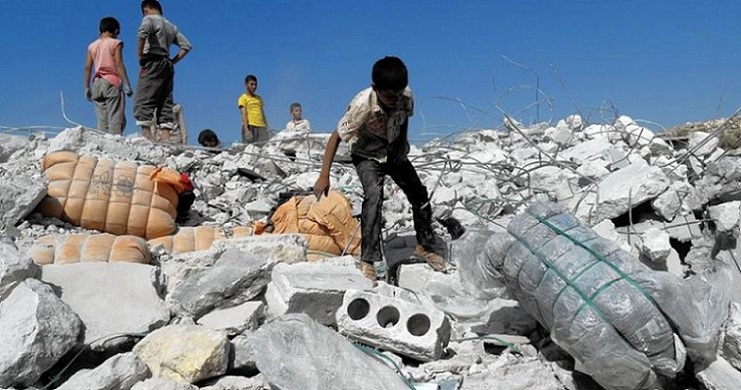
Is Sweden complicit in Saudi war on Yemen?
Press TV – February 21, 2018
Last year, Swedish Foreign Minister Margot Wallström told a conference that the unfolding humanitarian crisis in Yemen was one that “has far too long been neglected and forgotten by the global community” and what Yemeni people were going through was “difficult to imagine.”
It is such statements that, besides leading various international peace efforts to help resolve major conflicts across the globe, including Saudi Arabia’s deadly war on Yemen, have helped Sweden establish the image of a peace-loving country that cares for others.
However, a steady rise in the Scandinavian country’s weapons business over the past years, including its major dealings with repressive Arab regimes in the Persian Gulf region, has cast doubt on Stockholm’s true intentions.
In fact the rise has been so fast that according to official data by the US government, Sweden is now the world’s third largest weapons producer per capita, closely following Russia and Switzerland while overtaking France, Britain and the US.
At the heart of Sweden’s weapons industry is Saab, a company that sold over $2.7 billion worth of weapons in 2016 alone, making its way into the world’s top 30 arms producing companies according to the Stockholm International Peace Research Institute (SIPRI).
Over the recent years, Saudi Arabia and the United Arab Emirates (UAE) have become some of the main customers for Swedish-made weapons.
Svenska Freds, a 135-years-old Swedish anti-militarization group, charges that Stockholm has been providing Riyadh with weapons since 1998, with a brief suspension in 2015 following a diplomatic row between the two countries.
The larger chunk of the trade has taken over in the past eight years. According to Svenska Freds, the arms sales to Saudi Arabia reportedly approached six billion Swedish kronor ($741mn) between 2010 and 2016.
That means the arms deals between the two sides have continued throughout Saudi Arabia’s deadly war on Yemen, which began in March 2015 and has killed nearly 14,000 Yemeni civilians.
The UAE, another Saudi ally in the bloody war, was able to secure a larger deal in 2016, when the Swedish administrative authority, the National Inspectorate of Strategic Products, authorized 11 billion Swedish kronor ($1.3bn) in arms sales to the Arab country.
Before that, the country had sold 2.1 billion kronor ($272mn) in weapons sales to the UAE.
In a move that further proved Sweden’s desire to expand military ties with repressive Arab regimes, Saab opened a new office in the UAE capital Abu Dhabi in late 2017.
Lawmakers in the Swedish parliament have time and again criticized the government’s arms deals with the Saudi-led coalition.
While Foreign Minister Margot Walltröm has pledged to introduce measures that would limit the exports later this year, there are no signs that Stockholm is willing to end the profitable business anytime soon.
US to Deploy Lethal Drones to Korean Peninsula After Olympic Games – Report
Sputnik – 21.02.2018
Recent reports by South Korean news media claim that the US will deploy attack drones to the Korean Peninsula in the next few months.
Twelve attack drones that can target North Korean leaders and military targets will be deployed in March or April, South Korean newspaper Chosun Ilbo reported this week.
According to the report, a hangar has already been constructed for the Gray Eagle drones. In addition, support facilities and personnel have reportedly already arrived at the US air base at Kunsan on the west coast.
The General Atomics MQ-1C Gray Eagle is an unmanned aircraft system developed by General Atomics Aeronautical Systems for the US Army. The Gray Eagle, which has an 18-yard wingspan, can conduct various missions including attack, reconnaissance, surveillance and infiltration. Its 248-mile range gives it enough reach to cover most of North Korean territory.
This is not the first time that the US has sent attack drones to South Korea. Last March, the US deployed attack drones in response to “provocative actions” by North Korea, although this threat has not deterred the North from conducting nearly a nearly a dozen missile tests since then.
Earlier this week, a US forces spokesperson also announced that military drills between the US and South Korea will begin again once the Paralympic Games in Pyeongchang end in March, military.com reported.
US, S. Korean militaries to conduct joint drills despite detente with Pyongyang
RT | February 20, 2018
The US and South Korea will go ahead with military drills off the Korean peninsula despite the “Peace Olympics” and the recent thaw in North-South relations, the South’s defense ministry said in a report to the National Assembly.
In the run-up to the Olympic Games in PyeongChang, Seoul was able to convince Washington to delay the start of their annual winter/springtime joint military exercises until after the games. The temporary halt to the annual Foal Eagle/Key Resolve US-South Korea joint military exercises allowed North and South Korea to develop a dialogue that the South hopes will ease the mounting tension in the region.
On Tuesday, a day after Pyongyang warned against the resumption of the military drills, South Korea’s defense ministry announced that the allies will still hold the Key Resolve and Ulchi Freedom Guardian exercises. Holding the drills this year, the S. Korean military said it will enhance the so-called 4D Operational Concept amid allies which aims “to detect, disrupt, destroy and defend against North Korean missile threats,” the ministry said in a report to the National Assembly, Yonhap reports.
No concrete schedule for the drills has yet been announced for 2018, and the report did not mention the fate of the Foal Eagle drills. A Key Resolve computer-simulated command post exercise was held March 8-23 last year. The 2017 Ulchi Freedom Guardian exercise involving some 17,500 US service members took place August 21-31.
The North has long urged the allies to stop their joint military training, and on Monday reiterated its objection to war games on its borders. “Resuming the war exercises is a wild act of ruthlessly trampling even a small sprout of peace that has been seen on the Korean peninsula,” North Korean KCNA said in an official commentary.
N. Korea particularly accused Donald Trump’s administration of seeking “war” in the region, blaming the US for using the “most powerful weapon in the world” to coerce Pyongyang. “The Trump group has to ponder over the catastrophic consequences to be entailed by its reckless saber-rattling, and make a responsible choice,” KCNA said.
“We are ready for dialogue and war.”
The latest statement comes amid the war of words and muscle flexing in the region between Pyongyang and Washington. As the US again threatens to pursue a military option to neutralize North Korea, Russia and China have been calling for calm. Moscow and China have consistently urged for a diplomatic solution to the crisis based on the ‘double freeze’ initiative. The simple Sino-Russian proposal, firmly rejected by Washington, seeks a simultaneous suspension of both nuclear tests by Pyongyang and the large-scale military exercises by Washington and Seoul.
Read more:
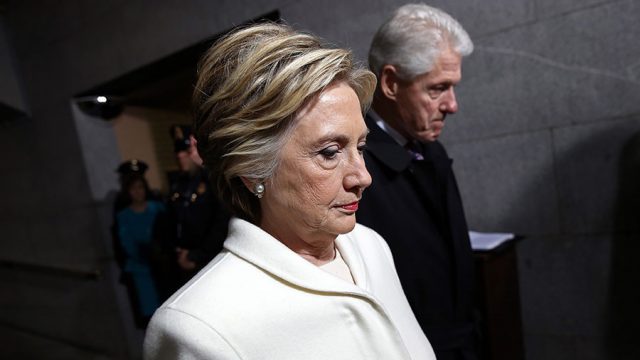
Bear scare! Why the US Democrats desperately need a Russian bogeyman
By Robert Bridge | RT | February 20, 2018
Even before Donald Trump set foot in the White House, loveless liberals were busy pushing the narrative that Russia meddled in the elections. But could this claim be – just maybe – a dastardly ploy to hide some unsavory truths?
Pass the popcorn, the theater of the political absurd known as ‘Russiagate’ continues playing to disappointed audiences without so much as an intermission. And with the latest episode featuring an indictment against 13 Russian nationals without rhyme or reason, perhaps it’s a good time to pause and reflect on the question the mainstream media conspicuously ignores: was the real meddlesome actor in the 2016 presidential election not the perennial bogeyman known as ‘Putin’s Russia’, but the Democratic Party itself?
Indeed, some highly questionable moves on the part of the Democrats before, during and after the elections go far in exonerating the Russian fall guy from any and all charges. You be the judge.
The FISA fail
In a memo declassified by the White House and released to great fanfare by the House Intelligence Committee on February 2, it was alleged that on October 21, 2016, the FBI and the Department of Justice (DOJ) – armed with the notorious Trump dossier – secured a Foreign Intelligence Surveillance Act (FISA) warrant to conduct surveillance on Carter Page, a Trump campaign adviser.
But something looks rotten in Denmark. As it turned out, the explosive Trump dossier, compiled by former MI6 spy Christopher Steele, was bought and paid for by the Democratic National Committee (DNC) and the Clinton campaign. In other words, this represents – at the very least – a very big conflict of interest.
At the same time, in the their application for the FISA warrant, the FBI and DOJ “cited extensively” a Yahoo News article by one Michael Isikoff, which discusses Page’s July 2016 trip to Moscow.
As it turned out, however, there were serious problems with that article. As the Nunes memo states, Isikoff’s article “does not corroborate the Steele dossier because it is derived from information leaked by Steele himself…”
Indeed, Steele admitted that he met with Yahoo News “at the direction of Fusion GPS,” the firm that organized the dossier, in September 2016. Meanwhile, the mainstream media has largely played down these glaring violations of FISA protocol, as it continues to heap scorn on Russia.
“Putin’s KGB-inspired maneuvering of the United States via Donald Trump and the Republican Congress has all the earmarks of a carefully planned, professionally executed war game in which Trump, congressional Republicans and some in right wing media are his comrades,”wrote Cheri Jacobus in USA Today.
The specter of the Russian bogeyman is truly the gift that keeps giving.
Clinton’s email scandal
In March 2015, the news broke that Hillary Clinton, while serving as secretary of state, had used her home computer while handling classified government documents. An assortment of experts and politicians accused Clinton of violating State Department protocol.
On July 5, 2016, following an investigation, FBI Director James Comey said Clinton had been “extremely careless” in handling her email correspondences. He added that “no reasonable prosecutor would bring such a case.”
That statement did little to calm the critics, however, as Clinton was haunted by the ghosts of emails past right up to the eve of the elections.
On October 28, 2016, the FBI said it was reopening its investigation into Clinton’s private email server after messages were discovered on the computer of top aide Huma Abedin’s husband, Anthony Weiner, who was then embroiled in a sexting scandal. Comey announced just before the elections that nothing had changed in the Clinton case, which had been closed four months earlier without criminal charges.
However, the email saga refuses to go away as the DOJ once again reopened its investigation into Clinton’s email server in January.
To this day, Hillary Clinton has been able to divert attention away from the very serious charge of handling classified government emails over her private server thanks to a giant smokescreen known as Russia, the bogeyman that conveniently explains every transgression and setback by the Democratic Party.
Operation Sink Sanders
In July 2016, the DNC suffered a broadside after WikiLeaks released a batch of emails purporting to show that Debbie Wasserman Schultz, the chairwoman of the body, was actively conspiring against the campaign of Senator Bernie Sanders. Naturally, this news had a way of upsetting those donors who contributed funds to the Sanders campaign. Wasserman Schultz resigned in disgrace following the revelations.
Despite there being a deliberate effort to undermine the Sanders campaign, that disturbing news was sidelined by the conspiracy theory that a Russian army of apparatchiks hacked the DNC computers, turning over the information to Julian Assange. To this day, no evidence has been provided to support that claim.
Meanwhile, Wasserman Schultz was eventually cleared of rigging the Democratic primary in favor of Hillary Clinton, while Russia continues to suffer from mainstream media mudslinging.
Clinton cheated in debates
One of the most shocking revelations to come from the leaked/hacked DNC emails was the claim that Donna Brazile, interim chairperson of the DNC who once worked at CNN, used her inside connections to feed Hillary Clinton the questions to several of her public debates against Donald Trump.
Following the DNC debacle, Brazile hoped to cash in on the scandal by publishing a tell-all book entitled, ‘Hacks: The Inside Story of the Break-ins and Breakdowns that Put Donald Trump in the White House.’
In one particularly candid part, Brazile said she was secretly concerned about Clinton’s health as Election Day drew closer. This comment did not sit well with Brazile’s former colleagues. Clinton’s staffers published an open letter in response to the book, saying, “It is particularly troubling and puzzling that she would seemingly buy into false Russian-fueled propaganda, spread by both the Russians and our opponent, about our candidate’s health.”
Once again, Russia was used and abused as the convenient 11-time-zone Band-Aid that can cover any political wound, whatever the size. What is the most surprising about this tactic is that anybody still falls for it.
Regime change
Given Hillary Clinton’s past track record for advocating on behalf of military adventures, most memorably in Iraq and Libya, the tall tale of Trump-Russia collusion appears to have been a desperate effort on the part of the establishment to get their candidate into office and the military industrial complex into another war.
According to the Center for Public Integrity’s review of Federal Election Commission data, over a 14-month period (January 2015 through February 2016), Clinton and Sanders jointly received at least $765,049 from employees of major defense contractors – more than twice the $357,775 sum received by the Republican Party presidential candidates.
To prove the liberal media’s (and by extension, the establishment’s) apparent desire for military conflict, consider how it lavished praise on Trump after he attacked Syria’s Shayrat Airbase on April 7, 2017, America’s first unilateral military act aimed at the Syrian government forces (not the terrorists).
CNN analyst Fareed Zakaria waxed poetically, “I think Donald Trump became president of the United States,” he said dreamily. “I think this was actually a big moment.” On MSNBC, Nicholas Kristof, a regular Trump critic, said the Republican leader “did the right thing.” Elliott Abrams could barely contain his newfound enthusiasm for Trump: “… the Trump administration can truly be said to have started only now. The president has been chief executive since January 20, but this week he acted also as Commander in Chief. And more: He finally accepted the role of Leader of the Free World.”
Judging by such comments, had Trump continued bombing Syria, and thereby pacifying the hawks in Washington, there is a very good chance that Russiagate would have been quietly swept under the media’s carpet.
Impeach Trump
It would be difficult to name another US president who has suffered the slings and arrows of media scorn more than Donald J. Trump. And he’s only been in office for just over one year. Indeed, no sooner had his Inauguration finished there were already calls for him to be impeached. In fact, the subject has become so popular among the Democrats that there is even a special Wikipedia page dedicated to the relentless campaign.
Although the clamor to impeach the Republican leader has subsided of late, when the idea does raise its head, the empty claim that Russia influenced the elections ranks high among the reasons.
Clinton Foundation ‘pay to play’
Another reason why the Democrats would need to push the anti-Russia narrative is to protect the Clinton family from allegations that they personally profited from donations to the Clinton Foundation.
In January 2017, it was reported that the FBI opened an investigation into whether the Clinton Foundation accepted donations in exchange for political favors while Hillary Clinton served as secretary of state in the Obama administration, the Los Angeles Time reported, citing two anonymous sources.
“Critics have accused the Clinton family of using the foundation to enrich themselves and give donors special access to the State Department when Hillary Clinton was its head,” the article said.
The LA Times said that the Democrats have rejected the claims, saying that “Trump is trying to steer attention away from investigations examining…Russian attempts to influence the 2016 election.”
Nunes Memo, Part 2
If anybody thought the Trump administration would just release the Nunes memo and drop it, think again. In fact, Trump’s legal team backs the idea of a second special counsel to investigate the FBI and Justice Department
White House Deputy Press Secretary Raj Shah told reporters on Air Force One Monday that Trump’s attorneys have given the green light to starting the process of appointing a second special counsel to investigate the FBI and Justice Department’s behavior during the 2016 presidential campaign, according to a report by Axios.
In other words, expect a lot more anti-Russia outbursts from the Democrats in the days and weeks to come.
Read more:
US baits Turkey in hopes of ending Ankara’s Russian dalliance
Leaving aside the issue of the Kurds in Syria, Washington is experienced in leveraging Turkish predicaments – and appears optimistic about doing so again
By MK Bhadrakumar | Asia Times | February 20, 2018
When the host country openly patronizes a Track 2 – or ‘backchannel’ – event, it becomes Track 1.5. The conference in Moscow on Monday under the rubric ‘Russia in the Middle East: Playing on Every Field,’ seemed firmly in this category.
However, just as the event was about to begin, Iran’s Foreign Minister, Mohammad Javad Zarif, joined Russia’s, Sergey Lavrov, on the podium, raising matters to the level Track 1.
Nonetheless, Turkey’s absence must be noted. The backdrop is the US-Turkish “thaw” following a two-day visit to Ankara last weekend by the US Secretary of State Rex Tillerson. The first authoritative comments by the Trump administration regarding Tillerson’s talks came from US Defence Secretary James Mattis, who said on Saturday:
“We concur with Turkey on the need for locals taking control of the liberated areas [in Syria], and we’re going to work with Turkey on the locals taking control, and with Turkey on every other irritant, or diversion or distraction, or every area. We have many areas of absolute concurrence, too. Remember that, they are an ally. We work with them… So this is not an all-one-way issue, but there are significant issues that the Secretary of State and his foreign minister counterpart agreed that we would work through… I can’t tell you that we’ve resolved them all. That means we’re going to work through them. We’re committed to them. That’s where we’re going.”
Mattis was donning a diplomatic hat in projecting such an optimistic assessment. Tillerson’s talks in Ankara were wide-ranging and there were exchanges on creating and jointly managing a zone of influence in northern Syria. But for Turkey, the vacation of the region to the west of the Euphrates by US-backed Kurdish militias is a non-negotiable demand. The Pentagon will be hard-pressed to jettison its alliance with those militias.
The US-Turkey reconciliation process will not be easy. But then again, it does not suit either side to allow the discussions to reach a dead end anytime soon. Turkey’s operation in Afrin is not going well and that puts future operations in doubt – which, in turn, gives time and space for both Ankara and Washington to negotiate. And for the US, while the Kurds may be regarded as useful (perhaps irreplaceable) footsoldiers, the resuscitation of an alliance with Turkey could be a game changer.
Washington senses that Turkish President Recep Erdogan is groping for a way forward. He has made an extra effort in recent weeks to mend ties with Germany, signaling that Turkey does not want isolation from the West. Make no mistake that Washington is greatly experienced in leveraging Turkish predicaments. Washington has shown time and again that it has a way of getting things done with Ankara, its time-tested cold war ally. Mattis’ optimism reflects that.
The big question is how the Russian-Iranian alliance will respond to a potential US-Turkey entente in northern Syria. Indeed, it will be a major setback for Moscow and Tehran if Ankara reverts to coordinating with the US. Events on the ground in recent weeks should leave Moscow in no doubt that eliminating the Russian presence in Eastern Mediterranean is as much a priority for the Pentagon as rolling back Iranian influence in Syria. Russian President Vladimir Putin telephoned Erdogan on Monday to discuss Syria.
Afrin may seem the immediate focal point, but the various protagonists are attempting to create new facts on the ground. Russia and Iran have a congruence of interests in opposing the expansion of the US presence in northern Syria. (Afrin is the gateway to Idlib, which is adjacent to the coastal province of Latakia, where the Russian bases are located.)
Lavrov on Monday warned today that the US should not play with fire. In a hard-hitting speech at the Moscow conference, he alleged that the US is using the Kurds as a proxy and also covertly encouraging extremist groups to “disintegrate Syria”. Meanwhile, the Tass news agency quoted Zarif as stressing to Lavrov that the flow of events “demonstrates the depth of strategic relations between Iran and Russia, which have been playing a very important role in maintaining security and stability in our region.”
However, neither Moscow nor Tehran has voiced any criticism of Turkey. They seem reasonably confident that Turkish-American reconciliation is improbable, since Syria is only the tip of the iceberg against which mutual trust between the two NATO allies crashed in the aftermath of a failed coup attempt against Erdogan in July 2016.
The Russian-Iranian strategy will be to keep Turkey constructively engaged even as Ankara is involved in back-to-back negotiations with Washington beginning in the first half of March. Zarif disclosed in Moscow that he and his Russian and Turkish counterparts propose to meet in Astana in a fortnight to prepare the ground for a trilateral summit meeting of the three presidents in Istanbul regarding Syria.
US destroyer in the Black Sea is a ‘provocation’ – Russian official

RT | February 18, 2018
On Saturday, the USS Carney, an Arleigh Burke-class guided-missile destroyer, joined another American vessel, the USS Ross, in the waters of the Black Sea, ostensibly to conduct “security operations.”
Yury Shvytkin, the deputy head of the Russian State Duma Defense Committee, called the move a provocation.
“The US is seeking a reaction to its provocative behavior, which could serve as an excuse for more serious action on the part of the Americans and their allies,” Shvytkin told RT in an interview.
“Who are they going to protect and from whom? The Americans are aggravating the situation. Already there are two American ships in the area. Of course, these events can only alarm us.”
Public hearing and written comments on draft registration
By Ed Hasbrouk | The Practical Nomad | February 16, 2018
For the first time in decades, a Federal commission is holding open-mike public hearings throughout the USA (starting next Friday, 23 February 2018, in Harrisburg, PA) and taking written testimony (through 19 April 2018, Patriots’ Day) on whether draft registration should be ended or extended to women as well as men; whether there should be a draft of people with medical or other special skills regardless of age or gender; whether a draft would be “feasible” (it wouldn’t, because so many people haven’t registered with the Selective Service System, have moved without notifying the SSS, and/or would resist if drafted); and related issues.
Despite some problems, this is by far your best and most open opportunity in decades to tell the Federal government to end draft registration.
In late 2015, Commander-In-Chief Obama ordered all military assignments opened to women. That order undercut, and probably eliminated, the legal argument that had been used since 1980 to justify requiring only men, but not women, to register for the draft.
That gave members of Congress three options, none of which most of them wanted to take responsibility for, in the run-up to the 2016 elections:
- Do nothing and wait for courts to invalidate the requirement for men to register for the draft;
- Repeal the requirement for men to register, and abolish the Selective Service System (and risk being attacked as peaceniks); or
- Extend the requirement to register for the draft to women as well as men (and risk being attacked by both feminists and sexists).
After elaborate bi-partisan machinations, Congress chose Door Number One (“Do Nothing”). Perhaps members of Congress thought that would allow them to point the finger of “blame” at the courts, and away from themselves, if draft registration was ended. More likely they just wanted to punt this political hot potato past the 2016 elections into the Clinton or Trump Administration.
To provide further political cover for delaying its decision, Congress voted in late 2016 to establish a National Commission on Military, National, and Public Service “to conduct a review of the military selective service process (commonly referred to as ‘the draft’).” The Commission is required to solicit and consider public comments, and to report back to the President and Congress with its recommendations by March 2020 (at which time its recommendations can either be ignored, used, or abused to score points in 2020 election campaigns).
That Commission has now been appointed and held its first public meeting on 18 January 2018.
Today the Commission published:
- A notice in the Federal Register soliciting written comments (by a Web form or by e-mail to “national.commission.on.service.info@mail.mil”, mentioning “Docket No. 05-2018-01” in the subject) though 19 April 2018; and
- An announcement on the Commission’s Web site of a first public hearing, from 11 a.m. to 1 p.m. next Friday, 23 February 2018, at the Harrisburg Area Community College, Midtown Trade and Technology Center, Midtown 2, Room 206, 1500 N. 3rd St., Harrisburg, PA.
Pass the word to any of your contacts who might be able to make it to Harrisburg that day.
It’s unclear how the Commission’s hearings will be conducted. So far as I can tell from the announcement it appears that at least the first hearing will be a first-come, first-served, open microphone event, although I have no idea how much time each speaker will be allowed.
The law establishing the Commission requires that:
The Commission shall conduct hearings on the recommendations it is taking under consideration. Any such hearing, except a hearing in which classified information is to be considered, shall be open to the public. Any hearing open to the public shall be announced on a Federal website at least 14 days in advance. For all hearings open to the public, the Commission shall release an agenda and a listing of materials relevant to the topics to be discussed.
The Commission’s first planned hearing in Harrisburg, PA, on 23 February 2018, was announced on the Commission’s Insprire2Serve.gov Web site on February 16th, only seven days in advance. The Commission appears to be in flagrant violation of the statutory requirement for 14 days’ notice, and the hearing in Harrisburg, if it is held on February 23rd, will be unlawful. As of a week before the planned hearing, no agenda has been released.
Members of the Commission have said it plans to hold public hearings in each of the nine US Census regions over the next two years, but none of the other dates and locations have been announced yet.
Witness Out of Palestine

By David Swanson | World Beyond War | February 14, 2018
Anna Baltzer’s amazing book Witness in Palestine: A Jewish American Woman in the Occupied Territories has been updated over the years, and I’ve just read it for the first time. Rather unfairly, and — as it turns out — wrongly, my first response upon turning the initial pages was: Do we really need another one of these? Jewish person believes pile of myths. Jewish person confronts reality. Jewish person tries to open the eyes of others. It’s become as familiar as “Dog Bites Man.” Couldn’t we all just share one book around instead of everyone writing his or her own, and then pool our money until we can afford a television station so that people can be made to wake up in large numbers?
But here’s the thing. While I’ve grown accustomed to describing each such book as the best or one of the best, they are not all the same. One of the many merits of this one is that it would make — and I hope it does make if it isn’t already — an excellent text book in schools. And significant numbers of people are waking up, without television, and presumably in part because of all the books, plus the interviews and events that accompany the books. The movement in the U.S. against Israel’s wars (and occupations and apartheid) demonstrates to the movement against all wars, and that against U.S. wars, that such things are possible. It may also demonstrate to writers that their efforts are in fact worth a bit more than would be spending their time helping Fox News hosts spot hidden sperms in presidential portraits.
I recently debated a West Point professor on whether war can ever be justified, and I tried to get him to name some actual wars that have been justifiable (as opposed to theoretical wars). He claimed that Israel’s Six Days War was the “quintessentially” just war. So in our second debate, I read to him from a Los Angeles Times column by Miko Peled showing that those who launched that war did so because they saw an opportunity for aggression and conquest. The facts that Peled revealed would be spreading virally and becoming universally known if they proved that the United States was created by God to set an example for the dumber people of earth. Information becomes known if it is desirable. But why isn’t the fact that every single war ever has been unjustifiable very desirable news, as it allows the world to do something more useful with $2 trillion a year?
My debate partner was a man who took part in the U.S. wars on Iraq and Afghanistan but refused repeatedly to say whether they were just or unjust wars. During our second debate he said that only fresh recruits could be excused for refusing to participate in those wars, but that experienced trained soldiers should have known better. However, he said something seemingly at odds with that, when, after the debate, I asked him yet again whether Iraq 2003-on was a justifiable war, yes or no? He said that it was only unjustifiable after the fact because of new information. And yet he had publicly promoted and participated in that war long after any such supposedly new information (presumably meaning the absence of the WMDs) had become widely known and the fact that the lies had been intentional had been thoroughly documented, and those who had pointed out the blatant falsehoods beforehand had been proven right.
My confused debate partner much preferred talking about analogies to Good Samaritans and doctors and muggers than actual wars, so I pointed out to him that Israel’s concern in 1967 that in 18 months Egypt could be capable of attacking it actually bore no relevant similarity to the immediacy and the urgency of a victim of a mugging. In making this comment I also referred to “decades of genocidal occupation” that followed the war. Someone later accused me of misusing the term genocide. So I pointed out the open advocacy of genocide by top Israelis. Baltzer’s book points out the open advocacy of genocide by many (obviously not all) Israeli settlers and soldiers. But I was then told that the crime of “incitement of genocide” is not the same as genocide. So, apparently it is OK to accuse Israelis of “incitement of genocide” but not of doing anything genocidal. I have no idea Baltzer’s view and don’t want to overemphasize the silly question of the use of a particular word, but I recommend reading her book.
This book documents the normalization of a long-term gradual genocide, one that in its duration serves as a marketing device for generations of new military weaponry. Ambulances are stopped at checkpoints until the ailing person dies. Children are shot for straying too near a fence in pursuit of a soccer ball. Supplies are blocked. Malnutrition is intentionally and successfully imposed. Fishing is restricted. A village is flooded with raw sewage with five people drowning in it. These and hundreds of other techniques serve to reinforce the bigotry behind the apartheid, and to do something that is in a strange way worse than a faster genocide: the banalization of evil. Call it whatever the bloody hell you want to call it. But let’s not let the unpleasantness of it prevent us from working to make it stop.
Featured Video
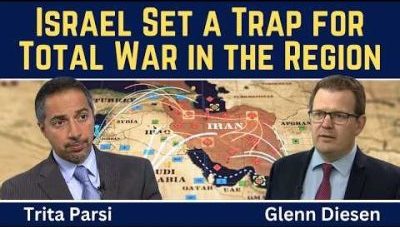
Trita Parsi: Israel Set a Trap for Total War in the Region
or go to
Aletho News Archives – Video-Images
From the Archive
Zionism’s Violent Legacy
By Donald Neff | Washington Report On Middle East Affairs | January 1996
On January 4, 1948, Jewish terrorists drove a truck loaded with explosives into the center of the all Arab city of Jaffa and detonated it, killing 26 and wounding around 100 Palestinian men, women and children.[1] The attack was the work of the Irgun Zvai Leumi – the “National Military Organization,” also known by the Hebrew letters Etzel – the largest Jewish terrorist group in Palestine. The Irgun was headed by Revisionist Zionist Menachem Begin and had been killing and maiming Arabs, Britons and even Jews for the previous ten years in its efforts to establish a Jewish state.
This terror campaign meant that at the core of Revisionist Zionism there existed a philosophical embrace of violence. … continue
Blog Roll
 Aletho News
- Trita Parsi: Israel Set a Trap for Total War in the Region
- Trump’s Iran war is on an Israeli leash
- Saudi oil boss issues global supply warning
- Riyadh Says Its Oil System Is Intact. The Numbers Say Otherwise.
- Trump and Netanyahu Want to “Finish the Job” on Iran
- US ‘one-sided dictation’ not Iran’s beliefs makes rational talks impossible: Baghaei
- Iran’s Next Strike May Not Explode. It Could Shut You Down /Col Doug Macgregor
- Iran: US political targets legitimate if assassinations return
- Iraq shuts key border crossing with Iran under US pressure: Report
- Undersea Internet cables could be targeted in retaliation for attacks on Iran: IRGC deputy chief
- If Americans Knew
- The Israel Lobby’s Changing Fortunes
- AIPAC has become such a political liability that it’s shifting to a more “nimble” approach to buying politicians
- At least 160 Israeli settler attacks in 2 weeks
- Will Gaza’s Ancient Christian Community Disappear Forever?
- Israel’s vision of regional security rests on keeping Arab states weak
- Heidi Levine recounts how Palestinian youths helped save her in settler attack
- DAILY UPDATE: Latest essential news on Palestine, Israel, & region
- Trump’s Intensifying Sabotage of the ICC, for Israel’s Sake
- Israeli military detain US and UK volunteers in West Bank including Democratic NY politician Brad Lander
- Americans at National Conservatism Conference held in Israel this year criticize Israel
- No Tricks Zone
- E-Cars Reduce CO2 Emissions By Only 41% Compared To Internal Combustion Engine Vehicles
- Predictions Made By Renowned Climate Professor Over Past Decades Have Been Proven To Be Poor
- New Study Suggests Large Regions Of The Pacific Ocean Have Been Cooling For The Last 80 Years
- Germany’s Green Energy Debacle: High Energy Costs Force Kahla Porzellan to Close After 182 Years!
- New Study: 50 Years Of The Most Aggressive ‘Net Zero’ Policies Can Only Affect The Global Climate By 0.03°C
- US September “Heat” Was No Record…Many Records Set Decades Ago
- Latest European Green Energy Debacle; Portugal’s Largest Flagship Solar Park Insolvent!
- Green Energy Debacle: German Expert Professor Fritz Vahrenholt Warns Of Severe Economic And Social Consequences
- Two More Paleo Reconstructions Affirm Meters-Higher Sea Levels Across Ireland, Brazil 7000-6000 Years Ago
- New Study: Earth And Venus Surface Warmth Largely Explained By Convection And Lapse Rate, Not CO2 Or Radiation

