The US has come to an agreement with Panama to destroy a stockpile of mustard gas left over from secret human tests conducted by the Americans during and shortly after World War II.
Tiny San Jose Island, with an area of 17 square miles and a permanent population of 10, once hosted a contingent of 200 US soldiers who began conducting chemical warfare testing from 1945 to 1947. Seventy years later, eight mustard gas bombs still remain undetonated on the island, and one Panamanian report claimed that there could be as many as 3,000 other bombs that still haven’t been found.
Panama has repeatedly pushed the United States to destroy the bombs since they were discovered in 2002, and the US only agreed to do so in 2017. Previously, Washington offered to pay for the training of Panamanians to dispose of the bombs, so long as the small Central American republic released the US from liability.
Panama refused and demanded that Washington clean the mess up themselves. As the American government took a hardline stance against the use of chemical weapons during the Syrian Civil War, it became increasingly amenable to the disposal of such weapons it created in decades past.
The disposal will begin in September 2017 and will take six to eight weeks, according to Panamanian officials. It will be overseen by the Organization for the Prohibition of Chemical Weapons.
In a new wrinkle, the Canadian Department of National Defense (DND) has revealed that they may also have mustard gas and other chemical weapons on the island. Ottawa is not going to participate in the disposal of the bombs, according to a statement from Global Affairs Canada, but in the past Canada has denied involvement in the San Jose weapons tests.
In fact, the new DND file notes that most of the mustard gas, as well as roughly 1,000 of the bombs used in the San Jose tests, were Canada-made. Canadian scientists helped design some of the tests, and Canadian pilots flew the planes that dropped chemical bombs during the experiments.
Furthermore, Canada used heavy duty metal shipping containers to transport mustard gas to the island — containers durable enough to have survived 70 years of weathering and decay. Mustard gas decomposes very slowly, especially outside of water, meaning much of the soil in San Jose may be contaminated.
Susan Smith, a professor of history at the University of Alberta and an expert on the use of mustard gas during World War II, said that Canada was a significant participant in the chemical weapons tests on San Jose Island. “This was an area where Canada indeed punched above its own weight,” Smith told the Ottawa Citizen. “Canada has a moral commitment to help clean up the mess it created.”
She added that the San Jose experiments tested how soldiers of different races reacted to mustard gas exposure, with white, Puerto Rican, black, and Japanese soldiers all being exposed.
“It felt like you were on fire,” then-93-year-old Rollins Edwards told NPR in 2015. Edwards served in the US Army during the war and was party to the mustard gas tests. “Guys started screaming and hollering and trying to break out. And then some of the guys fainted. And finally they opened the door and let us out, and the guys were just, they were in bad shape.”
Edwards says he still gets rashes and flaky skin from the chemical burns he suffered 70 years ago.
In 1974, a construction worker on San Jose Island suffered mysterious chemical burns. In 2001, Panama discovered the existence of the chemical weapons and asked Canada to assist in a comprehensive search for bombs in the island’s jungles, but Canada said no.
Most countries who fought in World War II did not use chemical weapons against enemy combatants. The Imperial Japanese did, but only against other Asian nations such as China. The Americans did at one point consider the use of mustard gas against the Japanese in the last days of the war, but opted for atomic weapons instead.
Canada, Panama and the United States are all signatories to the 1992 United Nations Chemical Weapons Convention, which stipulates that all chemical weapons worldwide are to be destroyed. The US government has disposed of 90 percent of its 37,000-ton stockpile of chemical weapons since then.
The US Air Force and its allies have dropped more munitions on Afghanistan in the first half of 2017 than in all of the previous year. This is level with the previous high in the first half of 2012 and coincides with a spike in civilian casualties, according to the UN.
So far this year, 232 civilians were killed in the airstrikes, compared to 162 the first six months of 2016. Around half of those died in operations carried out by the Afghan Air Force.
The American and coalition forces have dropped 1,634 munitions in Afghanistan during the first half of 2017, according to figures released by the US Air Force. The US and allied jets have flown over 2,000 combat sorties, and more than 500 of them ended up releasing at least one munition.
By comparison, there were 28,760 sorties recorded in all of 2012, with 1,975 of them reported to have released at least one weapon.
A drastic increase in aerial missions predictably caused more fatalities among Afghan civilians. A Monday report released by the UN’s mission to Afghanistan said the death toll began to climb due to the coalition bombings during the first half of 2017.
The last time the US Air Force expended munitions at this level was in 2012. At the time, there were nearly 50,000 US soldiers in the country, compared to the 9,800 US troops estimated to be stationed there now.
In June, President Donald Trump authorized the Pentagon, headed by Secretary of Defense Jim Mattis, to set the number of US forces in Afghanistan. Mattis reportedly plans to deploy an additional 4,000 troops to the war-torn country, signaling the largest troop increase since Trump took office.
“Each one of these casualty figures reflects a broken family, unimaginable trauma and suffering, and the brutal violation of people’s human rights,” Zeid Ra’ad Al Hussein, UN High Commissioner for Human Rights, said in a statement.
“Many Afghan civilians are suffering psychological trauma, having lost family and friends, and are living in fear knowing the risks they face as they go about their daily lives. Many more have been forced from their homes and suffered lasting damage to their health, education and livelihoods. The continuing national tragedy of Afghanistan must not be overlooked,” Al Hussein said.
For months, American politicians and pundits have been busily debating whether or not Russia hacked (or somehow influenced) last year’s presidential election in an effort to support Donald Trump over Hillary Clinton.
The pressing issue for many has been how the US should respond to this (unproven) meddling by a foreign power. It’s a real tough one, but luckily, long-time Clinton family adviser Paul Begala has an idea — and it’s so obvious that it’s hard to believe no one thought of it before.
Trump should just bomb Russia.
Begala made the casual suggestion during an interview with CNN’s Anderson Cooper, declaring the US was “under attack by a hostile foreign power” and Trump should be “retaliating massively” to any interference in the country’s political system.
Instead of just debating more sanctions on Russia, there should also be a debate about “whether we should blow up the KGB, GSU, or GRU [Russia’s foreign military intelligence agency].”
There’s a lot to unpack here, but a few things jump out: 1. The KGB hadn’t existed since 1991 when the Soviet Union collapsed. 2. If bombing a country was an acceptable response to alleged election meddling, the US would already have been reduced to dust by now. 3. Trump bombing Russia could spark World War 3 — over unproven claims Russia somehow cost Clinton the presidency.
I just don’t think that decades from now, future generations would see Justice For Hillary as good enough reason to have incinerated the planet with nuclear weapons, but who knows, maybe I’m wrong.
This Begala is obviously not the sharpest tool in the shed. Nonetheless, there he is being given a platform on CNN to advocate for an action that could easily escalate to nuclear war — just because people on the opposite side of the political spectrum aren’t as angry about something as he is.
Imploring Trump to more drastic action against Russia, Begala even tries to play to the president’s noted ego, tempting him to get back at Russia for “tainting his victory.” This unhinged rhetoric coming largely from Democrats is dangerous, particularly in a climate that has Trump eager to prove that he did not collude with Moscow to achieve victory.
What’s interesting is that while Begala clearly feels that bombing Russian intelligence agencies is a reasonable thing to do, he probably wouldn’t endorse the bombing of the FBI or CIA — despite the fact that, by his logic, it would be a perfectly legitimate response, given the US’s interference in a whole host of foreign elections.
Even more interesting than that, though, is how Begala seems to have changed his tune about Russia now that a Republican is in the White House. During the 2012 election, when President Barack Obama called out opponent Mitt Romney for describing Russia the US’s number one geostrategic threat, Begala agreed, even tweeting that Obama had nailed Romney and quoting from the exchange: “The 1980’s called. They want their foreign policy back.”
Fast-forward, a few years and Begala, wants to bomb “the KGB.” Hey, Begala, the 1980s are calling again.
It’s true, American politics has never been short on fear-mongering about Russia, but it has been elevated to a whole new level, thanks in large part to Clinton, who believed that talking ad nauseum about Russia during the presidential campaign would ensure her victory — and when it didn’t, decided that even more talking about Russia would be the remedy. Now we’re stuck on the Russia loop for God knows how long — and still there has been no indisputable evidence proving that Trump colluded with the Kremlin, or that the Kremlin did in fact even meddle in the election.
The hysteria, promoted heavily by Clinton, has led us to a place where it’s normal to suggest on live television that the United States bombing Russia is a good, reasonable and justifiable idea. It was the kind of comment that should have seen Begala either laughed out of the CNN studio or seriously called out on air for utter lunacy — but of course, nothing of the sort happened.
Someone else who should have been called out last week for similar absurdity is Democratic Congressman Mike Quigley. Quigley, also on CNN, suggested that all Russians should be regarded with suspicion. In fact, all Russians, he implied, are inherently linked to Vladimir Putin by virtue of their nationality: “When you meet with any Russians, you’re meeting with Russian intelligence and therefore President Putin.”
That’s right. All Russians are spies for Putin and Americans can’t talk to or meet with any of them because if they do, they have obviously betrayed their nation. Quigley might want to get in touch with some members of his own party since they too have met with Russians on occasion.
Given the opportunity, one would hope that Quigley might roll back his statement and apologize for implying that meeting with any Russian person is equivalent to meeting with Putin. But it would have been great if he had been more careful in the first place, before contributing to the Russophobic mania which has taken over American political discourse and turned people’s brains to mush.
Then again, we can hardly expect journalists to take issue with bland commentary like that, given that no one batted an eyelid when former FBI director James Clapper said Russian people were “genetically driven” to be untrustworthy. This kind of commentary — which would be almost career ending if uttered about any [certain] other ethnicity, race or religion — is just par for the course when talking about Russia and Russians.
Regardless of whether or not Trump or his people colluded with Russian officials, or whether or not the Kremlin actively meddled in the US election, there is simply no way to deny that McCarthyism is back. For many Democrats, meeting with Russians is now forbidden — and bombing Russia is an option seriously worthy of consideration. That’s a pretty sad state of affairs.
Danielle Ryan is an Irish freelance writer, journalist and media analyst. She has lived and traveled extensively in the US, Germany, Russia and Hungary. Her byline has appeared at RT, The Nation, Rethinking Russia, The BRICS Post, New Eastern Outlook, Global Independent Analytics and many others. She also works on copywriting and editing projects. Follow her on Twitter or Facebook or at her website http://www.danielleryan.net.
On Friday the House overwhelmingly approved a massive increase in military spending, passing a $696 billion National Defense Authorization bill for 2018. President Trump’s request already included a huge fifty or so billion dollar spending increase, but the Republican-led House found even that to be far too small. They added another $30 billion to the bill for good measure. Even President Trump, in his official statement, expressed some concern over spending in the House-passed bill.
According to the already weak limitations on military spending increases in the 2011 “sequestration” law, the base military budget for 2018 would be $72 billion more than allowed.
Don’t worry, they’ll find a way to get around that!
The big explosion in military spending comes as the US is planning to dramatically increase its military actions overseas. The president is expected to send thousands more troops back to Afghanistan, the longest war in US history. After nearly 16 years, the Taliban controls more territory than at anytime since the initial US invasion and ISIS is seeping into the cracks created by constant US military action in the country.
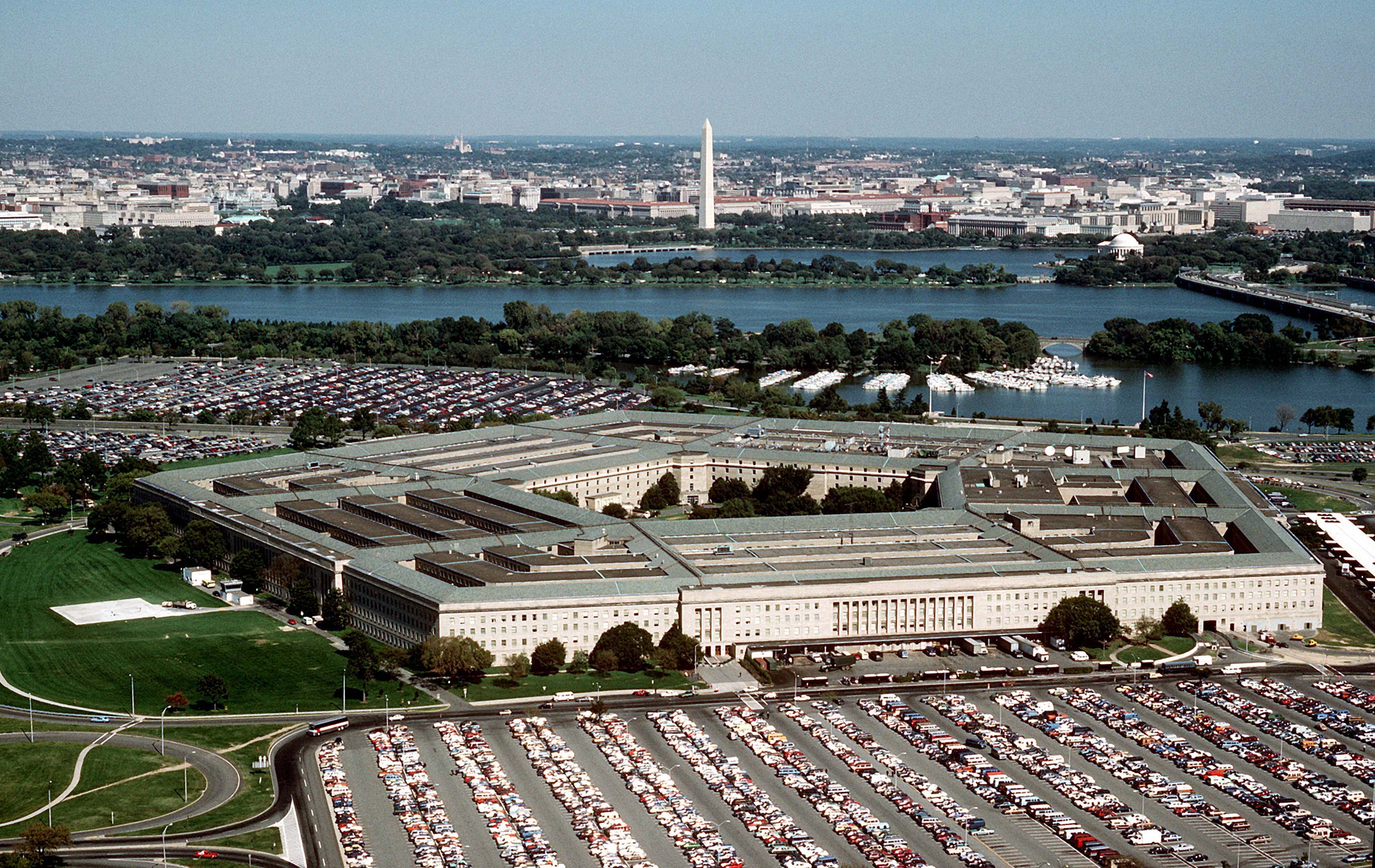
The Pentagon and Defense Secretary James Mattis are already telling us that even when ISIS is finally defeated in Iraq, the US military doesn’t dare end its occupation of the country again. Look for a very expensive array of permanent US military bases throughout the country. So much for our 2003 invasion creating a stable democracy, as the neocons promised.
In Syria, the United States has currently established at least eight military bases even though it has no permission to do so from the Syrian government nor does it have a UN resolution authorizing the US military presence there. Pentagon officials have made it clear they will continue to occupy Syrian territory even after ISIS is defeated, to “stabilize” the region.
And let’s not forget that Washington is planning to send the US military back to Libya, another US intervention we were promised would be stabilizing but that turned out to be a disaster.
Also, the drone wars continue in Somalia and elsewhere, as does the US participation in Saudi Arabia’s horrific two year war on impoverished Yemen.
President Trump often makes encouraging statements suggesting that he shares some of our non-interventionist views. For example while Congress was shoveling billions into an already bloated military budget last week, President Trump said that he did not want to spend trillions more dollars in the Middle East where we get “nothing” for our efforts. He’d rather fix roads here in the US, he said. The only reason we are there, he said, was to “get rid of terrorists,” after which we can focus on our problems at home.
Unfortunately President Trump seems to be incapable of understanding that it is US intervention and occupation of foreign countries that creates instability and feeds terrorism. Continuing to do the same thing for more than 17 years – more US bombs to “stabilize” the Middle East – and expecting different results is hardly a sensible foreign policy. It is insanity. Until he realizes that our military empire is the source of rather than the solution to our problems, we will continue to wildly spend on our military empire until the dollar collapses and we are brought to our knees. Then what?
Technicians at the government’s Los Alamos National Laboratory settled on what seemed like a surefire way to win praise from their bosses in August 2011: In a hi-tech testing and manufacturing building pivotal to sustaining America’s nuclear arsenal, they gathered eight rods painstakingly crafted out of plutonium, and positioned them side-by-side on a table to photograph how nice they looked.
At many jobs, this would be innocent bragging. But plutonium is the unstable, radioactive, man-made fuel of a nuclear explosion, and it isn’t amenable to showboating. When too much is put in one place, it becomes “critical” and begins to fission uncontrollably, spontaneously sparking a nuclear chain reaction, which releases energy and generates a deadly burst of radiation.
The resulting blue glow — known as Cherenkov radiation — has accidentally and abruptly flashed at least 60 times since the dawn of the nuclear age, signaling an instantaneous nuclear charge and causing a total of 21 agonizing deaths. So keeping bits of plutonium far apart is one of the bedrock rules that those working on the nuclear arsenal are supposed to follow to prevent workplace accidents. It’s Physics 101 for nuclear scientists, but has sometimes been ignored at Los Alamos.
As luck had it that August day, a supervisor returned from her lunch break, noticed the dangerous configuration, and ordered a technician to move the rods apart. But in so doing, she violated safety rules calling for a swift evacuation of all personnel in “criticality” events, because bodies — and even hands — can reflect and slow the neutrons emitted by plutonium, increasing the likelihood of a nuclear chain reaction. A more senior lab official instead improperly decided that others in the room should keep working, according to a witness and an Energy Department report describing the incident.
Catastrophe was avoided and no announcement was made at the time about the near-miss — but officials internally described what happened as the most dangerous nuclear-related incident at that facility in years. It then set in motion a calamity of a different sort: Virtually all of the Los Alamos engineers tasked with keeping workers safe from criticality incidents decided to quit, having become frustrated by the sloppy work demonstrated by the 2011 event and what they considered the lab management’s callousness about nuclear risks and its desire to put its own profits above safety.
When this exodus was in turn noticed in Washington, officials there concluded the privately-run lab was not adequately protecting its workers from a radiation disaster. In 2013, they worked with the lab director to shut down its plutonium handling operations so the workforce could be retrained to meet modern safety standards.
Those efforts never fully succeeded, however, and so what was anticipated as a brief work stoppage has turned into a nearly four-year shutdown of portions of the huge laboratory building where the plutonium work is located, known as PF-4.
Officials privately say that the closure in turn undermined the nation’s ability to fabricate the cores of new nuclear weapons and obstructed key scientific examinations of existing weapons to ensure they still work. The exact cost to taxpayers of idling the facility is unclear, but an internal Los Alamos report estimated in 2013 that shutting down the lab where such work is conducted costs the government as much as$1.36 million a day in lost productivity.
And most remarkably, Los Alamos’s managers still have not figured out a way to fully meet the most elemental nuclear safety standards. When the Energy Department on Feb. 1 released its annualreport card reviewing criticality risks at each of its 24 nuclear sites, ranging from research reactors to weapon labs, Los Alamos singularly did “not meet expectations.”
In fact, Los Alamos violated nuclear industry rules for guarding against a criticality accident three times more often last year than the Energy Department’s 23 other nuclear installations combined, that report said. Because of its shortcomings, federal permission has not been granted for renewed work with plutonium liquids, needed to purify plutonium taken from older warheads for reuse, normally a routine practice.
Moreover, a year-long investigation by the Center makes clear that pushing the rods too closely together in 2011 wasn’t the first time that Los Alamos workers had mishandled plutonium and risked deaths from an inadvertent burst of radiation. Between 2005 and 2016, the lab’s persistent and serious shortcomings in “criticality” safety have been criticized in more than 40 reports by government oversight agencies, teams of nuclear safety experts, and the lab’s own staff.
The technicians’ improvised photo-op, an internal Energy Department report concluded later, revealed the staff had become “de-sensitized” to the risk of a serious accident. Other reports have described flimsy workplace safety policies that repeatedly left workers uninformed of proper procedures and left plutonium packed hundreds of times into dangerously close quarters or without appropriate shielding to prevent a serious accident.
Workplace safety, many of the reports say, has frequently taken a back seat to profit-seeking at the Los Alamos, New Mexico, lab — which is run by a group of three private firms and the University of California — as managers there chase lucrative government bonuses tied to accomplishing specific goals for producing and recycling the plutonium parts of nuclear weapons.
And these safety challenges aren’t confined to Los Alamos. The Center’s probe revealed a frightening series of glaring worker safety risks, previously unpublicized accidents, and dangerously lax management practices. The investigation further revealed that the penalties imposed by the government on the private firms that make America’s nuclear weapons were typically just pinpricks, and that instead the firms annually were awarded large profits in the same years that major safety lapses occurred. Some were awarded new contracts despite repeated, avoidable accidents, including some that exposed workers to radiation.
Asked about this record, spokesman Gregory Wolf of the National Nuclear Security Administration (NNSA), which oversees and pays for the country’s nuclear weapons work, responded that “we expect our contractors to perform work in a safe and secure manner that protects our employees, our facilities, and the public. When accidents do occur, our focus is to determine causes, identify corrective actions, and prevent recurrences.”
His colleague James McConnell, the top NNSA safety official, said in an interview that “safety is an inherent part of everything we do.” But at a public hearing in Santa Fe on June 7, McConnell was also candid about Los Alamos’s failure to meet federal standards. “They’re not where we need them yet,” he said of the lab and its managers.
Los Alamos spokesman Kevin Roark said in an email the lab chose to defer to NNSA for its response. But the lab’s director over the past seven years, nuclear physicist Charles McMillan, said in a 2015 promotional video that while “we’ve got to do our mission” — which he said was vital to the nation’s security as well as the world’s stability — “the only way we can do that is by doing it safely.”
No usable warhead production for four years
The huge, 39-year-old, two-story, rectangular building at Los Alamos where the 2011 incident occurred is the sole U.S. site that makes plutonium cores — commonly known as pits because they are spherical and placed near the center of nuclear bombs — for the warheads meant to be installed over the next three decades in new U.S. missiles, bombers, and submarines.
Production of these cores is a key part of the country’s effort to modernize its nuclear arsenal at a cost of hundreds of billions of dollars, which President Obama supported and President Trump has said he wants to “greatly strengthen and expand.” Trump’s proposed fiscal year 2017 and 2018 budgets would boost U.S. spending on such work by $1.4 billion, representing a slightly higher percentage increase (11%) than requested overall for the Defense Department.
But mostly because of the Los Alamos lab’s safety deficiencies, it hasn’t produced a usable new warhead core in at least six years. Congress mandated in the 2015 National Defense Authorization Act that Los Alamos must be capable of manufacturing up to 20 war-ready cores a year by 2025, 30 the next year and 80 by 2027. Wolf said the agency remains committed to meeting this goal, but other government officials say the dramatic slowdown at PF-4 has put fulfillment of that timetable in doubt.
PF-4 is also the only place where existing cores removed randomly from the arsenal can be painstakingly tested to see if they remain safe and reliable for use in the nuclear stockpile. That work has also been blocked, due to PF-4’s extended shutdown, according to internal DOE reports.
The lab tried to conduct those tests in late 2016, but without success. The initial experiment destroyed a plutonium pit without collecting useful results about its safety or reliability, the latestannual review of Los Alamos’ performance by the National Nuclear Security Administration (NNSA) stated. The lab canceled a second planned pit analysis in 2016, according to the NNSA’s annual evaluation of the lab’s performance.
“I don’t think they’ve made mission goals the last four years,” said Michaele Brady Raap, a past president of the American Nuclear Society and member of the Energy Department’s elite Criticality Safety Support Group, a team of 12 government experts that analyzes and recommends ways to improve struggling federal nuclear safety programs. … continue
There’s a civil war being fought on our nation’s soil, right in our capital. It pits the Secretary of Defense and senior generals against a bipartisan band of militant legislators who accuse the Pentagon of standing pat while Russian and China work to achieve military superiority over the United States in space.
No doubt these bureaucratic warriors will eventually call a truce. But in the meantime, the American people will almost certainly become less secure and more indebted (in budget terms) as a result of both sides’ macho posturing for new warfighting capabilities in space (differing mostly on how far and how fast to go).
Eager congressional advocates of space warfare have attached an amendment to the House defense authorization bill requiring the Pentagon to create a new U.S. Space Corps to join the Army, Navy, Air Force, Marines and Coast Guard by 2019. Currently, the Air Force oversees most space warfare projects.
The amendment has sent senior Pentagon leadership into a tizzy. Secretary of Defense James Mattis “strongly” urged Congress to rescind the requirement, stating in a letter that “it is premature to add additional organization and administrative tail to the department at a time I am trying to reduce overhead.”
Similarly, Air Force Secretary Heather Wilson protested that the proposal will simply “add more boxes to the organization chart.” Meanwhile, Gen. John W. Raymond, commander of Air Force Space Command, insisted that his service has space matters well in hand. (He should be happy — the Pentagon recently raised his position to a 4-star rank.)
Upping the Ante
In response, Rep. Mike Rogers, an Alabama Republican and chairman of the Strategic Forces subcommittee, announced that he was “pissed” and “outraged” at the Air Force for fighting the new Space Command, saying its obstructionism would “set back efforts to respond to adversaries and space threats” and allow Russia and China “to surpass us soon.”
“The Air Force leadership would have us trust them: I don’t think so,” Rogers sneered, as if speaking about the Russians. “They just need a few more years to rearrange the deck chairs: I don’t think so. This is the same Air Force that got us into the situation where the Russians and the Chinese are near-peers to us in space.” He vowed, “We will not allow the status quo to continue.”
Behind all the fiery argumentation lies a bipartisan consensus that the United States must sharply increase its spending on the militarization of space to maintain global supremacy. Gen. Raymond applauded Congress for recognizing the “national imperative” of his mission to “normalize, elevate, and integrate space as a war-fighting domain.”
Secretary Wilson published an op-ed column last month on her new initiatives to “develop space airmen who have the tools, training, and resources to fight when – not if – war extends into space.” She fully expects Congress to follow through on her request for a 20 percent increase in Air Force space funding. (Total military spending on space, including non-Air Force programs like the National Reconnaissance Office, came to about $22 billion last year.)
What’s driving all this activity — aside from baser motives of bureaucratic advantage and financial gain — are “intelligence assessments” that “China and Russia have aggressive programs to both demonstrate and produce eventual operational capability to . . . attack our space assets across the spectrum,” in the words of David Hardy, acting deputy undersecretary of the Air Force for Space.
“While we’re not at war in space, I don’t think we can say we’re exactly at peace, either,” said Navy Vice Adm. Charles A. Richard, deputy commander of U.S. Strategic Command, in March. Gen. John Hyten, head of the Pentagon’s Strategic Command, recently declared that the United States needs not only a good defense, but “an offensive capability to challenge” space threats from Russia and China.
The High Stakes in Space
The stakes are potentially huge because the United States uses space for all manner of command, control, and intelligence missions, not to mention civilian applications. Orbiting satellites provide near-real-time images of conflict zones, sense missile launches and nuclear tests, provide precise positioning coordinates to guide weapons systems, and route secure communications to remote regions of the globe.
Of some 1,400 operational satellites currently in orbit, 40 percent belong to the United States, nearly twice as many as Russia and China combined. About 150 U.S. satellites serve military applications.
Any threat to satellites would thus pose a serious, even disproportionate military risk to the United States. But instead of supporting international initiatives to put space off limits to warfare, Washington has led the way in developing anti-satellite missile technology, encouraging a space arms race that puts our assets in peril.
The United States and Russia experimented with primitive anti-satellite technology as far back as the 1960s, but the United States first used a missile fired from a fighter jet to destroy an aging satellite in 1985. Not until 2007 did China conduct a similar test, blowing up an old weather satellite, while emphasizing its interest in multilateral talks to prevent the weaponization of space. The following year, the United States used a Navy interceptor missile to shoot down a dying military satellite. Russia followed suit with an anti-satellite test in 2015, proving that no military advance goes unanswered.
Some Key Facts
Alarmists who selectively cite Russian and Chinese activities to warn of an impending military space “gap” ignore a few key facts:
The United States holds a clear technology lead and spends at least 10 times more on military space operations than every other country on earth combined.
Although U.S. satellites are vulnerable to attack, most have maneuvering capabilities, shielding against various forms of radiation, and jam-resistant communications.
For years, Russia, China and other nations have sought to control the spread of weapons into space — only to face consistent opposition from Washington.
An Outer Space Treaty signed in 1967 limited only the deployment of nuclear weapons in space. In 2002, the George W. Bush administration withdrew from the Anti-Ballistic Missile treaty with Russia, opening the door to widespread deployment of weapons that put U.S. satellites at risk. A year later, the Air Force declared in its Strategic Master Plan that “the ability to exploit space while selectively disallowing it to adversaries is critically important and . . . an essential prerequisite to modern warfare.”
Candidate Barack Obama proposed an international “code of conduct” in space, but as president he met resistance from the State Department and Pentagon, and dropped the idea as U.S.-Russia relations soured. In 2011, Congress passed an amendment banning cooperation with China in space, thus encouraging a military space race between our countries.
In 2014, the United Nations General Assembly voted 126 to 4 to pass a Russian resolution banning an arms race in space. The four dissenting countries were Georgia, Israel, Ukraine — and the United States.
Because the United States depends on space more than any other nation, both for military security and commerce, it has the most to lose if wars spread into space. Instead of relying only on military superiority to keep us safe, the time is long overdue to pursue diplomatic options for arms control — which potentially could help us achieve greater security for far less money.
“Unfortunately, the structural inertia that supports and, indeed, advocates, aggressive space postures requiring expensive weapon systems is strong,” notes Joan Johnson-Freese, a professor of national security affairs at the Naval War College and expert on space warfare. “Congressional support for their efforts is easily garnered, as building hardware creates lucrative jobs and corporate profits, whereas diplomacy does not.
“But if the goal of U.S. space security efforts is to maintain stability in space so it can fully utilize its space assets, then the time seems ripe for proactive diplomatic leadership and, at the same time, sustained strategic restraint. Otherwise, the U.S. will be seen (not for the first time) as advocating a policy of do-as-we-say-and-not-as-we-do regarding pursuit of offensive space capabilities.”
Johnson-Freese is not alone in her call for fresh new thinking about space warfare. A 2016 policy paper that she co-authored was published of all places by the Atlantic Council — a pro-NATO, Pentagon-funded think tank.
Its introduction declared, “The days of ‘space dominance’ are over and we need to move from thinking of space as a military domain of offense and defense to a more complex environment that needs to be managed by a wide range of international players. Doing so would calm growing tensions in space and, with deft management, lead to a more stable, peaceful space domain.”
The author of those words was retired Marine Gen. James Cartwright, former vice chairman of the Joint Chiefs of Staff. They are words that sensible Americans — who want a safer world and a sane limit on military spending — should rally round. We will stand a greater chance of preserving our civilization if we reserve space wars for movies and novels.
The US, UK and France have never shown enthusiasm for banning and eliminating nuclear weapons. It is not surprising, therefore, that they did not participate in the United Nations negotiations leading to the recent adoption of the nuclear ban treaty, or that they joined together in expressing their outright defiance of the newly-adopted treaty.
In a joint press statement, issued on July 7, 2017, the day the treaty was adopted, the US, UK and France stated, “We do not intend to sign, ratify or ever become party to it.” Seriously? Rather than supporting the countries that came together and hammered out the treaty, the three countries argued: “This initiative clearly disregards the realities of the international security environment.” Rather than taking a leadership role in the negotiations, they protested the talks and the resulting treaty banning nuclear weapons. They chose hubris over wisdom, might over right.
They based their opposition on their belief that the treaty is “incompatible with the policy of nuclear deterrence, which has been essential to keeping the peace in Europe and North Asia for over 70 years.” Others would take issue with their conclusion, arguing that, in addition to overlooking the Korean War and other smaller wars, the peace in Europe and North Asia has been kept not because of nuclear deterrence but in spite of it.
The occasions on which nuclear deterrence has come close to failure, including during the Cuban missile crisis, are well known. The absolute belief of the US, UK and France in nuclear deterrence seems more theological than practical.
The three countries point out, “This treaty offers no solution to the grave threat posed by North Korea’s nuclear program, nor does it address other security challenges that make nuclear deterrence necessary.” But for the countries that adopted the nuclear ban treaty, North Korea is only one of nine countries that are undermining international security by basing their national security on nuclear weapons. For countries so committed to nuclear weapons and nuclear deterrence, is it not surprising and hypocritical that they view North Korea’s nuclear arsenal not in the light of deterrence, but rather, as an aggressive force?
The three countries reiterate their commitment to the Non-Proliferation Treaty (NPT), but do not mention their own obligation under that treaty to pursue negotiations in good faith for an end to the nuclear arms race at an early date and to nuclear disarmament. The negotiations for the new nuclear ban treaty are based on fulfilling those obligations. The three countries chose not to participate in these negotiations, in defiance of their NPT obligations, making their joint statement appear self-serving and based upon magical thinking.
If the US, UK and France were truly interested in promoting “international peace, stability and security” as they claim, they would be seeking all available avenues to eliminate nuclear weapons from the world, rather than planning to modernize and enhance their own nuclear arsenals over the coming decades.
These three nuclear-armed countries, as well as the other six nuclear-armed countries, continue to rely upon the false idol of nuclear weapons, justified by nuclear deterrence. In doing so, they continue to run the risk of destroying civilization, or worse. The 122 nations that adopted the nuclear ban treaty, on the other hand, acted on behalf of every citizen of the world who values the future of humanity and our planet, and should be commended for what they have accomplished.
The new treaty will open for signatures in September 2017, and will enter into force when 50 countries have acceded to it. It provides an alternative vision for the human future, one in which nuclear weapons are seen for the threat they pose to all humanity, one in which nuclear possessors will be stigmatized for the threats they pose to all life. Despite the resistance of the US, UK and France, the nuclear ban treaty marks the beginning of the end of the nuclear age.
For more than a year now, the collective U.S. ruling class, with Democratic Party and corporate media operatives in the vanguard, has frozen the national political discourse in a McCarthyite time warp. A random visit to a July 26, 2016, issue of the New York Times reveals the same obsession as that which consumes the newspaper today: “Following the Links from Russian Hackers to the U.S. Election,” “Spy Agency Consensus Grows That Russia Hacked D.N.C.” A year later, the allegations persist, piled ever higher with innuendo and outright nonsense. However, proof of the predicate act — that Russia, not Wikileaks, penetrated the DNC — remains totally absent.
What is the purpose of this torture-by-media? Clearly, the Trump White House has been crippled by the tsunami that never ebbs, but the Democrats have not been strengthened in the process, and the corporate media’s standing among the public erodes by the day. A poll conducted last month showed majorities of voters want Congress to ease up on Russia investigations and get to work on healthcare, terrorism, national security, the economy and jobs. Almost three out of four respondents to the Harvard-Harris poll said lawmakers aren’t paying attention to the issues that are important to them — including 68 percent of Democrats. Sixty-two percent of voters say there is no hard evidence of White House “collusion” with Russia, and 64 percent think the investigations are hurting the country.
The non-stop vilification of Russia and Trump has seriously backfired on the corporate media. Another poll by Harvard-Harris, conducted back in May, showed that two out of three Americans believe the so-called “mainstream” press is full of “fake news” — including a majority of Democrats. The Russiagate blitzkrieg, designed to delegitimize Trump and demonize Vladimir Putin, has exacerbated an already existing crisis of legitimacy for the entire U.S. political system. “Every major institution from the presidency to the courts is now seen as operating in a partisan fashion in one direction or the other,” said poll co-director Mark Penn.
The only unequivocal winner is the bipartisan War Party, which has used the manufactured crisis to drench the nation in anti-Russian hysteria – worse than back in the bad old days of the Red Scares. By March, Black Congresswoman Bonnie Watson Coleman (D-NJ) was using much the same language as Dick Cheney to describe the Kremlin. “I think this attack that we’ve experienced is a form of war, a form of war on our fundamental democratic principles,” said the hopelessly brainwashed representative of the Black Misleadership Class. “Liberal” Democratic Maryland Rep. Ben Cardin called the nonexistent “attack” a “political Pearl Harbor.”
If the U.S. Congress actually took seriously its Constitutional powers to declare war, the human race would already have been exterminated.
So insane have the Democrats become, that we are probably better off with war powers effectively in the hands of Donald Trump, than with California’s Barbara Lee, the only member of Congress that voted against the invasion of Afghanistan in 2001. She was in her “right mind” then, but no longer. Trump’s willingness to talk with the leader of Russia, in Hamburg, infuriated Rep. Lee, who tweeted: “Outraged by President Trump’s 2 hr meeting w/Putin, the man who orchestrated attacks on our democracy. Where do his loyalties lie?” A better question is: When and where did Lee join the War Party?
The dogs of war at U.S. intelligence agencies have led the charge against Trump since they encamped at Hillary Clinton’s campaign headquarters, last year. The spoiled oligarch was not trusted to maintain the momentum of the U.S. military offensive begun by Barack Obama in 2011, with the unprovoked war against Libya. The state of war must be preserved, whatever the cost to the empire’s domestic institutions. Skilled in the arts of regime change, the spooks joined with their longtime partners in corporate media propaganda, to foment a “color revolution” at home. Barbara Lee is a recent recruit.
Although the Democrats will ultimately harm themselves with the electorate by folding into the War Party, it suits the purposes of party leadership and the fat cats that finance them. The ruling class has nothing to offer the people except the total insecurity of gig-jobs and austerity. The Lords of Capital effectively shut the Democrats down decades ago. They can campaign as if there really is a clash of ideas about the organization of society, but they must propose nothing that fundamentally conflicts with the steady consolidation of wealth and power by the oligarchy (the American one, not the Russians). That goes for Bernie Sanders, too. Heard anything about single payer from him, lately?
The “all Russiagate, all the time” information regime — which also prepares the public for a wider war scenario – provides the illusion of motion that passes for “resistance” to the rule of the rich, as personified by Donald Trump. But there has been no Democratic program to reorder society for at least a generation. And now, under the New McCarthyism, the only politics that is allowed is war politics, consisting of denunciations of those who threaten “our fundamental democratic principles” – which need not be defined or even proven to exist.
That’s why it has been an empty year, albeit a very loud one. As Gil Scott-Heron sang in “Winter in America,” “Nobody’s fighting, ‘cause nobody knows what to save.”
While Hollywood is generally supportive of the government – and of the military in particular – the Pentagon faces a problem. In order to stand out from the crowd and make their screenplays a bit different to the usual schlock, screenwriters like to include subversive elements and aspects, even in films that are broadly in favour of institutions like the Department of Defense and the CIA. Because the Pentagon wants to support films that promote them as a benevolent force in the world, these subversive elements present a problem for them. One solution is civilianization.
In our new book National Security Cinema: The Shocking New Evidence of Government Control in Hollywood, we document numerous politically-motivated changes made to script by the Pentagon and CIA in exchange for production assistance. We collated this information from a vast range of sources including over 4,000 pages of documents we obtained under the Freedom of Information Act. One recurring theme we found in these changes is the civilianization of characters, action and dialogue that the Pentagon didn’t like.
The Civilianization of Contact
In the 1997 extra-terrestrial epic Contact the National Guard provided vehicles and uniformed extras for a small handful of scenes but in exchange had a considerable influence on the script. In one scene in the White House where the protagonists are deciding what to do with blueprints they have decoded from an alien signal the original script portrays the military as deeply worried that this could be a ‘Trojan Horse’ that would instantly transport an alien army to Earth and take over. Jodie Foster’s character Ellie responded, ‘This is communist paranoia right out of War of the Worlds’.
The Pentagon saw scenes like this as a ‘silly military depiction’ and so they ‘Negotiated civilianization of almost all military parts’. In the revised scene it is the National Security Adviser, not the Joint Chiefs of Staff, who expresses outlandish fears about what this technology might be, and Ellie’s response about paranoia was cut entirely.
In another scene in the pre-civilianized version, the President gives a stirring speech at the UN about the building of this great new technology and this is intercut with a military convoy and Apache helicopters approaching the construction site. The script describes how ‘Encircling the installation is a vast graveyard of discarded aircraft—the detritus of Twentieth Century war-making.’ This is rather obvious symbolism representing how technological efforts are moving from the violence of the 20th century military industry to peaceful 21st century space exploration. In the final version this sequence does not appear, and there is no indication of military involvement in the construction of the wormhole machine. This compromised the creative and philosophical vision behind Contact – of a future where war-making is left behind in favour of learning and discovery.
The Civilianization of Jurassic Park and Whiskey Tango Foxtrot
National Security Cinema records numerous other examples of this phenomenon, where instead of outright censoring troublesome scenes the Pentagon distances itself, reducing its presence in these films to a benevolent or benign background entity. For Jurassic Park III the producers approached the Pentagon wanting to film some A-10 gunships for a scene where they battled with flying dinosaurs.
The Pentagon’s chief Hollywood liaison Phil Strub turned down this request because ‘We weren’t about to provide them something that would only generate sympathy for the dinosaurs’. He also requested that they change the identity of the character who discovers the island full of dinosaurs, asking, ‘would you change his character, make him like the president’s science adviser or something like that? Just get him out of the uniform.’ Strub also promoted the idea of the film ending with a ‘nice military rescue’, reducing the military’s role from reckless pioneers and murderers of cute flying dinosaurs, to responsible officials providing emergency/disaster relief.
This technique continues into the most recent films we examined. In 2016’s Whiskey Tango Foxtrot – a Tina Fey comedy – the military allowed several days filming at Kirtland Air Force Base in exchange for civilianizing one aspect of the script they didn’t like. The version the DOD reviewed, ‘portrayed a US Army transport brake failure, resulting in it hitting a group of Afghani shoppers in Kabul, killing and injuring them. This was changed to an NGO vehicle.’
Independence Day: When Civilianization Fails
Independence Day was not so lucky. When they approached the Pentagon for support making their alien invasion adventure there were numerous aspects of the script that Strub and his colleagues found objectionable. From Will Smith’s Air Force character dating a stripper to the fact that ‘all advances in stopping the aliens are the result of actions by civilians’ which contrasted the ‘anaemic US military response’, the Pentagon was not happy on a number of levels.
They particularly objected to the inclusion of references in the dialogue to Area 51 – the common name for the Groom Lake facility at Edwards Air Force base. Even when the producers civilianized Area 51, making it a non-military facility run by non-military officials, this still didn’t satisfy the Pentagon. As a result, the producers of Independence Day had to use CGI (still a relatively new and very expensive technology at the time) to duplicate the one fighter jet they had to create the scenes of numerous jets in dogfights with alien craft.
However, despite the production being made more difficult and expensive, the Pentagon’s rejection did mean that the producers had more creative freedom. The result was a hugely popular and successful summer blockbuster that is fondly remembered. Had the scenes in Area 51 been removed, or reworked so that they did not involve such an obvious element of UFO folklore, then the film would have been fundamentally different, and less memorable. By contrast, the Pentagon did support the sequel Independence Day: Resurgence, which almost everyone who saw it has already forgotten.
The Consequences of Civilianization
At its most fundamental, the Pentagon’s strategy of civilianization of movies is a means of removing subversive moments from the military realm, or of changing them so they aren’t subversive at all. The image of a US Army transport crashing in downtown Kabul and killing innocent people is an effective, provocative symbol representing the abject futility and stupidity of the ongoing war in Afghanistan. Changing this to an NGO vehicle dilutes this subversive element to almost nothing, and it becomes more of a plot point than politically-charged symbolism.
Similarly, by removing the scene from Contact where the construction of the wormhole machine rises above the detritus of 20th century war-making, the Pentagon diluted the subversive philosophy of that film. While Contact remains an intelligent and in places profound movie its critical light was not allowed to shine on the Pentagon – all so that they could use a couple of National Guard helicopters and jeeps and a handful of real life troops as extras.
This is perhaps the more obvious consequence of military involvement in Hollywood – that films are less radical and challenging than they would otherwise be. However, there is another, more significant and perhaps unintended consequence. In movies subject to this process the characteristics of recklessness, incompetence, deceit and so on are civilian traits, not military ones. The result of this is a semi-consistent worldview across a range of fantasy movies that says that the problems of the world are civilian problems, not resulting from the military’s behaviour.
In reality, as the biggest, richest, most violently powerful organisation in the world, the Pentagon, has greater means to inflict the consequences of human vice on people around the world. While Hollywood is rarely known for being realistic, the ‘soft censorship’ of civilianization exacerbates this problem, with considerable political consequences. Hundreds of millions of cinema-goers are being repeatedly told that the reasons bad things happen are because of ordinary citizens, and not institutionalised military power on a massive scale. This makes it seems like in the real world wars are not the forces of murder and destruction they really are, but are rather the background noise to the evils of human nature. As a result, civilianization of movie scripts helps make wars more likely, more popular and therefore easier to maintain for long periods, and thus more prolonged and destructive. What likely began as a means of ensuring better PR for the military through Hollywood adds up to a powerful political phenomenon.
Tom Secker is a private researcher who runs spyculture.com—the world’s premier online archive about government involvement in the entertainment industry, and home of the popular ClandesTime podcast. He has used the Freedom of Information Act to obtain unique government documents since 2010, which has been reported on by Russia Today, Salon, Techdirt, The Mirror, The Express and other outlets. His new book is National Security Cinema: The Shocking New Evidence of Government Control in Hollywood.
The Democratic Party’s embrace of the New Cold War and New McCarthyism – to counter President Trump – has spread to Rep. Barbara Lee, a brave voice against the post-9/11 war frenzy, as Norman Solomon notes in an open letter.
More than a decade and a half ago, your eloquent words and courageous vote set a high bar as you stood up against a war frenzy on the House floor. Three days after 9/11, you implemented the kind of brave wisdom that we desperately need in a world beset by the massive violence of warfare and the overarching dangers of nuclear holocaust.
Since then, like many other people opposed to perpetual war, I’ve deeply appreciated your leadership in advocating for diplomacy instead of reckless confrontation in international relations. Year after year, following your lone vote against a blank check for war on Sept. 14, 2001, you’ve been a steadfast voice for the necessity of diplomatic initiatives.
Until now.
Your longtime wisdom is antithetical to the tweet that you sent out after the meeting between Donald Trump and Vladimir Putin from your official “Rep. Barbara Lee” Twitter account: “Outraged by President Trump’s 2 hr meeting w/Putin, the man who orchestrated attacks on our democracy. Where do his loyalties lie?”
In mid-September 2001, when you implored the Congress and the country to “think through the implications of our actions today, so that this does not spiral out of control,” the words of your speech were beacons of sanity in a propaganda storm for war. But now, as I watch a video of those two transcendent minutes, some of your old words echo in a newly haunting way.
Now it falls to peace advocates who read your new words to urge you to “think through the implications” of the political line you’ve just taken, “so that this does not spiral out of control.” And now, peace advocates must remind you of other insightful words from your historically prescient speech nearly 16 years ago: “Some of us must urge the use of restraint.”
Your declaration on Friday that you are “outraged” by a meeting between the presidents of the world’s two nuclear-weapons superpowers is the opposite of restraint. Likewise, your baiting of Trump with the question “Where do his loyalties lie?” echoes the accusations of treason hurled at you for years. Such rhetoric is far beneath you — and beneath any leader with a responsibility to encourage diplomatic discourse, especially between two nations brandishing huge arsenals of nuclear weapons.
Let’s not forget that past top-level diplomacy between Russia and the United States was hardly led by saints. Fifty years ago, Soviet Premier Alexei Kosygin was the leader of a government far more repressive than the one headed by Vladimir Putin today, while President Lyndon Johnson was in the midst of escalating a mass-murderous war in Vietnam. Yet their Glassboro Summit was notable diplomacy that reduced tensions between the two countries and reduced the dangers of nuclear war.
Now, for whatever reasons, you have opted to participate in a profoundly irresponsible meme that castigates instead of encourages diplomatic discourse between the highest levels of the American and Russian governments. To use a word from your historic 2001 speech, it’s essential that we think through the “implications” of such a political line of attack. They include increasing the likelihood that escalated tensions between Russia and the United States could “spiral out of control.”
I’ve long thought of you as a heroic champion of pursuing alternatives to war and, quite possibly, helping to prevent a nuclear holocaust that scientists believe would render the Earth “virtually uninhabitable.” But now, you seem to have lost your way.
To counteract what Martin Luther King Jr. called “the madness of militarism,” we must get off a partisan bandwagon when it is heading toward military catastrophe. That requires — as you so wisely urged in 2001 — supporting diplomacy, urging restraint and thinking through the implications of our actions today.
Riyadh (YE) – The evolving relationship between Israel and Saudi Arabia is set to become a key feature of regional politics in the forthcoming phase. This goes beyond the creeping normalization of relations between the two sides and the holding of discreet contacts, to the formation of an undeclared but far-reaching alliance.
Retired Saudi general Anwar al-Eshki shed some light on this in an interview last week on the German TV channel Deutsche Welle, in which he provided insights into a number of unexplained issues: most importantly, why Saudi Arabia has been so adamant about getting the Red Sea islands of Tiran and Sanafir transferred from Egypt’s sovereignty to its own as quickly a possible.
Eshki made clear that once Saudi Arabia assumes sovereignty over the two islands, it will abide by the Camp David Accords, and that the 1979 Egyptian-Israeli peace deal — which cut Egypt off from the Arab world and the Palestinian cause and led to the opening of an Israeli embassy in Cairo – would cease to be a purely bilateral agreement.
The general, who has been Saudi Arabia’s main frontman in its normalization process with Israel, explained that the new maritime border demarcation agreement with Egypt places both islands within the kingdom’s territorial waters. Egypt and Saudi Arabia will therefore share control over the Strait of Tiran through which Israeli ships pass as they sail in and out of the Gulf of Aqaba, and the kingdom will accordingly establish a relationship with Israel.
True, Eshki also said that normalization of Saudi relations with Israel was contingent on the latter accepting the 2002 Arab Peace Initiative. But he also spoke of an Israeli peace initiative that would ‘bypass’ that plan. According to him, this proposes the establishment of a confederation that would connect the occupied Palestinian territories – he did not specify how or to whom – while postponing discussion of the fate of Jerusalem.
Eshki also used the interview to confirm what Israeli Prime Minister Binyamin Netanyahu has often reiterated: that Saudi Arabia does not consider Israel to be an enemy. He maintained that this view is shared by ordinary Saudis, and is reflected in their tweets and comments on social media which they point out that Israel never once attacked the kingdom so is not its enemy, and that these citizens support normalizing relations with Israel.
Eshki is not a policymaker but a mouthpiece. He was carefully selected for the job of saying what he is told and promoting it. To understand what his words are aimed at achieving – and the main features of the new normalization scheme that is rapidly unfolding – we need only paraphrase the statements made by the current Israeli defence minister, Avigdor Lieberman: Normalization between the Arab states and Israel should be achieved first, and then followed by a Palestinian-Israeli peace. Israel cannot accept a situation in which normalization with the Arab states is left hostage to a resolution of the Palestinian issue. After all, Israel has signed peace agreements with Egypt and Jordan without ending the Palestinian conflict.
The point that the handover of Tiran and Sanafir would commit Saudi Arabia to the Camp David accords, and to all obligations arising from them, was also stressed by the head of the Egyptian parliament’s Defence and National Security Committee, Gen. Kamal Amer.
The conclusion that can be drawn is that the main purpose of the rush to restore the two islands to Saudi sovereignty is to accelerate the pace of normalization between Israel and Saudi Arabia and ‘legitimize’ their evolving alliance. After all, Saudi Arabia possesses countless thousands of neglected islands dotted along its Red Sea and Gulf coastlines. It has no need for two additional small, barren and uninhabited outcrops. Even if it did, it managed well enough without them for 50 years during which they were either under Israeli occupation or Egyptian protection. Had it wanted, it could have waited and postponed this thorny issue for ten, twenty, or a hundred more years, so as to avoid embarrassing the Egyptian government and angering the Egyptian people.
The Saudi government’s stage-setting for normalization with the Israeli occupation state is already well underway and gaining pace. Following Eshki’s ‘academic’ visits to Israel and former intelligence chief Prince Turki al-Faisal’s security encounters, we have now begun to see Saudi ‘analysts’ appearing on Israeli TV. The next step may be for Saudi ministers and princes to do the same.
The Saudi citizens who Eshki claimed were tweeting their support for friendship with Israel on the grounds that it has never attacked their country, and who support normalizing relations with it, are soldiers in the Saudi electronic army. They number in the thousands, and work under the auspices of Saudi intelligence and police. The overwhelming majority of Saudis are opposed to any form of normalization with the occupation state, for religious, Arab nationalist, patriotic, and moral reasons. We have absolutely no doubt about that. But we can understand the pressure they are under when a single tweet expressing sympathy for Qatar or criticism of ‘Vision 2030′ can cost the tweeter 15 years in prison or a $250,000 fine.
According to Haaretz and other Israeli media outlets, Crown Prince Muhammad bin-Salman, who is leading the Saudi march towards normalization and alliance with Israel, occupation state visited occupied Jerusalem in 2015. He has also holds regular meetings with Israeli officials, most recently when during the Arab summit held in Amman in March.
Not long ago Riyadh hosted the American journalist Thomas Friedman. (Perhaps this was a reward for his comment after the 9/11 attacks that the US should have invaded Saudi Arabia – the real source of terrorism — rather than Iraq in retaliation.) Friedman met with a number of officials before being granted a lengthy audience with Muhammad bin-Salman. He reported afterwards that not once during the five-hour encounter did the prince utter the word ‘Palestine’ or mention the Arab-Israeli conflict.
Indeed, I challenge anyone to come up with a single instance in which the up-and-coming Saudi strongman refers to ‘Palestine’ in any of his televised interviews.
Meanwhile, priority has been given to silencing and countering Arab voices that confront this evolving Saudi-Israeli alliance and expose its aims, implications and likely consequences – whether in the social or conventional media. Riyadh’s demand for the closure of the Al-Jazeera channel affirms that the war it is currently waging is not against ‘terror’ but against critical and free media.
We, too, have been and remain on the receiving-end of that war, subject to a furious on-going assault by the Saudi electronic army and a vicious and deliberate campaign of defamation. All one can say in response is to quote the saying: the coward dies one hundred times; the brave and free just once.
Almost immediately after the proxy war erupted, ISIS-tier footage of the torture and murder of Russians in Ukrainian custody emerged.
On July 6th, the New York Times published an astonishing investigation: In Ukraine, Killings of Surrendering Russians Divide an American-Led Unit. The article documents in grim detail how Chosen Company, an international volunteer battalion for Kiev, routinely executes Russian prisoners of war. It is the very first mainstream admission that this practice – a brazen breach of the Geneva Conventions, and a grave war crime – is widespread among Ukraine’s fighters, both foreign and homegrown. … continue
This site is provided as a research and reference tool. Although we make every reasonable effort to ensure that the information and data provided at this site are useful, accurate, and current, we cannot guarantee that the information and data provided here will be error-free. By using this site, you assume all responsibility for and risk arising from your use of and reliance upon the contents of this site.
This site and the information available through it do not, and are not intended to constitute legal advice. Should you require legal advice, you should consult your own attorney.
Nothing within this site or linked to by this site constitutes investment advice or medical advice.
Materials accessible from or added to this site by third parties, such as comments posted, are strictly the responsibility of the third party who added such materials or made them accessible and we neither endorse nor undertake to control, monitor, edit or assume responsibility for any such third-party material.
The posting of stories, commentaries, reports, documents and links (embedded or otherwise) on this site does not in any way, shape or form, implied or otherwise, necessarily express or suggest endorsement or support of any of such posted material or parts therein.
The word “alleged” is deemed to occur before the word “fraud.” Since the rule of law still applies. To peasants, at least.
Fair Use
This site contains copyrighted material the use of which has not always been specifically authorized by the copyright owner. We are making such material available in our efforts to advance understanding of environmental, political, human rights, economic, democracy, scientific, and social justice issues, etc. We believe this constitutes a ‘fair use’ of any such copyrighted material as provided for in section 107 of the US Copyright Law. In accordance with Title 17 U.S.C. Section 107, the material on this site is distributed without profit to those who have expressed a prior interest in receiving the included information for research and educational purposes. For more info go to: http://www.law.cornell.edu/uscode/17/107.shtml. If you wish to use copyrighted material from this site for purposes of your own that go beyond ‘fair use’, you must obtain permission from the copyright owner.
DMCA Contact
This is information for anyone that wishes to challenge our “fair use” of copyrighted material.
If you are a legal copyright holder or a designated agent for such and you believe that content residing on or accessible through our website infringes a copyright and falls outside the boundaries of “Fair Use”, please send a notice of infringement by contacting atheonews@gmail.com.
We will respond and take necessary action immediately.
If notice is given of an alleged copyright violation we will act expeditiously to remove or disable access to the material(s) in question.
All 3rd party material posted on this website is copyright the respective owners / authors. Aletho News makes no claim of copyright on such material.

 Aletho News
