Of Wizards and Washington and the Dreary, Unrelenting Reality of American Politics
A raw and sometimes darkly comic survey of America’s treacherous political terrain
By John Chuckman | Aletho News | January 12, 2017
The books about The Wizard of Oz were written as satire on American politics, but Hollywood, in its inimitable way, turned them into a song-and-dance picture for children. Still, one scene in the film has a sense of the author’s intent. That scene is when Dorothy, in Emerald City, approaches a closet-like structure, which, as it happens, is the Wizard’s control booth for sounds and smoke and lights, his special effects for intimidating visitors and impressing them with non-existent power.
The entrance curtain happens to be open, so Dorothy sees a modest man busily pulling levers and pushing buttons and speaking into a microphone which alters his voice into a great booming one, echoing like a great organ in a cathedral. When the man realizes that he is being watched, he makes a last effort and booms out words along the lines of “Pay no attention to the man in the booth.” Of course, the jig is up, and we all understand there is no wizard.
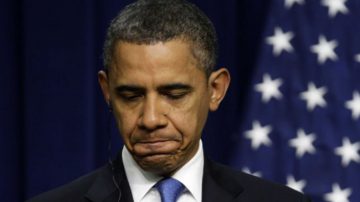 What better allegory for events in Washington today could there be? We have booming noises and smoke and glaring lights, and it all comes from a rather sad little – little in the sense of failed – man with about two weeks left to sit at his big desk and pretend that he is a great and powerful wizard. Except, when you are President, as this man is, you can never be observed in your control booth and you have your stunts and booming claims seconded by a chorus of flacks, hangers-on, and political appointees, presumably lending a semblance of authenticity and substance.
What the controversy engendered by “the Russians did it” has achieved is almost the opposite to what was intended. Dubious claims and pretend evidence have caused lights to shine brightly over what is a blanketing fabric of dishonesty in America’s establishment. The fabric covers everything from foreign affairs and the military to the details of domestic affairs. It is immense, complex, and carefully constructed covering, and those who created it have very little tolerance for any of it being scrutinized under spotlights. Achieving this scrutiny may be regarded as Obama’s final act of failure.
Whether it is “the Russians hacked the DNC” or “America has been bombing ISIS in Syria” or “the Russians threaten Eastern Europe” or “the Russians committed atrocities in Aleppo” or “Russia shot down Flight MH-17,” the same tiresome actors making the same unsupported claims have for eight years expected that just their inflated job titles should intimidate us into believing them. Proof? Who needs that? Would I lie to you about such matters? Once you start something foolish as Obama has done, and it is widely understood as being foolish, you only weaken your authority over all the other less-obviously dubious claims you have been making. The fabric of lies becomes weakened, and that is one of Obama’s small, but unintended, achievements now.
Even as I write these words, the first big wave of the Obama-Clinton unsupported claims, unsupported, that is, except by hack appointees like James Clapper, is receding. The world quickly reached a verdict of “nonsense.” But a second wave now laps up with an equally unsupported claim that the Russians have a compromising dossier on Donald Trump, an attempt to plant the idea that Russia will have direct influence over Trump’s policies. This malicious effort at “poisoning the well” for a political successor, brings to mind the time, some years back, when the ugliest of clutch of Israeli settlers, those who swaggered around Gaza behind barbed wire enclosed-compounds, full of attitude and always toting light machine guns while under the malevolent guard of Israeli soldiers, decided to leave their hopeless situation. They quite literally poisoned the water wells they had used before strutting away. I cannot imagine a much shabbier act. But here is Obama and his appointees doing much the same thing, effectively hacking away at what little democracy America has left out of sheer maliciousness.
I don’t mean to say that such gross lying began with Obama. The wizard’s control booth for smoke and lights and thundering sounds was not invented by him. There was nothing but eight years of lies from the weird triumvirate presidency of Cheney-Rumsfeld-Bush and from the corrupt and often-inept Clinton government. Lies are what big countries or organizations do when their activities will not stand up to public scrutiny. When countries secretly play dirty tricks, when they kill, and when they apply mafia-like pressure on allies and international organizations to do as they are told, they simply lie about all of it, always. Such activity has characterized America for a very long time. How can it be otherwise when you try to control the planet?
It’s just that eight years ago, we had some reason to believe Obama would be different, at least a little different, but he is not. He is just as shabby, murderous, and deceitful as his immediate predecessors, sometimes even more so. He has been at war somewhere every single day of his eight years. He has bombed seven countries. In his last year alone, he is said to have dropped over 26,000 bombs. Literally hundreds of thousands have died at the hands of the Peace Prize winner with the big boyish smile. I’ve often asked myself what it is that motivates Obama, and I don’t know. Sometimes he seems to fit the well-known pattern of the charming, smiling psychopath who secretly likes to kill.
Sometimes he just seems weak and, yes, cowardly, someone who has allowed the brass and big suits around those conference tables to run roughshod over him, leaving him with nothing but the pretense of authority. This could explain what is a remarkable sense of arrogance observed at times when he is around outsiders as a kind of psychological reflex to his living in his job under constant bullying. After all, Bush’s whole presidency was a pretense: he pretended to be president, and Cheney and Rumsfeld – the precise quality of men who, had they lived in 1930s’ Germany would have been seen happily “working towards the Führer” as they used to say – deferentially allowed him to do so as they ran everything. Bush was the first president to prove America doesn’t even need a president except to sign documents, much like the formal requirement for a witness’s signature on a legal document.
We know, too, that Bush was as close to a moron as ever held the office, because we watched his insipid face and listened to his inability to articulate a clear sentence for eight years. Sometimes, we do see glimmers of something similar from Obama, statements and behaviors that would not be expected from someone of forceful intelligence – the unsupported Russian hacking accusations being one, but also such matters as his foolish public dismissal of Russia, the only country which can literally obliterate the United States, as a great power – only with Obama we don’t see Bush’s Alfred E. Neuman look, we see a serious, stiff mien and a tone and posture of arrogance. A well-practiced cover-up behavior for inadequacies?
I don’t know, and it really does not matter. He has been a terrible president in every important respect, but he maintains a fair number of supporters who I guess are impressed with the big boyish smile, although that is seen far less often now, the baritone voice, and perhaps the sheer, unprecedented fact of a black man standing in his position. There’s no accounting for taste or popularity, as we see in every corner of contemporary celebrity culture, and American politics absolutely has an important element of celebrity culture, just as it loves to use celebrities as endorsements. Think of the last days of Hillary Clinton’s tired campaign when she had, yes, Beyoncé and Jay Z appearing in Ohio. It is hard to imagine what political or economic or social information that pair of pop celebrities had to offer voters, and it was reported by some that they were quietly paid millions for some minutes of effort to help swing the state with razzle-dazzle. After all, this was the Hillary Campaign, a glorious travelling circus that is estimated to have burned through $1.2 billion.
Many do expect something different from Trump, and we can hope their expectations are well-founded. His entire path to the presidency does show some unorthodox attitudes and methods – unorthodox, that is, by the claustrophobic standards and practices of that center of world empire, Washington, not unorthodox in some wider sense – and they show a very tough and driven man. It is simply a fact that anyone missing the last quality cannot function effectively as President in 21st-century America. The general environment in Washington, without the least exaggeration, may be compared to the proverbial snake pit or to scenes from the last days of Roman Empire.
That is why, for example, Bernie Sanders is such a hopeless hope. The man conducted an impressive crusade, displaying considerable skills, yet he just folded in the end, leaving his enthusiastic followers in limbo and giving up to Hillary Clinton who represented almost everything he opposed and who stood before him as someone who had just clearly cheated him out of the nomination through a whole range of cheats, ploys and gimmicks. Yet, he just accepted her and even did some campaigning for her.
Such a personality offers zero promise in face-to-faces with Pentagon generals, CIA Big Suits, mega-corporation presidents, and some foreign leaders who are closer to Mafiosi than politicians. What do you expect out of a little place like Vermont? It’s lovely. I’ve spent time there. But it resembles a great deal something from a backlot set for “Lassie Come Home” or “Anne of Green Gables.” I know, I know, Bernie originally came from hard-bitten New York, but the operative word there is “came.” Whatever his reasons for seeking bucolic, low-stress bliss, they do not make him material for presiding over Washington’s Chamber of Horrors.
Many Americans themselves, including both liberals and conservatives, are well aware of the dishonesty of their government, if only in a vague sense, but they know the task of doing anything about it is just too overwhelming and difficult to consider. After all, peasants on a 17th century estate hardly dared dream of changing the “natural order” in which they lived. And ordinary Americans work extremely hard to raise their families, and a great many of them do not work at all. They do not command great resources for all the costs and activities of a crusade. The general human condition in Western countries has not changed quite so much as some like to imagine over a few centuries of enlightenment and progress. A huge number of Americans count only for brief moments when their ballots are sought with sound-bites and vacuous ads. Afterwards, the establishment goes on just as before, ignoring them and getting back to the business of lying.
The papers people read – and, thanks to the spreading, corrosive effects of American imperialism, I include other Western countries, not just the United States – and the broadcasts to which they listen are uniform in discouraging any truly fresh way of looking at things and in suppressing the hope that arrangements can be much different. They universally avoid telling the truth where government prefers that they don’t. The idea of independent and principled journalism is something you only find in brochures for journalism schools or in Hollywood films.
The two major American political parties – together forming a duopoly of political power little different in overall its effect from the kind of monopoly power American authorities like to disparage in other, “less free” places – certainly do not provide much room for fresh voices or new initiatives. Over long periods, they can actually be quite stifling, much like high officials in a church concerning accepted truth and doctrine. The parties are totally dominated by money – money that can only come in the volumes required for marketing, advertising, polls, make-up artists, wardrobe consultants, facilities of every kind, publicity, and travel expenses from extremely wealthy people and special interests who are not the least interested in any significant change to a very cozy and comfortable situation.
The dominance of the Clintons in the Democratic Party through their money connections has been an arrangement to defend the status quo. It was a clever construction. The Clintons got to be center stage, play-acting as liberals and agents of change, in exchange for the kind of money which absolutely guaranteed that they never for a moment could forgot that they were just playing parts, not really doing anything of consequence. Bill Clinton’s record as President is interchangeable, remarkably so, with what might have been expected from a traditional Republican. Hillary’s record as Secretary of State made her promise for the future, if anything, far more extreme in the same direction, and especially when it came to serving special interests and waging bloody war. The woman wore $11,000 Armani suits regularly and commanded $300,000 a pop plus expenses and comforts (right down to a standard demand for a certain bottled water to be supplied) for a long series of tedious speeches on America’s military given to investment bankers, and she made private jokes about people dying, as we know she said of Julian Assange, “Couldn’t we just drone him or something?” Or there was her appalling joke about the murder of Muammar Gaddafi in Libya, a man who had been a good leader to his people, “We came, we saw, he died! Ha, ha, ha!”
The Democratic Party, given its distant past, especially the now all-but-forgotten legacy of Franklin Roosevelt, is the one from which an outsider viewing America, with no close knowledge of it, might reasonably have expected to find some prospect for change. But that seems a naïve hope if you understand who are the interests keeping the wheels of the organization turning.
The Democratic Party has become completely an establishment party, and one that literally morphed into the War Party along the way. Today, it offers a menu of the lightest possible offerings of social interest – the political equivalent of a platter of Ladies’ Tearoom sandwiches and dainties served by waiters in white gloves – just to differentiate itself from the Republicans and to make Americans of any degree of genuine liberal sentiment feel a little more comfortable. Since there aren’t a great number of the latter left in America by all appearances, the offerings can indeed be extremely modest.
Of course, these menu offerings consist of suggestions, attitudes, and slogans, not hard proposals for change, real change, in anything. The Democrats’ recent history of political behavior much resembles what mega-corporations do when they stick an image of a pink bow on their product packaging for a while and run a few, likely tax-deductible, ads promising purchasers that they will be helping in the fight against breast cancer by buying the brand. Imagine a package of Marlboros with a pink bow printed on it, and you get the picture.
Nothing better represents this modern Democratic leitmotif than Hillary Clinton’s long record of sound-bite concerns on many topics accompanied by a record of no actual effort spent on doing anything beyond getting elected. She started her last campaign saying every woman who is a rape victim deserved to be believed – something surely many young women and sympathetic men found re-assuring – yet she herself had dismissed privately, out-of-hand, for years a platoon of women pointing to her own predatory husband with the same charge.
Again, her displeasure with the Electoral College – echoed recently after her defeat – was first declared back in 2000, when George Bush won with a popular minority, but there is no record of her doing any work towards amending that outdated and anti-democratic provision of the Constitution, as during her eight years as a Senator. No, that would be a huge task to undertake, and political rewards are greater for sound-bites than they are for actual slogging hard work on anything most people do not even understand. Captains on the bridge with their gold braid and brass buttons on immaculate uniforms get noticed, not the sweating engineers actually running the ship down in the boiler room.
Make no mistake, the Democrats are bedrock establishment today, a party defending mostly backward views of the world and of American society. They are nothing more than the political Coke to the Republican’s Pepsi, or vice versa. And all the endorsements and advertising in the world do not change the reality of two sugary, dyed, fizzy drinks, indistinguishable in taste to many. Eight years of Obama – a man whose first campaign saw him sometimes wearing sandals and eschewing a totemic, imperialistic American flag pin on his lapel and intoning to cheering crowds, “Yes, we can” – proved that beyond all doubt.
Political figures like Ralph Nader or Bernie Sanders or Jill Stein are pretty close to irrelevant in the steaming boiler room of real American politics. Ideas are virtually never an issue in American elections. Neither is improving government’s service to citizens, from education to healthcare. Neither is the proper financing and budgeting of government. Neither is a reduction to insane military and security spending. How can it be otherwise in this “pounding fist” of an imperial society? All such American politicians tend to remind one of some naïve political science professor lecturing a rapt first-year audience of undergraduates excited about being out of high school and entering “the real world.”
This is the center of a world empire. It maintains a gigantic military which virtually never stops fighting wars, none of them having anything to do with defense. It has created an intelligence monstrosity which makes old outfits like the Stazi seem almost quaint, and it spies on everyone. Indeed, it maintains seventeen national security establishments, as though you can never have too much of a good thing. And some of these guys, too, are engaged full-time in forms of covert war, from fomenting trouble in other lands and interfering in elections to overthrowing governments.
Barack Obama is not one of those marginal American politicians, having gained the leadership of one of the two great parties, and yet in eight years he changed almost nothing worth changing. Whether the plight of whistleblowers in America or the third-world conditions prevailing in American cities where many of his fellow black people survive in squalor. He did nothing to reform a financial system that gave the world a collapse from which it still has not recovered. He did virtually nothing about the nation’s rotting schools or rotting infrastructure. He whined about guns but never acted in a serious way on the huge problem of police who shoot people dead on the nation’s streets, more than 1,100 of them last year alone
Yet he signed, time after time, record legislation for squandering money on the military and Big Intelligence. Under his command, the Pentagon literally burned pallet-load shipments of cash on bad programs such as the failed F-35 fighter, a new super-aircraft carrier that doesn’t work, a new type of littoral combat ship that doesn’t work, and a new Zumwalt-class destroyer that has proven an embarrassment. And there are the hugely expensive and highly intrusive NSA Supercomputer Data Centers. This is not a record of which to be proud, and it is about as far from liberal or progressive as you can go.
And, of course, this “liberal,” as so many insist still on calling him, ended by killing more people than any dictator or demagogue of this generation on earth you care to name, several hundred thousand of them in his eight years. And he found new ways to kill, too, as by creating the world’s first industrial-scale extrajudicial killing operation. Here he signs off on “kill lists,” placed in his Oval Office in-box, to murder people he has never seen, people who enjoy no legal rights or protections. His signed orders are carried out by uniformed thugs working at computer screens in secure basements where they proceed to play computer games with real live humans as their targets, again killing or maiming people they have never seen.
If you ever have wondered where all the enabling workers came from in places like Stalin’s Gulag or Hitler’s concentration camps, well, here is your answer. American itself produces platoons of such people. You could find them working at Guantanamo and in the far-flung string of secret torture facilities the CIA ran for years, and you could find them in places like Fallujah or Samarra or Abu Ghraib, at the CIA’s basement game arcade killing centers, and even all over the streets of America dressed as police who shoot unarmed people every day, sometimes in the back.
Obama has told more lies than anyone could possibly count while conducting so much killing and destruction, and he has done so unblinkingly. If you have ever noticed, government officials doing shameful and illegal things do tend to lie about what it is they are doing. And when Obama wasn’t telling lies, he made secrecy and lack of transparency hallmarks of his administration. He is said to feel very harshly towards whistle-blowers and leakers. He ends his grubby term of office with baseless, self-serving public accusations comparable in every way to those of Senator Joe McCarthy of the early 1950s.
McCarthy, a Republican, was also someone the establishment quietly supported for a time. He served their purposes, until he started weaving dangerously on the road, much like a drunken driver. He departed from the accepted script and began hurling accusations everywhere, and not just accusations about “commies” in the State Department, a place the establishment of the time hated. He came to relish accusing some targets of being sexual perverts, and he attacked new target after new target, threatening the ability of government even to function. For those who don’t know, J. Edgar Hoover, perpetual director of the FBI and an early supporter of McCarthy, was gay and a cross-dresser in private.
Of course, the establishment doesn’t have to worry about the embarrassing excesses of Obama and pompous appointees like James Clapper, as they finally did about those of McCarthy, because this pair of vicious clowns faithfully did just as they were supposed to do, and they are now headed for the exit doors. But they do have to worry about Trump, a man who already has expressed intelligent skepticism over the offerings of Big Intelligence as well as intelligent skepticism about the shameful and immense waste of the Pentagon. Importantly, he has asked why the entire Mideast is on fire and why Russia should be viewed as an enemy. And that is why the likes of Obama and Clapper have taken on a last-minute, rearguard destructive operation on behalf of those fearful of change.
It is certain that Joseph McCarthy’s rise to power could not have happened without important silent support, and his fall, after pretty much disgracing himself, allowed members of the establishment to congratulate themselves in public over protecting America from such demagoguery. All of this, from beginning to end, was complete hypocrisy, the very kind of hypocrisy we have screaming at us today from Washington. A similar claque of powerful people today congratulates themselves on efforts to interfere with the proper and peaceful transition of power to a man they’ve arbitrarily labelled a demagogue.
America’s mainline press has supported the claque by painting Trump as a dangerous demagogue, and I think it is largely over their resentment for his literally hi-jacking a very tired, almost worn-out, Republican Party – which resembled a becalmed antique sailing ship going nowhere – and promising to power it off in new directions. Of course, those loyal to the Clinton-Obama War Party greedily join in the accusations against Trump, seemingly completely innocent or even unaware of behavior ranging from insider plots to steal Hillary’s nomination from a contender to killing a third of a million people in Syria and who knows how many in Libya.
Also, they literally hate the prospect that the War Party, which they have faithfully supported for years, may be crumbling. And, who knows, even the possible further prospect of its demise after recent events revealed it to the public as a mafia-like operation with little respect for democratic process or principles of any kind? Stranger things in politics have happened, and political parties are no more guaranteed eternal life than the crowds at American revival meetings who raise their arms in child-like fantasy towards some huckster-preacher banging the Bible at the podium.
You must always remember, America’s press, which loves to congratulate itself regularly on its journalistic principles, is a mature and in some ways declining industry which is owned, through consolidations, by a very small number of corporate interests who completely support the Neocon Wars and a highly aggressive American foreign policy which puts American corporate interests first, everywhere, and reduces foreign governments, such as those in Europe or Japan, to American satrapies. The dominant views of America’s establishment are not enlightened, not democratic, not open-minded. They are “me-first” and keep competitors abroad under your thumb.
The subject of the Neocon Wars raises the related issue of the Israel Lobby’s influence in American politics. These destructive wars and an associated hyper-aggressive American foreign policy reflect this influence. The term “Neocon” refers to a coterie of influential people in Washington over the last fifteen years or so, people who have openly advocated for a highly aggressive policy of asserting American global dominance, always including a subsidiary aim, expressed with the euphemism, “the birth of a new Middle East.” Eliminating any independent-mindedness in the countries of the Mideast and assuring Israel’s complete imperialistic dominance over the region are the primary goals of the wars and interventions which have cost about two million lives and immense destruction over the Bush-Obama era. The extent of much of this holocaust is allowed to remain hidden from the public by our obliging corporate press, and efforts at explaining the causes has been a great throbbing engine for the production of lies.
But what is the long-term sense of assuring total dominance by eight million people, many of them immigrants, over hundreds of millions of others with centuries of history in the region? Eight million people who have no relationship or common history or culture and views with the great masses over which they are to dominate? An essentially European, urban people who share only a religion – and many of them not even that since Israel has a high proportion of non-believers – with the ancient Hebrews who once lived there? Even that number of eight million is deceptive since it includes over a million Arabs who are accidentally, and not with full equality, technical citizens of Israel.
These terrible Neocon Wars are, in addition, largely responsible for two devastating developments in our time. The first is huge movements of terrified refugees into Europe, millions of them, causing immense difficulties and putting great stress on the very foundations of the EU.
The second is the phenomenon we call international terror, which in fact is a side effect of the Neocon Wars. A huge amount of weaponry has been scattered around in the region by supporters of the American policy. Then, large numbers of mercenaries and rootless, violent people have been deliberately recruited, paid, and supplied to assist in carrying out America’s policy, as in Libya and Syria. Finally, there are large numbers of angry young men now who seek revenge for what has been done to their homes and families. It is a witches’ brew our press deliberately confuses by calling it international terror while constantly promoting the idea of Arabs and Muslims being undependable, unstable, and backward people, a concept welcomed and supported by the residents of the American crusader fortress we call Israel. The entire effort has been a guaranteed formula for instability and human misery.
In reality, what we call international terror is largely the “blowback” of American policies which themselves amount to state terror. Israel, of course, finds comfort in headlines in the West about “international terror” since the fear of that notion helps Americans and Europeans feel a bit more bonded to the fears Israel has always felt in its position as a colony planted by violence in an alien region. Many Israelis undoubtedly feel about their millions of neighbors much the way the Old South’s planters used to feel about the large number of inhabitants in the slave quarters as they went to bed each night with pistols and daggers kept under their pillows. Fear of rebellion was constant and worked like a poisonous substance in the Old South society, even though there was only one rebellion, a small one too, that ever happened. That endless unease explains why Old South society was well known for its inclination to violence, as in the infamous “code of the Old South.” Doesn’t Israel have much the same reputation?
America’s assistance and policies keep a garrison state not only going but growing, growing through the regular seizure of their neighbors’ property, a terrible practice which successive American governments fear addressing. Why? I think the Israel Lobby’s extremely well-organized efforts in American politics explain that. Support Israel, almost unconditionally, and you will receive large campaign donations and positive press coverage (remembering, it is a much-consolidated American press owned by quite a small number of companies). Criticize Israel and your opponents will get the donations and you will get negative press coverage. This has been an on-going pattern since the days when Harry Truman first agreed to recognize Israel, against his private best judgment, at a time when he felt vulnerable because his own re-election was quite uncertain.
While in the short term this massive bloodshed and destruction may be reassuring for Israel, having pretty much everything around it flattened, over the long term I do not see how this can be anything but destabilizing.
Destabilizing just as is the $38 billion, ten-year military-assistance agreement Obama just extended to Israel, a country perfectly able to pay for its own defense. This amount vastly exceeds what the United States gives any other country, even far larger ones in far greater economic need. The amount represents an increase of more than a quarter over the previous decade’s assistance agreement. And Obama gave it without a single condition imposed on Israel at a time when Israel’s government is constantly violating laws, rights, and international norms and agreements. I can’t think of any other place on earth where it is regarded as just fine suddenly to march out and seize someone else’s farms or homes. You cannot build a sound future society for yourself that way, quite apart from the injustice and misery inflicted on others.
Yet, the press often gives the impression that Obama is no friend to Israel. It is well-known that Obama and Netanyahu personally dislike each other intensely, and Netanyahu has gone out of his way to demean or embarrass Obama several times. So, does the immense size of this military-assistance agreement reflect the influence of the Israel Lobby? I think it does, and it all points again to Obama’s total inability in office to fight for anything worth fighting for, such as conditions at least placed on a criminal government being handed a vast fortune, something approaching $500 each year for each citizen of Israel, almost a national basic personal income, if you will, supplied by America.
It is often asserted that the term “Israel Lobby” indicates prejudice, but saying that is just a form of reverse-prejudice, another version of the worn-threadbare accusation that if you criticize Israel, you are, ipso-facto, anti-Semitic. Indeed, this false idea has become as common as rain, and Israel has made considerable diplomatic efforts through the years, with some success, in Europe and in North America to have criticism of Israel criminalized in one fashion or another.
Two distinguished American scholars – John Mearsheimer of the University of Chicago and Stephen Walt of Harvard University’s Kennedy School of Government – wrote a serious book on the subject of the Israel Lobby, establishing the fact and of its existence beyond question. Others, too, have contributed to understanding the phenomenon.
And we also see, from time to time, events which bring the reality forcefully home. Israeli diplomats in London were just caught on video discussing bringing down British MPs regarded as unfriendly to Israel. Well, talk about direct interference in the internal affairs and elections of others! Newt Gingrich, when last running for his party’s presidential nomination, went around making speeches about how there really was no such thing as a Palestinian after receiving the best part of $20 million dollars in campaign donations from a very wealthy and avid supporter of Israel. Freshmen American Congressmen after an election are routinely “offered” – I put that in quotes because it is not an offer to be declined without political consequences – paid holidays to Israel for indoctrination. Recently, the New York Times confirmed the discovery that all of its stories concerning Israel are routinely passed by the official Israeli Censor before being published. Hillary’s most massive contributors over the years are members in good standing of the Lobby.
One of the most predictable and bordering-on-absurd regular happenings in Washington around this subject is Senator Lindsey Graham suddenly leaping to his feet at any mention of Israel which has even a hint of less-than-fulsome praise or at any proposal to give a less-than-lordly hand-out and going into paroxysms. I’ve asked myself why that would be. Why should Senator Graham, who represents Baptists in South Carolina, choose the role of political pit bull on guard for Israel? Why should he care so intensely and constantly about Israel? Well, I spent a short time reading about him and looking at photos, and I couldn’t help being struck by the distinct possibility of Senator Graham’s being gay.
Of course, there’s absolutely nothing wrong with being gay, unless you happen to represent South Carolina, surely one of the more backward and least tolerant states in the Union. My guess, and it is only a guess, is that Senator Graham was caught, years ago, in a “honey trap” by Mossad, and he has been given to understand that compromising photos exist. Today, he is a tireless defender of all things Israeli. It is hard to explain such sustained motivation otherwise. Exactly the same kind of thing happened to the FBI’s J. Edgar Hoover early in his career. The Mafia is said to have had compromising photos of him and a male lover, and that old bull dog-faced lawman eventually became notorious for not pursuing the Mafia, allowing it decades of comfortable growth after the repeal of Prohibition.
He always chased instead almost non-existent Communists, keeping the Communist party of America’s ranks packed with undercover FBI Agents and its coffers filled with their expensed donations so that it kept the appearance of something formidable when it wasn’t and served to justify constant FBI budget increases. It might be called the “self-fulfilling prophecy” approach to spying, much like the CIA’s approach to its annual Soviet estimates during the Cold War. The estimates were always wildly inflated, and the CIA always got the budget increases it sought. Security service empires have a way of growing exponentially regardless of the threat level. They share with the military the almost magical ability to be always discovering dire new needs for their services.
The whole set of matters concerning Israel forms a huge indigestible mass at the very center of American politics. Clearly, it is better in every way to halt the Neocon wars. Clearly, also, it is better to force Israel to make peace and define its still undefined borders by accepting the status quo of 1967. Clearly, it is better to have a stable, peaceful region with good long-term relations with the United states. But, these things are easier said than done, and precisely because of the Israel Lobby which always defends Israel, even when it pursues destructive policies and goals, as it so frequently does.
A lot of people hope Trump will halt the stupid wars, and a lot of people, recognizing his political history of being an upstart without a lifetime’s obligations to the usual political crowd, think he may be in a good position to do something important in the Mideast. There is ambiguity here though, owing to some references about moving America’s embassy to Jerusalem from Tel Aviv, a non-starter for peace, if ever there was one, but the references are also quite possibly a deal-maker lure, for there can be little doubt that Jerusalem will be the capital of both Israel and Palestine in the end.
At least, ending the wars is the sine qua non of anything to be called progress. It is also part of a needed de-escalation in America’s current hyper-aggressive global posture. If you want a better domestic economy, there are few better places to start than paring back the unbelievable waste of great masses of ships and planes and tanks rumbling around everywhere and creating nothing of economic value. Nothing is more wasteful and destructive than maintaining such a military establishment. No one better knows how to waste money than the military with its every movement of a truck or plane costing immensely more than the same act in the civilian economy and none of the movements producing any worthwhile good or service. And the nonsense of keeping Europe and Russia as near-enemies rather than flourishing economic partners only impoverishes everyone.
But it is not sound economic thinking or a sensible approach to world affairs which has governed America’s use of its military for years. It is indulgent, uncaring pride, the arrogance of a wealthy establishment which does what it does simply because it can. It is a formidable barrier against progress which is not going to just fade away. And Trump’s political base, while clearly excluding Neocons, does include the belly-over-the-belt types who, perhaps unthinkingly, like to see Old Glory waving everywhere. So, there is a big set of difficulties for him to work through, and it is not at all clear how he can do so.
The establishment’s waste and arrogance and paying-no-attention to ordinary people really are what motivated a lot of Americans to vote for Trump, especially when the other choice was the very embodiment of those arrogant qualities, annoyingly and patronizingly taking a moment, here and there, to nibble a piece of fried chicken with the folks in some obscure diner. Good photo-op. Americans very much feel they have a national government which behaves more as an occupying power than as a legitimate institution to serve them. And the fact that it spends so much time and money and credibility on trying to control the planet does have a tendency to influence its resources and its very attitudes at home. After all, they are occupied with earth-shattering matters abroad, and you, well, you just don’t count in the scheme of things.
But politics never provides complete change, as some naïve political thinkers like to believe. America remains a huge imperial power essentially run by wealthy people for the interests of wealthy people, and that is not going to change any time soon, but that does not preclude some changes in the way things have been conducted because not all wealthy people see their interests as being identical, and wealthy people making decisions do sometimes make very bad ones. Never mind how the Pentagon and CIA, under Obama and Bush, have stomped their heels into the necks of countless thousands of innocents and wrecked whole societies, just look on the home front at the shabby way corporate giants can behave.
We have Amazon’s Jeff Bezos buying the Washington Post and turning it into a more complete propaganda factory than ever, publishing, for example, a scurrilous, libelous list of Internet sites said to be under Russian influence, a list obtained from an “anonymous source” which almost certainly just happen to reside in Langley, Virginia. We have Facebook’s shuffling, t-shirted multi-billionaire appointing himself American Guru of Truth and Fakery in the News. This from the founder of one of the most fake-filled sites on the Internet, notorious previously for fake reader “likes” which affect advertising rates, but, more importantly, an outfit which ceaselessly censors and spies on its users, sucking information from them like a Dyson whirlwind vacuum cleaner to sell to marketers and send along to the security services. Recently, when I use my Google bookmark link for Russia’s Sputnik (formerly, RIA Novosti, The Voice of Russia ), an informative and entertaining site I have checked for years, Google frequently inserts a warning page telling me that it is dangerous to proceed, a page which includes a button marked “Back to Safety,” as though I were approaching a phishing or pornographic site. This from the company that started years ago with a motto, “Do no harm,” but, of course, today Google is a vest-pocket affiliate of CIA, an outfit which does almost nothing but harm. And look at the way Microsoft introduced Windows 10, including violations of fundamental conventions on the Internet such as a pop-up “install” box whose “dismiss command” did precisely the opposite when the “x” was selected, or the way another giant, Apple, has treated some of its customers, including things like “bricking” their costly phones if any effort is made to change or repair anything.
It is simply about the arrogance of power, a phrase the late Senator Fulbright wrote years ago to describe America’s murderous and pointless crusade in Vietnam.
Politics can shake-up a few institutions which need shaking-up, expose a few rotten actors and send them packing, turn around a few dangerous policy paths, and it can grant the people at large a sense of some new possibilities. Sometimes, and this may be one of those times. But the fanatical wing of Trump supporters, especially those on the “alt-right” are almost certain to be disappointed when he does not re-create America the way “accepting Christ” is supposed to re-create a sinner.
Trump seems a man of enough independent-mindedness and independent wealth and seasoned toughness of personality to withstand the assaults he will face from the establishment in Washington. Actually, I shouldn’t say “will” because he is facing waves of them before he even takes the oath, and he is doing admirably well at handling them. There is a claque of very rich and influential people who are not going to disappear into the woodwork despite losing control now. However, he is himself a rich man with a rich man’s interests, and he is not likely to lose his sense of direction in a wave of patriotic fervor which some Americans confuse with religion. He will have done as much as any candidate could if he ends the killing and the mindless interference in the affairs of others and creates some programs which bring jobs to large numbers of now-hopeless Americans. He actually does have a chance at genuine political greatness, but I would not bet the farm on it.
‘Tanks do not create peace’: German politicians on NATO’s buildup at Russian borders
RT | January 9, 2017
German politicians have raised concern about thousands of NATO troops and equipment, along with hundreds of tanks, that have been sent to Poland and countries bordering Russia in what has been touted by Washington as “defense against Russian aggression.”
“It does not help us if tanks will be going up and down on both sides of the border,” Brandenburg’s leader and SPD party member, Dietmar Woidke, told RBB. “I hope everyone will keep calm.”
“I believe that despite all the difficulties, we should seek dialogue with Russia,” he added on Thursday, warning that relations with Moscow could worsen even further.
Germany’s ruling CDU party called Woidke’s standpoint “strange,” with parliamentary faction leader Ingo Senftleben saying the operation “takes place within the framework of the contractual arrangements of NATO and at the explicit request of Poland.”
NATO’s buildup in Europe also came under fire from Germany’s Die Linke party. “Tanks do not create peace, anywhere,” Christian Görke stressed in a statement, RBB reported.
Tobias Pflueger of Die Linke slammed the stationing of US tanks and military equipment in Poland, saying this will trigger an arms race and lead to an “escalation in relations with Russia,” Focus Online reported.
Washington says the shipload of American military hardware that has recently arrived in the northern German port of Bremerhaven is meant to boost its commitment to its allies against a perceived Russian threat, and ensure that Europe remains “whole, free, prosperous, and at peace.”
Crowds of people marched through Bremerhaven on Saturday to protest the deployment and transport of NATO troops and weapons through the city. Hundreds of American tanks, trucks, and other military equipment bound for Poland, said to be the largest arms shipment since the fall of the Soviet Union, arrived at the German port on Friday to be transferred to Eastern Europe.
The protesters marched through the city holding signs and banners reading, “No NATO deployments! End the militaristic march against Russia!” and “Out of NATO.”
“There is, starting from Washington DC, a major push to do everything possible in the next two weeks to create unending hostility between the West and Russia that can’t be undone by Donald Trump or anyone else. Even at the risk of open violence, rather than simply Cold War hostility.
“This is highly preferable to weapons profiteers as against actual peace breaking out, which is their greatest fear,” author and journalist David Swanson told RT on Monday.
“It is clearly an escalation that involves numerous facets including propaganda about Russian crimes in the US media; that includes shipping troops and equipment to the border; that includes expanding NATO and pushing hard on other NATO members to join in this escalation where you have serious protests in Germany by those who want peace [and are] against sending Germans or Americans from Germany eastward, as they should. There are not enough of us in the US similarly protesting,” he added.
Over the last few days, some 2,800 pieces of military hardware and 4,000 troops have arrived at the port in Bremerhaven. The new forces will first be moved to Poland, where they will take part in military drills at the end of the month. They will later be deployed across seven countries, including the Baltic states, Bulgaria, Romania, and Germany. A headquarters unit will be stationed in Germany.
The delivery of US Abrams tanks, Paladin artillery, and Bradley fighting vehicles marks a new phase of America’s continuous presence in Europe, which will now be based on a nine-month rotation.
“Let me be clear: This is one part of our efforts to deter Russian aggression, ensure the territorial integrity of our allies, and maintain a Europe that is whole, free, prosperous, and at peace,” US Air Force Lieutenant General Timothy M. Ray declared on Sunday, as quoted by Reuters.
Operation Atlantic Resolve, a large-scale military venture officially touted by Washington as a demonstration of “continued US commitment to the collective security of Europe,” began in April of 2014 after Crimea voted to split from coup-stricken Ukraine and rejoin Russia in a referendum.
Read more:
100’s of US tanks, heavy equipment flows into Europe to counter ‘Russian aggression’
US will ‘shoot down’ North Korean missiles: Pentagon chief
Press TV – January 9, 2017
US Defense Secretary Ashton Carter has described North Korea’s ballistic missiles program as a “serious threat” to the United States, threatening to shoot down any such missiles aimed at targets in the country.
The Pentagon chief said in an interview with NBC News on Sunday that North Korean missiles would be shot down if they approach American territory, after Pyongyang said it could test an intercontinental ballistic missile (ICBM) at any time from any location set by the country’s leader Kim Jong-un.
The United States would be prepared to shoot down a North Korean missile launch or test “if it were coming towards our territory, or the territory of our friends and allies,” Carter said.
North Korea announced on Sunday it could test-launch an ICBM capable of striking the US mainland, saying Washington’s “hostile” policy towards the country forced Pyongyang to develop such missiles.
“The US is wholly to blame for pushing the Democratic People’s Republic of Korea (DPRK) to have developed (an) ICBM as it has desperately resorted to anachronistic policy hostile toward the DPRK for decades to encroach upon its sovereignty and vital rights,” North Korea’s state-run news agency KCNA reported.
“Anyone who wants to deal with the DPRK would be well advised to secure a new way of thinking after having clear understanding of it,” it said, using the acronym for the country’s official name.
Despite sanctions and international pressure, Pyongyang has been attempting to strengthen its military capability to protect itself from the threat posed by the presence of US forces in the region.
North Korea says it will not give up on its nuclear deterrence unless Washington ends its hostile policy toward Pyongyang and dissolves the US-led UN command in South Korea. Thousands of US soldiers are stationed in South Korea and Japan.
According to the US military’s recent declaration, the United States has 806 deployed ICBMs, SLBMs (submarine-launched ballistic missile), and heavy bombers as well as 1,722 deployed nuclear warheads.
The Pentagon is also equipped with a multiple independently targetable reentry vehicle (MIRV), a highly advanced version of the intercontinental nuclear missile carrying several independent warheads.
The South Korean Defense Ministry on Monday called North Korea’s statement a “provocative announcement.”
However, instead of issuing a fresh statement on North Korea’s announcement, the Obama administration on Sunday referred to the January 3rd comments by White House spokesman Josh Earnest in which he said the US military could protect the country against threats coming from North Korea.
If North Korea could fully develop an ICBM, it could target the United States. The shortest distance between the two countries is about 9,000 km. ICBMs can travel up to 10,000 km or farther.
US President-elect Donald Trump said last week that North Korea would not be able to build a nuclear missile that can reach the United States.
“North Korea just stated that it is in the final stages of developing a nuclear weapon capable of reaching parts of the US,” Trump tweeted on January 2. “It won’t happen!”
Will Obama’s ‘Good War’ in Afghanistan Continue?
By Ron Paul | January 8, 2017
Last week, as the mainstream media continued to obsess over the CIA’s evidence-free claim that the Russians hacked the presidential election, President Obama quietly sent 300 US Marines back into Afghanistan’s Helmand Province. This is the first time in three years that the US military has been sent into that conflict zone, and it represents a final failure of Obama’s Afghanistan policy. The outgoing president promised that by the end of his second term, the US military would only be present in small numbers and only on embassy duty. But more than 8,000 US troops will remain in Afghanistan as he leaves office.
When President Obama was first elected he swore that he would end the US presence in Iraq (the “bad” war) and increase US presence in Afghanistan (the “good” war). He ended up increasing troops to both wars, while the situation in each country continued to deteriorate.
Why are the Marines needed in the Helmand Province? Because although the foolish and counterproductive 15-year US war in Afghanistan was long ago lost, Washington cannot face this fact. Last year the Taliban controlled 20 percent of the province. This year they control 85 percent of the province. So billions more must be spent and many more lives will be lost.
Will these 300 Marines somehow achieve what the 2011 peak of 100,000 US soldiers was not able to achieve? Will this last push “win” the war? Hardly! The more the president orders military action in Iraq and Afghanistan, the worse it gets. In 2016, for example, President Obama dropped 1,337 bombs on Afghanistan, a 40 percent increase from 2015. According to the United Nations, in 2016 there were 2,562 conflict-related civilian deaths and 5,835 injuries. And the Taliban continues to score victories over the Afghan puppet government.
The interventionists in Washington continue to run our foreign policy regardless of who is elected. They push for wars, they push for regime change, then they push for billions to reconstruct the bombed-out countries. When the “liberated” country ends up in worse shape, they claim it was because we just didn’t do enough of what ruined the country in the first place. It’s completely illogical, but the presidents who keep seeking the neocons’ advice don’t seem to notice. Obama – the “peace” candidate and president – has proven himself no different than his predecessors.
What will a President Trump do about the 15 year failed nation-building experiment in Afghanistan? He has criticized the long-standing US policy of “regime-change” and “nation-building” while on the campaign trail, and I would like to think he would just bring the troops home. However, I would not be surprised if he accelerates US military action in Afghanistan to “win the war” once and for all. He will not succeed if he does so, as the war is not winnable – no one even knows what “winning” looks like! We may well see even more US troops killing and being killed in Afghanistan a year from now if that is the case. That would be a terrible tragedy.
The Utter Stupidity of the New Cold War
By Gary Leupp | Dissident Voice | January 7, 2017
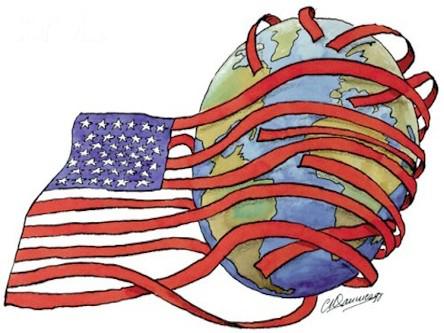
It seems so strange, twenty-seven years after the fall of the Berlin Wall, to be living through a new Cold War with (as it happens, capitalist) Russia.
The Russian president is attacked by the U.S. political class and media as they never attacked Soviet leaders; he is personally vilified as a corrupt, venal dictator, who arrests or assassinates political opponents and dissident journalists, and is hell-bent on the restoration of the USSR.
(The latter claim rests largely on Vladimir Putin’s comment that the dissolution of the Soviet Union was a “catastrophe” and “tragedy” — which in many respects it was. The press chooses to ignore his comment that “Anyone who does not miss the Soviet Union has no heart, while anyone who wants to restore it has no brain.” It conflicts with the simple talking-point that Putin misses the imperial Russia of the tsars if not the commissars and, burning with resentment over the west’s triumph in the Cold War, plans to exact revenge through wars of aggression and territorial expansion.)
The U.S. media following its State Department script depicts Russia as an expansionist power. That it can do so, so successfully, such that even rather progressive people — such as those appalled by Trump’s victory who feel inclined to blame it on an external force — believe it, is testimony to the lingering power and utility of the Cold War mindset.
The military brass keep reminding us: We are up against an existential threat! One wants to say that this — obviously — makes no sense! Russia is twice the size of the U.S. with half its population. Its foreign bases can be counted on two hands. The U.S. has 800 or so bases abroad.
Russia’s military budget is 14% of the U.S. figure. It does not claim to be the exceptional nation appointed by God to preserve “security” on its terms anywhere on the globe. Since the dissolution of the USSR in 1991, the U.S. has waged war (sometimes creating new client-states) in Bosnia (1994-5), Serbia (1999), Afghanistan (2001- ), Iraq (2003- ), Libya (2011), and Syria (2014- ), while raining down drone strikes from Pakistan to Yemen to North Africa. These wars-based-on-lies have produced hundreds of thousands of civilian deaths, millions of refugees, and general ongoing catastrophe throughout the “Greater Middle East.” There is no understating their evil.
The U.S. heads an expanding military alliance formed in 1949 to confront the Soviet Union and global communism in general. Its raison d’être has been dead for many years. Yet it has expanded from 16 to 28 members since 1999, and new members Estonia and Latvia share borders with Russia.
(Imagine the Warsaw Pact expanding to include Mexico. But no, the Warsaw Pact of the USSR and six European allies was dissolved 26 years ago in the idealistic expectation that NATO would follow in a new era of cooperation and peace.)
And this NATO alliance, in theory designed to defend the North Atlantic, was only first deployed after the long (and peaceful) first Cold War, in what had been neutral Yugoslavia (never a member of either the Warsaw Pact nor NATO), Afghanistan (over 3000 miles from the North Atlantic), and the North African country of Libya. Last summer NATO held its most massive military drills since the collapse of the Soviet Union, involving 31,000 troops in Poland, rehearsing war with Russia. (The German foreign minister Frank-Walter Steinmeier actually criticized this exercise as “warmongering.”)
Alliance officials expressed outrage when Russia responded to the warmongering by placing a new S-400 surface-to-air missiles and nuclear-capable Iskander system on its territory of Kaliningrad between Poland and Lithuania on the Baltic coast. But Russia has, in fact, been comparatively passive in a military sense during this period.
In 1999, as NATO was about to occupy the Serbian province of Kosovo (soon to be proclaimed an independent country, in violation of international law), nearby Russian peacekeepers raced to the airport in Pristina, Kosovo, to secure it and ensure a Russian role in the Serbian province’s future. It was a bold move that could have provoked a NATO-Russian clash. But the British officer on the ground wisely refused an order from Gen. Wesley Clark to block the Russian move, declaring he would not start World War III for Gen. Clark.
This, recall, was after Bill Clinton’s secretary of state, Madeleine Albright (remember, the Hillary shill who said there’s a special place in hell reserved for women who don’t vote for women) presented to the Russian and Serbian negotiators at Rambouillet a plan for NATO occupation of not just Kosovo but all Serbia. It was a ridiculous demand, rejected by the Serbs and Russians, but depicted by unofficial State Department spokesperson and warmonger Christiane Amanpour as the “will of the international community.” As though Russia was not a member of the international community!
This Pristina airport operation was largely a symbolic challenge to U.S. hegemony over the former Yugoslavia, a statement of protest that should have been taken seriously at the time.
In any case, the new Russian leader Putin was gracious after the 9/11 attacks in 2001, even offering NATO a military transport corridor through Russia to Afghanistan (closed in 2015). He was thanked by George W. Bush with the expansion of NATO by seven more members in 2004. (The U.S. press made light of this extraordinary geopolitical development; it saw and continues to see the expansion of NATO as no more problematic than the expansion of the UN or the European Union.) Then in April 2008 NATO announced that Georgia would be among the next members accepted into the alliance.
Soon the crazy Georgian president Mikhail Saakashvili, emboldened by the promise of near-term membership, provoked a war with the breakaway republic of South Ossetia, which had never accepted inclusion of the new Georgian state established upon the dissolution of the Georgian Soviet Socialist Republic in 1991. The Ossetians, fearing resurgent Georgian nationalism, had sought union with the Russian Federation. So had the people of Abkhazia.
The two “frozen conflicts,” between the Georgian state and these peoples, had been frozen due to the deployment of Russian and Georgian peacekeepers. Russia had not recognized these regions as independent states nor agreed to their inclusion in the Russian Federation. But when Russian soldiers died in the Georgian attack in August, Russia responded with a brief punishing invasion. It then recognized the two new states of South Ossetia and Abkhazia (breakaway states in what had been the Georgian SSR) six months after the U.S. recognized Kosovo.
(Saakashvili, in case you’re interested, was voted out of power, disgraced, accused of economic crimes, and deprived of his Georgian citizenship. After a brief stint at the Fletcher School of International Law and Diplomacy at Tufts University — of which I as a Tufts faculty member feel deeply ashamed — he was appointed as governor of Odessa in Ukraine by the pro-NATO regime empowered by the U.S.-backed coup of February 22, 2014.)
Sen. John McCain proclaimed in 2008: “We are all Georgians now,” and advocated U.S. military aid to the Georgian regime. An advocate of war as a rule, McCain then became a big proponent of regime change in Ukraine to allow for that country’s entry into NATO. Neocons in the State Department including most importantly McCain buddy Victoria Nuland, boasted of spending $5 billion in support of “the Ukrainian people’s European aspirations” (meaning: the desire of many Ukrainians in the western part of the country to join the European Union — risking, although they perhaps do not realize it, a reduction in their standard of living under a Greek-style austerity program — to be followed by NATO membership, tightening the military noose around Russia).
The Ukrainian president opted out in favor of a generous Russian aid package. That decision — to deny these “European aspirations” — was used to justify the coup.
But look at it from a Russian point of view. Just look at this map, of the expanding NATO alliance, and imagine it spreading to include that vast country (the largest in Europe, actually) between Russia to the east and Poland to the west, bordering the Black Sea to the south. The NATO countries at present are shown in dark blue, Ukraine and Georgia in green. Imagine those countries’ inclusion.
And imagine NATO demanding that Russia vacate its Sevastopol naval facilities, which have been Russian since 1783, turning them over to the (to repeat: anti-Russian) alliance. How can anyone understand the situation in Ukraine without grasping this basic history?
The Russians denounced the coup against President Viktor Yanukovych (democratically elected — if it matters — in 2010), which was abetted by neo-fascists and marked from the outset by an ugly Russophobic character encouraged by the U.S. State Department. The majority population in the east of the country, inhabited by Russian-speaking ethnic Russians and not even part of Ukraine until 1917, also denounced the coup and refused to accept the unconstitutional regime that assumed power after February 22.
When such people rejected the new government, and declared their autonomy, the Ukrainian army was sent in to repress them but failed, embarrassingly, when the troops confronted by angry babushkas turned back. The regime since has relied on the neo-fascist Azov Battalion to harass secessionists in what has become a new “frozen conflict.”
Russia has no doubt assisted the secessionists while refusing to annex Ukrainian territory, urging a federal system for the country to be negotiated by the parties. Russian families straddle the Russian-Ukrainian border. There are many Afghan War veterans in both countries. The Soviet munitions industry integrated Russian and Ukrainian elements. One must assume there are more than enough Russians angry about such atrocities as the May 2014 killing of 42 ethnic Russian government opponents in Odessa to bolster the Donbas volunteers.
But there is little evidence (apart from a handful of reports about convoys of dozens of “unmarked military vehicles” from Russia in late 2014) for a Russian “invasion” of Ukraine. And the annexation of Crimea (meaning, its restoration to its 1954 status as Russian territory) following a credible referendum did not require any “invasion” since there were already 38,000 Russian troops stationed there. All they had to do was to secure government buildings, and give Ukrainian soldiers the option of leaving or joining the Russian military. (A lot of Ukrainian soldiers opted to stay and accept Russian citizenship.)
Still, these two incidents — the brief 2008 war in Georgia, and Moscow’s (measured) response to the Ukrainian coup since 2014 — have been presented as evidence of a general project to disrupt the world order by military expansion, requiring a firm U.S. response. The entirety of the cable news anchor class embraces this narrative.
But they are blind fools. Who has in this young century disrupted world order more than the U.S., wrecking whole countries, slaughtering hundreds of thousands of innocents, provoking more outrage through grotesquely documented torture, generating new terror groups, and flooding Europe with refugees who include some determined to sow chaos and terror in European cities? How can any rational person with any awareness of history since 1991 conclude that Russia is the aggressive party?
And yet, this is the conventional wisdom. I doubt you can get a TV anchor job if you question it. The teleprompter will refer routinely to Putin’s aggression and Russian expansion and the need for any mature presidential candidate to respect the time-honored tradition of supporting NATO no matter what. And now the anchor is expected to repeat that all 17 U.S. intelligence services have concluded that Vladimir Putin interfered in the U.S. presidential election.
Since there is zero evidence for this, one must conclude that the Democratic losers dipped into the reliable grab bag of scapegoats and posited that Russia and Putin in particular must have hacked the DNC in order to — through the revelation of primary sources of unquestionable validity, revealing the DNC’s determination to make Clinton president, while sabotaging Sanders and promoting (through their media surrogates) Donald Trump as the Republican candidate — undermine Clinton’s legitimacy.
All kinds of liberals, including Sanders’ best surrogates like Nina Turner, are totally on board the Putin vilification campaign. It is sad and disturbing that so many progressive people are so willing to jump on the new Cold War bandwagon. It is as though they have learned nothing from history but are positively eager, in their fear and rage, to relive the McCarthy era.
But the bottom line is: U.S. Russophobia does not rest on reason, judgment, knowledge of recent history and the ability to make rational comparisons. It rests on religious-like assumptions of “American exceptionalism” and in particular the right of the U.S. to expand militarily at Russia’s expense — as an obvious good in itself, rather than a distinct, obvious evil threatening World War III.
The hawks in Congress — bipartisan, amoral, ignorant, knee-jerk Israel apologists, opportunist scum — are determined to dissuade the president-elect (bile rises in my throat as I use that term, but it’s true that he’s that, technically) from any significant rapprochement with Russia. (Heavens, they must be horrified at the possibility that Trump follows Kissinger’s reported advice and recognizes the Russian annexation of Crimea!) They want to so embarrass him with the charge of being (as Hillary accused him of being during the campaign) Putin’s “puppet” that he backs off from his vague promise to “get along” with Russia.
They don’t want to get along with Russia. They want more NATO expansion, more confrontation. They are furious with Russian-Syrian victories over U.S-backed, al-Qaeda-led forces in Syria, especially the liberation of Aleppo that the U.S. media (1) does not cover having no reporters on the ground, and little interest since events in Syria so powerfully challenge the State Department’s talking points that shape U.S. reporting, (2) misreports systematically, as the tragic triumph of the evil, Assad’s victory over an imaginary heroic opposition, and (3) sees the strengthening of the position of the Syrian stats as an indication of Russia’s reemergence as a superpower. (This they they cannot accept, as virtually a matter of religious conviction; the U.S. in official doctrine must maintain “full spectrum dominance” over the world and prohibit the emergence of any possible competitor, forever.)
*****
The first Cold War was based on the western capitalists’ fear of socialist expansion. It was based on the understanding that the USSR had defeated the Nazis, had extraordinary prestige in the world, and was the center for a time of the expanding global communist movement. It was based on the fear that more and more countries would achieve independence from western imperialism, denying investors their rights to dominate world markets. It had an ideological content. This one does not. Russia and the U.S. are equally committed to capitalism and neoliberal ideology. Their conflict is of the same nature as the U.S. conflict with Germany in the early 20th century. The Kaiser’s Germany was at least as “democratic” as the U.S.; the system was not the issue. It was just jockeying for power, and as it happened, the U.S. intervening in World War I belatedly, after everybody else was exhausted, cleaned up. In World War II in Europe, the U.S. having hesitated to invade the continent despite repeated Soviet appeals to do so, responded to the fall of Berlin to Soviet forces by rushing token forces to the city to claim joint credit.
And then it wound up, after the war, establishing its hegemony over most of Europe — much, much more of Europe than became the Soviet-dominated zone, which has since with the Warsaw Pact evaporated. Russia is a truncated, weakened version of its former self. It is not threatening the U.S. in any of the ways the U.S. is threatening itself. It is not expanding a military alliance. It is not holding huge military exercises on the U.S. border. It is not destroying the Middle East through regime-change efforts justified to the American people by sheer misinformation. In September 2015 Putin asked the U.S., at the United Nations: “Do you realize what you’ve done?”
Unfortunately the people of this country are not educated, by their schools, press or even their favorite websites to realize what has been done, how truly horrible it is, and how based it all is on lies. Fake news is the order of the day.
Up is down, black is white, Russia is the aggressor, the U.S. is the victim. The new president must be a team-player, and for God’s sake, understand that Putin is today’s Hitler, and if Trump wants to get along with him, he will have to become a team-player embracing this most basic of political truths in this particular imperialist country: Russia (with its nukes, which are equally matched with the U.S. stockpile) is the enemy, whose every action must be skewed to inflame anti-Russian feeling, as the normative default sentiment towards this NATO-encircled, sanction-ridden, non-threatening nation, under what seems by comparison a cautious, rational leadership?
*****
CNN’s horrible “chief national correspondent” John King (former husband of equally horrid Dana Bash, CNN’s “chief political correspondent”) just posed the question, with an air of aggressive irritation: “Who does Donald Trump respect more, the U.S. intelligence agencies, or the guy who started Wikileaks [Assange]?”
It’s a demand for the Trump camp to buy the Russian blame game, or get smeared as a fellow-traveler with international whistle-blowers keen on exposing the multiple crimes of U.S. imperialism.
So the real question is: Will Trump play ball, and credit the “intelligence community” that generates “intelligence products” on demand, or brush aside the war hawks’ drive for a showdown with Putin’s Russia? Will the second Cold War peter out coolly, or culminate in the conflagration that “Mutually Assured Destruction” (MAD) was supposed to render impossible?
The latter would be utterly stupid. But stupid people — or wise people, cynically exploiting others’ stupidity — are shaping opinion every day, and have been since the first Cold War, based like this one on innumerable lies.
Gary Leupp is a Professor of History at Tufts University, and author of numerous works on Japanese history. He can be reached at: gleupp@granite.tufts.edu.
Germans protest NATO troop deployment
Press TV – Jan 8, 2017
Scores of people have staged a protest in a northern German port city against the deployment and transport of NATO troops and weapons through the city.
The protest was held in the port city of Bremerhaven on Saturday.
US military hardware, including 87 tanks and 144 Bradley fighting vehicles, were docked in the port city a day earlier for eventual transfer to NATO member countries in Eastern Europe to enhance what was described as “deterrence against possible Russian aggression.”
The protesters marched through the city, holding signs and banners that read, “No NATO deployments! End the militaristic march against Russia!” and “Out of NATO.”
“I am here to explain peace to Russians, because I am afraid of new wars… and this big maneuver is one that quite scares me, and I am here to speak against this,” a protester said.
The deployment by the US military, which also includes the mobilization of 4,000 troops, is aimed at shoring up NATO’s “Operation Atlantic Resolve,” which entails military buildup in Poland and the Baltic countries to counter perceived Russian aggression. US Defense Secretary Ashton Carter announced the move last year, declaring that the force would take part in regular military drills across the region with NATO allies.
Russia has repeatedly voiced concern about the US-led alliance’s military build-up near its borders. In response to NATO’s aggressive moves, Russia has beefed up its southwestern military capacity.
NATO has suspended all practical cooperation with Russia as part of efforts by the US, Europe, and their allies to exert pressure on the Kremlin following the Crimean Peninsula’s separation from Ukraine and adhesion to Russia. In 2014, the majority ethnic Russians in Crimea voted to join the Russian Federation in a referendum not sanctioned by the Ukrainian authorities.
Western countries have been fearful of a repeat of that scenario in other countries, and have sought to boost their defenses under NATO’s umbrella.
US withdrawal, the only hope for peace in Afghanistan: Scholar
Press TV – January 7, 2017
The best case scenario for peace in Afghanistan is US withdrawal of forces from the country and multilateral negotiations between main stakeholders to establish a national unity government, according to Professor Dennis Etler, an American political analyst who has a decades-long interest in international affairs.
Etler, a professor of Anthropology at Cabrillo College in Aptos, California, made the remarks in an interview with Press TV on Saturday while commenting on a US military announcement which says the Pentagon will deploy a new task force of approximately 300 Marines to Afghanistan’s restive Helmand Province, marking the return to a region where hundreds of troops were killed in fierce combat.
The forces with a unit called Task Force Southwest will deploy this spring to advise the Afghan army and police, senior Marine officers said Friday. The deployment will last nine months and is expected to evolve into a series of similar rotations for the Marines, officials said.
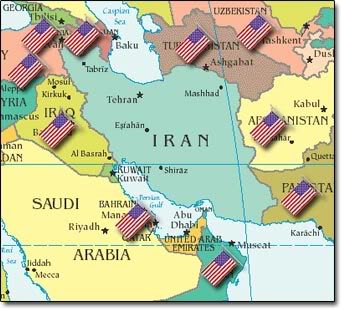 There are approximately 8,500 US troops in Afghanistan, with most being located at major installations in the capital, Kabul, and at the US airfield in Bagram.
Professor Etler said, “With the lame duck Obama administration quickly coming to an end the question of the US/NATO presence in Afghanistan comes to the fore.”
“The Afghan war which began in 2001 has been the longest that the US has fought. After thousands of casualties and billions of dollars Afghanistan is less secure than any time since the US invasion with one third of the country under Taliban control and a plethora of Takfiri terrorist groups infiltrating the territory,” he stated.
“As things now stand the interminable US/NATO occupation of Afghanistan appears to be headed for another round of escalation,” the analyst noted.
Will Trump follow through on his vow to leave Afghanistan?
Professor Etler said that “there is a new administration set to be installed in Washington.”
“Trump has vociferously stated time and time again that Afghanistan is a rat hole into which the US has heedlessly sent thousands of US soldiers and spent billions of dollars to little if any effect. Trump in a tweet from 2013 succinctly said, ‘Let’s get out of Afghanistan. Our troops are being killed by the Afghanis we train and we waste billions there. Nonsense! Rebuild the USA,’” he stated.
“The question is will Trump once he’s in the White House live up to his words? And if he does what will happen to Afghanistan? Will it become a hot bed of Takfiri terrorism like Iraq and Syria? The Taliban are an indigenous force motivated by nationalist fervor to expel foreign occupiers of whatever sort. They have demonstrated that they will unrelentingly persist in their resistance no matter how long it takes,” he said.
“The only way out is multinational negotiations in which the Taliban participate as fully vested members. Russia and China, hoping to stem the tide of Takfiri terrorism gaining a foothold on their borders, have already stepped into the breach,” he said.
“Late in 2016, Russian, Chinese and Pakistani officials met in Moscow calling for a flexible approach towards working with the Taliban to foster a peaceful dialogue,” the researched argued.
“The Taliban have also maintained strong links to China, having sent a delegation to discuss the situation in Afghanistan in July 2016 and declaring that they will protect Chinese interests in a $3 billion copper mining project in the northern part of the country,” he stated.
“The best case scenario for peace in Afghanistan is multilateral negotiations between the Afghan government, the Taliban, Pakistan, Russia and China to establish a government of national unity in which the Taliban are full participants,” the analyst noted.
“As with the recently brokered ceasefire in Syria there is no need for US/NATO involvement. In fact, as Trump has previously stated, it’s time for the US to get out and go home. Let the adults resolve the issues that the US and its NATO allies have only exacerbated,” he advised.
“But will Trump do as he says? Will he let others succeed where the US has failed? Only time will tell,” he concluded.
Turkish Officials Say American TOWs are Hurting Them Big Time
By Martin Berger – New Eastern Outlook – 03.01.2017
 It came as a big surprise that Turkey’s President Recep Tayyip Erdogan has recently labeled members of the US-led coalition as promise breakers and supporters of terrorists. According to the Turkish leader, this coalition provides support to various terrorist groups, including ISIS, YPG, PYD and Ankara has the evidence to back up that claim.
But what exactly offended Ankara so much? Over the past few days, Turkey has been suffering extremely painful defeats from the Islamic State in the Syrian city of Al-Bab. Previously the troops employed in the Euphrates Shield operation successfully taken western suburbs of Al-Bab were planning to occupy the heights overlooking the city. However, ten days ago the “shield” cracked, when ISIS units opposed Turkish troops in a frontal assault, inflicting heavy losses upon the Turkish army. Radical militants report that in just one Turkey lost up to 70 soldiers and three modern tank. Immediately after the announcement ISIS started spreading videos featuring the destruction of Turkish armored vehicles. The Turkish General Staff announced that it lost 14 servicemen, 10 German manufactured Leopard tanks, an M-60 main battle tank, personnel carriers and a Cobra armored vehicle. The pictures that can be found now on the Internet depict Turkish armored vehicles severely damaged by TOW missiles that in recent years have “suddenly” started appearing in the hands of ISIS radicals.
But nobody should be really surprised at this point, as Turkish media were reporting in late December that Washington was stepping up its weapons supply efforts to radicals via the Syrian Al-Hasakah Governorate. It’s been noted that as the US Ambassador to Ankara, John Bass kept persuading Turkish reporters that Washington was not supporting militants directly, the airfield in the Syrian city of Rumeylan saw an ever increasing number of US transport planes landing. The payload that they were carrying would soon be transported by US helicopters to different parts of the country. According to Turkish journalists, the last large delivery of weapons occurred on the evening of 27 December. It has also been noted that weapons are being delivered to Syria via hundreds of trucks, carrying their deadly cargo from the Iraqi city of Erbil to the areas controlled by the Syrian Kurds.
We have seen various commentators noting that under the guise of military assistance to the Kurdish Peshmerga, the Obama administration is actively assisting various extremist groups in Syria by secretly supplying them to with all sorts of weapons, along with the so-called “advisers” in a bid to topple the legitimate Syrian government.
It’s no coincidence that after the liberation of Aleppo, Syrian troops found stockpiles of weapons and explosives manufactured in the US, Germany and Bulgaria, including a large quantity of anti-tank missiles.
While the Aleppo operation has been a turning point in the Syrian armed conflict, the White House is still in a hurry to provide maximum support to the so-called “moderate opposition” in Syria, but now it’s clear for pretty much everyone that Washington is assisting ISIS. Last December alone Turkish bloggers spotted the passage of three large cargo ships through the Bosporus Strait, presumably carrying arms for the Syrian rebels. In particular, in mid-December a freighter Karina Danica left the Bulgarian shore, while heading to Jeddah, Saudi Arabia, with weapons on board, reports Bosphorus Observer on Twitter. This data is confirmed by a specialized tracking site known as MarineTraffic. It is a publicly known fact that the freighter Karina Danica is a Danish vessel, chartered by the American company Cherming, which is the official supplier of non-standard NATO weapons for the US “allies” in Iraq, Syria and Afghanistan. It’s curious that the Bulgarian Vazovski Machine-Building Plant that sells weapons to Cherming, increased its sales by 12 times in 2016, making a profit of 170 million dollars.
What makes this whole arms supplies story awkward is the scandal that broke out in 2015, when the Chairman of the Iraqi Parliamentary Committee on Defense and Security, Hakim Zamili asked PM Haider al-Abadi to intervene immediately to stop the 300 million dollar ammunition deal involving Romanian weapons being delivered to ISIS directly, while financed by one of the neighboring countries. In 2016, the director of the Conflict Armament Research, James Bevan stated that the weapons from Eastern Europe that were officially designated for the so-called “moderate opposition” are falling in extremist hands.
The decision to supply anti-government troops in Syria with all sorts of weapons, including MANPADS, that was signed by President Barack Obama on December 23, may lead to the further escalation of the Syrian conflict and new victims.
So there’s more than enough reason for Ankara’s resentment of the Obama administration, since it is directly responsible for every single Turkish soldier murdered by radical militants.
Featured Video

Racist Seinfeld Dances for Joy as Bibi Unveils His New Map
or go to
Aletho News Archives – Video-Images
TV Drama Review
Japanese drama projects Japan’s wartime atrocities onto Chinese characters

Global Times | October 25, 2026
By portraying Chinese characters as perpetrators of ruthless violence while casting Japanese Self-Defense Forces (SDF) intelligence operatives as defenders, the season 2 of the Japanese drama Vivant has recently drawn criticism from Chinese netizens, who argue that its depiction turns historical reality on its head while ignoring Japan’s wartime atrocities.
The TBS drama series – a spy suspense story in which an alleged unofficial intelligence unit of the SDF operates across the globe — has attracted a passionate fanbase. Its currently airing season 2 opened with a household rating of 18.8 percent, the highest for a TV drama this year, according toa commentary article by Japanese media Toyo Keizai.
What draws attention is the portrayal of the enemies in the series, the article noted. Scenes in which the Chinese organization subjects kidnapped members of the SDF unit to brutal torture are repeated with unrelenting intensity.
It is rare for Japanese TV dramas to explicitly portray a real-life country as the enemy, the article noted.
Japanese Prime Minister Sanae Takaichi also made a reference to the drama, saying that she has been recording Vivant and hopes to binge-watch it over the year-end and New Year holidays, according to Japanese media outlets.
China’s CCTV News report on Sunday revealed that the drama features scenes in which Chinese personnel cut off the fingers of and stab Japanese intelligence operatives in the abdomen. Such acts bear striking similarities to the torture inflicted on Chinese nationals by invading Japanese troops during the World War II.
The drama distorts the truth by attributing these atrocities to modern Chinese characters. Beneath the surface, it subtly glorifies Japan’s cross-border overseas operations, blurs the functional boundaries of the SDF and implicitly promotes an expansionist narrative, per CCTV News. … continue
Blog Roll
 Aletho News
- EU facing trillion-euro debt hole while seeking more cash for Kiev
- How US, Europe, Persian Gulf states exhausted missile stockpiles, splurged billions to defend Israel
- Up in arms… Koreans reject U.S. empire’s plan to make South Korea the next Ukraine
- Iran, Turkey, Pakistan, Saudi Arabia could advance region-led security framework in Tehran: FM spox
- Netizens condemn Japanese drama for projecting Japan’s wartime atrocities onto Chinese characters
- Racist Seinfeld Dances for Joy as Bibi Unveils His New Map
- A West Bank War for Netanyahu’s Election Campaign, Could It Backfire?
- Yemen denounces European Parliament’s ‘hypocritical’ push to blacklist Ansarullah
- Qalibaf: UAE’s UN bid aims to ‘clear the runway’ for ‘Greater Israel’, whitewash genocide
- Pakistan reopens Iran border after boosting security: Report
- If Americans Knew
- An error has occurred; the feed is probably down. Try again later.
- No Tricks Zone
- Sudden Stratospheric Warming, Powerful El Niño Combination May Lead To Extreme Europe Cold, Energy Crisis!
- Two New Studies Find Thwaites Glacier Melt Cannot Be Driven By Human Activity Or A Warming Ocean
- E-Cars Reduce CO2 Emissions By Only 41% Compared To Internal Combustion Engine Vehicles
- Predictions Made By Renowned Climate Professor Over Past Decades Have Been Proven To Be Poor
- New Study Suggests Large Regions Of The Pacific Ocean Have Been Cooling For The Last 80 Years
- Germany’s Green Energy Debacle: High Energy Costs Force Kahla Porzellan to Close After 182 Years!
- New Study: 50 Years Of The Most Aggressive ‘Net Zero’ Policies Can Only Affect The Global Climate By 0.03°C
- US September “Heat” Was No Record…Many Records Set Decades Ago
- Latest European Green Energy Debacle; Portugal’s Largest Flagship Solar Park Insolvent!
- Green Energy Debacle: German Expert Professor Fritz Vahrenholt Warns Of Severe Economic And Social Consequences


