Thousands of Saudi-Backed Terrorists Ready to Enter Syria via Border with Jordan
FARS News Agency | August 13, 2016
Saudi intelligence officers have been training at least 7,000 anti-Syria fighters in Jordan’s territories and plan to dispatch them to the war-hit country via its Southern borders to distract the army from the war in Aleppo, Arab media disclosed.
“Over 7,000 men have been trained in a Saudi-established military camp in Jordan near the border with Syria’s Dara’a province, and now they are ready to be dispatched to join other terrorists’ battle against the Syrian government and army,” the Lebanese al-Manar reported.
“There are several British and western military trainers and advisors in the Saudi-established camp. The western officers are to accompany the fighters in their war against the Syrian government,” the paper said.
Jordan hosts a large refugee camp near the border with Syria.
Other sources also disclosed that the US officers have been involved in the training of terrorists in Jordan to fight against Syrian government.
War analysts believe that the move is aimed at diversion to distract the army and its allies from the war in Aleppo in the North where pro-government troops have started a massive offensive to take back the country’s second largest city from the terrorists.
Meanwhile, earlier today, armed opposition groups in Southern Syria declared that thousands of militants are ready to reconcile with the Damascus government.
A provincial council affiliated to the militant groups in a statement admitted that 25,000 militants are looking for reconciliation with the Syrian government forces in Southern Syria, al-Mayadeen TV channel reported on Saturday.
The statement by the ‘Council for Men of Knowledge in the Levant’ has accused the terrorist commanders of being willing to compromise with the Syrian army of treason. It has given the militant commanders in Southern Syria three days to withdraw from al-Mouk Operations Room (which operates under the Saudi, Qatari, the US and Jordanian spy agencies), the television added.
The Al-Mouk Operations Room has been accused of corruption, similar reports in a number of other Arab media have cited the financial corruption of the Operations Room members as a main cause of the militants complaint and their decision to surrender to the Syrian army.
Early in August, around 1,000 rebels laid down their arms and turned themselves in to the Syrian officials in the province of Dara’a amid the terrorist groups’ threats against those who surrender to the government.
In February, the Syrian Army dispatched more soldiers to the country’s Southern provinces to be deployed at the border with Jordan to defend the country against the possible aggression of the Saudi Army.
“A large convoy of reinforcements from the Syrian capital of Damascus arrived to the 5th Armored Division headquarters of the Syrian army in the town of Izra in the Northern part of Dara’a province and the Eastern part of Sheikh Meskeen,” the sources said.
“The Saudi Army has been conducting a number of military drills in the Kingdom of Jordan in recent weeks, raising the alert level of a possible war in the Dara’a province,” the sources said, adding, “So far, nothing has come of these Saudi military drills and it is very unlikely that they will attempt to enter Syria.”
The significance of the GOP’s attempted purge of Donald Trump
By Daniel Haiphong | American Herald Tribune | August 11, 2016
The GOP is trying to oust Donald Trump from the Presidential campaign trail. Numerous GOP officials and corporate media reports have indicated that Donald Trump may drop out of the race. Curiously, the news comes just weeks after Trump walked away from the Republican National Convention with the nomination. No other candidate came close in total number of delegates in the state primaries and the proposed roll call from dissenting delegates failed to bring results. The attempted ousting of Trump reflects both the fracturing of the Republican Party and the rupture of the two-party corporate duopoly generally in this election cycle.
This isn’t the first time establishment Republicans have attempted to push Trump out of the race. When Trump began picking up momentum earlier in 2016, many well-known Republicans refused to endorse him. Republican Mitt Romney made a video appearance at the Democratic Party National Convention to warn of the dangers of a Trump presidency. The Business Round Table, a collection of corporate executives, also warned New York Times readers of Trump’s possible Presidential victory. Even the Koch Brothers are sabotaging Republican Party supporters of Trump by pulling their funding from his supporters in Washington.
The reason for the ruling class’s fear of Trump is clearly articulated from the source. Trump is unpredictable and his message uncontrolled. There are times when Trump speaks to working class anxiety by repudiating trade deals and calling to re-regulate the financial sector. There are others when Trump is easily baited into traps set by the Democratic Party. In recent weeks, the Democratic Party has attempted to frame Trump as an unpatriotic traitor. Trump has reaffirmed his support of Russian President Vladimir Putin and refused to take back remarks regarding the heroism of a Muslim American soldier who died in combat in Iraq.
While power struggle between the Democratic Party and Republican Party is nothing new, Trump’s impact on the two-party corporate duopoly should not be understated. Trump has destroyed the GOP’s infrastructure. His rhetoric has inspired emboldened racist elements of the working class as well as legitimate class grievances among the Republican Party base. Trump has occupied a vacuum that its corporate-backers have refused to fill. No longer can the Republican Party operate as it did in the past without losing ground to the increasingly conservative Democratic Party.
For nearly five decades, the Republican Party has positioned itself the party of white supremacy. The Democratic Party has been able to place unions, Black voters, and white liberals under its tent over this period. However, the neo-liberal crisis of capitalism has changed this dynamic dramatically. The gap between Democratic Party rhetoric and policy has widened since the early 1980s. This has forced Republicans to move further to the right in the midst of Democratic Party-led wars, austerity measures, and assaults on civil liberties.
Donald Trump represents an existential threat to the very existence of the GOP. In her speech at the Democratic National Convention, Hillary Clinton herself admitted that she would be a President for “Democrats, Republicans, and Independents.” She was thus very forthright in extending an invitation to refugee Republicans into her “big tent” campaign. Clinton’s neo-liberal, imperialist agenda is attractive to a Republican Party establishment that has effectively lost its base to Trump. Trump’s erratic behavior only further endangers his ability to defeat Clinton’s strategy and bring victory to what is left of the Republican Party.
A series of interviews on “Democracy Now!” have clarified the depths to which the Clinton campaign seeks to use fear of Donald Trump as its catalyst for victory. In two separate debates, Green Party supporters Kshama Sawant and Chris Hedges confronted Clinton operatives Rebecca Traiser and Robert Reich. Traitser and Reich refused to address concrete policy and instead promoted a Clinton Presidency on the basis of the dangers of Donald Trump. The debates confirmed that Hillary Clinton and the Democratic Party have become virtuously indefensible. Such a realization has forced the two-party corporate duopoly into a crisis situation, especially on the Republican Party side. Either the Republican Party establishment gets behind Trump or it joins forces with the increasingly conservative Democratic Party machinery led by Clinton to defeat the “fascist” casino capitalist.
The fact the Republican Party has not distanced itself from rumors of Trump’s departure indicates that there is a significant portion of GOP leaders who would prefer a Hillary Clinton Presidency. Hillary Clinton is, after all, the chosen politician to serve the capitalist oligarchy. Clinton has received tens of millions of dollars in donations from hedge funds and various other Wall Street donors. This places Trump at a glaring disadvantage. Yet this disadvantage has been mitigated by the open rebellion both Democratic and Republican Party bases are waging against the establishment.
The conditions that created the revolt of young voters in the Democratic Party and the entire base of the Republican Party are not going away. Trump may step down, or he may continue on in his campaign. Whatever the case, the legitimacy of the two-party duopoly will remain tenuous at best. Millions of people are sick and tired of war, austerity, poverty, and a system that represents no one but the elite. A mass break with the two-party system is on the horizon and Trump’s campaign has played a significant role in speeding up the process. So the conversation about Trump should not be confined to his personality or his reactionary character. It should center on the root causes of his rise to the GOP nomination and what that means for the future of US political landscape.
With Libya, US Now Has Ground Forces In Four Wars

Photo by Ali Tweel on Flickr. Original: https://flic.kr/p/HWGom3
By Dan Wright | ShadowProof | August 11, 2016
While it is impossible to know all the dirty deeds of America’s sprawling global empire, news that US ground forces are now fighting in Libya means that US troops are involved in at least four active wars:
Afghanistan: A planned draw-down of troops in 2015 was curtailed by President Obama to leave more troops for combat and advisory missions. This week, US forces were forced to abandon military equipment that then fell into the hands of ISIS.
Iraq: After a removal of major combat forces in 2011, Iraq has become a battleground once again. President Obama has sent roughly 4,600 troops in for combat and advisory roles and built a new base in northern Iraq called “Firebase Bell.”
Syria: Though the US had been supporting Syrian rebel groups, including jihadists, since 2013, US troops have entered the fighting in the country. In January of this year, US special forces took control of a military base in northern Syria.
Libya: In 2011, the US assisted in the overthrow of the Gaddafi government in Libya. In the aftermath, Libya has fallen into total chaos, making it ripe for ISIS to establish a significant presence. Now, according to the Pentagon, US forces are fighting on the ground to drive ISIS out.
This excludes all of the off-the-books special operations in over 100 countries, and the major role the US is playing in supplying weapons for Saudi Arabia’s war on Yemen. Among those weapons are controversial cluster bombs, which are banned by many countries for their impact on civilians.
Preceding the Yemen civil war, the US had an active drone assassination program in the country, which included the targeted killing of American citizens. The drone assassination program continues throughout the greater Middle East.
According to the Obama Administration, these military operations are legally justified by the 2001 Authorization for Use of Military Force [PDF], which stated “the President is authorized to use all necessary and appropriate force against those nations, organizations, or persons he determines planned, authorized, committed, or aided the terrorist attacks that occurred on September 11, 2001, or harbored such organizations or persons, in order to prevent any future acts of international terrorism against the United States by such nations, organizations or persons.”
The bland, vague language apparently justifies any war in any part of the world. So, maybe the US will soon have troops in five active wars. Hell, make it six.
Washington Escalates Covert Backing for Al Qaeda Militias in Aleppo
By Thomas Gaist | World Socialist Web Site | August 9, 2016
US-backed militias fighting against the Syrian government of Bashar al Assad have broken through the Russian and Syrian government encirclement of their positions inside the war-ravaged northern Syrian city of Aleppo, according to Western media.
During fierce battles over the weekend, the US-backed, Islamist-led militia coalition known as Jaysh al Fateh overran military bases in southwest Aleppo and secured an access road connecting the city to the rest of the country. Russian war planes and Syrian and Iranian ground forces counterattacked Sunday, targeting the anti-Assad forces with aerial bombardments and artillery.
According to Syrian opposition leader Anas al-Abdah, the Islamist offensive has achieved “almost a miracle,” leaving the anti-Assad forces poised to “break the siege and move into a stage where we are talking seriously about liberating the city.” The offensive has carved out a slim corridor linking Aleppo to rebel-held areas, raising the possibility of resupply operations for the desperately besieged Western-backed forces.
The encirclement of Washington’s extremist groups inside Aleppo, who have been reduced to a diminishing pocket in the city’s north and western sectors, in the face of a redoubled Syrian offensive backed by Russian air power and Iranian ground forces, came as a humiliating reversal for US imperialism. Washington has orchestrated a relentless civil war in Syria since 2011, killing hundreds of thousands of Syrians, without achieving its aim of toppling the Damascus regime and installing a neocolonial puppet government.
During the opening phases of the US-NATO orchestrated war, the anti-Assad militias seized control of large areas of the city, which they sought to utilize as a base of operations and object of plunder. Prior to the outbreak of the war, Aleppo’s population numbered between 1 and 2.5 million, according to varying estimates. Today, some 50,000 civilians are estimated to eke out an existence amid the rubble. The city as a whole has been without electricity and running water for more than a year, and entire neighborhoods are completely razed to the ground.
In recent weeks, with the Turkish government of President Recep Tayyip Erdogan withdrawing support for the rebels, in retaliation for Washington’s involvement in the failed July military coup attempt, the American-backed militias have faced the imminent possibility of defeat.
It is not coincidental that the ferocious US-backed assault is unfolding on the eve of Turkish President Erdogan’s trip to St. Petersburg, for talks with Russian President Vladimir Putin, on Tuesday. There are well-grounded fears in American ruling circles that Erdogan will reach a broad-based agreement with Putin, one that would close off all remaining supply routes necessary for sustaining the war against Damascus.
The cause of the sudden reversal in the fortunes of the anti-government forces, who, if US media reports can be believed, have seized the initiative from the jaws of total defeat, was quietly acknowledged in reports published by the New York Times on Saturday and Monday, titled “Military Success in Syria Gives Putin Upper Hand in US Proxy War” and “Rebel Offensive in Syria Challenges Government Siege of Aleppo.”
As Saturday’s Times piece noted, the US Central Intelligence Agency (CIA) has been supplying the Al Qaeda-linked militias with virtually unlimited supplies of sophisticated antitank missiles and other weaponry.
The US-backed rebel coalition, which has been dominated by the Al Nusra Front, “would receive new shipments of the antitank weapons as soon as the missiles were used,” according to comments from a rebel commander made in 2015, and quoted by the Times Saturday.
“We ask for ammunition and missiles, and we get more than we ask for,” the anti-Assad commander said.
In contrast to the Obama administration’s assertions that the shipments were being curtailed and funneled exclusively to “moderate forces,” in reality the CIA has been surging support for the encircled anti-Assad militias in Aleppo, foremost among which are the Al Nusra fighters.
As the Times update on Monday forthrightly acknowledged: “A vital factor in the rebel advance over the weekend was cooperation between mainstream rebel groups, some of which have received covert arms support from the United States, and the jihadist organization formerly known as the Nusra Front, which was affiliated with Al Qaeda.”
The infinite mendacity and hypocrisy of both the Times and the American imperial policy it defends could hardly find sharper expression.
The newspaper presents the change in name and formal disaffiliation of Al Nusra from Al Qaeda as some distant memory, when it was, in fact, announced barely a week and a half earlier. Like most of the Western media, the Times now cheers on the supposed battlefield successes of the so-called “rebels,” who, until the end of July, swore allegiance to Al Qaeda, supposedly the main target of Washington’s 15-year-long “war on terrorism.”
Moreover, in recent weeks, as US intelligence outfitted the surrounded Al Qaeda “rebels” in preparation for a new bloody offensive, America’s top diplomat, Secretary of State John Kerry, has touted steps toward a US-Russian military cooperation pact in Syria, the centerpiece of which would supposedly have been joint strikes against Al Nusra. While Kerry was pledging military cooperation with Moscow, along with joint “counterterrorism” operations, the CIA was giving weapons hand over fist to the Al Qaeda-affiliated forces, dumping fuel on a simmering US-Russian proxy conflict, with the potential to engulf broad areas of the Middle East and Europe in all-out war.
The downing of a Russian Mi-8 transport helicopter over Syria’s Idlib province Monday, which produced the largest single death toll for Russian forces operating in Syria since Moscow launched its intervention last year, grimly illustrated the lethal dynamics being unleashed by American imperialism’s ever more reckless pursuit of unchallenged hegemony over the strategic Levantine nation.
The US media celebrations of the “rebel” victory cannot be taken at face value, and must be weighed against reports from the Syrian government side, which have presented the scope of the rebel counteroffensive in more modest terms. Whatever the true extent of the rebel advances on the ground, it is already clear that the intensified fighting will serve as the political basis for a major military escalation by Washington.
In an interview with Fox News this weekend, Democratic presidential frontrunner, Hillary Clinton, issued bellicose threats against Russia, stating that “the facts raise serious issues about Russian interference in our elections, in our democracy.” Clinton has made clear her intention to pursue a massive escalation of the Syrian war and the broader US war drive against Russia if she wins the White House, saying during last year’s Democratic Party debate, “We have to stand up to his [Putin] bullying and specifically, in Syria.”
While the Obama White House prefers to delay a major escalation until after the elections, the weakness of the American position on the ground is forcing the administration to consider direct strikes against Damascus. Former Obama administration adviser, Dennis Ross, suggested last week that the White House should “begin speaking in a language that Mr. Assad and Mr. Putin can understand,” and employ direct cruise missile and drone strikes against Assad’s military infrastructure.
In the event that the government crushes the rebel attack, powerful factions within the US establishment can be counted on to press for the most aggressive measures against Assad, to be launched in the name of salvaging the American proxy forces, which have been built up at a cost of billions in CIA-supplied cash and weapons.
Even should the Al Qaeda-linked forces complete the breakout, and reassert control over Aleppo and the surrounding region, this will only set the stage for a massive government counterattack, and thus provide a suitable political pretext for further escalation by Washington. Beneath the fog of war in Syria, the only certainty is the constantly growing tendency toward a US-Russian clash that poses the gravest dangers for humanity.
Paradigm Shift: Europe’s Infatuation for US Democrats Comes to an End
Sputnik | August 10, 2016
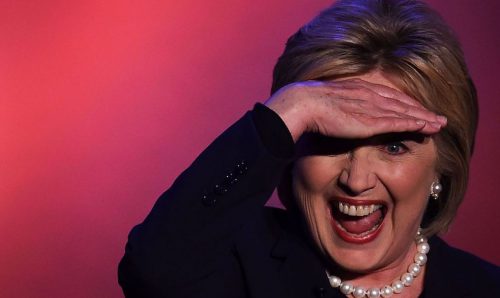
As for the United States leadership, the Europeans’ sympathies normally rest with Democratic presidential candidates who are traditionally regarded as more peaceful and reliable than their Republican counterparts. In the upcoming election, however, there are things that may tip the scale in favor of the Republicans.
In Sweden, like its other EU peers, the mainstream media keep touting Hillary Clinton as the preferred candidate, through incessantly painting her Republican rival Donald Trump as an “oddball” and “madcap.” Swedish newspaper Skånska Dagbladet obviously went against the flow as it took a stand against the aspiring Democratic president. According to Skånska Dagbladet’s editor-in-chief Lars Eriksson, Hillary Clinton makes Nixon look like Mahatma Gandhi.
By his own admission, Eriksson himself normally would support the Democratic Party, as its presidential candidates used to be more concerned about the welfare system and were less belligerent. Fittingly, many pinned their hopes on Barack Obama as a “peace president,” but the situation only grew worse in comparison to the Bush years.
“During four of Obama’s years in office, the United States had a disagreeably warmongering state secretary in the person of Hillary Clinton, who shares a huge joint responsibility for the continuing chaos in Iraq, the disintegration of Libya, the civil war in Syria and the refugee disaster that followed. To top it all, today there is overwhelming evidence of how the US contributed to the emergence of Daesh,” Eriksson wrote.
“The possibility of the US to get a warmongering president like Hillary Clinton, who also seems to be completely devoid of self-criticism, is a very daunting prospect. No wonder that the US military-industrial complex gives her such a massive support,” Eriksson noted.
Eriksson also pointed out that Europe risks huge refugee flows in view of uncertainty in Turkey as well as the US’ and EU’s attempts to destabilize Russia after the coup in Ukraine, where the democratically elected president was forced to flee. According to Eriksson, a civil war in the mid-Eastern nation of 75 million, which currently serves as a barrier for the migrants, would spell doom for Europe. The same applies for Russia, which is being baited by Washington’s bizarre provocations, such as placing arms near the Russian border.
“In the late 1990s, there was reason enough to be optimistic about the world’s future development. The collapse of Soviet communism made Eastern Europe democratic. After the chaos of pure predatory capitalism in Russia, a strong and determined president in the person of Vladimir Putin emerged, who bet hard on economic growth and peaceful co-existence. Today, only rubble remain of this bright future,” Eriksson wrote, citing American hostility.
According to Eriksson, the Republican line-up for this year’s presidential election was initially more hopeful than the Democratic one, with Hillary Clinton being the tipped favorite from the start. However, hopes for a peaceful development have now faded away by reason of “Trump’s gaffes,” despite his sharp criticism of Obama’s and Clinton’s “dangerous foreign policy,” he noted.
“Today, Hillary Clinton, known for both her choleric temper and trigger-happiness that may get Nixon to appear as Mahatma Gandhi, looks like the likely winner,” Eriksson pointed out.
Read also:
Ka Me, Ka Thee: Norway Subs Clinton Foundation to Buy Influence
Israeli Study: ISIL Destruction ‘Strategic Mistake’
Al-Manar | August 10, 2016
An Israeli think-tank said that the West should seek the further weakening of the Takfiri ISIL group, but not its destruction.
Begin-Sadat Center for Strategic Studies considered as a “strategic mistake” the destruction of ISIL, stressing that a weak but functioning ISIL can have many advantages.
“A weak but functioning IS can undermine the appeal of the caliphate among radical Muslims; keep bad actors focused on one another rather than on Western targets; and hamper Iran’s quest for regional hegemony,” Efraim Inbar said in his study published on August 2.
“A weak IS(ISIL) is, counter intuitively, preferable to a destroyed IS. IS is a magnet for radicalized Muslims in countries throughout the world. These volunteers are easier targets to identify, saving intelligence work. They acquire destructive skills in the fields of Syria and Iraq that are of undoubted concern if they return home, but some of them acquire shaheed status while still away – a blessing for their home countries. If IS is fully defeated, more of these people are likely to come home and cause trouble.”
Meanwhile, the study said that the destruction of ISIL could strengthen Russia’s grip on Syria, bolster its influence in the Middle East and enhance Iranian control of Iraq contrary to American objectives in that country, and the two effects are not in the West’s interests.
On the other hand, the study added that the destruction of ISIL could also benefit Hezbollah.
“Furthermore, Hizballah (Hezbollah)… is being seriously taxed by the fight against IS, a state of affairs that suits Western interests. A Hizballah no longer involved in the Syrian civil war might engage once again in the taking of western hostages and other terrorist acts in Europe.”
The Western distaste for ISIL brutality and immorality should not obfuscate strategic clarity, Began-Sadat Center added, noting that ISIL “are truly bad guys, but few of their opponents are much better.”
“Allowing bad guys to kill bad guys sounds very cynical, but it is useful and even moral to do so if it keeps the bad guys busy and less able to harm the good guys.”
Turkish media: NATO is a bag of snakes
By Martin Berger | New Eastern Outlook | August 10, 2016
The meeting that Russia’s President Vladimir Putin held with his Turkish counterpart Recep Tayyip Erdogan in Saint Petersburg has literally attracted the same amount of media attention as the Rio Olympics.
Erdogan arrived to Saint Petersburg in the afternoon hours of August 9 and the initial talks were immediately followed by negotiations with various ministers and a press conference, after which the two leaders met with the representatives of Russian and Turkish business circles.
The meeting had more than 200 media people accredited that crowded the massive press center that was provided to them. Turkish media called it a “massive surprise” that Erdogan brought a number of ministers along with him, including Minister of Tourism and Culture of Turkey Nabi Avci, Minister of Energy and Natural Resources Berat Albayrak, Minister of Food, Agriculture and Livestock Faruk Çelik, as well as the Deputy Prime Minister of Turkey Mehmet Simsek. Erdogan has also been accompanied by the head of National intelligence organization Hakan Fidan, whose presence in the delegation Turkish media sources described as “truly unexpected.”
However, even before Erdogan’s plane touchdowned in Saint Petersburg, various media sources rushed to provide their assessment of the meeting.
In Turkey, all newspapers and sites without exception emphasized the importance of this visit for the further development of the Turkish economy, that suffered a massive blow once Russia introduced travel and trading restrictions in the aftermath of the downing of Russia’s Su-24 over Syria. Journalists have been expressing the hopes of a stable union of the two states being reestablished along with the fruitful cooperation in regional security matters getting a new start, including the fight against terrorism, extremism and organized crime.
Certain analysts stressed the fact that the meeting between Erdogan and Putin is a new milestone in the struggle between the Atlantic and Eurasia. It is important not only in terms of the future of the Turkish-Russian relations, but also in terms of building the international system, the formation of a new world focused on the Middle East, North Africa and Eurasia. Those analysts are convinced that the West is terrified by the prospects of Turkey abandoning all cooperation with the US, the EU and NATO and becoming a part of another block of international players.
According to the German magazine Spiegel, what we’re witnessing is a stressful development for the West, since Erdogan has been criticizing Berlin, Vienna and Washington on the daily basis since the failed coup took place, but he’s been speaking highly of Moscow, while referring to Putin as “my dear friend Vladimir.”
The Turkish media source Haber7 has been pretty vocal in criticizing NATO and its states. It would note that NATO is a bag of snakes, a gang of bandits created in the name of protecting Washington’s interests. The North Atlantic Alliance has been used by the West to suppress weaker states of Asia, Africa, South America, in a bid to make obedient servants out of them. NATO is the main sponsor and mastermind behind revolutions and armed coups in Muslim countries and the countries of the third world. Haber7 notes that unless Turkey and the Islamic countries create their own defense organization, they would be unable to evade the pressure, the threats, and the meddling of NATO’s forces of evil. There is no Communist threat, no Soviet Union anymore, the media source argues, but what is the reason then for NATO’s existence?
The change of Turkey’s standing in its relations with the West has been noted by Tayyip Erdogan in his interview with the French Le Monde. Turkey’s President noted that instead of solidarity with Turkey, instead defending the democratic principles, the West chose to leave Ankara alone. He stated that Turkey is saddened by the fact that John Kerry arrived to Ankara 45 days after the failed coup, which means that Washington has abandoned its strategic ally.
The Financial Times, in its turn, would stress the fact that a few hours after the visit of the Chairman of the Joint Chiefs of Staff, Joseph Dunford to Turkey, Erdogan made the harsh statement that shocked the West, when he stated that there’s no way the US could be Turkey’s strategic partner, if it fails to extradite the man that is acting against Turkey’s interests.
The German Focus notes that the pact of friendship between Putin and Erdogan can seriously shift the balance of powers in the world. Should Turkey side with Russia on all matters, the West will be crashed. German journalists that the United States won’t be able to stomach this fact. For instance, the Wall Street Journal notes that the restoration of bilateral relations between Turkey and Russia, take Erdogan and Putin further away from the West.
Following the talks, the two president adopted a number of decisions aimed at facilitating the development of bilateral relations, in particular on the preparation of the medium-term program of economic, scientific and technical cooperation until 2019. The construction of the first string of the “Turkish stream” pipeline may begin in the near future too.
There’s no doubt that the meeting between Erdogan and Putin will bring the two states closer together, even though the West has been terrified by the possibility of this development all along. And the reason for that was the short-sighted Western policies of pursuing confrontation along with the neglect Washington has shown to both Turkey and Russia.
US approves $1.15 billion sale of arms to Saudi Arabia
Press TV – August 9, 2016
The United States has approved the sale of more than 130 Abrams tanks, 20 armored recovery vehicles and other equipment worth about $1.15 billion to Saudi Arabia.
The Defense Security Cooperation Agency, which is part of the Pentagon and facilitates foreign arms sales, informed lawmakers on Tuesday that the State Department has approved the deal.
The potential sale to Saudi Arabia still faces approval by Congress, which could block it.
The agency said the sale would contribute to US national security by improving the security of a regional ally.
It added that General Dynamics, an American aerospace and defense corporation, would be the principal contractor.
“This sale will increase the Royal Saudi Land Force’s (RSLF) interoperability with US forces and conveys US commitment to Saudi Arabia’s security and armed forces modernization,” the agency said on its website.
The US government is expected to authorize more than $40 billion worth of foreign military sales this year, the Pentagon has confirmed.
The potential sale by Washington comes as Saudi Arabia and its Persian Gulf Arab allies launched a military aggression against Yemen in March 2015 in a bid to bring the country’s former president Abd Rabbuh Mansur Hadi, a staunch ally of Riyadh, back to power and undermine the Ansarullah movement.
Yemenis say most of the victims in the Saudi airstrikes are civilians.
A UN report leaked to the Guardian in January found “widespread and systematic” targeting of civilians in the Saudi-led strikes.
The report found 119 strikes which violated international humanitarian law, including attacks on health facilities, schools, wedding parties and camps for internally displaced people and refugees.
Featured Video

Iran FM Araghchi: “Hormuz Will No Longer Be the Same”
or go to
Aletho News Archives – Video-Images
From the Archives
Sam Husseini: The entire US establishment helped lie their way into the Iraq war
By Slava Zilber | American Herald Tribune | October 14, 2019
Sam Husseini is a senior analyst with the Institute for Public Accuracy, independent journalist and contributor to The Nation and FAIR.
Slava Zilber: Sam, three years ago, you appeared on Talk Nation Radio with David Swanson and spoke about the case of the GCHQ whistleblower Katharine Gun. You pointed out that the people involved in the spying on the UN and the people authorizing the Iraq War were not held accountable:
“Virtually everybody who went along with the war, whether it is Kerry or Clinton, of course, the Bush administration themselves has falsified their own records in terms of why, what they did, when they did, why they did it, to the extent that they’ve been scrutinised at all.”
You also address it in a recent article. And recently, Joe Biden has been lying about his position on the Iraq War. How can such an important issue escape meaningful scrutiny? … continue
Blog Roll
 Aletho News
- Trump peddles fresh falsehoods, claims Iran ‘started the war’ as US aggression drags on
- Ukraine quagmire? Yes, but it’s for NATO, not Russia
- US intelligence hypes Chinese, Russian space threats while accelerating its own military buildup in orbit
- Iran FM Araghchi: “Hormuz Will No Longer Be the Same”
- EU facing trillion-euro debt hole while seeking more cash for Kiev
- How US, Europe, Persian Gulf states exhausted missile stockpiles, splurged billions to defend Israel
- Up in arms… Koreans reject U.S. empire’s plan to make South Korea the next Ukraine
- Iran, Turkey, Pakistan, Saudi Arabia could advance region-led security framework in Tehran: FM spox
- Netizens condemn Japanese drama for projecting Japan’s wartime atrocities onto Chinese characters
- Racist Seinfeld Dances for Joy as Bibi Unveils His New Map
- If Americans Knew
- An error has occurred; the feed is probably down. Try again later.
- No Tricks Zone
- Sudden Stratospheric Warming, Powerful El Niño Combination May Lead To Extreme Europe Cold, Energy Crisis!
- Two New Studies Find Thwaites Glacier Melt Cannot Be Driven By Human Activity Or A Warming Ocean
- E-Cars Reduce CO2 Emissions By Only 41% Compared To Internal Combustion Engine Vehicles
- Predictions Made By Renowned Climate Professor Over Past Decades Have Been Proven To Be Poor
- New Study Suggests Large Regions Of The Pacific Ocean Have Been Cooling For The Last 80 Years
- Germany’s Green Energy Debacle: High Energy Costs Force Kahla Porzellan to Close After 182 Years!
- New Study: 50 Years Of The Most Aggressive ‘Net Zero’ Policies Can Only Affect The Global Climate By 0.03°C
- US September “Heat” Was No Record…Many Records Set Decades Ago
- Latest European Green Energy Debacle; Portugal’s Largest Flagship Solar Park Insolvent!
- Green Energy Debacle: German Expert Professor Fritz Vahrenholt Warns Of Severe Economic And Social Consequences

