Law Enforcement Misrepresentation of Orlando Killer’s 911 Call Ignores U.S. Foreign Policy Motivation
By Matt Peppe | Just the Facts | June 14, 2016
In the aftermath of the horrific mass murder at the Pulse nightclub in Orlando over the weekend in which 50 people were killed, media including CNN, USA Today, NPR, NBC News, and CBS News, all reported that the gunman called 911 during his murderous rampage and pledged allegiance to ISIS. None of the journalists writing for any of these news outlets heard the call themselves; they all cite the FBI as their source.
The U.S. government has been engaged in a war against the self-professed Islamic State for the last two years. Their military intervention consists of a bombing campaign against ISIS targets in Iraq and Syria. Hyping the threat members connected to the terror group – or spiritually loyal to it – pose to American citizens is supportive of U.S. foreign policy. If ISIS, or people claiming to act on behalf of ISIS, are a real danger to Americans, it bolsters the notion that the group is a threat to national security and helps justify the government’s military response.
The FBI seems eager to show itself as disrupting ISIS plots in the States. As Adam Johnson has written in FAIR, the FBI has put Americans in contact with informants who claim to represent ISIS and then led the targets to believe they would help the targets join the terrorist organization. The media have then conflated this with an “ISIS Plot” and “ISIS Support,” when no members of ISIS were ever involved in any way.
The FBI’s motivation to portray events in a way that supports U.S. foreign policy, and its history of portraying its actions in a way that has served to hype an ISIS threat should make journalists cautious about taking officials’ words at face value. Especially in the case of a 911 call, which is a public record in Florida, proper journalistic due diligence would be to consult the actual source of the claims being disseminated.
Instead, not a single journalist appears to have done this with Orlando killer Omar Mateen’s 911 call.
On Tuesday, CNN aired interviews of eyewitnesses to the shooting spree who described their harrowing encounters with the gunman inside the club. Patience Carter, who was inside a bathroom stall feet from the gunman when he called 911, said he told the dispatcher that “the reason why he was doing this is because he wants America to stop bombing his country.” (Mateen is a native of the United States, but he was presumably referring to Afghanistan, where both of his parents are from.) She said he then declared that “from now on he pledges his loyalty to ISIS.”
This demonstrates that his primary motive for his terror attack was retaliation for the U.S. aggression in Afghanistan, where nearly 100,000 people have been killed since the illegal U.S. invasion in 2001. His mention of ISIS seems merely adjunct to what he admits was his justification for the attack. His motivation precedes his ideological alignment with ISIS, not the other way around.
Anti-war activists have long argued that overseas military operations endanger not only the populations whose countries are invaded, occupied and bombed, but Americans in the United States who are at risk of terrorist retaliation from people outraged by the death and destruction war inevitably produces to the point of being willing to resort to violence themselves.
Carter’s version of the 911 call reveals a very different picture than the partial one revealed by the FBI and reprinted by each of the largest news organizations. The complete conversation depicts Mateen as indicating that he considered his actions a response to U.S. foreign policy. Of course, the murder of innocent civilians is always reprehensible and can never be justified by claiming they are a response to a state’s military aggression, regardless of how deadly and devastating such military operations are. But it should be predictable that some people will use this rationalization regardless and seek out soft targets in the country whose government they claim to be retaliating against.
The FBI chose to omit Mateen’s professed motive entirely when recounting the 911 call to the media, and merely state that he professed allegiance to ISIS. Perhaps they recognized how putting Mateen’s call in context may lead people to question whether U.S. wars in Afghanistan (and Iraq) raise the terrorist threat at home.
After all, this is not the first time this has happened. The surviving Boston Marathon bomber cited the U.S. wars abroad as his motivation for committing the attack that killed three people and maimed dozens more.
It is not clear whether any journalist even asked to hear the 911 call themselves. But it is clear that they chose to disseminate second-hand information when the primary source should have been easily accessible. If it was not made available (as required by law), the public deserves to know that it was suppressed and be given an explanation why.
Media stenographers parroted government officials’ descriptions of the call, which left out the killer’s professed motivation for his politically motivated attack and failed to put the ISIS claim in any context. Unsurprisingly, their misrepresentation served the government’s policy agenda and avoided having the incident serve as an example of a negative consequence of U.S. foreign policy – one that anti-war dissenters have used in arguing against the wars in Afghanistan and Iraq since the War on Terror was launched more than a decade and a half ago.
NATO to deploy troops to Romania as part of eastward expansion
Press TV – June 14, 2016
The North Atlantic Treaty Organization (NATO) says it will send units to Romania as part of plans to expand its presence in Eastern Europe, a source of controversy with Russia.
NATO Secretary General Jens Stoltenberg announced the decision on the sidelines of a two-day meeting of the Western military alliance’s defense ministers in the Belgian capital, Brussels, on Tuesday.
Stoltenberg told reporters that NATO would take up an offer by Romania to deploy forces in the eastern European country, without elaborating on the number of troops.
The development comes a month after the alliance formally opened a missile shield base in Romania, prompting Russia to say that it will take counter-measures against what it denounced as a threat to its security.
Elsewhere in his remarks, the NATO chief noted that despite the build-up of troops, the military bloc avoids tensions with Russia.
“We convey a very strong message about that we don’t seek confrontation with Russia. We don’t want a new cold war and we will continue to strive for a more constructive and cooperative relationship with Russia,” he said.
Stoltenberg further emphasized that the alliance will formally approve the deployment of four “robust” multinational battalions in Poland as well as the Baltic states of Lithuania, Estonia, and Latvia.
“We will take decisions on a tailored presence for the southeast region, with a land element built around a multinational framework brigade in Romania,” he said.
This unit will “organize and facilitate NATO activities in the region related to exercises and also assurance measures,” he added.
The four battalions, which would tour through Eastern Europe and conduct drills with national troops, are likely to number 2,500-3,000 troops combined with the small force designed to act as a tripwire, according to diplomatic sources.
NATO has stepped up its military build-up near Russia’s borders since it suspended all ties with Moscow in April 2014 after the Black Sea Crimean Peninsula re-integrated into the Russian Federation following a referendum.
Moscow has repeatedly repudiated NATO’s expansion near its borders, saying such a move poses a threat to both regional and international peace.
Last month, NATO formally invited Montenegro to become its 29th member, forcing the Kremlin to warn that the decision risked fueling geopolitical tensions across Europe.
Oh the Joys of Dimona!
By Richard Silverstein | Tikun Olam | June 14, 2016

Happy shiny Dimona’s website home page
The subtitle of this post might be the same as the subtitle of the film, Dr. Strangelove: “How I learned to stop worrying and love the bomb.” Dimona’s bombs, that is.
In the past year, the Israeli Atomic Energy Agency launched a website dedicated to extolling the virtues of its Dimona. Not the place itself, which is a bit of a backwater company town devoted to the community’s main (perhaps only) industry. But to Israel’s plutonium reactor around which the town coalesced. That’s the reactor that churned out its first nuclear weapon around 1970 just in time for Moshe Dayan to suggest it should be used as a warning shot during the 1973 War when the fighting was going badly for Israel in the initial stages. It’s the same reactor which churned out another 200 or so nuclear weapons since then, making Israel the most dangerous–and so far, the only–nuclear power in the region.
This report on the world nuclear arsenal indicates Israel has only 80 nuclear weapons. But it adds that Israel is testing a new generation of ballistic missile, which is a substantial escalation of the regional nuclear arms race.
Dimona is also the same reactor which has poisoned hundreds or even thousands of workers who’ve died of various cancers. The same one which has poisoned the water in the plant’s vicinity. None of which may be reported openly by the Israeli press.
But if you examine the website you wouldn’t know any of this. From the “History” page, you wouldn’t know Dimona produced nuclear weapons at all; which is the main, indeed only reason it exists. You’d see bright shiny faces; the pretty blond locks of a female white-coated scientist presumably seeking a cure for cancer. Or the delicate toes of a baby held in the firm, supporting hands of an adult under the caption: “a secure, responsible place of work.” You’d see flowers. You’d see copy that reads like a Hallmark greeting card. Copy which extols Dimona’s mission as a “matter of national social responsibility.” That is, the authors of this tripe would have you believe that the production of nuclear weapons in Dimona is done in a manner that is environmentally responsible. This is real Alice in Wonderland stuff. Where words mean what the liar speaking them wants them to mean, “nothing more, nothing less.” It’s something like extolling Alamagordo or Auschwitz as environmental sanctuaries.
The website’s About page is titled: “Vision and Values, a Social Responsibility.” It continues: “In recent years the values of the Negev Center for Nuclear Have Been Articulated Anew.” Those values include the reactor staff volunteering in various projects to make their communities better places. Not a single word about the mass destruction Dimona’s products are capable or raining down on the world.
The launch of the website is in itself interesting. It indicates that some bureaucrats running the nuclear program felt it was important to join the modern age and feature a website to promote Dimona. That’s a break from six decades of total opacity regarding the nuclear program. Six decades of lies and denial regarding the purpose of the reactor. Avner Cohen notes in his recent Haaretz op-ed that Israel’s nuclear program isn’t even ratified under law. Rather, it exists in a netherworld called “residual powers.” This means the government may engage in any activity which the law doesn’t preclude it from doing.
Though on the surface, the new website does mark a break from the past, in reality the change is little more than cosmetic. Little has changed. Israel and the website still live in a state of denial. Israel can’t even admit in its website what the real purpose of this place is. … Full article
Obama: US Military Engaged in Anti-Terror Operations Across 15 Countries
Sputnik — 13.06.2016
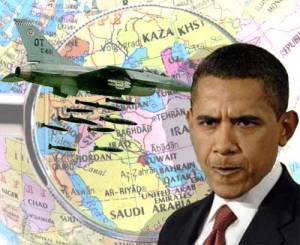 US military personnel are engaged in counterterrorism operations across 15 different countries, President Barack Obama said in a biannual statement to Congress released on Monday.
The letter outlined US military counterrorism operations across the globe in Afghanistan, Iraq, Syria, Turkey, Somalia, Yemen, Djibouti, Libya, Cuba, Niger, Cameroon, the Central African Republic, Egypt, Jordan, and Kosovo. All nations have US combat-equipped personnel deployed for a specific counterterrorism mission.
Obama indicated that that there is no timeline for the war on terrorism, and he will direct “additional measures to protect US citizens and interests” if necessary.
“It is not possible to know at this time the precise scope or the duration of the deployments of US Armed Forces necessary to counter terrorist threats to the United States,” Obama said.
Under the 2001 authorization for use of military force, the US president must update Congress every six months on the military operations against al-Qaeda, the Taliban and associated forces.
Signal from Russian sub lurking near Sweden in 2014 ‘came from Swedish object’
RT | June 12, 2016
A sonar signature, which Swedish military claimed to be crucial evidence of a foreign submarine’s presence near Stockholm during the 2014 hunt, came from a “Swedish object,” the country’s defense minister has admitted.
Peter Hultqvist would not go into details about the source of the signal, but said the military reconsidered their assessment of its nature in September 2015, he told Sveriges Radio.
The hunt for a foreign submarine, presumed to be Russian by the Swedish media, was launched off Stockholm in October 2014. The media reported that an emergency hail on a frequency used by the Russian Navy prompted the hunt. An amateur photo of the supposed boat was widely circulated. Hultqvist took up office earlier the same month.
At the time of the search Swedish military reported having crucial evidence of the presence of a foreign submarine in the country’s waters. The perceived threat to national security was used to justify a multimillion-dollar boost to military spending.
In April 2015, the supposed intruder was revealed to have been a workboat by Swedish media.
Sweden is not the only nation where Russian submarines have been blamed for things they didn’t do. In April last year, a fishing vessel collided with an unidentified submarine off Scotland, with British media speculating that it must have been Russian. The Royal Navy admitted in September that the boat was actually theirs.
Western media blame Russia sometimes bizarrely for various incidents, including the disappearance of Malaysia Airlines flight MH370 in 2014 to the vandalizing of a Swedish TV mast last month.
READ MORE: ‘Oops, it was us’: Military concedes British sub, not Russian, damaged UK trawler in April
Only Clinton Can Save Trump’s Electoral Victory
By James Petras | June 11, 2016
Rational Voters and Irrational Experts
Large swaths of the US electorate are voting for rational choices against a system controlled by an economic and political oligarchy.
Rational choice is based on experience with political leaders who pursue policies which lead to a trillion dollar financial crises and bailouts which impoverish millions of mortgage holders and working family tax payers.
Rational rejection of the established leadership of the major parties is based on an understanding of the futility of relying on their campaign promises.
Rational commitments to ending inequality and overseas wars which weaken America, has led to greater emphasis on making America strong and transforming the domestic American economy and security system.
A vast array of electoral analysts have ignored the rational socioeconomic and political choices of the American electorate and repeatedly rely on psycho-babble, claiming that contemporary voters are reacting out of ‘anger’ and ‘irrational emotionalism’.
Sanders and Trump: Appeals to the New Rationality?
The woeful blindness of political experts is in large part a product of their own hostility to the rise of two Presidential candidates, Bernie Sanders and Donald Trump, who challenge the established party and economic leadership.
The Sanders campaign proceeded along the lines of a political polarization between big business and the working class; demanding higher taxes for the wealthy and greater social spending for public health and education for the working class.
Sander’s sought to unify racial and ethnic minorities and majoritarian workers with progressive gender, religious and environmental movements.
The Trump campaign sought to mobilize white American majorities among workers, small business people and professionals, who are downwardly mobile and have been marginalized by globalization.
Sanders emphasized a refurbished class identity. Trump promoted a new nationalist symbolism. Yet in many ways the establishment opposition, the parties, mass media and the economic elite, are far more hostile to Trump’s ‘nationalist politics’ than Sanders’ democratic socialist program and class appeal.
It appears that Sanders willingness to come to terms with the Democratic elite and back Clinton’s candidacy when he lost the nomination, is far more acceptable to the establishment than Trump. According to all known precedents, the Democratic Party allows progressive candidates to post advanced socio-economic campaign platforms to secure working class voters, all the better to tank them in favor of business-warmonger policies once in office.
Trump’s initial nationalist-anti-globalist rhetoric aroused greater animosity from business, liberal and militarist elites than Sanders’ occasional critical comment.
Trump’s nationalism was rooted in popular and reactionary appeals. On the one hand he spoke of relocating multi-nationals from abroad to the US. On the other hand, he demands the expulsion of over ten million Mexicans from the US labor market.
His anti-globalization-business relocation strategy lacked several essential ingredients: he did not specify which multi-nationals would be affected; nor what policies he would apply to implement the trillion-dollar return.
In contrast, Trump was precise in naming the immigrants to be expelled; the police methods to expel the target population; and the border security system to blockade their entry.
Trump’s Electoral Victory and Neoliberal Right Turn
Trump’s successful nomination led to an appeal to big donors for campaign funding and endorsements by Republican neo-liberal Congressional leaders like Paul Ryan. This has led Trump to downgrade his anti- globalization, economic nationalist politics, in favor of his chauvinist ethno-racist appeals.
Trump’s current electoral strategy seeks to unify the hard neo-liberal elite with the ‘patriotic’ white working class.
Trump’s ideological vehicle to the Presidency no longer attacks globalization. Instead he relies on arousing public support by stigmatizing ‘anti-American’ minorities and targeting Clinton’s reactionary and corrupt policies.
Trumps’ “Make America Strong” propaganda follows closely in line with Obama’s headline attack on China’s steel exports to the US markets.
Trump’s “Make America Strong” policy follows Obama’s systematic assault on the World Trade Organization’s for rejecting US agricultural trade subsidies. More recently, in tune with Trumps rhetoric, Obama unilaterally dictated the membership of the WTO’s trade settlement process.
Obama blocked the reappointment of an independent South Korean lawyer who opposed Washington’s violation of WTO rules. Rather than look upon Trump as an anti-establistment “populist” his policy would follow Obama’s promotion of business lobbies against the WTO.
Trump follows Obama’s policy of favoring globalization only insofar as Washington controls the international institutions that run it. Trump follows Washington’s imperial policy of packing global institutions with its vassals.
Trump in the Footstep of Sanders
Trump’s embrace of the neo-liberal business elite follows Sanders submission to the Democratic Party bosses. Trump hopes his mass base can be deluded from his right-turn embrace of the economic elite by increasing slanders and provocations, turning them against working class Mexicans by accusing them of stealing jobs, crimes and drugs. Trump’s mass meetings of almost exclusively white working and middle class voters in Mexican-American regions of California are designed to provoke violent protests.
Trump gains nation-wide nationalist support by circulating videos of NBC, CNN and ABC reports depicting peaceful white Trump supporters being “terrorized and beaten up by mobs of (Mexican-American) protesters”.
Trump appeals to his “Americans” to denounce and “stand strong” against demonstrators waving Mexican flags and burning the Stars and Stripes alongside Trumps’ “Make America Great” hats.
Trump’s turn to the neo-liberal Republican elite means he will heighten his repressive and anti-immigrant policies. Trump will be aided by mindless violent protesters and provocations “overcoming the police” at anti-Trump rallies. Trump effectively engages in the “propaganda of the deed”; linking “disloyal foreign immigrants” waving the Mexican, not the US flag.
The realignment of the Republican Party brings Trump into the arms of the hardline neo-liberal Congressional-Wall Street elite. This shift means Trump’s ideological and mass base needs to be redirected toward greater hostility to domestic enemies – Mexicans, Muslims, women and ecologists.
Trump is especially counting on the incorporation of Sanders’ electoral machine into the Clinton campaign. White workers face to face with Wall Street warmonger Clinton will be less likely to reject Trump’s embrace of the rightwing Congressional business alliance.
Trump will deflect working class opposition from his turn to the neoliberal Congressional Republicans by targeting Clinton’s big business and covert, illicit government operations. Clinton’s gross violations of federal laws, her felonious communications and liaisons with foreign officials could hand the Presidency to Trump.
Trump has gained working class voters in West Virginia, Ohio, and many other rust-belt states because of Clinton’s free trade and anti-working class history.
Trump’s electoral victory will hinge on his capacity to cover-up his neoliberal turn and to focus voters’ attention on Clinton’s militarist, Wall Street, conspiratorial and anti-working class politics.
Sanders Shouldn’t be in Vermont, He Should be in Brazil
By Sam Husseini | June 12, 2016
Media report that presidential candidate Bernie Sanders is meeting with advisers in Vermont on Sunday.
This last week, many spoke laudingly of the recently deceased Muhammad Ali.
As some noted, Ali’s great contribution was not being a talented athlete, heavy weight champion — there are many such prominent sports figures, but they don’t play a historic role. His true greatness came because at the height of his fame and powers, he challenged an oppressive system: He refused to go into the Army during the Vietnam War. It cost him a great deal of money and stature — and tremendously helped the world and assured his canonization.
Sanders has a similar opportunity now. As pundits are voicing alleged ecstasy over Hillary Clinton “shattering the glass ceiling” by becoming the first female presidential nominee of a major political party, the first female president in Brazil, Dilma Rousseff, has been ousted in a defacto coup. This has been fostered by establishment media in Brazil, as for-profit media often plays the role of king maker in ways stark and subtle in every country, including the U.S., as we’ve seen in this current election.
Rousseff’s cabinet was diverse, both in terms of gender and ethnically. The new government is all white males. Rousseff was set to investigate corruption, including in the Brazilian Senate, and the coup was planned out by corrupt senators. Indeed, the anticorruption minister in the new coup government was recently forced to resign when a tape was leaked about how he was trying to cover up corruption. All this and more is being done with U.S. government silence and tacit support.
Certainly, Sanders has challenged the power of Wall Street and the wealthy from within the Democratic Party. But, largely because of the role of the media in fostering a mantle of celebrity around Hillary Clinton (and Donald Trump for that matter), they are the likely nominees.
But perhaps, for all the good that Sanders did, he might feel a measure of remorse for what he hasn’t done: Spoken serious about the U.S. government’s role in the world. Even in his discussions of inequality, he’s confined himself to inequality inside the U.S. But what about global poverty?
Has Sanders been moved by slums in Latin America? Refugee camps in the Mideast? Stark poverty in Africa? Sweatshops in Asia? He went to a Vatican conference where Bolivian President Evo Morales also spoke. They chatted. What can be built from that? How can progressive leaders work together globally? How can movements cross boundaries? Are not movements weakened when they confine themselves to national barriers?
Ali took himself out of his comfort zone. He focused not just on getting a seat on a bus for himself, and not just for African Americans, but spoke against the Vietnam War. Sanders has not transcended himself. As Ben Jealous has said, Sanders “has been giving the same damn speech for 50 years.” Well, that’s not necessarily a good thing. There are people living in horrible conditions around the world, in large part because of economic, political and military policies determined in marble facade buildings in Washington, D.C. Sanders has been remarkably mute about that.
The power of the establishment rests in large part because of its global connections. But progressive forces have been reluctant to wield such power. Recall shortly before the invasion of Iraq, there were quasi-global protests against the war on Feb. 15, 2003. Just after that, the New York Times called the peace movement “the second super power.” Yes, that didn’t stop the war, but that was because there was only some global solidarity late in the day. The answer is more solidarity sooner.
And now, Sanders has campaigned in all 50 states. It’s late in the day, but not too late for him to break the wall and seriously engage the rest of the world. That should start with going to Brazil and meeting with Rousseff. It would help overturn the coup, thus doing a tremendous service to the people of Brazil and it would put the heat on the U.S. government regarding its behind the scenes machinations. It would also highlight the fake feminism that surrounds the Clinton campaign. Do we want women in officialdom simply so that they can be as murderous and corrupt as men have been? Or do we want a different kind of politics that is inclusive in terms of gender, but that is based on solidarity and uplift rather than “I got mine”?
Clinton’s crimes on foreign policy constitute quite a rap sheet. Sanders has at best scratched the surface. From bombing Libya, to voting for the Iraq war, to backing Netanyahu, to backing the Honduran coup and responsibility for the killing of Berta Cáceres, it’s a gruesome tail that few have really come to grips with.
And perhaps Sanders, struck by fear of Trump, desperately wants to look away. He doesn’t want a sun rise, he wants a sunset. Does he want to be a pawn in the Clinton machine? See the roles that other past “insurgent” candidates play now: Howard Dean, Jesse Jackson, Dennis Kucinich. They played the role of what Bruce Dixon has called “sheepdogging” — they ended up being little more than a tool of the Democratic Party establishment to get presumably serious progressives to end up supporting an increasingly pro-corporate Democratic Party. That same fate of accessory or marginalization awaits Sanders.
Now, the consultants and “advisers” he’s meeting with this weekend are probably pushing Sanders to accept what bread crumbs he can get from Clinton & Co. After all, they have their careers to think about, and their careers are with the Democratic Party machine or some appendage of it.
But real power, real greatness, doesn’t come from accepting such a role. That’s why we remember the name Muhammad Ali and forget many, many others.
Featured Video
Dan Dicks with James Corbett on Solutions Watch
or go to
Aletho News Archives – Video-Images
From the Archives
Secret document reveals plans for civil war in Lebanon, Israeli false flags, and invasion
By Randi Nord | Geopolitics Alert | April 5, 2019
Beirut – During his visit with US Secretary of State, Mike Pompeo, Lebanese President Michael Aoun reportedly received a US-Israeli document detailing plans for creating a civil war in Lebanon with covert false flag operations and possible Israeli invasion.
Although the source of the document is Israeli and created in partnership with Washington, no one knows who presented it to Aoun. The Lebanese TV station, Al-Jadeed, initially reported the document on Lebanese TV and a video on its website. Geopolitics Alert translated the report for this article. … continue
Blog Roll
 Aletho News
- Sheikh al-Asadi warns of Iraqi government compliance with US demands
- How to MAKE THE CONSPIRATORS PAY for their crimes! Dan Dicks with James Corbett on Solutions Watch
- There’s a drought in academia: A drought in honest research on the subject of drought and other weather extremes
- Department of War Awards $20.7 Billion Contract to Raytheon for Air-to-Air Missiles
- ‘Distance yourselves from Israel’: IRGC urges US population to question govt policies
- America’s Greenland deal has a radioactive backstory
- The RAF Fairford ‘terror plot’: Unpacking escalation in the UK echo-chamber
- EU Council Advances Chat Control 2.0 Scanning Proposal
- Ex-Greek MEP files complaint against Israeli spyware firm over alleged Pegasus surveillance
- Troubling ideas throughout the Torah, Talmud, Mishneh Torah and Tanya
- If Americans Knew
- New Report: “Scholasticide and Genocide in Gaza: Assessment, Testimonies and Legal Analysis”
- Ex-Biden officials are desperate for a Gaza scapegoat
- Israeli “settlers” Invade Al-Aqsa; Pour Boiling Water on 75-Year-Old
- Israel Has Kidnapped Another American Teenager
- US arms sales to Israel worth $21.6 billion in 20 months
- Three Palestinians Killed in Israeli Attacks on Gaza
- Revealed: German “Anti-Semitism Expert” Driving Crackdown on Palestine Solidarity is Former Israeli Spy
- Egypt’s Warning to Israel Before Oct 7
- Israel’s siege signals another cruel winter for 1.8 million Gazans – Daily Update
- Netanyahu Asked UAE Leader to Deny Report on Oct. 7 Warning in Secret Visit, Sources Say
- No Tricks Zone
- Two More Paleo Reconstructions Affirm Meters-Higher Sea Levels Across Ireland, Brazil 7000-6000 Years Ago
- New Study: Earth And Venus Surface Warmth Largely Explained By Convection And Lapse Rate, Not CO2 Or Radiation
- 2025 Nature Paper Claiming Worsening Global Drought Gets RETRACTED …Heavily Flawed
- New Study: ‘Global Drought Shows No Detectable Recent Acceleration Under Climate Warming’
- Economic Masterminds: German Socialists Suggest Taxing Productivity Gains Stemming From Using AI
- The South China Sea Has Not Been Cooperating With The Climate Change Narrative
- Energy Crisis: Germany Enters Heating Season With Historically Low Gas Reserve Fill Levels
- New Study: The Antarctic Ice Sheet Gained Mass From 2020-2024 Due To Staggering Snow And Ice Accumulation
- Study: Ocean Heating Rates From Thousands Of Years Ago ‘Dwarf’ Modern Ocean Heating Rates
- Climate Extremists Target, Attack Large-Scale Power Grid Infrastructure In Germany!

