US to deploy F-22 Raptor jets in Europe
RT | August 25, 2015
The US Air Force said its F-22 Raptor stealth fighters will be sent to Europe to show “commitment to the security and stability” of its allies. The Air Force Secretary tied the move to the US’ “approach to Russia,” linking it to the crisis in Ukraine.
The deployment, slated to occur “very soon,” was described as part of the “European Reassurance Initiative,” Air Force Secretary Deborah Lee James said at a Pentagon briefing on Monday. She added that it was “to support combatant commander requirements” in the region.
James said Russia’s “military activity” in Ukraine continued to be of great concern to the US and its European allies, and that the deployment of the F-22s was “certainly on the strong side of the coin.” She also quoted Defense Secretary Ash Carter, who said last week, “Our approach to Russia needs to be strong and it needs to be balanced.”
James told reporters that, for operational security reasons, “we cannot share with you the exact dates or locations of this deployment.”
The F-22 stealth fighter is a fifth generation aircraft capable of dropping precision bombs on targets from up to 15 miles away.
A reporter asked if the announcement was a message the Air Force was delivering to Russian President Vladimir Putin.
General Mark Welsh said the deployment to Europe was “just a continuation of deploying the F-22s everywhere we can to train with our partners,” and that it “was primarily for a major exercise, training with our European partners.” However, he added that the deployment would put F-22s “into facilities that we would potentially use in a conflict in Europe.”
The F-22 fighter’s deployment in Europe was first floated in June, when Secretary James listed Russia as the “biggest threat on my mind” when asked about the greatest threat faced by the US Air Force by a reporter at a Paris Air Show.
In February and March, the Air Force sent two units of A-10 and F-15C jets to Europe along with about 300 airmen to spend six months flying missions across the continent, according to airforcetimes.com. The US currently has 65,000 active-duty service members stationed in Europe, with the majority made up of airmen and soldiers.
News of the deployment comes as the US military is engaged with 11 NATO member states in a month-long war game. About 5,000 soldiers are participating in simultaneous airborne operations. One of the most anticipated drills will take place on August 26, when NATO planes will drop more than 1,000 paratroopers in the Hohenfels training area in Germany.
In Moscow, a member of the Russian Duma’s defense committee, Franz Klintsevich, said the Russian military is “closely monitoring” the situation and is ready to react in the case of any aggression. He said Moscow has been taking note of NATO’s buildup up of forces, as well as all of the West’s rhetoric concerning “Russian aggression.”
Former US Secretary of State Henry Kissinger, meanwhile, told The National Interest in an interview last week that “breaking Russia has become an objective [for US officials]; the long-range purpose should be to integrate it.”
“If we treat Russia seriously as a great power, we need at an early stage to determine whether their concerns can be reconciled with our necessities,” he said.
Kissinger laid blame for sparking the Ukrainian conflict at the door of the EU, which he said had proposed a trade deal in 2013 without considering how it would alienate Moscow and divide the Ukrainian people.
READ MORE:
NATO conducting biggest beef up of defenses since Cold War – alliance chief
Bernie Sanders and Elizabeth Warren are not quite progressive…
thewordsmithcollection | February 15, 2015

ISRAEL’S OPERATION Protective Edge has killed almost 2,000 people in Gaza, the vast majority of them civilians, and laid waste to schools, hospitals, mosques and factories.
The savagery of the slaughter was met by growing international opposition to Israel and solidarity with Palestine. Even in the U.S., recent opinion polls showed a growing minority of Americans, including Jews, rejecting Israel’s war on Gaza. That minority includes a strong majority of people aged 18 to 29.
This global shift in opinion has been underway for some years. People are being swayed to support Palestine by Israel’s apartheid-like behavior: building an illegal separation wall in the West Bank, turning Gaza into an open-air concentration camp and conducting regular military assaults on the occupied territories.
Thanks to the international boycott, divestment and sanctions (BDS) campaign–called for by Palestinians and mobilized by solidarity activists around the world–more and more people understand the reality that Israel is an apartheid state, and the cause of Palestinian liberation is simple justice.
But one political institution in the U.S. has stood completely unswayed by this evolving consciousness of the oppression of the Palestinians by Israel, with the support of its main international sponsor, the U.S. government.
That institution is the Democratic Party–including its liberal wing. Like their counterparts in the two-party U.S. political system, the Republicans, the Democrats never hesitated during the massacres in Gaza to reaffirm their unwavering support for Israel’s colonial project…
…The behavior of liberal Democrats during Operation Protective Edge has proved the rule. The darlings of progressive activists, from Massachusetts Sen. Elizabeth Warren to New York City Mayor Bill de Blasio to Vermont Sen. Bernie Sanders (a nominal independent who campaigns for Democrats and caucuses with them in the Senate), have made their commitment to Zionism clear. In the Senate vote on the pro-Israel resolution, none of the liberal stalwarts like Elizabeth Warren, Al Franken, Sherrod Brown and Bernie Sanders, made a peep in opposition. The same was true in the House.
Warren’s position shocked her progressive supporters, who either had ignored or didn’t know about her support of Israel. Despite her Native American roots, she sides not with Palestine’s indigenous population, but with Israeli colonization. On her Senate campaign website, for example, she said:
As a United States Senator, I will work to ensure Israel’s security and success. I believe Israel must maintain a qualitative military edge and defensible borders. The United States must continue to ensure that Israel can defend itself from terrorist organizations and hostile states, including Iran, Hamas, Hezbollah, and others.
The Democrats’ other new liberal lion, Bill de Blasio, outdoes Warren in Zionist proclamations. During his election campaign, De Blasio promised, “City Hall will always be open to AIPAC.” In a radio interview, he boasted that he opposed the “very, very wrongheaded movement to boycott, and disinvest from Israel. I’ve led the charge against that, whether you’re talking about the Park Slope Food Co-op or at Brooklyn College, I’ve stood against that divestment movement.” During the current war on Gaza, he announced, “I consider it my responsibility to stand up for Israel.”
Just as disappointing has been the traditionally progressive Congressional Black Caucus (CBC). Bruce Dixon of the Black Agenda Report reported on how CBC members in the House and Senate betrayed Palestine in AIPAC-backed resolutions. As Dixon wrote:
Not a single member of the CBC, despite their much heralded brand of standing for civil rights and against apartheid here and around the world, bothered to publicly question the racist ethnocracy that is the Israeli state. After signing the blank check with the rest of their colleagues, CBC members Conyers (MI), Lee (CA), Johnson (GA) and Ellison (MN) tried to cover their shame with a letter to Secretary of State Kerry urging a cease-fire, something which Kerry claims to have been doing anyway.
The self-proclaimed socialist Bernie Sanders has done little better. As left-wing Vermont writer Ron Jacobs noted, Senator Sanders has voted for “grants and loans to Israel, even after Israel bombed Gaza, attacked the Mavi Marmara and supported illegal settlements in the West Bank.” When asked by reporters for his view of the current war on Gaza, Sanders evaded the question, stating, “That’s not where my mind is right now.”
– – – – – – – – – – – – – – – –http://socialistworker.org/2014/08/13/liberal-champions-of-apartheid
Despite his own claims, Sanders has not been an antiwar leader. Ever since he won election to the House, he has taken either equivocal positions on U.S. wars or outright supported them. His hawkish positions — especially his decision to support Bill Clinton’s 1999 Kosovo War — drove one of his key advisers, Jeremy Brecher, to resign from his staff. Brecher wrote in his resignation letter, “Is there a moral limit to the military violence you are willing to participate in or support?”
So outraged were peace activists over Sanders’ support of the Kosovo War that they occupied his office in 1999. Sanders had them arrested. Under the Bush regime, Sanders’ militarism has only grown worse. While he called for alternative approaches to the war on Afghanistan, he failed to join the sole Democrat, Barbara Lee, to vote against Congress’ resolution that gave George Bush a blank check to launch war on any country he deemed connected to the September 11 attacks.
Ever since, he has voted for appropriations bills to fund the occupations of Iraq and Afghanistan, despite their horrific toll on the occupied peoples as well as U.S. soldiers.
Sanders has been critical of the war on Iraq, but he has supported pro-war measures — such as a March 21, 2003, resolution stating, “Congress expresses the unequivocal support and appreciation of the nation to the President as Commander-in-Chief for his firm leadership and decisive action in the conduct of military operations in Iraq as part of the ongoing Global War on Terrorism.” … Full article
The Age of Imperial Wars
From Regional War, “Regime Change” to Global Warfare
By Prof. James Petras | Global Research | August 22, 2015
2015 has become a year of living dangerously.
Wars are spreading across the globe.
Wars are escalating as new countries are bombed and the old are ravaged with ever greater intensity.
Countries, where relatively peaceful changes had taken place through recent elections, are now on the verge of civil wars.
These are wars without victors, but plenty of losers; wars that don’t end; wars where imperial occupations are faced with prolonged resistance.
There are never-ending torrents of war refugees flooding across borders. Desperate people are detained, degraded and criminalized for being the survivors and victims of imperial invasions.
Now major nuclear powers face off in Europe and Asia: NATO versus Russia, US-Japan versus China. Will these streams of blood and wars converge into one radiated wilderness drained of its precious life blood?
Living Dangerously: The Rising Tide of Violent Conflicts
There is no question that wars and military threats have replaced diplomacy, negotiations and democratic elections as the principal means of resolving political conflicts. Throughout the present year (2015) wars have spread across borders and escalated in intensity.
The NATO allies, US, Turkey and the EU have openly attacked Syria with air strikes and ground troops. There are plans to occupy the northern sector of that ravaged country, creating what the Erdogan regime dubs a ‘buffer zone’ cleansed of its people and villages.
Under the pretext of ‘fighting ISIS’, the Turkish government is bombing Kurds (civilians and resistance fighters) and their Syrian allies. On Syria’s southern border, US Special Forces have accelerated and expanded operations from their bases in Jordan on behalf of the mercenary terrorists – funded by the monarchist Gulf States.
Over 4 million Syrians have fled their homes as refugees and over 200,000 have been killed since the US-EU-Turkey-Saudi-sponsored war against the secular Syrian government was launched four years ago.
Dozens of terrorist, mercenary and sectarian groups have carved up Syria into rival fiefdoms, pillaged its economic and cultural resources and reduced the economy by over ninety percent.
The US-EU-Turkish military intervention extends the war into Iraq, Lebanon and…. Turkey – attacking secular governments, ethnic minority groups and secular civil society.
The feudal, monarchist Saudi Arabia and the United Arab Emirates have invaded Yemen with tanks, launching air strikes against a country without any air defenses. Major cities and towns are devastated. Saudi ground troops and armored carriers are killing and wounding thousands – mostly civilians. The brutal Saudi air and sea blockade of Yemen’s ports have led to a humanitarian crisis, as ten million Yemenis face starvation deliberately imposed by a grotesque and obscenely rich monarchy.
The Yemeni resistance fighters, driven out of the major cities, are preparing for prolonged guerrilla warfare against the Saudi monsters and their puppets. Their resistance has already spread across the frontiers of the absolutist Saudi dictatorship.
The brutal Israeli occupation troops, in collaboration with armed ‘settler’ colonists, have accelerated their violent seizure of Palestinian lands. They have stepped up the ethnic cleansing of Palestinians, Bedouins, Druze and Christian inhabitants replacing their communities with racist ‘Jews-only’ colonial settlements.
Daily assaults against the huge ‘concentration camps’ of Gaza accompany an armed blockade of land, air and water, preventing the reconstruction of the tens of thousands of homes, schools, hospital, factories and infrastructure, destroyed by last year’s Israeli blitzkrieg.
Israel’s continued annexation and ethnic cleansing of Palestinian territory precludes any diplomatic process; colonial wars have been and continue to be Israel’s policy of choice in dealing with its Arab neighbors and captive populations.
Africa’s wars, resulting from earlier US-EU interventions, continue to ravage-the Continent. Somalia, Sudan, Kenya, Libya are riven by bloody conflicts between US-EU backed regimes and armed Islamic and nationalist resistance movements.
Throughout North and Sub-Sahara Africa, US-EU backed regimes have provoked armed upheavals in Libya, Nigeria (Boko Harem), Egypt (ISIS, Moslem Brotherhood et al), Chad, Niger, South Sudan, Somalia and elsewhere.
Imperial client Egyptian and Ethiopian dictators rule with iron fists – financed and armed by their EU and US sponsors.
Imperial wars rage throughout the Middle East and South Asia. Hundreds of experienced Baathist Iraqi military officers, who had been expelled or jailed and tortured by the US Occupation army, have now made common cause with Islamist fighters to form ISIS and effectively occupy a third of Iraq and a strategic swath of Syria.
There are daily bombings in Baghdad undermining its US client. Strategic advances by ISIS are forcing the US to resume and escalate its direct combat role
The US-Baghdad retreat and the defeat of the US-trained Iraqi military in the face of the Baathist-Islamist offensive is the opening salvo of a long-term, large-scale war in Iraq and Syria. The Turkish air-war against the Kurds in Iraq will escalate the war in Northern Iraq and extend it into southeast Turkey.
Closer to ‘home’, the EU-US-backed coup (‘regime change’) in Kiev and the attempt to impose dictatorial-pro-West oligarchic rule in Ukraine have detonated a prolonged civil-national war devastating the country and pitting NATO’s proxies against Russian-backed allies in the Donbas.
US, England, Poland and other NATO powers are deeply committed to pushing war right up to Russia’s borders.
There is a new Cold War, with the imposition of wide-ranging US-EU economic sanctions against Russia and the organizing of major NATO military exercises on Russia’s doorsteps. It is no surprise that these provocations are met with a major counter-response – the Russian military build-up. The NATO power grab in Ukraine, which first led to a local ethnic war, now escalates to a global confrontation and may move toward a nuclear confrontation as Russia absorbs hundreds of thousands of refugees from the slaughter in Ukraine.
The US puppet regime in Afghanistan has faced a major advance of the Taliban in all regions, including the capital, Kabul.
The Afghan war is intensifying and the US-backed Kabul regime is in retreat. US troops can scarcely advance beyond their bunkers.
As the Taliban military advances, its leaders demand total surrender of the Kabul puppets and the withdrawal of US troops. The US response will be a prolonged escalation of war.
Pakistan, bristling with US arms, faces a major conflict along its borders with India and permanent war in its semi-autonomous Northwest frontier states with Islamist and ethnic Pashtu guerrilla movements backed by mass regional political parties. These parties exercise de facto control over the Northwest region providing sanctuary and arms for Taliban militants operating in Afghanistan and Pakistan.
Armed ethno-religious conflicts persist in western China, Myanmar and northern India. There are large-scale popular resistance movements in the militant northeast Thailand opposed to the current military-monarchist dictatorship in Bangkok.
In the 21st century, in South and Southeast Asia, as in the rest of the world, war and armed conflicts have become central in resolving ethnic, social, tribal and regional differences with central states: diplomacy and democratic elections have been rendered obsolete and inefficient.
Latin America – On the Verge
Burgeoning violent extra-parliamentary right-wing movements, intent on overthrowing or ‘impeaching’ elected center-left Latin American governments face major confrontations with the state and its mass supporters.
 In Ecuador, Venezuela and Brazil, US-backed opposition groups are engaged in violent demonstrations, directed toward ousting the elected regimes. In the case of Ecuador, ‘popular sectors’, including some indigenous leaders and sectors of the trade union movement, have called for an ‘uprising’ to oust President Correa. They seem oblivious of the fact that the hard-right oligarchs who now control key offices in the three principal cities (Guayaquil, Quito and Cuenca) will be the real beneficiaries of their ‘uprisings’.
The resurgent Right envisions violent ‘regime change’ as the first step toward ‘wiping the slate clean’ of a decade of social reforms, independent regional organizations and independent foreign policies.
‘Civil war’ may be too strong a word for the situation in Latin America at this time – but this is the direction which the US-backed opposition is heading. Faced with the mess and difficulty of dislodging incumbent regimes via elections, the US and its local proxies have opted for the choreography of street violence, sabotage, martial law and coups – to be followed by sanitized elections – with US-vetted candidates.
War and violence run rampant through Mexico and most of Central America. A US-backed military coup ousted the popularly elected, independent President Zelaya in Honduras. The ensuing US-proxy regime has murdered and jailed hundreds of pro-democracy dissidents and driven thousands to flee the violence.
The 1990’s US-brokered ‘Peace Accords’ in El Salvador and Guatemala effectively blocked any agrarian reform and income redistribution that might have led to the rebuilding of their civil societies. This has led to over two decades of mass disaffection, the rise of armed ‘gangs’ numbering over 100,000 members and an average of six to ten thousand homicides a year with El Salvador becoming the ‘murder capital of the hemisphere’ on a per capita basis. The annual murder toll under the US-brokered ‘Peace Accords’ now exceeds those killed each year during the civil war.
The real ‘carnage capital’ of the hemisphere is Mexico. Over 100,000 people have been murdered during the decade-long, US-backed ‘war on drugs’ – a war which has become a state-sponsored war on the Mexican people.
The internal war has allowed the Mexican government to privatize and sell the crown jewels of the national economy – the petroleum industry. While thousands of Mexicans are terrorized and slaughtered, the US and EU oil companies are curiously shielded from the drug lords. The same Mexican government, its police, officials and military, who collaborate with the drug lords in dividing up the billions of drug dollars, protect foreign oil companies and their executives. After all, narco-dollars are laundered by banks in New York, Miami, Los Angeles and London to help fuel the speculation!
From Regional to Nuclear Wars
Regional and local wars spread under the shadow of a looming world war. The US moves its arms, planes, bases and operations to the Russian and Chinese borders.
Never have so many US troops and war planes been placed in so many strategic locations, often less than an hour drive from major Russian cities.
Not even during the height of the Cold War, did the US impose so many economic sanctions against Russian enterprises.
In Asia, Washington is organizing major trade, military and diplomatic treaties designed to exclude and undermine China’s growth as a trade competitor. It is engaged in provocative activities comparable to the boycott and blockade of Japan which led to the Second World War in Asia.
Open ‘warfare by proxy’ in Ukraine is perhaps the first salvo of the Third World War in Europe. The US-EU-sponsored coup in Kiev has led to the annexation of Western Ukraine. In response to the threat of violence toward the ethnic Russian majority in Crimea and the loss of its strategic naval base on the Black Sea, Russia annexed Crimea.
In the lead-up to the Second World War, Germany annexed Austria. In a similar manner the US-EU installed a puppet regime in Kiev by violent putsch as its own initial steps toward major power grabs in Central Asia. The military build-up includes the placement of major, forward offensive military bases in Poland.
Warsaw’s newly elected hard-right regime of President Andrzej Duda has demanded that Poland become NATO’s central military base of operation and the front line in a war against Russia.
Wars and More Wars and the Never-ending Torrents of Refugees
The US and EU imperial wars have devastated the lives and livelihoods of scores of millions of people in South Asia, North and Sub-Sahara Africa, Central America, Mexico, the Balkans and now Ukraine.
Four million Syrian refugees have joined millions of Afghan, Pakistani, Iraqi, Yemeni, Somali, Libyan, Palestinian and Sudanese refugees fleeing US-EU bombs, drones and proxy mercenaries ravaging their countries.
Millions of war refugees escape toward safety in Western Europe, joining the millions of economic refugees who have fled free market destitution in Lithuania, Latvia, Estonia, Bulgaria, Romania, Poland, the Balkans and other EU satellites.
Panic among the civilian population of Western Europe sets in as hundreds of thousands cross the Mediterranean, the Aegean and the Balkans.
Droves of refugees perish each day. Tens of thousands crowd detention centers. Local labor markets are saturated. Social services are overwhelmed.
The US builds walls and detention camps for the millions trying to escape the harsh consequences of imperial-centered free markets in Mexico, narco-terror and the fraudulent ‘peace accord’-induced violence in Central America.
As Western wars advance, the desperate refugees multiply. The poor and destitute clamber at the gates of the imperial heartland crying: ‘Your bombs and your destruction of our homelands have driven us here, now you must deal with us in your homeland’.
Fomenting class war between the refugees and ‘natives’ of the imperial West – may not be on the agenda . . . for now, but the future for ‘civil’ society in Europe and the US is bleak.
Meanwhile, more and even bigger wars are on the horizon and additional millions of civilians will be uprooted and face the choice of starving, fleeing with their families or fighting the empire. The ranks of seasoned and infuriated resistance fighters are swelling in Afghanistan, Iraq, Libya, Yemen, Ukraine and elsewhere.
The US and EU are becoming armed fortresses. US police deal with the marginalized citizenry as an occupying army, assaulting African-Americans, immigrants and dissidents – while looting poor communities . . . and protecting the rich…
Conclusion
War is everywhere and expanding: No continent or region, big or small, is free from the contagion of war.
Imperial wars have spawn local wars . . . igniting mass flights in a never-ending cycle. There are no real diplomatic success stories! There are no enduring, viable peace accords!
Some pundits may protest this analysis: They point to the recent US – Cuba rapprochement as a ‘success’. They conveniently forget that the US is still subverting Cuba’s biggest trading partner, Venezuela; that Washington’s major regional proxies are demanding regime change among Cuba’s allies in Ecuador, Brazil and Bolivia and that Washington is increasingly threatening Cuba’s alternative markets in Russia and China. The vision of the US flag flapping in the breeze outside its embassy in Havana does little to cover Washington’s iron fist threatening Cuba’s allies.
Others cite the US – Iran peace accord as a major ‘success’. They ignore that the US is backing the bloody Saudi invasion of neighboring Yemen and the massacre of Shiite communities; that the US has provided Israel with a road map detailing Iran’s entire defense system and that the US [Israel] and EU are bombing Iran’s Syrian ally without mercy.
As for the US – Cuba and Iranian agreements– are they enduring and strategic or just tactical imperial moves preparing for even greater assaults?
The war epidemic is not receding.
War refugees are still fleeing; they have no homes or communities left.
Disorder and destruction are increasing, not decreasing; there is no rebuilding the shattered societies, not in Gaza, not in Fallujah, not in the Donbas, not in Guerrero, not in Aleppo.
Europe feels the tremors of a major conflagration.
Americans still believe that the two oceans will protect them. They are told that placing NATO missiles on Russia’s borders and stationing warships off China’s shores and building electrified walls and laying barbed wire along the Rio Grande will protect them. Such is their faith in their political leaders and propagandists.
What a packet of lies! Inter-continental missiles can ‘rain down’ on New York, Washington and Los Angeles.
It is time to wake up!
It is time to stop the US – EU headlong race to World War III!
Where to start? Libya has been irrevocably destroyed; it is too late there! Syria, Iraq and Afghanistan are aflame. We are being plunged deeper into war while being told we are withdrawing! Ukraine sucks in more guns and more troops!
Can we really have peace with Iran if we cannot control our own government as it dances to the Israelis tune? And Israel insists on war – our waging war for them! As the Israeli war criminal General and Prime Minister Ariel Sharon once told some worried American Zionists: “Trouble with the US? We lead them by the nose…!”
Just look at the terrified families fleeing carnage in the Middle East or Mexico.
What is to be done?
When will we cut our losses and shake off the bonds of these war makers – foreign and domestic?
Let’s Bomb Libya Again!
By Brian CLOUGHLEY – Strategic Culture Foundation – 15.08.2015
The British prime minister, David Cameron, places great emphasis on how he is regarded by the public at home and internationally. His personal promotion machine is extensive and highly-paid and his staff feed the media diligently with what they imagine to be positive slants on his character and actions (and with carefully selected photographs of his pretty wife). They provide advance copies of his speeches to favoured journalists with the annoying consequence that news broadcasts rarely report what the prime minister has just said on a topic. They are futuristic and use the infuriating phrase “the prime minister will say today that” he will propose something or other.
The reason for this is that if there should be adverse reaction to whatever sparkling new initiative he wants to put forward to the public, then the spin-doctors can make hasty amendments in order to avoid upsetting people. It is school playground stuff, but then a great deal of British politics is playground oriented.
Unfortunately for his image, Cameron sometimes says things without first putting a finger in the water to test the temperature, and he also says things that betray his appalling ignorance of life.
One of the unrehearsed things he said that he may well regret in future concerns his unscripted policy on bombing people. It was reported on 27 July that he said “he was ready to order air strikes on Islamist militant targets in Libya and Syria to prevent attacks on the streets of Britain as he stepped up his rhetoric against Islamic State insurgents.” From this it is clear the British prime minister wants his country to go to war again and bomb Libya as it did last time he ordered air strikes on that ill-fated country.
It was Cameron who was responsible for Britain’s enthusiastic participation in the 2011 aerial bombing and rocketing that destroyed Libya. In March 2011 he declared that “Tough action is needed to ensure that people in Libya can lead their lives without fear and with access to the basic needs of life. That is what the Security Council requires, that is what we are seeking to deliver.” And he and his fellow thugs delivered catastrophe.
When the US-NATO onslaught ceased, after the murder of Libya’s president, we were told that the war had been successful in achieving democracy by bombing. It might be summed up in the sniggering proclamation of Ms Hillary Clinton, on CBS on 20 October 2011 that so far as the killing of Gaddafi was concerned “We came, we saw, he died.” What a truly civilised statement from the likely next president of the United States.
Two weeks before Ms Clinton’s humorous observation Mr Cameron said “I’m an optimist about Libya; I’ve been an optimist all the way through and I’m optimistic about the National Transitional Council and what they are able to achieve. I think when you look at Tripoli today, yes, of course, there are huge challenges — getting water to that city, making sure there is law and order — but actually so far, the cynics and the armchair generals have been proved wrong.”
The “cynics and armchair generals” — who might be better described as experienced realists — were right in predicting that the country’s collapse was inevitable; just as they had been right about forecasting chaos in Iraq and Afghanistan. On the other hand, two highly placed intellectuals, Ivo Daalder, who was the US Permanent Representative on the NATO Council during the US-NATO war, and Admiral James G (“Zorba”) Stavridis, who was at that time US Supreme Allied Commander Europe (the military commander of NATO), agreed wholeheartedly with Cameron and wrote in 2012 in the journal Foreign Affairs that:
“NATO’s operation in Libya has rightly been hailed as a model intervention. The alliance responded rapidly to a deteriorating situation that threatened hundreds of thousands of civilians rebelling against an oppressive regime. It succeeded in protecting those civilians and, ultimately, in providing the time and space necessary for local forces to overthrow Muammar al-Gaddafi.”
According to these expert analysts, Libya was liberated and became a free country thanks to US-NATO. And they were supported by columnists like Nicholas Kristof of the New York Times who wrote that “Libya is a reminder that sometimes it is possible to use military tools to advance humanitarian causes.” What a bunch of buffoons. Their statements would be hilarious were they not so obscenely bizarre, because Libya has collapsed into anarchic ruin — as forecast by the “armchair generals” so despised by Cameron and all the others who have never heard a shot fired in anger.
In April 2015 the saintly International Red Cross observed that “The violence shows no sign of abating. Libya remains a patchwork of conflict, fuelled by a plethora of armed groups with varying allegiances and diverse agendas. Thousands have been killed; hundreds of thousands more have been displaced. The humanitarian situation continues to deteriorate.”
The unelected rabble that is supposed to be a government in Libya has its very own set of Guantanamo Bays in which Human Rights Watch reported that “the Libyan Army and the Interior Ministry’s Counter Terrorism Unit are holding about 450 “security detainees” in connection with the current conflict. Of those visited, 35 detainees told Human Rights Watch that they were tortured on arrest, under interrogation, or during their detention. Thirty-one said interrogators forced them to “confess” to crimes; four said that the authorities then broadcast their “confessions” on TV, leading to reprisal attacks on their families. All of the detainees Human Rights Watch interviewed said they had not been given access to lawyers, taken before a judge, or formally charged despite many months of detention.” From what freedom-loving democracy could the Libyans have learned to keep people in detention indefinitely without trial?
There have been no comments on the anarchic shambles in Libya by such as Nicholas Kristoff who rejoiced in 2011 that he had “Just arrived in Tripoli, Libya, after a wild ride from the Tunisian border. But Tripoli is festive, joyful and reasonably secure, its streets full of shoppers and honking cars, celebrating the end of Ramadan and the end of dictatorship. People are hugely welcoming to an American, and very grateful.”
When Gaddafi ruled Libya its citizens had ample water from many sources, not least being his “Great Man-Made River” which brought water from southern aquifers to the dense population of the coastal north. But the US-NATO blitz damaged or destroyed so many power stations and pipeline facilities that this supply has all but ceased.
Amnesty International reports savage religious persecution (unknown in Gaddafi’s time) and records that “the international community has stood and watched as Libya has descended into chaos since the 2011 NATO military campaign ended, effectively allowing militias and armed groups to run amok.” The Christian organisation Open Doors records that “Since the downfall of Gaddafi, the situation for Christians in Libya has deteriorated. The government claims all Libyans are Sunni Muslims; it is illegal to bring Arabic Bibles into the country or to evangelise.”
So much for David Cameron’s idiotic statement that “I’ve been an optimist all the way through” about Libya. This is the man who declared in 2011 that his bombing would ensure that Libyan citizens would have “access to the basic needs of life.”
During their war on Libya, Obama and Cameron jointly declared that “We are convinced that better times lie ahead for the people of Libya.” Tell that to the millions of Libyans whose lives have been wrecked by NATO’s “model intervention” as it’s described by the two imbeciles, Daalder and Stavridis, who did so much to destroy a nation.
Yet David Cameron imagines that more bombing will solve all the problems, and on 26 July the UK’s Daily Telegraph, whose editors and journalists are in the pockets of Cameron’s spin-doctors, was happy to disclose that “Mr Cameron has ordered officials to begin planning for a new intervention in Libya, which has become a haven for Isil jihadists.” Cameron “was asked if there was a case for strikes on Isil in Libya, where the gunman who massacred Britons in Tunisia was trained,” and replied “That is my job, my duty as Prime Minister if there is a specific threat and you can act to stop it, you should act to stop it wherever it is and you are allowed under international law to do exactly that. I think that is very important.”
The reason Libya has become a haven for fanatical loonies is because it was struck mercilessly in a seven month aerial blitz that destroyed its government and social infrastructure. And the solution, according to those who attacked it in 2011, is to bomb, bomb and bomb again.
We live in a world of madness.
Minsk -2: A Rotting Corpse
By Christopher Black – New Eastern Outlook – 21.08.2015
The Minsk-2 ceasefire agreement is dead but no one wants to bury the rotting corpse. Since it was signed in February of this year the Donbas governments and Russia have bent over backward to comply with the terms of that agreement hoping against hope that the Kiev junta would do the same. They hoped in vain.
Poroshenko and his fascist allies instead have refused to change the constitution to accommodate the concerns of the Donbas republics, have tried to suppress the Communist Party and other parties in opposition, have refused to withdraw heavy weaponry from the line of contact, have maintained increasingly heavy artillery attacks on the civilian populations and areas and cut off routes for essential foodstuffs, medical aid and technical equipment. Rather than enjoying a ceasefire, the peoples of the Donbas are under a state of siege.
Poroshenko openly calls for a military solution to the crisis and has increased the draft in the west. The NATO alliance continues to pour in its forces disguised as “advisers” and “mercenaries” and puts additional pressure on Russia with multiple military exercises from the Baltic to Bulgaria, where more tanks have been recently dispatched to “send Russia a message.”
The reality of the situation was stated on the 18th of August when President Putin stated, “It was the Donbas militias that suggested withdrawing all military equipment with calibre under 100mm. Unfortunately, the opposite side didn’t do that. On the contrary, according to the available data, it is concentrating its units there, including those reinforced with military hardware.” He continued to pay lip service to the Minsk-2 agreement, stating, “As for the Minsk-2 agreement, I believe there is no alternative for resolving the situation and that peace will prevail in the long run… “ and continued with “Our task is to minimize the losses with which we will come to this peace.”
There can be no doubt that the Minsk-2 agreements do provide the framework for a peaceful settlement of the impasse but there is also no doubt that the Kiev and NATO forces have no intention of abiding by its terms and are preparing for another offensive. Putin also stated, “I hope that it will not come to direct large scale clashes.” Yet, the people of the Donbas would be surprised to be told that the thousands of shells raining down on them from the Kiev junta’s artillery in order to provoke those clashes do not count.
But what is the purpose of this state of siege? Since the Donbas forces have proved their strength and resilience the Kiev regime has little hope of achieving the total destruction of those forces and imposing its will on the Donbas. Kiev and NATO also know that Russia does not want to be drawn into a direct clash with NATO that could lead to a general war. In consequence the Kiev-NATO axis have decided to engage in operations that have direct political repercussions designed to disrupt the Russian-Donbas alliance or to paralyze it and try to enlist new allies. At the same time they have decided to make the war more costly for the Donbas and Russia both in military and economic terms, and to try to bring about a gradual exhaustion of their physical and moral resistance.
We see this strategy being played out with the constant increase of economic warfare against Russia, which is clearly the ultimate target, the increasing use of propaganda including the planting in the media of the most absurd stories about Russia and its government, the use, once again of the OSCE observes as intelligence agents for NATO as happened in the Yugoslav war, and, in the political sphere, attempts by the United States and Britain to humiliate Russia with the politically motivated attempt to set up a tribunal regarding the downing of flight MH17.
Clausewitz said that “war is a pulsation of violence, variable in strength and therefore, variable in the speed with which it explodes and discharges it energy’ and that “If we keep in mind that war springs from some political purpose, it is natural that the prime cause of its existence will remain the supreme consideration in conducting it.”
Indeed, we see in Ukraine the expression of the Anglo-American-German political purpose: the desire to force Russia to submit to their will. They failed in World War I. The attempt failed again in World War II. The so–called Cold War succeeded in bankrupting the socialist state but the capitalist state that rose from that sad decline is gathering its strength once again and refuses to submit to anyone’s diktats. And so the NATO coup in Kiev, in order to take Ukraine away from Russian influence as the Nazis tried to do in World War II.
But the Kiev-NATO cabal cannot break the will of the peoples of the Donbas nor of Russia and so the constant attacks, the constant propaganda, the constant turning of the economic screws.
These actions are all illegal under international law and the laws of war. They are violations of the principles and articles of the UN Charter. They are violations of several Geneva Conventions and other international treaties. The attacks on civilians are war crimes. The use of prohibited weaponry, in these attacks, is a war crime. The collective punishment of entire populations is a war crime. The use of economic warfare is a war crime. Yet nothing is done by any western government to stop it nor does the International Criminal Court lay any charges where it can. Instead it stands by and condones these crimes by its inaction.
Article 7 of the Rome Statue that created the ICC states, “that crimes against humanity includes persecution of an identifiable group or collectivity on political, racial, national, ethnic…grounds.”
Article 7-2(b) states that the crime of extermination includes the intentional infliction of conditions of life, inter alia, the deprivation of access to food and medicine, calculated to bring about the destruction of part of a population.
Article 8 defining war crimes, states that it includes wilful killing, wilfully causing great suffering, extensive destruction of property not justified by military necessity, and carried out unlawfully and wantonly, intentionally directing attacks against the civilian population not taking part in hostilities, intentionally directing attacks against civilian objects, attacking or bombarding by whatever means towns, villages, dwellings or buildings which are undefended and which are not military objectives, declaring that no quarter will be given, using weapons designed to inflict unnecessary suffering or are indiscriminate, and intentionally using starvation as a method of warfare. The list goes on and is a compendium of the crimes being committed by the Kiev-NATO axis powers in Ukraine.
On April 17, 2014 the Kiev regime sent a declaration under Article 12(3) of the Rome Statute accepting jurisdiction of the ICC over alleged crimes committed on its territory from November 21 2013 to 22 February 2014. This was clearly a propaganda gesture at the time to justify the coup that overthrew the legitimate government. The Prosecutor has not reacted publicly to this declaration nor to its meaning but the argument can be made that if the Kiev regime speaking for Ukraine has accepted the ICCs jurisdiction for crimes in one time frame it should also accept it for the crimes committed since then. One could argue that the situation is so grave that the ICC must take action against any persons committing crimes in a territory over which it has jurisdiction that being Ukraine. Even if that argument were rejected on technical grounds, one would think that the Prosecutor would at least make a statement that the operations of the Kiev-NATO axis constitute war crimes under the Rome Statue and that they should stop those operations at once. But the Prosecutor stays silent, as silent as she was when she served US interests at the Rwanda War Crimes Tribunal and did not protest the on -sided indictments handed out there. As the saying goes, “Once in the American pocket, always in their pocket.”
On August 18th the Russian Foreign Ministry called for all sides to adhere to the Minsk agreements and expressed concern that the “bellicose rhetoric coming from Ukraine which is encouraged by a number of its foreign patrons, causes major concern and clearly attests to the intention to prepare the public opinion for another attempt to resolve the Ukrainian crisis by force. Under the circumstances, all responsibility for the negative consequences of such provocative actions will be borne by the current Ukrainian authorities.” Ominous words.
When the Minsk Agreements were signed in February I wrote an article doubting that the Kiev-NATO side had any intention of using it except as a means of pausing their operations in order to reorganise and prepare for the next offensive. My doubts proved justified.
The only way forward is to resolve the conflict at the political level on the basis of the recognition of the right to self-rule and autonomy for the Donbas republics, the creation of a federal state to assure ethnic stability, and the commitment by Ukraine that it will be a neutral state and not part of any plan to “contain” Russia, a plan that can only lead to world war.
But the NATO puppets in charge of Ukraine do not act in the interests of Ukraine. They act in the interests of the masters of war who have no concern for humanity in general or Ukrainians in particular and if they continue their operations they will not succeed in uniting Ukraine but only in laying it waste.
Christopher Black is an international criminal lawyer based in Toronto, he is a member of the Law Society of Upper Canada and he is known for a number of high-profile cases involving human rights and war crimes.
Deadly Cheering for War in Ukraine by Western Press
By Roger Annis | CounterPunch | August 21, 2015
Two weeks ago, the Washington Post published an editorial saying that the governments of the NATO military alliance are being too soft on Russia over the crisis in Ukraine. The editors want even more aggressive support to the governing regime in Kyiv than what is already being given.
In particular, the newspaper objects to the ceasefire agreement that it says beleaguered Kyiv was pressured to sign in Minsk, Belarus on February 15, 2015. The editorial was headlined, ‘Putting Ukraine in an untenable position’ and its reads, “Yet now the German and French governments have enlisted the help of the Obama administration in seeking unilateral Ukrainian compliance with Minsk 2’s onerous political terms, which if fully implemented would implant a Russian-controlled entity inside Ukraine’s political system.”
The editors of the Post are pulling off a ruse. Kyiv has not abided by a single clause of Minsk-2, and the regime’s foreign backers, including in the editorial offices of the nearly all of Western media, keep a careful silence on the subject.
Points ten, eleven and twelve of the Minsk-2 agreement read as follows:
10. Pullout of all foreign armed formations, military equipment, and also mercenaries from the territory of Ukraine under OSCE supervision. Disarmament of all illegal groups.
11. Constitutional reform in Ukraine, with a new constitution to come into effect by the end of 2015, the key element of which is decentralisation (taking into account peculiarities of particular districts of Donetsk and Luhansk oblasts, agreed with representatives of these districts), and also approval of permanent legislation on the special status of particular districts of Donetsk and Luhansk oblasts in accordance with the measures spelt out in the attached footnote, by the end of 2015.
12. Based on the Law of Ukraine “On temporary Order of Local Self-Governance in Particular Districts of Donetsk and Luhansk Oblasts”, questions related to local elections will be discussed and agreed upon with representatives of particular districts of Donetsk and Luhansk oblasts in the framework of the Trilateral Contact Group. Elections will be held in accordance with relevant OSCE standards and monitored by OSCE/ODIHR.
So the obligations are clear, but they are being utterly disregarded by Kyiv and, as we see, by its foreign backers.
The Post‘s editorial is also a clear example of the ‘two worlds, two realities’ which prevail in the world today over the Ukraine crisis. One view sees an extreme, right-wing government in Kyiv waging a civil war against a population in the east of Ukraine which rejects Kyiv’s anti-Russia, intolerant nationalism and Kyiv’s pro-austerity embrace of the European Union. The opposite view sees ongoing Russian “invasions”, “occupations” and intervention in Ukraine. Most regretfully, the latter view is shared by a sizable body of liberal, social democratic and even pseudo-Marxist opinion in the West.
The Post editorial describes the present situation in eastern Ukraine as follows: “[Russia’s] forces continue to shell and rocket Ukrainian positions on a daily basis. Far from pulling back heavy weapons or withdrawing its troops as required by the agreement, it has built military bases and deployed 9,000 troops inside Ukraine and stationed another 50,000 just outside the border, according to Ukrainian and NATO officials.”
Funny, on the Post‘s extensive ‘Ukraine crisis‘ compilation of articles, one searches in vain for a single news report confirming the editors’ claims of Russian military intervention in eastern Ukraine and ongoing shelling and bombardment. The closest we get to that are reports by Post journalists embedded with the Ukrainian army. But their reports do not come close to verifying the editors’ claims; they consist merely of war-tourism style observations and photos.
So let’s pause for a moment to reflect. The Washington Post (and some other mainstream media) publishes articles and photo stories by journalists in and around Kyiv-controlled eastern Ukraine. But the Post‘s journalists can’t seem to provide examples of how “Russia’s forces continue to shell and rocket Ukrainian positions on a daily basis”. Surely, if the situation is that severe, there must be no shortage of visual examples to provide to readers? And surely the U.S. government can provide satellite images to mainstream media of the “9,000 Russian soldiers” in eastern Ukraine as well as other examples of Russian intervention?
Unless… it’s all, or mostly, make believe.
On the rebel side of eastern Ukraine, there is no shortage of examples of grim, daily shelling by Ukrainian armed forces, which are backed by NATO. Alas, and not by accident, such reports never, ever grace the pages of the Western media.
Canadian opposition parties cheer for more war
The blind, anti-Russia stand of the Washington Post is shared by the parties of the political mainstreams in the United States and Canada.
In Canada, the two main opposition parties are not only aligned with the pro-Kyiv, Conservative Party government in Ottawa. Similar to the Post editors in the U.S., they criticize the federal government in Ottawa for being too soft on Russia.
The New Cold War.org website has recently reported the pro-war views of the leader of the social-democratic New Democratic Party. Tom Mulcair presented his views to the first televised debate of the federal election in Canada on August 6. “We are proud members of NATO,” he declared. Mulcair criticized Canadian Prime Minister Stephen Harper for not adding even more Russian government and business leaders on the government’s war-threatening sanctions list. (The Canadian election will take place on October 19.)
Concerning the Liberal Party in Canada, it appreciates and backs the Harper government’s support of Kyiv, but it also criticizes both the government and the NDP for being too soft on Russia and the “pro-Russian separatists” in eastern Ukraine.
Key ideologues of Liberal Party foreign policy spoke to a public forum on Ukraine in Toronto on August 11. You can view excerpts of the forum here on YouTube, and you can read a favourable print report of the event here. A key demand on the Liberal Party wish-list for Ukraine is that the Canadian government begin to provide heavy weaponry to the Ukrainian army.
One of Canada’s better-known journalists, Dianne Francis, provides a particularly zany version of the “soft on Russia” argument in an article published by the neo-conservative Atlantic Council on August 17. She writes: “World attention focuses on ISIS and Iran, with its half an atomic weapon. But the biggest geopolitical issue is Vladimir Putin, backed by thousands of nuclear weapons, who is gradually conquering Ukraine, a democracy with 45 million people the size of Germany and Poland combined.
“In just over a year, Russia has seized nine per cent of Ukraine, killed 6,200, wounded 30,000, displaced 1.38 million people and shot down a commercial airliner with 298 people aboard.
“Even so, European and American retaliation has been soft, and ineffective…”
Only last month, Francis published several articles praising as heroes Ukraine’s extreme-right and neo-Nazi paramilitary battalions. She is Distinguished Professor at the Ted Rogers School of Management at Ryerson University in Toronto and a former editor of the National Post.
Canada is already providing military training to Ukraine’s army, along with non-lethal (sic) military equipment and spying and communication equipment and data. The government and the media support or turn a blind eye to the fundraising going on in Canada by Ukrainian ultranationalists to purchase military equipment for the war. Some of the purchased or supplied equipment serves the ongoing shelling of civilian areas of eastern Ukraine.
The Minsk-2 ceasefire provides a roadmap to end the hostilities in eastern Ukraine. A real ceasefire could open the road to resolution of the large social, economic and political issues that have split Ukraine politically and driven a sizable portion of the its population into revolt. But for now, the cheering for war taking place in Western capitals and editorial offices is a major obstacle for achieving all this.
Roger Annis is an editor of the website The New Cold War: Ukraine and beyond. On June 12, he gave a talk in Vancouver, Canada reporting on his visit to Donetsk, eastern Ukraine in April 2015 as part of a media tour group. A video broadcast of that talk is here: The NATO offensive in eastern Europe and the class and the national dynamics of the war in eastern Ukraine.
Peruvians Protest US Military Presence

A march protesting U.S. troops in Peru earlier this year. | Photo: teleSUR / Rael Mora
teleSUR | August 20, 2015
Ahead of the arrival of more than 3,000 U.S. military personnel in Peru, Peruvians marched in the capital city Lima to protest U.S. military intervention in the South American country, Prensa Latina reported Thursday.
Protesters condemned frequent U.S. military presence as an assault on Peruvian national sovereignty and security.
“We reject this presence and those who authorized it, like this traitor government and the congress that currently does not represent anybody,” said Guillermo Bermejo of the group Agora Popular, according to Prensa Latina. “Let it be known that this struggle for respect for our sovereignty is just beginning.”
The march began from the Plaza San Martin in central Lima and moved to the U.S. embassy. Demonstrators protested the government’s decision to allow the U.S. to send 3,200 soldiers armed with weapons, ships, and planes to Peru, whose arrival is expected September 1.
Activists said that the march would prove to be the first of many to raise this issue and put pressure on the government to change its ways with respect to allowing U.S. military involvement in the country.
Marches also took place earlier this year to protest President Ollanta Humala’s policies, such as welcoming U.S. troops, that contradict his electoral promises of increased independence from the U.S. in favor of Latin American regional integration.
The 3,200 military personnel will be in Peru only temporarily, while three more U.S. military groups of at least seven contingents that have arrived in Peru this year will stay for 12 months.
Protesters also drew attention to the history of U.S. military presence and its deadly consequences, including its involvement in massacres, torture, disappearances, and other human rights abuses.
Many of Peru’s more than 70,000 disappearances during the country’s so-called “war on terror” counter-insurgency strategy between 1980 and 200 have been seen as part of the U.S.-backed Operation Condor, which saw dictatorships quash rebellious voices and leftist movements throughout the continent.
Bomb the Budget: US Stealth Bomber Financials Defy Laws of Physics
Sputnik – 19.08.2015
The US Air Force apparently made a ‘slight’ miscalculation worth several billions of dollars regarding the cost of research, procurement and support of its upcoming top-secret long-range bomber, according to media reports.
In 2014, in its annual report to the US Congress, the Air Force estimated the cost of the Long-Range Strike Bomber program between fiscal years 2015 through 2025 would be $33.1 billion. A year later however a similar report contained quite a different figure — $58.4 billion for fiscal 2016-2026.
In an attempt to explain this ‘minor’ discrepancy, Air Force officials claimed that both figures were in fact off the mark, with the correct numbers in both cases being $41.7 billion, according to Bloomberg.
US Air Force spokesperson Ed Gulick said in a statement that the program costs remained stable and that the service “is working through the appropriate processes to ensure” the report, requested by lawmakers is “corrected, and that our reports in subsequent years are accurate.”
The Air Force originally intended to award the development and production contract for the bomber in June or July, but eventually delayed the announcement until September. Currently, two entities, Northrop Grumman and a joint team of Lockheed Martin and Boeing, – are working to secure the contract.
The Pentagon intends to use the new stealth aircraft to bolster its aging bomber fleet. According to the US Air Force’s estimates, it would cost about $55 billion to construct up to 100 of the new bombers, with each aircraft being worth about $550 million.
Nearly 400 kids killed in Yemen since late March: UNICEF
Press TV – August 19, 2015
The United Nations Children’s Fund (UNICEF) says around 400 children have been killed in Yemen since late March, when Saudi Arabia launched a military campaign against its impoverished neighbor.
In a report titled “Yemen: Childhood Under Threat”, the UNICEF said that as many as 398 children have been killed and nearly 600 others sustained injuries since March 26.
“Since the conflict escalated on 26 March 2015,” the report said, “Nearly three children are being killed every day and another five injured.”
The report also described Yemen as one of “the most terrifying places in the world to be a child,” stressing that almost 10 million children are in the dire need of humanitarian assistance.
“Overall, around 1.8 million children are likely to suffer from some form of malnutrition in Yemen in this year alone,” the reports said.
It said that 95 schools have been completely destroyed due to shelling or airstrikes by Saudi Arabia, and 305 other schools have been damaged since the end of March.
It said that almost 3,600 schools have been closed in the country, which has affected over 1.8 million children.
Julien Harneis, the representative for UNICEF in Yemen said, “This conflict is a particular tragedy for Yemeni children.”
“We urgently need funds so we can reach children in desperate need,” said Harneis, adding, “We cannot stand by and let children suffer the consequences of a humanitarian catastrophe.”
Saudi Arabia launched its aggression against Yemen on March 26 – without a UN mandate – in an effort to undermine Yemen’s Houthi Ansarullah movement and to restore power to the country’s fugitive former President Abd Rabbuh Mansour Hadi, a staunch ally of Riyadh.
The UN says the conflict in Yemen has killed more than 4,000 people, nearly half of them civilians, since late March. Local Yemeni sources, however, say the fatality figure is much higher.
US expands support role in Saudi war on Yemen: Report

Press TV – August 19, 2015
The United States has more than doubled the number of its military staff “providing intelligence, munitions and midair refueling” for Saudi Arabia’s airstrikes on Yemen.
The number of so-called American advisors working at joint military operations centers in Saudi Arabia and Bahrain has risen from 20 to 45, The Los Angeles Times reports.
In addition, US warships have also helped enforce a naval blockade in the Gulf of Aden and southern Arabian Sea.
US officials stress the sea cordon is intended to prevent weapons shipments to Ansarullah fighters.
However, human rights groups say the blockade has hindered imports of basic commodities, including food and fuel, to the impoverished nation.
Saudi Arabia launched its military aggression against Yemen on March 26 – without a UN mandate – in an effort to undermine Yemen’s popular Houthi Ansarullah movement, whose fighters had forced the US-backed president, Abd Rabbuh Mansour Hadi, into exile.
A US special operations team was deployed at al-Anad, the country’s largest airbase, to collect intelligence and launch drone strikes in southern Yemen, until it was driven out in March as Ansarullah fighters advanced.
American officials said last week that they will not deploy the team back to Yemen until Hadi, the fugitive former president, is restored to power.
The humanitarian situation has become critical in Yemen, with many international aid organizations seeking a safe passage into the country to supply medical and humanitarian supplies to the most affected people.
Human rights group Amnesty International said in a report that the Saudi airstrikes have mostly pounded populated areas with no identifiable military targets nearby, leaving a “bloody trail of civilian death.”
The onslaught has claimed more than 4,300 lives and forced more than 1.3 million others from their homes since March, according to United Nations agencies.
Saudi Arabia Builds Naval Base on Occupied Yemeni Island
Al-Manar | August 17, 2015
Saudi Arabia has invaded and occupied Yemen’s strategic Island of Socotra in the Indian Ocean and is now building its biggest naval base there, Fars news agency reported.
“Hundreds of workers from Asian countries have been deployed by the Saudi navy to construct the kingdom’s naval base on the island,” Arabic-language Al-Ittihad news website quoted informed sources as saying on Sunday.
Socotra is a small archipelago of four islands in the Indian Ocean; the largest island, also called Socotra, is about 95 percent of the landmass of the archipelago. Socotra is located between the continents of Asia and Africa.
Saudi Arabia is launching a wide-scale military campaign against Yemen and it has been striking the impoverished nation for the last 144 days to restore power to fugitive president Abed-Rabbu Mansour Hadi, a close ally of Riyadh.
The Saudi-led aggression has so far killed at least 5,419 Yemenis, including hundreds of women and children.
Featured Video
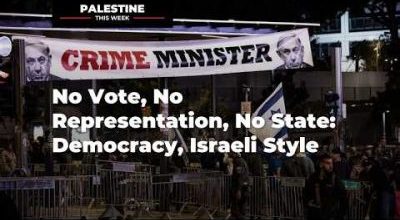
No Vote, No Representation, No State: Democracy, Israeli Style
or go to
Aletho News Archives – Video-Images
From the Archives
Sanctions, War and the Policy of Dual Containment
By SASAN FAYAZMANESH | March 17, 2008
It is now nearly three decades since the Unites States adopted the policy of dual containment of Iran and Iraq. While much has been written about the containment of Iraq, there has been very little in-depth analysis of this policy when it comes to Iran. In a book that is going to be released on March 31, 2008, entitled The United States and Iran: Sanctions, Wars and the Policy of Dual Containment (Routledge), I attempt to address this shortcoming by investigating when and why the US policy of containment of Iran came about, how it evolved, and where it stands today.[1] To the extent that Israel has been involved in US policy making, the study will also include the role that Israel has played in the containment of Iran. Also, since the fate of Iran has been inextricably linked to that of Iraq, occasionally the investigation will overlap with the containment of Iraq.
The policy of dual containment of Iran and Iraq originated during the Carter Administration, but it was not until the Clinton Administration that the expression “dual containment” became popular. … continue
Blog Roll
 Aletho News
- NATO chief advocates war of aggression
- No Vote, No Representation, No State: Democracy, Israeli Style
- Zionist Bought Senate Blocks Information About American Citizens Killed By Israel
- While Gaza dominates the UN, these are the people keeping it alive
- New Report: “Scholasticide and Genocide in Gaza: Assessment, Testimonies and Legal Analysis”
- ‘THAAD Delusion’: Iran war exposes US missile shield limits – The Atlantic
- Moscow issues warning to NATO over Russian exclave
- Yes, the Iran war has destroyed Trump’s presidency
- The fallacy of US delusions about Iran’s economic collapse
- Hezbollah denies Syria cell link, warns of Israeli plan to sow discord
- If Americans Knew
- Mamdani releases plan to combat antisemitism and hate crimes in New York City
- Iran’s Revolutionary Guards Publish Letter to the American People
- DMFI launches $1 million ad campaign supporting Virginia’s Elaine Luria
- US Senate blocks resolution seeking report on Americans killed by Israel
- Israeli Attacks Kill Ten Palestinians in Gaza
- Massacre at Minab: The School That Became a Grave
- Israeli media: The IDF Shows It Doesn’t Turn a Blind Eye; It Actively Emboldens Settler Havoc
- As settlers ravage West Bank, Israeli forces kill 10 in Gaza – Daily Update
- New Report: “Scholasticide and Genocide in Gaza: Assessment, Testimonies and Legal Analysis”
- Ex-Biden officials are desperate for a Gaza scapegoat
- No Tricks Zone
- Green Energy Debacle: German Expert Professor Fritz Vahrenholt Warns Of Severe Economic And Social Consequences
- Two More Paleo Reconstructions Affirm Meters-Higher Sea Levels Across Ireland, Brazil 7000-6000 Years Ago
- New Study: Earth And Venus Surface Warmth Largely Explained By Convection And Lapse Rate, Not CO2 Or Radiation
- 2025 Nature Paper Claiming Worsening Global Drought Gets RETRACTED …Heavily Flawed
- New Study: ‘Global Drought Shows No Detectable Recent Acceleration Under Climate Warming’
- Economic Masterminds: German Socialists Suggest Taxing Productivity Gains Stemming From Using AI
- The South China Sea Has Not Been Cooperating With The Climate Change Narrative
- Energy Crisis: Germany Enters Heating Season With Historically Low Gas Reserve Fill Levels
- New Study: The Antarctic Ice Sheet Gained Mass From 2020-2024 Due To Staggering Snow And Ice Accumulation
- Study: Ocean Heating Rates From Thousands Of Years Ago ‘Dwarf’ Modern Ocean Heating Rates

