American Israel Public Affairs Committee (AIPAC), the pro-Israel lobby which is based in Washington, has begun a lobbying campaign to stop US lawmakers from cutting military aid to Egypt.
The group already said in public that it wanted aid to Egypt to continue flowing.
“In light of the treaty’s achievements and resilience,” AIPAC said in a March 27 memorandum, “The United States should continue its strong support for the treaty and back Egypt as it works with Israel to combat the threats of extremists within its borders who would seek to undermine it.”
On Tuesday, an amendment from Rep. Adam Schiff, D-Calif. was defeated in the House of Representatives. The amendment called for a cut in US military assistance to Egypt by $300 million – from $1.3 billion down to $1 billion.
Tuesday’s vote was partly due to pressure by AIPAC, Schiff said as reported by Al-Monitor.
“I didn’t know that AIPAC was weighing in at all on this until after the vote,” Schiff said. “But members did communicate to me after the vote that they had been persuaded by AIPAC not to support this.”
According to the report, Israel was a main topic of discussion during the debate of Schiff’s amendment as part of Tuesday’s markup of the State and Foreign Operations spending bill for FY2015.
Pro-Israel representatives argued the new government of President Abdel Fattah al-Sisi was doing a better job fighting Israel’s “enemies,” the report said.
“The aid we provide for the military also provides for Israel’s security,” said Rep. Kay Granger, R-Texas, the chairwoman of the State and Foreign Operations panel.
Inheriting both the weapons and the mindset of the US military, police are becoming militarized and ‘hyper aggressive’ in their approach to maintaining security on the streets of America. A new study calls on police not to treat people as ‘wartime enemies’.
The tragic story of Jose Guerena, 26, who served as a Marine in the Iraq War, only to be killed by ‘friendly fire’ at his home in Tucson, Arizona, is becoming a disturbingly familiar one across the country.
On the morning of May 5, 2011, Guerena’s wife alerted him when she heard strange sounds and the silhouette of a man standing outside their home. Guerena got his wife and child into a closet, grabbed his rifle, and went to investigate. This proved to be a deadly mistake. A SWAT team opened fire on Guerena, who died on his kitchen floor with multiple wounds and without medical attention.
As it later emerged, the SWAT unit raided a number of residences in the neighborhood, turning up nothing more than a small bag of marijuana. No drugs were found in the Guerenas’ home.
Created in the late 1960s as “quasi-militaristic” units designed to handle emergency situations such as riots, hostage scenarios, and active shooter situations, the number of SWAT squads have since surged, and are “used with greater frequency and, increasingly, for purposes for which they were not originally intended—overwhelmingly to serve search warrants in drug investigations,” according to an ACLU report, entitled ‘War Comes Home: The Excessive Militarization of American Policing.’
The report examines 818 SWAT operations from July 2010 to last October, which were conducted by more than 20 law enforcement agencies in 11 states.
Today, paramilitary squads are better equipped to fight terrorists in foreign lands [occupations] than serve and protect US civilians at home, and are becoming a dark chapter to America’s newfound capacity for “needless violence” and treating its citizens like “wartime enemies,” it said.
The 98-page document details the militarization of state and local law enforcement agencies, courtesy of expensive federal programs, which are dispensing “weapons and tactics of war, with almost no public discussion or oversight.” Although explicitly aimed at fighting drugs, the strategy is backfiring, sowing fear and discord among citizens, many of whom are starting to fear police as much as criminals.
As the United States winds down its military operations in Afghanistan and Iraq, local police forces are getting the used ‘hand-me-downs’ from the US military. This makes some American communities resemble the latest occupied zones with police dressed in combat fatigues and driving MRAPs and carrying AR-15s down Main Street.
“Using these federal funds, state and local law enforcement agencies have amassed military arsenals purportedly to wage the failed War on Drugs… But these arsenals are by no means free of cost for communities. Instead, the use of hyper aggressive tools and tactics results in tragedy for civilians and police officers, escalates the risk of needless violence, destroys property, and undermines individual liberties,” according to the report.
One bit of curious hardware being distributed to local police forces from the government’s military closet is the MRAP (Mine Resistant Ambush Protected) vehicle, which gives troops protection from improvised explosive devices (IEDs). Using media sources, ACLU put the number of towns that now possess the armored carriers at around 500. Among the lucky recipients, Dallas, Texas, has one, as does Salinas, California and even the Utah Highway Patrol.
The report noted that even the Ohio State University Police own one of the MRAPs in order to give a sense of “presence” on big football game days.
The results of the report revealed a worrying trend: “If the federal government gives the police a huge cache of military-style weaponry, they are highly likely to use it, even if they do not really need to.”
Case in point: Gwinnett County, Georgia, which received at least 57 semi-automatic rifles, mostly M-16s and M-14s. One-third of the county’s SWAT deployments dealt with drug investigations; in half of them, the SWAT team broke down the door to get inside, “and there was no record in any of the reports that weapons were found.”
Other examples were provided in Concord, Keene, and Manchester, quaint New Hampshire towns in close proximity to each other, yet each took advantage of DHS grants to buy the military-grade armored BearCat (the amount of grants received by these agencies ranged from $215,000 to $286,000). Justifications for the need to acquire such vehicles pointed to weapons of mass destruction and the threat of terrorism.
The Keene police department, for example, cites in its application (which trumps Ohio State University’s need for armored vehicles to provide “presence” at big football games), the annual pumpkin festival as a potential terrorism target that requires the assistance of an APC.
Military-style mentality invades police
Another leftover from America’s military adventures abroad is the peculiar military mindset that allows US personnel to survive in hostile lands. Equally unsettling as spotting armored vehicles winding through the tree-lined streets of otherwise quiet American neighborhoods is the spectacle of local police officers receiving military-style combat training.
The US Department of Justice described the boot-camp conditions being used to train new police recruits.
According to a Bureau of Justice Report, “the majority of police recruits receive their training in academies with a stress-based military orientation. This begs the question: is this military model—designed to prepare young recruits for combat—the appropriate mechanism for teaching our police trainees how to garner community trust and partner with citizens to solve crime and public order problems?”
As a result, a so-called “warrior” mentality inside local police forces is “pervasive and extends well beyond hostage situations and school shootings, seeping into officers’ everyday interactions with their communities,” the report said.
The report describes a PowerPoint presentation that was delivered to Cary, North Carolina, SWAT team members entitled “Warrior Mindset/Chemical Munitions” for all Emergency Response Team personnel.
The National Tactical Officers Association (according to its website, the NTOA “strives to provide our members with the tools they need to protect an increasingly dangerous society”) urges trainees to “Steel Your Battlemind” and defines “battlemind” as “a warrior’s inner strength to face fear and adversity during combat with courage. It is the will to persevere and win. It is resilience.”
The question, however, is whether such an approach to policing is conducive to creating peace on the streets of America? An escalation of police operations going awry are growing cause for concern among civil rights groups.
In early June, for example, a toddler was severely burned and left unable to breathe on his own when a Georgia SWAT team tossed a flashbang grenade in his crib during a drug raid – over a single meth sale of $50. Bounkham “Bou Bou” Phonesavanh, a 19-month-old, was asleep in his portable crib in the same room as his parents and three older sisters, when police opened the door to the converted garage and threw the stun grenade in.
In the ACLU’s study, SWAT units forced entry into a person’s home using a battering ram or other breaching device in 65 percent of drug searches.
As the report emphasizes, the training documents do not suggest that SWAT teams “should constrain their soldier-like tactics to terrorism situations.” Moreover, the majority of SWAT raids examined for the report “took place in the context of serving search warrants at people’s homes—not in response to school shootings or bombings.”
The survey discovered that 62 percent of SWAT missions were for drug searches. Some 79 percent involved raids on private homes, and a similar proportion were carried out with warrants authorizing searches. However, just 7 percent of the incidents fell into those categories for which SWAT was originally designed to handle, such as hostage situations or shootings.
It is this type of military mindset, compounded with excessive firepower, which is turning many American communities into veritable tinderboxes, which only requires the slightest provocation to spiral into senseless violence and death.
The survey, which provided a small picture of the overall trend, reported seven cases where civilians died in connection with the deployment of SWAT units, two of which appeared to be suicides. Another 46 individuals were injured, often as the result of physical force by officers.
Russian President Vladimir Putin (RIA Novosti / Aleksey Nikolskyi)
President Vladimir Putin has proposed that the upper house call off the March 1 resolution allowing the head of state to use the armed forces on the territory of Ukraine, said presidential press secretary Dmitry Peskov.
“Because of the beginning of the three-party talks to settle down the situation in the eastern parts of Ukraine, the head of state has addressed to the Federation Council to repeal the resolution on the use of Russian armed forces on the territory of Ukraine,” ITAR-TASS cited Peskov as saying.
The president sent an address to Federation Council Valentina Matvienko today morning, ahead of leaving on official visit to Vienna.
Deputy Head of the Federation Council’s International Committee Andrey Klimov confirmed the upper house will back Putin’s proposal and repeal the resolution on Wednesday, June 25.
The Federation Council’s resolution of March 1 agreed on the president‘s right to use military force on the territory of the neighboring Ukraine “until the normalization of the social and political situation in that country.”
The resolution was adopted following a presidential address demanding security be maintained “for citizens of the Russian Federation, our compatriots and personnel of the Russian contingent deployed in accordance with international agreements on the territory of the Autonomous Crimea Republic of Ukraine.”
The resolution was adopted in accordance of the first part of the Article 102 of the Constitution of the Russian Federation.
On Monday evening, the leader of the self-proclaimed Donetsk People’s Republic in eastern Ukraine agreed to a ceasefire in the region until 10am local time on Friday. He stressed that the self-defense force’s ceasefire will come only as a reciprocal move.
Earlier, Ukrainian President Petro Poroshenko laid out his plan to deescalate the conflict, announcing a unilateral ceasefire from June 20 until June 27, the day Kiev plans to sign the EU Association agreement. On Sunday he issued a warning, stating that he had an alternative “detailed plan” of regaining control over south-eastern Ukraine, should his current proposal for a truce fail to bring results.
Despite the “unilateral ceasefire” announced by Kiev the fighting in eastern Ukraine continued, and there have been clashes in some areas, the Lugansk People’s Republic said in a statement. It was reported that an artillery shell hit the roof of a kindergarten in Kramatorsk, partly destroying the building. At the same time, self-defense troops of the Donetsk People’s Republic targeted Ukrainian armed forces positions at Karachun Mountain, Itar-Tass reports.
The launch of two major wars by the US government had two major beneficiaries, one domestic and one foreign. The three major weapons manufacturers, Lockheed Martin (LMT), Northrop Grumman (NOG) and Raytheon (RTN) have delivered record-shattering returns to investors, CEOs and investment banks during the past decade and a half.
The Israeli regime has expanded its territory and increased its power and influence in the Middle East. Israel’s territorial dispossession of Palestinians, was aided and abetted by the US invasion and destruction of the Palestinian’s Iraqi allies. Washington destroyed Iraq’s armed forces and fragmented its society and state.
The cost in US physical and mental casualties runs in the hundreds of thousands of soldiers who at one time served in the war zones. The financial costs run in the trillions of dollars and counting. Both the military-industrial complex and the pro-Israel power configuration continue to wield a major role in keeping Washington on a wartime footing.
For the weapons manufactures there are no peaceful economic activities that can yield a comparable return – hence the need to continue to pressure for new wars to sustain weapons spending. For the pro-Israel power configuration, peace agreements would put an end to land grabs, reduce or curtail new weapons transfers and undermine pretexts to sanction or bomb countries (like Iran) opposing Tel Aviv’s vision of “Greater Israel”.
Yet the political and financial costs of almost a decade and a half of warfare weigh heavily on the US Treasury and electorate. The wars themselves were dismal failures if not outright defeats. New conflicts have emerged in Syria, Iraq and the Ukraine in which the military-industrial complex and the pro-Israel lobbies hope to capitalize for profits and power.
Yet the cumulative costs of past and continuing wars hangs over the launch of new costly military interventions. Political discontent among the US public with past wars also weighs heavily against new wars for profits and Israel.
War Profits
The power and influence of the military-industrial complex in promoting serial wars is evident in the extraordinary rates of return over the past fifty years. Stocks in military-industries have risen 27,699% versus 6,777% for the broad market according to a recent study by Morgan Stanley (cited in Barron’s, 6/9/14, p. 19). Over the past three years, Raytheon has returned 124%, Northrup Grumman 114% and Lockheed Martin 149%.
The Obama regime talks of reducing the military budget and makes a show of doing so via the annual appropriation bill, and then, uses emergency supplemental funds to pay war costs… which actually increases military spending and fattens the profits for the military-industrial complex.
War profits have soared because of multiple military interventions in the Middle East, Africa and South Asia. The lobbyists for the industry use their influence over Congressional and Pentagon decision-makers to join forces with the pro-Israel lobby to pressure for greater direct US military involvement in Syria, Iraq and Iran. The growing ties between Israeli and US military industries reinforce their political leverage in Washington by working with liberal interventionists and neo-conservatives. They criticize Obama for not bombing Syria and for withdrawing from Iraq and Afghanistan. They call for sending troops to Iraq and the Ukraine. Obama argues that proxy wars do not require heavy US military expenditures. Responding to Wall Street pressure to reduce the budget deficit the Obama regime argues that retreating from Iraq and Afghanistan was necessary to reduce US financial and military losses. But withdrawal also reduces profits for the weapons makers and angers Israel and its supporters in Congress.
The Fight over the Military Budget: Veterans versus the Complex and the Lobby
In the face of rising pressure to reduce the deficit and cut the military budget, the military-industrial complex and its Zionist accomplices are heavily engaged in retaining their share of the military budget, by reducing the amount allocated for the medical programs of active and retired soldiers. Disability costs are soaring and will continue for decades. The cost of health care is expected to double to 15% of the defense budget in five years and according to the financial press “that is bad news for defense stocks” (Barron’s, 6/9/14, p. 19).
In response the military-industries are pressing to close Veterans Administration hospitals and reduce benefits, claiming fraud, incompetence and inferior service. The same corporate warlords and lobbyists who pressed the Government to send American soldiers to wars, in which they lost lives, limbs and mental health, are now in the forefront of the fight to reduce spending on their recovery and health. Economists point out that the less the percentage of the military budget spent on veteran’s health, the greater the share allocated for missiles, warships and war planes. The long term costs for VA medical and disability spending resulting from the Afghan and Iraq wars are at present $900 billion and rising.
The corporate warlords are pressuring Congress to increase co-pays, enrollment fees and deductibles for veterans enrolled in public health plans.
The fight is on over Pentagon expenditures: for soldiers health or weapons programs that fatten the profits of the military industrial complex.
One theme presented by supporters of the American empire is the U.S. military is invincible and can never lose unless stabbed in the back by impatient politicians. They claim the U.S. military never lost a battle during the entire Vietnam war. On August 30, 2011, President Barack Obama proclaimed to a gathering of veterans: “But let it be remembered that you won every major battle of that war. Every single one.” This myth had been disputed by America’s most decorated officer of that war, Col. David Hackworth, in his book “About Face.” The U.S. military had every advantage, yet mistakes were made and battles lost. Internet research turns up these 70 lost battles of the Vietnam war:
1. Attack on Camp Holloway – In 1962, the U.S. Army established an airfield near Pleiku in central South Vietnam, which grew to include logistics elements and a large advisory group. In early 1965, some 300 Viet Cong slipped past ARVN guards and swept through the camp killing 8 Americans, wounding 126, destroying 10 aircraft and damaging 15 more. The Viet Cong withdrew to avoid battling reinforcements, with few losses.
2. Battle of Ap Bac – In January 1963, American advisors launched a battle after they pressured reluctant South Vietnamese officers to use American air mobility assets to destroy the Viet Cong. The attack was a disaster in which the VC mauled a far larger force while shooting down five American helicopters (pictured) and damaging eight, while killing three Americans and wounding eight.
3. The Sinking of the USNS Card – This World War II aircraft carrier was later used as a transport for American military cargo. On May 2, 1964, it was moored in a heavily defended harbor in the Saigon River. Two VC commandos crawled down a sewer pipe and attached explosives to the ship. The explosion knocked a huge hole in the hull and killed five American crewmen, causing the ship to sink 45 feet to the river bed.
4. Attack on Bien Hoa Airbase – On November 1, 1964, Viet Cong squads shelled the airfield at Bien Hoa with mortars. The attack began shortly after midnight and lasted 20 minutes. It was estimated that there were three 81mm mortars. The attack was effective as 27 aircraft were hit, including 20 B-57s (5 destroyed), 4 helicopters, and 3 A-1H Skyraiders. A fourth Skyraider crashed trying to take-off. Five Americans and two Vietnamese were killed, and 43 wounded.
5. The Dragon’s Jaw – On Apr 3, 1965, the U.S. military conducted the first of hundreds of bombing raids to destroy the Thanh Hoa Bridge in North Vietnam. Thousands of bombs were dropped and eleven American aircraft shot down with several more damaged beyond repair until the iron bridge finally fell in 1972.
6. Battle of Dong Xoai – Soon after American combat brigades arrived in South Vietnam, the NVA attacked this large, strategic base defended by ARVN units supported by American Special Forces and airpower. The base was overrun with hundreds of casualties while two dozen Americans died in combat and helicopter crashes, with even more wounded or missing.
7. Sapper Attack on Da Nang Airbase – North Vietnamese Army (NVA) sappers infiltrated this airbase on July 1, 1965. They destroyed three large C-130 transport aircraft, three F-102 fighters, and damaged three more F-102s. The sappers escaped leaving behind one dead.
8. Iron Hand Air Strikes – American aircraft had suffered losses from North Vietnamese Surface-to-Air Missile (SAM) systems. On August 13, 1965, the Navy aircraft carriers USS Coral Sea and USS Midway launched 76 low-level “Iron Hand” missions to seek out and destroy SAM sites. Five aircraft and three pilots were lost to enemy guns, and seven other planes were damaged, but no SAMs were discovered.
9. Death of Supply Column 21 – Operation Starlite was the first major Marine Corps operation in Vietnam, and fighting was tougher than expected. A ship landed an armored supply column to support combat forces, which became lost and was attacked in a rice paddy on Aug 18, 1965. Five of the seven armored vehicles were destroyed (including two tanks) during a day long firefight. Five of the 27 Marines were killed and 17 wounded as they held off the enemy until daybreak.
10. The Battle of Ia Drang – This was one of many disastrous airmobile assaults, when infantry helicoptered into a remote area and encountered a larger enemy force with ample ammunition. On Nov 14, 1965, 450 soldiers from the 1st battalion of the 7th Cavalry landed at LZ X-ray and found itself surrounded with little ammunition and no heavy firepower. It was nearly overrun while suffering 79 killed and 121 wounded, and survived only by demanding all available air support in Vietnam. The 7th Cavalry left the area after declaring victory, while survivors pondered the wisdom of an attrition strategy using American foot infantry.
11. Battle for LZ Albany – The 1st battalion of the 7th Cavalry barely survived its now famous 1965 battle in the Ia Drang valley. After saving its 1st battalion, the exhausted 2nd battalion headed for LZ Albany for an aerial extraction. It was in a long column in open terrain when it ran into a concealed NVA battalion, which attacked and shot it to pieces during a bloody battle that claimed the lives of 155 Americans, with 124 wounded.
12. Attack on Marble Mountain – Some 90 Viet Cong sappers infiltrated this huge Marine Corps airfield and destroyed 19 helicopters and damaged 35 (11 of them severely). After this 30 minute rampage, the Viet Cong withdrew, leaving behind 17 dead and 4 wounded. American casualties were 3 killed and 91 wounded.
13. Operation Utah – On Mar 4, 1966, the 2nd battalion of the 7th Marines helicoptered into an area near Quang Ngai to investigate reports of an NVA regiment in the area. They found it dug into fortifications around Hill 50. Their attacked failed and the Marines fell back, but were surprised when the NVA counterattacked. The battalion was in trouble and more Marine units where flown in to join the battle. The enemy withdrew, but only after the Marines lost 98 dead, 278 wounded, with several aircraft destroyed.
14. Battle of Xa Cam My – A battalion from the 1st Infantry Division conducted another “search and destroy” sweep. Its three companies were deployed miles apart in hopes the NVA would attack one. They surrounded and blasted Charlie company, killing 38 and wounding 71 of its 134 soldiers before its other two companies came to the rescue.
15. Operation Paul Revere IV – Two cavalry battalions swept the Cambodian border area in search of the enemy. None were found, until Company C ran into a large force near Duc Co. Details are scarce, but two platoons were overrun and destroyed; only one soldier survived. The American dead were so numerous that they were hauled away in external cargo nets by helicopters.
16. Battle of Cu Nghi – As the 7th Cavalry began Operation Masher, a CH-47 helicopter was shot down. A company of soldiers was flown to the rescue, but they were shot up and pinned down. More units hastily arrived and found two battalions of entrenched NVA fighters firing away at troopers scattered around an area that became known as “the graveyard.” Several helicopters where shot down during this three-day melee that left 140 Americans dead and 220 wounded.
17. Battle of Ho Bo Woods – On July 19, 1966, Company A, 1st Bn, 27th Rgt, 25th Division helicoptered into an LZ with 92 soldiers on a search and destroy mission. There is no account of what happened next, except that 25 were killed and 32 wounded as the company fled aboard helicopters, leaving 16 of their dead behind.
18. Operation Crimson Tide – On Oct 18, 1966 the first mission to rescue an American POW was launched. It ended in disaster, with 12 killed, 17 missing, two helicopters shot down, and no prisoners rescued.
19. “Black Friday“– Strike aircraft losses were common, but on December 2, 1966 the U.S. Air Force lost five aircraft and the Navy lost three aircraft to surface to air missiles or anti-aircraft gun fire. Air Force losses included three F-4Cs, one RF-4C, and an F-105. The Navy lost one F-4B and two Douglas A-4C Skyhawks.
20. Attack at Binh Duong – On Feb 26, 1967, a Viet Cong battalion nearly overran Alpha Company, 4th Battalion, 9th Regiment, of the Army’s 25th Division. The VC slipped past camp defenses in a surprise attack that killed 19 Americans and several ARVN soldiers.
21. Operation Hickory – In May 1967, U.S. Marines were ordered to cross into the DMZ and destroy the NVA. Several days of frontal assaults killed lots of NVA lodged in fortifications, but also killed 142 Marines and wounded 896 until the marines withdrew after ten days of pointless attacks.
22. Battle near Vinh Huy – During Operation Union II, six rifle companies from the 5th Marines swept the Que Son Valley in search of the enemy. They located a large enemy force 1000 yards ahead across an open rice paddy. After some air and artillery strikes, three companies were ordered to charge across the open ground, and were shot to pieces. The bloodied Marines fell back during this June 2, 1967 battle with 71 KIA and 139 wounded.
23. August 1967 Air Battle – This war produced two American “Ace” fighter pilots (i.e. five or more aerial shoot downs), yet the North Vietnamese had 16, including Nguyen Van Coc (right), the top Ace of the war with nine kills. On Aug. 23, 1967, Coc led several MIG fighters to intercept a group of 40 American aircraft on a bombing mission. They shot down three American F-4D fighters and one F-105D fighter-bomber without losing a single MIG. Eight American aviators were killed or captured.
24. Battle of Prek Klok – During Operation Junction City, Company B from the 1st Battalion/16th Infantry went in search of the NVA. Independent accounts cannot be found, yet the Army’s official history notes the company was blasted and nearly surrounded until rescued when another company came to its aid, allowing it to retreat. Company B was extracted by helicopter after suffering 25 dead and 28 wounded. Army Generals declared victory and awarded the company commander a silver star.
25. Kingfisher Battle – In 1967, “Operation Kingfisher” was launched to destroy NVA forces just south of the DMZ. On Sept. 21st, the 2nd battalion, 4th Marines began a “search and destroy” mission and quickly encountered the entrenched 90th NVA regiment. The Marines lacked tank support because recent rains limited road mobility, while the dense vegetation and close proximity of the enemy restricted air and artillery support. After a day-long battle, the Marines had suffered at least 16 dead and 118 wounded while trying to break out of the enemy’s kill zone. The battalion withdrew at dusk, although flee may be a better term since 15 dead Marines were left behind. Details are sketchy, but the battalion didn’t return to collect its dead until three weeks later. Veterans of the battle state they lost 34 KIA that day.
26. Rocket Attack on Da Nang – On July 15, 1967, the NVA conducted a major rocket bombardment on the key U.S. airbase at Da Nang. A total 83 NVA 122mm and 140mm rockets hit the base just before dawn, resulting in 8 killed, 175 wounded, 10 aircraft destroyed and 49 damaged.
27. The Battle of Thon Cam Son – In July 1967, the 2nd battalion of the 9th Marines crossed into the DMZ to find the NVA. They found abandoned base camps and bunkers because the NVA had pulled out and moved around behind them. The Marines had to fight their way back home, and more than half the unit bled as it lost 41 killed and 355 wounded.
28. Battle for Nui Ho Khe (Hill 88) – Marines were concerned that enemy units near their big Con Thien base threatened their main supply route. On Sept 10, 1967, the 3rd battalion of the 26th Marines ventured forward to secure Hill 88. It was surprised to encounter an entire NVA regiment, which counterattacked causing a bloody fight in which 3/26 suffered 300 casualties (40% including 37 KIA) and lost several tanks. It withdrew to Hill 48 where it made a successful last stand. While the NVA suffered more causalities, poor intel resulted in this clumsy assault that failed to reach its objective.
29. Slaughter at LZ Margo – The 2nd battalion of the 26th Marines helicoptered into LZ Margo near the DMZ on a standard search and destroy mission. Contact was light over the next three days as units swept the area. On Sept. 16, 1968, the battalion received an order from higher headquarters to withdraw into the small LZ where they had arrived, because a big B-52 air strike was planned in the area. Marines were worried because they were tightly grouped and the ground was rock hard so they couldn’t dig in. They knew the NVA kept them under observation and were a perfect target for a mortar barrage. A short time later, hundreds of mortar rounds tore into the tightly packed Marines, killing 30 and wounding nearly 200 until the NVA ran out of ammo.
30. Operation Swift – U.S. Marines fought tough battles along the DMZ when NVA units moved across the border to inflict heavy causalities. Marine Generals sent rifle companies with ~140 Marines to search for and destroy the NVA intruders with artillery and airpower. This was effective, but larger NVA units sometimes trapped them in kill zones. In September 1967, they ambushed two Marine companies in the Que Son Valley. Operation Swift was launched to save them from destruction, but the two companies sent to the rescue were mauled. The end result was 127 Marines killed and 362 wounded. The NVA suffered more casualties, but accomplished their mission and withdrew northward.
31. Convoy Ambush near An Khe – In Sept 1967, 39 trucks from the U.S. Army’s 8th Transportation Group were returning home after delivering supplies to Plekiu. They were escorted by two gun jeeps in an area considered mostly secure by the presence of the 1st Calvary Division. A Viet Cong company ambushed this big convoy in broad daylight. Seven Americans were killed, 17 wounded, and 30 vehicles were damaged or destroyed. The VC quickly disappeared and no evidence of enemy casualties were found.
32. Task Force Black Mauled – Half of the 1st Battalion/501st Regiment/173rd Airborne Brigade went in search for the NVA who had recently attacked their base. They ran into two NVA battalions, who shot them up from three directions. The rest of the battalion was sent to save them, and withdrew with 20 dead, 154 wounded, and two missing.
33. Battle near Ap Bac – The U.S. Army’s 9th Infantry Division operated in the marshy delta region of southern Vietnam, often with Navy river patrol boats. During a routine battalion sweep, Alpha company from the 2nd Brigade crossed an open rice paddy and encountered Viet Cong ready to fight from concrete bunkers. Most of the company was wiped out in the first five minutes, and rest pinned down in the kill zone for hours until other companies arrived. This battle left 40 American dead and 140 wounded.
34. Battle for Hill 861 – In 1967, Bravo Company, 1st battalion, 9th Marines went to search for caves on Hill 861. After a skirmish, the company attacked up the hill without knowing that it had encountered a large enemy force. Most of Bravo was wiped out and the survivors were pinned down until rescued by Kilo company that night.
35. Overrun in Happy Valley – During the first two weeks of 1968, 69 soldiers from the 196th Infantry Brigade died in heavy fighting in the Hiep Duc Valley, Quang Tin Province. On January 9-10, Alpha and Delta companies from its 3/21 Infantry battalion were overrun. The Delta company commander and 27 men were killed. Dozens were wounded and eight Americans taken prisoner as survivors held out in small groups overnight until rescued the following day.
36. Ambush at Hoc Mon – In 1968, 92 American soldiers of C Company, 4th Battalion, 9th Infantry Regiment, 25th Division began a search-and-destroy mission near Saigon. They were looking for a Viet Cong force that had been firing rockets into their Tan Son Nhut Air Base. As they rushed along a road without flank security to catch up with their battalion, they ran into an ambush. Within eight minutes, 49 American soldiers were dead or dying, and 29 were wounded.
37. Battle of Kham Duc – This large Special Forces camp was abandoned as it was overrun, despite reinforcement by an American infantry battalion from the 196th brigade. Hundreds of friendly civilians and militiamen were left behind as Americans escaped aboard helicopters and C-130s.
38. Khe Sahn Village Overrun – A large village three kilometers from the famous Khe Sahn military base was defended by 160 local troops, plus 15 American advisors and heavy artillery from the base. In January 1968, it was attacked by a ~300-man NVA battalion. Reinforcements were dispatched aboard nine UH-1 helicopters, but were wiped out after landing near the NVA, along with one helicopter. A small ground rescue force from the nearby base was repulsed, while the survivors from the village assault fled to the Khe Sahn base.
39. Battle of the Slopes – A company of American paratroopers was searching for the NVA in rough terrain when it was attacked by a large force. It suffered 76 KIA as it was nearly overrun, with two platoons wiped out. Newly arrived airborne officers had ignored warnings that they should maneuver as battalions because the NVA units in that area were larger, aggressive, and would attack a lone rifle company.
40. Battle of No Goi Island – The Viet Cong liked to fortify ambush sites and wait for the Americans to discover them. During Operation Allen Brook, three battalions of Marines swept through No Goi Island and found lots of Viet Cong ready to fight from bunkers near the village of Le Bac. During several days of bloody assaults, the Marines suffered 138 killed and 686 wounded (576 seriously) before the surviving Viet Cong fled. The extreme heat resulted in another 283 Marines evacuated due to heat stroke. Having suffered 50% causalities, Allen Brook was halted until fresh Marine units arrived.
41. Battle at the Ben Cui Rubber Plantation – American mechanized units had the firepower and mobility to rout any NVA force. An exception occurred in 1968 during a routine road sweep when Company C, 1st Bn (Mech), 25th Division ran into an aggressive NVA regiment. It quickly lost 5 APCs (right), with 17 killed (leaving just one officer), and two dozen wounded before it retreated to its home base, leaving most of its dead behind.
42. Battle of Dai Do – A Marine Corps infantry battalion was mauled and forced to retreat after a disorganized attempt to dislodge a large North Vietnamese force near the DMZ. The Marines suffered 81 KIA and 397 wounded while killing hundreds of NVA. Accounts of this action are hidden within reports of operations in region of Dong Ha.
43. Battle of Ong Thanh – After minor enemy contact the previous day, a battalion commander led 155 American soldiers single-file into the bush to destroy the enemy. They ran into an NVA regiment with some 1400 men. Alpha company was wiped out in 20 minutes, and by sundown, 59 American soldiers lay dead with 75 wounded. An excellent documentary is on-line where survivors describe the onslaught.
44. Operation Delaware – In this April 1968 offensive, the U.S. Army learned that mountain jungles allow concealed anti-aircraft weapons to easily shoot down low-flying aircraft. Units of the 1st Cavalry Division helicoptered into rugged terrain and killed hundreds of NVA as they withdrew to Laos. However, the NVA shot down a C-130 transport, two fighter-bombers, eight large helicopters, nearly two dozen UH-1 helicopters, and seriously damaged three dozen other helicopters, whose crashes left 47 Americans MIA. The NVA also killed 142 Americans, wounded 731, and returned to the area as the 1st Cav withdrew after three weeks of fighting.
45. Operation Houston II – In May 1968, as Mike company from the 3rd Battalion, 5th Marines moved up a ridge called Hill 1192, they wandered into an NVA base camp and were shot to pieces with 14 killed and dozens wounded. Three helicopters were shot down attempting to rescue wounded Marines. The surviving marines remained pinned down and bleeding for several days until rescued by another company.
46. Battle for LZ Loon – The Marines landed on Hill 672 to build an artillery fire support base. The NVA objected, and sent a battalion to attack the two undermanned companies from the 4th Marines. After a day of heavy fighting that included NVA artillery fire, half the Marines were casualties. It was decided to abandon the hill by helicopter, leaving most of the dead behind. One helicopter was shot down during the extraction after this battle that left 41 Marines dead and over 100 wounded.
47. Battle of Two July – The 1st battalion, 9th Marines went up a road to find the NVA, and found them. Information is vague, but Bravo Company was overrun and the remnants of Alpha Company pulled back, leaving a combined 53 known dead, 190 wounded, and 34 missing.
48. Battle for Hill 875 – or the Siege of Dak To– The 2nd battalion of the 173rd Airborne Brigade with over 300 soldiers advanced up this hill with artillery and air support. They encountered stiff resistance and suffered heavy causalities, but were shocked when the NVA counterattacked. The battalion formed a tight defensive perimeter and was surrounded while chaos ensued after a Marine Corps’ jet dropped a 500 lbs bomb on their position. The brigade’s 4th battalion arrived the following day and broke the siege, then advanced to secure the hill after the NVA withdrew. Of the 570 US troops involved in the attack on the hill, 340 became casualties.
49. Battle for Firebase Mary Ann – Some 50 NVA sappers attacked at night, then slipped away. The U.S. Army suffered 33 killed and 83 wounded among the 231 soldiers at the base. Their brigade commander was relieved of duty and the firebase closed.
50. Battle of Ngok Tavak – On May 10, 1968, an NVA battalion attacked an old French fort manned by a 150 Chinese mercenaries led by eight American Special Force troopers and three Australian advisors, plus 33 U.S. Marine Corps artillerymen with two 105mm howitzers. Helicopters flew in 45 more Marines as reinforcements and evacuated casualties during the day-long battle. The fort was overrun and everyone fled, with some literally clinging to the skids of a helicopter. At least 32 Americans were killed and several helicopters shot down. A book about this lost battle was published, and a short account is here.
51. Battle of Lang Vei – In 1968, the NVA surprised everyone by using light tanks to overrun the well-defended U.S. Special Forces camp at Lang Vei, despite heavy American artillery and air support. Most of the 500 defending Montagnards were killed. Losses among the 24 Americans were 7 KIA, 3 POWs, and 11 wounded.
52. Ambush near Khe Sahn – On Feb 25, 1968, a 41-man platoon from the 26th Marines was sent on a short patrol “outside the wire” to test the strength of NVA units near Khe Sahn village. They pursed three VC scouts who led them into an ambush. The platoon was wiped out during a three-hour battle that left 31 Marines KIA, one taken prisoner, while nine Marines escaped back to their base.
53. Battle of Thon La Chu – The 1968 Tet offensive caught the U.S. military by surprise, and the NVA captured the city of Hue. During this chaos, the cavalry was sent to save the Marines as the Army’s lightly armed 2nd battalion/12th Cavalry flew to the rescue in helicopters. After landing, it charged across an open rice paddy without its customary artillery or air support and suffered considerable casualties. The enemy had superior numbers, superior positions, and enough firepower to encircle the battalion. With 60% casualties, no supplies and little air support, the battalion was lucky to slip away at night and flee total destruction.
54. Fall of A Shau – The NVA sent five battalions to overrun this large Special Forces camp near the Vietnam border. It was defended by 380 local troops led by 17 Americans. After a day of heavy fighting, the defenders faced defeat. Five of the Americans fled by helicopter leaving behind 8 American dead and 5 missing. Most of the local troops were left behind. Another seven Americans died providing air support.
55. Battle near Hill 689 – On April 16, 1968 a Marine Corps company began a patrol near its Khe Sahn base. It wandered into tall vegetation and was decimated by concealed NVA soldiers in bunkers. Two more companies from 1st Battalion, 9th Marines were dispatched to save them, but they became ensnarled in this confusing battle in which dead and wounded Marines were left behind as the battalion retreated back to Khe Sahn in disarray. This resulted in 41 KIA, 32 wounded, with 2 of 15 MIAs later rescued by helicopters. The battalion commander was relieved of duty.
56. Attack on Nui Ba Den – A hundred NVA launched a surprise assault on a poorly defended American signal intelligence station atop Nui Ba Den mountain. The base was quickly overrun and burned to the ground. The NVA killed 24 Americans, wounded 35, and 2 were taken prisoner as the NVA withdrew. Most Americans survived in one bunker or by fleeing the base and hiding among boulders. Some refer to the battle as a massacre because the attack was so sudden that many soldiers had no rifles to defend themselves.
57. Ambush at Ap Nhi – On Aug 25, 1968, a resupply convoy of 81 trucks from the 48th Transportation Group departed Long Binh. Seven drivers lost their lives in an ambush, 10 were wounded, and two taken prisoner as most trucks were destroyed. Drivers held on with air support until a rescue force arrived nine hours later after suffering 23 killed and 35 wounded.
58. Battle of Lima Site 85 – The USAF established a secret navigation site atop a remote mountain in Laos to allow all-weather bombing northward. The NVA learned of this and surprised the Americans with their mountain climbing skills. The site was overrun as seven Americans escaped aboard a rescue helicopter, leaving 12 dead airmen behind while their 42 supporting CIA funded Asian mercenary soldiers perished.
59. Battle of Hamburger Hill – A battalion from the 101st Airborne (3/187) encountered stiff resistance on rugged Hill 937. It was unable to capture the summit due to steep, dense terrain, well-built enemy bunkers, a deadly friendly fire incident, and fierce NVA defenders. A second battalion (1/506) was sent to attack from the south, but it suffered the same fate. Small NVA counterattacks caused confusion and several more deadly friendly fire incidents. Aggressive American commanders ordered repeated attacks for three days until 3/187 had lost 60% of its men and withdrew, while 1/506 remained pinned down.
More battalions eventually arrived to join the attack. ARVN scouts reported the NVA had left the mountain, nevertheless, a two hour aerial bombardment commenced before the American battalions walked up Hill 937 to proclaim victory, and then withdrew a few days later. These frontal assaults resulted in 84 American dead with 480 wounded, and the loss of several helicopters, leading to the nickname “Hamburger Hill” where GIs were ground up. Given the heavy causalities suffered for nothing gained, this was a defeat.
60. LZ East Overrun – On June 11, 1969, the NVA overran a small base called LZ East, killing 17 soldiers of the 169th Infantry Brigade and wounding 34 until reinforcements arrived to retake the base.
61. Attack on Cu Chi – In February 1969, enemy commandos attacked the large U.S. Army airfield at Cu Chi. They destroyed nine large CH-47 helicopters, heavily damaged three more, and caused minor damage to two others. (photos are here) 14 Americans were killed and 29 wounded during the three-hour battle.
62. Battle of Plei Trap – During Operation Wayne Grey, 115 soldiers from Alpha Company of the 4th Infantry Division helicoptered into a remote area in search of the NVA. They found lots of them, and suffered 35 KIA, 51 WIA, and 7 MIA as they were overrun. A lieutenant who heroically led a retreat of the survivors was almost court-martialed by senior officers trying to cover-up this disaster.
63. Firebase Airborne Overrun – There are several short, vague accounts about how this artillery firebase was overrun on May 13, 1969. One veteran believes it was bait to draw the NVA into combat. VC sappers slipped inside its weak defenses and exploded the artillery ammunition dump, killing a dozen and causing confusion. The NVA swept through the base at night killing and wounding most defenders and destroying its big guns. Many Americans managed to hide until the NVA left before dawn, so the base was never officially captured. However, it was wrecked and later abandoned.
64. Operation Lam Son 719 – In early 1971, a major offensive was launched into Laos to sever the Ho Chi Minh Trail supply line. The United States provided logistical, aerial, and artillery support to the operation. American ground forces were prohibited by Congress from entering Laotian territory, but supported the offensive by rebuilding the airfield at Khe Sanh. South Vietnam provided its best units for this month long offensive, and the Pentagon was confident that American firepower would guarantee victory. After a series of lost battles, the South Vietnamese retreated back home after losing nearly 1,600 men. The U.S. Army lost 215 men killed, 1,149 wounded, 38 missing, and lost 108 helicopters while 7 American fighter-bombers were shot down.
65. Battle near FSB Professional – The NVA shot down a big CH-47 helicopter as it delivered supplies to this fire support base. Company A of the Army’s 1/46 Infantry with 91 soldiers was sent outside the wire to eliminate the threat. It was mauled during a 35-hour battle, and its 47 surviving soldiers fled, leaving their dead and some wounded behind.
66. Attack on FSB Henderson – As American troops withdrew from Vietnam, NVA sappers attacked this artillery base. They charged through the hilltop killing 27 soldiers from the 101st division and wounding 40. Most of the howitzers and artillery ammunition were destroyed by satchel charges before the NVA disappeared into the night.
67. Battle for Firebase Ripcord – American Generals made one final attempt to block the Ho Chi Minh trail, and found more NVA troops than expected. As the NVA assaulted remote Fire Support Base Ripcord, Generals decided to evacuate the base. Four American battalions from the 3rd Brigade, 101st Division conducted a fighting aerial evacuation that lasted 23 days, with the loss of at least 75 American KIA and 463 wounded. Dozens of helicopters were shot down or damaged, while several soldiers and all major items of equipment were left behind.
68. June 1972 Air Battle – While superior aircraft of the USA won most air battles, the smaller MIGs flown by North Vietnamese pilots won many battles, which remain mostly hidden from history. An interesting website that documents combat losses sheds some light. It notes that MIGs shot down five American F-4 fighters on June 27, 1972, and cross referencing the date for American air victories shows no MIG kills.
Date
Unit
Aircraft
Pilot
Weapon
Victim
27Jun72
921
MiG-21
Nguyen Duc Nhu
R-3S
F-4E
USAF (Sullivan/Francis)
27Jun72
927
MiG-21MF
Ngo Duy Thu
R-3S
F-4E
USAF (Dam)
27Jun72
927
MiG-21MF
Nguyen Doc Soat
R-3S
F-4E (67-0248)
308TFS/USAF (Cerak/Dingee)
27Jun72
927
MiG-21MF
Pham Phu Thai
R-3S
F-4E (69-7271)
366TFW/USAF (Aikman/Hanton)
27Jun72
927
MiG-21MF
Bui Thanh Liem
R-3S
F-4E (69-7296))
366TFW/USAF (Miller/McDow
It would be interesting to know what happened that day, but the USAF chose not to document this air battle. Vietnamese pilots were more experienced, more familiar with the airspace, flew shorter missions, and could choose their fights, so they sometimes surprised American pilots.
69. Day Three of Operation Linebacker II – Of the 99 huge B-52 bombers in this Dec. 20, 1972 bombing raidon targets around Hanoi, eight were lost to enemy fire, resulting in 36 airmen killed or captured. The Strategic Air Command (SAC) blamed the tactics utilized (flight paths, altitudes, formations, timing, etc.), which had not varied from raids the two previous days. Air Force historian Earl Tilford noted: “Years of dropping bombs on undefended jungle and the routines of planning for nuclear war had fostered a mind-set within the SAC command that nearly led to disaster.”
70. Battle of Koh Tang – This was the last battle of the war. In 1975, Khmer Rouge patrol boats seized the container ship, USS Mayaquez, which was the last American ship to leave Saigon. Surveillance indicated the ship anchored at Koh Tang island, so the U.S. Marine Corps assembled a rescue force. Most helicopters were shot up while landing Marines on the island and were disabled or crashed. The Marines faced stiff enemy resistance and were pinned down. It was then discovered that the Mayaquez crew had already been freed on a small boat, so the landing force was recalled. A total of 18 GIs were killed, 41 wounded, and three left behind in the rescue attempt, while 23 airmen perished in a helicopter accident during the preparation stage.
This Myth is Now Dead
This proves that many battles were lost during the Vietnam war. There were more, but hiding embarrassing losses is standard procedure in any military organization. This is shown in that documentary about the Battle of Ong Thanh, where survivors tell how commanders tried to spin that loss as a victory, while the loss of FSB Ripcord was hidden from the public until 1985, and the slaughter at Ho Bo Woods wasn’t recognized until 2011. This list does not include most battles lost by the Army of South Vietnam, whose forces were supported by American firepower.
Some veterans may be upset by these accounts because the U.S. military won nearly all other battles. However, this destroys the myth that no battles were lost. Some may claim these were too small to be counted as battles, yet the U.S. military and historians note most of these as battles. Others will argue that some were stalemates or incidents, and insist that a larger enemy “body count” meant victory, although it was common to greatly inflate enemy losses. Given our tremendous advantage in artillery and airpower, battles with large American causalities were losses, which led to the decision to withdraw from Vietnam. NVA Generals stated their objective was to inflict casualties on American forces, not to seize ground or avoid casualties themselves. In the late 1990s, American political spinmasters created an urban legend that former North Vietnamese General Vo Nguyen Giap admitted they had lost the war on the battlefield. There is no factual basis for this claim, yet this myth remains.
If attrition losses are important, the USA lost over 3600 fixed-wing aircraft in Vietnam, while the North Vietnamese lost only around 200, so who won the air war? Historical debates are common, but no sane person will claim that none of the 70 engagements listed above were losses. In contrast, the publication of this article is likely to generate more nominations from combat veterans. Wikipedia is often linked for details because it provides concise accounts with notes to sources. One can search the Internet for more information if they doubt what they read there. The point is that myths of American military invincibility may cause future miscalculations, and more lost battles. Ignoring these losses does great disservice to all those brave men who fought and died in these battles, as well as those now dying in Afghanistan.
Ironically, the USA succeeded in Vietnam only after its military left. Billions of dollars in annual aid were no longer required, while American GIs were no longer killed or maimed. There was no Chinese communist takeover of the region. In contrast, traditional rivalries resurfaced leading to a short, yet bloody, war between China and Vietnam in 1979. Without the distraction of fighting a war, the Vietnamese government was forced to address economic problems. It recognized the need for foreign trade and the value of free enterprise and has become a capitalistic economic power. American corporations now operate factories in Vietnam while United Airlines has daily flights. Likewise, the USA will never win in Afghanistan until its troops come home.
Given the ample historical facts available, many historians are amazed this “we never lost a battle” myth persists. Part of the blame lies with certain professors, who published this myth in articles like: “Lessons of History and Lessons of Vietnam” where in 1986 U.S. Army Major David H. Petraeus (left) wrote: “Vietnam planted doubts in many military minds about the ability of US forces to conduct successful large-scale counterinsurgencies. These misgivings do not in all cases spring from doubts about the capabilities of American troops and units per se; even in Vietnam, military leaders recall US units never lost a battle.” Despite this dismal scholarship, Petraeus became a four-star General, partly due to marriage to the daughter of four-star Army General William Knowlton. General Petraeus was in charge of counterinsurgency operations in Iraq and Afghanistan, and since he failed to learn from the Vietnam war, he failed in those conflicts because of myths of U.S. military invincibility.
If his current proposal for a truce, which came into force on Friday, fails to bring results, Ukraine’s newly elected president Petro Poroshenko warns he has an alternative “detailed plan” of regaining control over south-eastern Ukraine.
“Peaceful scenario – it is our plan A,” Poroshenko said in a statement on his website. “But those who expect to use the peace talks only to gain time to regroup, should know that we have a detailed plan B. I am not going to talk about it now, because I believe that our peace plan will work.”
The ceasefire in eastern Ukraine took effect on June 20 and will last until June 27, the day Kiev plans to sign the EU Association agreement.
However, “the military will be given the right to return fire if Ukrainian army units or peaceful civilians are attacked,” Poroshenko said in his decree. Since then, the tensions have slightly eased in some areas, but the Ukrainian army is still using artillery and the air force in sporadic clashes with anti-Kiev militias.
Poroshenko claims the ceasefire is designed to enable local self-defence militias to lay down their arms and flee the country, or be destroyed. He also, while drafting the plan with Kiev-appointed governors of the defiant regions, rejected any possibility of negotiations with representatives of anti-Kiev forces.
While welcoming Kiev’s ceasefire efforts, the Russian president said the current peace plan on the table “should not take the form of an ultimatum to militia groups,” according to the Kremlin statement. It’s not enough to just put hostilities on pause, but vital to immediately start “constructive negotiations” to reach a viable compromise between the parties to the conflict.
“Russia notes that the proposed plan will not be viable or realistic if no practical steps are taken to commence the negotiation process,” the statement reads, shedding doubt that it would work as “the confrontation continues and shells from the Ukrainian side land and explode on the Russian territory.”
Meanwhile, Russian Foreign Minister Sergei Lavrov has said that most clauses of President Poroshenko’s peace plan look more like an ultimatum to the militias in Donetsk and Lugansk regions rather than an invitation to dialogue.
“The plan lacks the key thing – a proposal to start dialogue. This is a drastic departure from the Geneva statement of April 17 which is still supported by all of our Western partners, the United States, the European Union and the Ukrainian authorities or at least they say so,” Lavrov said, reports Itar-Tass.
Lavrov once again highlighted that Moscow is alarmed that Kiev continues the shelling, which now impact Russian border crossings with Ukraine.
“We are very much alarmed and worried by the fact that simultaneously with the announcement of the peace plan, a military operation was stepped up, which resulted in people wounded on the Russian side,” he said.
The historiography of the atomic bomb can be roughly categorized into three camps: traditionalists, revisionists, and middle-ground “consensus” historians. [1] Traditionalists, also referred to as orthodox[2] historians and post-revisionists, studying the atomic bomb generally accept the view posited by the Truman administration and articulated most clearly in Henry Stimson’s 1947 Harper’s Magazine article.[3] In short, this argument assumes that the use of the atomic bombs against Japan was justifiable on military grounds in order to prevent a costly invasion of the Japanese home islands. Often attached to such analysis is the notion that insofar as the atomic bombs ended the war prior to an invasion and saved hundreds of thousands or millions of lives, the use of the atomic bombs was also a morally sound decision. There tends to be a remarkable level of homogeneity amongst the traditionalist arguments. Whereas they may emphasize certain facts or aspects of the debate, they tend to present strikingly similar arguments, with a few exceptions.
The revisionists, in contrast, tend to be far more heterogeneous. Revisionist historians are unconvinced by the official narrative, and tend to emphasize the alternatives to the atomic bomb not pursued by the Truman administration. Furthermore, most revisionists accept, on some level, the “atomic diplomacy” thesis articulated first by Gar Alperovitz in 1965. To one degree or another revisionists argue that the Truman administration purposefully chose not to pursue alternatives to ending the war and that post-war diplomatic concerns vis-à-vis the Soviet Union were germane to, and in some historian’s view dictated, the use of the atomic bombs.
The third camp, the consensus historians, are those who J. Samuel Walker refers to as having “reached a broad, though hardly unanimous, consensus on some key issues surrounding the use of the bomb.”[4] These include the fact that Truman and his advisers were aware of alternatives that seemed likely to end the war, that invasion would likely not have been necessary, and that the atomic bomb did not save hundreds of thousands or millions of lives. What distinguishes them from the traditionalists is the argument that the atomic bombs were not a military necessity. On the other hand, their rejection or hesitancy to incorporate atomic diplomacy into their analysis differentiates them from the revisionists.
Given the nature of the three camps, the organizational framework I have utilized includes three sections. The first section will deal with the debate between traditionalists and revisionists. It will focus on questions of atomic diplomacy, the Potsdam Conference, unconditional surrender, Soviet entry into the war, projected casualty figures, and certain key figures in the Truman administration, the Soviet Union, and Japan. The second section will examine the points of disagreement within the revisionist camp. Although revisionists all challenge the orthodox position, they are significantly less homogenous than the latter. The third section of the essay will explore the consensus historians and their disagreements with both the traditionalists and the revisionists. Given the level of unanimity amongst the traditionalist historians, it is unnecessary to dedicate a section exploring differences between them because with rare exceptions, which will be noted when appropriate, there is remarkably little disagreement. The essay will conclude with a brief analysis of the authors, such as Robert Newman and Paul Boyer, who have extended their chronological framework significantly beyond the actual use of the atomic bombs.
The Traditionalists vs. the Revisionists
The five monographs within the traditionalist camp that will be analyzed here are Robert James Maddox’sWeapons for Victory: The Hiroshima Decision (2004)[5], Robert P. Newman’sTruman and the Hiroshima Cult (1995), Richard B. Frank’s Downfall: The End of the Imperial Japanese Empire (1999), Paul D. Walker’sTruman’s Dilemma: Invasion or the Bomb (2003), and Wilson D. Miscamble’s The Most Controversial Decision: Truman, the Atomic Bombs, and the Defeat of Japan (2011). On the other side of the debate are four revisionist historians, including Gar Alperovitz’s The Decision to Use the Atomic Bomb and the Architecture of an American Myth (1995)[6], Martin J. Sherwin’s A World Destroyed: Hiroshima and Its Legacies (2003),[7] Ronald Takaki’s Hiroshima: Why America Dropped the Atomic Bomb (1995), and Tsuyoshi Hasegawa’s Racing the Enemy: Stalin, Truman, and the Surrender of Japan (2005). The positions of the traditionalists and the revisionists regarding atomic diplomacy, the Potsdam Conference, Japanese surrender, the unconditional surrender policy, Soviet entry into the war, projected casualty figures, and key individuals[8] involved in the decision to use the bomb and Japanese surrender are fundamentally at odds.
The question of atomic diplomacy is what creates the fundamental divide between the two camps. Although there is great variation between revisionist and traditionalist positions on unconditional surrender, the role and race and racism, and other factors, most questions tend to be subsumed within and intricately bound up with atomic diplomacy. Since the revisionists first posited this thesis, it is appropriate to adumbrate their arguments. Objecting to the official narrative that “Truman simply had no choice except to use the atomic bomb,” Alperovitz argues that Truman, significantly influenced by James Byrnes, used the bomb as a form of “atomic diplomacy” to pursue post-war U.S. interests in both Europe and Asia. In essence, Alperovitz argues that the U.S. government “generally understood” that “Japan was defeated and preparing to surrender before the bomb was used.” [9] According to Alperovitz there was a “quite general” notion amongst U.S. officials at Potsdam that the bomb would strengthen U.S. diplomacy vis-à-vis the Soviet Union. It was during this time that “a conscious decision not to encourage Soviet participation in the war” was undertaken. Attempts “to delay the Red Army’s attack to the extent feasible” were meant to “limit Soviet political influence in Asia.”[10] For Alperovitz atomic diplomacy is the crucial element in explaining the use of the bomb.
Martin Sherwin supplements Alperovitz’s atomic diplomacy thesis by extending the importance of such diplomatic concerns backwards into the Roosevelt administration. Sherwin posits that the policies of the Roosevelt administration suggest “that the diplomatic value of the bomb began to shape his atomic energy policies as early as 1943.”[11] Although Sherwin cites Roosevelt’s elusive decision making process and sudden death as inhibitors to fully understanding his policy, he posits that Roosevelt “consistently opposed international control and acted in accordance with Churchill’s monopolistic, anti-Soviet views.”[12] Ronald Takaki, despite emphasizing the role of race and racism in the decision, also concedes that atomic diplomacy was indeed a factor. He notes the “incredible pressure” on Manhattan project scientists to complete the bombs prior to the Potsdam conference. Similarly, he explains how Truman purposefully postponed the conference to coincide with the bomb tests. Takaki maintains that two “schools of thought” dominated the thinking of U.S. officials, including the “quid-pro-quo” strategy, articulated by people like Henry Stimson,[13] and the “monopoly” strategy a la James Byrnes. [14] In Tsuyoshi Hasegawa’s view, the Potsdam Proclamation was not a warning to Japan, but an attempt to justify the use of the bomb.
Hasegawa’s argument aligns with Alperovitz’s as well. He maintains that a “race” began at Potsdam between the United States and the Soviet Union when the Soviets set August 15 as their projected state of entry into the war. This “gave American policymakers a definite deadline to work for.” [15] Thus, the timing of the Potsdam Proclamation was “integrally connected with the schedule for deployment of the atomic bombs.”[16] The Truman administration desired to end the war via the atomic bombs in order to avoid Soviet entry and maintain hegemony in the Pacific in the post-war world. Therefore, the Truman-Byrnes commitment to unconditional surrender and the Potsdam declaration was simply a prelude to the use of the atomic bombs. Byrnes position was essentially: “if we insisted on unconditional surrender, we could justify dropping of the atomic bomb.”[17] Concerned about the post-war political consequences of Soviet participation in the war, U.S. planners sought to bring about Japan’s surrender before the Soviets could join. At best, Soviet participation in the war was an “insurance policy” in case the atomic tests failed.[18]
Thus, the revisionist position is quite clear. Officials in the United States were deeply concerned about post-war hegemony, particularly in the Pacific but in Europe as well, and saw the use of the atomic bomb against Japan as a way to contain the Soviet Union. Subsequently, any and all alternatives that could have ended the war, albeit not in time to prevent Soviet entry, were disregarded and not pursued. This conclusion is often premised on the fact that Japan was already defeated and near surrender. Alperovitz argues that “Japan was defeated and preparing to surrender before the atomic bomb was used. Though the question of timing was in dispute, it is also certain that this was generally understood in the U.S. government at the time.” [19] Hasegawa contends that the “Soviet entry into the war played a greater role than the atomic bombs in inducing Japan to surrender” and, as such, the Japanese would have quickly surrendered upon Soviet entry even without the use of the atomic bombs.
It is on these grounds that the traditionalists most vehemently challenge the revisionists. Robert James Maddox challenged what he saw as “blatant revisionist distortions” in order to construct his argument that the single-most decisive factor in forcing the Japanese to surrender and preventing a costly land invasion of Japan was the use of the atomic bombs. Whereas Alperovitz maintained that the casualty figures for a land invasion were inflated as post-war justifications by the Truman administration, Maddox suggests that the half-a-million figure “cited by Truman, and even higher ones, were circulated within the upper echelons of government.”[20] For Maddox bombs were utilized out of military necessity because the Japanese would not have surrendered without the atomic destruction of Hiroshima and Nagasaki. Indeed, according to Maddox the “very idea of surrender was alien to the Japanese samurai tradition.”[21] Furthermore, ULTRA intercepts suggest surrender prior to an invasion was not even a serious option, let alone inevitable. Richard Frank goes even further, arguing that the conclusions the revisionist reach regarding the MAGIC are erroneous because they ignore the fact that Japanese peace feelers were completely “want of official sanction.” [22] Thus, the “thesis that Japan was actively seeking to surrender in 1945, and that American policy makers knew this primarily from code breaking,” is rejected by the traditionalists.[23]
Robert Newman concurs with this analysis, adding that most “Hiroshima cultists,”[24] including Gar Alperovitz, P. M. S. Blackett, Paul Boyer, the Smithsonian exhibit authors, and others who “swallow this conclusion of the [United States Strategic Bombing Survey][25] whole” are incorrect because the study itself was extremely flawed. [26] Information in the survey was purposefully distorted to support conclusions already arrived at a priori by Paul Nitze, and the testimony of most high-ranking Japanese officials “overwhelmingly indicated that Japan was not about to surrender before the bomb.”[27] Thus, the “Truman bashers”[28] are incorrect to argue that the bomb changed no minds. In fact, according to Newman it “created a situation in which the peace party and the emperor could prevail.” [29] Wilson Miscamble also views himself as “exploding permanently the myth of a Japan ready to surrender,” a “myth” perpetuated by the United States Strategic Bombing Survey of 1946. [30]
Richard Frank furthers this argument by explaining that Japan’s “fundamental policy,” based on the Ketsu-Go defense plan, was a national resistance program intended to bloody the invading enemy enough to force political negotiations and ipso facto avoid unconditional surrender. Frank relies heavily upon the document produced by the Big Six entitled “The Fundamental Policy to Be Followed Henceforth in the Conduct of the War,” which argued Japan “must fight to the finish and choose extinction before surrender.”[31] In essence, Japan was “effectively locked on course for a fight to the last man, woman, and child.”[32] Furthermore, Frank continues this theme, arguing that the goal was to “severely bloody the invaders” to the point of achieving political goals. Ultra documents, according to Frank, did much to “unmask their carefully wrought plans.”[33] The forces on Kyushu far exceeded the 350,000 number given to Truman. Indeed, by November 1 Japanese strength would be 680,000, much closer to the 1:1 ration of American to Japanese soldiers that U.S. leaders desperately wanted to avoid. Paul Walker takes this argument to its logical extreme. He argues that due the 35 percent casualty rate of the Iwo Jima and Okinawa battles, as well as the “fanaticism of the Japanese military and their updated code of Bushido,” casualties would have ranged from around 250,000 in the invasion of Kyushu alone, to over one million with the invasion of both Kyushu and Honshu.[34] Miscamble maintains that “retrospective castigations” like William D. Leahy’s memoirs in 1950, which denounced the atomic bomb as a “modern type of barbarism not worthy of Christian man,” can be dismissed since “no military officials counseled the president against using the weapons prior to Hiroshima.”[35] Maddox concurs, explaining that despite the retroactive denunciations of the atomic bomb by top-ranking military officials, no military officials seriously attempted to guide Truman away from using the bomb prior to its deployment. The fact that the bomb was utilized out of military necessity dismisses the “gravest charge against Truman,” namely that the atomic bomb was deployed “primary as a diplomatic weapon to intimidate the Soviet Union.”[36]
The question of Soviet entry into the war preoccupies an important space in the discourse as well. Tsuyoshi Hasegawa maintains that “Soviet entry into the war played a greater role than the atomic bombs in inducing Japan to surrender.”[37] Interestingly, Maddox claims the Soviets invaded Manchuria not to be “a good ally” but rather “to get in on the kill,”[38] an analysis Hasegawa would largely share. However, where the revisionists and the traditionalists differ, is that most traditionalists seriously downplay the role of Soviet entry into the war. In Frank’s narrative, “Soviet intervention was a significant but not decisive reason for Japan’s surrender… reinforcing but not fundamental.”[39] Miscamble maintains that revisionist historians who emphasize Soviet entry in the war “distort history by overemphasizing” its importance.[40] According to Miscamble, Hasegawa’s claim that Truman was disappointed at the Soviet entry into the war “are not substantiated by the historical evidence.” [41] Paul Walker points out that when the emperor finally surrendered on August 15, 1945, the Russian invasion was not mentioned as a cause of surrender. Hasegawa counters this point by citing “another historic document” written by Sakomizu’s [42] assistant and sanctioned by the emperor that was not issued until August 17. This re-script explained that if Japan continued fighting after the entrance of the Soviet Union into the war it would endanger “the very foundation of the empire’s existence,” [43] reinforcing Hasegawa’s claim that Soviet intervention was key.
Perhaps the most creative defense of the use of the atomic bomb from the traditionalist camp is the moral one. One of the primary objectives of Wilson Miscamble is to “confront the question regarding the morality of the atomic bomb.”[44] Miscamble suggests that for Byrnes and Truman “moral complexity or future diplomatic implications failed to complicate their straight forward thinking.” If the atomic bomb “might save American lives” then it must be used, and this “remained, throughout, the essential motivation that guided the decision.” [45] Whereas revisionists argue that Japan was defeated, he makes a stark distinction between defeat and surrender, explaining that the U.S. would have eventually won the war by “continued obliteration bombing of Japanese cities and infrastructure, a choking blockade, the terrible invasions… [and these] would have meant significantly greater Allied casualties and much higher Japanese civilian and military casualties.”[46] Likewise, the abrupt end to the war also brought an end to Japanese brutality in other parts of Asia. Furthermore, “indiscriminate bombing had become the norm for the Anglo-American forces well before 1945,” indicating that any “moral Rubicon” had already been crossed prior to Hiroshima.[47] Thus, the bomb was the “lesser of the evils available,” and subsequently Miscamble pleas that in “future anniversaries of the dropping of the atomic bomb… one might hope for less moralizing condemnation of Truman’s decision… Perhaps there might even be some empathy for the man who felt required to make the decision and who carried the burden of it.”[48]
Robert Newman makes a slightly less sophisticated moral defense, proclaiming that neither “Hiroshima cultists nor professional moralists had even considered the possibility that Hiroshima and Nagasaki were legitimate retribution for the millions of deaths caused by Japan’s fourteen-year rampage through China and the Pacific,”[49] an idea he apparently entertains. Newman suggests that the atomic bombs were moral actions taken in order to prevent greater evil. According to him the general arguments against Truman’s choice to use the bomb come in four general varieties: first, atomic bombs are intrinsically evil and should not be used; second, their use violated the principle of noncombatant immunity; third, the bombs were used on invalid motives, including retribution, revenge, and reprisal; and fourth, no specific warning was given. To the first, Newman responds that “the case for immorality of today’s overkill arsenals and war fighting doctrines is strong,” but “to apply the same case retrospectively to 1945, however, is senseless.”[50] To the second, Newman quotes Bamba Nobuya to suggest that the “Marxist interpretation of imperialistic war,” namely that “the ‘people’ should have been innocent,” is incorrect. The Japanese population did not just passively support imperialism, “on the contrary, most people competed to get front seats on the fascist bandwagon.” [51] Thus, they were not noncombatants and to attack them was legitimate. To the third point Newman maintains that because the Japanese were involved in developing atomic weapons as well, even though U.S. leaders were not aware of this at the time, it retroactively justifies the decision. Since “upwards of 250,000 people… would have died each month the Japanese Empire struggled in its death throes beyond July 1945,” and since the bomb had the ability to end the war early, it could not have been used for the wrong reasons.[52] To the last point, he responds that the shock value of the bomb was decisive in ending the war, and thus it would have been ineffective and prolonged the war to issue the warning.
Finally, the issue of culture and its relationship to policies of surrender are intricately bound up in the traditionalist narrative. For Paul Walker, a key element of the war was the “barbarism, savageness, and race hatred” of “an oriental enemy with a brutal heritage.” [53] According to Walker, the Japanese in World War II “believed they were fighting in the proud traditions of their samurai ancestors.”[54] This ideological reliance upon “a version of Bushido” meant that military schools taught “a perverted cult of death” which made “young Japanese men expendable numbers for the military’s reckless and costly adventures.” [55] Tracing Japanese history from the Forty Seven Ronin to the Meiji Restoration and beyond, Walker paints a picture of uniform brutality and aggression. This culminates in the period from 1894 to 1945, where “Japan was involved in almost constant warfare with her neighbors.”[56] Since being a prisoner of war was “completely unacceptable, considered dishonorable or shameful, and contrary to the samurai code,” the Japanese were essentially automatons that fought to the death. In contrast with U.S. imperialism, where “Filipinos had a positive image of America” and U.S. intervention in Vietnam “sorted itself out,”[57] Japanese imperialism was infinitely more brutal, according to Walker. This notion that the Japanese were imbued with fanaticism and the ideology of Bushido, which permeated their consciousness for centuries, is an important part of Walker’s thesis because it attempts to reinforce the notion that the toll of casualties would be great in a U.S. invasion of Japan. Miscamble suggests a similar theme, explaining that the “the twisted neo-samurai … geared up with true banzai spirit to engage the whole population in a kind of national kamikaze campaign.” [58] Maddox is slightly less crude, suggesting that that the “very idea of surrender was alien to the Japanese samurai tradition.”[59]
Thus, within the traditionalist camp one finds a remarkable degree of unanimity. While some authors, such as Miscamble and Newman, focus on the moral argument, others, such as Maddox, implore the military aspect. Others still emphasize the “savage” culture of the “Oriental enemy” a la Paul Walker. Yet, all of the traditionalists tend to converge in their main analysis. There is little disagreement among them on any vital issues. In one way this greatly distinguishes them from the revisionist camp, which presents a quite heterogeneous and diverse array of analyses.
The Revisionist Camp
The traditionalists and revisionists part ways on the fundamental divide of atomic diplomacy. Within the traditionalist camp arguments are largely convergent, whereas within the revisionists camp the nuances are far more pronounced. All tend to agree that some level of atomic diplomacy was in play. Most, however, disagree on a variety of other issues. Gar Alperovitz and Martin Sherwin heavily emphasize the role of atomic diplomacy. In contrast, Takaki suggests race and racism as primary variables. Hasegawa maintains that an “international” perspective is vital, and criticizes past revisionists for heavily focusing on leaders in Washington. As Gar Alperovitz is the first and quintessential revisionist, much of the internal discussion amongst revisionists is characterized by correcting, expanding, or challenging certain assumptions Alperovitz has made.
The first distinction of analysis can be seen in the characterization of the Roosevelt and the Truman administration. Alperovitz imbues individual political actors, particularly Harry Truman and his adviser James Byrnes, with immense agency over the use of the bomb. He warns against “analyses which assert that a combination of factors-political, military, racial, and financial-produced the decision.”[60] He also makes the case against “momentum theories,” which may have “an odd feeling of seeming plausibility about them,” but which go against the evidence that top U.S. military officials were against the bombing.[61] Throughout his work it is stressed that individual political actors were absolutely fundamental in the decision, and that no sort of “momentum theory” is capable of capturing the dynamics of the top-level discussions that led to the final decision. Alperovitz emphasizes the importance of the Truman-Byrnes relationship, implicitly suggesting that the outcome may have been different with Roosevelt in office.
Martin Sherwin articulates a somewhat distinct argument that draws a strong line of continuity between the Roosevelt and Truman administrations. For Sherwin, an “analysis of the policies [Roosevelt] chose… suggests that the diplomatic value of the bomb began to shape his atomic energy policies as early as 1943.”[62] Although Sherwin cites Roosevelt’s elusive decision making process and sudden death as inhibitors to fully understanding his policy, he posits that Roosevelt “consistently opposed international control and acted in accordance with Churchill’s monopolistic, anti-Soviet views.”[63] He concludes that Roosevelt’s commitment to amicable postwar relations with the Soviets has “often been exaggerated,” and that “his prescriptions for the diplomatic role of the atomic bomb… reveal a carefully guarded skepticism regarding the Grand Alliance’s prospects for surviving the war intact.”[64] Thus, Sherwin argues that Truman did not “inherit the question” of whether to employ the bomb as a means of atomic diplomacy, but he “inherited the answer” since by 1943 the diplomatic value of the bomb had already begun to shape atomic energy policies. The decision to use the bomb, and its diplomatic implications, were prescribed by Roosevelt. Truman’s decisions were more or less technical, revolving around how specifically to use the bomb. Where Alperovitz has attempted to present a break or disconnect between what he perceives as Roosevelt’s uncertain and wavering atomic policies, Sherwin presents a forceful analysis suggesting strong continuity between the two administrations.
A second point of contention amongst revisionists is the role of race and racism in the decision to use the bomb. Here Alperovitz argues that while “it is certainly possible” that racism amongst U.S. officials played a role in the decision to drop the bomb, “it is all but impossible to find specific evidence that racism was an important factor.”[65] In contrast, while Takaki adopts Alperovitz’s notion of atomic diplomacy, he drastically parts with him on the issue of race. Takaki’s primary focus is understanding the decision within the trajectory of US racism. [66] In this regard, it seems his argument is best encapsulated when he declares, borrowing from John Dower, that “in this ‘war without mercy,’ Truman made the deadly mushroom cloud of ‘Manhattan’ appear over Japan in order to destroy an enemy he regarded as ‘a beast’.”[67] Takaki explicates upon the “racialization of the Pacific War,” positioning it within the historic context of racism and US expansionism. After briefly addressing Japanese notions of racial superiority, Takaki attempts to place Truman’s decision to use the atomic bombs within the “sociological imagination” of anti-Japanese racism in US society. In doing so, he links the war in the Pacific to earlier periods of conquest. His analysis focuses on the complex processes by which the US idea of democracy was intricately bound up with westward expansion and slavery, all institutions saturated with racialized notions of superiority. Citing the Chinese Exclusion Act, “Yellow Peril” hysteria, the American Federation of Labor anti-Japanese agitation, and the Asiatic Exclusion League, Takaki draws a long line of continuity culminating in the internment of Japanese Americans and the atomic bombing of Hiroshima and Nagasaki. For Takaki, notions of racial superiority and anti-Asian racism were key variables in the “sociological imagination” which facilitated the bombing of hundreds of thousands of civilians. It is in this context of a society deeply permeated with both institutional and individual racism that Truman’s actions must be analyzed. Takaki analyzes Truman’s biography, emphasizing the implicit notions of racial superiority deeply embedded in him and his family of ex-slave owners. Takaki outlines Truman’s broadly anti-Asian sentiments, such as in 1911 when he explained that he “does hate Chinese and Japs” and that the “yellow men [ought to be] in Asia.” [68] By 1945, Truman referred to the “Japs” as “savages, ruthless, merciless and fanatic.” Thus, the “sociological imagination” was a highly racialized one that helped rationalize the slaughter of innocent Japanese civilians in the minds of men like Truman.
Tsuyoshi Hasegawa also takes Alperovitz to task on more than one occasion. Throughout Racing the Enemy he points out that he views his work as a corrective to the mistakes of revisionist historians. As he explains, the “sharp division between revisionist and orthodox historians in the Unites States” has failed to address the crucial international dimension because “the main point of contention is over American perceptions of Soviet intentions” that “depict Soviet actions as a sideshow and assign to Moscow a secondary role at best.”[69] Furthermore, although Hasegawa is certainly not an orthodox historian, he is mildly critical of the revisionists who have preceded him: “Although much of what revisionist historians argue is faulty and based on tendentious use of sources, they nonetheless deserve credit for raising an important moral issue that challenges the standard American narrative of Hiroshima and Nagasaki.”[70] Thus, Hasegawa strengthens the revisionist narrative by correcting some of the errors and increasing the attention to the international dynamic at work.
Alperovitz in large part bases his argument on the conclusions of the 1946 United States Strategic Bombing Survey which argued that Japan “would likely have surrender in 1945 without atomic bombing, without a Soviet declaration of war, and without an American invasion.” [71] In contrast with Alperovitz and most other revisionist historians who uncritically accept the United States Strategic Bombing Survey’s conclusion, Hasegawa maintains that “defeat and surrender are not synonymous,” and Paul Nitze’s “conclusion was repeatedly contradicted by the evidence in the Survey itself.”[72] He largely accepts the critique of the USSBS findings put forward by Barton Bernstein. Instead, he argues that “even without the atomic bombs, the war most likely would have ended shortly after Soviet entry into the war-before November 1.”[73] Strangely, Hasegawa tends to overemphasize his departure from Alperovitz on this point, or he must have simply overlooked Alperovitz contention that, even had the atomic bomb not been used, it is “almost a certainty that the Japanese would have capitulated upon the entry of Russia into the war.”[74]
On a number of other points Hasegawa and Alperovitz certainly do disagree, however. Whereas Alperovitz characterizes the Sino-Soviet negotiations between Stalin and the Nationalists as a U.S. ploy to prolong Russian entry in the war, Hasegawa responds that in the Sino-Soviet negotiations, the “interests of Truman, Stalin, and Chiang Kai-shek all converged: the successful conclusion of a Sino-Soviet treaty could make everyone happy.” [75] Hasegawa does not view the difficult negotiating by the Chinese as a concocted plot by the U.S. to keep the Soviets out of the war. “Revisionist historians are wrong,” Hasegawa explains, “in asserting that Harriman’s actions were meant to pressure Soong to resist Stalin’s demand in order to prevent Soviet entry into the war against Japan.”[76] Likewise, throughout his work Hasegawa repeatedly attempts to re-characterize Byrnes as someone not nearly as bent on geopolitical conflict with the Soviet Union as other revisionist historians have made him out to be. For instance, in response to the Soviet Kurils Operation as part of August Storm, Hasegawa argues that Byrnes, “though often regarded by revisionist historians as an ardent advocate for a tough stance against the Soviet Union… favored a conciliatory position on this issue.”[77] Thus, the internecine differences amongst the revisionists exist. They are not nearly as pronounced or as heated as the differences between the traditionalists and the revisionists, but significantly more obvious than any real disagreement amongst traditionalist scholars.
Consensus Historians vs. The Traditionalists and the Revisionists
Between the traditionalist and revisionist historians lay a murky “middle ground” that encompasses a group of scholars who posit quite different arguments regarding the atomic bomb but tend to share in common a notion that alternatives existed. These “consensus” historians, as J. Samuel Walker refers to them, [78] in some way suggest that Truman and his advisers were aware of alternatives that seemed likely to end the war. The “consensus” historians reject the traditionalist argument that the atomic bombs were a military necessity and at the same time greatly distance themselves from the atomic diplomacy thesis. Samuel Walker’sPrompt and Utter Destruction: Truman and the Use of the Atomic Bombs Against Japan (1997), Dennis Wainstock’sThe Decision to Drop the Atomic Bomb: Hiroshima and Nagasaki (1996), and Sean L. Malloy’s Atomic Tragedy: Henry L. Stimson and the Decision to Use the Bomb Against Japan (2008) form the core of this “consensus” or middle ground camp.
Dennis Wainstock argues that the policy of unconditional surrender was a “policy of revenge, and it hurt America’s national self-interest.” [79] He continues, suggesting that had the United States given Japan conditional surrender terms, including retention of the emperor, Japan would have surrendered significantly earlier than it did. This means that neither the atomic bombs nor Soviet intervention would have been required. By prolonging the war in Europe and East Asia the policy of unconditional surrender expanded Soviet power in both areas, thereby harming U.S. interests. The dropping of the atomic bomb only “hastened the surrender of an already defeated enemy.” [80] Wainstock does not neatly align with either the traditionalist or revisionist camp. First, he aligns his critique of unconditional surrender within “U.S. national interests.” His emphasis is that unconditional surrender unnecessarily prolonged the war, and Truman’s commitment to it subsequently harmed U.S. interests since the prolonged war eventually allowed the Soviet Union to enter the arena and exercise increased influence in East Asia. This “policy of revenge [unconditional surrender]… hurt America’s national self-interest” because it “prolonged the war… and helped to expand Soviet power.”[81]
It is in this way that Wainstock differs sharply from all of the traditionalists who, in one way or another defend the policy of unconditional surrender. Whereas Paul Walker, Richard Frank, and Wilson Miscamble tend to be generally supportive of the unconditional surrender policy, James Maddox, in a rather reserved way, argues that “there is no way of telling whether the doctrine prolonged the war in any way.” [82] Robert Newman is Wainstock’s primary adversary in this regard, however. Newman argues two main points: first, Truman “had no good reason” to believe that permitting retention of the emperor would have led to early capitulation and, second, the “Potsdam Declaration defined surrender in a fashion acceptable to the Japanese peace forces.”[83] To “those who insist that unconditional surrender was a purely punitive stance,” he proclaims that the “leaders of the Japanese peace party… saw in the Potsdam terms an acceptable alternative to the destruction Japan would otherwise sustain.”[84] The reason that Truman eventually accepted the condition that the emperor be retained was, according to Newman, because “peace was too tantalizing to resist.” [85] In the end, however, Newman is sure that retaining the emperor, “what Hiroshima cultists insist was a viable alternative for Truman to end the war early… was really no alternative at all.”[86] Furthermore, the conditions outlined at Potsdam were not unconditional surrender, and the Japanese knew it. Thus, for Newman the entire thesis constructed by Wainstock rests on dubious grounds.
Regarding his differences with the revisionists, Wainstock concedes that “perhaps Truman’s decision to drop the bombs was an attempt to both impress the Soviets… and to end the war before the Soviets entered and seize the Far Eastern territories.”[87] Even if this were true, however, it was totally counterproductive since in the end it prolonged the war and allowed Soviet entry, something that could have been prevented by altering the policy. This brief commentary is all the space that Wainstock provides for the atomic diplomacy thesis. In other words, despite accepting that atomic diplomacy may have played some minor role, Wainstock contends that a blind policy of unconditional surrender was of prime importance in the decision. This is where his greatest disagreement comes to the fore with the revisionists, and in particular Hasegawa. Hasegawa contends that even if Truman had “accepted a provision in the Potsdam declaration allowing the Japanese to retain a constitutional monarchy,” it would “not have immediately led to Japan’s surrender.”[88] It is doubtful, Hasegawa maintains, “that Japan would have capitulated before the atomic bomb was dropped on Hiroshima and the Soviet Union entered the war.”[89] Thus, whereas the policy of unconditional surrender is the fundamental variable for Wainstock, it is significantly less so for Hasegawa. Wainstock significantly minimizes the significance of atomic diplomacy and inflates the importance of the unconditional surrender policy.
Sean Malloy, like Takaki, attempts to analyze the decision to use the atomic bomb through the “lens of biography.” [90] Malloy attempts to approach “the use of the bomb through a conceptual framework he calls the “context of use,” positioning the use of the bomb as a “compound product of a series of choices” rather than “the result of single decision.” [91] Malloy makes the argument that Stimson, as secretary of war, unintentionally “presided over a set of policies that accelerated the budding nuclear arms race with the Soviet Union,”[92] despite his “deep concern with limiting the effects of war on civilians and fostering trust between nations as the foundation of the peace that followed.” [93] In essence, realpolitik dominated Stimson’s approach to the atomic bomb and undermined his moral commitments.
One example of this is Stimson’s oversight of the 1945 Stassfurt operation intended to secure Anglo-American hegemony over uranium supplies. By the time of Strassfurt, when the U.S. moved in to seize the largest known stock of uranium in Europe, they “did as so as part of a one-sided nuclear arms race” in which, “by 1945, the Soviet Union was already America’s primary nuclear rival.”[94] Thus, while Stimson is the tragic hero with a fatal flaw, James Byrnes is his foil, presented as the bad apple in the administration who desires conflict with the Soviet Union. Malloy’s key argument, then, is that “by his own actions during World War II, the secretary of war had helped to set in motion exactly the kind of destructive international competition in armaments that he had spent much of his long public career attempting to avoid.” [95] The almost capricious nature of his rapidly changing positions, and the tenuous justifications which frequently accompanied them, indicates that Stimson’s moral convictions were more often than not drown out for the sake of political expediency. Malloy’s conception of the atomic bomb as a “tragedy” is the principle departure from the traditionalists who tend to glorify the use of the bomb and celebrate it for ending the war and saving lives.
Malloy’s differences with the revisionist camp are rather nuanced, but significant. Once again, his conception of the bombs as a “tragedy,” rather than a calculated diplomatic initiative, separates him from the revisionists. Second, he makes the argument that the secretary of war “was in a unique position to shape many of the decisions about the use of the bomb.”[96] This is in direct contradistinction to other historians, such as Alperovitz, who emphasize the agency of actors such as James Byrnes at Stimson’s expense. Second, Malloy attempts to put forward a sort of “momentum theory” that Alperovitz considers “seemingly plausible” but in reality historically bankrupt. During the various decisions that led to the atomic bombing, the morals and convictions of officials were often sublimated for political expediency. For Malloy, this was particularly true of Stimson. In this way, a sort of “momentum theory” is employed by Malloy to mitigate the pernicious intent of certain actors and explain away the “failures” of their decisions. Thus, the atomic bombs were not intentionally used as diplomatic tools by most of the Truman administration, but policy “failures” as individuals were swept up in events. Further modifying the arguments of Alperovitz and Hasegawa, Malloy argues that “American domestic politics” were a primary reason that Truman “failed at Potsdam” to use the “two potentially useful, if imperfect, diplomatic levers… in an effort to end the war.” [97] Furthermore, whereas Hasegawa presents Soviet entry as vital, Mallow suggests that “neither the public threat of Soviet entry nor the lure of allowing the Japanese to retain the emperor after the war were diplomatic panaceas.” [98] Thus, Malloy’s differences with the revisionists are perceptible.
A slightly different approach is apparent in J. Samuel Walker’s book. He sets out to answer two interrelated questions: was the bomb “necessary at all” and, “if so, what exactly did it accomplish?”[99] By the conclusion of the book, Walker asserts that the answer to the first question “seems to be yes and no. Yes, it was necessary to end the war as quickly as possible. No, it was not necessary to prevent an invasion of Japan.”[100] Addressing the second question, he maintains that the bomb “shortened the war and saved the lives of a relatively small but far from inconsequential number of Americans.”[101] By situating his thesis within these parameters, S. Walker avoids having to take a position regarding the morality of the atomic bombings and instead focuses on rather narrow notions of “military necessity.” He presents a variegated list of reasons Truman dropped the bomb: “(1) the commitment to ending the war successfully at the earliest possible moment; (2) the need to justify the effort and expense of building the atomic bombs; (3) the hope of achieving diplomatic gains in the growing rivalry with the Soviet Union; (4) the lack of incentives not to use atomic weapons; and (5) hatred of the Japanese and a desire for vengeance.”[102]
Walker’s differences with the traditionalists are quite clear: Walker suggests three rectifications to the popular narrative, a narrative the traditionalists largely accept: first, “there were other options available for ending the war… without the bomb and without an invasion”; second, due to Japan’s enervated capacity for war, Truman and his advisers did not regard invasion as inevitable; last, even if invasion was necessary to end the war, military planners “projected the number of American lives lost at far fewer than the hundreds of thousands that Truman and his advisers claimed after the war.”[103] Furthermore, Walker relies on the USSBS, a point of divergence between himself and both the traditionalists and Hasegawa, to conclude “the war would probably have ended before an American invasion of Kyushu became necessary.” [104] Walker essentially dismisses the entire traditionalist approach, with the caveat that Truman was indeed concerned with saving as many American lives as possible.
It is important to note that he is rather critical of the revisionist approach as well. First and foremost, Walker specifically outlines what Alperovitz disparages as an analysis asserting “that a combination of factors-political, military, racial, financial-produced the decision.” Alperovitz’s criticism of such an approach is that it “is easy to assemble fragments of evidence” that suggest such an analysis, but jumping from these “fragments to an explanatory conclusion about decision-making at the very top of the U.S. government is suspect.”[105] Thus, Walker’s “five fundamental considerations” are a significant departure from Alperovitz. More significantly, Walker actually considers the entire atomic diplomacy thesis as a sideshow. For instance, he maintains that “Truman did not drop the bomb primarily to intimidate the Soviets.” It was at best an ancillary consideration, a “bonus.”[106]
Thus, the “consensus” historians, largely agree that potential alternatives existed, that invasion may not have been necessary, and that the atomic bombs were probably not responsible for saving hundreds of thousands of lives. In other words, they were not a military necessity. At the same time, the atomic bombs were not deployed primarily as diplomatic mechanisms. Even if they eventually came to fulfill this role, it was either the unintentional result of “momentum” or a tertiary variable barely perceptible vis-à-vis other considerations.
Conclusion: The Myth, the Cult, Nuclearism, and Nuclear Consciousness
In the post-war era, the debate and discussion over the bomb has been of tremendous importance. Both the traditionalist and revisionist camps have plotted the trajectory of the discourse surrounding Hiroshima and Nagasaki in different ways. Gar Alperovitz has suggested that officials promulgated propaganda in a top-down manner in order to manufacture an “American myth” surrounding the use of the atomic bombs. Robert J. Lifton’s preface to Martin Sherwin’s A World Destroyed laments the emergence of “nuclearism,” the ideology that the atomic bomb is a “deity” capable of both “destroying the world” and “capable of ruling and protecting the world, even of keeping the world going.”[107] In contrast, Robert Newman denounces Alperovitz and other revisionists as “Hiroshima cultists,” “Truman bashers,” and a host of other pejoratives for creating a “cult” that worships at the altar of Hiroshima. Lastly, Paul Boyer, in his book By the Bomb’s Early Light: American Thought and Culture at the Dawn of the Atomic Age (1994), suggests that a sort of “nuclear consciousness” has infused itself in the perceptions and ideology of Americans in the post-war era.[108] In fact, “nuclear reality” so deeply pervades our “consciousness that it is hard to imagine what existence would have been like without it.” [109] In these various ways authors have interpreted the post-war world after the atomic bomb.
In the second part of his book, Alperovitz explores the creation of the mythology surrounding the ostensibly “inevitable” use of the bomb. He maintains that three decisions, including the rejection to provide enough time for Japan to surrender, the choice to not offer the Japanese emperor assurances, and the explicit decision not to test a Russian entry into the war, “set the terms of reference for the bomb’s subsequent seemingly ‘inevitable’ use… [and] so tightly framed the remaining issues as to make it all but impossible thereafter to oppose the bombings.” [110] This “framing of the bomb,” alongside the top-down campaign of disinformation immediately after the war, were key factors that facilitated the permeation of American consciousness with the “inevitability” narrative.
Stimson, Truman, Byrnes, and Groves were key figures in this top-down propaganda campaign. Despite what Alperovitz argues was an ancillary role in the actual decision to drop the bomb, Stimson did play a vital role in propagating the official discourse, citing Stimson’s 1947 Harper’s article which was presented as “a mere recital of the facts.” Stimson posited a rigid dichotomy later picked up by traditionalist historians: either a costly invasion or use of the bomb was required to end the war. As Alperovitz explains, the article was an “extraordinary success,” with the New York Times, the Washington Post, Reader’s Digest, the Bulletin of Atomic Scientists, and an indeterminate number of other media outlets “decidedly uncritical and, indeed, often effusive in praise.”[111] Truman’s argument that “the dropping of the bombs stopped the war” and “saved millions of lives” was the main line of thought he propagated continuously after the war. He maintains that the “over a million” figure” became the essential source for a myth which has been repeated with only occasional challenge for much of the last half century” despite modern scholarship demonstrating “the estimate to be without any serious foundation in the documents of that period.” [112] Byrnes systematically distorted and revised the past by shrouding himself in secrecy and meticulously managing his personal writings. Groves’ role as “an expert public relations artist and news ‘spin’ master” also comes to light when he devised a strategy whereby U.S. officials would “saturate” the “huge market hungry for information with officially approved material from the only authoritative source available.”[113] In Japan itself a Civil Censorship Division of the Occupation had some 8,700 staffers engaged in examining thousands of newspapers, magazines, textbooks, motion pictures, and even private mail to ensure they did not stray too far from the official discourse.[114] The most pernicious form of censorship was also the most ubiquitous; namely, government classification. Thus, as Alperovitz argues, “the ‘normal’ functioning of government… is even more effective than the occasional excesses which make the headlines.”[115] In these ways the historical narrative from beginning to end was “managed” by U.S. officials.
Part of Martin Sherwin’s work is intended to combat the legacy of nuclearism. In a world where humans have “infused [the atomic bomb] with a constellation of awe and mystery. That constellation has included tendencies to embrace the bomb, to become fiercely dependent upon it, indeed, to render it something close to a deity.”[116] The “willful embrace of the cruelest weapon ever created is the essence” of nuclearism.[117] Suggesting a line of continuity with Paul Boyer, A World Destroyed suggests that an “idealistic aura of peacemaking was inseparable from the bomb’s lure of ultimate technology and ultimate power-all of which became part of the transcendent technology of nuclearism.”[118] Hence, “the bizarre emphasis on the bomb’s ostensible function of ‘saving lives’ rather than destroying them, of rendering the world peaceful rather than bringing to it a specter of annihilation.” [119] This “bizarre emphasis” has been the plaything of traditionalist scholars for decades.
In sharp contrast with Alperovitz and Sherwin, Robert P. Newman’s thesis in Truman and the Hiroshima Cult is the paradigmatic post-revisionist account of the atomic bomb and its aftermath. In it he argues that a “cult,” with attendant cultists, has arisen around Truman and the Hiroshima decision. These “Hiroshima cultists” argue, in a variety of forms, that Japan was on the verge of surrender, that the “unconditional surrender” formula unnecessarily prolonged the war, and that Truman’s decision to drop the bomb was driven either by racism towards the Japanese or diplomatic concerns vis-à-vis the Soviets, or some combination thereof. Newman vehemently rejects what he refers to as the “Japanese-as-victim cult,” suggesting that any and all of the above suggestions are fundamentally incorrect. Newman proclaims that neither “Hiroshima cultists nor professional moralists had even considered the possibility that Hiroshima and Nagasaki were legitimate retribution for the millions of deaths caused by Japan’s fourteen-year rampage through China and the Pacific.”[120]
Newman traces the development and growth of what he maliciously and interchangeably refers to as the “Japan-as-Victim myth” or “Hiroshima cult.” He begins by explaining how in the immediate aftermath of the war “the whole world viewed Japan as villainous.” [121] After 1948, however, things began to change, in both Japan and the United States. In 1949 John Hersey’s Hiroshima was published, which Newman credits with having the opposite but equally powerful impact that Anne Frank’s diary had on Germany. Where Anne Frank’s diary forced Germany to come to terms with its atrocities, Hiroshima shielded Japan from having to do so, and helped begin the “Japan-as-Victim” myth. Furthermore, in 1951 P. M. S. Blackett published Fear, War, and the Bomb, which argued that the bomb was not the last act of the Second World War but the first act of the Cold War. Finally, in 1954 when the U.S. tested the new H-bomb and the crew of a tuna trawler were affected by radioactive fallout, the “five most important Japanese newspapers took a common position: this was the third atomic bombing.” [122]
Despite all this, however, in 1964 a public opinion poll suggested that 49 percent of the Japanese public viewed the United States as their “favorite foreign country.” By 1973, after the U.S. atrocities in Vietnam and use of Japan to accomplish them, this “popularity” had dropped to 18 percent. [123] By the late sixties people were questioning earlier U.S. military endeavors, notably the dropping of the atomic bombs, as a reflection of the changing political tide and anti-Vietnam war sentiment. By 1989, the “majority opinion even among Japanese scholars” was accepting of both the Blackett thesis and racism as primary factors in the dropping of the atomic bomb. In the United States, the gradual buildup of anti-nuclear activism, starting with The Bulletin of the Atomic Scientists in the late 1940s to the “Scientists’ Declaration on Nuclear Power” in 1975, had a major impact on retroactive views of the bombings. Thus, “accurate charges” of postwar “overkill… seemed to legitimate chargers of overkill levied at the Hiroshima and Nagasaki bombs.”[124] Furthermore, many “who became disillusioned with the American terror bombing in Vietnam became converts to the Hiroshima guilt trip.”[125] Newman also cites Ian Buruma’s The Wages of Guilt, which explores the myriad of factors for why a “Japan-as-Victim” cult developed but no comparably “cult” developed around Germany. The key factor as Newman sees it, however, was Vietnam. Without it, “the Japanese-as-victims cult in the United States would still be puny.”[126] Newman’s work is a vicious attack on the legacy of revisionists like Gar Alperovitz and Martin Sherwin.
Paul Boyer’s study, By theBomb’s Early Light: American Thought and Culture at the Dawn of the Atomic Age, addresses the “unsettling new cultural factor” of the atomic bomb that had been introduced in immediate post-war period from 1945 to 1950. [127] His contention is that the bomb “had transformed not only military strategy and international relations, but the fundamental ground of culture and consciousness” in the United States.[128] These five formative years shaped how Americans first “confronted the bomb, struggled against it, and absorbed it into the fabric of the culture.” [129] In short, Boyer maintains that the 1945 to 1946 period was a time of “obsessive post-Hiroshima awareness of the horror of the atomic bomb,” while in the period from 1947 to 1950 and after there was a “diminished cultural attention and uneasy acquiescence” as the “dread destroyer of 1945 had become the shield of the Republic by 1950.”[130] In essence, Sherwin’s “transcendent technology of nuclearism” permeated what Boyer calls America’s “nuclear consciousness.” This “nuclear consciousness” was infused into the very core of American ideology in the post-war era and so deeply pervades American “consciousness that it is hard to imagine what existence would have been like without it.”[131] Hiroshima and Nagasaki, Boyer argues, “stand as signposts marking both a gash in the living flesh of our historical consciousness and a turning point in our ethical history.” [132]
From 1945 to 1946 an “intense discourse” had surrounded the atomic bomb, where after 1947 this “diminished to scattered murmurs and faint echoes” and by 1950 “America’s nuclear culture… would appear as a gray and largely deserted landscape.”[133] Around this time the Atomic Energy Commission began a full throttle propaganda campaign to associate atomic energy with health, happiness, and prosperity. This campaign drew in scientists, educators, radio personalities, health workers, and others, directly reaching some four million Americans and indirectly affecting many more. A “policy of deep secrecy about atomic-bomb research and stockpiling,” alongside the “pervasive official practice… of playing down the bomb’s dangers” continued to condition the American public.[134] In this context, and with the ensuing Cold War schism that dominated international relations, the “civil defense” paradigm displaced the “international control” slogan dominant during 1945-6. This multifaceted propaganda campaign was so successful that by 1950 Americans had overwhelmingly, if not unanimously, embraced the atomic bomb. The mid-1950s saw a resurgence of debate over the atomic bomb and then a re-decline after 1963. He argues that the illusion of diminished risk, the loss of immediacy, the promise of a world transformed by atomic energy, the complexity and comfort of deterrence theory, and the importance of the Vietnam War led to the decline of atomic prominence. Interestingly, whereas Newman positions the Vietnam War as the central feature in establishing the “Hiroshima cult,” Boyer contends that the Vietnam War actually lessened discussion and debate over the atomic bomb.
Although Boyer aligns neatly with revisionist historians, he does refocus the chronological lens. Where other historians have drawn a line of continuity between the development of the bomb and its use, or between the Roosevelt and Truman administrations, Boyer furthers that line of continuity by exploring the state’s role in managing post-Hiroshima public discourse. In this way Boyer’s work partially overlaps and agrees with but significantly transcends Alperovitz’ “architecture of an American myth.” By focusing on the state’s institution of a broad, far-reaching propaganda campaign that helped shape popular opinion, Boyer repositions the role of the state not just as user of the atomic bomb, but also as manager of the dominant discourse after its use. In this way, Boyer provides a unique historiographical contribution by arguing that atomic policies “transformed not only military strategy and international relations, but the fundamental ground of culture and consciousness” in the United States.
Thus, not only is the discourse surrounding the actual use of the atomic bomb split into competing camps, the post-war discourse itself is a topic of debate. In this regard, Paul Boyer’s work is the most thorough, sophisticated, and systematic cultural analysis of the post-war discourse. For those of us interested in challenging not only the excesses of war, but the inter-imperial rivalries that ultimately lead to the use of the bomb, understanding the nuances of the historiographical debate is vital. More importantly, in the wake of the 1995 Smithsonian controversy and the ever-expanding list of countries with access to nuclear armaments, those of us on the left must continue to wage war on the post-war discourse justifying and rationalizing the atomic bomb.
Bibliography
Alperovitz, Gar. The Decision to Use the Atomic Bomb and the Architecture of an American Myth. New York: Alfred A. Knopf, 1995.
Boyer, Paul. By theBomb’s Early Light: American Thought and Culture at the Dawn of the Atomic Age. Chapel Hill: The University of North Carolina Press, 1994.
Frank, Richard B. Downfall: The End of the Imperial Japanese Empire. New York: Penguin Books, 1999.
Hasegawa, Tsuyoshi. Racing the Enemy: Stalin, Truman, and the Surrender of Japan. Cambridge, MA: The Belknap Press of Harvard University Press, 2005.
Maddox, Robert James. Weapons for Victory: The Hiroshima Decision. Columbia: University of Missouri Press, 2004.
Malloy, Sean L. Atomic Tragedy: Henry L. Stimson and the Decision to Use the Bomb Against Japan. Ithaca: Cornell University Press, 2008.
Miscamble, Wilson D. The Most Controversial Decision: Truman, the Atomic Bombs, and the Defeat of Japan. Cambridge: Cambridge University Press, 2011.
Newman, Robert P. Truman and the Hiroshima Cult. East Lansing: Michigan State University Press, 1995.
Walker, J. Samuel. Prompt and Utter Destruction: Truman and the Use of the Atomic Bombs Against Japan. Chapel Hill: The University of North Carolina Press, 2004.
Walker, Paul D. Truman’s Dilemma: Invasion or the Bomb. Gretna: Pelican Publishing Company, 2003.
Stimson, Henry L. “The Decisions to Use the Atomic Bomb.” Harper’s Magazine (1947).
Sherwin, Martin J. A World Destroyed: Hiroshima and Its Legacies. Stanford: Stanford University Press, 2003.
Takaki, Ronald. Hiroshima: Why America Dropped the Atomic Bomb. Boston: Little, Brown and Company, 1995.
Wainstock, Dennis. The Decision to Drop the Atomic Bomb. New York: Enigma Books, 2011.
Citations
[1] I borrow the term “consensus” from J. Samuel Walker.
[2] Tsuyoshi Hasegawa utilizes “orthodox” to describe this position.
[4] J. Samuel Walker, Prompt and Utter Destruction: Truman and the Use of the Atomic Bombs Against Japan (Chapel Hill: The University of North Carolina Press, 2004), 105.
[5] Originally published in 1995.
[6] A reiteration and strengthening of his 1965 work Atomic Diplomacy.
[7] Originally published in 1973.
[8] Truman, Stimson, Byrnes, Stalin, Hirohito, and the Big Six in Japan are examples where disagreement is most pronounced.
[9] Gar Alperovitz, The Decision to Use the Atomic Bomb and the Architecture of an American Myth (New York: Alfred A. Knopf, 1995), 19.
[10] Alperovitz, The Decision to Use the Atomic Bomb, 225.
[11] Martin J. Sherwin, A World Destroyed: Hiroshima and Its Legacies (Stanford: Stanford University Press, 2003), 6.
[12] Sherwin, A World Destroyed, 7.
[13] This argument maintained that the US should share atomic technology with the Soviet Union in exchange for political cooperation.
[14] This position stated that the US should maintain a monopoly over atomic technology as long as possible and advance its diplomatic aims through harsh bargaining from its position of atomic power.
[15] Tsuyoshi Hasegawa, Racing the Enemy: Stalin, Truman, and the Surrender of Japan (Cambridge, MA: The Belknap Press of Harvard University Press, 2005), 140.
[16] Hasegawa, Racing the Enemy, 154.
[17] Ibid., 135.
[18] Ibid., 139.
[19] Alperovitz, 19.
[20] Robert James Maddox, Weapons for Victory: The Hiroshima Decision (Columbia: University of Missouri Press, 2004), xv.
[21] Maddox, Weapons for Victory, 146.
[22] Ibid., 113.
[23] Richard B. Frank, Downfall: The End of the Imperial Japanese Empire (New York: Penguin Books, 1999), 104.
[24] This is Newman’s term for revisionist historians.
[25] The USSBS maintained that in all likelihood Japan would surrender prior to November 1, 1945 without the atomic bombing or the entrance of the Soviet Union into the war. It further states that had Japan not surrendered by November 1, it would definitely have surrendered prior to the end of 1945.
[26] Robert P. Newman, Truman and the Hiroshima Cult (East Lansing: Michigan State University Press, 1995), 36.
[27] Newman, Truman and the Hiroshima Cult, 47.
[28] This is one of Newman’s other terms for revisionists.
[29] Ibid., 49.
[30] Wilson D Miscamble, The Most Controversial Decision: Truman, the Atomic Bombs, and the Defeat of Japan (Cambridge: Cambridge University Press, 2011), 91.
[31] Frank, 95.
[32] Ibid., 96.
[33] Ibid., 197.
[34] Paul D. Walker, Truman’s Dilemma: Invasion or the Bomb (Gretna: Pelican Publishing Company, 2003), 171.
[35] Miscamble, 115. Original emphasis.
[36] Maddox, 153.
[37] Hasegawa, 5.
[38] Maddox, 131.
[39] Frank, 348.
[40] Miscamble, 89.
[41] Ibid., 91.
[42] Sakomizu was chief secretary to the cabinet of Japan during World War II.
[43] Hasegawa, 250.
[44] Miscamble, 3.
[45] Ibid., 44.
[46] Ibid., 113.
[47] Ibid., 119.
[48] Ibid., 124.
[49] Newman, xiii. Emphasis added.
[50] Ibid., 120.
[51] Ibid., 130.
[52] Ibid., 138. Emphasis original.
[53] Paul Walker, 15.
[54] Ibid., 17.
[55] Ibid., 18-19.
[56] Ibid., 27.
[57] Ibid., 43-44.
[58] Miscamble, 120-1.
[59] Maddox, xv.
[60] Alperovitz, 656.
[61] Ibid., 657.
[62] Sherwin, 6.
[63] Ibid., 7.
[64] Ibid., 8.
[65] Alperovitz, 655.
[66] Ronald Takaki, Hiroshima: Why America Dropped the Atomic Bomb (Boston: Little, Brown and Company, 1995), 8.
[67] Takaki, Hiroshima, 100.
[68] Ibid., 94.
[69] Hasegawa, 2.
[70] Hasegawa, 300.
[71] Alperovitz, 4
[72] Hasegawa, 295.
[73] Ibid., 296.
[74] Alperovitz, 85.
[75] Hasegawa., 129.
[76] Ibid., 188
[77] Ibid., 275
[78] Samuel Walker cites Barton Bernstein as one of the pioneering “consensus” historians of Hiroshima.
[79] Dennis Wainstock, The Decision to Drop the Atomic Bomb (New York: Enigma Books, 2011), 178.
[80] Wainstock, The Decision to Drop the Atomic Bomb, 178.
[81] Ibid., 178.
[82] Maddox, 8.
[83] Newman, 57.
[84] Ibid., 71.
[85] Ibid., 73.
[86] Ibid., 77.
[87] Wainstock, 171
[88] Hasegawa, 290
[89] Ibid., 291
[90] Sean L. Malloy, Atomic Tragedy: Henry L. Stimson and the Decision to Use the Bomb Against Japan (Ithaca: Cornell University Press, 2008), 7.
[91] Malloy, Atomic Tragedy, 8.
[92] Ibid., 81.
[93] Ibid., 11.
[94] Ibid., 67.
[95] Ibid., 70.
[96] Ibid., 9.
[97] Ibid., 129. Here he is referring to retention of the emperor (modifying unconditional surrender) and the public threat of Soviet entry into the war.
[98] Malloy, 129
[99] Samuel Walker, 6.
[100] Ibid., 109.
[101] Ibid., 109.
[102] Ibid., 92.
[103] Ibid., 5-6.
[104] Ibid., 89.
[105] Alperovitz, 656.
[106] Walker, 95.
[107] Sherwin, xi.
[108] Paul Boyer, By the Bomb’s Early Light: American Thought and Culture at the Dawn of the Atomic Age (Chapel Hill: The University of North Carolina Press, 1994), xix.
The idea that the Great Depression was finally brought to an end by the onset of WWII has been a staple of history textbooks, documentaries and various war propaganda for decades. This myth continues to be perpetuated to the present day.
The idea that war is good for the economy is, needless to say, a fallacious argument which itself is based on incorrect economic data.
The idea that the economic activity surrounding militarization represents a net economic gain is called the “broken window fallacy.” This fallacy was named and identified by French economist Frédéric Bastiat in his 1850 essay, “That Which is Seen, and That Which is Not Seen,” in which he imagines the case of a shopkeeper whose careless son breaks a pane of glass in his shop window. In Bastiat’s example, ‘that which is seen’ is that the glazier comes, performs the task of fixing the window, and receives six francs for his effort. Onlookers to the scene believe that the economy has actually been bolstered by this act of destruction, since six francs have been spent into it that otherwise would not have been.
But Bastiat notes that what is important is not what is seen, but what is not seen: “It is not seen that as our shopkeeper has spent six francs upon one thing, he cannot spend them upon another. It is not seen that if he had not had a window to replace, he would, perhaps, have replaced his old shoes, or added another book to his library. In short, he would have employed his six francs in some way, which this accident has prevented.”
Similarly, production for war is the broken window fallacy writ large. Economic “gains” produced by government spending on munitions and vehicle manufacture and supplying and equipping the troops are not gains at all; money has merely been diverted to the pockets of the defense contractors via the political cronies in their back pocket.
So why is this important? Because sadly, this myth is being played on by the warmongering class to once again push the idea that war is good and even necessary for economic progress. This time it is not just manufacture of supplies or munitions that are being touted, but war’s ability to justify government spending on investment. No matter how unlikely the threat, or whether it is indeed completely made up, this warped thinking holds that such lies and exaggerations are the answer to our current economic problems.
Sadly, it is not just intellectual deficients like making this case. In a new op-ed in the New York Times, Tyler Cowen of George Mason University argues that technological advances from nuclear research to rocketry to internet and robotics have all been spurred by defense spending, and thus war or threats of war are necessary to continue the advance of civilization.
Why these technologies are ends in themselves, or more valuable than the tens of millions of lives lost in the previous “great wars” is a question left unexamined. Perhaps more to the point, Cowen never addresses why such advances could not take place in the absence of war or without the motivation of advancing the methods of killing as their impetus.
What is most fundamentally upsetting about the mindset that justifies carnage in the name of “economic gain” is that economic gain is usually measured in abstract concepts like GDP growth or increasing equities markets that have no or even negative correlation with the livelihood of the poorest members of society. Income actually shrank by 0.7% for 99% of Americans during the supposed “recovery” of 2009-2011. For the top 1%, income grew 11.5%. This is the type of “help” that massive government spending on bank bailouts and other stimulus measures invariably creates. In times of war, the situation is even more perverse: money is created as debt owed to the banks, backed up by the average working taxpayer, to pay politically-connected defense contractors to create bombs to kill poor brown people on the other side of the planet. This is called economic progress.
Taken to its logical conclusion, there is only one more effective way of solving the problem of poverty. After all, if we are willing to believe the lie that sacrificing lives is good for the economy, why not go that one step further…
US-led forces in Iraq used depleted uranium weapons in civilian-populated areas during the 2003 military campaign, according to a new Dutch NGO study that also exposes a lack of adequate cleanup efforts by the invading troops.
For the first time the location of several sites where the invaders fired some 10,000 depleted uranium rounds were released by the Dutch Defense Ministry, and published in a study by Dutch peace group PAX.
Most of the DU rounds fired by the US-led coalition were in heavily populated areas, the group says. Samawah, Nasiriyah and Basrah are just some urban areas where ammunition was deployed – with around 1,500 anti-armor rounds fired directly at Saddam Hussein’s infantry forces.
The GPS coordinates of DU rounds were initially handed over to the Dutch Defense Ministry because the Netherlands was worried about the potential contamination of its own troops in the country. The ministry later shared the information with PAX under a freedom of information law.
Most of the firing locations remain unknown, as more than 300,000 DU rounds are believed to have been fired by US-led coalition.
Inside the body, DU’s hazards are its chemical toxicity and radioactivity. DU primarily emits alpha radiation, although beta and gamma are also emitted from uranium’s decay products. Inside the body, alpha radiation can disrupt cellular process and damage DNA, which can lead to an increased risk of developing different types of cancer, depending on which organ is exposed. DU is also a heavy metal and therefore chemically toxic.
The NGO says that the health risks of more than 440,000 kg of DU fired by Western forces remains unclear, as “neither coalition forces nor the Iraqi government have supported health research into civilian DU exposure.”
“Coalition forces were aware of the potential health and environmental impact of DU munitions, yet refrained from undertaking the necessary clean-up of DU outside their own bases,” a summary of the report reads.
Wim Zwijnenburg, the author of the report, said the US Air Force knew of the consequences of using DU ammunition.
“The use of DU against these targets questions the adherence of coalition forces to their own principles and guidelines. They should be held accountable for the consequences,” Zwijnenburg said, citing a 1975 memo from the Air Force Office of the Judge Advocate that restricted the use of such ammunition.
“Use of this munition solely against personnel is prohibited if alternative weapons are available,” the memo said, because of “unnecessary suffering and poison.”
According to an earlier PAX report, more than 300 sites in Iraq are currently contaminated with depleted uranium and it would cost at least $30 million to clean up.
Ending a very close race, incumbent Juan Manuel Santos won a decisive five-point victory Sunday in Colombia’s second round of presidential elections, beating challenger Óscar Iván Zuluaga, who had won the first round in an upset. The campaign had centered on two related issues: first, the future of the Santos-led peace process under way in Havana between the Colombian government and the rebel group FARC that may have the potential to end a half century of civil war, and second, a referendum on Santos’ shift away from the militaristic policies of his predecessor, Álvaro Uribe.
Zuluaga, who had been hand-chosen by Uribe and ran in opposition to the peace talks (though he had softened his position slightly after the first round), quickly conceded defeat this Sunday. Uribe, however, wasted no time in claiming that the elections had been marred by “massive fraud.” Santos ran on not only defending the peace talks which he had played a primary role in instigating, but also on repairing ties with regional neighbors (ties that he himself, as a defense minister under Uribe, had played a key role in breaking).
Santos’ victory has certainly dealt a major blow to ‘Uribismo.’ Colombians largely seem to support the peace process as well as recent moves toward regional integration, and it looks as though few were convinced by Uribe’s wild charges during the campaign that the peace process would open the path to “Castrochavismo,” allowing the “FARC to run this country from Havana.” Uribe has long loomed over Colombian politics, but Zuluaga’s defeat signals that his influence may be waning, even on the political right. Meanwhile, Santos’ support of the peace talks won him the backing of some of Colombia’s most prominent business people, in addition to endorsements from indigenous groups and left-wing coalitions.
Uribe might have thought twice about investing so much political capital in opposing the negotiations. While it is true that the peace talks had the support of Venezuela and Cuba, they also had the support of virtually every other country in the region, as well as the United Nations, in addition to broad domestic support. More to the point, the peace talks have throughout had the quiet endorsement of the United States. Just a month ago, on May 18th, U.S. Secretary of State John Kerry reaffirmed U.S. support for the peace process, which, given that they were the central subject of the elections, arguably amounted to an endorsement of Santos.
One might be able to forgive Uribe for being confused. While he was president, Uribe was the U.S.’s closest regional ally. At the time, his antagonistic posture toward neighbors Venezuela and Ecuador, including his repeated accusations of their support for the FARC, were highly appreciated by the U.S. (and not just by the Bush administration). More recently, his accusations tying Santos to Cuba, with their anti-Castro fervor, seem to come right out of the U.S.’s Cold War-era playbook. There is no evidence that Cuba is influential enough to be able to “run” Colombia, and the language betrays a loyalty to the U.S. perspective. Thus, it might have shocked him to learn that Secretary Kerry had basically endorsed Santos.
Indeed, U.S. support for Santos is a little puzzling, given the extent to which Santos has started to move away from U.S. policy on several important fronts; for example, emerging as a champion of regional cooperation and as a key participant in a regional effort to change course in the U.S.-led “War on Drugs.” But despite what might be a natural preference for a more pro-U.S. candidate (as any Uribe-endorsed candidate surely would have been), the U.S. simply might be unable to publicly oppose the almost universally-supported peace talks without risking serious and coordinated push-back. This development can be seen as another sign of Latin America’s growing independence from the U.S., though it’s important to remember that Santos also continues to cooperate with the U.S. militarily, and is one of the last remaining champions of U.S.-promoted “free trade’” agreements in the region.
The Peace Talks, Paramilitaries, and the “War on Drugs”
The negotiations have taken on momentum over the past year. Before the election, a framework emerged that will include the vital input of the civil war’s victims as well as mutual acknowledgement of responsibility for crimes committed during the course of the war. Perhaps most importantly, the talks have now widened to include negotiations between the government and Colombia’s second-largest guerrilla group, the ELN, increasing the reach of any potential deal. Since the talks began, the Colombian government claims that violence committed against civilians has significantly decreased.
There are plenty of reasons to be skeptical about these peace talks, particularly about the chances they will lead to real justice for the victims. While the FARC have committed many human rights abuses, the Colombian military and paramilitary groups with which the military has closely worked have been responsible for most of the violence. During the course of the war, paramilitaries alone have been responsible for up to 80 percent of all of the killings in the country, according to the United Nations. The fact that there is strong collusion between these paramilitary groups and the Colombian government is not a point of serious debate. In a move that bodes ill for the prospects for justice, in March, the government announced that it would release hundreds of paramilitary soldiers who had served lenient sentences for extremely serious crimes.
It is also almost guaranteed that U.S. policy makers and multinational companies, like DynCorp and Chiquita Banana, which have played a large role in fueling this conflict over the decades (primarily through the “War on Drugs” and the U.S.’s obsession with counterinsurgency), will also not be held to account. The U.S. has used the pretext of anti-narcotics campaigns to justify funding the Colombian military and Colombian political allies despite longstanding evidence of their ties to paramilitary groups. Paramilitaries, who are major players in the drug trade themselves, have among a litany of other abuses, declared war on unions, aiding the Colombian military in efforts that have nothing to do with counter-narcotics. In 2006, the “parapolitics” scandal story broke in Colombia, and 45 Colombian congressmen and seven governors were eventually convicted of ties to some of the country’s most notorious paramilitary groups. But even after these ties were brought out in the open, the U.S. government still defended the military aid it gave to Colombia. At the height of the scandals, a partial, temporary freeze was enacted by a handful of Senate Democrats against the wishes of the Bush administration. After the even more shocking “false positives” scandal emerged in 2008, when it was discovered that the Colombian army had hired paramilitaries to kill civilians and dress the bodies up as rebel fighters, declassified documents released by the National Security Archive show that the U.S. knew as early as 1994 that U.S.-backed Colombian security forces had ties to groups engaging in “death squad tactics” similar to those brought to light in the false positives scandal. There is evidence that the U.S. was still providing resources directly to some of these military units as recently as 2010. If the U.S. role is left out of the discussion and paramilitary groups are not held to account, this will greatly diminish the credibility of the peace process.
But despite these obvious shortcomings, the peace talks may eventually lead to a huge change in the “War on Drugs.” An under-discussed aspect of the negotiations is the fact that both the government and the FARC have already agreed on key issues, including commitments to seriously limit the U.S.-led aerial eradication program (where tens of millions of U.S. taxpayer dollars are spent annually to spray powerful herbicides on coca plants in rural Colombia), and also on a commitment to implement badly-needed land reforms for rural Colombians as well as programs to create economic incentives for Colombian farmers to grow crops other than coca. If these reforms are implemented, many Colombian subsistence farmers may one day be able to lead normal lives, instead of being terrorized by aerial eradication that makes no distinction between coca plants and the food that farmers grow to feed themselves. Aerial eradication has entailed huge human and environmental costs, while being shockingly ineffective [PDF] in limiting cocaine production, despite U.S. claims to the contrary.
At the same time, other countries are taking a stand against harmful anti-drug policies. In Peru, which in 2012 overtook Colombia as the world’s largest producer of cocaine, the government recently began a program to provide assistance to farmers to grow alternative crops. Since then, the reduction in the production of coca has been so significant that the government recently decided to postpone forced eradication efforts (Peru and Bolivia had both already banned aerial eradication in the past). The government of Peru also recognized that popular opposition to forced eradication has been a primary reason why the remnants of Peru’s Shining Path guerrillas have any popular support. If the Colombian peace talks succeed, there is a chance that the decades-longstruggles of Colombian farmers against aerial eradication might eventually take a decisive positive turn in the place where the policy has caused the most harm—where for a time, an astounding 8 percent of the arable land in Colombia was subject to the program.
In the coming months, it will be important to see how the U.S. reacts to developments in the peace talks, which may have big implications for U.S. policy in Latin America. Despite U.S. support for the talks, the U.S. government has been clear that it wants aerial eradication and other “Drug War” policies to continue. But if the talks are successful, there is a chance that the U.S. may be forced to accept real change—not just a curtailment of destructive counter-drug policies, but perhaps also a process of demilitarization that might loosen the U.S.’s grip on a key regional foothold of military power.
Ukrainian President Petro Poroshenko has announced a ceasefire plan for government troops in the East of the country. The move comes after a telephone conversation with Russian President Vladimir Putin which allegedly discussed a ceasefire.
As part of the proposed plan, Poroshenko is calling for all pro-federalization forces in the region to lay down their arms.
“The plan will begin with my order for a unilateral cease-fire,” he said, while refraining from mentioning when he would give the order. Poroshenko, who was elected president in a May 25 vote boycotted by many voters in eastern Ukraine, stressed that all parties involved in the conflict in eastern Ukraine must adhere to the plan, Interfax news agency reported.
The president said that Ukraine would also close its border with Russia, as the Kiev government claims that pro-federalization forces are being sent reinforcements from neighboring Russia.
“There is a big risk that criminals may take advantage of the ceasefire,” Poroshenko said. He added that an amnesty would be offered to those who had not committed crimes against Ukraine during the ongoing conflict in the east of the country, while so-called “mercenaries” will be given the chance to leave the country.
Poroshenko’s government believes that most of the violence in eastern Ukraine has been caused by Russian mercenaries, something which Moscow categorically denies. The Russian government has condemned the deployment of Kiev’s punitive “anti-terrorist” operation in eastern Ukraine and urged the Ukrainian government to withdraw their troops on a number of occasions.
The call for a ceasefire follows a telephone call between the Russian and Ukrainian presidents that took place Tuesday. The Ukrainian government confirmed that a ceasefire had been discussed, as well as a number of measures to facilitate its implementation.
“The president held phone talks with the Russian president in the context of implementing the Ukrainian president’s peace plan, including in relation to the de-escalation of the situation in the Donetsk and Lugansk regions,” the Ukrainian statement said.
Last week, Russia told the Ukrainian government that negotiations between the two countries over the tumultuous East are impossible amid the “thunder of cannons and artillery fire.”
Russia has also called on Ukraine to address the “deliberate endangerment” of journalists in the region following the death of Russian journalists Igor Kornelyuk and Anton Voloshin on Tuesday.
According to UN calculations, at least 356 people have been killed in the regions of Lugansk and Donesk since Kiev’s “anti-terror” operation began. Since Kiev’s deployment of government troops, violence has escalated in the region, with daily reports of clashes between anti-government activists and soldiers.
Despite a decade of testing and tens of billions of dollars’ worth of research, a major missile defense program in the United States has proven to be anything but successful, a new investigation suggests.
Nevertheless, the Missile Defense Agency, or MDA, plans on conducting next week its ninth exercise of that costly system since 2004, and the outcome of the drill is expected to influence whether or not more than a dozen new interceptors are added to the United States’ arsenal.
According to a recent investigation by the Los Angeles Times, however, that system has so far been marred by mistakes that raise questions about its ability to thwart any major attack and the cost incurred during the last decade.
The results of the Times probe, published by the paper on Sunday this week, show that Pentagon officials with inside knowledge of the Ground-based Midcourse Defense system, or GMD, say the program has suffered from mishaps more often than the US government would have expected.
“[A] decade after it was declared operational, and after $40 billion in spending, the missile shield cannot be relied on, even in carefully scripted tests that are much less challenging than an actual attack would be,” David Willman wrote for the Times over the weekend.
“Official pronouncements about the GMD system, The Times found, have overstated its reliability.”
Results have been mixed to say the least since as far as 1999 when GMD testing first began — half of the first 16 tests of the system’s ability to intercept a mock enemy warhead failed, the Times acknowledged. The system was finally upgraded to “operational” in 2004, but five of the eight tests held in the last decade have failed as well.
The GMD system is expected to intercept incoming missiles, like hypothetical attacks waged by adversaries such as Iran or North Korea. Even when US officials have scripted test drills to try out this ability, however, the GMD program has hardly acted as expected. The last successful intercept occurred five-and-a-half years ago, and the last three attempts — two in 2010 and one last July — all were unsuccessful.
“The tests are scripted for success,” Philip E. Coyle III, a former director of operational testing and evaluation for the Pentagon, told the Times. “What’s amazing to me is that they still fail.”
Because of this tainted track record, all eyes are expected to be on a drill later this month on June 22. MDA Director Navy Vice Adm. James Syring told Congress recently that the upcoming intercept flight test remains his “highest priority,” and with good reason:14 new intercepts could be added to a MDA system currently composed of 30 if the upcoming test is a success, but Defense Secretary Chuck Hagel hinted that failure would mean a halt in funding.
Speaking before Congress, Sen. Dick Durbin (D-Illinois) said “not just friends of the United States but even our enemies” will monitor the next round of testing in order to gauge the current abilities of the MDA program.
“I’m also optimistic we have identified the cause of the intercept failure involving our first-generation EKV last July when the CE-1 failed to separate from the booster’s third stage,” Syring said. “We have accounted for this issue in the upcoming flight test and we are working toward a correction for the entire fleet before the end of the year.”
Regardless, Syring is appealing to Congress for $99.5 million to begin what he described Wednesday to the Times as “redesign improvement” that would stop short of a complete overhaul, sources familiar with the matter told the paper.
By Jon Rappoport | No More Fake News | July 8, 2021
Gene research companies tend to come and go. They start out banging and popping like fireworks in the sky, and then they fade out—selling themselves to larger outfits who’ve hired better liars…
Once upon a time, it sounded easy. Start with a disease, find the gene responsible for the disease, and correct the problem.
Then, researchers wondered, was disease the result of one gene or a group of genes acting together?
Either way, the proof would be in devising cures for diseases using gene therapy. “Not yet, but soon…”
And regardless, the major need was: money. Lots and lots of money.
This need required good PR people. “We have to pump up the idea that we’re on the edge of tremendous breakthroughs. We’re always on that edge…”
This hype also needed to obscure the fact that there wasn’t (and isn’t) ANY gene cure for ANY disease. … continue
This site is provided as a research and reference tool. Although we make every reasonable effort to ensure that the information and data provided at this site are useful, accurate, and current, we cannot guarantee that the information and data provided here will be error-free. By using this site, you assume all responsibility for and risk arising from your use of and reliance upon the contents of this site.
This site and the information available through it do not, and are not intended to constitute legal advice. Should you require legal advice, you should consult your own attorney.
Nothing within this site or linked to by this site constitutes investment advice or medical advice.
Materials accessible from or added to this site by third parties, such as comments posted, are strictly the responsibility of the third party who added such materials or made them accessible and we neither endorse nor undertake to control, monitor, edit or assume responsibility for any such third-party material.
The posting of stories, commentaries, reports, documents and links (embedded or otherwise) on this site does not in any way, shape or form, implied or otherwise, necessarily express or suggest endorsement or support of any of such posted material or parts therein.
The word “alleged” is deemed to occur before the word “fraud.” Since the rule of law still applies. To peasants, at least.
Fair Use
This site contains copyrighted material the use of which has not always been specifically authorized by the copyright owner. We are making such material available in our efforts to advance understanding of environmental, political, human rights, economic, democracy, scientific, and social justice issues, etc. We believe this constitutes a ‘fair use’ of any such copyrighted material as provided for in section 107 of the US Copyright Law. In accordance with Title 17 U.S.C. Section 107, the material on this site is distributed without profit to those who have expressed a prior interest in receiving the included information for research and educational purposes. For more info go to: http://www.law.cornell.edu/uscode/17/107.shtml. If you wish to use copyrighted material from this site for purposes of your own that go beyond ‘fair use’, you must obtain permission from the copyright owner.
DMCA Contact
This is information for anyone that wishes to challenge our “fair use” of copyrighted material.
If you are a legal copyright holder or a designated agent for such and you believe that content residing on or accessible through our website infringes a copyright and falls outside the boundaries of “Fair Use”, please send a notice of infringement by contacting atheonews@gmail.com.
We will respond and take necessary action immediately.
If notice is given of an alleged copyright violation we will act expeditiously to remove or disable access to the material(s) in question.
All 3rd party material posted on this website is copyright the respective owners / authors. Aletho News makes no claim of copyright on such material.

 26. Rocket Attack on Da Nang – On July 15, 1967, the NVA conducted a major rocket bombardment on the key U.S. airbase at Da Nang. A total 83 NVA 122mm and 140mm rockets hit the base just before dawn, resulting in 8 killed, 175 wounded, 10 aircraft destroyed and 49 damaged.
 41. Battle at the Ben Cui Rubber Plantation – American mechanized units had the firepower and mobility to rout any NVA force. An exception occurred in 1968 during a routine road sweep when Company C, 1st Bn (Mech), 25th Division ran into an aggressive NVA regiment. It quickly lost 5 APCs (right), with 17 killed (leaving just one officer), and two dozen wounded before it retreated to its home base, leaving most of its dead behind.

 66. Attack on FSB Henderson – As American troops withdrew from Vietnam, NVA sappers attacked this artillery base. They charged through the hilltop killing 27 soldiers from the 101st division and wounding 40. Most of the howitzers and artillery ammunition were destroyed by satchel charges before the NVA disappeared into the night.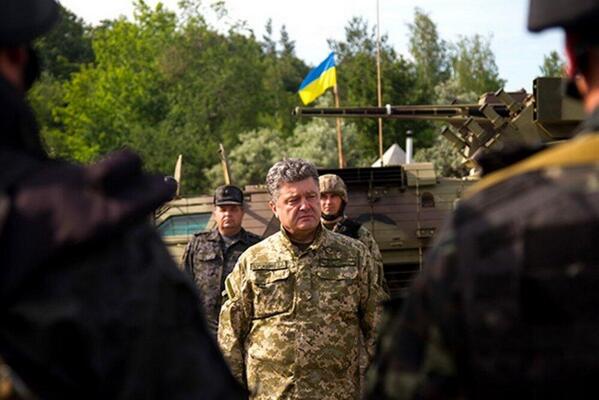
 Aletho News
