The issues regarding depleted uranium (DU) and its toxicity have sometimes, in recent years, gone beyond the scope of science. The writer [1] has dealt with radiation protection for twenty years and depleted uranium since 1999. After an experience of publishing scientific papers in journals, conference proceedings and international conferences on DU, this article attempts to estimate the possible environmental and health impacts of the use of depleted uranium in the war of Libya (2011).
Reports of its use have appeared in the media since the beginning of the conflict[2]. In particular, Cruise missiles have been used since the first days, and we will show there is a strong suspicion that those missiles bring Depleted Uranium either as flight stabilizers in the wings, or as weight kinetic energy enhancer. In the last week of the conflict, A-10 airplanes were deployed, and those too are well known for using DU bullets.
The ICBUW (International Council for the Ban of Uranium Weapons) has thoroughly address the question [3]. Statements from US Air Force that A-10 airplanes are not using DU bullets will be taken as a starting hypothesis, however being very suspect since in all past conflicts (Balkans, Iraq, Afghanistan) A-10 airplanes have widely used DU ammunition. Also other suspected weapons bearing DU, such as the AV-8B aircraft, are pointed out here, but disregarded in the following calculations and assessments, which largely focus on Cruise missiles.
Because of its unique physical characteristics, in particular the density that makes it extremely convenient as a mass enhancer (about 19 kg/l), but also the low cost (the production cost of DU is about $ 2 per kg) and the inconvenience to treat as radioactive waste, DU has found its way use in the military field.
If properly treated, the U-Ti alloy is a very effective material for the construction of kinetic energy penetrators, thick metal bullets that can pierce armours when fired against it at high speed.
The penetration process pulverizes most of the bullet, exploding into incandescent fragments of Uranium (violent combustion of almost 5000 ° C), when it hits the perforated armor, increasing the destructive effect. This property is called “pyrophoricity”, as for example, the characteristic of sulfur in matches. So in addition to the high density of DU, pyrophoricity too makes it a material of great interest for these applications, in particular as an incendiary weapon (API: Armour Piercing Incendiary).
Finally, during the impact on the objective, the relative hardness of the DU (alloyed with titanium) provides the projectile self-sharpening ability: in other words, the projectile does not “flatten” against the armour that must break through, forming a “head flat “- as for example a projectile of lead – but it retains its shape tapering to the complete fragmentation, without thereby losing the penetrating properties.
In battle, the DU has certainly been used in the Gulf War of 1991, during the bombings NATO / UN over the Serbian Republic of Bosnia in September 1995, against Yugoslavia in spring 1999; in this century, during the attack on Afghanistan and then further in Iraq in 2003.
The use of DU devices in wars in Somalia and Bosnia-central and central-eastern Europe (especially large areas around Sarajevo) in the 90s, in Palestine and shooting ranges the responsibility of NATO military forces, is still incompletely documented. [4]
Among weapons that use DU, we also include the Tomahawk Cruise missile, whose use during the Balkan war of spring 1999, although not recognized by NATO has been confirmed by findings on site and sources of the European Union. [5]
On the other hand, in the Decalogue delivered to all the soldiers sent to Kosovo in 1999, there were recommendations to be followed to the letter, stating the presence of depleted uranium on the territory and particularly in Cruise Tomahawk missiles. The introduction reads:
“The vehicles and materials of the Serbian army in Kosovo can be a threat to the health of soldiers and civilians who were exposed to them. The vehicles and equipment found destroyed, damaged or abandoned must be inspected and handled only by qualified personnel. The dangers arising from depleted uranium as a result of damage caused by NATO bombing campaign in relation to vehicles hit directly or indirectly. In addition, the collimators containing tritium and the instruments and indicators can be treated with radioactive paint, dangerous for those who had access to the means to inspect. “Here are tips on how to avoid exposure to depleted uranium. Textually: “Avoid any medium or material suspected of being hit by munitions containing depleted uranium or Tomahawk Cruise missiles. Do not pick or collect with DU munitions found on the ground. Tell your command immediately around the area that you feel contaminated. Wherever you are demarcated the area contaminated by any material found on site. If you are in an area contaminated, at least wear a mask and gloves. Ensure good personal hygiene. Frequently wash the body and clothes. ”
The evaluations on the amount of DU used in cruise missiles differ very much. In particular, they vary in different sources, including values around 3 kg, but to go up to about 400 kilograms. In the note[6] there is a compilation of different sources available on this aspect, very important for the estimation of environmental impact.
The predictable official denial statements about the presence of uranium in these missiles collide with the above publications, as well as sources of military origin[7]
This large variability in the data can be easily explained. Some Cruise missiles are with their head weighted with depleted uranium, some are not. Even those other ones, however, even if they do not have a depleted uranium warhead, they bring it in the wings, as a stabilizer in flight.
Then we can define two cases,
WORST CASE: Cruise with uranium in the head. Assume 400 kilos of DU.
BEST CASE: Cruise without uranium in the head. Take 3 kilos of DU in the wings.
Calculation of environmental impact and health effects
In the large literature on depleted uranium by the author[8], the problem was already dealt with: a calculation of radioactive contamination from uranium due to cruise missiles, particularly those launched on Bosnia in 1995, was already performed. The study can also be found on the Internet, as well as the scientific journal “Tribuna Biologica e Medica” (Biological and Medical Forum).[9], [10].
Returning to the models used in the article mentioned above, one can deduce which is the mechanism of contamination, at the point of exposure and inhalation, with a calculation designed to determine only if – at least in a realistic case – the relevance of the doses does not allow to neglect the problem.
We consider the impact of a Tomahawk cruise missile that brings 3 kg (best case), or 400 kg (worst case) of DU.
The impact produces a cloud of debris of various sizes, after violent combustion at about 5000 ° C. The dust is, as mentioned, is composed of particle sizes in the range [0.5 – 5] micron. Between 500 and 1000 meters from the impact one can breathe clouds with a density sufficient to cause significant doses, consisting of particles having a mass of about 0.6 to about 5 nanograms. An estimate was made using the GENII[11] code for dose and dispersion calculations. We chose to neglect the effects of fire, considering only the inhalation exposure due to the simple release of the material, not considering some factors that could cause further increase the exposure.
Critical group, in this case, it is precisely those people “invested” by the cloud of dust after explosion.
After the missile hits the target, dust can ignite and disperse and be oxidized into the environment, according to the estimates that will be done in this work.
About 70% of DU, contained in the missile which is supposed to always hit the target, being an “intelligent weapon”, burns. Of this, about 50% are soluble oxides.
The size distribution of the constituent particles of DU oxide dust belongs entirely to the small-size, breathable, and ultra-fine dust. In particular, the diameter of the particles in this case is finer than the dust of uranium usually encountered in the preparation of nuclear fuel within the nuclear industry. It deals practically with dust included in the range [1-10] micron, with a significant proportion of particles with a diameter less than one micron.
As for the behaviour of DU dust in the human body, the main route of contamination is – as noted – inhalation. As mentioned, part of the dusts are soluble and some insoluble into body fluids.
Given the characteristics of DU oxides of military origin, it should be noted that they have different behaviour with respect to industrial dust of uranium. You can, however, still assume, according to ICRP[12], that about 60% of the inhaled dust is deposited in the respiratory system, the rest is re-exhaled.
It can be assumed that about 25% of the particles around 1 micron in diameter are retained for a long period in the lungs, while the rest is deposited in the upper breathing apparatus, then it passes into the digestive system and hence is eliminated, while small parts go to accumulate in the bones.
About 25% of micro-particles is held in the lungs, about half the material behaves like a class M according to ICRP, which is slowly soluble in body fluids, while the rest is insoluble.
This type of behaviour and exposure has not been studied in any previous situation of exposure to alpha emitters in the lungs, found in the civil applications. The way of exposure is very different from those under which equivalences-dose radiation damage were derived
It is therefore not entirely correct – though it is a starting reference point – to use here the ICRP risk assessments, which were derived from the radioactive dust data and the exposure of miners of uranium mines, nor of course is it correct to use the correlations derived from the epidemiological studies on the highly-irradiated Hiroshima and Nagasaki population. ICRP radiation protection standards are based on these experiences, and therefore may underestimate the risk in this case.
Moving on to another type of toxicity than the one due to ionizing radiation, is also plausible that:
– Given the component of fine and ultra-fine dust of DU for military origin,
– Given the well-known chemical toxicity of uranium,
environmental contamination by DU oxidized dusts of military origin has both chemical and radiological toxicity: it must be evaluated the synergistic effect of these two components.
In other words, radioactivity and chemical toxicity of DU could act together to create a “cocktail” effect which further increases the risk.
We must also put emphasis on the fact that the arid climate of Libya favours the dispersion in the air of particles of depleted uranium, which can be inhaled by civilians for years after the explosion. That is not the case, for instance, of the Balkans. The main mechanism of exposure at the long-term concerns the re-suspension of dust and consequent inhalation.
The methodology and assumptions for this model have already been published in other works to which the author refers[13]. We will mention here only the refinements and changes with respect to the model applied and already published, and in particular:
– The calculation of the dose commitment of 70 years and not more than 50 years, as recommended by ICRP.
– The available data are used to approximate population distribution around the points of impact, which also considers the use of the main DU weapons in relatively populated areas of Lybia.
The model results can be summarized as follows:
– CEDE (collective effective dose equivalent): 370 mSvp in 70 y, for 1 kg of DU oxidized and released into the environment.
– CEDE annual maximum in the first year (76 mSvp), followed by the second year (47 mSvp) and third (33 mSvp).
– The entire route of exposure is by inhalation of dust. The target organ is the lung (97.5% contribution to CEDE).
– Among the most responsible nuclides, 83% of the CEDE is U238, and 14% by U234.
As for the total amount of oxidized DU in the environment, we start from the data for this assessment by the international press: in the first day of the war, about 112 cruise missiles impacted on Libyan soil[14]. How many missiles will be fired before the end of the war? That is unknown, however we will do an assessment considering about 1,000 missiles fired, and in any case the values are linearly variable with the actual amount of fired missiles, by means of a simple proportion.
Given the length of the military operations, the wide variety of suspect DU-bearing weapons, we consider this statement to be on the safe side.
If all the missiles were “without” DU, it would still have a quantity of:
1000 * 3 = 3000 kilos = 3 tons of DU (best case)
If all the missiles were using DU we have an amount up to:
400,000 kilos = 400 tons of DU.
Compare these data with the 10-15 tons of DU fired in Kosovo in 1999 to assess their seriousness.
Assume that about 70% of DU burns and it is released into the environment, thus arriving at an estimate of the amount of DU dispersed oxides of about 2.1 tonnes (best case) and 280 tonnes (worst case).
This therefore allows to estimate a CEDE (collective dose) for the entire population of:
· Best case: 370 mSvp / kg * 2100 kg = 780 Svp
· Worst case: 370 mSvp / kg * 280,000 kg = 104,000 Svp
We state once again that it is not entirely correct – though it is a starting point of reference – to extrapolate the risk assessments for exposure to this type of micro-radioactive dust from the ICRP radiation protection standards, which are those adopted by the GEN II code.
However, if we apply here the coefficient of 6% Sv-1 for the risk of cancer, we get about
· Best case: about 50 cases of cancer, to be found in 70 years.
· Worst case: about 6200 cases of cancer, to be found in 70 years.
Conclusions
The risks from exposure to depleted uranium of the population of Libya due to the use of this material in the War of 2011 were evaluated with an approach as broad as possible, trying to take into account some recent results of studies in the field.
This type of exposure has not been studied in any previous situation of exposure to alpha emitters in the lungs, found in the civil applications.
However, the assessment made of the doses and the consequent risks to both situations (Cruise “without uranium” or “uranium”) allows us to draw some conclusions.
In the first case (best case), the expected number of cancers is very small and absolutely not relevant from the statistical point of view. This statistical difficulty – as is just obvious point out – has nothing to do with the acceptation of this practice, its moral acceptance, or even less with an allegation of a minor impact or even a safety of this practice.
In the second case (worst case), however, we are faced with a number of tumours of some thousands. Such an amount could easily be detected in epidemiological studies and such a number of casualties is, no doubt about that, quite a concern.
It should be useful, therefore, that the armies that are bombing Libya clarify with evidence, and not simple assertions of convenience, the presence or absence, and in what quantities, of uranium in their missiles and other weapons.
In the past, there were “official” denials of the presence of uranium in Cruise missiles, but they were coming from the military area: the author allows, at least, some caution in their flat acceptance.
Based on available data, estimates on the trend of cancer cases in the coming years in Libya as a result of this practice are absolutely unjustified and constitute a concern. The discussion about the relative impact of each of the carcinogenic substances used in a war (chemical, radioactive, etc.), seems – at a certain level – of little significance. Also, the author puts this as a final reflection, such a discussion shows little respect for the fact that the civilian casualties in Libya that will be caused by this attack will exceed by far any amount that may be defined as “a fair price to pay.”
Finally, it is important to collect data and research – and there are many – in the field of the effects of “new wars” on population and environment. We must show how modern weapons, not at all surgical and intelligent, produce unacceptable damage to population that have been subjected to the “humanitarian” wars since 1991.
Massimo Zucchetti is Professor at the Department of Energy at the Torino Polytechnic
NOTES
This paper has been originally published in Italian in many online journals and site, among which:
[1] Professor of “Nuclear Power Plants” c/o Politecnico di Torino, Italy. Chair of “Safety and Risk Analysis” and “Radiation protection”. zucchetti@polito.it
[3] Air Force Spokeswoman claims that A-10s were not loaded with DU ammunition, but does not rule out future use in the conflict. 4 April 2011. A US Airforce Spokeswoman has told a Scottish journalist that, as of 2nd April, A-10s fighting in Libya have not been firing DU ammunition. However, she refused to give any assurances about the future use of DU, stating that she didn’t want “to speculate on what may or may not be used in the future”. ICBUW calls for the US to give a categorical assurance, similar to that given by UK Prime Minister David Cameron, that weapons containing DU have no place in this conflict. A clear statement, covering both A-10 and AV-8B aircraft should be issued at the earliest opportunity. If the US has taken a strategic decision not to equip US planes with DU ammunition in this conflict, that is a progressive step. However, in the absence of a public declaration that such a decision has been taken, concerns will remain that the door has been left open for the future use of DU in Libya. ICBUW calls for the US to take steps in a clear and transparent manner to assure the world that no US aircraft will go into the air equipped with DU ammunition, and that pilots will not be cleared to fire it. Any DU ammunition currently in theatre should be separated and left unused. As ICBUW has long maintained, DU has no place in conventional munitions. The current position of the US affirms that position: if US planes have been able to use alternatives, there is no reason why alternatives should not be found for all ammunition containing DU. We call for all current user states to remove these weapons from their arsenals. An urgent step to protect civilians in areas where DU weapons have already been used, is for user states to share targeting data with the authorities in affected states – a move endorsed by 148 states in the UN General Assembly last December, and opposed by only four, including the US, France and UK.
[4] Zajic V.S., 1999. Review of radioactivity, military use and health effects of DU: http://members.tripod.com/vzajic; Liolos Th. E.(1999) , Assessing the risk from the Depleted Uranium Weapons used in Operation Allied Forces, Science and Global Security, Volume 8:2, pp.162 (1999); Bukowski, G., Lopez, D.A. and McGehee, F.M., (1993) “Uranium Battlefields Home and Abroad: Depleted Uranium Use by the U.S. Department of Defense” March 1993, pp.166, published by Citizen Alert and Rural Alliance for Military Accountability.
[5] Letter of Satu Hassi, Minister of the Environment of Finland, to all Ministers of Environment in Europe, stating that the majority of the 1500 missiles shot on Serbia in 1995 had depleted uranium, about 3 kilos each.
Zajic, Vladimir S. “Review of Radioactivity, Military Use, and Health Effects of Depleted Uranium” [1 August, 1999]. 2/27/2002. http://vzajic.tripod.com
[7] While the US Navy claims that they have replaced the MK149-2 Phalanx round with a DU penetrator by the MK149-4 Phalanx round with a tungsten penetrator (with the DU round remaining in the inventory), new types of DU ammunition are being developed for other weapons systems, such as the M919 rounds for Bradley fighting vehicles. Depleted uranium is also placed into the tips of the Tomahawk land-attack cruise missiles (TLAM) during test flights to provide weight and stability. The TLAM missile has a range of 680 nautical miles (1,260 km) and is able to carry a conventional warhead of 1000 lb. (454 kg). Older warheads were steel encased. In order to increase the missile range to 1,000 nautical miles (1,850 km), the latest Tomahawk cruise missiles carry a lighter 700 lb. (318 kg) warhead WDU-36 developed in 1993, which is encased in titanium with a depleted uranium tip.
[8] M.Zucchetti, ‘Measurements of Radioactive Contamination in Kosovo Battlefields due to the use of Depleted Uranium Weapons By Nato Forces”, Proc. 20th Conf. of the Nuclear Societies in Israel, Dead Sea (Israel), Dec. 1999, p.282.
M.Cristaldi, A.Di Fazio, C.Pona, A.Tarozzi, M.Zucchetti “Uranio impoverito (DU). Il suo uso nei Balcani, le sue conseguenze sul territorio e la popolazione”, Giano, n.36 (sett-dic. 2000), pp. 11-31.
M.Zucchetti, ‘Caratterizzazione dell’Uranio impoverito e pericolosità per inalazione’, Giano, n.36 (sett-dic. 2000), pp. 33-44.
M.Cristaldi P.Angeloni, F.Degrassi, F.Iannuzzelli, A.Martocchia, L.Nencini, C.Pona, S.Salerno, M.Zucchetti. Conseguenze ambientali ed effetti patogeni dell’uso di Uranio Impoverito nei dispositivi bellici. Tribuna Biologica e Medica, 9 (1-2), Gennaio-Giugno 2001: 29-41.
M. Zucchetti, “Military Use of Depleted Uranium: a Model for Assessment of Atmospheric Pollution and Health Effects in the Balkans”, 11th International Symposium on “Environmental Pollution And Its Impact On Life In The Mediterranean Region”, MESAEP, Lymassol, Cyprus, October 2001, p.25.
M. Zucchetti “Some Facts On Depleted Uranium (DU), Its Use In The Balkans And Its Effects On The Health Of Soldiers And Civilian Population”, Proc. Int. Conf. NURT2001, L’Avana (Cuba), oct. 2001, p.31.
M. Zucchetti, M. Azzati “Environmental Pollution and Population Health Effects in the Quirra Area, Sardinia Island (Italy)”, 12th International Symposium on Environmental Pollution and its Impact on Life in the Mediterranean Region, Antalya (Turkey), October 2003, p. 190, ISBN 975-288-621-3.
M.Zucchetti, R. Chiarelli ‘Environmental Diffusion of DU. Application of Models and Codes for Assessment of Atmospheric Pollution and Health Effects’, Convegno ‘Uranio Impoverito. Stato delle Conoscenze e Prospettive di Ricerca’, Istituto Superiore di Sanità (Roma) Ottobre 2004.
R. Chiarelli, M.Zucchetti, ‘Effetti sanitari dell’uranio impoverito in Iraq’, Convegno ‘La Prevenzione Primaria dei Tumori di Origine Professionale ed Ambientale’, Genova, Novembre 2004. Poster reperibile al sito: http://registri.istge.it/italiano/eventi/poster%20n°25.htm
R. Chiarelli, M.Zucchetti, ‘Applicazione di modelli e codici di dose alla popolazione alla dispersione ambientale di Uranio impoverito’, Convegno ‘La Prevenzione Primaria dei Tumori di Origine Professionale ed Ambientale’, Genova, Novembre 2004. Poster reperibile al sito: http://registri.istge.it/italiano/eventi/poster%20n°26.htm
M. Zucchetti, “Environmental Pollution and Population Health Effects in the Quirra Area, Sardinia Island (Italy) and the Depleted Uranium Case”, J. Env. Prot. And Ecology 1, 7 (2006) 82-92.
M. Zucchetti, “Scenari di esposizione futura In Iraq: convivere con l’uranio impoverito” in: M.Zucchetti (a cura di) “Il male invisibile sempre più visibile”, Odradek, Roma, giugno 2005, pp. 81-98.
M. Zucchetti, “Uranio impoverito. Con elementi di radioprotezione ed utilizzo delle radiazioni ionizzanti”, CLUT, Torino, febbraio 2006. ISBN 88-7992-225-4.
M.Zucchetti “Depleted Uranium”, European Parliament, GiethoornTen Brink bv, Meppel (Holland), 2009. ISBN 978-90-9024147-0
[10] Cristaldi M. et al., Conseguenze ambientali ed effetti patogeni dell’uso di Uranio Impoverito nei dispositivi bellici. Tribuna Biologica e Medica, 9 (1-2), Gennaio-Giugno 2001: 29-41.
[11] It is a dispersion and dose code, developed in the USA and used worldwide: B.A.Napier et al. (1990), GENII – The Hanford Environmental Radiation Dosimetry Software System, PNL-6584, Pacific Northwest Laboratories (USA)..
[12] ICRP, 1995. Age-dependent Doses to Members of the Public from Intake of Radionuclides: Part 3 – Ingestion Dose Coefficients. Publication 69 Annals of the ICRP. 25 (no 1).
[13] M.Zucchetti, ‘Caratterizzazione dell’Uranio impoverito e pericolosità per inalazione’, Giano, n.36 (sett-dic. 2000), pp. 33-44; R.Chiarelli, M.Zucchetti, ‘Applicazione di modelli e codici di dose alla popolazione alla dispersione ambientale di Uranio impoverito’, Convegno ‘La Prevenzione Primaria dei Tumori di Origine Professionale ed Ambientale’, Genova, Nov.2004. http://registri.istge.it/italiano/eventi/poster%20n°26.htm
The world’s military spending has increased to a record high of $1.6 trillion in 2010, the Stockholm International Peace Research Institute (SIPRI) says.
The Swedish think-tank said on Monday that the global military spending rose 1.3 percent in 2010, indicating that budget constraints caused by the worldwide financial crisis has slowed the growth of military investment, Reuters reported.
The institute also announced that the top three arms investors are the US, China and Britain, underlining that South America was the region with the largest military spending growth of 5.8 percent.
The Unites States, with extravagant military operations in Afghanistan and Iraq, increased the arms investment by 2.8 percent to $698 billion — about six times as much as China which is the world’s second-biggest spender followed by Britain, France and Russia.
The head of the institute’s military expenditure project, Sam Perlo-Freeman, said, “The United States has increased its military spending by 81 percent since 2001… At 4.8 percent of gross domestic product, US military spending in 2010 represents the largest economic burden outside the Middle East.”
China also increased its military expenditures by 3.8 percent in 2010 to $119 billion.
SIPRI said its figures include salaries, costs for operations, purchases of arms and equipment as well as research and development.
“As long as the $1.2-trillion annual budget for the military-security complex is off limits (to cutting), nothing can be done about the US budget deficit except to renege on obligations to the elderly, confiscate private assets or print enough money to inflate away all debts,” Paul Craig Roberts, former Assistant Treasury Secretary under President Reagan warns.
In an article titled “Stealing from Social Security to Pay for Wars and Bailouts,” published in the April issue of the “Rock Creek Free Press” of Washington, D.C., Roberts says that Republicans are calling Social Security and Medicare “entitlements”—making them sound like welfare—when, in fact, workers over their lifetimes have contributed 15 percent of all their earnings to the payroll tax that funds these benefits and have every right to them.
And far from Social Security being in the red, between 1984 and 2009, Roberts writes, “the American people contributed $2-trillion…more to Social Security and Medicare in payroll taxes than was paid out in benefits” but “the government stole” that sum to fund wars and pork-barrel projects!
What’s more, under one realistic estimate, far from crashing into the red, “Social Security(OASDI) will have produced surplus revenues of $31.6-trillion by 2085, Roberts says.
Americans, apparently, are unaware of how the federal government’s illegal, foreign wars sap the economy and rob every household. The Iraq war cost alone is 20 percent of the size of last year’s entire U.S. economy. Instead of investing that sum at home, “which would have produced income and jobs growth and solvency for state and local governments, the US government wasted the equivalent of 20% of the economy in 2010 in blowing up infrastructure and people in foreign lands,” Roberts says.
“The US government spent a huge sum of money committing war crimes, while millions of Americans were thrown out of their jobs and foreclosed out of their homes,” he added. Viewed another way, the Pentagon continues to expand and put people to work to modernize its 700-800 bases abroad in order to dominate every corner of the globe while public works and public employment in America are going into the toilet.
“When short-term and long-term discouraged workers are added …the US has an unemployment rate of 22%,” Robert says. A country with that large a percentage out of work “has a shrunken tax base and feeble consumer purchasing power.”
The U.S. media, he claims, is only reporting one-third of the real cost of the wars, leaving out the sums needed for “lifelong care for the wounded and maimed, the cost of lifelong military pensions of those who fought in the wars, the replacement costs of the destroyed equipment, the opportunity cost of the resources wasted in war, and other costs.”
President Obama’s budget, if passed, doesn’t reduce the deficit over the next 10 years by enough to cover the projected deficit in the fiscal year 2012 budget alone, the financial authority writes. “Indeed, the deficits are likely to be substantially larger than forecast,” as the military-industrial complex “is more powerful than ever and shows no inclination to halt the wars for US hegemony,” Roberts says.
#
Sherwood Ross heads a public relations firm “for good causes” and also runs the Anti-War News Service. Reach him at sherwoodross10@gmail.com
Despite the fact that the Palestinian factions, including the Hamas movement, in Gaza declared a ceasefire with Israel starting Thursday midnight, the Israeli army bombarded several areas, and carried out a number of aerial attacks in Gaza.
The decision was made following talks between different Palestinian factions in the Gaza Strip, and talks held by the Hamas-led government in Gaza with a number of Arab and international parties.
The ministry of interior in Gaza said that the decision was made to curb any future Israeli assaults against Gaza.
The Israeli strikes had resumed on Thursday afternoon after a Palestinian shell hit a bus in southern Israel seriously wounding one student.
The al-Qassam Brigades of Hamas claimed responsibility for the attack and stated that it came in retaliation to the assassination of three Qassam leaders identified as Ismail Lubbad, Abdullah Lubbad, and Mohammad al-Dahya.
The three were killed in an Israeli Air Strike in Khan Younis in the southern part of the Gaza Strip.
On Thursday, the Israeli army killed three Palestinians in Gaza and wounded more than 40 others, including children.
Nabil Abu Rodeina, spokesperson of President Mahmoud Abbas, said that the escalation against Gaza is unjustified and that Abbas contacted several world leaders urging them to intervene.
Interview with Ali al-Ahmed, director of Institute of Gulf Affairs in Washington.
Al-Qaeda in Yemen has not been held responsible for the death of even one American for the past five years, yet the US continues to play the al-Qaeda card and provide the country’s regime with military aid.
In an interview with Press TV, Ali al-Ahmed, director of Intitute (Persian) Gulf Affairs (IGA) in Washington, shares his views on US military aid to Yemen, the exaggerated al-Qaeda connection, and optimal outcomes. The following is a transcript of the interview.
Press TV:What is your reaction toward the Pentagon state secretary saying there is no decision yet in stopping military aid to Yemen and of the US assertion that US weapons are not being used against demonstrators?
They have been used; it is not honest to say that they have not. We know that (there are) special units the US and CIA have been training; perhaps they have not directly taken part in the shooting and killing of demonstrators personally. However, they have displaced other forces, meaning that they freed other forces to do that. There is a direct link between US aid to Yemen and the killings of hundreds of demonstrators.
Press TV:Yemen is a very divided society as you and other analysts have mentioned previously; however, a lot of Yemenis have united for this revolution. Was the US essentially pressed in a corner — not having a choice, but to continue to provide military aid to Yemen?
No I don’t believe that. Saleh is sustaining al-Qaeda to use it as a bargaining chip with Saudi Arabia and the US. Once Saleh is outside of the palace, al-Qaeda’s threats will diminish greatly and the US knows this very well; however, they have not called on Abdullah Saleh to resign until recently, for which they want a transfer of power.
Focusing on supporting the people is going to be the best way for the US to diminish the threat of al-Qaeda – supporting these demonstrators. And instead of sending weapons they should send humanitarian aid. They should allow the people to govern their own country in reflection of what the people want, which is not dictatorship. That is the best tool to fight terrorism.
Press TV:What about US negotiations with the opposition?- There is a story that Riyadh may be getting involved in hosting negotiations of some sort. Do you see potential for success through these negotiations? Or is it simply too late for Saleh?
I think it is too late for Saleh to be part of any future plans for Yemen. I am worried and wary of any Saudi role in Yemen because so far, history has proven that Saudi Arabia’s role in Yemen has been a negative one. They have supported violence and bombed the country as everybody knows. So they are not a neutral player here. I think other countries, like Egypt, Syria — or Qatar even — would be a better choice.
It is a question that I’ve always asked – the US has been able to bring in coalitions to wage wars and they have not worked to building any coalition to mediate peace between Arab countries with Arab and Muslim majority populations. And that is disturbing.
The US could get a lot accomplished in terms of winning hearts and minds by becoming the peacemaker in Yemen and the other countries in the region. Instead of sending weapons, they could be sending in a delegation with authority, who would mediate between the enemies in the role of a broker just like they did when they mediated the treaty between Egypt and Israel, which was led by Jimmy Carter. Why not mediate between the enemies so that we can have a government that is responsible for the wishes of its people (and) not to the whim of a dictator and his family?
Press TV:Why are the US and a coalition involved now in Libya, but not in Yemen? All this talk about the al-Qaeda bogeyman in Yemen; certainly the al-Qaeda factor is considered highly important to the US, isn’t it?
Well, there is a threat of al-Qaeda in Yemen, but I think it has been exaggerated tremendously and so far, al-Qaeda in Yemen has not been able to kill a single American in the past five years so we are not really talking about something that is of catastrophic importance.
In Yemen we don’t need to have war. What you need is to apply political pressure on Yemeni parties to come and speak to each other to collaborate in building a government that is modern and responsible to its citizens. It doesn’t take a rocket scientist to do that and it would definitely be cheaper than dropping bombs on people like what happened last year in Yemen or what is happening now in Libya.
So there is a cheaper alternative with a much more positive outcome for the US. Rather than flying military jets, the US could be flying in peace envoys to bring the parties together and Yemenis would be shy and embarrassed by the fact that there is an American trying to get them to talk to each other to make peace for them. This is a far better position for the US.
Press TV: You speak of peace envoys being a better choice for the US in Yemen…
It revolves around a Saudi connection. John Brennan in the White House is the American architect of US foreign policy in Yemen and was the former CIA chief in Saudi Arabia so he is influenced by the desires of the Saudi monarchy. He is why we see the Yemen situation getting worse; an American official designing US policy heavily tied to Saudi wishes. His policy is solely been to support Abdullah Saleh and that’s all – he should be removed.
The solution is to talk to every party and they are not weak. In fact, Saleh is one of the weaker players. US policy right now is a failure.
MSNBC‘s Rachel Maddow had a discussion last week (3/31/11) about the U.S. role in the Libya War with Col. Jack Jacobs, an MSNBC military consultant. Jacobs described the U.S. military’s “ability to jam communications that take place between units or among units of Gadhafi‘s army,” then referred to the U.S.’s
ability to jam electronic transmissions that occur when Gadhafi’s army, ground forces try to fire at allied planes. The instant that a radar system is turned on on the ground, we can detect it and in very short order, send a precision-guided munition that follows the radar beam all the way down to its source.
After responding to that with “Wow,” Maddow asked:
One of the things that people have questioned is if the U.S. has this high level of electronic capability, why is Libyan state TV still on the air? Is that not one of the things they would want to shut down?
Maddow’s questions echo similar calls by U.S. journalists during the Iraq invasion for an attack on Iraqi government TV–calls that were heeded when the U.S. destroyed the TV studios with a missile attack on March 25, 2003. As FAIR wrote in a media advisory, “U.S. Media Applaud Bombing of Iraqi TV” (3/27/03):
Prior to the bombing, some even seemed anxious to know why the broadcast facilities hadn’t been attacked yet. Fox News Channel‘s John Gibson wondered (3/24/03): “Should we take Iraqi TV off the air? Should we put one down the stove pipe there?” Fox‘s Bill O’Reilly (3/24/03) agreed: “I think they should have taken out the television, the Iraqi television…. Why haven’t they taken out the Iraqi television towers?” MSNBC correspondent David Shuster offered: “A lot of questions about why state-run television is allowed to continue broadcasting. After all, the coalition forces know where those broadcast towers are located.”
There is a good reason, actually, why Iraqi TV should not have been attacked: Journalists are civilians, even those who enthusiastically support their country’s military efforts, and therefore targeting them is a war crime. The idea that journalists reporting in a country the U.S. is at war with deserve protection seems to have been rejected by the Pentagon, however. As FAIR wrote in “IS Killing Part of Pentagon Press Policy?” (4/10/03):
In the Kosovo War, the U.S. attacked the offices of state-owned Radio-Television Serbia, in what Amnesty International called a “direct attack on a civilian object” which “therefore constitutes a war crime.” On March 25, the U.S. began airstrikes on government-run Iraqi TV, in what the International Federation of Journalists (Reuters, 3/26/03) suggested might also be a Geneva Convention violation, since it the U.S. was “targeting a television network simply because they don’t like the message it gives out.”
The Committee to Protect Journalists declined to count the Serbian journalists killed by the United States in its annual list of murdered journalists, a move that FAIR warned at the time would contribute to a sense that “enemy” journalists are fair game (Extra!, 9-10/00). Maddow’s question suggests that treating reporters as enemy combatants has indeed become the new normal.
The Israeli army awaits the improvement of weather conditions to resume its assassinations operations targeted at leaders and activists affiliated with Hamas military wing. In a report published by the Hebrew version of Ynet Monday, a military commentator, Ron Bin Yeshay, said that the resumption of assassinations comes in an effort to excursive deterrence in confronting Palestinian factions two years after the bloody war launched on the Gaza Strip.
Bin Yeshay, indicated that the decision to take these operations to the next level was made recently in a small ministerial meeting presided over by Benjamin Netanyahu. Also at the meeting were leaders of Israel’s security organs.
Netanyahu reportedly was reserved over the idea of launching a full-fledged military operation.
According to Bin Yeshay, in the event that Hamas steps up its operations against Israel in the wake of the assassination operations planned, the Israeli army may resort to targeting the movement’s political leadership.
The Israeli intelligence, he says, hopes the assassinations would prompt Hamas to prevent other Palestinian factions from launching rockets onto the Israeli entity.
Bin Yeshay warns that this kind of provocation would put thousands of ‘settlers’ around the Gaza Strip under the mercy of resistance rockets as well as jeopardize chances for trading prisoners with Hamas.
Gulf War SyndromeThere were two images from the Libyan war that are likely to spell real trouble in the coming years. One was of several U.S. A-10 attack planes, ungainly looking machines ugly enough to be nick named “Warthogs,” taxiing down a runway. The other was of several rebel fighters dancing on top of a burning tank.
That tank, an old Russian-era T-72, was likely knocked out by one of those A-10s, which means those rebels fighters are almost certainly going to be in a world of hurt. Because, while they were celebrating, they were also breathing in the residue from the shell that killed that tank, a 30 mm depleted uranium munition (DUA).
DUA is the weapon of choice when it comes to killing armored vehicles, and A-10s are specialists at using it. The U.S. used 320 tons of it in the first Gulf War, 10 tons in Kosovo, and over 1,000 tons in the invasion of Iraq. It is lethal to tanks, but it also damages anything that comes into contact with it. Common photos back in 1991 were of U.S. soldiers climbing on top of knocked-out Iraqi tanks to have their pictures taken or to look for souvenirs. When they did, they inhaled uranium oxide or impregnated their uniforms with it.
The soldiers didn’t know better because the U.S. Defense Department (DOA) told them DUA was harmless, even though the DOA knew better. In 1991 the U.S. Army’s Armament Munitions and Chemical Command concluded that “any system struck by DUA penetrator can be assumed to be contaminated with DU,” and instructed soldiers to wear protective masks, clothes and respirators “as a minimum,” and dispose of the clothing afterward.
The only problem was that the Army never told the troops, even those whose job it was to deal with vehicles hit by DUA. No one said a word to the 144th National Guard Supply Company of the 24th Infantry Division which picked up 29 U.S. armored vehicles hit by DUA “friendly fire” to ship them home. When the tanks and armored personnel carriers arrived in South Carolina, they were interned in a radioactive waste dump. If the soldiers didn’t know the objects were “hot,” the brass did.
Many of those members of that National Guard company subsequently came down with the “Gulf War Syndrome” (GWS) that afflicted at least 118,000 out of the 700,000 soldiers who served in the 1990-91 conflict. Veterans suffer from chronic fatigue, headaches, muscle spasms, joint pains, memory loss, anxiety and balance problems; were twice as likely to develop amyotrophic lateral sclerosis (Lou Gehrig Disease); and between two and three times more likely to have children with birth defects.
DUA is one of the most deadly anti-tank weapons around. The enormous weight of the DUA “arrow” in each shell can penetrate four inches of armor as if it were margarine. It then explodes in a 10,000-degree fireball that reduces up 70 percent of the munition to powder. The powder can travel up to 25 miles from the initial blast site.
Depleted uranium is not highly radioactive, but it has a half-life of 4.4 billion years, and, if it gets into your system, it can be very dangerous. According to the U.S. Environmental Policy Institute, DUA “has the potential to generate significant medical consequences.”
“People have always assumed low doses are not much of a problem,” Alexander Miller of the U.S. Armed Forces Radiobiology Research Institute told the Guardian (British), “but they can cause more damage than people think.” A study by the Institute found that DUA could damage bone marrow chromosomes.
Not all of the Gulf War butcher bill can be laid at the feet of DUA. After 11 years of denying there was anything to GWS, the Pentagon finally admitted that at least 130,000 soldiers had been exposed to chemical weapon residue when the Iraqi arms depot at Kamisiyah was blown up. Modern battlefields tend to be toxic nightmares, and that was doubly so in Iraq.
But there is no question that DUA was a major contributor to the syndrome, particularly for those who developed immune related diseases. A standard effect of radiation is suppression of the immune system.
The effects of low-level radiation are hard to track, because many “hard” cancers take 16 to 24 years to develop. Iraqi medical authorities claim that the cancer rate in Basra—an area that was saturated with DUA in the Gulf war and the Iraq War—has jumped ten fold, and birth defects are much higher than in the rest of the country.
DUA is also used in 25 mm cannon shells, and 105 MM and 120 MM tank shells. The Army is using it to manufacture 50-caliber machine gun ammunition and is experimenting with using it for standard issue infantry weapons. It is also used to coat armored vehicles, making them almost impervious to non-DUA shells.
The U.S. is selling DUA to Israel, Egypt, Pakistan, some of our NATO allies—Germany and Italy won’t use it—Sweden, Taiwan, Saudi Arabia, Pakistan, Thailand, and other countries that the Pentagon will not reveal in the name of “national security.”
Depleted uranium is also a highly toxic metal and can damage the liver and kidneys, particularly if it gets into the water supply. If a DUA round misses a target, its “penetrators” are so heavy that they tend to go deep into the soil. “A major concern of the potential environmental effects of intact [DUA] penetrators or large penetrator fragments,” notes the World Health Organization, “is the potential contamination of ground water after weathering.”
Because of the dangers associated with DUA, in August 2002 a subcommittee of the United Nations found that the weapons violated seven international agreements, including the UN Charter and the Geneva Conventions. Efforts to ban it, however, have been vetoed by the U.S., France and Britain. In 2009 Belgium became the first country to ban the use of DUA, and in the same year the Latin American Parliament voted for a moratorium on its use.
The International Coalition to Ban Uranium Weapons that includes 120 non-governmental organizations is currently lobbying to get the weapons eliminated.
There are other rough beasts being visited on the Libyans these days as well, including cluster weapons, highly explosive canisters that can shred everything from people to tanks. U.S. warplanes have been dropping CBU-103, 104, 105, and AGM-154 A and B, all of which have a failure rate of anywhere from 5 to 23 percent. These unexploded “bomblets” can kill for decades.
During the bombing of Laos from 1964 to 1973, 90 million cluster munitions were dropped, killing more than 12,000 civilians. The bomblets continue exact a yearly toll of 100 to 200 people. More than 50 million clusters were dropped during the 1991 Gulf War, and in the two years that followed the war’s end, they killed 1,400 Kuwaiti citizens. A U.S. company hired to clear cluster weapons from a small area in Kuwait found 95,700 unexploded MK-118 submunitions from the notoriously unreliable CBU-99 “Rockeye” cluster bomb.
Unexploded clusters are still causing problems in Kosovo, and they take a steady toll of civilians in Afghanistan.
Libya has no-go areas dating back to the Second World War, when Italians, Germans and British seeded their fronts with land mines. Whatever government emerges in Libya today will have to deal with the aftermath of yet another war, this time created by DUA and cluster weapons. “The problem in defense is how far you can go without destroying from within what you are trying to defend from without,” Dwight Eisenhower once remarked.
A problem indeed. One hopes Libya manages to avoid what a village in Vietnam experienced, the one that was destroyed in order to save it.
Over the past two weeks Libya has been subjected to the most brutal imperial air, sea and land assault in its modern history. Thousands of bombs and missiles, launched from American and European submarines, warships and fighter planes, are destroying Libyan military bases, airports, roads, ports, oil depots, artillery emplacements, tanks, armored carriers, planes and troop concentrations. Dozens of CIA and SAS special forces have been training, advising and mapping targets for the so-called Libyan ‘rebels’ engaged in a civil war against the Gaddafi government, its armed forces, popular militias and civilian supporters (NY Times 3/30/11).
Despite this massive military support and their imperial ‘allies’ total control of Libya’s sky and coastline, the ‘rebels’ have proven incapable of mobilizing village or town support and are in retreat after being confronted by the Libyan government’s highly motivated troops and village militias (Al Jazeera 3/30/11).
One of the most flimsy excuses for this inglorious rebel retreat offered by the Cameron-Obama-Sarkozy ‘coalition’, echoed by the mass media, is that their Libyan ‘clients’ are “outgunned” (Financial Times, 3/29/11). Obviously Obama and company don’t count the scores of jets, dozens of warships and submarines, the hundreds of daily attacks and the thousands of bombs dropped on the Libyan government since the start of Western imperial intervention. Direct military intervention of 20 major and minor foreign military powers, savaging the sovereign Libyan state, as well as scores of political accomplices in the United Nations do not contribute to any military advantage for the imperial clients – according to the daily pro-rebel propaganda. The Los Angeles Times (March 31, 2011), however described how “…many rebels in gun-mounted trucks turned and fled…even though their heavy machine guns and antiaircraft guns seemed a match for any similar government vehicle.” Indeed, no ‘rebel’ force in recent history has received such sustained military support from so many imperial powers in their confrontation with an established regime. Nevertheless, the ‘rebel’ forces on the front lines are in full retreat, fleeing in disarray and thoroughly disgusted with their ‘rebel’ generals and ministers back in Benghazi. Meanwhile the ‘rebel’ leaders, in elegant suits and tailored uniforms, answer the ‘call to battle’ by attending ‘summits’ in London where ‘liberation strategy’ consists of their appeal before the mass media for imperial ground troops (The Independent (London) (3/31/11).
Morale among the frontline ‘rebels’ is low: According to credible reports from the battlefront at Ajdabiya, “Rebels …complained that their erstwhile commanders were nowhere to be found. They griped about comrades who fled to the relative safety of Benghazi… (they complained that) forces in Benghazi monopolized 400 donated field radios and 400 more…satellite phones intended for the battlefield… (mostly) rebels say commanders rarely visit the battlefield and exercise little authority because many fighters do not trust them”(Los Angeles Times, 3/31/2011). Apparently ‘Twitters’ don’t work on the battlefield.
The decisive issues in a the civil war are not weapons, training or leadership, although certainly these factors are important: The basic difference between the military capability of the pro-government Libyan forces and the Libyan ‘rebels’, backed by both Western imperialists and ‘progressives,’ lies in their motivation, values and material advances. Western imperialist intervention has heightened national consciousness among the Libyan people, who now view their confrontation with the anti-Gaddafi ‘rebels’ as a fight to defend their homeland from foreign air and sea power and puppet land troops – a powerful incentive for any people or army. The opposite is true for the ‘rebels’, whose leaders have surrendered their national identity and depend entirely on imperialist military intervention to put them in power. What rank and file ‘rebel’ fighters are going to risk their lives, fighting their own compatriots, just to place their country under an imperialist or neo-colonial rule?
Finally Western journalists’ accounts are coming to light of village and town pro-government militias repelling these ‘rebels’ and even how “a busload of (Libyan) women suddenly emerged (from one village)…and began cheering as though they supported the rebels…” drawing the Western-backed rebels into a deadly ambush set by their pro-government husbands and neighbors (Globe and Mail (Canada)3/28/11 and McClatchy News Service, 3/29/11).
The ‘rebels’, who enter their villages, are seen as invaders, breaking doors, blowing up homes and arresting and accusing local leaders of being ‘fifth columnists’ for Gaddafi. The threat of military ‘rebel’ occupation, the arrest and abuse of local authorities and the disruption of highly valued family, clan and local community relations have motivated local Libyan militias and fighters to attack the Western-backed ‘rebels’. The ‘rebels’ are regarded as ‘outsiders’ in terms of regional and clan allegiances; by trampling on local mores, the ‘rebels’ now find themselves in ‘hostile’ territory. What ‘rebel’ fighter would be willing to die defending hostile terrain? Such ‘rebels’ have only to call on foreign air-power to ‘liberate’ the pro-government village for them.
The Western media, unable to grasp these material advances by the pro-government forces, attribute popular backing of Gaddafi to ‘coercion’ or ‘co-optation’, relying on ‘rebel’ claims that ‘everybody is secretly opposed to the regime’. There is another material reality, which is conveniently ignored: The Gaddafi regime has effectively used the country’s oil wealth to build a vast network of public schools, hospitals and clinics. Libyans have the highest per capita income in Africa at $14,900 per annum (Financial Times, 4/2/11. Tens of thousands of low-income Libyan students have received scholarships to study at home and overseas. The urban infrastructure has been modernized, agriculture is subsidized and small-scale producers and manufacturers receive government credit. Gaddafi has overseen these effective programs, in addition to enriching his own clan/family. On the other hand, the Libyan rebels and their imperial mentors have targeted the entire civilian economy, bombed Libyan cities, cut trade and commercial networks, blocked the delivery of subsidized food and welfare to the poor, caused the suspension of schools and forced hundreds of thousands of foreign professionals, teachers, doctors and skilled contract workers to flee.
Libyans, who might otherwise resent Gaddafi’s long autocratic tenure in office, are now faced with the choice between supporting an advanced, functioning welfare state or a foreign-directed military conquest. Many have chosen, quite rationally, to stand with the regime.
The debacle of the imperial-backed ‘rebel’ forces, despite their immense technical-military advantage, is due to the quisling leadership, their role as ‘internal colonialists’ invading local communities and above all their wanton destruction of a social-welfare system which has benefited millions of ordinary Libyans for two generations. The failure of the ‘rebels’ to advance, despite the massive support of imperial air and sea power, means that the US-France-Britain ‘coalition’ will have to escalate its intervention beyond sending special forces, advisers and CIA assassination teams. Given Obama-Clinton’s stated objective of ‘regime change’, there will be no choice but to introduce imperialist troops, send large-scale shipments of armored carriers and tanks, and increase the use of the highly destructive depleted uranium munitions.
No doubt Obama, the most public face of ‘humanitarian armed intervention’ in Africa, will recite bigger and more grotesque lies, as Libyan villagers and townspeople fall victims to his imperial juggernaut. Washington’s ‘first black Chief Executive’ will earn history’s infamy as the US President responsible for the slaughter of hundreds of black Libyans and mass expulsion of millions of sub-Saharan African workers employed under the current regime (Globe and Mail 3/28/11).
No doubt, Anglo-American progressives and leftists will continue to debate (in ‘civilized tones’) the pros and cons of this ‘intervention’, following in the footsteps of their predecessors, the French Socialists and US New Dealers from the 1930’s, who once debated the pros and cons of supporting Republican Spain… While Hitler and Mussolini bombed the republic on behalf of the ‘rebel’ fascist forces under General Franco who upheld the Falangist banner of ‘Family, Church and Civilization’ – a fascist prototype for Obama’s ‘humanitarian intervention’ on behalf of his ‘rebels’.
-###-
James Petras is the author of over 62 books published in 29 languages, and over 600 articles in professional journals, including the American Sociological Review, British Journal of Sociology, Social Research, and Journal of Peasant Studies. He has published over 2000 articles in nonprofessional journals such as the New York Times, The Guardian, The Nation, Christian Science Monitor, Foreign Policy, New Left Review, Partisan Review, Temps Moderne, Le Monde Diplomatique, and his commentary is widely carried out in the Internet. James Petras is a former professor of Sociology at Binghamton University, New York, has a 50-year membership in the class struggle, the author is an advisor to the landless and jobless in Brazil and Argentina and is co – of Globalization Unmasked (Zed Books) and Zionism, Militarism and the Decline of U.S. Power (Clarity Press, 2008). James Petras latest book is War Crimes in Gaza and the Zionist Fifth Column in America (Atlanta: Clarity Press 2010). He can be reached at: jpetras@binghamton.edu
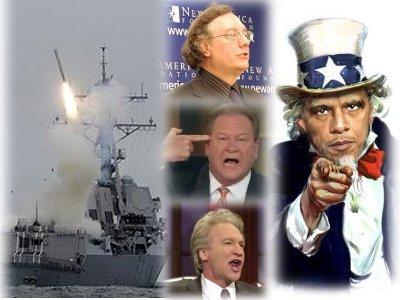
Peace loving Americans are few and far between. The vast majority of our citizens see nothing wrong with their government killing masses of people as long as the rationale sounds high minded and noble.
The love of bloodshed is generally connected with the right wing in this country, but nothing could be further from the truth. The desire for America to dominate the rest of the world is prevalent among most of its citizens, regardless of party affiliation. Those citizens differ only on who they want to see doing the dominating. Republicans are ecstatic when a Republican president drops bombs, sends drones on killing missions or occupies other nations. Democrats are equally enthusiastic when one of their own does the same.
Democratic party reaction to President Obama’s military intervention in Libya is but the latest example of the American propensity to exult over government sponsored violence. Obama, like George W. Bush before him, claims that his intervention, no-fly zone, peace mission (take your pick) is being conducted only for the most humanitarian of purposes. The dead bodies belie the claims of dogooderism but those words have a distinct power for people in this country and will always be used as a pretext for someone dying somewhere on the planet.
The legacy of Manifest Destiny and the belief in white American superiority effects and infects every policy discussion in this nation. The equation of goodness and rightness with white America holds sway very strongly and sadly not just for white people either. The willingness to see white behavior as normative means that foreign policy decisions get a pass precisely at the moment when resistance and skepticism are needed.
No, Barack Obama isn’t white, but he may as well be. He is president precisely because he assured voters that he would not change the complexion of their belief systems. If he didn’t fulfill the deeply ingrained belief that might makes right as long as America, a country thought of as white, is in charge of world affairs, he would never have become the president.
The United States attack on Libya has brought out the worst in this phenomenon. Liberals are gleeful that conservative icon Newt Gingrich backtracked on supporting intervention until the Democratic president actually intervened, but Gingrich is no different than they are.
We now have MSNBC television host Ed Schultz proclaiming “Support for Obama’s Invasion of Libya.” Never mind that Obama has taken great pains to claim that the bombing will be of limited duration and that ground troops will not have a presence there. Schultz seems to be ahead of the president on this one, but his show of support is telling in revealing the true support for American motivations in its interventions abroad. Likewise Juan Cole in an “Open Letter to the Left on Libya” dismisses criticism of the intervention thusly. “I would like to urge the Left to learn to chew gum and walk at the same time,” and adds, “We should avoid making ‘foreign intervention’ an absolute taboo . . .”
Foreign interventions conducted by the United States should be taboo. Our system is not designed to be in any way humanitarian. Its motives are to say the least suspect and no matter how evil its enemies are made out to be, the evidence of past history should make us suspicious of the arguments in favor of war.
The liberal hawks, like Obama, have no concern for Libyan civilians who are enduring bombing, and exposure to depleted uranium shells which create cancers and birth defects for years to come. This is not conjecture, but has been seen in Iraq and ought to be a reason for anyone who claims to be on the “left” to oppose the actions which bring it to pass.
The true anti-war activist, not just anti-Republican activist, has to raise its voice. The true anti-war movement must reawaken itself and hit the streets in the hundreds of thousands, just as they did in 2003 before the invasion of Iraq. That moment can be recreated, and in a deeper, more honest way, now that a Democrat is the head killer in charge.
~
Margaret Kimberley’s Freedom Rider column appears weekly in BAR, and is widely reprinted elsewhere. She maintains a frequently updated blog as well as at http://freedomrider.blogspot.com. Ms. Kimberley lives in New York City, and can be reached via e-Mail at Margaret.Kimberley(at)BlackAgandaReport.com.
By Michael Hoffman | Revelation of the Method | January 3, 2024
Will the more than 100 Iranians killed by terrorist bombs today be mourned in the West as victims of terrorism? Certainly not. Allied doctrine has it that the killing of Israeli or American civilians is a crime of cosmic proportions, while shedding the blood of “enemy” women and children is perfectly acceptable; indeed commendable.
The West does not memorialize the hundreds of thousands of civilians bombed by the U.S. in Serbia, Iraq, Afghanistan and every major German city 1943-1945. America’s fire-bombing of the city of Tokyo by General Curtis LeMay in March 1945 was followed by Harry Truman’s atomic incineration of Hiroshima and Nagasaki in August of that year. Truman never had a moment of doubt or regret over the murder of more than a 100,000 Asian children, mothers and non-combatant boys and men. It was business as usual for the “noble” Allies during the “Good War.”
In the West human rights signifies passionate concern only for civilians designated as truly human: Israelis first, then Americans and British, followed by their satraps.
This inhumanity is the legacy of Talmudic ideology, beginning with tractate Sanhedrin 57a from 400 A.D., concerning liability for capital punishment: “If a Jew murders a gentile, he is exempt.”
This teaching of contempt was reiterated in the dogma of Chabad Lubavitch founder Rabbi Shneur Zalman in the 18th century. … continue
This site is provided as a research and reference tool. Although we make every reasonable effort to ensure that the information and data provided at this site are useful, accurate, and current, we cannot guarantee that the information and data provided here will be error-free. By using this site, you assume all responsibility for and risk arising from your use of and reliance upon the contents of this site.
This site and the information available through it do not, and are not intended to constitute legal advice. Should you require legal advice, you should consult your own attorney.
Nothing within this site or linked to by this site constitutes investment advice or medical advice.
Materials accessible from or added to this site by third parties, such as comments posted, are strictly the responsibility of the third party who added such materials or made them accessible and we neither endorse nor undertake to control, monitor, edit or assume responsibility for any such third-party material.
The posting of stories, commentaries, reports, documents and links (embedded or otherwise) on this site does not in any way, shape or form, implied or otherwise, necessarily express or suggest endorsement or support of any of such posted material or parts therein.
The word “alleged” is deemed to occur before the word “fraud.” Since the rule of law still applies. To peasants, at least.
Fair Use
This site contains copyrighted material the use of which has not always been specifically authorized by the copyright owner. We are making such material available in our efforts to advance understanding of environmental, political, human rights, economic, democracy, scientific, and social justice issues, etc. We believe this constitutes a ‘fair use’ of any such copyrighted material as provided for in section 107 of the US Copyright Law. In accordance with Title 17 U.S.C. Section 107, the material on this site is distributed without profit to those who have expressed a prior interest in receiving the included information for research and educational purposes. For more info go to: http://www.law.cornell.edu/uscode/17/107.shtml. If you wish to use copyrighted material from this site for purposes of your own that go beyond ‘fair use’, you must obtain permission from the copyright owner.
DMCA Contact
This is information for anyone that wishes to challenge our “fair use” of copyrighted material.
If you are a legal copyright holder or a designated agent for such and you believe that content residing on or accessible through our website infringes a copyright and falls outside the boundaries of “Fair Use”, please send a notice of infringement by contacting atheonews@gmail.com.
We will respond and take necessary action immediately.
If notice is given of an alleged copyright violation we will act expeditiously to remove or disable access to the material(s) in question.
All 3rd party material posted on this website is copyright the respective owners / authors. Aletho News makes no claim of copyright on such material.


 Liberals Love War
 Aletho News
