JINSA: Road to Peace Runs Through Tehran
As noted in the September 2 Talking Points, the hard-line neoconservative Jewish Institute for National Security Affairs (JINSA) is pushing the old neocon meme that the ‘road to Middle East peace runs through’… well, anywhere but Jerusalem. This time, of course, it’s Tehran.
The latest JINSA Report, the organization’s policy e-newsletter, calls Iran the “elephant” in the room that went unmentioned in U.S. President Barack Obama’s Iraq address, as well as the “elephant” in Syria, Lebanon, Turkey and the Israeli-Palestinian conflict. The JINSA Report says that prospects for long-term success in Iraq will be “short-lived” unless the U.S. figures out what the elephant is and “how to tame it or remove it.” JINSA’s description of Iranian involvement in Lebanon and the Palestinian territories makes clear this prescription applies to those strategic challenges as well.
This theme is of course familiar to anyone who has followed JINSA since the run-up to the Iraq War. Just after September 11, 2001 — on September 14, to be exact — the top U.S. policy priority listed in the JINSA Report was the provision of ”all necessary support to the Iraq National Congress, including direct American military support, to affect [sic] a regime change in Iraq.” (The Iraqi National Congress and its leader, the neocon darling Ahmad Chalabi, have since been revealed to have had extensive ties to Iran, with Chalabi even accused of spying for the Islamic Republic, making JINSA’s outrage at Iranian influence in Iraq somewhat ironic, to say the least.)
On March 19, 2002, just one year prior to the U.S. invasion of Iraq, JINSA made the exact same point about Iraq it is now making about Iran: in order to bring regional actors at odds with the U.S. to heel, the U.S. must remove their patron (in Iraq’s case, Saddam Hussein) from power. This 2002 JINSA Report warns:
…the Oslo process in the 1990s had shifted attention from the greater dangers posed by Iraq. We believed, then and now, that only after the regional situation was stabilized in America’s favor would the Palestinians be prepared to acquiesce to legitimate American and Israeli demands about security and legitimacy. It wouldn’t work the other way around.
This analysis should be of no surprise coming from JINSA, an organization funded by Irving Moskowitz, the bingo and gambling magnate who has had a close relationship with both the Likud party of Israeli PM Binyamin Netanyahu and the most radical settler movements in East Jerusalem and the West Bank. Unsurprisingly, Moskowitz has also funded leading neoconservative institutions here — notably AEI, Center for Security Policy and Hudson — which connects him to figures instrumental in implementing the invasion of Iraq. Co-founded by Michael Ledeen, Richard Perle, and Stephen Bryen, JINSA itself is advised by the likes of Anne Bayefsky (see Eli’s recent post), John Bolton, Dick Cheney, Douglas Feith, and Jim Woolsey.
Dyed-in-the-wool neoconservatives like the JINSA advisers have a known fondness for the policies of the Likud party. So it’s again no surprise to see that Netanyahu has long promoted the position that first solving the Iran problem will suddenly allow Israel some latitude in Arab-Israeli peacemaking. This notion, known as ‘reverse linkage’ rather than the militarily-accepted ‘linkage’ that says the opposite, was espoused by Netanyahu’s National Security Advisor, Uzi Arad, just they were coming into office. In March 2009, Arad told Reuters:
[T]he order of priority is: blunt Iran first, move vigorously on peace after, and based on that. Should you act in the wrong order…you will have a sterile, perhaps failed process with the Palestinians and at the same time you will end up with a nuclear Iran.
So now those same figures who brought us the Iraq war are using the same talking points — eerily echoing the Israeli right — to drum up support for escalating measures against Iran. We’ve seen this movie before.
Israel confiscates Jerusalem land to build Jewish war memorial
Palestine Information Center – 03/09/2010

OCCUPIED JERUSALEM — The Israeli occupation authorities has decided to build a war dead memorial on lands that belong to Palestinian citizens in Sheikh Jarrah suburb in the occupied city of Jerusalem, well-informed Hebrew sources revealed Thursday.
According to the sources, the Israeli administration of Jerusalem municipality wants to build the memorial to remember Israelis who were “killed at the hands of Palestinian aggressors”.
It added that members of the municipal council were set to ratify the decision during a municipal session two week from now, pointing out that the place was “the most suitable location for the memorial”.
The sources estimated the confiscated Palestinian land to be 6,500 sq meters, but Palestinians believe that the Israeli step was only part of the Israeli occupation authority policy to expand the settlement activities and to distort Arab identity in occupied Jerusalem.
“We found the place as the most suitable site for such crucial civil needs, and we found no reason to hinder the use of those lands for Israeli public needs and for matters we view as of Jewish and national values”, said Yaer Jabay, the member of the Jewish municipal council.
The Israeli decision to confiscate the land came on the eve of the kicking-off of the US-sponsored direct Israeli-Fatah negotiations, which the great majority of the Palestinian people oppose.
Yemen ‘abandons’ human rights
By Andrew Wander | Al-Jazeera | August 25, 2010
Yemeni authorities have carried out grave human rights abuses as part of an internationally-backed crackdown on a range of security threats facing the country, rights groups have said.
In a report issued on Wednesday, Amnesty International says that growing US concern over al-Qaeda’s presence in Yemen, combined with domestic challenges to the legitimacy of the government, has prompted a marked deterioration in the human rights situation in the impoverished country.
The group says that over the past year, the Yemeni government has carried out vicious military campaigns, arbitrary arrests and extrajudicial killings as it faces international pressure to tackle al-Qaeda-affiliated groups, and seeks to quell a growing secessionist movement in the south while fighting periodic battles with Houthi rebels in the north.
“Yemeni authorities are abandoning human rights in the name of security,” the report, entitled Cracking Down Under Pressure, says, cataloguing a range of abuses carried out by government forces against opposition groups in Yemen.
Al-Qaeda threat
Amnesty International says that some of the violations have been carried out under the pretext of complying with international demands to prevent al-Qaeda and other groups from launching attacks from the country.
“An extremely worrying trend has developed where the Yemeni authorities, under pressure from the USA and others to fight al-Qaeda, and Saudi Arabia to deal with the Houthis, have been citing national security as a pretext to deal with opposition and stifle all criticism,” says Malcolm Smart, Amnesty’s Middle East and North Africa director.
The US has dramatically expanded its counter-terrorism operations in Yemen since an al-Qaeda-affiliated group attempted to blow up a transatlantic airliner over Detroit last December.
Human rights activists operating in Yemen say that the subsequent security crackdown, which has seen increased military and diplomatic co-ordination between the Yemeni and US governments, has coincided with a major increase in reports of human rights abuses.
“There are many people who have been arrested and jailed as a result of American demands,” says Khaled al-Anisi, the executive director of the Yemen-based National Organisation for Defending Rights and Freedoms.
“Other people have been killed by the Americans and by Yemenis for America’s sake.
“Because this security cooperation is beneficial to the Americans, they ignore the human rights situation in the country.”
Counter-productive
The US has been criticised for carrying out recent drone attacks in Yemen which have killed civilians, including a high profile incident in May when the deputy governor of a Yemeni province was killed by a missile as he tried to talk al-Qaeda members into abandoning their fight.
Yemen’s government has never officially admitted the extent of its cooperation with Washington, but US officials have been more forthcoming in explaining the scope of their operations in the country, making the so-called “shadow war” against al-Qaeda an open secret in Sana’a.
But far from increasing Yemen’s security, some believe that the US is sacrificing the domestic legitimacy of Yemen’s government in a bid to ensure its own security.
“American policy in this country is done without respect for the Yemeni state, without respect for the Yemeni constitution,” al-Anisi says. “That makes people feel that [the] government is just a policeman for the US, and makes al-Qaeda stronger here.”
Abdul-Ghani al-Iyrani, a Yemeni political analyst, agrees that the campaign is having counter-productive results.
“It contributes to the fundamental problem in the political situation in Yemen, which is the erosion of the government’s grass-roots legitimacy,” he says.
Scorched Earth
But he says that al-Qaeda related operations represent only a “small part” of the human rights abuses being carried out by the government. Worse, he says, were the violations last year.
The Amnesty report offers disturbing details of the Yemeni government’s “Scorched Earth” military operation against the Houthis, during which it carried out heavy aerial bombardment of civilian areas, displacing more than a quarter of a million people.
When the fighting spilled over the border into Saudi Arabia, Riyadh joined military operations in Yemen, sending troops and aircraft to attack Houthi rebel positions as tens of thousands of civilians were trapped in the area.
“The Yemeni government’s Scorched Earth operation between August 2009 and February 2010 signalled the deployment of military forces against the Houthis on a scale not witnessed before, particularly after Saudi Arabian forces joined in,” the report says.
Al-Iyrani says that during the fighting many civilians were left stranded with no food as the city of Sada’a was besieged by Yemeni forces. “What happened in Sada’a was just unspeakable,” he says, accusing the government of leaving thousands of civilians ‘starving’ during the operation.
Secessionist movement
After negotiating a ceasefire with the Houthis in February, Yemeni authorities turned their attention to quashing a growing secessionist movement in the south of the country, where many people believe they are subject to discrimination by the government.
The report says that the government has carried out a campaign of “unlawful killings, arbitrary arrests and the use of excessive force against peaceful demonstrations” against southern Yemenis who want formal independence from the north, under the guise of fighting terrorism.
The government has accused the Southern Movement, a loose coalition of political groups calling for greater rights for people in the south, of having links with al-Qaeda, and has set up special “terrorism” courts in which to try activists.
Amnesty has called on Yemen’s government to ensure that its security operations respect human rights concerns, and says that the US and Saudi Arabia should play a more constructive role in preventing such abuses.
“Enforced disappearances, torture and other ill-treatment, and extrajudicial executions are never permissible, and the Yemeni authorities must immediately cease these violations,” Smart says.
“It is particularly worrying that states such as Saudi Arabia and the US are directly or indirectly aiding the Yemeni government in a downward spiral away from a previously improving human rights record.”
Haifa University students prepare to rally against leftist teachers
Ma’an/Agencies – August 26, 2010
HAIFA — Students at Haifa University reportedly prepared a list of “Pro-Palestinian” professors and a group of activists were preparing a boycott campaign targeting their classes and lectures.
Israel’s Hebrew Language daily newspaper Ma’ariv said a campaign began on Tuesday, targeting 20 lecturers from the sociology and political science departments who they said “participate in demonstrations against Israeli troops and the Israeli government” or who have publicly spoken out against them.
“We won’t choose courses of these lecturers and we won’t attend their lectures. It is unthinkable that at a time when our friends are fighting or receiving blows from activists on a ship that calls itself a peace ship that these lecturers stand up and demonstrate and speak out against these soldiers,” one student was quoted as saying.
“What is taking place here is fascism,” another student told the paper, “this is the beginning of a repulsive attempt to shut people up who think differently. If the lecturers make statements that try to make historic justice, they deserve praise.”
The University issued a statement to the paper, saying “Haifa University takes a serious view of any attempt to carry out an academic boycott or an attempt to harm academic freedom.”
Afghan base expansion aimed at Iran?
Press TV – August 24, 2010
The US Congress has given a preliminary approval to a major expansion of US airbases in Afghanistan, reflecting Washington’s wish to establish permanent bases there. US President Barack Obama has asked for $300 million to continue building three multimillion-dollar facilities in northern and southern Afghanistan.
One of the airbases is situated just north of the Afghan capital Kabul, while another airfield and a US marine base is to be set up in the southern province of Helmand. A third base is also being constructed at Mazar-e Sharif to supply US forces in the north.
The three bases — which are being built strictly for US forces rather than their Afghan counterparts — are expected to be completed in the latter half of 2011. This is despite President Barack Obama’s promise of withdrawal by July 2011.
The long-term construction indicates that Pentagon plans to be staying in Afghanistan well into the future.
“These bases are intended for long term operations that have little to do with the current insurgency inside the country,” Carl Osgood from the Executive Intelligence Review told Press TV.
“Think about the possibility of a US or Israeli strike on Iran, which seems to be temporarily off the table, but over the long term there are still people pushing for this strategy,” he added.
Despite loud objections from some anti-war lawmakers in Congress — which is now increasingly reluctant to deepen the US involvement in Afghanistan — the money for the construction of the bases is coming. The US House has already approved the funds, as has the Senate Appropriations Committee. The full Senate is also expected to pass the measure when it returns from its summer break in September.
To persuade Congress to approve the money, the Pentagon has said that it needs the capital to expand air support for NATO forces fighting against the Taliban in Afghanistan. These measures are all considered part of a multi-year US plan to rule the skies of Afghanistan with overwhelming air power, despite the growing unhappiness of the American public with the Afghan war.
LATE VICTORIAN HOLOCAUSTS BY MIKE DAVIS

BOOK REVIEW
Critics of globalization point out with some justice that poor people around the world suffer far more than the citizens of industrialized nations during downturns in the global economy. Peasants in developing countries can find their lives hanging in the balance during a rise in food prices or a decline in the global market value of the goods they produce. Never was this more true than during the hey-day of the European imperialism in the last three decades of the nineteenth century. Aggressive trade practices and the ruthless use of military force effectively subdued nations in Asia, Africa, and South America and brought these countries into a global trade system. By the 1870s, and certainly by the turn of the century, many European countries, above all Great Britain, had created the world’s first global market economy. Financial markets in London, Paris, Amsterdam, and elsewhere were linked by telegraph to places where raw materials were produced for European consumption, while established trade routes were patrolled by European navies (particularly the Royal Navy). The economic power of the extensive British Empire was unparalleled and the inner workings of the global system dominated by London determined the fate of innumerable people around the world.
It is with the workings of the British economic system and their impact on indigenous populations in India, China, and elsewhere that Mike Davis’ book Late Victorian Holocausts is concerned. Davis’ point of departure is a simple question. Why is it that widespread hunger in Western Europe disappeared in the nineteenth century while famine and disease raged throughout multiple places in what today we would call the “Third World”? Davis provides a simple answer: European imperialism (especially British imperialism) created a global economic system through which the food and wealth of conquered nations (i.e. colonies) was siphoned off for the benefit of wealthy and powerful Europeans, while those in the colonies were left to starve and die. The result was mass death (what Davis calls “holocausts”) on an unprecedented scale in India, China, Brazil and other places, that was most intense during the El Niño drought years of 1876-77 and 1888-1902.
This imperial global economic system was certainly not a “free” market in any sense of the word. It was in fact bolstered by a long series of tariffs and unfavorable trade relationships that were forced by Europeans upon the peoples they conquered. Colonies were in turn subjected to economic pressure dictated by and manipulated from financial centers in Western Europe. It was these economic forces, as well as brutal gunboat diplomacy, that Davis argues created the Third World as we know it today.
THE “FREE MARKET” AS A MECHANISM OF MASS MURDER
Davis’ primary focus in fleshing out his story is the crown jewel of Britain’s colonial empire: India. Drought was the precipitating cause of the hardship faced by the Indian people. However, Davis demonstrates with statistics and anecdotes that it was the unregulated “free market” system imposed on India by Britain that led to the deaths of tens of millions in the mid-1870s and late 1880s.
How did death and human suffering on such a massive scale happen? Following the English conquest of India in the early nineteenth century, economic relationships in the sub-continent underwent revolutionary changes. Thousands of miles of railroad track were laid. Telegraph wire was strung between outlying areas and the capitol city of Bombay (Mumbai today). Central grain collection depots were created and Indian grain was exported in massive quantities to the British Isles. Also, Indian subsistence farmers were gradually forced out in favor of large land enclosures. Within these new enclosures cash crops like cotton were planted, which supplied the textile mills of Lancashire, but which could not feed the Indian peasants who farmed the land. Finally, the tax burden upon the Indian peasantry was increased exorbitantly to pay for these “improvements”. British authorities needed the revenue to finance war in neighboring Afghanistan.
The innovations imposed by the British on India re-directed the trajectory of Indian commerce and especially food production toward Great Britain and away from the local village markets where the food was needed. Rail lines and the adjacent grain depots enabled British authorities to stockpile grain and keep it under guard away from the people who needed it most, while telegraph lines dictated the price of grain on world commodities markets to local producers. When grain prices rose across the board in global trading, peasants could not afford to buy food.
In the face of these crippling economic forces, British colonial authorities did nothing, primarily because they would not “tamper” with the operation of the liberal “free” market that Britain had created. The Viceroy of India during the famine years of the 1870s was Lord Lytton, a mentally unbalanced English noble. Davis recounts that in the midst of widespread famine and the deaths of millions all around him, Lytton maintained a strict laissez-faire attitude toward famine relief. As Lytton wrote at the time, “there is to be no interference of any kind on the part of the Government with the object of reducing the price of food,” a policy proposal Lytton termed “humanitarian hysterics” and “cheap sentiment”. (p. 31)
Lytton and his fellow administrators preferred instead to blame the “laziness” of famine victims themselves for causing their own dire fate. Citing Lord Temple, “Nor will; many be inclined to grieve much for the fate which they brought upon themselves, and which terminated lives of idleness and too often of crime”. (p. 41) The task of saving life, therefore, was “beyond our power to undertake,” claimed Temple and Lytton, and it was “a mistake to spend so much money to save a lot of black fellows”. (p. 37)
British officials were thus completely unwilling to intervene in the operation of the “free” market despite seeing death on a massive scale all around them. Overall at least 7.1 million people, and perhaps as many as 10.3 million people, died during the famine years of 1876-1878. (p. 111) Furthermore, despite death on this scale and falling production caused by drought, British officials in India still managed to export 6.4 million cwt. of wheat to Great Britain. (p. 31)
LIFE AND DEATH FOLLOWS THE MARKET CYCLE
The years following 1879 were a time when the world market continued to expand. Monsoonal rains settled back into a normal pattern and grain production around the world rose considerably. These were also years when Britain and other colonial powers expanded their reach into the interior of the subjugated countries they held. In India, even more land is brought under cultivation. These lands are then connected to the market by expanded telegraph and rail lines. Then in 1888-89 and 1891-92, the bottom again fell out of the system as El Niño drought gripped the temperate regions of Asia once more.
The resulting death from famine and disease, caused by the very same factors operating in India and elsewhere in the 1870s, was unfathomably huge. By 1902 in India alone between 12.2 and 29.3 million people perished. In China, where the British, Americans, and other European powers controlled practically all trade using military force, between 19.5 and 30 million people died. In Brazil another 2 million perished over the same time span. (p. 7).
THE “FREE” MARKET AND THE MAKING OF THE THIRD WORLD
Mike Davis demonstrates beyond a doubt that the economic structure of exploitative globalization is not a new phenomenon in the world. The lives of millions of people who formerly had survived in localized economies based on subsistence farming were wiped out “in the process of being forcibly incorporated” into the modern world system. (p. 9) Davis reminds us that markets are never free and they never operate according to “iron laws” of economics. Rather, markets are created and often the power underpinning their operation is fiscal manipulation and simple brute force.
Great Britain’s global imperial economy was a case in point. It was never a “free” market. England imposed unfavorable trade terms and high tariff walls on India, China and on all of the other countries in its empire. Local economies forced open by the British were sucked dry of their vital raw materials and in return peasants were forced to buy expensive British manufactured goods. This practice was put into place throughout the colonial world by France, Portugal, Spain, Germany and other colonial powers. If anything, the economies of European colonies were more captive markets than free markets.
The latter point is perhaps the most important conclusion of Late Victorian Holocausts; specifically, that what we call the Third World today was a product of European and, to a lesser extent, American economic exploitation. The incorporation of formerly powerful countries like China and India into the global economy by Great Britain and others effectively destroyed indigenous production. Contrary to conventional wisdom, until around 1850, India and China had actually held their own against Europeans when it came to industrial production. The localized production of wealth and industry, however, was halted and then reversed by the imposition of the global economic system. It is for this reason, Davis concludes, that India’s per capita income did not increase between 1757 and 1947; and in fact declined by more than 50% between 1850 and 1900. (p. 311).
On James Petras’ Twelve Reasons to Reject Obama
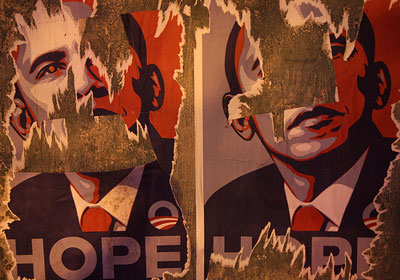
By James Petras | Axis of Logic | October 29, 2008
The presidential elections in the US, once again, provide an acid test of the integrity and consequential conduct of US intellectuals. If it is the duty and responsibility of the public intellectual to speak truth to power, the recent statements of most of our well-known and prestigious public pundits have failed miserably. Instead of highlighting, exposing and denouncing the reactionary foreign and domestic policies of Democratic Party candidate Senator Barack Obama, they have chosen to support him, ‘critically, offering as excuses that even ‘limited differences’ can result in positive outcomes,and that ‘Obama is the lesser evil’ and ‘creates an opportunity for a possibility of change.’
What makes these arguments untenable is the fact that Obama’s public pronouncements, his top policy advisers, and the likely policymakers in his government have openly defined a most bellicose foreign policy and a profoundly reactionary domestic economic policy totally in line with Paulson-Bush-Wall Street. On the major issues of war, peace, the economic crisis and the savaging of the US wage and salaried class, Obama promises to extend and deepen the policies which the majority of Americans reject and repudiate.
Twelve Reasons to Reject Obama
1. Obama publicly and repeatedly promises to escalate the US military intervention in Afghanistan, increasing the number of US troops, expanding their operations and engaging in systematic cross-border attacks. In other words, Obama is a greater warmonger than Bush.
2. Obama publicly has declared that his regime will extend the ‘war against terrorism’ by systematic, large-scale ground and air attacks on Pakistan, thus escalating the war to include villages, towns and cities deemed sympathetic to the Afghan resistance.
3. Obama opposes the withdrawal of US troops in Iraq in favor of redeployment; the relocation of US troops from combat zones to training and logistical positions, contingent on the military capability of the Iraqi Army to defeat the resistance. Obama opposes a clearly defined deadline to withdraw US forces from Iraq because US troops in Iraq are essential to pursuing his overall policies in the Middle East, which include military confrontations with Iran, Syria and Southern Lebanon.
4. Obama has declared his unconditional support for the position of the pro-Israel Lobby and the colonial expansionist and bellicose policies of the Jewish state. He has promised to back Israeli military attacks whatever the cost to the US. His abject servility to Israel was evident in his speech at the annual AIPAC conference in Washington 2008. Top advisers who have long and notorious links to the top echelons of the principle Zionist propaganda mills and the Presidents of the Leading Jewish American Organizations wrote the speech and formulate his Middle East policy.
5. Obama has promised to attack Iran if it continues to process uranium for its nuclear programs. Twice, just weeks before the elections, Obama’s running mate Joseph Biden spelled out a series of ‘points of conflict’ (including Iran, Afghanistan, Pakistan, Russia and North Korea) emphasizing that Obama ‘would respond forcefully’. Obama’s senior Middle East advisers include leading Zionists like Dennis Ross, closely linked to the ‘Bipartisan Policy Center’, which published a report serving as a blueprint for war with Iran. Obama’s proposed offer to negotiate with Iran is little more than a pretext for issuing an ultimatum to Iran to surrender its sovereignty or face massive military assault.
6. Obama unconditionally supports Israel’s expulsion of Palestinians and the expansion of Jewish settlements in the West Bank, the leading cause of Middle East hostility, warfare and the discredit of US policy in the region. With three dozen Israel-Firsters among his leading campaign organizers, top policy advisers, speech writers and among the likely candidates for cabinet positions, there is virtually no hope of ‘influencing from within’ or ‘applying popular pressure’ to change Obama’s slavish submission to the Zionist Power Configuration. By supporting Obama, the “progressive intellectuals” are, in effect, allies of his Zionist mentors.
7. On the domestic front, Obama’s key economic advisers have impeccable Wall Street credentials. He gave unquestioning and immediate endorsement to Treasury Secretary Paulson’s $700 billion dollar taxpayer bailout of the richest investment banks in the US. Obama has failed to challenge Paulson or the banks over the use of Federal funds for buyouts and acquisitions instead of loans and credit to producers and homeowners. Obama’s backing of Paulson and the Wall Street bailout is matched by his meager proposals to suspend mortgage foreclosures for a three-month period, pending re-negotiations of interest payments. Obama proposes to escalate transfers of government funds to mismanaged financial institutions and bankrupt capitalist corporations, in efforts to save failed capitalism rather than pursue any new large-scale, long-term public investment programs which will generate well-paid employment for workers.
1. Obama’s economic team has openly declared their embrace and practice of ‘free market’ ideology and opposition to any effort to engage in large-scale injections of government funds in publicly-owned productive activity and social services in the face of wide-spread private sector failure, corruption and collapse.
2. Obama embraces failed private sector health plans, run and controlled by corporate insurance companies, conservative medical and hospital associations and Big Pharma. He publicly rejects a universal national health program modeled after the successful Federal Medicare program in favor of inefficient, state-subsidized private for profit plans that are costly and beyond the means of over one third of US families.
3. Obama is and continues to be an advocate for Big Agro and its highly subsidized and profitable ethanol program, which has increased food prices for millions in the US and for hundreds of millions in the world.
4. Obama advocates continuing the criminal embargo on Cuba, hostile confrontation with Venezuela’s populist President Chavez and other Latin American reformers and the duplicitous policy of promoting protectionism at home and free market access to Latin America. His key policy advisers on Latin America propose cosmetic changes in style and diplomacy but unrelenting support for re-asserting US hegemony.
5. Obama has not proposed, nor do his free market advisers and billionaire financial backers envision, any comprehensive plan or strategy to get us out of the deepening recession. On the contrary, the course of piecemeal measures presented by Obama are internally inconsistent: Fiscal austerity is incompatible with job creation; bailing out Wall Street drains funds from productive investment; and pursuing new wars undermine domestic recovery.
CONCLUSION
The intellectuals who, in the name of ‘realism’, support a politician who publicly and openly embraces new wars, billionaire bailouts and for profit, private sector-run health programs are repudiating their own claims as ‘responsible critics’. They are what C. Wright Mills called ‘crackpot realists’, abdicating their responsibility as critical intellectuals. In purporting to support the ‘lesser evil’ they are promoting the ‘greater evil’: The continuation of four more years of deepening recession, colonial wars and popular alienation. Moreover, they are allies of the mass media, major parties and the legal system which has marginalized or outright excluded the alternative candidates, Ralph Nader and Cynthia McKinney, who do speak out and oppose the war, the pro-Wall Street bailouts and propose genuine large-scale public investment in the domestic economy, a universal single payer health program, sustainable and pro-environment economic policies and large-scale, long-term income redistributive policies.
What is crass and unacceptable is the argument of these intellectuals, (an insignificant pimple on the Democratic donkey’s rear-end) that for a single moment believe that their ‘critical support’ of the Obama political machine will open space for radical ideas. The Zionists and civilian militarists totally control Obama’s war policy in the Middle East: There will be no space for peace with Iran, Palestine, Pakistan, Afghanistan or Iraq. Wall Street controls the Obama’s financial policy: There will be no space for some Cambridge progressive to sneak in a handout for families losing their homes.
If the trade unions that have spent a hundred million dollars on each presidential campaign have failed to secure a single piece of progressive legislation in over 50 years, isn’t it delusional for our progressive ‘public intellectuals’ to imagine that they, in their splendid organizational isolation, can ‘pressure’ President Obama to renounce his advisers, backers and public defense of military escalation, to see his way to peace with Iran and to promote social justice for our workers and unemployed?
US — Venezuela: The Empire Strikes Back (and Loses)
By James Petras | 08.09.2010
Introduction
US policy toward Venezuela has taken many tactical turns, but the objective has been the same: to oust President Chavez, reverse the nationalization of big businesses, abolish the mass community and worker based councils and revert the country into a client-state.
Washington funded and politically backed a military coup in 2002, a bosses’ lockout in 2002-03, a referendum and numerous media, political and NGO efforts to undermine the regime. Up to now all of the White House efforts have been a failure – Chavez has repeatedly won free elections, retained the loyalty of the military and the backing of the vast majority of the urban and rural poor, the bulk of the working class and the public sector middle class.
Washington has not given up nor reconciled itself to coming to terms with the elected government of President Chavez. Instead with each defeat of its internal collaborators, the White House has increasingly turned toward an ‘outsider’ strategy, building up a powerful ‘cordon militaire’, surrounding Venezuela with a large-scale military presence spanning Central America, northern South America and the Caribbean. The Obama White House backed a military coup in Honduras, ousting the democratically elected government of President Zelaya (in June 2009), a Chavez ally, and replacing it with a puppet regime supportive of Washington’s anti-Chavez military policies. The Pentagon secured seven military bases in eastern Colombia (in 2009) facing the Venezuelan frontier, thanks to its client ruler, Alvaro Uribe, the notorious narco-paramilitary President. In mid 2010 Washington secured an unprecedented agreement with the approval of right wing President Laura Chinchilla of Costa Rica, to station 7000 US combat troops, over 200 helicopters, and dozens of ships pointing toward Venezuela, under the pretext of pursuing narco-traffickers. Currently the US is negotiating with the rightist regime of President Ricardo Martinelli of Panama, the possibility of re-establishing a military base in the former Canal Zone. Together with the Fourth Fleet patrolling off shore, 20,000 troops in Haiti, and an airbase in Aruba, Washington has encircled Venezuela from the West and North, establishing jumping off positions for a direct intervention if the favorable internal circumstances arise.
The White House’s militarization of its policy toward Latin America, and Venezuela in particular, is part of its global policy of armed confrontation and interventions. Most notably the Obama regime has widened the scope and extent of operations of clandestine death squads now operating in 70 countries on four continents, increased the US combat presence in Afghanistan by over 30,000 troops plus over 100,000 contract mercenaries operating cross border into Pakistan and Iran, and provided material and logistical assistance to Iranian armed terrorists. Obama has escalated provocative military exercises off the coast of North Korea and in the China Sea, evoking protests from Beijing. Equally revealing, the Obama regime has increased the military budget to over a trillion dollars, despite the economic crises, the monstrous deficit and the calls for austerity cuts in Medicare, Medicaid and Social Security.
In other words, Washington’s military posture toward Latin America and especially toward the democratic socialist government of President Chavez is part and parcel of a general military response to any country or movements which refuse to submit to US domination. The question arises – why does the White House rely on the military option? Why militarize foreign policy to gain favorable outcomes in the face of decided opposition? The answer, in part, is that the US has lost most of the economic leverage, which it previously exercised, to secure the ousting or submission of adversary governments. Most Asian and Latin American economies have secured a degree of autonomy. Others do not depend on US-influenced international financial organizations (the IMF, World Bank); they secure commercial loans. Most have diversified their trading and investment partners and deepened regional ties. In some countries, such as Brazil, Argentina, Chile and Peru, China has replaced the US as their principal trading partner. Most countries no longer look to US “aid” to stimulate growth, they seek joint ventures with multi-national corporations, frequently based outside of North America. To the extent that economic arm twisting is no longer an effective tool to secure compliance, Washington has resorted more and more to the military option. To the extent that the US financial elite have hollowed out the US industrial sector, Washington has been unable to rebuild its international economic levers.
Major diplomatic failures, resulting from its incapacity to adapt to basic shifts in global power, have also prompted Washington to shift from political negotiations and compromise toward military intervention and confrontation. US policymakers are still frozen in the time warp of the 1980’s and 1990’s, the heyday of client rulers and economic plunder, when Washington secured global support, privatized enterprises, exploited public debt financings and was relatively unchallenged in the world market. By the end of the1990’s, the rise of Asian capitalism, mass anti-neo-liberal uprisings, the ascendancy of center-left regimes in Latin America, the repeated financial crises and stock market crashes in the US and the EU and the increase in commodity prices led to a realignment of global power. Washington’s efforts to pursue policies attuned to the previous decades conflicted with the new realities of diversified markets, newly emerging powers and relatively independent political regimes linked to new mass constituencies.
Washington’s diplomatic proposals to isolate Cuba and Venezuela were rejected by all of the Latin American countries. The effort to revive free trade agreements, which privileged US exporters, were rejected. Unwilling to recognize the limits of imperial diplomatic power and moderate its proposals, the Obama regime turned increasingly toward the military option.
Washington’s struggle to re-assert imperial power, via interventionary politics fared no better than its diplomatic initiatives. The US-backed coups in Venezuela (2002) and Bolivia (2008) were defeated by mass popular mobilizations and the loyalty of the military to the incumbent regimes. Likewise in Argentina, Ecuador and Brazil, post-neo-liberal regimes, backed by industrial, mining and agro-export elites and popular classes were able to beat back traditional pro-US neo-liberal elites rooted in the politics of the 1990’s and earlier. The politics of destabilization failed to dislodge the new governments’ pursuing relatively independent foreign policies and refusing to return to the old order of US supremacy.
Where Washington has regained political terrain with the election of rightist political regimes – it has been through its ability to exploit the ‘exhaustion’ of center-left politics (Chile), political fraud and militarization (Honduras and Mexico), decline of the national popular left (Costa Rica, Panama and Peru) and the consolidation of a highly militarized police state (Colombia). These electoral victories, especially in Colombia, have convinced Washington that the military option, combined with deep intervention and exploitation of open electoral processes, is the way to reverse the left turn in Latin America – especially in Venezuela.
US Policy to Venezuela: Combining Military and Electoral Tactics
US efforts to overthrow President Chavez’s democratic government borrow many of the tactics applied against previous democratic adversaries. These include border incursions by Colombian paramilitary and military forces similar to cross border attacks by the US sponsored “contras” against the Sandinista government of Nicaragua during the 1980’s. The attempt to encircle and isolate Venezuela is similar to Washington’s policy over the past half century against Cuba. The funneling of funds to opposition groups, parties, media and NGO’s via US agencies and “dummy” foundations is a repeat of the tactics applied to destabilize the democratic government of Salvador Allende of Chile 1970-73, Evo Morales in Bolivia 2006-2010 and numerous other governments in the region.
Washington’s multiple track policy, in its current phase, is directed at escalating a war of nerves, by constantly raising security threats. The military provocations, in part, are a ‘testing’ of Venezuela’s security preparations, probing for weaknesses in its ground, air and maritime defenses. These provocations also are part of a strategy of attrition, to force the Chavez government to put its defense forces on “alert” and mobilize the population and then to temporarily reduce the pressure until the next provocation. The purpose is to discredit the government’s constant reference to threats, in order to weaken vigilance and when circumstances allow making an opportune strike.
Washington’s external military build-up is designed to intimidate Caribbean and Central American countries who may be looking toward closer economic relations with Venezuela. The show of force is also designed to encourage the internal opposition toward more aggressive actions. At the same time the confrontational posture is directed at the “weak links” or “moderate” sectors of the Chavista government who are nervous and anxious for “reconciliation” even at the price of unprincipled concessions to the opposition and the new Colombia regime of President Santos. The increasing military presence is designed to slow the internal radicalization process and to preclude Venezuela’s growing ties with Middle Eastern and other regimes, adverse to US hegemony. Washington is betting that a military build-up and psychological warfare linking Venezuela with revolutionary insurgents like the Colombian guerrilla will result in Chavez’s allies and friends in Latin America putting distance toward him. Equally important Washington’s unsubstantiated accusations that Venezuela is harboring FARC guerilla encampments, is meant to pressure Chavez to lessen his support to all social movements in the region, including the landless Rural Workers of Brazil as well as non- violent human rights groups and trade unions in Colombia. Washington wants a military “polarization”: US or Chavez. It rejects the political polarization existing today which pits Washington against MERCOSUR, the organization of economic integration involving Brazil, Argentina, Uruguay and Paraguay with Venezuela in line for membership or ALBA (economic integration involving Venezuela, Bolivia, Nicaragua, Ecuador and several Caribbean states.
The FARC Factor
Obama and now ex-President Uribe accused Venezuela of offering sanctuary for Colombian guerillas (FARC and ELN). In reality this is a ploy to pressure President Chavez to denounce or at a minimum demand that the FARC give up their armed struggle on terms dictated by the US and Colombian regime.
Contrary to President Uribe and the State Department’s boasts that the FARC is a declining, isolated and defeated fragment of the past, as a result of their successful counter-insurgency campaigns, a recent detailed field study by a Colombian researcher La guerra contra las FARC y la guerra de las FARC demonstrates that in the last 2 years the guerrillas have consolidated their influence over one-third of the country, and that the regime in Bogota controls only half the country. After suffering major defeats in 2008, the FARC and ELN have steadily advanced throughout 2009-2010 inflicting over 1300 military casualties last year and probably near double this year. (La Jornada 8/6/2010). The resurgence and advance of the FARC has crucial importance as far as Washington’s military campaign again Venezuela. It also affects the position of its “strategic ally” – Santos regime. First it demonstrates that despite $6 billion plus in US military aid to Colombia, its counter-insurgency campaign to “exterminate” the FARC has failed. Secondly, the FARC’s offensive opens a “second front” in Colombia, weakening any effort to launch an invasion of Venezuela using Colombia as a “springboard”. Thirdly, faced with a growing internal class war, the new President Santos is more likely to seek to lessen tensions with Venezuela, hoping to relocate troops from the frontier of its neighbor toward the growing guerilla insurgency. In a sense, despite Chavez misgivings about the guerrillas and outspoken calls for ending the guerrilla struggle, the resurgence of the armed movements are likely a prime factor in lessening the prospects of a US directed intervention.
Conclusion
Washington’s multi-track policy directed at destabilizing the Venezuelan government has by and large been counter-productive, suffering major failures and few successes.
The hard line toward Venezuela has failed to “line up” any support in the major countries of Latin America, with the exception of Colombia. It has isolated Washington not Caracas. The military threats may have radicalized the socio-economic measures adopted by Chavez not moderated them. The threats and accusations emanating from Colombia have strengthened internal cohesion in Venezuela, except among the hard-core opposition groups. They have also led to Venezuela’s upgrading its intelligence, police and military operations. The Colombian provocations have led to a break in relations and an 80% decline in the multi-billion dollar cross border trade, bankrupting numerous Colombian firms, as Venezuela substitutes Brazilian and Argentine industrial and agrarian imports. The effects of the policies of tension and the “war of attrition” are hard to measure, especially in terms of their impact on the forthcoming crucial legislative elections on September 26, 2010. No doubt, Venezuela’s failure to regulate and control the multi-million flow of US funds to its Venezuelan collaborators has made a significant impact on their organizational capability. No doubt the economic downturn has had some effect in limiting public spending on new social programs. Likewise, the incompetence and corruption of several top Chavista officials, especially in public food distribution, housing and public safety will have an electoral impact.
It is likely that these “internal” factors are much more influential in shaping the alignment of Venezuela’s electoral outcome, than the aggressive confrontational politics adopted by Washington. Nevertheless, if the pro-US opposition substantially increases its legislative presence in the September 26 elections – beyond one-third of the Congress people – they will attempt to block social changes and economic stimulus policies. The US will intensify its efforts to pressure Venezuela to divert resources to security issues in order to undermine social-economic expenditures which sustain the support of the lower 60% of the Venezuelan population.
Up to now, White House policy based on greater militarization and virtually no new economic initiatives has been a failure. It has encouraged the larger Latin American countries to increase regional integration, as witnessed by new custom and tariff agreements taken at the MERCOSUR meeting in early August of this year. It has not led to any diminuation of hostilities between the US and the ALBA countries. It has not increased US influence. Instead Latin America has moved toward a new regional political organization UNASUR (which excludes the US), downgrading the Organization of American States which the US uses to push its agenda. Ironically, the only bright lights, favoring US influence, comes from internal, electoral processes. Rightist candidate Jose Serra is running a strong race in the upcoming Brazilian Presidential elections. In Argentina, Paraguay and Bolivia the pro-US right is regrouping and hoping to return to power.
What Washington fails to understand is that across the political spectrum from the left to the center-right, political leaders are appalled and opposed to the US push and promotion of the military option as the centerpiece of policy. Practically all political leaders have unpleasant memories of exile and persecution from the previous cycle of US backed military regimes. The self-proclaimed extra-territorial reach of the US military, operating out of its seven bases in Colombia, has widened the breach between the centrist and center-left democratic regimes and the Obama White House. In other words, Latin America perceives US military aggression toward Venezuela as a “first step” southward toward their countries. That, and the drive for greater political independence and more diversified markets, have weakened Washington’s diplomatic and political attempts to isolate Venezuela.
Colombia’s new President Santos, made out of the same rightist mold as his predecessor Alvaro Uribe, faces a difficult choice – continuing as an instrument of US military confrontation and destabilization of Venezuela at the cost of several billion dollars in trade losses and isolation from the rest of Latin America or lessening border tensions and incursions, dropping the provocative rhetoric and normalizing relations with Venezuela. If the latter takes place, the US will lose its last best instrument for its external strategy of “tensions” and psych warfare. Washington will be left with two options: a unilateral direct military intervention or funding of political warfare through its domestic collaborators.
In the meantime President Chavez and his supporters would do well to concentrate on pulling the economy out of recession, tackling state corruption and monumental inefficiency and empowering the community and factory-based councils to play a greater role in everything from increasing productivity to public safety. Ultimately Venezuela’s long term security from the long and pervasive reach of the US Empire depends on the strength of the organized mass organizations sustaining the Chavez government.
Nagasaki mayor slams nuclear powers
Press TV – August 9, 2010
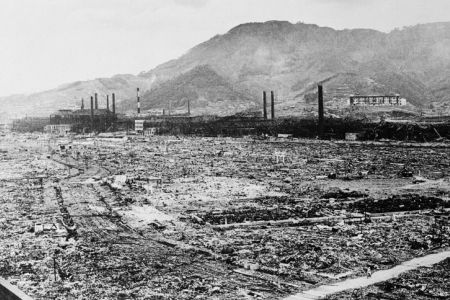
Nagasaki Mayor Tomihisa Taue has criticized the nuclear weapons states, saying they have not shown a sincere commitment to nuclear disarmament.
He made the remarks in the 2010 Nagasaki Peace Declaration, which he delivered on Monday at a ceremony held to commemorate the 65th anniversary of the U.S. atomic bombing of the city on August 9, 1945.
Mayor Taue appealed to the world to work for the elimination of nuclear weapons and said that people have the “responsibility to realize a world without the fear of nuclear weapons,” the Kyodo News International reported.
“We call upon the leaders of the nuclear weapons states never to trample on humanity’s efforts for a world without nuclear weapons,” Taue told the six thousand people gathered at the Nagasaki Peace Park to remember the victims of the attack and to honor the hibakusha (atomic bombing survivors).
“The lack of sincere commitment from the nuclear weapons states toward nuclear disarmament could provoke antipathy and lead to the emergence of more new nuclear weapons states, increasing the threat of nuclear proliferation around the world,” he added.
Taue said Nagasaki strongly supports the Nuclear Weapons Convention, a new international treaty for a complete ban on nuclear weapons.
He criticized the nuclear powers for rejecting a proposal presented at this year’s Nuclear Non-Proliferation Treaty Review Conference that would have established a schedule for nuclear disarmament.
Elsewhere in his remarks, he said, “Nagasaki and Hiroshima have long worked together to tell the world of the catastrophes caused by the atomic bombings, and to appeal for the weapons’ abolishment. The government of Japan, a nation that has endured two atomic bombings, manifested its position as a non-nuclear country by stating the Three Non-Nuclear Principles as national policy. However, this year, 65 years after the atomic bombings, the Japanese government has revealed the existence of a ‘secret nuclear pact.’ We harbor profound distrust of the government’s past responses that have turned the Three Non-Nuclear Principles into a mere formality. Moreover, the government has recently been promoting negotiations on a nuclear agreement with India, a non-NPT member country with nuclear weapons. This means that a nation that has suffered atomic bombings itself is now severely weakening the NPT regime, which is beyond intolerable.
“The first thing the Japanese government should do is to enact the Three Non-Nuclear Principles into law in order to restore the trust of the Japanese people. Also, the government should seek the denuclearization of Japan, South Korea and North Korea in a bid to realize security that does not rely upon a nuclear umbrella. We urge the Japanese government to propose a concept of a Northeast Asian Nuclear Weapon-Free Zone and to demonstrate to the international community its own leadership as the government of a nation bombed by atomic weapons.”
He added, “I would like to remind everyone around the world that it is we ourselves who have the power to decide which path we should take, ‘a world with nuclear weapons’ filled with distrust and threat, or ‘a world without nuclear weapons’ based on trust and cooperation. For our children, we have responsibility for creating a future without the fear of nuclear weapons. Even though on our own each of us might be small and weak, by joining together we can become a force to make governments act and to create a new history. Let us convey our intention fully and clearly to our governments.”
In conclusion, he stated, “We offer our sincere condolences on the deaths of the atomic bomb victims, and pledge to continue our utmost efforts together with the city of Hiroshima, until the day when nuclear weapons no longer exist on the Earth.”
Vanunu released from solitary, still confined in Israel
August 8, 2010
The Guardian reports:
Mordechai Vanunu, the Israeli whistleblower who spent 18 years in jail for exposing Israel’s nuclear capabilities was released today after completing a further three-month sentence.
Vanunu, 56, a former technician at a secret nuclear plant near the desert town of Dimona, was convicted after handing over details of Israel’s nuclear arsenal to a British newspaper in 1986.
The revelations led to the belief that Israel held a sizeable nuclear arsenal – a claim Israel has neither confirmed nor denied under its policy of “ambiguity”.
Vanunu served much of his 18-year sentence in solitary confinement.
His latest three-month sentence came after the Moroccan-born whistleblower was convicted of holding unauthorised meetings with foreigners – banned under the conditions of his release – including journalists and his Norwegian girlfriend in 2007…
Vanunu’s movements have been subject to strict conditions, including a ban on leaving Israel…
Speaking before his sentence in May and in English – Vanunu refuses to speak Hebrew in public – he said:
“Everyone knows that Israel has nuclear weapons but no one is talking about it. The world doesn’t want nuclear weapons – not in Israel, not in the Middle East and not anywhere in the world.”
###
Eileen Fleming adds:
In 1995, from Ashkelon Prison, Mordechai Vanunu noted:
“A radioactive cloud consumed rubbed out Hiroshima…A live nuclear test sentenced you. A nuclear laboratory…children women trees animals in and under a nuclear mushroom…burning… burned…flattened to ground radioactive ash-Hiroshima…Nuclear weapons gamblers win against you…Hollywood doesn’t know you – you are not a Jewish Holocaust.”
Nuclear U
The University of California and the Nuclear Weapons Business
By NORMAN SOLOMON | August 7, 2010
On my way to the Los Alamos National Laboratory a few years ago, I found it listed in a New Mexico phone book—under “University of California.”
Since the early 1940s, UC has managed the nation’s top laboratories for designing nuclear bombs. Today, California’s public university system is still immersed in the nuclear weapons business.
Sixty-five years after the atomic bombings of Hiroshima and Nagasaki on Aug. 6 and 9, 1945, the University of California imprimatur is an air freshener for the stench of preparations for global annihilation. Nuclear war planners have been pleased to exploit UC’s vast technical expertise and its image of high-minded academic purpose.
During most of WWII, scientists labored in strict secrecy at the isolated Los Alamos lab in the New Mexico desert, making possible the first nuclear weaponry. After the atomic bombings of Japan, UC continued to manage Los Alamos. And in 1952, when the government opened a second nuclear bomb generator, the Lawrence Livermore National Laboratory east of San Francisco, UC won the prize to manage operations there, too.
A few years into the 21st century, security scandals caused a shakeup. UC lost its exclusive management slots at Los Alamos and Livermore, but retained major roles at both laboratories.
In mid-2006, the Los Alamos lab went under a new management structure, widened to also include Bechtel and a couple of other private firms. A year later, a similar team, likewise including UC and Bechtel, won a deal to jointly manage Livermore.
At Los Alamos, I learned that the new management team was, legally speaking, an LLC, a limited liability corporation. I’m still trying to wrap my mind around the concept of “limited liability” for managers of a laboratory that designs nuclear weapons.
Weird, huh? But not any stranger than having the state of California’s top system of higher education devoted to R&D for designing better ways to blow up the planet.
Yes, those laboratories do some nifty ecological research and other laudable things. But nuclear weapons remain central to the labs’ mission. And, lofty rhetoric aside, the federal government is pouring billions more dollars into the continuous high-tech pursuit of nuclear weapons “modernization.”
Last spring, the White House announced plans for this decade that include investing $80 billion “to sustain and modernize the nuclear weapons complex”—in addition to “well over $100 billion in nuclear delivery systems to sustain existing capabilities and modernize some strategic systems.”
In fact, the U.S. government is now on a jag to boost spending for its nuclear arsenal. As the Livermore-based organization Tri-Valley CAREs noted weeks ago, “the 2011 budget request for nuclear weapons is the largest in our nation’s history; bigger than under George W. Bush and a whopping 40 percent higher than the amount spent for nuclear weapons activities on average during the Cold War.”
Credit where due: the UC-managed laboratories for nuclear bombs have been on the cutting edge of digital advancement. Their record recalls a comment from Martin Luther King Jr., who noted the proliferation of “guided missiles and misguided men.”
When I interviewed Los Alamos press officer Kevin Roark, he explained that “this laboratory has been at the forefront of computing research and development” from the Manhattan Project days of slide rules and punch cards to the lab’s present-day computers, with one able to do upwards of 100 trillion calculations per second.
An official website of the University of California boasts that “UC has been involved in the management of these laboratories since their inception—a relationship spanning seven decades—as a public service to the nation.” With a lab on the UC Berkeley campus included in the mix, “the three laboratories have a combined workforce of more than 21,000 and operate on federally financed budgets totaling more than $4 billion.”
For sure, there’s plenty of money sloshing around to reward the masters—and academic servants—of the nuclear weapons industry. But should the University of California be managing laboratories that design the latest technologies for nuclear holocaust?
The U.S. and Yemen’s President: A Lethal Cocktail
By Conn Hallinan | Foreign Policy In Focus | August 5, 2010
How involved is the U.S. military in Yemen, and is the Obama Administration laying the groundwork for a new foreign adventure? According to several news agencies, including Agence France Presse, UPI and the Washington Post, very involved and likely to be more so in the future.
“U.S. military teams and intelligence agencies are deeply involved in secret joint operations with Yemeni troops,” says Dana Priest, the Post’s ace intelligence and military affairs reporter, including “the U.S. military’s clandestine Joint Special Operations Command, whose main mission is tracking and killing suspected terrorists.”
The quarry of these assassination teams are supposed leaders of al-Qaeda in the Arabian Peninsula (AQAP), but the deepening U.S. alliance with the authoritarian government of Yemen may soon entangle it in two complex civil wars—a rising by disenfranchised Shiites in the north, and an increasingly powerful secession movement in the country’s south.
According to UPI, the White House is quietly expanding “the footprint” of “elite forces inside Yemen.” One military official told the news agency, “The numbers are definitely going to grow.” The Obama administration increased “security” funds for Yemen from $67 million to $150 million.
Navy Seals, Delta Force troops, and intelligence units are working closely with the government of President Ali Abdullah Saleh, providing weapons, training and intelligence. And sometimes more.
On Dec. 17, 2009, a U.S. BGM-109D Tomahawk cruise missile attacked the village of al-Maajala in south Yemen, killing 55 people, the bulk of them women and children. The Tomahawk—launched from a U.S. surface ship or submarine— was armed with a cluster warhead that spread a storm of razor sharp steel and incendiary material over 500 square feet.
Amnesty International’s Mike Lewis said his organization was “gravely concerned by evidence that cluster munitions appear to have been used in Yemen,” because “cluster munitions have indiscriminate effects and unexploded bomblets threaten lives and livelihoods for years afterwards.”
The target was a supposed al-Qaeda training camp, but the Saleh government draws no distinction between AQAP and the Southern Movement (SM), a group advocating an independent south Yemen. The SM has a long list of grievances reflecting problems going back to 1990 when North Yemen and the southern Democratic People’s Republic of Yemen were unified.
That merger between the conservative north and the better educated and socialist south was never a comfortable one and led to a particularly nasty civil war in 1994. The north won that war by using jihadists freshly returned from fighting the Russians in Afghanistan. Since the end of that four-month war, the SM charges that the north siphons off the south’s oil without adequate compensation, discriminates against southerners on access to jobs, and has cornered the country’s vanishing water supplies. Southern protests are met with tear gas and guns, and, according to SM leaders, some 1,500 “secessionists” have been imprisoned and more than a hundred killed.
According to UPI, “The [Saleh] regime’s heavy-handed response to the southerners has only fueled the demand for independence and encouraged the disparate southern groups to come together.”
Saleh claims the SM is closely tied to AQAP, which immediately gets Washington’s attention, and has allowed his government to tap into the resources of the American “war on terrorism.” Southern independence leaders, like Tariq al-Fadhli, deny any ties to AQAP and say the Southern Movement is non-violent. Whether it will remain so under the Saleh government’s continued assaults is an open question. The December cruise missile strike is not likely to encourage pacifism.
The fighting in the north between the Saleh government based in the capital, Sanaa, and the Shiite Houthi, who inhabit the north’s forbidding terrain, is long-standing. While Saleh and his supporters in Saudi Arabia say Iran is stirring up the trouble, there is no evidence for ties between Iran and the Houthi. The tensions between the Saleh government and the Houthi are local and generally have to do with access to political power. But by bringing Iran into the picture, Saleh can claim he is fighting terrorism, thus making his regime eligible for arms, intelligence, and training.
The U.S. is ratcheting up the use of Special Operations Forces (SOF) worldwide. The administration has increased the number of countries in which SOFs are deployed from 60 to 75, and upped the SOF budget 5.7% to $6.3 billion for 2011. The White House also added an additional $3.5 billion for SOFs to its 2010 budget.
One military official told the Washington Post that the Obama administration had given the military “more access” than former President George W. Bush. “They [the Obama administration] are talking publicly much less but they are acting more. They are willing to get aggressive much more quickly.”
In a recent talk that sounded very much like the Bush administration’s doctrine of pre-emptive war, the White House’s counterterrorism expert John Q. Brennan said that U.S. strategy was not to just “respond after the fact to terrorism,” but to “take the fight to al-Qaeda and its extremist affiliates, whether they plot and train in Afghanistan, Pakistan, Yemen, Somalia, and beyond.”
If the U.S. does increase its military footprint in Yemen, it will be expending hundreds of millions of dollars in the poorest country in the region, a country where 40 percent of its 22 million residents are jobless and where water is becoming a scare commodity. The U.S. shares much of the blame for the current economic crisis in Yemen. When Yemen refused to support the 1991 Gulf War against Saddam Hussein, Saudi Arabia expelled 850,000 Yemeni workers, and the U.S. cut $70 million in foreign aid. The effect of both actions was catastrophic, and Yemen never recovered from the one-two blow.
U.S. support for the Saleh regime will inevitably draw it into the conflicts in the north and the south, with disastrous results for all parties.
“In Yemen the U.S. will be intervening on one side in a country which is always in danger of sliding into a civil war,” says the Independent’s Middle East reporter Patrick Cockburn. “This has happened before. In Iraq the U.S. was the supporter of the Shia Arabs and Kurds against the Sunni Arabs. In Afghanistan it is the ally of the Tajiks, Uzbeks and Hazara against the Pushtun community. Whatever the intentions of Washington, its participation in these civil conflicts destabilizes the country because one side becomes labeled as the quisling supporter of a foreign invader. Communal and nationalist antipathies combine to create a lethal blend.”
Featured Video

Houthis Don’t Have to Conquer Saudi Arabia to Make It Pay
or go to
Aletho News Archives – Video-Images
From the Archives
Newly Released FBI Docs Shed Light on Apparent Mossad Foreknowledge of 9/11 Attacks
By Whitney Webb | MintPress News | May 17, 2019
NEW YORK — For nearly two decades, one of the most overlooked and little known arrests made in the aftermath of the September 11 attacks was that of the so-called “High Fivers,” or the “Dancing Israelis.” However, new information released by the FBI on May 7 has brought fresh scrutiny to the possibility that the “Dancing Israelis,” at least two of whom were known Mossad operatives, had prior knowledge of the attacks on the World Trade Center. … continue
Blog Roll
 Aletho News
- UK whines about losing billions to ‘Putin tax’
- Baghaei to Rubio: Distorted narratives cannot erase US record of broken commitments
- Houthis Don’t Have to Conquer Saudi Arabia to Make It Pay
- MOE: Nearly 22,000 Students and Education Workers Killed
- Guterres in Islamabad: Genocide, cowardice, and the cage of Imran Khan
- Johnson, Marandi say Yemen holds upper hand over Saudi Arabia
- False flags won’t save aggressors, Iran FM spokesman says
- The Makkah Pact Enters Into Force: The End of American Dominance or Its New Form?
- NATO’s top generals gather in Kiev
- EU’s continuing expansion – greater threat to Russia
- If Americans Knew
- 5 Palestinians Die from Israeli Strikes in Gaza as Relentless Attacks Continue
- Report: Ceasefire Slows Killing but Leaves Devastation Intact
- Country Music Singer Zach Bryan Breaks Attendance Record at Robert Kraft’s Gillette Stadium While Wearing ‘Free Palestine’ Shirt for Second Night in a Row
- Three years of death and devastation: Israel’s war on Gaza in pictures
- Why Hamas believed the status quo was more dangerous than its 7 October gamble
- Debunking Israel’s latest list of ‘terrorist’ journalists in Gaza
- In Gaza, focus is on survival, “every step is a struggle” – Daily Update
- Three Years of Genocide: How America’s Israel-First Media Filtered Out the Truth
- Israeli war chief briefs ministers on potential war against Palestinian Authority
- New Report: Israel Killed nearly 21,000 Palestinian Students and Education Workers in Past Three Years
- No Tricks Zone
- New Study: 50 Years Of The Most Aggressive ‘Net Zero’ Policies Can Only Affect The Global Climate By 0.03°C
- US September “Heat” Was No Record…Many Records Set Decades Ago
- Latest European Green Energy Debacle; Portugal’s Largest Flagship Solar Park Insolvent!
- Green Energy Debacle: German Expert Professor Fritz Vahrenholt Warns Of Severe Economic And Social Consequences
- Two More Paleo Reconstructions Affirm Meters-Higher Sea Levels Across Ireland, Brazil 7000-6000 Years Ago
- New Study: Earth And Venus Surface Warmth Largely Explained By Convection And Lapse Rate, Not CO2 Or Radiation
- 2025 Nature Paper Claiming Worsening Global Drought Gets RETRACTED …Heavily Flawed
- New Study: ‘Global Drought Shows No Detectable Recent Acceleration Under Climate Warming’
- Economic Masterminds: German Socialists Suggest Taxing Productivity Gains Stemming From Using AI
- The South China Sea Has Not Been Cooperating With The Climate Change Narrative

