Chagossians face sinister “environmental” ban from homeland
By Catherine Philp | The Times | March 6, 2010

(John Parker/Corbis)
If ever there was an oceanic treasure worthy of conservation, the Chagos archipelago, with its crystal-clear waters and jewelled reefs, is it. Yet the British Government’s plans have split the gentle world of marine conservation, created a diplomatic row with Indian Ocean states and turned the spotlight on to the archipelago’s place in Britain’s darker colonial history.
The British Indian Ocean Territory, as it is officially known, is the ancestral home of the Chagossians, the 2,000 people and their descendents that Britain removed forcibly from the islands in the Seventies to make way for a US air and naval base on the main island, Diego Garcia. Despite Britain repeatedly overruling court judgments in their favour, the exiled Chagossians have continued their struggle. This summer their case will be heard at the European Court of Human Rights in Strasbourg. By then, however — if David Miliband, the Foreign Secretary, gets his way — the Chagos will have been designated a marine protected area (MPA), where activities such as fishing and construction are banned, denying them any legal means to sustain their lives.
It is, depending on your view, a sinister trick to prevent the Chagossians returning; an easy piece of environmental legacy building by a Government about to lose power; or an act of arrogant imperialism to rob the territory’s true owners of any say in its future.
Perhaps the most compelling case against the plan, however, is made by the swelling cadre of environmentalists opposing the project in the belief that — far from protecting this pristine paradise — it could hasten its destruction. “Even if I didn’t care about human rights, I would say this is a terrible mistake,” said Dr Mark Spalding, one of the world’s foremost experts on reef conservation.
“The world of conservation is littered with failures where the people involved were not consulted. If the Chagossians win the right to return, why should they want to co-operate with the conservation groups running roughshod over them?”
The Government’s proposal acknowledges that the entire plan may have to be scrapped if the Chagossians are allowed to return. “That would make it the shortest-lived protection area in the world,” Dr Spalding said. “So you have to ask: what’s the rush to get this done before [the Strasbourg ruling and] a general election?”
Mr Miliband will begin to examine the cases for and against the reserve next week, after public consultations ended yesterday. A decision is expected within weeks, but the Foreign Secretary already sounds convinced. “This is a remarkable opportunity for the UK to create one of the world’s largest marine protected areas, and double the global coverage of the world’s oceans benefiting from full protection,” he wrote.
Many of the world’s leading conservation groups have thrown their weight behind the proposal, which emphasises the advantage of the islands being “uninhabited”. They are not: the original islanders were removed from Diego Garcia to make way for a military base that houses 1,500 US service personnel, 1,700 civilian contractors and 50 British sailors. The island, which constitutes 90 per cent of the landmass of the Chagos, is, in effect, to be exempt from the protection order.
Peter Sand, a British environmental lawyer who has investigated the US base’s impact, has documented four jet fuel spills totalling 1.3 million gallons since it was built and has lobbied unsuccessfully for information on radiation leakage from nuclear-powered vessels there. “To say that a small group of Chagossians could have a greater impact than the base is just crazy,” Dr Spalding said.
The plan has also sparked a diplomatic row with Mauritius and the Seychelles, from whom the Chagos Islands were taken and to whom Britain has agreed to cede them when they are no longer needed by the US military. Britain faces further embarrassment over allegations that Diego Garcia was used to moor US prison ships where “ghost” prisoners were tortured.
The Prime Minister of Mauritius said last week that he was “appalled” by the decision to press ahead with plans for the reserve, “It is unacceptable that the British claim to protect marine fauna and flora when they insist on denying Chagos-born Mauritians the right to return to their islands all the while,” Navin Chandra Ramgoolam said at the inauguration of a building for Chagossian refugees in the Mauritian capital. “How can you say you will protect coral and fish when you continue to violate the rights of Chagos’s former inhabitants?”
Britain originally offered the US the Aldabra atoll for its base but backed down after uproar from environmentalists. Aldabra, now a World Heritage Site, was uninhabited by humans but home to hundreds of thousands of giant tortoises. “The British had refused to create a base on Aldabra in the Seychelles not to harm its tortoise population,” marvelled Olivier Bancoult, head of the Chagos Refugees Group. “Now they are trying to create a protected area to prevent Chagossians from returning to their native islands.”
Shifting sands
1960s The Chagos archipelago, originally part of Mauritius, is secretly leased to Britain. Together with the Aldabra archipelago, taken from the Seychelles, they become the British Indian Ocean Territory
1970 Britain and the US agree to set up a military base on Diego Garcia, and Britain begins deporting the 2,000 Chagossians to Seychelles and Mauritius
1983 £1m compensation is paid to the refugees on Mauritius
2000 British High Court rules in favour of Chagossians demanding the right to return
2004 Government issues a royal prerogative striking down the court’s decision
2006 The Court of Appeal dismisses the Government’s appeal, saying its methods are unlawful and “an abuse of power”; 102 Chagossians are permitted to visit Diego Garcia for a day to tend relatives’ graves
2008 Law lords vote 3-2 in favour of Government, overruling High Court
2009 Foreign Office launches public consultation on the creation of a protected marine area
2010 The European Court of Human Rights is set to hear the Chagossians’ petition to return this summer
Obama’s Landmine Betrayal
By Conn Hallinan | March 4, 2010
Step lightly is the only conclusion one can draw from the Obama administration’s refusal to sign the international treaty banning landmines. U.S. State Department spokesman Ian Kelly said that the administration had decided not to join the 10-year old treaty endorsed by 156 countries. Altogether, 39 countries have not signed on, inclusing Russia, China and India.
Kelly’s comment drew outrage from treaty supporters, including Sen. Patrick Leahy (D-Vt), who called the refusal to sign a “default of U.S. leadership,” and contradictory to the White House’s “professed emphasis on multilateralism, disarmament, and humanitarian affairs.”
The U.S. Campaign to Ban Landmines called Kelly’s statement “shocking,” and anti-landmine groups were sharply critical of the review process, which was conducted behind closed doors without input from NGOs, legislators, or NATO allies who have signed the treaty.
The 1999 treaty bans the stockpiling, production, or transferring of anti-personal mines that caused over 5,000 casualties last year, one third of them children. More than 70 countries are infested with them.
In the face of the uproar over the Obama administration’s refusal to join the ban, the State Department quickly backed off and said the policy review “is still on-going.”
The White House has also resisted endorsing the treaty to ban cluster weapons.
A total of 103 governments worldwide have signed the agreement, but ratification is still working its way through various legislatures and parliaments. Some 30 nations have ratified it, however, elevating the treaty to the level of international law.
The U.S., Russia, and China are the major producers of cluster weapons, and they are stockpiled in at least 77 countries. A number of countries, including Japan and Australia, have destroyed their stocks.
Cluster weapons have a high failure rate—30 percent is not unusual—and the unexploded bomblets lie in wait for unwary civilians. Some 90 million cluster weapons were dropped on tiny Laos during the war in Southeast Asia, and the weapons continue to kill and maim between 100 and 200 people a year.
Many of the 50 million clusters dropped on Kuwait during the first Gulf War failed to explode and, in the two years following the war, killed 1,400 Kuwaiti civilians. Cluster weapons continue to kill and wound hundreds of civilians in Kosovo and Iraq.
The aftermath of war was underlined by a recent study conducted by the Vietnamese military and the Vietnam Veterans of America Foundation that looked at six provinces near the old demilitarized zone in the country’s north. It found that it would take 300 years and $10 billion to clear unexploded bombs and mines from the region.
Since the war ended in 1975, unexploded ordinance has killed 10,529 people and injured 12,231 in the six provinces.
The Iraqi Ministry of the Environment has found that 42 sites across the country are heavily contaminated with radiation and dioxin. The dioxin is from the widespread bombing of oil pipelines and refineries during the U.S. invasion, and the radioactivity is residue from radioactive depleted uranium ammunition (DUA). Over 500 tons of DUA were used during the first and second Gulf wars.
According to environment minister Narmin Othman, the bombing of pipelines in the Basra area has heavily contaminated the soil with dioxin. “The soil ended up in people’s lungs and has been on food that people have eaten,” he told the Guardian.
DUA is the latest innovation in armor piercing ammunition, and it is widely used in 120mm tank shells, and 30mm cannon shells fired by aircraft. While not highly radioactive, it “has the potential to generate significant medial consequences” if ingested, according to the U.S. Environmental Policy Institute.
DUA tends to vaporize on contact, contaminating food and water supplies with radioactive dust.
While the U.S. claims DUA is not dangerous, birth defects and early life cancers have risen sharply in places like Falluja where the weapon was widely used. “We are seeing a very significant increase in central nervous system anomalies,” Falluja general hospital’s director Dr. Ayman Qais told the Guardian. “Before 2003 [the start of the war] I was seeing sporadic numbers of deformities in babies. Now the frequency of deformities has increased dramatically.”
Admissions for deformities have risen from two every two weeks a year ago, to two a day now. Besides deformities of the head, spinal cord, and lower limbs, multiple tumors have been showing up as well. The Guardian found that in a three-week period, there were 37 abnormal babies born in the Falluja general hospital alone.
Conn Hallinan can be reached at: ringoanne@sbcglobal.net
The Pentagon’s Runaway Budget

With his decision to boost defense spending, President Obama is continuing the process of re-inflating the Pentagon that began in late 1998 — fully three years before the 9/11 attacks on America. The FY 2011 budget marks a milestone, however: The inflation-adjusted rise in spending since 1998 will probably exceed 100 percent in real terms by the end of the fiscal year. Taking the new budget into account, the Defense Department has been granted about $7.2 trillion since 1998, when the post-Cold War decline in defense spending ended.
The rise in spending since 1998 is unprecedented over a 48-year period. In real percentage terms, it’s as large as the Kennedy-Johnson surge (43 percent) and the Reagan increases (57 percent) combined. Whether one looks at the entire Pentagon budget or just that part not related to the wars, current spending is above the peak years of the Vietnam War era and the Reagan years. And it’s set to remain there. Looking forward, the Obama administration plans to spend more on the Pentagon over the next eight years than any administration since World War II.
Why should the Pentagon budget rise so much, so fast? Why should it be exempted from the recently announced discretionary spending freeze? And why should it be stabilizing at levels above the highest years of the Cold War?
The most ready explanation is that the War on Terrorism, and especially military operations in Iraq and Afghanistan, are the cause. But these activities presently claim less than 20 percent of the Pentagon’s budget. For the period 1998-2011, overseas contingency operations have consumed less than 17 percent of all funding. Take today’s wars out of the picture entirely and the rise since 1998 is still 54 percent in real terms.
Why More Than the Cold War?
Our recent study of the post-1998 defense spending surge, An Undisciplined Defense, set out to identify the factors driving Pentagon costs upward. Much of the post-1998 surge can be attributed to a mix of policy choices and policy failures. And this belies the notion that today’s high level of spending simply reflects hard and fast security “requirements.” In short: If America’s leaders can find the will, then there is a way to substantial savings.
Four features of post-Cold War U.S. security policy have been especially important in driving putative “requirements” upward — and all admit alternative action.
- Beginning in the 1990s, successive U.S. administrations have adopted goals and missions for the armed forces that are vaguer and more ambitious than those of the Cold War period.
- Military modernization efforts have suffered from especially weak prioritization and poor integration. They have been distinctly undisciplined, leading to higher research, development, and equipment procurement costs.
- Planned efforts at defense reform have been insufficient and weakly prosecuted. Thus, the savings they achieved fell far short of what was needed and possible.
- The United States has undertaken and persevered in protracted wars of a type for which the U.S. military was ill-suited and improperly equipped.
Goal Inflation and Discordant Modernization
Following the collapse of Soviet power, America’s leaders set more ambitious goals for the U.S. military, despite its smaller size. This entailed requiring the armed services to sustain and extend their continuous global presence, improving their readiness and speed, increasing peacetime engagement activities, and preparing to conduct more types of missions quickly and in more areas. Recent U.S. strategy has looked beyond the traditional goals of defense and deterrence, seeking to use military power to actually prevent the emergence of threats and to “shape” the international environment. U.S. defense planners also elevated the importance of lesser and hypothetical threats, thus requiring the military to prepare for many more lower-probability contingencies.
These ambitions have led to the rise in Pentagon operations and maintenance (O&M) expenditures, as well as a larger-than-necessary force structure and greater equipment requirements.
One ongoing goal of the Pentagon has been to modernize forces. This ambitious modernization between 1990 and today has reflected three different imperatives or directions, and these have been poorly integrated.
- Big-ticket “legacy” programs conceived during the Cold War and enjoying considerable institutional momentum;
- New programs, like Predator drones, reflecting the potential of information and other emerging technologies; and
- “Adaptive” programs like mine-resistant armored vehicles, which correspond to new mission requirements, such as counterinsurgency.
The Pentagon has failed to adequately integrate these trends or prioritize among them. Instead, they have all gone forward in parallel, competing for funds. This situation puts unrelenting upward pressure on the budget. Legacy programs, which tend to be backward-looking, have predominated. Thus, despite the Pentagon’s spending $2.5 trillion on modernization between 1989 and 2003, there was a lack of preparedness for counterinsurgency and counterterrorism tasks after 2001. Notably, the decisions to pacify Iraq and Afghanistan by military means entailed a new wave of equipment purchases.
Defense Secretary Robert Gates has promised to impose stricter priorities on defense acquisition. But this isn’t the first time an administration announced a “get tough” policy in this area. For instance, former Defense Secretary Donald Rumsfeld also vowed to tackle the dysfunctional acquisition process, lopping off the Army’s Crusader artillery system and Comanche helicopter program along the way. This latest reform cycle will not likely accomplish more than swapping out a few disfavored systems for a few favored ones. No actual savings will leave the Pentagon orbit.
Shortfalls in Defense Reform
Reforming the post-Cold War military was supposed to enable it to “do more for less.” Preserving the “peace dividend” — a reduction in the military budget and the application of the savings to other pressing needs — depended on it. Structural reform also was necessary because the military suffered a decrease in efficiency when it got smaller. This was due to some loss in economies of scale in support and acquisition activities.
Options for reform were plentiful. These included reducing service redundancies, streamlining command structures, and consolidating a range of support and training functions. Other worthwhile targets of reform were the Pentagon’s acquisition, logistics, and financial management systems.
But reform efforts fell short of their promise, due to institutional resistance and bureaucratic inertia. Only two initiatives — competitive sourcing and military base closures — were pursued vigorously enough to yield significant annual savings. And these savings have amounted to less than 4 percent of the current defense budget — clearly not enough to save the “peace dividend.”
The difficulty of defense reform goes to the heart of governance problems in the defense area. There is an imbalance between effective civilian and military authority, between “joint” and individual service authority, and between public and special interests. In some respects, the system is a feudalistic one. Its functioning normally depends on largesse and a fair amount of deference to “subordinate” offices. Civilian authorities might challenge and alter this configuration, but that would entail considerable political risk.
Increased Labor Costs
Why have today’s wars been so inordinately expensive in relative terms? Measured in 2010 dollars, the Korean War cost $393,000 per year for every person deployed. And the Vietnam conflict cost $256,000. By contrast, the Iraq and Afghanistan commitments have cost $792,000 per year per person.
This is due partly to America’s reliance on high-cost “volunteer” (professional) military labor, which began after the Vietnam War. This type of military is susceptible to steep increases in personnel costs if it gets bogged down in large-scale, protracted, labor-intensive wars of occupation and counterinsurgency. Combat pay, retention bonuses, and recruitment costs soar.
Overall, military personnel costs rose 50 percent in real terms between 2001 and 2010, although the military labor pool grew by less than 2 percent. This dramatic increase in labor costs calls into question any potential large-scale counterinsurgency operations, which require more, not fewer boots on the ground — unless, of course, cost is no object.
Because of the costs involved, the Pentagon has been reluctant to permanently increase the number of full-time military personnel, despite high levels of activity even before the current wars. Thus, increases in ground troops have been largely counterbalanced by reductions in Navy and Air Force personnel. Instead, the Pentagon has turned increasingly to private contractors, whose employees have assumed many of the support functions previously performed by Pentagon personnel. Since 1989, the pool of Pentagon military and civilian employees has shrunk by more than 30 percent, while the number of contract workers has probably grown by 40 percent. As a result, the total Pentagon workforce may have been re-inflated to its Cold War size, but with contract labor playing a much bigger role.
Contract labor is generally cheaper than Pentagon in-house labor, military or civilian. However, a problem routinely noted by the Government Accountability Office is that Pentagon’s financial management of contracts is weak. At any rate, whatever savings have been realized by replacing in-house labor with contract labor has been overshadowed by the overall increase in the Pentagon’s total workforce.
The re-inflation of the workforce partly registers in the budget as an unusually steep increase in operations and maintenance spending, because this account covers much of contract labor. Calculated in inflation-adjusted per person terms, operations and maintenance expenditures are 2.5 times higher today than in 1989. In absolute terms (also corrected for inflation), O&M spending has risen 75 percent since the Reagan years.
The Primacy of U.S. Military Spending
The factors outlined above have converged to give America a historically unique predominance in military spending. The United States today is responsible for nearly half of all military expenditure worldwide. In 1986, it claimed only 28 percent.
Especially notable is the changed balance between U.S. spending and the total amount spent by potential adversary states. The United States has gone from spending one-third less than its adversaries in 1986 to spending 150 percent more than potential adversary states in 1986. Had Ronald Reagan sought to achieve the ratio between U.S. and adversary spending that existed in 2006, he would have had to nearly quadruple his defense budgets. And, of course, the 2006 Pentagon’s budget hasn’t receded but instead grown by another 20 percent in real terms.
These calculations suggest that the United States’ recent levels of defense expenditure are largely detached from other nation’s efforts to build military power. And the wars explain only a small part of the difference. Instead, the divergence points to a change in what the US defense establishment hopes to accomplish by means of military power, how fast, and how far afield.
Can We Roll Back Pentagon Spending?
America’s singular investment in the means of war hasn’t purchased clear and sure progress toward a more secure and stable world. Nor has it purchased an efficient military closely adapted to the current security environment. That the nation should persist down this road for more than a decade suggests a lapse in attention to the strategic costs and benefits associated with its chosen defense posture. It’s as though the nation had trillions to burn.
The road not taken during the past 15 years would have involved a more forceful and thorough-going approach to defense reform. A more sensible Pentagon strategy would take a more disciplined approach to equipment acquisition that better integrated the various trends and service plans, and tailored them more closely to new conditions. And the United States as a whole would have demonstrated greater restraint and greater specificity in defining post-Cold War military goals and missions.
A permissive spending environment has been a necessary precondition for Pentagon bloat, which several political realities have helped generate and sustain. First, and obviously, the September 2001 attacks overrode any tendencies to suggest economizing on defense. Curiously, though, Gallup polls show that public support for increased defense spending was higher in the two years prior to the attacks than in the two years after. Support has receded significantly since then, but this hasn’t spurred a serious re-evaluation of the budget.
At present, both Democratic and Republican leaders are disinclined — each for their own reasons — to press for Pentagon budget reform and restraint. There is little political gain in it, and much political risk. In this calculation, the balance of raw public opinion is less important than the capacity of the contending parties to excite and mobilize it.
Emerging fiscal realities may soon focus more critical attention on how the nation allocates its resources among competing goals, military and non-military. And the recent freeze on most discretionary spending suggests the contours of the coming battle: It will be the Pentagon versus everything else. In this light, our most important finding is that much of the surge in Pentagon spending since 1998 has been a matter of choice and will, not a matter of national security “requirements.” This puts the ball back in the political court, where it belongs. If there is to be progress in rebalancing our budget, it will depend on pressuring the administration and Congress to deliver real change that matters.
This article is an updated summary of An Undisciplined Defense: Understanding the $2 Trillion Surge in US Defense Spending. The report, with complete citations, is available at the project’s website.
Carl Conetta is co-director of the Project on Defense Alternatives at the Commonwealth Institute and a contributor to Foreign Policy In Focus.
Pittsburgh Residents want sign honoring general removed
By Joe Smydo, Pittsburgh Post-Gazette | March 02, 2010

Robin Rombach/Post-Gazette
This sign outside Heinz Field and the Carnegie Science Center at Allegheny Avenue on the North Shore honors former CIA director and retired Air Force Gen. Michael V. Hayden, a North Side native.
The anti-terrorism policies of former President George W. Bush stirred passions Monday at a Pittsburgh City Council hearing on whether a street sign honoring former CIA director and retired Air Force Gen. Michael V. Hayden, a North Side native, should be taken down.
Council held the hearing after about 40 residents signed a petition demanding that the sign, on North Shore Drive at Heinz Field, come down because of questions about Gen. Hayden’s legacy. The petition drive was led by Park Place resident Greg Barnhisel, who told council that Gen. Hayden was a leading figure in a Bush administration that wiretapped Americans without warrants and tortured suspected terrorists.
Defending Gen. Hayden was his brother, West View resident Harry Hayden, who said Mr. Barnhisel’s accusations were “wildly inaccurate.”
Harry Hayden said the wiretapping program, called the Terrorist Surveillance Program, enhanced national security. He added that a version of the program is in operation today.
In addition, Mr. Hayden said his brother moved to halt waterboarding of suspected terrorists and ordered the closing of “black site” prisons overseas. He said Gen. Hayden ordered 14 prisoners held in those sites relocated to Guantanamo Bay, Cuba, where they received access to medical care and religious items.
“It hardly sounds like the actions of a man that condones torture,” Mr. Hayden said.
In the end, council members said they didn’t give the go-ahead to put the sign up and didn’t believe they had the authority to remove it.
Joanna Doven, spokeswoman for Mayor Luke Ravenstahl, said the mayor approved the sign and stands by the decision.
While “North Shore Drive” remains the official name, the honorary blue sign pronounces the street “Michael V. Hayden Boulevard.” Mr. Hayden said the sign is about 600 feet from the family’s old home.
In all, the hearing drew about 14 speakers, with about half supporting Gen. Hayden and the others demanding the sign be removed. The supporters mainly were veterans and North Side residents, including some who had long known Gen. Hayden.
Critics included Scilla Wahrhaftig of Park Place, who said controversial anti-terrorism techniques cost America the moral high ground.
“I don’t want this city to be diminished also,” she said.
Mr. Hayden said his brother was honored by the sign and might try to buy it if the city takes it down.
Oops, Our Bad!
By Jeff Huber | March 02, 2010
Among the worst Orwellian deceptions being exposed by the Pentagon’s Marjah offensive is the ludicrous notion that we’re fighting a war in Afghanistan in order to protect Afghan civilians. The recent U.S. Special Forces air strike in the Marjah area that killed 27 or more civilians, including four women and a child, is a prime example of a cognitive disconnect that has been endemic in U.S. military operations throughout our misnamed war on terrorism.
The Feb. 21 air strike occurred in an area under Dutch control. The Dutch are durn-burnit het up about that, because the day before, the Dutch government collapsed over an initiative to extend the deployment of the country’s 2,000 troops in Afghanistan. (We could learn something from the Dutch on how to throw a peace movement, couldn’t we?)
A Dutch Defense Ministry spokesmodel, who talked to the press at the Hague on what the New York Times described as “customary anonymity,” said it wasn’t any Dutch boy who called in that air strike. The Dutch Defense Dude wouldn’t say who did call in the air strike, and unidentified NATO officials didn’t say who ordered the strike in either. Sadly, it’s just possible that nobody knows who called in the air strike. If that’s the case, though, the operations types running the show over there are bigger screw-ups than I thought they were, and I already thought they were colossal screw-ups.
The NATO officials did, however, release a statement that said, “After the joint ground force arrived at the scene and found women and children, they transported the wounded to medical treatment facilities.” It’s a good thing the NATO guys made sure everybody knows they took care of the civilians they wounded; otherwise, the Afghans might have gotten mad about all the civilians they killed.
Gen. Stanley McChrystal, head hatter of the Marjah madness, expressed his “sorrow and regret” over the civilian deaths to Afghan President Hamid Karzai. This happened moments after McChrystal won two out of three falls from a crocodile in a crying contest. Dead civilians? Oops, my bad.
McChrystal’s been wearing a bleeding-heart mask ever since his confirmation hearing in June 2009 when he fed the Senate Armed Services Committee that line of coke about how “the measure of effectiveness will not be enemy killed. It will be the number of Afghans shielded from violence.” McChrystal then turned around and, in his first major action as commander in Afghanistan, launched an offensive in Kandahar province designed to kill the enemy.
The Pentagon (i.e., Gen. David Petraeus and his minions) sold McChrystal to the Senate as a counterinsurgency expert. McChrystal was and is nothing of the kind. From 2003 to 2008, he commanded the Joint Special Operations Command, the super secret outfit that reported directly to Dick Cheney and that specialized in targeting, tracking, and assassinating suspected terrorists in Iraq, Pakistan, and Afghanistan.
You can bet a shiny new Missouri quarter that for the five years Stan the Man and his Howling Commandos were running amok in the west end of Asia they whacked a whole lot of mommies and babies more or less by mistake. McChrystal has more blood on his hands than Lady Macbeth. His apology to Karzai for the recent collateral deaths, like his confirmation hearing statement about protecting Afghan civilians, was a talking point crafted for him by the likes of Rear Adm. Gregory “Word” Smith, a career bull-feather merchant who is now McChrystal’s propaganda czar.
Smith no doubt had a lot to do with fabricating the “tactical directive” McChrystal promulgated in June 2009 that ordered a “new operational standard” to “minimize the use of deadly force” as a measure to protect Afghan civilians. Smith briefed the press that not only would McChrystal cut back the air strikes, but ground troops would refrain from “firing on structures where insurgents may have taken refuge among civilians” unless, of course, “Western or allied troops are in imminent danger.”
The assertion made by Smith and other war merchants that we can separate the “enemy from the people” in a scenario like the one we have in Afghanistan is hallucinatory. The Taliban and other militant groups in Afghanistan didn’t invade the country. There may or may not be foreign fighters in theater looking for an opportunity to sock it to Uncle Sam’s infidels, but this insurgency, like pretty much all insurgencies, is a home-based enterprise. What’s more, just about everybody in Afghanistan and Pakistan is related to somebody who totes a gun for the guerillas, so separating the “civilians” from the insurgents would involve splitting genetic material. As one Pentagon planner has aptly noted, “It’s harder to separate the enemy from the people when they are the people.”
Hence, when you bump against insurgents, you bulldoze civilians, and if the insurgents are fighting you, you are bound by the U.S. Standing Rules of Engagement that command you to defend yourself and your unit. And if you’re in danger, which you are the moment you’re in a firefight you can’t withdraw from, you call in an air strike to bail you out of it.
So the June 2009 order to limit air strikes didn’t limit air strikes at all. In fact, at the time the directive was issued, one of McChrystal’s advisers said the order didn’t mean the use of air power would be reduced. It just meant, as the Los Angeles Times related, that the “emphasis” would be on “protecting civilians rather than killing insurgents.”
What kind of air strike emphasizes protecting civilians? The kind that drops leaflets that say “Have a Nice Day” in Pashto? And if the emphasis of an air strike isn’t to kill insurgents, why call it in to begin with?
McChrystal has now issued a new directive that will, as the Boston Globe puts it, “limit night raids on civilians.” What in the wide world of sports are they conducting night raids on civilians for? McChrystal says, “We didn’t understand what a cultural line it was” to burst into civilian Muslims’ homes. We’ve been busting into Muslims’ homes for nearly a decade now to disastrous results. How could McChrystal or anyone not understand what a cultural line it is to cross? How could anyone not understand what a line it is to cross in any culture? Does McChrystal think maybe the Jews in Berlin liked it when the Gestapo kicked their doors in? Will Americans like it when Chinese bill collectors come for their high-definition TVs and bargain barn furniture?
Like the directive on air strikes, the directive on night raids is classified so we can’t see what it actually says, but Lt. Col. Todd Breasseale, a NATO spokesmodel, tells us it “does not limit the ability of troops to operate.” It’s just that the emphasis of raiding civilian’s homes will now be to protect the civilians who live in them, not to kill insurgents.
It’s entirely possible that the personality disorders with life-support systems that run our military truly believe the lies they tell us, but that doesn’t excuse them. It merely makes them pathological liars, along with the other malignant things they are.
Next Generation Biofuels, from the makers of the A-bomb
Mr. DiFi Cashes in on Crisis
By WILL PARRISH and DARWIN BOND-GRAHAM | March 1, 2010
This past July, following the California State Legislature’s decision to strip $813 million from the University of California’s Fiscal Year 2009-10 budget, the UC’s 26-member Board of Regents voted to declare “a state of financial emergency.” Such a “state of emergency,” the university’s official by-laws state, should accompany an “imminent and substantial deficiency in available university financial resources.”
The Regents also voted to grant special “emergency powers” to UC President Mark G. Yudof. Yudof promptly marshaled his new and vaguely defined authority to lay off hundreds of workers, impose pay cuts and furloughs on remaining university staff, and propose a 32 percent increase in student fees which the Regents approved in November.
At the same meeting, Regents Chairman Russell Gould announced the formation of a new UC Commission on the Future. Its de facto function has been to further the privatization of the university. Notably, Gould is one of California’s most prominent financiers, a man who served as vice chairman of Wachovia Bank during its growth as one of the leading subprime mortgage lenders in the United States. He and Yudof serve as the commission’s co-chairmen. In Gould’s words, the commission’s task is “nothing short of re-imagining” the University of California.
The State of California’s political elites and business leaders routinely use the language of crisis now whenever discussing the University of California. In the past few decades, state funding of the university has suffered steady erosion. The UC now receives more funding than ever from private corporations and the federal government (the latter being in most instances pretty much the same as the former). Its various revenue streams range from student fees to several billion dollars in medical hospital revenue to private grants and donations, to its own hedge fund-like investments portfolio, to atomic bomb dollars from the Department of Energy.
Thus, despite the state budget cuts, the UC’s overall revenue reached an all-time high of $19.42 billion in the 2009-10 academic year, and the Regents’ claim that the UC faces an “imminent and substantial” funding deficit is inaccurate, to say the least. According to both the university’s own financial documents and Moody’s bond rating agency, the university had access to over $8.3 billion in unrestricted investment funds it was holding in reserve at the time.
The university has undergone a neo-liberal-style “structural adjustment” at the behest of the UC Regents, and this transformation has been accelerated during Yudof’s tenure as president. Under the leadership of California’s economic elite, the UC has become the leading prototype for a “disaster capitalist university.”
Since the mid-1990s, administrative salaries have absorbed a dramatically increasing share of the university’s overall budget. According to a study by UC Berkeley Professor Emeritus of Physics Charles Schwartz, the number of UC administrative positions increased by an almost unbelievable 118 percent from 1996 to 2006, as compared with a 34 percent increase in faculty positions and 33 percent increase in students over the same period. As a result, there are currently 3,600 UC employees who make more than $200,000 a year, many of them through administrative positions.
An even more damning revelation was made public this past October when UC Santa Cruz Professor Bob Meister published his scathing analysis of the UC administration’s use of student tuition dollars as collateral for construction bond debts. In addition to his PhD in economics, Meister serves as Chairman of the Council of University Faculties – essentially, a faculty union with representatives on all 10 of the university’s campuses. He knows what he’s talking about. According to the Regents’ own data and policy documents, the primary use of student fee revenue since 2004 has been as collateral for bonds to fund campus construction projects. In this “modified credit swap,” students are forced to take out “subprime” student loans, often charging six percent interest, so the university can borrow money at a reduced rate to construct new facilities like – to take one example — the Blum Center for Developing Economies at UC Berkeley, which UC Regent Richard C. Blum’s own construction company, URS Corporation, was contracted by the university to build.
And those subprime student loans? They’re often owned by big banks like Wachovia and other financial outfits that many of the UC Regents and their business partners are shareholders or executives of. So the whole cycle begins and ends with massive public and student debts, both of which increase as the Regents partake in further undermining the tax base while looting the public sector, again ratcheting up the crisis rhetoric.
UC Los Angeles instructor Bob Samuels has observed that “Moody’s even slipped into its bond rating for the UC system the need for the [UC] to restrain labor costs, increase student fees, diversify revenue streams, feed the money-making sectors, and resist the further unionization of its employees,” Samuels concludes that, “like the International Monetary Fund (IMF) or World Bank, the bond raters tie access to credit to the dismantling of the public sector and the adoption of neo-liberal ideology.”
To understand fully why the University of California’s internal finances are being subjected to “economic shock therapy,” much like a Third World debtor nation under the thumb of the IMF, it’s necessary to know a bit about the history and function of the university’s power structure. Although it is nominally a public institution, the UC is not owned and governed by the State of California. Rather, it is the UC Regents who call all the shots. The Board of Regents is a corporate entity formed in 1879 for the explicit purpose of thwarting a populist social movement of small farmers who demanded that the the university become more responsive to their needs.
“During a tumultuous decade in California history,” historian John Aubrey Douglass has written, “many saw the new University of California as serving the interests of the upper classes, focusing on classical ‘gentlemanly training’ and replicating the Yankee private institutions of the East. The detractors of the university demanded that, as an instrument of social and economic development, the university primarily serve the training and research needs of agriculture and industry, the stated ‘leading objective’ of the institution under statutory law.”
During the California constitutional convention of that year, a clique of mostly San Francisco-based financiers and industrialists managed to defeat the democratic demands of farmers and small business owners. The crowning achievement of this elitist coup was the establishment of the UC Board of Regents, a corporate entity that owns and operates the university. To maintain their power against all opposition the Regents gave themselves twelve-year tenures that are explicitly meant to insulate them from any political pressures. The UC thus became what Douglass calls “a fourth branch of state government.”
Since then, the leading sectors of the California economy have self-appointed individuals who represent their economic interests on the Board. The Regents mold UC policies in broad ways that benefit capital’s leading monopoly sectors. The current going price for an appointment – probably the most prestigious one at the governor’s disposal, it should be noted – seems to be $50,000, bare minimum. Give the Gov. this sum, and you too could be a Regent.
Until relatively recently this meant that Regents would promote policies designed to build cutting edge economic sectors in and around the UC campuses, but they’d make sure to throw some of the university’s gravy to less sexy and profitable sectors of the economy. So for much of the Board’s history they’ve acted as Karl Marx’s idea of government: an executive board of the bourgeoisie, working if not for the interest of every industry, at least most of its monopoly sectors, and taking care not to destroy too many of the smaller fry. In recent years, the Board of Regents has become dominated by financiers, however. As with the economy at large, these wizards of hedge funds, credit markets, venture capital, real estate speculation, and all the other games played with billion dollar pots of money, have begun to run the university itself as a $19 billion dollar speculative bubble with ample opportunities for enormous growth through “volatility.” These new alpha Regents specialize in leveraged buyouts and privatization of publicly traded companies, and they have long practiced this same basic business philosophy on the university.
The most prominent among this cadre has been Richard Blum. As we detailed in our last CounterPunch article, Blum’s five-decade career as a finance capitalist has been distinguished by the levels of skill and panache he has applied to the time-honored task of siphoning off public money into one’s own corporate coffers, as well as those of one’s financial and political allies. Blum, who is married to US Senator Dianne Feinstein, is one of the leading power-brokers in the Democratic Party within both California and the United States.
Notably, it was Blum who virtually hand-picked President Yudof for UC President, having chaired the selection committee that oversaw Yudof’s appointment. At a March 2008 press conference heralding the Yudof hiring, the San Francisco Chronicle noted that Blum seemed “visibly ecstatic.” In April, the Chronicle quoted Blum again, saying of Yudof, “we disagree on almost nothing. If I were giving Mark a grade, I would give him an A-plus.”
Another prime example of the university’s “investors’ club” (the title of an upcoming series by investigative reporter Peter Byrne) is Gerald Parsky, a San Diego venture capitalist who reportedly commutes daily by jet to Los Angeles. As a Republican Party powerhouse, Parsky was so influential during his 1996-2008 tenure on the Regents that the American Federation of State, County, and Municipal Employees (AFSCME) dubbed a particularly influential faction of the Board “The Parsky Clique.” In addition to being president of Los Angeles-based Aurora Capital, recent additions to Parsky’s resume include acting as senior economic advisor to John McCain presidential campaign and as chairman of the Schwarzenegger administration’s Commission on the 21st Century Economy. Just as Parsky helped steer the UC toward ever-greater privatization throughout his tenure as a Regent, his commission issued a series of recommendations on reforming the state’s tax and revenue system in a manner more favorable to big business, even prompting some observers to label the Parsky Commission’s proposals “California’s Shock Doctrine.”
Current Regents Chairman Russell Gould is another financier and California Republican Party heavy. In addition to his role at Wachovia Bank, he served as California Director of Finance in the Pete Wilson administration in the 1990s. After that, he served a stint as assets managers of the $5.5 billion J. Paul Getty Trust Fund, a charitable organization founded with money from the Getty oil fortune. The Gettys are neighbors of one Richard Blum and Dianne Feinstein in San Francisco’s uber-bourgeoise Pacific Heights neighborhood, where Mr. and Mrs. DiFi purchased a $16.5 million palatial estate in 2005.
(As an aside, the Getty Trust was run in those years by one Barry Munitz, former chancellor of the California State University System. From 1984 to 1991, Munitz was vice president of Maxxam Corporation under Charles Hurwitz, as the company clear-cut the lands and livelihoods of California North Coast residents. Munitz has since been a leading force behind shaping the California Business Roundtable’s public education policy agenda, which strongly favors neo-liberal privatization.)
Another Regent, Paul Wachter, acts as Gov. Schwarzengger’s personal financial adviser. Regent George Marcus is a lead organizer of The Real Estate Roundtable, the main political voice of real estate capital in the United States. Regent Judith Hopkinson, whose tenure recently ended, is a retired executive of Ameriquest Capital Corporation, a big mortgage company that is partly responsible for precipitating the current economic crisis: Ameriquest lent billions in sub-prime loans to families across the US knowing full well they would have trouble making payments down the line as rates increased. And the list goes on.
One of the primary enterprises Richard Blum has presided over in recent years is the real estate corporation CB Richard Ellis. With projects in nearly 100 countries, CBRE is the largest brokerage firm on the planet. In a notable example of how Blum’s own particular business interests have become increasingly enmeshed with those of the university, during the course of his tenure as a Regent, CBRE has contracted with at least eight of the UC’s 10 campuses over the past decade. Most often, the company has consulted with these campuses to produce glossy reports highlighting the beneficial economic impacts on the immediate regions that host them, as well as that of California in general. The UC’s San Francisco, Davis, Berkeley, San Diego, and Riverside campuses have all paid CBRE to produce precisely these kinds of economic development treatises.
Each of these CBRE reports marshals a wide range of statistical data to promote a particular vision of the UC’s role in California’s larger economy and society. While paying occasional lip service to the UC’s contributions to “the richness of California culture,” the reports overwhelmingly emphasize the UC’s role in fostering high-tech business enterprise, premised on a decidedly Reagan-esque view of the inherent superiority of top-down economic spending. The core purpose of UC San Diego, according to one CBRE report, is to fuel “the expansion of the skilled labor pool for high-tech businesses and biotech businesses in San Diego.” UC Irvine is “an economic engine powering prosperity” owing to its various big business spin-offs and the high-tech start-up companies founded by its faculty.
The implicit conclusion is that the university’s complete subordination to capital is the primary reason for its existence, and that anything the UC could do for biotech, aerospace, real estate, and finance capital, it should do. In this way, the shift to privatization of the university’s finances, including student fees that are redirected to pay for campus construction projects, goes hand-in-hand with the efforts of state and business elites to render the university a wholesale servant of California’s neo-liberal economic machinery. Under this model, State funding is seen as akin to “local matching funds,” sweetening the overall pot for the real investors, the main purpose being not to make the university affordable for students, but rather to expand the university’s physical footprint and build fancy new research centers that will create all manner of techno-gadgetry to inflate the next bubble.
The UC Regents, in other words, have come to conceive of UC campuses almost entirely as incubators for a constellation of mini-Silicon Valleys: alliances of venture capitalists, real estate speculators, and high-tech entrepreneurs writ large upon large and overlapping swaths of California. It stands to reason that the UC’s leadership would be enamored of the region of the United States that is home to more millionaires per capita than anywhere else in the country, but which has also seen one of the sharpest declines in real wages among its working class. Silicon Valley also leads the way with the most temporary workers per capita, the highest level of economic inequity between genders, and the greatest concentration of toxic Superfund sites in the United States. Neo-liberalism in a nutshell.
Even so, the Regents and UC’s executives have long spoken in excited tones about spreading the model. The UC’s newest campus, UC Merced, was sold entirely on the premise that it would produce a critical mass of biotechnologists, nanotechnologists, engineers, and other wizards of the ruling high-tech religion that mythically creates economic booms that lift all boats. Currently, though, the Central Valley is experiencing some of the greatest levels of unemployment and highest home foreclosure rates in the country. UC Santa Cruz, traditionally the arts and humanities campus of the UC system, was transformed during this era into what some administrators happily called “Silicon Beach.” Much like with the global neo-liberal economy it has done so much to advance, the great majority who don’t already possess ample resources are left under this model to fend for themselves. […]
If the UC is prioritizing various toxic combinations of science and industry at the expense of most students, then what are those projects? Examples abound. In June 2006, the UC announced an agreement with the world’s second largest oil company, British Petroleum, whereby it will receive half a billion dollars per year over 10 years, principally for research into genetically modified elephant grass and other transgenic plants that are candidates to produce alcohol for non-fossil car fuel. The project is housed as a facility on campus called the Energy Biosciences Institute (EBI). In keeping with the “public-private partnership” funding model that currently prevails, the State of California put up “matching funds” in the form of $73 million in construction bonds to help smooth the way for the EBI’s landing on the Berkeley campus.
This is one of UC Berkeley’s largest current applied research programs, and it naturally comes straight from the “crisis” playbook. The project is justified under the pretense of helping to solve two major crises – global climate change and its twin bogeyman, oil depletion. In reality, biofuel monoculture has become perhaps the leading cause of dispossession of small farmers in the Global South, as well as the destruction of important ecosystems such as the Amazon Basin rain forest.
Berkeley’s biofuels institute will only further enable multi-national corporations to penetrate, reorganize, poison and despoil the lands, livelihoods, and psyches of Amazon Basin and other cultures. The net impact of the EBI on the environment – that is, the actually existing ecosystems of South America, Indonesia, et al. – will be decidedly negative. On the day of the contract signing, then-UC President Robert Dynes heralded it as “a great day for Mother Earth.”
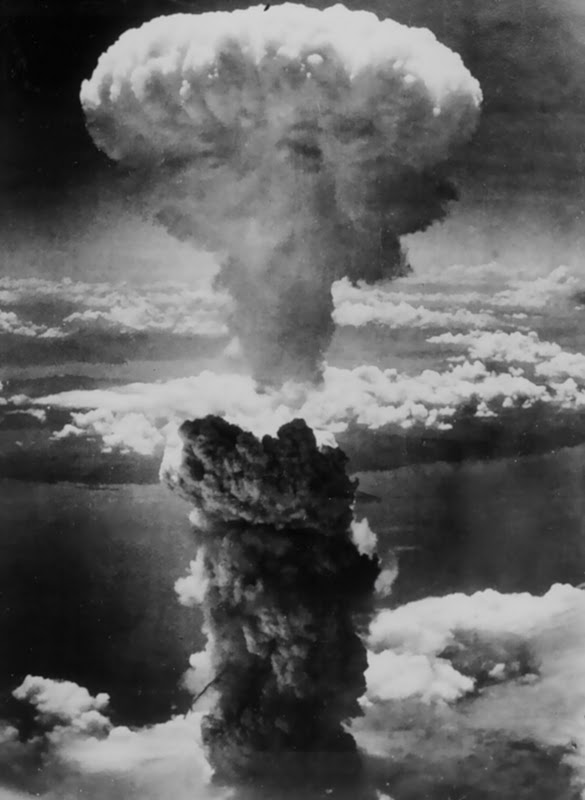
Both Dynes and Lawrence Berkeley National Laboratory Director Stephen Chu, now duly installed as the Obama administration’s secretary of energy, referred to this project as a “new manhattan project.” It was a fitting designation, although the original Manhattan Project never quite ended, and it has only gained ground under a president who sold the world on “hope” and “change.” The UC continues to co-manage the Los Alamos and Lawrence Livermore nuclear weapons compounds, which have designed every nuclear weapon in the US arsenal dating from the annihilation of Hiroshima and Nagasaki, as part of for-profit partnerships with the world’s largest construction and engineering firm, Bechtel Corporation. The UC-Bechtel contracts are worth as much as $80 billion in revenue over the course of their 20 year lifespans, a hefty chunk of change when you’re concerned with your bond ratings.
On February 1, the Obama administration unveiled a budget in which both of the UC’s weapons labs would receive a massive funding “surge.” The proposed funding increase of 23 percent at Los Alamos would be the facility’s largest since 1944. Much of that funding is for a new factory to produce plutonium bomb cores, the explosive triggers of modern thermo-nuclear warheads, for the expressed purpose of outfitting the first new nukes to be developed since the end of the Cold War. The investments are sold as the need to “maintain the US nuclear deterrent” in a time of rapidly escalating threats, allegedly, from Iran, North Korea, and potentially even nuclear-armed terrorists.
Again, crisis begets opportunity if you’re properly positioned in the most privileged circles, so it’s fitting that one of the two junior partners in the UC-Bechtel management team should be Richard Blum’s now-former company, URS Corporation. At the time Blum became a Regent, URS already had a $125 million contract to perform construction and engineering at Los Alamos. It was a natural extension of his general business philosophy that Blum would have been eying wholesale ownership of the weapons lab at the time. That in mind, perhaps a little Q & A is in order. Which entities now run the Los Alamos and Lawrence Livermore weapons labs? The University of California, Bechtel, and URS Corporation, along with a couple of other junior partners. Which UC Regent had a lucrative financial partnership with the Bechtel family, via a $3.5 billion medical technology supplies company named Kinetic Concepts, that precedes the UC-Bechtel weapons lab partnership by eight years? Richard Blum. Who was URS Corporation’s primary financier and vice president for three decades? Richard Blum. Which UC Regent was among a select group of policy wonks who participated in a nuclear weapons policy conference in Oslo, Norway, in 2007, organized largely by a long-time Bechtel executive, George Shultz, who has been instrumental to securing the weapons labs’ recent funding increases? We won’t even bother answering that last question – this exercise has become entirely rhetorical. – Full article
Will Parrish is a writer and organizer living in Laytonville, CA.
Darwin Bond-Graham is a sociologist who splits his time between New Orleans, Albuquerque, and Navarro, CA.
Readers can contact Will Parrish at wparrish(a)riseup.net and Darwin Bond-Graham at darwin(a)riseup.net. They originally prepared this series for the Anderson Valley Advertiser, one of the very few real newspapers in America and probably soon the last one left standing.
Obama may retain Bush’s nuclear policy
Press TV – March 1, 2010

US President Barack Obama has reportedly rejected proposals to exclude pre-emptive atomic strikes from the country’s new nuclear strategy.
Obama is making his final decisions on America’s new nuclear strategy, called the ‘Nuclear Posture Review’, which is expected to permanently downsize the US nuclear arsenal.
But fears are growing that the president might follow in his predecessor Gorge W. Bush’s tracks.
Citing unnamed senior presidential aides, the daily New York Times said on Monday that the administration has rejected proposals that the United States declare it would resort to nuclear arms only once targeted by such weapons.
This would mean Obama, who has been extremely cautious in distancing himself from the former administration’s policies, may now leave open the possibility for the United States to use nuclear weapons in response to a chemical or biological attack, even against a nation that may not possess a nuclear arsenal at all, the paper noted.
The new document is supposed to commit the United States to developing no new nuclear weapons, including the nuclear bunker-busters advocated by the Bush administration.
This is while Obama has authorized billions of dollars more to be spent on updating America’s weapons laboratories.
According to Times article, the US has been bringing up with its European allies the question of whether to withdraw its Europe-based tactical nuclear weapons.
On Monday, Secretary of Defense Robert Gates was to present Obama with several options in line with a shift in US military strategy towards the use of broader missile systems, mostly arrayed within striking distance of the Persian Gulf states.
Obama’s recently published Quadrennial Defense Review also includes support for a new class of non-nuclear missiles, namely “Prompt Global Strike,” which enable the United States to hit a target anywhere in less than an hour, the Times said.
Israel Distributes New Gas Masks to Settlers
Al-Manar – 28/02/2010
Israel on Sunday began distributing new gas masks for settlers to use in a possible chemical or biological attack, the Israeli occupation army said.
Under the plan – drawn up by Col. Yossi Sagiv, head of the Israeli Home Front Command’s Gas Mask and Protection Kits Department – the masks will be returned to private homes by the Israel Postal Company, which beat out seven other companies in a Defense Ministry-issued tender in late 2009. Gas masks were collected from private homes starting in 2007 by a private delivery company.
The distribution is slated to take three years. Israeli officials said that after the distribution is completed in Or Yehuda, the Israeli army will review the operation, implement corrections and improvements and then start distributing the kits in other parts of the country, based on operational considerations of which area is under a more immediate threat.
The public will receive the same rubber gas mask that it had in the past with an improved filter – more effective against chemical and biological threats Israel faces – but without the syringe of Atropine that was in past kits.
Israel has long feared that chemical or biological weapons may be used against it in a future conflict involving Iran or Syria, but officials have insisted the distribution of the masks is not linked to any imminent threat.
The Zionist entity has carried out several large-scale defense exercises in recent years, and last week carried out a military-wide drill responding to a hypothetical attack from Lebanon or Syria.
In October Israel and the United States carried out their largest-ever air drill simulating the response to missile attacks.
US soldiers kill Iraqi tribal chief’s son
Dawn Media | February 27, 2010
AQUBA: US soldiers killed an Iraqi tribal chief’s son and wounded his wife in what the Americans on Saturday called a tragic accident, although local accounts of the incident differed.
US troops were travelling through the district of Kanaan, northeast of Baghdad, late on Thursday when Zhaheri tribe chief Thaher Zaihud al-Zhaheri’s son, Ahmed, walked outside the family’s front door and was shot dead, the tribal leader said.
Further gunfire wounded Zhaheri’s wife in the leg.
According to the US military, American soldiers were conducting a reconnaissance patrol ahead of a combined operation with Iraqi security forces when the “tragic accident” occurred.
“Villagers responded to what they thought were intruders and began firing in the darkness, which caused other residents to come out of their homes and also fire their rifles,” a statement said.
“Thinking they were under attack, the US soldiers returned fire to protect themselves. Regrettably, as a result of this gunfire exchange, a young man was killed and a woman was wounded.”
The statement said an investigation had been launched.
According to Zhaheri, however, there was no shooting prior to the family hearing a noise near their home and they thought there might be thieves in their village, Saisabanah.
“Ahmed went outside and when he opened the door and walked outside, the Americans shot and killed him,” he told AFP.
“They continued shooting at our house and one bullet hit my wife’s leg.” Zhaheri’s account of the incident was repeated by an Iraqi military officer in Diyala’s provincial security operations centre.
Saisabanah is a village of around 10 houses, and families there are known to have fought US forces since the 2003 invasion.
Zhaheri’s wife Sabiha Nahath Saud, 56, was in stable condition, according to Ahmed Alwan, a doctor at the main hospital in Baquba, Diyala’s provincial capital.
Student Harassed by Teacher for Not Standing for Pledge
Standing Up for the Right to Sit Down
ACLU | February 23, 2010
 GERMANTOWN, MD – Despite free speech guarantees in the Bill of Rights, state law, and in the Montgomery County School System’s student guide, the American Civil Liberties Union of Maryland (ACLU) has had to take action on behalf of a middle school student who was harassed and humiliated by a teacher for declining to stand and recite the Pledge of Allegiance. In a letter sent February 5 to Khadija F. Barkley, Acting Principal of Roberto Clemente Middle School, the ACLU details why what was done to the traumatized student was wrong and humiliating, and seeks an apology and education on the meaning and importance of the First Amendment.
“The law is crystal clear that a public school cannot embarrass or harass a student for maintaining a respectful silence during the Pledge of Allegiance,” said Ajmel Quereshi, an attorney for the ACLU of Maryland. “While expression of patriotism in unsettling times is a worthy and admirable emotion, the Supreme Court says that patriotism is best honored by venerating the civil liberties enshrined in the Constitution and not by punishing or ridiculing those whose views might differ from our own.”
On January 27, a thirteen-year-old at Roberto Clemente Middle School chose neither to stand nor to speak during the school’s daily recitation of the Pledge of Allegiance. Instead, she sat quietly while students recited the Pledge. Her teacher demanded she stand for the Pledge. When she did not stand, the teacher ordered her to leave the classroom and stand out in the hall. He threatened to give her detention for refusing to stand for the Pledge, and sent her to the counselor’s office. The next day, the student again declined to stand for the pledge. The teacher then called upon a school security officer to escort her out of the classroom and to the school counselor’s office. When the student’s mother reached out to an assistant principal for help in dealing with the teacher’s abusive and improper actions, the official said her daughter should instead apologize for her “defiance.” The student did apologize, twice.
However, the right of a student to refrain from participating during the Pledge has been settled law since 1943, when the Supreme Court held that students could not be forced to salute the flag. As the Court put it then, “If there is any fixed star in our constitutional constellation, it is that no official, high or petty, can prescribe what shall be orthodox in politics, nationalism, religion, or other matters of opinion or force citizens to confess by word or act their faith therein.” Here in Maryland, the State Court of Appeals, in 1871, struck down as unconstitutional a state law that required students to salute the flag. Maryland law now explicitly exempts from the Pledge of Allegiance “any student or teacher who wishes to be excused.”
In addition, the Montgomery County school system explicitly acknowledges the student’s right to act as she did in the student handbook provision concerning “Patriotic Exercises”:
“You will have the opportunity to participate in and/or watch patriotic exercises in school.
You cannot be required to say a pledge, sing an anthem, or take part in patriotic exercises. No one will be permitted to intentionally embarrass you if you choose not to participate.”
The young girl was so traumatized by her teacher’s humiliating and inappropriate reaction, that she has not felt comfortable returning to school until the situation is addressed. Faced with the school’s unwillingness to acknowledge that the teacher had acted improperly, the mother contacted the ACLU for assistance. Even more shockingly, following the ACLU’s letter to the acting principal pointing out the law, and seeking an apology and explanation to the class to ease the girl’s return, the school system’s lawyer responded that school officials would not meet with the mother if she brought an ACLU lawyer to the meeting.
Quereshi noted that “every other school system has moved quickly to resolve Pledge of Allegiance issues when the ACLU has contacted them on behalf of students. It is appalling that, in this case, the school is refusing to meet to resolve the issue, and thus keeping the traumatized victim out of school even longer than necessary.”
The ACLU of Maryland’s letter asks that the teacher personally apologize to the student, and promise to respect her right to respectfully dissent in the future. We further request that the assistant principal and teacher review with the class that witnessed this incident the county school policy on patriotic exercise, and explain that trying to force a student to salute the flag is wrong, and it should never have occurred. It is our hope that this incident can be used as an educational opportunity for both students and teachers – as has been done in other Maryland schools when Pledge issues have arisen.
CONTACT: Meredith Curtis, ACLU of Maryland, 410-889-8555; media@aclu-md.org
Obama’s New Budget Increases Funding for Nuclear Weapons Production Facilities; Cuts Dismantlements
By Jay Coghlan | February 1st, 2010
In the new budget request for 2011 the Obama Administration proposes to freeze discretionary domestic spending for programs such as education, nutrition, air traffic control and national parks for three years while dramatically increasing funding for new US nuclear weapons production facilities. Meanwhile the proposed budget for dismantling warheads retired from the stockpile is down by 40%. Funding for a new nuclear facility at Los Alamos National Laboratory to be used in direct support of plutonium pit production, the CMRR-NF, is increased to $225 million requested from $97M in FY10 (+132%). After FY11, funding is proposed to triple the FY10 amount to $300 million for each of the following four consecutive years.
 Funding for a new “Uranium Processing Facility” (UPF) at the Y12 production plant near Oak Park Ridge, TN, is proposed to increase to $115M from $94M in FY10 (+22%). However, its big money is in the following four consecutive years, climbing to $320 million by 2015 (in all a 240% increase from FY10 funding). Totals costs for both the CMRR and UPF are still “TBD” [To Be Determined], meaning they don’t know, but each will probably cost $3 billion or more.
Outside of the federal budget, groundbreaking is expected this Spring on a new privately-financed ~$700 million Kansas City Plant for nonnuclear components production for US nuclear weapons, subsidized by Kansas City municipal bonds. This pretty well spans the spectrum of future US nuclear weapons production, with big increases for new facilities for plutonium, uranium and nonnuclear components. At the same time, the Obama budget proposes to cut dismantlement from $96.1 million in FY 2010 to $58 million.
Obama is preemptively surrendering to the nuclear weapons labs, the for-profit private corporations running those labs, and the 2/3rd’s Senate majority including Republicans needed for treaty ratifications. All of these special interests explicitly seek to extract more taxpayer funding for nuclear weapons programs in exchange for ratification of a renewed bilateral arms control treaty with Russia and a long-sought-for Test Ban Treaty.
We went through this a decade ago, when the nuclear weapons complex got billions of dollars and but ratification of the Comprehensive Test Ban Treaty failed. History is getting ready to repeat itself, this time with the nuclear weapons labs seeking the capability to produce future new-design weapons. Obama’s new budget begins to give them just that, welfare for warheads that can’t be used while American public needs are not adequately met.
The GOP’s “small government” tea party fraud
By Glenn Greenwald | Salon.com | February 21, 2010
There’s a major political fraud underway: the GOP is once again donning their libertarian, limited-government masks in order to re-invent itself and, more important, to co-opt the energy and passion of the Ron-Paul-faction that spawned and sustains the “tea party” movement. The Party that spat contempt at Paul during the Bush years and was diametrically opposed to most of his platform now pretends to share his views. Standard-issue Republicans and Ron Paul libertarians are as incompatible as two factions can be — recall that the most celebrated right-wing moment of the 2008 presidential campaign was when Rudy Giuliani all but accused Paul of being an America-hating Terrorist-lover for daring to suggest that America’s conduct might contribute to Islamic radicalism — yet the Republicans, aided by the media, are pretending that this is one unified, harmonious, “small government” political movement.
The Right is petrified that this fraud will be exposed and is thus bending over backwards to sustain the myth. Paul was not only invited to be a featured speaker at the Conservative Political Action Conference but also won its presidential straw poll. Sarah Palin endorsed Ron Paul’s son in the Kentucky Senate race. National Review is lavishly praising Paul, while Ann Coulter “felt compelled [in her CPAC speech] to give a shout out to Paul-mania, saying she agreed with everything he stands for outside of foreign policy — a statement met with cheers.” Glenn Beck — who literally cheered for the Wall Street bailout and Bush’s endlessly expanding surveillance state — now parades around as though he shares the libertarians’ contempt for them. Red State’s Erick Erickson, defending the new so-called conservative “manifesto,” touts the need for Congress to be confined to the express powers of Article I, Section 8, all while lauding a GOP Congress that supported countless intrusive laws — from federalized restrictions on assisted suicide, marriage, gambling, abortion and drugs to intervention in Terri Schiavo’s end-of-life state court proceeding — nowhere to be found in that Constitutional clause. With the GOP out of power, Fox News suddenly started featuring anti-government libertarians such as John Stossel and Reason Magazine commentators, whereas, when Bush was in power, there was no government power too expanded or limitless for Fox propagandists to praise.
This is what Republicans always do. When in power, they massively expand the power of the state in every realm. Deficit spending and the national debt skyrocket. The National Security State is bloated beyond description through wars and occupations, while no limits are tolerated on the Surveillance State. Then, when out of power, they suddenly pretend to re-discover their “small government principles.” The very same Republicans who spent the 1990s vehemently opposing Bill Clinton’s Terrorism-justified attempts to expand government surveillance and executive authority then, once in power, presided over the largest expansion in history of those very same powers. The last eight years of Republican rule was characterized by nothing other than endlessly expanded government power, even as they insisted — both before they were empowered and again now — that they are the standard-bearers of government restraint.
What makes this deceit particularly urgent for them now is that their only hope for re-branding and re-empowerment lies in a movement — the tea partiers — that has been (largely though not exclusively) dominated by libertarians, Paul followers, and other assorted idiosyncratic factions who are hostile to the GOP’s actual approach to governing. This is a huge wedge waiting to be exposed — to explode — as the modern GOP establishment and the actual “small-government” libertarians that fuel the tea party are fundamentally incompatible. Right-wing mavens like Ann Coulter, Sarah Palin and National Review are suddenly feigning great respect for Ron Paul and like-minded activists because they’re eager that the sham will be maintained: the blatant sham that the modern GOP and its movement conservatives are a coherent vehicle for those who believe in small government principles. The only evidence of a passionate movement urging GOP resurgence is from people whose views are antithetical to that Party. That’s the dirty secret which right-wing polemicists are desperately trying to keep suppressed. Credit to Mike Huckabee for acknowledging this core incompatibility by saying he would not attend CPAC because of its “increasing libertarianism.”
These fault lines began to emerge when Sarah Palin earlier this month delivered the keynote speech to the national tea party conference in Nashville, and stood there spitting out one platitude after the next which Paul-led libertarians despise: from neoconservative war-loving dogma and veneration of Israel to glorification of “War on Terror” domestic powers and the need of the state to enforce Palin’s own religious and cultural values. Neocons (who still overwhelmingly dominate the GOP) and Paul-led libertarians are arch enemies, and the social conservatives on whom the GOP depends are barely viewed with greater affection. Sarah Palin and Ron Paul are about as far apart on most issues as one can get; the “tea party movement” can’t possibly be about supporting each of their worldviews. Moreover, the GOP leadership is currently promising Wall Street even more loyal subservience than Democrats have given in exchange for support, thus bolstering the government/corporate axis which libertarians find so repugnant. And Coulter’s manipulative claim that she “agrees with everything [Paul] stands for outside of foreign policy” is laughable; aside from the fact that “foreign policy” is a rather large issue in our political debates (Iraq, Israel, Afghanistan, Iran, Russia), they were on exactly the opposite sides of the most intense domestic controversies of the Bush era: torture, military commissions, habeas corpus, Guantanamo, CIA secrecy, telecom immunity, and warrantless eavesdropping.
Part of why this fraud has been sustainable thus far is that libertarians — like everyone who doesn’t view all politics through the mandated, distorting, suffocating Democrat v. GOP prism — are typically dismissed as loons and nuts, and are thus eager for any means of achieving mainstream acceptance. Having the GOP embrace them is one way to achieve that (Karl Rove: some “see the tea party movement as a recruiting pool for volunteers for Ron Paul’s next presidential bid . . . . The Republican Party and the tea party movement have many common interests”). Additionally, just as the Paul-faction of libertarians is in basic harmony with many progressives on issues of foreign policy and civil liberties, they do subscribe to the standard GOP rhetoric on domestic spending, social programs and the like.
But that GOP limited government rhetoric is simply never matched by that Party’s conduct, especially when they wield power. The very idea that a political party dominated by neocons, warmongers, surveillance fetishists, and privacy-hating social conservatives will be a party of “limited government” is absurd on its face. There literally is no myth more transparent than the Republican Party’s claim to believe in restrained government power. For that reason, it’s only a matter of time before the fundamental incompatibility of the “tea party movement” and the political party cynically exploiting it is exposed.
Featured Video

Houthis Don’t Have to Conquer Saudi Arabia to Make It Pay
or go to
Aletho News Archives – Video-Images
From the Archives
Newly Released FBI Docs Shed Light on Apparent Mossad Foreknowledge of 9/11 Attacks
By Whitney Webb | MintPress News | May 17, 2019
NEW YORK — For nearly two decades, one of the most overlooked and little known arrests made in the aftermath of the September 11 attacks was that of the so-called “High Fivers,” or the “Dancing Israelis.” However, new information released by the FBI on May 7 has brought fresh scrutiny to the possibility that the “Dancing Israelis,” at least two of whom were known Mossad operatives, had prior knowledge of the attacks on the World Trade Center. … continue
Blog Roll
 Aletho News
- MEP blasts ‘Euro-Gestapo’ for lecturing Russia on democracy
- Syria May Send Troops to Saudi Arabia Amid War with Ansar Allah
- UK whines about losing billions to ‘Putin tax’
- Baghaei to Rubio: Distorted narratives cannot erase US record of broken commitments
- Houthis Don’t Have to Conquer Saudi Arabia to Make It Pay
- MOE: Nearly 22,000 Students and Education Workers Killed
- Guterres in Islamabad: Genocide, cowardice, and the cage of Imran Khan
- Johnson, Marandi say Yemen holds upper hand over Saudi Arabia
- False flags won’t save aggressors, Iran FM spokesman says
- The Makkah Pact Enters Into Force: The End of American Dominance or Its New Form?
- If Americans Knew
- Report claimed Mark Levin used by Israeli government to influence Trump
- Over 2,000 Gazans have died awaiting medical evacuation amid Israel’s continued siege
- How a U.S. Diplomat Suppressed and Altered Reports Critical of Israel
- 5 Palestinians Die from Israeli Strikes in Gaza as Relentless Attacks Continue
- Report: Ceasefire Slows Killing but Leaves Devastation Intact
- Country Music Singer Zach Bryan Breaks Attendance Record at Robert Kraft’s Gillette Stadium While Wearing ‘Free Palestine’ Shirt for Second Night in a Row
- Three years of death and devastation: Israel’s war on Gaza in pictures
- Why Hamas believed the status quo was more dangerous than its 7 October gamble
- Debunking Israel’s latest list of ‘terrorist’ journalists in Gaza
- In Gaza, focus is on survival, “every step is a struggle” – Daily Update
- No Tricks Zone
- New Study: 50 Years Of The Most Aggressive ‘Net Zero’ Policies Can Only Affect The Global Climate By 0.03°C
- US September “Heat” Was No Record…Many Records Set Decades Ago
- Latest European Green Energy Debacle; Portugal’s Largest Flagship Solar Park Insolvent!
- Green Energy Debacle: German Expert Professor Fritz Vahrenholt Warns Of Severe Economic And Social Consequences
- Two More Paleo Reconstructions Affirm Meters-Higher Sea Levels Across Ireland, Brazil 7000-6000 Years Ago
- New Study: Earth And Venus Surface Warmth Largely Explained By Convection And Lapse Rate, Not CO2 Or Radiation
- 2025 Nature Paper Claiming Worsening Global Drought Gets RETRACTED …Heavily Flawed
- New Study: ‘Global Drought Shows No Detectable Recent Acceleration Under Climate Warming’
- Economic Masterminds: German Socialists Suggest Taxing Productivity Gains Stemming From Using AI
- The South China Sea Has Not Been Cooperating With The Climate Change Narrative

