Iran: U.S. Hasn’t Learned Lesson from Hiroshima
 Kayhan News, Iran
Translated By Michelle Quay
27 December 2009
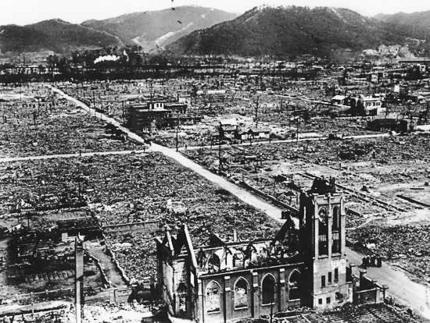
After visiting the lingering traces of America’s crimes in Hiroshima, Secretary of the Supreme National Security Council of Iran Sa’eed Jalili declared, “At the very least, the U.S. should be punished with disarmament and the revocation of its right to veto for its crimes here.”
According to several agencies, Jalili spoke at a press conference on the last day of his trip to Japan after visiting the site of the bombing and the Hiroshima Peace Memorial Museum, describing the message of Hiroshima as the obvious need for American disarmament.
Jalili said, “Because nuclear weapons lack legitimacy, no country or party should have such weapons at its disposal.”
In response to a question on his opinion after familiarizing himself with the pain, suffering and problems of the survivors of the U.S. atomic attack on Hiroshima, he said, “The Islamic Republic of Iran is familiar with the crimes by the United States in various parts of the world, including in Iraq and Afghanistan and even in Iran.”
Jalili explained, “Unfortunately America, which committed the crimes of Hiroshima, still continues the proliferation of nuclear weapons and experimenting with new generations of these types of weapons. Nowadays, however, the overwhelming message from the international community is for the disarmament of that country and its nuclear capabilities.”
The Islamic Republic of Iran intends to hold a conference in Tehran soon on disarmament and non-proliferation of nuclear weapons. In reference to this, Jalili said, “The Islamic Republic plans to hold this conference to honor of all the victims of weapons of mass destruction in Hiroshima, Nagasaki, Halabja and Sardasht, which all took place with the support of the United States and as a result of the incorrect behaviors of that country.”
The senior nuclear negotiator for the Islamic Republic of Iran warned, “Tehran intends to seriously follow up on the issue of disarmament and non-proliferation with the cooperation of the international community.”
Jalili clarified, “Those who have committed the worst crimes against the people of Hiroshima and humanity by using nuclear weapons should not be the ones to win a prize and enjoy the right of veto.”
He expressed regret that these powers still are continuing the politics of proliferation, the experimentation with new generations of nuclear weapons and the escalation of these weapons, and that they are even working towards nuclear proliferation.
Jalili added, “Who but America and some of its allies has given the Zionist regime control over nuclear weapons?”
Jalili reiterated the point that according to the core beliefs of the Islamic Republic, a lasting peace cannot be achieved without fighting against injustice and disarming America and the other nuclear powers.
While expressing his hope for the creation of a world full of peace, justice and happiness for all peoples of the world, Jalili emphasized that the events of Hiroshima must not be allowed to repeat itself.
In response to the question about why there is concern in the international community regarding Iran’s expanding nuclear program, the senior nuclear negotiator for our country said, “Visiting the nuclear power plant in Japan showed that nuclear energy, if utilized in a peaceful way, can be useful in order to serve nations, but unfortunately the United States has used them in weapons of mass destruction and today is creating more of these weapons and proliferating them. It has given the Zionist regime nuclear weapons and today intends to prevent nations from attaining peaceful nuclear energy.”
He said, “On the other hand, all nations must enjoy peaceful nuclear energy within the established framework of the International Atomic Energy Agency and the Non-Proliferation Treaty.”
On Hiroshima’s decision to hold a conference for countries that desire nuclear expansion, the representative of the Supreme Leader and Secretary of the Supreme National Security Council said, “It is a very good idea for those who possess nuclear weapons to come here and see what crimes America has committed against humanity.”
Jalili expressed regret that sixty years after the Hiroshima and Nagasaki disasters, still no American president has come to Hiroshima to offer an apology to the people of Japan and the city.
He added, “Even Barack Obama, the American president, who has used the slogan of change, refused to visit Hiroshima and Nagasaki during his trip to Japan.”
Jalili left Japan for Tehran on Thursday evening and extended an official invitation to the Japanese government for a five-day formal visit in Iran.
During his stay in Japan, Jalili met with senior Japanese officials including Prime Minister Yukio Hatoyama, Minister of Foreign Affairs Katsuya Okada, the head of the Japanese Diet and other groups of Japanese authorities, with whom he discussed and exchanged views on different issues in the interests of both countries, including ways to develop both international and regional cooperation.
In a meeting with Japanese experts and nuclear specialists in the Ferdowsi Hall of the Islamic Republic’s embassy in Japan, Jalili considered the latest developments in Iran’s peaceful nuclear program and responded to a limited number of questions from those present in the meeting.
U.S Soldiers against war and racism
If there was no racism soldiers would realize that they have more in common with the Iraqi people than with the billionaires who send us to war.
Obama Vows ‘Accelerated Offensive’ in Yemen
Will Use ‘Every Element of National Power’
By Jason Ditz, December 28, 2009
Taking time out from his Hawaii vacation to comment on last Friday’s lap bombing on a Detroit bound airliner, President Barack Obama vowed an “accelerated offensive” against militants in Yemen.
 The president said he would not rest and would commit “every element of national power” to the new mission of attacking those speculatively accused of some vague complicity in the failed bombing.
Several Congressmen are already chomping at the bit to use the lap bomber as a justification for a war in Yemen, and the Yemeni government, which would presumably be further aided in its assorted civil wars by the US, eagerly declared that the attacker had been to Yemen.
With the scent of terrorism in the air, President Obama will likely be able to parlay the lap bomber into a justification for anything and everything he might want. Officials are already talking of scrapping plans to close Guantanamo Bay over it, and America’s role in the attempted assassination of US-born cleric Anwar al-Awlaki last week can now readily be justified on speculation that the bomber’s alleged al-Qaeda links can be combined with Awlaki’s alleged al-Qaeda links to form alleged links between the two.
Of course, the Awlaki assassination bid and the US attacks on Yemen have been going on since before a Nigerian set his lap on fire on an airplane, and we’re only now starting to get the full extent of the war in Yemen the Obama Administration is already covertly fighting. The failed bombing is just a nice Christmas present for the president, giving him easy cover for the assorted wars he is already fighting and further wars he might plan to start in the future.
Hovering American B-52 warplanes cause panic in Pakistan’s tribal areas
2009-12-28 15:00:00
The continuous hovering of America’s heavy bomber aircraft, B-52 – capable of carrying nuclear and conventional weapons – has caused panic among residents of Pakistan’s Tribal Areas.
The Nation quoted sources as saying that B-52 warplanes and US drones have been hovering over Waziristan and Kurram Agency for the last several weeks.
The US Air Combat Command’s B-52 is a long-range, heavy bomber that can perform a variety of missions.
Capable of flying at high subsonic speeds at altitudes up to 50,000 feet, the B-52 can perform air interdiction, offensive counter-air and maritime operations.
During Desert Storm, B-52s delivered 40 per cent of all the weapons dropped by coalition forces.
It is highly effective when used for ocean surveillance. Two B-52s, in two hours, can monitor 364,000 square kilometres of ocean surface.
All B-52s are equipped with an electro-optical viewing system to augment the targeting, battle assessment, flight safety and terrain-avoidance system, thus further improving its combat ability and low-level flight capability. (ANI)
Pentagon Spending For War Exceeds That Of All State Governments Combined
By Sherwood Ross | Black Listed News | December 23, 2009
The U.S. spends more for war annually than all state governments combined spend for the health, education, welfare, and safety of 308 million Americans.
Joseph Henchman, director of state projects for the Tax Foundation of Washington, D.C., says the states collected a total of $781 billion in taxes in 2008.
For a rough comparison, according to Wikipedia data, the total budget for what the Pentagon calls “defense” in fiscal year 2010 will be at least $880 billion and could possibly top $1 trillion. That’s more than all the state governments collect.
Henchman says all American local governments combined (cities, counties, etc.) collect about $500 billion in taxes. Add that to total state tax take and you get over $1.3 trillion. This means Uncle Sam’s Pentagon is sopping up nearly as much money as all state, county, city, and other governmental units spend to run the country.
If the Pentagon figure of $1 trillion is somewhat less than all other taxing authorities, keep in mind the FBI, the various intelligence agencies, the VA, the National Institutes of Health (biological warfare) are also spending on war-related activities.
A question that describes the above and answers itself is: In what area can the Federal government operate where states and cities cannot tread? The answer is: foreign affairs—raising armies, fighting wars, conducting diplomacy, etc. And so Uncle Sam keeps enlarging this area. His emphasis is not on diplomacy, either.
For every buck spent by the State Department, which gets some $50 billion a year, the Pentagon spends $20. As for the Peace Corps, its budget is a paltry $375 million—hardly enough to keep the Pentagon elephant in peanuts.
Nobel Prize economist Joseph Stiglitz and finance authority Linda Bilmes write in their “The Three Trillion Dollar War”(W.W. Norton), “defense spending has been growing as a percentage of discretionary funding (money that is not required to be spent on entitlements like Social Security), from 48 percent in 2000 to 51 percent today. That means that our defense needs are gobbling up a larger share of taxpayers’ money than ever before.”
And they add, “The Pentagon’s budget has increased by more than $600 billion, cumulatively, since we invaded Iraq.” With its 1,000 bases in the U.S. and another 800 bases globally, the U.S. truly has become a “Warfare State.” Today, military-related products account for about one-fourth of total U.S. GDP. This includes 10,000 nuclear weapons. Indeed, the U.S. has lavished $5.5 trillion just on nukes over the past 70 years.
No other nation has anything remotely like this menacing global presence. The Pentagon strengthens its grip by running joint “training” exercises with the military of 110 other nations, including outright dictatorships that suppress internal unrest.
The U.S. spends more on weaponry than the next dozen nations combined and is by far the No. 1 world arms peddler. “The government employs some 6,500 people just to coordinate and administer its arms sales program in conjunction with senior officials at American embassies around the world, who spend most of their ‘diplomatic’ careers working as arms salesmen,” writes Chalmers Johnson in “Blowback: The Costs and Consequences of American Empire(Henry Holt).”
Chalmers goes on to say the U.S. military establishment today is “close to being beyond civilian control” and that despite its ability to “deliver death and destruction to any target on earth and expect little in the way of retaliation” it demands more and newer equipment “while the Pentagon now more or less sets its own agenda” and “monopolizes the formulation and conduct of American foreign policy.”
How long will it be before this tyrannical, anti-democratic, colossus that is sucking up as much money for war as all states, counties and cities spend on peace—and which straddles the globe, boosts dictators, and beats the war drums—turns on its own people?
Sherwood Ross is a Miami-based public relations executive who formerly worked for major dailies and wire services. Contact him at sherwoodross10@gmail.com
Copyright © 2006-2009 BlackListedNews.com
Russia, China urge diplomacy in Iran nuclear case
Press TV – December 24, 2009 15:04:54 GMT
 Russia and China have called for a diplomatic solution to the impasse over Iran’s nuclear energy program amid Western threats of more sanctions against Tehran.
Russia’s Deputy Foreign Minister Alexey Borodavkin says his country is taking part in international efforts to find a political solution to the issue.
“Russia actively takes part in international efforts on the Iranian nuclear program within the framework of IAEA, the P5+1 and the security council,” he said.
Borodavkin says Moscow hopes a compromise can be reached between Iran, the International Atomic Energy Agency (IAEA) and the international community.
“We consistently stand for a diplomat settlement to all problems related to Iran’s nuclear program,” the Russian official said.
China, however, said that all parties involved in Iran’s nuclear issue should enhance diplomatic efforts and stick to the path of negotiations.
“All parties should enhance diplomatic efforts and adhere to the right track of negotiations,” foreign ministry spokeswoman Jiang Yu told reporters.
Beijing and Moscow have long been opposed to sanctions against Iran.
The US says it will seek new sanctions against Tehran if it fails to accept a proposal which was first floated by the Obama administration and later backed by the UN nuclear watchdog.
The proposal required Iran to send most of its domestically-enriched low-grade uranium out of the country for further refinement of up to 20 percent.
Despite having accepted the gist of the proposal, Iran refused to officially accept the proposed deal, as its concerns about the other side’s commitment to its obligations were not addressed.
Tehran says it needs nuclear power to produce electricity for its growing population.
Iran Sanctions Are Precursor to War
By Rep. Ron Paul, December 22, 2009
Last week the House overwhelmingly approved a measure to put a new round of sanctions on Iran. If this measure passes the Senate, the United States could no longer do business with anyone who sold refined petroleum products to Iran or helped them develop their ability to refine their own petroleum. The sad thing is that many of my colleagues voted for this measure because they felt it would deflect a military engagement with Iran. I would put the question to them, how would Congress react if another government threatened our critical trading partners in this way? Would we not view it as asking for war?
This policy is pure isolationism. It is designed to foment war by cutting off trade and diplomacy. Too many forget that the quagmire in Iraq began with an embargo. Sanctions are not diplomacy. They are a precursor to war and an embarrassment to a country that pays lip service to free trade. It is ironic that people who decry isolationism support actions like this.
If a foreign government attempted to isolate the U.S. economically, cut off our supply of gasoline, or starve us to death, would it cause Americans to admire that foreign entity? Or would we instead unite under the flag for the survival of our country?
We would not tolerate foreign covert operations fomenting regime change in our government. Yet our CIA has been meddling in Iran for decades. Of course Iranians resent this. In fact, many in Iran still resent the CIA’s involvement in overthrowing their democratically elected leader in 1953. The answer is not to cut off gasoline to the Iranian people. The answer is to stay out of their affairs and trade with them honestly. If our operatives were no longer in Iran, they would no longer be available as scapegoats for the regime to, rightly or wrongly, blame for every bad thing that happens. As bad as other regimes may be, it is up to their own people to deal with them so they can achieve true self-determination. When foreigners instigate regime change, the new government they institute is always perceived as serving the interest of the overthrowing country, not the people. Thus we take the blame for bad governance twice. Instead, we should stay out of their affairs altogether.
With the exception of the military-industrial complex, we all want a more peaceful world. Many are hysterical about the imminent threat of a nuclear Iran. Here are the facts: Iran has never been found out of compliance with the nuclear Non-Proliferation Treaty (NPT) they signed. However, being surrounded by nuclear powers one can understand why they might want to become nuclear capable if only to defend themselves and to be treated more respectfully. After all, we don’t sanction nuclear-capable countries. We take diplomatic negotiations a lot more seriously, and we frequently send money to them instead. The non-nuclear countries are the ones we bomb. If Iran was attempting to violate the Non-Proliferation Treaty, they could hardly be blamed, since U.S. foreign policy gives them every incentive to do so.
World’s Sole Military Superpower’s 2 Million-Troop, $1 Trillion Wars
By Rick Rozoff | December 21, 2009
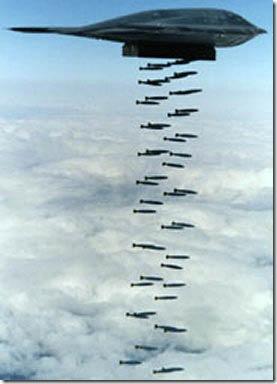 With a census of slightly over 300 million in a world of almost seven billion people, the U.S. accounts for over 40 percent of officially acknowledged worldwide government military spending with a population that is only 4 percent of that of the earth’s. A 10-1 disparity.
In addition to its 1,445,000 active duty service members, the Pentagon can and does call upon 1.2 million National Guard and other reserve components. As many as 30% of troops that have served in Afghanistan and Iraq are mobilized reservists. The Army National Guard has activated over 400,000 soldiers since the war in Afghanistan began and in March of 2009 approximately 125,000 National Guard and other reserve personnel were on active duty.
The Defense Department also has over 800,000 civilian employees at home and deployed worldwide. The Pentagon, then, has more than 3.5 million people at its immediate disposal excluding private military contractors.
After allotting over a trillion dollars for the wars in Afghanistan and Iraq alone and packing off more than two million of its citizens to the two nations, the U.S. military establishment and peace prize president have already laid the groundwork for yet more wars. Boeing, Raytheon and General Electric won’t be kept waiting.
In his Nobel Peace Prize acceptance speech on December 10 the president of the United States appropriated for his country the title of “the world’s sole military superpower” and for himself “the Commander-in-Chief of the military of a nation in the midst of two wars.”
This may well have been the first time that an American – and of course any – head of state in history boasted of his nation being the only uncontested military power on the planet and unquestionably the only time a Nobel Peace Prize recipient identified himself as presiding over not only a war but two wars simultaneously.
As to the appropriateness of laying such claims in the venue and on the occasion he did – accepting the world’s preeminent peace award before the Norwegian Nobel Committee – Barack Obama at least had the excuse of being perfectly accurate in his contentions.
He is in fact the commander-in-chief in charge of two major and several smaller wars and his nation is without doubt the first global military power which for decades has operated without constraints on five of six inhabited continents and has troops stationed in all six. United States armed forces personnel and weapons, including nuclear arms, are stationed at as many as 820 installations in scores of nations.
The U.S. has recently assigned thousands of troops to seven new bases in Bulgaria and Romania [1], deployed the first foreign troops to Israel in that nation’s history to run an interceptor missile radar facility in the Negev Desert [2], and last week signed a status of forces agreement with Poland for Patriot missiles (to be followed by previously ship-based Aegis Standard Missile-3s interceptors) and U.S. soldiers to be stationed there. The troops will be the first foreign forces based in Poland since the dissolution of the Warsaw Pact in 1991.
The U.S., whose current military budget is at Cold War, which is to say at the highest of post-World War II, levels, also officially accounts for over 41% of international military spending according to the Stockholm International Peace Research Institute’s report on 2008 figures: $607 billion of $1.464 trillion worldwide. On October 28 President Obama signed the 2010 National Defense Authorization Act with a price tag of $680 billion, including $130 billion for the wars in Afghanistan and Iraq.
That figure excludes military spending outside of the Department of Defense. The American government has for several decades been the standard-bearer in outsourcing to private sector contractors in every realm and the Pentagon is certainly no exception to the practice. According to some estimates, American military and military-related allotments in addition to the formal Pentagon budget can bring annual U.S. defense spending as high as $1.16 trillion, almost half of official expenditures for all of the world’s 192 nations, including the U.S., last year.
The U.S. also has the world’s second largest standing army, over 1,445,000 men and women under arms according to estimates of earlier this year, second only to China with 2,255,000. China has a population of over 1.325 billion, more than four times that of America, and does not have a vast army of private contractors supplementing its armed forces. And of course unlike the U.S. it has no troops stationed abroad. India, with a population of 1.140 billion, has active duty troop strength smaller than that of the U.S. at 1,415,000.
The U.S. and Britain are possibly alone in the world in deploying reservists to war zones; this last February the chairman of the U.S. Joint Chiefs of Staff Admiral Michael Mullen acknowledged that 600,000 reserves have been called up to serve in the area of responsibility of the U.S. Central Command, in charge of the Afghan and Iraqi wars, since 2001. In addition to its 1,445,000 active duty service members, the Pentagon can and does call upon 1.2 million National Guard and other reserve components. As many as 30% of troops that have served in Afghanistan and Iraq are mobilized reservists. The Army National Guard has activated over 400,000 soldiers since the war in Afghanistan began and in March of 2009 approximately 125,000 National Guard and other reserve personnel were on active duty.
The Defense Department also has over 800,000 civilian employees at home and deployed worldwide. The Pentagon, then, has more than 3.5 million people at its immediate disposal excluding private military contractors.
In the last 48 hours two unprecedented thresholds have been crossed. On the morning of December 19 the U.S. Senate met in a rare Saturday morning session to approve a $636.3 billion military budget for next year. The vote was 88-10, as the earlier vote by the House of Representatives on December 16 was 395-34. In both cases the negative votes were not necessarily an indication of opposition to war spending but part of the labyrinthine American legislative practices of trade-offs, add-ons and deal-making on other, unrelated issues, what in the local vernacular are colorfully described as horse-trading and log-rolling among other choice terms. A no vote in the House or Senate, then, was not automatically a reflection of anti-war or even fiscally conservative sentiments.
The Pentagon appropriation included another $101 billion for the wars in Afghanistan and Iraq (Obama signed the last formal Iraq and Afghanistan War Supplemental Appropriations, worth $106 billion, in July), but did not include the first of several additional requests, what are termed emergency spending measures, for the Afghan war. The first such request is expected early next year, more than $30 billion for the additional 33,000 U.S. troops to be deployed to the war zone, which will increase the number of American forces there to over 100,000.
On the day of the Senate vote Bloomberg News cited the Congressional Research Service, which had tallied the numbers, in revealing that the funds apportioned for the wars in Afghanistan and Iraq have now pushed the total expenditure for both to over $1 trillion. “That includes $748 billion for spending related to the war in Iraq and $300 billion for Afghanistan, the research service said in a Sept. 28 report.”
The new Pentagon spending plan “includes $2.5 billion to buy 10 additional Boeing Co. C-17 transports that weren’t requested by the Pentagon. Chicago-based Boeing also would benefit from $1.5 billion for 18 F/A-E/F Super Hornet fighters, nine more than the administration requested.”
Funding for military aircraft not even requested by the Defense Department and the White House or for larger numbers of them than were is another curious component of the American body politic. That arms merchants (and not only domestic ones) place their own orders with the American people’s alleged representatives – the current Deputy Secretary of Defense, William Lynn, was senior vice president of Government Operations and Strategy for Raytheon Company prior to assuming his new post – is illustrated by the following excerpts from the same report:
“Defense Secretary Robert Gates recommended April 6 that the C-17 program be terminated once Boeing delivers the last of 205 C-17s in late 2010. Boeing, the second-largest defense contractor, has said its plant in Long Beach, California, will shut down in 2011 without more orders.
“The budget also includes $465 million for the backup engine of the F-35 Joint Strike Fighter. The engine is built by Fairfield, Connecticut-based General Electric Co. and London-based Rolls Royce Plc. The administration earlier threatened to veto the entire defense bill if it contained any money for the engine.” [3]
The Pentagon and its chief Gates may win battles with the Congress and even the White House when they relate to the use of military force abroad, but against the weapons manufacturers and the congressmen whose election campaigns they contribute to the military brass will come off the losers.
In addition to the nearly two-thirds of a trillion dollar annual Pentagon war chest, the ongoing trillion dollar Broader Middle East war is a lucrative boon to the merchants of death and their political hangers-on.
On December 18 a story was posted on several American armed forces websites that U.S. soldiers have been sent to Afghanistan and Iraq 3.3 million times since the invasion of the first country in October of 2001. The report specifies that “more than 2 million men and women have shouldered those deployments, with 793,000 of them deploying more than once.”
The break-down according to services is as follows:
More than 1 million troops from the Army.
Over 389,900 from the Air Force.
Over 367,900 from the Navy.
More than 251,800 Marines.
This past October alone 172,800 soldiers, 31,500 airmen, 30,000 sailors and 20,900 Marines were dispatched to the two war zones. [4]
The bulk of the U.S.’s permanent global war-fighting force may be deployed to Afghanistan and Iraq, but enough troops are left over to man newly acquired bases in Eastern Europe, remain in Middle East nations other than Iraq, be based on and transit through the Manas Air Base in Kyrgyzstan, take over seven new military bases in Colombia, run regional operations out of America’s first permanent base in Africa – Camp Lemonier in Djibouti, where 2,400 personnel are stationed – and engage in counterinsurgency campaigns in the Philippines, Mali, Uganda, Yemen and Pakistan.
Recently a U.S. armed forces newspaper reported in an article titled “AFRICOM could add Marine Air Ground Task Force” that “A 1,000-strong Marine combat task force capable of rapidly deploying to hot spots could soon be at the disposal of the new U.S. Africa Command.”
The feature added that a Marine unit previously attached to the newly launched AFRICOM has “already deployed in support of training missions in Uganda and Mali,” whose armies are fighting the Lord’s Resistance Army and Tuareg rebels, respectively. [5]
In Yemen, Houthi rebel sources “accused the U.S. air force [on December 15] of joining attacks against them, and killing at least 120 people in a raid in the north of the poor Arab state.”
Their information office said “The savage crime committed by the U.S. air force shows the real face of the United States.” [6]
According to ABC News “On orders from President Barack Obama, the U.S. military launched cruise missiles early Thursday [December 17] against two suspected al-Qaeda sites in Yemen,” [7] to complement mounting missile attacks in Pakistan.
The Houthi rebels are religiously Shi’ia, so any attempt at exploiting an al-Qaeda rationale for bombing their villages is a subterfuge.
At the same time the Commander of U.S. Air Forces in Europe and NATO Allied Air Component, General Roger Brady, fresh from a tour of inspection of the Caucasus nations of Azerbaijan and Georgia, was at the Adazi Training Base in Latvia to meet with the defense ministers of that nation, Estonia and Lithuania and plan “closer military cooperation in the security sector between the Baltic States and the USA which also included joint exercises in the Baltic region.” [9] All five nations mentioned above – Azerbaijan, Estonia, Georgia, Latvia and Lithuania – border Russia.
During the same week’s summit of the Bolivarian Alliance for the Peoples of Our America (ALBA) in Havana, Cuba, the host country’s president Raul Castro said of the latest Pentagon buildup in Colombia that “The deployment of [U.S.] military bases in the region is…an act of aggression against Latin America and the Caribbean.” [9]
Less than a week later the government of Colombia, the third largest recipient of American military aid in the world, announced it would construct a new military base near its border with Venezuela. “Defense Minister Gabriel Silva said [on December 18] that the base, located on the Guajira peninsula near the city of Nazaret, would have up to 1,000 troops. Two air battalions would also be activated at other border areas….Army Commander General Oscar Gonzalez meanwhile announced [the following day] that six air battalions were being activated, including two on the border with Venezuela.” [10]
After allotting over a trillion dollars for the wars in Afghanistan and Iraq alone and packing off more than two million of its citizens to the two nations, the U.S. military establishment and peace prize president have already laid the groundwork for yet more wars. Boeing, Raytheon and General Electric won’t be kept waiting.
Notes
1) Bulgaria, Romania: U.S., NATO Bases For War In The East
Stop NATO, October 24, 2009
http://rickrozoff.wordpress.com/2009/10/25/bulgaria-romania-u-s-nato-bases-for-war-in-the-east
2) Israel: Forging NATO Missile Shield, Rehearsing War With Iran
Stop NATO, November 5, 2009
http://rickrozoff.wordpress.com/2009/11/05/israel-forging-nato-missile-shield-rehearsing-war-with-iran
3) Bloomberg News, December 19, 2009
4) Michelle Tan, 2 million troops have deployed since 9/11
December 18, 2009
5) Stars And Stripes, December 16, 2009
6) Reuters, December 16, 2009
7) ABC News, December 18, 2009
8) Defense Professionals, December 14, 2009
9) Russian Information Agency Novosti, December 14, 2009
10) Agence France-Presse, December 19, 2009
Resistance fighters engage advancing IOF troops in Gaza
| 21/12/2009 – 10:52 AM |
 |
|
BEIT HANUN, (PIC)– Palestinian resistance fighters engaged special Israeli forces east of Beit Hanun town in northern Gaza Strip at dawn Monday, local sources told the PIC reporter. They added that the Israeli occupation forces (IOF) infiltrated late Sunday night near the Beit Hanun (Erez) crossing amidst intensified over flights of warplanes. The PIC reporter said that more than 20 IOF armored vehicles infiltrated into the area while similar moves were reported in eastern Gaza city. Local sources noted that IOF tanks east of Gaza fired three shells at civilian homes that fell in cultivated land lots and inflicted only material damage. In the West Bank, the IOF soldiers detained Hamas leader Sheikh Yousef Abul Rub, a teacher and preacher, in Jalbun village, east of Jenin, in a raid that lasted for a few hours. Eyewitnesses said that IOF soldiers broke into the Sheikh’s home and remained there for two hours during which they interrogated its residents. They added that the soldiers then took Abul Rub, 45, blindfolded in one of their vehicles as other soldiers combed the vicinity of his home for hours. Abul Rub was only recently released from PA prisons in Jenin where he was detained on six separate occasions. He was also detained in Israeli jails on several occasions. |
Nuoviso: “9/11 False Flag”
Purchase DVD: http://www.nuoviso.com
The world has changed after September 11th. Its changed because were no longer safe.
These words were used by the George W. Bush, elected President of the United States in 2000, to dictate the political direction for the 21st Century.
Whereas Americans launch attacks relatively quickly, first on Afghanistan and later on Iraq, using falsified evidence, doubts about the official version of the events of September 11th grows.
The speculations that surfaced on the internet directly after the attacks were considered to be just wild conspiracy theories until this now. Yet the circumstantial evidence and even the substantial evidence itself paints a clear picture. The responsibility for the terrible attacks seems to lie not with Islamic Terrorists but with several high-ranking members of the military and administration of the U.S. Government.
This documentary focuses on the inconsistencies in the official version of the events as well as on the evidence which has been suppressed regarding September 11th. In addition, it answers the questions of why we still know nothing about it to this day and why we are being deceived also in european countries.
Featured Video

Houthis Don’t Have to Conquer Saudi Arabia to Make It Pay
or go to
Aletho News Archives – Video-Images
From the Archives
Newly Released FBI Docs Shed Light on Apparent Mossad Foreknowledge of 9/11 Attacks
By Whitney Webb | MintPress News | May 17, 2019
NEW YORK — For nearly two decades, one of the most overlooked and little known arrests made in the aftermath of the September 11 attacks was that of the so-called “High Fivers,” or the “Dancing Israelis.” However, new information released by the FBI on May 7 has brought fresh scrutiny to the possibility that the “Dancing Israelis,” at least two of whom were known Mossad operatives, had prior knowledge of the attacks on the World Trade Center. … continue
Blog Roll
 Aletho News
- MEP blasts ‘Euro-Gestapo’ for lecturing Russia on democracy
- Syria May Send Troops to Saudi Arabia Amid War with Ansar Allah
- UK whines about losing billions to ‘Putin tax’
- Baghaei to Rubio: Distorted narratives cannot erase US record of broken commitments
- Houthis Don’t Have to Conquer Saudi Arabia to Make It Pay
- MOE: Nearly 22,000 Students and Education Workers Killed
- Guterres in Islamabad: Genocide, cowardice, and the cage of Imran Khan
- Johnson, Marandi say Yemen holds upper hand over Saudi Arabia
- False flags won’t save aggressors, Iran FM spokesman says
- The Makkah Pact Enters Into Force: The End of American Dominance or Its New Form?
- If Americans Knew
- Report claimed Mark Levin used by Israeli government to influence Trump
- Over 2,000 Gazans have died awaiting medical evacuation amid Israel’s continued siege
- How a U.S. Diplomat Suppressed and Altered Reports Critical of Israel
- 5 Palestinians Die from Israeli Strikes in Gaza as Relentless Attacks Continue
- Report: Ceasefire Slows Killing but Leaves Devastation Intact
- Country Music Singer Zach Bryan Breaks Attendance Record at Robert Kraft’s Gillette Stadium While Wearing ‘Free Palestine’ Shirt for Second Night in a Row
- Three years of death and devastation: Israel’s war on Gaza in pictures
- Why Hamas believed the status quo was more dangerous than its 7 October gamble
- Debunking Israel’s latest list of ‘terrorist’ journalists in Gaza
- In Gaza, focus is on survival, “every step is a struggle” – Daily Update
- No Tricks Zone
- New Study: 50 Years Of The Most Aggressive ‘Net Zero’ Policies Can Only Affect The Global Climate By 0.03°C
- US September “Heat” Was No Record…Many Records Set Decades Ago
- Latest European Green Energy Debacle; Portugal’s Largest Flagship Solar Park Insolvent!
- Green Energy Debacle: German Expert Professor Fritz Vahrenholt Warns Of Severe Economic And Social Consequences
- Two More Paleo Reconstructions Affirm Meters-Higher Sea Levels Across Ireland, Brazil 7000-6000 Years Ago
- New Study: Earth And Venus Surface Warmth Largely Explained By Convection And Lapse Rate, Not CO2 Or Radiation
- 2025 Nature Paper Claiming Worsening Global Drought Gets RETRACTED …Heavily Flawed
- New Study: ‘Global Drought Shows No Detectable Recent Acceleration Under Climate Warming’
- Economic Masterminds: German Socialists Suggest Taxing Productivity Gains Stemming From Using AI
- The South China Sea Has Not Been Cooperating With The Climate Change Narrative

