Obamacare’s Passage: A Full-Scale Retreat
By Stephen Lendman | March 25, 2010
After eight years under George Bush, people demanded change. Obama and congressional Democrats promised it, then disappointed by accomplishing the impossible – governing worse than skeptics feared, worse than Republicans across the board on both domestic and foreign policies.
They looted the nation’s wealth, wrecked the economy, consigned millions to impoverishment without jobs, homes, savings, social services, or futures while expanding global militarism through imperial wars, occupations, and stepped up aggression on new fronts with the largest ever “war” budget in history – way over $1 trillion dollars annually plus supplementals and secret add-ons, greater than the rest of the world combined when America has no enemies.
Now the latest. March 21 will be remembered as a day of infamy, the day House Democrat leaders bullied, bribed, cajoled, muscled, and jerry-rigged Obamacare to pass, despite most Americans opposing it with good reason.
HR 4872: Health Care and Education Affordability Reconciliation Act of 2010 passed on March 21 – 219 – 212. Along with the October 8, 2009-passed HR 3590: Patient Protection and Affordable Care Act (the Senate-passed bill, December 24, 2009), Obama’s signature made “health reform” law. House – Senate HR 4872 reconciliation follows that may or may not resolve all fixes. No matter. Legislation, signed March 23, is the law of the land unless the Supreme Court declares it unconstitutional – a process called “judicial review.”
Briefly, it works like this. The High Court doesn’t review federal legislation unless challenged in district court and reaches the appellate level. However, if a clear constitutional violation exists, it may bypass the appellate process and accept a case directly. If it rules the law unconstitutional, it’s nullified, and all actions under it may be reversed, but it doesn’t happen often, easily, or quickly, especially against federal laws.
Also, the High Court may defer a challenge hearing until major provisions take effect – in this case 2014 under a new Congress, and perhaps new president, Court, and political climate.
In the end, it could come down to federal power v. states rights or corporate v. peoples’ rights under the Constitution’s “general welfare” clause – Article I, Section 8 stating:
“The Congress shall have power to….provide for (the) general welfare of the United States” that arguably should mean (but never did) “We the People,” the Preamble’s opening words.
Reality, however, reveals an unfair matchup. Money nearly always trumps people, so why should this time be different, especially given the hundreds of billions of future profits at stake. Little wonder Indian author Arundhati Roy (and others) call democracy “the biggest scam in the world” – for sure the way her country and America practice it.
Also remember – the Supreme Court’s (“headnotes” included) Santa Clara County v. Southern Pacific Railroad decision granted corporations personhood, giving them the same rights as people but not the obligations. Those unrestricted powers let them subvert the “general welfare” to where one day its last vestige will be gone.
Former high-level Washington/Wall Street insider Catherine Austin Fitts calls the process “Slow Burn,” like boiling a frog that doesn’t know it’s dinner until done. We’re dinner.
Pro and Con Media Responses
Since its 19th century inception, the Nation magazine turned reality on its head. It was once unapologetic about slavery, then later didn’t support minority, labor, or women’s rights. It championed 19th century laissez fare, attacked the Grangers, Populists, trade unions and socialists. In 1999, it called the US/NATO Serbia-Kosovo aggression “humanitarian intervention.”
After 9/11, it backed the official explanation despite convincing evidence debunking it. Initially, it supported the Afghan and Iraq wars, claimed “no evidence” America’s 2004 presidential election was stolen, and in January 2006, ran an offensive full-page anti-Muslim ad titled “Arabian Fables,” claiming Palestinians are prone to violence and deceptions. Two months later, it said Haiti’s Jean-Bertrand Aristide was “feared and despised,” then blamed Haitians for their own misery.
Its biased editorials and articles support Democrats, suppress disturbing truths about them, and call business as usual “progressive.” Unsurprisingly, they backed Obamacare from inception, editor Katrina Vanden Heuvel now calling America “a stronger nation for it.”
The Nation’s John Nichols hailed “A Historic Vote for Health-Care Reform,” said Speaker Pelosi “earned a place among the chamber’s greatest leaders,” quoted Majority Whip James Clyburn claiming “the Civil Rights (triumph) of the 21st century,” Majority Leader Steny Hoyer saying the new law “will stand the test of time,” and compared Obama’s struggle to Franklin Roosevelt’s for Social Security – an offensive rationalization comparing genuine universal reform to colossal fraud care rationing for the vast majority of Americans losing out under a hugely destructive measure.
In contrast, Wall Street Journal writer Kimberly Strassel’s “Inside the Pelosi Sausage Factory” article was accurate, showing the Journal at times is right.
“You could see it coming a week ago,” she said. Then it happened on live TV when:
“Never before has the average American been treated to such a live-action view of the sordid politics necessary to push a deeply flawed bill to completion. It was dirty deals, open threats, broken promises and disregard for democracy that pulled ObamaCare to this point, and (Sunday) the same machinations pushed it across the finish line….The final days (to passage) were a simple death watch, to see how the votes would be bought, bribed or bullied, and how many congressional rules gamed, to get the win.”
A handout here, a threat there, a warning that voting no means “unions and other Democrats would run them out of Congress….By the weekend, all the pressure and threats and bribes had left the speaker three to five votes short….The solution?” A “meaningless” presidential Executive Order affirming no federal funding for abortion, though signing it doesn’t change Senate language allowing it through a separate premium besides Medicaid already covering it.
No matter, it got the House bill passed the old-fashioned way – by forcing a majority to ram it through, or as Strassel said: making the “process of passing as politically toxic as the bill itself.”
A March 21 New York Times editorial titled, “Health Care Reform, at Last” called the process:
“wrenching, and tainted to the 11th hour by narrow political obstructionism, but the year-long struggle over health care reform (finally ended) with a triumph for countless Americans who have been victimized or neglected by their dysfunctional health care system.”
From inception, The Times backed the bill, calling it needed progressive reform – no matter its full-scale retreat to ration care, enrich corporate providers, and deliver what Ralph Nader calls a “pay-or-die system that is the disgrace of the Western world.”
At a spring 2009 fundraiser, Obama quoted entertainer Al Jolson’s famous line: “You ain’t seen nothing yet,” and he was right, but who, among his faithful, could have imagined that promise’s destructiveness or fully comprehend it now.
Cynically, however, The Times argued that:
“Over time (health care) reforms could bring about sweeping changes the way medical care is delivered and paid for. They could ultimately rival Social Security and Medicare in historic importance.”
In a March 20 article titled, “The Death of American Populism,” this writer argued otherwise, saying what the 1913 Federal Reserve Act did for bankers, Obamacare may do for insurance and drug cartel predators controlling one-sixth of the economy. They’ll more than ever game by system by:
— making it dysfunctionally worse;
— selling “junk insurance policies” leaving millions underinsured;
— keeping premiums unaffordable for full coverage;
–adding high deductibles and co-pays for less coverage;
— denying care by delaying, contesting, or preventing people from accessing it;
— letting pharmaceutical companies provide toxic drugs at unaffordable prices, and avoid generic competition on new products by lengthy patent protection periods;
— assuring providers more customers and higher profits by requiring individuals and families buy insurance or be penalized; and
— by 2018, imposing an excise tax on so-called “Cadillac” plans to cut corporate costs, make workers pay more, and force many to settle for less and be underinsured.
The Times endorsed Obamacare as a triumph for “hard-working Americans,” never mind the popping champagne corks in corporate board rooms celebrating their gain at the expense of most people losing out to an extent they’ll only discover in the fullness of time when it’s too late to matter.
The Times has a long, sordid record of supporting the powerful, backing corporate interests, endorsing imperial wars, ignoring criminal fraud, championing sham election results, and being comfortable with unmet human needs, increasing poverty, hunger, homelessness, and deep despair for growing millions in a country run by corrupt politicians who don’t give a damn as long as they’re reelected, and corporate fraudsters who prey on the most vulnerable, and profit most by charging more, delivering less, and producing shoddy products.
Physicians for a National Health Program (PNHP) – Advocates for Universal Coverage
With 17,000 members nationwide, PNHP is an independent, non-partisan, voluntary “physician organization in the United States dedicated exclusively to implementing a single-payer national health program.”
Its March 22 press release expressed dismay with the new law saying it “take(s) no comfort in seeing aspirin dispensed for the treatment of cancer.”
Instead of fixing the “the profit-driven, private health insurance industry….this costly new legislation will enrich and further entrench (it by forcing) millions of Americans to buy” defective coverage leaving them worse off than before at a cost of hundreds of billions of tax dollars given predators to game the system for even more.
PNHP’s listed problems include:
— besides millions underinsured, nine years out, 23 million Americans will be uninsured, “translate(d) into an estimated 23,000 unnecessary deaths annually and an incalculable toll of suffering;”
— millions will be forced to buy insurance “costing up to 9.5 percent of their income but covering” only 70% of their expenses, leaving them one serious health emergency away from bankruptcy and loss of their homes;
— for most, good policies will be unaffordable or “too expensive to use because of the high co-pays and deductibles;”
— Insurers will get around $450 billion in public money “to subsidize (buying) their shoddy products,” and be more than ever emboldened to block future reform;
— safety-net hospitals will lose billions in Medicare and Medicaid payments, threatening tens of millions of under and uninsured;
— workers with employer-based coverage will face higher costs, fewer benefits, and restrictions on selecting providers; most will be hamstrung with future stiff costs because of unrestricted premium hikes, higher deductibles and co-pays;
— costs will keep rising exponentially because Obamacare doesn’t contain them;
— so-called new regulations (like ending pre-existing condition denials) are riddled with loopholes, ambiguities, and legal interpretations to let insurers manipulate them advantageously; and
— “women’s reproductive rights will be further eroded, thanks to the burdensome segregation of insurance funds for abortion and all other medical services.”
As a result, the Obama administration and congressional Democrats scammed the public with a package of expensive mandates, new taxes, sweetheart deals, and “a perpetuation of the fragmented, dysfunctional, and unsustainable system that is taking such a heavy toll on our health and economy today.”
Obamacare may or may not be good politics, but for most Americans it’s disastrous health policy in lieu of simple, effective, affordable solutions – universal single-payer coverage. Everyone in. Nobody out except predatory insurers gaming the system for big profits, declining benefits, and unaffordability for growing millions.
Major bill components won’t kick in until 2014, meaning 180,000 Americans will die in the next four years and hundreds of thousands more won’t have expensive injuries and illnesses treated. PNHP calls these stakes unacceptable in “pledg(ing) to continue (their) work for the only equitable, financially responsible and humane remedy for our health care mess:” universal coverage, “an expanded and improved Medicare for All.” What members of Congress get, you get. Nothing less provided we fight for it until it’s gotten. It’ll come no other way.
It’s Over but not Entirely – State Government Challenges Over Mandated Coverage
According to the National Conference of State Legislatures, 36 or more states may pass anti-mandate laws, 33 have introduced bills, and Idaho’s CL “Butch” Otter became the first Governor to sign one into law. The Virginia House and Senate passed its own, expected to become law shortly. In Arizona, a proposed constitutional amendment will seek voter approval in November.
In addition, on March 23, Attorney General Lawrence Wasden’s press release said Idaho “has joined a multi-state lawsuit” against the Department of Health and Human Services, Treasury Department, and Department of Labor, “challenging the constitutionality of” new health care legislation, stating:
“Our complaint alleges the new law infringes upon the constitutional rights of Idahoans and residents of the other states by mandating all citizens and legal residents have qualifying health care coverage or pay a tax penalty. The law exceeds the powers of the United States under Article I of the Constitution and violates the Tenth Amendment….Additionally, the tax penalty required under the law constitutes an unlawful direct tax in violation of Article 1, sections 2 and 9 of the Constitution.”
The press release also says Obamacare infringes on state sovereignty by imposing onerous unfunded mandates at a time most states face severe budget shortfalls, can’t handle their current obligations, so they’re cutting them.
Joining the lawsuits are the Attorney Generals of South Carolina, Nebraska, Texas, Utah, Louisiana, Alabama, Colorado, Michigan, Pennsylvania, Washington, Florida, and South Dakota. Virginia Attorney General, Kenneth Cuccinelli, plans a separate suit in Richmond federal court, stating:
The Constitution’s Commerce Clause (Article I, Section 8, Clause 3) doesn’t apply because:
“If a person decides not to buy health insurance, that person by definition is not engaging in commerce. If you are not engaging in commerce, how can the federal government regulate you?”
Indiana’s Senator Richard Lugar asked his Attorney General to file suit, and other states have pledged to do so. Opponents raise serious concerns over the fundamental “do no harm” patient safety rule. For American Health Care Reform.org:
“Single-payer national health insurance will save our economy, prevent medical bankruptcy and above all, save lives. Medicare for All is the Right Prescription for America. We need National Health Insurance. Anything else is just voodoo.”
Anything less dumps millions of Americans in the trash heap of unaffordable care, poor care, or no care one serious health emergency away from bankruptcy, home loss, or life threatening catastrophe. That’s the reality Obamacare delivered.
Stephen Lendman lives in Chicago and can be reached at lendmanstephen@sbcglobal.net. Also visit his blog site at sjlendman.blogspot.com
Health Insurance Bonanza
Insurance Execs to Live High, While More Americans Die
By JOHN V. WALSH | March 23, 2010
Let there be no doubt about it. The health care “reform” bill voted into law Sunday in the House is a capitulation which will leave 30 million more Americans at the cruel mercies of the insurance companies – precisely what the single-payer movement had been battling against.
In the end the defenders of the legislation and those who signed on to it putting loyalty to themselves and their careers in the Democrat Party above principle, like the narcissistic twerp Dennis Kucinich, were left with only one real argument. How could anyone turn his/her back on the 30 million who would “benefit” from being brought under the control of the private insurers? The most succinct answer was given by Ralph Nader in a joint interview with him and the traitor Kucinich, who caved when his vote and a few others might have halted this legislative atrocity, conducted by Amy Goodman.
Thus, Nader:
“First of all, that (the legislation) won’t even begin until 2014, 180,000 dead Americans later (The number of unnecessary deaths over a three year period due to a lack of any insurance – jw). Second, there’s no guarantee of that. The insurance companies can game this system. The 2,500 pages is full of opportunities and ambiguities for the insurance companies to game the system and to make it even worse.
“And let’s say there are more people covered, right? Well, they’re being forced to buy junk insurance policies. There’s no regulation of insurance prices. There’s no regulation of the antitrust laws on this. Everything went down that Dennis was fighting for. There’s no regulation that prevents the insurance companies from taking this papier-mâché bill and lighting a fire to it and making a mockery of it. There’s no shift of power. There’s no facility to create a national consumer health organization, which we proposed and the Democrats ignored years ago, in order to give people a voice so they can have their own non-profit consumer lobby on Washington. …
“This is really a disaster.”
This bill is a bonanza for the Insurance Industry, which has therefore been uncharacteristically quiet during this so-called debate on health care. Or as Obama, ever the lackey for vested interests especially the ever expanding finance sectors of the economy, put it, the bill extends “our system of private insurance” to more people. Put another way, some more people may be covered with lousy policies with lots of fine print, but even to do that the insurance companies must be guaranteed their take. And to do that, the taxpayers along with the purchasers of the “insurance” will be billed.
There are three essential features of private, for-profit health insurance that make it despicable and inhumane. First, the insurers use their premiums “to enforce inequality in health care,” as Dr. David Himmelstein likes to put it. That is the system is fundamentally non-egalitarian, so that one’s health is not a right but depends ever more on one’s wealth. Second, the insurers work to maximize their profits and so that the Insurance bosses can live like kings. Thus these parasites refer to minimizing the dreaded “loss ratio,” as they call it, which is the fraction of the premiums given over to actual care. To them that is just a “loss”! And finally, the law basically caves in to what is a protection racket or a blackmailing racket by the insurers. That is, if you want health care you must pay off the insurers for doing nothing but denying you some care. That is “our system” of private insurance as Obama calls it. And it is increasingly characteristic of our economy where the ever growing giant parasite which is finance capital demands a take for essential needs – whether it be health care or pensions or education or housing or a decent life for our dependents should our life be suddenly terminated. Thus a nation like ours which such wealth leaves so many without essentials for a decent life.
And not only did Obama foist this on us, but those supposed “crusaders” for single payer succumbed to pressure from their Party. And thus did Dennis Kucinich cave to another atrocity just as he did when he backed the pro-war Kerry in 2004 and the pro-war Obama in 2008. There can be no more powerful evidence that the Democratic Party is a worthless vehicle for change than the performance of Obama, the dream candidate of the progressives, and his Congress on the issue of health care. And when push comes to shove, the Kuciniches, there to make the Party look like it has a sliver of decency, always cave in. After all what could be more important than the careers of these narcissists? To adapt a slogan from the 70s, Insurers and Congressmen live high while sick Americans die.
John V. Walsh can be reached at John.Endwar@gmail.com. The exchange between Nader and Kucinich can be found at: http://www.democracynow.org/2010/3/18/dennis_kucinich_and_ralph_nader_a
Interestingly in this exchange, for Nader it is all about health care. For Kucinich it is all about Kucinich.
A stark truth: Israeli arms, U.S. dollars
By Glenn Greenwald | March 23, 2010
One does not normally see this truth stated so starkly in places like Time Magazine — from Michael Scherer’s interesting article on AIPAC’s current strategy to “storm Congress”:
The third “ask” that AIPAC supporters will make of Congress on Tuesday is to once again pass the $3 billion in U.S. aid provided annually to Israel. “It’s a very tough ask this year,” [AIPAC lobbyist Steve] Aserkoff admitted, noting the U.S. domestic budgetary and economic challenges. Among other major purchases, the Israeli government has announced plans to replace its aging fleet of F-16 fighter jets with new, American-made F-35 fighters, a major cost that Israel hopes will be substantially born for [sic] by American taxpayers.
Those would be the same “American taxpayers” who are now being told that they have to suffer cuts in Medicare and Social Security because of budgetary constraints, who are watching as the most basic social services (the hallmark of being a developed country) are being rapidly abolished (from the 12th Grade to basic care for children, the infirm and elderly), and are burdened with a national debt so large that America’s bond ratings are being degraded by the minute. Why should those same American taxpayers bear the enormous costs of Israel’s military purchases (as Israel enjoys booming economic growth)? Especially if the issue is presented as cleanly and honestly as Scherer did here, and especially if Israel continues to extend its proverbial middle finger to even the most basic U.S. requests that it cease activities that harm American interests, how much longer can this absurdity be sustained?
On a related note, a new Rasmussen Poll found that only 58% of Americans now view “Israel as an ally” — down from 70% just nine months ago. The same poll found that 49% of Americans believe Israel should be “required” to stop building settlements, with only 22% disagreeing. That’s why the primary objective now of AIPAC and its bipartisan cast of Congressional servants is — as Scherer put it — “to pressure the Obama Administration to avoid airing disagreements publically [sic].” Indeed: you can’t have the American people knowing anything about the U.S./Israel relationship and the ways in which the interests of the two countries diverge.
Having these issues discussed openly and having the American citizenry be informed might shatter all sorts of vital myths, which is exactly what has happened over the last month, which has, in turn, led to this change in public opinion (that, along with the fact that the Israeli Government, by being viewed as the opponent of Obama, has incurred the wrath of large numbers of Democrats who are loyal to Obama and automatically dislike any of his critics or opponents). That’s why their overriding goal is to hide all these differences behind a wall of secrecy — “the Administration, to the extent that it has disagreements with Israel on policy matters, should find way[s] to do so in private,” demanded Democratic Rep. Steve Israel — because an open examination of this “special relationship,” how it really functions, and the costs and benefits it entails, is what they want most to avoid. It’s common in a democracy for government officials to openly air their differences with allies; why should this be any different?
A little secret about Obama’s transparency
The current administration, challenged by the president to be the most open, is now denying more Freedom of Information Act requests than Bush did.
By Andrew Malcolm | Los Angeles Times | March 21, 2010
The Democratic administration of Barack Obama, who denounced his predecessor, George W. Bush, as the most secretive in history, is now denying more Freedom of Information Act requests than the Republican did.
Transparency and openness were so important to the new president that on his first full day in office, he dispatched a much-publicized memo saying: “All agencies should adopt a presumption in favor of disclosure, in order to renew their commitment to the principles embodied in FOIA, and to usher in a new era of open government. The presumption of disclosure should be applied to all decisions involving FOIA.”
One of the exemptions allowed to deny Freedom of Information requests has been used by the Obama administration 70,779 times in its first year; the same exemption was used 47,395 times in Bush’s final budget year.
An Associated Press examination of 17 major agencies’ handling of FOIA requests found denials 466,872 times, an increase of nearly 50% from the 2008 fiscal year under Bush.
As Ed Morrissey notes on the blog Hot Air, during a time of war and terrorist threats, any government can justify not releasing some sensitive information. And true, Obama had previously been a legislator, not an executive.
But why make such a big campaign deal over a previous administration’s secrecy when you’re going to end up being even more secretive?
On March 16 to mark annual Sunshine Week, designed to promote openness in government, Obama applauded himself by issuing a statement:
“As Sunshine Week begins, I want to applaud everyone who has worked to increase transparency in government and recommit my administration to be the most open and transparent ever.”
However, a new study out March 15 by George Washington University’s National Security Archive finds less than one-third of the 90 federal agencies that process such FOIA requests have made significant changes in their procedures since Obama’s 2009 memo.
So, a day later, White House Chief of Staff Rahm Emanuel sent out yet another memo. Since the agencies ignored the memo from the president, they’ll all snap to when the staffer’s note arrives, don’t you think?
Top of the Ticket, The Times’ blog on national politics ( http://www.latimes.com/ ticket), is a blend of commentary, analysis and news. This is a selection from the last week.
Copyright 2010 Los Angeles Times
Fact Sheet: The Truth About the Health Care Bill
By Jane Hamsher | Fire Dog Lake | March 19, 2010
The Firedoglake health care team has been covering the debate in congress since it began last year. The health care bill will come up for a vote in the House on Sunday, and as Nancy Pelosi works to wrangle votes, we’ve been running a detailed whip count on where every member of Congress stands, updated throughout the day.
We’ve also taken a detailed look at the bill, and have come up with 18 often stated myths about this health care reform bill.
Real health care reform is the thing we’ve fought for from the start. It is desperately needed. But this bill falls short on many levels, and hurts many people more than it helps.
A middle class family of four making $66,370 will be forced to pay $5,243 per year for insurance. After basic necessities, this leaves them with $8,307 in discretionary income — out of which they would have to cover clothing, credit card and other debt, child care and education costs, in addition to $5,882 in annual out-of-pocket medical expenses for which families will be responsible. Many families who are already struggling to get by would be better off saving the $5,243 in insurance costs and paying their medical expenses directly, rather than being forced to by coverage they can’t afford the co-pays on.
In addition, there is already a booming movement across the country to challenge the mandate. Thirty-three states already have bills moving through their houses, and the Idaho governor was the first to sign it into law yesterday. In Virginia it passed through both a Democratic House and Senate, and the governor will sign it soon. It will be on the ballot in Arizona in 2010, and is headed in that direction for many more. Republican senators like Dick Lugar are already asking their state attorney generals to challenge it. There are two GOP think tanks actively helping states in their efforts, and there is a booming messaging infrastructure that covers it beat-by-beat.
Whether Steny Hoyer believes the legality of the bill will prevail in court or not is moot, it could easily become the “gay marriage” of 2010, with one key difference: there will be no one on the other side passionately opposing it. The GOP is preparing to use it as a massive turn-out vehicle, and it not only threatens representatives in states like Florida, Colorado and Ohio where these challenges will likely be on the ballot — it threatens gubernatorial and down-ticket races as well. Artur Davis, running for governor of Alabama, is already being put on the spot about it.
While details are limited, there is apparently a “Plan B” alternative that the White House was considering, which would evidently expand existing programs — Medicaid and SCHIP. It would cover half the people at a quarter of the price, but it would not force an unbearable financial burden to those who are already struggling to get by. Because it creates no new infrastructure for the purpose of funneling money to private insurance companies, there is no need for Bart Stupak’s or Ben Nelson’s language dealing with abortion — which satisfies the concerns of pro-life members of Congress, as well as women who are looking at the biggest blow to women’s reproductive rights in 35 years with the passage of this bill. Both programs are already covered under existing law, the Hyde amendment.
But perhaps most profoundly, the bill does not mandate that people pay 8% of their annual income to private insurance companies or face a penalty of up to 2% — which the IRS would collect. As Marcy Wheeler noted in an important post entitled “Health Care on the Road to NeoFeudalism,” we stand on the precipice of doing something truly radical in our government, by demanding that Americans pay almost as much money to private insurance companies as they do in federal taxes:
When this passes, it will become clear that Congress is no longer the sovereign of this nation. Rather, the corporations dictating the laws will be.
I understand the temptation to offer 30 million people health care. What I don’t understand is the nonchalance with which we’re about to fundamentally shift the relationships of governance in doing so.
We started down a dangerous road with Wall Street banks in the early 90s, allowing them to flood our political system with money and write our laws so that taxpayers would subsidize their profits, assume their losses and remove themselves from the necessity of competition. By funneling so much money into the companies who created the very problems we are now attempting to address, we further empower them to hijack our legislative process and put more than just our health care system at risk. We risk our entire system of government.
Congress may be too far down the road with this bill to change course and save themselves — and us. But before Democrats cast this vote, which could endanger not only their Congressional majority but their ability to “fix” things later on, they should consider the first rule of patient safety: first, do no harm.
Myth |
Truth |
| 1. This is a universal health care bill. |
The bill is neither universal health care nor universal health insurance.
Per the CBO:
|
| 2. Insurance companies hate this bill |
This bill is almost identical to the plan written by AHIP, the insurance company trade association, in 2009. The original Senate Finance Committee bill was authored by a former Wellpoint VP. Since Congress released the first of its health care bills on October 30, 2009, health care stocks have risen 28.35%. |
| 3. The bill will significantly bring down insurance premiums for most Americans. |
The bill will not bring down premiums significantly, and certainly not the $2,500/year that the President promised.
Annual premiums in 2016, status quo / with bill: Small group market, single: $7,800 / $7,800 Small group market, family: $19,300 / $19,200 Large Group market, single: $7,400 / $7,300 Large group market, family: $21,100 / $21,300 Individual market, single: $5,500 / $5,800* Individual market, family: $13,100 / $15,200* |
| 4. The bill will make health care affordable for middle class Americans. |
The bill will impose a financial hardship on middle class Americans who will be forced to buy a product that they can’t afford to use.A family of four making $66,370 will be forced to pay $5,243 per year for insurance. After basic necessities, this leaves them with $8,307 in discretionary income — out of which they would have to cover clothing, credit card and other debt, child care and education costs, in addition to $5,882 in annual out-of-pocket medical expenses for which families will be responsible. |
| 5. This plan is similar to the Massachusetts plan, which makes health care affordable. | Many Massachusetts residents forgo health care because they can’t afford it.A 2009 study by the state of Massachusetts found that:
|
| 6. This bill provide health care to 31 million people who are currently uninsured. |
This bill will mandate that millions of people who are currently uninsured must purchase insurance from private companies, or the IRS will collect up to 2% of their annual income in penalties. Some will be assisted with government subsidies. |
| 7. You can keep the insurance you have if you like it. |
The excise tax will result in employers switching to plans with higher co-pays and fewer covered services.
Older, less healthy employees with employer-based health care will be forced to pay much more in out-of-pocket expenses than they do now. |
| 8. The “excise tax” will encourage employers to reduce the scope of health care benefits, and they will pass the savings on to employees in the form of higher wages. | There is insufficient evidence that employers pass savings from reduced benefits on to employees. |
| 9. This bill employs nearly every cost control idea available to bring down costs. |
This bill does not bring down costs and leaves out nearly every key cost control measure, including:
|
| 10. The bill will require big companies like WalMart to provide insurance for their employees | The bill was written so that most WalMart employees will qualify for subsidies, and taxpayers will pick up a large portion of the cost of their coverage. |
| 11. The bill “bends the cost curve” on health care. |
The bill ignored proven ways to cut health care costs and still leaves 24 million people uninsured, all while slightly raising total annual costs by $234 million in 2019.“Bends the cost curve” is a misleading and trivial claim, as the US would still spend far more for care than other advanced countries.
In 2009, health care costs were 17.3% of GDP. Annual cost of health care in 2019, status quo: $4,670.6 billion (20.8% of GDP) Annual cost of health care in 2019, Senate bill: $4,693.5 billion (20.9% of GDP) |
| 12. The bill will provide immediate access to insurance for Americans who are uninsured because of a pre-existing condition. | Access to the “high risk pool” is limited and the pool is underfunded. It will cover few people, and will run out of money in 2011 or 2012Only those who have been uninsured for more than six months will qualify for the high risk pool. Only 0.7% of those without insurance now will get coverage, and the CMS report estimates it will run out of funding by 2011 or 2012. |
| 13. The bill prohibits dropping people in individual plans from coverage when they get sick. | The bill does not empower a regulatory body to keep people from being dropped when they’re sick.There are already many states that have laws on the books prohibiting people from being dropped when they’re sick, but without an enforcement mechanism, there is little to hold the insurance companies in check. |
| 14. The bill ensures consumers have access to an effective internal and external appeals process to challenge new insurance plan decisions. | The “internal appeals process” is in the hands of the insurance companies themselves, and the “external” one is up to each state. Ensuring that consumers have access to “internal appeals” simply means the insurance companies have to review their own decisions. And it is the responsibility of each state to provide an “external appeals process,” as there is neither funding nor a regulatory mechanism for enforcement at the federal level. |
| 15. This bill will stop insurance companies from hiking rates 30%-40% per year. |
This bill does not limit insurance company rate hikes. Private insurers continue to be exempt from anti-trust laws, and are free to raise rates without fear of competition in many areas of the country. |
| 16. When the bill passes, people will begin receiving benefits under this bill immediately |
Most provisions in this bill, such as an end to the ban on pre-existing conditions for adults, do not take effect until 2014. Six months from the date of passage, children could not be excluded from coverage due to pre-existing conditions, though insurance companies could charge more to cover them. Children would also be allowed to stay on their parents’ plans until age 26. There will be an elimination of lifetime coverage limits, a high risk pool for those who have been uninsured for more than 6 months, and community health centers will start receiving money. |
| 17. The bill creates a pathway for single payer. |
Bernie Sanders’ provision in the Senate bill does not start until 2017, and does not cover the Department of Labor, so no, it doesn’t create a pathway for single payer. Obama told Dennis Kucinich that the Ohio Representative’s amendment is similar to Bernie Sanders’ provision in the Senate bill, and creates a pathway to single payer. Since the waiver does not start until 2017, and does not cover the Department of Labor, it is nearly impossible to see how it gets around the ERISA laws that stand in the way of any practical state single payer system. |
| 18 The bill will end medical bankruptcy and provide all Americans with peace of mind. |
Most people with medical bankruptcies already have insurance, and out-of-pocket expenses will continue to be a burden on the middle class.
|
*Cost of premiums goes up somewhat due to subsidies and mandates of better coverage. CBO assumes that cost of individual policies goes down 7-10%, and that people will buy more generous policies.
Documentation:
- March 11, Letter from Doug Elmendorf to Harry Reid (PDF)
- The AHIP Plan in Context, Igor Volsky; The Max Baucus WellPoint/Liz Fowler Plan, Marcy Wheeler
- CBO Score, 11-30-2009
- “Affordable” Health Care, Marcy Wheeler
- Gruber Doesn’t Reveal That 21% of Massachusetts Residents Can’t Afford Health Care, Marcy Wheeler; Massachusetts Survey (PDF)
- Health Care on the Road to Neo-Feudalism, Marcy Wheeler
- CMS: Excise Tax on Insurance Will Make Your Insurane Coverage Worse and Cause Almost No Reduction in NHE, Jon Walker
- Employer Health Costs Do Not Drive Wage Trends, Lawrence Mishel
- CBO Estimates Show Public Plan With Higher Savings Rate, Congress Daily; Drug Importation Amendment Likely This Week, Politico; Medicare Part D IAF; A Monopoloy on Biologics Will Drain Health Care Resources, Lancet Student
- MaxTax Is a Plan to Use Our Taxes to Reward Wal-Mart for Keeping Its Workers in Poverty, Marcy Wheeler
- Estimated Financial Effects of the “Patient Protection and Affordable Care Act of 2009,” as Proposed by the Senate Majority Leader on November 18, 2009, CMS (PDF)
- ibid
- ibid
- ibid
- Health insurance companies hang onto their antitrust exemption, Protect Consumer Justice.org
- What passage of health care reform would mean for the average American, DC Examiner
- How to get a State Single Payer Opt-Out as Part of Reconciliation, Jon Walker
- Medical bills prompt more than 60 percent of U.S. bankruptcies, CNN.com; The Patient Protection and Affordable Care Act Section‐by‐Section Analysis (PDF)
Two Cheers for Netanyahu
Exposure of Obama Complete
By John Walsh | March 19, 2010
Joe Biden got torpedoed in Israel last week, no question about it. Not as bad as the lethal attack on the USS Liberty, but pretty nasty nonetheless. Biden, however, soldiered on, conferring with his boss for some 90 minutes and leaving the food cold at the Netanyahu homestead.
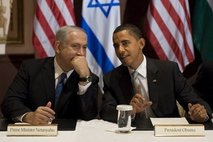 Bibi’s humiliation of Biden and Obama brought out the whole of the punditry, some of it going so far as to criticize the Zionist state. Even Tom Friedman waxed indignant, counseling that the hapless Veep should have packed up and gone home. But, like Biden, Friedman is certain to get over it just as surely as he recanted recently when he had the poor judgment to utter a kind word about China. Uri Avnery captured the Biden fiasco best, observing that a weakling with spit on his face calls it rain. And Pat Buchanan observed that Biden remained in “full pander mode” even as Israel kicked its American poodle. But by midweek the falsehoods had begun to take hold and the punditry was starting to rewrite the story, with Maureen Dowd spinning the incident as a smackdown of Bibi by Barack who had finally “lost his temper.” This insight rivaled her accompanying characterization of Israeli colonies in East Jerusalem as “a domestic zoning issue.” And by Wednesday, op-eds in the Wall Street Journal and elsewhere were blaming the whole incident on Barry for bringing up the “settlement” issue in the first place. Finally toward week’s end on Thursday the Washington Post revealed that Barry and Bibi had reached a secret understanding that the settlement construction could continue so long as they remained out of public view. Sic semper Obama.
Netanyahu, however, deserves the undying gratitude of every real progressive in the U.S. This past year has been like a dance of the seven veils for Obama. They had been all teased away, save for one. The veil of peace, the veil of civil liberties, the veil of environmentalism, single-payer, nuclear disarmament (ripped away by a big new budget for nukes), opposition to the banksters – stripped away one by one. The only remaining vestment was opposition to Israel’s colonies. And Bibi tore that one off between breakfast and (delayed) dinner, leaving Obama standing as naked as Ishtar or Salome.
So thanks, Bibi, for finishing the job. Now that it’s done we can expect all those who aggressively championed candidate Obama to broadcast effusive apologies for so doing. Let us never forget that Obama was not just the candidate of the Democrats but the hands down choice of the most “progressive” wing of the Party, its dream candidate. By revealing Obama for what he is, the limitations of the Dems are laid bare. Obama is all we can expect from them, and it is not much.
By now Obama’s backers surely recognize that they should not have urged him on us, just because he was so “cool” in schooling and appearance, or because all their friends liked him. Surely by now they realize that they were not voting for prom king but for the Emperor of the U.S.
With Obama’s exposure completed by Bibi, we can expect an apology from the leaders of PDA like Norman Solomon, from the message controllers at The Nation, from other gate keepers in the progressive” movement, from Tom Hayden, Medea Benjamin, Phyllis Bennis and other leaders of UFPJ and the official peace movement, even perhaps from MoveOn.org. Surely they will be in print soon, promising no more pigs in a poke that turn out to be rats when let out of the bag. At the least they will apologize profusely for imposing Obama on us.
I can hardly wait to hear from them.
John V. Walsh can be reached at john.endwar@gmail.com.
The anti-Venezuela election campaign
Venezuela’s election is not until September, but the international campaign to delegitimise the government has already begun
Mark Weisbrot | guardian.co.uk | 18 March 2010
Venezuela has an election for its national assembly in September, and the campaign has begun in earnest. I am referring to the international campaign. This is carried out largely through the international media, although some will spill over into the Venezuelan media. It involves many public officials, especially in the US. The goal will be to generate as much bad press as possible about Venezuela, to discredit the government, and to delegitimise the September elections – in case the opposition should choose to boycott, as they did in the last legislative elections, or refuse to recognise the results if they lose.
There’s no need for conspiracy, since the principal actors all know what to do. Occasionally some will be off-message due to lack of co-ordination. A fascinating example of this occurred last week when Senator John McCain tried to get General Doug Fraser of the US Southern Command to back his accusations that Venezuela supports terrorist activities. Testifying before the Senate armed services committee on March 11, General Fraser contradicted McCain:
“We have continued to watch very closely … We have not seen any connections specifically that I can verify that there has been a direct government-to-terrorist connection.”
Oops! Apparently Fraser didn’t get the memo that the Obama team, not just McCain, is in full campaign mode against Venezuela. The next day, he issued a statement recanting his testimony:
“Assistant Secretary Valenzuela [the state department’s top Latin America official] and I spoke this morning on the topic of linkages between the government of Venezuela and the Farc. There is zero daylight between our two positions and we are in complete agreement.
“There is indeed clear and documented historical and ongoing evidence of the linkages between the government of Venezuela and the Farc … we are in direct alignment with our partners at the state department and the intelligence community.”
Well it’s good to know that the United States still has civilian control over the military, at least in the western hemisphere. On the other hand, it would be even better if the truth counted for anything in these Congressional hearings or in Washington foreign policy circles generally. The general’s awkward and seemingly forced reversal went unnoticed by the media.
The “documented and historical and ongoing evidence” mentioned by General Fraser refers to material alleged to come from laptops and hard drives allegedly found by the Colombian military in a cross-border raid into Ecuador in 2008. Never mind that this is the same military that has been found to have killed hundreds of innocent teenagers and dressed them up in guerrilla clothing. These laptops and hard drives will continue to be tapped for previously undisclosed “evidence”, which will then be deployed in the campaign against the Venezuelan government. We will be asked to assume that the “captured documents” are authentic, and most of the media will do so.
US secretary of state Hillary Clinton‘s attacks on Venezuela during her trip to South America were one of the opening salvos of this campaign. Most of what will follow is predictable. There will be hate-filled editorials in the major newspapers, led by the neocon editorial board of the Washington Post (aka Fox on 15th Street). Chávez will be accused of repressing the media, even though most of the Venezuelan media – as measured by audience – is still controlled by the opposition. In fact, the media in Venezuela is still far more in opposition to the government than is our own media in the United States, or for that matter in most of the world. But the international press will be trying to convey the image that Venezuela is Burma or North Korea.
In Washington DC, if I try to broadcast on an FM radio frequency without a legal broadcast licence, I will be shut down. When this happens in Venezuela, it is reported as censorship. No one here will bother to look at the legalities or the details, least of all the pundits and editorial writers, or even many of the reporters.
The Venezuelan economy was in recession in 2009, but will likely begin to grow again this year. The business press will ignore the economic growth and hype the inflation, as they have done for the past six years, when the country’s record economic growth cut the poverty rate by half and extreme poverty by 70% (which was also ignored). Resolutions will be introduced into the US Congress condemning Venezuela for whatever.
The US government will continue to pour millions of dollars into Venezuela through USAid, and will refuse to disclose the recipients. This is the non-covert part of their funding for the campaign inside Venezuela.
The only part of this story that is not predictable is what the ultimate result of the international campaign will be. In Venezuela’s last legislative elections of 2005, the opposition boycotted the national elections, with at least tacit support from the Bush administration. In an attempt to delegitimise the government, they gave up winning probably at least 30% of the legislature.
At the time, most of the media – and also the Organisation of American States – rejected the idea that the election was illegitimate simply because the opposition boycotted. But that was under the Bush administration, which had lost some credibility on Venezuela due to its support for the 2002 coup, and for other reasons. It could be different under an Obama administration.
That is why it is so ominous to see this administration mounting an unprovoked, transparently obvious campaign to delegitimise the Venezuelan government prior to a national election. This looks like a signal to the opposition: “We will support you if you decide to return to an insurrectionary strategy,” either before or after the election.
The US state department is playing an ugly and dangerous game.
The Inquisition for Fed Appointees
By Dean Baker | The Guardian | March 15, 2010
The Obama Administration announced its three picks for the vacant positions at the Fed last week. Not surprisingly, no one on the list was among those who had warned of the housing bubble. This is not surprising because there is virtually no overlap between the list of people who had warned of the bubble and the list of people who are politically acceptable as appointees to the Fed.
It may not be possible to get someone who could see an $8 trillion housing bubble before its collapse wrecked the economy as a member of the Fed’s Board of Governors. However, before the Senate approves these picks it should make sure the new appointees can at least recognize the housing bubble and its significance after the fact.
Specifically, the Senate should insist that the nominees give their account of the run-up to the crisis and explain where the Fed made mistakes and what they would have done differently with the benefit of hindsight. This line of questioning is especially important in the case of Janet Yellen, President Obama’s nominee as vice-chair of the Board of the Governors.
Yellen’s fingerprints are already on this crisis, having served as a Fed governor in the 90s and more recently as a president of the San Francisco Federal Bank. Dr. Yellen is on record as explicitly saying that the Fed lacks the ability to recognize asset bubbles like the housing bubble. She argued further that it lacks the tools to effectively rein in an asset bubble. And, she argued that cleaning up after the collapse of the bubble is no big deal. In terms of economic analysis, she hit a grand slam in getting it absolutely as wrong as possible.
Presumably, Yellen has changed her views of what the Fed can and should do about asset bubbles. The banking committee should give Ms. Yellen the opportunity to go on record explaining her new position and how the events of the last three years have led her to change her mind on these issues. Of course, if she still adheres to her earlier position, then she clearly is not an appropriate person to be vice-chair of the Fed.
The other Fed picks should be given this opportunity as well. It is not too much to ask that appointees to the Fed’s top policymaking body have a clear understanding of the biggest monetary policy blunder in more than 70 years.
This line of questioning can be refreshing because there still has been remarkably little public acknowledgment of the fact that the country is suffering because of a combination of unbelievably inept economic policy and Wall Street greed. There is probably little that can be done to change the latter – the financial sector is all about making money – but we can in principle do something about the quality of economic policymaking.
The country lost an opportunity to make a big first step towards improving the quality of economic policymaking when the Senate approved Ben Bernanke for a second term as Fed Chairman. Having sat as Fed governor since 2002 and as Fed chairman since 2006, no one other than Alan Greenspan bears more responsibility for the current economic crisis than Ben Bernanke. Yet, in spite of the trail of disaster – job loss, foreclosures, devastated retirement accounts – caused by his policy mistakes, Bernanke was rewarded with another four-year term as chairman. This fact is pretty hard to justify.
The new Fed appointees need to be reminded (as we all do) that tens of millions of people are out of work or underemployed today, not because they are too lazy to work or lack the necessary skills and experience. They are out of work because the people who manage the economy could not do their job right. None of the people in policy positions lost their jobs because of this failure.
We have to end a system in which those at the top are never held accountable for the harm they inflict on the rest of society. At the very least, the new Fed picks better have a story as to what they think went wrong and how these mistakes could have been prevented. If they can’t provide an answer to this question, then they are in the wrong line of work.
Dean Baker is the co-director of the Center for Economic and Policy Research (CEPR). He is the author of False Profits: Recovering from the Bubble Economy.
Why Did Kucinich Cave In To Obama?
Docudharma | Infowars | March 18, 2020
I am totally shocked by what has happened.
It had appeared that Dennis Kucinich had Obama worried, rather than the other way around.
It appeared with Obama and Kucinich “discussing” Health Care on Air Force 1 no less, that the opportunity existed where Obama might possibly consider making a concession or two, just to secure Kucinich’s vote.
Suddenly, and sadly, Kucinich just gave in, and got absolutely nothing back in return.
While DKos, MoveOn.bored, and mainstream Democrats all publically threatened to oppose Kucinich and get their pay back and revenge on him, it is pretty well established that Kucinich is in a district which knows him well, and that re-elects him every two years — whether or not he faces a Primary challenge. I can’t see Kucinich caving just on something like empty “reelection” bluffs, hot air, and threats of this nature. Kucinich has been through all of that many times before and won the War.
Remember Dennis Kucinich is a guy who stared down the Bank Monopoly in Ohio before and won. He even faced an assassination attempt before and won. This is a man not easily shaken. So why would Kucinich suddenly be so easily intimidated now?
What threat did Obama issue? Black Ops? Did his unconstitutional wiretapping program create or fabricate some embarrassing family story or personal smear? Did Obama threaten Elizabeth Kucinich? Did Obama and Pelosi move to take away Kucinich’s SubCommittee Chair (something they’d never do to Joe Lieberman)? Was Dennis Kucinich’s life directly threatened?
In his announcement today, Kucinich said absolutely nothing to endorse the bill on any its so-called “merits”. He even condemned the bill, even as he stated simultaneously that he must submit a yes vote. This makes no sense. Clearly, some unusual, and possibly criminal personal threat was made here.
Dennis Kucinich never just backs down and says “oh well, never mind“…
It is also clear that the U.S. Senate had, and still has, 50 Senators willing to vote in favor of a public option, if the House sends it to them (which Nancy Pelosi has assured they won’t at Obama’s own request).
If the resistence and pressure from the Left had refused to back down, perhaps some improvements could’ve been made to an otherwise terribly bad, awful bill.
But nothing has changed. As Michael Moore pointed out, there is no true “ban on preexisting conditions“. That talking-point is a complete falsehood. First of all, the clause does not even kick in for 4 whole years, so the Insurance Companies can deny care and eligibility all that they want to for the next 4 whole years. Secondly, when the clause does kick in, it only imposes just a very small penalty (a fine) if they reject people. So for an Insurance Company, it is going to be much cheaper for them to pay a simple $5000 fine, then it would ever be to cover a citizen with a health problem of any consequence (especially someone with a past cancer diagnosis). So, this is all just a big lie. There is no “ban on pre-existing conditions”.
The other completely false talking point is that” “the bill will get 30 million new people covered.” It does nothing of the kind. All the bill does is to mandate that people write horribly expensive checks to the Insurance Monopolies, and become their victims and slaves — with no choices and no options. But no actual “care” is ever assured. The Insurance Companies set all the rules, and can continue to deny treatments, deny surgeries, deny tests, and even terminate your entire policy (for a small fine) if you get too expensive.
So the entire rationale for this bill that is being made by Obama, the Democrats in Congress, and even so-called “progressive” groups like MoveOn.dog is a lie.
It’s a LIE folks. But, unlike others who don’t even bother to read the fine print, Dennis Kucinich knows all of this.
So why did he cave?
Obama not welcome in Indonesia
Press TV – March 18, 2010

Islamic leaders in Indonesia say that US President Barack Obama’s policies towards the Muslim world are no different than his predecessors.
The leaders say they are disappointed by Obama’s last year Cairo speech in which he tried to reduce tensions between the Islamic world and the United States.
“During the last few months after that speech, almost one year, nothing has been realized so far,” VOA quoted Din Syamsuddin, head of Mohamadiyah, the second-largest Islamic organization in Indonesia.
Professor Azyumardi Azra of the Islamic State University in Jakarta said, “Muslims in general of course expect also that President Obama talk about how he is going to resolve the continued conflicts in Palestine, also in Iraq and in Afghanistan.”
The remarks came as Obama canceled his trip to Australia and Indonesia to work with lawmakers on passing his health care legislation.
White House spokesman Robert Gibbs told reporters that Obama will reschedule his trip to the world’s largest Muslim majority country for June.
Last week, thousands of Indonesians held rallies in cities across the country to protest the visit. The protesters shouted slogans against Obama and his war policies. The leaders have accused Obama of following in former US President George W Bush’s footsteps on transparency issues relating to war on terror tactics.
Obama slams Palestinian protests, rejects Israeli row
Press TV – March 18, 2010

US President Barack Obama condemns Palestinian protests in Jerusalem al-Quds over Israeli provocations near al-Aqsa Mosque as ‘destructive to peace’ while downplaying the reported row with the Israeli regime over Tel Aviv’s continued settlement expansions, denying reports that US-Israeli ties are in a state of crisis.
In a quick turn of face, under reportedly intense pressure from the wealthy Israel lobby in the US, Obama, whose top administration officials described Israeli settlement expansion plans as ‘insulting and destructive to peace efforts,’ rejected tensions with Tel Aviv as ‘friendly disagreements’ and, instead, denounced the Palestinians for reacting against intimidating Israeli moves to Judaize al-Quds.
“Friends are going to disagree sometimes,” said Obama Wednesday in his first official reference to Tel Aviv’s plans to erect 1,600 new settlement units near East al-Quds, in violation of the regime’s past commitments to freeze settlement expansion.
“Israel’s one of our closest allies, and we and the Israeli people have a special bond that’s not going to go away,” Obama reiterated in a rare interview with ultra-conservative Fox News Channel, a prime critic of the Obama Administration.
Last week, Israeli Interior Minister Yishai announced Tel Aviv’s green light for the settlement expansion plan while US Vice President Joe Biden toured Israel to supposedly facilitate indirect “proximity talks” between Palestinians and the Tel Aviv regime.
“The actions that were taken by the interior minister in Israel weren’t helpful to that process,” said Obama.
“There is a disagreement in terms of how we can move this peace process forward, and obviously, when I sent Vice President Biden there it was at a moment where we were trying to restart talks between the Palestinians and the Israelis.”
The Israeli decision led to a series of criticisms from US officials who described the move by the Tel Aviv regime as offensive, cautioning that the expansions could derail the peace process.
However, critics took the row with some skepticism arguing that it was intended to avert international attention from Israeli “Judiazation” of East al-Quds which hosts a number of major Islamic sanctities, including the al-Aqsa Mosque.
Some 50 Palestinians were wounded on Tuesday, dubbed by Hamas as Palestine’s day of rage, as thousands of protesters poured into streets across al-Quds to condemn Tel Aviv’s falsification of history and efforts to take away the city’s Palestinian and Islamic identity.
Meanwhile on Tuesday, top US commander Gen. David Petraeus described the Arab-Israeli conflict as one of the “root causes of instability” and “obstacle to security” in the Middle East, warning that it would further the anti-American sentiments in the region and limit America’s strategic partnerships with Arab governments.
“Arab anger over the Palestinian question limits the strength and depth of US partnerships with governments and peoples in the [Middle East] and weakens the legitimacy of moderate regimes in the Arab world,” he said in a written testimony.
Israel Is Boss
By Margaret Kimberley – 03/16/2010

The United States may invade and occupy Iraq, undermine elected presidents in Haiti and throw its weight around in numerous ways in numerous parts of the world. Yet there is one country it does not dare to confront. Of course, the nation in question is Israel.
Israel and its allies in the United States make certain that no president, no political party, no congressional leader nor any citizen who wishes to be in any way influential, will dare to step outside the lines of proscribed behavior and discourse. The American public, either because they are aware of the pro-Israel grip on power, or because they have swallowed the propaganda whole, remain cowed and silent.
Israel can do whatever it wants not only with the United States, but with other western nations as well. Mossad agents succeeded in murdering Hamas leader Mahmoud al-Mabouh in Dubai last month by using doctored British, Irish, French, Australian and German passports and credit cards issued to an Israeli-run bank located in South Dakota. None of the nations involved has uttered more than the slightest peep after having their sovereignty violated in such an obvious manner.
Just in case there was any doubt about who is in charge, Israel insulted Vice President Joseph Biden and the United States government when Biden made a recent visit to Jerusalem. Biden made the pro forma journey to go through the motions of requesting that the peace process continue. The Israelis could have nudged, winked and gone through the pretense of moving forward on a just peace process. Instead they announced that more Jewish housing will be constructed on Palestinian land, embarrassing the Vice President and his boss, who wanted to pretend to be even handed when they and the rest of American political leadership are anything but. The Obama administration, like every other presidential administration in the last sixty years, does what Israel wants it to do. There shouldn’t be any reason for Israel to yank the Americans’ chain so hard and so publicly, but why follow the rules of diplomatic niceties when doing otherwise has been so successful?
The only thing worse than the obvious slap in the face, is the phony outrage surrounding it. No one gets anywhere near a presidential nomination without first swearing obedience to the Zionists and their lobby. If Obama and Biden and Hillary Clinton were truly upset with the Israelis, it is only because they were so blatant in making them all look like chumps.
Just a few weeks before Obama was sworn into office, George W. Bush and Condoleezza Rice were the victims of an Israeli public beat down. Bush was literally pulled off a stage where he was about to give a speech and forced to take a phone call from then Israeli prime minister Ehud Olmert. Rice had worked on a Security Council resolution which merely called for a cease fire in Israel’s massacre of thousands of people in Gaza. Olmert bragged in a press conference, “I said, ‘I don’t care; I have to talk to him.’” Not content to tell the world that he ordered the American president to follow his orders, he took a swipe at Rice too. “He gave an order to the secretary of state, and she did not vote in favor of it — a resolution she cooked up, phrased, organized and maneuvered for. She was left pretty shamed, and abstained on a resolution she arranged.” It isn’t surprising that Israel would repeat the humiliation just a year later with a different president.
It doesn’t matter if David Axelrod goes on the Sunday morning news shows and fakes outrage about Israel’s settlements. It matters that Israel continues to steal Palestinian land and it matters that only those willing to go along with the crime are allowed to entertain any idea of having a role in United States foreign policy decisions.
Far from being angry at Israel, the United States government is actually becoming more and more like that nation. The Obama administration claims the right to carry out extra judicial assassinations just like their Middle East partner in crime. The temporary embarrassment and damage control pronouncements are not worthy of anyone’s attention.
The only lesson to learn from this sorry episode is that nothing new has taken place between the United States and Israel. All Americans are still made complicit in the joint criminality and earn the enmity of most of the world as a result. So don’t believe the hype. There is nothing to see here, just move along.
Margaret Kimberley’s Freedom Rider column appears weekly in BAR. Ms. Kimberley lives in New York City, and can be reached via e-Mail at Margaret.Kimberley(at)BlackAgandaReport.com.
Featured Video

Dan Dicks with James Corbett on Solutions Watch
or go to
Aletho News Archives – Video-Images
From the Archives
$1.5bn up in smoke: US THAAD missile stockpile dries up defending Israel against Iran
By Ivan Kesic | Press TV | July 2, 2025
According to American media, defense news outlets, and independent analysts, the 12-day Israeli military aggression against Iran significantly depleted the US stockpile of THAAD (Terminal High Altitude Area Defense) interceptor missiles.
Citing official sources, American magazine Newsweek reported on Friday that the US transferred a substantial portion of its advanced missile defense capabilities to support the Israeli regime, an effort with questionable results and a critical impact on US strategic reserves.
THAAD, developed by Lockheed Martin arms manufacturing company, is a key component of Israel’s multi-layered air defense architecture. It is designed to intercept medium-range ballistic missiles, including those launched from Iran and Yemen.
The US-made system is capable of targeting short-, medium-, and intermediate-range ballistic missiles during their terminal phase, whether inside or outside Earth’s atmosphere.
THAAD uses a “hit-to-kill” method, relying on kinetic energy rather than explosive warheads to destroy incoming threats, intercepting at altitudes of up to 150 km and ranges between 150-200 km.
Operated exclusively by American personnel, the US military maintains eight THAAD batteries with an estimated 350–400 interceptors in total. The eighth battery was activated during the June 20 Israeli aggression against Iran and is capable of intercepting hypersonic missiles. … continue
Blog Roll
 Aletho News
- While Gaza dominates the UN, these are the people keeping it alive
- New Report: “Scholasticide and Genocide in Gaza: Assessment, Testimonies and Legal Analysis”
- ‘THAAD Delusion’: Iran war exposes US missile shield limits – The Atlantic
- Moscow issues warning to NATO over Russian exclave
- Yes, the Iran war has destroyed Trump’s presidency
- The fallacy of US delusions about Iran’s economic collapse
- Hezbollah denies Syria cell link, warns of Israeli plan to sow discord
- The legacy of US sanctions, war, and occupation in Iraq
- Iraqi resistance group rejects disarmament, vows to maintain support for Lebanon
- Sheikh al-Asadi warns of Iraqi government compliance with US demands
- If Americans Knew
- Mamdani releases plan to combat antisemitism and hate crimes in New York City
- Iran’s Revolutionary Guards Publish Letter to the American People
- DMFI launches $1 million ad campaign supporting Virginia’s Elaine Luria
- US Senate blocks resolution seeking report on Americans killed by Israel
- Israeli Attacks Kill Ten Palestinians in Gaza
- Massacre at Minab: The School That Became a Grave
- Israeli media: The IDF Shows It Doesn’t Turn a Blind Eye; It Actively Emboldens Settler Havoc
- As settlers ravage West Bank, Israeli forces kill 10 in Gaza – Daily Update
- New Report: “Scholasticide and Genocide in Gaza: Assessment, Testimonies and Legal Analysis”
- Ex-Biden officials are desperate for a Gaza scapegoat
- No Tricks Zone
- Green Energy Debacle: German Expert Professor Fritz Vahrenholt Warns Of Severe Economic And Social Consequences
- Two More Paleo Reconstructions Affirm Meters-Higher Sea Levels Across Ireland, Brazil 7000-6000 Years Ago
- New Study: Earth And Venus Surface Warmth Largely Explained By Convection And Lapse Rate, Not CO2 Or Radiation
- 2025 Nature Paper Claiming Worsening Global Drought Gets RETRACTED …Heavily Flawed
- New Study: ‘Global Drought Shows No Detectable Recent Acceleration Under Climate Warming’
- Economic Masterminds: German Socialists Suggest Taxing Productivity Gains Stemming From Using AI
- The South China Sea Has Not Been Cooperating With The Climate Change Narrative
- Energy Crisis: Germany Enters Heating Season With Historically Low Gas Reserve Fill Levels
- New Study: The Antarctic Ice Sheet Gained Mass From 2020-2024 Due To Staggering Snow And Ice Accumulation
- Study: Ocean Heating Rates From Thousands Of Years Ago ‘Dwarf’ Modern Ocean Heating Rates

