Biden: US to increase spending on nuclear arsenal
Reversing a decade of declining spending on nuclear weapons
Press TV – January 29, 2010

US Vice President Joe Biden says that Washington will increase investment in its nuclear arsenal and infrastructure in the country’s new budget.
In an opinion piece which appeared in The Wall Street Journal‘s website on Thursday, Biden said that the administration will propose USD 7 billion to maintain US nuclear weapons stockpile, which would be USD 600 million more than Congress approved last year.
“Even in a time of tough budget decisions, these are investments we must make for our security. We are committed to working with Congress to ensure these budget increases are approved,” Biden said.
The comment comes at a time when the US and Russia are negotiating a new Strategic Arms Reduction Treaty, which entails decommissioning of both sides’ nuclear weapons.
The administration of US President Barack Obama will publish its budget for fiscal year 2011 on Monday February 1.
The proposal will include a budget increase for nuclear issues while paring back other areas in an effort to control record deficits.
Secret detention may amount to crime against humanity: UN experts
January 28, 2010
GENEVA (AFP) – UN human rights experts warned in a report on Wednesday that “widespread and systematic” secret detention of terror suspects was continuing and could pave the way for charges of crimes against humanity.
The report listed 66 countries that have allegedly been involved in secret detentions — from Ethiopia to Romania, from Kosovo to Pakistan — and called on governments to investigate and prosecute those who ordered such detentions.
In their first in-depth global study on secret detentions, the UN experts said that virtually no judicial steps had been attempted against the practice despite the “widespread” manner in which suspects were held in a legal limbo.
“Secret detention continues to be used in the name of countering terrorism around the world” in spite of international human rights norms, said the study, which is due to be submitted to the UN Human Rights Council in March.
“If resorted to in a widespread and systematic manner, secret detention might reach the threshold of a crime against humanity,” the authors cautioned.
The “global war on terror,” which was launched by President George W. Bush’s administration after the September 11 attacks, had “reinvigorated” the use of secret detentions in an organised manner, they said.
The campaign saw the creation of “a comprehensive and coordinated system of secret detention of persons suspected of terrorism, involving not only US authorities, but also other states in almost all regions of the world.”
The study was compiled by two independent UN experts on counter-terrorism and torture, as well as UN panels overseeing arbitrary detention and enforced disappearances.
Campaign group Amnesty International said in a statement that governments must be held to account.
“States must act swiftly to implement the recommendations in this important study, to confront and end secret detention and the human rights violations it entails and enables,” said Widney Brown, Amnesty’s director of international law, citing torture and unlawful executions.
The UN study welcomed commitments by US President Barack Obama to dismantle and investigate secret detentions.
But the experts also called for clarification of outstanding issues such as short term CIA holding facilities and those operated by the military Joint Special Operation Command.
Human rights campaigners say other countries took advantage of secret detentions to crack down on their own political opponents or restive ethnic groups.
Extraordinary rendition involved abducting suspects without legal proceedings, and flying them to foreign countries or secret CIA prisons.
Drawing on its own interviews with former detainees, witnesses, officials and its own analysis of flight records, as well as published material, the UN study named dozens of secret detainees — including some alleged to have died in custody.
Thailand denied that it had hosted a secret detention facility for the United States in a response to the experts, but the study maintained that it was “credible that a CIA black site” existed there.
The study also welcomed a Lithuanian parliamentary inquiry into similar allegations, which had concluded that there was no evidence to back them up.
However, it stressed that the findings “in no way constitute the final word on Lithuania’s role in the programme.”
The UN study also cited evidence of secret US-run facilities in Romania, Poland, and Kosovo as well as several in Afghanistan and Iraq, including “Dark Prison” and “Salt Pit.”
Accounts by detainees added weight to claims that Jordan, Egypt, Morocco, Syria, Pakistan, Ethiopia and Djibouti were proxy centres where “detainees have been held on the CIA’s behalf,” the report added.
How to Get Out of Being Held Indefinitely Without Charge
By Spencer Ackerman – 1/22/10
So the Obama administration’s Guantanamo task force has decided that about 50 people ought to be held indefinitely without charge. What’s the remedy for that? Basically, there’s habeas corpus, the procedure by which a detainee requests that a court determine the validity of the government’s claim to hold him (in this case) because of his status as a belligerent in the conflict with al-Qaeda. Notice that’s not the same thing as asking a court to decide whether the government in the first place has the power to detain someone indefinitely without charge. According to lawyers for Guantanamo detainees and prominent civil liberties advocates, any lawyer who asks a court to decide that broader question will immediately be told, “Your client has the right to a habeas hearing. File a habeas petition and then come talk.” So here’s what the procedure is for the 50 or so detainees in this indefinite-detention-without-charge category.
First a detainee has to win a habeas case. (Check their track record here.) Easy, right? If the government decides not to contest the decision, then the detainee — who, recall, the Obama administration is saying is too dangerous to responsibly release — walks. (More on that in a second.) We haven’t been faced with this situation yet. But if the administration appeals, then the detainee has to win. And on up to the Supreme Court, if the government really wants to contest the issue. Joseph Margulies, a professor of law at Northwestern University who’s focused extensively on Guantanamo, estimates that this process could take at least 18 months to exhaust itself at the earliest. Possibly years. (And even then, it wouldn’t be certain that the Supreme Court would use a habeas appeal as an opportunity to decide the first-order question: whether the Obama administration has the constitutional power to hold a member of al-Qaeda or the Taliban in indefinite detention without charge.)
The real inflection point will come “when the government loses” a habeas case, said Margulies. “Are they going to let [a detainee] go?” If the administration concedes the loss, then there’s no crisis. But if it decides it can’t let someone go, and runs out of appeals, then the administration’s most likely option is to get a preventive detention bill from Congress, a civil liberties Rubicon. The Obama administration briefly considered that option this summer and balked. But if the administration loses a habeas case; seeks to detain someone indefinitely even so; and doesn’t have explicit preventive detention powers from Congress, then it most likely is just simply breaking the law.
“I heard about this listening to an NPR story this morning,” said Sabin Willett, a lawyer for the Uighurs at Guantanamo Bay, describing his big-picture reaction to the Guantanamo task force’s conclusions. “The intro to that story described them as ‘the terror suspects at Guantanamo.’” Willett pointed out that his clients have been cleared by Defense Department tribunals and exonerated by the courts. They are not terrorists, and no one believes they’re terrorists. “This proves the power of the press — those two words ‘terror suspects.’ How do I fight that?”
From there, Willett continued, it’s natural to start wondering if those “terror suspects” really are too dangerous to release. “I keep saying, give me a name. Who’s too dangerous? Give me a reason. Then start asking what other regimes had people they considered ‘too dangerous to release.’ You’re going to find yourself on a list of countries you’re not too proud to be on.”
Presidential assassinations of U.S. citizens
By Glenn Greenwald | January 27, 2010
The Washington Post‘s Dana Priest today reports that “U.S. military teams and intelligence agencies are deeply involved in secret joint operations with Yemeni troops who in the past six weeks have killed scores of people.” That’s no surprise, of course, as Yemen is now another predominantly Muslim country (along with Somalia and Pakistan) in which our military is secretly involved to some unknown degree in combat operations without any declaration of war, without any public debate, and arguably (though not clearly) without any Congressional authorization. The exact role played by the U.S. in the late-December missile attacks in Yemen, which killed numerous civilians, is still unknown.
But buried in Priest’s article is her revelation that American citizens are now being placed on a secret “hit list” of people whom the President has personally authorized to be killed:
After the Sept. 11 attacks, Bush gave the CIA, and later the military, authority to kill U.S. citizens abroad if strong evidence existed that an American was involved in organizing or carrying out terrorist actions against the United States or U.S. interests, military and intelligence officials said. . . .
The Obama administration has adopted the same stance. If a U.S. citizen joins al-Qaeda, “it doesn’t really change anything from the standpoint of whether we can target them,” a senior administration official said. “They are then part of the enemy.”
Both the CIA and the JSOC maintain lists of individuals, called “High Value Targets” and “High Value Individuals,” whom they seek to kill or capture. The JSOC list includes three Americans, including [New Mexico-born Islamic cleric Anwar] Aulaqi, whose name was added late last year. As of several months ago, the CIA list included three U.S. citizens, and an intelligence official said that Aulaqi’s name has now been added.
Indeed, Aulaqi was clearly one of the prime targets of the late-December missile strikes in Yemen, as anonymous officials excitedly announced — falsely, as it turns out — that he was killed in one of those strikes.
Just think about this for a minute. Barack Obama, like George Bush before him, has claimed the authority to order American citizens murdered based solely on the unverified, uncharged, unchecked claim that they are associated with Terrorism and pose “a continuing and imminent threat to U.S. persons and interests.” They’re entitled to no charges, no trial, no ability to contest the accusations. Amazingly, the Bush administration’s policy of merely imprisoning foreign nationals (along with a couple of American citizens) without charges — based solely on the President’s claim that they were Terrorists — produced intense controversy for years. That, one will recall, was a grave assault on the Constitution. Shouldn’t Obama’s policy of ordering American citizens assassinated without any due process or checks of any kind — not imprisoned, but killed — produce at least as much controversy?
Obviously, if U.S. forces are fighting on an actual battlefield, then they (like everyone else) have the right to kill combatants actively fighting against them, including American citizens. That’s just the essence of war. That’s why it’s permissible to kill a combatant engaged on a real battlefield in a war zone but not, say, torture them once they’re captured and helplessly detained. But combat is not what we’re talking about here. The people on this “hit list” are likely to be killed while at home, sleeping in their bed, driving in a car with friends or family, or engaged in a whole array of other activities. More critically still, the Obama administration — like the Bush administration before it — defines the “battlefield” as the entire world. So the President claims the power to order U.S. citizens killed anywhere in the world, while engaged even in the most benign activities carried out far away from any actual battlefield, based solely on his say-so and with no judicial oversight or other checks. That’s quite a power for an American President to claim for himself.
As we well know from the last eight years, the authoritarians among us in both parties will, by definition, reflexively justify this conduct by insisting that the assassination targets are Terrorists and therefore deserve death. What they actually mean, however, is that the U.S. Government has accused them of being Terrorists, which (except in the mind of an authoritarian) is not the same thing as being a Terrorist. Numerous Guantanamo detainees accused by the U.S. Government of being Terrorists have turned out to be completely innocent, and the vast majority of federal judges who provided habeas review to detainees have found an almost complete lack of evidence to justify the accusations against them, and thus ordered them released. That includes scores of detainees held while the U.S. Government insisted that only the “Worst of the Worst” remained at the camp.
No evidence should be required for rational people to avoid assuming that Government accusations are inherently true, but for those do need it, there is a mountain of evidence proving that. And in this case, Anwar Aulaqi — who, despite his name and religion, is every bit as much of an American citizen as Scott Brown and his daughters are — has a family who vigorously denies that he is a Terrorist and is “pleading” with the U.S. Government not to murder their American son:
His anguish apparent, the father of Anwar al-Awlaki told CNN that his son is not a member of al Qaeda and is not hiding out with terrorists in southern Yemen.
“I am now afraid of what they will do with my son, he’s not Osama Bin Laden, they want to make something out of him that he’s not,” said Dr. Nasser al-Awlaki, the father of American-born Islamic cleric Anwar al-Awlaki. . . .
“I will do my best to convince my son to do this (surrender), to come back but they are not giving me time, they want to kill my son. How can the American government kill one of their own citizens? This is a legal issue that needs to be answered,” he said.
“If they give me time I can have some contact with my son but the problem is they are not giving me time,” he said.
Who knows what the truth is here? That’s why we have what are called “trials” — or at least some process — before we assume that government accusations are true and then mete out punishment accordingly. As Marcy Wheeler notes, the U.S. Government has not only repeatedly made false accusations of Terrorism against foreign nationals in the past, but against U.S. citizens as well. She observes: “I guess the tenuousness of those ties don’t really matter, when the President can dial up the assassination of an American citizen.”
A 1981 Executive Order signed by Ronald Reagan provides: “No person employed by or acting on behalf of the United States Government shall engage in, or conspire to engage in, assassination.” Before the Geneva Conventions were first enacted, Abraham Lincoln — in the middle of the Civil War — directed Francis Lieber to articulate rules of conduct for war, and those were then incorporated into General Order 100, signed by Lincoln in April, 1863. Here is part of what it provided, in Section IX, entitled “Assassinations”:
The law of war does not allow proclaiming either an individual belonging to the hostile army, or a citizen, or a subject of the hostile government, an outlaw, who may be slain without trial by any captor, any more than the modern law of peace allows such intentional outlawry; on the contrary, it abhors such outrage. The sternest retaliation should follow the murder committed in consequence of such proclamation, made by whatever authority. Civilized nations look with horror upon offers of rewards for the assassination of enemies as relapses into barbarism.
Can anyone remotely reconcile that righteous proclamation with what the Obama administration is doing? And more generally, what legal basis exists for the President to unilaterally compile hit lists of American citizens he wants to be killed?
What’s most striking of all is that it was recently revealed that, in Afghanistan, the U.S. had compiled a “hit list” of Afghan citizens it suspects of being drug traffickers or somehow associated with the Taliban, in order to target them for assassination. When that hit list was revealed, Afghan officials “fiercely” objected on the ground that it violates due process and undermines the rule of law to murder people without trials:
Gen. Mohammad Daud Daud, Afghanistan’s deputy interior minister for counternarcotics efforts, praised U.S. and British special forces for their help recently in destroying drug labs and stashes of opium. But he said he worried that foreign troops would now act on their own to kill suspected drug lords, based on secret evidence, instead of handing them over for trial.
“They should respect our law, our constitution and our legal codes,” Daud said. “We have a commitment to arrest these people on our own” . . . .
Ali Ahmad Jalali, a former Afghan interior minister, said that he had long urged the Pentagon and its NATO allies to crack down on drug smugglers and suppliers, and that he was glad that the military alliance had finally agreed to provide operational support for Afghan counternarcotics agents. But he said foreign troops needed to avoid the temptation to hunt down and kill traffickers on their own.
“There is a constitutional problem here. A person is innocent unless proven guilty,” he said. “If you go off to kill or capture them, how do you prove that they are really guilty in terms of legal process?” . . .
So we’re in Afghanistan to teach them about democracy, the rule of law, and basic precepts of Western justice. Meanwhile, Afghan officials vehemently object to the lawless, due-process-free assassination “hit list” of their citizens based on the unchecked say-so of the U.S. Government, and have to lecture us on the rule of law and Constitutional constraints. By stark contrast, our own Government, our media and our citizenry appear to find nothing wrong whatsoever with lawless assassinations aimed at our own citizens. And the most glaring question for those who critized Bush/Cheney detention policies but want to defend this: how could anyone possibly object to imprisoning foreign nationals without charges or due process at Guantanamo while approving of the assassination of U.S. citizens without any charges or due process?
Rule by the Rich
By Paul Craig Roberts | January 27, 2010
The election of Republican Scott Brown to the U.S. Senate by Democratic voters in Massachusetts sends President Obama a message. Voters perceive that Obama’s administration has morphed into a Bush-Cheney government. Obama has reneged on every promise he made, from ending wars, to closing Gitmo, to providing health care for Americans, to curtailing the domestic police state, to putting the interests of dispossessed Americans ahead of the interests of the rich banksters who robbed Americans of their homes and pensions.
But what can Obama do other then spout more rhetoric?
The Democrats were destroyed as an independent party by jobs offshoring and so-called free trade agreements such as NAFTA. The effect of “globalism” has been to destroy the industrial and manufacturing unions, thus leaving the Democrats without a power base and source of funding.
Obama and the Democrats cannot be an opposition party, because Democrats are as dependent as Republicans on corporate interest groups for campaign funding.
The Democrats have to support war and the police state if they want funding from the military/security complex. They have to make the health care bill into a subsidy for private insurance if they want funding from the insurance companies. They have to abandon the American people for the rich banksters if they want funding from the financial lobby.
Now that the five Republicans on the Supreme Court have overturned decades of U.S. law and given corporations the ability to buy every American election, Democrats and Republicans can be nothing but pawns for a plutocracy.
Most Americans are hard pressed, but the corporations have only begun to milk them.
Wars are too profitable for the armaments industry to ever end. High unemployment is now a permanent state in the U.S., thus coercing job seekers into military service.
The security industry profits from the police state and regards civil liberties as a hindrance to profits. By announcing that he intends to continue the Bush policy of indefinite detention, a violation of the Constitution and U.S. legal procedures, Obama has granted the Democratic Party’s consent to the Republicans’ destruction of habeas corpus, the main bastion of individual liberty.
Jobs offshoring is too profitable for U.S. corporations for Obama to be able to save American jobs and restart the broken economy.
Americans are being squeezed out of health care not only by the loss of job benefits, but also by corporate takeover of medical practice from physicians. Today medical doctors are wage slaves of corporate health providers that leverage doctors by turning them into supervisors of physician assistants, lower paid people without medical degrees who perform the services that doctors once provided. As neither doctor nor physician assistant has any independence, there is no one to represent the patient’s care against the profits of the corporation.
Even environmental concerns are being used to create “cap and trade” rights to buy and sell the ability to pollute. Wall Street is licking its lips over a new source of leveraged derivative instruments.
The American public cannot even get reliable information about their plight as the “mainstream media” has been concentrated into a few corporate hands that do not permit independent reporting. The media is as dependent on corporate money as are politicians.
How can President Obama restart an economy that has been moved offshore? Millions of manufacturing jobs are gone, as are millions of jobs for college graduates, such as software engineering, Information Technology–indeed, any intellectual skill the product of which can be conveyed via the Internet. Even those intellectual skill jobs that do remain in the U.S. are filled increasingly by foreigners brought in on work visas.
The wipe out of blue collar and middle class job growth has stopped the growth of American incomes except, of course, those of the super rich. For a decade American consumers substituted increased personal indebtedness for income growth. In order to maintain and to increase their consumption, Americans consumed their assets, such as their home equity. Americans reached their maximum debt load just as the real estate bubble burst and just as the banksters highly-leveraged, toxic financial instruments brought down the stock market and the values of Americans’ pensions.
The enormous damage done to the U.S. economy by jobs offshoring, work visas, and financial deregulation cannot be offset by government stimulus plans, which expand the debt burdens that are crushing Americans. The federal government’s massive budget deficits and the Federal Reserve’s easy monetary policy are setting the stage for an inflationary depression to follow a deflationary depression.
The Federal Reserve chairman says not to worry about inflation, because the Fed can take the money back out of the economy. But can the Fed take the money out without contracting the economy?
The Federal Reserve says not to worry about financing the federal budget deficit. Banksters are buying the Treasury bonds with the proceeds from their sales of their toxic derivatives to the Fed.
So what is happening to the Federal Reserve’s balance sheet? And when will the Fed have no recourse but to print new money in order to finance the federal deficit?
How long can the dollar retain its reserve currency role in such circumstances, and how does the U.S. pay for its imports when this role is lost?
Don’t look to Washington for answers to these questions.
Paul Craig Roberts was Assistant Secretary of the Treasury in the Reagan administration. He is the author of How the Economy was Lost, just published by CounterPunch / AK Press. He can be reached at: PaulCraigRoberts@yahoo.com
Obama detention policy “un-American”
JAG Officer: Indefinite Detention ‘Defies Common Sense’
By William Fisher
NEW YORK, Jan 25 (IPS) – U.S. President Barack Obama’s decision to detain 47 of the just-under 200 remaining prisoners at Guantánamo without trial indefinitely is drawing scorn from legal experts and human rights advocates, who charge that the government simply does not have enough evidence to convict the detainees it says cannot be tried but are “too dangerous to release.”
David Frakt is a lieutenant colonel in the U.S. Air Force Judge Advocate General (JAG) Corps Reserve, associate professor and director of the Criminal Law Practice Center at Western State University College of Law in Fullerton, California.
He is a former lead counsel for the Office of Military Commissions Defence, who successfully represented Mohammed Jawad before the military commissions and won his release in habeas corpus litigation in 2009.
Frakt told IPS, “The administration’s suggestion that they can’t try 47 detainees, not because they don’t have evidence of criminal wrongdoing, but because a criminal trial would necessarily involve disclosure of classified information, defies common sense.”
He gave three reasons.
“First, both under the Military Commissions Act of 2009 and under the Classified Information Protection Act (CIPA), in use in federal courts, there are elaborate mechanisms in place to protect classified information,” Frakt said.
“Second, given that the remaining detainees at Guantanamo have been held, on average, for over seven years, the likelihood that there is an ongoing need to protect classified sources and methods in such cases is remote.”
“Finally, it is hard to believe that there would be any greater risk of revealing important classified information than in the 9/11 trial, yet the administration is pressing forward with this and several other cases against high-value detainees who were kept in secret CIA ghost prisons and subjected to still classified methods of interrogation,” he noted.
He said that “The administration has acknowledged the right of all detainees to petition for habeas corpus in federal court. Why does the administration seem to believe classified information could be adequately protected in federal habeas litigation, but not in a criminal trial? It seems far more likely that there is simply inadequate admissible non-coerced evidence of criminality,” Frakt said.
Other legal scholars have weighed in with similar views. For example, Brian J. Foley, visiting associate professor at the Boston University School of Law, told IPS, “Many of the executive’s claims about danger and terrorism have been shown to be incorrect over the years.”
“Last week’s incident where an plane bound from New York to Kentucky was diverted for an emergency landing in Philadelphia because passengers freaked out when they saw a Jewish teenager engaging in an Orthodox prayer ritual, and the recent hours-long shutdown of Kennedy airport because a man from earthquake-ravaged Haiti mistakenly opened an emergency door in a terminal, show that our officials are over-reacting and cowardly,” he said.
“The executive’s claim that these people are ‘too difficult to prosecute’ really means that the executive knows that the only evidence it has is weak or was obtained by coercion and is therefore very likely false,” Foley said.
The American Civil Liberties Union (ACLU), always a major player in the Guantanamo detention issue, called the Obama policy “un-American.”
Jonathan Hafetz, a senior ACLU lawyer, told IPS, “By committing to hold suspected criminals indefinitely without charge, the Obama has embraced one of the most lawless and un-American policies of the Bush administration, one that turns the most fundamental principles of the Constitution on their head.”
“The notion that the government can simply hold those it believes “dangerous”, without putting them on trial, will ultimately serve neither our liberty nor our security,” he said.
And Chip Pitts, president of the Bill of Rights Defence Committee, asked, “How is this any better than Guantanamo itself and the spur such approaches give to al Qaeda?”
He told IPS, “No legal system worthy of the name can possibly imprison people indefinitely on the shameful argument that they are, in the absence of evidence and a fair trial, ‘too dangerous to release’.”
He called the move a “significant calcification of the lawless Bush approach of holding (often tortured) detainees indefinitely – effectively, perhaps for life – until the conclusion of some endless ‘war on terror’,” but said it is “actually undermining vital cooperation from European and Muslim allies, support for the rule of law itself and our country’s national standing and historical legacy.”
In a statement, Amnesty International USA, said, “There’s been talk about people who can’t be tried but who are too dangerous to release. This is absurd. People must either be charged with a crime and given a fair trial, or be released. End of story. That’s the way it works. Either there’s evidence against you or there isn’t.”
And Virginia Sloan, president of the widely respected Constitution Project, said, “Even if the Obama administration continues to work to close Guantánamo, by pursuing a policy of indefinite detention without charge, the damaging policies that embody the prison will continue, as will the negative effects to American values, the rule of law, and our nation’s reputation abroad.” She urged opposition to the use of military commissions… Full article
What is the endgame in Gaza?
By Ahmed Moor | January 24, 2010
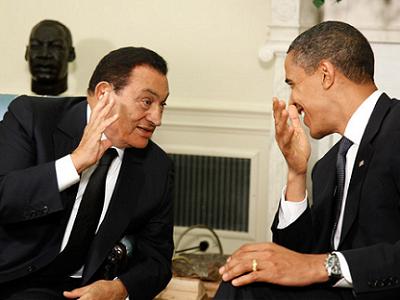
I want to focus attention on an issue that hasn’t gotten enough press. The Mubarak regime is building a subterranean steel wall on the border with Gaza. Conservative estimates put the depth of the wall at 18 meters (nearly 60 feet). The BBC reports that American engineers designed the wall panels, which were constructed in America.
30-meter-deep holes are being bored into the ground on the Palestinian side of the wall. Egypt will pump salt water from the Mediterranean Sea into the earth to destroy the tunnels – the lifeblood of the besieged Gazan Palestinians. Soil quality will be degraded and the Coastal aquifer, Gaza’s source of potable water, may well be destroyed.
The deranged Obama-Netanyahu-Mubarak cabal seems to be possessed of a biblical rage. Dare to defy the divine edict? We will crush your men, women and children underfoot. Refuse to starve? We will raze your cities, poison your wells, and salt the earth. Their grandiosity – think of it, they’re building an 18-meter-deep steel wall (!) for 11 kilometers – beggars belief, and beggars Gazans.
Protests have erupted across the Arab world and Europe targeting Egyptian embassies and consulates; I attended one yesterday in Beirut. But the Egyptian regime isn’t responsive to popular pressure, so a group of activists here in Lebanon have begun a movement to draw attention to the Egyptian company assembling the wall – Arab Contractors. Our hope is that as details emerge, other companies can be targeted. I reported on our first press conference for Electronic Intifada…
Ahmed Moor is a Gaza-born Palestinian-American freelance journalist living in Beirut.
Big Banks Have Already Figured Out The Loophole In Obama’s New Rules
By John Carney | Jan. 21, 2010
Big banks have already begun poking the holes in Obama’s new rules—holes they expect their banks to pass through basically unchanged.
The president promised this morning to work with Congress to ensure that no bank or financial institution that contains a bank will own, invest in or sponsor a hedge fund or a private equity fund, or proprietary trading operations unrelated to serving customers for its own profit.
But sources at three banks tell us that they are already finding ways to own, investment in and sponsor hedge funds and private equity funds. Even prop trading seems safe.
A person familiar with the operations of one big Wall Street bank said it expects that new regulation will affect less than 1% of its overall business.
The key phrase is “operations unrelated to serving customers.” The banks plan to claim that much of the business in which it engages is related in one way or another to serving customers. Even proprietary trading, for instance, can become related to customer service if it is done through internal hedge funds in which some outside clients are permitted to invest.
One insider at a bank pointed to JP Morgan Chase’s ownership of the hedge fund Highbridge Capital. It is thought that under a strict “no hedge funds” rule, Highbridge would have to be sold off. But under the rule proposed by the Obama administration, Highbridge can be retained by JP Morgan because outside clients are permitted to invest in it.
A still more devious way is to have a banks own employees be the customers who are invested in the internal hedge funds. That way trading operations can remain closed to outsiders while the regulatory requirement of relating the trading to customer service is met. Goldman Sachs is rumored to be considering this approach. (Goldman isn’t commenting on the regs right now.)
“This thing is about showing the public that Obama is standing up to Wall Street. So the rhetoric is heated. But the implementation will require far less change than people think right now,” a person familiar with the thinking at the upper echelons of one of our largest banks said.
“The market is getting this wrong by selling off the megas,” a person at another bank said.
Confirmation of Bernanke feared as kiss of death for Senate Democrats
By Edwin Chen and Scott Lanman
Jan. 22 (Bloomberg) — Senate Majority Leader Harry Reid said he was undecided on whether to back Ben S. Bernanke for a second term as chairman of the Federal Reserve, even as President Barack Obama expressed confidence he will win Senate approval.
“For right now, yes he is” undecided on whether to vote for confirmation, Jim Manley, a spokesman for the Nevada Democrat, said in an e-mail. Obama “continues to think he’s the best person for the job and will be confirmed,” Deputy Press Secretary Bill Burton told reporters traveling with Obama in Ohio.
Democrats Barbara Boxer of California and Russ Feingold of Wisconsin, both facing re-election this year, said today in Washington they’ll oppose Bernanke, whose term ends at the end of the month. Senate Finance Committee Chairman Max Baucus, a Democrat, and Judd Gregg, a Republican member of the banking committee, said there’s enough support for Bernanke to secure his Senate confirmation.
Bernanke, while navigating the economy through the worst slump since the Great Depression, has drawn fire from lawmakers for lax regulation prior to the financial crisis and for putting taxpayer dollars at risk through the rescues of Bear Stearns Cos. and American International Group Inc.Christopher Dodd, chairman of the Senate Banking Committee, renewed his support for the Fed chief today.
Rejecting Bernanke would send the “worst signal to the markets right now” and produce an economic “tailspin,” Dodd, a Democrat from Connecticut, told reporters. “This is the most important central banker in the world.”
Obama Bank Plan
U.S. stocks fell, extending the biggest weekly drop since October, as financial shares slumped for a second day on Obama’s plan to rein in banks and results at Google Inc. disappointed investors. The Standard & Poor’s 500 Index was down 1 percent to 1,105.49 at 2:10 p.m. in New York.
The Banking Committee voted 16-to-7 on Dec. 17 to recommend Bernanke’s nomination to the full Senate, with 12 Democrats and four Republicans in favor. Six Republicans and one Democrat, Jeff Merkley of Oregon, were opposed.
Dodd reminded Republicans today that they initially named Bernanke to his post — and that rejecting his nomination would amount to replacing him with a Democratic pick.
“Remember this was George Bush’s choice as well,” Dodd told reporters today. “Do they want to have the president make his choice for the chairman of the Federal Reserve? Do the Republicans really want that? That would be rather interesting to see.”
The Fed chief will probably need 60 votes in the Senate to break procedural holds from at least four lawmakers. Baucus, a Democrat from Montana, said that while Bernanke is likely to be confirmed, the vote may not come before his term expires at the end of the month.
No Date Certain
“I can’t give you a date, but clearly he will get confirmed,” Baucus, a Democrat from Montana, said. Asked if Bernanke’s confirmation is in trouble, Baucus said, “No.”
The loss in the Massachusetts election this week to fill the seat left vacant by the late Senator Edward M. Kennedy has shaken Democrats, making it harder for party leaders to rally support for Bernanke, said Norm Ornstein, a political scientist at the American Enterprise Institute in Washington.
“It’s more than procedural now because you have this populist surge out there that’s been intensified and reinforced by the Massachusetts election,” he said. “It doesn’t kill the Bernanke reconfirmation but it means for Reid to get to 60 is going to take a greater effort.”
Dorgan Opposition
Senator Byron Dorgan, a North Dakota Democrat who is retiring this year, said he will oppose Bernanke because the Fed chief rebuffed Dorgan’s request to identify firms that received loans from the Fed during the financial crisis.
“I just think that’s unacceptable,” Dorgan said. “I don’t think his nomination should come up until he provides the information that’s requested.”
The Fed is appealing a federal judge’s August decision in a lawsuit filed by Bloomberg LP, the parent of Bloomberg News, to release names of firms that received central bank loans.
Traders at Intrade, a Web exchange for futures contracts based on political outcomes, see an 80 percent chance Bernanke will be reconfirmed, down from 93 percent yesterday. The contract has traded as high as 85 percent today. The bid- ask spread on contracts is currently 6.1 percentage points, indicating uncertainty about the odds of reconfirmation.
‘Really Rattle’
A failure to confirm Bernanke “would really rattle the market,” said Karl Mills, who helps manage about $30 million as chief investment officer for Jurika Mills & Keifer LLC in Oakland, California. “The Fed chair you know is better than the one you don’t. In this political environment, we’re not presuming anything anymore.”
Under Senate rules, a motion to limit debate on Bernanke’s nomination would set up a procedural vote after two legislative days to curtail additional debate to 30 hours. Bernanke’s supporters need 60 votes to limit debate and clear the way for a final vote on whether to confirm him for another term.
Dodd and Senator Richard Shelby of Alabama, the panel’s senior Republican, have said the Fed failed to adequately supervise banks. Dodd has also said Bernanke deserved “substantial credit” for helping avert “utter economic catastrophe.”
“It is time for a change — it is time for Main Street to have a champion at the Fed,” Boxer said today in a statement. “Our next Federal Reserve Chairman must represent a clean break from the failed policies of the past.”
The Fed chairman has increased government backstops to banks and other firms and used the Fed’s balance sheet to revive credit, including through the purchase of $1.25 trillion in mortgage-backed securities.
“Under Chairman Bernanke’s watch, predatory mortgage lending flourished, and ‘too big to fail’ financial giants were permitted to engage in activities that put our nation’s economy at risk,” Feingold said in a statement.
To contact the reporter on this story: Edwin Chen in Cleveland at echen32@bloomberg.net
Larijani: Iran proud to support the Palestinian and Lebanese resistance
20/01/2010

TEHRAN, (PIC)– Speaker of the Iranian parliament Ali Larijani on Tuesday expressed his country’s pride to support resistance movements in the region including the Lebanese resistance and the Movement of Hamas, stressing that the resistance became the only option to confront the occupation after the failure of peace projects.
These remarks came during a conference dubbed “Gaza, the symbol of resistance” which was organized by the association for the defense of the Palestinian people and attended by a representative of Hamas and Iranian officials.
According to the reporter of the Palestinian information center (PIC), Larijani stated in his speech that the resistance achieved tangible results in the 33-day war in Lebanon and the war on the Gaza Strip and announced that the Iranian parliament agreed January 19 to be marked annually as “Gaza day.”
The Iranian speaker recalled how the US and some European countries stood by Israel and provided it with all kinds of support and prevented many countries on many occasions from raising the issue of the Israeli military aggression on Gaza in the UN.
“During 22 days, no one talked about human rights and humanity, although we have seen the advent of the new US president who declared that he would make several changes in the policies of America and that he did not accept the practices of his predecessors,” the speaker underscored.
“And during the war, the Zionist entity killed more than 1,400 Palestinians, wounded more than five thousands, murdered large numbers of Palestinian children and turned Gaza into a scorched land, but all this was of no importance to Obama who preferred to be preoccupied with choosing a dog for his daughters,” he added.
Speaking about the visit of US president Barack Obama to Turkey and Egypt, the speaker said, “Obama told the Turkish parliament that he wanted to restore the Muslims’ rights and to adopt a new approach in dealing with them, and then traveled to Cairo and said there he knew about Islam and wanted to restore Palestinian rights, but it was shameful that he did nothing during this period, while Gaza is still besieged.”
About that bank tax Obama touts
By Dean Baker | The Guardian | January 18, 2010
President Obama proposed a tax on the country’s largest banks to help recover the money lost under the Troubled Assets Relief Programme (Tarp). This tax is a positive step. However, it will not come close to recovering the losses incurred in the bailouts and it will do almost nothing to change the way that the banks do business. For this we will need a larger financial speculation tax.
First, it is necessary to be clear on the extent of the losses incurred in the bailouts of the financial system. The losses in the Tarp are currently pegged at close to $120bn, mostly due to the bailout of AIG, the giant US insurance company. This money was virtually a direct handout to several large banks, as the government’s money allowed AIG to make payments to Goldman Sachs and other large banks that would not have been possible if it had fallen into bankruptcy.
But these losses are far from the complete picture with the Tarp. On the night before Christmas, the Treasury department lifted the $200bn cap on the amount that both the mortgage agencies Fannie Mae and Freddie Mac can draw on the Treasury. They both now have unlimited lines of credit.
No one knows how much their bailouts will eventually cost taxpayers, but it is almost certain that their losses are not entirely attributable to the portfolio that the mortgage giants held on 7 September 2008 when they were put into government conservatorship. Many of the losses incurred by Fannie and Freddie are almost certainly due to losses on mortgages they purchased from banks after they went into conservatorship. In other words, Fannie and Freddie were paying too much for the mortgages they purchased from the banks. This is exactly what the Tarp was originally supposed to do.
In effect, the treasury department has run a version of Tarp through Fannie and Freddie. If we want to calculate the money taxpayers lost through from the Tarp programme we should certainly include the money lost bailing out these mortgage giants, which can now exceed $400bn if events turn out badly. This means that if the point is to recover the money lost in the Tarp, the bank tax is likely to fall short by a large margin.
The other key consideration in making the banks pay should be to structure a tax that changes the way the banks do business. This money lost in the Tarp programme is just a small fraction of what the banks’ greed cost the country. We will likely lose more than $4tn in output in this downturn, more than 40 times the projected revenue from the tax over the next decade.
The $9bn that is projected to be collected each year is equal to about 5% of their annual profits and bonuses. It is unlikely to have any noticeable impact on the way they do business. In other words, we can still expect them to be pursuing short-term profits and giving little consideration to long-term investments.
A tax on financial speculation more generally, which will also apply to hedge funds and other financial institutions, would be a far more effective mechanism in changing behaviour. It could also raise very substantial revenue. In the UK, a tax of 0.25% on the purchase and sale of shares of stock raises the equivalent of $30bn annually in the US relative to the size of its economy. A broadly based transactions tax – that would apply not only to stock, but also to options, futures, credit default swaps and other financial instruments – could raise more than $150bn a year in the US.
Such a tax would also make the financial sector more efficient by reducing the volume of short-term trading that serves no productive purpose. The share of the private sector that is devoted to investment banking and commodities trading has nearly quadrupled in the last three decades.
By reducing the volume of trading this tax would make the financial sector more efficient, freeing up resources for productive uses. This would be comparable to improving the trucking sector by reducing the number of trucks and drivers it takes to deliver goods to wholesalers and retailers. Industries are supposed to become more efficient as the economy develops. It is only finance that is becoming less efficient due to its ever-growing complexity.
In short, a tax on financial speculation is a win for just about everyone but the speculators. President Obama’s bank tax is a good start but we have to go much further.
Why I Voted for the Republican in Massachusetts
By John V. Walsh | January 20, 2010
“Get off your butts,” implored Boston Democrat Mayor “Mumbles” Menino. Thus spake the inarticulate mayor at the desperate rally featuring Barack Obama last Sunday before the special Senate election in Massachusetts. Mumbles was savvy enough to recognize that the Democratic base in Massachusetts, the only state to vote for George McGovern, was deeply disappointed in Obama and the Democrats.
Why did I vote for Republican Scott Brown? It took some persuasion. In the end it was my Democratic Party friends and activists who convinced me. Let me explain. It was clear that the special Senate election in Massachusetts was a referendum on Obama and the Democrats who control the entire federal government – Congress and the Presidency.
I must admit that my first instinct was to vote for a third Party candidate, a Libertarian. (There was no Green or other independent in this race.) After all, the Libertarian, a guy named Kennedy, agreed with me on opposition to wars and empire and in support of civil liberties. In contrast I knew damned well that when push came to shove the Republicrat candidates would be on the other side on all these issues – no matter what they said now in the heat of the campaign and desperate for votes. And of course all three candidates were against single-payer health care, a passion of this writer for twenty some years. So my first instinct was to vote for the Libertarian and get someone who agreed with me 70 per cent of the time versus 0 per cent.
Would I not risk the failure of the Obama health care bill if the Democrat did not win? But I do not want the Obama health care bill to succeed. It is little other than a formula for permanently handing our entire health care system over to the sector of finance capital known as the insurance industry, for taxing decent health care plans and for putting off to the indefinite future comprehensive, egalitarian, universal health care. Dr. Marcia Angel, former editor of the New England Journal of Medicine and long-time crusader for single-payer, has taken the position that it would be far better to have no new law than the Obamanation known as the Democrat Party “health care reform.” I agree with her on that, and so do many of my colleagues in Physicians for a National Health Program, although that is not our official position. So on the issue of health care, it made little difference which candidate I would vote for.
But why then not stick with the Libertarian? Why vote Republican? This is where my Democrat Party friends came in. Whenever I went to vote for Nader or a Green, they would explain that I was wasting my vote on a third Party candidate. Was I not doing the same here by voting Libertarian? Suddenly I realized that the Democrats were right. If I wanted to protest the lies of the Obmacrats and “send a message” to the Democrat Party elite, I should not waste my vote on the Libertarian. And so they convinced me to vote Republican. And so Scott Brown, the Republican, won in Massachusetts with my vote and that of many others pissed off at the betrayal of the Democrats.
Of course the Democratic operatives are now blaming the disconsolate and bewildered loser, Democrat Attorney General Martha Coakley, for running a “poor campaign.” But in what did the poverty of her effort consist? She merely assumed that the Democratic voters and the independents here in Mass who are by and large a pretty progressive lot had nowhere else to go. They had to vote for her, and so she did not need to campaign very hard after the primary. The Democrats were mightily surprised on this score. She is not to blame, but the Democrat Party assumption that they can take progressives for granted is very much to blame for this humiliating defeat.
I began to understand that something was afoot in this campaign when I noticed many folks out in the traffic circles and on street corners in Central Massachusetts, in and about Worcester, holding signs for Brown, even in the snow and sleet. There was no such enthusiasm for Coakley – not a single sign holder did I see. Now let me explain the demographics a bit. Central Mass is blue collar country, suffering deeply from the unemployment of the current recession. It is not clueless about bailouts for the banksters but no job creation for the hoy polloi the policy of Bush/Obama. And it was Central Mass that delivered a very big margin for Republican Brown who posed as a populist and captured their vote.
I vote not in central Massachusetts but in overwhelmingly and conventionally liberal Cambridge, but even there little enthusiasm for Democrat Coakley was evident. She had only taken a position against the Obama wars in Afghanistan and Pakistan when forced to do so by a primary opponent. There were no signs for Coakley at my polling place very close to Harvard Square. The peace constituency of Cambridge, in the words of the venerable “Mumbles” Menino, was voting with its butt which remained quite inert.
After voting Republican with some satisfaction at having not wasted my protest vote, I told a young student coming out of the polling place with me that I was so angry with the Democrats and Obama that I had voted Republican, remaining a bit unsure whether I should have gone the Libertarian route. He said that he felt the same way but voted Democrat anyway. He confessed that he was now having voter’s remorse.
So Massachusetts has delivered a warning to the Democrat Party. Do not take the peace vote or the jobless vote for granted. We want peace and we want jobs and we want decent affordable health care. If you do not deliver, we will go elsewhere. We will not vote for you. We will vote the other Party in protest. Or we will stay home and vote with our butts.
John V. Walsh can be reached at john.endwar@gmail.com
Source
Note – Independent pollster Scott Rasmussen reports that those who oppose Obama’s health insurance proposal voted overwhelmingly for Scott Brown; those in favor of it, voted for Coakley.