US imported $6 billion from Russia as it forces others to quit doing business with Moscow
America keeps importing essential commodities from Russia while pressuring others not to do so
By Drago Bosnic | September 8, 2022
After Russia launched its counteroffensive against NATO aggression in Europe, the US-led political West vowed to “isolate“ Russia and “cripple“ its economy. Yet, the Eurasian giant didn’t only weather the storm largely unscathed, but it even managed to profit while the sanctions boomerang started ravaging Western economies. Russia has been able to maintain its economic strength, powering through the sanctions and even establishing alternative payment systems with major global powers such as China and India. And yet, the US, as the leading Western power, the one which pushed its European and other vassals into an economic war with Russia, with devastating consequences for the EU and other economies, continues doing business with Moscow.
The US is currently importing over $1 billion per month in Russian wood, metals, food and other goods. More than 3,600 ships from Russia have arrived at American ports since February 24, according to statistics cited by the Associated Press. While that is nearly 50% less in shipments over the same period compared to last year, it still amounts to over $6 billion in imports. The sheer quantity of goods and commodities from Russia entering the US suggests the troubled Biden administration is directly involved in a failure to “isolate“ the Russian economy, as the US incumbent president promised in late February. Due to so-called “wind down“ periods that allow companies to complete previous deals, many of the products and commodities continue to be imported into the US long after the Biden administration imposed sanctions on those goods, including Russian oil and natural gas.
However, there are exceptions to this as well. The import of other crucial Russian commodities, such as fertilizer, came at the request of the Biden administration itself, which has urged US companies to make up for shortages. Although the US has ordered the seizure of luxury yachts owned by rich Russians with supposed “ties to Russian President Vladimir Putin“, the AP found that many companies from the US and EU are still importing millions of dollars in metal from a Russian firm that makes parts for VKS (Russian Aerospace Forces) fighter jets, highlighting yet another hypocritical discrepancy in Western sanctions campaign. And yet, Washington is trying to exert diplomatic pressure on others to stop doing business with Moscow. While many have followed the US diktat, others are not only keeping their economic ties with Russia, but are even expanding them. For instance, Turkey, a NATO member since 1952, has doubled its oil imports from Russia this year.
This hypocritical approach has made many other countries, including major global powers, such as India, frustrated, as they are being criticized for their ties with Russia, while the US gets to cherry pick which ties with Moscow it can keep in order to prevent disruptions to its economy. This has nearly nullified the US attempts to strengthen ties with India and get New Delhi into its fold, despite the fact that American troops are currently engaged in military exercises with their Indian counterparts. And yet, just like Turkey, New Delhi has similarly significantly increased energy imports from Russia, despite US pressure not to do so. In addition, the Indian rupee has become a major currency for the diamond trade, allowing buyers to bypass anti-Russian sanctions, pushing India even closer to Moscow in this regard.
Although the failed economic siege of Russia was also meant to diminish the Eurasian giant’s nearly unmatched military might (which only the US can compare to), it has so far been completely inconsequential. Worse yet, it even had an opposite effect, as Russia is now expanding and strengthening its military, including the increase in production of weapons such as the Su-57, which has proven itself in the special military operation against the Kiev-based Neo-Nazi junta. This resilience isn’t limited to the Russian military. With Russian energy exports far exceeding last year’s levels in recent months and the Russian ruble rallying against the US dollar, the Eurasian giant’s economy is also faring far better than those of the EU members.
Still, the question remains, what will the EU and other US vassals do when the winter comes? Will Washington send food, oil, gas and other essential commodities? How will the “moral highground“ of “sticking it to Putin“ help heat homes, feed hundreds of millions of hungry (and angry) citizens and power entire economies and countries? How will the EU and other governments explain to their voters that all this is “worth doing“ so that the “young, vibrant democracy in Kiev“ can survive the “unprovoked brutal Russian invasion“?
And what will Europe look like in 2023 after it goes through a complete political unraveling? Whatever happens to Europe and other US vassals, one thing is certain – America will keep importing essential commodities from Russia while pressuring others not to do it. However, this isn’t necessarily bad, as it will be a perfect litmus test of sovereignty for many around the globe and an excellent indicator of who will get the privilege of joining the new multipolar world of sovereign nations.
Drago Bosnic is an independent geopolitical and military analyst.
Sweden’s Psychological Defense Agency: Good disinformation is “basically true”

By Didi Rankovic | Reclaim The Net | September 6, 2022
There is no doubt that Russia, like any other major – and minor – power uses some form of propaganda and disinformation to further its goals, especially in wartime.
What’s difficult to gauge, at least at this time, is how applicable that may be in the current crisis: is Russia really trying to “exploit polarization and sow division,” in countries like Sweden, for example?
But what the fear of Russian disinformation – or apparent fear of it – has clearly managed is to make some state bodies, like Sweden’s Psychological Defense Agency, part ways with basic logic – and not be afraid to admit it to the world.
Hence, some of what is labeled as “disinformation” by this agency whose goal is to bolster the Swedes’ “moral fortitude” includes information that “is actually not false” and is even, “basically true.”
“War is peace. Freedom is slavery. Ignorance is strength,” Orwell wrote.
Psychological Defense Agency head Henrik Landerholm, meanwhile, has as recently as last week been quoted by The Times as coming up with this:
“Good disinformation is actually not false. Good disinformation is basically true and only somewhat tweaked.”
Any arbiter of “good and bad disinformation” operating on such nuance is entering the dangerous territory of becoming the judge and jury of truth, and producing bias that can be used and abused beyond any one crisis and political circumstance.
And it soon becomes clear that the Times piece – even though putting “highly clickable” terms like “Russian” and “disinformation” right in the headline – actually has to do with Sweden’s internal politics and a looming election.
The premise with Sweden is that the society is “plagued by polarization and mistrust.” It has nothing to do with policy on Russia or the war – it’s that the Swedes are apparently fed up with rising crime, and unhappy with the authorities’ policy on immigration.
The “theory” here is that Russians, even if ostensibly quite busy elsewhere, will dedicate resources to exploit what already exists in Swedish society – namely, divisions over these burning issues.
Reuters decides to make it seem Russia is interested in making Sweden Democrats the second biggest party in parliament – and this party is denounced by the agency as having “neo Nazi roots.” But, “center-left” Social Democrats are still projected to win, we are reassured.
Leaked slides detail YouTube’s Ukraine censorship
Samizdat | August 23, 2022
A tutorial for YouTube’s content moderators that emerged on social media on Tuesday shows that the Google-owned platform has labeled a number of critical positions on the conflict in Ukraine “hateful” or “extreme” and can censor or demonetize creators on those grounds. While the parent company Alphabet has not confirmed or denied the screenshots’ authenticity, a Polish contractor who shared them has reportedly been fired.
Six screenshots shared by Russian journalist Andrey Guselnikov on Telegram show internal codes and examples of what YouTube has labeled “harmful” or “hateful” content in an online course mandated for content moderators.
According to the slides, the “glorification/promotion of [the] ‘Z’ symbol associated with the Russian military” is labeled “hate” and “extreme” under policy ID 864. So is saying that the conflict “is to denazify the Ukrainian government,” which is what Russian President Vladimir Putin said in February.
Saying that “Ukraine military is attacking its own people” is also considered problematic, ranging from “harmful-misinformation-moderate” (ID 862) to “harmful-misinformation-extreme” (ID 863) if the powers that be decide it amounts to “promotion or glorification.”
There was no clarification whether either standard would apply to factual reports of Ukrainian artillery targeting Ukrainian citizens living in territories under Russian control, for example.
Another highlighted phrase under policies 862 and 863 is “US funded bioweapons labs in Ukraine.” Presumably the key word here is “bioweapons,” since the existence of “biological research facilities” in Ukraine was recognized by US Under Secretary of State Victoria Nuland in a Senate testimony in March, and the Russian military has repeatedly presented evidence that these labs were funded by the US government, and the Pentagon in particular.
One of the slides shows a list of “out of scope” claims, noting there is no “full-scale block on all content” related to the conflict.
According to Guselnikov, the source of the leaked slides is a Polish national named Kamil Kozera, who used to work for Majorel, a contractor hired by YouTube for content moderation. YouTube somehow identified Kozera from the screenshots and had him fired over the leak. RT cannot independently verify the authenticity of the screenshots, and has reached out to YouTube for comment.
The video hosting platform, owned alongside Google by the Silicon Valley behemoth Alphabet, took the unprecedented step in censorship by globally blocking RT, Sputnik and all channels “associated with Russian state-funded media” in early March, expanding on the original ban ordered by the EU authorities in their jurisdiction. It also “paused” all advertising and “all of the ways to monetize” on the platform – such as sponsorships and superchats – in Russia.
Speaking at the World Economic Forum in Davos in May, YouTube CEO Susan Wojcicki said that the company continues to operate in Russia so it can “deliver independent news” to Russians, noting that “What we’re really seeing in this conflict is that information does play a key role, that information can be weaponized.”
Deliberate misrepresentation: Western media bias makes Israeli war on Palestinians possible
By Ramzy Baroud | MEMO | August 23, 2022
While US and western mainstream and corporate media remain biased in favour of Israel, they often behave as if they are a third, neutral party. This is simply not the case.
Take the New York Times coverage of the latest Israeli war on Gaza as an example. Its article on 6 August, “Israel-Gaza Fighting Flares for a Second Day” is the typical mainstream western reporting on Israel and Palestine, but with a distinct NYT flavour.
For the uninformed reader, the article succeeds in finding a balanced language between two equal sides. This misleading moral equivalence is one of the biggest intellectual blind spots for western journalists. If they do not outwardly champion Israel’s discourse on ‘security’ and ‘right to defend itself’, they create false parallels between Palestinians and Israelis, as if a military occupier and an occupied nation have comparable rights and responsibilities.
Obviously, this logic does not apply to the Russia-Ukraine war. For NYT and all mainstream western media, there is no question regarding who the good guys and the bad guys are in that bloody fight.
‘Palestinian militants’ and ‘terrorists’ have always been the West’s bad guys. Per the logic of their media coverage, Israel does not launch unprovoked wars on Palestinians, and is not an unrepentant military occupier, or a racist apartheid regime. This language can only be used by marginal ‘radical’ and ‘leftist’ media, never the mainstream.
The brief introduction of the NYT article spoke about the rising death toll, but did not initially mention that the 20 killed Palestinians include children, emphasising, instead, that Israeli attacks have killed a ‘militant leader’.
When the six children killed by Israel are revealed in the second paragraph, the article immediately, and without starting a new sentence, clarifies that “Israel said some civilian deaths were the result of militants stashing weapons in residential areas”, and that others were killed by “misfired’ Palestinian rockets.
On 16 August, the Israeli military finally admitted that it was behind the strikes that killed the 5 young Palestinian boys of Jabaliya. Whether the NYT reported on that or not matters little. The damage has been done, and that was Israel’s plan from the start.
The title of the BBC story of 16 August, ‘Gaza’s children are used to the death and bombing’, does not immediately name those responsible for the ‘death and bombing’. Even Israeli military spokesmen, as we will discover later, would agree to such a statement, though they will always lay the blame squarely on the ‘Palestinian terrorists’.
When the story finally reveals that a little girl, Layan, was killed in an Israeli strike, the language was carefully crafted to lessen the blame on her Israeli murderers. The girl, we are told, was on her way to the beach with her family, when their tuk-tuk “passed by a military camp run by the militant group Palestinian Islamic Jihad”, which, “at the exact moment, (…) was targeted by Israeli fire”. The author says nothing of how she reached the conclusion that the family was not the target.
One can easily glean from the story that Israel’s intention was not to kill Layan – and logically, none of the 17 other children murdered during the three-day war on Gaza. Besides, Israel has, according to the BBC, tried to save the little girl; alas, “a week of treatment in an Israeli hospital couldn’t save her life”.
Though Israeli politicians have spoken blatantly about killing Palestinian children – and, in the case of former Israeli Justice Minister Ayelet Shaked, “the Palestinian mothers who give birth to ‘little snakes'” – the BBC report, and other reports on the latest war, have failed to mention this. Instead, it quoted Israeli Prime Minister Yair Lapid, who reportedly said that “the death of innocent civilians, especially children is heartbreaking.” Incidentally, Lapid ordered the latest war on Gaza, which killed a total of 49 Palestinians.
Even a human-interest story about a murdered Palestinian child somehow avoided the language that could fault Israel for the gruesome killing of a little girl. Furthermore, the BBC also laboured to present Israel in a positive light, resorting to quote the occupation army’s statement that it was “devastated by (Layan’s) death and that of any civilians.”
The NYT and BBC have been selected here not because they are the worst examples of western media bias, but because they are often cited as ‘liberal’, if not ‘progressive’, media. Their reporting, however, represents an ongoing crisis in western journalism, especially relating to Palestine.
Books have been written about this subject, civil society organisations were formed to hold western media accountable and numerous editorial board meetings were organised to put some pressure on western editors, to no avail.
Desperate by the unchanging pro-Israel narratives in western media, some pro-Palestine human rights advocates often argue that there are greater margins within Israel’s own mainstream media than in the US, for example. This, too, is inaccurate.
The misnomer of the supposedly more balanced Israeli media is a direct outcome of the failure to influence western media coverage on Palestine and Israel. The erroneous notion is often buoyed by the fact that an Israeli newspaper, like Haaretz, gives marginal spaces to critical voices, like those of Israeli journalists Gideon Levy and Amira Hass.
Israeli propaganda, one of the most powerful and sophisticated in the world, however, can hardly be balanced by occasional columns written by a few dissenting journalists.
Additionally, Haaretz is often cited as an example of relatively fair journalism, simply because the alternatives – Times of Israel, the Jerusalem Post and other rightwing Israeli media – are exemplary in their callousness, biased language and misconstruing of facts.
The pro-Israel prejudices in western media often spill over to Palestine sympathetic media throughout the Middle East and the rest of the world, especially those reporting on the news in English and French.
Since many newspapers and online platforms utilise western news agencies, they, often inadvertently, adopt the same language used in western news sources, thus depicting Palestinian resisters or fighters, as ‘militants’, the Israeli occupation army as “Israeli Defence Forces” and Israeli war on Gaza as ‘flare ups’ of violence.
In its totality, this language misinterprets the Palestinian struggle for freedom as random acts of violence within a protracted ‘conflict’ where innocent civilians, like Layan, are ‘caught in the crossfire.’
The deadly Israeli wars on Gaza are made possible, not only by western weapons and political support, but through an endless stream of media misinformation and misrepresentation. Though Israel has killed thousands of Palestinian civilians in recent years, western media remains as committed to defending Israel as if nothing has changed.
US oil dynasties fund climate activists

Free West Media | August 15, 2022
According to a media report, the heirs to three US oil dynasties finance climate activists and non-governmental organizations that promote climate protest actions. Descendants of oil barons Getty and Rockefeller allegedly feel responsible for preventing “eradication” on Earth. That may not be the real reason however.
Descendants of the oil billionaires have been paying hundreds of green activists $25 000 a year each for their protests around the world, Britain’s Daily Mail reported August 10. Aileen Getty, Rebecca Rockefeller Lambert and Peter Gil Case fund such salaries through their non-governmental organizations (NGOs).
Aileen Getty, granddaughter of Getty Oil’s founder, now has over $1 million through her Climate Emergency Fund paid to activists. The wealthy heirs to the Rockefeller family, Rebecca Rockefeller Lambert and Peter Gil Case, whose ancestors founded Standard Oil in 1870, have spent over thirty million dollars on the Equation Campaign.
They all pay the activists, who, according to the Daily Mail, have caused disturbances with their actions around the world, especially in recent months, and finance the relevant NGOs. Lambert and Case, for example, put eco-activists from groups like Just Stop Oil on the payroll for $25 000 each and also funded the organization themselves. The descendants of oil baron John D. Rockefeller also established a fund to support anti-fossil fuel protests.
In recent months, thousands of activists have taken to the streets around the world to protest. The environmentalists also rioted and caused destruction, including in the US, Europe, the UK and Australia. Tires of SUVs were punctured in the US, UK and Australia, and famous oil paintings were vandalized in EU countries by the very activists who are on the payrolls of oil heirs’ non-profit organizations.
The Daily Mail questioned this type of funding: “Three American oil scions have been bankrolling mobs of eco-zealots who have terrorized the world by slashing tires, blocking traffic and attacking firms. Aileen Getty, Rebecca Rockefeller Lambert and Peter Gill Case, who are heirs to their families’ huge fortunes, are paying the salaries for thugs through their non-profits in an apparent bid to offset their relatives’ legacies.”
In 2019, Aileen Getty donated $500 000 to Extinction Rebellion climate activists. She herself is convinced that “a comprehensive disruption of everyday life” is necessary for actions. Getty conforms to the stereotype of idle, rich heirs: She contracted HIV from an extramarital affair and has survived numerous drug overdoses.
She told the New York Times that she wanted to support the effectiveness of the activists she sponsored and has so far donated $1 million from her own wealth to the Climate Emergency Fund. In her opinion, the civil disobedience spurned by such grassroots organizations is just a warning signal and the destruction is minimal compared to what is at stake.
She told the newspaper: “Let’s not forget that we’re talking about extinction. Don’t we have a responsibility to do everything we can to protect life on Earth?”
The Daily Mail also pointed out that scaremongering by various scientists are also financed by the oil heirs. In the US, the Climate Emergency Fund of the NGO Scientist Rebellion made $100 000 available for consultant salaries and travel expenses. Eco-warriors need money since they spend their lives protesting. Without funding, we would therefore not see the likes of Greta Thunberg making a fuss.
NASA climate researcher Peter Kalmus, who also belongs to this organization, brought together around 1000 scientists in 25 different countries who blocked traffic and chained themselves to landmark buildings.
‘Wreaking havoc on ordinary people’ to keep oil prices high
According to the Daily Mail, Kalmus justified his involvement in Scientist Rebellion’s concept of disrupting citizens’ everyday lives as follows: “He spent 16 years looking for ways to save the planet and came to the conclusion that the best way to do it is to wreak havoc on ordinary people.”
Last year in June, the Wall Street Journal reported that climate activists were driving up the price of oil: “Some investors are wagering that Wall Street’s preference for green energy will depress spending on oil extraction, setting the stage for supply shortages and higher fuel prices. The bets come as money managers line up trillions of dollars for wind, solar and other renewable programs and expenditures on oil projects tumble. The drop in fossil-fuel spending is becoming so severe that energy companies could struggle to quench the world’s thirst for oil, some analysts say.”
More recently, US sanctions against Russia have also helped to keep oil prices high.
Twitter bans NYP columnist Paul Sperry following criticism of FBI Mar-A-Lago raid
By Christina Maas | Reclaim The Net | August 12, 2022
New York Post columnist and investigative journalist Paul Sperry was suspended from Twitter following tweets criticizing the FBI’s raid on President Trump’s Mar-A-Lago.
The tweet that was widely shared when Sperry got suspended read: “Funny, don’t remember the FBI raiding Chappaqua or Whitehaven to find the 33,000 potentially classified documents Hillary Clinton deleted. And she was just a former secretary of state, not a former president.”
However, speaking to MRC’s News Busters, Sperry said that he received a notice from Twitter saying that his account had been permanently suspended. He added that Twitter did not give a reason or explanation for the suspension.
“This is outrageous censorship,” Sperry told MRC. “Yes, Twitter is a private entity, but it has become the [dominant] public town square for political information and debate and it also enjoys a monopoly as the site where government agencies and corporations first post their releases and statements to the press. Denying a veteran working journalist access to this platform restricts my ability to cover events and issue[s].”
Sperry went on to criticize the Biden administration for its involvement in censorship on social media, saying the suspension “amounts to state censorship by proxy.”
The Biden administration has encouraged social media censorship. Last year, former White House press secretary Jen Psaki said the Biden administration was “regularly making sure social media platforms are aware of the latest narratives dangerous to public health that we and many other Americans are seeing across all of social and traditional media.”
Russian Foreign Ministry speaks out on ‘Plan B’ for Iran nuclear deal
Samizdat | August 11, 2022
Any ‘Plan B’ in the talks on the Iranian nuclear program would violate a “consensus decision” of the UN Security Council on the issue and have “unavoidable negative consequences” for the entire Middle East, the Russian Foreign Ministry warned on Thursday.
“Any departure [from the original 2015 deal] or ‘Plans B’ that some people like to speculate about would run counter to the consensus decisions of the [UN] Security Council,” said Ivan Nechaev, the ministry’s deputy spokesman, referring to a 2015 UNSC resolution supporting that year’s agreement on the Iranian nuclear program.
The revival of the existing 2015 deal through the ongoing talks in Vienna is the only “reasonable and effective way” forward, Nechaev told journalists during a briefing. He also welcomed the latest round of indirect talks between the US and Iranian delegations in Vienna, which resulted in some “progress” on issues that had earlier been a stumbling block in the negotiations.
“A positive result of the talks is… achievable,” Nechaev said, adding that “there are no irreconcilable differences between the parties. Further progress would solely depend on each side’s “political will,” the diplomat said.
At the same time, Moscow slammed the EU for what it called the bullying tactics. “The language of ultimatums does not work in such a sensitive and high-stakes issue,” Nechaev said as he particularly criticized Peter Stano, the spokesman for EU diplomatic chief Josep Borrell.
Earlier this week, Stano told journalists that “everything that could be negotiated has been incorporated into the final version of the text” compiled after the latest round of talks between Tehran and Washington, which was mediated by the EU. “It’s yes or no,” Stano insisted, adding that “there is no more room for other compromises.” Borrell himself also called the document “the final text” at that time.
On Thursday, the Russian Foreign Ministry responded by saying Stano had no authority to make such statements on behalf of all parties involved in the talks. The Iranian deal, also known as the Joint Comprehensive Plan of Action (JCPOA), was built on “carefully measured balance of interests” and not “crude political pressure,” it added.
The work on reviving the deal will only end “when interests of all parties involved are properly taken into account,” Nechaev told journalists on Thursday.
Last week, Washington said it developed a proposal for a mutual return to the nuclear deal with Iran. Tehran responded by saying the revival of the agreement relies primarily on the US’ “will” and that Washington must show its readiness to achieve a long-term result.
The Western media have also been publishing pieces calling on Washington and Brussels to work out a ‘Plan B’ that can be used if the Vienna negotiations yield no results. Some of the pieces openly called on Western governments to ditch the talks in favor of this option, which has apparently yet to be devised. “Enough of the ‘tenuous’ Iran nuclear deal – it’s time for Plan B,” read an opinion piece The Hill published in early July. “Biden Should Show Iran What ‘Plan B’ Looks Like,” another piece published by the Washington Post in mid-June suggested.
The deal signed in 2015 by Iran, the US, the UK, France and Germany – as well as Russia, China and the EU – involved Tehran agreeing to certain restrictions on its nuclear industry in exchange for the lifting of economic sanctions and other incentives.
The agreement has been in limbo since 2018 when it was torpedoed by the US under then-President Donald Trump, who unilaterally withdrew from it. In response, Iran started gradually reducing its commitments under the accord, such as the level of enriched uranium it produces.
On August 1, Tehran announced it has “the technical ability to build an atomic bomb,” adding, however, that such a program “is not on the agenda.”
Hampshire UK police end re-education classes as a punishment for tweets
By Didi Rankovic | Reclaim The Net | August 8, 2022
The police in the UK continue to struggle with (re)defining their role in society, specifically as to whether or not it includes figuratively, but also at times literally, policing online free speech.
And that includes making sure people are investigated, and even prosecuted and fined for including such “crimes” as sharing memes on social networks.
In at least one instance, in Hampshire Constabulary, the “verdict” now seems to be a “no” – as in, that’s just not right. At least that’s the impression now as a “hate crime awareness reeducation” program has been dropped by the local Police and Crime Commissioner (PCC), amid what looks like major controversy.
This constabulary was among three that incorporated the course, designed to “teach” officers how to become aware and then deal with racism, sexism, misogyny, and transphobia.
But it all went very much south in Hampshire when the scheme – that looks as flimsy and ill-thought-through as those deployed elsewhere – caught in its net a 51-year-old army veteran, who was told his choices were to either get “reeducated” – and pay a fine for this “course” – or face legal prosecution.
The vet, Darren Brady, was eventually handcuffed and arrested in his home and after learning about his suspected “crime” was tapping the “share” icon on a meme he saw online. The meme did not seem supportive at all of the “Gay Pride” imagery.
In fact, it was the opposite of the accepted narratives – like memes mostly do. In this case, it showed the “Progress Pride” flags arranged into the shape of a swastika.
The report Brady received by the police contained the accusation of “causing anxiety.”
If the army veteran meant to express that the “thought police” of the “classic” Nazi era were as bad in treating any topic they didn’t like, as those coming after a particular free speech opinion on anything these days – the Hampshire police’s reaction highly likely assured him he was right.
But Darren Brady wasn’t having any of it, though, and maintained that his choice to retweet the meme was legal, and legitimate.
“I am concerned about both the proportionality and necessity of the police’s response to this incident,” Hampshire PCC Donna Jones eventually announced. “When incidents on social media receive not one but two visits from police officers, but burglaries and non-domestic break-ins don’t always get a police response, something is wrong,” Jones said.
Kamala Harris Deemed a ‘Hypocrite’ for Brittney Griner Comments
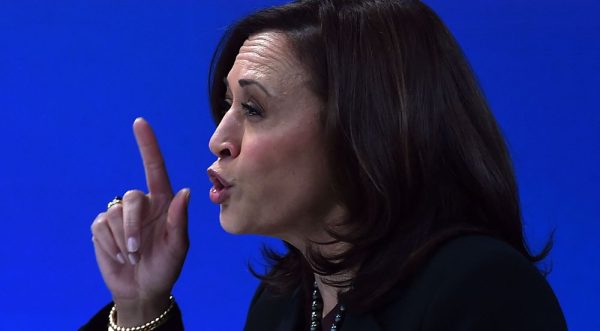
Samizdat – 06.08.2022
On Thursday, Brittney Griner, the 31-year-old American professional basketball player, was sentenced to nine years in prison after she was convicted of smuggling hash oil, an illegal substance in Russia, into the country. The nine year prison term is one of the strongest punishments possible in Russia for drug charges.
U.S. Vice President Kamala Harris is being accused of hypocrisy after she condemned Russia for WNBA player Brittney Griner’s prison sentence. The Phoenix Mercury player was sentenced to nine years in prison for admitting to having accidentally packed vape cartridges, allegedly used for pain management, in her luggage. Griner was also ordered to pay a one million ruble ($16,600) fine.
While U.S. President Joe Biden—along with several U.S. diplomats and government officials—called the ruling “unacceptable” and demanded Russia release Griner, Harris also condemned the conviction via Twitter, labeling the imprisonment of Griner as “wrongful.”
“With today’s sentencing, Russia continues its wrongful detention of Brittney Griner. She should be released immediately. @POTUS and I, and our entire Administration, are working every day to reunite Brittney, as well as Paul Whelan, with loved ones who miss each of them dearly,” Harris wrote on Twitter.
Social media users were quick to jump on the V.P. for her hypocrisy regarding the sentencing of Griner. During her tenure as both San Francisco’s district attorney and California’s attorney general, Harris oversaw more than 1,900 marijuana convictions, and prosecutors under her supervision convicted people on charges related to the substance at a higher rate than her predecessor.
Between 2011 and 2016 while Harris worked as California attorney general, at least 1,560 people were sent to state prisons on marijuana-related charges, according to the Washington Free Beacon. Harris was outspoken about her belief that marijuiana should not be legalized, and fought against a ballot measure to legalize it in 2010.
“Brittney Griner got 9 years for drug possession in Russia… which sounds like most of the criminal sentences Kamala Harris got people for the same thing when she was attorney general of California,” author Tim Young tweeted in response to Harris’ comments.
“You locked up people for possession of marijuana. And you’re only condemning this because the US cannot profit from her incarceration in Russia,” wrote another Twitter user.
Policing the World Is a Full-Time Job
BY PHILIP GIRALDI • UNZ REVIEW • AUGUST 2, 2022
Every leader and top official now in power in the so-called Western World seems to have forgotten that the North Atlantic Treaty Organization (NATO) was founded in 1949 as an alliance that was ostensibly defensive in nature, intended to counter the expansion of Soviet style communism in Europe. That role continued to be the raison d’etre of the organization until communist governments themselves collapsed in both Russia and in the Eastern European states that collectively made up the Warsaw Pact during the 1990s. After that point, NATO no longer had any reason to exist at all as the alleged military threat posed by the Kremlin and its allies vanished virtually overnight.
But clever politicians were quick to put the alliance on life support instead of simply dismantling it. Lacking the threat posed by the Warsaw Pact, NATO was forced to come up with other reasons to maintain military forces at levels that could quickly be enhanced and placed on a wartime footing. Washington and London took the lead in this, citing the now shopworn defense of a “rules based international order” as well as of “democracy” and “freedom.” And fortunately for the national defense industries and the generals, it soon proved possible to find new enemies that provided justification for additional military spending. The first major engagement outside the obligations defined by the original treaty took place in Europe to be sure, but it was in the Balkans where of NATO during the 1995 Operation Deliberate Force. The war ended after the signing of the General Framework Agreement for Peace in Bosnia and Herzegovina in Paris on December 14th 1995. Peace negotiations were finalized a week later but fighting resumed between Kosovo and Serbia in the following year, which led to another NATO intervention that eventually ended with the restoration of Kosovo’s autonomy and the deployment of NATO forces, which bombed the Serbs to compel their compliance with a draft cease fire agreement.
NATO also played a role improbably enough in the US invasion and occupation of Afghanistan, which was justified by claiming that an Afghanistan free to set its own course would become a hotbed of terrorism which would inevitably impact on the United States and Europe. It was a paper-thin argument, but it was the best they could come up with at the time and it also eventually involved soldiers from additional friendly countries like Australia. As we have subsequently seen, however, it was all an argument without merit as Afghanistan became a money pit and a graveyard for thousands of locals and foreign soldiers. It is now again in the hands of the Taliban after a bungled withdrawal of US forces and the collapse of the puppet government in Kabul that Washington had installed.
Turn the clock forward to the present. As everyone but President Joe Biden has recognized, the United States and NATO are currently engaged in a proxy war against Russia in Ukraine, which many observers already believe has some of the attributes of World War III. As Russia neither threatened nor attacked any NATO member state, the argument that the response in arming and training Ukraine was defensive was rendered irrelevant. Nor can it be credibly claimed that Russia is a haven for terrorists, quite the contrary. Nevertheless, Biden has stated that the US will be in the fight on behalf of Ukraine for “as long as it takes.” Does he mean years, and all done without a declaration of war by Congress as required by the US Constitution?
And more appears to be coming. Joe Biden, during last week’s trip to Israel, made clear that the United States is “prepared to use all elements of its national power” to stop Iran from getting a nuclear weapon and has signed a pledge with the Israeli government to commit itself to do so. If Biden presses the argument that Iran is an international threat due to its impending development of nuclear weapons, will he appeal to NATO to support a joint military option to disarm it? I believe he just might do that. And he might just want to consider how the entire set-up and framing of the issue by Israel is somewhat of a trap. Israel considers Iran’s current nuclear program to be intended to create a weapon, which “they continue to develop,” and there are plenty in the US Congress who would agree with that.
So, if Iran is clearly creating a thermonuclear device, the time to strike is now, isn’t it? And bear in mind how the US/Israeli campaign to condemn is multifaceted. Shortly before the meetings held by Biden and his crew with the Israelis, US government sources set the stage for what was to come by going on the offensive regarding reports that Iran may be selling highly capable offensive drones to Russia for use in Ukraine as well as subsequent claims coming out of Washington that the Iranians are seeking to assassinate senior US officials in revenge for the killing of Revolutionary Guards General Qassem Soleimani in January 2020. One wonders why they waited so long and why the White House has chosen to publicize these stories at this point.
And the US and NATO are also getting involved with China’s geopolitical policies, on a path that Beijing is warning is extremely hypocritical and which might lead to armed conflict. The signs that the Chinese might be targeted by NATO, possibly over the Taiwan independence issue, came following a stark warning by US Secretary of State Tony Blinken delivered at the NATO summit in Madrid at the end of June. Blinken accused China of “seeking to undermine the rules-based international order,” the same type of critique recently leveled against Russia and Iran. Blinken’s comment was elaborated on by NATO Secretary General Jens Stoltenberg, who observed how “China is substantially building up its military forces, including nuclear weapons, bullying its neighbors, threatening Taiwan … monitoring and controlling its own citizens through advanced technology, and spreading Russian lies and disinformation.”
Stoltenberg’s indictment of China was followed by a NATO issued “strategic concept” document last that declared for the first time that China poses a “systemic challenge” to the alliance, alongside a primary “threat” coming from Russia. The document copied Blinken’s language, citing “The deepening strategic partnership between the People’s Republic of China and the Russian Federation and their mutually reinforcing attempts to undercut the rules-based international order run counter to our values and interests.”
Finally, the US and British governments collaborated to condemn China as the “biggest long-term threat to our economic and national security.” The declaration came in a July 6th joint news conference in London, where Christopher Wray, director of the FBI, and Ken McCallum, director general of Britain’s MI5, accused China, like Russia, of interfering in US and UK elections. Wray also warned the business leaders in the audience that the Chinese government has been “set on stealing your technology, whatever it is that makes your industry tick, and using it to undercut your business and dominate your market.”
Chinese Foreign Ministry spokesman Zhao Lijian initially responded a few days after the NATO summit, observing that the “so-called rules-based international order is actually a family rule made by a handful of countries to serve the US self-interest,” adding that “[Washington]observes international rules only as it sees fit.” Addressing the issue of the role of NATO specifically, Zhao accused Blinken of using NATO to “hype up competition with China and stoke group confrontation.” He added that “The history of NATO is one about creating conflicts and waging wars… arbitrarily launching wars and killing innocent civilians, even to this day. Facts have proven that it isn’t China that poses a systemic challenge to NATO, and instead it is NATO that brings a looming systemic challenge to world peace and security. Thirty years after the end of the Cold War, [NATO] has not yet abandoned its thinking and practice of creating ‘enemies’ … It is NATO that is creating problems around the world.”
China has a point. What NATO is threatening is war, as it is a military alliance. The Chinese appear to understand that NATO is the world’s largest military bureaucracy which has developed since 1991 an overriding institutional commitment to ensuring its permanent existence, if not expansion, even after it has clearly outlived its own usefulness. So Beijing might justifiably wonder, how does China – on the other side of the globe – fit into NATO’s historic “defensive” mission? How are Chinese troops or missiles now threatening Europe or the US in ways they weren’t before? How are the Americans and Europeans suddenly under military threat coming from China?
The Chinese appear to understand that if there is no threat to “defend” against, then a threat must be manufactured, and that is precisely what we are seeing vis-à-vis Russia, China, Iran and even Venezuela. Washington has become addicted to war and NATO is the chosen tool to give those wars the patina of legitimacy. To launch those conflicts requires either inventing an imaginary threat, or, as in the case of Russia, provoking the very threat the “defensive” bureaucracy was designed to deter or thwart. All indications are that NATO – now embracing 30 countries – is doing both and the results could easily be disastrous for all parties involved. Former congresswoman Tulsi Gabbard particularly abhors the cynical recklessness of the Biden Administration driving the process, explaining how “The reality is, President Biden, members of Congress, leaders in our country, the wealthy, they will have a safe place to be in the event of a nuclear war that they are behind causing while the rest of us in America and Russia, people around the world, will be decimated from this event.”
Prize winning journalist Chris Hedges has also defined the unthinkable that is at stake, and it is past time for Americans and Europeans to take note and stop the madness. Hedges opines that “The massive expansion of NATO, not only in Eastern and Central Europe but the Middle East, Latin America, Africa and Asia, presages endless war and a potential nuclear holocaust.” One might also note that New Yorkers are now being informed about what to do if there is a nuclear attack. Yes, that is precisely the problem – we have an administration in Washington that should be protecting the people living in this country, not setting up scenarios that might lead to their slaughter. Will someone please point that out to Joe Biden?
Philip M. Giraldi, Ph.D., is Executive Director of the Council for the National Interest, a 501(c)3 tax deductible educational foundation (Federal ID Number #52-1739023) that seeks a more interests-based U.S. foreign policy in the Middle East. Website is councilforthenationalinterest.org, address is P.O. Box 2157, Purcellville VA 20134 and its email is inform@cnionline.org.
New Evidence: Fauci Imposed a Vaccine Delay that Cost Trump the Election
By Toby Rogers | July 31, 2022
I. Fauci fires Trump
Think back to July 2020. Trump and Fauci were at war with each other. Key leaders within the Trump administration, including Peter Navarro, wanted to fire Fauci. There were riots in the streets as people protested the murder of George Floyd. And new evidence shows that behind the scenes, Fauci was working to torpedo Trump’s chances for re-election.
We already knew that Fauci, the FDA, CDC, and the pharmaceutical industry went to great lengths to block safe and effective treatments including hydroxychloroquine and ivermectin in order to prolong the pandemic and create the market for Covid-19 vaccines. But a new book reveals that Fauci also forced Moderna to delay their clinical trial by three weeks — which pushed the release of their preliminary results until after the presidential election.
This key piece of information comes from The Messenger: Moderna, the Vaccine, and the Business Gamble That Changed the World published last week by Harvard Business Review Press. The author, Peter Loftus, is a reporter for the Wall Street Journal and they published his essay about the book in their Review section on Saturday. What’s astonishing is that Loftus does not even realize the enormity of the story he just stumbled upon. Cultural capture and too many shots apparently prevent one from connecting the dots, so I will do it for him.
Most people already know the broad brush strokes of the Moderna story — they had never successfully brought a product to market before Operation Warp Speed. They were grifters — they took $25 million from the Defense Advanced Research Projects Agency (DARPA) in 2013 to develop mRNA products that never worked and another $125 million from the Biomedical Advanced Research and Development Authority (BARDA) in 2015 for a vaccine for Zika that also failed. But Fauci really liked these grifters and so when the pandemic began in 2020, BARDA directed $483 million to Moderna for Covid-19 vaccine development — and Moderna cut NIH in on the patents. That gave NIH and especially Fauci control over what came next.
The key paragraphs from Loftus’ WSJ essay are here:
Dr. Zaks [Chief Medical Officer for Moderna] had wanted to use a private contract research organization to run the whole trial, but NIAID officials wanted their clinical-trial network involved. Eventually, Dr. Zaks backed off, and both entities participated. “I realized we were at an impasse, and I was the embodiment of the impasse,” Dr. Zaks said.
Next, when Moderna’s 30,000-person study began enrolling volunteers in July 2020, the subjects weren’t racially diverse enough. Moncef Slaoui, who led Warp Speed’s vaccine efforts, and Dr. Fauci began holding Saturday Zoom calls with Mr. Bancel and other Moderna leaders to “help coax and advise Moderna how to get the percentage of minorities up to a reasonable level,” Dr. Fauci recalled.
Drs. Fauci and Slaoui wanted Moderna to slow down overall enrollment, to give time to find more people of color. Moderna executives resisted at first. “That was very tense,” Dr. Slaoui said. “Voices went up, and emotions were very high.” Moderna ultimately agreed, and the effort worked, but it cost the trial about an extra three weeks. Later, Mr. Bancel called the decision to slow enrollment “one of the hardest decisions I made this year.”
The claim that Fauci cared about racial diversity in the clinical trial is a lie. How do we know this? Later “clinical trials” for Pfizer and Moderna in kids looked at antibodies in the blood, not actual health outcomes, in only about 300 study participants. The number of people of color enrolled in those undersized trials were in the single digits (literally two or three Black participants total) — so those results were not statistically significant. Yet this did not stop authorization. It appears that Fauci’s delay tactics were designed to accomplish a different goal.
Let’s do the math:
Moderna released their preliminary results — claiming 94.5% effectiveness — on November 16, 2020.
The presidential election was less than two weeks earlier — on November 3, 2020.
Trump lost by less than 1% of the vote in 4 key swing states.
Fauci’s demand to slow down enrollment in July 2020 cost Moderna 3 weeks.
If Moderna had released their results 3 weeks earlier — on October 25, 2020, Trump would have scored a major win in the final week of the campaign and won the election.
It does not matter how one feels about Trump or Biden. A massive political win in the week before the election would have convinced enough voters of Trump’s competence and thus pushed Trump’s vote total over the top.
What about Pfizer? They also could have published their preliminary results prior to the election which would have secured Trump’s re-election. According to Loftus, Pfizer “opted out of Operation Warp Speed for fear it would slow the company down.” Pfizer still took $2 billion off of the Trump administration for advance purchase orders. But Scott Gottlieb and Pfizer clearly preferred Biden and so they held their preliminary results until November 9, 2020 — just 6 days after the election. The Biden administration returned the favor by giving Pfizer a blank check and authorizing shots for additional age groups based on the worst “clinical trial” results anyone has ever seen.
The important thing to understand in all of this is that Fauci, the FDA, NIH, and CDC are political functionaries pretending to be scientists. Pandemics, vaccines, and public health are a way for the Democratic Party machine to direct billions of dollars to their base and reward large donors to the party. These companies and their bureaucratic enablers were happy to take money off of Trump. But they knew that they could get an even better deal from Biden.
As you know, the results of this criminal scheme are gruesome. The Covid-19 shots authorized right after the 2020 election have made no discernible impact on the course of the pandemic. Far more people have died of Covid-19 since the introduction of the shots under Biden than during the Trump administration when no Covid-19 shots existed. The Covid-19 shots have negative efficacy and even quadruple-dosed Biden and quadruple-dosed Fauci have contracted Covid-19, twice. These are the deadliest and most toxic shots in the history of the world.
So what started out as a grift turned into mass murder and a crime against humanity.
And now it’s happening again…
II. Pfizer and Moderna move up the release date for reformulated Covid-19 shots in the effort to help Democrats win the midterm elections
On Thursday of last week, the White House and the FDA told their favorite stenographers at the NY Times that Moderna and Pfizer are going to release their reformulated Covid-19 shots, that will completely skip clinical trials, in mid-September.
As readers of my Substack will recall, back on June 28, Pfizer said that the fastest the reformulated shots could be released was October; Moderna said “late October or November” — provided they could skip clinical trials (which of course the FDA granted because they work for Pharma). Did Pfizer and Moderna not understand their own production capabilities? How did Pfizer and Moderna suddenly speed up their production schedule by 6 weeks?
It appears that once again, the public health gatekeepers are doing politics not science. If shots go into bodies in the last two weeks of September, Democrats will claim progress against Covid during October right before the midterm elections on November 8. It’s basically the political win that these same actors denied to Trump (it’s not a public health win, as I will show below).
What’s likely driving this is that Fauci, Pfizer, Moderna, the FDA, CDC, and NIH all want Democrats to retain the House and Senate in order to prevent hearings into their bungling of the Covid-19 response. Of course they also want to keep the Covid-19 vaccine gravy train going as long as possible.
But, you’re surely saying to yourself, we know that these 5th dose reformulated shots are likely to cause catastrophic harms. We’re already seeing a 5% to 15% increase in all-cause mortality across the most heavily vaccinated countries as a result of non-specific effects from these shots. There are 29,790 VAERS reports of death following these shots and this is likely an underestimate by a factor of 41 (so actual death toll = 1,221,390). These reformulated shots are going to use a form of mRNA never tried before and skip clinical trials altogether, so the harms could be even worse. There also seem to be cumulative harms from these shots — the more doses, the more messed up the immune system, the more vulnerable one is to Covid and all sorts of other diseases including cancer.
So how exactly do they plan to get away with this, especially right before an election?
The same way they always get away with it — they own the media. Pfizer and Moderna will rush out press releases claiming that these reformulated shots are a miracle. The CDC’s in-house newsletter, MMWR, will rush out articles and janky studies claiming that these reformulated shots are a miracle. The mainstream media will dutifully report that these reformulated shots are a miracle. Meanwhile, people you know and love — coworkers, friends, neighbors, and family — will be getting injured and killed by these shots. Yet all of the stories in the news will be hosannas about the genius of Tony Fauci, Peter Marks, and the FDA. Billions of dollars of dark money from Pharma will flow into Democratic Congressional campaign coffers. If Democrats can retain the House and Senate they will reward Pfizer and Moderna by blocking any inquiry into the failed Covid-19 response. Win, win, win for Pharma. Everyone else loses.
Which brings me to my last point….
III. Republicans, you have to step up and fight for us or you will lose
Republicans thought that they could take back the House and Senate simply by not being Democrats. Most Republicans did not really fight for us, they just sat back and let Dems destroy themselves. That plan was working until the Supreme Court overturned Roe. Now the Republican advantage in the generic Congressional ballot (‘which party do you prefer’) has evaporated. Pelosi has passed a range of popular bills. Manchin has fallen in line so Biden will likely get some late legislative wins. Gas prices have declined somewhat. And now it appears that Democrats, who were left for dead just weeks ago, will retain the Senate and may retain the House.
IF REPUBLICANS WANT TO WIN THE MIDTERM ELECTIONS THEY HAVE TO MAKE IT ABOUT DEMOCRATS’ FAILED RESPONSE TO COVID!
No more sitting back. No more making warrior mamas do all of the emotional labor for our country. If Republicans want to win they have to make it clear that they will fire, arrest, and prosecute Fauci (and all of his lieutenants) as soon at Republicans take power. Fauci funded the creation of the chimera virus, blocked access to safe and effective treatments, and inflicted deadly toxic vaccines on the entire population. Over 2 million Americans are dead as a direct result of Fauci’s corruption (1 million dead from/with Covid, over 1 million dead from the shots). If Republicans cannot be bothered to sink this two-foot putt then they don’t deserve to win. If Republicans want the votes of the 18 million single-issue medical freedom voters who decide every national election these days — that’s what they have to run on: #ArrestFauci!
Featured Video

Elijah Magnier: Yemen’s strikes are shattering Saudi Arabia’s long-term strategy
or go to
Aletho News Archives – Video-Images
From the Archives
British weapons and personnel doing much of the killing in Yemen
Press TV – June 18, 2019
A detailed report published by the Guardian newspaper has shown how Britain is massively contributing to Saudi Arabia’s devastating war on Yemen as it suggests that London is not only supplying the bombs that fall on Yemenis, but it provides the personnel and expertise that keep the war going.
The comprehensive report by Arron Merat published on Tuesday showed that Britain was doing much of the killing in Yemen as the country continues to provide Saudi Arabia with everything it needs to turn its southern impoverished neighbor into a graveyard.
“Every day Yemen is hit by British bombs – dropped by British planes that are flown by British-trained pilots and maintained and prepared inside Saudi Arabia by thousands of British contractors,” said Merat in the report. … continue
Blog Roll
 Aletho News
- Netizens condemn Japanese drama for projecting Japan’s wartime atrocities onto Chinese characters
- Racist Seinfeld Dances for Joy as Bibi Unveils His New Map
- A West Bank War for Netanyahu’s Election Campaign, Could It Backfire?
- Yemen denounces European Parliament’s ‘hypocritical’ push to blacklist Ansarullah
- Qalibaf: UAE’s UN bid aims to ‘clear the runway’ for ‘Greater Israel’, whitewash genocide
- Pakistan reopens Iran border after boosting security: Report
- Why are so many Brazilians voting for Flávio Bolsonaro?
- Democrats Put Anti-Russia Agenda Ahead of American Workers
- Elijah Magnier: Yemen’s Strikes Are Shattering Saudi Arabia’s Long-Term Strategy
- Pentagon designates Chinese cultural centers national security threat
- If Americans Knew
- Latest updates from Israeli assault on West Bank
- Tourism Ministry launches free food truck tour in US
- “So Much Worse Than People Realize”: Never-Before-Seen Images Reveal Damage at U.S. Bases as Troops Describe Being Abandoned
- UK Bell Review Confirms Only Anti-Israel Attitudes Are Rising, Not Antisemitism
- DAILY UPDATE: Latest essential news on Palestine, Israel, & region
- DAILY UPDATE: Latest essential news on Palestine, Israel, & region
- Damning report shows the media must confront its failures on Gaza
- BBC senior broadcaster speaks out on Gaza coverage
- Netanyahu vows vast West Bank invasion in response to 20-minute skirmish that left 2 Israeli soldiers and 2 Palestinian fighters dead
- Tied up and tortured: Israel using US-made electroshock weapons on Palestinian detainees
- No Tricks Zone
- Sudden Stratospheric Warming, Powerful El Niño Combination May Lead To Extreme Europe Cold, Energy Crisis!
- Two New Studies Find Thwaites Glacier Melt Cannot Be Driven By Human Activity Or A Warming Ocean
- E-Cars Reduce CO2 Emissions By Only 41% Compared To Internal Combustion Engine Vehicles
- Predictions Made By Renowned Climate Professor Over Past Decades Have Been Proven To Be Poor
- New Study Suggests Large Regions Of The Pacific Ocean Have Been Cooling For The Last 80 Years
- Germany’s Green Energy Debacle: High Energy Costs Force Kahla Porzellan to Close After 182 Years!
- New Study: 50 Years Of The Most Aggressive ‘Net Zero’ Policies Can Only Affect The Global Climate By 0.03°C
- US September “Heat” Was No Record…Many Records Set Decades Ago
- Latest European Green Energy Debacle; Portugal’s Largest Flagship Solar Park Insolvent!
- Green Energy Debacle: German Expert Professor Fritz Vahrenholt Warns Of Severe Economic And Social Consequences

