Spy vs Spy vs Spy: The Mysterious Mr. Smolenkov
By Philip Giraldi | Strategic Culture Foundation | September 19, 2019
A new spy story has been making the rounds in Washington, but this time it involved a brave Russian official who allegedly was allegedly recruited while in the Russian Embassy in Washington in 2007 and then worked secretly for the CIA until he was exfiltrated safely in 2017 lest he be discovered and caught. The tale was clearly leaked by the Agency itself to CNN by way of “multiple Trump administration officials.”
The CNN headline Exclusive: US extracted top spy from inside Russia in 2017 landed like a bombshell but then pretty much disappeared as journalists noted a number of inconsistencies in the government-produced account of what had taken place. Matt Taibbi observed succinctly that “Seldom has a news story been more transparently fraudulent…the tale of Oleg Smolenkov is just the latest load of high-level BS dumped on us by intelligence agencies.”
The account that appeared in the mainstream media went something like this: A midlevel Russian official named Oleg Smolenkov was recruited decades ago by the CIA. He eventually wound up in an important office in the Kremlin that gave him access to President Vladimir Putin. Smolenkov was the principal source of information confirming that Russia, acting on Putin’s instructions, was trying to interfere in the 2016 presidential election to defeat Hillary Clinton and elect Donald Trump. It was claimed that Smolenkov was actually able to photograph documents in Putin’s desk. CIA concerns that a mole hunt in the Kremlin resulting from the media revelations concerning Russian interference in the election might lead to Smolenkov resulted in a 2016 offer to extract him and his family from Russia. This was successfully executed during a Smolenkov family vacation trip to Montenegro in 2017. The family now resides in Virginia.
The CNN story and other mainstream media that picked up on the tale embroidered it somewhat, suggesting that although Smolenkov was the CIA’s crown jewel, the US has a number of “high level” spies in Moscow. It was also claimed that the timetable for the exfiltration was pushed forward by CIA in 2017 after it was noted that Donald Trump was particularly careless with classified information and might inadvertently reveal the existence of the source. The allegation about Trump carelessness came, according to CNN, after a May 2017 meeting between Trump and Russian Foreign Minister Sergei Lavrov in which the president reportedly shared sensitive information on Syria and ISIS that had been provided by Israel.
Variants of the CNN story appeared subsequently in the New York Times headlined C.I.A. Informant Extracted From Russia Had Sent Secrets to US for Decades, which confirmed that the extraction took place in 2017 though it also asserts that the decision to make the move came in 2016 when Barack Obama was still president.
Taibbi observes, correctly, that CNN and the other mainstream elements reporting the story elaborated on it through commentary coming from anonymous “former senior intelligence officials.” As the networks have all hired ex-spooks, it raises the interesting possibility that employees of the media are themselves providing comments on intelligence operations that they were personally involved in, meaning that they might deliberately promote a narrative that does not cast them in a bad light.
Next morning’s Washington Post story US got key asset out of Russia following election hacking touched all bases and also tried hard to implicate Trump. It confirmed 2016 as the time frame for the decision to carry out the exfiltration and also mentioned the president’s talk with Lavrov in May 2017, though the meeting itself was not cited as the reason for the move. As Taibbi observes, “So why mention it?”
The Russians have denied that Smolenkov was an important official and have insisted that the whole story might be something of a fabrication. And the alleged CIA handling of the claimed top-level defector somewhat bears out that conclusion. Normally, a former top spy is resettled in the US or somewhere overseas in a fake name to protect him or her from any possible attempt at revenge by their former countrymen. In Smolenkov’s case, easily public accessible online county real estate records indicate that he bought a $1 million house in Stafford Virginia in 2018 using his own true name.
If the Russians were truly conducting a mole hunt that endangered Smolenkov it may have been because the US media and their anonymous intelligence sources have been bragging about how they have “penetrated the Kremlin.” A Washington Post June 2017 articled called “Obama’s Secret Struggle to Punish Russia for Putin’s Election Assault is typical. In that article, the author describes how CIA Director John Brennan secured a “feat of espionage” by running spies “deep within the Russian government” that revealed Russia’s electoral interference.
So, the Smolenkov story has inconsistencies and one has to question why it was deliberately leaked at this time. The only constant in the media coverage is the repeated but completely evidence-free suggestion that the mole was endangered and had to be removed because of Donald Trump’s inability to keep a secret. One has to consider the possibility that the story has been leaked at least in part due to the continuing effort by the national security state to “get Trump.”
Highly recommended is former weapons inspector Scott Ritter’s fascinating detailed dissection of Smolenkov’s career as well as a history of the evolution of CIA spying against Russia. Scott speculates on why the leak of the story took place at all, examining a number of scenarios along the way. Smolenkov, who, according to former CIA officer Larry Johnson, has oddly never been polygraphed to establish his bona fides, might have been a double agent from the start, possibly a low level functionary allowed to work for the Americans so the Russian FSB intelligence service could feed low level information and control the narrative. It is a “dirty secret” within the Agency that many agents are recruited by case officers for no other reason than to enhance one’s career. Such agents normally have no real access and provide little reporting.
Or alternatively, Smolenkov might have been someone who was turned after recruitment or a genuine agent who was trying to respond to urgent demands from his controller in Washington, who was de facto John Brennan, by producing a dramatic report that was basically fabricated. Or the story itself might be completely false, an attempt by some former and current officials at CIA to demonstrate a great success at a time when the intelligence community is under considerable pressure.
Scott also believes, as do I, that the story was leaked because John Brennan and his associates knew that they were deliberately marketing phony intelligence on Russia to undermine Trump and are trying to preempt any investigation by Attorney General William Barr on the provenance of the Russiagate story. If it can be demonstrated somehow that the claims of Kremlin interference came from a highly regarded credible Russian source then Brennan and company can claim that they acted in good faith. Of course, that tale might break down if anyone bothers to interview Smolenkov.
Another theory that I tend to like is that the CIA might be making public the Smolenkov case in an attempt to lower the heat on another actual high-level source still operating in Moscow. If Russia can be convinced that Smolenkov was the only significant spy working in the Kremlin it might ratchet down efforts to find another mole. It is an interesting theory worthy of spy vs. spy, but one can be pretty sure that Russian counterintelligence has already thought of that possibility and will not be fooled.
The reality is that spying is a highly creative profession, with operational twists and turns limited only by one’s imagination. In this case, unless someone actually succeeds in interviewing Oleg Smolenkov and he decides to tell the complete truth as he sees it, the American public might never know the reality behind the latest spy story.
Explaining CIA’s ‘Agent Smolenkov’
By Finian Cunningham | Strategic Culture Foundation | September 16, 2019
The saga of daring escape by a supposed Russian CIA agent from the Kremlin’s clutches and then the added twist of a security-risk American president putting the agent’s life in danger does indeed sound like a pulp fiction novel, as Kremlin spokesman Dmitry Peskov put it.
How to explain this sensational story? “Opportunism” is one word that comes to mind.
The news media who pushed the story, CNN, the New York Times and Washington Post, are vehemently “anti-Trump”. Any chance to damage this president and they grab it.
Also, perhaps more importantly, these media are desperate to salvage their shot-through journalistic credibility since the “Russiagate” narrative they had earnestly propagated died a death, after the two-year Mueller circus finally left town empty-handed.
This damage to supposed bastions of US journalism cannot be overstated. More than two years of spinning speculation-cum-reporting about Russian collusion with Trump and/or interference in US politics has produced not a crumb of substantive fact. That means those media responsible for the “Russiagate” nonsense have forfeited that precious quality – credibility. They no longer deserve to be categorized as news services, and are more appropriately now listed as fiction peddlers.
So when they got the chance to seemingly resurrect their buried “Russiagate” yarn with this latest fable about agent Oleg Smolenkov being exfiltrated from Russia to the US, they leapt at it because their equally buried reputations are also at stake.
As far as we can tell, an anonymous intelligence source started the ball rolling. The source is likely to be former CIA chief John Brennan or former Director of National Intelligence James Clapper. Both are hangouts for the anti-Trump media since they lost their intel jobs at the beginning of 2017, and both are believed to have seeded the “Russiagate” narrative in 2016 from before Trump was elected.
Notably, the current CIA assessment of the latest US media reporting on the exfiltrated spy is that the reporting is “false” and “misguided”. In particular, the CNN spin that the agent (Smolenkov) had to be extricated from Russia in 2017 because Langley feared that Trump may have endangered the supposed Kremlin mole when he hosted Russian foreign minister Sergei Lavrov in the White House in May 2017.
Also of note is the dismissive response from US Secretary of State Mike Pompeo who rubbished the reports. He was head of the CIA during 2017. (Admittedly, Pompeo is a self-confessed liar.)
According to CNN, NY Times and Washington Post, the former spy in the Kremlin, named as Oleg Smolenkov by subsequent Russian media reporting, was a top mole with direct access to President Vladimir Putin. It is claimed that Smolenkov confirmed allegations about a Putin-directed plot to interfere in US presidential elections. The agent is said to have also confirmed that Putin (allegedly) ordered the hacking of the Democratic party’s central database to obtain scandalous material on Hillary Clinton which was then fed to the Wikileaks whistleblower site for the purpose of scuttling her bid for the presidency in November 2016, thus favoring Trump.
Smolenkov was allegedly providing this information on a purported Kremlin interference campaign in 2016.
The US media claim Smolenkov was exfiltrated from Russia by the CIA in June 2017 – out of concern for his safety, which CNN reported was being jeopardized by President Trump due to his implied compromised relations with Putin. Smolenkov and his family disappeared while on a holiday in Montenegro in June 2017.
After the story broke earlier this week about the exfiltrated Kremlin mole, subsequent media reporting tracked down Oleg Smolenkov and his wife living in a $1-million-dollar mansion in Stafford, Virginia. Curiously, public records showed the house purchase was in their names, which seems odd for a supposed top-level spy, who had apparently committed extreme betrayal against the Kremlin, to be living openly. The family apparently fled the house to unknown whereabouts on September 9 after the story about his alleged spy role broke this week.
Who is Oleg Smolenkov? The Kremlin said this week that he previously worked in the presidential administration, but he was sacked “several years ago”. He did not have direct access to President Putin’s office, according to the Kremlin. For his part, Russian foreign minister Sergei Lavrov says he never heard of the man before, never mind ever having met him.
It is understood that Smolenkov previously worked in the Russian embassy in Washington under ambassador Yuri Ushakov (1999-2008). Smolenkov reportedly continued working for Ushakov when the diplomat returned to Moscow after his ambassadorial tenure in the US.
Here is where we may speculate that Smolenkov was recruited by the CIA during his diplomatic assignment in the US. But we assume that the Kremlin’s assessment is correct; he did not have a senior position or access to Putin’s office. By contrast, the US media are claiming Smolenkov was “one of the CIA’s most valuable assets” in the Kremlin and that he was providing confirmatory information that Putin was (allegedly) running an interference campaign to subvert the US presidential elections.
The discerning detail as to the truth of the imbroglio is revealed by the US media claims that Smolenkov corroborated the alleged hacking into the Democratic party database in 2016. However, that specific allegation has been disproven by several top hacker experts, notably William Binney who was formerly technical head at the US National Security Agency. There was no hacking. The damaging information on Hillary Clinton was leaked by a Democratic party insider, possibly Seth Rich, who soon after was shot dead by an unknown attacker. In short, the entire narrative about the Kremlin hacking into the Democratic party is a fiction. The premise to “Russiagate” is baseless.
Thus, if Smolenkov is peddling fiction to his former handlers in the CIA, that means he has no credibility as a “top mole”.
Again, opportunism is the key. Somebody came up with a lurid story about “Russian interference” in US democracy and “collusion” with Trump. Maybe it was Smolenkov who saw an opportunity to win a big pay day from his CIA patrons by flogging them a blockbuster. Or maybe, Brennan and Clapper (known liars in the public record) dreamt up a scheme of Kremlin malignancy to benefit Trump, and if that could be tied to Trump then his election would be discredited and nullified. But what they needed was a “Kremlin source” to “corroborate” their readymade story of “Russian interference”. Step forward Oleg Smolenkov – fired and out of work – to do the needfed “corroboration” and in return he gets a new life for himself and family with a mansion in a leafy Virginian suburb.
CNN, NY Times, Washington Post, Brennan and Clapper are so much damaged goods from past failure of “Russiagate” fabrications, they find an opportunity to salvage their disgraced names by outing the hapless Smolenkov at this juncture.
That then raises the grave question of why he was permitted to live openly in his own name?
There is a sinister similarity here to the Sergei Skripal case in England. Is Smolenkov being set up for a hit which can then be conveniently blamed on Russia as “revenge” by the Russophobic, anti-Trump, deep state US media?
Trump the Russian Puppet. A Story That Just Will Not Die
By Philip Giraldi | Strategic Culture Foundation | September 12, 2019
Certainly, there are many things that President Donald Trump can rightly be criticized for, but it is interesting to note how the media and chattering classes continue to be in the grip of the highly emotional but ultimately irrational “Trump derangement syndrome (TDS).” TDS means that even the most ridiculous claims about Trump behavior can be regurgitated by someone like Jake Tapper or Rachel Maddow without anyone in the media even daring to observe that they are both professional dissemblers of truth who lie regularly to enhance their professional resumes.
There are two persistent bogus narratives about Donald Trump that are, in fact, related. The first is that his campaign and transition teams collaborated with the Russian government to defeat Hillary Clinton. Even Robert Mueller, he of the famous fact-finding commission, had to admit that that was not demonstrable. The only government that succeeded in collaborating with the incoming Trumpsters was that of Israel, but Mueller forgot to mention that or even look into it.
Nevertheless, Russia as a major contributing element in the Trump victory continues to be cited in the mainstream media, seemingly whenever Trump is mentioned, as if it were demonstrated fact. The fact is that whatever Russia did was miniscule and did not in any way alter the outcome of the election. Similarly, allegations that the Kremlin will again be at it in 2020 are essentially baseless fearmongering and are a reflection of the TDS desire to see the president constantly diminished in any way possible.
The other narrative that will not die is the suggestion that Donald Trump is either a Russian spy or is in some other, possibly psychological fashion, controlled by Russian President Vladimir Putin. That spy story was first floated by several former senior CIA officers who were closely tied to the Hillary Clinton campaign, apparently because they believed they would benefit materially if she were elected.
Former CIA Acting Director Michael Morell was the most aggressive promoter of Trump as Russian spy narrative. In August 2016, he wrote a New York Times op-ed entitled “I Ran the CIA. Now I’m endorsing Hillary Clinton.” Morell’s story began with the flat assertion that “Mrs. Clinton is highly qualified to be commander in chief. I trust she will deliver on the most important duty of a president – keeping our nation safe… Donald J. Trump is not only unqualified for the job, but he may well pose a threat to our national security.”
In his op-ed, Morell ran through the litany of then GOP candidate Trump’s observed personality and character failings while also citing his lack of experience, but he delivered what he thought to be his most crushing blow when he introduced Vladimir Putin into the discussion. Putin, it seems, a wily ex-career intelligence officer, is “trained to identify vulnerabilities in an individual and to exploit them. That is exactly what he did early in the primaries. Mr. Putin played upon Mr. Trump’s vulnerabilities… In the intelligence business, we would say that Mr. Putin had recruited Mr. Trump as an unwitting agent of the Russian Federation.”
How can one be both unwitting and a recruited agent? Some might roll their eyes at that bit of hyperbole, but Morell, who was a top analyst at the Agency but never acquired or ran an actual spy in his entire career, goes on to explain how Moscow is some kind of eternal enemy. For Morell that meant that Trump’s often stated willingness to work with Putin and the nuclear armed state he headed was somehow the act of a Manchurian Candidate, seen by Morell as a Russian interest, not an American one. So much for the presumed insider knowledge that came from the man who “ran the CIA.”
The most recent “former intelligence agents’” blast against Trump appeared in the Business Insider last month in an article entitled “US spies say Trump’s G7 performance suggests he’s either a ‘Russian asset’ or a ‘useful idiot’ for Putin.” The article cites a number of former government officials, including several from the CIA and FBI, who claimed that Trump’s participation at the recent G7 summit in Biarritz France was marked by pandering to Putin and the Kremlin’s interests, including a push to re-include Russia in the G-7, from which it was expelled after the annexation of Crimea.
One current anonymous FBI source cited in the article described the Trump performance as a “new low,” while a former senior Justice Department official, labeled Trump’s behavior as “directly out of the Putin playbook. We have a Russian asset sitting in the Oval Office.” An ex-CIA officer speculated that the president’s “intent and odd personal fascination with President Putin is worth serious scrutiny,” concluding that the evidence is “overwhelming” that Trump is a Russian asset, while other CIA and NSA veterans suggested that Trump might be flattering Putin in exchange for future business concessions in Moscow.
Another recently retired FBI special agent opined that Trump was little more than “useful idiot” for the Russians, though he added that it would not surprise him if there were also Russian spies in Trump’s inner circle.
The comments in the article are almost incoherent. They come from carefully selected current and former government employees who suffer from an excess of TDS, or possibly pathological paranoia, and hate the president for various reasons. What they are suggesting is little more than speculation and not one of them was able to cite any actual evidence to support their contentions. And, on the contrary, there is considerable evidence that points the other way. The US-Russia relationship is at its lowest point ever according to some observers and that has all been due to policies promoted by the Trump Administration to include the continuing threats over Crimea, sanctions against numerous Russian officials, abrogation of existing arms treaties, and the expansion of aggressive NATO activity right up to the borders with Russia.
Just this past week, the United States warned Russia against continuing its aerial support for the Syrian Army advance to eliminate the last major terrorist pocket in Idlib province. Once against, Washington is operating on the side of terrorists in Syria and against Russia, a conflict that the United States entered into illegally in the first place. Either Donald Trump acting as “the Russian agent” actually thinks threatening a Moscow that is pursuing its legitimate interests is a good idea or the labeling of the president as a “Putin puppet” or “useful idiot” is seriously misguided.
Revealed as Fraud, CIA’s ‘Kremlin Spy’ Fed Agency Key Intel Behind Russiagate
Sputnik – September 11, 2019
US media has claimed a spy placed high in the Kremlin had to be rushed out of Moscow in 2017 after US President Donald Trump endangered him by discussing intel he revealed. However, the man wasn’t who US intel claimed he was, and the information he supplied, which formed the foundation of the Russiagate investigation, was just as fake.
News emerged Monday that a key CIA source, reportedly in Russian President Vladimir Putin’s inner circle, had both supplied key information backing the Russiagate narrative and later had his cover endangered by Trump, and that the agency had to evacuate him from Moscow. However, the Kremlin revealed Tuesday that the man was a mid-ranking official who never had close contact with Putin and that he wasn’t extracted from the country – he was fired by the Kremlin.
Aaron Maté, a journalist with the Grayzone Project and The Nation, told Radio Sputnik’s Loud and Clear Tuesday that the leak was likely a concocted attempt to boost the CIA’s public image ahead of damning information expected to be published soon, and that it only further undermines the Russiagate investigation that former CIA Director John Brennan set in motion.
“For all the talk that there was in this CNN piece that came out yesterday of Trump being the reason why they pulled this source out of Russia, it turns out that they’ve been trying to extract the source since late 2016, before Trump even took office. And it seems as if, for all the concern about Trump revealing the source’s existence, it’s in fact intelligence officials who’ve revealed the source’s existence, to the point now that we learned yesterday that the source has been living openly in the suburbs of DC,” Maté said.
The story, first published by CNN, did not name Oleg Smolenkov, but referred to him as “the highest level source for the US inside the Kremlin, high up in the national security infrastructure, according to the source familiar with the matter and a former senior intelligence official. According to CNN’s sources, the spy had access to Putin and could even provide images of documents on the Russian leader’s desk.”
The New York Times soon picked up the story, expanding it to include a claim that “the Moscow informant was instrumental to the CIA’s most explosive conclusion about Russia’s interference campaign: that President Vladimir V. Putin ordered and orchestrated it himself. As the American government’s best insight into the thinking of and orders from Mr. Putin, the source was also key to the CIA’s assessment that he affirmatively favored Donald J. Trump’s election and personally ordered the hacking of the Democratic National Committee.”
NBC’s Ken Delanian, who in 2014 was exposed by The Intercept as having had a “closely collaborative relationship with the CIA” that included submitting articles to the agency for editing prior to publication while working for the Tribune, went to work beating the Russiagate drums on Monday, trying to pin the agent’s fate on Trump – and in the process blew Smolenkov’s cover.
However, the supposedly high-up source wasn’t nearly so highly placed, Russian officials revealed.
“[Smolenkov] was fired several years ago under an internal directive,” Kremlin spokesperson Dmitry Peskov told reporters Tuesday. “He didn’t hold any high-ranking posts, so called [presidentially]-appointed posts.”
Brennan, former US President Barack Obama’s CIA director, touted the validity of this source to Obama and to the Director of National Intelligence, James Clapper, the latter of whom now works as a national security analyst at CNN. Brennan reportedly hand-delivered reports from Smolenkov to Obama, bypassing key agency intelligence vetting functions – an action he claimed was to protect the identity of its source.
In turn, Obama increasingly demanded Brennan bring him information from Smolenkov about Putin’s intentions with regards to various questions, including the election – information Smolenkov didn’t have.
“He wanted to please John Brennan, so he just made it up,” Kiriakou, a former CIA agent-turned-whistleblower, noted. “That happens all the time, and this is a problem with a lack of vetting of high-ranking sources at the CIA. They never polygraphed the guy, they never engaged him in what’s called ‘operational testing,’ they just took his word for it – the same way they took the word of the source known as ‘Curveball’ during the second Iraq war.”
In turn, Clapper’s January 6, 2017, report to Obama that the president soon declassified for the public made specific claim to being privy to Putin’s private deliberations – something that by itself exposed the possibility of a mole in Putin’s inner circle to the world, endangering Smolenkov far more than anything Trump did or did not say in subsequent meetings with Russian officials as president, all the more so since Smolenkov was not the highly-placed man Obama or Trump believed him to be.
“Nobody revealed any state secrets during that conversation or even non-state ones,” Russian Foreign Minister Sergei Lavrov noted Tuesday. “This, by the way, was confirmed by then-national security adviser Herbert McMaster, who was present at the meeting. Other people who are at least a little familiar with what was discussed then can also confirm this.”
Maté noted that, if Smolenkov had the high-level access Brennan claimed, he should have been able to warn the Obama administration about several events that caught them completely off-guard, such as the Russian annexation of Crimea or its entry into the Syrian Civil War on Damascus’ side.
“We have seen a pattern where, to get ahead of stories that can be damning towards the intelligence officials who gave us this Russiagate disaster, we’ve seen leaks come out beforehand in an attempt to sort of mitigate the impact, and, you know, that very much fits the pattern here,” Maté told Sputnik, noting the CNN and NYT stories contradicted each other at several points. “That looked to me like an attempt to pin something on Trump, an attempt to make the CIA look good in advance of what could be more damaging information.”
“We are expecting the Justice Department Inspector General’s report coming out soon, so this could be coming out in advance of that,” Maté noted.
“It’s important to stress a few things: first of all, this story raises new questions about the intelligence that was used to justify this whole Russiagate thing, because by all accounts, this source in the Kremlin was critical for the assessment by the intelligence community – basically a process controlled by John Brennan – that Russia launched this massive interference campaign to elect Donald Trump. Well, if this source was so critical, then that’s new reason to doubt John Brennan’s assessment – all the more so since the source, apparently, didn’t have the high-level contacts that [Brennan] claimed,” Maté said.
“And also, we know already that when the House Republicans looked at this, when they did a review of the intelligence process, they found that on this question of Putin’s intentions to elect Trump, that the CIA’s analysis suffered from ‘significant [intelligence] tradecraft failings,’” Maté noted. “We haven’t known up until this point exactly why they said that; I’m guessing here that they were looking at the credentials and the merits of this source that we now know about.”
The company Irwin Cotler keeps: Paul Kagame, Alan Dershowitz and (maybe) the Montreal mob and Jeffrey Epstein
By Yves Engler · September 8, 2019
 If the ancient storyteller Aesop was correct and “a man is known by the company he keeps” what can we learn about Irwin Cotler from his friends and associates?
As I’ve written, the former Liberal justice minister has been a leading anti-Palestinian activist for decades. More recently, he has sought to unseat Venezuela’s government and stoke confrontation with Iran and Russia. Since writing two stories about Cotler earlier this year I’ve come across more about his dubious human rights credentials and links to some questionable characters, including:
- The MEK. Cotler has enabled the violent, cult like, Iranian Mujahedin-e Khalq. In 2012 the Jewish Telegraphic Agency cited Cotler, alongside Alan Dershowitz and Elie Wiesel, as prominent pro-Israel activists who worked with Iranians dissidents to convince the State Department to remove the MEK from the US terrorism list, which paved the way for Ottawa to follow suit. In 2014 Cotler invited MEK leader, Maryam Rajavi, to speak at Iran Accountability Week on Parliament Hill. In “We asked Canadian politicians why they engaged with a ‘cult’-like group from Iran”, Shenaz Kermalli points out that Cotler regularly attends events organized by the MEK-aligned groups Canadian Friends of a Democratic Iran and National Council of Resistance of Iran. The MEK backed Iraq in the 1980s Iran-Iraq war and, according to US government sources, teamed up with Israel to assassinate Iranian scientists more recently. It is thought to be funded by Saudi Arabia.
- Paul Kagame. Asked about Kagame’s human rights record on the sidelines of an event on Rwanda in April, Cotler refused to criticize Africa’s most bloodstained leader. Cotler and the Rwandan president both attended the 2017 American Israel Public Affairs Committee (AIPAC) conference in Washington, DC, and the self-declared human rights champion spoke alongside the “Butcher of Africa’s Great Lakes region” later that year. Cotler has also participated in events put on by the Rwandan High Commission in Ottawa. In 2008 Cotler pushed a House of Commons motion to commemorate genocide prevention/Rwanda’s genocide on April 7. The choice of the day reflects the simplistic, one-sided, version of Rwanda’s tragedy Kagame promotes to legitimate his dictatorship and belligerence in the region. On April 6, 1994, the plane carrying Rwandan President Juvénal Habyarimana and Burundian President Cyprien Ntaryamira was shot down, unleashing the genocidal killings. So why choose April 7, rather than April 6, to commemorate genocide prevention/Rwanda’s genocide? Because Kagame’s RPF shot down the plane carrying the two Hutu presidents and most of Rwanda’s military command, which facilitated their seizing power after a multi-year war
- Proponents of the Responsibility to Protect (R2P) doctrine. A high-minded cover for Western imperialism, R2P was cited by Paul Martin’s government, which included Cotler as justice minister, to justify overthrowing elected Haitian president Jean Bertrand Aristide. Thousands were killed in post-coup violence. Cotler called R2P “arguably the most significant development in the defence of human rights since the 1948 Universal Declaration of Human Rights.” In 2011 Cotler pushed for R2P to be invoked in Libya. He co-wrote a New York Times op-ed headlined “Libya and the Responsibility to Protect” that argued for ousting Muammar Gaddafi. They wrote, “the Security Council should adopt a new resolution to immediately extend recognition to the nascent provisional government of the country, authorize a NATO-supported no-flight zone over Libya to preclude any bombing of civilians, and permit all U.N. members to provide direct support to the provisional government.” That’s largely what transpired. But the NATO war has been a disaster. Eight years later Libya remains divided and the NATO bombing destabilized large parts of Africa’s Sahel region.
- Proponents of the Magnitsky Act. Cotler led the campaign for Canada to adopt sanctions legislation modeled after the 2012 US Magnitsky Act. Designed to demonize Russia, Ottawa immediately sanctioned Russian and Venezuelan officials under legislation that allows the government to freeze individuals’ assets/visas and prohibit Canadian companies from dealing with sanctioned individuals. Cotler recently called for Canada to invoke the 2017 Magnitsky Act to “impose sanctions in the form of travel bans and asset freezes” on Iranian officials. The legislation is named after Sergey Magnitsky who proponents claim was tortured to death for exposing Russian state corruption. The source of the claim is William Browder, an American who got rich amidst the fire sale of Russian state assets in the 1990s. With billionaire banker Edmond J. Safra, Browder co-founded Hermitage Capital Management, which became the largest hedge fund in Russia. Hermitage Capital earned a staggering 2,697% return between 1996 and 2007. Those who question the western-backed story line say Magnitsky was an accountant who helped Browder claim illicit tax breaks. According to this version of the story, Browder exploited Magnitsky’s death – caused by inhumane jail conditions – to avoid being extradited to Russia on tax fraud charges. Investigative journalist Adrian duPlessis recently emailed me about Cotler being “the person who’s opened doors for Browder and his scam in Ottawa.” duPlessis has followed Browder for years, receiving a 1998 National Newspaper Award for Business Reporting about Russian mafia money in North America. As part of the campaign for Canada to adopt the Magnitsky Act, Cotler held multiple press conferences and public meetings with Browder. (While it’s hard to be confident about the truth, I find it difficult to believe that a US capitalist who got rich in Russia in the 1990s would simply turn into a human rights activist. On the other hand, the idea that a wealthy and powerful individual meshed self-preservation with growing Russophobia seems plausible.)
- Organized crime. duPlessis pointed me to Le Journal de Montréal coverage of Cotler’s business associates’ ties to the Montréal mafia. In one of two stories from 2015 the newspaper noted, “for the last decade or so, former Minister of Justice Irwin Cotler has been a shareholder in a company that has financed promoters close to organized crime.” In one of the firms, Faybess Investments, Cotler owned a third of the shares and in the other, Ace Investments, 1/6 of the company. Cotler’s main associates in these companies — Hyman Bloom and Richard Dubrovsky — invested millions of dollars with the notorious Rizzuto family. The police bugged Dubrovsky and Bloom’s offices and their names came up at the Charbonneau inquiry into corruption in Québec. Cotler claimed his role in the companies was passive even though he was vice president of Faybess, which he co-founded with Dubrovsky, for part of the period in question.
- Alan Dershowitz, an important figure in the Jeffrey Epstein pedophilia/rape scandal. Dershowitz negotiated (partly through intimidation) the scandalous “non-prosecution agreement” under which Epstein served 13 months in a Florida jail, which was largely spent on “work release” in an office. A close friend of Epstein, Dershowitz is accused of raping two of Epstein’s sex slaves. In a court filing Virginia Roberts said, “Dershowitz was so comfortable with the sex that was going on that he would even come and chat with Epstein while I was giving oral sex to Epstein.” Roberts added that she had sex with Dershowitz “at least six times”. In the 2015 article “Israel defender Alan Dershowitz has long history of attacking sex abuse victims” Rania Khalek details his aggressive anti-woman positions. In 1997 Dershowitz argued that “puberty is arriving earlier, particularly among some ethnic groups.” As such, the eminent lawyer called for — a position repeated recently — the age of consent to be lowered (if a child reaches puberty at ten should they be legitimate targets for sexual predators?). A close friend and political ally, Cotler would have almost certainly been aware of Dershowitz’s position. In 2004 the Globe and Mail reported, “Dershowitz and Mr. Cotler met at Yale Law School in the early 1960s and are so close that the first person Mr. Cotler called after being appointed to cabinet last December was his friend at Harvard.” In 2014 Dershowitz called Cotler “my mirror image in Canada” and nominated him for the Nobel Peace Prize in 2016. They are both currently part of the Honorary Board of the Jewish Coalition for Kurdistan and Dershowitz is a Senior Fellow at the Cotler chaired/founded Raoul Wallenberg Centre for Human Rights. According to Cotler, “everyone regards Alan as not only the best defender of Israel, but the best defender of the most just of causes in the court of public opinion.” In the Acknowledgments section for The Vanishing American Jew Dershowitz lists Cotler’s name right before Epstein’s. They are both also listed in the Acknowledgments for The Case for Israel.
- Leslie Wexner. Cotler has done a series of events with the Wexner Foundation, including serving as “distinguished faculty member” at the Wexner Israel Fellowship Alumni Institute in Haifa. Jeffrey Epstein was one of three trustees of the Wexner Foundation for over a decade and its namesake, Leslie Wexner, was the main source of Epstein’s wealth. Epstein had power of attorney for a significant portion of Wexner’s fortune and in May 1997 Epstein posed as a talent scout for Victoria’s Secret — owned by Wexner — to lure model Alicia Arden to his hotel room where he sexually assaulted her.
- Other key figures in the Epstein sex scandal. Epstein’s decades-long sex ring coordinator/partner Ghislaine Maxwell is the daughter of Robert Maxwell, a crooked British press baron and Mossad spy. Bill Browder worked for Robert Maxwell before he died in a mysterious boating incident in 1991. Additionally, the co-founder of Hermitage Capital with Browder was Edmond Safra whose name is cited in Epstein’s little black book. Cotler has repeatedly spoken at the Edmond J. Safra synagogue and, as mentioned previously, Cotler hosted a series of events with Browder.
Perhaps all this company that Cotler has kept means nothing, but you’d think, at a minimum, the political, corporate and media establishment that promote his ‘human rights’ credentials might be made anxious by the possibilities it suggests. You’d also think that some mainstream investigative journalist would ask questions. I emailed Cotler to ask if he had met Jeffrey Epstein, been on his private plane or private island. Of course he failed to respond to my repeated messages, but maybe Cotler would feel compelled to answer a CBC, CTV, Globe and Mail, Montreal Gazette or Toronto Star journalist.
Inventing ‘2nd Skripal case’? Moscow rejects any link to asylum-seeker assassination in Germany
RT | August 28, 2019
Russia denies “any links” to the death of a Chechen man who was gunned down in Berlin last week. The German press, meanwhile, said the incident may end up being a “second Skripal case.”
“This case has nothing to do with the Russian state, the [Russian] authorities,” the Kremlin’s spokesperson, Dmitry Peskov, said on Wednesday.
“I categorically reject any links between… this murder and official Russia.”
His comments came in response to speculation that Moscow may have been somehow involved in the assassination of a man in the Kleiner Tiergarten park in central Berlin on Friday. German media identified the victim as 40-year-old Zelimkhan Khangoshvili, a Georgian national of Chechen origin who had fought against the Russian troops during the war in Chechnya. Public broadcaster Deutsche Welle cited a 2017 letter by a local NGO to the migration services, saying that Khangoshvili served under infamous warlords Shamil Basayev and Abu al-Walid, who coordinated terrorist attacks on Russian soil and were killed by Russian security forces.
Khangoshvili is said to have fled Georgia in 2016 after surviving an assassination attempt. He sought asylum in Germany but this was rejected. The German authorities had also reportedly considered him an Islamist threat at some point. Other reports said that Khangoshvili had ties with the Georgian security services and assisted in anti-terrorism operations.
The suspect in Khangoshvili’s murder was quickly apprehended by police. He was identified as 49-year-old Vadim S., a Russian national who recently traveled to Berlin from Moscow via Paris.
The story has caused a stir in the German press. The victim’s brother, Zurab Khangoshvili, claimed that Russian agents committed the crime but provided no evidence. Security sources told Der Spiegel the investigation could potentially be a “second Skripal case” in terms of its “consequences,” if the alleged involvement of Russia is proven.
Last year, former Russian double agent Sergei Skripal and his daughter Yulia were poisoned by a nerve agent in Salisbury, UK. The British authorities quickly pinned the blame on Moscow. This led to London and its allies expelling a number of Russian diplomats and imposing new sanctions on Russia. Moscow has strongly denied any involvement in the incident.
In Search of a Russiagate Scalp: The Entrapment of Maria Butina
By John Kiriakou | Consortium News | August 28, 2019
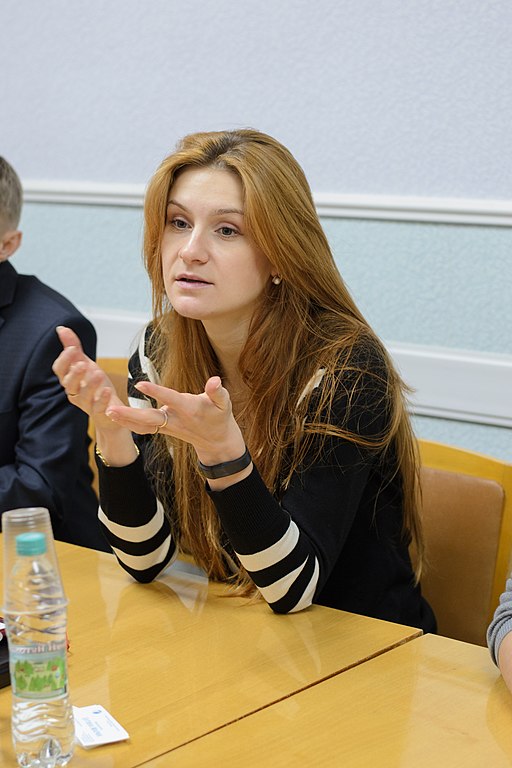
Much has been written about Maria Butina, the Russian “spy” who was accused of seeking to infiltrate the National Rifle Association and other organizations to try to gain a foothold in the Trump campaign and, later, in the White House. Much of it turned out to be nonsense. Butina wasn’t a spy. She wasn’t charged with spying. She wasn’t accused of being a spy. But that’s how the media branded her. The important thing is that there actually were spies around her. And they weren’t who you might have thought.
In the Butina case, the FBI and the Justice Department needed a scalp in the midst of the frenzy about the ultimaely unproven collusion theory of “Russiagate,” and so Butina was charged and convicted of “conspiracy to fail to register as an agent of a foreign government.” Seriously. Let me explain what that means. The Foreign Agents Registration Act (FARA) was passed into law in 1938. It “requires persons acting as agents of foreign principals in a political or quasi-political capacity to make periodic public disclosure of their relationship with the foreign principal, as well as activities, receipts, and disbursements in support of those activities.” The law, the registration, and the database are meant to keep track of foreign lobbyists. Nothing more.
Butina: Unregistered agent falsely portrayed as a spy
In realistic terms it means this: In 2008, I was hired by the Abu Dhabi Chamber of Commerce to write a series of op-eds in support of doing business in the city. I wrote four op-eds and they paid me a fee. But I had to go to the Justice Department’s FARA website and register as a “foreign agent,” meaning that I was being paid by a foreign government. No problem. It didn’t mean that I was a “secret agent” for Abu Dhabi. It just meant that I was temporarily in the employ of a foreign government.
Washington attorneys and lobbyists do this kind of thing every day. And more often than not, they don’t register, either because they are too busy, they don’t realize that they have to, or they don’t believe, as in the current case of Washington super lawyer Greg Craig, that they have to. They are very rarely prosecuted.
Anybody can go to the FARA website and do a records search. I did one for the purpose of this article to search for people I know—attorneys, friends, acquaintances—and found many of them taking money from the governments of Libya, Chad, Jordan, Saudi Arabia (lots of them), Greece and other countries. It’s no big deal. It’s just a paperwork exercise.
In the case of Maria Butina, though, the paperwork was the hook to arrest her and to use her failure to register under FARA as leverage to get her to testify about her “work.” The problem, at least for the FBI, was that she wasn’t a spy. As things turned out, she really was just an overly-aggressive Russian grad student at American University who really, really loved guns and was trying to ingratiate herself with the NRA. But the Justice Department came down on her like a ton of bricks, forced her into taking a plea, and sentenced HER to 18 months in a federal prison: for conspiring to fail to fill out a form. The federal sentencing guidelines for a first-time offender violating this law is 0-6 months in a minimum-security work camp and a fine of up to $5,000. That, apparently, was never an option for Butina.
Forgive me if this is burying the lede, but I also want to talk about how Maria Butina got into this predicament in the first place. We know that she was very active in the gun rights movement in both Russia and the U.S. and that she sought to improve contact between gun groups in both countries. We also know that she met and began dating Patrick Byrne, the founder and CEO of Overstock.com. We learned recently, thanks to Byrne himself, that he was a longtime FBI source and that the FBI directed him to begin dating Butina. He did so. And he reported back to the FBI that she was simply a graduate student. That wasn’t good enough for the FBI, though and, according to Byrne, he was instructed to go back to Butina, to begin a sexual relationship with her, and to again report back to the FBI. He did that, too.
In the end, the Justice Department accused her publicly of “trading sexual favors” for access, an accusation that prosecutors had to withdraw. It was patently untrue. But that didn’t stop them from accusing her in the press of being a Russian spy, which she was not. And it didn’t stop the judge from giving her three times the maximum sentence called for by the sentencing guidelines.
I will ask your forgiveness again if I sound like a broken record. But this is how the FBI makes their cases. They entrap people. I’ve written extensively about how the FBI brazenly carried out a sting operation against me (unsuccessfully) that could have resulted in an espionage conviction and as much as 30 years in prison. They did the same thing to Butina.
Butina wasn’t committing a crime, so they just made something up, leaked it to the press, allowed it to influence the public and the judge, and hoped she would cave and take a plea. She did. Byrne went on CNN last week to say that two of the three people who instructed him to do all of this were James Comey, Peter Strzok, and another as-yet-unnamed individual. The operation was hatched at the top. The whole story sickens me.
With the deck stacked the way it was, there was probably nothing that Butina or her attorneys could have done to save her. The fix was in. I wish I had been able to convey to her something that one of my attorneys said to me on the day that I finally took a plea to a greatly reduced charge in 2012: “Do you know what your problem is? Your problem is that you think this is about justice. It’s not about justice. It’s about mitigating damage.” Nice system we have.
John Kiriakou is a former CIA counterterrorism officer and a former senior investigator with the Senate Foreign Relations Committee. John became the sixth whistleblower indicted by the Obama administration under the Espionage Act — a law designed to punish spies. He served 23 months in prison as a result of his attempts to oppose the Bush administration’s torture program.
Does Israel Interfere in American Elections?
Ask Congresswoman Rashida Tlaib
By Philip Giraldi • Unz Review • August 27, 2019
Does anyone remember what the Mueller investigation was all about? It was to determine whether the team surrounding candidate and then president-elect Donald Trump had colluded with a foreign power, presumed to be Russia. It did not discover any such collaboration to get Trump elected president, but it did discover a foreign nation that had directly intervened with key players surrounding president-elect Trump to get them to do it a favor. That country was Israel, but somehow the media never quite managed to pull it all together even if leading public intellectual Noam Chomsky was able to, saying “… if you’re interested in foreign interference in our elections, whatever the Russians may have done barely counts or weighs in the balance as compared with what another state does, openly, brazenly and with enormous support. Israeli intervention in US elections vastly overwhelms anything the Russians may have done, I mean, even to the point where the prime minister of Israel, Netanyahu, goes directly to Congress, without even informing the president, and speaks to Congress, with overwhelming applause, to try to undermine the president’s policies…”
This is how Jewish power works on behalf of the Jewish state. It is done right out in the open, at least if one knows where to look, and it operates by what the intelligence community would refer to as misdirection. That means that you never talk about Israel itself, except in a positive, laudatory fashion, you never mention Jewish power in America, and, finally, you have in reserve some fabricated threats that can be surfaced to dominate discussion and render Israel’s malign activity invisible.
Currently, the Russian threat is the enemy du jour. Even though we now know that “Russiagate” never existed in any serious form, it continues to be hyped by both the Democratic Party and by the accommodating media as the over-the-horizon threat to American democracy. It is now being claimed, minus any real evidence, that the Kremlin has a plan to ruin the upcoming 2020 election by way of nationwide tampering with the voting machines and the electronic tallying procedures. Oddly enough, the states, where the voting actually takes place, have not noticed any attempted Russian interference. As the story goes, if the Russians are successful, no one will have any confidence in the results and the American republican experiment will collapse in ruins.
No one is, of course, asking why Moscow would want to change a United States that, for all its power, is so politically inept and corrupt from top to bottom that it found itself unable to stage a coup in Venezuela. If the U.S. government collapses, it might well be replaced by something more authoritarian and, dare I say, more efficient, that would certainly pose a greater threat to Russia, so why would Putin want that?
Nevertheless, many people who should know better are hyping the threat. I sometimes peruse the Defense One website, a warmhearted place funded by defense contractors where all those people who want to blow up the world can share bon mots and grin about all the money they are making.
Last week I noted a particularly loathesome article on the site “Here’s what foreign interference will look like in 2020,” written by one Uri Friedman, who I presume to be – inevitably – an Israeli. Uri is very upset about all those evil countries that will be/might be interfering in the election, to include Russia, China, Saudi Arabia, Iran, Venezuela, Syria, North Korea and the United Arab Emirates – though he does exclude the one country that is most likely to interfere, which is, of course, Israel. Uri is described as a “a senior associate editor at The Atlantic, where he oversees the Global Channel.” The Atlantic is in fact a media black hole, where all semi-literate journos of a globalist persuasion go to die.
Uri begins with the sub-headline, “The incentives for foreign countries to meddle are much greater than in 2016, and the tactics could look dramatically different” followed by:
“Russia is ‘doing it as we sit here.’ This stray line, buried in seven hours of testimony on Capitol Hill, wasn’t just Robert Mueller’s way of rebutting the charge that his investigation into the Kremlin’s interference in the 2016 presidential election amounted to a two-year, $32 million witch hunt. It was also a blunt message to the lawmakers arrayed before him, the journalists hunting for a bombshell, and the millions of Americans monitoring the proceedings: We’re all here fighting the last war, when we really should be bracing ourselves for the coming one. The Russians ‘expect to do it during the next campaign,’ the special counsel continued, and ‘many more countries are developing capability to replicate’ Moscow’s model.”
Friedman states that “It’s unclear whether the Russian government will reprise most infamous and innovative act in 2016: the hacking and leaking of emails from the Democratic Party and Hillary Clinton’s campaign” before moving on to the details of Moscow’s alleged subversion. He considers all allegations about Russia to be truthful even when they were never proven. The Democratic National Committee never cooperated with the FBI after their supposed hack, but instead used their own very suspect firm to do the investigation. And the Mueller investigation took that report at face value in spite of the company’s very clear conflict of interest.
That about sums up Friedman’s rather lengthy and convoluted argument, though he does omit any consideration of how many foreign elections the United States government acting through its intelligence agencies interferes in each year. Or indeed how much CIA Director John Brennan and the FBI’s James Comey themselves interfered in the 2016 election on behalf of Hillary Clinton. But he does speculate that “This is the shoe that didn’t drop in 2016. A Senate Intelligence Committee report released in July found that while there’s no evidence that votes were altered or vote tallies manipulated during the past U.S. presidential election, the Russians likely targeted election systems in all 50 U.S. states, including research on ‘election-related web pages, voter ID information, election system software, and election service companies.’ In a couple of cases, the Russians succeeded in breaching state election infrastructure. Among the theories aired in the report about Moscow’s motivations is that it was cataloging ‘options or clandestine actions, holding them for use at a later date.’”
In other words, Friedman actually concedes that Russia didn’t do anything and the evidence that it is planning an attack for 2020 is thin to non-existent. But here in the United States, other foreign agents are hard at work to remove the two Muslim women elected to the House of Representatives in 2018 “for Jewish reasons.”
Philip Weiss of Mondoweiss reports how the tale of powerful Detroit region-based Jews raising money and pulling in political markers to try to defeat Rep. Rashida Tlaib has been circulating on the web. Per Weiss, Ron Kampeas of the Jewish Telegraphic Agency reported on a gathering of Jewish power brokers in Detroit three weeks ago, arranged by a leading Jewish organization, at which they vowed to raise money to get rid of Tlaib because she supports a boycott of Israel. Tlaib is a Muslim woman and is a U.S. born and raised Palestinian-American.
Tlaib responded to the story on twitter: “This type of hate never succeeds when the truth is on our side. Palestinians *are* dehumanized. Those who want to suppress the truth by trying to discredit me can #bringit. My sidy [grandmother in Palestine] taught me of the days where everyone lived side by side in peace & that is what I will fight for.”
The meeting was held at Bloomfield Hills Michigan branch office of the Jewish Federation, the largest Jewish group in the United States. It included many local Jewish leaders and potential political donors who are clearly not bothered by dual loyalty, but it did not appear to include anyone who actually lives in Tlaib’s district. Nevertheless, consensus was quickly established that “the Palestinian-American freshman in the 13th District [Tlaib] has got to go.”
One participant declared “We in this community will go against Rashida Tlaib” while another described how there had already been an approach to Brenda Jones, the Detroit City Council president, who had been defeated in 2018 by Tlaib. Money was being raised for her campaign, according to another participant.
The thinking in the room was that the African-American community in the 13th Congressional District would support a single black candidate — likely Jones — and that candidate would also be able to draw on considerable pro-Israel support for funding and favorable media coverage.
There was some pushback, with a rabbi telling Kampeas that a Jewish organized effort to remove Tlaib would be “catastrophic.” He observed that it would be such an open and blatant demonstration of Jewish power that it would be a major setback to the effort to keep younger, more liberal Jews, who are suspicious of power politics, engaged.
The rabbi was being naïve. Removing politicians who are not fully on board with the Israel agenda is normal practice and has been for many years. Just ask Senators William Fulbright and Chuck Percy or Congressmen Paul Findley, Pete McCloskey, and Cynthia McKinney. Criticizing Israel means not being reelected to Congress next time around, and it is not because Israel is greatly loved by voters. It is because Jewish-American citizens who are protective of Israel are willing to organize and collect money to support alternative candidates in any congressional district in the country, even where they do not reside, just as they plan on doing to Tlaib. Their goal is to defeat anyone who dares to say anything against Benjamin Netanyahu and his gang of war criminals or, even worse, suggest that Palestinians just might be human beings and might actually have rights.
Israel has the most powerful foreign policy lobby in Washington but it operates as freely as it does by pretending that it has no power at all, that American involvement in the Middle East is driven by U.S. interests. That is complete nonsense and has been so for over fifty years as the Lobby has tightened its grip. Until more congressmen like Rashida Tlaib get elected and begin to speak out, the corrupt status quo will, unfortunately, continue to prevail.
Philip M. Giraldi, Ph.D., is Executive Director of the Council for the National Interest, a 501(c)3 tax deductible educational foundation (Federal ID Number #52-1739023) that seeks a more interests-based U.S. foreign policy in the Middle East. Website is councilforthenationalinterest.org, address is P.O. Box 2157, Purcellville VA 20134 and its email is inform@cnionline.org.
The Greenland Connection
Irrussianality | August 22, 2019
US President Donald Trump has been rightly mocked in the past week for his alleged desire to buy Greenland from Denmark. What on earth put this crazy idea into Trump’s head, people rightly asked. Fortunately, we now have an answer, courtesy of The Guardian’s US columnist Richard Wolffe – Russia put him up to it!
I see that until recently Wolffe was ‘vice president and executive editor of MSNBC.com’, which explains a lot – MSNBC having been the no. 1 cheerleader in the Russiagate scandal in the US. The Trump-Russia story long since jumped the shark, but somehow it keeps finding extra sharks to leap over. Let’s take a look at what Wolffe has to say.
Greenland doesn’t just bubble into Trump’s mind randomly … But it is very much on Russia’s radar. Earlier this year, Russia revamped its arctic circle military base on tiny Kotelny Island, which sits close to the shipping routes that are opening up as the polar region warms catastrophically.
There are unknown quantities of oil, gas and rare earth minerals in the arctic, and the region’s powers – Denmark among them – can either green light a global free-for-all or restrain the usual human plunder of one of the last pristine frontiers on the planet. You can guess where Russia sits on this spectrum of environmental concerns in the middle of our climate crisis.
It is one of the sickest Trump jokes that his half-baked idea of buying Greenland should be seen as American machismo when it is yet another sign of Putin’s puppet American presidency at work.
‘Lazy journalism’ was the response of a distinguished British guest I showed this article to at breakfast today. It was very typical British understatement. There’s no argument here, no flow of logic from facts to conclusion, just an assertion entirely disconnected from everything which has gone before. Why Russia’s Arctic interests should prompt it to persuade Trump to try to buy Greenland isn’t explained. In reality, the last thing Russia would want, in an era of US-Russian tension, is an expanded American presence in an area of great and growing important to the Russian economy. The idea that Trump wanting to buy Greenland is proof that he’s a Russian ‘puppet’ is beyond bizarre.
By now, of course, it’s no surprise that the editors at outlets like The Guardian seem to have lost all sense of responsibility when it comes to the case of Trump-Russia, and are happy to publish any type of drivel. But Wolffe’s article makes the mind boggle at the lack of intellectual competence required to gain top executive positions at MSNBC. Perhaps the only explanation for it lies in the realm of pop psychology. For according to psychological research, debunking conspiracy theories doesn’t stop people believing in them; in fact, believers who are shown that their theories are wrong end up on average believing in them even more fervently. This article illustrates the point: the Trump-Russia connection has become an article of faith, a religious belief so absolutely true that all facts have to be bended to fit it, while all the evidence to the contrary serves only to reinforce the faith even further. Russiagate may be nonsense, but if this article is anything to go by, it has turned the brains of a large section of the political left into mulch.
Getting Real With the US Foreign Policy Establishment Realists
By Michael Averko | Strategic Culture Foundation | August 21, 2019
On Russia-related matters, the more sane among us can perhaps be forgiven for becoming sedated by the kind of absurdities regularly spewed by some high profile individuals. The realist wing of the US foreign policy establishment has at times held back in rebuking this reality. We all have our biases, with the ideal to nevertheless be reasonably fair and balanced – a point which leads to a detailed critical overview of some trends among US foreign policy establishment realists.
The realist leaning National Interest, exhibits a different choice of words, relative to actions taken by the Russian and US governments. At that venue, George Beebe’s August 12 piece “How Trump Can Avoid War With Russia,” states: “Reducing Russian cyber aggression will require agreeing on rules to govern US as well as Russian involvement in the affairs of other states. Punishing Moscow’s transgressions must be complemented by rewards for good behavior, or we will simply reinforce perverse incentives for Russia to defy American policies, deepen security cooperation with China, and subvert NATO and the EU.”
In comparison, Beebe is tame in his prose dealing with post-Soviet US actions (in Yugoslavia, Iraq, Libya and Syria), which within reason can be considered as unnecessarily aggressive and deserving of condemnation. The aforementioned “Russian cyber aggression“, is something continuously brought up with a lack of conclusive evidence. Beebe’s use of “punishing” versus “rewards” towards Russia is along the lines of treating a child.
Dmitri Simes’ August 8 National Interest article “Delusions About Russia,” begins with “Russia is a dangerous adversary.” Neocons and neolibs will find little, if any disagreement with his opening comment. In conjunction with that thought, the second sentence in Simes’ piece is somewhat contradictory in saying “But treating it as an outright enemy could result in a self-fulfilling prophecy, triggering mortal threats to its neighbors which otherwise might not be in the cards.”
Enemy (whether outright or otherwise) is a synonym of adversary. In the post-Soviet era, Russia and America haven’t fought each other. With that in mind, the use of enemy and adversary is in line with tabloid sensationalist inaccuracies, as opposed to a realist seeking a more balanced overview. (The National Interest has had its tabloid moments, like Michael Peck’s April 3, 2016 article “How Poland Saved the World From Russia,” which I took some pleasure in answering.)
Putting aside the attempt to accommodate neolib and neocon biases, here’s an alternative to Simes’ opening salvo: “Russia could be a dangerous adversary. This can unnecessarily occur by incessantly disregarding legitimate Russian concerns.” Thereafter, a litany of fact based examples can be provided.
Categorizing Russia as a “formidable geopolitical rival” to America (and vice versa) arguably serves as a better characterization than “dangerous adversary”. In line with a pragmatic approach, this suggestion is in sync with the foreign policy realist, who second guesses the extent to which these two countries should be at odds with each other.
From a non-establishment realist perspective seeking improved US-Russian ties, the rest of Simes’ piece is for the most part agreeable. Not too long ago, the US based mass media journalist Natasha Bertrand (who the Johnson’s Russia List promoted blogger “Yalensis” has called a “whore”) suggested in so many words that Simes might be, or is, a Kremlin flack. It’s that kind of mass media portrayal which might compel Simes to express himself in the beginning of his article at issue. (Bertrand has ties to MSNBC, Politico and The Atlantic.)
Regardless of whether that’s the case, there’s a basis for the US foreign policy establishment to broaden itself with other sources. BTW, Simes has been at the forefront in having the likes of the Atlantic Council’s John Herbst and former Obama administration official Charles Kupchan, appear on Russian national television, where he co-hosts a show on Channel 1. Comparatively speaking, the major US TV news networks don’t (in overall terms) do a better job in getting diverse views on issues concerning US-Russian relations.
This very point leads to the matter of projection. A US mass media elite saying that Russian media is restricted comes to mind. Projecting some negative US behavior to Russia relates to the suspect claim that the Russian government is looking to promote racial division in the US. That demonic image of the Kremlin was spun by NBC’s Richard Engel this past May. A couple of months later on NBC, US Democratic Party presidential candidate Kamala Harris, flippantly presented this claim as fact, minus any conclusive proof.
Upon further review, Engel’s “proof” includes a subtle acknowledgement of lacking conclusive evidence – an underhanded way of covering his butt if the claim gets completely demolished. Russia is by no means a monolithic country. As is true with many, if not most other nations, individual Russians can pursue agendas on their own, without the approval of the Russian government. The US comedian Dave Chappelle aptly noted that Russia isn’t responsible for bigoted instances in the US. In Russia, the US and elsewhere, there’ve been features on intolerance in the US, with some of that coverage being inaccurate.
Regarding a foreign government seeking to sow ethnic discord in another country, consider the comments of the US State Department’s George Kent at a one-sided Capitol Hill discussion on Crimea, hosted this past March by the Atlantic Council, US Institute of Peace and Ukrainian Embassy. At about the 45 minute mark of this taped event, Kent pointedly said that “Crimea is Ukrainian” in the Ukrainian and Crimean Tatar languages – never minding the majority ethnic Russian population in Crimea and the fact that Russian is the most preferred language there. In addition, Kent made no mention that the majority of Crimea’s ethnic Ukrainian population support Crimea’s reunification with Russia.
Kent’s suggestive advocacy to pit non-Russians in Crimea opposed to Russia/Russians was propagandistically presented by Nick Schifrin in an Al Jazeera segment around the time of Crimea’s reunification with Russia in 2014 – something I had previously noted. Upon being reunited with Russia, Crimea has been spared the level of nationalist violence that has existed in some other parts of the former Ukrainian SSR. Within Crimea, there’s no noticeable call to leave Russia and rejoin Ukraine.
Over the years, Doug Bandow has expressed views which generally put him in the realist wing of the US foreign policy establishment. His comments on Crimea further highlight some of the limits within US foreign policy establishment realist circles. Bandow’s August 30, 2018 National Interest article and August 1, 2019 American Conservative piece, advocates an internationally supervised referendum in Crimea.
It’s crystal clear that a well over 2/3 majority in Crimea support their area being reunited with Russia. It’s a high point of hypocrisy to dwell on Crimea having another referendum, while not advocating a referendum for Kosovo. Such an inconsistency jives with the anti-Russian biases regularly presented in US mass media without much of a rebuttal.
On the subject of Russia and Ukraine, I’m reminded of a September 5, 2014 PBS NewsHour segment, where noted foreign policy realist John Mearsheimer said: “The Russians have made it very clear that they’re not going to tolerate a situation where Ukraine forms an alliance with NATO, the principle reason that Russia is now in Ukraine and trying to wreck Ukraine.
And let’s be clear here. Why Russia is trying to wreck Ukraine, is because Russia doesn’t want Ukraine to become part of the West. It doesn’t want it to be integrated into NATO or the EU. And if we follow the prescriptions that Bill and I know Mike favors as well, what we are going to end up doing is further antagonizing Putin. He is going to play more hardball. And the end result is that Ukraine is going to be wrecked as a country, and we’re going to have terrible relations between Russia and the West, which is not in Russia’s interest and not in our interest.”
At a University of Chicago event, Mearsheimer also singles out Russia as seeking to “wreck” Ukraine. He doesn’t use that word to characterize Western actions. Hence, his usage comes across as disproportionate and puzzling. (Offhand, I don’t recall Mearsheimer using a word like “wreck” to describe US actions in Yugoslavia, Iraq and Libya.) When compared to Russia, Mearsheimer has said that he finds more fault with the Western stances taken on Ukraine.
All of the following highlighted points have been agreeably acknowledged by Mearsheimer:
– A good deal of Ukraine’s problems pertain to some internal dynamics in Ukraine, which don’t specifically involve Russia or the West.
– The leading Western governments took a casual approach to the overthrow of Ukraine’s democratically elected President Viktor Yanukovych, shortly after he signed an internationally brokered power sharing arrangement with his main opponents.
– Following Yanukovych’s overthrow, there were a series of increased anti-Russian acts in Ukraine.
– Russia (prior to Yanukovych being overthrown) was if anything more open than the leading Western nations to a jointly negotiated Russian-Ukrainian and Western agreement on how Ukraine’s economy should develop.
– Forget about Russia for a moment. Like it or not, there’re pro-Russian elements in Ukraine who’ve opposed some key aspects of the Euromaidan. The overwhelming majority of the Donbass situated rebels are from the territory of the former Ukrainian SSR. For its part, the Russian government can’t be seen as being too oblivious to the concerns of Russian speaking pro-Russians just outside Russia’s border.
I’ll add that it’s ultimately not in Russia’s interest to have on its border, a relatively large country like Ukraine, with considerable socioeconomic problems. Such a scenario can lead to a negative spillover effect. On the other hand, there’re anti-Russian elements who (whether they admit to it) seek to make propaganda points out of increased tensions with Russia. A good number of these folks reside safely beyond Russia and Ukraine.
The Curious Case of the Missing Professor Mifsud
By Johanna Ross | August 13, 2019
In The Times newspaper on July 30th, appeared a short and succinct article, easily missed were it not for its intriguing headline: ‘Missing academic Joseph Mifsud at heart of Mueller investigation’. The academic in question, one may or may not have heard of, depending on the extent to which one is reliant on mainstream media for keeping abreast of the news. But anyone attempting to keep up with the complex and murky world of the Mueller investigation, may be familiar with the name of this mysterious and elusive figure.
For it is none other than Professor Mifsud, affiliated with both the Universities of Stirling and East Anglia in the UK, that was identified by the FBI as being the source of the information that Russia had ‘dirt’ on Hillary Clinton. And intriguingly, the same Professor Mifsud who disappeared in October 2017 and has been missing ever since.
It was in April 2016 that Mifsud, who was qualified in education but somehow managed to find his way into the world of international diplomacy (becoming director of the London Academy of Diplomacy in 2012), reportedly met George Papadopoulos, foreign policy advisor to the Trump campaign, where he is said to have told him that the Russian government had ‘dirt on Hillary Clinton’. This information was then allegedly passed by Papadopoulos to the Australian High Commissioner in London, before being repeated to US authorities; that effectively Papdopoulos had known about the DNC hack prior to it being carried out. In short, Mifsud was the key to the whole ‘Russiagate’ scandal.
At the beginning of the Mueller investigation, Mifsud was widely portrayed as a Russian spy in the Western media. He is described in the Mueller report as having ‘connections to Russia’ and ‘having maintained Russian contacts’ as if that was somehow conclusive proof he was working for the Russians. Former FBI director James Comey also wrote in an opinion column in the Washington Post in May this year where he stated bluntly that Mifsud was a ‘Russian agent’. However as the Mueller investigation has trundled on and been exposed for being nothing more than a performance along the lines of Hans Christian Anderson’s ‘Emperor’s New Clothes’, the argument being put forward by the Republicans that Mifsud is a Western intelligence operative is looking more plausible.
When Rep. Jim Jordan (R, Ohio) questioned Robert Mueller why it was that Mifsud was reported to have lied three times to the FBI but was never indicted, Mueller replied simply that “I can’t get into internal deliberations with regard to who or who would not be charged.” Jordan responded in disbelief: ‘The guy who launches everything, the guy who puts this whole story in motion, you can’t charge him. I think that’s amazing.” Jordan then asked Mueller if Mifsud was Western or Russian intelligence, to which Mueller replied “Can’t get into that.” As Devin Nunes, ranking member of the House Intelligence Committee said during his opening remarks, Mifsud “is widely portrayed as a Russian agent, but seems to have far more connections with Western governments, including our own FBI and our own State Department, than with Russia.”
Meanwhile, all interviews carried out with Mifsud before his disappearance deny the claim that he discussed Russian government ‘dirt on Hillary Clinton’ with George Paradopoulos. According to Robert Mueller’s report, in an interview with the FBI in February 2017, Mifsud “denied that he had advance knowledge that Russia was in possession of emails damaging to candidate Clinton, stating that he and Papadopoulos had discussed cybersecurity and hacking as a larger issue and that Papadopoulos must have misunderstood their conversation.”
Whether Papadopoulos misunderstood or not, we will probably never know. But the idea of Misfud being an agent for the West is gaining traction with Republicans. Why is it that when so many people were indicted for providing false statements, but not Mifsud? If Mifsud was indeed a Russian agent, and had numerous contacts within western governments, why is it that they don’t seem in the least concerned by the fact they could have been compromised by him? And as Lee Smith has pointed out, writing for RealClearInvestigations, Mifsud has closer ties to western governments and institutions than to Russia, including the CIA, FBI and British secret service. Indeed, during his time in London and Rome he was reportedly involved in training diplomats, police officers and intelligence operatives.
Perhaps the main thing we can take away from this chapter in the fiction that is Russiagate, is the fact that these questions are not being posed by journalists. Hardly anyone in the western mainstream media seems prepared to question the narrative presented by the Democratic lobby that Mifsud was a Russian spy, complicit in a Putin-sponsored attempt to influence the US election. As Jonathan Turley, Shapiro Professor of Public Interest Law at George Washington University has written: “The most credible point about Mifsud is that his relative anonymity in news coverage reflects a broader problem that there is a consistent effort to preserve a narrative that the Russians interfered in the 2016 election to help Trump.”
And yet without any Russian actors featuring in this tale, it is becoming increasingly difficult for the Democrats to keep pushing this narrative of Russian involvement. Mifsud has been vital so far, and his disappearance only emphasises further how important a protagonist he is in the Russiagate hoax. If he were to go on record as saying he worked for the FBI not the Russians, it would bury the collusion theory forever. So let’s not expect him to surface any time soon…
Featured Video
EUROPE FEARS RUSSIA’S NEXT MOVE / Ian Proud
or go to
Aletho News Archives – Video-Images
New Book
New Book: No Autoimmunity The Body Doesn’t Attack Itself
Lies are Unbekoming | September 24, 2026
 The label for Humira, once the best-selling drug in the world, lists its risks in plain print. One of them, in the label’s own words, is new “autoimmune” disease.
A drug prescribed for a condition labelled autoimmune carries a warning that it can cause a condition labelled autoimmune. That contradiction sits in every box, on a folded paper almost nobody reads.
My new book starts there.
No Autoimmunity: The Body Doesn’t Attack Itself
For seventy years, “your body is attacking itself, and we don’t know why” has ended the conversation for people diagnosed with multiple sclerosis, lupus, rheumatoid arthritis, Hashimoto’s, Type 1 diabetes, Crohn’s and psoriasis. More than eighty conditions now carry the autoimmune label. The diagnosis comes with a prescription for life. It almost never comes with a question about cause.
This book asks the question and answers it from the framework’s own records: its drug labels, its journals, its regulatory filings, and its own experiments. … continue
Blog Roll
 Aletho News
- Inside Ukraine’s propaganda operation targeting Americans
- Hackers From US, France, Singapore Tried to Disrupt Russian Elections – Internet Provider
- New Book: No Autoimmunity The Body Doesn’t Attack Itself
- EUROPE FEARS RUSSIA’S NEXT MOVE / Ian Proud
- Big tech hands in its DSA censorship reports to the EU
- ‘A Big Victory’ – Palestine Chronicle Wins Two-Year Legal Battle
- IAEA inspectors cannot return to Iran amid US threats: Russia
- Senate Rejects Iran War Powers Resolution Passed By House
- ‘We did not attack Pakistan with drones’: Afghan sources
- Iraqi Resistance faction links arms to sovereignty, questions US exit
- If Americans Knew
- ‘This is where I live now, the back of a truck’: a day in the life of a grandmother in Gaza
- In UN Speech, Iran’s President Displays Pictures of Children Killed by US, Brings Attention to Israel’s Nuclear Arsenal
- Israel displaces hundreds of Palestinians amid wave of demolitions in West Bank
- Aid, reconstruction, and Israel’s history of obstruction in Gaza
- Trump administration digs an ever-deeper hole of complicity in genocide – Daily Update
- US-Israel $2.8 Billion Arms Deal, 40,000-Bomb Supply Faces New Gaza Complicity Accusations
- Caught on Tape: AIPAC CEO Boasted of Controlling Trump’s National Security Officials
- Why Hamas Attacked Israel in October 2023 – Israeli professor Ilan Pappé
- They see them, then kill them: Israeli quadcopters track, deliberately target civilians in Gaza
- Winter could turn Gaza’s treacherous, war-damaged buildings into deathtraps
- No Tricks Zone
- New Study: Earth And Venus Surface Warmth Largely Explained By Convection And Lapse Rate, Not CO2 Or Radiation
- 2025 Nature Paper Claiming Worsening Global Drought Gets RETRACTED …Heavily Flawed
- New Study: ‘Global Drought Shows No Detectable Recent Acceleration Under Climate Warming’
- Economic Masterminds: German Socialists Suggest Taxing Productivity Gains Stemming From Using AI
- The South China Sea Has Not Been Cooperating With The Climate Change Narrative
- Energy Crisis: Germany Enters Heating Season With Historically Low Gas Reserve Fill Levels
- New Study: The Antarctic Ice Sheet Gained Mass From 2020-2024 Due To Staggering Snow And Ice Accumulation
- Study: Ocean Heating Rates From Thousands Of Years Ago ‘Dwarf’ Modern Ocean Heating Rates
- Climate Extremists Target, Attack Large-Scale Power Grid Infrastructure In Germany!
- New Study: Antarctic Ice Melt Has Contributed Less Than 1 Centimeter To Sea Level Rise In The Last 30 Years

