The Salisbury Poisonings: 10 Questions for the Authorities to Answer About Their Handling of This Case
By Rob Slane | The Blog Mire | July 28, 2018
The two most basic claims made by the Government and investigators regarding the method and the mode in the Salisbury poisoning are these:
- That military grade nerve agent was used to poison Mr Skripal
- That it was applied to the door handle of his house
These claims raise a number of very obvious questions. For example, how did the assassin(s) apply such a powerful chemical without wearing protective clothing? How did the people who are said to have come into contact with the substance not die immediately, or at the very least suffer irreparable damage to their Central Nervous Systems? How did this military grade nerve agent manage not only to have a delayed onset, but also managed to affect a large 66-year-old man and his slim 33-year-old daughter, both of whom would have vastly different metabolic rates, at exactly the same time?
These are perfectly reasonable questions that deserve reasonable answers. I am aware, however, that no matter how obvious and rational such questions might be, doing so places one – at least in the eyes of the authorities – in the camp of the conspiracy theorist. This is disingenuous. One of the marks of a true conspiracy theorist is that he is someone who refuses to accept an explanation for an event, even after being presented with facts which fit and explain it coherently. But when the “facts” presented in a case do not fit the event they are supposed to explain, and are neither rational nor coherent — as in the Salisbury case — then calling the person who raises legitimate questions a “conspiracy theorist” is a bit rich, is it not?
Nevertheless, for the purposes of this piece, what I’d like to do is work on the assumption that the “Military Grade Nerve Agent on the Door Handle” claim is correct. And working from this assumption, I want to ask some questions about how the authorities have handled the case. The point is this: These questions are not really intended to challenge the official claims; rather the intention is to ask whether the authorities have handled the case correctly on their own terms.
1. Prior to the investigation’s focus on the door handle, for a period of almost three weeks there were at least nine other theories proposed by the authorities as to where the Skripals came into contact with the poison. These included the restaurant, the pub, the bench, the cemetery, the car, the flowers, the luggage, the porridge and even a drone. During that time, police officers and investigators were entering and leaving the house, by the door, since it was not known to be the place where the poison was located.
Can the authorities explain how these officers and investigators were not poisoned?
2. Once the door handle theory was established, those who had been in and out of the property during the previous three weeks would naturally have been concerned about the possibility that they had been contaminated.
Can the authorities tell us what steps were taken to reassure these officers?
3. Every officer who entered the house after 4th March, and before the door handle became an object of interest, should have been given a medical examination to check for signs of poisoning.
Can the authorities confirm that this took place for every officer?
4. Initial reports about Detective Sergeant Nick Bailey stated that he was poisoned at the bench, after coming to the aid of Mr Skripal and Yulia. However, on 9th March, Lord Ian Blair stated that D.S. Bailey had actually become poisoned after visiting Mr Skripal’s house. Since he was thought to have been poisoned with a military grade nerve agent, and since it was thought that this had occurred at Mr Skripal’s house, the immediate next step should have been to seal off the house and set up a mobile decontamination unit outside. However, numerous photographs show officers in normal uniforms standing close to the door long after Lord Blair’s claim.
Can the authorities confirm why the house was not sealed off and a decontamination unit set up immediately after it became known that D.S. Bailey had been there, and why officers with no protective clothing on were allowed to continue standing guard outside the house for the next few weeks?
5. Can the authorities explain how these decisions did not put the health and even the lives of those officers in jeopardy?
6. Before the door handle theory was settled on, the majority of competing theories put out by the authorities tended to assume that Mr Skripal was poisoned long before he went to Zizzis. For example, the flowers, the cemetery, the luggage, the porridge and the car explanations all assume this to be the case. What this means is that according to the assumptions of police at that time, when Mr Skripal fed the ducks near the Avon Playground with a few local boys, at around 1:45pm, he was already contaminated. Yet although this event was caught on CCTV camera, it was more than two weeks before the police contacted the parents of these boys.
Can the authorities explain why it took more than two weeks to track down the boys, who – as the CCTV apparently shows – were given bread by Mr Skripal?
7. Can the authorities comment on why they did not air the CCTV footage on national television, in an effort to appeal to the boys or their parents to come forward, and whether the delay in tracking them down might have put them in danger?
8. If the door handle was the place of poisoning, it is extremely likely that the bread handed by Mr Skripal to the boys would have been contaminated. Certainly, areas that he visited after this incident were deemed to be so much at risk that they were either closed down (for example, The Mill and Zizzis, which are both still closed), or destroyed (for instance, the restaurant table, the bench and – almost certainly – the red bag near the bench have all been destroyed).
Can the authorities comment on how the boys, who were handed bread by Mr Skripal, managed to avoid contamination?
9. It has been said that one of the reasons the Government is/was so sure that the ultimate culprit behind the poisoning was the Russian state, is the apparent existence of an “FSB handbook” which, amongst other things, allegedly features descriptions of how to apply nerve agent to a door handle. Given that the Prime Minister first made a formal accusation of culpability on 12th March in her speech to the House of Commons, the Government must therefore have been in possession of this manual prior to that day. However, claims about the door handle being the location of the poison did not appear until late March (the first media reports of it were on 28th March). What this means is there was a delay of several weeks between the Government making its accusation, based partly on the apparent existence of the “door handle manual”, and the door handle of Mr Skripal’s house being a subject of interest to investigators.
Can the authorities therefore tell us whether the Government’s failure to pass on details of the “door handle manual” put the lives of the officers going in and out of Mr Skripal’s house from 5th March to 27th March in jeopardy?
10. On 17th March, Metropolitan Police Assistant Commissioner Neil Basu said:
“We are learning more about Sergei and Yulia’s movements but we need to be clearer around their exact movements on the morning of the incident. We believe that at around 9.15am on Sunday, 4 March, Sergei’s car may have been in the areas of London Road, Churchill Way North and Wilton Road. Then at around 1.30pm it was seen being driven down Devizes Road, towards the town centre. We need to establish Sergei and Yulia’s movements during the morning, before they headed to the town centre. Did you see this car, or what you believe was this car, on the day of the incident? We are particularly keen to hear from you if you saw the car before 1.30pm. If you have information, please call the police on 101.”
Now that Sergei and Yulia Skripal have been awake and able to communicate for around four months, these details are presumably now all known to investigators. In the normal course of such a high profile investigation, details such as these would be relayed to the public in the hope of jogging memories to prompt more information. And in fact, many such details have been released to the public in this case. Yet, confirmation of Mr Skripal’s and Yulia’s movements that day remain conspicuous by their absence.
Can the authorities confirm that the movements of the Skripals that day are now understood, and that they will be made known shortly, in order that more information from the public might then be forthcoming?
These questions have nothing to do with any conspiracy theory. On the contrary, they are all based on the assumption that the two central claims made by the authorities regarding the mode and the method used in this incident are correct. They are, however, very serious and perfectly legitimate questions about the way the authorities have dealt with this incident, on their own terms and on the basis of their own claims.
We await their explanations.
The US 2019 Defense Budget Bill: Congress Defies the New World Order
By Alex GORKA | Strategic Culture Foundation | 28.07.2018
The House and Senate versions of the draft National Defense Authorization Act (NDAA) for fiscal year 2019 were unveiled by Congress on July 23. Both include a provision to temporarily bar the transfers of F-35 joint strike fighters (JSF) to Turkey. According to the final 2019 defense bill, the Defense Department would be required to submit a report to lawmakers within 90 days about the relationship with Ankara, all its foreign weapons deals, and Turkey’s move to purchase the S-400 air-defense system from Russia before any more sales could go through. Until then the US would sit on any weapons transfers to Turkey. Ankara’s decision to buy the Russian S-400 air-defense system, the “F-35 killer,” has greatly aggravated bilateral ties between the US and Turkey, a relationship that was already clouded by many other issues.
The House is expected to vote on the legislation this month, with the Senate taking it up in early August. Defense Secretary Jim Mattis had warned Congress against punishing Turkey by cutting off transfers of F-35s in retaliation for its plans to buy the Russian anti-aircraft system, but his opinion was ignored. The State Department has been putting pressure on Ankara to try to make it reconsider the S-400 deal, in favor of purchasing the less capable, US-made Patriot system. US Assistant Secretary of State for European and Eurasian Affairs Wess Mitchell told the Senate “We’ve been very clear that across the board, an acquisition of S-400 will inevitably affect the prospects for Turkish military-industrial cooperation with the United States, including F-35.” Turkish officials view the US demand as blackmail.
Turkey is one of twelve partner nations in the F-35 program, nine of which have received the fighters through foreign military sales. Ankara has planned to purchase the 100 F-35 aircraft it technically already owns by investing $1.25 billion into the project. US legislators fear that using the F-35 and the S-400 together could compromise the F-35 and allow Russia to gain access to the sensitive technology. As a result, the true owner has been denied access to his property by both houses of US Congress.
The bill includes a compromise waiver under the Countering America’s Adversaries Through Sanctions Act (CAATSA) for the countries purchasing Russian military equipment, as long as they are taking steps to wean themselves from it.
The deal with Turkey is a part of a broader picture. The Philippines, also a long-time ally of Washington that has long relied on the United States as its main source of military hardware, is at risk of falling under US sanctions if it proceeds with its purchase of grenade launchers from Rosoboronexport, a blacklisted Russian firm. India has been threatened with sanctions should it decide to buy the Russian S-400.
The US State Department’s Office of Cooperative Threat Reduction has announced a tender for the monitoring of open-source information about arms deals involving the Russian Federation and the CIS countries. The information will be used for shaping the sanctions policy.
This policy goes beyond weapons deals to encompass economic issues as well. One can pay off. Take Germany, for instance. It has been threatened by sanctions in the event that the Nord Stream 2 gas project goes through. The English version of the German newspaper Handelsblatt reported that plans are afoot for a new LNG terminal in Brunsbüttel, a town in the northern state of Schleswig-Holstein. Once the costly infrastructure to cool and liquefy LNG is in place, the German government can demonstrate that the US is wrong to accuse it of being almost fully dependent on Russian gas. There are plans to invest an estimated €450 million ($530 million). Once built, the terminal cannot sit idle. The shipments of American LNG will be guaranteed.
But indeed there is no such thing as a free lunch. If Berlin wants to get cheap Russia gas, it will also have to spend some time and effort on building the infrastructure to receive Moscow’s LNG, and at that point, paying a lot more for American sea-transported LNG will hike the country’s overall energy expenditures
Perhaps Turkey could come to some kind of compromise with the Americans on the S-400, if it buys the Patriot as well. Maybe India will find a way to evade sanctions, if it agrees to the US offer of THAAD..
On July 24, US Senators Lindsey Graham (R-S.C.) and Bob Menendez (D-N.J.), announced that they are working on comprehensive legislation, which officially is aimed at ratcheting up the sanctions pressure on Russia. The text of the proposed legislation does not say so, but the true goal is to lean on other nations to buy US-made goods or else. Forget about the international rules stipulated by the UN Charter and WTO documents — “arms-twisting” has become an element of US foreign policy.
Nobody likes to be ordered around and blackmailed. In the long run, this policy will encourage other countries to reconcile their differences and unify, in an effort to push back against the US. Today Russia China, the EU, and many other actors face a common problem — the “do as I tell you” approach used by the US to tackle international problems, whatever they are. Those who had doubts about the merits of a multipolar world order are beginning to see things in a different light. Any state structure needs checks and balances to maintain an equilibrium, and so does the world. The BRICS summit that kicked off in Johannesburg, South Africa on July 25 symbolizes some global changes, in which poles of power outside of the US are emerging to reshape the political world map.
Pentagon’s $200m Aid To Ukraine Is Slap To Trump
Strategic Culture Foundation | July 27, 2018
Only days after President Donald Trump’s successful summit with Russian leader Vladimir Putin in Helsinki, the Pentagon this week announced that it was sending $200 million in military aid to the Kiev regime.
The new package of military aid is said to be for boosting the “command and control” readiness of the Ukraine Armed Forces (UAF). It follows the supply earlier this year, in March, of $47 million-worth of “lethal” armaments in the form of US-made Javelin anti-tank missiles.
The UAF on the orders of President Poroshenko and the regime in Kiev have been waging a war against pro-Russian separatists in Eastern Ukraine for nearly four years, since the Kiev regime came to power in a CIA-backed coup d’état.
Russia deplored the latest US military subvention to Ukraine, saying it clearly shows that Washington is an “accomplice” to the conflict, not a mediator for a peaceful resolution. The latest $200m aid disbursement brings the total American military support to the Kiev regime to $1 billion since the bloody coup in 2014.
Senator Rob Portman of the US Senate Foreign Relations Committee hailed the Pentagon aid with stridently bellicose rhetoric. Portman said, with typically appalling American ignorance, it sends a “clear message that America stands with the Ukrainian people in their struggle against Russian aggression”. As if the people of Eastern Ukraine aren’t Ukrainian.
On the face of it, the Pentagon is pointedly undermining President Trump and what he appeared to agree with President Putin in their landmark summit in Helsinki on July 16. The two leaders stated then that they agreed to cooperate on finding a political solution to the Ukraine conflict: meaning a renewed endorsement of the Minsk Peace Accord, which Russia had overseen with the European powers of Germany and France under the so-called Normandy format back in 2015.
By ratcheting up its military support to the Kiev regime, the Pentagon is evidently egging on Poroshenko and his UAF to ignore the Minsk accord and to seek a military solution, not a political solution.
That inevitably means more emboldened aggression towards the breakaway self-declared republics of Donetsk and Luhansk. The war in Ukraine is set to become even hotter than it already is. The Pentagon is effectively giving a green light to more deadly conflict on Russia’s Western border.
This has to be placed in the wider context of the relentless buildup of US-led NATO forces along the entire Russian Western flank. This week, Russia’s Defense Minister Sergei Shoigu reiterated serious concerns that NATO was escalating more offensive capability, and that Russia must make appropriate defensive preparations.
What we are seeing since the Trump-Putin summit is a determined rearguard move by forces within the US political-military establishment to sabotage the American president’s attempted rapprochement with Moscow. Immediately following the summit, the US establishment and its dutiful corporate news media embarked on a full-scale campaign to undercut Trump, labelling him a “traitor” and denouncing him for capitulating to an “enemy state”.
The US media rhetoric, post-Helsinki, has been nothing short of hysterical Russophobia.
The move by the Pentagon to boost the Kiev regime’s military is part of that countervailing effort by deep US political-military forces to prevent any normalization with Russia. President Putin indeed warned of these malign US forces last week during an address to his diplomatic corps in Moscow only days after Helsinki.
Another corollary of this sinister countervailing influence was seen in Syria this week. US military commanders said they had no intention of cooperating with Russian counterparts in enabling the resettlement of refugees to Syria from neighboring countries. Again, the proposal for military-to-military cooperation on the return of Syrian refugees was something that Trump had agreed to with Putin in Helsinki.
The summit in Helsinki was a welcome sign of long-overdue dialogue and commitment to partnership between the American president and his Russian counterpart.
Unfortunately, subsequent signals from Washington do not augur well for substantial follow-up to what was agreed in Helsinki.
President Trump is evidently not the master of his American house. It is impossible to discern a reliable American policy. The president seems to say one thing, while other factions within the American ruling class have other, nefarious agendas.
The problem for Russia is that President Trump, in spite of his personal cordial inclinations, is not the arbiter of American policy nor, ultimately, US power for that matter. The American deep state and its strategic planners seem to have a hellbent antagonism towards Russia. That thesis is corroborated with several strategic policy documents that have been published under the Trump administration, which provocatively define Russia, as well as China, as a global enemy standing in the way of dubious American hegemonic ambitions.
In short, American imperialism is not a negotiating philosophy. It does not know nor wants to know the meaning of multilateralism. American power is predicated on domination, with zero tolerance of any independence shown by others. Russia in particular.
Aiding and abetting a deranged, anti-Russian regime in Kiev which exalts Nazi partisans from the Second World War is a sobering indication of Washington’s real and sinister agenda towards Moscow.
Donald J Trump may have been an agreeable summit attendee in Helsinki. But the property-tycoon-turned-president is not the real deal.
High Crimes and Misdemeanors – Not by Trump but Obama and Democrats
By Ajamu Baraka | Black Agenda Report | July 25, 2018
 Increasing evidence emerges that confirms what ex-CIA analyst Ray McGovern suggests was a classic off-the-shelf intelligence operation initiated during the last year of Obama’s presidency against the Trump campaign by employees of, and others associated with, the CIA, FBI, and the NS. Yet the public is being counseled to ignore possible proof of state misconduct.
The historic and unprecedented timing of Special Counsel Robert Mueller’s indictment of twelve Russia military intelligence officers on the eve of Trump’s meeting with Putin, was clearly meant to undercut Trump’s authority. This still did not pique the journalistic curiosity of an ostensibly independent press to at least pretend to question the possible motivation for these indictments at such a specific moment. Instead of critical questions, Democrats, along with the corporate liberal media, flipped the script and suggested that those questioning the allegations of Russian manipulation of the 2016 U.S. elections, which supposedly included the active or tacit support of the Trump campaign, was ipso-facto evidence of one’s disloyalty to the state — if not also complicit with implementing the Russia inspired conspiracy.
This narrative has been set and is meant to be accepted as veracious and impermeable to challenges. Powerful elements of the ruling class, operating with and through the Democratic party in an attempt to secure maximum electoral success, decided that Trump’s alleged collusion with Russia shall be the primary narrative to be utilized by Democrats — from the increasing phony opposition represented by the Sanders wing of the party, to the neoliberal, buck-dancing members of the Congressional Black Caucus. All are expected to fall in line and do the ruling class’s bidding.
When Trump met with the arch-enemy Vladimir Putin in Helsinki and didn’t declare war on Russia for conspiring against Clinton, charges of treason were splashed across the headlines and editorial pages of the elite press with some of the loudest denunciations coming from Black liberals.
Not being at war with Russia, at least not in the technical sense, was just one of those inconvenient facts that didn’t need to get in the way of the main objective, which was to smear Trump.
And while evidence of collusion continues to surface, it’s actually not between Trump and the Russians, rather it’s between intelligence officials in the Obama administration and the Clinton campaign. The latest revelation of this evidence was reported by John Solomon in, The Hill, a Washington insider publication. According to Solomon, former FBI attorney Lisa Page gave testimony to the House Judiciary committee that seemed to confirm the partisan intentions of Peter Strzok and other high officials in the agency.
Page was one of the authors of the infamous text messages between her and Peter Strzok (the two were also in a personal relationship at the time) while they both worked together at the FBI. The texts soon became the objective of endless speculation ever since they were revealed last summer. Exchanges shared between Strzok and Page during the 2016 campaign season, appear to point to Strzok’ participation in a vast conspiracy to gather intelligence on the Trump campaign and then to undermine his presidency on the unexpected chance of his election.
“There’s no big there there.”
Two days after Deputy Attorney General Rod Rosenstein named Mueller as special counsel, Strzok, who at that time was the lead investigator on the Russia probe texted, “There’s no big there there.”
Peter Strzok wasn’t just a minor bureaucrat with the bureau, as some outlets tried to imply in their coverage of the issue. He was the Chief of the FBI’s Counterespionage Section, and lead investigator into Clinton’s use of a personal server. He then led the FBI’s investigation of Russia interference as the Deputy Assistant Director of Counterintelligence Division until he was replaced in the summer of 2017.
Page confirmed that the no “there there” was in fact the quality of the Russia investigation. This means that a special counsel was appointed even though key FBI officials knew that there wasn’t anything there.
Page’s testimony provides strong confirmation that the decision by Deputy Attorney General Rod Rosenstein to name Mueller as special counsel, who then brought in Strzok to lead the Russia-gate team, was not an objective, innocent affair. In actuality, it points to criminal use of the government’s counterintelligence capabilities to engage in a partisan manipulation of the electoral process.
Some liberals, and even some radicals, pose questions like, “Even if those officials engaged in questionable activity, why should that be of concern for progressive forces, especially since this presidency represents the forefront of a neo-fascist movement in the U.S?”
There are three interconnected reasons why progressives should be concerned:
First: The normalization of the assault on bourgeois democracy: If elements of the capitalist class, in coordination with the major intelligence agencies, can successfully conspire to undermine and/or control an individual duly elected by the processes of U.S. democracy, as flawed as it may be, what does it suggest for a strategy that sees the electoral arena as a primary space for advancing progressive candidates and oppositional movements?
The ruling class will go to great depths to maintain power: The fact that elements of the ruling class are prepared to undermine a member of their own class because that individual represents social forces that the financial and corporatist elite have determined are a threat to their interests must make us question “What would happen if a true radical was able to win high office? We are already seeing the effects as so-called progressives and radicals are aligning with and supporting these elements due to their shared hatred for Trump is still largely a reactionary approach that contains no long-term strategy for building and sustaining actual power.
Second: By aligning politically with the U.S. based transnational ruling class that sees Trump as a threat to their interests, liberals and some left forces have abandoned positions and left them to the radical right, with the objective result of providing support for the very same narrow, racist, U.S.-centric, and proto-fascist forces that liberals and the left claim to be opposed to.
The critique and rejection of NATO, supporting de-escalation of tensions with Russia, exposing hegemony of finance capital, revealing the anti-democratic nature of the European Union, opposing international “trade” agreements like the Trans-Pacific Partnership and trans-Atlantic Investment Partnership, demanding that U.S. forces withdraw from Syria and questioning the role of Saudi Arabia in spreading right-wing Wahhabism throughout the world, are now positions taken up by the right because the imperial left has aligned itself with the agenda of transnational capital and its imperialist objectives in lieu of presenting a people’s agenda.
Third: Consequently, the criticism of Trump’s foreign policies, including approaches on North Korea and Russia by Democrats, is coming from positions to the right of Trump! The result is a political environment in which the possibility of escalating military conflicts with Russia, Iran or even at some point with China, is becoming a more normalized and realistic possibility.
The Clinton News Network (CNN) along with MSNBC, the Washington Post and New York Times are desperately trying to salvage the underlying theme of the assault on the Trump administration: that it’s supposed collusion with foreign sources, specifically the Russians, may have had a significant impact on why Clinton lost the election. And they also hold that any deviation from that declaration by Trump and his administration are just attempts at obstruction of justice.
With the revelations about the role and activities of Peter Strzok and Lisa Page, the Comey leak to the press, with the express purpose to create a pretext for the appointment of a special counsel, the placing of an FBI informant in the Trump campaign, the role of Andrew McCabe in covering up for his subordinates and leaking classified information to the press, the “primary narrative” of the Democrat party and liberals is starting to unravel.
Abuse of state power is nothing new.
This would not be the first time that powerful unelected elements in the state have moved to manipulate political outcomes based on an agenda that the public had no knowledge of or even to remove a president. People have forgotten or didn’t make the correct connection that the famous source of information that brought down Richard Nixon, Bernstein’s and Woodman’s “deep throat” was Mark Felt, the Associate Director of the FBI!
And like the question raised to Nixon and Watergate then, but will only be raised by the Black Agenda Report today is, “What did Obama know and when did he know it?”
Ajamu Baraka is the national organizer of the Black Alliance for Peace and was the 2016 candidate for vice president on the Green Party ticket. His latest publications include contributions to Jackson Rising: The Struggle for Economic Democracy and Self-Determination in Jackson, Mississippi. He can be reached at: Ajamubaraka.com
The Silence of the Whores
By Craig Murray | July 25, 2018
The mainstream media are making almost no effort today to fit Charlie Rowley’s account of his poisoning into the already ludicrous conspiracy theory being peddled by the government and intelligence agencies.
ITV News gamely inserted the phrase “poisoned by a Russian nerve agent” into their exclusive interview with Charlie Rowley, an interview in which they managed to ask no penetrating questions whatsoever, and of which they only broadcast heavily edited parts. Their own website contains this comment by their journalist Rupert Evelyn:
He said it was unopened, the box it was in was sealed, and that they had to use a knife in order to cut through it.
“That raises the question: if it wasn’t used, is this the only Novichok that exists in this city? And was it the same Novichok used to attack Sergei and Yulia Skripal?
But the information about opening the packet with a knife is not in the linked interview. What Rowley does say in the interview is that the box was still sealed in its cellophane. Presumably it was the cellophane he slit open with a knife.
So how can this fit in to the official government account? Presumably the claim is that Russian agents secretly visited the Skripal house, sprayed novichok on the door handle from this perfume bottle, and then, at an unknown location, disassembled the nozzle from the bottle (Mr Rowley said he had to insert it), then repackaged and re-cellophaned the bottle prior to simply leaving it to be discovered somewhere – presumably somewhere indoors as it still looked new – by Mr Rowley four months later. However it had not been found by anyone else in the interim four months of police, military and security service search.
Frankly, the case for this being the bottle allegedly used to coat the Skripals’ door handle looks wildly improbable. But then the entire government story already looked wildly improbable anyway – to the extent that I literally do not know a single person, even among my more right wing family and friends, who believes it. The reaction of the media, who had shamelessly been promoting the entirely evidence free “the Russians did it” narrative, to Mr Rowley’s extremely awkward piece of news has been to shove it as far as possible down the news agenda and make no real effort to reconcile it.
By his own account, Mr Rowley is not a reliable witness, his memory affected by the “Novichok”. It is not unreasonable to conjecture there may also be other reasons why he is vague about where and how he came into possession of this package of perfume.
The perfume bottle is now in the hands of the Police. Is it not rather strange that they have not published photos of it, to see if it jogs the memory of a member of the public who saw it somewhere in the last four months, or saw somebody with it? The “perpetrators” know what it looks like and already know the police have it, so that would not give away any dangerous information. You might believe the lockdown of the story and control of the narrative is more important to the authorities than solving the crime, which we should not forget is now murder.
Graham, Menendez team up for bipartisan anti-Russia bill
RT | July 24, 2018
Senators Lindsey Graham (R-South Carolina) and Bob Menendez (D-New Jersey) are working on a draft law that would impose sanctions on Russian sovereign debt and demand Senate approval for US quitting NATO, among other things.
The two senators announced on Tuesday they will be introducing the new sanctions law “to ensure the maximum impact on the Kremlin’s campaign against our democracy and the rules-based international order.”
The US must make it clear it will “not waver in our rejection of [Russian President Vladimir Putin’s] effort to erode western democracy as a strategic imperative for Russia’s future,” Graham and Menendez said.
Although the bill is still being drafted, Graham and Menendez said it would include increased sanctions on Russian energy and financial sectors, “oligarchs and parastatal entities” and on sovereign debt as well as sanctions against “cyber actors in Russia.”
It will also establish a National Center to Respond to Russian Threats and a sanctions coordinator office at the State Department, demand reports on implementing the Countering America’s Adversaries Through Sanctions Act (CAATSA), and authorize financial aid to “bolster democratic institutions across Europe to defend against Russian interference.”
Last, but not least, the bill would impose a Senate approval requirement for US withdrawal from NATO.
Graham is an outspoken foreign policy hawk and long-time wingman of the Russia-obsessed Senator John McCain (R-Arizona). Last week, he called for the World Cup soccer ball, presented as a gift to President Donald Trump by his Russian counterpart at the summit in Helsinki, Finland to be examined for surveillance devices.
As the ranking member on the Senate Foreign Relations Committee, Menendez is a powerful voice among the Democrats, who continue blaming Russia for the outcome of the 2016 US presidential election.
It is unclear how much support the Graham-Menendez bill will get in the Senate. However, CAATSA was approved 98-2 last year.
Just last week, the Senate voted 98-0 on a nonbinding resolution expressing the sense that the “United States should refuse to make available any current or former diplomat, civil servant, political appointee, law enforcement official or member of the Armed Forces of the United States for questioning by the government or Vladimir Putin,” in response to false reports that former US ambassador to Russia Michael McFaul would be “handed over” to Moscow.
The Burden Of Proof Is On The Russiagaters
By Caitlin Johnstone | Medium | July 23, 2018
I saw a Twitter thread between two journalists the other day which completely summarized my experience of debating the establishment Russia narrative on online forums lately. Aaron Maté, who is in my opinion one of the clearest voices out there on American Russia hysteria, was approached with an argument by a journalist named Jonathan M Katz. Maté engaged the argument by asking for evidence of the claims Katz was making, only to be given the runaround.

I’m going to copy the back-and-forth into the text here for anyone who doesn’t feel like scrolling through a Twitter thread, not because I am interested in the petty rehashing of a meaningless Twitter spat, but because it’s such a perfect example of what I want to talk about here.
Are you aware of what Russian agents did during the 2016 presidential election, by chance?
— Jonathan M. Katz 🐱 (@KatzOnEarth) July 19, 2018
Katz: Are you aware of what Russian agents did during the 2016 presidential election, by chance?
Maté: I’m aware of what Mueller has accused Russian agents of — are we supposed to just reflexively believe the assertions of prosecutors & intelligence officials now, or is it ok to wait for the evidence? (as I did in the tweet you’re replying to)
Katz: Why are you even asking this question if you’re just going to discard the reams of evidence that have supplied by investigators, spies, and journalists over the last two years?
Maté: Why are you avoiding answering the Q I asked? If I can guess, it’s cause doing so would mean acknowledging your position requires taking gov’t claims on faith. Re: “reams of evidence”, I’ve actually written about it extensively, and disagree that it’s convincing.
Katz: Yeah I’m familiar with your work. You’re asking for someone to summarize two years of reporting, grand jury indictments, reports from independent analysts, give agencies both American and foreign, and on and on just so you can handwave and draw some vague equivalencies.
Maté: No, actually I’ve asked 2 Qs in this thread, both of which have been avoided: 1) what evidence convinces you that Russia will attack the midterms 2) are we supposed to reflexively believe the assertions of prosecutors & intel officials now, or is it ok to wait for the evidence?
Katz: See this is what you do. You pretend like all of the evidence produced by journalists, independent analysts and foreign governments doesn’t exist so you can accuse anyone who doesn’t buy this SF Cohen Putinist bullshit you’re selling of being a deep state shill.
Maté: Except I haven’t said anything about anyone being a “deep state shill”, here or anywhere else. So that’s your embellishment. I’m simply asking whether we should accept IC/prosecutor claims on faith. Mueller does lay out a case, that’s true, but no evidence yet.
Katz: No. You should not accept a prosecutor’s claims on faith. You should read independent analyses, evidence gathered by journalists and other agencies, and compare all it to what is known on the public record. And you could if you wanted to.
Katz continued to evade and deflect until eventually exiting the conversation. Meanwhile another journalist, The Intercept‘s Sam Biddle, interjected that the debate was “a big waste of” Katz’s time and called Maté an “inverse louise mensch”, all for maintaining the posture of skepticism and asking for evidence. Maté invited Katz and Biddle to debate their positions on The Real News, to which Biddle replied, “No thank you, but I have some advice: If everyone has gotten it wrong, you should figure out who really did it! If not Russia, find out who really hacked the DNC, find out who really spearphished American election officials. Even OJ pretended to search for the real killer.”
Biddle then, as you would expect, blocked Maté on Twitter.

If you were to spend an entire day debating Russiagate online (and I am in no way suggesting that you should), it is highly unlikely that you would see anything from the proponents of the establishment Russia narrative other than the textbook fallacious debate tactics exhibited by Katz and Biddle in that thread. It had the entire spectrum:
Gish gallop — The tactic of providing a stack of individually weak arguments to create the illusion of one solid argument, illustrated when Katz cited unspecified “reams of evidence” resulting from “two years of reporting, grand jury indictments, reports from independent analysts, give agencies both American and foreign.” He even claimed he shouldn’t have to go through that evidence point-by-point because there’s too much of it, which is like a poor man’s Gish gallop fallacy.
Argumentum ad populum — The “it’s true because so many agree that it is true” argument that Katz attempted to imply in invoking all the “journalists, independent analysts and foreign governments” who assert that Russia interfered in a meaningful way in America’s 2016 elections and intends to interfere in the midterms.
Ad hominem — Biddle’s “inverse louise mensch”. You have no argument, so you insult the other party instead.
Attempting to shift the burden of proof — Biddle’s suggestion that Maté needs to prove that someone else other than the Russian government did the things Russia is accused of doing. Biddle is implying that the establishment Russia narrative should be assumed true until somebody has proved it to be false, a tactic known as an appeal to ignorance.
I’d like to talk about this last one a bit, because it underpins the entire CIA/CNN Russia narrative.
“Extraordinary claims require extraordinary evidence.”
~ Sagan
“What can be asserted without evidence can be dismissed without evidence.”
~ Hitchens
“We have to believe that Russia is attacking our democracy because the TV and the CIA told us to.”
~ Russiagaters— Caitlin Johnstone (@caitoz) July 22, 2018
As we’ve discussed previously, in a post-Iraq invasion world the confident-sounding assertions of spies, government officials and media pundits is not sufficient evidence for the public to rationally support claims that are being used to escalate dangerous cold war tensions with a nuclear superpower. The western empire has every motive in the world to lie about the behaviors of a noncompliant government, and has an extensive and well-documented history of doing exactly that. Hard, verifiable, publicly available proof is required. Assertions are not evidence.
But even if there wasn’t an extensive and recent history of disastrous US-led escalations premised on lies advanced by spies, government officials and media pundits, the burden of proof would still be on those making the claim, because that’s how logic works. Whether you’re talking about law, philosophy or debate, the burden of proof is always on the party making the claim. A group of spies, government officials and media pundits saying that something happened in an assertive tone of voice is not the same thing as proof. That side of the Russiagate debate is the side making the claim, so the burden of proof is on them. Until proof is made publicly available, there is no logical reason for the public to accept the CIA/CNN Russia narrative as fact, because the burden of proof has not been met.
This concept is important to understand on the scale of individual debates on the subject during political discourse, and it is important to understand on the grand scale of the entire Russia narrative as well. All the skeptical side of the debate needs to do is stand back and demand that the burden of proof be met, but this often gets distorted in discourse on the subject. The Sam Biddles of the world all too frequently attempt to confuse the situation by asserting that it is the skeptics who must provide an alternative version of events and somehow produce irrefutable proof about the behaviors of highly opaque government agencies. This is fallacious, and it is backwards.
I understand why skeptics are eager to come up with counter-narratives which contradict the 2016 Russian hacking allegations, but remember: that’s not how the burden of proof works. You don’t need to prove the Russians didn’t do it, the US government needs to prove that they did.
— Caitlin Johnstone (@caitoz) July 16, 2018
There are many Russiagate skeptics who have been doing copious amounts of research to come up with other theories about what could have happened in 2016, and that’s fine. But in a way this can actually make the debate more confused, because instead of leaning back and insisting that the burden of proof be met, you are leaning in and trying to convince everyone of your alternative theory. Russiagaters love this more than anything, because you’ve shifted the burden of proof for them. Now you’re the one making the claims, so they can lean back and come up with reasons to be skeptical of your argument. Empire loyalists like Sam Biddle would like nothing more than to get skeptics like Aaron Maté falling all over themselves trying to prove a negative, but that’s not how the burden of proof works, and there’s no good reason to play into it.
Until hard, verifiable proof of Russian election interference and/or collusion with the Trump campaign is made publicly available, we are winning this debate as long as we continue pointing out that this proof doesn’t exist. All you have to do to beat a Russiagater in a debate is point this out. They’ll cite assertions made by the US intelligence community, but assertions are not proof. They’ll cite the assertions made in the recent Mueller indictment as proof, but all the indictment contains is more assertions. The only reason Russiagaters confuse assertions for proof is because the mass media treats them as such, but there’s no reason to play along with that delusion.
There is no good reason to play along with escalations between nuclear superpowers when their premise consists of nothing but narrative and assertions. It is right to demand that those escalations cease until the public who is affected by them has had a full, informed say. Until the burden of proof has been met, that has not even begun to happen.
Moon-Strzok No More, Lisa Page Spills the Beans
By Ray McGovern | Consortium News | July 23, 2018
Former FBI attorney Lisa Page has reportedly told a joint committee of the House of Representatives that when FBI counterintelligence official Peter Strzok texted her on May 19, 2017 saying there was “no big there there,” he meant there was no evidence of collusion between the Trump campaign and Russia.
It was clearly a bad-luck day for Strzok, when on Friday the 13th this month Page gave her explanation of the text to the House Judiciary and Oversight/Government Reform Committees and in effect threw her lover, Strzok, under the bus.
Strzok’s apparent admission to Page about there being “no big there there” was reported on Friday by John Solomon in The Hill based on multiple sources who he said were present during Page’s closed door interview.
Strzok’s text did not come out of the blue. For the previous ten months he and his FBI subordinates had been trying every-which-way to ferret out some “there” — preferably a big “there” — but had failed miserably. It is appearing more and more likely that there was nothing left for them to do but to make it up out of whole cloth, with the baton then passed to special counsel Robert Mueller.
The “no there there” text came just two days after former FBI Director James Comey succeeded in getting his friend Mueller appointed to investigate the alleged collusion that Strzok was all but certain wasn’t there.
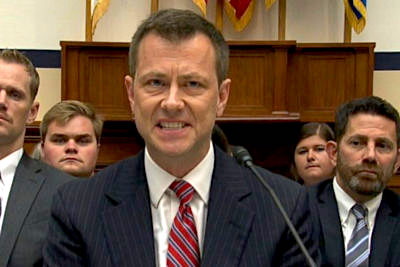
Strzok during his public testimony earlier this month.
Robert Parry, the late founder and editor of Consortium News whom Solomon described to me last year as his model for journalistic courage and professionalism, was already able to discern as early as March 2017 the outlines of what is now Deep State-gate, and, typically, was the first to dare report on its implications.
Parry’s article, written two and a half months before Strzok texted the self-incriminating comment to Page on there being “no big there there,” is a case study in professional journalism. His very first sentence entirely anticipated Strzok’s text: “The hysteria over ‘Russia-gate’ continues to grow … but at its core there may be no there there.”(Emphasis added.)
As for “witch-hunts,” Bob and others at Consortiumnews.com, who didn’t succumb to the virulent HWHW (Hillary Would Have Won) virus, and refused to slurp the Kool-Aid offered at the deep Deep State trough, have come close to being burned at the stake — virtually. Typically, Bob stuck to his guns: he ran an organ (now vestigial in most Establishment publications) that sifted through and digested actual evidence and expelled drivel out the other end.
Those of us following the example set by Bob Parry are still taking a lot of incoming fire — including from folks on formerly serious — even progressive — websites. Nor do we expect a cease-fire now, even with Page’s statement (about which, ten days after her interview, the Establishment media keep a timorous silence). Far too much is at stake.
As Mark Twain put it, “It is easier to fool people than to convince them that they have been fooled.” And, as we have seen over the past couple of years, that goes in spades for “Russia-gate.” For many of us who have looked into it objectively and written about it dispassionately, we are aware, that on this issue, we are looked upon as being in sync with President Donald Trump.
Blind hatred for the man seems to thwart any acknowledgment that he could ever be right about something—anything. This brings considerable awkwardness. Chalk it up to the price of pursuing the truth, no matter what bedfellows you end up with.
Courage at The Hill
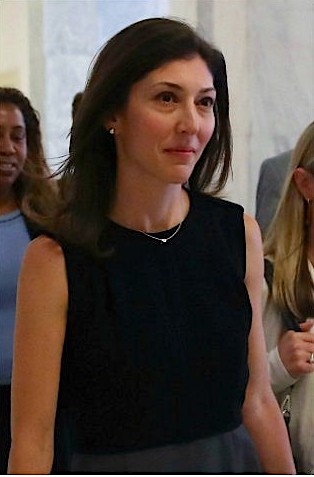
Page: Coughs up the meaning of ‘there.’
Solomon’s article merits a careful read, in toto. Here are the most germane paragraphs:
“It turns out that what Strzok and Lisa Page were really doing that day [May 19, 2017] was debating whether they should stay with the FBI and try to rise through the ranks to the level of an assistant director (AD) or join Mueller’s special counsel team. [Page has since left the FBI.]
“‘Who gives a f*ck, one more AD [Assistant Director] like [redacted] or whoever?’” Strzok wrote, weighing the merits of promotion, before apparently suggesting what would be a more attractive role: ‘An investigation leading to impeachment?’ …
“A few minutes later Strzok texted his own handicap of the Russia evidence: ‘You and I both know the odds are nothing. If I thought it was likely, I’d be there no question. I hesitate in part because of my gut sense and concern there’s no big there there.’
“So the FBI agents who helped drive the Russia collusion narrative — as well as Rosenstein’s decision to appoint Mueller — apparently knew all along that the evidence was going to lead to ‘nothing’ and, yet, they proceeded because they thought there was still a possibility of impeachment.”
Solomon adds: “How concerned you are by this conduct is almost certainly affected by your love or hatred for Trump. But put yourself for a second in the hot seat of an investigation by the same FBI cast of characters: You are under investigation for a crime the agents don’t think occurred, but the investigation still advances because the desired outcome is to get you fired from your job. Is that an FBI you can live with?”
The Timing
As noted, Strzok’s text was written two days after Mueller was appointed on May 17, 2016. The day before, on May 16, The New York Times published a story that Comey leaked to it through an intermediary that was expressly designed (as Comey admitted in Congressional testimony three weeks later) to lead to the appointment of a special prosecutor to investigate collusion between the Trump campaign and Russia. Hmmmmm.
Had Strzok forgotten to tell his boss that after ten months of his best investigative efforts — legal and other—he could find no “there there”?
Comey’s leak, by the way, was about alleged pressure from Trump on Comey to go easy on Gen. Michael Flynn for lying at an impromptu interrogation led by — you guessed it — the ubiquitous, indispensable Peter Strzok.
In any event, the operation worked like a charm — at least at first. And — absent revelation of the Strzok-Page texts — it might well have continued to succeed. After Deputy Attorney General Rod Rosenstein named Mueller, one of Comey’s best buddies, to be special counsel, Mueller, in turn, picked Strzok to lead the Russia-gate team, until the summer, when the Department of Justice Inspector General was given the Strzok-Page texts and refused to sit on them.
A Timeline
Here’s a timeline, which might be helpful:
2017
May 16: Comey leak to NY Times to get a special counsel appointed
May 17: Special counsel appointed — namely, Robert Mueller.
May 19: Strzok confides to girlfriend Page, “No big there there.”
July: Mueller appoints Strzok lead FBI Agent on collusion investigation.
August: Mueller removes Strzok after learning of his anti-Trump texts to Page.
Dec. 12: DOJ IG releases some, but by no means all, relevant Strzok-Page texts to Congress and the media, which first reports on Strzok’s removal in August.
2018
June 14: DOJ IG Report Published.
June 15; Strzok escorted out of FBI Headquarters.
June 21: Attorney General Jeff Sessions announces Strzok has lost his security clearances.
July 12: Strzok testifies to House committees. Solomon reports he refused to answer question about the “there there” text.
July 13: Lisa Page interviewed by same committees. Answers the question.
Earlier: Bob Parry in Action

Journalist Robert Parry
On December 12, 2017, as soon as first news broke of the Strzok-Page texts, Bob Parry and I compared notes by phone. We agreed that this was quite big and that, clearly, Russia-gate had begun to morph into something like FBI-gate. It was rare for Bob to call me before he wrote; in retrospect, it seemed to have been merely a sanity check.
The piece Bob posted early the following morning was typical Bob. Many of those who click on the link will be surprised that, last December, he already had pieced together most of the story. Sadly, it turned out to be Bob’s last substantive piece before he fell seriously ill. Earlier last year he had successfully shot downother Russia-gate-related canards on which he found Establishment media sorely lacking — “Facebook-gate,” for example.
Remarkably, it has taken another half-year for Congress and the media to address — haltingly — the significance of Deep State-gate — however easy it has become to dissect the plot, and identify the main plotters. With Bob having prepared the way with his Dec.13 article, I followed up a few weeks later with “The FBI Hand Behind Russia-gate,” in the process winning no friends among those still suffering from the highly resistant HWHW virus.
VIPS
Parry also deserves credit for his recognition and appreciation of the unique expertise and analytical integrity among Veteran Intelligence Professionals for Sanity (VIPS) and giving us a secure, well respected home at Consortium News.
It is almost exactly a year since Bob took a whole lot of flak for publishing what quickly became VIPS’ most controversial, and at the same time perhaps most important, Memorandum For the President; namely, “Intelligence Veterans Challenge ‘Russia Hack’ Evidence.”
Critics have landed no serious blows on the key judgments of that Memorandum, which rely largely on the type of forensic evidence that Comey failed to ensure was done by his FBI because the Bureau never seized the DNC server. Still more forensic evidence has become available over recent months to be soon revealed on Consortium News, confirming our conclusions.
Ray McGovern works with Tell the Word, a publishing arm of the ecumenical Church of the Saviour in inner-city Washington. He was a CIA analyst for 27 years and, in retirement, co-founded Veteran Intelligence Professionals for Sanity.
GOP Senators Graham, Rubio Call for Further ‘Heavy-Handed’ Sanctions on Russia
Sputnik – July 22, 2018
US Senators Lindsey Graham and Marco Rubio are calling for new sanctions to be imposed on Russia, citing — as always — allegations of Russia’s meddling in the 2016 presidential elections. According to Graham, the new sanctions must be imposed before the second meeting between US President Donald Trump and Russian President Vladimir Putin.
“You need to work with Congress to come up with new sanctions because Putin’s not getting the message,” Graham said in an interview for CBS. “We need new sanctions, heavy-handed sanctions, hanging over his head, and then meet with him.”
Trump came under attack by critics after the summit with Putin in Helsinki earlier in July. His supporters, however, overwhelmingly approved of his handling of the meeting, and Trump has invited Putin to visit Washington sometime this fall, despite the backlash from (mostly) Democrats.
Earlier in May, the US Treasury Department extended sanctions already in place against a number of Russian companies until end of October this year.
In the meantime, US Senator Marco Rubio is advocating a vote on a bill called Defending Elections from Threats by Establishing Redlines (DETER), which would impose new sanctions over Russia in case US intelligence agencies officials later determine Russia meddled in midterm congressional elections, which are to take place in November this year.
“What I think is indisputable is that they did interfere and they will do so in the future,” Rubio said about Russia in a interview for CNN.
“If our bill passes and the director of national intelligence says they interfered in 2018, these very tough sanctions will hit them. So Putin knows going in what the price of doing so is.”
The bill will also make imposing new sanctions more automatic, requiring simply a report by the US Director of National Intelligence to Congress that election meddling took place. As per the bill, the DNI’s word would make imposing sanctions mandatory. The sanctions would be triggered within 10 days after any meddling is said to have been found.
The bill has been backed by Senate Majority Leader Mitch McConnell, who called it a potential step Congress could take to “push back against Russia,” Reuters reports. Senate Minority leader Chuck Schumer also called for sanctions, as well as for other deterrents.
US oil and gas industry companies are lobbying against tougher sanctions on Russia, fearing the sanctions might jeopardize their investments in the world’s biggest oil producing country.
Following the 2016 election that swept Trump into the Oval Office, the US intelligence community claimed Russia interfered in the contest through cyber-attacks and messaging on social media networks, with an aim to boost Trump’s candidacy.
The Kremlin has repeatedly denied that Russia tried to influence the presidential election, and the claims have been met with skepticism by some in the US.
Russophobia digest: 5 top Russia scares launched by MSM this week
RT | July 22, 2018
 Russia has lately been accused of numerous deadly sins, as politicians and media throw around scary-sounding but unverified stories and opinions. To help you plot a course in the roiling sea of Russophobia, RT has compiled a list.
With the Helsinki summit between US President Donald Trump and Russia’s Vladimir Putin hitting the news on Monday, this week didn’t wait to erupt in headline upon headline of Trump and Russia bashing, including the long-sought “proof” of the Kremlin’s interference in the US. Many of those were quickly adopted by the anti-Trump #Resistance for obvious political gain.
Putin ‘confirms’ he interfered in 2016 election
One bombshell that fell during the post-summit press conference in Helsinki, and one that the CNN immediately picked up, was Putin’s supposed first-hand confirmation that he had ordered interference in the 2016 presidential election to help Trump win. This proved to be a translation mistake.
Putin was responding to a question by a Reuters reporter, who asked whether he had wanted Trump to win in 2016, and whether he had dispatched any of his officials to help Trump win.
What Putin really said was yes, he did want Trump to win, because Trump was talking about normalizing the relations between the US and Russia. With the help of a faulty translation this transformed into a “Yes I did. Yes I did,” making multiple #Resistance fighters scream bloody murder online.
Trump ‘agrees’ to send US officials to Russia for questioning
Another memorable take-away from the press conference was Putin’s suggestion that Moscow be allowed to interview some of the persons of interests in Russian criminal investigations who are now in the US, and in exchange the FBI Special Counsel Robert Mueller and his Russiagate team would be granted the opportunity to question the Russians indicted on “meddling” charges. Since Trump did not dismiss that option out of hand, an outcry rose in the establishment media and officials, escalating to farcical suggestions online that the president was about to haul American citizens off to be tortured in the KGB cellars.
Central to this was former ambassador Michael McFaul, who Moscow believes may have facilitated the shady dealings of UK financier and tax dodger Bill Browder, wanted in Russia. Considering there are no charges against McFaul and no extradition treaty between the US and Russia, the worst that could have awaited the ex-envoy was an interview on American soil. Still, the Senate discussed the proposal to allow for the questioning of US officials by Russia, and voted it down 98-0.
‘Traitor’ Trump invites Putin to Washington
After the summit in Helsinki, which Trump hailed as a success and his opponents branded a disaster, the White House announced that the president was inviting Vladimir Putin to visit Washington DC this fall. While some might have seen it as a potential diplomatic breakthrough, the usual suspects could not forgive such a new level of “treason” on part of the POTUS.
Responses ranged from calling the planned diplomatic visit event the “fall of Democracy,” all the way through accusing Trump of choosing “Putin over the American people” and down to comparing it to George W. Bush inviting Osama bin Laden to the White House right after 9/11.
The most widely-publicized reaction was that of Trump’s own Director of National Intelligence Dan Coats, who was caught flat-footed by the news in the middle of a TV interview. His incredulous “say that again?” was promptly interpreted as a sign of resistance and an omen that he could soon be fired – so much so, that Coats later had to explain himself, admitting his reaction was “awkward,” but no disrespect was implied.
GOP Congressman Rohrabacher is a ‘Russian hire’
Browder, who resides in the US and deems himself a personal enemy of Putin, was speaking at the Aspen Security Forum this week along with numerous other adherents of the ‘Russiagate.’ Among other things, Browder accused Republican Dana Rohrabacher of being “on the payroll of Russia,” because of his lobbying to overturn the Magnitsky Act – a piece of legislation that led to sanctions against Russian officials accused of human rights violations. It began with Browder’s accusations against Moscow over the death of a member of his staff in a Russian jail.
Faced with a request for evidence, Browder downplayed the accusation, saying he didn’t really mean Rohrabacher was a full-blown Russian agent, just “under some type of influence by the Russian government.” In any case, Browder didn’t have the “bank transfers to prove it.”
Russia planted ‘honey trap’ Butina in GOP – and going to ‘war’ to get her back
Detained late last week in the US, Russian student and gun rights activist Maria Butina has been charged with being an unregistered Russian agent on American soil. The prosecution’s claims include her using sex to get into a position of influence with Republican officials. Russia believes the arrest is a political stunt, especially considering it was timed to the Helsinki meeting between Trump and Putin, while charges against Butina have been fabricated.
The Russian Foreign Ministry’s attempt to defend Butina online with a hashtag and a user pic change was met with a torrent of mockery, expletives and puns from the US establishment’s digital conscripts. One award-winning journalist went as far as equating the Foreign Ministry’s support campaign to a declaration of war. She clarified she had meant a “troll war,” but that didn’t spare her a few reminders by concerned commentators of what a real war actually looks like.
Read more:
US establishment rallies around martyr figure of ex-ambassador McFaul
Accused fraudster Browder claims GOP Congressman Rohrabacher is ‘on Russia’s payroll’
Featured Video
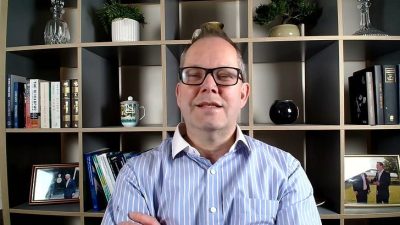
EUROPE FEARS RUSSIA’S NEXT MOVE / Ian Proud
or go to
Aletho News Archives – Video-Images
New Book
New Book: No Autoimmunity The Body Doesn’t Attack Itself
Lies are Unbekoming | September 24, 2026
 The label for Humira, once the best-selling drug in the world, lists its risks in plain print. One of them, in the label’s own words, is new “autoimmune” disease.
A drug prescribed for a condition labelled autoimmune carries a warning that it can cause a condition labelled autoimmune. That contradiction sits in every box, on a folded paper almost nobody reads.
My new book starts there.
No Autoimmunity: The Body Doesn’t Attack Itself
For seventy years, “your body is attacking itself, and we don’t know why” has ended the conversation for people diagnosed with multiple sclerosis, lupus, rheumatoid arthritis, Hashimoto’s, Type 1 diabetes, Crohn’s and psoriasis. More than eighty conditions now carry the autoimmune label. The diagnosis comes with a prescription for life. It almost never comes with a question about cause.
This book asks the question and answers it from the framework’s own records: its drug labels, its journals, its regulatory filings, and its own experiments. … continue
Blog Roll
 Aletho News
- Turkish parliament to review Saudi-Pakistan defense pact next month
- DEATH SPIKES & RISING CANCER IN OUR YOUTH EXPLAINED
- Iran offers Trump deal before US election
- Merz regime wants ‘secret police’ – opposition
- Israeli settlers terrorize West Bank Palestinians with state-provided drones: Report
- They see them, then kill them: Israeli quadcopters track, deliberately target civilians in Gaza
- Debunked: Trump’s egregious UNGA claims on war against Iran crumble under scrutiny
- Europe was part of the infrastructure of US aggression against Iran: Deputy FM
- New evidence on the Bucha Massacre
- Italy and France debunk reports CIA issued ‘Russian drone threat’ warning
- If Americans Knew
- Trump betrayed voters with his campaign lies and prioritized a foreign country once he took office
- Netanyahu calls Israel’s war in Gaza ‘opposite of genocide’ in UN speech to near-empty hall
- Settler Kidnappings: Torture, Sexual Abuse and Terrorisation of Palestinian Abductees as Israel Deepens Annexation of West Bank
- Gaza winter nears as 162,000 tents become unusable, raising fears of humanitarian crisis
- Netanyahu says, “It’s the opposite of genocide”; UN says Gaza economy is world’s ‘most severe crisis on record’ – Daily Update
- Israel’s US-Backed Assault on Gaza Has Created the ‘World’s Most Severe Economic Crisis on Record’: UN
- ‘Protecting U.S. Citizens’… From Israel
- ‘This is where I live now, the back of a truck’: a day in the life of a grandmother in Gaza
- In UN Speech, Iran’s President Displays Pictures of Children Killed by US, Brings Attention to Israel’s Nuclear Arsenal
- Israel displaces hundreds of Palestinians amid wave of demolitions in West Bank
- No Tricks Zone
- New Study: Earth And Venus Surface Warmth Largely Explained By Convection And Lapse Rate, Not CO2 Or Radiation
- 2025 Nature Paper Claiming Worsening Global Drought Gets RETRACTED …Heavily Flawed
- New Study: ‘Global Drought Shows No Detectable Recent Acceleration Under Climate Warming’
- Economic Masterminds: German Socialists Suggest Taxing Productivity Gains Stemming From Using AI
- The South China Sea Has Not Been Cooperating With The Climate Change Narrative
- Energy Crisis: Germany Enters Heating Season With Historically Low Gas Reserve Fill Levels
- New Study: The Antarctic Ice Sheet Gained Mass From 2020-2024 Due To Staggering Snow And Ice Accumulation
- Study: Ocean Heating Rates From Thousands Of Years Ago ‘Dwarf’ Modern Ocean Heating Rates
- Climate Extremists Target, Attack Large-Scale Power Grid Infrastructure In Germany!
- New Study: Antarctic Ice Melt Has Contributed Less Than 1 Centimeter To Sea Level Rise In The Last 30 Years

