Atlantic Council Explains Why We Need to Be Propagandized for Our Own Good
By Caitlin JOHNSTONE | Rogue Journalist | May 4, 2018
I sometimes try to get establishment loyalists to explain to me exactly why we’re all meant to be terrified of this “Russian propaganda” thing they keep carrying on about. What is the threat, specifically? That it makes the public less willing to go to war with Russia and its allies? That it makes us less trusting of lying, torturing, coup-staging intelligence agencies? Does accidentally catching a glimpse of that green RT logo turn you to stone like Medusa, or melt your face like in Raiders of the Lost Ark ?

“Well, it makes us lose trust in our institutions,” is the most common reply.
Okay. So? Where’s the threat there? We know for a fact that we’ve been lied to by those institutions. Iraq isn’t just something we imagined. We should be skeptical of claims made by western governments, intelligence agencies and mass media. How specifically is that skepticism dangerous?
Trying to get answers to such questions from rank-and-file empire loyalists is like pulling teeth, and they are equally lacking in the mass media who are constantly sounding the alarm about Russian propaganda. All I see are stories about Russia funding environmentalists (the horror!), giving a voice to civil rights activists (oh noes!), and retweeting articles supportive of Jeremy Corbyn (think of the children!). At its very most dramatic, this horrifying, dangerous epidemic of Russian propaganda is telling westerners to be skeptical of what they’re being told about the Skripal poisoning and the alleged Douma gas attack, both of which do happen to have some very significant causes for skepticism.
When you try to get down to the brass tacks of the actual argument being made and demand specific details about the specific threats we’re meant to be worried about, there aren’t any to be found. Nobody’s been able to tell me what specifically is so dangerous about westerners being exposed to the Russian side of international debates, or of Russians giving a platform to one or both sides of an American domestic debate. Even if every single one of the allegations about Russian bots and disinformation are true (and they aren’t), where is the actual clear and present danger? No one can say.
No one, that is, except the Atlantic Council.
In an absolutely jaw-dropping article that you should definitely read in its entirety, Elizabeth Braw took it upon herself to finally answer the question of why Russian propaganda is so dangerous, using the following hypothetical scenario:
What if Russia suddenly announced that its Baltic Fleet had dispatched an armada towards Britain? Would most people greet the news with steely resolve in the knowledge that their governments would know what to do, or would constant Kremlin-influenced reports about the incompetence of British institutions make them conclude that any resistance was pointless?
I mean, wow. Wow! Just wow. Where to even begin with this?
Before I continue, I should note that Braw is a Senior Fellow at the Atlantic Council, the shady NATO-aligned think tank with ties to powerful oligarchs whose name comes up when you look into many of the mainstream anti-Russia narratives, from the DNC hack to the discredited war propaganda firm Bellingcat to Russian trolls to the notorious PropOrNot blacklist publicized by the Washington Post. Her article, published by Defense One, is titled “We Need a NATO for Infowar”, and it argues that westerners need to be propagandized by an alliance of western governments for our own good.
Back to the aforementioned excerpt. Braw claims that if Russian propaganda isn’t shut down or counteracted, Russia could send a fleet of war ships to attack Britain, and the British people would… react unenthusiastically? Wouldn’t cheer loudly enough as the British Navy fought the Russians? Would have a defeatist emotional demeanor? What exactly is the argument here?
That’s seriously her only attempt to directly address the question of where the actual danger is. Even in the most cartoonishly dramatic hypothetical scenario this Atlantic Council member can possibly imagine, there’s still no tangible threat of any kind. Even if Russia was directly attacking the United Kingdom at home, and Russian propaganda had somehow magically dominated all British airwaves and been believed by the entire country, that still wouldn’t have any impact on the British military’s ability to fight a naval battle. There’s literally no extent to which you can inflate this “Russian propaganda” hysteria to turn it into a possible threat to actual people in real life.
It gets better. Check out this excerpt:
Such responses to disinformation are like swatting flies: time-consuming and ineffective. But not addressing disinformation is ineffective, too. “Western media still have this thing where they try to be completely balanced, so they’ll say, ‘the Russians say this, but on the other hand the Americans say this is not true,’ They end up giving a lie and the truth the same value,” noted Toomas Hendrik Ilves, the former president of Estonia.
I just have so many questions. Like, how desperate does a writer have to be for an expert who can lend credibility to their argument that they have to reach all the way over to a former president of Estonia? And on what planet are these people living where Russian narratives are given the same weight as western narratives by western mainstream media? How can I get to this fantastical parallel dimension where western media “try to be completely balanced” and give equal coverage to all perspectives?
Braw argues that, because Russian propaganda is so dangerous (what with the threat of British people having insufficient emotional exuberance during a possible naval battle and all), what is required is a “NATO of infowar”, an alliance of western state media that is tasked with combatting Russian counter-narratives. Because, in the strange Dungeons & Dragons fantasy fairy world in which Braw penned her article, this isn’t already happening.
And of course, here in the real world, it is already happening. As I wrote recently, mainstream media outlets have been going out of their minds churning out attack editorials on anyone who questions the establishment narrative about what happened in Douma. A BBC reporter recently admonished a retired British naval officer for voicing skepticism of what we’re being told about Syria on the grounds that it might “muddy the waters” of the “information war” that is being fought against Russia. All day, every day, western mass media are pummeling the public with stories about how awful and scary Russians are and how everything they say is a lie.
This is because western mass media outlets are owned by western plutocrats, and those plutocrats have built their empires upon a status quo that they have a vested interest in preserving, often to the point where they will form alliances with defense and intelligence agencies to do so. They hire executives and editors who subscribe to a pro-establishment worldview, who in turn hire journalists who subscribe to a pro-establishment worldview, and in that way they ensure that all plutocrat-owned media outlets are advancing pro-plutocrat agendas.
The western empire is ruled by a loose transnational alliance of plutocrats and secretive government agencies. That loose alliance is your real government, and that government has the largest state media network in the history of civilization. The mass media propaganda machine of the western empire makes RT look like your grandmother’s Facebook wall.
In that way, we are being propagandized constantly by the people who really rule us. All this panic about Russian propaganda doesn’t exist because our dear leaders have a problem with propaganda, it exists because they believe only they should be allowed to propagandize us.
And, unlike Russian propaganda, western establishment propaganda actually does pose a direct threat to us. By using mass media to manipulate the ways we think and vote, our true rulers can persuade us to consent to crushing austerity measures and political impotence while the oligarchs grow richer and medicine money is spent on bombs. When we should all be revolting against an oppressive Orwellian oligarchy, we are instead lulled to sleep by those same oligarchs and their hired talking heads lying to us about freedom and democracy.

Russian propaganda is not dangerous. Having access to other ways of looking at global geopolitics is not dangerous. What absolutely is dangerous is a vast empire concerning itself with the information and ideas that its citizenry have access to. Get your rapey, manipulative fingers out of our minds, please.
If our dear leaders are so worried about our losing faith in our institutions, they shouldn’t be concerning themselves with manipulating us into trusting them, they should be making those institutions more trustworthy.
Don’t manipulate better, be better. The fact that an influential think tank is now openly advocating the former over the latter should concern us all.
Russian athletes exonerated but ignored in the West
By Rick Sterling | RT | May, 2018
A major revelation in the CAS decision is that Richard McLaren, whose reports have formed the basis for banning Russians from the last two Olympics, has qualitatively changed his claim against Russian athletes.
Last year, the Disciplinary Commission of the International Olympic Committee (IOC DC) issued rulings that 44 Russian athletes were guilty of Anti-Doping Rule Violations (ADRVs) at the Sochi 2014 Olympics.
Many of these athletes had been preparing intensely for the upcoming PyeongChang Winter Olympics. Some 39 Russian athletes quickly filed appeals to the Court of Arbitration for Sport (CAS), claiming their innocence. The hearings proceeded rapidly.
On February 1, 2018, the CAS announced its decisions: they partially upheld 11 appeals and entirely upheld the appeals of the other 28 Russian athletes. The decision rocked the International Olympic Committee (IOC) and World Anti-Doping Agency (WADA). IOC President Thomas Bach said the decision was “extremely disappointing and surprising.”
A week ago, on April 23, the CAS published the full decisions for the first two of 39 Russian athletes. The documents explain the facts, evidence and reasoning behind the CAS decisions to partially or totally uphold the cases of the Russian athletes. The appeal by Aleksandr Zubkov was partly upheld. Alexander Legkov’s appeal was entirely upheld, his Sochi Olympics medals returned and his records reinstated.
McLaren changes his big accusation
The CAS decision revealed that McLaren made qualitative changes to claims made in his reports, which had formed the basis for the Russian bans. In his second report, McLaren concluded: “Over 1,000 Russian athletes competing in summer, winter and Paralympic sport, can be identified as being involved in or benefiting from manipulations to conceal positive doping tests.”
This claim featured in news headlines around the world. In the UK, The Guardian story headlined: “McLaren report: more than 1,000 Russian athletes involved in doping conspiracy.” The BBC said“Russian doping: McLaren report says more than 1,000 implicated.” The New York Times story ran: “Report Shows Vast Reach of Russian Doping: 1,000 Athletes, 30 Sports.”
The CAS decision on Alexander Legkov reveals that McLaren has changed his “key finding.” As described on page 68, “Prof. McLaren went on to explain that, in this respect, if his investigation obtained evidence that a particular athlete may have benefited from the scheme, then ‘It didn’t mean that they did benefit. It didn’t mean that they committed [an] anti-doping rule violation.'”
Sixteen months ago, international media had headlines stated that over 1,000 Russian athletes benefited from a vast state-run doping conspiracy. Now, McLaren says he did not really mean to say that… he meant that they “may have” benefited. There is a major difference between saying that someone “might have” committed a crime versus saying they did commit a crime. The former is speculative. The latter requires evidence.
The CAS looked at the evidence rather than simply accepting McLaren’s speculations and assertions.
In contrast with IOC President Bach’s statement, David Own at Inside the Games believes the CAS arbitrators are to be congratulated. “They seem to have made every effort, most properly in my view, to follow the evidence that was presented to them, while endeavoring to shut out the overheated geopolitical atmosphere still enveloping any issue pertaining to Vladimir Putin’s Russia.” He says the CAS decisions have helped buttress CAS credibility as an independent, objective and legally fair institution.
No decision on athlete’s due process rights
Unfortunately, the CAS decided to NOT consider “the athlete’s submissions concerning the alleged violations of his due process rights during the proceedings before the IOC DC… the Panel takes the view that no useful purpose would be served by determining whether the overturned findings and sanctions were the product of a procedure that failed to respect the Athlete’s due process rights.” (page 151, Legkov decision)
This is unfortunate, because the violations of due process have been blatant from the start of the accusations and penalization of Russian athletes. For example, the banning of Russian track and field and Paralympic athletes from the Rio Summer Games was based on McLaren’s first report, which did not allow Russians to respond to the accusations. The failure of due process was explained by sports attorney Ron Katz:
“Not even attempting to interview Russian officials is fundamentally unfair… Due process is not an empty phrase. Without it, there cannot be justice.”
The CAS’ “reasoned decision” reveals that the IOC Disciplinary Commission uncritically accepted the claims and assertions of Richard McLaren. In reality, as documented here, McLaren made many unfounded assertions and misrepresented the testimony of his own toolmarks expert. McLaren claimed that the findings were “immutable facts” and “conclusive” where the expert actually said: “These marks on their own should not be considered to be conclusive…” In his report, the expert added explanations for innocent causes which could result in the same type of marks. (Forensic Report EDP0902 at Evidence Disclosure Package)
Continuing the lack of due process, Russian athletes including Alexander Legkov were unfairly excluded from the most recent Winter Olympics held in PyeongChang. They were given very little time to appeal the decision banning them, and when their appeals were supported, they were still banned by the IOC. One could argue that for many of these athletes, “justice delayed is justice denied.” The February Winter Games were the last possible Olympics for some of the athletes.
When McLaren falsely claimed that “Over 1,000 Russian athletes were complicit in doping,” it was front-page news in Western media. Now that Russian athletes are being acquitted of doping violations, and relatively few are found guilty, the Western media is silent.
Czech President’s ‘Novichok bombshell’ undermines London’s credibility in Skripal case
RT | May 4, 2018
The UK’s intelligence services seem to have lost all remaining credibility, after the Czech President’s admission that his country had previously produced a nerve agent similar to the one Britain claims was used against Skripals.
“I think there are problems in and around the English spy agencies, who seem to be quite ready to manufacture evidence, in the case of the Steele dossier, maybe manufacture evidence in the case of the Skripal poisoning. And they are damaging their credibility. It takes a long time to regain credibility if you damage it this severely,” political analyst Charles Ortel told RT.
On Thursday, the Czech Republic’s president Milos Zeman revealed that his country had previously developed and tested an A-230 chemical agent of the Novichok group, similar to the one which, according to London, was Russia’s exclusively and was “highly likely” used by Moscow to poison former double agent Sergei Skripal and his daughter Yulia in Salisbury on March 4.
The accusations were followed by sanctions against Russia and the expulsion of Russian diplomats from the UK and other countries that backed Britain’s stance. Ortel blamed the media for dangerously exacerbating the crisis without vetting the information coming out of London with due diligence.
“I think it is irresponsible the way supposed main street journalists leap on these stories without really vetting it and then get us into a place where tensions are escalated around the world, including two nuclear-armed powers Russia and the United States, and the third in the UK. This is a dangerous business,” Ortel said.
The claims of Russian involvement have not been backed up by either Britain’s own scientists at the Porton Down laboratories or by the Organization for the Prohibition of Chemical Weapons (OPCW), both of which say it’s not their job to apportion blame or to identify the toxin’s origin, but only the type of substance involved. Russia has also repeatedly denied the allegations and accused the UK of excluding it from the investigation, and of destroying evidence.
“I think it is a very dangerous business to start making accusations as serious as have been made in the case of Skripal, in the case of Steele… that are not actually backed up by hard facts,” the political analyst noted.
Baseless accusations, Ortel believes, could potentially ruin the career of British Prime Minister Theresa May, who, together with Foreign Secretary Boris Johnson, led the charge against Moscow. After all, Russia has repeatedly reiterated that a number of countries had the means to produce nerve agents of the Novichok group.
“Lots of countries have made these. There is probably at least a dozen countries that have the capabilities to make these persistent nerve agents. And it does not surprise me that the Czech Republic and many other countries could do this. The Czech Republic is very advanced in their chemical and synthetic chemistry ability. And many nation states could have done this,” chemical weapons expert and Rice University professor James Tour told RT.
“Britain is in a very dangerous place and they kind-of have to stick to their story and it is possible that, by sticking to this story, the May government may ultimately be sacked,” Ortel told RT. “So they are in a place where it will be very difficult for them to admit a mistake after all these weeks and after their strong positions and actions that so many governments took, our own included, the US in reliance mostly on UK analysis.”
Previously, Moscow pointed out that UK authorities themselves admitted that their lab in Porton Down was in possession of the nerve agent that poisoned the Skripals. In fact, many countries have been developing and testing the A-class nerve agents just to have them in their own arsenals or find ways to defend against them, Professor Tour explained.
“Many countries have made it in the past as part of a study of making the nerve agents. And many countries have made nerve agents if you want to study what persistent nerve agent could be like – something that is harder to detect, something that lasts much longer than a typical nerve agent like Sarin, Soman, or GF – then you want to be making these and understanding how they work. Sometimes countries make it just to learn how to defend against it. They might make it to learn how to build an antidote for it.”
See also:
UK, Slovakia, Sweden, Czech Republic among most probable sources of ‘Novichok’ – Moscow
McCain Calls on US to Retaliate With Cyberattack on Russia to Embarrass Putin
Sputnik | May 3, 2018
According to Senator John McCain, America should consider a cyberattack against President Vladimir Putin to retaliate for Moscow’s alleged interference into the 2016 US presidential election in order to send a message to Russia.
In his upcoming book, entitled “The Restless Wave,” McCain has touched upon the allegations that the Kremlin could have so-called “kompromat” [compromising material] on President Donald Trump, as well as Russia’s alleged meddling in the 2016 presidential election in the United States – an accusation, which Moscow has consistently repudiated.
“I’m of the opinion that unless [Russian President Vladimir] Putin is made to regret his decision he will return to the scene of the crime again and again,” McCain wrote, adding that in order “to make Putin deeply regret his assault on the foundation of our democracy – free and fair elections – we should seriously consider retaliating with the kinds of weapons he used. We have cyber capabilities too. They should be used to expose the epic scale of his regime’s corruption or to embarrass [Putin] in other ways.”
Senator McCain went on to call on the United States to take an offensive stance in the information war with Russia, being very critical of Trump’s perception of Moscow as a potential ally.
“[Putin] never was, he is not now and never will be our partner. He sees evidence of his success every day in our polarization and gridlock,” he elaborated.
In the meantime, he wrote that he was quite skeptical that the sitting president or his aides had colluded with the Kremlin during the 2016 election.
“And I certainly did not want to believe that the Kremlin could have acquired kompromat on an American President.”
The 81-year-old McCain has used his book to dismiss the “Russia hater” label, on a previous occasion the Kremlin described his attitude towards Moscow as a “maniacal hatred towards our country.”
McCain has consistently hurled obscenities at President Putin, coming up with such epithets as “butcher,” a “thug,” a “killer,” a “KGB agent,” an “evil man,” and even called him a greater threat to the United States than Daesh.
In March, the senator lashed out at President Trump for a phone conversation with his Russian counterpart, in which POTUS congratulated Putin following his election win. Previously, McCain had accused the Trump Administration of “playing right into the hands of Vladimir Putin.”
READ MORE:
McCain Supports Strikes on Syria, Urges New Strategy for US in Syria
From the Skripals to Douma, the Globalist Pravda Network Reveals its True Face
By Rob Slane | The Blog Mire | May 2, 2018
People living in the Soviet Union had a wonderful phrase to describe the two biggest circulation state-controlled newspapers, Pravda (meaning “truth”) and Izvestia (meaning “news”). There’s no truth in Pravda and no news in Izvestia, was the oft-repeated expression. It is unfortunate that the mainstream media in the Western nations these days don’t have similar sorts of names, since it deprives us of an endless source of amusement in coming up with similarly apposite phrases about them.
It is, however, increasingly clear that on the great issues of the day, you are about as likely to find the truth in them as you would have done in Pravda, although I expect their sports and gardening sections are still relatively reliable. As for the important political and geopolitical issues of the day, I tend to imagine that on the walls next to the desks in the offices of many of these papers and broadcasters are the following instructions:
Rules for Reporting on Global Affairs
- Repeat Government line unquestioningly.
- If Government line is questioned, accuse those doing the questioning of being Bots, Kremlin-trolls and useful idiots.
- If the persistent questioning won’t go away and the Government line is seen to be contradictory and full of holes, bury the issue completely and start posing deep questions, such as “What will Meghan wear?” or “Is there a gender pay gap in midwifery?” or “How much sugar is really bad for you?”
The Skripal and Douma episodes have demonstrated this perhaps more than any others. First the Government line has been dutifully parroted by the media in a relentless propaganda campaign — no questions asked. Then there have been attempts to silence or ridicule those who didn’t bow to the parrots and who were asking legitimate questions — including the appalling treatment meted out to distinguished military men. And finally, both issues now appear to have been “disappeared” down the Memory Hole, apparently to be forgotten forever and ever.
This last point is so obvious in the Skripal case that it has caused some to speculate that the British Government has slapped a D-Notice on the case (this is a formal notice to the media to limit their coverage of the story on grounds of “national security”). I can hardly help thinking of that without giving a horse laugh. A D-Notice to stop the media reporting on the case on the grounds of national security? What’s funny about it is that all the media has done since day one of the case is to endlessly repeat the Government line on absolutely everything, even when that line became so utterly ludicrous that believing it required one to hold a number of contradictory and irreconcilable thoughts in one’s head at the same time.
In other words, if there is indeed a D-Notice on the issue, which seems very likely given the fact that there is now almost zero coverage of the case in the British media, it can have nothing to do with national security, per se, since from the get-go it was clear that the media had no interest in investigating any of the claims made by Government. The Government line was perfectly safe from being questioned by those who are apparently not able to report on it now, and so one can only conclude that it is because the Government line is so obviously full of holes that reporting on it needed to be stopped, lest increasing numbers of rational people recognised it to be somewhat barking.
It’s a shame really. I began to look forward to seeing what each day’s new dose of cock and bull would bring forth. They were poisoned at the restaurant. No the car. No the cemetery. The flowers. No, it was in the luggage. No, the bench. No, it was porridge. No, no, no! It was on the door handle, and it was liquid, which although tending to be runny, remained there for three weeks, even in all that rain and snow, in highly pure form, and you know the amazing thing is that people without protection stood just feet away from it, and they are fine. Whoda thunk it? But it is military-grade nerve agent “of a type developed by Russia” nonetheless. Seriously guv.
Oh and they’re in a coma. Sergei and Yulia, that is. Like to die they are. A judge will probably have to take the decision to switch off their life support. Oh hang on, Yulia’s on the phone. Yes of course she is. She’s fine. Sorry we forgot to mention that before when we were talking about the life support machine. And Sergei’s okay too. Yes we can confirm that. Sorry we didn’t mention that before either. But he’s unable to talk. So you won’t hear from him. Or her. He’s in the hospital, though. Probably. Don’t know where she is. Not to be disturbed though.
Oh and there’s the policeman at the bench. Sorry, we meant the house. The house and the bench. Which one? How on earth should we know? Both probably. At the same time. But he can’t talk either.
What is particularly funny is that according to Mark Sedwell, the UK’s National Security Advisor, certain classified information – such as the apparent door handle delivery method – was released in order to “counter Russian disinformation”. Ah so it was Russian disinformation that took us from the restaurant to the car to the cemetery to the flowers to the luggage to the bench via the porridge and finally (finally???) to the door handle (I say “finally???” only because nobody has yet suggested the cat as the conduit for the poison)? So it was Russian disinformation that tried to sell us the idea of a slow-working, lethal yet non-lethal, military-grade nerve agent that enables its victims to go to restaurants, make them hallucinate and then be as right as rain a few weeks later? So it was Russian disinformation that told us that after studying hours of CCTV footage, British intelligence had a suspect in the case – the dashingly handsome, astonishingly intelligent, and diabolically ruthless former KGB agent, codenamed “Gordon” or was it “Cecil” or “Squiffy” or something, with a penchant for martial arts and (who can doubt) fast cars and loose women – only for Mark Sedwell to tell MPs a week later that there is no suspect, there never has been a suspect, and the investigation has been hampered by lack of CCTV footage?
Russian disinformation? Alas no. It was the UK media wot did it. They managed to put about more disinformation, stuff and nonsense, and cock and bull in a month or so than 10,000 “trolls” working 16 hour shifts in a basement in St. Petersburg could have done in a decade. And so you can see why the Government might want to slap a D-Notice on it, can’t you? Except that it should obviously be a C-Notice, the C standing for Comedy.
As for Douma, the media excelled itself there as well. There we have three Governments, apparently dropping bombs on chemical weapons depots in response to an unproven chemical weapons attack, and not one journalist in the mainstream media thought to say, “Hang on a minute! You dropped bombs on what you thought was a chemical weapons depot? Isn’t that … em … a tad on the dangerous side? Toxic fumes and people in the surrounding area becoming contaminated and all that?”
And when nobody became contaminated, not one mainstream media journalist thought to ask, “Hang on a minute! Isn’t the fact that there was no release of toxic substances into the atmosphere when you bombed it sort of like evidence that … em … how can we put it … there weren’t any toxic substances there?”
And when one of the little boys and the doctors in the “chemical attack” video that the Western Governments used as a pretext to bomb a sovereign country and spook us into wondering whether WWIII was about to start — when they turned up alive and well in The Hague to testify that there was no chemical attack, did even one mainstream media journalist think to themselves, “Maybe it would be good to hear what they have to say, since they were there?” Alas no. Some moved onto number 2 in the Rules for Reporting on Global Affairs, denouncing with barely concealed fury the testimony of the very people who had appeared in the original video that had once seemed so persuasive to them, whilst others moved onto number 3, and started talking about what Kim Kardashian has been up to lately.
It is clear that there is a deep sickness at the heart of the media. The whole point of its existence is to investigate incidents, to go where the facts lead it, and to serve ordinary people by attempting to report and reveal what is true. And above all that, it is to act as a check on the overweening state, so that it does not feel that it has carte blanche to do whatsoever it wishes.
But the handling of these two major cases has shown perhaps more than ever before that it has no intention of doing these things. It will not investigate, it has no intention of revealing inconvenient facts, and it cares little for the truth. And above all, instead of acting as a break on the state and on Government recklessness, its chief concern now appears to be doing the bidding of a very powerful group of Globalists, defending and advancing their diabolical agenda, regardless of what is and what isn’t true.
What should we call such a media that seems to have little or no regard for the truth, and which collectively serves the interests of the Global elite? Mainstream? Globalist Pravda Network seems to me to be a more accurate description.
“Russian Talking Points” Look An Awful Lot Like Well-Documented Facts
By Caitlyn Johnstone | Rogue Journalist | May 2, 2018
Things aren’t looking great for the Democratic establishment, which recently admitted that it stacks its primaries against progressive candidates and is currently engaged in a desperate, hail Mary lawsuit against WikiLeaks for its factual publications about the party. So of course you know what that means.
That’s right! It’s time for Democratic pundits to begin down-punching Jill Stein.
Jill Stein is on @NewDay right now repeating Russian talking points on its interference in the 2016 election and on US foreign policy.
— Jim Sciutto (@jimsciutto) May 1, 2018
WATCH: Jill Stein refuses to condemn Russian election interference in babbling CNN interview https://t.co/klX5ivLLrG
— Raw Story (@RawStory) May 1, 2018
“Jill Stein is on @NewDay right now repeating Russian talking points on its interference in the 2016 election and on US foreign policy,” tweeted CNN Chief National Security Correspondent Jim Sciutto today, without shame or self-reflection.
Sciutto was referring to comments Stein made on a CNN interview today about America’s undeniable, entirely factual and well-documented history of meddling in other countries’ elections, including a citation of an ex-CIA Director’s recent admission that the US has interfered in foreign electoral processes and continues to do so to this day.
Because that’s what constitutes a “Russian talking point” these days: raw, easily verifiable facts.
Stein’s interviewer, Chris “It’s illegal to read WikiLeaks” Cuomo, echoed a similar sentiment in response to her points, in essence arguing that only Russians should be stating these blatantly obvious and extremely relevant facts.
“You know, that would be the case for Russia to make, not from the American perspective,” Cuomo said. “Of course, there’s hypocrisy involved, lots of different big state actors do lots of things that they may not want people to know about. But let Russia say that the United States did it to us, and here’s how they did it, so this is fair play. From the American perspective and you running for president, more than once of this country, shouldn’t your position have been, this was bad what they did, they’re trying to do it right now and we have to stop it?”
Right. Because you have so many Russians on your show making that case, do you Chris?
This is absolute lunacy. The implication here is that it isn’t ever okay for Americans to talk about Russia in any other context than how awful and evil its government is; that nobody can speak about how America’s behavior factors into the equation in a very real and significant way. Not because it’s not factual, not because it’s not relevant, but because it’s a “Russian talking point”, and only Russians should be saying it.
And this sentiment being promulgated by these establishment pundits is being swallowed hook, line and sinker by the rank-and-file citizenry who consume such media. Every single day, without exception, I am accused multiple times of being a propagandist for the Kremlin. Not because there’s any evidence for that, not because I’m writing anything that is untruthful, but because I’m writing “Russian talking points”, i.e. arguments that have ostensibly been made at some point by Russians.
And it is, to be perfectly honest, infuriating. These people are actively making the case for willful ignorance and stupidity. They’re actively arguing that facts which don’t support the narratives being promulgated by the CIA and the State Department should be completely excluded from all discussion within the western hemisphere, and that only Russians should be making them. They do this while simultaneously arguing that Russian media is dangerous and should be avoided by Americans. Only Russians should argue against CIA/CNN narratives, and we should never, ever listen to those arguments.
They’re arguing for the deliberate omission of relevant facts from dialogue. They are arguing that we should all be morons, on purpose.
Of course it’s relevant to the discussion that the US interferes with foreign democratic processes far more than any other government on the planet! Are you nuts? Yes, obviously if yours is the primary country responsible creating a climate wherein governments meddle in the elections of other nations, that undeniable fact must necessarily be a part of any sensible analysis of what’s happening and what should be done about it. Anyone who tries to argue that that fact shouldn’t be a part of the conversation is making an argument in favor of stupidity.
That’s not a “whataboutism”, as empire loyalists like Eric Boehlert habitually claim. It’s crucial factual information.
pressed on Russia election interference, Jill Stein on CNN opts for Russian wahtaboutism–America does it too, and even worse!!
she’s a self-parody
— Eric Boehlert (@EricBoehlert) May 1, 2018
The environment that these pundits are creating is itself hostile to democracy. If all “talking points” are excluded from the conversation other than those which lead to continually escalating sanctions, proxy wars, nuclear posturing and brinkmanship, then there’s no way for activism or democracy to tap the brake on the west’s ongoing trajectory toward direct military confrontation with a nuclear superpower.
In her interview, Stein outlined this quite clearly:
“You know, I think that kind of position which says that we’re in a totally different category from the rest of the world is not working. This century of American domination, you know, sort of didn’t play out the way we thought it would, we’re embroiled now — we have the military in practically every country around the world. In the recent taxes that people pay, the average American paid almost $3,500 that went into the Department of Offense, I would call it, not the Department of Defense, $3,500, whereas we put $40 into the EPA.
“You know, 57 percent of our discretionary dollars now are going into the military. It’s part of a mindset that says, we’re always right and they’re always wrong and we’re going to be dominating militarily and economically. We’re in a multi-polar world right now and, you know, we need to behave as an exemplary member of the community and that is by upholding ourselves and leading the way on international law, human rights and diplomacy. That approach is really paying off on the Korean peninsula right now. I think we should be using it more broadly.”
Cuomo, who as the son of a New York Governor and brother of the current New York Governor is as much Democratic Party royalty as a Clinton, had some very interesting facial expressions in response to Stein’s arguments. Whenever an interviewee makes strong points which go against the establishment grain he always looks like he’s taking a really uncomfortable shit:
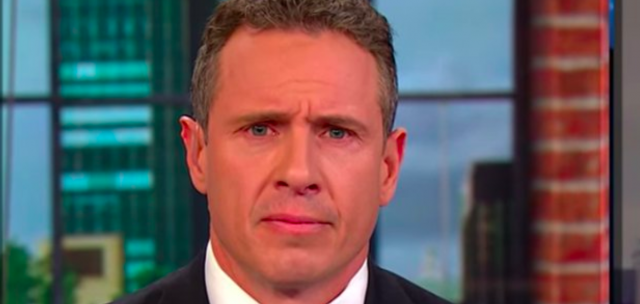
There have been far too many cartoonishly absurd responses to Stein’s interview for me to address in a single article without putting my laptop through the wall in a fit of rage, but this tweet from MSNBC and Atlantic contributor Natasha Bertrand is really something else.
“Jill Stein just told @CNN that her presence at RT gala in Moscow Dec 2015 wasn’t controversial at the time because Obama ‘was still on track for a reboot’ with Putin,” said Bertrand, adding that “Russia had already annexed Crimea, invaded eastern Ukraine, intervened in Syria for Assad, and hacked the DNC.”
This is actual, real-life “Oceania had always been at war with Eastasia” Orwellian revisionist doublethink. There was no public information about any Russian DNC hack in 2015, and the average American hardly ever thought about Russia at that time. Then-Secretary of State John Kerry personally met with Vladimir Putin in July of 2016 to discuss collaboration against terrorist forces in Syria. Only in the most warped, revisionist, funhouse mirror Orwellian reality tunnel can it be claimed that Stein visiting Moscow in December of 2015 would have been considered shady or controversial at the time.
Jill Stein just told @CNN that her presence at RT gala in Moscow Dec 2015 wasn’t controversial at the time because Obama “was still on track for a reboot” with Putin.
(Russia had already annexed Crimea, invaded eastern Ukraine, intervened in Syria for Assad, and hacked the DNC.)— Natasha Bertrand (@NatashaBertrand) May 1, 2018
The fact that Bertrand’s tweet was liked and shared thousands of times on Twitter is extremely creepy and disturbing. Establishment media didn’t start indoctrinating American liberals with Russia hysteria until the tail end of 2016, but it’s been so effective that MSNBC mainliners are now gaslighting themselves into a revision of their own history.
This is why people like myself fight the CIA/CNN Russia narrative so aggressively. Not because we’re propagandists, not because we’re “useful idiots”, not because of “Russian talking points”, but because the US-centralized power establishment’s nonstop campaign to manufacture support for its agendas of global hegemony are making us all stupid and crazy.
Stop playing along with this bullshit. Stop letting them make us stupid and crazy. Stop letting them manipulate us into consenting to escalations with a nuclear superpower. Stop. Turn back. Wrong way.
The Skripal Case and Bombing Syria: Six Things We Learned About Modern Britain
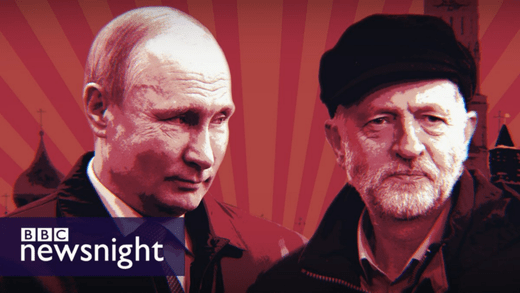
By Neil Clark | Sputnik | May 3, 2018
To have been in ‘democratic’ Britain for the past eight weeks has been quite an educational experience.
We’ve seen how the NeoCon Establishment works, how dissent is policed, and how ‘gas-lighting’ techniques are used to try and make us think we’re going crazy for questioning the ‘official narrative’ — a narrative which we know just by employing simple logic, doesn’t make sense.
Here’s a list of the most important things we’ve learnt- that’s if you weren’t aware of them already.
1. The presumption of innocence doesn’t apply to NeoCon targets.
Innocent until proven guilty? Not if you’re in the line of fire of the Endless War Lobby, comrade. Russia was accused of trying to poison the Skripals before a proper criminal investigation had even begun. The Syrian government was blamed for a chemical weapons attack, before we had independently verification that a chemical weapons attack had even taken place. The ‘Official Narrative’ on both cases has unravelled spectacularly. No ‘smoking gun’ evidence of either Russian involvement in the Skripal case or of the Douma CW attack has been produced. On the contrary, witnesses testified last week at The Hague that the Douma attack didn’t happen.
But we’re expected not to notice — as the news cycle — conveniently for the accusers- moves on to other stories.
2. Rupert Murdoch’s Times newspaper plays an utterly pernicious role in British public life.
It was the Times which demanded action from Theresa May against Russia. It was the Times which has demanded (repeatedly, and again after the Skripal incident) that Ofcom acted against Russian media in the UK, such as RT. It was the Times, which accuses Russian media of peddling ‘fake news’, which reported Sergei Skripal as dead on its 12th March front page.
It was The Times which, on 14th March, falsely reported that ‘almost 40’ people had needed treatment in Salisbury, prompting Dr Stephen Davies, Consultant in Emergency Medicine to write to the paper stating ‘May I clarify that no patients have experienced symptoms of nerve agent poisoning in Salisbury and there have only ever been three patients with significant poisoning.’
It was The Times, which on the day the US/UK and France launched illegal attacks on Syria in response to the unverified chemical weapons attack at Douma, carried a front page attack on British academics who dare to challenge the War Party line on Syria. It was The Times which smeared other critics of western foreign policy as ‘Russian trolls’, including a peace campaigner from Finland who had been battling cancer.
John Wight has called the Times, the in-house organ of the neocon Henry Jackson Society. Its days as Britain’s respected newspaper of record have certainly long gone.
3. Britain is only what is called a ‘Democracy’.
Just think back to that Parliamentary debate on 14th March. Labour leader Jeremy Corbyn was attacked from his own side, for his cautious approach towards the government’s unproven claims about the Skripal case. To add insult to injury a number of Labour MPs then signed Early Day Motion 1071 – which stated ‘This House unequivocally accepts the Russian state’s culpability for the poisoning of Yulia and Sergei Skripal’. Labour’s Shadow Defence Secretary Nia Griffith showed her support for Theresa May by saying ‘We very much accept what the Prime Minister said.’ Corbyn, coming under enormous Establishment pressure did buckle, saying the Russian authorities ‘needed to be held to account’, even though later he still quite rightly insisted that ‘absolute evidence’ was needed.
In bombing Syria on 14th April, Theresa May not only refused to recall Parliament, she also ignored public opinion which showed only 20% in favour of air strikes. In a genuine democracy that would have ruled out action. But May treated public opinion with utter contempt. That wonderful passage from ‘The Comments of Moung Ka’ by the Edwardian comic writer Saki springs readily to mind.
‘The people of Britain are what is called a Democracy’ said Moung Ka. ‘A Democracy?’ questioned Moung Thwa. What is that?’
‘A Democracy’ broke in Moung Shooglay eagerly, ‘is a community that governs itself according to its own wishes and interests by electing accredited representatives who enact its laws and supervise and control their administration. It’s aim and object is government of the community in the interests of the community’.
‘Then’, said Moung Thwa, turning to his neighbour, ‘If the people of Britain are a Democracy -‘
‘I never said they were a Democracy’, interrupted Moung Ka placidly.
‘Surely we both heard you!’, exclaimed Moung Thwa.
‘Not correctly, said Moung Ka; ‘I said they are what is called a Democracy’.
4. The ‘free press’ doesn’t act as you’d expect a ‘free press’ to act.
The striking thing about the Skripal case and Syria bombings from a journalist’s point of view has been the uniformity of the media coverage.
Right-wing papers like the Telegraph and liberal ones like The Guardian have taken exactly the same stance ie anti-Russian and anti-Syrian government. Whether its because of DSMA-Notices (see 6, below), or not, there’s been no proper questioning of the UK government’s claims about Salisbury — and not much on Syria either. Investigative journalism? What’s that?
The mainstream media is actually less diverse in its opinions now (on the things that really matter) than at the time of the Iraq war where publications like the New Statesman (now a ‘centrist’ Blairite organ), spoke out strongly against intervention. If you want a different perspective on Skripals and Syria you have had to tune in to Russian media, such as Sputnik and RT, and that of course is threatened by the NeoCon Thought Police, who want everyone to be singing from the same pro-war hymn sheet.
5. The role of the security services in the promotion of ‘official narratives’ is very important.
Every time a wheel has come off the Skripal narrative, we’ve been fed information to bolster it from ‘official sources’. After the head of Porton Down said that the laboratory there was unable to confirm that the nerve agent allegedly used to poison the Skripals came from Russia, the line was pushed that ‘intelligence-led assessments’ pointed to Russian guilt. Could we see these ‘assessments’? Of course not! We just have to believe that they’re there. Then as the ‘nerve agent placed on the door handle’ theory began to gain a head of steam we were told that ‘British Intelligence’ had ‘evidence’ that Russia had been testing the nerve agent on door handles prior to 3rd March. Could we see this ‘evidence’? No, of course not.
Alex Thomson of C4 News reported on 12th March that a ‘D-Notice’ had issued by the UK authorities to stop the media from fully identifying Sergei Skripal’s MI6 handler who lived nearby.
Were other DSMA-Notices issued too regarding the reporting of Salisbury? If it was so clear that Russia did it, why would they bother?
6. The British public aren’t mugs (or sheep).
Despite all the propaganda, all the hysterical headlines, all the blatantly biased coverage, the British haven’t bought it. Literally or metaphorically. Inside the Tent gatekeepers have relentlessly attacked those brave individuals who have questioned the official narratives, but its these individuals- smeared as ‘crackpots’ and ‘conspiracy theorists’ who the public are turning to for their analysis. Compare the number of retweets the former UK Ambassador to Uzbekistan Craig Murray gets when he publishes on the Skripal case, with those who try and denigrate him. My own Twitter following has increased by several thousands since early March. Citizen Halo got a big boost in followers after she was smeared by The Times. After the lies told about Yugoslavia, Iraq, Libya people no longer tamely accept what the NeoCon Establishment tells us. We’re at an ‘Emperor’s New Clothes’ moment in British politics where more and more people have found the courage to say out loud ‘The Emperor has no clothes!’. The elite have been lying to us and they know that we know they’ve been lying. The question is: what are we going to do about it?
Support his AntiStalker Legal Fund (vs. a Times journalist)
Gavin Williamson wants YOU in the Army Reserves to fight Russia in the fake news wars!
RT | May 1, 2018
If you’re a reporter or a computer geek, then Gavin Williamson wants you to help him in the war on fake news. The UK defense secretary issued to a call to arms to tech and communications experts to fight the cyber propaganda war.
Williamson has called on those with IT or cyber skills to join the UK’s reserve forces to help end the Russian “age of disinformation,” arguing they can “change the narrative” with tech skills that are “more relevant today than anything else.”
In an interview with The House magazine, set to be published later in the week, Williamson said that the reserves need to come up with ways to get the private sector more involved in encouraging people to join the reserve forces.
The secretary argued that army recruitment should be about “looking to different people who maybe think, as a journalist: ‘What are my skills in terms of how are they relevant to the armed forces?’
“They are more relevant today than anything else, having those skills, whether it be journalists, those people with amazing cyber and IT skills, those people with the ability to really understand about getting messages across.”
Williamson said the armed forces need the next generation for a new approach to fight ever-changing modern warfare. “We have to start changing the armed forces in terms of actually attracting those people as well,” he said. “Sometimes people see the armed forces as being quite traditional in terms of its approach. But in this disinformation age, this cyber-age – people often look at cyber as something that’s separate. Actually, it’s completely relevant to every other different part of our services.”
Williamson once again compared tactics used by Russian ‘internet trolls’ to Nazi propaganda, saying in March that it “completely distorts the narrative of what people think about things… effectively the Lord Haw-Haws of the modern era”.
The defense chief has made his feelings about Russia very clear in the past. He previously told Russia to “go away and shut up” following the chemical attack against the Skripals. In January, he was accused of fear mongering after warning that Russia could kill “thousands and thousands” of Brits, “creating total chaos within the country.”
A report from the National Audit Office found the number of full-time military personnel was 8,200 people short of the required level. There is also a 26% shortfall in the number of intelligence analysts.
Featured Video

Death Spikes & Rising Cancer In Our Youth Explained
or go to
Aletho News Archives – Video-Images
From the Archives
Politicians lie
By Mazin Qumsiyeh | Popular Resistance | August 18, 2013
There is no way to say this truth nicely: Politicians lie. That includes Japanese, American, Egyptian, Israeli, and Palestinian politicians! Is there something more common sense than that? Yet, so many citizens around the world believe their own politicians or wistfully acknowledge lies but think it is part of the job needed to run things. They believe even when politicians contradict themselves blatantly. This phenomenon is rather remarkable. It is a dissonance and disconnect from reality that many seem oblivious to. It is very dangerous because it can lead to accepting rationales for going to war. These can be deadly wars that lead to millions of lives lost as happened in what was called World War 1 and WW2. Even when incredible and declassified evidence abound, politicians continue to lie and old mythologies refuse to die. Here are just a few of the countless lies told to us over the past few decades… continue
Blog Roll
 Aletho News
- Ukrainian Soldiers, Potential Mercenaries: Have Gun, Will Travel!
- Burnham’s UN debut… A masterclass in British disinformation
- Iran flights continue despite US aviation sanctions
- Global Tipping Points Lead the World Into a State of Entropy
- The day-after at the White House: USA and Xi Jinping
- The Geopolitical Balance in the Red Sea: The UAE Being Displaced by New Players
- Iraqi resistance group vows to stage airport sit-ins over Iran aerial blockade
- Turkish parliament to review Saudi-Pakistan defense pact next month
- DEATH SPIKES & RISING CANCER IN OUR YOUTH EXPLAINED
- Iran offers Trump deal before US election
- If Americans Knew
- Deconstructing Netanyahu’s pants-on-fire UN rant – Daily Update
- Trump betrayed voters with his campaign lies and prioritized a foreign country once he took office
- Netanyahu calls Israel’s war in Gaza ‘opposite of genocide’ in UN speech to near-empty hall
- Settler Kidnappings: Torture, Sexual Abuse and Terrorisation of Palestinian Abductees as Israel Deepens Annexation of West Bank
- Gaza winter nears as 162,000 tents become unusable, raising fears of humanitarian crisis
- Netanyahu says, “It’s the opposite of genocide”; UN says Gaza economy is world’s ‘most severe crisis on record’ – Daily Update
- Israel’s US-Backed Assault on Gaza Has Created the ‘World’s Most Severe Economic Crisis on Record’: UN
- ‘Protecting U.S. Citizens’… From Israel
- ‘This is where I live now, the back of a truck’: a day in the life of a grandmother in Gaza
- In UN Speech, Iran’s President Displays Pictures of Children Killed by US, Brings Attention to Israel’s Nuclear Arsenal
- No Tricks Zone
- New Study: Earth And Venus Surface Warmth Largely Explained By Convection And Lapse Rate, Not CO2 Or Radiation
- 2025 Nature Paper Claiming Worsening Global Drought Gets RETRACTED …Heavily Flawed
- New Study: ‘Global Drought Shows No Detectable Recent Acceleration Under Climate Warming’
- Economic Masterminds: German Socialists Suggest Taxing Productivity Gains Stemming From Using AI
- The South China Sea Has Not Been Cooperating With The Climate Change Narrative
- Energy Crisis: Germany Enters Heating Season With Historically Low Gas Reserve Fill Levels
- New Study: The Antarctic Ice Sheet Gained Mass From 2020-2024 Due To Staggering Snow And Ice Accumulation
- Study: Ocean Heating Rates From Thousands Of Years Ago ‘Dwarf’ Modern Ocean Heating Rates
- Climate Extremists Target, Attack Large-Scale Power Grid Infrastructure In Germany!
- New Study: Antarctic Ice Melt Has Contributed Less Than 1 Centimeter To Sea Level Rise In The Last 30 Years

