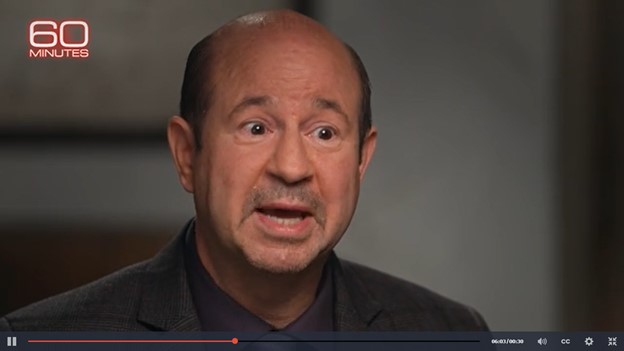
Prominent scientist and climate activist Michael Mann appealed to an asserted scientific consensus to chastise President Donald Trump on CBS’s 60 Minutes program last night. Ironically, Mann himself ignored clear scientific consensus in order to promote his own, out-of-the-mainstream climate change theories.
While interviewing Mann, CBS’s Scott Pelley said, “There have always been fires in the West. There have always been hurricanes in the East. How do we know that climate change is involved in this?” Pelley followed up with, “The president says about climate change, ‘Science doesn’t know.’”
Replied Mann, “The president doesn’t know, and he should know better. He should know that the world’s leading scientific organizations, our own U.S. National Academy of Sciences, and national academies of every major industrial nation, every scientific society in the United States that’s weighed in on the matter. This is a scientific consensus. There’s about as much scientific consensus about human-caused climate change as there is about gravity.”
Mann’s description of the conclusions of the “scientific consensus” however, is exactly the opposite of what scientific bodies report.
As documented in Climate at a Glance: Hurricanes, the United Nations Intergovernmental Panel on Climate Change (IPCC) expresses “low confidence” in any connection between climate change and changes in hurricane activity.
Similarly, as documented in Climate at a Glance: U.S. Wildfires, U.S. wildfires are much less frequent and severe than they were in the first half of the 20th century – 100 years of global warming ago. Moreover, the IPCC reports a decrease in drought conditions – which is the primary climate factor regarding wildfires – in the global region including the U.S. West. Moreover, the IPCC finds no evidence of an increase in drought globally, either.
Ultimately, data, evidence, and scientific facts are far more indicative of scientific truth than a real or imagined consensus of scientists. Yet, to the extent Michael Mann wishes to invoke consensus as a scientific argument, the clear consensus of scientists is that Mann is promoting extreme climate theories that have no basis in reality.
James Taylor is Director of the Arthur B. Robinson Center for Climate and Environmental Policy at The Heartland Institute.
The French city of Marseille has adopted a proposal to form its own scientific council to assess Covid statistics and develop more informed local policies, as it battles against “unjust” lockdown rules imposed by the government.
The proposal was adopted on Monday, having been put forward by outspoken former French senator Samia Ghali, the current second-in-command of the city administration.
The move will see Marseille take a leading role in the assessment of its own health situation and provide the mayor, Michèle Rubirola, and city leaders with the necessary information to manage their own policies on Covid restrictions, Ghali said.
“The mayor must chair a scientific council … to see what the deficiencies are, and so we have a perspective and no longer depend on certain Parisian scientists, but also so we, ourselves, have the capacity to say what is going and what is not, and no longer suffer the thunderbolt of Paris.”
Ghali has been particularly vocal in her criticism of Parisian lawmakers in recent weeks, following the imposition of new Covid restrictions in Marseille and neighboring Aix-en-Provence. The government decreed in September that the southern city would become a ‘maximum alert zone’, causing the closure of all restaurants and bars for 15 days, which was seen by many in Marseille as unjustified. The restaurants were eventually allowed to reopen from Monday under certain conditions, which prompted Ghali to say the earlier strictures were “unfair and therefore not sustainable.”
Paris escaped fresh restrictions in September, leading many elected officials in Marseille to suggest France’s second city was not treated in the same way as the capital. Rubirola had previously shared her disapproval on Twitter, claiming “The announcements of Olivier Véran confirm this evening the unequal treatment suffered by Marseille. Inconsistent and unfair.” Restrictions were eventually introduced in Paris on Monday.
However, the announcement of a scientific council for Marseille has been met with criticism by some political leaders. The president of the Regional Council of Provence-Alpes-Côte d’Azur, Renaud Muselier, said there are already 10 existing and competent health bodies at national and regional level. “In this crisis, each of these structures has its own expertise and role to play. Adding a purely Marseille thing to it can only add confusion and cacophony to an already disturbing disorder,” he noted.
By strengthening the presence of warships from non-Black Sea NATO members in the Black Sea, the military bloc is attempting to demonstrate its dominance in the region and the Alliance’s desire to neutralize and pressurize Russia’s influence in the area. Moscow’s Black Sea influence significantly increased after Crimea’s 2014 reunification with Russia. NATO’s military presence in the Black Sea is significantly strengthening, especially as warships in the area increased by 33% from January to September compared to the same period time last year. In 40% of cases, these ships are equipped with high-precision long-range weapons. This can be seen as a NATO attempt to intimidate Russia.
NATO is undeniably trying to put pressure on Russia by demonstrating its power. However, another important goal of the Alliance is to conduct intelligence operations against Crimea and Russia’s south. The Alliance is trying to locate Russian facilities, communication links, navigation systems, electronic warfare systems and other related military assets. There is of course the additional goal of training by simulating a battle with the Russian military.
After the reunification of Crimea, Russia gained a huge strategic advantage in the Black Sea region as it prevented NATO warships from being able to go to Sevastopol and turning it into a powerful pivot point that hypothetically could block Russia’s access to the Sea of Azov in the event of war. The Sea of Azov is critical to the security of Russia’s south as it is the beginning of the Volga–Don Canal.
Officially, the increased presence of NATO warships is in support of the Ukrainian navy. They are constantly participating in manoeuvres, such as the “Sea Breeze” exercises held in July. The number of military exercises is even growing. Countries far from the region, such as Canada and the Scandinavian states, are appearing in the Black Sea. Even this year, despite COVID-19 and all the restrictions, a large number of NATO warships arrived in the Black Sea. The last recorded case of non-Black Sea navy ships entering the Black Sea was recorded on Sunday when a British torpedo destroyer sailed in.
Warships of non-Black Sea countries can only be in the Black Sea for a limited time in accordance to the 1936 Montreux Convention. Therefore, that Convention is actually an obstacle for NATO today. Without this treaty, American and British warships could be permanently stationed in the Black Sea. The significance of this convention is based on guaranteeing the free passage of civilian ships through the Black Sea during peacetime and restricting the passage of warships of non-Black Sea states. According to the Convention, countries that do not border on the Black Sea are not allowed to keep their ships in the Black Sea region for more than 21 days. In addition, there are restrictions when it comes to the tonnage and number of warships belonging to non-Black Sea countries – no more than 30,000 tons and nine ships. This means that no aircraft carrier can enter the Black Sea, since they weigh between 45,000 to 100,000 tons.
Also, according to the Montreux Convention, Turkey must not close access to and from the Black Sea via the Bosporus and the Dardanelle Straits during peacetime. During a war in which Turkey does not participate, the sea must be closed to the passage of warships of any country participating in the war. Turkey, as a Black Sea state and member of NATO, can stay in the Black Sea as long as it wants and send as many ships as it wants, and has always participated in NATO Black Sea manoeuvres.
Although NATO countries do not recognize Russia’s sovereignty over Crimea, this does not correspond with the reality on the ground and they know that the Russian Black Sea Fleet is in a state of combat readiness and will respond to any threat. This increasing pressure in the Black Sea also corresponds with pressure against Russia in the seas in the Arctic, the Baltic and the Pacific. The presence of NATO warships in the Black Sea is just a show of strength and it is highly unlikely that this will intimidate the Russian military in the region or make it withdraw from Crimea. For now NATO are respecting the 1936 Montreux Convention but this has not reduced any pressure that is being applied against Russia.
Paul Antonopoulos is an independent geopolitical analyst.
What Happened: Ronald B. Brown, Ph.D., from the School of Public health and Health Systems at the University of Waterloo, Canada, recently stated that the COVID-19 fatality rate is the “worst miscalculation in the history of humanity.” Brown is currently completing his second doctorate degree this time in epidemiology at the University of Waterloo.
In the paper he provides data and information he collected from his research, he compared informational texts from the World Health Organization (WHO) and the Centers for Disease Control and Prevention (CDC) to data from independent scientists and Congressional testimony. He states that “Results of this critical appraisal reveal information bias and selection bias in coronavirus mortality overestimation, most likely caused by misclassifying an influenza infection fatality rate as a case fatality rate.”
The subject of this article is disruptive, to say the least, although it is not as obvious from the title. The manuscript cites the smoking-gun, documented evidence showing that the public’s overreaction to the coronavirus pandemic was based on the worst miscalculation in the history of humanity, in my opinion. My manuscript underwent an intensive peer-review process. You are the first media guy who has responded to my invitation.
Dr. Brown added that CDC and WHO documents show that the case fatality rate for influenza was similar to the coronavirus, implying that the lockdowns were pointless. His paper questions why the 2017-2018 influenza season in the United States did not “receive the same intensive media coverage as COVID-19.”
He points out that “the accuracy of coronavirus tests rushed into production during the pandemic were unknown.” And he explores how the media began focusing on an increase in coronavirus cases while ignoring the decrease in death rates.
The Bulgarian Pathology Association has taken the stance that the testing used to identify the new coronavirus in patients is “scientifically meaningless.” They cite an article explaining the science. You can read more about that here.
Why This Is Important. Dr. Brown is not the only one raising these points, yet it seems nobody really knows these facts because they are constantly ignored by mainstream media, who is simply presenting us with one perspective that doesn’t seemed to be based on science and data at all in my opinion. It makes one wonder, what’s really going on here?
Why are deaths not a result of the coronavirus being marked as coronavirus deaths, even when it’s clear that that the coronavirus was not the cause? This has been observed across the globe.
A number of the world’s doctors and top experts in the field have been raising their concern with regards to the measures taken to combat the novel coronavirus. For example, Michael Levitt, a Biophysicist and a professor of structural biology at Stanford University recently criticized the WHO as well as Facebook for censoring different information and informed perspectives regarding the pandemic. You can read more about that here.
More than 500 German doctors & scientists have signed on as representatives of an organization called the “Corona Extra-Parliamentary Inquiry Committee” to investigate what’s happening on our planet with regards to COVID-19, expressing the same sentiment. They came together to investigate the severity of the virus, and whether or not the actions taken by governments around the world, and in this case the German government, are justified and not causing more harm than good.
You can access the full English transcripts on the organizations website if interested.
This group has been giving multiple conferences in Germany, in one of the most recent, Dr. Heiko Schöning, one of the organizations leaders, stated that “We have a lot of evidence that it (the new coronavirus) is a fake story all over the world.” To put it in context, he wasn’t referring to the virus being fake, but simply that it’s no more dangerous than the seasonal flu (or just as dangerous) and that there is no justification for the measures being taken to combat it. You can read more about the story here.
Another example would be a recent report published in the British Medical Journal has suggested that quarantine measures in the United Kingdom as a result of the new coronavirus may have already killed more UK seniors than the coronavirus has during the peak of the virus.
Reported case fatality rates, like the original official 3.4% rate from the World Health Organization, caused horror, panic and hysteria and were also meaningless.
Many scientists and doctors in North America are also expressing the same sentiments. For example, The Physicians For Informed Consent (PIC) recently published a report titled “Physicians for Informed Consent (PIC) Compares COVID-19 to Previous Seasonal and Pandemic Flu Periods.” According to them, the infection/fatality rate of COVID-19 is 0.26%. You can read more about that and access their resources and reasoning here.
Dr. Sucharit Bhakdi, a specialist in microbiology and one of the most cited research scientists in German history is also part of Corona Extra-Parliamentary Inquiry Committee mentioned above and has also expressed the same thing, multiple times early on in the pandemic all the way up to today.
Implementation of the current draconian measures that are so extremely restrict fundamental rights can only be justified if there is reason to fear that a truly, exceptionally dangerous virus is threatening us. Do any scientifically sound data exist to support this contention for COVID-19? I assert that the answer is simply, no. – Bhakdi. You can read more about him here.
John P. A. Ioannidis, a professor of medicine and epidemiology at Stanford University has said that the infection fatality rate “is close to 0 percent” for people under the age of 45 years old. You can read more about that here. He and several other academics from the Stanford School of Medicine suggest that COVID-19 has a similar infection fatality rate as seasonal influenza, and published their reasoning in a study last month. You can find that study and read more about that story here.
This list goes on, and on, and on, and on… So why don’t we hear anything about it? Why are scientists, doctors and experts being heavily censored for sharing this information? Why are media outlets like us being punished and demonetized for writing about it? What’s going on here? Is there another agenda at play? Is NSA Whistleblower Edward Snowden right about the fact that governments are using this pandemic to place more measures upon the population that take away our rights, all under the guise of good will? Why haven’t these measures been taken for other respiratory viruses that infect just as many, and kill just as many people and more than Covid-19 every single year?
These are important questions to ask and have a discussion around, especially when our right to even speak is slowly being taken away.
Facebook fact-checkers have made it quite clear that any information that does not come from the WHO or federal health regulatory agencies should not be considered as reliable.
The Takeaway
Why is there so much information being shared that completely contradicts the narrative of our federal health regulatory agencies and organizations like the WHO? Is there a battle for our perception happening right now? Is our consciousness being manipulated? Why is there so much conflicting information if everything is crystal clear? Why are alternative treatments that have shown tremendous amounts of success being completely ignored and ridiculed? What’s going on here, and how much power do governments have when they are able to silence the voice of so many people? Should we not be examining information openly, transparently, and together?
Is the new coronavirus, like 9/11, a catalyst for a shift in human consciousness. Are people ‘waking up’ as a result of what has, is and will transpire?
There has been a great deal of controversy over claims that Kary Mullis, the creator of the PCR technology that is being widely used to test for so-called ‘cases’ of COVID-19, did not believe the technology was suitable for detecting a meaningful presence of a virus.
Those making these assertions were attacked and ‘fact checked’ (deemed inappropriate by propagandists) by news outletsclaiming that Mullis’ comments had been taken out of context.
So when a video surfaces with Mullis talking about the efficacy of the technology it is worth paying close attention to what he is saying. He died last year, so it is the best ‘fact check’ available. In the video, Mullis is discussing AIDS. He first deals with a criticism from the audience that the PCR technology is being misused [timestamp – 48:40].
“I don’t think you can misuse PCR. [It is] the results; the interpretation of it. If they can find this virus in you at all – and with PCR, if you do it well, you can find almost anything in anybody.”
Mullis does not explicitly say that the PCR technology is unsuitable for detecting a meaningful presence of COVID-19. How could he, given that he died before it came to light? But such a conclusion can safely be inferred:
“It starts making you believe in the sort of Buddhist notion that everything is contained in everything else. If you can amplify one single molecule up to something you can really measure, which PCR can do, then there is just very few molecules that you don’t have at least one single one of in your body.”
Mullis then addresses the question of what should be considered meaningful, which is the central issue with the use of the PCR tests. Do the ‘case’ numbers being used around the world by governments to impose police states and egregious lockdowns of the population, especially in my home state of Victoria, actually mean anything? The answer seems to be ‘no’:
“That could be thought of as a misuse: to claim that it [a PCR test] is meaningful. It tells you something about nature and what is there. To test for that one thing and say it has a special meaning is, I think, the problem. The measurement for it is not exact; it is not as good as the measurement for apples. The tests are based on things that are invisible and the results are inferred in a sense. It allows you to take a miniscule amount of anything and make it measureable and then talk about it.”
Mullis also addresses, by implication, another question about the incidence of ‘cases’. If you test positive – and Australia’s Therapeutic Goods Administration has admitted that they do not know if this means you are infected or not – are you actually sick? In the past that is what the word ‘cases’ has meant: someone unwell from a disease. Mullis’ position is clear [emphasis added – timecode 51:49]:
“PCR is just a process that allows you to make a whole lot of something out of something. It doesn’t tell you that you are sick, or that the thing that you ended up with was going to hurt you or anything like that.”
Mullis’ comments are unsurprising for anyone who has been paying attention to the behaviour of the authorities during the COVID-19 catastrophe. The technology relies on amplifying results many times over. If they are amplified less than about 35 times, no-one will test positive. If they are amplified 60 times, everyone will test positive. The flawed thinking is obvious enough.
Why is there such a concerted effort to quell anyone exposing problems with the use of the technology? There is no doubt that these attacks are designed to deceive (including predictable use of that shoddy ad hominem phrase ‘conspiracy theory’, a rhetorical trick to insult people rather than address their arguments).
Look closely at the ‘fact checking’. The Reuters article uses a mixture of a straw man argument and a red herring. It asserts it was wrong to claim that Mullis said that: “PCR tests cannot detect free infectious viruses at all”. This is obviously a deliberate misrepresentation intended to wrongly characterise the opponents’ argument and then ‘expose’ it as false.
Then we get the red herring. The Reuters article claims that: “The quote is actually from an article written by John Lauritsen in December 1996 about HIV and AIDS, not COVID-19 (here).” Neat trick. Assert that your opponents got their sources wrong, and then dismiss them because of their poor research.
It is transparently untruthful, but why are these news outlets pushing such propaganda?
In one way, it could be said to be just business as usual. For those of us who have worked in newsrooms, especially in the finance and business sections, being subjected to propaganda is as routine as the daily cups of coffee.
The techniques are endless: outright lying, misleading but true facts, half truths, quarter truths, lack of context, lack of corporate memory, deceptive jargon, false statistics, lobbying by astro-turf organisations, threats of legal action, threats to complain to the editor or proprietor, threats of removal of access to important sources, promises of getting first access to important stories, subtle requests from former colleagues for assistance, and, of course, my favourites – free lunches at expensive restaurants and travel junkets.
The situation, always bad, has worsened with the destruction of the media’s business model by Facebook and Google, who have taken half the world’s advertising revenue. It has forced the hollowed out newsrooms to rely more on outside news feeds. And, as Matt Taibbi has noted, mainstream media organisations are, for commercial reasons, no longer interested in “selling a vision of reality they perceive to be acceptable to a broad mean”.
Instead, they deliberately sow division and only appeal to niches. Forget facts; inciting prejudice comes first.
But none of that explains why there is such intense propaganda about COVID-19.
The endless spin inflicted on media organisations is transparently related to satisfying greed or enhancing power, but what is the motive here? True, the US health system is one of the biggest profiteering exercises in the world, corrupting health everywhere. Health accounts for 16 per cent of US GDP, which is about twice the level of, say, Australia or the UK (countries that have universal care).
That extra eight per cent equates with $1.6 trillion in profiteering, or about two per cent of the global economy – an eye-watering scam conducted by pharmaceutical companies, hospital conglomerates, insurance companies, lawyers, consultants and so on. Those vultures will be trying to control the media to profit from a vaccine and who knows what else.
But they will only be one group of players and probably not the main ones. The most important question is who is funding the ‘fake news’ that COVID-19 is an existential threat and what is their agenda? Most countries have been greatly harmed. It has resulted in a medical dictatorship that has shut down Victoria; health bureaucrats may, absurdly, be given police powers.
There is a very sinister international agenda here, but the outline of it is, so far, only blurry.
Over a half of coronavirus infections revealed this summer by one of Belgium’s biggest labs were old and no longer contagious, but were still reported as new cases, local media discovered.
Belgian daily newspaper Het Laatste Nieuws examined the tests carried out by AZ Delta, one of the largest labs in the country, and made a stunning discovery. Almost half of all positive cases reported throughout June, July and August were actually people with an old infection.
The problem, it turns out, lies in the PCR Covid-19 tests. The paper reports that scientific data reveals virus particles can be detected up to 83 days after the actual infection. This led to instances where people were no longer contagious, but were still registered as positive cases. According to HLN, all of these people had to be quarantined.
Belgian experts sounded the alarm in mid-July, when coronavirus numbers spiked after a relief in June, and even insisted that the second wave had already begun for the country.
“We may have had to deal with old infections largely in the summer months,” the lab’s clinical biologist Frederik Van Hoecke told the paper.
As infectious disease epidemiologists and public health scientists we have grave concerns about the damaging physical, and mental health impacts of the prevailing COVID-19 policies and recommend an approach we call Focused Protection.
“This is the saner approach, the more scientific approach,” the authors tell Freddie Sayers
Coming from both the left and right, and around the world, we have devoted our careers to protecting people. Current lockdown policies are producing devastating effects on short and long-term public health. The results (to name a few) include lower childhood vaccination rates, worsening cardiovascular disease outcomes, fewer cancer screenings and deteriorating mental health – leading to greater excess mortality in years to come, with the working class and younger members of society carrying the heaviest burden. Keeping students out of school is a grave injustice.
Keeping these measures in place until a vaccine is available will cause irreparable damage, with the underprivileged disproportionately harmed.
Fortunately, our understanding of the virus is growing. We know that vulnerability to death from COVID-19 is more than a thousand-fold higher in the old and infirm than the young. Indeed, for children, COVID-19 is less dangerous than many other harms, including influenza.
As immunity builds in the population, the risk of infection to all – including the vulnerable – falls. We know that all populations will eventually reach herd immunity – i.e.the point at which the rate of new infections is stable – and that this can be assisted by (but is not dependent upon) a vaccine. Our goal should therefore be to minimize mortality and social harm until we reach herd immunity.
The most compassionate approach that balances the risks and benefits of reaching herd immunity, is to allow those who are at minimal risk of death to live their lives normally to build up immunity to the virus through natural infection, while better protecting those who are at highest risk. We call this Focused Protection.
Adopting measures to protect the vulnerable should be the central aim of public health responses to COVID-19. By way of example, nursing homes should use staff with acquired immunity and perform frequent PCR testing of other staff and all visitors. Staff rotation should be minimized. Retired people living at home should have groceries and other essentials delivered to their home. When possible, they should meet family members outside rather than inside. A comprehensive and detailed list of measures, including approaches to multi-generational households, can be implemented, and is well within the scope and capability of public health professionals.
Those who are not vulnerable should immediately be allowed to resume life as normal. Simple hygiene measures, such as hand washing and staying home when sick should be practiced by everyone to reduce the herd immunity threshold. Schools and universities should be open for in-person teaching. Extracurricular activities, such as sports, should be resumed. Young low-risk adults should work normally, rather than from home. Restaurants and other businesses should open. Arts, music, sport and other cultural activities should resume. People who are more at risk may participate if they wish, while society as a whole enjoys the protection conferred upon the vulnerable by those who have built up herd immunity.
Great Barrington, Massachusetts, 4th October 2020
To sign the declaration, follow this link (will be live later today): www.GBdeclaration.org
Dr Sunetra Gupta is a professor at Oxford University, an epidemiologist with expertise in immunology, vaccine development, and mathematical modelling of infectious diseases
Dr Bhattacharya is a professor at Stanford University Medical School, a physician, epidemiologist, health economist, and public health policy expert focusing on infectious diseases and vulnerable populations.
Dr Kulldorff is a Professor of medicine at Harvard University, a biostatistician, and epidemiologist with expertise in detecting and monitoring of infectious disease outbreaks and vaccine safety evaluations.
With half the US population reportedly unwilling to submit to an experimental Covid-19 shot, a new scientific paper has shed light on how state health authorities might enforce compliance with vaccine mandates.
Published in the New England Journal of Medicine on Thursday, the paper outlines strategies for circumventing widespread fears over the safety of a rushed-to-market vaccine against the novel coronavirus, providing health authorities with a playbook for coercing a skittish populace.
The writers acknowledge that voluntary measures should be tried first, rather than mandating the vaccine for everyone out of the gate. However, if the target population doesn’t comply within a trial period, a mandate should be rolled out, and the penalties for refusing to submit should be harsh. Given “the costs of a failed voluntary scheme,” the writers warn, authorities should wait no more than a few weeks before rolling out a mandate if uptake falls short of expectations.
The paper says “six substantive criteria” must be met before a Covid-19 vaccine is imposed by the state. A federal body, the Advisory Committee on Immunization Practices, must greenlight administration to certain groups of the populace first, and “only recommended groups should be considered for a vaccination mandate.”
“High-risk” groups should be given priority on that list.
“[T]he elderly, health professionals working in high-risk situations or working with high-risk patients… persons with certain underlying medical conditions,” and people living in “high-density settings such as prisons and dormitories” – as well as active-duty military service members – should be ordered to get the jab as soon as health officials are confident they have a sufficient supply to cover these groups, the paper suggests.
Rather than attempting to pass laws requiring certain populations to get the vaccine, the paper recommends that “noncompliance should incur a penalty” – and a “relatively substantial” one. The non-compliant should be threatened with “employment suspension or stay-at-home orders,” though fines or criminal charges are discouraged, because they “disadvantage the poor” and risk getting the mandate itself challenged in court. Worse, they “may stoke distrust without improving uptake,” it adds.
Whatever they do, authorities should avoid flaunting their relationship with vaccine manufacturers, the paper recommends – a tall order, given that President Donald Trump’s “Operation Warp Speed” vaccine development initiative is helmed by Moncef Slaoui, the former head of pharma giant GlaxoSmithKline’s vaccine division who had to quit the board of directors of Moderna – a frontrunner in the vaccine race – to take the job. Slaoui notoriously was forced to offload over $10 million in Moderna stock after its value briefly skyrocketed following the announcement of promising early trial results.
For the non-high-risk groups, the writers suggest authorities “encourage voluntary uptake… using means such as public education campaigns and free vaccination.” Health officials have been hard at work conducting focus groups on which variety of “influencers” might best convince the American people to embrace what would be the quickest vaccine rollout in history (the standard timetable for vaccine development and approval, complete with post-shot monitoring for side effects, is 10 years or more) and what kind of emotional tone the message should take.
A Yale University study conducted in July evaluated messaging strategies including guilt, economic benefit, trust in science, embarrassment, and community benefit to measure the effects on not only confidence in the vaccine itself but how willing the participants were to persuade others to take the shot – and how much they feared or looked down on those who had not received it. The results of that study have not been published.
The authors of the NEJM paper hail from Yale, Stanford University, and Indiana University, all institutions that have received funding from the Bill and Melinda Gates Foundation. The foundation has poured billions of dollars into developing multiple Covid-19 vaccines, setting up seven facilities to manufacture the leading candidates. While the US, UK, and several other countries have already paid for hundreds of millions of doses of multiple jabs, no western pharmaceutical company has yet declared victory in the vaccine race – on the contrary, the clinical trials of frontrunners like AstraZeneca and Moderna have yielded a bumper crop of troubling side effects.
Fears about the rushed rollout of the vaccine coupled with both Republicans and Democrats’ determination to turn the jab into a political football have convinced a majority of Americans that they don’t want to be among the first to get vaccinated. A poll conducted earlier this month suggested less than half the country would take the shot, even if they were paid $100, and polling shows the portion of Americans willing to take it has declined steadily since May.
Eager as we are for a COVID vaccine, we need to be realistic about possible harms – and about a plausible timeline.
There’s a phrase being tossed around with abandon these days. Everywhere we turn, there’s talk of a “safe and effective” COVID-19 vaccine.
USA Todayquotes infectious disease chief Anthony Fauci: “We feel cautiously optimistic that we will be able to have a safe and effective vaccine.”
Two days ago, former US Food and Drug Administration (FDA) commissioners, Scott Gottlieb and Mark McClellan, used the phrase safe and effective three times in a Wall Street Journalopinion piece about vaccine development.
Canada’s Prime Minister, Justin Trudeau, similarly declared recently: “Canadians must have access to a safe and effective vaccine against COVID-19…”
Let us now turn to Vaccines: Truth, Lies and Controversy, a book written by Peter Gotzsche, a Danish physician who has spent decades evaluating the quality of published medical research. 27 years ago, he was among those who founded the Cochrane Collaboration, an organization that systematically assesses healthcare interventions.
In the context of discussing Japanese encephalitis, Gotzsche writes:
according to the WHO “safe and effective vaccines are available.” You should never believe such reassuring statements, which is [drug] industry jargon. Nothing is both safe and effective; effectiveness always comes with a price.
He continues:
In healthcare, people rarely use the term harms. They talk about side effects, which is a euphemism for the inevitable – some people will be harmed and in rare cases even die after having received a vaccine.
Generally speaking, Gotzsche considers vaccines “the most valuable interventions and the best buy for money we can offer.” But the overriding message of his book is that every vaccine must be judged on its own merits. In his view, some vaccines promoted by health authorities are “marginal at best.”
He’s skeptical, for example, of annual flu vaccines, to the point of accusing the website of the US Centers for Disease Control (CDC) of promulgating a “massive amount of misinformation” on this topic. When discussing whether medical personnel and others should be forced to get an annual flu shot, he says:
No vaccine is entirely harmless, and in the worst case, the healthcare worker might die, e.g. because of an anaphylactic shock caused by the vaccine, or fainting with head trauma after the injection, or development of the Guillain-Barre syndrome…
… A common argument for mandatory flu shots is that they prevent transmission of the virus to other people. However, there is no evidence that the vaccine does this…
… Many people will think that their chance of benefitting from the vaccination exceeds 50%, but it is less than 2%…Furthermore, the vaccine does not reduce admission to hospital or days off work…
… It has never been shown in reliable research that flu shots reduce deaths.
Which brings us to COVID-19. The fact that 160 different teams are currently working on a vaccine is immensely encouraging. Surely one of them will hit the target. On the other hand, we must be sensible.
In a July interview, Kenneth Frazier, the CEO of Merck pharmaceutical company, had some words of caution:
What worries me the most is that the public is so hungry, so desperate to go back to normalcy, that they are pushing us to move things faster and faster. But ultimately, if you’re going to use a vaccine in billions of people, you better know what that vaccine does.
… There are a lot of examples of vaccines in the past that have stimulated the immune system, but ultimately didn’t confer protection. And unfortunately, there are some cases where it stimulated the immune system and…actually helped the virus invade the cell…
… I think when people tell the public that there’s going to be a vaccine by the end of 2020, for example, I think they do a grave disservice to the public. I think at the end of the day, we don’t want to rush the vaccine before we’ve done rigorous science. We’ve seen in the past, for example, with the swine flu, that that vaccine did more harm than good. We don’t have a great history of introducing vaccines quickly in the middle of a pandemic.
In the Soviet Union it was forbidden to dispute the wisdom of the “party line.” That’s because Marxian communism was viewed as the scientifically inevitable progression of mankind. For Marx and Lenin, the “science was settled.” Therefore anyone speaking out against “the science” of the Soviet system must be acting with malice; must actually want destruction; must want people to die.
Anyone voicing opposition to the “settled science” of Marxism-Leninism soon found their voice silenced. Oftentimes permanently.
Ironically, just 30 years after the “science” of Marxism-Leninism imploded for all the world to see, we are witnessing a resurgence here in the US of the idea that to question “the science” is not to seek truth or refine understanding of what appears to be conflicting evidence. No, it is to actually wish harm on one’s fellow Americans.
And while we who question “the science” are not being physically carried off to the gulags for disputing the wisdom of our “betters” in the CDC or the World Health Organization, for example, we are finding that the outcome is the same. We are being silenced and accused of malicious intent. The Soviet Communists called dissidents like us “wreckers.”
Last week on my daily news broadcast, the Ron Paul Liberty Report, we reported on two whistleblowers from inside the CDC and Big Pharma who raised serious and legitimate questions about the prevailing coronavirus narrative. The former Chief Science Officer for the pharmaceutical giant Pfizer, Dr. Mike Yeadon, has stated that from his experience he believes that nearly 90 percent of positive results from the current tests for Covid are false positives. That means that this massive expansion in “cases,” used to justify continued attacks on our civil liberties, is simply phony.
As Dr. Yeadon said in a recent interview about the Orwellian UK coronavirus lockdown, “we are basing a government policy, an economic policy, a civil liberties policy, in terms of limiting people to six people in a meeting… all based on, what may well be, completely fake data on this coronavirus?”
Is Dr. Yeadon correct in claiming that based on his scientific observation there is no “second wave”? We don’t know. But we do know that his claims that the massive increase in “cases” in Europe used to justify new lockdowns are not in any way being matched with a similar increase in deaths. The EU’s own charts prove this. Deaths remain a flat line near zero while “cases” skyrocket to match the massive increase in testing.
Yet when we reported on Dr. Yeadon’s findings on the Liberty Report last week we found that for the first time ever, our program was removed by YouTube.
YouTube, owned by Google, which is firmly embedded into the deep state, was vague in explaining just where we violated their “community standards” by simply reporting on qualified scientists who happen to disagree with the mainstream coronavirus narrative.
But they did offer this shocking explanation in an email sent to us at the Ron Paul Liberty Report: “YouTube does not allow content that explicitly disputes the efficacy of the World Health Organization.”
Incredible!
It’s not the science that is settled. What appears to be “settled is the impulse to silence anyone who asks “why”?
1994, 1995 and 1998 recorded the biggest wildfire acreages. But over the full period, there is no obvious trend at all.
Which all rather makes of a nonsense of the Met Office’s claim that hot dry weather conditions promoting wildfires are becoming more severe and widespread due to climate change.
Considering how much misinformation is currently floating around in the area of health and medicine, I thought it might be useful to write an article about how to read and understand scientific studies, so that you can feel comfortable looking at first hand data yourselves and making your own minds up.
Ethical principles
Anyone can carry out a study. There is no legal or formal requirement that you have a specific degree or educational background in order to perform a study. All the earliest scientists were hobbyists, who engaged in science in their spare time. Nowadays most studies are carried out by people with some formal training in scientific method. In the area of health and medicine, most studies are carried out by people who are MD’s and/or PhD’s, or people who are in the process of getting these qualifications.
If you want to perform a study on patients, you generally have to get approval from an ethical review board. Additionally, there is an ethical code of conduct that researchers are expected to stick to, known as the Helsinki declaration, which was developed in the 1970’s after it became clear that a lot of medical research that had been done up to that point was not very ethical (to put it mildly). The code isn’t legally binding, but if you don’t follow it, you will generally have trouble getting your research published in a serious medical journal.
The most important part of the Helsinki declaration is the requirement that participants be fully informed about the purpose of the study, and given an informed choice as to whether to take part or not. Additionally, participants have to be clearly informed that it is their right to drop out of a study at any point, without having to provide any reason for doing so.
Publication bias
The bigger and higher quality a scientific study is, the more expensive it is. This means that most big, high quality studies are carried out by pharmaceutical companies. Obviously, this is a problem, because the companies have a vested interest in making their products look good. And when companies carry out studies that don’t show their drugs in the best light, they will usually try to bury the data. When they carry out studies that show good results, however, they will try to maximize the attention paid to them.
This contributes to a problem known as publication bias. What publication bias means is that studies which show good effect are much more likely to get published than studies which show no effect. This is both because the people who did the study are more likely to push for it to be published, and because journals are more likely to accept studies that show benefit (because those studies get much more attention than studies that don’t show benefit).
So, one thing to be aware of before you start searching for scientific studies in a field is that the studies you can find on a topic often aren’t all the studies. You are most likely to find the studies that show the strongest effect. The effect of an intervention in the published literature is pretty much always bigger than the effect subsequently seen in the real world. This is one reason why I am skeptical to drugs, like statins, that show an extremely small benefit even in the studies produced by the drug companies themselves.
There have been efforts in recent years to mitigate this problem. One such effort is the site clinicaltrials.gov. Researchers are expected to post details of their planned study on clinicaltrials.gov in advance of beginning recruitment of participants. This makes it harder to bury studies that subsequently don’t show the wanted results.
Most serious journals have now committed to only publish studies that have been listed on clinicaltrials.gov prior to starting recruitment of participants, which gives the pharmaceutical companies a strong incentive to post their studies there. This is a hugely positive development, since it makes it a little bit harder for the pharmaceutical companies to hide studies that didn’t go as planned.
Peer review
Once a study is finished, the researchers will usually try to get it published in a peer-reviewed journal. The first scientists, back when modern science was being invented in the 1600’s, mostly wrote books in which they described what they had done and what results they had achieved. Then, after a while, scientific societies started to pop up, and started to produce journals. Gradually science moved from books to journal articles. In the 1700’s the journals started to incorporate the concept of peer-review as a means to ensure quality.
As you can see, journals are an artifact of history. There is actually no technical reason why studies still need to be published in journals in a time when most reading is done on digital devices. It is possible that the journals will disappear with time, to be replaced by on-line science databases.
In recent years, there has been an explosion in the popularity of “pre-print servers”, where scientists can post their studies while waiting to get them in to journals. When it comes to medicine, the most popular such server is medRxiv. The main problem with journals is that they charge money for access, and I think most people will agree that scientific knowledge should not be owned by the journals, it should be the public property of humankind.
Peer-review provides a sort of stamp of approval, although it is questionable how much that stamp is worth. Basically, peer-review means that someone who is considered an expert on the subject of the article (but who wasn’t personally involved with it in any way) reads through the article and determines if it is sensible and worth publishing.
Generally the position of peer-reviewer is an unpaid position, and the person engaging in peer-review does it in his or her spare time. He or she might spend an hour or so going through the article before deciding whether it deserves to be published or not. Clearly, this is not a very high bar. Even the most respected journals have published plenty of bad studies containing manipulated and fake data because they didn’t put much effort in to making sure the data was correct. As an example, the early part of the covid pandemic saw a ton of bad studies which had to be retracted just a few weeks or months after publication because the data wasn’t properly fact checked before publication.
If the peer reviewer at one journal says no to a scientific study, the researchers will generally move on to another, less prestigious journal, and will keep going like that until they can get the study published. There are so many journals that everything gets published somewhere in the end, no matter of how poor quality.
The whole system of peer-review builds on trust. The guiding principle is the idea that bad studies will be caught out over the long term, because when other people try to replicate the results, they won’t be able to.
There are two big problems with this line of thinking. The first is that scientific studies are expensive, so they often don’t get replicated, especially if they are big studies of drugs. For the most part, no-one but the drug company itself has the cash resources to do a follow-up study to make sure that the results are reliable. And if the drug company has done one study which shows a good effect, it won’t want to risk doing a second study that might show a weaker effect.
The second problem is that follow-up studies aren’t exciting. Being first is cool, and generates lots of media attention. Being second is boring. No-one cares about the people who re-did a study and determined that the results actually held up to scrutiny.
Different types of evidence
In medical science, there are a number of “tiers” of data. The higher tier generally trumps the lower tier, because it is by its nature of higher quality. This means that one good quality randomized controlled trial trumps a hundred observational studies.
The lowest quality type of evidence is anecdote. In medicine this often takes the form of “case reports”, which detail a single interesting case, or “case series”, which detail a few interesting cases. An example could be a case report of someone who developed a rare complication, say baldness, after taking a certain drug.
Anecdotal evidence can generate hypotheses for further research, but it can never say anything about causation. If you take a drug and you lose all your hair a few days later, that could have been caused by the drug, but it could also have been caused by a number of other things. It might well just be coincidence.
After anecdote, we have observational studies. These are studies which take a population and follow it to see what happens to it over time. Usually, this type of study is referred to as a “cohort study”, and often, there will be two cohorts that differ in some significant way.
For example, an observational study might be carried out to figure out the long term effects of smoking. Ideally, you want a group that doesn’t smoke to compare with. So you find 5,000 smokers and 5,000 non-smokers. Since you want to know what the effect of smoking is specifically, you try to make sure that the two cohorts are as similar as possible in all other respects. You do this by making sure that both populations are around the same age, weigh as much, exercise as much, and have similar dietary habits. The purpose of this is to decrease confounding effects.
Confounding is when something that you’re not studying interferes with the thing that you are studying. So, for example, people who smoke might also be less likely to exercise. If you then find that smokers are more likely to develop lung cancer, is it because of the smoking or the lack of exercise? If the two groups vary in some way with regards to exercise, it’s impossible to say for certain. This is why observational studies can never answer the question of causation. They can only ever show a correlation.
This is extremely important to be aware of, because observational studies are constantly being touted in the media as showing that this causes that. For example a tabloid article might claim that a vegetarian diet causes you to live longer, based on an observational study. But observational studies can never answer questions of causation. Observational studies can and should do their best to minimize confounding effects, but they can never get rid of them completely.
The highest tier of evidence is the Randomized Controlled Trial (RCT). In a RCT, you take a group of people, and you randomly select who goes in the intervention group, and who goes in the control group.
The people in the control group should ideally get a placebo that is indistinguishable from the intervention. The reason this is important is that the placebo effect is strong. It isn’t uncommon for the placebo effect to contribute more to a drug’s perceived effect than the real effect caused by the drug. Without a control group that gets a placebo it’s impossible to know how much of the perceived benefit from a drug that actually comes from the drug itself.
In order for an RCT to get full marks for quality, it needs to be double-blind. This means that neither the participants nor the members of the research team who interact with the participants know who is in which group. This is as important as having a placebo, because if people know they are getting the real intervention, they will behave differently compared to if they know they are getting the placebo. Also, the researchers performing the study might act differently towards the intervention group and the control group in ways that influence the results, if they know who is in which group. If a study isn’t blinded, it is known as an “open label” study.
So, why does anyone bother with observational studies at all? Why not always just do RCT’s? For three reasons. Firstly, RCT’s take a lot of work to organize. Secondly, RCT’s are expensive to run. Thirdly, people aren’t willing to be randomized to a lot of interventions. For example, few people would be willing to be randomized to smoking or not smoking.
There are those who would say that there is another, higher quality form of evidence, above the randomized controlled trial, and that is the systematic review and meta-analysis. This statement is both true, and not true. The systematic review is a review of all studies that have been carried out on a topic. As the name suggests, the review is “systematic”, i.e. a clearly defined method is used to search for studies. This is important, because it allows others to replicate the search strategy, to see if the reviewers have consciously left out certain studies they didn’t like, in order to influence the results in some direction.
The meta-analysis is a systematic review that has gone a step further, and tried to combine the results of several studies in to a single “meta”-study, in order to get a higher amount of statistical power.
The reason I say it’s both true and not true that this final tier is higher quality than the RCT is that the quality of systematic reviews and meta-analyses depends entirely on the quality of the studies that are included. I would rather take one large high quality RCT than a meta-analysis done of a hundred observational studies. An adage to remember when it comes to meta-analyses is “garbage in, garbage out” – a meta-analysis is only as good as the studies it includes.
There is one thing I haven’t mentioned so far, and that is animal studies. Generally, animal studies will take the form of RCT’s. There are a few advantages to animal studies. You can do things to animals that you would never be allowed to do to humans, and an RCT with animals is much cheaper than an RCT with humans.
When it comes to drugs, there is in most countries a legal requirement that they be tested on animals before being tested on humans. The main problem with animal studies is several million years of evolution. Most animal studies are done in rats and mice, which are separated from us by over fifty million years of evolution, but even our closest relatives, chimps, are about six million years away from us evolutionarily. It is very common for studies to show one thing in animals, and something completely different when done in humans. For example, studies of fever lowering drugs done in animals find a seriously increased risk of dying of infection, but studies in humans don’t find any increased risk. Animal studies always need to be taken with a big grain of salt.
Statistical significance
One very important concept when analyzing studies is the idea of statistical significance. In medicine, a result is considered “statistically significant” if the ”p-value” is less than 0,05 (p stands for probability).
This gets a little bit complicated, but please bear with me. To put it as simply as possible, the p-value is the probability that a certain result was seen even though the null hypothesis is true. (The null hypothesis is the alternative to the hypothesis that is being tested. In medicine the null hypothesis is usually the hypothesis that an intervention doesn’t work, for example that statins don’t decrease mortality).
So a p-value of 0,05 means that there is a 5% or lower chance that a result was seen even though the null hypothesis is true.
One thing to understand is that 5% is an entirely arbitrary cut-off. The number was chosen in the early twentieth century, and it has stuck. And it leads to a lot of crazy interpretations. If a p-value is 0,049 the researchers who have carried out a study will frequently rejoice, because the result is statistically significant. If the p-value is on the other hand 0,051, then the result will be considered a failure. Anyone can see that this is ridiculous, because there is actually only a 0,002 (0,2%) difference between the two results, and one is really no more statistically significant than the other.
Personally, I think a p-value of 0,05 is a bit too generous. I would much have preferred if the standard cut-off had been set at 0,01, and I am sceptical of results that show a p-value greater than 0,01. What gets me really excited is when I see a p-value of less than 0,001.
It is especially important to be sceptical of p-values that are higher than 0,01 considering the other things we know about medical science. Firstly, that there is a strong publication bias, which causes studies that don’t show statistical significance to “disappear” at a higher rate than studies that do show statistical significance. Secondly, that studies are often carried out by people with a vested interest in the result, who will do what they can to get the result they want. And thirdly, because the 0,05 cut-off is used inappropriately all the time, for a reason we will now discuss.
The 0,05 limit is only really supposed to apply when you’re looking at a single relationship. If you look at twenty different relationships at the same time, then just by pure chance one of those relationships will show statistical significance. Is that relationship real? Almost certainly not.
The more variables you look at, the more strictly you should set the limit for statistical significance. But very few studies in medicine do this. They happily report statistical significance with a p-value of 0,05, and act like they’ve shown some meaningful result, even when they look at a hundred different variables. That is bad science, but even big studies, published in prestigious journals, do this.
That is why researchers are supposed to decide on a “primary end-point” and ideally post that primary end-point on clinicaltrials.gov before they start their study. The primary end-point is the question that the researchers are mainly trying to answer (for example, do statins decrease overall mortality?). Then they can use the 0,05 cut-off for the primary endpoint without cheating. They will usually report any other results as if the 0,05 cut-off applies to them too, but it doesn’t.
The reason researchers are supposed to post the primary endpoint at clinicaltrials.gov before starting a trial is that they can otherwise choose the endpoint that ends up being most statistically significant just by chance, after they have all the results, and make that the primary endpoint. That is of course a form of statistical cheating. But it has happened, many times. Which is why clinicaltrials.gov is so important.
One thing to be aware of is that a large share of studies can not be successfully replicated. Some studies have found that more than 50% of research cannot be replicated. That is in spite of a cut-off which is supposed to cause this to only happen 5% of the time. How can that be?
I think the three main reasons are publication bias, vested interests that do what they can to manipulate studies, and inappropriate use of the 5% p-value cut-off. That is why we should never put too much trust in a result that has not been replicated.
Absolute risk vs relative risk
We’ve discussed statistical significance a lot now, but that isn’t really what matters to patients. What patients care about is “clinical significance”, i.e. if they take a drug, will it have a meaningful impact for them. Clinical significance is closely tied to the concepts of absolute risk and relative risk.
Let’s say we have a drug that decreases your five year risk of having a heart attack from 0,2% to 0,1% . We’ll invent a random name for the drug, say, “spatin”. Now, the absolute risk reduction when you take a spatin is 0,1% over five years (0,2 – 0,1 = 0,1). Not very impressive, right? Would you think it was worth taking that drug? Probably not.
What if I told you that spatins actually decreased your risk of heart attack by 50%? Now you’d definitely want to take the drug, right?
How can a spatin only decrease risk by 0,1% and yet at the same time decrease risk by 50%? Because the risk reduction depends on if we are looking at absolute risk or relative risk. Although spatins only cause a 0,1% reduction in absolute risk, they cause a 50% reduction in relative risk (0,1 / 0,2 = 50%).
So, you get the absolute risk reduction by taking the risk without the drug and subtracting the risk with the drug. You get the relative risk reduction by dividing the risk with the drug from the risk without the drug. Drug companies will generally focus on relative risk, because it sound much more impressive. But the clinical significance of a drug that decreases risk from 0,2% to 0,1% is, I would argue, so small that it’s not worth taking the drug, especially if the drug has side effects which might be more common than the probability of seeing a benefit.
When you look at an advertisement for a drug, always look at the fine print. Are they talking about absolute risk or relative risk?
How a journal article is organized
In the last few decades, a standardized format has developed for how scientific articles are supposed to be written. Articles are generally divided in to four sections.
The first section is the “Introduction”. In this section, the researchers are supposed to discuss the wider literature around the topic of their study, and how their study fits in with that wider literature. This section is mostly fluff, and you can usually skip through it.
The second section is the “Method”. This is an important section and you should always read it carefully. It describes what the researchers did and how they did it. Pay careful attention to what the study groups were, what the intervention was, what the control was. Was the study blinded or not? And if it was, how did they ensure that the blinding was maintained? Generally, the higher quality a scientific study, the more specific the researchers will be about exactly what they’ve done and how. If they’re not being specific, what are they trying to hide? Try to see if they’ve done anything that doesn’t make sense, and ask yourself why. If any manipulation is happening to make you think you’re seeing one thing when you’re actually seeing something else, it usually happens in the method section.
There are a few methodological tricks that are very common in scientific studies. One is choosing surrogate end points and another is choosing combined end points. I will use statins to exemplify each, since there has been so much methodological trickery in the statin research.
Surrogate end points are alternate endpoints that “stand in” for the thing that actually matters to patients. An example of a surrogate end point is looking at whether a drug lowers LDL cholesterol instead of looking at the thing that actually matters, overall mortality. The use of the surrogate end point in this case is motivated by the cholesterol hypothesis, i.e. the idea that cholesterol lowering drugs lower LDL, which results in a decrease in cardiovascular disease, which results in increased longevity.
By using a surrogate end point, researchers can claim that the drug is successful when they have in fact shown no such thing. As we’ve discussed previously, the cholesterol hypothesis is nonsense, so showing that a drug lowers LDL cholesterol does not say anything about whether it does anything clinically useful.
Another example of a surrogate endpoint is looking at cardiovascular mortality instead of overall mortality. People don’t usually care about which cause of death is listed on their death certificate. What they care about is whether they are alive or dead. It is perfectly possible for a drug to decrease cardiovascular mortality while at the same time increasing overall mortality, so overall mortality is the only thing that matters (at least if the purpose of a drug is to make you live longer).
An example of a combined end point is looking at the combination of overall mortality and frequency of cardiac stenting. Basically, when you have a combined end point, you add two or more end points together to get a bigger total amount of events.
Now, cardiac stenting is a decision made by a doctor. It is not a hard patient oriented outcome. A study might show that there is a statistically significant decrease in the combined end point of overall mortality and cardiac stenting, which most people will interpret as a decrease in mortality, without ever looking more closely to see if the decrease was actually in mortality, or stenting, or a combination of both. In fact, it’s perfectly possible for overall mortality to increase and still have a combined endpoint that shows a decrease.
Another trick is choosing which specific adverse events to follow, or not following any adverse events at all. Adverse events is just another word for side effects. Obviously, if you don’t look for side effects, you won’t find them.
Yet another trick is doing a “per-protocol analysis”. When you do a per-protocol analysis, you only include the results from the people who followed the study through to the end. This means that anyone who dropped out of the study because the treatment wasn’t having any effect or because they had side effects, doesn’t get included in the results. Obviously, this will make a treatment look better and safer than it really is.
The alternative to a per-protocol analysis is an “intention to treat” analysis. In this analysis, everyone who started the study is included in the final results, regardless of whether they dropped out or not. This gives a much more accurate understanding of what results can be expected when a patient starts a treatment, and should be standard for all scientific studies in health and medicine. Unfortunately per-protocol analyses are still common, so always be vigilant as to whether the results are being presented in a per-protocol or intention to treat manner.
The third section of a scientific article is the results section, and this is the section that everyone cares most about. This is just a pure tabulation of what results were achieved, and as such it is the least open to manipulation, assuming the researchers haven’t faked the numbers. Faking results has happened, and it’s something to be aware of and watch out for. But in general we have to assume that researchers are being honest. Otherwise the whole basis for evidence based medicine cracks and we might as well give up and go home.
To be fair, I think most researchers are honest. And I think even pharmaceutical companies will in general represent the results honestly (because it would be too destructive for their reputations if they were caught outright inventing data). Pharmaceutical companies engage in lots of trickery when it comes to the method and in the interpretation of the results, but I think it’s uncommon for them to engage in outright lying when it comes to the hard data presented in the results tables.
There is however one blatant manipulation of the results that happens frequently. I am talking about cherry picking of the time point at which a scientific study is ended. This can happen when researchers are allowed to check the results of their study while it is still ongoing. If the results are promising, they will often choose to stop the study at that point, and claim that the results were “so good that it would have been unethical to go on”. The problem is that the results become garbage from a statistical standpoint. Why?
Because of a statistical phenomenon known as “regression to the mean”. Basically, the longer a scientific study goes on for and the more data points that end up being gathered, the closer the result of the study is to the real result. Early on in a study, the results will often swing wildly just due to statistical chance. So studies will tend to show bigger effects early on, and smaller effects towards the end.
This problem is compounded by the fact that if a study at an early point shows a negative result, or a neutral result, or even a result that is positive but not “positive enough”, the researchers will usually continue the study in hopes of getting a better result. But the moment the result goes above a certain point, they stop the study and claim excellent benefit from their treatment.
That is how the time point at which a study is stopped ends up being cherry picked. Which is why the planned length of a study should always be posted in advance on clinicaltrials.gov, and why researchers should always stick to the planned length, and never look at the results until the study has gone on for the planned length. If a study is stopped early at a time point of the researchers’ choosing, the results are not statistically sound no matter what the p-values may show. Never trust the results of a study that stopped early.
The fourth section of a scientific article is the discussion section, and like the introduction section it can mostly be skipped through. Considering how competitive the scientific research field is, and how much money is often at stake, researchers will use the discussion section to try to sell the importance of their research, and if they are selling a drug, to make the drug sound as good as possible.
At the bottom of an article, there will generally be a small section (in smaller print than the rest of the study) that details who funded the study, and what conflicts of interest there are. In my opinion, this information should be provided in large, bright orange text at the top of the article, because the rest of the article should always be read in light of who did the study and what motives they had for doing it.
In conclusion, focus on the method section and the results section. The introduction section and the discussion section can for the most part be ignored.
Final words
My main take-home is that you should always be skeptical. Never trust a result just because it comes from a scientific study. Most scientific studies are low quality and contribute nothing to the advancement of human knowledge. Always look at the method used. Always look at who funded the study and what conflicts of interest there were.
I hope this article is useful to you. Please let me know if there are more things in terms of scientific methodology that you have been wondering about. I will try to make this article a living document that grows over time.
Sebastian Rushworth, M.D. is a practicing physician in Stockholm, Sweden. I studied medicine at Karolinska Institutet (home of the Nobel prize in medicine).
Beirut – During his visit with US Secretary of State, Mike Pompeo, Lebanese President Michael Aoun reportedly received a US-Israeli document detailing plans for creating a civil war in Lebanon with covert false flag operations and possible Israeli invasion.
Although the source of the document is Israeli and created in partnership with Washington, no one knows who presented it to Aoun. The Lebanese TV station, Al-Jadeed, initially reported the document on Lebanese TV and a video on its website. Geopolitics Alert translated the report for this article. … continue
This site is provided as a research and reference tool. Although we make every reasonable effort to ensure that the information and data provided at this site are useful, accurate, and current, we cannot guarantee that the information and data provided here will be error-free. By using this site, you assume all responsibility for and risk arising from your use of and reliance upon the contents of this site.
This site and the information available through it do not, and are not intended to constitute legal advice. Should you require legal advice, you should consult your own attorney.
Nothing within this site or linked to by this site constitutes investment advice or medical advice.
Materials accessible from or added to this site by third parties, such as comments posted, are strictly the responsibility of the third party who added such materials or made them accessible and we neither endorse nor undertake to control, monitor, edit or assume responsibility for any such third-party material.
The posting of stories, commentaries, reports, documents and links (embedded or otherwise) on this site does not in any way, shape or form, implied or otherwise, necessarily express or suggest endorsement or support of any of such posted material or parts therein.
The word “alleged” is deemed to occur before the word “fraud.” Since the rule of law still applies. To peasants, at least.
Fair Use
This site contains copyrighted material the use of which has not always been specifically authorized by the copyright owner. We are making such material available in our efforts to advance understanding of environmental, political, human rights, economic, democracy, scientific, and social justice issues, etc. We believe this constitutes a ‘fair use’ of any such copyrighted material as provided for in section 107 of the US Copyright Law. In accordance with Title 17 U.S.C. Section 107, the material on this site is distributed without profit to those who have expressed a prior interest in receiving the included information for research and educational purposes. For more info go to: http://www.law.cornell.edu/uscode/17/107.shtml. If you wish to use copyrighted material from this site for purposes of your own that go beyond ‘fair use’, you must obtain permission from the copyright owner.
DMCA Contact
This is information for anyone that wishes to challenge our “fair use” of copyrighted material.
If you are a legal copyright holder or a designated agent for such and you believe that content residing on or accessible through our website infringes a copyright and falls outside the boundaries of “Fair Use”, please send a notice of infringement by contacting atheonews@gmail.com.
We will respond and take necessary action immediately.
If notice is given of an alleged copyright violation we will act expeditiously to remove or disable access to the material(s) in question.
All 3rd party material posted on this website is copyright the respective owners / authors. Aletho News makes no claim of copyright on such material.
 Eager as we are for a COVID vaccine, we need to be realistic about possible harms – and about a plausible timeline.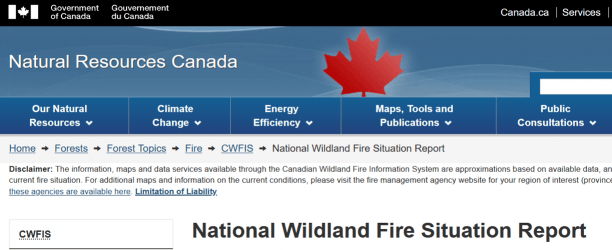



 Aletho News
