The Democrat’s foolish War on Climate
By David Wojick | Climate Etc. | August 17, 2016
The party platform adopted at the Democratic National Convention, on page 45, calls for a national mobilization on the scale of World War II. What enemy deserves the wrath endured by Hirohito and Hitler? Climate change! Democrats want to declare a war on climate.
Here is the amazing declaration: “We believe the United States must lead in forging a robust global solution to the climate crisis. We are committed to a national mobilization, and to leading a global effort to mobilize nations to address this threat on a scale not seen since World War II.”
This scale of mobilization is incredibly expensive and disruptive to people’s lives, something to which the Democrats seem oblivious. Great sacrifices by average Americans were required for mobilization during the Second World War, enforced by massively intrusive government authority. Is this what the Democrats want, the supreme government control that comes with a wartime effort?
To begin, there was widespread government rationing of essential products. For most families, driving was limited to just three gallons of gas a week. If the Democrat’s war on climate is designed to curtail fossil fuel use then will gasoline again be rationed, in spite of longer commutes due to massive post-war suburbanization? What about natural gas and coal-fired electric power? Meat and clothing were also rationed. Will this be repeated?
Even worse, many consumer products were simply not produced; their production prohibited in favor of war materials. These included most appliances, including refrigerators, plus cars, of course. Today’s banned appliance list might well include computers, smart phones and televisions, and again cars, as well as air conditioners and refrigerators. Will all these technologies be stopped in favor of building climate war materials like windmills, batteries and solar panels?
Not only is mobilization horrendous, there is no scientific justification for it. It is now clear that what is called “lukewarming” is probably the correct scientific view. Human activity may be causing a modest global warming that is actually beneficial. Beyond that climate change is natural and so beyond human control.
The only purpose for which a war on climate makes sense is justifying a massive increase in government power. Mobilization means controlling both production and consumption, as well as wage and price controls, all of which require detailed central planning of economic activity. This in turn requires a host of new agencies, programs, boards, etc. We have seen it all before.
Of course we have had so-called “war” policies before, such as the war on drugs. But these were mostly metaphorical policy names, typically just a shift in focus with a modest budget increase. The Democratic platform is very different because it specifies that the scale of the war on climate will be comparable to the Second World War mobilization, which entailed wrenching lifestyle changes.
If the Democrats are in fact serious, then we are talking about central economic planning on a massive scale, imposing great sacrifices on Americans, all in the futile name of stopping climate change. Sacrifice is harmful in its own right so this raises a host of moral issues. Which immediate harms will be deemed less harmful than speculative future climate change? Medical care is now a major sector of the economy, will it be curtailed? Will poverty be left to languish, or even encouraged via wage controls? Will travel be forbidden? Unfortunately the platform gives no clue, so this should be a major election issue.
In fact the specter of a WWII-scale mobilization to fight climate change dwarfs everything else proposed in the Democrats’ platform combined. It is also contrary to most of these other proposals, given the widespread restrictions that mobilization requires. Perhaps they do not understand what they are calling for, but if they do then they need to tell us what it is. Clarifying and justifying this outrageous mobilization declaration is essential to the election process.
Voting for mobilization without knowing what it means would be incredibly foolish.
David Wojick is a former consultant with the Office of Scientific and Technical Information at the U.S. Department of Energy in the area of information and communication science. He has a Ph.D. in the philosophy of science and mathematical logic from the University of Pittsburgh and a B.S. in civil engineering from Carnegie Tech. He has been on the faculty of Carnegie Mellon and the staffs of the U.S. Office of Naval Research and the Naval Research Lab.
BBC, Indian Monsoon, And More Lies
By Paul Homewood | Not A Lot Of People Know That | August 19, 2016

Welcome to the latest barrage of lies and misinformation from the BBC:
This week I went to the scene of terrible tragedy.
A river, swollen by raging monsoon floodwaters, had torn down a bridge on the main road between Mumbai and Goa.
More than 30 people are thought to have died when the great stone structure crashed into the torrent, taking with it two buses and a number of cars.
Some of the bodies were swept more than 60 miles downriver in two days.
We produced a short news report.
In the heart-wrenchingly brutal calculus of the newsroom, this isn’t a major story. But zoom out, and you begin to see the outlines of a much bigger and more worrying picture.
India, indeed the whole South Asia region, has been riding a rollercoaster of extreme weather.
The summer monsoon is the most productive rain system in the world, and this year the region is experiencing a strong one. The floods it caused have affected more than 8.5 million people; more than a million are living in temporary shelters; some 300 people have been killed.
Though what really caught people’s interest was the three baby rhinos rescued from the waters in the north Indian state of Assam.
The fact that 17 adult rhinos drowned got rather less attention.
But the important point is that the region is awash with water. Just a few months ago, it was a very different story. The previous two monsoons were unusually weak. The result was a terrible drought in northern India, and parts of Pakistan and Bangladesh.
And it was exacerbated by another extreme weather event – record heat.
India experienced its highest temperature ever this summer, a blistering 51C.
Rivers ran dry; water holes evaporated; reservoirs became dusty plains. And, once again, the statistics were staggering.
More than 300 million people were affected by water shortages – the equivalent of the entire population of the US. A city of half a million people was left completely dry. It had to rely on supplies brought in by train.
As if that weren’t bad enough, in spite of the drought, the country was hit by a series of unseasonal rain and hailstorms. They caused such terrible damage to crops that some farmers were driven to suicide.
All these examples of extreme weather were widely reported, rightly so. What tended not to be discussed was the underlying cause.
We are all interested in weather; few of us want to be told – once again – that our lifestyles are disrupting the global climate. Yet the truth is that many climatologists believe the monsoon, always fickle, is becoming even more erratic as a result of global warming.
The picture in the last couple of years is complicated by the fact that the world has been experiencing a particularly strong El Nino, the periodic weather variation caused by warming of the sea in the Pacific.
But a series of long-term studies have shown the number of extreme rainfall events in South Asia increasing while low-to-moderate events are decreasing. And increasingly erratic and extreme weather is precisely what scientists expect climate change will bring.
The Intergovernmental Panel on Climate Change (IPCC) has predicted “rainfall patterns in peninsular India will become more and more erratic, with a possible decrease in overall rainfall, but an increase in extreme weather events”.
Since the monsoon accounts for as much as three-quarters of rainfall in some areas, any change is a huge issue. The more extreme the storms, the more likely we are to see more tragedies like the shattered bridge I visited this week.
Now, since you’ve read this far, I hope you’ll excuse me if I take a moment to ram my point home a little harder because there is growing evidence that climate change isn’t just restricted to South Asia.
Ask anyone who follows the issue and they’ll tell you that this year is already well on the way towards becoming the hottest ever. The previous record was last year; before that it was 2014. In fact, the 11 warmest years have occurred since 1998.
I’m not saying we shouldn’t talk about the weather, just that we need to talk about the climate too.
This is all too typical BBC fare – pick a weather event, hype it up as something unusual, connect it to climate change and say they are going to get worse!
So let’s do a bit deconstruction.
1) Far from the floods being a “terrible tragedy”, the Indians themselves regard heavy monsoon rainfall as being extremely benevolent. Indeed, the reporter Justin Rowlatt’s opening comment reveals the BBC’s metro liberal outlook on the world.
If he had bothered talking to the Indian authorities, he might have discovered that the Indian economy benefits in all sorts of ways, not just agricultural production, for instance here.
As Gaurav Kapur, senior economist at the RBS, Mumbai, stated earlier in the year:
The forecast of a better-than-normal monsoon is a welcome development coming after two years of drought and considering the state of the rural economy and the impact on food inflation. If indeed we end up having a better-than-normal monsoon, and spatial distribution of monsoon and production indicators point to a normal year, then RBI’s comfort for another rate cut will increase.
“Monsoon has a big linkage effect on not only rural income but overall growth and inflation and if we have another sub-par monsoon, then contribution of farm sector to GDP will be near zero.”
The Indians accept that floods are an unfortunate, but necessary evil. It is drought that they really fear.
2) You may have noticed that nowhere is there any input from the India Meteorological Dept, or for that matter any other local experts.
If Rowlatt had bothered to check with the IMD, they would have told him that, so far, this year’s monsoon has been perfectly normal:

http://www.imd.gov.in/pages/press_release_view.php?ff=20160818_pr_51
3) They might also have told him that, historically, big swings from year to year are the norm. Quite simply, there is nothing “extreme”, “erratic”, or otherwise unusual about recent monsoons, despite Rowlatt’s claims.

The consistently wettest period was from the 1930s to 50s, when the world was warming up. By contrast, global cooling after 1960, brought a succession of droughts. HH Lamb described this period:
In the first quarter of the century, there was a severe drought in N and NW India every 3rd or 4th year. Then, as the Earth warmed up and the circumpolar vortex contracted, the monsoon rains penetrated regularly into Northern India, and drought frequency declined to 2 in 36 years, from 1925-60. But since 1960, with the cooling of the Earth and the southern movement of the subtropical high pressure areas, drought frequency has been increasing again and the probability may be now more than once a decade.
4) It is well established that monsoon rainfall tends to be below normal during El Nino years, hence the the dryness of the last two years.
5) Rowlatt refers to a record temperature set earlier this year, clearly in an attempt to link this with the floods. However, long term temperature trends in India are notoriously unreliable, given the massive urban expansion across the country.
Indian monsoons are the result of land warming up faster then the sea in summer, thus drawing in moist air from the ocean.
Significantly, a study by Dr. Roxy Mathew Koll of the Centre for Climate Change Research, Indian Institute of Tropical Meteorology last year found that the opposite had been happening, and that the landmass has actually been cooling as The Hindu reported:
The summer monsoon has been showing a weakening trend over the past century with decreasing rainfall over large regions of the Indian subcontinent. The monsoon occurs because the land heats up much more than the ocean and the warm air over the land rises and results in low pressure. This causes the rain-bearing winds from the relatively cooler ocean to blow on to the land and cause rainfall. That is, it is the strong thermal contrast between land and ocean that results in a strong monsoon.
However, a recent study by Dr. Roxy Mathew Koll of the Centre for Climate Change Research, Indian Institute of Tropical Meteorology, Pune and others, and published recently in the journal Nature Communications contends that this thermal contrast has been decreasing in the past decades, i.e., the land has been cooling and the ocean warming and the monsoon has shown a decreasing trend during the past century.
Millions Spent, No One Served: Who Is to Blame for the Failure of GMO Golden Rice?
By Angelika Hilbeck and Hans Herren | Independent Science News | August 10, 2016
The recent Nobel laureates’ letter accusing Greenpeace of a “crime against humanity” for opposing genetically modified (GMO) golden rice reveals a deep division not only between civil societies and some science circles but also within the science community – a division in the visions for our common future and which path to take for our joint development. A division we see growing and escalating. A strong indication of this division is that among the Nobel laureate signatories, there seems to be hardly anybody with a solid scientific track record in agriculture, food production, development, or the socio-ecological and political causes of poverty and hunger. Others with notable competence – at least in the economic and social domains of development, poverty, and hunger – are not among the signatories. Signs of escalation also include the emotional, accusing language in the letter and the ample use of scientifically unsubstantiated claims. What is missing in the letter and among the supporters and developers of GMOs is the recognition and scientific analysis of some tough facts.
Fact no. 1: Still no functioning vitamin A rice despite unlimited resources
No functioning vitamin A rice has been produced in over 20 years of research. This is despite full support at every level: financial, institutional, political, and corporate. By ‘functioning’, we mean farmer’s rice varieties that reliably and stably express sufficient amounts of beta-carotene (pro-vitamin A, the precursor of Vitamin A) over many generations of seed saving. These seeds must continuously express beta-carotene at a level that has been documented to be efficiently convertible to Vitamin A in mammals and, most importantly, can (statistically) significantly relieve the symptoms of Vitamin A deficiency in hungry people. None of this is scientifically trivial but that’s what has been promised.
The first golden rice, GR1, was unsuccessful and is long gone. Golden rice 2 (GR2) is a patented pro-vitamin A GM rice developed from scratch by the multinational biotech firm Syngenta and still in the field trial stage at the International Rice Research Institute (IRRI) at least one decade after it’s creation.
The vast majority of scientists in the world will never see such comprehensively generous support for their research – yet they still deliver, and must deliver if they ever want to renew funding for their research. This is more than can be said for the golden rice project.
Fact no. 2: Lack of recognition of real reasons for failure to deliver
A quick evidence check is sufficient to reveal the simple reason why golden rice is not in farmer’s fields: it is still not ready because it is not performing agronomically. Furthermore, it is far from being medically documented to relieve symptoms of Vitamin A deficiency. Neither Greenpeace nor the destruction of a test plot in the Philippines by local activists can be held responsible for this lack of scientific achievement.
Fact no. 3: Questionable conceptual underpinning
Leaving aside its scientific aspects, the very concept of golden rice – and all other similar conceptual approaches as solutions to malnourishment – remain doomed from the start as similar approaches have failed repeatedly. The problem lies in the underlying reductionist (disembedded) approach. Combating hunger and malnutrition one vitamin and mineral at a time is a failed ideology, no matter which vitamin or mineral one starts with and which kind of delivery system one chooses. Malnourished people do not suffer from single-vitamin-deficiencies added up. They suffer from hunger, as in ‘lack of food’. This is compounded by poverty and a myriad of contributing factors working simultaneously together. That means they lack regular access to real foods containing the necessary variety of ALL essential nutrients, which, in conjunction, make up a healthy diet.
These contributing factors differ according to culture, place and time. There exists a huge amount of research and analyses to read for anybody who cares about the real causes of hunger and the real solutions (we list some old and new references at the end – or just check out the United Nations World Food Program website. For the golden rice project, we recommend for starters, the recent analysis by Stone and Glover who locate its failure in its ‘disembeddedness’ and ‘placelessness’.
Consequently, hunger and malnutrition with its complex, ‘place-based’ causes cannot be battled by a uniform, de-contextualized and placeless one-vitamin-at-a-time approach which is what GMO golden rice has to offer.
This reductionistic approach to hunger is matched by similar reductionism in the genetic engineering world where organisms are viewed as the sum of their genes and proteins. Genes are added one at a time as blueprint construction instructions for lego-like products and many more projects of this kind are underway, e.g. vitamin A banana and cassava, or iron-fortified cassava, or whatever lies within their technical reach. Stone and Glover describe this as “a preoccupation with the molecular scale” that “favors a form of reductionist thinking that conceives of traits of interest as being governed primarily by genetics rather than through interactions with the environment or management” (Stone and Glover 2016).
Supplying vitamin A or any other nutrient in isolation only works for a transitional period of time, curing a symptom at best, while work progresses on the underlying place-based causes of hunger – lack of access to food, money, education and secure living conditions. Under those circumstances, as in parts of the Philippines, cheap vitamin A pills do the job much better, in a more targeted, controlled, and effective way than any patented GM crop could ever do.
Fact no. 4: A missing roll-out plan
But even if the golden rice researchers do eventually manage to get some GM pro-Vitamin A rice varieties to perform agronomically, there seems to be no roll-out plan to ensure that it gets to those who need it. Those reasons have nothing to do with regulations and everything to do with logistics, institutions and finances.
Will the golden rice developers truck their harvest into the urban slums and remote rural areas of Asia or Africa, or at least the Philippines, every day? Will they bring with them also the fat that malnourished people need to eat along with the rice to ensure they absorb the beta-carotene and convert it to vitamin A? And if they can do that, why aren’t they bringing existing foods into those areas already? Why wait until a patented GM food is ready for delivery? There is no shortage of vitamin-rich foods on this planet and beta-carotene is one of the commonest molecules in nature.
Frequently, vitamin A-rich food exists in abundance and rots in storage or under trees not that far away from the places where people suffer from malnutrition. An alternative already in the field is, for example, a non-GMO orange sweet potato, a root crop compatible with improved crop rotations whose developers have been awarded the 2016 World Food Prize. Without a massive and expensive roll-out plan, golden rice will not even leave the field station of the International Rice Research Institute (IRRI), which is overseeing the golden rice project.
Epic endeavor
If their plan is to cross the pro-vitamin A trait into the rice varieties that farmers grow in hunger-stricken areas, they face an uphill logistic, financial, scientific and institutional battle. How will they get the transgenic trait reliably expressed in all of these varieties at the necessary concentrations over many generations of rice plantings and seed recycling? Who will pay for this epic endeavour?
If they decide instead to only put the pro-vitamin A trait into a handful of, say, IRRI rice varieties (which we believe is the most likely plan – if there is a plan in the first place), many will fail because they will not perform in different local conditions and they typically require fertilizers and pesticides. If the plan is to switch farmers to growing a handful of patented biofortified varieties all over Asia and Africa, how will this be implemented? Who will deliver the seeds and accompanying chemicals to farmers – year after year, everywhere where it’s needed, for free? And is this a sustainable solution?
And what will happen to the thousands of existing ecologically and culturally well adapted varieties? The genetic diversity of crops and animals is our life-support system.
Furthermore, have they asked the rice producers and consumers of Asia and Africa if they want many of their rice varieties to be yellow forever – even in times when the food shortages and nutrition deficiencies are over?
Unresolved patent and ownership issues
According to the website www.goldenrice.org., a resource-poor farmer will be allowed to grow golden rice without license fees as long as his/her income is less than $10,000 per year. But, in practice, who decides which farmers are eligible? Who decides which income limit is appropriate in what country or region, and who enforces it on what authority and criteria? What about those farmers whose incomes exceed $10,000 per year? Who will decide when to collect fees, from whom, and for how long? How will the finances be arranged between Syngenta, which owns GR2, the seed multipliers and distributors, and the government? And if all this can be settled with Syngenta – how about the next-in-line patented, biofortified GM crops? In case of dispute, will there be free access to lawyers for the resource-poor farmers?
In their weekly column Schaffer and Ray (2016) reported about a meeting with an employee of the US State Department and discussing the benefits of GM crops for farmers and consumers in the Global South and whether or not farmers would have to pay a technology fee and purchase, for example, the golden rice seed each year. The State Department representative stated that the companies that own the patents would be willing to make the golden rice (or virus-resistant cassava) available at no cost provided that the countries adopted US patent regimes to protect other GM crops. From a policy perspective, such a ‘humanitarian’ license agreement would thereby present a highly profitable transaction, a means to ‘encourage’ developing countries that often do not even have patent laws of their own to accept the US patent regime and so ensure the profits of US companies and patent holders in perpetuity. In corporate agriculture it seems, nothing is really for free.
These are just a few of the tough questions that have never been addressed or even acknowledged by promoters of golden rice or any other such projects. Shooting genes into nuclei and getting a few varieties to express a transgene is the easy part – although even that has proved elusive so far for GR2.
Fact 5: Colonial mindset
Blaming Greenpeace for the failure of not only golden rice but other patented products of genetic engineering has been an irrational (or maybe calculated) obsession of some proponents and developers since the discussion began decades ago. Yet, it also reveals more subtle issues. Farmers and indigenous people are outraged when gene technology proponents accuse them of being instructed or manipulated by big Western NGOs like Greenpeace. They say that promoters of golden rice and other techno-solutions offered by developed countries rarely ask for or listen to their views and, thereby, reveal their lack of respect and comprehension.
This attitude towards peasant farmers and indigenous peoples is typical of the still prevailing colonial, Western mindset – hidden or open. It assumes that the peasant farmers are ignorant people without the relevant knowledge entitling them to make informed decisions based on their own values and visions for their future. Sadly, the letter signed by Nobel laureates appears to be a continuation of this way of thinking. It reveals an attitude of supremacy over, and disrespect for, traditional and indigenous knowledge and peoples who want to have a say in their lives and communities and which path to take to ‘development’.
Take-home message: Hungry (and poor) people deserve better. And Nobel laureates can do better!
The Authors:
Dr Angelika Hilbeck is Chair, European Network of Scientists for Social and Environmental Responsibility (ENSSER). She is a researcher and lecturer on biosafety and agroecology at Swiss Federal Institute of Technology Zurich (ETHZ) who has worked closely with farmers and civil societies in many developing countries for more than two decades, including the Philippines, the country targeted for the rollout of GM golden rice. She is a member of the Board of Directors of ‘Bread for All’. She was a lead author of the International Assessment of Agricultural Sciences, Knowledge and Technology for Development (IAASTD)
Dr. Hans R Herren, Agronomist/Entomologist (ETHZ) who worked in agricultural research and development for 27 years in Africa. Member of the International Panel of Experts on Sustainable Food Systems, President and Founder Biovision Foundation for Ecological Development www.biovision.ch, president and CEO www.Millennium-Institute.org.
Laureate: Sustainability Prize, Germany 2016, Right Livelihood Award (Alternative Nobel Prize 2013; One World Award 2010; World Food Prize 1995; Kilby Award 1995; Brandenberger Prize 2002; Tyler Prize 2003.
Foreign Associate of the US Academy of Sciences 1999; Member of the Academy of Sciences for the Developing World (TWAS) 2005
Co-Chair International Assessment of Agricultural Science and Technology for Development (IAASTD), Member CGIAR Science Council (2005-2010)
[1] “On 13 August 2013, after farmers had got nowhere in their arguments with the Philippine government, they uprooted an experimental field of Golden Rice in Pili, Camarines Sur, where trials were taking place. By taking this action, they sent a clear signal that they would not tolerate the advance of GMOs. However, the Filipino farmers were outraged when the media, accusing them of ‘vandalism’, made it appear that the uprooting had been orchestrated by international NGOs which had supposedly made use of the farmers to uproot the rice. Farmers explained that it was their decision to turn to civil disobedience to defend rice, a crop that is central to their diet, their livelihood and their culture. While the funders and supporters of Golden Rice carry on with their goal of commercialising the crop in the Philippines, Indonesia and Bangladesh in the near future, Filipino farmers continue to mobilise and protest, vowing that they will go on opposing the advance of GMOs.”
Don’t Believe The Washington Post Propaganda, DC Summers Are Not Getting Hotter
By Paul Homewood | Not A Lot of People Know That | July 24, 2016

More fraud from Climate Central.
The Washington Post reports:
By Jason Samenow July 14
The temperature Thursday in Washington soared to 98 degrees, the hottest so far this summer. The heat index, which factors in humidity, registered 104 degrees.
Get used to it.
An analysis released Wednesday by Climate Central, a nonprofit science communication group based in Princeton, N.J., says these kinds of brutally hot and humid days are becoming more common.
Climate Central’s States at Risk project, featuring an interactive website, not only analyzed historical heat and humidity data to document observed trends but also, using climate models, projected how hot and humid days will evolve into the future.
All data point toward steamier times ahead.
Hot and humid days up substantially since 1970
(Climate Central)The District is now sweltering in 95-degree heat on 7.5 more days per year than it did in 1970, Climate Central says. In 1970, D.C. averaged seven or eight 95-degree (or hotter) days in a typical year. Now the number is closer to 15. In the scorching summer of 2012, we had a record-tying 28 such days.

The nearest long running station to Washington is Laurel, in Maryland, just 17 miles away.
The USHCN whisker plot of daily maximum temperatures shows that daily temperatures are not increasing, and were actually highest in the 1930s.

It is easy to see why Climate Central used 1970 as their starting point.
As CDIAC show below, most daily summer temperature records in Maryland were set prior to 1960, while the cold 1970s is plainly evident. (Bear in mind, these daily records include ties, so the probability of a record should be the same in every decade, assuming an unchanged climate).

http://cdiac.ornl.gov/cgi-bin/broker?_PROGRAM=prog.select_d9k.sas&_SERVICE=default&id=188000
This carefully constructed deception is all designed to convince us that summers will become increasingly hot in the future, as the article goes on to state:
D.C.’s summer climate to resemble South Texas?
Using projections of summer warming by 2100, Climate Central says D.C.’s climate will, by then, most resemble today’s typical summer environs in Pharr, Texas — a Mexico border town. That is, it projects D.C.’s average summer high temperature to rise from roughly 87 degrees to 97 degrees.
Of course, such projections are based on climate models which assume the emissions of greenhouse gases will continue unabated through the end of the century. If the global community finds ways to cut emissions, the warming would not be this steep. Also, if the climate is less sensitive to increases in greenhouse gases than assumed by these models, the warming would be less.
But, observed data make it clear the D.C. area is on a warming trajectory.
Climate Central’s analysis documents similar trends in hundreds of metro areas across the Lower 48. “Using several measures, our findings show that most U.S. cities have already experienced large increases in extreme summer heat and absolute humidity, which together can cause serious heat-related health problems,” the analysis states.

The Washington Post article is written by Jason Samenow, their weather editor and chief meteorologist of the Capital Weather Gang. He should be ashamed of himself for publishing such blatant propaganda from the politically motivated Climate Central.
Indeed, his failure to carry out even the most basic checks on their grossly misleading analysis surely raises questions about whether he has the ability and objectivity to do his job properly.
Catastrophe Unmasked: Prescription for Addiction
By Nayvin Gordon, MD | CounterPunch | July 8, 2016
The “Opium Wars” were fought by the British Government to legalize their control of the opium trade to China in the mid 17th Century. Reports estimated that 25% of the Chinese people were addicted to opium by 1905. That same year in the US, heroin addiction had risen to alarming rates, and the US Congress passed a ban on opium. Another American heroin epidemic began again in 1967 in Chicago and New York, and then spread widely through the early 1980’s. The son of the US Attorney General, Robert Kennedy, died of a heroin overdose in New York City on April 24, 1984. Physicians in medical school were taught that opioids were dangerously addicting substances that should be used only for short term severe pain and terminal cancer.
Despite this teaching and the raging Heroin epidemic in America, a letter was published in the New England Journal of Medicine in 1980. The author reported that of the patients in their hospital who were treated with narcotics, less than one percent became addicted. In 1986 the journal Pain, reported on a study of only 38 patients who were treated with narcotics for several years. The authors concluded that there was little risk of addiction. There were no other significant addiction studies reported. Shortly after the study in Pain, one of the co-authors went on to head the American Pain Society. This organization was one of several similar nonprofit groups funded by the Pharmaceutical Industry like Purdue Pharma the producers of the narcotic Oxycontin.
These opioid producers also funded medical education programs and advocacy groups. Within a short time the pharmaceutical companies began an aggressive nationwide campaign to market opioids for long term non cancer pains such as back and neck pain. During the 1990’s the incidence of opioid misuse rose markedly, fueled by the number of opioid prescriptions written by many physicians and nurses. Where were the Food and Drug Administration (F.D.A.) and the American Medical Association (A.M.A.) when they were presented with blatant disregard for the truth about opioid addiction? What evidence did they demand before they abandoned 150 years of knowledge about the dangers of opioids? Where were the evidence based studies needed to refute what was known around the world about the risks of opioids?
As of February 2009, Dr Zee, writing in the Journal of Public Health, revealed that “we lack any large…rigorous prospective study addressing the issue of … addiction, during long term opioid use for chronic non cancer pain.”
The medical schools and physician training programs did not publicly denounce this unscientific pharmaceutical propaganda. Why? The F.D.A., the organization responsible for ensuring that prescription drug promotion is truthful, continued to authorize more and more forms of opioids over the years. Why? To this day, the F.D.A. and the A.M.A., have refused to demand mandatory education for opioid prescribers. Why? Furthermore, the Federation of State Medical Boards accepted money from pharmaceutical firms to produce prescribing guidelines. Why did physicians not sound the alarm to expose the fact that the pharmaceutical industry was establishing treatment guidelines for the medical profession?
Dr David A Kessler, the past commissioner of the F.D.A., from 1990-1997, the very years the epidemic was accelerating, stated in an article in the New York Times on May 7, 2016: “It has proved to be one of the biggest mistakes in modern medicine”. Doctors, regulators and drug makers “missed one fundamental: The more opioids prescribed, the more opioid abuse there will be.”
We beg to differ. This was no mistake. The reality is that physicians in the leadership of the F.D.A., A.M.A., and The Federation of State Medical Boards, willfully abandoned their scientific integrity and over 150 years of wisdom regarding the dangers of opioids. This was simply a catastrophic violation of their duty to “do no harm”.
In their complicity with the Pharmaceutical Companies, many physicians and nurses abandoned their responsibility to their patients by writing prescriptions for addiction. The consequences are now staring us in the face. Well over a hundred thousand people have overdosed and died, and there are now 3 million addicts as the epidemic continues to devastate families across the nation.
Let’s set the record straight.
Climate power play by the AAAS et al.
By Judith Curry | Climate Etc. | July 4, 2016
The AAAS and affiliated professional societies just shot themselves in the foot with the letter to U.S. policy makers.
Last week, the American Association for the Advancement of Science (AAAS) issued a press release entitled Thirty-One Top Scientific Societies Speak With One Voice on Global Climate Change. Punchline:
In a consensus letter to U.S. policymakers, a partnership of 31 leading nonpartisan scientific societies today reaffirmed the reality of human-caused climate change, noting that greenhouse gas emissions “must be substantially reduced” to minimize negative impacts on the global economy, natural resources, and human health.
The text of letter to Congress can be found here [link]. The main text of the letter:
Observations throughout the world make it clear that climate change is occurring, and rigorous scientific research concludes that the greenhouse gases emitted by human activities are the primary driver. This conclusion is based on multiple independent lines of evidence and the vast body of peer-reviewed science.
There is strong evidence that ongoing climate change is having broad negative impacts on society, including the global economy, natural resources, and human health. For the United States, climate change impacts include greater threats of extreme weather events, sea level rise, and increased risk of regional water scarcity, heat waves, wildfires, and the disturbance of biological systems. The severity of climate change impacts is increasing and is expected to increase substantially in the coming decades.
To reduce the risk of the most severe impacts of climate change, greenhouse gas emissions must be substantially reduced. In addition, adaptation is necessary to address unavoidable consequences for human health and safety, food security, water availability, and national security, among others.
We, in the scientific community, are prepared to work with you on the scientific issues important to your deliberations as you seek to address the challenges of our changing climate.
The 28 June letter was signed by leaders of the following organizations: AAAS; American Chemical Society; American Geophysical Union; American Institute of Biological Sciences; American Meteorological Society; American Public Health Association; American Society of Agronomy; American Society of Ichthyologists and Herpetologists; American Society of Naturalists; American Society of Plant Biologists; American Statistical Association; Association for the Sciences of Limnology and Oceanography; Association for Tropical Biology and Conservation; Association of Ecosystem Research Centers; BioQUEST Curriculum Consortium; Botanical Society of America; Consortium for Ocean Leadership; Crop Science Society of America; Ecological Society of America; Entomological Society of America; Geological Society of America; National Association of Marine Laboratories; Natural Science Collections Alliance; Organization of Biological Field Stations; Society for Industrial and Applied Mathematics; Society for Mathematical Biology; Society for the Study of Amphibians and Reptiles; Society of Nematologists; Society of Systematic Biologists; Soil Science Society of America; University Corporation for Atmospheric Research.
Whats wrong with this picture? Where to start is the main challenge.
This statement is a blatant misuse of scientific authority to advocate for specific socioeconomic policies. National security and economics (specifically called out in the letter) is well outside the wheelhouse of all of these organizations. Note the American Economics Association is not among the signatories; according to an email from Ross McKitrick, the constitution of the AEA forbids issuing such statements. In fact, climate science is well outside the wheelhouse of most of these organizations (what the heck is with the statisticians and mathematicians in signing this?)
The link between adverse impacts such as more wildfires, ecosystem changes, extreme weather events etc. and their mitigation by reducing greenhouse gas emissions hinges on detecting unusual events for at least the past century and then actually attributing them to human caused warming. This is highly uncertain territory – even within the overconfident world of the IPCC. And the majority of the signatories to this letter have no expertise in the detection and attribution of human caused climate change.
The signatories whose membership has some expertise on the detection and attribution of climate change are only a few: American Geophysical Union, American Meteorological Society, University Corporation for Atmospheric Research, Geological Society of America. The rest are professional societies who are not involved with the physics of climate but explicitly profit from the alarm.
Many professional societies have issued their own policy statements on climate change. One notable absence on the list of signatories is the American Physical Society. While I am not a fan of the APS statement on climate change (see my previous post here), their response as to why they did not sign the AAAS letter is interesting (see this WaPo article):
Of prominent U.S. scientific organizations, only the American Physical Society (APS) abstained from participating in both the 2009 and 2016 letter efforts.
“The American Physical Society did not sign the [2016] letter because it was presented as a fait accompli, and there are significant differences between the letter and the APS Statement on Earth’s Changing Climate,” it said in a statement. “The APS statement went through a two-year vetting process involving multiple committees, the society’s 53,000-plus membership and the board of directors.”
Though the APS statement about climate change is more nuanced than the AAAS letter, stating — for example — “scientific challenges remain in our abilities to observe, interpret, and project climate change,” it in no way disputes the scientific consensus on climate change or the risks it poses.
Well, score half a point for the APS. At least they are thinking for themselves, and not mindlessly joining in the overt advocacy of the AAAS.
‘Scientists speaking with one voice’ on an issue as complex and poorly understood as climate change, its impacts and solutions is something that I find rather frightening. Well, I am somewhat reassured that this is not the population of scientists speaking, but rather the leadership of the professional societies speaking. How many members of the American Society of Ichthyologists and Herpetologists have an educated opinion, or even care very much, about climate change? And many of these society leaders (who were responsible for signing on behalf of their organization) are not scientists themselves, e.g. Chris McEntee, Executive Director of the AGU, whose background is in nursing (Masters in Health Administration). She is quoted in the AAAS press release:
“Climate change is one of the most profound challenges facing our society. Consensus on this matter is evident in the diversity of organizations that have signed this letter. Science can be a powerful tool in our efforts to mitigate and adapt to the impacts of climate change, and we stand ready to work with policymakers as they deliberate various options for action.”
Impact?
So, is this letter going to change the minds of ~50% of Congressional members who do not support President Obama’s climate change plan, either because they don’t like the proposed solutions, or don’t think climate change is dangerous, or don’t think humans are the dominant cause of recent climate change?
Those in Congress that disagree with Obama’s plan have clearly shown themselves not to be susceptible to pressures from scientist/advocates and their consensus enforcement. Further, by broadening the list of signatories to include societies that have little or no expertise in the physics of climate, this whole exercise reinforces the public distrust of these scientific organizations.
It seems that the primary motivation of this is for the leaders of these professional societies to be called to the big table to engage in the Congressional policy deliberations about climate change. So, if you are Lamar Smith or Ted Cruz, would you be calling any of these people to participate in Congressional hearings?
The AAAS and the affiliated professional societies blew it with that letter. They claim the science is settled; in that case, they are no longer needed at the table. If they had written a letter instead that emphasized the complexities and uncertainties of both the problem and the solutions, they might have made a case for their participation in the deliberations.
Instead, by their dogmatic statements about climate change and their policy advocacy, they have become just another group of lobbyists, having ceded the privilege traditionally afforded to dispassionate scientific reasoning to political activists in the scientific professional societies. With a major side effect of damaging the process and institutions of science, along with the public trust in science.
The AAAS et al. have shot themselves in the foot with this one.
“Unprecedented” A Global Climate DISINFO Declaration
Penny For Your Thoughts | July 2, 2016
 Much of the always lying media was on the same page Thursday with this hysteria:
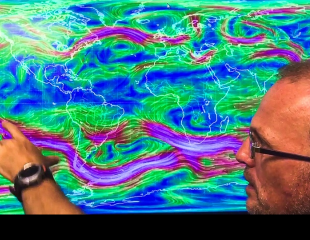
Raw Story : Unprecedented Scientists declare Global Climate Emergency
And it wasn’t just Raw Story either! RT. And other lame stream lying media outlets of alleged good reputation were spewing the same bile.
hy·per·bo·le
hi’p?rb?le/
noun: hyperbole; plural noun: hyperbolesexaggerated statements or claims not meant to be taken literally.
Pay attention to the hysterical manipulative language use, the hyperbole- that is not science- it’s just perception management.
“environmental blogger Robert Scribble” Clearly this man is no environmental blogger since he has no apparent knowledge of the environment
“It’s the very picture of weather weirding” Weather weirding- Is weirding a real word?
‘“Like many extreme events resulting from human-forced climate change — this co-mingling of upper level airs from one Hemisphere with another is pretty fracking strange,” Uh, Yah!
Human forced climate change-rofl– When AGW fails. When human caused fails. The spin doctors change the spin to “human forced”– That’s a rebrand!
More nonsense from someone named Paul Beckwith appearing to bolster the claims of the unenvironmentalist Robert Scribbler.
“University of Ottawa climate scientist Paul Beckwith called the new behavior “unprecedented.”
That’s enough nonsense from Raw Story!
Did you know that “climate scientist” Paul Beckwith has a masters degree in laser optics? Here I would have thought perhaps he had a Doctorate in SPIN
People such as Robert Scribble and Paul Beckwith should stop spreading such big frackin’ lies!
Thankfully a voice of rationality and reason!
Op Scientist @WxCoEnergy (@WeatherCompany @IBM). PhD in tropical meteorology from @UAlbany. A @BostonDotCom’s top 40 Meteorologists to follow.
THIS IS NOT SOMETHING NEW. It’s called Cross Equatorial Flow-NOT a result of climate change.
I was intrigued. What is this Cross Equatorial Flow?
Just a quick scan of those links indicate this is a regular occurence. All over the globe. Including one study that used 15 years of date from 1979 to 1993.
Hmmmmm…… lots of instances of Cross Equatorial Flow- Nothing new to see here
Just to drive my point home regarding the many, many hoaxes and lies perpetrated by the AGW cult:
Paul Beckwith has a masters degree in laser optics, which he has somehow parlayed into being a “Climate System Scientist” to spread alarmism about the climate system.
But his post “Unprecedented, Jet Stream Crosses Equator” suggests he knows little of meteorology, let alone climate.
A “jet stream” in the usual sense of the word is caused by the thermal wind, which cannot exist at the equator because there is no Coriolis force. To the extent that there is cross-equator flow at jet stream levels, it is usually from air flowing out of deep convective rain systems. That outflow often enters the subtropical jet stream, which is part of the average Hadley Cell circulation.
There is frequently cross-equatorial flow at jet stream altitudes, and that flow can connect up with a subtropical jet stream. But it has always happened, and always will happen, with or without the help of humans. Sometimes the flows connect up with each other and make it look like a larger flow structure is causing the jet stream to flow from one hemisphere to the other, but it’s in no way unprecedented.
We’ve really only known about jet streams since around WWII…one of my professors, Reid Bryson, was one of the first to advise the U.S. military that bombers flying to Japan might encounter strong head winds. The idea that something we have been observing for only several decades on a routine basis (upper tropospheric winds in the tropics) would exhibit “unprecedented” behavior is rather silly.
I especially like this portion of Paul’s post: “We must declare a global climate emergency. Please consider a donation to support my work..”
Nice touch, Mr. Beckwith.
How many times have I stated here the only green the phony environmentalists see is the green of money? As they fear monger. And prevaricate.
So many lies to challenge and so little time! Sigh
Featured Video

Dan Dicks with James Corbett on Solutions Watch
or go to
Aletho News Archives – Video-Images
From the Archives
$1.5bn up in smoke: US THAAD missile stockpile dries up defending Israel against Iran
By Ivan Kesic | Press TV | July 2, 2025
According to American media, defense news outlets, and independent analysts, the 12-day Israeli military aggression against Iran significantly depleted the US stockpile of THAAD (Terminal High Altitude Area Defense) interceptor missiles.
Citing official sources, American magazine Newsweek reported on Friday that the US transferred a substantial portion of its advanced missile defense capabilities to support the Israeli regime, an effort with questionable results and a critical impact on US strategic reserves.
THAAD, developed by Lockheed Martin arms manufacturing company, is a key component of Israel’s multi-layered air defense architecture. It is designed to intercept medium-range ballistic missiles, including those launched from Iran and Yemen.
The US-made system is capable of targeting short-, medium-, and intermediate-range ballistic missiles during their terminal phase, whether inside or outside Earth’s atmosphere.
THAAD uses a “hit-to-kill” method, relying on kinetic energy rather than explosive warheads to destroy incoming threats, intercepting at altitudes of up to 150 km and ranges between 150-200 km.
Operated exclusively by American personnel, the US military maintains eight THAAD batteries with an estimated 350–400 interceptors in total. The eighth battery was activated during the June 20 Israeli aggression against Iran and is capable of intercepting hypersonic missiles. … continue
Blog Roll
 Aletho News
- While Gaza dominates the UN, these are the people keeping it alive
- New Report: “Scholasticide and Genocide in Gaza: Assessment, Testimonies and Legal Analysis”
- ‘THAAD Delusion’: Iran war exposes US missile shield limits – The Atlantic
- Moscow issues warning to NATO over Russian exclave
- Yes, the Iran war has destroyed Trump’s presidency
- The fallacy of US delusions about Iran’s economic collapse
- Hezbollah denies Syria cell link, warns of Israeli plan to sow discord
- The legacy of US sanctions, war, and occupation in Iraq
- Iraqi resistance group rejects disarmament, vows to maintain support for Lebanon
- Sheikh al-Asadi warns of Iraqi government compliance with US demands
- If Americans Knew
- Mamdani releases plan to combat antisemitism and hate crimes in New York City
- Iran’s Revolutionary Guards Publish Letter to the American People
- DMFI launches $1 million ad campaign supporting Virginia’s Elaine Luria
- US Senate blocks resolution seeking report on Americans killed by Israel
- Israeli Attacks Kill Ten Palestinians in Gaza
- Massacre at Minab: The School That Became a Grave
- Israeli media: The IDF Shows It Doesn’t Turn a Blind Eye; It Actively Emboldens Settler Havoc
- As settlers ravage West Bank, Israeli forces kill 10 in Gaza – Daily Update
- New Report: “Scholasticide and Genocide in Gaza: Assessment, Testimonies and Legal Analysis”
- Ex-Biden officials are desperate for a Gaza scapegoat
- No Tricks Zone
- Green Energy Debacle: German Expert Professor Fritz Vahrenholt Warns Of Severe Economic And Social Consequences
- Two More Paleo Reconstructions Affirm Meters-Higher Sea Levels Across Ireland, Brazil 7000-6000 Years Ago
- New Study: Earth And Venus Surface Warmth Largely Explained By Convection And Lapse Rate, Not CO2 Or Radiation
- 2025 Nature Paper Claiming Worsening Global Drought Gets RETRACTED …Heavily Flawed
- New Study: ‘Global Drought Shows No Detectable Recent Acceleration Under Climate Warming’
- Economic Masterminds: German Socialists Suggest Taxing Productivity Gains Stemming From Using AI
- The South China Sea Has Not Been Cooperating With The Climate Change Narrative
- Energy Crisis: Germany Enters Heating Season With Historically Low Gas Reserve Fill Levels
- New Study: The Antarctic Ice Sheet Gained Mass From 2020-2024 Due To Staggering Snow And Ice Accumulation
- Study: Ocean Heating Rates From Thousands Of Years Ago ‘Dwarf’ Modern Ocean Heating Rates

