Israel Attacks Humanitarian Ship to Gaza in International Waters
By Michel Chossudovsky | Global Research | May 16, 2011

Global Research has been in contact with the Spirit of Rachel Corrie, a Malaysian ship carrying a humanitarian aid cargo to Gaza, which has been attacked in international waters by Israel.
The vessel left the Port of Piraeus, Greece on Wednesday, May 11 carrying 7.5 kilometers of UPVC (plastic) sewage pipes to help restore the devastated sewerage system in Gaza. The humanitarian initiative is sponsored by Perdana Global Peace Foundation (PGPF) and participating in this mission includes anti-war activists and journalists, consisting of 7 Malaysians, 2 Irish, 2 Indians and 1 Canadian.
The Spirit of Rachel Corrie is an initiative of The Perdana Global Peace Foundation (PGPF) chaired by Malaysia’s former Prime Minister Dr. Mahathir Mohamed. The Centre for Research on Globalization (CRG) (Global Research) is also participating in this mission.
At 10.54 pm Eastern Time (EDT), the Spirit of Rachel Corrie was intercepted by an Israeli ship and a Egyptian ship in international waters.
10:54pm EDT, Gaza 5:54am: We have been intercepted by Israeli ship and Egyptian ship. We are disobeying the orders and sailing ahead to Gaza.
10:57pm EDT, Gaza 5:57am: One Israeli warship coming to us very fast! We are in international waters, therefore they have no right to attack us. We are still sailing ahead.
10:59pm EDT, Gaza 5:59am: They are opening fire across our ship! We are still sailing ahead.
11:09pm EDT, Gaza 6:09am: They are shooting all over the place. We can’t continue …
11:35pm EDT, Gaza 6:35am: They circled our ship twice and fired across our ship. Machine guns. No one was injured. One of the fishing nets caught the propeller, so we can’t move now.
11:37pm EDT, Gaza 6:37am: The Israeli ship was coming from one end and the Egyptian ship was coming from another end. Firing. We are just stalled now. Everybody is okay. No one is injured.
In a subsequent communication from the boat, it would appear that Israel sought the active collaboration of Egypt in the interception of the humanitarian mission to Gaza, involving prior coordination between the Israelis and the Egyptian navy.
We will be informing our readers as events unfold.
UPDATE
AFP REPORT
The first press reports state that:
“Israeli naval forces fired warning shots at a Malaysian ship carrying aid to Gaza as it approached the shore, forcing it to withdraw to Egyptian waters, the vessel’s Malaysian organiser told AFP.”
“The MV Finch, carrying sewage pipes to Gaza, had warning shots fired at it by Israeli forces in the Palestinian security zone this morning at 0654 Jordan time (0354 GMT),” said Shamsul Azhar from the Perdana Global Peace Foundation.
Israeli naval forces fired warning shots at a Malaysian ship carrying aid to Gaza as it approached the shore, forcing it to withdraw to Egyptian waters, the vessel’s Malaysian organiser told AFP.
“The MV Finch, carrying sewage pipes to Gaza, had warning shots fired at it by Israeli forces in the Palestinian security zone this morning at 0654 Jordan time (0354 GMT),” said Shamsul Azhar from the Perdana Global Peace Foundation.
“Currently the ship has been forced to anchor in Egyptian waters, 30 nautical miles from Gaza,” he told AFP.” emphasis added
The information we have received from the ship is that (1) these were not “warning shots” as conveyed in the press reports.
The ship was (2) in international waters when it was attacked by Israel in violation of international law.
Palestinian Teen Martyred in Nakba Protest
Al-Manar – May 14, 2011
A Palestinian teenager was martyred early Saturday after suffering a critical gunshot by Israeli occupation forces during a demonstration marking the Nakba day in east Al-Quds.
The teenager was identified as Milad Ayache, 17 years old. He was martyred after having emergency surgery at al-Makassed Islamic Charitable Hospital in east Al-Quds.
Maher Ayache, the teen’s uncle, said that his nephew was wounded in the stomach.
“He died after being shot in the stomach, we are taking the body for burial now,” he told AFP news agency from the Hospital.
Israeli occupation police confirmed the details, claiming it was unknown who shot Ayache, adding that they had asked to autopsy the body, but were denied by the family.
Eight other people were injured during clashes in the eastern neighborhood of Silwan.
Italian, Malaysian, Activists Arrive In Gaza
By Saed Bannoura – IMEMC & Agencies – May 13, 2011
Palestinian sources in the Gaza Strip reported Thursday that Italian and Malaysian human rights activists arrived in the Gaza Strip through the Rafah Border Terminal between Gaza and Egypt.
The “Vittorio” convoy includes nearly 50 activists, including friends of Italian activist Vittorio Arrigoni, who was kidnapped and killed by extremist outlaws in Gaza in mid-April.
Arrigoni was a member of the International Solidarity Movement (ISM); he arrived in Gaza in August 2008 aboard the first ship that challenged the illegal Israeli siege on Gaza, and decided to stay in the coastal region.
During the illegal three-week Israeli war on Gaza between December 2008 and January 2009, Arrigoni accompanied Palestinian ambulances and helped medics in their rescue operations.
He also wrote dozens of reports and feature stories documenting the Israeli violations against the residents in Gaza. During his presence in Gaza, Arrigoni was also granted Palestinian citizenship handed to him by Prime Minister of the Hamas-led government, Ismail Haniyya.
Political Communiqué for “The Return to Palestine March-May 15th”
The Return to Palestine March
The Organizing Committee for the “Return to Palestine March” issued the following political communiqué on its blog marking 63 years since 1948 Nakba Day (catastrophe):
From the suffering caused by the Nakba, from our aspirations for return and liberation, from the inspiration brought about by the Arab people’s revolutions, and from our longing to return to the land and the skies of Palestine, we rise.
Marking the 1948 Nakba and restating our commitment to the Right of Return of all Palestinians to historical Palestine, the Palestinian people and all the free men and women who support the Palestinian cause will rally on May 15, 2011 in various countries around the world to commemorate the day in a massive Palestinian, Arab and global revolution.
In Lebanon the Return to Palestine March will set out towards the Palestinian/Lebanese borders on Sunday May 15, 2011, on the day commemorating the 1948 Nakba. The March will include various Palestinian and Lebanese civil and popular organizations and associations, professional associations, federations, NGOs, political parties and groups, in addition to independent activists from different regions and refugee camps around Lebanon.
This March will take place in order to affirm the right of all Palestinians to return to their homeland and their properties, from which they were forcibly uprooted in 1948 by Zionist terrorism and violence.
This popular and peaceful March will include thousands of Returnees from various refugee camps and their partners and supporters from diverse groups representing the Lebanese political and social spectra.
This popular March aims at the following:
• Affirming the Right of Return of the Palestinians to their homeland, possessions and villages from which they were coercively driven out, and refusing any compromises or concessions vis-à-vis this inalienable Right, while at the same time also refusing all forms of Zionist settlement and displacement programs.
• Affirming the Right of Return as a sacred, historical, legitimate, legal, humane and political right. It is both an individual and collective right and will continue to be applicable to successive generations.
• Affirming that the Right of Return is a permanent, unconditional, non-negotiable and irrevocable right.
• Emphasizing the right to resistance in all its forms in order to liberate all the Palestinian lands, from the sea to the river.
• Underscoring and asserting Palestinian national unity and putting an end to all divisions and discord by returning to respecting popular will on the basis of endorsing resistance and the total liberation of all Palestinian lands.
• Supporting the freedom of the Arab people as a guarantee for the continuation of resistance for the liberation of Palestine.
• Affirming that Palestine is an Arab country, and that every Arab has the right to return to this land and a duty to seek its liberation.
• Asserting the role of both the Arab and the Islamic nations in supporting the Palestinian cause and the Right of Return of Palestinian refugees; a dignified, unconstrained and comprehensive return.
This March in Lebanon will be taking place concurrently with several other Marches being organized towards the Palestinian borders with other surrounding Arab countries (Egypt, Syria, Jordan). Demonstrations targeting Israeli embassies are also planned in a number of Western cities to protest the occupation of Palestine and the Zionist apartheid regime.
Netanyahu asks the Palestinian Authority to regulate Nakba anniversary rallies
MEMO | 13 May 2011
Israel’s Prime Minister Benjamin Netanyahu has instructed the Palestinian Authority and its security apparatuses to regulate Palestinian rallies commemorating the 63rd anniversary of the Nakba (catastrophe), the name given by Palestinians to the establishment of the state of Israel in 1948.
The PA should also, insists Netanyahu, prevent the rallies from crossing the Separation Wall established on Palestinian territory in the West Bank and clashing with Israeli occupation forces.
Reports on Radio Israel added that according to Israeli security sources, “The Nakba commemoration rallies will not develop into violent confrontations, but will mostly take place inside Palestinian cities.”
The rallies are expected to begin after Friday prayers on 13th May and reach a peak on Sunday 15th, the exact anniversary of the declaration of independence of the state of Israel. That event took place in an orgy of ethnic cleansing which created the Palestinian refugee problem which persists to this day.
Pizzarotti should follow in Deutsche Bahn’s footsteps
By Stephanie Westbrook | Mondoweiss | May 11, 2011
Italian construction firm Pizzarotti is stupefied, bewildered, stunned.
In an article on today’s Corriere della Sera, Italy’s top newspaper, covering Deutsche Bahn’s withdrawal from the Israeli project for a high-speed train line that cuts through the Occupied Palestinian Territories, Michele Pizzarotti said “We are astonished to find ourselves involved in these protests.”
Pizzarotti, through a joint venture with Israeli Shapir Engineering, has been contracted to build tunnels in section C of the planned A1 train route from Jerusalem to Tel Aviv; section C starts in the Latrun enclave and ends at Cedars Valley, both in the occupied West Bank.
Michele Pizzarotti can’t seem to understand what all the fuss is about. “We are not the project leaders, we entered into the Israeli high-speed rail as mere executors of a project designed by others, which has already been modified by the Israeli Supreme Court. We had no idea there were complications with the peace process.”
Complications indeed. The German Minister of Transport defined the project as “problematic” from a foreign policy perspective and “possibly in violation of International Law,” leading to the withdrawal of Deutsche Bahn.
In addition to the easily rebutted justifications presented by Pizzarotti during a recent meeting with the Italian Coalition Stop That Train, including having no role in planning the route, the limited environmental impact of tunnels and that the firm is only working on the end of the tunnel on the Israeli side of the Green Line, the Corriere della Sera article included two new gems.
“[T]he railroad could connect Ramallah and be used by Palestinians, and in our construction sites we provide work to Arab technicians and workers.”
The idea that the train would some day link Ramallah, a sort of “railroads for peace,” has often been trotted out by Israeli officials looking to defend the extraterritorial railway. However, as Who Profits pointed out on their Facebook page, in an interview with Israel’s Channel 7 (Hebrew) last August, Minister of the Environment Gil’ad Ardan candidly stated that “reports of a new train line between Ramallah and Gaza, via Ben Gurion Airport, were premature… This is not due to become reality anytime soon, it was only a legal requirement that permitted land confiscations across the Green Line for the needs of the Tel Aviv – Jerusalem train.”
The Pizzarotti construction site as a jobs-for-“Arabs” vehicle would be laughable, if it weren’t so sad. In the Bidu enclave, the area hardest hit by the planned rail route, unemployment is 70%, or twice the average for the West Bank, due to access to Jerusalem, their traditional economic center, being cut-off by the Apartheid Wall – built on Palestinian land. In addition, a document on the Philippines Overseas Employment Office web site shows Pizzarotti wasn’t exactly recruiting “Arabs”.
When asked by Corriere della Sera if they would be following in Deutsche Bahn’s footsteps, Michele Pizzarotti replied, “Not only would that be a disaster for us, because we have already invested 70 million in machinery, but it would also be pointless: the work would continue just the same via our Israeli partner.”
If their Israeli partner had the necessary know-how to build Israel’s longest tunnel, Pizzarotti wouldn’t be involved in the first place. The massive tunnel boring machines used by Pizzarotti have, in fact, never been used before in Israel and partnering with experienced foreign contractors was a formal requirement in some contracts. (See the 28-page report on the A1 Train line from Who Profits)
The Italian Coalition Stop That Train, a network of over 80 associations, is working to convince Pizzarotti to pull out of the project. On Monday a campaign was launched to “Declare Your City Pizzarotti-free”, with a sample resolution to be presented in city and provincial councils throughout Italy excluding Pizzarotti from contracts for public works. The same tactic, drawing on a EU directive that allows for exclusion of companies “guilty of grave professional misconduct,” was used in the campaign against French multinational Veolia, who’s involvement in the light rail project in occupied East Jerusalem has cost the company $10 billion in lost contracts.
And change.org has just recently launched a petition calling on Pizzarotti to “end their involvement with this rail line”.
Greeks strike protesting budget cuts
Press TV – May 11, 2011
Greek labor unions have staged a one-day strike in Athens against the government’s austerity measures adopted to tackle the country’s ailing economy.
Hundreds of thousands of civil servants, teachers and hospital staff, later joined by journalists, went on strike on Wednesday.
“We strike to show our anger and our opposition to the policies that are being introduced and new measures that hit workers and labor instead of those with money,” AFP quoted Stathis Anestis, a senior member of the confederation of Greek workers, as saying.
The unions argue that a recovery plan applied by the European Union and the International Monetary Fund, aimed to rescue the troubled economy of Greece, has deteriorated the living condition in the country.
“After a year, we find ourselves in a worse situation,” Anestis said. “Unemployment has skyrocketed, salaries are at their lowest point and there is no breakthrough in sight.”
The walk-out came a day after international debt inspectors headed to Athens to assess the country’s financial and economic progress and to determine whether Greece meets the conditions to receive the next bailout.
The European Union and the International Monetary Fund granted a USD 158-billion loan to the troubled state in 2010.
The bailout loan saved Greece from the brink of default. However, Athens was obliged to implement a strict austerity package, including the cutting of public sector salary and pensions, increasing taxes and overhauling the pension system, to survive.
Scottish First Minister supports sanctions against Israel
By Mick Napier | Pal Telegraph | 10 May 2011

London – First Minister Alex Salmond supported economic sanctions against Israel. He described Israel’s massacre of nine Mavi Marmara passengers as an “atrocity on the high seas” and put Israel firmly beyond the pale. “This has implications for example in trading relationships—you can’t have normal relationships if you believe another country has been involved in what Israel has been involved in.”
Scotland’s elections shattered political mould – SNP triumphant. The pro-war and pro-Israel Labour, Tory and Lib Dem parties punished SNP Leader Alex Salmond tried to impeach Tony Blair for war crimes in Iraq. Scottish Government offered open access to Scottish hospitals for Palestinian victims of Operation Cast Lead. Nationalist government must be pressured to match deeds with words Scotland’s elections have shattered the political mould, battered every political party other than the SNP (Scottish National Party) and given us a nationalist majority in the Edinburgh Parliament. The voting system was expressly designed to prevent such an outcome. Unlike Palestinians, though, we do not expect to be punished severely for voting in a way that London disapproves of.
The Labour, Tory and Lib Dem parties that are attacking living standards have been punished and the SNP has reaped the benefits of being seen to oppose the cuts to living standards, services and jobs .
We should also remember that the SNP leader, Alex Salmond, has steered his party over the years to oppose many of the core militarist policies of the other parties: he launched an initiative in 2004 to impeach Tony Blair for war crimes in Iraq, and the SNP opposes the Trident nuclear weapons system.
Salmond, far and away Scotland’s most popular and effective politician, has also been harshly and publicly critical of Israeli crimes. Following Israel’s abuse of British passports to murder a Hamas official in a Dubai hotel room in March 2010, First Minister Salmond supported the idea of economic sanctions against Israel. He dismissed the London Government’s expulsion of a low level Israeli Embassy official when he told a BBC Question Time audience that Israel’s unceasing crimes merited more than a “diplomatic dance” over passport mis-use.
Salmond labelled Israel’s massacre of nine Mavi Marmara passengers as an “atrocity on the high seas”. No UK Government officials would condemn Israel for the killings and David Miliband said he was “seeking clarification” from Israeli Foreign Minister Lieberman. Alex Salmond, in contrast, put Israel firmly beyond the pale. “This has implications for example in trading relationships—you can’t have normal relationships if you believe another country has been involved in what Israel has been involved in”.
One newly elected MSP, Humza Yousef, correctly pointed out in a letter to SPSC that there have
“been actions also, hundreds of thousands of pounds have been released in aid to Gaza , and opening our hospitals to treat those who were injured in the horrific assault in 2009 (this was an appeal you made at the time directly to the Scot Gov’t).”
Alex Salmond has also opposed those who seek to conflate political criticism or opposition to Israeli crimes with hostility to the Jewish Community. Addressing a Glasgow Jewish community meeting in May 2010, he was asked “to do what he could to halt” BDS actions outside Glasgow supermarkets. Salmond responded with an elementary distinction:
“I don’t think we should accept as a community that your position in Scottish society should be judged or affected by the policies of Israel. The Jewish community is not liable for those policies. It is possible to be critical of Israel without being anti-Semitic. The Jewish community should not be judged on whether people approve or disapprove of the actions of Israel.”
He also dismissed claims by some Zionists that anti-Semitism was driving Jews out of Scotland, an unfounded claim that serves the Zionist programme to have Jews move to Israel:
“I don’t share the analysis that the Jewish community is suffering a wave of persecution or that anti-Semitism in Scotland is rapidly growing and such a severe problem that it is jeopardising this community..I don’t believe that the Jewish community is under siege nor do I believe that it feels itself to be under siege…Scotland has never had to introduce any laws to deal with anti-Semitism”.
Salmond’s positions have been in sharp contrast to the London Government, which attacked and invaded Iraq and Afghanistan and endorsed every Israeli crime. David Miliband, for example, refused to condemn the Israeli attacks on boats to Gaza with humanitarian aid and David Cameron described himself as “a proud Zionist” supporting Israel, which acted with “great restraint” against Lebanese or Palestinian “terrorists”.
But the Israeli violations of international law, and the ongoing killings, mass imprisonment and dispossession of the Palestinian people, mean that we have to go beyond humanitarian aid and words to support the Palestinian appeal for BDS, boycott, divestment and sanctions against Israel until Palestinians gain their freedom.
That means that we must pressure the newly-mandated Scottish Government to live up to First Minister Alex Salmond’s words that Israel’s behaviour merits trade sanctions. That must include the rescinding of the £200,000 Scottish Enterprise grant to Eden Springs, the Israeli water cooler company involved in serious human rights violations in the Golan, Syrian territory held by the British Government to be illegally occupied by Israel.
Help us to keep the pressure on the Government to act on First Minister Alex Salmond’s call for trade sanctions against Israel. Join and support the Scottish Palestine Solidarity Campaign.
Mick Napier
Chair, Scottish Palestine Solidarity Campaign
c/o Peace & Justice Centre
Princes Street
Edinburgh EH2 4BJ
chair@scottishpsc.org.uk
00 44 (0)131 620 0052 / 00 44 (0)795 800 2591
Israeli soldiers attack unity celebration, twist and break man’s arm; also attack 85-year-old and 75-year-old farmers
Ma’an – May 8, 2011
HEBRON — Israeli forces violently shut down a rally celebrating Palestinian national unity in Beit Ummar near Hebron on Saturday, injuring several protesters, locals said.
During the celebration, demonstrators held signs stating “Unity is our strength” and “Unity = Liberty” in an event marking the signing of an agreement in Cairo reconciling Hamas and Fatah and reuniting the West Bank and Gaza under a single government once the agreement is put in place.
Local committee spokesman Mohammad Ayyad Awad said Israeli soldiers fired tear gas and attacked demonstrators with stun grenades, rifle butts and batons.
Soldiers tried to arrest head of the anti-wall committee Yousef Abed Al-Hamid Abu Maria, 36, who owns land confiscated by the illegal Karmi Tzur settlement. Organizers said soldiers twisted Abu Maria’s arm and wrist until it broke in two places.
Forces released Abu Maria when they realized he was seriously injured, a statement from the popular committee said, adding that he was taken to hospital in Hebron and treated for a broken wrist and sprained leg.
Awad said committee secretary Ahmad Khalil Abu Hashem, 42, his 12-year-old son Hamza and coordinator Abed Abu Maria, 33, were beaten by soldiers and sustained bruises.
Several journalists were also attacked, Awad said, adding that Israeli forces declared the area a closed military zone.
The area is also a site of weekly protests, which see locals and international activists march, demanding the end to Israel’s confiscation of land from Beit Ummar and Halhul to build illegal Jewish-only settlements.
Israel’s supreme court ruled in 2006 that farmers whose land was confiscated by Karmi Tzur settlement, including those attacked on Saturday, should be allowed to access their land with permits from Israeli authorities.
Since 2006, Israeli authorities have not issued any permits, Awad noted.
Also on Saturday, Israeli soldiers and settlers attacked two elderly farmers working on their land near the illegal Beit Ayin settlement, Awad said.
He identified the farmers as 85-year-old Abdallah Suleibi and his brother Hammad, 75.
24 year old man from Iraq Burin shot by teargas canister at close range
08 May 2011 | International Solidarity Movement
Yesterday afternoon, 24 year old Abdalah Aadus from the village of Iraq Burin was taken to hospital after being shot in the side by a teargas canister which was fired from close range. Abdalah had been participating in a demonstration against the theft of his village’s agricultural land by settlers.
At 15.00, approximately 40 villagers from Iraq Burin gathered and started walking from the village towards their land which is situated close to the illegal Bracha settlement. The demonstrators carried Palestinian flags which they planted on their agricultural land. After 30 minutes 20 Israeli soldiers and 1 security guard from the illegal settlement showed up and responded by shooting rubber-coated steel bullets, teargas canisters and sound bombs directly at the demonstrators from a close range. One of the soldiers also threatened the demonstrators by saying that the army would return to the village that night and arrest them all. During the demonstration Abdalah was shot in his side and taken to the hospital. Fortunately he was not severely injured and was able to leave the hospital later the same day.
Last year the villagers of Iraq Burin held weekly demonstrations against the theft of their land by the settlers. The Israeli military responded to the protests with great violence, firing tear gas and rubber-coated steel bullets directly at the protesters. In March 2010 Mohammed Qadous 16, and Asaud Qadous, 19, were killed by Israeli forces during one of the non-violent demonstration. After the tragic incident the villagers decided to stop the demonstrations, as the price was just too high.
Iraq Burin is a village with 700 inhabitants located outside of Nablus, in the West Bank. The village is surrounded by the two illegal settlements of Bracha and Yizhar and their outposts. The settlers have so far stolen 4000 dunams of land from the village.
Netanyahu’s military secretary skips UK visit fearing arrest
Palestine Information Center – 06/05/2011

NAZARETH — The Israeli Prime Minister’s military secretary, Gen. Yohanan Locker, decided not to accompany Benjamin Netanyahu on his trip to London fearing arrest, according to Israeli army radio.
Pro-Palestinian groups have filed a suit in Britain against Locker for his involvement in war crimes committed by the IOF during the war against the Gaza Strip in 2008-2009.
Locker was deputy chief of the Israel Air Force at the onslaught, in which some 1,400 Palestinians were killed, including 300 children, 115 women and 85 people over 50 years of age.
During the onslaught, the IOF used prohibited weapons such as white phosphorus and targeted schools, mosques, homes, hospitals, cemeteries, ambulances and ambulance crews.
Several senior Israeli defence officials and politicians have stayed clear of the UK since the Gaza operation, among them opposition leader Tzipi Livni and Avi Dichter, the former director of the Shin Bet security agency.
Featured Video
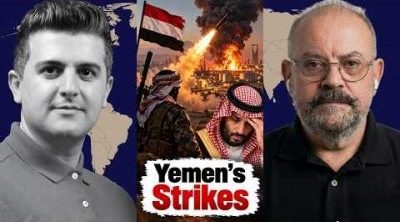
Elijah Magnier: Yemen’s strikes are shattering Saudi Arabia’s long-term strategy
or go to
Aletho News Archives – Video-Images
From the Archives
British weapons and personnel doing much of the killing in Yemen
Press TV – June 18, 2019
A detailed report published by the Guardian newspaper has shown how Britain is massively contributing to Saudi Arabia’s devastating war on Yemen as it suggests that London is not only supplying the bombs that fall on Yemenis, but it provides the personnel and expertise that keep the war going.
The comprehensive report by Arron Merat published on Tuesday showed that Britain was doing much of the killing in Yemen as the country continues to provide Saudi Arabia with everything it needs to turn its southern impoverished neighbor into a graveyard.
“Every day Yemen is hit by British bombs – dropped by British planes that are flown by British-trained pilots and maintained and prepared inside Saudi Arabia by thousands of British contractors,” said Merat in the report. … continue
Blog Roll
 Aletho News
- Netizens condemn Japanese drama for projecting Japan’s wartime atrocities onto Chinese characters
- Racist Seinfeld Dances for Joy as Bibi Unveils His New Map
- A West Bank War for Netanyahu’s Election Campaign, Could It Backfire?
- Yemen denounces European Parliament’s ‘hypocritical’ push to blacklist Ansarullah
- Qalibaf: UAE’s UN bid aims to ‘clear the runway’ for ‘Greater Israel’, whitewash genocide
- Pakistan reopens Iran border after boosting security: Report
- Why are so many Brazilians voting for Flávio Bolsonaro?
- Democrats Put Anti-Russia Agenda Ahead of American Workers
- Elijah Magnier: Yemen’s Strikes Are Shattering Saudi Arabia’s Long-Term Strategy
- Pentagon designates Chinese cultural centers national security threat
- If Americans Knew
- Latest updates from Israeli assault on West Bank
- Tourism Ministry launches free food truck tour in US
- “So Much Worse Than People Realize”: Never-Before-Seen Images Reveal Damage at U.S. Bases as Troops Describe Being Abandoned
- UK Bell Review Confirms Only Anti-Israel Attitudes Are Rising, Not Antisemitism
- DAILY UPDATE: Latest essential news on Palestine, Israel, & region
- DAILY UPDATE: Latest essential news on Palestine, Israel, & region
- Damning report shows the media must confront its failures on Gaza
- BBC senior broadcaster speaks out on Gaza coverage
- Netanyahu vows vast West Bank invasion in response to 20-minute skirmish that left 2 Israeli soldiers and 2 Palestinian fighters dead
- Tied up and tortured: Israel using US-made electroshock weapons on Palestinian detainees
- No Tricks Zone
- Sudden Stratospheric Warming, Powerful El Niño Combination May Lead To Extreme Europe Cold, Energy Crisis!
- Two New Studies Find Thwaites Glacier Melt Cannot Be Driven By Human Activity Or A Warming Ocean
- E-Cars Reduce CO2 Emissions By Only 41% Compared To Internal Combustion Engine Vehicles
- Predictions Made By Renowned Climate Professor Over Past Decades Have Been Proven To Be Poor
- New Study Suggests Large Regions Of The Pacific Ocean Have Been Cooling For The Last 80 Years
- Germany’s Green Energy Debacle: High Energy Costs Force Kahla Porzellan to Close After 182 Years!
- New Study: 50 Years Of The Most Aggressive ‘Net Zero’ Policies Can Only Affect The Global Climate By 0.03°C
- US September “Heat” Was No Record…Many Records Set Decades Ago
- Latest European Green Energy Debacle; Portugal’s Largest Flagship Solar Park Insolvent!
- Green Energy Debacle: German Expert Professor Fritz Vahrenholt Warns Of Severe Economic And Social Consequences

