Setting The Record Straight On BDS
By Omar Barghouti | NewMatilda.com | May 2, 2011

As Marrickville Council’s BDS resolution was thrashed out in the media, misinformation about it abounded, writes Omar Barghouti, one of the founders of the global BDS movement
The Palestinian civil society campaign for boycott, divestment and sanctions (BDS) against Israel came under attack in recent weeks from Murdoch media outlets, politicians and various interest groups as Sydney’s Marrickville Council struggled to keep the BDS resolution that they had adopted in December last year. The wild distortions and outright fabrications against BDS and its supporters in Sydney peaked in an article by Leo Shanahan, “Greens’ boycott rebounds”, published in The Australian on the day of the Council meeting when the BDS motion was rescinded.
Marrickville Council has since reaffirmed its support for the principles of the BDS campaign by actually spelling out the three fundamental Palestinian rights that constitute the minimum requirements for the Palestinian people to exercise our right to self determination.
Although the Council, after months of unprecedented bullying, threats, smear campaigns, and intimidation orchestrated by well-oiled Israel lobby groups, felt compelled not to put that principled support into action in the form of specific BDS measures, the fact that it stood its ground defending these basic Palestinian rights, as outlined in the BDS Call, is praiseworthy and quite inspiring. BDS is about asserting our long forgotten rights, first and foremost. Action to achieve those rights can come later, when the ground is fertile enough and resistance to intellectual terror and misinformation is higher.
Regardless, the record needs to be set straight. Misrepresentations of the type that litters Shanahan’s article should not go unchallenged. As the great Palestinian thinker Edward Said once said, “[D]espite the abuse and vilification that any outspoken supporter of Palestinian rights and self determination earns for him or herself, the truth deserves to be spoken …”
Shanahan dismissively writes, “The BDS is a movement advocated by a multitude of left-wing political parties, universities, trade unions and other local governments throughout the world.” He writes this even though he admits just a few lines above that BDS is a Palestinian-led movement. In fact, BDS is called for by the largest and broadest coalition ever created of Palestinian civil society institutions, political parties, trade unions and NGO networks.
On 9 July 2005, the Palestinian BDS Call was issued, endorsed by more than 170 of the leading institutions in Palestinian society. It called for holding Israel to account for its three-tiered system of oppression, for its persistent violations of international law to compel it to end its 1967 occupation of all Arab lands, including East Jerusalem; its system of racial discrimination against its own Palestinian citizens which was described in the 2010 US Department of State human rights report as constituting “institutional, legal and societal discrimination”; and respecting the UN-sanctioned right of Palestinian refugees to return to their homes of origin, as stipulate in UN Resolution 194.
Shanahan quotes a member of the NSW Jewish Board of Deputies making a baseless claim about me. He claims that I had said that BDS aims at “getting a Palestine next to a Palestine rather than a Palestine next to Israel.” This is categorically false; I never made this statement.
Israel lobby propagandists have intentionally fabricated this claim by omitting its crucial context to insinuate that the BDS movement is bent on what they characterise as the “destruction of Israel”. The remark above was part of a quote that I cited in an article and several presentations; it was first stated by a prominent Palestinian academic who argued that the right of return of Palestinian refugees in accordance with international law would lead, from an Israeli perspective, to a Palestine next to a Palestine. The point he was making is that Israel would not allow this aspect of international law to be implemented in order to maintain its ethnocentric and exclusivist nature in a two-state settlement. In responding to his argument, I insisted that the right of refugees to return home is deeply enshrined in international law and that implementing it would not “destroy” anyone or any people; it would simply end Israel’s apartheid regime and pave the road to real justice and democracy. If an unjust version of the two-state settlement is conditioned upon giving up the right of return, I argued, then we can do without that solution, but we cannot possibly surrender the UN-sanctioned rights of the refugees who make up two thirds of the Palestinian people.
For more than 28 years, I have, in my personal capacity, consistently and openly advocated a secular democratic state in the entire area of historic Palestine, where everyone enjoys equal rights, irrespective of ethnicity, religion or any identity attribute. This, to my mind, is the most ethically consistent formula that can accommodate the inalienable right of Palestian people to self determination with the rights of all the inhabitants of the land to justice, peace, equality, and democratic rights.
But this is certainly not the position of the BDS movement. The movement has consistently advocated a rights-based approach, consistently refraining from endorsing either of the one-state or two-state solutions. Any review of the hundreds of statements and media interviews by the BDS National Committee (BNC), the massive Palestinian coalition leading the international BDS movement, will confirm this. The BNC’s vision is for freedom, justice, and equal rights for all, regardless of identity and no matter what political solution is reached. People’s rights must be protected and respected above everything else. Furthermore, as a movement anchored in the universal principle of equality of all humans, BDS is firmly opposed to all forms of racism, including anti-Semitism and Islamophobia.
This humanist platform is the essence of the BDS movement and the key behind its impressive growth. Many international trade union federations of the size of the Brazilian CUT (representing more than 20 million workers) and the British Trades Union Congress (TUC) and of the great symbolic significance of the South African COSATU and the Irish Congress of Trade Unions, have joined the BDS campaign, selecting diverse forms of implementing it. Faith-based groups, Jewish organisations, leading artists and music groups, and iconic moral leaders of the calibre of Archbishop Desmond Tutu also support the boycott of Israel, drawing parallels with the ultimately successful boycott and divestment campaign utilised in the strategy to end apartheid in South Africa.
In his article, Shanahan also unquestioningly repeats the inaccurate claim that implementation of BDS “would cost Marrickville ratepayers $3.7 million”, an assertion that lazily ignores the track record of local council implementation of BDS.
Scores of councils across Europe have, at no cost at all, heeded the BDS call by excluding the French company Veolia from bidding on contracts. Why? Due to its involvement in an Israeli rail system serving illegal settlements that has been criticised by the UN Human Rights Council. Veolia is now considering ending its involvement. Local councils in Spain voted to support BDS and implemented their policy simply by switching bottled water provider to one other than Eden Springs, an Israeli company that sources its water from the Israeli-Occupied Syrian Golan Heights. Whether it is local councils changing service providers, artists such as Pink Floyd’s Roger Waters and U2’s Bono refusing to play in Israel, or the University of Johannesburg severing its ties with an Israeli university complicit with violations of international law, standing up against Israeli spartheid needn’t cost a thing. It does, however, express a moral stand with the oppressed.
Finally, regarding the often discussed issue of violence and counter-violence, it is crucial to emphasise that Israel’s occupation, colonisation and denial of refugee rights are the roots of all violence. Israel’s illegal and patently immoral siege of Gaza, described recently by British Prime Minister David Cameron as a large “prison camp,” is the embodiment of violence. Israel’s gradual ethnic cleansing of Palestinians from occupied East Jerusalem is one of the cruelest manifestations of a policy of state violence aimed at further expulsion and dispossession of the indigenous Palestinians. To end all violence once must snuff out its causes: Israel’s decades-long, ruthless occupation and apartheid.
Those who truly care about all human life, as I do, and who think that any civilian life lost is a life too many should do their utmost to support the exceptionally effective, manifestly creative, morally consistent and impeccably non-violent BDS movement to end Israel’s impunity and violations of international law.
As Archbishop Tutu says :
Together with the peace-loving peoples of this Earth, I condemn any form of violence — but surely we must recognize that people caged in, starved and stripped of their essential material and political rights must resist their Pharaoh? Surely resistance also makes us human? Palestinians have chosen, like we did, the nonviolent tools of boycott, divestment and sanctions.
The Marrickville Council was on the right side of history when it first chose to endorse the global BDS campaign. It remains so by insisting on Palestinian rights, despite the tactical setback. Brave Australians had done the same when responding to the calls from the oppressed South African majority under apartheid. We expect no less from conscientious Australians today in response to our urgent appeal for effective solidarity. I have no doubt that one day commentators and activists will mark Marrickville’s decision as the true beginning of mainstreaming BDS in Australia and of finally standing up to Israel’s lobby and for the rights of Palestinians.
Refrains from Bahrain describe growing menace to activists
By Dan Lieberman | Alternative Insight | May 4th, 2011
The media and world bodies have ignored the Bahrain protests, making it difficult to know what is happening. Emails from an activist in Bahrain illuminate some of the occurrences and highlight how the struggle has grown from seeking equality in life to receiving a punishing death.
Apr 6
Dear Friends,
Hope this email finds you well.
To update you on recent events in Bahrain:
Report by the Bahrain Centre for Human Rights: Thousands are subjected to dismissal of work as part of severe clampdown on all who joined or openly supported the protest movement. King’s son says: No escape for opponents of his father:
ILO Director-General sounds alarm on situation of workers in Bahrain:
“Policemen Murder Suspects Go On Trial before the Lower State Safety Court”
“Bahrain University Fires College Dean, 7 Teachers, 25Administrators and 62 Students”
“It has also sacked 25 administrators, 62 students and suspended 8 others for a whole academic year. Five other students enrolled at foreign universities for their PhD degrees had their state scholarships stopped.” It is important to note that the incident of the University of Bahrain was mentioned in the BCHR report on “Unfounded stories of sectarian clashes and violence by protesters”:
“Ministry of Social Affairs has decided to dissolve the Bahrain Teacher’s Society and suspend the Bahrain Medical Society today.” President of the Bahrain Teacher’s Society, was arrested today.
“The US officials expressed thanks and respect to HRH the Crown Prince praising the kingdom’s ongoing development march for the past tenors as well as Bahrain’s pioneering regional and international role.”
Apr 8
Dear Friends,
URGENT NEWS; A prominent human rights defender and former Mena director at Frontline defenders, Abdulhadi Alhkawaja has just been arrested along with two of his son-in-laws- Wafi Almajid and Hussein Ahmed. They broke the front door to the house and then beat them severely along with Mohammad Almasqati, the president of the Bahrain youth society of human rights. But they through Mohammad into a room and told him not to come out and then closed the door. Abdulhadi Alkhawaja was beaten so severely that the blood stain is still visible on the stair case. And when his oldest daughter, Zainab, tried to intervene she was beaten as well.
On their search for Abdulhadi Alkhawaja they went to his apartment first and didn’t find him there. They then went to his cousin’s house and he wasn’t there either but his cousin, Habib Alhalwachi, was and they arrested him. They finally went to the home of his daughter, Zainab Alkhawaja, and found him, arrested him and two others as mentioned above. Urgent pleas for intervention as all three are under arrest, high risk of torture, and their lives may be in danger.
Apr 9
Dear Friends,
Today the Ministry of Interior released news that two detainees died while in custody. The first, Ali Isa Saqer, who was charged with allegedly running over a policeman and killing him, was said to have “created chaos at the detention center and that led to the interference of security forces to bring situation to normal, but he resisted them and sustained various injuries in the process. He was referred to the hospital and died later.”
The second man, Zakariya Rashid Hassan, was allegedly “found dead on Saturday morning at the Detention Center.” The MOI alleges that he died due to sickle cell anemia. This is the second case of death allegedly due to sickle cell anemia in detention centers by Bahraini Authorities.All detainees (currently numbered at around 600, amongst them 25 women two of whom are pregnant) are at very high risk of torture, and their lives are at threat. I will be sending the updated list as soon as it is translated in English.
In an update on the Al-Khawaja case, Minister of foreign affairs wrote on twitter: “He (Alkhawaja) was arrested for charges to be brought against him legally . He violently resisted the arrest and had to be subdued” and then went on to say: “He (Alkhawaja) is not a reformer. He called for the overthrow of the legitimate regime”
You can read the details of Abdulhadi Al-Khawaja’s arrest as told by his daughter who was present at the time to Human Rights Watch:
There are still ongoing protests and candlelit vigils which get attacked every night in different villages in Bahrain causing more injuries. Tens of people are staying at home despite serious injuries, some with shrapnel in their eyes, out of fear of going to the hospitals which are still under the control of the security forces.
Again, we call for urgent intervention as many lives are under threat.
Apr 10
Dear Friends,
I am writing to you in urgency as we have pictures which now show that Isa Saqer, who’s death the Ministry of Interior announced yesterday, show torture marks on his body. The pictures are graphic. It is important to note that Zakaria alAsheri, who’s death was also announced yesterday, is a blogger who was arrested because of his responsibility for www.al-dair.net. Al Asheri’s family has informed us that Zakaria never had sickle cell anemia, which the authorities said was the cause of death. Again, all detainees are under high risk of torture and their lives are at threat.
There is still no news about Abdulhadi Alkhawaja or his sons-in-law. Their whereabouts are still unknown and lawyers have not been able to reach them. There is grave concern for his well-being and and his life. There is concern for Abdulhadi’s eldest daughter, Zainab, who has been talking to the media about her father’s arrest and has been working on documenting cases. She has already received death threats and threats of arrest from members of the royal family due to her speaking out. Zahra Alsingace, Abduljalil AlSingace’s 23 year old daughter, was arrested and interrogated today for a few hours then released. They made her open her facebook page and went through it. Her older brother Hussain remains in detainment as does her father, and her brother Hassan is in hiding as the authorities are looking for him.
Apr 10
Dear Friends,
After broadcasting the pictures I sent you of Isa Saqer and a video of him, the Ministry of Interior put news on their formal website that Nabeel Rajab was to be referred to the Military Public Prosecutor for allegedly having “published in his twitter account a fabricated image of “Ali Isa Saqer” who died on 9 April 2011″ We have reason to believe that he is at high risk of arrest. If Nabeel does get arrested, and after the arrest of Abdulhadi Al-Khawaja, Mohammed AlMasqati and Sayed Yousif AlMuhafdah (who is in hiding) will be the only human rights activists left inside Bahrain.
Apr 17
Dear Friends,
Hope this email finds you well.
Defense lawyer Mohammed AlTajer was arrested by Bahraini authorities on the 15th of April. You can read the Human Rights Watch report about it here.
Zainab Alkhawaja’s health has deteriorated immensely and she was moved to a hospital where her family was told that if they give her IV they would have to inform the Ministry of Interior. She went home without receiving the IV. Thereabouts of her father Abdulhadi Alkhawaja and her family members are still unknown. Groups are launching a mass hunger strike starting tomorrow in Bahrain. There are also people around the world who have said that they will join the hunger strike as well.
Detained Women / Detained Men / Disappeared
# 30 women are being detained, 3 of them are reportedly pregnant;
# 571 men have been detained;
# An estimated 20-25% of those detained are under the age of 18 years old, with the youngest being 12 years old, Ahmed Ali Abbas Yahya Thamer;
# 40 people are listed as “missing” and not included in the numbers above;
# 17 doctors have been detained;
# Some of those detained were taken from their hospital beds worthy were being treated for injuries received;# Others were taken in the pre-dawn hours from their homes by masked and armed security forces who produced no ID’s, warrants or official charges;
# Most of those detained have been without contact with their familiar with legal counsel of any sort;
# At least 4 people have died during detention, and the govt claims they died from kidney failure or sickle cell disease, but families deny health conditions and clear indications of torture are present on their bodies; and
# The whereabouts of most of the detainees are not known.
Mr Fadhel Abbasof the National Democratic Assembly was not allowed to travel on the 15thof April when he tried to leave to Tunisia for a conference. No reason was given for his travel ban. I have attached copy of the letter sent to the Oxford Aviation Academy asking them to immediately send back certain Bahraini students.
Apr 20
Dear Friends,
Abdulhadi Alkhawaja called his wife today to let her know that he will be appearing before a military court tomorrow (21st April) at 8am (Bahrain time). He also asked for some clothes. No official charges have been declared against him yet. His sons in law also requested clothes to be brought to what is known as the “Qala’a”, the ministry of interior. His daughter Zainab ended her hunger strike today. Yesterday: “Seven people accused of murdering policemen Kashef Ahmed Mandhour and Mohammed Farooq Abdulsamad have today appeared before the Lower National Safety Court.”
University of Bahrain dismisses 200 students, academicians, admins, employees and security guards:
Amnesty International puts out an urgent appeal on detained defense lawyer Mohammed AlTajer who’s brother has now also been detained, Mohsin AlTajer. Several more arrests have taken place, amongst them a few women. The number of detainees until yesterday was 802, amongst them 52 women, not counting the arrests that took place today. There is still an ongoing campaign of demolishing Shiaa mosques and vandalizing “Matams” which belong to the Shia’a sect.
Apr 23
Dear Friends,
Hope this email finds you well.
Amnesty International: Ebrahim Sharif feared tortured
OMCT: Ongoing incommunicado and arbitrary detention of Mr. Abdulhadi Al Khawaja.
Alkhawaja’s family fears he is being subjected to torture as his voice was very weak when he called and he kept repeating “the oppression is great“. There is fear that Alkhawaja may be undergoing military trial without allowing him lawyers or contact with his family.
Important report by Physicians for Human Rights
A group of female students and teachers were rounded up at a governmental high school, interrogated and beaten, please read more at the bottom of this email. After Nasser bin Hamad promised on national television that “a wall will fall on the heads of all those who called for the fall of the regime”, and that they knew who was with them and who was against them; a loyalty campaign was started under his patronage telling people to sign a pledge of allegiance for the King.
Presence of security forces inside villages to terrorize residents.
27 Shia’a mosques have been demolished by security forces in Bahrain. Some of these mosques have important historical and religious context.
This is a video someone put together documenting the demolitions and some of the vandalizing acts against other religious Shia’a institutions .
More than 100 “Mudhayefat” (stands that are built usually for distribution of food and drink during Shia’a religious events) have also been taken down.
Video documenting some of the human rights violations in Bahrain:
I am alarmed that many governments around the world continue to stay silent about the massive human rights violations taking place in Bahrain. It is especially alarming to see those considered allies to Bahrain to continue to say nothing to their ally which is terrorizing it’s own people on a daily basis, and with 800+ detainees under high risk of torture. I urge all of you to do what you can to pressure your governments to take a stronger stand on the violations taking place in Bahrain. Silence about the violations in Bahrain will also give a green light to other oppressive regimes in far they can go in suppressing protests in their countries before international community will take a strong stand.
Apr 27
Dear Friends,
In alarming news, the military general prosecutor has called for the death sentence for 7 men charged with killing police officers.
More arrests are taking place on an almost daily basis. Authorities have announced today that they will be releasing 312 detainees, updated list of detainees will be sent out as soon as it is ready.
Apr 28
Dear Friends,
Death Sentence:
Ali Hassan AlSingace: 19 years old
Qasim Hasan Matar: 20 years old
Saeed Abduljalil Saeed: 19 years old
AbdulAziz AbdulRidha: 24 years old
Life Sentences:
Isa Abdulla Kadhem: 19 years old
Sayed Sadiq Ali: 19 years old
Hussain Jaffar: 19 years old
As taken from the Bahrain News Agency:
On the website (video 2) the “confessions” have been broadcasted, which seem to be the only “evidence” provided by the prosecution.
Manama, April 28 (BNA) — The National Safety Lower Court on Thursday condemned Ali Abdullah Hassan Al Singees, Qasim Hasan Matar Ahmad, Saeed Abduljalil Saeed and Abdulaziz Abdulridha Ibrahim Husain to death for their role in the killing of Policemen Kashef Ahmed Madhoor and Mohammed Farooq Abdulsamad.
The court also condemned Isa Abdullah Kadhem Ali, Sayyed Sadiq Ali Mahdi and Husain Jaafar Abdulkareem to life in prison for their role in the twin murders. The case of the murders by the seven men was referred to the court following an intensive investigation by the competent authorities. Lawyers have the right to appeal the verdict before the National Safety Court of Appeals. Present at the session during which the verdict was pronounced were journalists from the local media, representative from human rights organisations, relatives of the defendants, lawyers and the defendants. Kashef Ahmed Mandhoor and Mohammed Farooq Abdulsamad were murdered last month when they were deliberately hit by vans and run over in one of the most gruesome murders in Bahrain. The killing was captured on camera and displayed on TV networks and on social networks Facebook and You Tube. The defendants had all their legal rights in line with human rights standards and had lawyers representing them during the trial. They were also allowed to contact their families. The trial sessions were attended by representative from human rights organisations and relatives of the defendants.
~
Dan Lieberman can be reached at: alternativeinsight@earthlink.net
Venezuelan Government Demands End to U.S. Occupations Following Supposed bin Laden Killing
By Tamara Pearson – Venezuelanalysis.com – May 3rd 2011
Mérida – Following the announcement by the U.S. government that its forces had supposedly killed Osama bin Laden, leader of al-Qaeda, in Pakistan, the Venezuelan government released an official statement, rejecting the use of “terror to fight terrorism”.
The statement criticises the “military operation carried out by U.S. forces in Pakistan without the knowledge of Pakistani authorities” and reminds the public that bin Laden was trained by U.S. intelligence before becoming a “pretext for the current wars against Iraq and Afghanistan.”
“The government of the Bolivarian Republic of Venezuela, assuming bin Laden’s announced death is true, demands an immediate stop to the occupation and violence provoked by the U.S. in Central Asia with the alleged intention of neutralizing bin Laden.”
“Considering the atrocities and illegal nature of the methods used by the U.S. government, the Venezuelan government is still convinced – as it warned in 2001 – that terrorism cannot be fought with more terror, nor can violence be fought with more violence. The Venezuelan government is convinced that respect for the people’s dignity and sovereignty is an indispensable condition to consolidate global peace and security,” the statement continued.
Venezuelan vice-president Elias Jaua criticised the celebration of the killing of bin Laden, as has been happening in the United States, and said, “I never cease to be surprised by how crime and murder has been naturalised, and how it’s celebrated.”
Legislator Celia Flores, speaking on behalf of the United Socialist Party of Venezuela (PSUV) at a press conference, agreed, saying her party “celebrates life not death,” and the party wanted to reaffirm its position against terrorism and for peace and an ending of all military aggression, globally.
Venezuelan Communist Party (PCV) legislator Carolus Wimmer also commented that “[U.S. President Barack] Obama is legitimising execution without trial as an imperialist policy”.
“This practice delegitimises…institutions that they [the U.S.] themselves created within the system of the United Nations…such as the International Criminal Court. What do such institutions exist for if execution is applied and the opposing party isn’t permitted any kind of defence,” he said.
“I think the peoples of the Middle East and of Northern Africa should request that the U.S. troops leave their territory…because this [bin Laden] was their main excuse for being there,” Wimmer concluded.
Flores also condemned the killing of the son and three grandchildren of Libyan head of state Muammar El Gaddafi after a bombing by the North Atlantic Treaty Organisation (NATO).
Through a press release, the Venezuelan ministry of foreign affairs also commented on the Libyan events, saying, “This vile crime is particularly serious as it was preceded by the illegal bombing of the national Libyan television headquarters…just a few hours after the Libyan leader [Gaddafi] had put together a proposal for a negotiated solution to the crisis, clearly showing who wants war and who wants peace.”
The statement called the bombings “cruel and cowardly, that day after day massacres civilians of that sister African nation” and communicated Chavez’s condolences to Libya and the family of the victims.
The statement concluded affirming that “the Bolivarian government demands the United Nations condemn this act of war.”
Bahrain Charges Shi’ite Doctors for Treating Protesters
By Jason Ditz | Anti-war.com | May 03, 2011
The Bahraini regime has announced today that it intends to charge as many as 50 medical workers, including dozens of doctors, with “promoting efforts to bring down the government” and general charges of being involved in an “anti-state conspiracy.”
The Justice Ministry confirmed the charges included efforts to “create sedition within the kingdom” by providing medical treatment to protesters wounded in the regime’s crackdown. The doctors will be charged in the same secretive military court which sentenced four protesters to death last week.
Some of the doctors also face charges for reporting on the killings in the international media, and sending medicine out to wounded protesters who were unable to reach the hospital. The Bahraini state media insisted that the doctors “violated all humanitarian, religious, ethnical and genuine citizenship values and norms” in treating dissidents. … Full article
From Press TV:
… Physicians for Human Rights say doctors and nurses have been detained, tortured, or disappeared because they have “evidence of atrocities committed by the authorities, security forces, and riot police” in the crackdown on anti-government protesters. …
Palestinians sign unity agreement
Press TV – May 3, 2011
A long-awaited unity deal between Palestinian movements of Hamas and Fatah has been signed in the Egyptian capital city of Cairo.
The signing ceremony was held as representatives of 13 Palestinian factions were present on Tuesday, AFP reported.
Acting Palestinian Authority Chief Mahmoud Abbas attended the meeting.
“We signed the deal despite several reservations. But we insisted on working for the higher national interest,” said Walid al-Awad, a politburo member of the Palestine People’s Party.
“We have discussed all the reservations. Everyone has agreed to take these points into consideration,” he told Egyptian state television.
“Palestinians in the Gaza Strip and the West Bank will be celebrating this agreement… We must now work to implement what was agreed in the deal,” he noted.
The two sides reached an understanding in Cairo last Wednesday to establish an interim unity government and hold presidential and legislative elections within a year.
The two factions have been at odds since the Palestinian resistance movement of Hamas won the Palestinian parliamentary elections in January 2006.
Following Hamas’s election victory, Fatah set up headquarters in the Israeli-occupied West Bank, thus limiting governance by Hamas to the Gaza Strip, a comparably smaller portion of Palestinian territories.
Bahrain Arrests Opposition Leaders After Public Criticism
By Jason Ditz | Anti-war.com | May 02, 2011
Following an interview on al-Jazeera TV in which he blasted the regime, opposition MP Mattar Ibrahim Mattar was arrested by the Bahraini government today, along with MP Jawad Ferooz, the Vice President of the Wefaq Party.
The two were key members of the Shi’ite Wefaq faction, which backed the public protests among Bahrain’s Shi’ite majority, and both resigned (along with every single opposition MP) to protest the crackdown against protesters.
The arrests came after Mattar told al-Jazeera that his faction was receiving threats from the regime since the crackdown ended the protests, including killing the detained brother of a Wefaq MP. He added that while the government backed off its proposed ban of Wefaq the group remains under intense pressure.
Human rights groups were quick to criticize the arrests, and expressed concern that the regime has not revealed where the two are being held. The Bahraini Interior Ministry confirmed the killing of the detained protester, insisting he was causing problems at the detention center.
Israeli occupation forces assault, injure 60 year old American woman
Ma’an – May 1, 2011
QALQILIYA — Israeli forces injured an American activist and detained three other foreign nationals Sunday, as they attempted to stop Israeli bulldozers from razing Palestinian agricultural land east of Qalqiliya, witnesses said.
International solidarity activists gathered in Izbat At-Tabib in the northern West Bank on privately-owned Palestinian property, which Israel seeks to confiscate for the construction of a wall around Jewish-only settlements in the area.
Soldiers pushed over a 60-year-old American woman with the Michigan Peace Team, who fell and was taken to hospital with a suspected broken wrist, witnesses said.
They added that Israeli forces detained two British activists and one Swedish activist.
A Ma’an correspondent said Israeli officials ordered a group of journalists to leave the area, threatening to arrest them for being in a closed military zone.
Residents said Israeli authorities had issued them warrants earlier in April informing them that their land would be confiscated.
An Israeli army spokesman said soldiers were in the area to secure the engineering team, but that it was border police who carried out the arrests.
A border police spokesman could not be reached for comment.
Egyptian youth call for million-man marches to support Palestinians
Middle East Monitor | April 28, 2011

A call for “million-man” marches in support of the Palestinians has been made by Egypt’s Coalition of the Youth of the Revolution. The first march, to be held in Alexandria on 13 May, will also demand the opening of the Egypt-Gaza border for food, medical and humanitarian aid; marchers will head for the Israeli Consulate in the city.
According to the Egyptian newspaper Al-Shorouk, the protests will put pressure on the Zionist state by demanding that the Egyptian government stops exporting natural gas to Israel, as the Israelis use it to produce military equipment used against Palestinians. The protesters will also call for a review of the Camp David accords to remove the inbuilt favouritism towards the Zionist state.
The youth coalition said that it will coordinate with various political groups to prepare a number of aid and medical convoys to be sent to Gaza. Care will be taken to ensure that the protests are peaceful, especially any which gravitate towards the Rafah border crossing.
There is a risk, said a spokesperson, of a confrontation between the Egyptian Army, which is protecting the national borders, and the revolutionaries. Such a confrontation would distract participants from their main objective, which is “to pressure the ruling regime in Egypt to take a decisive stance on the issue of exporting natural gas to Israel, which can be important in weakening Israeli military power”.
Bernard-Henri Levy, philosopher and hypocrite
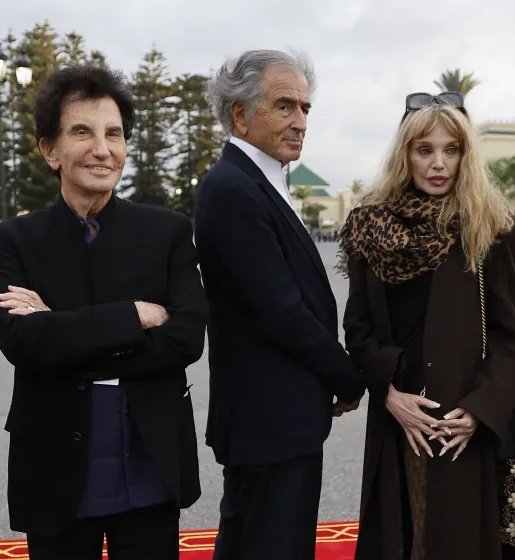
By Gilad Atzmon | Redress | 29 April 2011
What makes one a philosopher?
Probably, the capacity to aim at the essence of things, while celebrating the love of wisdom (philo-sophos).
Although Bernard-Henri Lévy presents himself as a French philosopher, he seems to lack that elementary capacity. Unlike a true philosopher, Levy engages in an endless spin, typical of a hasbara – Israeli propaganda – agent.
On 2 February the Huffington Post gave a platform to the so-called “philosopher” Levy.
Levy doesn’t approve of the Boycott, Disinventment and Sanctions (BDS) campaign against Israel. He claims that the campaign is “anti-democratic”.
Levy the Israeli propagandist
I would have expected Levy eloquently to advocate freedom of speech and human rights, but the Zionist “intellectual” failed miserably. Levy followed the well-trodden Judaeo-centric Zionist template and spouted half-baked ideas that hardly form an argument. Pathetically, Levy’s ranting is mostly counter-productive to his own cause.
“First of all” he said, “one boycotts totalitarian regimes, not democracies… One can boycott Sudan, guilty of the extermination of part of the population of Darfur. One can boycott China, guilty of massive violations of human rights in Tibet and elsewhere. “
For some bizarre reason, Levy seems to be convinced that his beloved Jews-only state is an “exemplary democracy”. He says: “One does not boycott the only society in the Middle East where Arabs read a free press, demonstrate when they wish to do so, send freely-elected representatives to parliament and enjoy their rights as citizens.”
I guess that Levy either doesn’t know or pretends not to know that in the “Jews-only democracy” laws are racially orientated. The Law of Return, for instance, favours Jews and Jews only.
Levy should also learn about the case of Azmi Bishara, the Arab citizen of Israel and member of the Israeli parliament, who had to run for his life for suggesting that Israel should be transformed into a “state of all its citizens” based on equality for all.
But it actually goes much further.
Levy’s argument is totally flawed and counterproductive to his Zionist cause. It is actually democracies, rather than dictatorships, that should be subjected to humanitarian boycotts because in democracies the people are complicit in their governments’ crimes.
We must boycott Israel because in the Jewish state every citizen is culpable in the war crimes committed by the democratically-elected government. We must boycott Israel because 94 per cent of its Jewish population supported the Israeli armed forces’ genocidal tactics during Operation Cast Lead against the people of Gaza. We must boycott Israel because its state-terror policies are a reflection of the public’s true will as proven in opinion polls and democratic elections.
According to Levy, in a democracy the voters have the power to sanction, modify and reverse the position of their government. It would be fabulous if Levy could enlighten us and suggest how exactly the Jews-only democracy is progressing towards an acceptance of universal rights for all.
Apologist for racism
As with all hasbara agents, Levy is outraged by the attempt to delegitimize Israel, yet, the philosopher in him fails to tell us what is exactly so wrong in delegitimizing a racially-driven, murderous collective. I also wonder what is so unacceptable about delegitimizing a state that was illegitimate to start with.
Levy doesn’t approve of the “one-state” enthusiasts. He far prefers to divide the land into two states. Someone had better remind this lame mind that Israel is currently one state that is located between the Jordan River and the Mediterranean Sea.
Those who support one state are actually far from being radical. They have their feet on the ground. They accept Israel as one state, with one international dialing code and one power grid.
However, the supporters of one state also realize that one-state Israel is dominated by Jewish Talmudic racism that is far more vicious than Nazi ideology. Proponents of the one state also realize that by the time Jewish racist ideology is defeated this one state between the river and the sea will become Palestine.
Levy is furious with one-state advocate Ali Abunimah, co-founder of Electronic Intifada, who, according to him, “does not hesitate to compare Israel to Nazi Germany”. It would be a little bit more useful if “philosopher” Levy is kind enough to suggest to us once and for all what is so wrong with comparing the Jews-only state with the Aryans-only state also known as Nazi Germany.
Towards the end of his Huffington Post article, Levy comes up with something that could almost pass for an argument. For Levy, the Western world should have hoped to be “cured of its worst criminal past”. It would be helpful and productive if Levy and other Zionists grasp that it is actually the West’s problematic past that shapes our criticism of the murderous Israeli present. It is our troubled past that makes us into enemies of racist Israel.
I was looking forward to read a Zionist “thinker” advocating for Israel. Levy obviously failed.
However, I admit that, as with Levy, I also have reservations regarding the BDS movement.
For instance, I believe that if the demand to boycott Israeli academics is valid, then we should also boycott academics and intellectuals who advocate Israeli policies and Zionism worldwide, because Israel is racist to the bone and racism must be opposed. If the BDS movement is taking itself seriously, then it should also demand the boycott of Levy, Alan Dershowitz, David Hirsh and many others.
On the one hand, this would underline the BDS movement’s integrity. But as an advocate of freedom of speech, I actually want Dershowitz, Hirsh and Levy to speak their minds. I believe that together with Mark Regev, they are the best promoters of Zionist tribal morbidity.
Featured Video

Elijah Magnier: Yemen’s strikes are shattering Saudi Arabia’s long-term strategy
or go to
Aletho News Archives – Video-Images
From the Archives
British weapons and personnel doing much of the killing in Yemen
Press TV – June 18, 2019
A detailed report published by the Guardian newspaper has shown how Britain is massively contributing to Saudi Arabia’s devastating war on Yemen as it suggests that London is not only supplying the bombs that fall on Yemenis, but it provides the personnel and expertise that keep the war going.
The comprehensive report by Arron Merat published on Tuesday showed that Britain was doing much of the killing in Yemen as the country continues to provide Saudi Arabia with everything it needs to turn its southern impoverished neighbor into a graveyard.
“Every day Yemen is hit by British bombs – dropped by British planes that are flown by British-trained pilots and maintained and prepared inside Saudi Arabia by thousands of British contractors,” said Merat in the report. … continue
Blog Roll
 Aletho News
- Netizens condemn Japanese drama for projecting Japan’s wartime atrocities onto Chinese characters
- Racist Seinfeld Dances for Joy as Bibi Unveils His New Map
- A West Bank War for Netanyahu’s Election Campaign, Could It Backfire?
- Yemen denounces European Parliament’s ‘hypocritical’ push to blacklist Ansarullah
- Qalibaf: UAE’s UN bid aims to ‘clear the runway’ for ‘Greater Israel’, whitewash genocide
- Pakistan reopens Iran border after boosting security: Report
- Why are so many Brazilians voting for Flávio Bolsonaro?
- Democrats Put Anti-Russia Agenda Ahead of American Workers
- Elijah Magnier: Yemen’s Strikes Are Shattering Saudi Arabia’s Long-Term Strategy
- Pentagon designates Chinese cultural centers national security threat
- If Americans Knew
- Latest updates from Israeli assault on West Bank
- Tourism Ministry launches free food truck tour in US
- “So Much Worse Than People Realize”: Never-Before-Seen Images Reveal Damage at U.S. Bases as Troops Describe Being Abandoned
- UK Bell Review Confirms Only Anti-Israel Attitudes Are Rising, Not Antisemitism
- DAILY UPDATE: Latest essential news on Palestine, Israel, & region
- DAILY UPDATE: Latest essential news on Palestine, Israel, & region
- Damning report shows the media must confront its failures on Gaza
- BBC senior broadcaster speaks out on Gaza coverage
- Netanyahu vows vast West Bank invasion in response to 20-minute skirmish that left 2 Israeli soldiers and 2 Palestinian fighters dead
- Tied up and tortured: Israel using US-made electroshock weapons on Palestinian detainees
- No Tricks Zone
- Sudden Stratospheric Warming, Powerful El Niño Combination May Lead To Extreme Europe Cold, Energy Crisis!
- Two New Studies Find Thwaites Glacier Melt Cannot Be Driven By Human Activity Or A Warming Ocean
- E-Cars Reduce CO2 Emissions By Only 41% Compared To Internal Combustion Engine Vehicles
- Predictions Made By Renowned Climate Professor Over Past Decades Have Been Proven To Be Poor
- New Study Suggests Large Regions Of The Pacific Ocean Have Been Cooling For The Last 80 Years
- Germany’s Green Energy Debacle: High Energy Costs Force Kahla Porzellan to Close After 182 Years!
- New Study: 50 Years Of The Most Aggressive ‘Net Zero’ Policies Can Only Affect The Global Climate By 0.03°C
- US September “Heat” Was No Record…Many Records Set Decades Ago
- Latest European Green Energy Debacle; Portugal’s Largest Flagship Solar Park Insolvent!
- Green Energy Debacle: German Expert Professor Fritz Vahrenholt Warns Of Severe Economic And Social Consequences

