Call to Action: Palestinian Prisoners’ Day 2016

samidoun – Palestinian Prisoners Solidarity Network
On 17 April each year, Palestinian prisoners, the Palestinian people, and the world mark the International Day of Solidarity with Palestinian Prisoners.
Commemorated since 1974, when the first Palestinian prisoner, Mahmoud Hijazi, was freed in a prisoner exchange with the Palestinian Resistance, 17 April is a day of protests, rallies, marches, forums and more to commemorate the struggle of Palestinians imprisoned in Israeli occupation jails and demand their freedom.
We join with the Palestinian prisoners’ movement in calling on organizations and people of conscience around the world to take action on 17 April to express your solidarity and call for freedom for Palestinian political prisoners.
Over 7,000 Palestinian prisoners are currently held in Israeli jails. More than 700 of them are held in administrative detention without charge or trial. The others face military courts which convict over 99% of the Palestinians that appear before them. Over 400 Palestinian children as young as 12 years old are held in Israeli prisons.
Every night, Israeli occupation forces conduct violent armed invasions of Palestinian villages, cities, refugee camps and homes, ransacking them and arresting dozens of Palestinians. This comes amid near-daily killings and extrajudicial execution of Palestinians by occupation forces, the demolition of the homes of the families of Palestinian prisoners, new racist laws targeting Palestinians who hold Israeli citizenship, and further escalating repression.
International action has seen some response: G4S, the British-Danish security corporation targeted for a global boycott because of its role in providing security systems, control rooms and equipment to Israeli prisons, has announced it is selling off its Israeli subsidiary and leaving the market entirely. However, it’s critical to keep the pressure on G4S until their equipment and security systems are no longer being used to imprison Palestinians, block their movement at checkpoints, or besiege Gaza.
G4S doesn’t only profit on the imprisonment of Palestinians, of course. Black student movements at Columbia University, the University of California and Cornell University have led in building campus boycotts and divestment against G4S because of its role in private imprisonment in the United States, especially of youth, and have won significant victories. Organizing with movements confronting imprisonment and racist oppression, including the Black movement and the prison divestment movement, is particularly crucial in confronting common oppressors; the Black4Palestine statement identified G4S as a strong common target for struggle. Confronting racism and oppression of all forms comes hand in hand with confronting Zionist settler-colonial racism in Palestine.
Palestinian Prisoners’ Day this year also comes amid international repression of Palestinian organizing – for example, the attacks on BDS in France and the arrest and prosecution of BDS activists – and the imprisonment and persecution of Palestinians and fellow strugglers in international prisons, as in the cases of Georges Ibrahim Abdullah, the Holy Land Five, and Rasmea Odeh.
On Palestinian Prisoners’ Day 2016, key issues facing Palestinian prisoners in Israeli prisons include:
- Solitary confinement: nearly 20 Palestinians are being held in long-term solitary confinement, a form of torture. They are demanding return to general population.
- Administrative detention: over 700 Palestinians are imprisoned without charge or trial under administrative detention, often targeting community leaders and activists like Eteraf Rimawi, circus teacher Mohammed Abu Sakha, or journalist Musab Kufaisheh.
- Attacks on students: In the past weeks, Al-Quds University, the Arab American University and other Palestinian universities have been raided by Israeli occupation forces. Student leaders and activists at Bir Zeit University, Al-Quds University, An-Najah University and other institutions have been arrested and imprisoned, in an attempt to stifle student organizing and activism.
- Torture and mistreatment: Nearly every Palestinian prisoner is subject to “legitimate” torture and abuse under interrogation, including lengthy periods of being held in painful stress positions, sleep deprivation, sexual threats and threats to family members, and direct beating and physical assaults. The vast majority of children arrested report experiencing physical and psychological torture and abuse at the hands of Israeli occupation soldiers and intelligence agents;
Take action for Palestinian Prisoners’ Day!
- Organize a protest at an Israeli consulate or embassy, a G4S office, or public square on Sunday, April 17 for Palestinian prisoners. Bring flyers and leaflets or signs, and call for freedom for Palestinian political prisoners. Or join with movements for prison divestment or other issues around racism and mass incarceration for joint protests against racist imprisonment of all kinds.
- Organize a forum or discussion about Palestinian prisoners. Help build awareness and action in support of Palestinian prisoners. Participants can also write letters to Palestinian prisoners.
- Screen a film – whether as a large event in a cinema, or a small get together in a home – on Palestinian prisoners. Titles include “Tell your tale, little bird,” “Women in Struggle,” “Hunger Strike,” “Palestine: la case prison,” “Degrees of Incarceration,” “A Path to Gaza Prison Camp,” “Lina,” “Detaining Dreams,” “Crayons of Askalan,” “Stone Cold Justice,” “Beyond the Walls,” “At the Heart of a Siege,” and “Stolen Youth.” The new feature film by Mai Masri, “3000 Nights,” focuses on the Palestinian experience of imprisonment.
Send your events to samidoun@samidoun.net or link them to Samidoun on Facebook, or tweet us at @SamidounPP.
Some events already happening for Prisoners’ Day include:
New York City
Friday, 15 April
Protest: Celebrate Resistance Before Palestinian Prisoners Day
4:00 pm
G4S Office, 19 W. 44th St, New York City
Milan
Friday, 15 April
Concert: Militant Rap for Palestinian Political Prisoners
7:00 pm
Centro Occupato Autogestito T28, Via dei Transiti 28, Milan, Italy
Brussels
Saturday, 16 April
Outdoor Event: Juggling for Mohammed Abu Sakha and Palestinian Prisoners
2:00 pm
Place de l’Albertine, Brussels
London
Saturday, 16 April
March: Palestinian Prisoners’ Parade
12:30 pm
Gower Street (Corner of Torrington Place), London, UK
Brussels
Sunday, 17 April
Manifestation: International Day of Solidarity with Palestinian Prisoners
2:00 pm
Place de la Monnaie, Brussels, Belgium
Milan
Sunday, 17 April
Concert: Militant Rap for Palestinian Political Prisoners
7:00 pm
Cox18, Via Conchetta 18, Milan, Italy
Toulouse
Sunday, 17 April
Gathering: Palestine Afternoon
1:00 pm
La Chapelle, 36 rue Danielle Casanova, Toulouse, France
New York
Sunday, 17 April
Speakout: Speak Out for Prson Divestment on Palestinian Prisoners’ Day
1:30 PM
Cadman Plaza, Brooklyn, New York 11201
Paris
Sunday, 17 April
Forum: Freedom for All Palestinian Prisoners
4:00 pm
Academy of Arts and Culture of Kurdistan, 16 rue d’Enghien, Paris
Vienna
Sunday, 17 April
Protest: Palestinian Prisoners Day
3:00 PM
Stephansplatz, Vienna, Austria
Limerick
Monday, 18 April
Forum: Palestinian Lawyer Aouda Zbidat on Palestinian Political Prisoners
7:30 pm
Pery’s Hotel, Glentworth St, Limerick
Cork
Tuesday, 19 April
Forum: Palestinian Lawyer Aouda Zbidat on Palestinian Political Prisoners
Time/Venue TBA
Lille
Wednesday, 20 April
Forum: International Day to Free Political Prisoners
6:00 pm
Grand Place de Lille, 10 rue Royale, Lille, France
Dublin
Wednesday, 19 April
Forum: Palestinian Lawyer Aouda Zbidat on Palestinian Political Prisoners
7:00 pm
The Academy Plaza Hotel, 10-14 Findlater Place, Dublin, Ireland
A Few Black Caucus Members Have Some Questions About Israel
A Black Agenda Radio commentary by Glen Ford | April 6, 2016
Black Georgia Congressman Hank Johnson has written a letter that puts him in the cross-hairs of the Israel lobby – and he’s managed to bring eight other members of the House with him, including three colleagues from the Congressional Black Caucus. Johnson teamed up with Vermont Senator Patrick Leahy, a longtime – and usually very lonely – critic of Israel’s treatment of Palestinians. The senator is the author of the Leahy Law, which requires the United States to cut off military aid “to any unit of the security forces of a foreign country if the Secretary of State has credible information” that the unit has “committed a gross violation of human rights.” Congressman Johnson believes this language applies to Israel and to military and police units in Egypt. Together, the two countries account for more than 75 percent of total U.S. military assistance to foreign states: $3.1 billion a year to Israel, and $1.5 billion to Egypt. Israeli Prime Minister Benjamin Netanyahu is demanding that the U.S. increase its annual gift to the Zionist State’s military to $4.5 billion.
Congressman Johnson’s letter urges Secretary of State John Kerry to do as the Leahy Law requires, and make a determination if Israel and Egypt have engaged in gross violations of human rights. The letter calls Kerry’s attention to specific cases of extrajudicial killings of Palestinians and the use of torture by Israeli security forces, and it cites the Egyptian military regime’s 2013 massacre of as many as a thousand unarmed civilians at Rab’aa Square, which Human Rights Watch describes as “the world’s largest killing of demonstrators in a single day in recent history.”
In addition to Senator Leahy, Hank Johnson convinced eight other House Democrats to sign his letter, including Black Caucus members Andrè Carson, of Indiana, Eddie Bernice Johnson, of Texas, and Eleanor Holmes Norton, the congressional Delegate from Washington, DC.
The crimes of Egypt’s military regime have shocked the world, but Washington has no problem with mass murder, which is why the Egyptian military has been a U.S. client for the past 40 years.
And, there is, of course, not a chance in hell that Secretary of State Kerry will certify that Israel is a gross human rights violator – despite the fact that the entire history of the apartheid Zionist state is an affront to the very notion of civilization. Just two weeks ago, an Israeli soldier was caught on video cold-bloodedly shooting a wounded and helpless Palestinian in the head. A poll showed 66 percent of Israeli Jews have good feelings about the soldier’s behavior, and 57 percent don’t even want the government to investigate the murder. This is the kind of barbaric society that is bred by apartheid – a society that should be recognized as inherently evil by every member of the Congressional Black Caucus. But, only three Black congresspersons joined Hank Johnson in questioning why the U.S. spends billions to arm the last apartheid state on Earth. In 2014, every single Black congressperson, including Hank Johnson, voted in support of Israel even as it was slaughtering more than 2,000 Palestinians in Gaza. Four signatures on a letter will never erase the shame they have brought upon Black America through their support for the most racist regime in the world.
Glen Ford can be contacted at Glen.Ford@BlackAgendaReport.com
Seoul Human Rights Film Festival cancels Israeli participation
Palestinian Information Center | April 3, 2016
The Boycott, Divestment and Sanctions (BDS) Movement has achieved another success after it managed to convince organizers of the Seoul Human Rights Film Festival to reject the participation of an Israeli film in the event.
Organizers of the festival sent a message to the producer of the Israeli film, “Third Person,” affirming that it canceled the participation of the film and would send back the registration fee.
“We have met with Palestinian activists and BDS activists and we discussed the participation of your film in the Seoul Human Rights Film Festival, which is an organization active in the field of human rights,” the message read.
“The topic of the film is very important, but we are working with anti-war organizations and thus we have decided to adopt the viewpoint of BDS,” it added.
Third Person is a film produced by an Israeli channel and about people who are intersex and living in Israel.
American lawyers request investigation into the Jewish National Fund status
PNN/Bethlehem – March 31, 2016
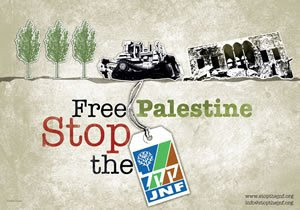
The U.S. National Lawyers Guild (NLG) on Wednesday submitted a regulatory challenge to the Internal Revenue Service (IRS) requesting an investigation into the charitable status of the Jewish National Fund (JNF) on grounds of discrimination and contravention of U.S. policy.
According to the NLG, the JNF enjoys tax-exempt status as a charitable organization in the United States even though the reality of its work- supporting Israel’s ongoing ethnic cleansing of Palestine – is anything but charitable.
The JNF’s mandate is to promote racist and discriminatory policies such as forcibly displacing Palestinians from their lands to make way for Jewish-only housing developments, including inside Israel’s pre-1967 borders.
The JNF’s support for illegal settlement activity in the occupied West Bank and in occupied East Jerusalem also means its activities violate longstanding official U.S. policies against settlements, as well as international law.
“The IRS has an obligation to revoke the JNF’s status because of its involvement in displacing Palestinian Bedouins from the Negev Desert and elsewhere, and because of its support for illegal Israeli settlements in the West Bank,” said Andrew Dalack, one of the co-chairs of the NLGIC’s Palestine Subcommittee. “How can the IRS certify with a straight face that the JNF is organized for a charitable purpose when it engages in conduct that violates international law and well-established U.S. foreign policy?”
The regulatory challenge is part of a larger international Stop the JNF Campaign that seeks to end the JNF’s role in Israel’s continuing displacement of Palestinians.
Efforts targeting the JNF are part of a growing boycott, divestment, and sanctions (BDS) movement in support of the Palestinian struggle for freedom, justice, and equality.
The campaign is calling for people to take part in Days of Action from March 30-April 18 (Tax Day) to pressure the IRS to respond to the regulatory challenge and launch an investigation into the JNF.

“The JNF is complicit in Israel’s ethnic cleansing of Palestinians and it is completely unacceptable that an organization engaging in war crimes is considered to be a charity in the United States,“ said Ramah Kudaimi of the US Campaign to End the Israeli Occupation. “It is also confusing how U.S. policy is clear about settlements being a primary obstacle to peace but Americans are allowed to give money to an organization that supports these very same settlements.”
Founded in 1901, the JNF is a quasi-governmental Israeli agency that has played a major role in the dispossession of the Palestinians people, planting forests to help cover the reality of the more than 400 Palestinian towns and villages destroyed when Israel was created in 1948.
Today the JNF continues to play an important role in the dispossession of Palestinians in both in the 48 territories -Israel– and the in the occupied West Bank.
The complaint was filed on Land Day because on this day Palestinians commemorate the day in 1976 when the IOF killed six Palestinians who were peacefully protesting the appropriation of their land.
“For nearly 70 years Palestinians have been resisting Israel’s continued theft of our land,” said Nick Sous of the US Palestinian Community Network. “So many Palestinians have been directly impacted by Israel’s stealing their land with the support of the JNF and it is shameful that the IRS actually awards people who donate to support these illegal actions by allowing them to get a tax write-off.”
Why do Palestinians commemorate Land Day?
Palestinian Information Center – April 1, 2016
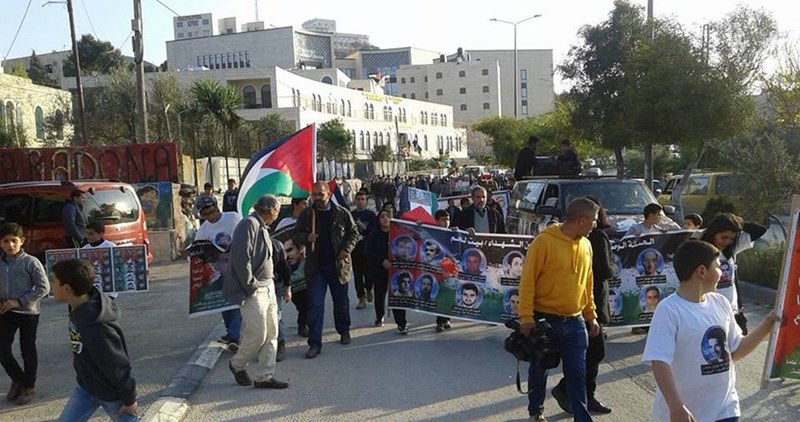
Palestinians commemorated the 40th anniversary of the Land Day on Wednesday, March 30 with various events. To understand the importance of that Day and why it is observed each year we should go back a little bit in history.
In 1976, the Israeli authorities confiscated large areas of Palestinian lands in the Galilee triggering large-scale protests that ended with killing 6 Palestinians and the injury of more than 100 others.
Palestinians all over the world commemorate the Day in marches and rallies to reflect their resilience in facing the Israeli occupation.
The events actually date back to the establishment of Israel in 1948, also known as the Palestinian Nakba (catastrophe), when around 150,000 Palestinians remained in their homes in historical Palestine.
Israel granted them the Israeli nationality, but it kept confiscating their lands and restricting their rights to encourage their migration out of their homeland.
In 1976, the Israeli authorities confiscated vast areas of the lands of these Palestinians in regions with Palestinian majority in the Galilee, a region in northern Palestine.
Israel reacted to the nonviolent protests of Palestinians by gunfire and brutal force. Six Palestinians were slaughtered, more than a hundred injured, and many more arrested.
Resistance Day
Dr. Ghassan Wishah, head of the Department of History and Archeology at the Islamic University of Gaza, stressed the need of informing the world about the importance of this Day, saying, “When Zionists declared the establishment of their state in 1948, they expelled two thirds of the Palestinian people and took over 78% of the their land.”
He added that a significant number of Palestinians persisted in their homes, and Israel started attempts to brainwash them so they would forget about Palestine.
Wishah pointed out, “This Day shows the world that Palestinians insist on their demands, that Israel has failed, and that the new generation is stronger than the older one.”
Demands
Ghassan al-Shami, a political analyst and a specialist in the Palestinian history, said, “We can never forget our land especially with the Israeli occupation stealing thousands of acres and building settlements on a daily basis.”
He stated that hard work is required so that Palestinians would devote more time and effort toward their lands through events on the ground and on social media to put pressure on Israel to stop the Judaization attempts of the Palestinian lands.
Al-Shami stressed the importance of delivering the Palestinian message to the world in all possible ways to win international support for regaining the Palestinian lands and rights.
Land Day: Palestinian anti-colonial struggle against land confiscation, for freedom and liberation

samidoun – Palestinian Prisoner Solidarity Network | March 30, 2016
30 March 2016 marks the 40th Land Day, a day of Palestinian struggle against settler colonialism and celebration of the connection of the Palestinian people to the land that continues despite expropriation and dispossession. The day marks the anniversary of the mass upsurge inside Occupied Palestine ’48 on 30 March 1976, in response to an Israeli state attempt to confiscate over 20,000 dunums of land from Palestinians in the Galilee; like today, Israeli “citizenship” has never spared Palestinians from land confiscation and dispossession on their soil.
 Thousands of Palestinians in ’48, those with Israeli citizenship imposed upon them by the state, who remained on the land after 80% of Palestinians were expelled in the Nakba, rose up with a general strike and mass popular protests in the most visible resistance to the Israeli state and its policies of dispossession since the Nakba. They were met with massive state violence, and the killing of six Palestinians – Kheir Mohammad Salim Yasin, Khadija Qasem Shawahneh, Raja Hussein Abu Rayya, Khader Eid Mahmoud Khalayleh, Muhsin Hasan Said Taha and Raafat Ali Al-Zheiri – by the Israeli army as they marched to defend their land.
Just as Palestinians in ’48 face state violence, land confiscation, and the racist policies of Zionism, they also confront imprisonment, arrests and repression. There are currently 75 Palestinian “security” prisoners from Occupied Palestine ’48, housed with fellow Palestinians and facing the same restrictions and denial of rights. Karim Younis, the longest-imprisoned Palestinian prisoner, is from Occupied Palestine ’48 as is his cousin Maher; indeed, six of the seven Palestinian prisoners imprisoned over 30 years for their role in the Palestinian resistance are from Occupied Palestine ’48: Karim and Maher Younis, Walid Daqqa, Rushdi Abu Mukh, Ibrahim Abu Mukh and Ibrahim Bayadseh. Palestinian theater Al-Midan in Haifa was subjected to state scrutiny, repression and denial of funds for its exhibition of Palestinian culture, which included the theatrical performace of a short story by Daqqa.

They have been consistently denied release in both prisoner exchanges with the Palestinian resistance and in Oslo-negotiations-based prisoner releases, as the Israeli state attempts to separate them as “Israeli citizens” from their fellow Palestinian prisoners in releases and labels them a “domestic matter“. At the same time, they are housed with fellow Palestinian prisoners, denied family visits, forced to see family only through glass, and held in solitary confinement while Israeli “criminal” prisoners – and even the rare Israeli Jewish prisoner held as a “security” prisoner for extreme-right violence – are granted temporary releases, their sentences limited and lowered, and allowed lengthy family visits, furloughs, and conjugal visits.
Palestinian prisoners from Occupied Palestine ’48 include the long-time prisoners held since the 1980s as well as Lena Jarbouni, the longest-serving woman Palestinian prisoner; Ameer Makhoul, the imprisoned director of Ittijah, the Union of Arab Community-Based Associations; and Asmaa Hamdan, the 19-year-old Palestinian woman ordered to administrative detention without charge or trial for sending a text message to her family.

The roots of the Israeli military system currently imposed upon Palestinians in the West Bank were derived from British colonial military orders imposed on Palestine – and then on the martial law imposed on Palestinians in occupied Palestine ’48 until 1966, used to undermine all attempts of Palestinians organizing inside their occupied homeland to organize and defend their land.
For example, the Al-Ard movement, which was composed of Palestinians in ’48, founded in 1958, was outlawed in 1964; its very name highlighted the centrality of the land and the struggle to preserve of its Palestinian and Arab identity. The criminalization of the movement only reinforced the defense of the land as central to a movement of indigenous people struggling to defend “the imprisoned land” from colonization.
Cultural resistance was critical for the Palestinians of ’48. Describing the growth of resistance poetry, Ghassan Kanafani wrote, “Many popular poets were put in prison or confined under severe restrictions. And as the trend of popular poetry grew and expanded, the occupying forces extended their tyrannical, measures, killed some poets and prohibited all Arab gatherings. Such measures could not anyhow uproot this trend of resistance but rather kept it dormant for almost five years to burst anew with intense force and vitality.” Poets like Samih al-Qasim and Mahmoud Darwish were imprisoned; the resistance poetry of the prison became a major contribution of the Palestinians of ’48 to Palestinian culture.
Palestinian organizations were outlawed while Palestinians were denied freedom of movement, speech and association; at the same time, the confiscation of Palestinian land continued in an ongoing Nakba; by 1993, over 80% of lands under the control of Palestinians after the Nakba in Israel were confiscated. Palestinians in ’48 were, and are, an integral part of the modern Palestinian revolution as well as fellow victims of Israel’s repression and racist violence.
Palestinians in ’48 are at the center of organizing Palestinian support for all prisoners; as most Palestinian prisoners are held within the 1948 occupied areas, in violation of the Fourth Geneva Convention, Palestinian political leaders and activists engage in visits, demonstrations outside prisons, and campaigns of support. The Palestinian movement in ’48 has played a critical role in supporting, publicizing and defending Palestinian prisoners on hunger strike in Israeli hospitals, including Mohammed al-Qeeq, Khader Adnan, Mohammed Allan and many others.
 Today, 40 years later, Palestinians throughout occupied Palestine continue to resist and confront settlement expansion, land confiscation, racism, Zionism and apartheid. From the expansion of settlements, to the destruction of villages and the confiscation of land, to the ban on Palestinian agricultural products entering Jerusalem, to new racist laws proposed daily atop a racist foundation, the Israeli state continues – and is intensifying – its policy of attempting to sever the Palestinian people from the land of Palestine.
Land Day is a day of anti-colonial struggle for all Palestinians: for Palestinian prisoners, struggling for freedom in their homeland; for Palestinians in ’48, struggling against apartheid, racism, and dispossession; for Palestinians in Jerusalem and the West Bank, struggling against ethnic cleansing, occupation, home demolitions, land confiscation and settlement construction; for Palestinians in Gaza, struggling against siege and the occupation of the skies, seas and borders; for Palestinians in exile and diaspora everywhere, struggling for the right of return and the liberation of the land of Palestine. It is also an international day of anti-colonial struggle that salutes the struggles of indigenous people in North America, Australia, New Zealand and everywhere confronting settler colonialism, genocide and racism, and the liberation movements everywhere confronting imperialism and exploitation of land, people and resources.
As the extreme-right Zionist government of Netanyahu, Ayelet Shaked, Naftali Bennet, Miri Regev, Moshe Ya’alon, Gilad Erdan, Uri Ariel and their compatriots intensify the repression of Palestinians in ’48 and throughout Palestine, it is critical more than ever to intensify our efforts to defend the Palestinian people and Palestinian land, including the campaign to free all Palestinian prisoners. The international campaign for boycott, divestment and sanctions, and the Palestinian call that has inspired and led that campaign, highlights the struggle of Palestinians in ’48 for justice and equality as central to Palestinian freedom and justice in Palestine. On the 40th Land Day, we must escalate global boycott and BDS campaigns and the international isolation of Israel – and the corporations, like G4S, that profit from its oppression and racism.
The occupation of Palestinian land is the central facet of the settler colonial Zionist project in Palestine; Land Day marks the unity of the Palestinian land, people, and cause, everywhere inside and outside Palestine, for defending and liberating the land and people of Palestine.
Historical References:
UN Group Rejects US Sanctions Against Venezuela
teleSUR – March 24, 2016
The G77 and China affirmed their solidarity with Venezuela after President Barack Obama renewed an executive order classifying Venezuela as a threat.
The Group of 77 and China reiterated this week, “its rejection to the latest decision of the government of the United States of America to renew its unilateral sanctions against the government of the Bolivarian Republic of Venezuela.”
A March 3 executive order signed by President Obama renewed sanctions against Venezuela, referring to the South American state as “a national emergency with respect to the unusual and extraordinary threat to the national security and foreign policy of the United States posed by the situation in Venezuela.”
The G77 is the largest intergovernmental organization of developing countries in the United Nations, which “provides the means for the countries of the South to articulate and promote their collective economic interests and enhance their joint negotiating capacity on all major international economic issues within the United Nations system, and promote South-South cooperation for development,” according to their website.
The group represents the global South, and features many Latin American countries such as Cuba, Ecuador, Venezuela, Brazil and Bolivia. Other regions are represented by members, including the Middle East, Asia and Africa.
The statement goes on to say that the “G77 and China underlines the positive contribution of Venezuela to the strengthening of South-South cooperation, solidarity and friendship among all peoples and nations, with a view to promoting peace and development, conveying solidarity.”
It also demands the U.S. government “evaluate and implement alternatives for a dialogue” with Venezuela, “under the principle of respect to sovereignty and self-determination of the peoples. Therefore, it urges to repeal the aforementioned executive order.”
Venezuela Faces Outside Threats, Says Russian Foreign Minister
Russian Foreign Minister Lavrov reaffirms his country’s friendship with Venezuela. | Photo: PSUV
teleSUR – March 25, 2016
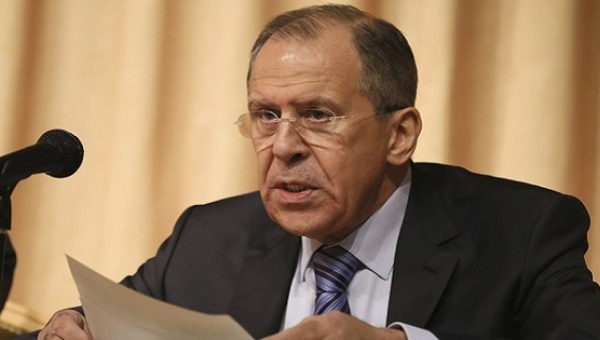
Russian Foreign Minister Sergei Lavrov said that his country has been closely following the situation in Venezuela and stressed that such is exacerbated by external interference.
“Venezuela is a friend country that they (opponents) are trying to destroy from outside,” Lavrov said Thursday during a meeting in Moscow with Venezuelan diplomats and Latin American students who are attending a course in diplomatic studies organized by the Russian Foreign Ministry.
At the meeting, the top diplomat explained the vision of Russia in Latin America and said he is pleased to see how Latin American countries have unanimously rejected coups led by right-wing opposition.
U.S. President Barack Obama issued an Executive Order March 9, 2015, declaring a “national emergency with respect to the unusual and extraordinary threat to the national security and foreign policy of the United States posed by the situation in Venezuela.” Obama then renewed that decree March 3, 2016, claiming that alleged conditions that prompted the first order had “not improved.”
All 33 members of the Community of Latin American and Caribbean States expressed their opposition to the U.S. government’s aggressive move and called for it to be reversed.
Saudi regime detains top Shia scholar in Eastern Province
Senior Saudi cleric Ayatollah Hussein al-Radhi
Press TV – March 22, 2016
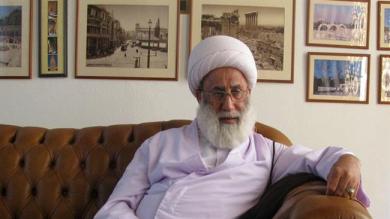
The Saudi regime’s security forces have arrested a prominent Shia cleric over his anti-regime comments as Riyadh continues its crackdown on the minority sect.
Media reports said on Tuesday that security forces arrested Ayatollah Hussein al-Radhi shortly after he led prayers in the al-Ahsa oasis region of Eastern Province.
The detention came after the senior cleric wrote an article in which he criticized the House of Saud for jailing and executing critics and dissidents, including Sheikh Nimr Baqir al-Nimr who was beheaded in January.
Al-Radi had also infuriated the monarchy by denouncing the ongoing deadly Saudi airstrikes which have claimed lives of more than 8,000 civilians in Yemen.
Riyadh has been under fire from international organizations and rights groups over the rising number of civilian casualties in Yemen. The United Nations Human Rights Council (UNHRC) has recently said that Saudi Arabia and its allies may be committing crimes against humanity due to their indiscriminate killing of civilians in Yemen.
The senior cleric had also strongly denounced a decision by the Saudi-led [Persian] Gulf Cooperation Council to brand Lebanon’s resistance movement Hezbollah as a terrorist organization.
Saudi Arabia has been denounced by rights groups for its grave human rights abuses and harsh crackdown on all forms of dissent.
The Shia-dominated Eastern Province has been the scene of peaceful demonstrations since February 2011.
Protesters have been demanding reforms, freedom of expression and the release of political prisoners. They want an end to economic and religious discrimination against the region.
Reports on protests in Qatif are scant, as Saudi authorities allow foreign news media to visit the region only if accompanied by government officials, claiming it is to ensure journalists’ safety.
Shia Muslims have long complained of entrenched discrimination in a country where the semi-official Wahhabi school condones violence against them. They face abuse from Wahhabi clerics, rarely get permits for places of worship and seldom get senior public sector jobs. Shia religious centers have also been target of a series of terror attacks across the region over the past few months.
Those basic complaints have over the years been aggravated by what residents across the Shia-majority call heavy-handed security measures against their community. They accuse the authorities of unfair detentions and punishments, shooting unarmed protesters and torturing suspects.
Petition Calls for UN to Investigate Israel for Genocide
To UN Special Adviser on the Prevention of Genocide and ICC Prosecutor:
I am a concerned person of conscience, who fears that I am witnessing the genocide of the Palestinian people by the State of Israel. Witnessing Israel’s daily violations of Palestinian human rights- military take-over of land, restriction of movement, economic strangulation, house demolitions, restrictions on basic foodstuff, mass arbitrary arrests of both adults and children, torture, extra judicial executions, and large-scale massacres of whole families, openly calling for genocide and extermination by law makers and other public figures- I can not keep silent about this 67 year-old atrocity, unfolding before our eyes.
The Crime of Genocide is defined in a declaration made by the General Assembly of the United Nations in its resolution 96 (I) dated 11 December 1946. I demand the United Nations Office of the Special Adviser on the Prevention of Genocide and the International Criminal Court Prosecutor take action and investigate the possibility that Israel is committing the Crime of Genocide against the Palestinian People, and that the office publish its findings and recommendations.
Thank you
Rani Burnat from Bil’in
International Solidarity Movement | March 15, 2016
Bil’in, occupied Palestine – Rani Burnat is an extraordinary human being in more ways than one. He was left paralysed from an injury sustained during the second intifada, learned to live the remainder of his life in a wheelchair, fathered three children (triplets) and now continues to resist the occupation through peaceful means to this day. His story is inspiring and a prime example of the will of the Palestinian people and their ongoing resistance to an illegal occupation.

Rani Burnat
On the 30th September 2000, Rani Burnat was going to Ramallah from his home town of Bil’in for a driving lesson. When he got there he noticed a protest gathering to protest Ariel Sharon’s entry into the sacred Al-Aqsa mosque (this of course was the beginning of the second intifada). Rani spotted friends of his from Bil’in and with time to spare decided to join in.
As the protest gathered the Israeli army illegally entered the Ramallah area and cleared the guests out of a nearby hotel, then used the hotel roof as a vantage point and placed snipers. The Israeli military claims that their illegal entry onto Palestinian land was to protect a nearby illegal Israeli settlement that the protest was nearing.
Rani and fellow friends were at the front of the protest when a sniper opened fire using a unique bullet, known as a butterfly bullet, designed to continue spinning upon impact while opening out and inflicting massive damage upon entry and exit.
The bullet entered through the left-hand side of Rani’s neck, puncturing his main artery. It continued through to the right hand side of his body, severing his spinal chord between the third and fourth vertebrae on exit.
As sniper fire continued and pandemonium erupted, Rani was left bleeding on the ground. Fortunately fellow bystanders assisted by applying pressure to the wound on his neck to limit the massive amounts of blood that he was losing. He was then put into a car and driven to the nearby hospital where he was promptly seen by doctors. Rani was the first victim of the second intifada to be treated. Anyone coming into hospital later in the intifada with his severe wounds would undoubtedly have died as staff and resources failed to cope with the influx of wounded.
The doctors applied a stint to Rani’s neck to where the artery had been severed, which remains to this day. He was put into an induced coma for two days, during which time doctors concluded that with the facilities they had they could not keep Rani alive along with the massive numbers of victims that were now being admitted to the hospital as the second intifada intensified.
It was decided that Rani must be transferred to another hospital with more facilities, one capable of taking care of someone in such a serious condition, the only hospital possible was in Jordan. Given his condition he could not make the journey by land and so a helicopter was arranged from the rooftop of the parliament building in Ramallah.
On admission to hospital in Jordan, his loss of blood was so great that he required massive blood donations from a number of donors. Rani would spend the next seven months in that hospital undergoing operations and combatting repeated infections. He says ‘The most important thing for me at that time was that I was alive. The doctors in Jordan made this possible”.
After seven months in Jordan, Rani was able to come back to Palestine for rehabilitation, back at home in Bil’in seeing friends and family who had missed him, and whom he had missed so much in Jordan.
He then had to go back into hospital in Ramallah for another seven grueling months of rehabilitation. It was during this time that the severity of his situation became clear to him. “It was an extremely difficult situation to come to terms with, that I would now have to spend the rest of my life in a wheelchair, paralysed on the right side of my body.” Rani is the oldest of ten siblings with four brothers and five sisters. He had wanted to be an electrician and he talks about the helplessness he felt at that time. But despite this he added, “The personal pain I felt was nothing compared to the pain I was feeling for my family.” However, a huge positive in Rani’s life amidst so much trauma was when he married shortly after the intifada and became father to triplets.
As time passed, Rani learned to deal with the injuries he had sustained, but one thing that he was not ready for was what happened in his home village next as the Israeli government began to illegally confiscate villagers’ land to construct the apartheid wall and enclose illegal settlements.
At this point Rani decided to become a photographic journalist so he could report on and show the world the ugly truths of the Israeli occupation and what it does to the Palestinian people. He says he will only stop when he is dead or the occupation has ended.
Every week he is able, Rani makes the trip up the rocky road in his wheelchair, gas mask and camera at the ready. His wife worries for him every time he leaves but understands that this is what he must do. Rani himself admits that every Friday he leaves he fears he will not come home to his loving wife and children but he continues to go to show the world what is happening.
Fellow activists from Israel who come frequently to the Bil’in demonstrations have translated for Rani what the Israeli army is saying about him, things like “shoot the guy in the wheelchair” whilst laughing amongst themselves. Rani has been shot with rubber bullets, countless amounts of tear gas, had many cameras broken, two wheelchairs wrecked and has even been pulled out of his wheelchair and thrown onto the ground. “The occupying forces have no morals,” he adds.
Two months ago Rani was shot in the stomach with a foam bullet, which releases a liquid that burns the skin on impact. A month later he was shot in the knee cap and also singled out by soldiers and shot in both shoulders with tear gas canisters. Despite all this he continues moving forward.
In 2005 Rani organised a unique demonstration in Bil’in for all the people who have been injured or disabled since the second intifada. He explains that the Israeli army used the most tear gas he has ever seen used, firing directly into the group of people, many of whom were restricted to wheelchairs, and causing many of them to pass out from tear gas inhalation including himself. “This is occupation” says Rani.
He doesn’t believe Israel can continue like this and he hopes an end is near, as do all Palestinians. Rani tells of how he wishes to be able to travel to Jenin with no checkpoints and how he wants to take his children to see the sea. Every Palestinian who has been suppressed by the occupation has their own particular dreams of life without Israeli occupation.
“Palestine is a state of peace, Israelis should be able to come and live harmoniously in peace – against occupation”.
“If you come to my house in peace I will welcome you… but if you come to my house to take it from my family, I will fight until my dying breath with all means necessary to defend it”.
UK Police pursue pensioner’s peace protest
By Peter Lazenby – Morning Star – March 17, 2016
A Weekly vigil outside a military base by a 74-year-old peace campaigner has been put under threat by a police dispersal order.
Lindis Percy, who stages a one-hour vigil at US communications base Menwith Hill in Yorkshire every Tuesday, told the Star yesterday that police turned up this week ordering activists to leave.
A fellow campaigner decided to leave but Ms Percy was arrested after refusing to budge. She has been ordered to appear in court on April 7.
The base is staffed by 1,450 US civilian and military personnel and is a key link in the US’s worldwide electronic intelligence-gathering operations via satellites.
Ms Percy, who is a retired nurse, midwife and health visitor, has been a leading peace campaigner for more than 30 years. She has been arrested hundreds of times.
She says North Yorkshire Police and the Ministry of Defence Police at the base have begun applying a dispersal order to stop her weekly vigils at the base.
“I very much want this in court as it is serious, if they get away with this. It stinks.”
Dispersal orders are part of the Anti-social Behaviour, Crime and Policing Bill 2014.
According to government guidelines, dispersal orders give police powers “to disperse individuals or groups causing or likely to cause anti-social behaviour in public places.”
The guidelines also state that “police will be able to deal quickly with emerging trouble spots” and that there must be reason to suspect that “the person has contributed or is likely to contribute to members of the public in the locality being harassed, alarmed or distressed, or the occurrence of crime or disorder.”
Featured Video

Genocide-linked firm handles Britons’ NHS data
or go to
Aletho News Archives – Video-Images
New Documentary
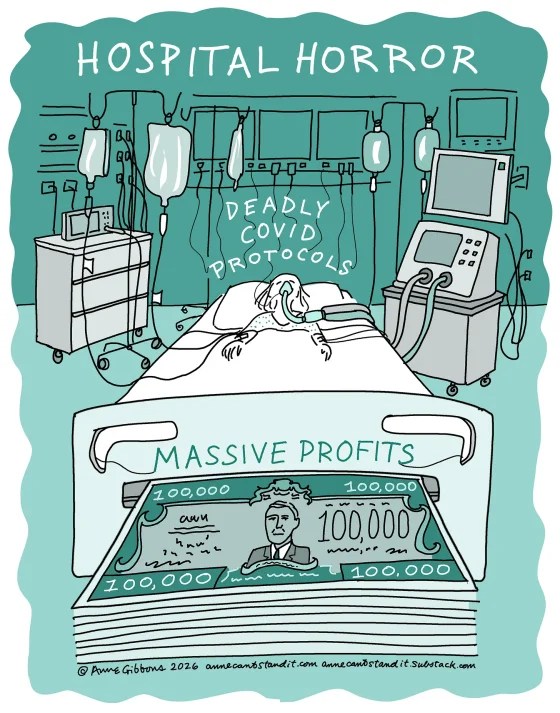
Hospital Horror
Documented in the film,“Bad Medicine”
Blog Roll
 Aletho News
- Israel Revives The ‘Iranian Assassination Threat Against Trump’ Deception In A Desperate Bid To Restart The War
- US rewrites history to dodge blame for illegal war on Iran: Foreign Ministry spokesperson
- TURBO CANCER DATA from Ontario, Canada (OHIP Insurance Billing Data)
- Iran warns France not to fall for Israeli false-flags operations
- Poland and Bulgaria put brakes on Ukraine weapons funding
- Russia Reaffirms Its Support for Sovereignty, Territorial Integrity of Lebanon – Russian MFA
- Araghchi: Failure to punish aggressors against Iran endangers all nations
- Iran tells UN Security Council to stop reversing roles of ‘aggressor and victim’
- Disgraced neocons Feith & Libby: stop whining about ‘endless war’
- CENTCOM rejects Israeli claims of preparations for new Iran attacks
- If Americans Knew
- An error has occurred; the feed is probably down. Try again later.
- No Tricks Zone
- New Study: Barents Sea Temperatures Were Warmer And Sea Ice Less Extensive In The 1700s Than Today
- German Authorities Start Initiative To Evaluate Public Register For Climate “Disinformation” Spreaders!
- Zonal Asymmetry of Temperature Change in the Antarctic Circumpolar Current
- New Study: The Net Fossil Fuel Contribution To Rising Atmospheric CO2 Has Been Zero For 500 Years
- Germany’s Green Energy Transition Becoming Increasingly Expensive…Another 6 Trillion Euros!
- Sudden Stratospheric Warming, Powerful El Niño Combination May Lead To Extreme Europe Cold, Energy Crisis!
- Two New Studies Find Thwaites Glacier Melt Cannot Be Driven By Human Activity Or A Warming Ocean
- E-Cars Reduce CO2 Emissions By Only 41% Compared To Internal Combustion Engine Vehicles
- Predictions Made By Renowned Climate Professor Over Past Decades Have Been Proven To Be Poor
- New Study Suggests Large Regions Of The Pacific Ocean Have Been Cooling For The Last 80 Years

