How to Counter Recruitment and De-Militarize Schools
By David Swanson | February 10, 2016
U.S. military recruiters are teaching in public school classrooms, making presentations at school career days, coordinating with JROTC units in high schools and middle schools, volunteering as sports coaches and tutors and lunch buddies in high, middle, and elementary schools, showing up in humvees with $9,000 stereos, bringing fifth-graders to military bases for hands-on science instruction, and generally pursuing what they call “total market penetration” and “school ownership.”
But counter-recruiters all over the United States are making their own presentations in schools, distributing their own information, picketing recruiting stations, and working through courts and legislatures to reduce military access to students and to prevent military testing or the sharing of test results with the military without students’ permission. This struggle for hearts and minds has had major successes and could spread if more follow the counter-recruiters’ example.
A new book by Scott Harding and Seth Kershner called Counter-Recruitment and the Campaign to Demilitarize Public Schools surveys the current counter-recruitment movement, its history, and its possible future. Included is a fairly wide range of tactics. Many involve one-on-one communication with potential recruits.
“Do you like fireworks?” a veteran of the latest war on Iraq may ask a student in a high school cafeteria. “Yes!” Well, replies Hart Viges, “you won’t when you get back from war.”
“I talked to this one kid,” recalls veteran of the war on Vietnam John Henry, “and I said, ‘Has anybody in your family been in the military?’ And he said, ‘My grandfather.’
“And we talked about him, about how he was short and he was a tunnel rat in Vietnam, and I said, ‘Oh, what does he tell you about war?’
“‘That he still has nightmares.’
“And I said, ‘And you are going in what branch of the service?’
“‘Army.’
“‘And you’re going to pick what skill?’
“‘Oh, I’m just going to go infantry.’
“You know … your grandfather is telling you he’s still got nightmares and that was 40 years ago. He’s had nightmares for 40 years. Do you want to have nightmares for 40 years?”
Minds are changed. Young lives are saved — those of the kids who do not sign up, or who back out before it’s too late, and perhaps also the lives they would have contributed to ending had they entered the “service.”
This sort of counter-recruitment work can have a quick payoff. Says Barbara Harris, who also organized the protests at NBC that supported this petition and got a pro-war program off the air, “The feedback I receive from [parents] is just incredibly heartwarming because [when] I speak to a parent and I see how I’ve helped them in some way, I feel so rewarded.”
Other counter-recruitment work can take a bit longer and be a bit less personal but impact a larger number of lives. Some 10% to 15% of recruits get to the military via the ASVAB tests, which are administered in certain school districts, sometimes required, sometimes without informing students or parents that they are for the military, sometimes with the full results going to the military without any permission from students or parents. The number of states and school districts using and abusing the ASVAB is on the decline because of the work of counter-recruiters in passing legislation and changing policy.
U.S. culture is so heavily militarized, though, that in the absence of recruiters or counter-recruiters well-meaning teachers and guidance counselors will thoughtlessly promote the military to students. Some schools automatically enroll all students in JROTC. Some guidance counselors encourage students to substitute JROTC for gym class. Even Kindergarten teachers will invite in uniformed members of the military or promote the military unprompted in their school assignments. History teachers will show footage of Pearl Harbor on Pearl Harbor Day and talk in glorifying terms of the military without any need for direct contact from recruitment offices. I’m reminded of what Starbucks said when asked why it had a coffee shop at the torture / death camp in Guantanamo. Starbucks said that choosing not to would amount to making a political statement. Choosing to do so was just standard behavior.
Part of what keeps the military presence in the schools is the billion dollar budget of the military recruiters and other unfair powers of incumbency. For example, if a JROTC program is threatened, the instructors can order the students (or the children formerly known as students) to show up and testify at a school board meeting in favor of maintaining the program.
Much of what keeps recruitment working in our schools, however, is a different sort of power — the power to lie and get away with it unchallenged. As Harding and Kershner document, recruiters routinely deceive students about the amount of time they’re committing to be in the military, the possibility of changing their minds, the potential for free college as a reward, the availability of vocational training in the military, and the risks involved in joining the military.
Our society has become very serious about warning young people about safety in sex, driving, drinking, drugs, sports, and other activities. When it comes to joining the military, however, a survey of students found that none of them were told anything about the risks to themselves — first and foremost suicide. They are also, as Harding and Kershner point out, told much about heroism, nothing about drudgery. I would add that they are not told about alternative forms of heroism outside of the military. I would further add that they are told nothing about the primarily non-U.S. victims of wars that are largely one-sided slaughters of civilians, nor about the moral injury and PTSD that can follow. And of course, they are told nothing about alternative career paths.
That is, they are told none of these things by recruiters. They are told some of them by counter-recruiters. Harding and Kershner mention AmeriCorps and City Year as alternatives to the military that counter-recruiters sometimes let students know about. An early start on an alternative career path is found by some students who sign on as counter-recruiters working to help guide their peers away from the military. Studies find that youth who engage in school activism suffer less alienation, set more ambitious goals, and improve academically.
Military recruitment climbs when the economy declines, and drops off when news of current wars increases. Those recruited tend to have lower family income, less-educated parents, and larger family size. It seems entirely possible to me that a legislative victory for counter-recruitment greater than any reform of ASVAB testing or access to school cafeterias would be for the United States to join those nations that make college free. Ironically, the most prominent politician promoting that idea, Senator Bernie Sanders, refuses to say he would pay for any of his plans by cutting the military, meaning that he must struggle uphill against passionate shouts of “Don’t raise my taxes!” (even when 99% of people would not see their wallets shrink at all under his plans).
Free college would absolutely crush military recruitment. To what extent does this fact explain political opposition to free college? I don’t know. But I can picture among the possible responses of the military a greater push to make citizenship a reward for immigrants who join the military, higher and higher signing bonuses, greater use of mercenaries both foreign and domestic, greater reliance on drones and other robots, and ever more arming of foreign proxy forces, but also quite likely a greater reluctance to launch and escalate and continue wars.
And that’s the prize we’re after, right? A family blown up in the Middle East is just as dead, injured, traumatized, and homeless whether the perpetrators are near or far, in the air or at a computer terminal, born in the United States or on a Pacific island, right? Most counter-recruiters I know would agree with that 100%. But they believe, and with good reason, that the work of counter-recruitment scales back the war-making.
However, other concerns enter in as well, including the desire to protect particular students, and the desire to halt the racial or class disparity of recruitment that sometimes focuses disproportionately on poor or predominately racial minority schools. Legislatures that have been reluctant to restrict recruitment have done so when it was addressed as an issue of racial or class fairness.
Many counter-recruiters, Harding and Kershner report, “were careful to suggest the military serves a legitimate purpose in society and is an honorable vocation.” In part, I think such talk is a strategy — whether or not it’s a wise one — that believes direct opposition to war will close doors and empower adversaries, whereas talking about “student privacy” will allow people who oppose war to reach students with their information. But, of course, claiming that the military is a good thing while discouraging local kids from joining it rather stinks of NIMBYism: Get your cannon fodder, just Not In My Back Yard.
Some, though by no means all, and I suspect it’s a small minority of counter-recruiters actually make a case against other types of peace activism. They describe what they do as “actually doing something,” in contrast to marching at rallies or sitting in at Congressional offices, etc. I will grant them that my experience is atypical. I do media interviews. I mostly go to rallies that have invited me to speak. I get paid to do online antiwar organizing. I plan conferences. I write articles and op-eds and books. I have a sense of “doing something” that perhaps most people who attend an event or ask questions from an audience or sign an online petition just don’t. I suspect a great many people find talking students away from the edge much more satisfying than getting arrested in front of a drone base, although plenty of wonderful people do both.
But there is, in my opinion, a pretty misguided analysis in the view of certain counter-recruiters who hold that getting tests out of schools is real, concrete, and meaningful, while filling the National Mall with antiwar banners is useless. In 2013 a proposal to bomb Syria looked very likely, but Congress members started worrying about being the guy who voted for another Iraq. (How’s that working out for Hillary Clinton?) It was not primarily counter-recruiters who made the Iraq vote a badge of shame and political doom. Nor was it outreach to students that upheld the Iran nuclear agreement last year.
The division between types of peace activism is somewhat silly. People have been brought into counter-recruitment work at massive rallies, and students reached by counter-recruiters have later organized big protests. Recruitment includes hard to measure things like Super Bowl fly-overs and video games. So can counter-recruitment. Both counter-recruitment and other types of peace activism ebb and flow with wars, news reports, and partisanship. I’d like to see the two merged into massive rallies at recruiting stations. Harding and Kershner cite one example of a counter-recruiter suggesting that one such rally created new opposition to his work, but I would be surprised if it didn’t also hurt recruitment. The authors cite other examples of well-publicized protests at recruitment offices having had a lasting effect of reducing recruitment there.
The fact is that no form of opposition to militarism is what it used to be. Harding and Kershner cite stunning examples of the mainstream nature of counter-recruitment in the 1970s, when it had the support of the National Organization for Women and the Congressional Black Caucus, and when prominent academics publicly urged guidance counselors to counter-recruit.
The strongest antiwar movement, I believe, would combine the strengths of counter-recruitment with those of lobbying, protesting, resisting, educating, divesting, publicizing, etc. It would be careful to build resistance to recruitment while educating the public about the one-sided nature of U.S. wars, countering the notion that a large percentage of the damage is done to the aggressor. When Harding and Kershner use the phrase in their book “In the absence of a hot war” to describe the current day, what should the people being killed by U.S. weaponry in Afghanistan, Iraq, Syria, Pakistan, Yemen, Somalia, Palestine, etc., make of it?
We need a strategy that employs the skills of every kind of activist and targets the military machine at every possible weak point, but the strategy has to be to stop the killing, no matter who does it, and no matter if every person doing it survives.
Are you looking for a way to help? I recommend the examples in Counter-Recruitment and the Campaign to Demilitarize Public Schools. Go forth and do likewise.
Activists Call on IRS to Investigate Jewish National Fund Charitable Status
US Campaign to End the Israeli Occupation | April 19, 2016
 On Tuesday, Tax Day, activists delivered a petition with more than 5,000 signatures to IRS offices across the United States demanding the tax-exempt status of the Jewish National Fund (JNF) be revoked due to its role in displacing Palestinians and supporting illegal Israeli settlements.
The petition was delivered to offices in Oakland, San Francisco, Chicago, and Minneapolis. A delegation in Washington, DC attempted to make a delivery to the IRS Building but was turned away.
Founded in 1901, the JNF is a quasi-governmental Israeli agency that has played a major role in the dispossession of the Palestinians people, planting forests to help cover the reality of the more than 400 Palestinian towns and villages destroyed when Israel was created in 1948. Today the JNF continues to play an important role in the dispossession of Palestinians in both Israel and the occupied territories.
“We wanted to use the occasion of Tax Day to highlight how U.S. taxpayers are contributing to Israel’s ethnic cleansing of Palestinians through the JNF being a tax-exempt organization. It is completely unacceptable that an organization engaging in war crimes is considered to be a charity in the United States,” said Ramah Kudaimi of the US Campaign to End the Israeli Occupation.
“I am an American Jew and as such am very familiar with the little blue JNF boxes found in many Jewish households. Our families and synagogues encouraged putting change in these boxes, which, when filled would be donated to the JNF to ’Plant a Tree’ in Israel and ‘make the desert bloom,’” wrote Sylvia Schwarz in a piece published by The Hill. “Hidden from us amid the rhetoric of making the desert bloom was the reality of ethnic cleansing.”
The petition was launched on March 30, Palestinian Land Day, which commemorates the day in 1976 when Israeli troops killed six Palestinian citizens of Israel who were peacefully protesting the appropriation of their land. On that same day the National Lawyer’s Guild (NLG) submitted a regulatory challenge and accompanying legal complaint to the IRS requesting an investigation into the charitable status of the JNF on grounds of discrimination and contravention of U.S. policy.
 These actions targeting the IRS are part of a larger international Stop the JNF Campaign that seeks to end the JNF’s role in Israel’s continuing displacement of Palestinians and is connected to the growing boycott, divestment, and sanctions (BDS) movement in support of the Palestinian struggle for freedom, justice, and equality.
“For nearly 70 years Palestinians have been resisting Israel’s continued theft of our land,” said Nick Sous of the US Palestinian Community Network. “So many Palestinians have been directly impacted by Israel’s stealing their land with the support of the JNF and it is shameful that the IRS actually awards people who donate to support these illegal actions by allowing them to get a tax write-off.”
Contact Ramah Kudaimi, membership@endtheoccupation.org, 703-312-6360.
What the election results tell about the reality of war-torn Syria
By Ken STONE | Oriental Review | April 18, 2016
Tuesday’s Syrian election was a vote of confidence by the Syrian people in their government. 5,085,444 voters cast their ballots out of a possible 8,834,994 eligible voters.
The overall participation rate of 58% (virtually identical to Canada’s last federal election) exceeded the government’s expectations in most places but was low in others. For example, it was over 80% in Homs but only 52% in Tartous. What might explain the uneven results is the history of the war. People who suffered the most from the war, for example in Homs, were probably more grateful for their liberation and more motivated to exercise their political rights than people in Tartous who saw no fighting at all (though they lost thousands upon thousands of sons and grandsons in the war).
Also significant was the fact that over 140,000 refugees returned across the Lebanese border in just one day in order to vote. And the polling hours in Damascus, which suffered a lot from the fighting, had to be extended until 11 pm to accommodate all the voters. There were even polling stations set up by the government in recently liberated Palmyra and Al-Qaryaten, though those polls were largely symbolic because the inhabitants of those towns have not yet been able to return to their homes due to widespread destruction, following liberation by the Syrian Arab Army.
The voter participation rate is key to this election, more important than the individual candidates who were elected. Here’s why: you need to understand elections in a constitutionally-created state, in which one party dominates, in terms of a strike vote in a trade union. It demonstrates continuing confidence in the leadership at a turning point in the struggle. A union would not be satisfied with a strike vote of 58%, going into a strike. And probably the Syrian government would have wished for a higher rate going into the negotiations at Geneva. But it knew from the start that holding the elections under the conditions of war and occupation was a gamble, because there are a lot of eligible voters living outside of Syria right now, living in places besieged by the terrorists, and who have died but not yet been accounted for. Taking into account these factors, the participation rate would probably have been much higher.
Among our solidarity delegation, we have been pleased that the Syrian authorities did not try to inflate the figures to make the election results appear better than they actually were: it reinforces our contention that the Syrian government is a credible force in the serious negotiations ahead.
As mentioned, the turning point for Syria is the current round of negotiations taking place right now in Geneva to find a lasting political solution to the crisis. Today, the Syrian delegation took their seats with a mandate from the Syrian people, whereas the opposition delegation of head-choppers cobbled together at the last minute by the USA and Saudi Arabia have no mandate at all from the unfortunate Syrians who suffer under military occupation in “rebel-held” areas. No elections were held there. Western governments, such as the USA, have dismissed the Syrian election out of hand, though the participation rate in the last US election was only 48%.
But that’s not to say there weren’t any interesting candidates elected. The sister of a Syrian soldier, Noor Al-Shogri, stood for election as an independent in parliament. Her brother, Yahya Al-Shoghri, was filmed as he was being executed by ISIS terrorists in 2014 in Raqa. The barbarians demanded that he say, as his dying words, “Long live the caliphate!” He famously refused and declared instead that “It will be erased!” His last words then became a rallying cry in the national resistance against the foreign aggression. Noor Al-Shogri easily won her seat.
I met an independent candidate in the Old City of Damascus, Nora Arissian, a small Armenian woman with flaming red hair. She came up to me in the Greek Melkite Patriarch’s procession to the polling station and thanked me for Canada taking in 25,000 Syrian refugees and then she pointedly added, “We want them all eventually to come home!” She too won her seat.
The election results were delayed by a couple of days because the Syrian election commission was unsatisfied with the preparedness of eight polling stations in partially-occupied Aleppo. As I understand it, the elections in Aleppo had to be continued on the day following election day.
Some people have asked what is the role of Palestinian refugees in this election. The answer is that Palestinians, ethnically-cleansed in 1948 and after, do not vote in Syrian elections. The political and social status of Palestinians in Syria is the highest of any Arab country but the Syrian government doesn’t grant them citizenship or let them vote because it doesn’t want to dilute their right under international law, reaffirmed by numerous resolutions of the United Nations, to return to their homes and farms in Palestine. The fact that the Syrian government has been so adamant about this principle, it is one of the main causes of the foreign aggression against the country (and in support of the State of Israel.) So the Syrian government pays a heavy price for its strong support of the Palestinian people. In turn, the vast majority of Palestinian refugees in Syria strongly support their government, even though many have been made refugees a second time by the invasion into their neighbourhoods of the terrorist mercenaries from over 80 countries. For example, a fierce struggle is taking place in Yarmouk right now just a few kilometres from where I write, among ISIS, Al Nusra, and other terrorist gangs, over control of this former Palestinian neighbourhood/camp, which used to hold a quarter of a million people but is now a devastated ghost town with only a few thousand souls.
It bears repeating that these parliamentary elections were defiantly called by the Syrian government as “an exercise in national sovereignty.” The point was to show the world, especially those western and Gulf states, who have waged the five-year long war of aggression against Syria, that Syrians are united in the belief that Syrians, and only Syrians, will decide the fate of Syria.
It appears that the gamble paid off.
Ken Stone is a long-time member of the Canadian peace movement (Hamilton Coalition To Stop The War), who is currently in Syria on a Tour of Peace.
Activists were preventing war crimes by blockading world’s biggest arms fair – judge
RT | April 15, 2016
 Eight activists standing trial for disrupting the world’s biggest arms fair, held in London last September, have been found not guilty. The court ruled they were acting to prevent a greater crime, according to an anti-arms trade group.
In his ruling, the judge said there was clear, credible and largely unchallenged evidence of wrongdoing at Defence & Security Equipment International (DSEI), according to Campaign Against the Arms Trade (CAAT).
He said there is “compelling evidence” that arms sold at DSEI are used for repression and human rights abuses.
Ham & High reporter Rachel Roberts said the judge dismissed the argument, put forward by the Crown Prosecution Service (CPS), that a not guilty verdict will “open floodgates” to anarchy in the UK.
Instead he accepted that all eight defendants acted reasonably and proportionally to try and prevent the sale of illegal arms and war crimes, Roberts tweeted.
The ruling is a victory for anti-arms trade activists, who sought to highlight the UK’s complicity in war crimes committed by repressive regimes around the world.
The eight activists issued a statement through CAAT in which they called on the public to join the campaign to shut down DSEI.
“Over the week, we have put DSEI and the arms trade on trial and we have proven them to be illegitimate. Our only regret is that we didn’t succeed in shutting down DSEI,” they said.
“Our thoughts are with the people who suffer as a result of the arms trade and the survivors of repressive regimes, torture, war and conflict. We call on more people to join us in our efforts to shut down DSEI 2017 and take collective action to end the arms trade.”
The campaigners were arrested after blocking the road leading to the arms fair last September, preventing tanks and weaponry from entering.
The activists used the defense of necessity, insisting their actions were justified because they intended to prevent greater crimes taking place around the world.
CAAT said the trial highlighted UK complicity in war crimes in Yemen, where the British military is offering support to the Saud-led coalition waging war against Houthi rebels.
It also raised awareness about British complicity in human rights abuses in Bahrain and the slaughter of Kurdish civilians by Turkey, according to the group.
2015’s DSEI event featured stalls from more than 1,500 exhibitors, including arms giants Lockheed Martin, BAE Systems, Finmeccanica and others.
Customers included representatives from Saudi Arabia, Israel, Bahrain and Egypt.
Why was the Nakba Tour Canceled at Stanford?
Palestinian Refugee: Stanford students censored me over condemnation of Israel
Free Palestine Movement | April 11, 2016
In an interview, Amena El-Ashkar, a Palestinian refugee from Lebanon, states that she refused to speak at Stanford University after students told her she could not express her views about Israel.
I’m coming here to say that Israel has no right to exist. [The students] said we could discuss this kind of thing with each other, but not in front of American people…
Ms. Ashkar’s talk is one of several on a national “North America Nakba Tour,” a tour designed to educate Americans about the enduring effects Israel’s mass expulsion of Palestinians from their homeland in 1948. Ms. Ashkar and Mariam “Umm Akram” Fathallah, an 86-year-old survivor of the expulsion, had planned to speak at Stanford University on 6 April 2016. Ms. Ashkar was born and raised in a Palestinian refugee camp in Lebanon, where her ancestors were banished during the expulsion, or Nakba, of 1948.
Stanford Students for Justice in Palestine (SJP), which was hosting the talk at Stanford, told Ms. Ashkar that their existence as a campus organization depends on not challenging Israel’s “right to exist,” and told her not to address the topic. Ms. Ashkar refused to censor herself and was shocked that an organization named “Students for Justice in Palestine” would insist on such a requirement. Although some of the students admitted to sharing Ms. Ashkar’s views, the students cited the hostile administrative climate at Stanford to justify censoring their guest.
I told them, it is a fight, and any fight is going to have sacrifices. In Lebanon, we have Palestinian clubs… which do not take funds from the University. We pay it ourselves.
Stanford SJP released a false statement attributing the cancellation to concerns about Alison Weir, a pro-Palestinian commentator who was in the audience. Ms. Weir was subject to widely disputed — and widely rejected — accusations of anti-Semitism by other Palestinian rights organizers last summer, revealing deep-seated divisions within the Palestinian rights movement. Although Tour organizers had informally asked Ms. Weir to give Ms. Ashkar public speaking advice, and Ms. Weir had offered the Tour some generic informational materials — none of which are authored by Weir — Ms. Weir is not one of the national organizers of the North America Nakba Tour and was not a planned speaker. Weir offered to sell copies of her own writings at the event to raise money for the Tour, but complied when Stanford students asked her not to sell them. The statement alleges that Ms. Weir refused to leave when asked, which Weir and Tour organizers deny. No security personnel were called to remove Weir or anyone else from the audience; instead, the speaker herself felt alienated and called off the event.
Ms. Ashkar explains that disagreements about who was in the audience were not why the talk was canceled. Instead, Ms. Ashkar says that she herself called off the talk when the organizers demanded that she censor herself.
The existence of Israel, as I told the SJP, means that I have no right to exist. Because I am a refugee in a Palestinian camp inside Lebanon. The Lebanese government doesn’t want me, and we cannot return. So what are we? Are we going to stay stateless refugees generation after generation?
One of the informational flyers provided by Weir, but authored by former PLO legal advisor John V. Whitbeck apparently sparked the feud with similar arguments. The flyer states, in part,
To demand that Palestinians recognize “Israel’s right to exist” is to demand that a people who have been treated as subhumans unworthy of basic human rights publicly proclaim that they are subhumans. It would imply Palestinians’ acceptance that they deserve what has been done and continues to be done to them. Even 19th-century US governments did not require the surviving native Americans to publicly proclaim the “rightness” of their ethnic cleansing by European colonists…
North America Nakba Tour organizers call on Stanford SJP to retract its false explanation and issue a public apology for their behavior to Ms. Ashkar. They have also asked concerned citizens to consider donating to the Tour and attending Tour events in lieu of the cancellation. Paul Larudee, a Tour organizer, and Ms. Weir have separately authored their own accounts of the incident.
Paul Larudee | April 7, 2016
Last night, Mariam Fathalla and Amena Elashkar were scheduled to speak at Stanford University, sponsored by Students for Justice in Palestine. The previous day, I had asked Alison Weir, who has been giving talks on Palestine for 15 years all over the country, to meet with Amena and give her advice on reaching American audiences since this is Amena’s first trip to the U.S. It was an excellent, fruitful meeting.
I then said it would be valuable if Alison could hear Amena’s presentation to see if she would have any suggestions. Alison is extremely busy but agreed to come down to Stanford with us for that purpose.
When Alison learned we did not yet have any written materials along to provide the audience, she brought some along with her for us to use and also gave us some of her books that we could sell to help raise money for the tour. We had already discussed that IAK would supply their excellent written materials for the tour.
We had no idea that Alison would turn out to be an issue, or that the Stanford SJP would object to what Amena might wish to say.
Alison is an extremely committed and popular antiracist writer, speaker, and activist, and people even follow her work in refugee camps in Lebanon. While some groups oppose her and If Americans Knew, most people working for justice in Palestine feel she is one of the top writers and speakers on this issue.
In any case this should not be an issue for the Nakba Tour; Alison is not one of the national organizers of the tour, and she was not intended to be one of the speakers or to have any role in the presentation at Stanford. She was simply there as a favor to us, as described above.
However, some members of the SJP immediately objected to Alison’s presence, perhaps assuming she was going to speak, and also to the presence of her book and the If Americans Knew materials. We immediately explained that Alison was not to be a speaker and was just there to sit in the audience, and that we had invited her to come with us. We also agreed to remove the books, but said we were disturbed that they also wished to censor the materials we could make available on our own tour. In all my years of activism, I’ve never heard of such a thing.
Amena then began discussing the situation with the students, and was extremely upset when they told her that she could not speak truthfully about her feelings and the feelings of the thousands of dispossessed Palestinian refugees living in camps about their situation, about the Nakba, and about whether or not Israel has “the right to exist” that Israel partisans claim. This was not an issue at the two previous talks.
When it became clear that they wished Amena to censor her excellent talk, she refused to do so and the event was canceled.
We think it is extremely important that people hear from Amena and Mariam. They represent millions of Palestinian refugees whose rights and views have been trampled upon and who are often ignored. Thank you for helping us bring their voice to the discussion. It is long past time that they are heard.
If you have any questions, please feel free to contact me.
– Paul Larudee, Tour Coordinator
Boycott campaign launched against Dutch delivery service TNT
Ma’an – April 12, 2016
HEBRON – Activists called for a boycott campaign against Dutch international courier company TNT Express after its staff reportedly refused to deliver parcels to Palestinian recipients, allegations the company denied.
Boycott campaign co-organizer Suhaib Zahdah told Ma’an on Monday that “the issue surfaced after TNT employees refused to deliver mail parcels to their Palestinian recipients.”
The recipients contacted the company, which reportedly said company policy doesn’t allow work with the Palestinians, and suggested the recipients “use addresses in Jerusalem or Nazareth [in Israel] instead,” Zahdah said, referring to the reply of TNT’s headquarters in the Netherlands as “negative.”
“This is a violation of international law as the company discriminates by employing people refusing to work with Palestinians while they work with the illegal Israeli settlements,” he said.
The boycott campaign was launched under the slogan “TNT, the people discrimination,” a play on the company’s slogan “the people network.”
In response to the allegations, the company told Ma’an that TNT makes regular deliveries to Palestine, “including Ramallah, Gaza, East Jerusalem, Hebron, and the West Bank.”
While the company said TNT’s Israel branch “delivers shipments to Israeli towns, including those in the West Bank,” referring to Israeli settlements, shipments to Palestinians in the occupied Palestinian territory are handled through TNT’s Jordan branch, and delivered by a subcontractor once “for the final delivery.”
TNT in response to the case brought up by the campaign said: “We’ve had email exchanges with a customer who was disappointed because TNT Israel wasn’t able to make a delivery at the address he specified.”
“Security restrictions may at times limit our ability to serve certain destinations or addresses. This is what we explained to one of our customers today,” TNT said, emphasizing the company did not have a political agenda.
The boycott, divestment, and sanctions (BDS) movement against Israel has gained momentum over the past year, with activists increasingly targeting companies that act in compliance with Israel’s illegal occupation of East Jerusalem and the West Bank.
Israeli settlements in East Jerusalem and the West Bank are considered illegal by the majority of the international community, and companies who either operate out of settlements or in cooperation with settlement-based companies are seen by the BDS movement as supporting illegal Israeli policies.
‘Arrest arms dealers, not peace campaigners!’ 8 on trial over weapons fair protest
RT | April 11, 2016
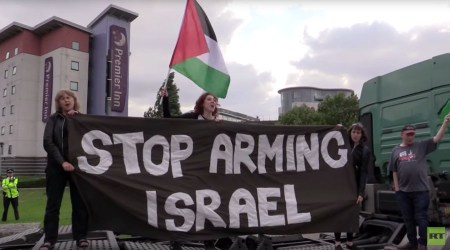
Eight activists are standing trial at Stratford Magistrates Court for disrupting the world’s biggest arms fair, held in London, where deadly merchandise was marketed to repressive regimes such as Saudi Arabia, Bahrain and Azerbaijan.
The campaigners blocked the road leading to the Defence & Security Equipment International (DSEI) in Stratford, London, last September, preventing tanks and weaponry from entering.
The defendants are using a defense of necessity, insisting their actions were justified because they intended to prevent greater crimes taking place around the world.
These include: “The sale of weapons to internally repressive regimes, including Bahrain and Saudi Arabia; the sale of weapons to countries imminently at war and overtly complicit in ongoing war crimes in Yemen, Kurdistan and Palestine; the sale of weapons to regimes that have been widely accused of arming ISIS [Islamic State or IS]; the promotion for sale of weapons that are designed specifically for torture or banned under international law for their capabilities concerning the mass indiscriminate killing of civilians.”
The DSEI arms fair is held every two years in London, and is regularly attended by representatives from repressive regimes. It has also previously provided a platform for weapons dealers to illegally promote arms that are used for torture.
Last September’s event featured stalls from more than 1,500 exhibitors, including arms giants Lockheed Martin, BAE systems, Finmeccanica and others.
Protestors sought to disrupt the fair by locking their bodies together to block access roads outside the Excel Centre, where the fair was held. Several were arrested.
Some protestors, such as Vyara Gylsen – who was arrested after writing a slogan on a military vehicle with a washable marker pen – have since seen criminal charges against them dropped.
The defendants in court this week include Isa Al Aali, a Bahraini activist who was tortured during the Arab Spring uprising in Bahrain.
Green Party activists Angela Ditchfield and Tom Franklin are also among the eight appearing in court.
“The government is supporting and facilitating the sale of weapons that are being used to kill ordinary people, from the West Bank to Yemen and Sudan,” Franklin, 57, of York, said.
“This week we will put the arms trade in the dock and highlight the crimes that the government and the companies at DSEI are complicit in. Arrest arms dealers, not peace campaigners.”
The defendants will be supported by expert witnesses, including former South African MP Andrew Feinstein, who resigned from parliament in 2001 in protest at the government’s refusal to investigate a £5 billion (US$7.12 billion) arms deal.
Amnesty International UK’s Oliver Sprague, who heads up the charity’s arms Control and Policing division, will also give oral evidence, as will Bahrain Institute for Rights and Democracy director Sayed Ahmed, who seeks to improve accountability in the repressive Gulf state.
Last day of demolition order leaves Palestinian family in fear of losing their home
International Solidarity Movement | April 10, 2016
Jerusalem, Occupied Palestine – The 10th of April is the last day of the demolition order on the home of the Totanji family. The family lives in the Sawaneh district in Wadi al-Joz, a village in East Jerusalem near the Old City, which Israel has declared as a ‘National Park’ area. This despite it having always been a residential area. The family received the demolition order over a year and a half years ago, but lost the appeal against the order last month. Today is the last day of the demolition order, which leaves the family fearing that their house maybe demolished tonight.
The house is single-story with 4 bedrooms. However, it is currently the home of 16 people including a 7 month old baby, the granddaughter of the owner of the house. As is the case with other Palestinian families in fear of house demolition, the family does not have any where else to go, and will leave their whole life behind if their house is demolished. Just seven months ago, one of Totanji sons had his house demolished in the same area. This fear of losing one’s home does not just apply to the Totanjis, but also to the rest of the residents in Palestine, due to the huge number of demolitions and demolition orders. In just the last week (31st March-6th April) 14 houses have been demolished in East Jerusalem and the West Bank by Israeli Forces.
Wadi al-Joz is located directly outside the Old City of Jerusalem in a vulnerable area. It is a neighbourhood that suffers from many demolition orders and subsequent demolitions. This is due to Israel declaring parts of the area around the Old City in Jerusalem as a ‘National Park’, to “protect the historical land.” The area covers a huge residential areas containing villages which are already overcrowded including Wadi al-Joz. In addition to the Totanjis, 13 other families in the Sawaneh district in Wadi al-Joz are also in danger of demolition. The information regarding the so called ‘National Park’ was only relayed to these families in the past two years. And whilst Israeli authorities claim that it was declared a park more than 4 decades ago, regardless, this declaration concerning annexed territory is in direct violation of international law.
The family is seeking an international presence to defer the demolition and deter the Israeli authorities. Internationals will be in the house from this evening and for the foreseeable future to prevent the demolition. There is a press conference planned tomorrow morning, 11am on the 11th of April 2016, to announce the opening of a protest tent outside the Totanji family house. The families and the community of Wadi al-Joz invites everyone to attend the protest and to lend coverage to this important event.
Address:
Wadi Al-Joz, neighbourhood of East Jerusalem
Across the Fire Station, behind the Central Market or “Hisbi”
Directions:
From Damascus Gate, follow the Old City Wall towards the Mount of Olives and continue down into Wadi Al-Joz. The home is on a dirt road on the right before you begin to go up the hill to the Mount of Olives. It is about 10-15 minute walk from Damascus Gate. Alternatively, you can drive down from the Mount of Olives past the Ibrahimiya School. The dirt road is on the left at the bottom of the hill just opposite the paved road that goes right into Wadi al-Joz.
Contacts:
Totanji family contact
Aref Tatanji: +972-(0)-508-133-590 (Arabic)
Press conference contact
Nureddin Amro: +972-(0)-525-271-587 (Arabic and English)
ISM media contact
Josephine: +972-(0)-59-740-6401(English)
Further reading:
Background about home demolitions:
House demolitions in International Humanitarian Law (Diakonia)
East Jerusalem: Key Humanitarian Concerns (UN OCHA, August 2014)
The Absentee Property Law in East Jerusalem and Its Implementation: A Legal Guide and Analysis (Norwegian Refugee Council, 2013)
International Day of Solidarity for Palestinian Prisoners – Paris, London, NYC, Toulouse
BDS France Toulouse, Coup Pour Coup 31, NPA31, Collectif Palestine Libre
As of March 2016, there are over 7,000 Palestinians, including more than 100 children, in Israeli prisons, in violation of international law which prohibits an occupying power to imprison in its territory the people of occupied territories.
Since 1967, over 750,000 Palestinians (20% of the total population and 40% of the male population) have been imprisoned by the occupation army. There is no Palestinian family that has been untouched by imprisonment.
 99.74% of Palestinians are convicted by Israeli military courts, the majority of these resulting from forced “plea bargains” (the accused must plead guilty or face a much higher sentence, in a context that they will certainly be found guilty)
Nearly 700 Palestinian prisoners are held under administrative detention, an arbitrary and illegal procedure that allows the Israeli army to detain Palestinians for a period of six months, indefinitely renewable, without charge or trial.
Among the detainees are Palestinian parliamentarians, including Ahmad Sa’adat, General Secretary of the Popular Front for the Liberation of Palestine; Marwan Barghouti, Fateh leader; and several Hamas lawmakers. In April 2015, Khalida Jarrar, member of the Palestinian Legislative Council and advocate for prisoners’ rights, was arrested and sentenced to 15 months in prison. Lawyer and activist Shireen Issawi was convicted along with her brother Medhat Issawi, and sentenced to 4 and 8 years in prison respectively. Medhat Issawi was previosly imprisoned for 20 years!
Palestinian prisoners are subject to torture, sleep deprivation, lack of hygiene and medical care, confinement in tiny cells and sordid, humiliating treatment. A growing number are held in prolonged solitary confinement. Threats, intimidation and denial of family visits are all means of the Israeli occupation to silence the legitimate struggle of the Palestinian people for land and freedom.
Many prisoners went on hunger strike, risking their lives to confront inhumane treatment; for example, Mohammed al-Qeeq ordered to administrative detention in November 2015 and after 94 days of hunger strike, securing his release in May 2016.
As part of the International Day of Solidarity for Palestinian Prisoners, we salute the thousands of Palestinians imprisoned for struggling against the apartheid and ethnic cleansing of their people. We also salute Georges Abdallah, communist activist for the Palestinian cause, imprisoned in France since 1984 for resisting the Israeli invasion of his country, Lebanon.
Let us unite for their release, to end the oldest military occupation in the world, to develop the movement for boycott, divestment and sanctions against the criminal regime of Israel, to demonstrate and popularize the struggle of the Palestinian people.
We demand:
The release of all Palestinian prisoners
The immediate end of the blockade and siege of Gaza
The end of occupation, colonization, and ethnic cleansing of Palestine
The Right of return of all Palestinian refugees
The immediate release of Georges Abdallah
Palestine lives, Palestine will be victorious!
Rassemblement jeudi 14 avril 2016 à 17h30 Square Charles De Gaulle (Métro Capitole).
16 April, Paris: Rally in support of Palestinian Prisoners
Saturday, 16 April
3:00 pm
Place du Chatelet
Paris, France
Facebook: https://www.facebook.com/events/229128724111169/
March via the Boulevard Sebastopol to the Place de la Republique, where we will hold a mass rally to support the 7000 Palestinian political prisoners. We will not forget Georges Ibrahim Abdallah, the great defender of the Palestinian cause, held for 32 years in French prisons at the demand of Israel and the US!
Organizers: CAPJPO-EuroPalestine, Droits Devant, Children of Palestine, Palestine Nanterre, Saint-Ouen Palestine, Friends of Nablus, Collective for the Liberation of Georges Ibrahim Abdallah
16 April, London: Palestine Prisoners Parade
Saturday, 16 April
12:30 pm
Gower Street (Corner of Torrington Place)
London, UK
Facebook: https://www.facebook.com/events/600881743402205/
On the occasion of Prisoners’ Day, we invite you to join us in solidarity with all Palestinians currently languishing in Israeli jails. We will march from Gower street to Trafalgar square along with another march that is being held that day (people against austerity). In keeping with the circus theme that has been used to raise awareness about Abu Sakha, a Palestinian clown currently held in administrative detention, we encourage people to come dressed as colourfully and clowny as you dare! We also encourage as many specific performers as possible (circus artists, musicians, dancers etc). If you have a specific tallent to perform, please get in touch at info@freeabusakha.com or private messaging to www.facebook.com/freeabusakha so we can coordinate the acts.
15 April, NYC: Celebrate resistance before Palestinian Prisoners’ Day
Friday, 15 April
4:00 pm
G4S Office – NYC (19 W 44th St)
Facebook: https://www.facebook.com/events/1042793672451086/
On 17 April each year, Palestinian prisoners, the Palestinian people, and the world mark the International Day of Solidarity with Palestinian Prisoners.
Commemorated since 1974, when the first Palestinian prisoner, Mahmoud Hijazi, was freed in a prisoner exchange with the Palestinian Resistance, 17 April is a day of protests, rallies, marches, forums and more to commemorate the struggle of Palestinians imprisoned in Israeli occupation jails and demand their freedom.
We join with the Palestinian prisoners’ movement in calling on organizations and people of conscience around the world to take action to to express solidarity and call for freedom for Palestinian political prisoners.
Over 7,000 Palestinian prisoners are currently held in Israeli jails. More than 700 of them are held in administrative detention without charge or trial. The others face military courts which convict over 99% of the Palestinians that appear before them. Over 400 Palestinian children as young as 12 years old are held in Israeli prisons.
Every night, Israeli occupation forces conduct violent armed invasions of Palestinian villages, cities, refugee camps and homes, ransacking them and arresting dozens of Palestinians. This comes amid near-daily killings and extrajudicial execution of Palestinians by occupation forces, the demolition of the homes of the families of Palestinian prisoners, new racist laws targeting Palestinians who hold Israeli citizenship, and further escalating repression.
International action has seen some response: G4S, the British-Danish security corporation targeted for a global boycott because of its role in providing security systems, control rooms and equipment to Israeli prisons, has announced it is selling off its Israeli subsidiary and leaving the market entirely. However, it’s critical to keep the pressure on G4S until their equipment and security systems are no longer being used to imprison Palestinians, block their movement at checkpoints, or besiege Gaza.
G4S doesn’t only profit on the imprisonment of Palestinians, of course. Black student movements at Columbia University, the University of California and Cornell University have led in building campus boycotts and divestment against G4S because of its role in private imprisonment in the United States, especially of youth, and have won significant victories. Organizing with movements confronting imprisonment and racist oppression, including the Black movement and the prison divestment movement, is particularly crucial in confronting common oppressors.
Palestinian Prisoners’ Day this year also comes amid international repression of Palestinian organizing – for example, the attacks on BDS in France and the arrest and prosecution of BDS activists – and the imprisonment and persecution of Palestinians and fellow strugglers in international prisons, as in the cases of Georges Ibrahim Abdullah, the Holy Land Five, and Rasmea Odeh. Confronting racism and oppression of all forms comes hand in hand with confronting Zionist settler-colonial racism in Palestine.
After a regular, weekly protest of G4S on Friday, join Samidoun Palestinian Prisoner Solidarity Network as we rally with CUNY Prison Divest and NYC Students for Justice in Palestine on Sunday, 17 April to demand freedom for Palestinian political prisoners and an end to private, for-profit incarceration in the United States:
Israel connects BDS with terrorism while cracking down on German banks
RT | April 10, 2016
Israel’s Public Security Minister has linked the Boycott, Divestment and Sanctions (BDS) movement with terrorism and is threatening German banks using tactics previously employed against Al-Qaeda.
Netanyahu-appointee Gilad Erdan has threatened to coerce German banks to prohibit BDS activists from fundraising through their accounts, not through Israeli legislation, but the laws of other countries where Erdan has “increased awareness among decision-makers in Europe and North America of the anti-Semitic, anti-democratic, and discriminatory nature of the BDS movement, which seeks Israel’s destruction and often has ties to terror-supporting organizations.”
To bring about this “increased awareness,” a taskforce headed by Erdan was launched last year at the cost of 100 million Israeli shekels ($25.5 million) that has been successful in impacting the laws, policies, and enthusiasm for enforcement in a number of countries, particularly the US and UK, where a number of anti-BDS restrictions have employed “anti-democratic” and “discriminatory” methods to clamp down on the movement.
Erdan’s Friday statement in the Jerusalem Post urged the banks to “carefully consider the potential legal, reputational, and ethical consequences of facilitating the activities of BDS groups.”
In response, the bank’s spokesman said “We expressly point out again that Commerzbank adheres to the applicable compliance guidelines and regulations regarding the conduct of an account.”
Ironically, while Erdan is threatening BDS activists with one set of laws, the global grassroots movement is actually trying to pressure Israel to “comply with international law” through the boycott of products and companies that profit from the violation of the rights of Palestinians, particularly violent land grabs.
Inspired by the BDS movement that helped end South African apartheid, supporters of this campaign, which includes Jewish activists contrary to the accusations of anti-semitism, believe it is the only way to push for a solution to the Palestinian-Israeli conflict.
Here are the countries Erdan is counting on to be Israel’s enforcers in its global crackdown on the “terrorist” boycotters.
US
Legislation has been introduced at local, state, and federal levels targeting BDS movements.
At least 16 anti-BDS initiatives were introduced in the US in 2015, including the Trade Promotion Authority legislation that discourages European governments from taking part in BDS activities by threatening to cut off their ability to engage in free trade with the US.
Illinois passed an anti-BDS state law that created a blacklist of foreign companies from which the state pension must divest its funds. South Carolina bans state business with companies engaged in boycotts.
Other anti-BDS bills have been introduced in Congress, New York, New Jersey, and Pennsylvania. New York state currently has legislation on the table, just in time for the New York primary, that would ban state business with companies involved in boycotting Israel, including international banks.
Canada
Earlier this year, Canada passed a motion condemning “any and all attempts” to promote BDS. The country’s new leader Justin Trudeau said the movement had “no place on Canadian campuses” and fully supported Israel’s 2014 Operation Protective Edge against Gaza, despite his “liberal” outlook.
UK
The UK recently banned local authorities and public bodies from participating in BDS. This includes councils, universities, and student unions. The move was welcomed by Conservative MP Eric Pickles who said the BDS movement was an attempt “by the irresponsible left to demonize Israel.”
The UK has had its fair share of BDS victories in the past. Leicester City Council adopted the boycott policy in 2014 along with the National Union of Students the following year.
France
BDS is banned in France as part of a general law that classifies the boycott of a nation or its citizens as a hate crime. It is illegal for councils or legal bodies to boycott Israeli goods.
Last November, a small group of French activists were found guilty of provoking discrimination after holding a small rally calling for the boycott of Israeli goods. They were sentenced to pay €12,000 in damages to the plaintiffs, as well as legal fees.
Germany
While Germany doesn’t have a specific law banning the BDS movement, DAB Bank in Munich announced in February that it would cancel BDS-Kampagne’s account as of next week. DAB is owned by French BNP Paribas.
‘UK firm helps Israel kill Palestinians’
Protesters slam UK firm over profiting from Israeli war crimes
Press TV – April 9, 2016
Scores of pro-Palestinian activists in the UK have demonstrated outside the headquarters of an arms manufacturing company, accusing it of benefiting from Israel’s deadly crackdown against Palestinians.
The protesters gathered in front of the UK headquarters of aerospace manufacturer Thales, in Crawley, on Friday and expressed their anger against the company’s partnership with Israel’s Elbit Systems to develop a surveillance drone, nicknamed Watchkeeper, used by the regime against Palestinians.
The rally was held by the Sussex Stop Arming Israel campaign and was supported by other human rights groups, including the Inminds. The main messages of the protest were “Stop Arming Israel” and “Thales profits from Israeli war crimes.”
“Thales UK has a billion pound contract with Israel’s largest arms company Elbit Systems to develop a fleet of drones. Human Rights Watch has documented [the drones] as being used by Israel to deliberately target Palestinian civilians in Gaza,” said Inminds chair Abbas Ali.
“It’s sickening that Elbit markets this killer drone as being extensively ‘field tested’ in ‘real life’ situations — using the slaughter of Gaza’s people as a marketing ploy to gain a competitive advantage,” he added.
The Watchkeeper drone, which is produced through a joint venture dubbed UAV Tactical Systems, is modeled on Elbit’s Hermes 450, a UAV that has been used in action by the Israeli military. According to the Sussex group, the drone is developed under a contract awarded by the UK’s Ministry of Defense.
Thales UK is a subsidiary of the French company Thales, and is currently considered as the UK’s second largest military company.
Tel Aviv is under fire by rights groups for its indiscriminate attacks against Palestinian civilians. In one instance of Israel’s brutality, at least 2,140 Palestinians, including 557 children, lost their lives during the regime’s offensive against the Gaza Strip in the summer of 2014.
The aggression also left 11,100 Palestinians wounded, including 3,374 children and 2,088 women, and displaced over 170,000 others.
Featured Video

Genocide-linked firm handles Britons’ NHS data
or go to
Aletho News Archives – Video-Images
New Documentary
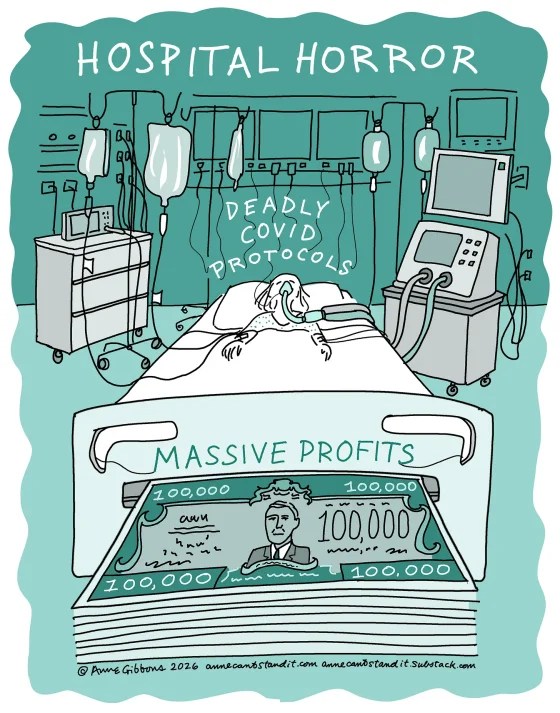
Hospital Horror
Documented in the film,“Bad Medicine”
Blog Roll
 Aletho News
- US rewrites history to dodge blame for illegal war on Iran: Foreign Ministry spokesperson
- TURBO CANCER DATA from Ontario, Canada (OHIP Insurance Billing Data)
- Iran warns France not to fall for Israeli false-flags operations
- Poland and Bulgaria put brakes on Ukraine weapons funding
- Russia Reaffirms Its Support for Sovereignty, Territorial Integrity of Lebanon – Russian MFA
- Araghchi: Failure to punish aggressors against Iran endangers all nations
- Iran tells UN Security Council to stop reversing roles of ‘aggressor and victim’
- Disgraced neocons Feith & Libby: stop whining about ‘endless war’
- CENTCOM rejects Israeli claims of preparations for new Iran attacks
- Your Shopping Bag Runs Through Hormuz
- If Americans Knew
- An error has occurred; the feed is probably down. Try again later.
- No Tricks Zone
- New Study: Barents Sea Temperatures Were Warmer And Sea Ice Less Extensive In The 1700s Than Today
- German Authorities Start Initiative To Evaluate Public Register For Climate “Disinformation” Spreaders!
- Zonal Asymmetry of Temperature Change in the Antarctic Circumpolar Current
- New Study: The Net Fossil Fuel Contribution To Rising Atmospheric CO2 Has Been Zero For 500 Years
- Germany’s Green Energy Transition Becoming Increasingly Expensive…Another 6 Trillion Euros!
- Sudden Stratospheric Warming, Powerful El Niño Combination May Lead To Extreme Europe Cold, Energy Crisis!
- Two New Studies Find Thwaites Glacier Melt Cannot Be Driven By Human Activity Or A Warming Ocean
- E-Cars Reduce CO2 Emissions By Only 41% Compared To Internal Combustion Engine Vehicles
- Predictions Made By Renowned Climate Professor Over Past Decades Have Been Proven To Be Poor
- New Study Suggests Large Regions Of The Pacific Ocean Have Been Cooling For The Last 80 Years

