AL-KHALIL (HEBRON): Twenty years of CPT Palestine in photos
CPTnet | July 18, 2015
This summer marks the twentieth year of Christian Peacemaker Team’s presence in Palestine. While that does not seem to be a reason to celebrate, we do feel we should mark the occasion.
|
|
|


|


Iranian fencer refuses to take on Israeli opponent at world event

Press TV – July 15, 2015
Iranian fencer Taher Ashouri has refused to take on his Israeli opponent at the 2015 World Fencing Championship currently under way in the Russian capital city of Moscow.
On Tuesday, the 23-year-old Iranian sportsman prevailed over Kazakhstan’s Dmitriy Alexanin and Latvian competitor Tomas Makarovas in his first two contests of men’s senior épée section at Moscow’s famous Olympic Stadium sports complex.
Ashouri, however, conceded defeats against Finnish, South Korean and Swedish representatives, Kasper Roslander, Na Jongkwan and Christian Gustavsson, in the three following matches.
The Iranian fencer then refused to fence in an encounter with the Israeli opponent, Ariel Drizin, in the next round, and was subsequently given a ban by the sports governing body and excluded from the rest of the contest.
The épée is the modern derivative of the dueling sword used in fencing.
The 2015 World Fencing Championship started in Moscow on July 13 and will run until July 19. Some 912 fencers from 108 countries are competing in the event to win a title of champion and, equally as prestigious and important, to qualify for the 2016 Summer Olympics in Rio de Janeiro, Brazil.
David Cameron calls for escalation of UK wars at home and abroad
Cameron plans to extend UK involvement in the wars raging in Iraq and Syria, while mounting an hysterical attack on British Muslims.
By Chris Nineham | Stop the War Coalition | July 13, 2015
Last week’s hike in the military budget was not symbolic. Today David Cameron has proved he wants to take Britain back to a lead military role in the Middle East.
He has called for a ‘fresh assault on Isil’. As the extra 2.5 billion pounds voted for the military in the budget kicks in, he has called on the top brass to organise more SAS troop deployments, drone attacks and RAF bombing missions, not just on Iraq, but in Syria too, despite the parliamentary vote in 2013 explicitly ruling out such an attack.
David Cameron makes the extraordinary claim that his experience over the last five years has proved that drone attacks, spy plane flights and special forces are ‘vital in keeping us safe’. But this is precisely the period which has seen the emergence of Isis and constant warnings from the government about the growing threat of terrorism.
The whole history of the ‘war on terror’ suggests in fact the precise opposite. From the attack on Afghanistan in 2001 to the invasion of Iraq two years later and the Cameron lead assault on Libya in 2011, the war has devastated the Middle East and beyond, creating a series of failed states in which violence has flourished.
Since 2001, jihadist organisations have been able to spread from isolated pockets in Central Asia to a vast swathe of the world from Pakistan through the Middle East and into sub-Saharan Africa.
Last time the British people were being asked to back attacks on Syria, it was to support an (illegal) attempt to remove President Assad. Though Cameron was stopped by popular and parliamentary pressure, continued Western intervention in Syria and the renewed bombing of Iraq have plunged the region further into chaos. Infrastructure, both political and physical, has been further pummelled.
The West’s main allies in the conflict, Saudi Arabia, Qatar and Turkey, have been backing violent jihadist groups in Syria for years, including al-Qaida affiliate Jabhat al-Nusra. The outcome has been a catastrophic unravelling of whole societies. In the words of Patrick Cockburn :
‘In both countries, the collapse of central government has exposed and sharpened differences between arab and kurd, Sunni and Shia, Muslim and Christian, secular and religious. And as Syrians and Iraqis live in a permanent state of war,, these differences are almost always settled violently’.
Now, our government wants to intervene on the opposite side, attacking one of the horrific forces that the West’s policies have helped conjure up. Forget the promises that bombing Iraq or Syria would not lead to further military involvement. Today’s open commitment to deploying special forces is not mission creep, its a brazen admission that Cameron wants to go back to full spectrum war in the Middle East.
The terrifying thing is that in this context, failure to learn the lessons of history will not just lead to repetition, but to a cycle of violence that threatens to consume whole regions of the world.
And this is a war abroad that will be accompanied by hysterical attack on the Muslim population at home. If the only foreign policy they can conceive of is escalating violence, domestically they can’t see beyond threats, intimidation and scapegoating.
In an utterly depraved move, the government have accompanied claims that unidentified Muslims who won’t condemn Isis are driving people into their hands with youtube footage showing the carnage created by British bomb attacks in Iraq. Apparently this is supposed to scare young Muslims from joining Isis. It is more likely to look like bringing the war home.
Worryingly, it looks like the Labour leadership is set to fall in with this march to war. The party’s acting leader, Harriet Harman, has been invited to a high-level security meeting on Isis on 14 July 2015. ‘Indications’ have been made that Labour is re-thinking its position on attacking Syria.
In 2013 anti war opinion and protest derailed Cameron’s war plans. Now, Jeremy Corbyn’s Labour leadership campaign takes on a new significance, but campaigning against a new front in Britain’s war in the Middle East has become a matter of urgency.
Russia: Iran to join SCO after sanction lifted
Press TV – July 8, 2015
Iran will join the Eurasian economic, political and military bloc, the Shanghai Cooperation Organization (SCO), after sanctions are lifted on the country, a Russian presidential aide has said.
The announcement came after foreign ministers of the organization met ahead of a summit by SCO and BRICS leaders in the Russian city of Ufa.
“The Iranian application is on the agenda for consideration. Sooner or later, the application will be granted after the UN Security Council sanctions are lifted,” Interfax quoted Russian presidential adviser Anton Kobyakov as saying.
Iran and the P5+1 group of world countries are currently involved in make-or-break talks in order to reach a nuclear agreement which would have sanctions lifted on Tehran.
Russian Foreign Minister Sergei Lavrov told Interfax that the removal of a conventional arms embargo on Iran is a “major problem” in the negotiations.
“I can assure you that there remains one major problem that is related to sanctions: this is the problem of an arms embargo,” he said in Vienna.
Iranian President Hassan Rouhani will head to Russia on Thursday to participate in the summit of SCO and BRICS nations.
Iran has an observer status on SCO, awaiting the removal of sanctions to become a full-fledged member.
SCO currently consists of China, Kazakhstan, Kyrgyzstan, Russia, Tajikistan, and Uzbekistan. Kobyakov said the organization has received 11 new applications for membership, including from Egypt.
Russian officials have said India and Pakistan will join SCO as full members after years of holding observer status as Prime Ministers Narendra Modi and Nawaz Sharif will join regional leaders in Ufa.
The Iranian president will attend the BRICS summit of Brazil, Russia, India, China and South Africa as a special guest and will also deliver a speech to the event.
The BRICS accounts for almost half the world’s population and about one-fifth of global economic output. Its New Development Bank is seen on course to challenge the dominance of US-led World Bank and International Monetary Fund.
Hillary Clinton says BDS campaign in US seeking to ‘delegitimize Israel’

Press TV – July 7, 2015
Democratic presidential hopeful Hillary Clinton has censured growing anti-Israeli movements in the United States, saying the Boycott, Divestment and Sanctions (BDS) campaign wants to “isolate and delegitimize Israel.”
The former secretary of state called for suggestions to fight the movement in a letter to Democratic donor Haim Saban and Jewish organization leaders.
“I know you agree that we need to make countering BDS a priority” and to “fight back against further attempts to isolate and delegitimize Israel,” she wrote.
“BDS seeks to punish Israel and dictate how the Israelis and Palestinians should resolve the core issues of their conflict,” she said.
The former first lady also described the campaign as “counterproductive.”
“From Congress and state legislatures to boardrooms and classrooms, we need to engage all people of good faith, regardless of their political persuasion or their views on policy specifics, in explaining why the BDS campaign is counterproductive to the pursuit of peace and harmful to Israelis and Palestinians alike,” she said.
The BDS campaign, which began in 2005, encourages organizations and institutions such as universities and churches to divest from Israel until the fundamental rights of the Palestinians have been recognized.
The boycott campaign called for “various forms of boycott against Israel until it meets its obligations under international law.”
In 2013, two US academic groups — the American Studies Association and the Association for Asian American Studies — supported the boycott.
The movement received backing from one of the largest Protestant churches in the US last week.
The United Church of Christ’s general assembly voted overwhelmingly in favor of divesting funds at its synod in Cleveland.
Clinton also expressed her complete support of Israel if she gets elected president next year.
“Time after time I have made it clear that America will always stand up for Israel — and that’s what I’ll always do as president,” she said in the letter.
Gaza war anniversary: ‘Aggressive’ UK police arrest 8 at Israeli arms factory protest

RT | July 6, 2015
Staffordshire Police have been accused of making a “heavy-handed” intervention during a protest outside an Israeli arms factory organized to mark the anniversary of last year’s Gaza conflict.
At least eight people were arrested Monday during the demonstration outside a factory in Shenstone, which is owned by a subsidiary of Israeli defense contractor Elbit Systems.
An activist with London Palestine Action, speaking in personal capacity, told RT that the demonstration was meant to be a “fun, creative” experience, but was met with “aggressive [and] forceful police tactics.”
Campaigners estimate 200 people attended the protest near Birmingham, which was the site of a similar blockade in August 2014.
The protest was timed to mark the one-year anniversary of start of the Gaza conflict. Activists held a memorial service for the 2,200-plus Palestinian victims, 490 of whom were children.
Protests were also held in Tamworth and Broadstairs in the UK, and Melbourne in Australia.
Shenstone protesters targeted the UAV Engines factory where engines for Hermes, one of Israel’s primary armed drones, are manufactured.
Drones owned by the Israeli Defense Force (IDF) may have been used in attacks that resulted in civilian deaths and violated international law, according to reports by Human Rights Watch and The Guardian.
A variety of campaign groups including War on Want, Campaign Against the Arms Trade and the Palestine Solidarity Campaign united under the umbrella movement “Block the Factory” to organize the day of action.
Protesters posted videos on Twitter indicating a heavy police presence. At one point, a police officer is seen dragging a man holding a megaphone out of a crowd and arresting him.
Speaking to RT, activist Alex Levan, 31, said organizers had intended the protest to be peaceful.
“There were lots of police from early on,” he said. “They were very rough, they manhandled protestors, [and] they were very heavy-handed.”
“The idea was to reclaim the space around the factory and to turn it into a real festival environment, a creative activist environment with workshops, with a family space, with arts and crafts.”
“But the police were heavy-handed, they’ve made at least 10 arrests, but there will probably be more. These were completely unprovoked arrests, these were peaceful protests,” he added.
“But we did spend the majority of the day, from the early hours of the morning, blocking the factory.”
The protest succeeded in halting factory production for the day.
Activists called on the British government “to initiate an immediate two-way arms embargo – to stop arming Israel and to stop buying weapons from Israel.”
The Hermes, which is partly produced in the UK, carries two Spike-MR (medium range) missiles, which are produced by Israeli firm Rafael Advanced Defense Systems.
It can stay airborne for up to 24 hours at altitudes of up to 18,000 feet (5,486 meters) and is equipped with optical, infrared and laser sensors that enable it to identify and track targets.
Human Rights Watch claim to have found evidence Spike missiles were used against two Red Cross ambulances during Israel’s conflict in Lebanon in 2006.
Six medical workers and three patients were injured in the attack. The Geneva Convention forbids armed forces from targeting medical staff or hospitals.
Staffordshire Police Chief Inspector Steve Smith said: “At Tamworth this morning, a number of individuals climbed onto the roof of a factory building as part of a protest. All seven voluntarily came off the roof. Police officers then directed them to leave the area under public order legislation. No arrests were made.
“At Shenstone, a number of protesters locked themselves to fencing and others blocked the road. A civil injunction is in place around this location so police have the power to arrest anyone breaching this injunction.
“So far eight people, seven men and one woman, have been arrested on suspicion of breaching a high court injunction.”
Protest commemorating one year anniversary of the killing of Mohammad Abu Khdeir met with military violence
International Solidarity Movement | July 3, 2015
Ramallah – On July 2, 2015, in honor of the first anniversary of the murder of Muhammad Abu Khdeir, Palestinian activists with international supporters blocked a settlers-only road leading to the illegal Adam settlement. Demonstrators cited this road as the road that the murderers took in their search for a Palestinian victim. Journalists, Palestinian and international activists, suffered from pepper spray burns and several were hospitalized.
“This is the first in a week of demonstrations for Muhammad Abu Khdeir. One of the murderers, Yosef Haim Ben-David, is from the Adam settlement. This is why the demonstration was held at this settlers-only entrance,” said Abdullah Abu Rahmah, the coordinator of Popular Committee Against the Wall and Settlements in Bil’in.
Demonstrators blocked the road to settler traffic in both directions until the Israeli Army and Border Police dispersed the non-violent demonstrators and journalists by pepper-spraying indiscriminately. Three Palestinian activists, four journalists, and two International ISM volunteers were pepper sprayed in the eyes and mouth by a masked Army officer. An ISM co-founder as well as journalists from Roya TV Channel, Reuters, and Palestine TV were severely pepper sprayed in the eyes requiring hospitalization.
The soldiers threw sound percussion grenades at demonstrators and chased people. In addition to the pepper spray, they shoved journalists and Palestinian activists to the ground.
After the soldiers and border police chased the demonstrators off the road and down a hill, they continued to throw percussion grenades even as the demonstrators stood at a distance waiting to find fellow demonstrators.
Freedom Flotilla: ‘Tasering my friend Charlie was an act of terrorism’
By Richard Sudan | RT | July 1, 2015
Despite the Israeli authorities’ claims that the seizure of a Freedom Flotilla boat was ‘uneventful’, footage has emerged that indicated that they tasered a Swedish aid worker.
The boats making up Freedom Flotilla 3 (FF3) have been prevented from reaching the besieged people of Gaza and deliver humanitarian aid. The flotilla’s flagship Marianne was boarded by the Israeli military and taken to the Israeli port of Ashdod earlier in the week. By now, some of the crew members have been released, while others remain detained.
Meanwhile, the boat I was meant to be on has not yet left a Greek port. It will head to Gaza at some point. I have been asked not to publish the details. But we will go.
The Israeli authorities claim that their soldiers were ‘non-violent’ as they took over the Marianne, which amounted to an illegal act of piracy, as the vessel was in international waters at the time it was intercepted. The Israeli authorities claimed that there were no injuries when they seized the boat which they had no right to do, legally or morally. The illegal act has been described as ‘uneventful’.
Unsurprisingly though, footage has emerged which shows that the opposite is true. The video shows Arab member of the Israeli Knesset (parliament) Basel Ghattas, who I had long conversations with on my trip, first addressing the Israeli Navy before the soldiers boarded the Marianne. The footage then shows Israeli Navy thugs repeatedly tasering Swedish activist and humanitarian aid worker Charlie Andreasson.
Charlie has spent much time in Gaza. He’s a really nice guy and a genuine individual, the kind of selfless character you meet when preparing for a campaign like this. I had the pleasure of talking with him many times as we prepared for Freedom Flotilla 3, and ate dinner with him just a few days ago.
I watched the video of Charlie being tasered and knew it was him before I even read the article.
It was a sickening feeling. According to Oxford dictoniaries.com a taser is ‘a weapon firing barbs attached by wires to batteries, causing temporarily paralysis’. In reality though, tasering is an extremely violent act which can even cause death. There are campaign groups which lobby against the use of tasers by police for this very reason.
But this is how Israel routinely behaves. In typical fashion the Israeli leadership has sought to distract attention from its own crimes. Netanyahu wrote a letter published in the press and delivered to the activists on the boat. He says they must have gotten lost and perhaps should have headed to Syria. He exploits one tragedy to cynically justify another.
And here he does it again, suggesting that Israel is a beacon of light, justice, surrounded by hostile neighbors in the Middle East trying valiantly to uphold those oh so cherished values we hold dear. You can almost hear the harps playing and the angels singing when you read the letter his press office wrote for him on his behalf. He invites the readers to be “Impressed by the only democracy in the Middle East”.
Well Benjamin, we invite you to go to Gaza and to see what Israel’s democracy looks like if you happen to be a Palestinian and born in Gaza. He says that the leadership in Gaza is “using children as human shields.” Perhaps this comment is written by Netanyahu’s office to deflect attention from the fact that Israel killed hundreds of Palestinians last year including many children, and has done so since 1948.
Netanyahu claims that the people on the flotilla were bringing weapons to Gaza. This is false and nothing but an attempt by Israel to save face in the wake of yet another act of piracy committed at sea. They have to say that we are terrorists, because as it is, the world forming a much clearer picture as to the true extent and nature of Israel’s war crimes.
I’ll end here with a story that Charlie told me once when we were sitting down talking, in the company of two other activists.
Charlie told of a time he was in Gaza, and saw a young man shot by an Israeli soldier, possibly a sniper, as they found themselves under attack as is routine in Gaza.
Charlie and whoever else was there couldn’t help the Palestinian man as they were still being shot at. They had to watch him die, unable to reach him as he lay just a few feet away. They then had to inform the father that his son was dead-while the body of his son still lay in the road, unable to be recovered. The boys’ father thanked them.
I’ve never even seen the image of this happening, but yet I can’t shake it from my mind. Charlie is a brave person and didn’t deserve the treatment he got by the Israeli navy.
The Israeli soldiers are brainwashed and carrying out the work of Netanyahu’s war criminal regime. The sooner people wake up to this the better.
Richard Sudan, is a London based writer, political activist, and performance poet. Follow him on Twitter.
‘Donbas is Returning to its Russian Roots’
By SERGEI BARYSHNIKOV | CounterPunch | July 1, 2015
The following is the transcript of a talk by Sergei Baryshnikov, professor of political science and former rector of the National University of Donetsk in the Donetsk People’s Republic. The talk was delivered on April 16, 2015 to a group of foreign writers and journalists visiting Donetsk at the invitation of the Russian/German media NGO ‘Europa Objektiv’. The transcript includes answers to questions from the audience. Translation and editing by NewColdWar.org.
***
During the events of spring 2014 [in eastern and southern Ukraine] known as the ‘Russian Spring’ (a metaphorical name first used by a Russian journalist), intellectuals in Donetsk, especially those in humanities studies, did not participate actively. Active participants could be counted on the fingers on one hand.
From the vantage point of classical theory, it is still difficult to explain the class or social character of these events. None of the classical theories proved with a suitable explanation.
As we look back today, one year later, there were two social forces driving events forward. One was young people with different professional backgrounds, including high school students, university students and unemployed youth. These were the most active participants due to their unstable social situations. The second was people of the so called third age–the elderly. These two polar groups were the most active, driving forces of the Russian Spring in Donbas.
Initial responses to the rise of the Euromaidan movement in Kyiv
The first timid and not well organized attempts to offer an alternative to the Maidan movement that was already a fact in Kyiv took place in November/December of 2013. At the time, we did not yet fully understand the degree of the threat emanating from Kyiv. We hoped that President Yanukovich would be a more firm and adequate leader. But after the beginning of the new year, during the first weeks of January, the picture became clearer. Authorities in Kyiv were reacting less and less adequately to events.
The starting point of our consolidation here was the 25th of January, 2014. On that day, activists of several dozens of organizations, not large, rather marginal by their size and influence, created the movement called anti-Maidan. Regardless of some contradictions and disagreements within the ‘pro-Russian’ movement here in the east of ex-Ukraine, including that each leader wanted to be the chief, common ground which united all was found. This was based on the ideological and political rejection of those values that were being promoted under the slogans of Maidan.
The first occasion of direct action was on March 1 when opponents of the self-proclaimed government in Kyiv gathered at the central Square in Donetsk city named after Lenin. They gathered at the fountain (then not working due to the winter season) wearing St. George ribbons as a distinctive feature of the pro-Russian movement. Some stayed at the square and continued with the rally while the most active ones headed in a column towards the regional administration building. There, authorities were trying to organize their own rally, neither in support of Kyiv nor in support of the outraged masses. They tried to maneuver and survive in the difficult situation that came to be. The rally was organized by former leaders from the Party of Regions and the former governor. All official representatives were there – representatives of the church, social organizations, and so on.
It was during the rally at Lenin Square that Pavel Gubarev was proclaimed people’s governor. The most active participants there were small networks such as the Donetsk Republic, Russian Bloc, the South-East Movement and, a little later, the Eastern Front, Donbas Rus’, the Patriotic Forces of Donbas and so on. We marched in columns with Andrey Purgin, one of the leaders of Donetsk Republic. Many people carried Russian flags or self-made banners. The main slogans were: ‘Russia’, ‘Putin’, ‘Referendum’.
There was also a slogan about federalization. With time, that slogan vanished because even then it was clear that any ‘federalization’ would be with the puppets in Kyiv who had seized power.
Why ‘Russia’, ‘Putin’, ‘referendum’? Because here we were all really inspired by the example of Crimea. We hoped that we would also organize such a quick referendum.
We basically drowned out the organizers of that official rally on March 1 because we were more numerous and because the ordinary people that were brought to the official rally joined us and began rallying under our slogans.
Demands for election, referendum
The referendum question for us was one of the most important ones then. We wanted to obtain approval from the Donetsk Regional Council/ deputies to hold a referendum, like the one held in Crimea. We counted on the deputies’ support because we thought that if they represented the interests of people or territorial community of the Donetsk Region, then they must listen to and support people’s demands.
Unfortunately, none of them turned out to be ready to take the people’s side. That’s why we began putting forward our own leaders, in place of relying on deputies who proved incapable of rising to the occasion.
The whole power structure was paralyzed and that’s why it was not capable of using force against the protestors during those first days. Essentially, Donetsk became one permanent rally. Every day, during weekdays and weekends, people would come to Lenin Square for rallies. There were tens of thousands of people. It was a scale of activism I have never seen ever before.
Not a single participant of the rallies and meetings was armed. It was a peaceful, mass, civic protest. But Kyiv authorities had more or less settled in and become stronger over time and they did not wish to hear or notice us. They used the most primitive and ineffective methods of repression – terror. Those who rose as leaders during March were arrested, including the previously mentioned Pavel Gubarev (a former student of mine and a graduate of the Faculty of History, he has three young children) and Mikhail Chumachenko (my good friend).
Later, these two were freed through a prisoner exchange and returned after the Donetsk People’s Republic was formed. However, during those days, their destiny was an example of what could have happened to any of us, that any of us could have been administratively punished or repressed by the authorities.
The culminating point of this first stage of the development of the events was the night of April 6-7, when people lost hope in the capabilities and willingness of the authorities to negotiate and hold peaceful dialogue. For the third time since March 1, they entered the building of the former state regional administration. This time for good.
Donetsk Peoples Republic
Myself, I did not take part in these events in the late evening of April 6 because by request of Purgin, I was preparing for a meeting that would take place on April 7 with a representative of the Organisation for Security and Cooperation in Europe, to whom I was to explain our position, our issues and our version of events. This was a political-diplomatic mission.
After that meeting with them, around 12 pm, I entered the building and saw a picture of mass, revolutionary activity. There were young soldiers of the internal security forces with frightened faces who were huddling on the staircases. No one hurt them and they realized that it was useless for them to do anything.
At 12 pm, elections took place, based on the decisions made during rallies by the participants of the first revolutionary authority, which was first called People’s Council and later renamed Supreme Council. And this People’s Council of approximately 150 people proclaimed the Donetsk People’s Republic.
During the overnight and early morning of April 7, in accordance with international legal acts and other documents, the declaration of independence of the DPR was drawn up and proclaimed. This is how the first political, institutional representative organ of the self-proclaimed republic began its work.
Development of the DPR
In April, our events began attracting attention. Political activists and leaders began appearing here who, in Ukraine, expressed support for developing relations with Russia and the Eurasian Economic Union. One of the most prominent figures who got ambiguous reactions from the activists of the first wave was the then-deputy (not any longer) of the Supreme Council of Ukraine (Verkhovna Rada), Oleg Tsarev. He became a prominent figure in April. Tsarev’s situation was a little ambiguous, because he is not from Donetsk region but from the neighbouring Dnepropetrovsk region.
It was unavoidable that people began appearing from other regions or other places because the Party of Regions and its leaders had fully discredited themselves as politicians and people’s servants. The visitors tried to become prominent figures and even lead the protest movement here.
Konstantin Dolgov showed a lot of interest. He is from Kharkov. Representatives of Kharkov came here regularly, as did representatives of large southern centres, including Nikolaev, Kherson, Crimea and, until their tragic events in May, Odessa.
Gradually, a common political course of the young DPR developed. It is still in the stage of development.
The process of forming political and government structure here turned out to be very long and uneasy. There was lack of experience and a lack of true leaders with sufficient charisma and capability for serious, positive action. It is a problem when people are active and there is an absence or lack of true leaders. It is still a serious problem. That is why support from Moscow and Russia was very important to us. But only political and ideological support, not military.
In May, also due to lack of experience, we didn’t stop Kyiv’s landing operation in the airport area. (Maybe we couldn’t have stopped them, regardless of the lack of experience.) Military action started in Donetsk itself. Even earlier, as of April 12, in the north of Donetsk region, military actions started around Slavyansk, Kramatorsk, and then Druzhkovka. Gradually, the DPR was being drawn into military confrontation.
The events at Slavyansk are associated directly with the name Igor Strelkov, who was at that moment the most known and most popular military leader. However, he didn’t have the necessary experience, he is mostly a theorist-idealist, not a politician or military. I, for example, would never take on leadership in a military campaign because I am also a theorist-idealist. I can only lecture or give talks and make speeches.
Reactions at the university
All this time, the DPR didn’t have enough time to reach out to higher educational institutions. Even though at the end of May, beginning of June, I tried explaining to Purgin that we needed to enter the university and take control because students could potentially rally to either side–Kyiv or the Donetsk people. It would all depend upon what DPR could offer them and how it could show itself. But no one would listen to me. Everyone was occupied with other issues, they didn’t have time for this.[1]
During June-July the situation would exacerbate with each day. Unexpectedly for us, Igor Strelkov and his military forces withdrew from Slavyansk and came here to Donetsk. Along with the insurgency troops and their families and wives came refugees. In the beginning of July, they inhabited the whole of the university residencies.
The previous university authorities could do nothing better than to call upon all professors and university staff to leave for ‘vacation’, in other words leave the city.
The shelling of the city began from the other side of the airport, an area that we missed and were not capable of forcing out the paratroopers of the Ukrainian Army. They began getting on our nerves and getting in the way of everything by shelling even some areas in the centre of the city.
But the technical staff of the university–workers, mechanics, plumbers and janitors–continued to work here all this time. The infrastructure of the university, which is a complex unit, had to be maintained.
(Professor Baryshnikov explained more of how the university functioned during the summer of 2014, including how he came to be appointed rector.)
The staff that worked throughout the whole summer didn’t get a penny of their wages for July, August and September. For three months, people didn’t get any pay. Only in October did we manage to get funds, but we could not pay salaries, only social allowances of some two, three or four thousand hryvnia [in the few hundreds of dollars]…
Today, we are transitioning to a dual currency system of rubles and hryvnia. Our students have begun getting their first bursaries. We are gradually entering, de facto, the Russian financial and economical space. This is more important, even, than our international recognition. Even though we are waiting and hoping that soon we will be both officially and legally recognized. But in order for this to happen, we need to strengthen our potential and expand our borders to those administrative borders that Donetsk Region previously had.
The Minsk ceasefire agreement of February 12, 2015
The agreement is not being respected either way. There wasn’t a day when its conditions were fulfilled. Primarily, it is the Ukrainian side which is failing to do so.
We are inevitably committed to expansion to regain the historic territory of Donetsk and Lugansk presently occupied by Kyiv forces… I want you to understand and pass on to your readers and your audiences that the objective picture, the objective reality, forces us to begin the liberation of those territories. You can call that expansion, but we must do it.
We need to control our water resources, which are in our north. We have deposits of salt, a strategic product which will help us enter not only the Russian market but the world market. The Severskiy Donetsk Channel supplies our whole former territory with water, and near Artemovsk there are huge deposits of salt. We could have a monopoly in the whole of Eurasia. And, of course, in the south we have the metallurgical plants and an exit to the sea through Mariupol.
Ideally, we need to consolidate all of Donbas. During June and July of last year, the first attempts were made to consolidate the DPR and Lugansk People’s Republic. Oleg Tsarev proposed a scheme to create a coordinating representative body that would act on behalf of both republics. Later, if everything went well, it could act on behalf of other republics. It was named the Parliament of Novorossiya.[2]
Political parties in Donetsk
There isn’t a single political party in DPR today. Today we have only social movements and socio-political associations—’proto-parties’. Based on the social organization called ‘Donetsk Republic’, it has been decided to create a party which would probably dominate here. Some leaders of the DPR have such plans in mind. They are planning a project to create a party similar to the Communist Party of Soviet Union during Soviet times. It will be a leading party called ‘Donetsk Republic’.
I am personally against this project. Because we will repeat the same mistakes and repeat the sad experience and therefore the unfortunate destiny of the late Soviet epoch and the fairly recent experience that we had here of one party [Party of Regions] monopoly and domination.
The intellectual level is not sufficient. There are not enough experts and professionals. A lot of former activists of the Party of Regions are already in Donetsk Republic taking leading or secondary positions.
I would, instead, like to see a truly democratic system, so that initiatives would come from the bottom, from territorial communities and even from working collectives. There should be political representation of all basic social groups of the population–from businessmen to farmers and workers. Otherwise, we will once again have a monopolist party which will control the main trade unions and professional associations–where all people will be administratively ‘invited’ to be members–and it will be in charge of youth movements. There will be a vertical range of power but not a horizontal one.
To follow the Chinese path [of one party rule], we need to be Chinese. The whole world divides into the Chinese and the rest. No, we are not trying to adapt the Chinese system. We need a democracy which, according to the before-revolution experience, will have horizontal lines of power and representation of territorial communes as well as vertical power representing those of the political right, left and centre.
State intervention in the economy
At the beginning of the events I have mentioned, socialist and semi-socialist ideas were very strong. But as of now, I believe that a mixed economy will be developed because that’s the only option. Private property and private business within certain borders are essential in the modern world.
We managed to achieve military success. Not victory, but certain success. We have resisted. We all understand that it would not be possible without Russia’s help. But Putin’s politics, I mean politics by Putin personally, turned out to be so unique, exclusive and subtle that Russia is not a direct participant of the conflict. And at the same time, it provides us with protection. We are under Russia’s protection. This is a very interesting fact for future historians.
Donbas as part of Ukraine?
In conclusion, I would like to say and emphasize, and maybe you can pass this on to your readers, that almost 24 years ago, Moscow, as the capital of the Soviet Empire, let Ukraine go and obtain its sovereignty: That was done without a single drop of blood spilled.
Therefore, Ukraine, the Ukrainian people, should treat Donbas as they were treated 24 years ago. They should act peacefully. If Donbas wants to live without Ukraine, either as part of Russia or with its own sovereignty, let it be. There is no point in trying to forcefully keep us as part of Ukraine.
Since Kyiv has not done this, which should have been done in the spring or beginning of summer one year ago, now we are objectively interested in the disintegration of Ukraine and a construction of Novorossiya on part of its former territories…
I, personally, was dissatisfied with the whole 23 years of our existence within Ukraine. I didn’t conduct any kind of subversive activities, didn’t form any subversive organizations, but I always believed that we would not stay as part of Ukraine for long.
Overall, the territory of current Ukraine–more precisely, Ukraine before Euromaidan–is a result of totalitarianism, of Bolshevik, communist, totalitarian policy. They are destroying monuments of Lenin, but he created Ukraine in its modern borders. One hundred years ago, Lenin said that Donbas should forget about being Russian. There is documented evidence of this, But the events we discussed before simply confirm that even after 100 years, Donbas hasn’t forgotten that it’s Russian.
This is not about ethnic purity or belonging, it is about historical truth. Donbas appeared as an historical product of the politics of Russia, as its economic, geopolitical and geographic product. Now Donbas is going through a difficult process of returning back to Russia, of that I am sure.
Sergei Baryshnikov is a professor of political science and former rector of the National University of Donetsk in the Donetsk People’s Republic.
Notes:
[1] The National University of Donetsk formerly had around 16 000 students. Today, there are some 8,000. The largest decline of enrolment was in the departments of the humanities.
[2] Read more about the Parliament of Novorossiya in an April 2015 interview with one of its deputies, Aleksander Kolesnik.
If Israel was a democracy, Freedom Flotilla would be allowed to Gaza
Richard Sudan | RT | June 29, 2015
Three of the four boats in the Gaza-bound Freedom Flotilla have turned back as the flagship Marianne was intercepted by the Israeli military and rerouted to Ashdod port. If Israel was a democracy it would grant this boat safe passage to Gaza.
These activists are peaceful people sailing in international waters, and are attempting to bring aid, and to donate a fishing boat to the people of Gaza, who are at the mercy of one of the most ruthless and sophisticated armed forces in the world. An attempt to stop them while they are in international waters, itself constitutes a breach of international law. Israel commits war crimes which are acknowledged by the United Nations and many human rights organizations. Let’s consider who the real terrorists in this scenario are. It isn’t the people struggling to have a decent quality of life in the most densely populated piece of land in the world. The idea that Palestinians could present a threat to such a powerful state as Israel is simply ludicrous. Israel holds the political, military, and economic power and controls the information narrative.
We should never forget when thinking about the Freedom Flotilla Coalition, that when Israeli forces stormed the Mavi Marmara in 2010, in an act of piracy, they killed nine people with one person later dying from injuries. The authorities have acted as if no crime was ever committed and as if Israel has nothing to answer for. That is state-sponsored violence with complete impunity.
Our boat is the last to set sail. However, we were told Sunday that our boat for now remains in Athens, and is not moving. At the moment, that’s all I can say.
For this reason, at the time of writing, we are preparing to deviate from the original plan and are making alternate plans to reach our ultimate destination. I would like to be specific at this point but cannot say much more than I already have. What I can say however, is that everyone here is motivated by a drive to highlight what is happening in Gaza through peaceful means.
We are being labeled as trouble makers and as agitators who are trying to make trouble for Israel, which of course is always presented as being guilty of nothing.
Past and present parliamentarians from different nations, aid workers, scholars, and journalists do not paint a picture of terrorists. Actually they have a track record of working against terrorists, many of them working in areas of conflict in the past with people who have had their lives torn apart by war.
They say, as they do when anyone tries to reach Gaza that the act in itself is an act of terrorism because the government in Gaza is run by Hamas. Hamas – who were elected and who represent the people.
Whatever one might think of Hamas is irrelevant, unless of course you happen to live in Palestine. Hamas did not bomb hundreds of innocent people last summer including hundreds of children.
The act of trying to prevent some fishing boats being delivered to people who are trapped and who have no freedom of movement is a monstrous one. These activists are unarmed and are 100 percent not a threat to Israel; they are pretty selfless human beings who simply care. If Israel was a democracy it would grant these activists safe passage. Israel however fulfills none of its obligations to the people of Palestine, and so it’s no surprise that it refuses to acknowledge the humanitarian crisis it has created.
What is wrong with equal rights for everyone under a system which treats everyone the same? If it was good enough for South Africa then surely it’s good enough for the rest of the world.
The FF3 coalition is a peaceful campaign absolutely maintaining a policy of nonviolence. It seems pretty clear though at this stage as if Israel is determined to allow no aid through to Gaza, and will continue to act as judge, jury, and executioner towards anyone that dare question or disagree with the colonial settler state.
I hope the brave souls who are on the vessels already at sea make it and that no harm comes to any of them. They do not deserve to have their names dragged through the dirt by a largely ignorant liberal press, and it’s an utter disgrace that many are happy to highlight a humanitarian crisis elsewhere in the world, while Palestine gets pushed to the side-lines. If FF3 serves to highlight any of this then the campaign will have been worth it.
Richard Sudan, is a London based writer, political activist, and performance poet. Follow him on Twitter.
Featured Video
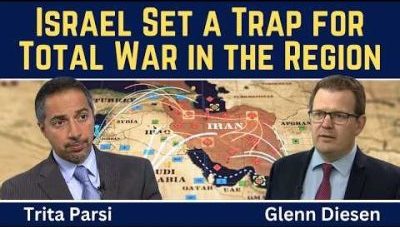
Trita Parsi: Israel Set a Trap for Total War in the Region
or go to
Aletho News Archives – Video-Images
Book Review
Why the War on Conspiracy Theories Is Bad Public Policy
By Kevin Barrett • Unz Review • February 1, 2019
 A Review of Conspiracy Theories and Other Dangerous Ideas by Cass Sunstein (based on an earlier paper co-authored with Adrian Vermeule); In Defense of Troublemakers: The Power of Dissent in Life and Business by Charlan Nemeth; and Conspiracy Theories and the People Who Believe Them, edited by Joseph E. Uscinski
On January 25 2018 YouTube unleashed the latest salvo in the war on conspiracy theories, saying “we’ll begin reducing recommendations of borderline content and content that could misinform users in harmful ways—such as videos promoting a phony miracle cure for a serious illness, claiming the earth is flat, or making blatantly false claims about historic events like 9/11.”
At first glance that sounds reasonable. Nobody wants YouTube or anyone else to recommend bad information. And almost everyone agrees that phony miracle cures, flat earthism, and blatantly false claims about 9/11 and other historical events are undesirable.
But if we stop and seriously consider those words, we notice a couple of problems. First, the word “recommend” is not just misleading but mendacious. YouTube obviously doesn’t really recommend anything. When it says it does, it is lying. … continue
Blog Roll
 Aletho News
- Putin’s key remarks on peace talks and Europe’s ‘schizophrenia’
- Trita Parsi: Israel Set a Trap for Total War in the Region
- Trump’s Iran war is on an Israeli leash
- Saudi oil boss issues global supply warning
- Riyadh Says Its Oil System Is Intact. The Numbers Say Otherwise.
- Trump and Netanyahu Want to “Finish the Job” on Iran
- US ‘one-sided dictation’ not Iran’s beliefs makes rational talks impossible: Baghaei
- Iran’s Next Strike May Not Explode. It Could Shut You Down /Col Doug Macgregor
- Iran: US political targets legitimate if assassinations return
- Iraq shuts key border crossing with Iran under US pressure: Report
- If Americans Knew
- DAILY UPDATE: Latest essential news on Palestine, Israel, & region
- The Israel Lobby’s Changing Fortunes
- AIPAC has become such a political liability that it’s shifting to a more “nimble” approach to buying politicians
- At least 160 Israeli settler attacks in 2 weeks
- Will Gaza’s Ancient Christian Community Disappear Forever?
- Israel’s vision of regional security rests on keeping Arab states weak
- Heidi Levine recounts how Palestinian youths helped save her in settler attack
- DAILY UPDATE: Latest essential news on Palestine, Israel, & region
- Trump’s Intensifying Sabotage of the ICC, for Israel’s Sake
- Israeli military detain US and UK volunteers in West Bank including Democratic NY politician Brad Lander
- No Tricks Zone
- E-Cars Reduce CO2 Emissions By Only 41% Compared To Internal Combustion Engine Vehicles
- Predictions Made By Renowned Climate Professor Over Past Decades Have Been Proven To Be Poor
- New Study Suggests Large Regions Of The Pacific Ocean Have Been Cooling For The Last 80 Years
- Germany’s Green Energy Debacle: High Energy Costs Force Kahla Porzellan to Close After 182 Years!
- New Study: 50 Years Of The Most Aggressive ‘Net Zero’ Policies Can Only Affect The Global Climate By 0.03°C
- US September “Heat” Was No Record…Many Records Set Decades Ago
- Latest European Green Energy Debacle; Portugal’s Largest Flagship Solar Park Insolvent!
- Green Energy Debacle: German Expert Professor Fritz Vahrenholt Warns Of Severe Economic And Social Consequences
- Two More Paleo Reconstructions Affirm Meters-Higher Sea Levels Across Ireland, Brazil 7000-6000 Years Ago
- New Study: Earth And Venus Surface Warmth Largely Explained By Convection And Lapse Rate, Not CO2 Or Radiation

