Israeli Apartheid Wall destroys Palestinian lives

Palestine Information Center
On 29 March, 2002, the Israeli Occupation Forces (IOF) conducted a large-scale military operation in the West Bank, called “Operation Defensive Shield”. During the operation, the Israeli forces raided many Palestinian towns and villages and committed heinous crimes against the Palestinians.
The operation brought to light the Israeli government’s plans to conquer more Palestinian lands and to expel the Palestinians from their own homes. A major step in these plans was to build the Apartheid Wall, or what Israel calls the Separation Wall.
The Israeli government commenced building the Apartheid Wall on 23 June, 2002, at a planned length of 770 km. Now, around 406 km, i.e. 52.7%, of the Wall is completed.
The Wall in numbers
The Wall is 60-150 meters wide in some areas. This includes a buffer zone and roads on both sides of the Wall that the Israeli military uses to watch the Wall. The Wall is 8 meters high, and it contains:
1. Barbed wire
2. A 4-meter wide and deep trench, aiming to prevent the vehicles and pedestrians from passing
3. Military patrol roads
4. A sandy road to track footsteps
5. An electric fence with an 8-meter high cement wall
6. Watchtowers with cameras and sensors
The Wall separates an area of 733 km2 of the Palestinian lands that falls behind the Wall from the West Bank. In other words, these 733 km2 would be under full Israeli control, besides the occupied lands of 1948.
The Wall would also occupy 220 km2 of Jordan Valley, east of Palestine. The Valley is a main source of food for Palestinians, and is also known as their “food basket”.
The Wall passes through eight Palestinian governorates. In Jerusalem, building the Wall accelerated in 2006-2007. It separates a number of heavily populated Palestinian neighborhoods, like Shufat and Kafr ‘Aqab.
Effects of the Wall
In spite of the claimed Israeli security motives behind building the Wall, it negatively impacts the Palestinian people and cause.
First: Effects on the Palestinian daily life
As the Wall passes through the West Bank, it negatively impacts the lives of 210,000 Palestinians, who live in 67 Palestinian towns and villages.
Because of the Wall, 13 Palestinian neighborhoods would be isolated between the green line and the Wall. Furthermore, a second wall would create a security belt, stranding 19 Palestinian neighborhoods in isolated areas.
The Wall would also hinder the Palestinians’ movement and would prevent them from reaching their farms and selling their goods and produce.
Second: Economic and environmental effects
37% of the Palestinian villages, cut with the Wall, would lose their economic resources. Moreover, 12 km of irrigation systems were destroyed.
Confiscating and bulldozing Palestinian farms would cost the Palestinians 6500 jobs, in addition to harming the olive oil industry and fruit and vegetable farming.
The Apartheid Wall would affect the Palestinian water resources, as the West Bank would lose 200 million cubic meters of the Jordan Valley water.
Third: Effects on movement
Statistics show that the Wall would violate the right of movement of two million Palestinians. They will have to seek Israeli permits to be able to reach their houses and farms in different Palestinian areas. Such restrictions would force at least 2.8% Palestinians to leave their homes and find other places to live in.
Fourth: Effects on education and medical sectors
Many Palestinian students and teachers were affected by the Wall, as it prevented them from reaching their schools, forcing 3.4% Palestinians to drop out.
On the medical level, it is getting increasingly difficult for Palestinians to reach the hospitals and medical centers to the east of the Wall, and the Palestinian villages to the west of the Wall have no medical services at all.
Fifth: Effects on Palestinian water resources
The Israeli occupation has strategically chosen the path of the Wall in order to guarantee Israel as much water as possible and thus depriving Palestinians of a basic right. Once finished, the Wall will enable Israel to confiscate and control 165 water wells and 53 springs, which in total culminate into 55 million cubic meters annually. Furthermore, the Wall now means Israel controls an additional amount of 679 million cubic meters annually.
Israeli forces injure 3 Palestinians before shooting tear gas at passers-by in the market of Hebron
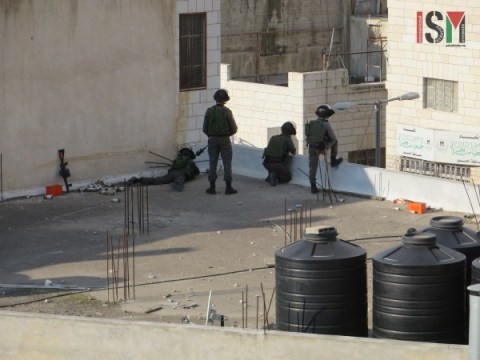
Israeli forces used the roof of a Palestinian family’s house to shoot
International Solidarity Movement | December 20, 2015
Al Khalil, Occupied Palestine – Sunday, 20th December 2015, Israeli forces shot and injured three Palestinians at Shuhada checkpoint in occupied al-Khalil (Hebron), before arbitrarily firing towards civilians and journalists in the area.
Israeli forces shot a girl in the head with live ammunition. A Palestinian bystander, trying to help the girl and pull her towards the Palestinian side of the checkpoint right after she was shot, was shot in the mouth by Israeli forces. The man was trying to help, knowing that Israeli forces would most likely deny the girl any medical aid if the Palestinian ambulance was unable to reach her. Another Palestinian bystander was shot. The Palestinian girl, according to eye-witnesses, did have a knife, but instead of trying to disarm her, Israeli forces directly shot her in the head.
Whereas the Palestinian Red Crescent ambulance, at the scene after only a few minutes, was denied access to the girl in order to deliver first aid, the two Palestinians injured were taken to hospital. After this happened, the Israeli forces threw stun grenades and shot tear-gas at passers-by and Red Crescent medics to prevent them from coming any closer and seeing what happened. Journalists that arrived at the scene were also attacked with stun grenades and threatened by Israeli forces with rubber coated steel bullets.
Israeli forces entered the H1-side of al-Khalil, that is under full Palestinian control, running into the Palestinian market and indiscriminately shooting tear gas at civilians going about their everyday life. They entered the roof of a Palestinian family’s home to use it as a base for shooting tear gas and rubber coated steel bullets at Palestinians in the street. A 5-year old boy was injured when Israeli forces fired directly at a school-bus passing by the checkpoint.
Shuhada checkpoint has recently been closed for ‘renovations’, stopping Palestinians from accessing the Palestinian neighbourhood of Tel Rumeida, located in the H2-area under full Israeli control. This neighbourhood, including the small stretch of Shuhada Street that Palestinians still had access to, has been declared a ‘closed military zone’ on November 1st. With the closure of the checkpoint, the restricted freedom of movement of Palestinians, has been completely brought to a halt.
The Logic of the Police State
People Are Waking Up to the Darkness in American Policing, and the Police Don’t Like It One Bit
By Matthew Harwood | TomDispatch | December 20, 2015
If you’ve been listening to various police agencies and their supporters, then you know what the future holds: anarchy is coming — and it’s all the fault of activists.
In May, a Wall Street Journal op-ed warned of a “new nationwide crime wave” thanks to “intense agitation against American police departments” over the previous year. New Jersey Governor Chris Christie went further. Talking recently with the host of CBS’s Face the Nation, the Republican presidential hopeful asserted that the Black Lives Matter movement wasn’t about reform but something far more sinister. “They’ve been chanting in the streets for the murder of police officers,” he insisted. Even the nation’s top cop, FBI Director James Comey, weighed in at the University of Chicago Law School, speaking of “a chill wind that has blown through American law enforcement over the last year.”
According to these figures and others like them, lawlessness has been sweeping the nation as the so-called Ferguson effect spreads. Criminals have been emboldened as police officers are forced to think twice about doing their jobs for fear of the infamy of starring in the next viral video. The police have supposedly become the targets of assassins intoxicated by “anti-cop rhetoric,” just as departments are being stripped of the kind of high-powered equipment they need to protect officers and communities. Even their funding streams have, it’s claimed, come under attack as anti-cop bias has infected Washington, D.C. Senator Ted Cruz caught the spirit of that critique by convening a Senate subcommittee hearing to which he gave the title, “The War on Police: How the Federal Government Undermines State and Local Law Enforcement.” According to him, the federal government, including the president and attorney general, has been vilifying the police, who are now being treated as if they, not the criminals, were the enemy.
Beyond the storm of commentary and criticism, however, quite a different reality presents itself. In the simplest terms, there is no war on the police. Violent attacks against police officers remain at historic lows, even though approximately 1,000 people have been killed by the police this year nationwide. In just the past few weeks, videos have been released of problematic fatal police shootings in San Francisco and Chicago.
While it’s too soon to tell whether there has been an uptick in violent crime in the post-Ferguson period, no evidence connects any possible increase to the phenomenon of police violence being exposed to the nation. What is taking place and what the police and their supporters are largely reacting to is a modest push for sensible law enforcement reforms from groups as diverse as Campaign Zero, Koch Industries, the Cato Institute, The Leadership Conference, and the ACLU (my employer). Unfortunately, as the rhetoric ratchets up, many police agencies and organizations are increasingly resistant to any reforms, forgetting whom they serve and ignoring constitutional limits on what they can do.
Indeed, a closer look at law enforcement arguments against commonsense reforms like independently investigating police violence, demilitarizing police forces, or ending “for-profit policing” reveals a striking disregard for concerns of just about any sort when it comes to brutality and abuse. What this “debate” has revealed, in fact, is a mainstream policing mindset ready to manufacture fear without evidence and promote the belief that American civil rights and liberties are actually an impediment to public safety. In the end, such law enforcement arguments subvert the very idea that the police are there to serve the community and should be under civilian control.
And that, when you come right down to it, is the logic of the police state.
Due Process Plus
It’s no mystery why so few police officers are investigated and prosecuted for using excessive force and violating someone’s rights. “Local prosecutors rely on local police departments to gather the evidence and testimony they need to successfully prosecute criminals,” according to Campaign Zero . “This makes it hard for them to investigate and prosecute the same police officers in cases of police violence.”
Since 2005, according to an analysis by the Washington Post and Bowling Green State University, only 54 officers have been prosecuted nationwide, despite the thousands of fatal shootings by police. As Philip M. Stinson, a criminologist at Bowling Green, puts it, “To charge an officer in a fatal shooting, it takes something so egregious, so over the top that it cannot be explained in any rational way. It also has to be a case that prosecutors are willing to hang their reputation on.”
For many in law enforcement, however, none of this should concern any of us. When New York Governor Andrew Cuomo signed an executive order appointing a special prosecutor to investigate police killings, for instance, Patrick Lynch, president of the Patrolmen’s Benevolent Association, insisted: “Given the many levels of oversight that already exist, both internally in the NYPD [New York Police Department] and externally in many forms, the appointment of a special prosecutor is unnecessary.” Even before Cuomo’s decision, the chairman of New York’s District Attorneys Association called plans to appoint a special prosecutor for police killings “deeply insulting.”
Such pushback against the very idea of independently investigating police actions has, post-Ferguson, become everyday fare, and some law enforcement leaders have staked out a position significantly beyond that. The police, they clearly believe, should get special treatment.
“By virtue of our dangerous vocation, we should expect to receive the benefit of the doubt in controversial incidents,” wrote Ed Mullins, the president of New York City’s Sergeants Benevolent Association, in the organization’s magazine, Frontline. As if to drive home the point, its cover depicts Baltimore State Attorney Marilyn Mosby under the ominous headline “The Wolf That Lurks.” In May, Mosby had announced indictments of six officers in the case of Freddie Gray, who died in Baltimore police custody the previous month. The message being sent to a prosecutor willing to indict cops was hardly subtle: you’re a traitor.
Mullins put forward a legal standard for officers accused of wrongdoing that he would never support for the average citizen — and in a situation in which cops already get what former federal prosecutor Laurie Levenson calls “a super presumption of innocence.” In addition, police unions in many states have aggressively pushed for their own bills of rights, which make it nearly impossible for police officers to be fired, much less charged with crimes when they violate an individual’s civil rights and liberties.
In 14 states, versions of a Law Enforcement Officers’ Bill of Rights (LEOBR) have already been passed, while in 11 others they are under consideration. These provide an “extra layer of due process” in cases of alleged police misconduct, according to Samuel Walker, an expert on police accountability. In many of the states without a LEOBR, the Marshall Project has discovered, police unions have directly negotiated the same rights and privileges with state governments.
LEOBRs are, in fact, amazingly un-American documents in the protections they afford officers accused of misconduct during internal investigations, rights that those officers are never required to extend to their suspects. Though the specific language of these laws varies from state to state, notes Mike Riggs in Reason, they are remarkably similar in their special considerations for the police.
“Unlike a member of the public, the officer gets a ‘cooling off’ period before he has to respond to any questions. Unlike a member of the public, the officer under investigation is privy to the names of his complainants and their testimony against him before he is ever interrogated. Unlike a member of the public, the officer under investigation is to be interrogated ‘at a reasonable hour,’ with a union member present. Unlike a member of the public, the officer can only be questioned by one person during his interrogation. Unlike a member of the public, the officer can be interrogated only ‘for reasonable periods,’ which ‘shall be timed to allow for such personal necessities and rest periods as are reasonably necessary.’ Unlike a member of the public, the officer under investigation cannot be ‘threatened with disciplinary action’ at any point during his interrogation. If he is threatened with punishment, whatever he says following the threat cannot be used against him.”
The Marshall Project refers to these laws as the “Blue Shield” and “the original Bill of Rights with an upgrade.’’ Police associations, naturally, don’t agree. “All this does is provide a very basic level of constitutional protections for our officers, so that they can make statements that will stand up later in court,” says Vince Canales, the president of Maryland’s Fraternal Order of Police.
Put another way, there are two kinds of due process in America — one for cops and another for the rest of us. This is the reason why the Black Lives Matter movement and other civil rights and civil liberties organizations regularly call on states to create a special prosecutor’s office to launch independent investigations when police seriously injure or kill someone.
The Demilitarized Blues
Since Americans first took in those images from Ferguson of police units outfitted like soldiers, riding in military vehicles, and pointing assault rifles at protesters, the militarization of the police and the way the Pentagon has been supplying them with equipment directly off this country’s distant battlefields have been top concerns for police reformers. In May, the Obama administration suggested modest changes to the Pentagon’s 1033 program, which, since 1990, has been redistributing weaponry and equipment to police departments nationwide — urban, suburban, and rural — in the name of fighting the war on drugs and protecting Americans from terrorism.
Even the idea that the police shouldn’t sport the look of an occupying army in local communities has, however, been met with fierce resistance. Read, for example, the online petition started by the National Sheriffs’ Association and you could be excused for thinking that the Obama administration was aggressively moving to stop the flow of military-grade equipment to local and state police agencies. (It isn’t.) The message that tops the petition is as simple as it is misleading: “Don’t strip law enforcement of the gear they need to keep us safe.”
The Obama administration has done no such thing. In May, the president announced that he was prohibiting certain military-grade equipment from being transferred to state and local law enforcement. “Some equipment made for the battlefield is not appropriate for local police departments,” he said. The list included tracked armored vehicles (essentially tanks), bayonets, grenade launchers, camouflage uniforms, and guns and ammo of .50 caliber or higher. In reality, what use could a local police department have for bayonets, grenade launchers, or the kinds of bullets that resemble small missiles, pierce armor, and can blow people’s limbs off?
Yet the sheriffs’ association has no problem complaining that “the White House announced the government would no longer provide equipment like helicopters and MRAPs [mine-resistant ambush-protected vehicles] to local law enforcement.” And it’s not even true. Police departments can still obtain both helicopters and MRAPs if they establish community policing practices, institute training protocols, and get community approval before the equipment transfer occurs.
“Helicopters rescue runaways and natural disaster victims,” the sheriff’s association adds gravely, “and MRAPs are used to respond to shooters who barricade themselves in neighborhoods and are one of the few vehicles able to navigate hurricane, snowstorm, and tornado-strewn areas to save survivors.”
As with our wars abroad, think mission creep at home. A program started to wage the war on drugs, and strengthened after 9/11, is now being justified on the grounds that certain equipment is useful during disasters or emergencies. In reality, the police have clearly become hooked on a militarized look. Many departments are ever more attached to their weapons of war and evidently don’t mind the appearance of being an occupying force in their communities, which leaves groups like the sheriffs’ association fighting fiercely for a militarized future.
Legal Plunder
In July, the American Civil Liberties Union and the ACLU of Arizona sued law enforcement in Pinal County, Arizona, on behalf of Rhonda Cox. Two years before, her son had stolen some truck accessories and, without her knowledge, fitted them on her truck. When the county sheriff’s department arrested him, it also seized the truck.
Arriving on the scene of her son’s arrest, Cox asked a deputy about getting her truck back. No way, he told her. After she protested, explaining that she had nothing to do with her son’s alleged crimes, he responded “too bad.” Under Arizona law, the truck could indeed be taken into custody and kept or sold off by the sheriff’s department even though she was never charged with a crime. It was guilty even if she wasn’t.
Welcome to America’s civil asset forfeiture laws, another product of law enforcement’s failed war on drugs, updated for the twenty-first century. Originally designed to deprive suspected real-life Scarfaces of the spoils of their illicit trade — houses, cars, boats — it now regularly deprives people unconnected to the war on drugs of their property without due process of law and in violation of the Fifth and Fourteenth Amendments. Not surprisingly, corruption follows.
Federal and state law enforcement can now often keep property seized or sell it and retain a portion of the revenue generated. Some of this, in turn, can be repurposed and distributed as bonuses in police and other law enforcement departments. The only way the dispossessed stand a chance of getting such “forfeited” property back is if they are willing to take on the government in a process where the deck is stacked against them.
In such cases, for instance, property owners have no right to an attorney to defend them, which means that they must either pony up additional cash for a lawyer or contest the seizure themselves in court. “It is an upside-down world where,” says the libertarian Institute for Justice, “the government holds all the cards and has the financial incentive to play them to the hilt.”
In this century, civil asset forfeiture has mutated into what’s now called “for-profit policing” in which police departments and state and federal law enforcement agencies indiscriminately seize the property of citizens who aren’t drug kingpins. Sometimes, for instance, distinctly ordinary citizens suspected of driving drunk or soliciting prostitutes get their cars confiscated. Sometimes they simply get cash taken from them on suspicion of low-level drug dealing.
Like most criminal justice issues, race matters in civil asset forfeiture. This summer, the ACLU of Pennsylvania issued a report, Guilty Property, documenting how the Philadelphia Police Department and district attorney’s office abused state civil asset forfeiture by taking at least $1 million from innocent people within the city limits. Approximately 70% of the time, those people were black, even though the city’s population is almost evenly divided between whites and African-Americans.
Currently, only one state, New Mexico, has done away with civil asset forfeiture entirely, while also severely restricting state and local law enforcement from profiting off similar national laws when they work with the feds. (The police in Albuquerque are, however, actively defying the new law, demonstrating yet again the way in which police departments believe the rules don’t apply to them.) That no other state has done so is hardly surprising. Police departments have become so reliant on civil asset forfeiture to pad their budgets and acquire “little goodies” that reforming, much less repealing, such laws are a tough sell.
As with militarization, when police defend such policies, you sense their urgent desire to maintain what many of them now clearly think of as police rights. In August, for instance, Pinal County Sheriff Paul Babeu sent a fundraising email to his supporters using the imagined peril of the ACLU lawsuit as clickbait. In justifying civil forfeiture, he failed to mention that a huge portion of the money goes to enrich his own department, but praised the program in this fashion:
“[O]ver the past seven years, the Pinal County Sheriff’s Office has donated $1.2 million of seized criminal money to support youth programs like the Boys & Girls Clubs, Boy Scouts, YMCA, high school graduation night lock-in events, youth sports as well as veterans groups, local food banks, victims assistance programs, and Home of Home in Casa Grande.”
Under this logic, police officers can steal from people who haven’t even been charged with a crime as long as they share the wealth with community organizations — though, in fact, neither in Pinal County or elsewhere is that where most of the confiscated loot appears to go. Think of this as the development of a culture of thievery masquerading as Robin Hood in blue.
Contempt for Civilian Control
Post-Ferguson developments in policing are essentially a struggle over whether the police deserve special treatment and exceptions from the rules the rest of us must follow. For too long, they have avoided accountability for brutal misconduct, while in this century arming themselves for war on America’s streets and misusing laws to profit off the public trust, largely in secret. The events of the past two years have offered graphic evidence that police culture is dysfunctional and in need of a democratic reformation.
There are, of course, still examples of law enforcement leaders who see the police as part of American society, not exempt from it. But even then, the reformers face stiff resistance from the law enforcement communities they lead. In Minneapolis, for instance, Police Chief Janeé Harteau attempted to have state investigators look into incidents when her officers seriously hurt or killed someone in the line of duty. Police union opposition killed her plan. In Philadelphia, Police Commissioner Charles Ramsey ordered his department to publicly release the names of officers involved in shootings within 72 hours of any incident. The city’s police union promptly challenged his policy, while the Pennsylvania House of Representatives passed a bill in November to stop the release of the names of officers who fire their weapon or use force when on the job unless criminal charges are filed. Not surprisingly, three powerful police unions in the state supported the legislation.
In the present atmosphere, many in the law enforcement community see the Harteaus and Ramseys of their profession as figures who don’t speak for them, and groups or individuals wanting even the most modest of police reforms as so many police haters. As former New York Police Department Commissioner Howard Safir told Fox News in May, “Similar to athletes on the playing field, sometimes it’s difficult to tune out the boos from the no-talents sipping their drinks, sitting comfortably in their seats. It’s demoralizing to read about the misguided anti-cop gibberish spewing from those who take their freedoms for granted.”
The disdain in such imagery, increasingly common in the world of policing, is striking. It smacks of a police-state, bunker mentality that sees democratic values and just about any limits on the power of law enforcement as threats. In other words, the Safirs want the public — particularly in communities of color and poor neighborhoods — to shut up and do as it’s told when a police officer says so. If the cops give the orders, compliance — so this line of thinking goes — isn’t optional, no matter how egregious the misconduct or how sensible the reforms. Obey or else.
The post-Ferguson public clamor demanding better policing continues to get louder, and yet too many police departments have this to say in response: Welcome to Cop Land. We make the rules around here.
Matthew Harwood is senior writer/editor of the ACLU. His work has appeared at Al Jazeera America, the American Conservative, the Guardian, Guernica, Salon, War is Boring, and the Washington Monthly. He is a TomDispatch regular.
Copyright 2015 Matthew Harwood
Two face politically-motivated execution in Bahrain based on torture ‘confessions’
Reprieve – December 21, 2015
Two Bahrainis who were tortured into ‘confessing’ to an attack on police officers in the wake of anti-Government protests last year could be executed at any moment, unless the country’s King pardons them.
Husain Moosa and Mohammed Ramadan were arrested in February and March 2014 respectively, shortly after demonstrations took place in Bahrain to mark the third anniversary of the ‘Arab Spring’ protests in the country.
February also saw a bomb attack in the village of al Dair, which injured two police officers, one of whom subsequently died. Mr Moosa and Mr Ramadan were arrested one week and one month after the event, respectively, and say they were subjected to extensive torture until they produced ‘confessions’ to being involved in the attack.
No evidence aside from these forced confessions and the testimony of police officers was produced in court to link either man to the attack. But despite this they were both convicted and sentenced to death in December 2014. Last month, Bahrain’s court of cassation rejected their final appeal, meaning they could now face execution at any moment, at the discretion of King Hamad.
Mr Ramadan has described how he was held incommunicado for four days and beaten until he produced the ‘confession’ that the authorities wanted, relating to the bombing. When he subsequently told a judge that the confession had been given under torture, he was taken to another prison and subjected to further beatings, and was forced to listen to other prisoners being tortured, for ten days.
Mr Moosa has described how he was hung from the ceiling and beaten with police batons. He says that officers threatened to fabricate charges against his relatives and rape his sisters unless he confessed. Mr Moosa subsequently recanted his confession in front of the public prosecutor, but like Mr Ramadan was then subjected to further torture as a result.
The case has been the focus of concern from both the European Parliament and UN officials. In July this year, MEPs warned that in Bahrain “… the use of the death penalty in politically motivated cases has expanded since 2011, with “at least seven individuals have been handed death sentences in political cases since 2011… four of these seven being sentenced to death in 2015 alone.”
Earlier this year, five UN human rights experts, including the Special Repporteur on Torture, raised concerns that both Mr Ramadan and Mr Moosa had confessed under duress.
International human rights charity Reprieve is calling on the King of Bahrain to commute the sentences, and on the UK to intervene given its status as a close ally of the country.
Conscientious Objectors In Their Own Words
By Margaret Brooks | Imperial War Museum
Before the First World War there had never been compulsory military service in Britain. The first Military Service Bill was passed into law in January 1916 following the failure of recruitment schemes to gain sufficient volunteers in 1914 and 1915. From March 1916, military service was compulsory for all single men in England, Scotland and Wales aged 18 to 41, except those who were in jobs essential to the war effort, the sole support of dependents, medically unfit, or ‘those who could show a conscientious objection’. This later clause was a significant British response that defused opposition to conscription. Further military service laws included married men, tightened occupational exemptions and raised the age limit to 50.
There were approximately 16,000 British men on record as conscientious objectors (COs) to armed service during the First World War. This figure does not include men who may have had anti-war sentiments but were either unfit, in reserved occupations, or had joined the forces anyway. The number of COs may appear small compared with the six million men who served, but the impact of these men on public opinion and on future governments was to be profound.
Download the transcript of the interviews.
-
Who were Conscientious Objectors?
Broadly speaking there were four reasons why men objected to armed service during the First World War. The most common ground was a religious one. Pacifism was a time-honoured tenet of the Society of Friends (Quakers), although some Quaker men did enlist. Other individuals, including Christian fundamentalists, took the Bible at its word: ‘Thou shalt not kill’. The next largest group of COs were political activists of the left who saw the First World War as an imperialist war and as an example of the ruling classes making a war that the workers had to fight. The left was split over support for the war and those who opposed it on the radical left were not necessarily pacifists – they reserved the right to fight for a cause in which they believed. Thirdly, there were those who might be termed ‘humanists’, who felt it wrong to kill but not on religious grounds. A former naval rating, for example, had worked as a butcher and became a conscientious objector because, as he said, ‘l know what it is to kill a pig – I won’t kill a man’ (IWM SR 784). The fourth group were those who generally objected to government intervention in their lives; some thought the war had nothing to do with them personally but might have fought if they felt the United Kingdom was directly threatened.
Image – Printed leaflet issued by the No-Conscription Fellowship entitled ‘Why We Object’, from the Private Papers of W Harrison (Documents.163)
Audio – Walter Griffin interview © IWM (IWM SR 9790)
-
The Tribunals
The usual procedure for a CO was to apply to his local tribunal for exemption from military service. Here, Walter Griffin describes a particular line of questioning used at the tribunals. Made up of local prominent figures, the tribunals had been set up earlier to decide on exemptions under the unsuccessful Derby Scheme. They were therefore available after conscription was introduced to assess a CO’s conviction and sincerity. The tribunals’ members were poorly briefed and in many cases merely used the hearings to state their own views. One of IWM’s interviewees was asked his age and, on hearing that he was eighteen, the tribunal chairman said: ‘Oh in that case you’re not old enough to have a conscience. Case dismissed’. The CO was sent to prison. At the tribunal’s discretion exemption could be absolute, from combatant service only, or conditional on undertaking work of national importance; but COs were frequently rejected by the local tribunal or offered an unacceptable position. They could then go before an appeals tribunal and if they were refused again they could appeal to the Central Tribunal in London. Once a CO was refused exemption, he was considered to have enlisted into military service.
Image – Military Service Act 1916, poster (Art.IWM PST 5161)
Audio – Walter Griffin interview © IWM (IWM SR 9790)
-
Alternativist and Absolutist Conscientious Objectors
A problem for the CO was determining where to draw the line in his stance and whether there was a difference in principle between combatant and non-combatant service. Some COs would take on alternative civilian work or enter the military in non-combatant roles in the Royal Army Medical Corps or Non-Combatant Corps, for example. COs in prison were offered so-called ‘work of national importance’ in a scheme put forward by the Home Office. This was generally agriculture, forestry or unskilled manual labour. Other conscientious objectors – known as ‘absolutists’ – refused to do any war-related work or obey military orders.
Image – Munitions workers painting shells at the National Shell Filling Factory No.6 in Chilwell, Nottinghamshire, 1917 (Q 30016)
Audio – Philip Radley interview © IWM (IWM SR 642)
-
Military and Civil Punishments
In practice, having been rejected on appeal a CO was a soldier absent without leave and as such was subject to arrest. COs who entered military service were also arrested for refusing to obey military orders. Over one-third of the 16,000 COs went to prison at least once, including the majority of absolutists who were imprisoned virtually for the duration. At first, COs were sent to military prisons because they were considered to be soldiers. It was a minor triumph for the anti-conscription movement when a mid-1916 Army order ruled that COs who had been court martialled were to be sent to civil prisons. The initial standard sentence was 112 days third division hard labour – the most severe level of prison sentence under English law at that time. This began with one month in solitary confinement on bread and water, performing arduous and boring manual jobs like breaking stone, hand-sewing mailbags and picking oakum. With good conduct remission, most COs served about three months. However, after being released a CO could be immediately arrested again as a deserter, court-martialled and returned to prison. This ‘Cat and Mouse’ treatment had been previously used on the Suffragettes, and as the war went on sentences handed down to COs increased. Over the course of the war, some conscientious objectors were actually taken with their regiments to France, where one could be shot for refusing to obey a military order. Thirty-four were sentenced to death after being court martialled but had their sentences commuted to penal servitude. Here, Howard Marten talks about military field punishments and the outcome of his court martial in France.
Image – Copy negative made from a photomontage and cartoon postcard “A Souvenir of C.O. Settlements 1918” (Q 103096)
Audio – Howard Marten interview © IWM (IWM SR 383)
-
Prison conditions
-
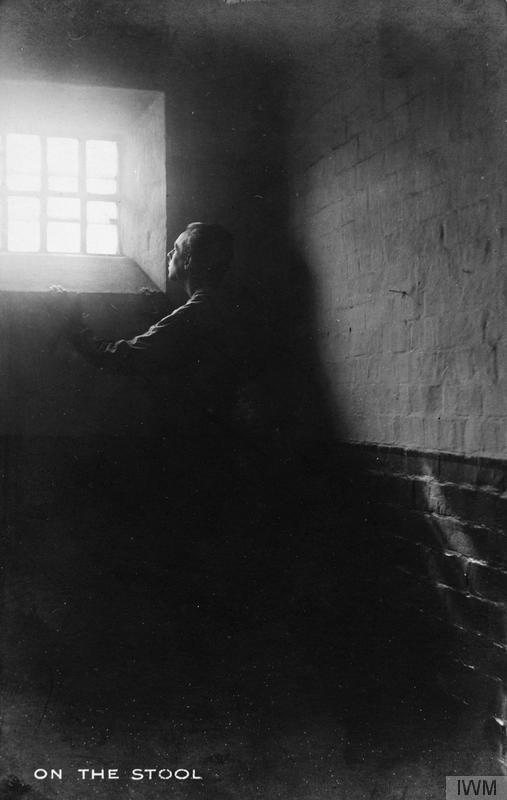
When Harold Bing was in Winchester Prison, there was one wing for male criminal prisoners, one for women and two for conscientious objectors. The conditions for COs were exactly the same as those for criminal prisoners, but COs did succeed in getting prisons to offer a vegetarian diet. Vegetarianism was common among COs, as it had an obvious affinity, particularly with humanitarian pacifism. CO prisoners were allowed a very limited number of censored letters, though one of the COs interviewed by IWM said ‘filling the notepaper was quite an art’ because there was nothing to say after months or years in prison. They had no calendars, no newspapers, and few visits – those visits they did receive were through a grille. They were limited to a few books from the prison library at infrequent intervals, but after a while COs were allowed to have books sent in under the condition that they donate them to the prison library once finished with them. Later CO prisoners were impressed to find prison libraries stocked with titles by William Morris, Sidney and Beatrice Webb and other writers of the left. Here, Bing recalls the constrained and degrading conditions of prison life.
Image – Copy negative made from a postcard of a conscientious objector prison, original caption reads ‘On the stool’ (Q 103094)
Audio – Harold Bing interview © IWM (IWM SR 358)
-
How did conscientious objectors cope in prison?
-
Severe physical brutality towards all COs seems to be a First World War myth. Certainly several of IWM’s interviewees experienced or witnessed very harsh treatment and 73 COs died as a result of physical abuse. The primary punishment – in many cases the most severe – was psychological rather than physical. The most fortunate COs were those who could devise ways to cope with loneliness, doubt, depression and loss of ability to concentrate. Some COs took an active role in challenging the situation in which they found themselves. Some participated in covert activity, described here by Harold Bing. Others coped through mental exercise. One of the COs interviewed by IWM, a musician, played an imaginary piano on his knees and even did some composition. Some COs learned Esperanto, many recited poetry from memory, and several went on long, imaginary, remembered walks. One man held races on the floor between bits of cobbler’s wax and another gained comfort from talking to the spiders on the cell wall and the bolts on its door.
Image – Copy negative made from a conscientious objector postcard depicting the interior of a cell (Q 103669)
Audio – Harold Bing interview © IWM (IWM SR 358)
-
Resistance
-
Some COs openly resisted the system, as described here by Fenner Brockway. Work and hunger strikes were held by COs including Clifford Allen (later Lord Allen of Hurtwood), chairman of the No-Conscription Fellowship, and Sir Francis Meynell. For many COs, the pressures and hardships strengthened their resolve.
Image – Copy negative made from a conscientious objector postcard, original caption reads ‘Ger – inside an’ close yer door!’ (Q 103666)
Audio – Fenner Brockway interview © IWM (IWM SR 476)
-
How were conscientious objectors treated?
-
Whether in prison or not, COs and their families did have a common experience in many respects, especially from the pressures they felt from society. Britain’s public support for the war was almost unanimous and society tended to view men who would not fight – and the men and women who supported them – with suspicion and loathing. To become a conscientious objector in 1916 was a difficult decision, which apparently involved rejecting the whole of conventional British society and everything it stood for. Wartime domestic propaganda made it all too plain that a person was either with the national effort or against it; and if against it, he was by implication either not concerned with the sacrifices of others or was undermining their willingness to serve. The conscientious objector was trapped psychologically: he felt guilty if he shared the soldiers’ ordeal and guilty if he did not. COs were not released until about six months after the end of the war, in order to give most soldiers a head-start when looking for jobs. They were also stripped of the right to vote until 1926. With time most did find a way to fit back into society – some very successfully. None of the COs interviewed by IWM appeared to feel any bitterness about their treatment, but they seem to remain, through their First World War experiences, permanently set apart.
Image – First World War-era cartoon by Frank Holland titled ‘An “Object” Lesson: This Little Pig Stayed at Home’ (Q 103334)
Audio – Clips from interviews with Percy Leonard © IWM (IWM SR 382), Lewis Maclachlan © IWM (IWM SR 565), Dorothy Bing © IWM (IWM SR 555)
This is an abridged version of a longer article, written by Margaret Brooks (former Keeper of the IWM Sound Archive), which appeared in the Imperial War Museum Review, No. 3 (1988).
Nigeria Shia leader to face prosecution: Nigerian official

Nigerian Shia leader Ibrahim al-Zakzaky
Press TV – December 20, 2015
Nigerian authorities say Shia leader Ibrahim al-Zakzaky, who has been arrested and whose family and supporters have faced a bloody crackdown, will face prosecution.
On Saturday, Nasir al-Rufai, the governor of Kaduna State in north-central Nigeria, where Zakzaky was arrested in his home city of Zaria last week, said the cleric “will be prosecuted for any crimes that he may have committed,” Nigerian newspaper THISDAY reported on Sunday.
“That is the decision for the federal authorities. There are state and federal crimes,” the official added, making it clear that the case would be brought against the cleric by Abuja rather than local officials. “There is a government and a constitution and we are resolved to follow the constitution and due process.”
Nigerian forces raided the house of Zakzaky, the head of the Islamic Movement of Nigeria (IMN), last Sunday and arrested him after reportedly killing individuals attempting to protect him, including one of the movement’s senior leaders and its spokesman.
Nigerian soldiers had opened fire on Shia Muslims attending a ceremony at a religious center in the city the previous day, accusing the Shias of stopping the convoy of Nigeria’s Chief of Army Staff Lieutenant General Tukur Yusuf Buratai and attempting to assassinate him. Zakzaky was planning a speech at the center, and the IMN has strongly rejected the assassination accusation.
The attack on Zakzaky’s residence and the violence during the road incident led to the deaths of hundreds of the members of the religious community, including three of Zakzaky’s sons.
The IMN spokesman, Ibrahim Usman, meanwhile, rejected the accusation by the governor that the movement had “blocked roads for four days” during the religious ceremony, which marked Arba’een, the fortieth day to follow the martyrdom anniversary of Imam Hussein (PBUH), the grandson of Prophet Muhammad (PBUH) and the third Shia Imam.
“Clearly, this is a deliberate attempt to twist the facts. During the Arba’een symbolic treks, we block only limited part of the road, and this is to protect persons from traffic accidents, control mass movement and avoid chaos on the roads,” Usman said.
“The governor here was trying to give the impression of a complete occupation of a lane for four days. That was not the case. Blocks were only from junction to junction on the roads. The public was informed about these little inconveniences with apologies on public radio and television stations throughout the trek. Road users during the period would be surprised by the governor’s statement,” he said.

Shia Muslims in Nigeria march during a procession marking Arba’een. (File photo)
Rufai has also announced that a judicial commission of inquiry has been set up to look into the attack on the cleric’s residence.
The IMN has said it does not trust any likely findings by the state investigators, adding that authorities have refused to listen to the Shia community about what happened in Zaria and are only focusing on the army’s account.
Stop unacceptable harassment of human rights defenders in Occupied Palestinian Territory – UN experts
UN Human Rights Council | December 18, 2015
GENEVA – United Nations independent experts today expressed grave concerns at continued reports that human rights defenders are being subjected to physical attacks, harassment, arrest and detention, and death threats, particularly in Hebron in the Occupied Palestinian Territory (OPT), in an apparent bid by Israeli authorities and settler elements to stop their peaceful and important work.
“Amidst a charged and violent atmosphere over past months in the OPT, Palestinian and international defenders are providing a ‘protective presence’ for Palestinians at risk of violence, and documenting human rights violations,” said the UN Special Rapporteur the situation of human rights defenders, Michel Forst.
“The continued harassment of human rights defenders in the OPT, who are exercising their rights to freedoms of expression and association, is simply unacceptable. It should cease immediately,” Mr. Forst stressed.
Earlier this month, a group of UN human rights experts urged the Israeli Government to ensure a protective environment where human rights defenders in the Occupied Palestinian Territory can work without unlawful restriction and without fear of retaliatory acts.
“We recently addressed concerns to the Israeli Government regarding retaliatory acts by Israeli authorities against members of one organisation based in Hebron, Youth Against Settlements, after its Centre was subjected to raids and settlers allegedly called for it to be closed,” noted the UN Special Rapporteur the situation of human rights in the OPT, Makarim Wibisono.
“The Centre has now effectively been shut down as a result of the Israeli military declaring the surrounding area a military zone,” Mr. Wibisono said. “We urge Israeli authorities to lift this military order.”
The experts’ statement has been endorsed by the Special Rapporteur on torture and other cruel, inhuman or degrading treatment or punishment, Mr. Juan E. Méndez, and by the Special Rapporteur on the rights to freedom of peaceful assembly and of association, Mr. Maina Kiai.
The Hares Boys: Israeli Justice in Palestine

By Richard Hardigan | CounterPunch | December 18, 2015
On November 26 five Palestinian teenagers were sentenced to fifteen years in prison and fined roughly $40,000 each. This is not an unusual occurrence. Examples of Palestinians being punished for crimes they did not commit abound, but in this case the Israeli authorities have taken their injustice to a new level. Not only were “The Hares Boys”, so named because of the West Bank town from which they hail, not involved in any crime, but there was never any crime to begin with. This did not concern the Israelis in the least. Palestinians must be punished, and even if they are not guilty in this particular case, then surely they are guilty of something. So goes the thinking of the occupying force. The case has garnered international attention, but this did not worry the always image-conscious Israelis, and they have proceeded to mete out their own particular brand of justice.
I first heard of the Hares boys in June of 2014. Their names were written in black magic marker in large letters on the whiteboard in the living room of our apartment in Nablus. I was volunteering with the International Solidarity Movement (ISM), an organization devoted to standing in solidarity with the Palestinian people, and it was the evening of my first day in the northern West Bank city.
Charlie, the coordinator of the Nablus team, liked to write the names of all the projects ISM was involved in on the whiteboard, and the Hares boys were second from the top, squeezed between the name of a contact in a local refugee camp and a village that had recently been the subject of a settler attack.
Earlier that afternoon I had watched the limp body of yet another victim of Israeli aggression being carried through the streets of Nablus. Ahmed’s head was uncovered, with only a black and white keffiyah wrapped around his forehead. As his body was carried by the stretcher bearers, it was jostled quite a bit, and the head lolled back and forth with regularity. His father, an old bent man, walked behind, fingering his prayer beads, a vacant stare in his eyes. Ahmed had been murdered the previous night. Coming out of a mosque, the young mentally handicapped man had been screamed at by Israeli soldiers. They ordered him to stop, and when he did not heed their instructions, presumably because he did not understand them, they shot him four times – once in the stomach and three times in the chest.
With his close-shorn hair, Charlie looked younger than his twenty-three years, and as he explained the events surrounding the boys, I thought about the fact that he could not have been much older than the teenagers of Hares.
There were five Hares boys. At that point they had been in Israeli prison for over a year. Whenever there was a court date, ISMers would try to travel to the court, located in the town of Salem, which is north of Jenin and on the border with Israel, in order to provide moral support to the boys and their families.
In the evening of March 14, 2013, Adva Biton, a female settler, and her three daughters were involved in a traffic accident on their way to the settlement of Yakir, which lies southwest of Nablus. Biton and her three daughters were injured, and the injuries to one of the daughters were serious.
She died two years later of her injuries, compounded by pneumonia. The accident, which occurred near the Palestinian village of Hares, took place when Biton crashed her car into the back of a truck that was parked along the side of the road. The driver of the truck told police that he had pulled over to repair a flat tire. The trouble began when Biton later claimed that the accident had been caused not by the truck but by Palestinian youths who had been throwing stones. In fact, “in an Australian TV interview, Biton stated that she had a building block thrown at her vehicle which hit her daughter in the head and caused her to hit the back of the truck.”ii There were no witnesses to the accident, and nobody had seen anybody throwing stones, but the truck driver did add afterwards that he had noticed stones lying by the side of the road.iii
There are many problems with the story. In neither the initial accounts by the involved parties, nor in the original police investigation, was there a mention of stones. This changed a few days later, when Biton and the truck driver modified their original versions, and, in addition, when a subsequent police investigation uncovered a stone in Biton’s car. No building blocks were found anywhere near the scene. The fact that building blocks are exceedingly difficult to throw casts yet further doubt on Biton’s version of events.iv The truck driver’s statement about having seen stones on the side of the road should be seen as meaningless, since that part of the road is full of stones.v
Charlie’s face during his telling of the Hares boys’ story did not betray any emotion, but I imagined he must have been incensed, as he had been following these events for the past three months. He had even been to the court and later described the treatment that the boys’ families and other visitors received at the hands of the authorities.vi I wondered if this is what happened to activists after they had been in country for a while. Did they just become accustomed to the violence and suffering, and especially, the injustice?
In the days following the accident the Israeli army went into action. They entered the villages of Hares and nearby Kifl Hares three times, arresting a total of nineteen boys between the ages of 16 and 17 years. The nighttime raids were violent and the soldiers behaved aggressively. Accompanied by attack dogs and Israeli secret service (Shabak) agents, they broke down the doors of villagers’ houses and demanded to know the whereabouts of all the teenage sons. They handcuffed and blindfolded the boys without telling their families why or where they were taking them.
““Kiss and hug your mother goodbye,” a Shabak agent told one boy. “You may never see her again.””vii
All of the boys endured violent interrogations. They were also kept in solitary confinement. “One boy, since released, described his cell: a windowless hole 1m wide and 2m long; there was no mattress or blanket to sleep on; toilet facilities were dirty; the six lights were kept on continuously, leading to the boy losing track of the time of the day; the food made him feel ill. The boy was denied a lawyer; he was interrogated violently three times during three days.”viii After this ill-treatment, 14 of the 19 boys were released, while five boys confessed to the crimes. They are Ammar Souf, Mohammed Suleman, Ali Shamlawi, Tamer Souf and Mohammed Kleib.ix These are the Hares boys.
The Israeli media has played a significant role in this case. A few days after the accident, rumors began to surface that it had been a terrorist attack, and the subsequent media storm caused 61 witnesses to come forward, claiming that their cars had also been damaged by stones thrown on the same road that day. Prime Minister Netanyahu himself got involved, announcing proudly that “he had caught the terrorists that did it”x.
The boys were originally charged with twenty counts of murder and five counts of stone throwing each.
Unlike in most cases of Israeli injustice, the story of the Hares boys has garnered a great deal of attention, both international and domestic, and there have been several campaigns calling for the boys’ release.
A report by the Israeli NGO B’Tselemxi indicates that the Hares boys never had a chance. Between 2005 and 2010, 835 children were arrested in the West Bank on charges of stone throwing. Of the 835 only one was acquitted, an absurdly low number. Of the children, 34 were aged 12-13, 255 were aged 14-15, and 546 were aged 16-17.
The B’Tselem report also confirms that in a large majority of the cases, the judge does not allow bail and instead orders the defendant to be remanded in custody until the end of the proceedings. Because of the absurd conviction rate, the length of the pre-trial period and the inhumane conditions in the prisons, defendants often make plea bargains in exchange for shorter sentences.
The Hares boys awaited their fate in the notorious Meggido prison in Israel, where the conditions are reportedly atrocious, especially for minors.
“Conditions in Megiddo are severe. All prisoners, including children, are deliberately denied essential items such as food, clothing, bedding and hygiene products which have to be provided by their families, when families are permitted to deliver them, or purchased at inflated prices from the Israeli prison canteen. This means that inmates are required to fund their own incarceration. The children are almost entirely disconnected from the outside world. They are rarely allowed to exit their cells. Reports suggest that they are permitted to spend a couple of hours a week in the fresh air.
Their schooling has been discontinued. They are allowed infrequent family visits and no direct physical contact is permitted. They must communicate with relatives through a glass screen and speak through phones that do not always work. Families from the Occupied Territories do not usually receive permission to travel to what is now the State of Israel. When permitted, these journeys are expensive, lengthy and dangerous. Inmates are rarely treated for medical conditions.”xii
The great majority of the population of the West Bank has lived under military occupation for over 48 years. Only the settlers are exempt. The lives of the Palestinians are ruled by the military, and they are subject to military law, which is enforced by military courts. The system is based on military orders, which are issued by army commanders without approval from any civilian branch of government. They rule all aspects of Palestinian life in the West Bank, including freedom of movement, agriculture, access to water, ability to protest and land transactions.
Some of these orders are patently absurd (Military Order 107 prohibits the publication of treatises on Arabic grammar), while others have far-reaching consequences. Military Order 1651, for example, allows for the incarceration of children as young as twelve years old. It also allows for the administrative detention of individuals without charge for up to six months.
It is this military system that has destroyed the lives of the Hares boys and their families, as it has so many others. They face fifteen years in prison, and it is believed that unless the families can produce $7,750 for each of the boys by January 28, 2016, their sentences will be extended by an additional ten years.xiii
The troubling aspects of this particular case are many. There was little evidence that a crime had been committed and even less that pointed to the Hares boys as the offenders. There were no witnesses. The statements of the victims were contradictory and subject to change. The boys were tortured and coerced into giving false confessions. As children they awaited their fate in an Israeli adult prison in horrific conditions for over two years. This is what passes for justice in the territories occupied illegally by Israel, the self-proclaimed only democracy in the Middle East.
Notes
[1] “Hares Boys” Retrieved at https://haresboys.wordpress.com/.
[2] Fludd, Elischia. “Hares Boys Anniversary Still Worries Global Activists.” The Huffington Post. March 18, 2014. Retrieved at http://www.huffingtonpost.com/elischia-fludd/hares-boys-anniversary_b_4971764.html.
[3] “Hares Boys.”
[4] “Hares Boys Anniversary Still Worries Global Activists.”
[5] “Hares Boys Anniversary Still Worries Global Activists.”
[6] Donnelly, Charlie. “El Sistema Judicial Israelí: De Pseudo-democracia a Proto-fascismo (Parte II).” September 23, 2014. Retrieved at http://palestinalibre.org/articulo.php?a=52637.
[7] “Hares Boys.”
[8] “Hares Boys.”
[9] “Hares Boys Anniversary Still Worries Global Activists.”
[10] “Hares Boys.”
[11] “No Minor Matter: Violation of the Rights of Palestinian Minors Arrested by Israel on Suspicion of Stone-Throwing, July 2011.” July, 2011. Retrieved at http://www.btselem.org/publications/summaries/2011-no-minor-matter.
[12] Paul, Chandra. “For the Hares Boys.” June 19, 2014. Retrieved at http://weekly.ahram.org.eg/News/6520/19/For-the-Hares-boys.aspx.
[13] Edmonton, Amanda. “Hares Boys Sentenced to 15 Years.” International Middle East Media Center RSS. December 14, 2015. Retrieved at http://www.imemc.org/article/74219.
Richard Hardigan is a university professor in the United States.
Israel plans to build walls around Palestinian towns
MEMO | December 18, 2015
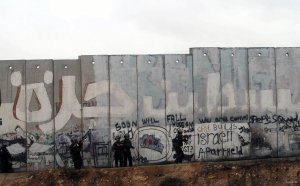 Media reports in Israel have reported that the army is planning to build walls around Palestinians towns and villages on the pretext that it will stop stones being thrown at illegal Jewish settlers.
“The army will build 9 metre high walls in the areas of Beit Ummar, Al-Arroub, Gush Etzion, and the areas surrounding Highway 60, south of the West Bank,” claimed Channel 2 TV.
In response, Mustafa Barghouti, the Secretary-General of the Palestinian National Initiative, told Anadolu, “The Israeli army’s decision to build walls around important and vital areas in the southern part of the West Bank aims to control large Palestinian areas for settlers. It also aims to isolate the areas from each other in order to prevent any chance to establish a Palestinian state.”
Such walls, added Barghouti, are in addition to the 676 military checkpoints in the occupied West Bank as part of the Israeli plan to divide the territory and control all of its vital areas.
Turkish troops ‘raiding civilian houses’ in Kurdish city of Silopi
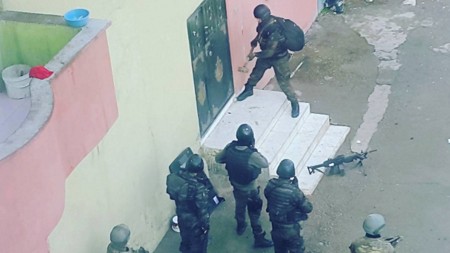
© farukencu / Instagram
RT | December 17, 2015
The Turkish Army has reportedly sent military vehicles, including tanks, into civilian areas in its predominantly-Kurdish southeast. While mainstream Western media remains silent, local activists posted frightening photos on social media.
The People’s Democracy Party (HDP) published a series of photos of the Thursday raid by the Turkish Army. According to HDP, soldiers in the Yenisehir district of Silopi “broke into a building and pointed guns at people.”
Ferhat Encu, an MP for the People’s Democratic Party, was taken into custody in Silopi.
“The world and those justifying this cruelty know well, this isn’t an ‘anti-terror’ act. This is an ethnic cleansing and genocide operation,” the party tweeted.
Ankara has been busy conducting military operations in the southeast since summer. Tensions have been mounting for months as security forces have been battling Kurdistan Workers’ Party (PKK) militants after a ceasefire collapsed in July. The PKK has been fighting for an autonomous Kurdish region inside Turkey for over three decades.
Earlier this week, Turkish Prime Minister Ahmet Davutoglu promised that anti-PKK operations would continue in Silopi and Cizre in order to, as he put it, prevent the militants from “spreading the fire” from Syria and Iraq into Turkey.
“The terrorists will be wiped out from these districts. Neighborhood by neighborhood, house by house, street by street,” he pledged.
Nurcan Baysal, founder of the Diyarbakir Political and Social Research Institute, has described Davutoglu’s language as “very dangerous.”
“If the Turkish state wants peace with its Kurdish citizens, it should change its dangerous language into the language of peace,” Baysal told the Middle East Eye news outlet. “Unfortunately, the Turkish state has decided to wage war against the Kurdish people again.”
“People are without water, electricity, food, medical care, and many civilians have died – and state officials say that they will continue this.”
Figen Yuksekdag, the co-chair of the pro-Kurdish Peoples’ Democratic Party (HDP), has publicly accused Davutoglu of “ordering a massacre” in Cizre and Silopi.
“Who are these operations against, Mr. Prime Minister?” Yuksekdag wondered at a press conference in Diyarbakir. “There are people living in these houses, Davutoglu,” she said.
Thousands took to the streets of Diyarbakir in late November after Tahir Elci, a lawyer and campaigner for Kurdish rights, was shot dead in while giving a speech on November 28. This became the last straw.
Seven Kurds were killed following clashes with Turkish security forces earlier this week. Two died in the city of Diyarbakir as protesters fought with police, while five lost their lives in the Mardin province.
Around 5,000 people gathered for a march in Diyarbakir on Monday, according to AP, which was called by the Peoples’ Democratic Party (HDP). Local residents gathered to voice their concerns about round-the-clock curfews being implemented in the region.
According to the Human Rights Foundation of Turkey, there have been a total of 52 curfews imposed since mid-August across seven provinces in the region, affecting areas where some 1.3 million people live.
Residents from the pro-Kurdish town of Silvan (some 80km north east of Diyarbakir) said they had been shelled by Turkish forces in mid-November, while the never-ending curfew had driven them to the brink of starvation.
Featured Video

“Historic Russia”: The Land Putin Will Not Give Back
or go to
Aletho News Archives – Video-Images
From the Archive
How Ukraine Tortured and Slaughtered Donbass
By Kit Klarenberg | Al Mayadeen | July 11, 2024
Almost immediately after the proxy war erupted, ISIS-tier footage of the torture and murder of Russians in Ukrainian custody emerged.
On July 6th, the New York Times published an astonishing investigation: In Ukraine, Killings of Surrendering Russians Divide an American-Led Unit. The article documents in grim detail how Chosen Company, an international volunteer battalion for Kiev, routinely executes Russian prisoners of war. It is the very first mainstream admission that this practice – a brazen breach of the Geneva Conventions, and a grave war crime – is widespread among Ukraine’s fighters, both foreign and homegrown. … continue
Blog Roll
 Aletho News
- Record Oil, Empty Tanks: The UAE’s Miracle Recovery
- Burnham tackles Britain’s poverty with aggression in Yemen
- Peace in Ukraine: the easy way – or the hard way
- Trump & the Rrrrussians
- US taxpayer money laundered back through Ukraine – Musk
- Before COVID, an NIH lab chief proposed making a SARS-like bat virus more infectious
- Gates, Bourla on Trial in Netherlands Accused of ‘Great Reset’ Scheme at Vaccine Injury Hearing
- BRITAIN’S WARNING: PREPARE FOR WAR
- “Historic Russia”: The Land Putin Will Not Give Back
- How the Cambridge Analytica scandal still haunts Mark Zuckerberg
- If Americans Knew
- DAILY UPDATE: Latest essential news on Palestine, Israel, & region
- Damning report shows the media must confront its failures on Gaza
- BBC senior broadcaster speaks out on Gaza coverage
- Netanyahu vows vast West Bank invasion in response to 20-minute skirmish that left 2 Israeli soldiers and 2 Palestinian fighters dead
- Tied up and tortured: Israel using US-made electroshock weapons on Palestinian detainees
- The outsourced risk: how newsrooms rely on Gaza’s freelancers without protecting them
- Gaza bakeries forced to shut as Israel blocks flour shipments
- Gaza’s breast cancer patients face a deadly wait for treatment amid Israel’s genocide
- DAILY UPDATE: Latest essential news on Palestine, Israel, & region
- The Israel Lobby’s Changing Fortunes
- No Tricks Zone
- Two New Studies Find Thwaites Glacier Melt Cannot Be Driven By Human Activity Or A Warming Ocean
- E-Cars Reduce CO2 Emissions By Only 41% Compared To Internal Combustion Engine Vehicles
- Predictions Made By Renowned Climate Professor Over Past Decades Have Been Proven To Be Poor
- New Study Suggests Large Regions Of The Pacific Ocean Have Been Cooling For The Last 80 Years
- Germany’s Green Energy Debacle: High Energy Costs Force Kahla Porzellan to Close After 182 Years!
- New Study: 50 Years Of The Most Aggressive ‘Net Zero’ Policies Can Only Affect The Global Climate By 0.03°C
- US September “Heat” Was No Record…Many Records Set Decades Ago
- Latest European Green Energy Debacle; Portugal’s Largest Flagship Solar Park Insolvent!
- Green Energy Debacle: German Expert Professor Fritz Vahrenholt Warns Of Severe Economic And Social Consequences
- Two More Paleo Reconstructions Affirm Meters-Higher Sea Levels Across Ireland, Brazil 7000-6000 Years Ago

