Israeli forces raid mourning tent of slain Jerusalem teen
Ma’an – October 6, 2015
JERUSALEM – Israeli forces on Tuesday raided the East Jerusalem mourning tent of a Palestinian teenager killed by Israeli forces in the early hours of Sunday.
The father of Fadi Alloun, 19, told Ma’an that Israeli forces and intelligence officers raided the tent in Beit Hanina and threw stun grenades and pepper-sprayed mourners.
They also removed Palestinian and Fatah flags from the tent and detained an unidentified youth, he said.
A Ma’an reporter said Israeli forces then fired stun grenades at cars leaving the mourning ceremony, including at the private vehicle of Fatah official Adnan Ghaith.
Israeli authorities on Monday night said they would not be handing over the body of 19-year-old Fadi Alloun to relatives, despite having agreed to do so earlier that day, a human rights lawyer told Ma’an.
Israeli authorities initially said the body would only be released on condition that no more than 70 Palestinians attend the funeral.
They also demanded that Alloun’s family pay a guarantee of 20,000 shekels ($5,200), which would have been refunded if the condition was met.
Alloun was shot dead by Israeli forces after he allegedly attempted to stab a 16-year-old Israeli in East Jerusalem early on Sunday.
However, Alloun’s family has disputed that he was involved in the attack, saying saying that Israeli forces shot him dead while he was fleeing from Israelis who were trying to attack him.
More Palestinians injured as Israeli forces violently attack mourners at a funeral in Bethlehem
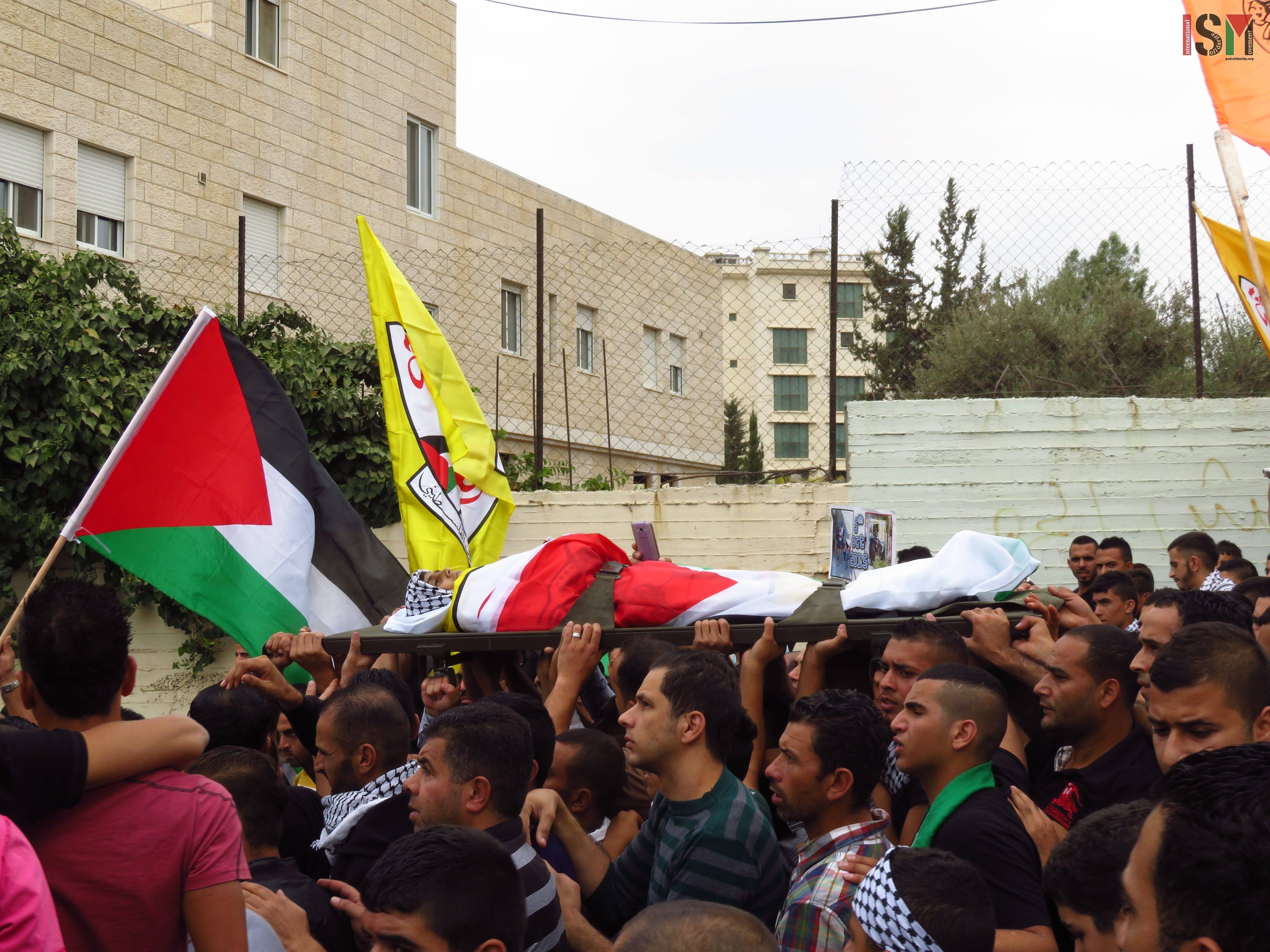
The body of Abed al-Rahman Obeidallah at the funeral march
International Solidarity Movement | October 6, 2015
Bethlehem, occupied Palestine – The funeral of the 13-year old Abed al-Rahman Obeidallah, who was shot and killed by Israeli forces on his way home from school yesterday, took place today in Betlehem with over a thousand attendees. They marched from the Beit Jala hospital to Abeds house in Aida refugee camp. After the burial ceremony the mourning Palestinians were violently attacked by Israeli forces as they sprayed the streets with skunkwater and fired over a hundred tear-gas canisters, shot endless rounds of rubber-coated steel bullets and live ammunition. This resulted in more than 20 injuries. At least 13 Palestinians suffered from excessive tear-gas inhalation. At least 8 Palestinians were injured from rubber-coated steel bullets and at least 2 were shot with live ammunition.
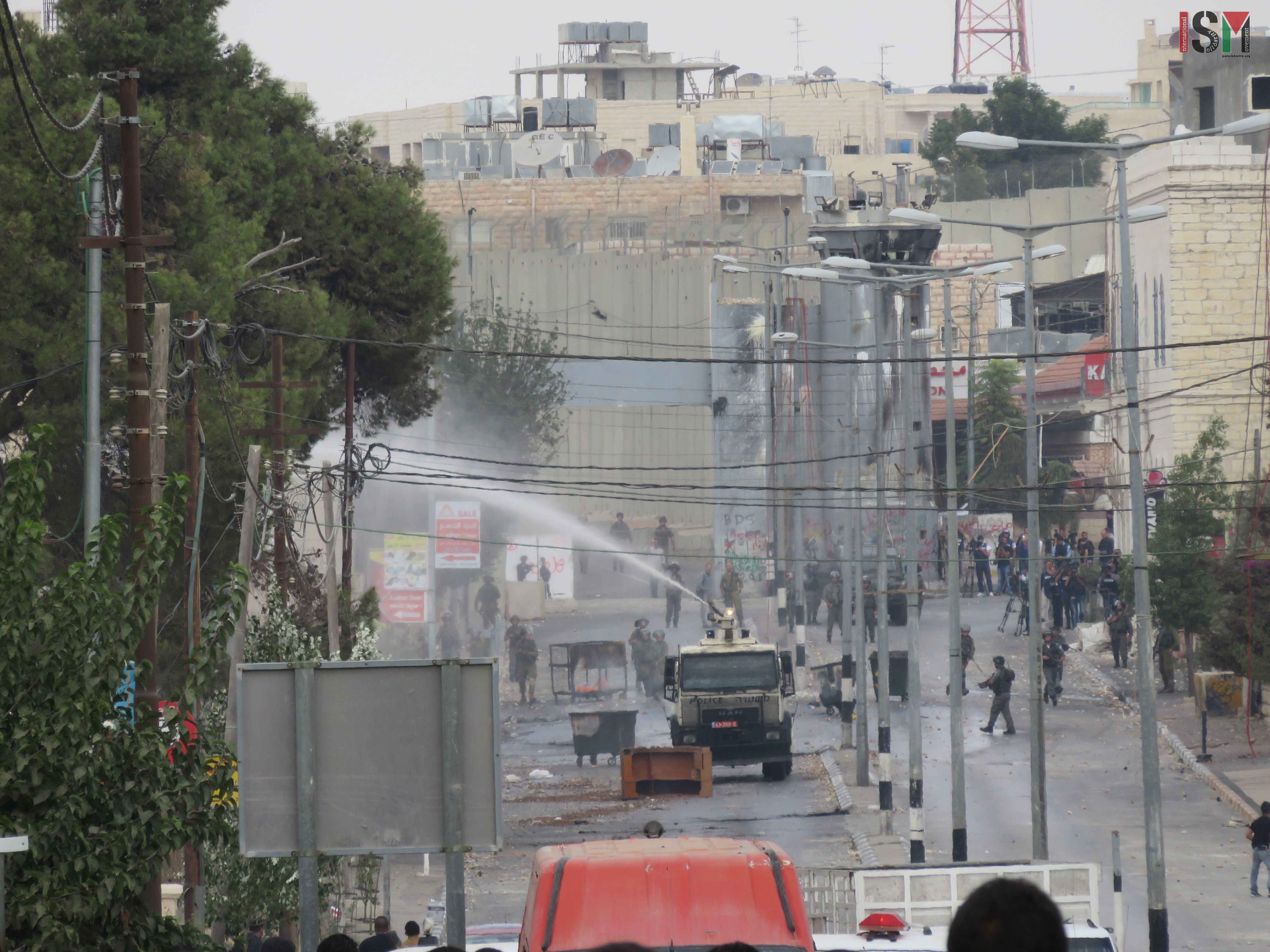
Israeli forces sprayed the streets with skunk water
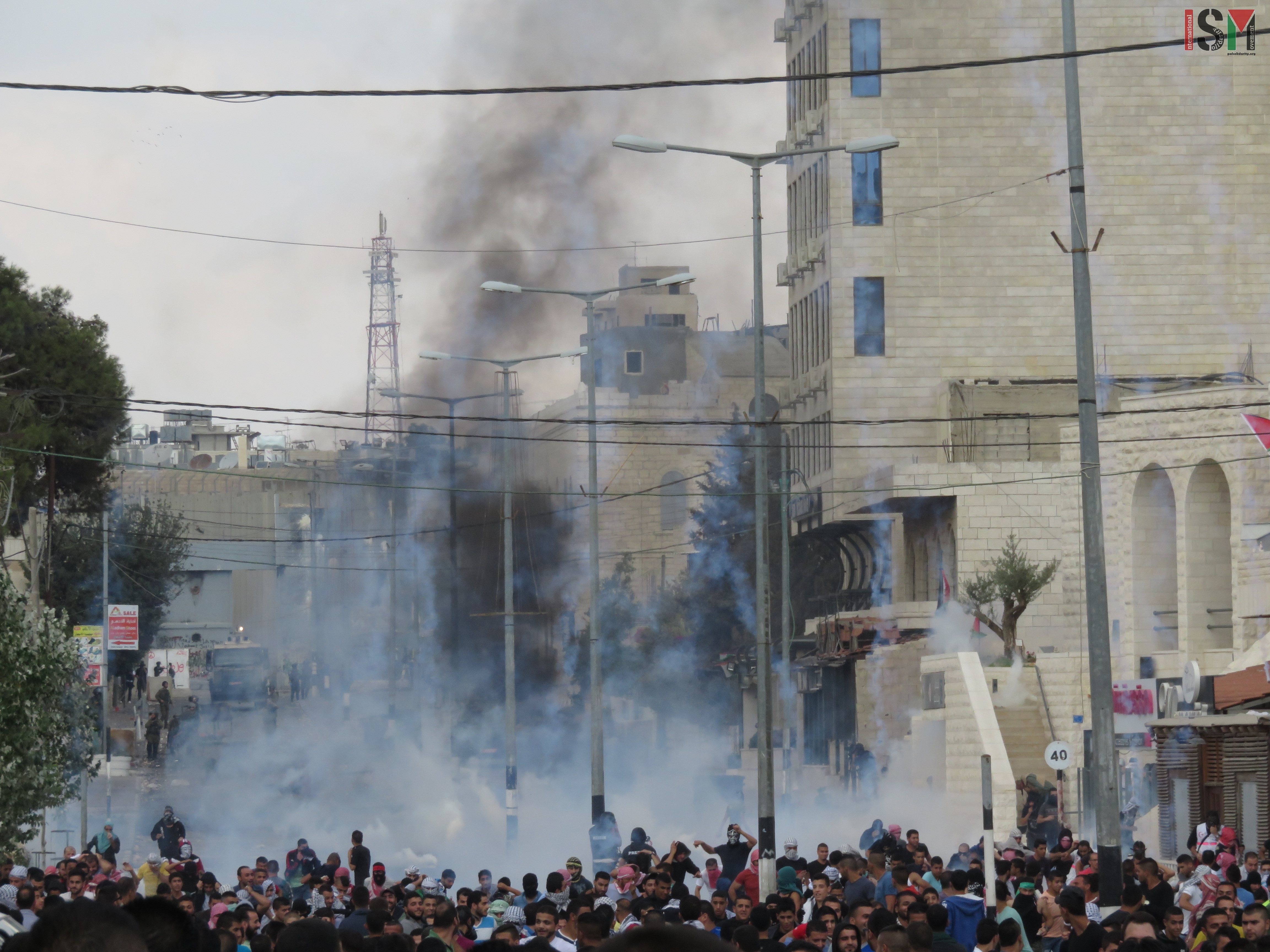
Excessive use of tear-gas by Israeli forces
The Constant Cruelty of the Israeli Occupation: A No-go Zone in The NY Times
By Barbara Erickson | TimesWarp | October 5, 2015
As Israelis and Palestinians die in an upsurge of violence, The New York Times fails once again to give readers an honest look at the causes of this agonizing conflict. Missing from its pages is any real exposure of the brutal and illegal occupation of Palestine that underscores every aspect of the current crisis.
Thus we find a story today that focuses on the abstract: how Prime Minister Benjamin Netanyahu can “calibrate his response” to avoid provoking greater violence and satisfy his extremist opponents in the government. It is heavily weighted with Israeli punditry and refers to ongoing clashes and attacks, but it makes no effort to provide the essential context.
In this article by Jodi Rudoren and Isabel Kershner the word “occupation” appears only in a quote by PLO official Hanan Ashrawi. “Palestine,” she says, “has been subject to the systematic and escalating violence of the occupation, whether in the form of settler-terrorism or at the hands of the Israeli military using live ammunition.”
Times readers are likely to dismiss her words as little more than rhetorical flourishes of the opposition, given that the newspaper has consistently failed to show the full reality of life for Palestinians, glossing over violence by soldiers and settlers and giving prominence to Palestinian attacks.
For instance, today’s report states that a Palestinian teenager was shot after he tried to stab an Israeli youth early Sunday, but it omits any mention that videos show he was chased down by a mob, shot by police, was carrying no knife and did not pose a threat to anyone in the area.
The story also says nothing of settler rampages throughout the West Bank in recent days, which have left dozens injured and forced the Red Crescent Society to declare a state of emergency after numerous attacks on its ambulances by both settlers and security forces.
Times readers rarely receive even a brief glimpse of what occupation means to Palestinians. The newspaper largely ignores the constant reports emanating from alternative media, the United Nations and monitoring groups that show how a sophisticated military power oppresses a nearly helpless population lacking even the most basic weapons for defense.
Readers remain ignorant of the Israeli abuse of Palestinian child prisoners, a situation that has been documented and criticized in numerous reports. They are unaware of the frequent Israeli attacks on Gaza fishermen and farmers and a recent United Kingdom report that states Israel has violated the 2014 ceasefire some 700 times since August of last year.
They hear nothing of the ethnic cleansing of the Jordan Valley, where Israeli troops harass the poorest and most vulnerable communities, burning their crops, destroying their tents and water systems and repeatedly forcing them from their homes for “maneuvers.”
They are unaware of the huge disparity in water supplies between the illegal settlements in the West Bank and the indigenous Palestinian villages, and they were never informed when hundreds of animals died in the West Bank community of Kafr Qaddoum this summer as Israeli officials cut off water deliveries during a stifling heat wave.
These constant, daily cruelties find no place in the Times, and readers likewise find no historical backdrop for the occupation. It is rarely, if ever, reported that Israel is in the West Bank and East Jerusalem as a military occupying force and that the settlements are built in defiance of international law.
Without this backstory, it is not surprising when readers take Netanyahu’s claim at face value: that acts of resistance against the occupation are nothing but terrorist assaults arising out of a free-floating hatred of Jews.
Palestinians watch with dismay as Israel confiscates ever more land and resources, forcing the indigenous communities into poverty-stricken bantustans. This is the reality that is missing from the Times, deliberately obscured in the context-free reporting of Rudoren and Kershner.
Second Saudi juvenile to face ‘beheading’ for protests
Reprieve | October 6, 2015
A second juvenile is facing beheading in Saudi Arabia after a court upheld his conviction for a role in protests, days after the case of juvenile Ali al-Nimr sparked a global outcry.
Dawoud al-Marhoon was 17 when he was arrested without a warrant by Saudi security forces in May 2012, at the height of protests in the country’s Eastern Province. He was tortured and made to sign a ‘confession’ that was later relied on to convict him. He has been held in solitary confinement, and has been barred from speaking to his lawyer. Last week, the Specialized Criminal Court – the same body that recently upheld a sentence of ‘crucifixion’ for Ali al-Nimr – upheld Dawoud’s conviction, and sentenced him to death by beheading.
With legal avenues exhausted, both juveniles could now be executed at any time, without prior notification to their families. The executions are expected to go ahead despite concerns about the fairness of both trials; Dawoud was sentenced after a number of secret hearings took place without the presence of his lawyer, who was also blocked from receiving information about appeal hearings.
The case of Ali al-Nimr, who faces a sentence of ‘crucifixion’ – involving beheading and the public display of his body – has prompted strong international criticism, with the French government and a group of UN experts among those calling for a halt to the plans. Asked by the BBC on Sunday, British Prime Minister David Cameron said his message to the Saudi government was “don’t do it”, and that “we never stint in telling them that we don’t agree with them on these human rights issues.”
However, Mr Cameron’s government has been criticized for continuing with a Ministry of Justice bid to provide services to the Saudi prison system. Concerns were also raised last week about the UK’s foreign policy priorities after Sir Simon McDonald, Permanent Secretary at the Foreign Office, told MPs that human rights no longer had the “profile” within his department that they had “in the past”.
Commenting, Maya Foa, director of the death penalty team at the human rights organization Reprieve, said: “Ali al-Nimr’s case has rightly prompted revulsion among the international community – it is therefore horrifying that the Saudi government is pushing ahead with plans to exact a similarly brutal sentence on another juvenile, Dawoud al-Marhoon. It’s also deeply disappointing to see the US and the UK – who are among the Saudis’ closest allies – failing to intervene strongly to stop these executions from going ahead. It is grossly hypocritical for David Cameron to say he opposes these sentences, while his government is bidding to support the very prisons service who will be responsible for carrying them out. The British government must urgently change its priorities – ministers must cancel the bid, and call unequivocally on Saudi Arabia to halt the executions.”
12 year old Palestinian killed in Bethlehem as violence explodes across the West Bank
International Solidarity Movement | October 5, 2015
West Bank, occupied Palestine – Abed al-Rahman Shadi Obeidallah, 12 was still in his school uniform when he was rushed in a civilian car to Beit Jala hospital from Aida refugee camp in Bethlehem today. The boy, from from a Al Kahder village, was shot in the heart during confrontations at Aida camp as violence explodes across the West Bank prompting the Red Crescent to declare a level 3 state of emergency across the occupied Palestinian territories. Another boy was shot in leg with live ammunition during the attack.
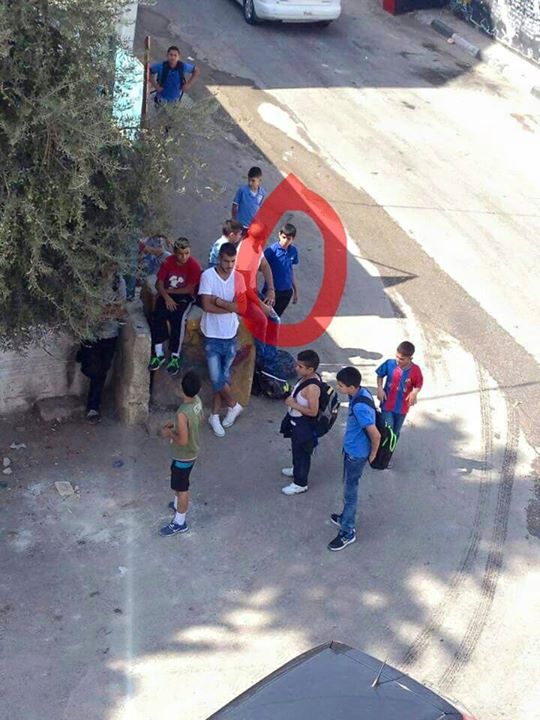
Abed al-Rahman Shadi Obeidallah, 12, just before being shot to death by Israeli forces in Bethlehem
Denouncing Israeli violations against humanitarian international law, the Palestine Red Crescent Society staff have endured 14 attacks on their emergency vehicles as Israeli forces and settler violence has sharply surged in a bloody three days. Attacks on PRCS have included medics being beaten by soldiers in Jerusalem, Israeli forces beating an ambulance crew with batons in the old city of Jerusalem and after one attack on an emergency crew in Jabal Al Taweel (Al-Bireh), two medics were injured. Israeli forces attacked an ambulance in al-Issawiya village in occupied East Jerusalem, before arresting an injured Palestinian who was being treated inside the ambulance. An ambulance windshield was also shattered by settlers in Burin village in Nablus. Burin underwent a frightening attack by settlers which left much of it in flames.
Reportedly 465 Palestinians have been injured thus far, including 28 shot with live ammunition and 68 injured with rubber coated steel bullets. Hundreds of others have been overcome by teargas that Israeli forces have been showering over villages and in cities where Palestinians have gathered to demonstrate against their murdering of several Palestinian youths since this past Saturday.
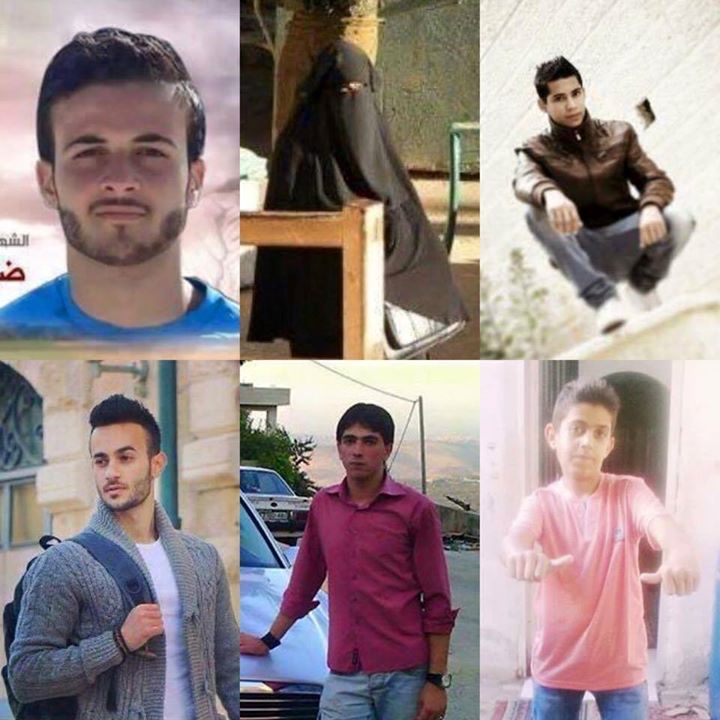
Young Palestinians martyrs recently murdered by Israeli forces.
Fadi Samir Mustafa Alloun, 19, from the East Jerusalem village of al-Issawiya, was shot to death by Israeli forces after allegedly attempting to stab a group of Israelis. 18-year-old Huthayfa Othman Suleiman was shot in the chest during clashes and died in the operating room. In a particularly heinous attack, Yousef Bayan al-Tabib, just six years old, was standing on the side of the road when a settler reportedly stopped his car, shot the child in the stomach, and fled the scene.
Across the occupied Palestinian territories, there have been reports of settlers slaughtering Palestinian’s sheep, attacking Palestinian cars with stones on roads and carrying out violent attacks on villages. As for Israeli forces, soldiers disguised as Palestinians assisting an injured Palestinian into a hospital in Ramallah, disabled security cameras and proceeded to arrest a Palestinian undergoing medical treatment. This is similar to other hospital raids in recent days where a variation of this tactic was repeated.
As for the Israeli government, Netanyahu today made an inflammatory statement to wage a “harsh offensive” against Palestinians; Zionist opportunism at its most typical. Collective punishment is the usual expectation when it comes to the illegally occupying force dealing with the civilian population whose land they are occupying. Israel launched three air strikes in the besieged Gaza strip targeting alleged Hamas ‘terror’ sites after two rockets were fired from Gaza, hitting nothing and injuring no one.
News reports of shootings, injuries, murders, arrests and raids continue to flood in as the situation unfolds at a lightning quick pace. For Palestinians enduring the brunt of Israeli incited race hatred and promoted retribution for the shooting of two Israeli settlers last week, the cavalierly imposed restrictions on al Aqsa Mosque, which have sparked outrage and violent confrontations- and the ensuing chaos, are yet another violent incursion into their lives.
No militants at MSF hospital in Kunduz during US strike
Press TV – October 4, 2015
Doctors Without Borders has dismissed claims that members of the Taliban militant group were firing against Afghan and US forces from the clinic run by the charity group in Kunduz, northern Afghanistan, before a US airstrike on the medical facility.
The group, known by its French acronym as the MSF (Medecins Sans Frontieres), in a statement issued on Sunday rejected the claim about the presence of the militants at its facility, saying, “The gates of the hospital compound were closed all night so no one that is not staff, a patient or a caretaker was inside the hospital when the bombing happened.”
The Afghan Defense Ministry earlier said Taliban militants had attacked the hospital and were using the building “as a human shield.”
The militants had entered the compound of the medical center and used “the buildings and the people inside as a shield” while firing on security forces, said Brigadier General Dawlat Waziri, the Defense Ministry’s deputy spokesman.
Afghanistan’s Interior Ministry spokesman, Sediq Sediqqi, said 10 to 15 “terrorists” had been hiding in the clinic at the time of the US strike, adding, “All of the terrorists were killed but we also lost doctors.”
The US military said it conducted an airstrike “in the vicinity” of the hospital, as it targeted Taliban militants who were directly firing on US military personnel.
“US forces conducted an airstrike in Kunduz city at 2.15 a.m. (local), Oct 3, against insurgents who were directly firing upon US service members advising and assisting Afghan Security Forces in the city of Kunduz. The strike was conducted in the vicinity of a Doctors Without Borders medical facility,” said General John F Campbell, the commander of the US forces in Afghanistan.
The MSF said in a statement that at 2:10 a.m. local time on Saturday (2040 GMT) its trauma center in Kunduz was hit several times. It added that the aerial assault continued for more than half an hour after US and Afghan military officials in Kabul and Washington were first informed.
According to the statement, the Saturday attack left 19 people dead and dozens more seriously injured.
The survivors of the US airstrike on the clinic say those patients unable to move were burned to death during the assault.
The MSF facility is the only one in the northeastern region of Afghanistan capable of taking care of major injuries.
According to the MSF, over 100 patients and their caregivers, as well as more than 80 international and local MSF staff were in the hospital when the airstrike took place.
On September 28, Taliban militants overran Afghanistan’s northern city of Kunduz, but were later forced to withdraw from much of the city in the face of a government counterattack. Sporadic clashes continue as Afghan troops struggle to clear remaining pockets of the militants.
Kunduz is strategic as it is located on a crossroad that connects key regions of the country. It is also along the country’s border with Tajikistan and could offer the militants the opportunity to establish a base in the country’s north.
Patients were burned to death in US airstrike on clinic in Kunduz, survivors say
Press TV – October 4, 2015
The survivors of a US airstrike on a clinic run by Doctors Without Borders in Kunduz, northern Afghanistan, say those patients unable to move were burned to death during the assault.
“Those people that could, had moved quickly to the building’s two bunkers to seek safety. But patients who were unable to escape burned to death as they lay in their beds,” recalled Heman Nagarathnam, the head of programs by the charity group, known by its French acronym, MSF (Medecins Sans Frontieres).
It was also said that a patient was left in the operating room on the table “dead, in the middle of the destruction.”
“The bombs hit and then we heard the plane circle round,” Nagarathnam said, adding, “There was a pause, and then more bombs hit. This happened again and again.”
The MSF said in a statement that at 2:10 a.m. local time on Saturday (2040 GMT) its trauma center in Kunduz was hit several times. It added that the aerial assault continued for more than half an hour after US and Afghan military officials in Kabul and Washington were first informed.
According to the statement, the Saturday attack left 19 people dead and dozens more seriously injured.
Lajos Zoltan Jecs, an MSF nurse and a survivor of the horrific bombardment, described the US airstrike as “absolutely terrifying.”
The nurse, who was inside the facility during the strike, said, “We tried to take a look into one of the burning buildings. I cannot describe what was inside. There are no words for how terrible it was.”
“In the intensive care unit six patients were burning in their beds,” Jecs added. … Full article
Sami Ali El Goga – The Story of a Gazan Fisherman
International Solidarity Movement | September 3, 2015
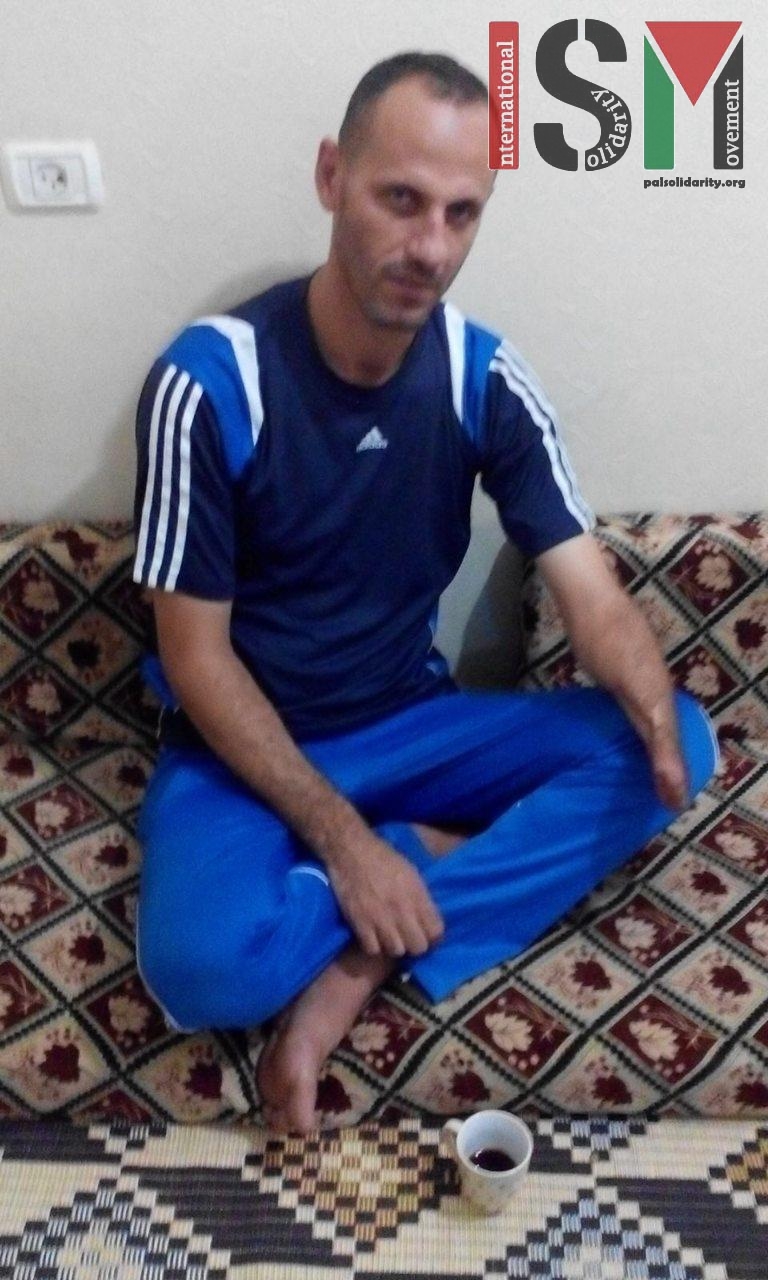 ISM Gaza met the fisherman Sami Ali El Goga, 36, who lost his hand and part of his arm the 12th March 2007, when he was attacked by the Israeli navy. In the same attack his boat was completely destroyed and his 13-year-old nephew, who was in the boat with him, sustained shrapnel wounds throughout his body.
Eight years later he is still waiting for the assistance promised by several international agencies, as he hasn’t been able to work since the attack, and without the boat a 20-member-family lost its source of income.
On that day, Sami and his nephew had just reached the 1.5 miles naval blockade when the zionist army approached and started shooting rockets towards them. They attempted to escape to the closest beach, as there was no chance to reach the port. Once on the beach the shooting didn’t stop. Whilst attempting to escape from the boat with his nephew, it was hit by a rocket and in the explosion Sami was severely injured. He nearly bled to death waiting for medical assistance as the Israeli navy prevented any recue from reaching him until 30 minutes later.
After 3 hospitals in Gaza weren’t able to treat him the Palestinian Authority mediated in order that he could be treated in a Hospital in the ‘48 territories (AKA Israel), as the occupation had previously refused to allow him to exit Gaza. The doctors there amputated his hand and afterwards he was taken by the zionist intelligence for an interrogation before sending him back to Gaza.
This wasn’t the first attack Sami suffered, as another boat from his family had been stolen by the occupation in the past.
Israel Escalates ‘Water-Apartheid’ As Illegal Settlers Contaminate Palestinian Water
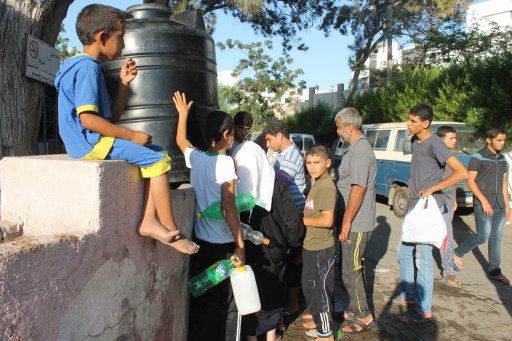
Palestinians displaced by Israeli strikes wait to get water from portable tanks near a makeshift encampment behind Gaza’s al-Shifa hospital, July 26, 2014. (Joe Catron)
By Joe Catron | Mint Press News | September 29, 2015
UNITED NATIONS — Israeli restrictions on Palestinian water use, as well as damage to water supplies and infrastructure by both Israeli forces and Jewish settlers, continue to deplete the already limited water supplies available to millions of Palestinians in the occupied West Bank and Gaza Strip.
“Water is used by the Israelis to achieve non-water interests, as a tool of punishment,” Dr. Abed Elrahman Tamimi, director of the Palestinian Hydrology Group in Ramallah, told MintPress News.
Meanwhile tens of thousands of Palestinians within Israel continue to lack access to running water, despite their citizenship in the state and the equality they should receive under its laws.
Israel has limited the water available to Palestinians in the Gaza Strip and West Bank since its forces occupied the enclaves, placing them under military rule, in 1967.
‘Scandalously uneven, humiliating and infuriating’
The Oslo II Accord, signed by Israel and Palestine Liberation Organization on Sept. 28, 1995, formalized this disparity, imposing what Israeli newspaper Haaretz writer Amira Hass called “a scandalously uneven, humiliating and infuriating division of the water resources of the West Bank.”
The agreement afforded Palestinians 118 million cubic meters of water per year from the Mountain Aquifer that stretches into Israel from the West Bank, while obligating Israel to sell Palestinians a further 27.9 mcm annually at full price.
It also entitled Israel to claim 483 mcm per year – over four times as much – but allocated none to the Gaza Strip, which was left to rely on the small Coastal Aquifer.
According to its own terms, Oslo II should have terminated in Palestinian independence after five years, with a joint committee increasing Palestine’s water allocation through consensus in the meantime. Neither scenario has come to pass.
In coming years, Israel would make clear that it had no intention of ever ending its control of Palestinian water. A June 7, 1997 order reiterated its longstanding policy: “All the water in the land that was occupied again is the property of the State of Israel.”
Successive governments pushed new waves of settlement construction, universally considered war crimes under the fourth Geneva Convention, on Palestinian lands in the West Bank. By 2000, the number of settlers had swelled 26 percent.
Like earlier settlements, the sites of many new units were calculated to maximize Israeli control of Palestinian water. In 2001, then-Israeli Prime Minister Ariel Sharon told Haaretz : “Is it possible today to concede control of the aquifer, which supplies a third of our water? Is it possible to cede the buffer zone in the Jordan Rift Valley? You know, it’s not by accident that the settlements are located where they are.”
Israeli measures to cement its occupation, along with provocative raids of the Al-Aqsa Mosque in Jerusalem, ultimately produced the Second Intifada, a Palestinian uprising that erupted on Sept. 28, 2000, five years to the day after Oslo II.
A vicious water cycle
Palestinians currently use no more than 11 percent of the Mountain Aquifer, with Israel enjoying the rest, according to the Emergency Water, Sanitation and Hygiene group (EWASH), a coalition of 28 Palestinian and international agencies dealing with water issues in the West Bank and Gaza Strip.
Meanwhile, West Bank Palestinians purchase 50 mcm of water each year from Mekorot, Israel’s national water company, paying $50 million for the return of their own resources at prices up to three times those charged to Israeli consumers.
Oslo II obligated Israel to increase its water sales to Palestinians in the Gaza Strip from 5 to 10 mcm annually during the supposed five-year “interim period.” But only this year, following widespread condemnation of its military operation against the besieged enclave last summer, did it finally do so, meeting 5 percent of the water needs of a population that has more than doubled.
On September 1, a United Nations Conference on Trade and Development report repeated a warning, first made by the UN’s Country Team for the occupied Palestinian territory in 2012, that the Gaza Strip could become unlivable by 2020.
UNCTAD cited the destruction of Gaza infrastructure during repeated Israeli offensives, including damage to 20-30% of the enclave’s water and sewer network, a water desalination plant, and 220 agricultural wells during last summer’s 51-day operation alone, as well as Israeli restrictions on economic development and reconstruction.
It also warned that “a severe water crisis” had forced the use of water from the Coastal Aquifer — 95% of it unfit for drinking — at levels “well above the recharge rate by over 100 million cubic meters, almost twice the sustainable rate.”
“The over-abstraction and scarcity of drinking water have been exacerbated by crumbling sanitation infrastructure, while the blockade creates chronic shortages of electricity and fuel, which in turn aggravate contamination and the water crisis,” the report said.
“The damage of contamination and over-abstraction is such that the aquifer may be unusable by 2016 and, if unaddressed, the damage may be irreversible by 2020.”
The total damage inflicted to the water sector by Israeli strikes last summer reached over $34 million, according to a report by the Palestinian Water Authority, although UNCTAD’s report says that “long-term repair of the accumulated damage and decay of the water and sanitation infrastructure will require $620 million.”
Last month, EWASH reported that 120,000 Palestinians across the Strip remained disconnected from its water network, while 23 percent of its 1.8 million residents lacked access to its sewage service.
Destroying infrastructure
Palestinians have never extracted their full 118 mcm of water from the Mountain Aquifer, as Israeli restrictions on wells and other infrastructure across most of the West Bank prevent them from doing so.
These military orders stretch into the Gaza Strip, where the threat of airstrikes forces residents hoping to dig wells to first seek permits from the Israeli army.
While sometimes given there, such permission is usually denied in Area C, the 60 percent of the West Bank under direct Israeli military administration, often on the claimed basis of Israeli security.
Israel targets unauthorized construction ruthlessly. Since the beginning of this year, its forces have destroyed 36 Palestinian water, hygiene and sanitation structures in Area C, usually citing their lack of permits, according to United Nations Office for the Coordination of Humanitarian Affairs data reviewed by EWASH.
Rare permits come at high prices. A 2013 study found that Israel usually conditions its approval of Palestinian water projects on the Palestinian Authority’s acquiescence to the construction of new settlement infrastructure, forcing the occupied population to “consent to their own colonization.”
As Palestinians, particularly in agricultural communities, scramble to meet their needs for water, Israel’s demolition of the necessary infrastructure, from pipes in Kafr Qaddum and Khirbet Yarza to wells in Hebron, continues.
‘Water-apartheid’
The pollution resulting from the destruction of wastewater treatment facilities has further damaged Gaza’s already depleted aquifer, rendering over 90 percent of local water unfit for drinking.
In the West Bank, 73.5 percent of Palestinians have expressed satisfaction with the quality of their water.
Yet the quantity remains woefully inadequate, as the average Palestinian can use only 70 liters of water per day – a figure that dips to 20 in some cases – while illegal Israeli settlers enjoy over 300. The World Health Organization suggests a minimum of 100 liters of water per day for sanitation, hygiene and consumption.
Confronted by a lack of water in some areas of the West Bank, and nearly all of the Gaza Strip, Palestinians face the “economic burden of purchasing water from tankers,” the Palestinian Hydrology Group’s Dr. Tamimi said.
In a March 2013 report, the Ramallah-based human rights group Al-Haq called Israel’s “demarcation of the population along racial lines,” their “segregation into different geographical areas” and the “use of ‘security’ to justify an institutionalized regime of domination and systematic oppression,” “the three pillars of Israel’s ‘water-apartheid.’”
“[A] second and disadvantaged Palestinian society living in the same territory is denied most of its basic rights,” Al-Haq stated. “Palestinians are forcibly confined to a land-locked archipelago of territory with minimal water resources available.”
This gross asymmetry extends inside Israel, where a June 2014 report by the Negev Coexistence Forum for Civil Equality found that 73,000 Palestinian Bedouin, living in villages unrecognized by the state, lacked sufficient running water.
Despite paying 30 percent more than other consumers for the meager supplies of water they received, the Israeli Ministry of Health did not monitor its quality.
Hazardous waste
Palestinian water supplies face further threats from pollution by Israeli waste, both dumped from nearby illegal settlements and shipped from inside Israel.
A June 2013 Israeli state report found that a third of sewage treatment facilities in settlements were either insufficient or inoperative.
The previous year, it reported, 2.2 mcm of waste had flowed from settlements directly into nearby waterways and cesspits.
As many settlements stand on hills, much of this untreated sewage then becomes the problem of neighboring Palestinian communities whose farmlands and groundwater it pollutes.
“The settlement wastewater goes to the aquifers and pollutes the groundwater,” Dr. Tamimi said.
The city of Salfit and nearby town of Kafr al-Deek have been repeatedly drenched with sewage from the settlements of Ariel and Yakir, most recently on Wednesday, affecting their agriculture and tourism, as well as local water supplies.
“Josephine,” a volunteer for the Ramallah-based International Solidarity Movement, noted that settlement pollution does not stop with sewage. “Many factories let out polluted water and waste into the water sources that Palestinians use,” she told MintPress.
In February, after Palestinian customs police discovered a truck transporting asbestos from Israel to a landfill in Tulkarem, the Palestinian Environment Quality Authority warned against attempts to smuggle Israeli waste into the West Bank.
‘A form of racism’
On July 2, the Association for Civil Rights in Israel announced that Israel’s High Court had ruled in favor of its clients, Palestinian residents of East Jerusalem who had faced years of water shortages and cutoffs.
Their neighborhoods, lying within the Jerusalem boundaries claimed by Israel but beyond its West Bank barrier, had been “perennially neglected by both municipal and national water authorities,” ACRI said.
The court’s ruling ordered the National Security Council to “investigate and work to mitigate the water crisis in East Jerusalem.”
By the following month, a new water crisis had gripped Palestinian communities throughout the West Bank as governorates in Hebron, Bethlehem, Nablus, Jenin and the Jordan Valley resorted to water schedules announcing planned cutoffs.
These windows of austerity, many Palestinians say, are nothing new. They often occur when demand for water is at its height, like during the hot summer months. Still, they never result in cutoffs inside illegal settlements or in Israel itself.
This disparate treatment, some think, aptly demonstrates the nature of the occupation itself. As Palestinian National Initiative leader Mustafa Barghouti put it: “Restricting water and electricity is a form of racism.”
Israel’s government no longer bothers to deny the intended permanence of its occupation. Last week, as Deputy Foreign Minister Tzipi Hotovely readied a diplomatic offensive against a pending European Union policy to label settlement products, she told the Times of Israel that withdrawals from “Judea and Samaria aren’t even on the list of options we’re offering the Palestinians.”
The occupied West Bank will remain under Israel’s “de facto sovereignty,” Hotovely said.
“It’s not a bargaining chip. It does not depend on the Palestinians’ goodwill. It’s the land of our forefathers. We don’t intend to evacuate it,” she continued, adding: “What I can promise is that Israel’s position will be very forceful and tough on this matter.”
Settler violence sharply escalates in Hebron during Sukkot holiday
International Solidarity Movement | September 30, 2015
Hebron, occupied Palestine – On the second day of the Jewish Sukkot holiday, hundreds of settlers continued filing into al-Khalil (Hebron) creating mass restrictions and sharp escalations in violence against Palestinians living here. Over a period of two hours dozens of them continuously invaded the roof of the Palestinian Abu Shamsiyye family home where several small children live.
Laughing and trying to gain vantage point to view Israeli forces teargassing, stun grenading and firing rubber coated steel bullet projectiles into crowds of Palestinians in the Bab al-Zawiya area of H-1 Hebron, the settlers spit and cursed at the children, darted towards them to frighten them, called them “Arab terrorists” and one male settler charged at and punched a female ISM international human rights monitor as she filmed him trespassing on the roof. The settler was allowed to leave the scene without incident as Israeli forces stood present but did nothing.
Shortly thereafter, as a Palestinian man and his two young sons tried to exit the gate fronting their home, a crowd of a dozen settler boys sat and stood in front of the gate blocking his exit as he politely asked to be allowed to pass. For fifteen minutes the boys kept the man and his sons trapped until an Israeli soldier finally came and told them to move.
Through the sounds of stun grenading and the blasts of high powered rubber coated steel bullets being showered onto Palestinians by Israeli forces just past checkpoint 56, the settlers, of all ages, took turns standing in the Israeli military post where they posed for photos, shouted curses and racial abuses at Palestinians and international human rights monitors and cheered each time a blast rang out.

This was the situation just outside the Abu Shamsiyye family home alone. But hundreds of Palestinian families have been literally under siege during the Jewish Sukkot holiday began yesterday as their roads have been closed, their businesses have been attacked, their children have been arrested and their streets have undergone hours of endless assault by heavily armed Israeli forces both on roofs as well as in the streets to allow for settlers to move freely through Palestinian governed areas it is illegal for them to be, in so they could pray in the streets.
The misery continues for Palestinians existing in occupied al-Khalil (Hebron).
Remembering Muhammad al-Durrah
International Solidarity Movement | September 30, 2015
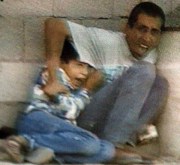 … Filmed by Talal Abu Rahma, a Palestinian cameraman freelancing for France 2, Jamal al-Durrah and his 12-year-old son Muhammad are seen, backs pressed against the wall, Jamal’s arm shielding his young son whose mouth is oval with what must have been a paralyzing fear. And then the shots.
When the cloud of dust cleared, the boy is on his side, draped over his father’s lap.
Throughout an enduing four and a half year widespread Palestinian resistance, with all of its gut wrenching failures, and with the solace and strengths of solidarity en masse coming from both the history before the second intifada and the aftermath in its wake, the slaughter of Muhammad al-Durrah continues to be a defining moment. A young boy viewed guilty through the eyes of the Israeli military due only to the origin of his birth.
In the investigation to follow, an Israeli-initiated tug of war of blame across the grave of and over Muhammad’s murder ensued. Where initially the Israeli government took blame and expressed public relational regret with an apology, that space soon became occupied with denials, accusations and disturbing tales of Palestinian’s faking the boy’s death. If only Palestinians weren’t so busy mourning the actual mass murders of their children in order to be able to spontaneously arrange for the staged murder of one, a second intifada might not have been necessary, nor a third or a fourth for that matter.
Without politicizing the end of a human life, in a 67 year crime drenched in politics; fifteen years ago today a terrified little boy was shot to death while he hid beside his father. And the world should remember his name.
Warning graphic content! Raw footage of Mohammed ad-Durrah’s final moments of his life:
Featured Video
BRITAIN’S WARNING: PREPARE FOR WAR
or go to
Aletho News Archives – Video-Images
From the Archive
How Ukraine Tortured and Slaughtered Donbass
By Kit Klarenberg | Al Mayadeen | July 11, 2024
Almost immediately after the proxy war erupted, ISIS-tier footage of the torture and murder of Russians in Ukrainian custody emerged.
On July 6th, the New York Times published an astonishing investigation: In Ukraine, Killings of Surrendering Russians Divide an American-Led Unit. The article documents in grim detail how Chosen Company, an international volunteer battalion for Kiev, routinely executes Russian prisoners of war. It is the very first mainstream admission that this practice – a brazen breach of the Geneva Conventions, and a grave war crime – is widespread among Ukraine’s fighters, both foreign and homegrown. … continue
Blog Roll
 Aletho News
- Pentagon designates Chinese cultural centers national security threat
- Israel Demolishes Home Of Lebanese Journalist Whose Viral Film Exposed Pager Attack
- Record Oil, Empty Tanks: The UAE’s Miracle Recovery
- Burnham tackles Britain’s poverty with aggression in Yemen
- Peace in Ukraine: the easy way – or the hard way
- Trump & the Rrrrussians
- US taxpayer money laundered back through Ukraine – Musk
- Before COVID, an NIH lab chief proposed making a SARS-like bat virus more infectious
- Gates, Bourla on Trial in Netherlands Accused of ‘Great Reset’ Scheme at Vaccine Injury Hearing
- BRITAIN’S WARNING: PREPARE FOR WAR
- If Americans Knew
- An error has occurred; the feed is probably down. Try again later.
- No Tricks Zone
- Two New Studies Find Thwaites Glacier Melt Cannot Be Driven By Human Activity Or A Warming Ocean
- E-Cars Reduce CO2 Emissions By Only 41% Compared To Internal Combustion Engine Vehicles
- Predictions Made By Renowned Climate Professor Over Past Decades Have Been Proven To Be Poor
- New Study Suggests Large Regions Of The Pacific Ocean Have Been Cooling For The Last 80 Years
- Germany’s Green Energy Debacle: High Energy Costs Force Kahla Porzellan to Close After 182 Years!
- New Study: 50 Years Of The Most Aggressive ‘Net Zero’ Policies Can Only Affect The Global Climate By 0.03°C
- US September “Heat” Was No Record…Many Records Set Decades Ago
- Latest European Green Energy Debacle; Portugal’s Largest Flagship Solar Park Insolvent!
- Green Energy Debacle: German Expert Professor Fritz Vahrenholt Warns Of Severe Economic And Social Consequences
- Two More Paleo Reconstructions Affirm Meters-Higher Sea Levels Across Ireland, Brazil 7000-6000 Years Ago

