Israeli Soldier Interrogates Palestinian Boy at Gunpoint
By Chris Carlson| International Middle East Media Center | March 13, 2014
The Israeli Haaretz newspaper unveiled, Thursday morning, that an Israeli soldier pointed his gun at a handcuffed Palestinian boy, during an investigation after arresting him in Nabi Saleh village, near the West Bank city of Ramallah.
The Al Ray newspaper pointed out that Israeli forces arrested four boys from Nabi Saleh village three weeks ago, under the pretext of throwing stones.
He (one suspect) was led to Benjamin police station for investigation.
There, one of the soldiers who participated in the arrest attended, and was filmed while directing his gun towards the boy in the interrogation room. The soldier left the room after investigation officers arrived, the newspaper added.
It was noted, by the court, that the documentation of the stone-throwing incident is not professional, and that the boys’ identities are in doubt.

Allenby killing highlights need for serious change
By Daoud Kuttab | Ma’an | March 14, 2014
For 46 years the bridge connecting the West Bank with Jordan has been a source of hardships, humiliations and extremely long and unnecessary delays, not to mention cumbersome and exaggerated body and baggage searches.
This nightmare has to end.
What happened on March 10 is a symptom of the occupation versus occupied paradigm that must come to an end.
A 38-year-old Jordanian father of two and a sitting judge in Amman’s Court of First Instance, attempted to travel to Nablus like many Palestinians and Jordanians of Palestinian origin. His altercation with Israeli soldiers that ended with his death must be a warning flag that this injustice and humiliation cannot continue.
Anyone who crosses the King Hussein Bridge knows very well how the Israelis have for decades forged a shameful occupier-occupied relationship with the power of their guns. The Oscar-winning film Twelve Years a Slave, perfectly illustrates the way that the oppressed absorb all kinds of humiliation simply in order to survive as they wait for salvation.
Raed Zuaiter, the Jordanian judge, like any other human being, apparently walked into this mess without the added shield of years of humiliation and he couldn’t accept it.
For their part, the Israeli soldiers, brainwashed to suspect every passenger as a potential “terrorist,” viewed the rebellion against accepting the occupier-occupied paradigm as enough proof that the rebellious person must be a terrorist. As they say, the rest is history.
The Israeli spin machine quickly went into action. The often repeated defense was that Zuaiter went for the soldier’s gun. Later it was adjusted that he went for his throat, attempting to strangle him. The “terrorist” label also required some audio. So again the spin machine fabricated that the judge yelled “Allahu Akbar, Allahu Akbar” before lunging for the soldier’s gun (or throat), thus confirming that he was a terrorist.
Of course much of the speculation as to what happened and when could easily be put to rest if footage from the most camera-covered spot at the bridge (the first few meters into the Israeli controlled area) is made available. But alas, the camera is now said to have been inoperative that day. How convenient.
But there is a tiny fact that is hard to refute. How did the bus carrying Zuaiter enter the Israeli occupied territories. A metal bar and four metal pistons make it impossible for any vehicle to enter until someone presses a remote-controlled button. The buttons are located in a windowless room with lots of cameras that show the operators who is coming, what license plate they hold and so on.
Naturally, addressing the problem that caused the untimely death of an innocent Jordanian is currently focused on the logistics and mechanics of what happened, but there is a need to look at the context of what is happening and how to avoid the recurrence of such trigger-happy acts.
In the negotiations about the implementation of the Oslo Accords, the Palestinians insisted that even during the interim period no Israeli soldier should have any face-to-face contact with passengers. The Israelis designed a plan where they sit behind one-way mirrors and control the bridge from this vantage point.
The plan, which included the presence of unarmed Palestinian police, was operational for a short time at the end of the 1990s but was scrapped when the second Intifada broke in October 2000. Since then the call to return to the pre-October status throughout the occupied territories and on the bridge has been made repeatedly but no action was taken. The roadmap included a section for the return of the Palestinian police to the bridge, but this was never implemented.
In addition to the need to keep brainwashed, heavily armed young Israeli soldiers as far away from traveling civilians as possible, there are other decisions that can help reduce the tension on the bridge. For example, the crossing should be open around the clock in order to ease the long waiting period that add to the anger and frustration.
Israelis say that they can’t cover the cost of 24-hour staff but many Palestinians think that they don’t care while others believe that this is deliberate to maintain the occupier-occupied paradigm.
The best and most effective way to reduce the tensions and tragedies such as the murder of the Jordanian judge, is to end the occupation and totally remove the unwanted Israeli occupiers from Palestinian territories.
In the meantime, people of goodwill must agree that the current status quo on the King Hussein Bridge is untenable. Serious and deep changes are required in order to guarantee that what happened on March 10 to an innocent Jordanian will not take place again.
Daoud Kuttab is a Palestinian journalist and former professor of journalism at Princeton University.
Related articles


Renewed Gaza rocket fire after overnight Israeli raids
Ma’an – March 12, 2014
BETHLEHEM – Dozens of rockets launched from the Gaza Strip landed in southern Israel on Wednesday, a day after an Israeli airstrike killed three Palestinian militants in the coastal enclave.
The al-Quds Brigades, the armed wing of Islamic Jihad, claimed responsibility for the operation, which it has named “Breaking the Silence.”
The group said that it had launched 90 rockets into Israel on Wednesday, saying: “The response has begun to the crimes of the occupation, the latest of which was the killing of three members” of the group on Tuesday.
An Israeli military source said that eight rockets had fallen in residential areas, causing property damage but without resulting in any injuries.
Israeli foreign minister Avigdor Lieberman told an Israeli television channel that there was no option other than completely re-occupying the Gaza Strip, arguing that after two wide-scale military operations “Israeli towns and cities” are still under fire from the Gaza Strip.
The residents of southern Israeli towns and cities cannot remain under the the threat of “terrorist” organizations, he added.
An Israeli source said that crews had found the fragments of nearly 57 rockets. The source also said that the Iron Dome missile-defense system had intercepted three rockets.
According to Israeli reports, rockets landed in open areas near the town of Sderot and near residential areas.
A senior Israeli security source told AFP that 50 rockets had been launched toward Israel and that the rockets had not ceased, but that there were no immediate reports of casualties.
Warning sirens sounded in Israeli towns and cities near the border.
An Israeli officer told Israeli army radio that “we haven’t seen such a barrage (of rockets) in the last two years.”
Israeli police spokesman Micky Rosenfeld said that “damage” had been caused but not injuries, and that “police units” were searching “open areas.”
A day earlier, an Israeli airstrike killed three Palestinians in the southern Gaza Strip, medics said.
The three resistance fighters were killed by the airstrike in southeast Khan Younis near the Sufa crossing.
The al-Quds Brigades said at the time that the militants were affiliated to the group.
“They were in confrontation with the occupation trying to stop the progress of Israeli military vehicles which were approaching the area,” the statement said.
The Israeli army said in a statement that “terrorists affiliated with the Palestinian Islamic Jihad in the southern Gaza Strip fired a mortar shell at IDF forces.”
“An IAF aircraft responded immediately in order to prevent further attacks on Israeli civilians and targeted the terrorist squad. Direct hits were confirmed, the army statement said.
Also Tuesday morning, an Israeli drone fell in the area of the attack.
The airstrikes came just hours after Palestinian security sources said a man died after Israeli soldiers fired at him while he was driving near the West Bank city of Tulkarem.
The Israeli army also killed two Palestinians in the West Bank on Monday.
Israeli soldiers shot and killed 18-year-old Saji Darwish near Ramallah late Monday, after he allegedly threw stones at Israeli vehicles.
Earlier, Israeli forces shot and killed a Palestinian-Jordanian judge at the Allenby Bridge crossing with Jordan.
The Case Against Bill Bratton

By Josmar Trujillo | Black Agenda Report | March 12, 2014
The first two months of the City’s post-Bloomberg era have seen little in the way of “progressive changes to the New York Police Department. While new(ish) Mayor Bill de Blasio may have seen his honeymoon period come to an end with a few notable controversies in February, the once-again commissioner of the NYPD, Bill Bratton, has largely stayed above the fray as he strategically manages the media and helps steer an embattled police department through a reform storm — one of his specialties.
Policing activists cheered last year when a federal judge ruled that the NYPD was engaging in (at least) “indirect” racial profiling and that reforms, including a federal monitor to oversee changes to the department, were needed. The idea of federal oversight, beyond the scope of City Hall, was music to the ears of many who questioned if the City could reform a police force whose reach stretched overseas. An appeal by the City would be the main obstacle to the court-order remedies.
Former Mayor Michael Bloomberg’s appeal of the Floyd v City of New York case was expected. Bloomberg was his famously unapologetic self to the very end. De Blasio, a self-proclaimed “progressive,” on the other hand, promised change and accountability for an NYPD that had been trampling the Constitution for years. Some activists, perhaps, felt they had an ally in de Blasio. After 12 years of Bloomberg, expectations for Hillary Clinton’s former campaign manager were informed by a sense of optimism–leading some to take “wait and see” approaches. At the end of his first month in office de Blasio and Bratton joined policing activists, civil libertarians and plaintiffs in the Floyd case to announce, to much fanfare, that he would instruct the City’s lawyers to drop the Bloomberg administration’s appeal.
Of course, simply not being Michael Bloomberg wouldn’t suffice in putting the brakes on a growing trend of police abuse, surveillance and militarization. Substantive changes are desperately needed to relieve communities of color living in what many see as a racialized police state. De Blasio, apart from his campaign rhetoric and the media narrative, had been speaking a message of only moderate reform. So moderate that many wondered if he was serious about changing the NYPD in meaningful ways.
The Returning Conqueror
The most obvious pause for alarm for community members and activists came in December when de Blasio announced he’d be bringing back Rudy Giuliani’s police commissioner, Bratton, for a 2nd run at the helm of the NYPD. Bratton is widely seen as the man who operationalized “Broken Windows” theory from an article in the Atlantic magazine into a philosophy that dominates law enforcement across the country today. His aggressive, pro-active approach, coupled with his introduction of CompStat, was the precursor to Stop and Frisk. A strange bedfellow for a “progressive” Mayor. For many who live in the front lines of aggressive policing, labels like “progressive” mean very little. Ditto for Stop and Frisk; police profiling and harassment of black and brown men is a time-honored tradition that preceded the policy. But the policy became a controversial issue the past few years and a central theme in last year’s mayoral election. De Blasio’s biracial son was featured in campaign ads touting his father as the only one who would “end the Stop and Frisk era.”
Bratton seemed an awkward choice to fulfill that pledge. Before the appointment, he said that cops who don’t do it “aren’t doing their job.” If you look back at Bratton’s cable TV appearances, his speeches and the philosophy of his little known consulting company, Bratton Group, he has never wavered from his support of the tactic. So far he’s been consistent: a few days into his second stint as commissioner, the famously media-savvy Bratton told CBS’s Norah O’Donnell that policing without Stop and Frisk is like a “journalist interviewing without asking questions.” In his most recent interview he said there’d be “anarchy” without it.
But New Yorkers were told that Bratton was different now than the Bratton of the past. A kinder, gentler Bratton wanted to save us from the excesses of the Ray Kelly era. Even Al Sharpton, who had famously been at odds with Bratton in the 90’s, gave his blessings to Bratton at an event honoring the late Nelson Mandela. An ACLU lawyer penned an op-ed in the New York Times praising Bratton. Bratton even met with his fiercest critics when he sat down with a small group of policing activists. It seemed many were willing to watch the Bratton sequel unfold–perhaps even support it. The architect of Stop and Frisk had also, to the outrage of some, invoked King’s “Letter from a Birmingham Jail” at a recent MLK day celebration in Brooklyn.
Then Bratton laid out some of his cards. It was reported that Bratton was looking to bring on George Kelling as a consultant. Kelling, a senior fellow at the conservative Manhattan Institute think tank, is both a friend of Bratton and one of the authors of the influential Atlantic magazine article that birthed “Broken Windows” theory and laid the framework for Stop and Frisk. Activists that had been tempered in their response to the Bratton appointment were now delivering some slightly stronger language as they criticized Bratton’s look to the past in shaping the NYPD’s future through the hiring of Kelling.
But whether you saw Bratton’s return as a change of direction from the approach of the Bloomberg-era, or as window dressing to business as usual, you couldn’t help but note that Bratton had now been linked with three police departments that have faced community outrage and subsequent legal challenges. Before re-joining the NYPD this year, Bratton had been hired (to significant protest) as a private consultant to the Oakland Police department, a department with a “pattern of resisting reform.” The OPD had been operating under a federal consent decree after scandal and corruption led to a legal settlement that required reforms. Before that he had been the police chief of the Los Angeles Police department, which had also been working under a federal consent decree following the infamous Ramparts scandals of the 90’s. In a case where both revolving-door and conflict of interest concerns were raised, he had just previously been working as a private consultant for Kroll Associates, the private independent monitor of the LAPD.
The fact that Bratton has been continually called in to help police departments navigate through legal oversight should raise questions for New Yorkers today who wonder if Bratton was brought in to reform or rebrand a police department that was facing legal and legislative pressure. A City Council bill that passed last summer would create potential oversight via the creation of an office of Inspector General for the NYPD. But this would be done under the auspices of the Mayor’s Department of Investigations and City Hall–offering a limited amount of independence. Similarly, the Floyd ruling called for a federal monitor to oversee reforms. But the de Blasio administration’s agreement with the Floyd plaintiffs made this a temporary role. Would a reform storm that activists, civil libertarians and outraged community members created in LA, Oakland and New York be something that Bratton would embrace–or simply get these troubled departments through
New York area activists of all stripes, but particularly those centered around policing, should keep in mind Bratton’s approach to protesters and marchers. Bratton’s LAPD violently quelled a May Day rally in 2007, and Bratton said he would have “cleared” protests in Wall Street “right away”–something not even Bloomberg or Ray Kelly did.
Bratton and The Media
Whether it’s stopping and frisking large numbers of young black or brown males in the City or cracking down on squeegee-men (both tactics derived from Broken Windows), aggressive policing is gospel and Bill Bratton is clearly the pastor of the flock. Still, as an article recently pointed out, while Bratton may have some moderate policy differences with his predecessor, Ray Kelly, he’s more concerned with rehabilitating the NYPD’s tattered image than anything.
How does he do this? He’s by far the most media-savvy commissioner of any department this City has probably ever seen. Even his counter-terrorism chief, John Miller, has media credentials that blur the lines between being a journalist and law enforcement spokesman. Miller was formerly a spokesperson for the FBI as well as a correspondent for CBS News. But Bratton’s best strategy is feeding the public quotes that suggest changes are in the works–but that inspire little hope upon closer inspection. He’s made clear that he’s “needed to use the media” to get “certain messages through.” The media is a willing partner in this regard.
Let’s take a closer look at the news from the end of Bratton’s first month back in office: A New York Times headline read “Bratton Says Rookies’ Role in Anticrime Effort Will End.” The local NY1 news channel reported “Bratton Wants NYPD Rookies Out of Operation Impact.” By those headlines you’d think Bratton was aiming to curb police harassment in frontline neighborhoods (and the backlash against it) by swapping out rookies with gracious, polite veterans. First off, the headlines were misleading–“Let me emphasize: Operation Impact is not going away. It is an essential tool” he said (echoing the fine print on Stop and Frisk “reform” he had also cautioned). Rookies will still go out to high-crime areas, he said, but they’ll be “mentored” first. It’s important to note that no policing activist had ever suggested replacing rookies with veterans (who may be more problematic in terms of profiling–it was commanding officers that pushed for quotas, as Bratton has conceded) would reform policing behavior. When one thinks of a dirty or aggressive cop, veterans may come to mind more often than rookies.
Then there was also a widely cited video message that Bratton posted to the Policeman’s Benevolent Association website. The PBA have been staunch defenders of Stop and Frisk since the Bloomberg administration and have been highly critical of reforms. They now, thanks to Bratton, also enjoy office space inside 1 Police Plaza–which might be a first for a civil service union. In the video, Bratton speaks to relying less on “numbers.” Media insisted he “bags bust quota” (an unspoken–and illegal–system that encourages cops to stop high numbers of people). But he never actually mentions quotas or explicitly says they shouldn’t be tolerated, although the impression is that he’s steering the department away from the numbers crunch.
But Bratton has always been about numbers. In fact, in an interview he did with NYU Professor Paul Romer (perhaps best known as an innovator of charter cities in the poorest regions of Latin America) a month before his appointment, Bratton points to computer “algorithms” as the next step forward for “predictive policing.” In 2009, under Bratton, the LAPD received a grant from the Department of Justice towards predictive policing technology. Any future computer programs ostensibly “predicting” crime would owe much to the legacy of Bratton and CompStat, the data driven computer policing program he introduced in New York during the 90’s. That was all about numbers. So in spite of his video message, Bratton seems very comfortable with both numbers and technology (Bratton has also recently joined Twitter).
But few public figures or voices in the media are willing to probe “America’s Supercop” very much. Not only has Bratton and his philosophy come to dominate our City (and nation) through an echo chamber of uncritical media and politicians, they resemble the talking points of previous commissioner Ray Kelly. For starters, de Blasio and Bratton’s insistence that Stop and Frisk not be ended is based largely in an argument that there is a correlation between aggressive policing and crime reduction; that without Stop and Frisk and Muslim surveillance the City would descend into New Jack City, or that we’d have another 9/11. This is almost indistinguishable from the prevailing logic of the Bloomberg/Kelly era–and isn’t clearly supported by evidence. Upon closer inspection, de Blasio and Bratton’s approach tries to encapsulate the political rhetoric that said the previous administration was too cavalier–but without undermining its logic.
Fear of a city descending into a crime-ridden replay of the past may have indeed led to the hiring of a figure of the past in Bratton. Fear is a prime ingredient for a highly policed society and it clearly makes the appointment of a controversial figure like Bratton easier to swallow for some. But it also demands media coverage that defers to the celebrity and expertise of Bratton–rarely asking tough questions. Bratton does his part by carefully managing his words, saving substantive discussions for closed-door speeches. Some may remember that it was Bratton’s media-mastery that was at the root of his ouster from Giuliani’s NYC in the 90’s.
Bratton 2.0
Research tells us that communities of color will usually be disproportionately dealt the receiving end of police profiling and brutality. If they are being sold a rebranded NYPD–one that emphasizes “collaborative” policing over constitutional policing–by a recycled Bratton, it is important to understand how that translates onto the streets, not just in press conferences.
Two weeks into the job, Bratton announced that Stop and Frisk was “more or less solved” and cited data from the Bloomberg era that suggested the practice was already in decline (statistically) since 2013. If true, then candidate de Blasio’s rhetoric to reign in Bloomberg and Kelly’s abuse of the policy was at odds with Bratton’s analysis. Had Bloomberg already reformed the NYPD in 2013? Then why the political rhetoric?
Crime statistics can be politicized depending on what the political climate is and what the incentives are. Robert Gangi from Police Reform Operation Project recently remarked that any figures provided by the NYPD about itself should be taken with a healthy skepticism. The Chief-Leader, a weekly civil service newspaper catered to cops, firefighters and other civil servants, has also written about politicized policing statistics. There is, also, the possibility that some officers simply won’t document all stops or interactions. Of course this is hard to prove and would require in-depth, independent studies. In a recent article the New York Times revealed that officers already fail to properly report friskings of drivers they pull over.
That Times article was also revealing in the context of Vision Zero, de Blasio and Bratton’s new initiative to crack down on drivers and pedestrians in the name of traffic safety. Public safety is often trumpeted when expansions of police power are rolled out. What in foreign policy is described as pre-emptive war can translate domestically into proactive policing. Who could oppose a plan to reduce traffic deaths–or keep ourselves safe from terror? But if police were focusing their attention on drivers and pedestrians with the latest enforcement crackdown, then what might the long term implications for New Yorkers be? In February, de Blasio placed a phone call to police officials after a member of his Transition Team, a black Brooklyn-based pastor and political ally, was jailed following an improper left turn stop by police.
While the Mayor took heat for the call and for a what many saw as a hypocritical driving detail that ran stop signs and sped over limit, Bratton’s NYPD was recovering from its own scandal in January when an elderly Chinese immigrant was roughed up and bloodied by cops after being targeted for jaywalking. Ironically it was the notoriously conservative New York Post that criticized the police crackdown–even as they have unabashedly championed aggressive policing most other times. In a recent interview George Kelling linked Vision Zero to Broken Windows as a “new threshold in terms of order maintenance.” He also may have inadvertently given an insight into the initiative’s other motivating factors: a crackdown on small crimes (jaywalking for pedestrians; improper turns and lane changes for drivers) as a “pathway” to uncovering other criminal behavior–what he called “side benefits.”
Amid the brewing controversies, it was becoming clear that Broken Windows was still the basis for policing in the five boroughs.
While for many New Yorkers, the term Stop and Frisk had become a dinnertime conversation topic, what did people know about Broken Windows? Back in September, de Blasio the candidate proclaimed himself a believer in the theory. Does it work? If you go by most mainstream media and Bratton, it’s death, taxes and Broken Windows. Criminologists and researchers aren’t too sure. In 2006, Bratton and Kelling reacted angrily in a written response for the conservative National Review magazine to academic research that had poked holes in their theory. In 2004, now-deceased James Q. Wilson, Kelling’s Broken Windows article co-author, tried to explain that “I still to this day do not know if improving order will or will not reduce crime… people have not understood that this was speculation.”
This year, in an apparent attempt to restore “order” in the City’s subway system, Bratton’s NYPD, along with the MTA, planned to make homeless sweeps in the subways. Bratton was known in the 90’s to target homeless New Yorkers and squeegee men with his quality of life policies. He had continued that trend with the LAPD in Skid Row where harsh quality of life crackdowns (like targeting homeless people for being on public grass) and gang injunctions raised questions of discrimination in the service of gentrification. The former transit top cop also targeted the transit system with his policies. In a recent article for the Times, spikes in arrests of panhandlers and peddlers included immigrant women selling Churros (Mexican pastries) in subway stations. It was clear that for Bratton some habits die hard.
But Bratton’s most recent homeless sweeps plans met outrage and push-back from community groups. A few grassroots groups, led by Picture The Homeless, a homeless-led advocacy organization, planned an action that apparently forced authorities to back off the early morning operation. In LA, Bratton’s policies had also met resistance from groups like the LA Community Action Network. So in spite of the generally fawning media coverage and relative ease with which he transitioned back into 1 Police Plaza, some activists were ready to oppose Bratton the commissioner as many had done to Bratton the consultant in Oakland and even Detroit. But would it be enough?
Most recently Mr. Bratton and the Mayor revealed a 7-point plan that instructed police officers to be more positive and courteous in their interactions with community members. Bratton indicated cops would be trained in “verbal judo.” And again this points to what is packaged as reform by the NYPD. Will training police along the lines of customer service reps (or verbal martial artists) address the constitutional concerns raised over the last few years? Lessons in civility sidestep demands that officers adhere to the standards of the Supreme Court’s Terry V. Ohio ruling. As noted civil rights attorney Norman Siegel pointed out, reforming Stop and Frisk wasn’t about a magic number of stops or simply the graciousness of police officers; it was about the legality of the stop. Kind words and improved language also wouldn’t make police accountable for abuses of power up to and including fatal shootings of unarmed New Yorkers–of which there were dozens during Bratton’s first stint.
But perhaps least inspiring is that this new initiative isn’t new–NYPD 2020 was spearheaded by Ray Kelly in the prior administration.
The World As a Battlefield
Apart from Bratton’s domestic resume, there are also some pretty telling indicators abroad.
Since the 90’s, Bratton’s police work has taken him across oceans. In 2001, Bratton was a special consultant to the capital of Venezuela when a failed coup d’etat briefly removed Hugo Chavez from the presidency. Bratton and the local police chief were at the helm when 17 pro-Chavez protesters were shot by police before Chavez returned, jailed the chief and sent Bratton packing. In 2007, Bratton tapped an LAPD Lieutenant who studied counterterrorism at Hosni Mubarak’s Egyptian National Police Academy to head that DOJ grant on predictive policing. In 2011, Bratton was in talks with UK Prime Minister David Cameron to help advise the police crackdown on race riots in London that were sparked by the police shooting death of a black man.
Finally, both Bratton and the Mayor share an affinity for Israel. De Blasio fancies his role as Mayor as one of a “defender of Israel.” Bratton, meanwhile, forged a “close relationship” with the controversial government while on official visits for the LAPD to browse through its counterterrorism technologies. It’s safe to say the Israeli government sees most matters of security and policing through a prism of anti-terrorism and militarism, but numerous human rights groups and scholars also say that Israel engages in racial apartheid. A region marred by violence, military checkpoints and concentrated poverty; Israel and the occupied territories is a true Tale of Two Cities. New Yorkers, particularly those that find themselves in communities of color, should take note.
Josmar Trujillo is an organizer with New Yorkers Against Bratton.
Related article

When Nadia’s Soul was Raped
By Tamar Fleishman | Palestine Chronicle | March 11, 2014
“Women shall be especially protected against any attack on their honor…or any form of indecent assault” – (Article 27 of the Geneva Convention)
Nadia didn’t have a permit and she wasn’t about to request one.
Nadia, a Palestinian resident, knew that being married to Imad, who as his father, his grandfather and his great grandfather was born in Jerusalem, isn’t reason enough for her to be able to live under the same roof with her husband in his home. She knew she doesn’t fit the “criterion” of the ‘temporary’ Citizenship Law.
Nadia and Imad also knew that according to the laws of the occupation, Nadia can’t cross Hizme Checkpoint (which is exclusively a checkpoint for owners of blue IDs). And in spite the prohibition and their fear, they decided to try driving together to Imad’s parents’ home in East Jerusalem. Perhaps they hoped the soldiers wouldn’t be sticklers, which sometimes happens at Hizme Checkpoint.
But the soldiers were sticklers and the “offenders” were caught and separated. Naida was placed inside a BP vehicle, Imad was told to move over to the seat beside the driver, a BP officer drove his car and the two vehicles headed to a military base not far from the checkpoint.
The gate to the base was closed. The officer driving Imad’s car wanted to stop but made a mistake and instead of pressing on the breaks he pressed the gas pedal. The car accelerated, it hit the gate so forcefully that the front of the car crashed and Imad sustained most of the blow. An ambulance that was sent for took Imad to the hospital, since he sustained injuries to his lungs and back.
In the meanwhile the BP officers got their stories straight in attempt to have Imad take the blame for the accident: “He (the officer driving the car) pressed the gas pedal instead of the breaks because the Palestinian (Imad) made a suspicious movement, and the driver thought he was trying to attack him”, one of them summed up the plan to incriminate Imad.
Nadia wasn’t allowed to join her husband. “An interrogation is needed” they said. I waited with her. After a while a female soldier came and took Nadia to a room (they sent me away but before leaving we exchanged our telephone numbers and promised to talk). Nadia went through a physical inspection. When it was beyond any doubt that she wasn’t carrying any explosives, the soldier got out of the room and the interrogator entered- a man dressed as a civilian that closed the door behind him. He was alone with Nadia.
When she exited the room after three hours, Nadia was a different person to the one she was when she entered it. During the three hours she spent in the room Nadia became a victim to severe verbal sexual assault. Nadia’s soul was raped.
– Years ago a woman who suffered physical and mental abuse told me while she was staying in a shelter for battered women that: “The injuries heal. The words stick with you”.
When I inquired at the military’s and the police’s various telephone centers, the two branches in charge of maintaining the rule of law, whether there were no requirements to protect a person’s right to human dignity while in the interrogation room, and particularly women’s rights against any kind of sexual assault, I stumbled upon half answers: “It’s unadvisable to interrogate someone without a third party present… yes you are right but…”. A “but” was always attached to these answers. They had also informed me that they had insufficient manpower.
I spoke to the assistant of one of the MPs who promised that the MP would place a parliamentary question before the minister of defense regarding the right to human dignity inside interrogation rooms. I haven’t heard from him since.
Nadia, who didn’t receive a permit to visit her husband in the hospital, talked with me many times during the following days. Being lonely and vulnerable she consulted with me. I explained that she could place a complaint by herself or with the assistance of various organizations, we discussed the possibility of the army’s criminal investigation division taking the word of a Palestinian woman who to them was a felon, over the word of an Israeli interrogator who was one of their own.
This was never put to the test since the complaint was never filed.
With time we lost contact. Imad was discharged from the hospital and returned to his wife. Nadia tried to rehabilitate her life.
Perhaps there are those who will say that Nadia and Imad brought it all on themselves, that they knew what was permitted and what was forbidden, that they tempted fate.
But I have so much respect for people who even after so many years of occupation and oppression, continue to search for any cracks and rupture through which they might be able to pass and overcome the laws of darkness. I see them as people who are trying to survive and guard their dignity with any means possible.
(Translated from Hebrew by Ruth Fleishman.)
– As a member of Machsomwatch, once a week Tamar Fleishman heads out to document the checkpoints between Jerusalem and Ramallah. This documentation (reports, photos and videos) can be found on the organization’s site: http://www.machsomwatch.org. The majority of the Spotlights (an opinion page) that are published on the site had been written by her. She is also a member of the Coalition of Women for Peace and volunteer in Breaking the Silence.
Related article

Paramilitary SWAT raid: 2 dogs killed (Columbia, MO)
COLUMBIA, MO — During a routine midnight raid on a residence over forbidden plants, police violently broke down the door, threw concussion grenades, pointed rifles in everyone’s faces, and shot 2 dogs.
During the raid, 5 concussion grenades were exploded in and around the home. One of the grenades exploded near the feet of the young lady visitor seen in the video who at the time was seated on the couch. […]
Both dogs were shot in the back while retreating. One of the dogs is shot as an officer tops the stairs, passes a suspect on the floor and steps into a bedroom. You can see a glimpse of the dead dog as the officer stands in the doorway. The dog is obviously facing away from the officer. Soon after you can see another injured dog struggling in the hall.
It is important to note that this raid took place before Chief Ken Burton accepted his position with the CPD. Due to the overwhelming public outcry stemming from a more recent yet similar raid under his command, Chief Burton has reigned in the use of his SWAT team to serve search warrants for non-violent crimes and criminals. While the prevalence of violent, paramilitary raids has waned in Columbia, this type of raid is happening somewhere in the United States right now. Please speak out against this government sanctioned domestic terrorism.
This video was recorded on March 7, 2008 at the residence of Jonathan March. He had no prior felonies. A small amount of the forbidden marijuana plant was recovered from the raid.
Witness: Allenby victim shot 3 times in chest
Ma’an – 11/03/2014
JERICHO – A man who was with Raed Zeiter, who was shot dead Monday by Israeli troops at the Allenby Bridge crossing with Jordan, says he suffered three gunshot wounds to the chest.
Mohammad Zayd told Ma’an that about 8 a.m. he, Zeiter and another woman were late to return to the bus after the first Israeli inspection point.
When they were returning, an Israeli soldier pushed Zeiter, they started scuffling and Zeiter was brought to the floor. Zeiter then stood up and shoved the soldier, who in turn fired a shot that barely missed Zeiter, Zayd said.
The soldier then proceeded to fire three shots that hit Zeiter in the chest, leaving him dead on the floor, Zayd added, explaining that he tried to resuscitate Zeiter to no avail.
Zayd added that medics arrived almost an hour later, and covered Zeiter’s body, while Israeli police closed the scene and unloaded passengers off the bus and ordered them to the ground in order to search them.
Israeli soldiers then recorded accounts from people on the bus, and asked them about Zeiter, he added.
Earlier, an Israeli army spokeswoman said “a Palestinian attempted to the seize the weapon of an Israeli soldier at the Allenby Bridge crossing with Jordan. Israeli soldiers opened fire and a hit was identified.”
Army commander Yaron Beit On, speaking in a conference call with reporters later in the day, said that as the man attempted to snatch an Israeli soldier’s gun, another soldier shot him in the leg.
The man then managed to grab a metal bar from one of the Israeli troops, Beit On said. When he tried to use it as a weapon, a soldier shot and killed him.
He said that the incident occurred at around 9:30 a.m., and that the man was carrying two suitcases with him.
Related articles


Palestinian killed after occupation forces open fire on his car
Al-Akhbar | March 11, 2014
A Palestinian died and a second was injured Tuesday after Israeli occupation forces fired on their car near Tulkarem in the northern West Bank, Palestinian security sources said.
The sources told AFP that the car then veered off the road, and it was not clear whether the gunfire or the subsequent crash led to the casualties.
There was no immediate comment from the Israeli army.
Abdullah Kamil, Tulkarem governor, identified the man who died as Fidaa Muhye Addin Majadlah, and his passenger as Ibrahim Adnan Shukri, both from the Tulkarem village of Attil, according to Palestinian news agency Ma’an.
The latter was reported to have suffered moderate to serious wounds, and is in Israeli custody. Occupation authorities are also holding Majadlah’s body, the Ma’an report added
The death comes one day after occupation forces shot dead two Palestinians in separate incidents in the West Bank.
In the first of Monday’s killings, a Jordanian-Palestinian judge was shot dead by Israeli troops at the Jordan border, with the Israelis claiming that he tried to snatch a weapon and “strangle” a soldier.
But Palestinian witnesses said the man was shot following an argument over a cigarette in an incident which prompted a furious response from the Palestinian Authority and Amman.
The man was identified as 38-year-old Raed Zeiter who worked as a judge in Amman. Jordan’s justice ministry said he worked at a magistrate’s court in the capital.
Several hours after Zeiter’s death, occupation forces shot dead a 20-year-old Palestinian, identified as Fadi Sayel Darwish, near the West Bank city of Ramallah. The army said he had been throwing stones at soldiers.
(AFP, Al-Akhbar)
Israeli troops harass the residents of Qaddum, and poison a baby with CS gas while they’re at it
By Yossi Gurvitz | Yesh Din | March 9, 2014
The security forces have a problem with the village of Qaddum. We’re not quite sure why. Perhaps it’s the weekly demonstrations that its residents are holding. What is clear is that they have decided to teach the village a lesson. Recently, a mysterious officer, who according to testimonies of the residents calls himself Captain Sabri, walks around telling people he will come and teach them a lesson. Some of the residents suspect him of being an ISA (Israeli Security Agency, AKA Shin Bet) officer.
Whatever Sabri’s organizational loyalty may be, he keeps his word. The Friday demonstrations are dispersed with an iron fist, and beyond that the residents also report recurring attacks on the village, even on days when no demonstrations are held. These attacks include the throwing of stun grenades and CS gas canisters, CS gas being the more aggressive form of tear gas.
In one case which actually made the Israeli media – of course, under the utilitarian fear that one more person killed by the IDF will make the kettle boil and cook us a new intifada – an old man from Qaddum, Saeed Gasser Nassar Ali, aged 85, died after inhaling gas which seeped into his house following a demonstration. The doctor who treated Ali found it hard to give him the best treatment possible, since he too was suffocating from the gas. Let’s say that again: the man suffocated in his house, and died shortly after in the hospital. Not during a demonstration. In his house.
Three weeks before Ali died, M., a resident of Qaddum, woke up at about 1 AM. His brother warned him that the army was raiding the village, and that all windows must be closed. Soon after, even though he thought he had closed all the windows, gas seeped into the house. The first to feel it was seven year old A., who began screaming that he can’t breathe. Then four year old R. began complaining he was feeling ill. The gas came through the windows of the bathroom, which is close to the children’s room and was forgotten.
M.’s wife was in the bedroom, holding H., a two month old baby, in her arms. When the gas reached the bedroom, she too had trouble breathing. M. noticed H. was turning blue and throwing up. He called an ambulance, and reached the village’s doctor – the same doctor that, a few weeks later, himself under gas attack, would have trouble treating the late Ali. The doctor gave H. an injection and hooked him with oxygen, and soon afterwards he was evacuated to a hospital in Qalqiliya. The doctors told the parents H. was in critical condition; happily, by the morning he was significantly better.
None of this will make the news. No one died. It’s just two children and an infant, poisoned by tear gas in the peace of their home. That’s the way occupation works: it requires terror, and effective terror necessitates the knowledge that no place is safe, that even the peace of the children’s room may be violated at any moment, by a cloud of something burning and suffocating. Don’t look away, my dears: this is what we finance. This is what the flying shards, flying as the tree is cut, look like. Like the broken egg without which no omelet can be made, and all the other clichés we tell ourselves when we say – “there’s nothing we can do”. Perhaps we can begin by not suffocating babies with gas?
Fear not: no IDF soldier will be harmed as a result of complaints filed after such events. As apparent in the case of Jawahar Abu Rahma, killed after inhaling gas three years ago, in which case we still lead a legal struggle so that the IDF will begin an investigation (!) into her death, the soldiers have nothing to fear. They’re covered. In our case, M., the father, does not intend to lodge a complaint. The rhetoric of “the most moral army in the world” failed to convince him. He knows there is no point in the effort and the heartache. And who knows, if you complain, maybe you’ll be targeted for harassment. So what’s the point? Better to make sure all windows are properly closed. Maybe, next time, it won’t be your baby.
Related articles


Palestinian Prisoners: Imprisoned for their Love of Freedom
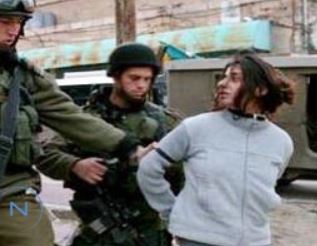
By Reham Alhelsi • April 18, 2009
Every year, on April 17, Palestinians commemorate the Palestinian Political Prisoners Day. On 17.4.1974 the first Palestinian political prisoner, Mahmoud Baker Hijazi, was released from Israeli prisons in the first prisoner exchange deal with Israel. That same year, the Palestinian National Council declared the 17th of April a day of solidarity with Palestinian political prisoners, to be commemorated every year. In Occupied Palestine prison and imprisonment are as common as sunrise and sunset. There is almost no family that had not been subjected to Israeli imprisonment one way or the other. Palestinians are being detained on a daily basis, making them the most imprisoned people on earth. It is difficult to estimate their number, but several sources put the number of Palestinians detained or imprisoned by Israel since 1967 at over 750,000 Palestinians, making 20% of the total Palestinian population in the Occupied Territories, and approximately 40% of the total Palestinian male population. With the outbreak of the 2nd Intifada in September 2000 until September 2008 some 65,000 men, 750 women and 7,500 children were arrested by Israel. According to the ICRC, in October 2008 there were 10,500 Palestinians in Israeli prisons. Addammeer puts the number at 9,493, 750 of which are administrative detainees, 349 aged 18 and under, and 75 are females. Among those detained are political figures and some 47 Palestinians parliamentarians.
The Israeli Occupation Forces (IOF) can arrest anyone and anywhere, without giving a reason. Palestinians are arrested at home, on the way to school or work, at universities, in hospitals, at checkpoints. Mass arrests, as form of collective punishment, are also very common. Curfews would be imposed on villages, towns or refugees camps, houses would be raided and Palestinians arrested. I have witnesses a number of these mass arrests, but never did the IOF bother to tell the residents why they were forced to leave their homes in the middle of the night and stand in the cold and the darkness for long hours. Under the cover of darkness and the curfew, the IOF would demand with loudspeakers that all men, usually those between 16 and 45, gather in the school yard or on the main street. We used to sit in the darkness at the windows and try and recognize the men standing in line and questioned by the IOF; relatives, friends and neighbours. Sometimes the men are blindfolded and handcuffed. They would wait for this to end, while being harassed, shouted at and kicked by the Israeli soldiers. We would wait with them, behind windows, hoping that they would all be released soon and come home safe. Sometimes, they are all sent back home after a night of harassment, but often this ends with mass arrest for no given reason.
Another form of collective punishment is house arrests. I have witnessed so many house arrests, and all were accompanied by violence and harassment and the wilful destruction of property by the IOF. They would turn the house over, destroying the furniture and even the food, as if the person they are searching for would be hiding in the wheat or the sugar, and if there was any money or valuables in the house, it was sure they would never be found again after the IOF had left the house. Family members trying to protect their home or their children are beaten. We would tell them that the person they are looking for is not in the house, we would try and reason with them, but it is all useless. They come on a mission to harass, destroy and arrest. Often I thought they knew they wouldn’t find what or who they are looking for, and that the whole operation of house raid is purely to punish the family and pressure it to hand over their son. During such house searches, the IOF would push us against the wall, kick us with their boots and beat us with the butts of their rifles. They didn’t care that they were beating children and elderly.
Upon arrest, detainees are often blindfolded and handcuffed. Not only is the detainee physically abused and humiliated, but other members of the family as well. Also, it is common practice by the IOF to use family members as human shields during such raids. The detainee is taken without informing the family about where he is taken to. Usually it takes days, if not more, before the family finds out where a detainee is. There are many incidents where families realized that their sons were in a certain prison months after they were arrested, and only after another detainee was released and informed that family about their son. One summer afternoon, my uncle and I were playing football in the garden. He was on the IOF list of wanted persons and was staying in our house. Nearby, there was a huge fruit tree, and when I was a child my father told me as way of a joke that a soldier was buried under that tree. At nights, when the leaves of the tree would move with the wind, I used to imagine the sound they made the murmuring of that soldier, and with all the Russian books we had in our library, I gave that imaginary soldier the name Yuri. My uncle and I made bets as to who would win the football game, we joked and laughed and I remember telling my uncle that Yuri would come and take him. After I explained to him what I was talking about, he said: I think you mean Uri and not Yuri, meaning that if any soldier came to take him away, it would be an Israeli soldier, not a Russian. That night at 2 in the morning, I was awakened by hurrying footsteps outside the window. The minute I fully woke up and stood, there was loud knocking on the front door. My father asked who it was, and removed the side of the curtain to see who stood outside. Standing near him, I could see the face of my grandfather and behind him nothing but darkness, complete darkness. The minute my grandfather said it was him, my father opened the door immediately, only to see grandfather practically thrown inside the house. In a matter of seconds, the house was full of IOF soldiers, some in army uniform, others in civil uniform. They had finally figured out were my uncle was hiding and had come to arrest him. They brought my grandfather, an old man, in the middle of the night as a human shield, in case anything happened. My uncle was still in bed, and the minute the Bethlehem area commander saw him, he jumped on the bed and held his throat in his arms, wanting to strangle him, shouting repeatedly: you were here the whole time. My mother tried to get them off my uncle, but the commander pushed her away. And while my uncle was putting on his clothes and shoes, the commander was slapping him and kicking him. The other area commander, responsible for Sawahreh and the surroundings, told his colleague not to do any beating in his area, meaning that since the prisoner was from the Bethlehem area, the beating was okay once they reached that area. I remember we had a huge poster on the wall, one of “Guevara Gaza”, and the commander asked my sister if she knew who it was. The name was written on the poster for all to see, so when she replied yes, he ordered her to remove the poster. When they left, we realized that they had surrounded the whole area around our house. IOF vehicles had blocked the way in case anyone thought of escaping, and I am sure that if an ant moved in the darkness that night, it would have been shot dead immediately. My uncle was taken to interrogation and tortured to confess to things he never did, and when they failed to get a confession from him, he was held in administrative detention, which is a detention without trial or charge, often used by Israel. When he was finally released, he told us that they couldn’t wait for the interrogation to start the torture, and that he was beaten by the soldiers all the way from Sawahreh till they reached the Israeli detention facility.
Sometimes, injured or sick prisoners are taken from their homes, from hospitals, or after being wounded in a demonstration. They rarely get the needed medical help, and often get Aspirin as treatment for everything. Health examinations are conducted through a fence and additional medical treatment or hospital transfers are often postponed for long periods of time. Withholding medical treatment is one method used to pressure detainees into collaboration. There are more than 800 Palestinian detainees who suffer from bad health conditions, much of which as a result of the arrest or the interrogation. According to Palestinian researcher Abdul-Naser Farawna, 196 Palestinian detainees have died in Israeli prisons since 1967 due to medical negligence and torture, 49 of whom died due to medical negligence. Alone last year, 2 detainees died because they were not given the needed medical assistance. During the 2nd Intifada 72 Palestinian detainees have died in detention, 17 due to medical negligence, 3 as a result of torture, 51 were executed by the IOF after being arrested and 1 prisoner was killed during prison protests.
Often Palestinians are arrested for breaking one of the over 2,000 military orders governing the Occupied Palestinian Territories, some of which they have never heard of before their arrest. Women and children are often arrested to pressure detained family members into confessing or pressure other family members wanted by Israel to hand themselves in. The Palestinian Prisoners Society reports that between September 2000 and September 2008 some 750 women and 7,500 Palestinian children were arrested by Israel. In September 2008 there were 69 Palestinian female political prisoners held in Israeli prisons, 2 of them in solitary confinement and 5 in administrative detention. There are 6 female child prisoners and 4 detainees imprisoned as well as their husbands. One detainee has her baby with her who was born in prison. Palestinian female prisoners are placed in 2 Israeli prisons: Hasharon-Telmond and Neve Tertza prison, where they are detained in the same section as Israeli female criminals accused of murder, drug use and prostitution. Like Palestinian male prisoners, Palestinian female prisoners face torture and humiliation. Strip search, brutal body searches and sexual harassment are frequent.
Contrary to the UN Convention on the Rights of the Child, which defines a child as being under 18, Israeli military orders consider a child over 16 an adult, to be treated, tried and sentenced as such. In practice, Palestinian children as young as 12 may be arrested, charged and sentenced in Israeli military courts, since there are no juvenile courts. According to several reports, there are over 400 Palestinian children in Israeli prisons today, including 7 girls and 6 administrative detainees. These child detainees are aged between 13 and 18, more than 54 of whom are not older than 16. They are detained in Israeli prisons together with adults. 50 of these child prisoners are held in Ofer, 100 in Magiddo, 7 in Atzion, 22 in the Negev, 105 in Hasharon-Telmond and the rest in other prison facilities. Today, more than 450 Palestinian adult prisoners were children upon arrest and turned 18 in Israeli prisons. Like adult prisoners, Palestinian child prisoners are subjected to physical and psychological torture to extract confessions from them. During interrogation, they are not allowed to have any family member or a lawyer attending. Although I was practically a child when arrested, I was placed in a small empty room. I had been separated from my sister, and didn’t know where they had taken her. I stood waiting for a life sign from anyone, and I didn’t know how long I stood there, but I remember well how tired I was of standing and how thirsty I was. After some time, I could hear the cries of a boy in the room next to where I was. I thought, they were either torturing him or someone was making these noises to make me scared before it was my turn to be interrogated. I kept thinking of everything I ever heard, of how to keep still, stay brave and remember that they are only playing games with us to scare us into confessing to things we didn’t do. When I was finally led into a room with a number of IOF soldiers, all males, the soldier in charge checked my school bag and found my biology textbook. He looked through the book and saw a drawing of the anatomy of a human tooth. He showed it to me and asked smirking in a disgusting way if I knew what it was. I knew what it was and knew what he thought it was and what his plan was by asking me about it. At that moment I didn’t feel scared anymore, because I realized how stupid they are. Not only didn’t he know it was a tooth, the textbook was in English and it was written below the drawing what it was, but most probably he didn’t know a word of English and was acting so superior. I looked at him and said: yes, this is a tooth. My suspicions were confirmed when, upon not believing me, he asked one of the other soldiers in the room and the other confirmed what I said.
Child prisoners are held up in overcrowded cells, face torture and solitary confinement and don’t receive the needed medical treatment. In the last couple of months there has been an increase in the number of Palestinian children arrested. They are either arrested at home, at checkpoints or in streets, and are often accused of throwing stones without any proof. DCI-Palestine reports that the number of children brought before Israeli military courts in pre-trial hearing in the first two weeks of January was twice as high as in 2008. It added that its legal department receives a monthly average of 10 to 15 new cases of children for legal representation in Military courts, and that alone for the first two weeks of January 2009 it received 10 new cases. In one incident, 7 children were arrested in Toura Al Gharbieh in Jenin on 20.1.2009 and were detained at the Salim detention and interrogation centre. Two of the children were 12, two 13, two were 15 and the last 17 years old. Under pressure and with no lawyer present, the children confessed they had thrown stones at the Apartheid Wall. In another incident, during an invasion of Hares in the West Bank on the night of 12/13.3.2009, the IOF arrested a 17 year old boy suffering from kidney malfunction.
Palestinians prisoners are held in facilities run by the Israeli Prison Services (IPS) or the IDF. There are 30 detention centres that include 21 prisons and military camps, 5 detention and holding centres and 4 interrogation centres. Also, there is at least one known secret prison, Facility 1391, which is renowned for its severe torture methods. The exact location of this prison is unknown and lawyers and the ICRC have no access to it. The majority of these facilities are located outside the West Bank and Gaza Strip, and transferring Palestinian prisoners to these facilities constitutes a violation of the 4th Geneva Convention, and making family visits almost impossible. Some of these facilities are buildings while others are tents within military camps like the Ketzion Military prison camp in the Negev, exposing detainees to harsh weather conditions. They are all overcrowded, with little hygiene, prisoners have to sleep on wooden planks and covers are often provided by the families or human rights organizations. The food provided is insufficient and of poor quality. Palestinian detainees have to live in appalling conditions in these facilities, are humiliated and subjected to inhuman treatment. In some cases, detainees are deported, either abroad or to the Gaza Strip. After the siege of the Nativity Church in 2003, Israel deported 13 Palestinian detainees to Europe and 26 to the Gaza Strip. During the Gaza war, hundreds of Palestinian civilians were arrested, including minors. They were handcuffed and blindfolded, and had nothing to shelter them from the harsh weather. Many held for days in pits dug in the ground. Reports added that some of the detainees were held near tanks and in combat area, making them human shields for the IOF.
Prison visits usually take the whole day, although the visit itself lasts less than an hour. We would set off in the very early morning, when it was dark outside and everyone else was still sleeping. The bus of the ICRC would be full with Palestinians from everywhere, mostly elderly women and children, all anxious to see their relatives. And before we would finally be able to see our loved ones, we would undergo one checkpoint after the other and one search after the other. I remember during one visit, when we were finally allowed into the visit room, I walked quickly looking for my uncle. I hadn’t seen him in years, and after I finally sat opposite him, we started talking through the barbed wire. We were both so happy. It was after a few minutes that someone from my family came and told me to come and say hello to my uncle. I was talking to the wrong person, and I was so embarrassed I didn’t even say goodbye or look back to see if that prisoner had any visitors that day. Later, I thought he too might have not seen his family since so long that he too mistook me for a relative, or maybe he was just anxious to speak to someone. During another visit, I remember sitting and talking to my uncle and at the same time trying to ignore the rain drops that were seeping through the roof and hitting me on the head and running down my face. My uncle must have found it amusing, because every time a raindrop would hit me in the face he would smile, but I would ignore it and continue talking, and by the end of the visit my hair was totally soaked and I was freezing. There was no possibility of kissing or hugging a relative, and the only thing we could do in way of shaking hands was to stretch our fingers through the barbed net separating us. Saying goodbye was always difficult, because we knew we were going back to our homes, to the relatively bigger prison, while leaving them behind in the small overcrowded cells. And when we finally reached home, it would be dark again and most people would be sleeping, a day spent between checkpoints and searches for a 45 minute visit of loved ones.
One time, on the way to my aunt’s house in Dheisheh, a friend of mine and I passed a young man, who was walking up and down one narrow alley of the refugee camp. The man was most probably mid twenty and was good looking. He was walking that alley and was arguing with someone. I looked around and saw no one in the whole area. I looked up to see if he was addressing someone sitting at a window or on the roof, but could see no one. I pointed the man to my friend, who told me not to worry. She said the young man had been recently released from an Israeli prison, where he was tortured. Since then he had been roaming the streets of Dheisheh, arguing with an invisible friend. As I listened closer, I realized he was talking politics with himself, discussing the occupation and life in prison. They had not released him, for he was still in that Israeli cell, being tortured every minute. Last winter when I was in Palestine, I wanted to take some photos of old UNRWA rooms, built for the Palestinians in 1949. Most old UNRWA rooms were being destroyed to build new houses, and I wanted to keep a record of the last remaining rooms that are a synonym to the Nakba and refugee camps. The wife of one of my uncles accompanied me in my search since she was born and grew up in Dheisheh and knew where to find a few old rooms. Most of these tiny rooms are deserted now, standing empty near larger family houses. I would take photos from the outside and if the room had no door or the door was open, I would take photos from the inside. As we came to inspect one room, we were surprised to find an old man lying on the ground, wrapped in a torn out winter coat. The old man opened his eyes as he saw us, he made a move as if to stand up, but my uncle’s wife told him not to leave and apologized for disturbing him, since we thought the room was deserted. A few minutes later, my mother’s aunt saw us invited us for some tea. Inside, we told her about the old man, and as she and my uncle’s wife talked about the old man and giving him something to eat and warm himself, since they knew who he was, I realized it must be the young man I saw long time ago. He was still imprisoned in that cell, a whole life wasted, and all I could do was to shake my head at the injustice of it all.
Under international humanitarian law, torture is strictly forbidden. The world was shocked when the torture in Abu Ghreib came to light, there were condemnations from everywhere and demands were made to close that prison. But the Zionist state, which conducts one war crime after the other, never hesitates in using torture. The forms of torture used in Abu Ghreib were not new to Palestinians, because they have been used since decades by the IPS against Palestinians. Was it not revealed that Israeli IOF and Shin Bet interrogators were hired by the Pentagon to brutally interrogate prisoners in Abu Ghreib? Was it not revealed that the American interrogates implicated in the torture had attended an “anti terror” training camp in Israel, and that many of the torture methods used in Abu Ghreib resembled those applied by Israel against Palestinian detainees? Much is documented about torture in Israeli prisons, but we rarely hear of any condemnation or demand to close these torture facilities. According to B’Tselem, 85% of the Palestinian detainees have been subjected to torture, adding that “Since 1987, the GSS (Israeli General Security Service) interrogated at least 850 Palestinians a year by means of torture …. (a)ll governmental authorities – from the Israeli army to the Supreme court – take part in approving torture, in developing new methods, and in supervising them.” In 1999 the Israeli High Court superficially outlawed the use of arbitrary torture as an interrogation method, but in reality it did not ban it and till today torture is still used by Israel. Physical ill treatment combined with humiliation begins with the arrest, whether at home or in the street. Palestinian detainees can be interrogated for 180 days, and can be denied a lawyer for a period of 60 days. During interrogation, torture is used and has led to the death of the detainee in some cases and confessions extracted under torture are admissible in Israeli courts.
Palestinians may be held for days without being brought before a judge or informed of the reason for the arrest, during which they are interrogated, which can last up to 180 days, or are administratively detained. Administrative detention is a detention without trial or charge or the continuation of imprisonment after the completion of a sentence. It is often used by Israel and is authorized by an administrative order of the IOF rather than by a judicial decree. Israeli Military Order 1229 of 1988 empowers IOF military commanders to detain Palestinians for up to 6 months, which can be extended indefinitely. Over the years, thousands of Palestinians, men and women and of all ages, have been held in administrative detention for periods ranging from 6 months to over 8 years, without being tried or charged. Families of detainees are not informed of a person’s arrest or the arrest location. Theoretically, detainees can appeal, but in reality neither they nor their lawyers are informed of the reason for the detention or examine the evidence, which makes defending their clients very difficult. The Orders governing administrative detention were also modified in 1999. MO 1466 – Temporary Order, Modification 13 states that a detainee must be brought before a military judge within 10 days of his arrest, and authorizing the military judge to approve, cancel or decrease the time of administrative detention order. This modification is also superficial, since the judges are military personnel who give legal legitimacy to the illegal actions of the IOF and the IPS. In reality, Palestinians are tried by Israeli military courts consisting of a panel of 3 judges appointed by the IOF. These judges often have no legal background and thus don’t fulfill international standards of a fair trial. Since the beginning of the 2nd intifada in September 2000 some 20,000 Palestinians were held in administrative detention. By April 2009 there were more than 560 Palestinian administrative detainees, held in Israeli prisons without trial. 372 of these detainees have been held without trial or charge for at least two consecutive periods, 47 of them for over two years, and 23 for over two and a half years including two who have been imprisoned for over four and a half years.
While a Palestinian may be held in custody for 18 days before being brought to a judge, an Israeli can be held in custody for a maximum of 48 hours before being brought before a judge. While a Palestinian can be held for 30 days without charges which can be extended indefinitely, an Israeli can be held for 15 days without a charge which can be extended for only another 15 days. Palestinians brought to court on accusation of murder are always convicted, even without evidence, and are always sentenced to life imprisonment. Most cases against Israeli soldiers or illegal Jewish settlers accused of murdering Palestinians are closed without any charges, even with the existence of evidence or witnesses. The few who do get sentenced are imprisoned for short periods ranging from 6 months to 7 and a half years or to community service. Palestinian Prisoners have been used by Israel at politically convenient moments, whereby Palestinians who had already served out their sentences with only a few days remaining would be released as “gestures of good will”. At the same time hundreds others would be arrested. For example, on 25.8.2008 Israel released 198 prisoners as a “gesture of good will”, however statistics for August 2008 show that another 338 Palestinians were arrested. Today there are some 81 “old detainees” i.e., detainees who are in continuous imprisonment since over 20 years, 2 of whom since over 30 years, and some 290 prisoners who have been in prison since over 15 years.
Although they have modern deadly weapons, are top recipients of military assistance, have their war crimes justified by a biased western media, and their interests protected by Zionist lobbies all over the world, the Zionists still fear us because they know we are the rightful owners of the land and that alone by existing we are defying them and their power and countering the myths and lies on which their state is built. Israeli Foreign Minister, Avigdor Lieberman said on the release of Palestinian prisoners: “It would be better to drown these prisoners, in the Dead Sea if possible, since that’s the lowest point in the world.” They not only deny us our rights and our freedom, they want to kill our spirit and see us dead. What they haven’t understood by now is that the more they humiliate us, harass us, imprison us, take away our freedom from us, the more we value that freedom and the stronger becomes our belief in our just cause and our will to be free.
Sources:
www.addameer.org
www.sumoud.tao.ca
www.btselem.org
www.imemc.org
www.dci-pal.org
www.ppsmo.org
www.palestinemonitor.org
80,000 Palestinians in Jerusalem without water for three days
MEMO | March 8, 2014
The Israeli water company Jihon said on Friday that 80,000 Palestinians in East Jerusalem have been without water for more than three days.
In a statement Jihon said: “About 80,000 Palestinians in four Arab neighbourhoods in Jerusalem and its outskirts have been suffering from complete loss of water for three days.”
The Israeli company said that it would like to supply water for all consumers in Jerusalem, including Jewish and Arab citizens, but the water infrastructure in the Arab areas is decaying. It also said that the increasing number of inhabitants contributes to the problem.
Meanwhile, the Arab inhabitants at the Palestinian refugee camps of Su’fat, RasKhamis and Ras Shihadeh, as well as Al-Salam Suburb, said they have been suffering from a complete water shortage for several days.
The residents said in a statement issued on Saturday that tens of thousands of Palestinian refugees and citizens in the three residential gatherings in Jerusalem have been without water since the beginning of last week.
According to the statement the Palestinians said that they did not know the reason why the water supply stopped.
The statement also blamed the company Jihon, which is the only body that has a permit to supply water to Jerusalem, for the water shortages. “It started reducing water portions two weeks ago,” the statement said. “And in the end it completely stopped the water.”
Deputy head of the Popular Committee in Su’fat Refugee Camp, Khalid al-Khaldi said: “There are about 23,000 Palestinian refugees and citizens in the camp and they have not had water for three days. In Ras Shihadeh, there has been no water for 20 days.”
He reiterated that there has been no water in Ras Khamis and Al-Salam Suburb for a long time either.
Al-Khaldi blamed the UNRWA, which is responsible for the Palestinian refugees, for the water problem. He called for it to immediately move to solve the problem.
ABORIGINAL JUSTICE: Listening for the voices of missing and murdered Indigenous women
By Carrie Peters | CPTnet | March 7, 2014
 |
Loretta Saunders |
According to reports by the Native Women’s Association of Canada (NWAC), there are roughly 600 known cases of missing and murdered Indigenous women in Canada, many of them unsolved. Loretta Saunders, an Inuit woman from Labrador whose family reported her missing on 13 February 2014, is one of the latest. The RCMP discovered her body along a New Brunswick highway on 26 February. That Saunders was in the middle of finishing her PhD in Halifax— on Canada’s missing and murdered Indigenous women—makes her death particularly harrowing, yet each of these women’s deaths is reprehensible.
CPT attended the ninth Annual Strawberry Ceremony honoring missing and murdered Indigenous women on 14 February, when over 200 people gathered at the downtown Toronto police headquarters for a rally and march. Many individuals in the crowd held up signs bearing names, dates, and occasionally photos. Several dozen people carried black silhouette-style signs cut in the shape of women’s profiles, with names in white lettering on one side, and dates—usually preceded with the word “murdered”—on the other.
Each of these sign bearers had lost someone to violence: a sister, a daughter, a grandmother. More than that, though, this ceremony was in honor of Indigenous women. Those marching were survivors of their individual griefs and losses, and the collective oppression and violence of a system set entirely against them.
Author and activist Arundhati Roy has said, “There’s really no such thing as the ‘voiceless.’ There are only the deliberately silenced, or the preferably unheard.” In CPT, we often talk about “amplifying voices,” and when I give presentations I make sure to emphasize what this means: I am not seeking to speak for anyone. I am seeking to hold up a figurative microphone to those who are already speaking. It’s a thing I’m still figuring out, time after time. But Roy’s words are a guide.
During the ceremony on 14 February, the women who spoke described how long it took them to “find their voices,” to share the stories of women in their lives who’d been taken by violence. One mother who raised her grandson from his infancy, said it took her over two decades from when her daughter was killed to when she could start speaking about it. It struck me that every single person there holding a sign or a banner was a person who could speak. The voiceless ones were the women whose names and dates were on those signs. Their daughters, and mothers, and sisters, and brothers and fathers and sons (because there were many men there too)—these relatives were all speaking for them.
The question is, are we listening? When several NDP Senators introduced the need for an inquiry to Parliament about missing and murdered Indigenous women in late February, Status of Women Minister Kellie Leitch responded by turning the call into a partisan argument, and stated that, “Our government has taken action. I encourage the opposition to join us in that action.”
Such statements, at their root, only demonstrate a desire to dismiss and delegitimize Indigenous women’s voices. If the Harper administration was earnest in its professed concern for Canada’s missing and murdered Indigenous women, it would not turn calls for a national inquiry into partisan finger-pointing, but initiate real, measurable action to end this tragedy now.
Related articles
Featured Video
Integrity Initiative: UK-funded network framed dissent as Russian disinformation for years
or go to
Aletho News Archives – Video-Images
From the Archives
Why Saudi Ties to 9/11 Mean U.S. Ties to 9/11
By Kevin Ryan | Dig Within | September 27, 2015
Media interest in Saudi Arabian connections to the crimes of 9/11 has centered on calls for the release of the 28 missing pages from the Joint Congressional Inquiry’s report. However, those calls focus on the question of hijacker financing and omit the most interesting links between the 9/11 attacks and Saudi Arabia—links that implicate powerful people in the United States. Here are twenty examples. … continue
Blog Roll
 Aletho News
- IAEA inspectors cannot return to Iran amid US threats: Russia
- Senate Rejects Iran War Powers Resolution Passed By House
- ‘We did not attack Pakistan with drones’: Afghan sources
- Iraqi Resistance faction links arms to sovereignty, questions US exit
- Cannon fodder no more… South Korea rejects Trump’s pressure to join his criminal war on Iran
- Neria Leiter Was A Legitimate Military Target
- Integrity Initiative: UK-funded network framed dissent as Russian disinformation for years
- ‘We don’t seek permission to defend our country’: Snippets from President Pezeshkian’s UNGA address
- NATO chief wants Europeans to fight American wars [for Israel]
- German chemicals giant reveals details of downsizing
- If Americans Knew
- Israel displaces hundreds of Palestinians amid wave of demolitions in West Bank
- Aid, reconstruction, and Israel’s history of obstruction in Gaza
- Trump administration digs an ever-deeper hole of complicity in genocide – Daily Update
- US-Israel $2.8 Billion Arms Deal, 40,000-Bomb Supply Faces New Gaza Complicity Accusations
- Caught on Tape: AIPAC CEO Boasted of Controlling Trump’s National Security Officials
- Why Hamas Attacked Israel in October 2023 – Israeli professor Ilan Pappé
- They see them, then kill them: Israeli quadcopters track, deliberately target civilians in Gaza
- Winter could turn Gaza’s treacherous, war-damaged buildings into deathtraps
- Majority of Democratic Voters Want to Prosecute Both Biden and Trump Administration Officials Over Gaza
- As Gaza languishes, world leaders gather at the UN – Daily Update
- No Tricks Zone
- New Study: Earth And Venus Surface Warmth Largely Explained By Convection And Lapse Rate, Not CO2 Or Radiation
- 2025 Nature Paper Claiming Worsening Global Drought Gets RETRACTED …Heavily Flawed
- New Study: ‘Global Drought Shows No Detectable Recent Acceleration Under Climate Warming’
- Economic Masterminds: German Socialists Suggest Taxing Productivity Gains Stemming From Using AI
- The South China Sea Has Not Been Cooperating With The Climate Change Narrative
- Energy Crisis: Germany Enters Heating Season With Historically Low Gas Reserve Fill Levels
- New Study: The Antarctic Ice Sheet Gained Mass From 2020-2024 Due To Staggering Snow And Ice Accumulation
- Study: Ocean Heating Rates From Thousands Of Years Ago ‘Dwarf’ Modern Ocean Heating Rates
- Climate Extremists Target, Attack Large-Scale Power Grid Infrastructure In Germany!
- New Study: Antarctic Ice Melt Has Contributed Less Than 1 Centimeter To Sea Level Rise In The Last 30 Years

