Israel denies EU request to meet with Palestinian prisoners: report
Al-Akhbar | March 7, 2014
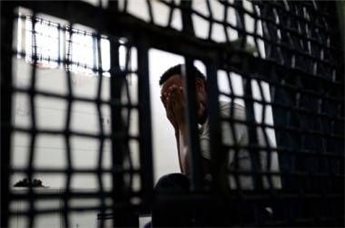 Israeli Foreign Minister Avigdor Lieberman refused to allow a delegation from the European Parliament to visit Palestinians jailed in Israeli prisons, a local newspaper reported Friday.
Yedioth Ahronoth said the European delegation had hoped to evaluate the prisoners’ conditions.
The paper reported that Elmar Brok, the Chairman of the Committee on Foreign Affairs in the European Parliament, had asked Israel’s ambassador to the EU to arrange a visit for the delegation.
But Lieberman responded by saying Israel would only allow such a visit if the EU would let an Israeli delegation visit prisons in Europe.
The report cited sources inside Israel’s foreign affairs ministry that the European request had been made in coordination Palestinian and international activists working to highlight the poor conditions inside Israeli prisons.
The news came one day after Israel refused to allow Palestinian refugees from Syria to return to the Palestinians territories, according to Palestinian Authority official cited by Ma’an news agency.
Fatah central committee member Mohammed Ishtayyeh told diplomats at a meeting organized by the Heinrich Böll Foundation – a group affiliated with Germany’s Green Party – that they have been trying to help Palestinians in Syria escape the three-year-long war, but Israeli officials have rejected their pleas.
Around 1,500 Palestinian were killed during the Syria conflict, and 250,000 others have been forced to leave their homes, according to Ma’an.

My Home
Housing demolitions carried out under the pretext of unlicensed construction are a common occurrence in occupied East Jerusalem. Palestinians are rarely granted permits by the Israeli authorities to build houses in the city. Apartments prices have risen drastically in Jerusalem — 120 m apartment would cost approximately $350,000. As a result, they are forced to build without a permit, which often results in the Israeli authorities issuing demolition orders on unlicensed buildings.
In 2013, 82 houses owned by Palestinians in Jerusalem were demolished, effecting 281 people. In recent years, self-demolition of houses has become common in East Jerusalem as the Palestinian owners of “unlicensed” houses are forced to choose between demolishing the houses themselves or paying the Jerusalem municipality to do so for them.
In this video Muhammad ‘Amireh speaks of his experience of having to demolish his own house.
Related article

CIA Probed for Possibly Spying on Congress
ACLU | March 5, 2014
WASHINGTON – The CIA’s inspector general is investigating whether the agency may have been monitoring the computer usage of Senate Intelligence Committee staff members, according to articles today by The New York Times and McClatchy. The inspector general’s office has reportedly referred the matter to the Justice Department for criminal investigation.
Christopher Anders, senior legislative counsel with the American Civil Liberties Union, had this reaction:
“If it turns out that the CIA was spying on the Senate committee that oversees the agency, it would be an outrageous violation of separation of powers. The CIA is prohibited from spying in the United States itself, and there can be few greater violations of that rule than spying on congressional staff carrying out the constitutional duty of being a check on the CIA’s powers. CIA surveillance of Congress would be another sign that the intelligence community has come to believe that they are above the law, and should get only deference from the other branches of government, not the meaningful oversight that’s required by the Constitution. Checks and balances, especially for agencies like the CIA and NSA that have many secret operations, are essential for democratic government. At the very least, these reports should spur the committee to vote quickly for the declassification and release of its full report into the CIA’s torture program so the American people can see what it is that the CIA is so eager to hide.”
In December 2012, the committee adopted a 6,000-page report on the CIA’s Bush-era rendition, secret detention, and torture program. The report concluded that abusive methods were ineffective, and the CIA wrote an extensive response, countering many of the Senate report’s conclusions. There is also a secret CIA report commissioned by former CIA Director Leon Panetta, which is reportedly consistent with the Senate report findings and contradicts the CIA’s response to the Senate report. All three reports are classified.
Related articles
A minor infraction at the end of the incident
By Yossi Gurvitz | Yesh Din | March 2, 2014
A 14 year old boy goes to meet friends. He comes home with bullets in his neck and hand. The IDF considers that to be “a minor infraction”
At the end of July 2013, J., a boy from the village of Silwad, set out with his brother and two other boys to visit a family of friends in the western side of Silwad, a distance of about a kilometer from his house. One of the boys was asked to deliver a bundle of clothes to the family. They reached the house, gave the bundle over, and headed back. On their way, they met a friend shepherding his flock, and sat down next to him. And then J.’s world turned upside down.
He noticed three soldiers coming out of the trees behind them, blocking the path they had intended to take home. Soldiers on the village roads are not a common sight, so the group changed its course, and started climbing the nearby mountain.
As they reached a bend in the path, they heard gunshots. The group scattered instantly. J. himself says he went into shock, since this was the first time he had heard gunshots so close to him. He was slower than the others. He heard a second volley, and then felt a hit in his right arm; a third volley, and he was hit by a bullet in the neck. J. managed to walk a few more steps, and then collapsed by the wall of a house. He was evacuated to a hospital in Ramallah, where it was determined that the bullet entered the right side of his neck, and existed through the left. He was hospitalized there for four days.
We wrote to the IDF, demanding an investigation into the incident. Four months later, we received an answer that can only be described as infuriating. The debriefing of the incident, wrote the Prosecution for Operational Affairs, showed that on the same date there were clashes between IDF forces entering the village and residents who allegedly threw stones at its forces. The Military Advocate General reached the conclusion that the shooting took place in accordance with the rules of engagement, “with the exception of a minor infraction at the end of the incident.” Nowadays, that is how the IDF refers to the shooting of a live bullet into the neck of a 14 year old boy. Accordingly, we were informed that disciplinary procedures were undertaken against the commander of that force. Not that we were informed of the results of that procedure.
Um, no, no. Firing live ammunition, even at protesters, is not in accordance with the orders, unless the soldiers’ lives are in danger. The IDF doesn’t even try to claim that J. and his friends were threatening the lives of its troops. Also, this wasn’t one shooting; J. counted three separate volleys. Furthermore, from the description given by the IDF, it seems J. and his friends weren’t even in the area were the IDF soldiers were attacked, assuming they were indeed attacked.
The firing of live ammunition at uninvolved civilians is a crime, all the more when minors are involved. Such an incident should not end with a disciplinary procedure, but with a criminal investigation. Accordingly, our attorney, Emily Schaeffer, appealed and demanded the opening of an MPCID investigation ASAP. Recently, we learned that the appeal was rejected. The prosecution is of the opinion that though firing after the first volley – as J. and his friends fled – was improper, given that the officer in question was dealt with in a disciplinary procedure and was even fined, the very fact of the disciplinary procedure exhausts the need for a criminal investigation. We’re uncertain whether the sum of the fine was 10 cents, as per the infamous fine of the colonel responsible for the Kafr Qassem massacre – and we don’t know because the prosecution didn’t mention the sum.
But, even if the fine was serious and not a joke – though if it was serious, why didn’t the prosecution note the sum? – We cannot accept a disciplinary procedure as a replacement for criminal law. After all, if the bullet that hit J. would have deviated just a few millimeters from its course, and the boy would have joined the long rank of minors killed by the IDF, a criminal investigation would obviously have been opened. How can putting a bullet in the neck of a person, agreed to have been uninvolved, end with a disciplinary procedure and a fine?
During the Vietnam War, a common phrase among American soldiers was the “Mere Gook Rule”, meaning that whatever you may do to the foreign population, nothing will happen to you. These aren’t humans, these are merely Vietnamese. When the IDF subscribes to the notion that shooting a 14 year old boy in the neck is just “a minor infraction at the end of the incident,” it sends that same message to its troops: These are mere Palestinians. Do with them as you will. Nothing will happen to you. At worst, you’ll face a disciplinary procedure.
And when that’s the message conveyed by the military prosecution to its ground troops, it itself becomes an accomplice to the crime.
Israeli forces kill Palestinian man during Birzeit arrest raid
Ma’an – 27/02/2014
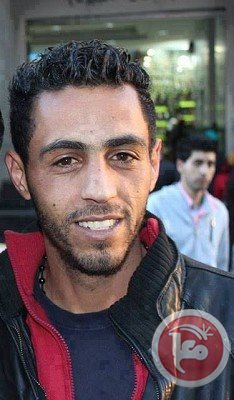 RAMALLAH – Israeli forces killed a Palestinian man on Thursday after opening fire on a property in Birzeit, locals said.
Muatazz Washaha, 24, was found dead inside the house following a stand-off between Israeli military forces which lasted several hours.
Witnesses said that the victim was hit in the head by a rifle-fired Energa shell.
Israeli forces were reportedly trying to arrest Muatazz for being an activist with the Popular Front for the Liberation of Palestine.
During the dawn raid, Israeli forces stormed the house and detained his brother, Ramiz, and two other men. Earlier reports suggested Israeli forces were targeting another brother, Thaer.
Palestinian firefighters rushed to the scene after the house caught on fire as a result of Israeli artillery shelling.
Palestinian Authority Minister of Detainees, Issa Qaraqe, said Israeli troops raided Birzeit at around 3 a.m.
An Israeli army spokeswoman said that Israeli forces raided Birzeit to arrest a man suspected of “terror activity.”
“After the suspect was called to turn himself in, he barricaded himself inside his house, effectively resisting arrest. Under the premise that he had weapons in his possession, the forces used different means to complete the arrest, including live fire.”
An AK47 assault rifle was found in the house, but no shots were fired at any point towards Israeli forces.
Second Bahrain detainee dies in custody: ministry
Al-Akhbar | February 26, 2014
A 23-year-old Bahraini man who was detained in December and accused of smuggling weapons died from an illness in custody on Wednesday, the Interior Ministry said, the second death of a person held on security-related charges this year.
Jaffar Mohammed Jaffar was arrested in a raid that the government said broke up a plot to bring in detonators and explosives by boat and use them to launch attacks in the island kingdom.
Bahrain, home to the U.S. Fifth Fleet, has been rattled by bouts of unrest since February 2011 when Bahrainis took to the streets, demanding democratic reforms from the ruling family.
Jaffar was suffering from sickle cell anaemia and was admitted to hospital on Feb 19, the ministry said in a statement. He died from the condition on Wednesday, it added.
Rights campaigners did not challenge the government’s account that Jaffar had died as a result of an illness, but the main opposition group, al-Wefaq, said in a statement that medical treatment had been withheld and described Jaffar as “a martyr”.
Activist Mohammed al-Maskati also told Reuters he had spoken to Jaffar and four others by phone after their arrest and “they told me that they have all been tortured”.
Bahrain’s Interior Ministry, which regularly denies mistreating detainees, told Reuters on Wednesday Jaffar had not been tortured and said he had received full medical care.
Jaffar’s death came a month after authorities reported Fadhel Abbas, 20, had died in custody from gunshot wounds suffered during his arrest in a raid on another smuggling operation on Jan. 8.
Police said officers had shot them as he tried to run them over. Protesters clashed with members of the force after his funeral.
Demonstrations and clashes between protesters and the security forces have continued regularly, while negotiations between the government and opposition have stalled.
The authorities say they have rolled out some reforms and are willing to discuss further demands, but the opposition says there can be no progress until the government is chosen by elected representatives.
Earlier this month a policeman was killed by an explosion at a protest to mark the third anniversary of Bahrain’s uprising.
(AFP, Al-Akhbar)
Honduras: Candidate’s Brother Killed in Electoral Dispute
Weekly News Update on the Americas | February 23, 2014
Indigenous Honduran campesino Justiniano Vásquez was found dead on Feb. 21 in San Francisco de Opalaca municipality in the western department of Intibucá, where the victim’s brother Entimo Vásquez is challenging the results of a Nov. 24 mayoral election. Justiniano Vásquez’s body had deep wounds, and there were signs that his hands had been bound. Community members charged that the killing was carried out by Juan Rodríguez, a supporter of former mayor Socorro Sánchez, who the electoral authorities said defeated Entimo Vásquez in the November vote. Rodríguez had reportedly threatened Entimo Vásaquez in the past. San Francisco de Opalaca residents captured Rodríguez and turned him over to the police. The Civic Council of Grassroots and Indigenous Organizations of Honduras (COPINH), which reported Vásquez’s death, demanded punishment for the perpetrators and called on the authorities “to carry out their work objectively [and] effectively.”
Entimo Vásquez ran for mayor as a candidate of the new center-left Freedom and Refoundation Party (LIBRE) in the November presidential, legislative and local elections; Socorro Sánchez was the candidate of the rightwing National Party (PN). Vásquez formally challenged the results, but the Supreme Court of Justice (CSJ) backed Sánchez. Community residents, who are mostly members of the Lenca indigenous group, charged that the vote was fraudulent and also accused Sánchez of irregularities during his previous term as mayor. Vásquez’s supporters have occupied the town hall since late January, preventing Sánchez from taking office. (La Tribuna (Tegucigalpa) 2/13/14; COPINH 2/21/14; La Prensa (Nicaragua) 2/22/14 from AFP)
In related news, on Feb. 10 a court in the western department of Santa Bárbara issued a definitive dismissal of weapons possession charges against COPINH general coordinator Berta Cáceres. A group of soldiers arrested Cáceres and another COPINH official on May 24 last year, claiming they had found an illegal firearm in the activists’ car [see Update #1178]. Cáceres was in Santa Bárbara at the time to support protests by indigenous Lenca communities against the construction of the Agua Zarca dam on and near their territory. In an interview with the Uruguay-based Radio Mundo Real on Feb. 13 Cáceres said national and international solidarity had been fundamental for winning dismissal of the charges. (Radio Mundo Real 2/13/14)
Related article
AL-KHALIL (HEBRON): Schoolchildren exposed to teargas seven of the last eight days
CPTnet | February 25, 2014
Israeli soldiers have shot teargas and sound grenades at children who cross checkpoints 29 and 209 on their way to school in the morning on seven of the last eight school days.
International observers and human rights workers in Hebron have witnessed Israeli soldiers repeatedly firing grenades and sound bombs into the streets near these checkpoints while children are walking to school. The children attend several schools located both in the Old City and in the area of Hebron designated as H2, on the other side of the checkpoints, and include preschool students as young as four. Depending on where they live and which school they attend, children must cross these checkpoints in both directions to reach schools both inside the old city and in H2.
Because the Israeli military does not allow buses that transport younger children to preschool and kindergarten classes in H2 to cross the checkpoints, very young children living in the Old City must walk through these checkpoint areas in order to reach their school buses.
At times, the use of teargas by soldiers has been in response to several children throwing stones, but internationals have also witnessed soldiers firing teargas canisters without provocation. In any event, because so many children pass through the same area to reach school at the same time, hundreds of children, many of them in primary grades, suffer the effects of gas on an almost daily basis. Additionally, because the agents used to manufacture teargas are actually solids, they remain inside shops, on clothing, and in the streets where children walk and play throughout the day.
Although the Chemical Weapons Convention (CWC) prohibits the use of teargas and pepper spray in warfare, domestic police and state forces are allowed to use these weapons on people as “riot control” agents.
Tear gas is a non-lethal chemical weapon that stimulates the corneal nerves in the eyes to cause tears, pain—which can be extreme, immediate and severe nausea, and even blindness. Longer term effects include persistent coughing, shortness of breath, and other lung-related problems (heightened in people who already have lung problems), heart and liver damage, delayed menstruation, and an increase in miscarriages and stillbirths in women exposed to the gas. The NGO Physicians for Human Rights believes that “‘tear gas’ is a misnomer for a group of poisonous gases which, far from being innocuous, have serious acute and longer-term adverse effects on the health of significant numbers of those exposed.”
In addition to the effects of the gas, the teargas cartridges fired by soldiers can cause serious injury and even death if they strike people, especially if soldiers fire the cartridges straight into crowds rather than into the air. Internationals and Palestinians report having seen soldiers fire teargas straight into the roads near these checkpoints.
The teargas used on school children in Hebron comes primarily from the United States and is manufactured primarily by Combined Systems Inc. of Jamestown, Pennsylvania and Defense Technology of Casper, Wyoming. Combined Systems Inc. (CSI)—often manufacturing under the brand name Combined Tactical Systems (CTS) are owned by Point Lookout Capital and the Carlyle Group. CSI is the primary supplier of tear gas to the Israeli military as well as a provider to Israel’s police (and border police) for use in occupied Palestine.
Defense Technology is headquartered in Casper, Wyoming. Along with U.S. company Federal Laboratories, with which it shares a product line, it has links to the U.K. arms giant BAE Systems through BAE’s ownership of U.S. arms company Armor Holdings.
The War Resisters League has launched a campaign to abolish teargas, and to encourage people who have been impacted by its use to tell their stories. The campaign seeks “the global ban of tear gas by first ending the sale, manufacture, and shipment of tear gas made in the US through organizing and applying grassroots pressure on
- companies that produce the gas,
- the US government agencies that approve the export licenses for the sale of tear gas,
- US government officials who allow for the sale and transfer of tear gas to repressive regimes abroad,
- the prison and police forces within in the US who use tear gas and similar chemical weapons such as pepper spray to threaten, injure, and torture people.”
To learn more about teargas in Palestine and throughout the world, or to add your story to the campaign, visit facingteargas.org
Related articles
Two Palestinian Human Rights Defenders Kidnapped In Nablus
By Saed Bannoura | IMEMC | February 25, 2014
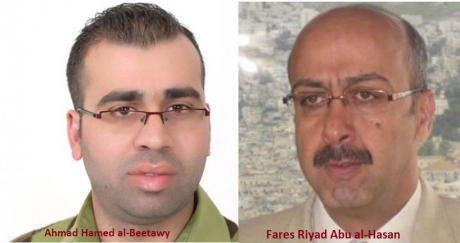 The Solidarity Foundation for Human Rights (SFHR) has reported that Israeli soldiers kidnapped, on Tuesday at dawn, its lawyer and its researcher, after the army violently invaded their homes in the northern West Bank city of Nablus.
The foundation said dozens of soldiers invaded the home of SFHR lawyer Abu al-Hasan, in the Rojeeb Housing Projects area, east of Nablus, and kidnapped him after violently searching his home causing property damage.
Soldiers detonated the door of Abu al-Hasan’s home, invading the place and terrifying the family.
They also interrogated Abu al-Hasan’s father for more than an hour, and confiscated documents and files. Abu al-Hasan was moved to the Petah Tikva interrogation facility.
It added that the soldiers also broke into several nearby homes, violently searched them and ransacked their property and belongings, and used their rooftops as monitoring towers during the invasion.
Meanwhile, soldiers also detonated the front door of the home of SFHR researcher Ahmad al-Beetawy, and invaded the property in the Dahia area, south of Nablus, searched it for more than an hour and kidnapped him.
His brother said the soldiers also invaded the home of their mother, in the same neighborhood, and violently searched it. Al-Beetway defends the rights of Palestinian political prisoners, illegally held by Israel.
The foundation said that the soldiers also invaded its office in al-Isra’ building, in the center of Nablus city, and confiscated computers and files after violently searching the property.
Related articles


Violence and Vulnerability in Buenaventura, the Dark Side of Development
By Margaret Boehme | Red Hot Burning Peace | February 24, 2014
From the tenth-floor balcony of our hotel in Buenaventura, we sit with community leader Miguel Duarte and watch as the sunset over the Pacific Ocean streaks the sky with peach and mauve before fading to a shroud of lavender-gray and darkness. Below us, teenage girls chase a soccer ball. A few hundred yards away, a patch of the island is covered with tree tops like the heads of broccoli. “Take a photo of that island,” says Duarte, pointing at the tree line. “There are thousands of dead bodies buried on it.”
“We need a commission from the Attorney General’s office to count the bodies,” he continues. “The island is controlled by paramilitaries.”
The violence in Buenaventura is staggering, yet reliable statistics are hard to attain: official documentation is lacking and it’s left to community leaders, like 18-year-old Jesús, to try to compile the data independently. At our meeting, he pulls out his notebook and begins reading off his handwritten list of victims from a recent massacre. He gets to the end of his list, glances up, and says, “Children were cut up and heads were found in barrios Santa Monica and Campo Alegro. Last night Alberto’s cousin was killed in a confrontation. That one made the newspaper.”
According to a report issued in January 2014, the city sees two-to-three murders and three-to-six forced disappearances daily. In November 2013 alone, fighting between different armed groups displaced 2,500 families in Buenaventura.
“We’re convinced of one thing,” says Duarte. “This pressure is so that people leave.”
On the heels of shoot-outs in waterfront neighborhoods, city officials arrive and ask residents if they’re ready to sign documents in which they agree to vacate the zone. On February 5 and 6, local security forces staged an elaborately orchestrated tsunami drill for neighborhoods near the port, with armed men blocking off streets and redirecting traffic into the night. According to Colombian Process of Black Communities (PCN), the exercise was yet another effort to brainwash Buenaventura’s Bajamar residents into believing that it’s not safe to live in the area and that they should be ready to evacuate at a moment’s notice.
Many point out that Buenaventura is dangerous for people who live in neighborhoods slated for commercial development but that, paradoxically, these same areas are safe for tourists. Below our hotel, a seafood fusion-sushi bar does slow business just yards from a neighborhood where armed groups recently did battle.
It’s Friday night in this commerce town, and clubs cater to weekend carousers with pockets full of pesos. Against a backdrop of giraffe-like cranes, half-built high-rises sprouting rebar, and a balmy breeze dispersing salsa beats, Duarte explains that 15 or 20 years ago, people began to talk about megaprojects in the region: port expansion, a cargo terminal, a tourist boardwalk, and an international airport in nearby Cali. Those conversations coincided with the beginning of the market liberalization process, as the port changed from public to private ownership.
Over the past 15 years, as the armed conflict arrived to nearby rural areas, many residents fled their farming communities at the outskirts of Buenaventura and settled in ocean-front neighborhoods near the city center, joining communities of Afro-Colombians who had arrived generations ago. In 2005, the FARC and Colombian military battled in Buenaventura. In 2006, paramilitaries entered the urban zone to protect businesses and terrorize the local population.
The first interurban displacement in Buenaventura—in which people fled from one neighborhood to another within the city—was in 2009. Today, ground zero for violent displacement coincides perfectly with zones marked for port expansion, a coal warehouse, a massive container storage area, and a tourist promenade. The violence, PCN states, is “part of the war strategy to control territory and clean out the zone to bring in projects.”
Residents in vulnerable neighborhoods are not opposed to the city’s economic growth, per se. But many feel that projects should benefit all people in the area, not bring prosperity to few while forcing misery on most.
That’s what Remedios’ husband, Eduardo believed. Their home in Caucana, about 45 minutes from the port, is along the road being widened to facilitate port expansion and accompanying projects in order to make Buenaventura competitive for Free Trade Agreement projects.
The old road is narrow, windy, and unpaved, meaning that it currently takes a truck seven or eight hours to make the trip from Buenaventura to Bugalagrande, a town along the Pan-American Highway. The new road will reduce the journey to about an hour.
Eduardo opposed the road expansion through their community because small children play there, and the project was contaminating their air and bad for people’s health. Remedios said, “He’d been looking to strengthen the community. He didn’t want to leave people in misery.” He’d been advocating for the community’s right to Free Prior and Informed Consent for new projects on their land guaranteed under Law 70, or the “Law of Black Communities.”
One morning Eduardo got a call that warned him he’d be killed if he ran in upcoming community council elections. For months he lived under the dark cloud of death threats, and on February 23, 2013, he was murdered. A year later, despite the efforts of his wife and other community members to seek justice, the government has made no progress in the investigation of his death.
“It has left me desperate, my kids too. They’re struggling at school. They don’t remember their vowels, just sleep, play, fight, scream….My children want to know why their father was murdered. They’re small, thinking bad thoughts, seeking vengeance. I’m asking for help because I don’t want my kids to become bad people.”
While we are in Buenaventura, a death threat is circulated, naming as military targets indigenous groups, campesinos, Marcha Patriotica members, protestors who block roads, and “guerilla-defending” NGOs—the name often used by paramilitaries to refer to NGOs that work on human rights issues.
Back on the tenth-floor balcony, a man whose community is surrounded by illegal armed groups looks out over the port, past the island of dead bodies, to the green lights blinking at the edge of the bay. He says, “If we don’t act quickly in Buenaventura, there will be more deaths.”
Margaret Boehme is a member of the Witness for Peace Colombia team based in Bogotá.
Related article

Cop Harasses Photographer, Steals His Cellphone Battery And Attempts To Get YouTube To Pull The Incriminating Video
By Tim Cushing | Techdirt | February 24, 2014
Recording a police officer in public isn’t a crime. Well, it isn’t anything a cop can cite or arrest you for doing. Instead, a bunch of vague infractions are listed in hopes that something will stick and deter future citizen recordings.
Shawn Randall Thomas, a New York photographer, was approached by NYPD officer Efrain Rojas when he noticed Thomas filming another officer’s interaction with a turnstile jumper in a subway station. “Approached” is putting it mildly. Rojas confronted Thomas and got physical when the photographer refused to stop filming.
A New York City cop beat up and arrested a man for video recording him inside a subway station from 30 feet away Saturday night, walking up to him and getting in his face all while claiming the man was invading his personal space…
Thomas also obtained footage from another man who had recorded Rojas with his knees on Thomas’ back as he lay face down on the sidewalk just outside the sub station, seconds after Rojas had bashed his face into the pavement, busting his lip.
The injury was so bad that they had to transport him to the hospital twice during his 24-hour incarceration where doctors described him as a victim of assault.
As if the impromptu “use of force” wasn’t enough, Thomas was also charged with the following:
[Thomas] is still facing charges of resisting arrest, trespassing, disorderly conduct and obstructing government…
Here’s the video:
Note that Rojas had to come over to where Thomas was filming (nearly 30 feet away) in order to be “obstructed.” Note also that Thomas was filming in a public location, where it’s almost impossible to “trespass.” And note that the de rigueur “resisting arrest” is included only because Thomas didn’t apply his own handcuffs, hoof it to the nearest cruiser and slide into the back seat.
Here’s the description of “resisting arrest” from the arrest report itself:
Deponent further states that, at the above time and place, defendant did resist a lawful arrest by crossing defendants’ arm across defendant’s chest while deponent attempted to place defendant in handcuffs.
But it gets worse. Officer Rojas apparently grabbed Thomas’ cellphone and either deleted the footage or removed the battery in order to prevent Thomas from filming any further. (PINAC’s account of this event mentions “deletion” and Thomas using Recuva to recover the deleted footage, but the description of events only says Rojas took Thomas’ phone and pocketed the battery.) Thomas then took out his backup phone (a Blackberry) and tried to continue filming, at which point Rojas “knocked the phone out of [Thomas’] hand” and slammed him to the ground.
Either way, Rojas made an effort to prevent any further filming. The incident report filed by Rojas makes no mention of the fact that he seized a cellphone and either deleted footage or seized the phone’s battery. He also undermines the charge of trespassing by noting the area where Thomas was filming was public, which is contrary to Rojas’ filmed assertion that Thomas was “violating” his “personal space.”
Apparently, Rojas wasn’t done with feeling “violated” by Thomas’ filming. According to PINAC’s Facebook page, Officer Rojas filed a privacy complaint asking YouTube to remove the video. YouTube, fortunately, turned his request down, which means that Rojas will now have to deal with a recording that contradicts (or severely weakens) many of the claims he made in his sworn statements (the arrest report).
As PINAC and Thomas point out, the obstruction charge is especially baseless, given Thomas’ distance from the officers (approx. 30 feet compared to the report’s “close proximity”) and the fact that the entire situation appears to be completely under control by the time Officer Rojas arrives. Rojas seems to be the only cop there who viewed Thomas and his camera as somehow interfering with police business. Rojas then abandons his “partner” — who is presumably dealing with an actual criminal — solely to harass someone with a camera. If nothing else, Rojas has problems with prioritizing, giving the non-criminal (and protected) act of filming precedence over an actual law enforcement work.
Officer Rojas had multiple paths to take when he noticed a citizen filming him performing his public duties in a public place. Unfortunately, he decided to take the well-worn path and violate the rights of the photographer. And like many others, this decision has done nothing more than heap more negative publicity on the police department and the officer involved. The correct response — ignore it and do your job — still remains largely untested.
Related article

Planning for the Future of the BDS Movement
By Lawrence Davidson | To the Point Analyses | February 24, 2014
Part I – Norman Finkelstein’s Predictions
Much has been made of the rising influence of the Boycott, Divestment and Sanctions (BDS) movement against Israel. Indeed, there is a growing sense that the boycott power of civil society, particularly as it is manifesting itself in Europe, is on track to repeat history—to do to Israel what it once did to South Africa. Simultaneously, there is the persisting assumption that the latest effort at negotiating a settlement to the Israeli-Palestinian conflict, now being managed by Secretary of State Kerry, will go down the same ignoble path as all its predecessors.
However, not everyone agrees with this. In an interview given to the New Left Project, posted on-line on 11 January 2014, Norman Finkelstein (a well published critic of Israel) presents a different scenario. Finkelstein firmly believes that Kerry’s efforts will bear fruit and thus, before the end of President Obama’s term in office, Israel and the frankly unrepresentative Palestine Authority (PA) will come to terms.
Finkelstein explains that the classic debate over Israel’s illegal settlement blocs is over and, on this issue, Israel has won. It will be allowed to absorb the major settlements and thus render any Palestinian entity geographically dubious. The right of return so dear to Palestinian refugees will also be abandoned by the PA.
As a consequence, what is now being “negotiated” are the Israeli demand that the Palestinians recognize Israel as a “Jewish state” and the final status of the Jordan Valley. Finkelstein predicts that the first issue will be solved by describing Israel as “the state of the Jewish people and its citizens,” thus affording alleged legal protection to Arab-Israelis, and correspondingly, Palestine will become “the state of Palestinians and its citizens.” As to the Jordan Valley, Israel will slowly withdraw from the area. Finkelstein’s comment on this is that “Israel is adept at ‘conceding’ things to which it has no title in the first place.”
Finkelstein describes the “Palestinian leadership” as “irredeemably corrupt, incompetent and stupid.” He is only slightly kinder in his description of “Palestinian supporters abroad,” who, he says, are “not acting smartly.” He discounts boycott achievements in the U.S. and believes that those in Europe should be thought of as pressure tactics in support of Kerry’s efforts. Palestinian solidarity groups “carry on as if the Kerry process is a meaningless sideshow, something that can safely be ignored.” He thinks that this is a big mistake and that the possibility of real Palestinian self-determination will be gone before these supporters know what has hit them.
Part II – What If He Is Right?
Whatever one might think of Norman Finkelstein and his prognostications, it would be wise for those supporting BDS and Palestinian rights to consider how they might react if, against all odds, Secretary of State Kerry succeeds. So let’s think about this.
Such a settlement (at least as described by Finkelstein) would transform a good part of the West Bank’s occupied territory into “sovereign” Israeli land and set up a truncated Palestinian entity to which Palestinian refugees could “return.” Some might question whether there would remain a rationale for continuing to boycott Israel. The BDS movement could lose steam, at least temporarily. However, would it and its goals dissipate all together?
Probably not. What would ultimately save the BDS movement is Israel’s leadership itself, driven as they are by the inherently racist nature of the Zionist ideology. In other words, Israel’s policy makers can be safely relied upon to be true to character. Take the “politically moderate” finance minister Ya’ir Lapid ,who recently told an Israeli audience, “the issue [is] we need to get rid of the Palestinians. It threatens us, it chokes us.” As a result of this commonly shared attitude, the ethnic cleansing of Palestinians (and other non-Jews such as asylum seekers from East Africa) within Israel’s territory will continue apace. To put it another way, the 67-year-old effort to harass most non-Jewish citizens and residents out of the country will greatly intensify. The BDS campaign conducted against South Africa was a reaction against that society’s racist culture and policies. There is no reason why a powerful BDS movement cannot be sustained against Israel on the same basis.
Part III – What If He Is Wrong?
However, Norman Finkelstein may be wrong. It might be that the well-informed journalist Jonathan Cook is correct when he observes that “despite outward signs … [Israeli Prime Minister] Netanyahu [is] far from ready to compromise.” Cook claims that Netanyahu has “the bulk of the Israeli public behind him. … But most importantly he has a large chunk of the Israel’s security and economic establishment on his side too.” As a result, “These negotiations may not lead to an agreement, but they will mark a historic turning-point nonetheless. The delegitimization of Israel is truly under way, and the party doing most of the damage is the Israeli leadership itself.”
Part IV – The Fate of the Movement
I think that the BDS movement, and more generally the movement for Palestinian rights, should be able to survive either way. If Cook is right, not only survival but rapid growth of the movement can be expected. If Finkelstein is correct, the situation will prove more complicated. Cook is certainly right about one thing: we are at a crossroads. Where exactly the situation might lead us is not as clear as either he or Finkelstein make it out. This means that those who support the Palestinians no matter in what format should think about these possibilities. There is as yet lead time to formulate suitable contingencies. Let’s make the most of it.
Featured Video
Integrity Initiative: UK-funded network framed dissent as Russian disinformation for years
or go to
Aletho News Archives – Video-Images
From the Archives
Why Saudi Ties to 9/11 Mean U.S. Ties to 9/11
By Kevin Ryan | Dig Within | September 27, 2015
Media interest in Saudi Arabian connections to the crimes of 9/11 has centered on calls for the release of the 28 missing pages from the Joint Congressional Inquiry’s report. However, those calls focus on the question of hijacker financing and omit the most interesting links between the 9/11 attacks and Saudi Arabia—links that implicate powerful people in the United States. Here are twenty examples. … continue
Blog Roll
 Aletho News
- IAEA inspectors cannot return to Iran amid US threats: Russia
- Senate Rejects Iran War Powers Resolution Passed By House
- ‘We did not attack Pakistan with drones’: Afghan sources
- Iraqi Resistance faction links arms to sovereignty, questions US exit
- Cannon fodder no more… South Korea rejects Trump’s pressure to join his criminal war on Iran
- Neria Leiter Was A Legitimate Military Target
- Integrity Initiative: UK-funded network framed dissent as Russian disinformation for years
- ‘We don’t seek permission to defend our country’: Snippets from President Pezeshkian’s UNGA address
- NATO chief wants Europeans to fight American wars [for Israel]
- German chemicals giant reveals details of downsizing
- If Americans Knew
- Israel displaces hundreds of Palestinians amid wave of demolitions in West Bank
- Aid, reconstruction, and Israel’s history of obstruction in Gaza
- Trump administration digs an ever-deeper hole of complicity in genocide – Daily Update
- US-Israel $2.8 Billion Arms Deal, 40,000-Bomb Supply Faces New Gaza Complicity Accusations
- Caught on Tape: AIPAC CEO Boasted of Controlling Trump’s National Security Officials
- Why Hamas Attacked Israel in October 2023 – Israeli professor Ilan Pappé
- They see them, then kill them: Israeli quadcopters track, deliberately target civilians in Gaza
- Winter could turn Gaza’s treacherous, war-damaged buildings into deathtraps
- Majority of Democratic Voters Want to Prosecute Both Biden and Trump Administration Officials Over Gaza
- As Gaza languishes, world leaders gather at the UN – Daily Update
- No Tricks Zone
- New Study: Earth And Venus Surface Warmth Largely Explained By Convection And Lapse Rate, Not CO2 Or Radiation
- 2025 Nature Paper Claiming Worsening Global Drought Gets RETRACTED …Heavily Flawed
- New Study: ‘Global Drought Shows No Detectable Recent Acceleration Under Climate Warming’
- Economic Masterminds: German Socialists Suggest Taxing Productivity Gains Stemming From Using AI
- The South China Sea Has Not Been Cooperating With The Climate Change Narrative
- Energy Crisis: Germany Enters Heating Season With Historically Low Gas Reserve Fill Levels
- New Study: The Antarctic Ice Sheet Gained Mass From 2020-2024 Due To Staggering Snow And Ice Accumulation
- Study: Ocean Heating Rates From Thousands Of Years Ago ‘Dwarf’ Modern Ocean Heating Rates
- Climate Extremists Target, Attack Large-Scale Power Grid Infrastructure In Germany!
- New Study: Antarctic Ice Melt Has Contributed Less Than 1 Centimeter To Sea Level Rise In The Last 30 Years

