Egyptian army planning eventual military intervention in Gaza Strip
Al-Akhbar | October 3, 2013
Egypt is preparing a plan for a possible military intervention in the Gaza Strip, security sources told Ma’an news agency on Wednesday.
Officials told Ma’an that Egyptian planes had entered Gazan airspace and examined a number of locations near the border in Rafah and Khan Younis to be targeted if military attacks against Egyptian troops intensify in Sinai.
Egyptian aircraft could also target vehicles traveling across the border with smuggled goods, the sources added, highlighting that “all options are open.”
Egyptian military sources claim that ongoing attacks in Sinai are carried out by organizations based both in Sinai Peninsula and in the Gaza Strip.
“The Egyptian army does not believe the population of Gaza is involved in the violence in Sinai, but certain factions strongly support Sinai groups. The tunnels play a major role in the communication between both sides,” a senior Egyptian official told Ma’an.
“In addition, Hamas, although its involvement is limited, is responsible for maintaining control of the smuggling tunnels as well as the factions operating in the coastal enclave,” he added.
Hundreds of people have been killed and more than 2,000 arrested across Egypt in the crackdown on the Muslim Brotherhood following the army’ ouster of President Mohammed Mursi in July.
The Egyptian military has stepped up a campaign against militant groups operating out of the Sinai Peninsula since, as attacks against the army have intensified.
The Egyptian military has accused Hamas, the current rulers of the Gaza Strip, of being connected to the violence and of having ties to Mursi.
(Ma’an, Al-Akhbar)
Related articles
Extremist Israeli Settlers Harass Residents, Close Street, Near Jenin
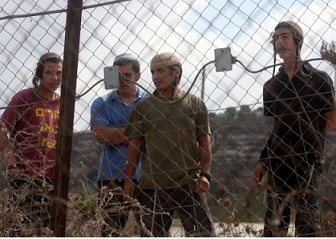
Israeli Settlers – Safa News
By Saed Bannoura | IMEMC & Agencies | October 3, 2013
Late on Wednesday at night a number of extremist Israeli settlers closed the western entrance of Ya’bod village, near the northern West Bank city of Jenin, and harassed several residents. Soldiers invaded the village and broke into a store.
Local sources said the settlers were dancing in the streets, chanting anti-Arab slogans, and were cursing at the residents, and conducting provocative acts.
The settlers used generators to light the streets, and to power loud speakers, while Israeli soldiers were deployed in the area without attempting to stop them, the Safa News Agency has reported.
Later on, the army invaded the village, not to remove the settlers, but to break into a local store that belongs to resident Salah Abu Dyak.
The soldiers violently searched the store and withdrew from the village.
On Thursday morning, several Israeli military jeeps installed a roadblock at the eastern entrance of Ya’bod, and nearby villages, and blocked all Palestinian traffic.
Soldiers stopped and searched dozens of cars, and questioned the passengers before forcing them back, forcing dozens of residents to take unpaved rough roads to reach their places of work, universities and schools.
Dozens of soldiers further invaded Sielet Ath-Thaher town, south of Jenin, broke into the home of resident Nasser Ibrahim Malloul, and handed his son Bilal, 27, a military warrant ordering him to the Salem military base for interrogation.
Related articles
Cars burnt by settlers in Huwwara
International Solidarity Movement | October 2, 2013
Huwwara, Occupied Palestine – In the early hours of 1st October settlers from the settlement of Bracha set fire to two cars parked outside the house of Edrees Shehadeh in Huwwara. This attack forms part of a sustained campaign of intimidation against the village, which includes the 2002 murder of Adnan Shehadeh-Howwara, the 21 year old son of Edrees Shehadeh. Adnan was shot to death by a settler as he was standing on the roof of his family’s house.
The family was woken at 2 a.m. by the noise of settlers setting fire to their car, parked among olive trees next to their house. The perpetrators ran away up the hill upon discovery and the residents managed to put out the fire. The other car, a white Fiat, was completely destroyed.
A plastic bottle containing gas and a box of Israeli branded matches was found on the ground next to the car that was saved. This car was parked next to the children’s room, and the smoke from the fire could have harmed them if it had not been put out so quickly. In recent years 12 cars belonging to the family have been set alight.
Other recent settler attacks to this village include stone-throwing at a house situated even closer to the settlement. Additionally more than 30 olive trees growing on the hill were damaged with axes, killing many of them and resulting in loss of livelihood for the owners.

The family car after it was set on fire
Related articles
- Settlers burn olive trees in Sarta (alethonews.wordpress.com)
- Settlers Burn 350 Olive Trees Near Nablus (imemc.org)
- The settlers (alethonews.wordpress.com)
Former Qwest CEO says refusal to comply with NSA spying landed him in jail
RT | October 1, 2013
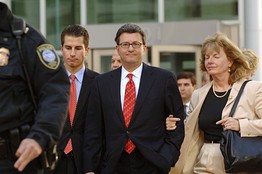 Former Qwest CEO Joseph Nacchio, who spent over four years in prison for insider trading, now says his conviction was based on his company’s refusal to cooperate with NSA requests to spy on its customers.
Nacchio says he feels “vindicated” by ongoing revelations provided by former NSA contractor Edward Snowden that the NSA does, in fact, access massive amounts of metadata and communications information of both foreigners and Americans.
Nacchio told The Wall Street Journal that the NSA set up a meeting with him in February 2001 wherein he believed they would discuss potential government contracts. But he says the NSA instead asked him for permission to surveil Qwest customers.
He says he refused to cooperate based on advice from his lawyers that such an action would be illegal, as the NSA would not go through the normal process of asking the Foreign Intelligence Surveillance Court for a subpoena. About this time, he says the company’s ability to win unrelated government contracts – something it did not have trouble with before the NSA meeting – slowed significantly.
It took until 2007 before Nacchio was convicted of insider trading. Prosecutors claim he was guilty of selling off Qwest stock in early 2001, not long before the company went through financial ills. Nevertheless, he claimed in court documents that he was still confident in the firm’s ability to win government contracts.
Nacchio believes his conviction was in retaliation for his refusal to play ball with legally dubious NSA spying requests.
“I never broke the law, and I never will,” Nacchio told the WSJ.
His version of events matches reporting by USA Today in 2006, in which the paper noted that Qwest was the lone holdout from the government’s warrantless surveillance operations and that defiance “might affect its ability to get future classified work with the government.”
Yet despite his efforts, Nacchio was barred from using any evidence of potential retaliation in his defense, given that the material was considered classified, and his judge refused requests to allow the evidence in trial. Reports from The Washington Post on evidence that has been made public on his case since that time seem consistent with the CEO’s claims.
As a result of his likely hobbled defense, Nacchio was indicted by federal prosecutors and served four-and-a half years in federal prisons before being released in late September.
The NSA has declined to comment on Nacchio, according to the WSJ and The Washington Post.
While spying operations disclosed by Snowden have had some level of legal backing, President George W. Bush’s wiretapping program did not. Thus, telecom companies that cooperated with the program were eventually given immunity for their compliance in 2008.
Related articles
- Don’t Refuse the Nsa or You’ll Sleep With the Fishes (theburningplatform.com)
- Telco exec who resisted NSA Joe Nacchio released after four years in jail (blacklistednews.com)
Bahrain Regime Jails 50 Opposition Protesters up to 15 Years
Al-Manar | September 29, 2013
A Bahraini court on Sunday sentenced 50 people to up to 15 years in jail, including a prominent Iraqi cleric, for forming an opposition group, a judicial source said.
Sixteen defendants were handed 15-year terms, while four others were jailed for 10 years and the other 30 sentenced to five years behind bars, the source said.
The defendants, including Iraqi cleric Hadi al-Mudaressi who was sentenced in absentia, were charged with forming the February 14 Revolution Youth Coalition, which Bahraini authorities accuse of ‘terrorism’.
Several defendants were sentenced in absentia, including Saeed al-Shahabi, a key London-based Bahraini opposition figure who faces an earlier life sentence for his role in the 2011 uprising.
The interior ministry in June named 11 suspects who were arrested in the case, in addition to 13 people who live abroad.
At least 89 people have been killed by the Bahraini authorities since peaceful protests erupted In February 2011, according to the International Federation for Human Rights.
Related article
Impending Charges? Tarek and John in their own words
Free Tarek Loubani & John Greyson | September 28, 2013
We have held on to this statement out of fear that the Egyptian authorities would harm Tarek and John if we released it. But given the announcement of impending charges in the Toronto Star today, we think that their own words can explain what the “evidence” the Egyptian authorities claim to have is. We believe that the impending charges have much more to do with what Tarek and John witnessed on August 16th, rather than what the Egyptian authorities claim they did.
Statement:
“We are on the 12th day of our hunger strike at Tora, Cairo’s main prison, located on the banks of the Nile. We’ve been held here since August 16 in ridiculous conditions: no phone calls, little to no exercise, sharing a 3m x 10m cell with 36 other political prisoners, sleeping like sardines on concrete with the cockroaches; sharing a single tap of earthy Nile water.
“We never planned to stay in Egypt longer than overnight. We arrived in Cairo on the 15th with transit visas and all the necessary paperwork to proceed to our destination: Gaza. Tarek volunteers at Al-Shifa Hospital in Gaza, and brings people with him each time. John intended to shoot a short film about Tarek’s work.
“Because of the coup, the official Rafah border was opening and closing randomly, and we were stuck in Cairo for the day. We were carrying portable camera gear (one light, one microphone, John’s HD Canon, two Go-Pros) and gear for the hospital (routers for a much-needed wifi network and two disassembled toy-sized helicopters for testing the transportation of medical samples).
“Because of the protests in Ramses Square and around the country on the 16th, our car couldn’t proceed to Gaza. We decided to check out the Square, five blocks from our hotel, carrying our passports and John’s HD camera. The protest was just starting – peaceful chanting, the faint odour of tear gas, a helicopter lazily circling overhead – when suddenly calls of “doctor”. A young man carried by others from God-knows-where, bleeding from a bullet wound. Tarek snapped into doctor mode…and started to work doing emergency response, trying to save lives, while John did video documentation, shooting a record of the carnage that was unfolding. The wounded and dying never stopped coming. Between us, we saw over fifty Egyptians die: students, workers, professionals, professors, all shapes, all ages, unarmed. We later learned the body count for the day was 102.
“We left in the evening when it was safe, trying to get back to our hotel on the Nile. We stopped for ice cream. We couldn’t find a way through the police cordon though, and finally asked for help at a check point.
“That’s when we were: arrested, searched, caged, questioned, interrogated, videotaped with a ‘Syrian terrorist’, slapped, beaten, ridiculed, hot-boxed, refused phone calls, stripped, shaved bald, accused of being foreign mercenaries. Was it our Canadian passports, or the footage of Tarek performing CPR, or our ice cream wrappers that set them off? They screamed ‘Canadian’ as they kicked and hit us. John had a precisely etched bootprint bruise on his back for a week.
“We were two of 602 arrested that night, all 602 potentially facing the same grab-bag of ludicrous charges: arson, conspiracy, terrorism, possession of weapons, firearms, explosives, attacking a police station. The arrest stories of our Egyptian cellmates are remarkably similar to ours: Egyptians who were picked up on dark streets after the protest, by thugs or cops, blocks or miles from the police station that is the alleged site of our alleged crimes.
“We’ve been here in Tora prison for six weeks, and are now in a new cell (3.5m x 5.5m) that we share with ‘only’ six others. We’re still sleeping on concrete with the cockroaches, and still share a single tap of Nile water, but now we get (almost) daily exercise and showers. Still no phone calls. The prosecutor won’t say if there’s some outstanding issue that’s holding things up. The routers, the film equipment, or the footage of Tarek treating bullet wounds through that long bloody afternoon? Indeed, we would welcome our day in a real court with the real evidence, because then this footage would provide us with our alibi and serve as a witness to the massacre.
“We deserve due process, not cockroaches on concrete. We demand to be released.
“Peace, John & Tarek”
CONTACT: Cecilia Greyson, cgreysonATgmail.com, Justin Podur, justinATpodur.org
Child Shot In The Eye In Hebron
By Saed Bannoura | IMEMC & Agencies | September 28, 2013
Palestinian medical sources have reported that a seven-year-old child lost his right eye after being shot with a rubber-coated metal bullet fired by an Israeli soldier in Al-Fawwar refugee camp, south of the southern West Bank city of Hebron on Saturday.
The sources added that the child’s mother was also shot by a rubber-coated metal bullet in her shoulder.
The mother and her child were trying to return to the refugee camp; they were far from clashes taking place between the soldiers and local youths.
Eyewitnesses said that the mother and her child were trying to cross a road in an attempt to find a way back to their home after the army closed the main entrance of the camp.
Nasser Qabaja, head of the Disasters Unit at the Red Crescent in the southern part of the West Bank, stated that an ambulance transferred the child from Abu Al-Hasan Hospital to the Hebron Governmental Hospital, before moving him to the St. John Eye Hospital in occupied Jerusalem.
Furthermore, dozens of soldiers occupied rooftops of a number of homes in the area, and fired gas bombs, concussion grenades and rubber-coated metal bullets leading to a large number of injuries, mainly due to the effect of teargas inhalation.
AL-KHALIL: Settlers re-occupy Abu Rajib house
CPTnet | September 24, 2013
On 23 September 2013, in response to the death of Israeli soldier Staff Sgt. Gal Kobi, Prime Minister Benjamin Netanyahu called for illegal settlement expansion in the Old City of Hebron.
At 1:00 a.m. on Tuesday 24 September, the Christian Peacemaker Team in Hebron received reports from the Hebron Rehabilitation Committee that Israeli settlers had re-occupied the Abu Rajib house west of the Tomb of the Patriarchs. Settlers had been evicted from the building in April of 2012.
The resettlement of the Abu Rajib house is a direct and significant risk to the community of Hebron, international law, and human rights, as settlements are illegal under international law and impede the ongoing peace process.
In addition to the illegality of the settlement, the location of Abu Rajib will constitute a severe threat to the freedom of movement for Palestinians. The house sits between two Palestinian Schools and Israeli military checkpoint 209, which CPT monitors every morning as part of its school patrol. If the settlement remains, it will be in the middle of an area hundreds of Palestinian children must pass each morning to attend classes.
Over the past week of the Jewish holiday of Sukkoth, the Israeli military has increased its presence with additional soldiers on the ground, occupying Palestinian homes and turning them into military outposts in and around the area of the Abu Rajib house. As a result, school attendance at Al-Faihaa girl’s school and Al-Ibrahimmiye has dropped.
On Monday, 23 September, the Al-Faihaa girl’s school was shut down completely since so few students were able to attend classes. The added Israeli military presence installed around the settlement will continue this trend.
Israeli settlement expansion has led to several cases of violence between Palestinians and Israelis, including near the settlement of Tel Rumeida.
“For the residents of Tel Rumeida, living next to settlers means living under constant threat of attack,” said a representative from the human rights observer organization, the International Solidarity Movement (ISM). “The Abu Shamsiyeh family who live in Tel Rumeida is particularly vulnerable to attacks, as settlers and Jewish tourists tend to enter their roof and even invade their garden without permission. Most use this private Palestinian roof to enjoy the view of the city, but incidents have occurred where settlers threw stones and garbage down at the family, urinating into their garden and verbally harassing the family.
“Last month, settler youth entered the family’s garden, threw stones at them, and beat their thirteen-year old son. When Abu Shamsiyeh asked the soldier stationed outside their house for help, he came down and watched as settlers kicked Abu Shamsiyeh, and another soldier pushed his wife, who was videoing the incident, to the ground.”
If the Abu Rajib settlement is allowed to stay, in breach of international law and during the ongoing peace negotiations, the rise in settler violence against Palestinian youth and adults will escalate.
Related articles
People stop searched in UK once a minute; blacks bear the brunt
Press TV – September 24, 2013
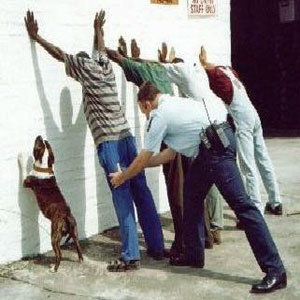 New figures show every 58 seconds one person is stopped and searched by the police in England and Wales for drugs, with blacks bearing the brunt of the practice.
According to findings by the London School of Economics published by the charity Release, minority groups, especially blacks and Asians, are disproportionately targeted by the police for drugs stop searches.
The study found there were over one million stop searches in 2011-2012 with half or more being related to drugs, especially for small amounts of narcotics such as cannabis.
According to the analysis on the figures for 2009-2010, overall search rate across England and Wales was 10 in 1,000 while it was 7 in 1,000 for whites, 18 per 1,000 for Asians and a shocking 45 per 1,000 for blacks, that is blacks were targeted 6.3 times more than white people.
This comes as Release said the rate of blacks using drugs was almost half of whites in 2010 (5.8 percent compared to 10.5 percent).
Release added the police discriminatory behavior toward blacks is also seen in treatment of people in possession of drugs.
The charity said in 2009-2010, 78 percent of black people, caught possessing cocaine, were arrested against 22 percent who received cautions while the rate was 44 percent against 56 percent for white offenders.
The charity said key disparities are also seen in the rate of black people subject to court proceedings for drugs possession and facing prison terms, compared to whites.
“Black people are more likely to get a criminal record than white people, are more likely to be taken to court and are more likely to be fined or imprisoned for drug offences because of the way in which they are policed, rather than because they are more likely to use drugs,” Michael Shiner, co-author of the report, said.
Meanwhile, the analysis showed a stunning 140,000 drugs stop searches were carried out on under-21s in 2009-2010 with 16,900 of them conducted on children aged 15 or below.
Related articles
- Half Ounce of Pot Gets Louisiana Man Twenty Years in Prison (dissidentvoice.org)
Featured Video
Matt Bracken: Hezbollah Re-Arming With Massive Help From Iran
or go to
Aletho News Archives – Video-Images
From the Archives
Examples of hate speech by Israel against Palestine
1. “There is a huge gap between us (Jews) and our enemies, not just in ability but in morality, culture, sanctity of life, and conscience. They are our neighbors here, but it seems as if at a distance of a few hundred meters away, there are people who do not belong to our continent, to our world, but actually belong to a different galaxy.” Israeli president Moshe Katsav. The Jerusalem Post, May 10, 2001
2. “The Palestinians are like crocodiles, the more you give them meat, they want more”…. Ehud Barak, Prime Minister of Israel at the time – August 28, 2000. Reported in the Jerusalem Post, August 30, 2000
3. ” [The Palestinians are] beasts walking on two legs.” Menahim Begin, speech to the Knesset, quoted in Amnon Kapeliouk, “Begin and the Beasts”. New Statesman, 25 June 1982.
4. “The Palestinians” would be crushed like grasshoppers … heads smashed against the boulders and walls.” Isreali Prime Minister (at the time) in a speech to Jewish settlers New York Times April 1, 1988
5. “When we have settled the land, all the Arabs will be able to do about it will be to scurry around like drugged cockroaches in a bottle.” Raphael Eitan, Chief of Staff of the Israeli Defence Forces, New York Times, 14 April 1983.
6. “How can we return the occupied territories? There is nobody to return them to.” Golda Maier, March 8, 1969.
… Continue
Blog Roll
 Aletho News
- The accession of Ukraine could signal the collapse of the EU
- Italy puts Ukraine weapons package on hold – media
- US kills 5 in Pacific as unproven drug smuggling claims persist
- Iran Respects International Law, US & Israel are Rogue States
- Russia Helping Build a New Middle East /Trita Parsi
- Barghouti: ‘Netanyahu has fallen,’ era of Smotrich, Ben-Gvir over
- China slams US policy on Iran as Russia rejects legality of nuclear meeting at UN
- The Mecca Pact Courts Iran: Containment Comes Full Circle
- Oman FM: Persian Gulf states, Iran, Iraq should form security pact excluding US
- Trump peddles fresh falsehoods, claims Iran ‘started the war’ as US aggression drags on
- If Americans Knew
- An error has occurred; the feed is probably down. Try again later.
- No Tricks Zone
- Sudden Stratospheric Warming, Powerful El Niño Combination May Lead To Extreme Europe Cold, Energy Crisis!
- Two New Studies Find Thwaites Glacier Melt Cannot Be Driven By Human Activity Or A Warming Ocean
- E-Cars Reduce CO2 Emissions By Only 41% Compared To Internal Combustion Engine Vehicles
- Predictions Made By Renowned Climate Professor Over Past Decades Have Been Proven To Be Poor
- New Study Suggests Large Regions Of The Pacific Ocean Have Been Cooling For The Last 80 Years
- Germany’s Green Energy Debacle: High Energy Costs Force Kahla Porzellan to Close After 182 Years!
- New Study: 50 Years Of The Most Aggressive ‘Net Zero’ Policies Can Only Affect The Global Climate By 0.03°C
- US September “Heat” Was No Record…Many Records Set Decades Ago
- Latest European Green Energy Debacle; Portugal’s Largest Flagship Solar Park Insolvent!
- Green Energy Debacle: German Expert Professor Fritz Vahrenholt Warns Of Severe Economic And Social Consequences

