Egyptian army kills journalist, wounds another
Middle East Monitor | August 20, 2013
Security sources said that Egyptian security forces killed a senior editor in state Al-Ahram newspaper Tamer abdul-Ra’ouf at a military checkpoint near the city of Damanhour on Monday night.
The sources said that the security forces shot fire at Abdul-Ra’ouf and Hamid al-Barbari, the correspondent of Al-Jomhoriyya newspaper; state newspaper, too. Abdul-Ra’of immediately died and Al-Barbari sustained serious injuries.
In a statement on its Facebook page, the Egyptian army said that the journalists’ car casted doubts as the journalists were driving very fast during the night curfew. The statement said that the journalists did not respond to the army’s calls or warning shots to stop.
“There was no exaggerated use of fire shooting or intended killing,” the statement, which called for people to commit to the curfew, said.
Egyptian Interim government has imposed curfew in wake of bloody dispersal of two major sit-ins for pro-Morsi supporters in Cairo. More than one thousand Egyptians killed and couples of thousands injured.
Arab Organisation for Human Right in the UK said that “arbitrary” killings in Egypt against protesters calling for the end of the military coup in Egypt.
Egyptian journalist slapped with 4-day detention after surviving army shooting
Egyptian Journalist who was injured after army forces opened fired on him and killed his colleague is accused of possessing unlicensed weapons
Ahram Online | August 21, 2013
Damanhour prosecution ordered late Tuesday the detention of Al-Gomhoreya journalist Hamed El-Barbary, who had survived an army shooting a day earlier, for four days pending investigation after being charged with possessing weapons.
Tamer Abdel-Raouf, Bureau chief of Al-Ahram newspaper in Beheira, was shot dead on Monday evening while driving his car a few hours after the beginning of the state-imposed curfew at 7pm. El-Barbary, who was in the same car, got injured.
After he was hospitalised, El-Barbary testified that army forces at a checkpoint located south of Damanhour, northern Beheira governorate, fired at the car after ordering the driver, Abdel-Raouf, not to pass through. He said Abdel-Raouf complied but forces shot him anyway.
Earlier, Egyptian Armed Forces Spokesman Colonel Ahmed Ali said the forces did not intend to kill them.
In his statement, Ali said that the passengers “breached the curfew, drove quickly towards the security checkpoint and did not comply with calls to stop or warning shots fired in the air.”
He added that the car did not stop for the forces to know the identity of its passengers.
On 14 August, Egypt’s interim Cabinet re-introduced a state of emergency, which includes a daily curfew starting at 7pm until 6am in 14 governorates. This came amid recurrent clashes across the nation between security forces and supporters of deposed president Mohamed Morsi.
Journalists and media personnel are officially exempt from the curfew.
Venezuela Withdraws Its Ambassador from Egypt
Telesur | August 16, 2013
Venezuelan president Nicolas Maduro announced today that he will withdraw the country’s ambassador from Egypt because of the conflict there and confrontations between supporters of the Muslim Brotherhood and the defacto government, which has seen over 700 people killed.
“We have witnessed a blood bath in Egypt…We warned that the coup against Morsi was unconstitutional. Morsi was kidnapped and the responsible party for what is occuring in Egypt is the empire, which has its hands in it,” said the head of state.
He assured that, “The United States doesn’t have friends, it has interests, and what it wants is to control the planet”.
Maduro reiterated that, “We are against a blood bath in Egypt, it is a set-back that is going to cost a lot to our brothers, the Arabic people”.
He called on the Venezuelan people to be alert. “We can’t allow the hands of imperialism to enter Venezuela, we have to be the guarantee of independence,” he stressed.
The original article has been abridged. Translation by Tamara Pearson for Venezuelanalysis.com
Israeli soldiers violently attack and arrest peaceful protesters in Beit Ummar
International Solidarity Movement | August 17, 2013
Beit Ummar, Occupied Palestine – Yesterday, the 16th August, four people were violently arrested at a peaceful demonstration taking place near the village of Al-Masara, on the outskirts of Hebron(Al Khalil). Around sixty demonstrators calling for the dismantlement of illegal Israeli settlements upon Palestinian land were attacked and the protest was disbanded by Israeli soldiers within minutes.
At around 11.30am the procession began, with many people waving flags and calling chants for freedom. An Israeli military vehicle drove by, immediately turned around and blocked the road. Within two minutes two more military jeeps and one police car had joined the blockade. Heavily armed soldiers stormed the procession, splitting the group into two and beating protesters to the ground. The soldiers pushed protesters back and formed a wall of plastic shields. Four men including two Palestinian and two international protesters were arrested.
One of the arrested men, Abed, was holding a camera and documenting the demonstration when he was violently grabbed and pushed by an Israel soldier. Abed shouted at the soldier to let go of his arm and tried to pull away from the soldiers grasp. The soldier responded by strangling and arresting him. Another protester, Muad Al-lahham, was arrested while calmly waving a Palestinian flag.
Local Palestinians are incensed by the continuous settlement expansion and subsequent annexation of their land that deliberately prevents farmers from harvesting their crops. This disabling act of aggression has led to local Palestinian families being financially crippled. As an act of resistance, the local people regularly hold peaceful demonstrations that are consistently met with force from the Israeli occupation. These acts, usually held on Friday – Juma’a – often use symbolism to convey their message. Two weeks ago the locals erected a tent on occupied Palestinian land, as a mark of resistance to the Israeli settlements.
Palestinians here are used to being arrested at their demonstrations. Yesterday, Mahmoud from Al-Masara had his permit taken from him, which is indicative of imminent arrest. For Mahmoud, this is routine and he calmly smoked a cigarette while soldiers decided his fate. Mahmoud was allowed to maintain his freedom, but he never knows when an arrest may come. Asked why he continues to protest he said: “Our goal is to live in peace and to have our freedom like anybody else in the world. Israelis have occupied Palestine, but they can never occupy our minds.”
The majority of protesters came from the villages of Beit Ummar and Al-Masara, which are both affected by Highway 60, built by Israeli authorities. The highway cuts through the villages, dividing people from their farm lands. As well as this, the inhabitants of the Israeli settlement of Kami Tzur that is close to the villages use intimidation and force in attempt to prevent the farmers harvesting their crops. The force used by the Israeli army at yesterday’s protest demonstrates the intolerance toward peaceful protesters who make a stand against this injustice.
Related articles
- PCHR Weekly Report: 1 killed, 2 wounded, 60 abducted by Israeli troops in last two weeks (imemc.org)
- AL MASARA: Israel suppresses weekly demonstration, arrests journalist 17Aug13 | Australians for Palestine (ramyabdeljabbar.wordpress.com)
- Palestinian youth abducted in Beit Ummar by Israeli occupation forces (ramyabdeljabbar.wordpress.com)
Abu Ghraib torture victims sued by ‘torturers’
Press TV – August 15, 2013
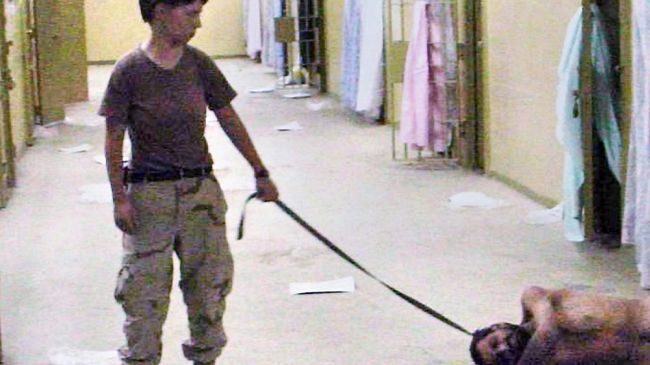
American defense contractor CACI International has sued four former detainees in Abu Ghraib prison to compensate the legal expenses it paid over their dismissed lawsuit regarding the company’s role in torturing the plaintiffs in the notorious jail in Iraq.
The four Iraqi nationals had earlier filed a lawsuit in a District Court in Alexandria against the company accusing it of torturing, humiliating and dehumanizing them when they served time in the prison.
But in July, the judge dismissed the case, saying the court did not have jurisdiction to hear the lawsuit because the incidents happened overseas.
The Arlington-based company has now demanded the plaintiffs pay over $15,000 for travel allowances, deposition transcripts and witness fees, Common Dreams reported.
The lawyers for former Abu Ghraib prisoners in a federal court filing rejected the request.
Our clients “have very limited financial means, even by non-US standards, and dramatically so when compared to the corporate defendants in this case,” according to the filing.
“At the same time, plaintiffs’ serious claims of torture, cruel, inhuman and degrading treatment, and war crimes were dismissed on very close, difficult – and only recently arguable – grounds.”
“Given the wealth disparities between this multi-billion dollar entity and four torture victims, given what they went through, it’s surprising and appears to be an attempt to intimidate and punish these individuals for asserting their rights to sue in US courts,” said Baher Azny, legal director for the Center for Constitutional Rights and the attorney for the plaintiffs.
“Our case is based on reports and investigations by high-level US military investigators, recognizing CACI’s role in conspiracy to torture detainees,” Azny added
“Once we get past legal obstacles and present the case to a jury, we are hopeful justice will come to these Iraqi victims.”
The lawyers who are planning to appeal the case to the US Court of Appeals in fall argue that US law should apply to CACI International as it is an American-based company that operated in a US military prison.
Bahraini regime arrests over 200 protesters in July
Press TV – August 9, 2013
Bahrain’s main opposition group al-Wefaq says more than 200 people including women and children were detained during the heavy-handed regime crackdown on protests in July.
The Bahraini opposition party recently revealed that at least 19 children and one woman were also among those arrested by the regime forces during the demonstrations last month.
According to al-Wefaq, over 170 people were also wounded due to the excessive force used by the Manama regime forces.
Meanwhile, Manama forces have raided some 650 homes over the past month, while 18 cases of brutal and inhumane tortures have also been reported.
On August 7, Bahraini King Hamad bin Isa Al Khalifa banned protests in the capital, Manama, ahead of the August 14 celebrations of the country’s independence from the United Kingdom.
The opposition is planning to hold a major protest on the same day. The Manama regime has warned that any protests would face the “force of the law.”
Bahrain’s loyalist-dominated parliament has also approved a bill banning all protests in Manama.
The Bahraini uprising began in mid-February 2011.
The Al Khalifa regime promptly launched a brutal crackdown on the peaceful protests and called in Saudi-led Arab forces from neighboring states.
Scores of people have been killed in the crackdown, and the security forces have arrested hundreds, including doctors and nurses.
The protesters say they will continue demonstrations until their demand for the establishment of a democratically elected government is met.
Related article
The Murder of Tomas Garcia by the Honduran Military
School of the Americas Watch
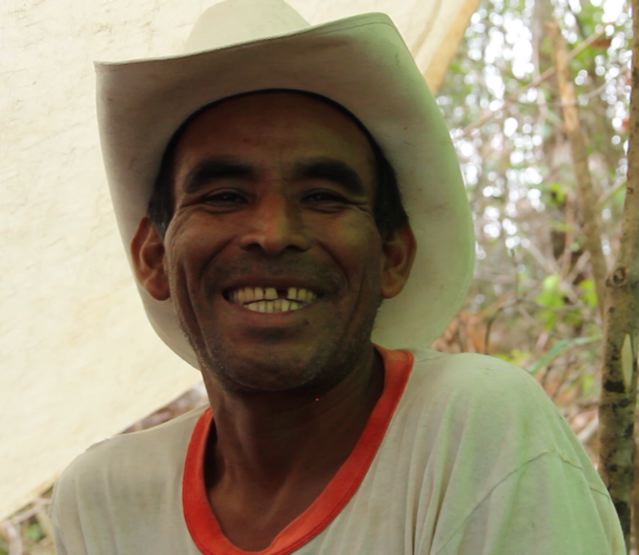 Tomas Garcia was a father of seven who would have turned 50 this December. He was a husband, father, brother, and community leader, serving as an auxiliar and on his community’s Indigenous Council. On Monday, July 15, his life was brutally taken away by the Honduran military when a soldier shot and killed him at close range in broad daylight in front of 200-300 people.He did not have a gun, he did not hurt anyone. His crime? Opposing the construction of a hydroelectric dam being constructed in his Indigenous Lenca community’s territory against their will, in violation of ILO Convention 169 and the Honduran government’s promises to consult Indigenous communities about projects in their territory.Why Tomas?He was one of the first to arrive, leading the delegation that had come to deliver a message to the companies constructing the dam at their installations in Rio Blanco. A soldier fired at him not once, not twice, at least three times from only 6 or so feet away, according to eyewitnesses.
Tomas had gone to the day’s activities with his 17-year old son who was also shot several times, receiving serious injuries in his back, chest, and arm and requiring hospitalization. Two others were also injured by the army’s bullets. According to eyewitnesses, a soldier who had been firing into the air lowered his M-16 and fired multiple shots directly at Tomas. Tomas had recently arrived at the company’s installations as one of those who was at the front of the delegation; the whole group had not even had time to arrive and many were still walking down the hill that leads to the offices. As one woman from the community explained, “We didn’t even have a conversation with them, they didn’t say anything to us. They didn’t even wait for us to say why we there, they didn’t wait for us to say what we had to say. We saw Tomas fall, he fell from shots, including to his head.”
The murder of Tomas Garcia by the Honduran armed forces is only the latest escalation in a systemic campaign of repression against the Rio Blanco Indigenous Lenca people to try to force them into accepting a hydroelectric dam being illegally constructed in their territory. Since April 1, the communities in the area, organized in the Indigenous Lenca organization COPINH, have been blocking the access road to the dam site. The access road, like the dam, is in their ancestral territory, surrounded by their fields of corn, beans, bananas, yucca, and lush forests that they have carefully stewarded for hundreds of years. At first, the Honduran National Police evicted them multiple times – despite them being on their own land. After each eviction, they simply returned to the site.Personnel of the companies building the dam — DESA and SINOHYDRO – threatened COPINH leaders. Community members started receiving death threats from employees of the company who live in the area. Armed men appeared at the site of the roadblock and lurked around at night.
Then on May 17, soldiers from the First Battalion of Engineers, commanded by SOA graduate Col. Milton Amaya, were deployed to the area and have stayed there ever since. They essentially serve as security guards for the dam companies, even driving company machinery to attempt to get it past the roadblock, and live, eat, and sleep at DESA/SINOHYDRO’s installations. Soldiers have repeatedly intimidated those who oppose the dam: they have harassed them, told them they were criminals, came into their yards, held an M-16 up to one of them, threatened women and children, and fired shots when community leaders walked by.i
 Having the police and military on their side only seems to have emboldened company employees to increase their threats and attacks on those who oppose the project. According to testimonies, employees of the company who live in the area attacked a man who had just come from the roadblock with machetes —cutting up his face and sending him to the hospital.They threw rocks at another, and threatened many in the community with death, including children. “I’m going to come to the Roble and you know how you’ll all end up. In pieces.” “I’m going to kill all of you.” ii Bullets passed above the site of the roadblock where people were sitting one Monday afternoon, people in ski masks appeared near the house of a family that is strongly against the dam, unknown figures lurked outside the house of the President of the Indigenous Council, and a known hit man arrived at the site of the roadblock.
In spite of all of this, the Indigenous Lenca people did not give up. Day after day, in the rain or in the heat, in spite of death threats and bullets that passed overhead, men, women, and children came to the roadblock to defend their land. After Tomas’ death, they continue to do so, now continuing forward in his honor, despite the intense accusations against them aimed at discrediting their struggle in the wake of Tomas’ murder.
To justify the death of Tomas Garica, DESA and the military launched a media campaign criminalizing COPINH and the Rio Blanco community. DESA issued a media release claiming that
“because of the violent intervention of the COPINH protestors, Mr. Tomas Garcia died and Mr. Alan Garcia Dominguez was injured. This morning, minor Cristian Anael Madrid Munoz also died, who is the grandson of one of the principal leaders of the zone and was doing agricultural work on his property when he was surprised by the protestors” and that “The actions which occurred today were deliberately premeditated by the principal leaders of COPINH.”
Reading DESA’s release and the corporate news accounts of what occurred, one would think that COPINH itself murdered Tomas Garcia instead of the Honduran military. Area residents who heard TV news accounts got the impression that COPINH was violent and threatening people, not that they were in fact the victims of threats and violence. DESA also accuses the protestors of a second death, which is said to have occurred in a separate location while community members were gathered around the body of Tomas Garcia at the company’s installations, in sight of the police and military. Community leaders report that the Police officer in charge even told them he was a witness that they were all still with him at DESA’s installations when gunshots were heard from up the hill, where Christian Madrid lives. But that doesn’t matter when DESA and Chinese owned SINOHYDRO – the world’s largest dam-building company — are losing money because the subsistence farmers of Rio Blanco refuse to let their river be privatized.
The attacks portraying the protestors as armed further contradict the reality one finds when one visits the zone. The dirt-poor Indigenous farmers of Rio Blanco have machetes and sticks, not guns.As one Indigenous Lenca woman and mother who is a leader in the struggle against the dam explained,
“We don’t have any guns. They do have guns because they are invading our land. They buy big guns to walk around threatening the lives of our compañeros, of all the members of Rio Blanco. They see us as an enemy and walk around with guns. Since they make money selling our land with that they can buy guns to take away the life of another person, another human life.We are all humans in this world… We have to respect each other’s faces. We are all the same.Regardless of how we look, we are children of God.”
The accusations of violence, murder, and possibly even terrorismiii against COPINH are a strategic escalation of the criminalization campaign aimed at destroying COPINH’s ability to resist the Agua Zarca Dam and numerous other projects planned for Indigenous Lenca territory. On May 24, soldiers from the First Battalion of Engineers detained Berta Caceres and Tomas Gomez of COPINH, claiming to have found a gun in their vehicle to try to criminalize them. It appears that soldiers themselves may have placed a gun in their vehicle to fabricate the charges. SOA graduate Milton Amaya, Commander of the First Battalion of Engineers, made accusations in the press. However, the soldiers couldn’t even keep their stories straight and the charges were provisionally dismissed on June 13th. Nevertheless, the state has appealed and is still trying to criminalize Berta. Now, COPINH and the Rio Blanco community have been criminalized and defamed in the press, in an effort to justify the murder of Tomas Garcia and potentially justify criminal charges against COPINH leaders or even more murders in the area. A similar tactic has been used in the Bajo Aguan, where SOA-graduate Col. Alfaro started a media campaign earlier this year accusing the campesinos (small farmers) of being armed and violent to justify the deaths in an area where over 100 small farmers have been murdered.
Why is the Honduran government so invested in breaking Indigenous Lenca resistance to the Agua Zarca Dam project in the remote western mountains of Honduras? The Agua Zarca Dam is not an isolated project but part of the overall scheme of privatization and looting of Honduras’ natural resources in the name of foreign investment. It is part of the “Honduras is open for business” scheme that was embarked upon following the 2009 military coup in Honduras to enrich the Honduran elite and multi-national corporations.Just months after the coup, the Honduran National Congress passed a General Water Law enabling the country’s water resources to be concession to third parties – enabling privatization of rivers.iv Then in 2010, the Congress approved a package of 41 hydroelectric dam projects throughout Honduras, including the Agua Zarca project and other dams in Indigenous territory.v They also passed a new mining law, which has yet to go into effect, and a law creating Special Development Regions, commonly known as model cities. And in July 2013, the Congress passed a law enabling the government to sell off “idle” resources, including natural resources, mining, energy, and more, in order to pay the internal debt.vi
All these laws passed by the post-coup governments are part of the drive to privatize and sell off natural resources – from water, to minerals, to the land itself– for exploitation and profit by corporations, especially foreign corporations. As Honduran President Porfirio Lobo explained at the signing of an agreement with SINOHYDRO to build three other dams on one of Honduras’ longest rivers, “I’m determined to promote these types of projects and make Honduras more open to all foreign investors.” While enriching business executives and investors around the world, this robs Honduran communities, especially Indigenous and campesino communities who live off the land, of the land and resources they depend on to survive.
And so the Honduran military has been dispatched to destroy the resistance of the Rio Blanco Indigenous people just as they have been dispatched to the Bajo Aguan where organized campesinos struggle for land.While Tomas Garcia lived with his wife and seven children in a small house with a dirt floor, the US was sending millions and millions into military aid in Honduras.Some of this aid probably found its way to the unit that used one of its M-16s to murder Tomas and terrorize the Lenca people for standing up for their rights. It is no accident that the military is used to enforce the turning over of Honduras’ natural resources to corporations; this is part of the US neoliberal agenda. US aid includes training, whether at the School of the Americas or by the US military on Honduran soil.For instance, Second Lt. Gonzalez, who was in charge of the soldiers stationed in Rio Blanco, reported he was trained in Special Operations by US military instructors. David Castillo, the Director of DESA, the company building the dam, attended West Point Military Academy and previously served as the Assistant to the Director of Intelligence of the Honduran Armed Forces.vii The military’s effort to criminalize the Rio Blanco community goes up to the highest levels – General Rene Osorio Canales, the Commander of the Honduran Armed Forces who was trained at the School of the Americas, spoke out to publicly justify the military’s murder of Tomas Garcia.viii
“When we heard the shots, we were humiliated.Because we don’t have guns. We have only machetes and wood.They are always accusing us of being armed, saying that we are guerrillas, that we are violent. That’s a lie. What we want is for them to withdraw and leave our territory and our rivers free.As Indigenous people we don’t want this dam to be built in our home.”
“We don’t want the dam built on our land because it affects us a lot. We like to harvest corn and beans, but we no longer could plant our crops. We don’t want the dam and we don’t want them to come violate our rights.”
“We are not criminals.We are people who grow corn.”
“Before the company came here we lived in peace.”
-Rio Blanco community members
[i] Interviews with Rio Blanco community members, May, June, July 2013.
[ii] Testimonies from community members who oppose the dam about threats from company employees who live in the area, June and July 2013.
[iii] http://copinhonduras.blogspot.com/2013/07/solidaridad-de-la-red-nacional-de.html#more
[iv]http://www.defensoresenlinea.com/cms/index.php?option=com_content&view=article&id=2523:comunidades-indigenas-lencas-en-rebelion-contra-depredacion-del-territorio&catid=58:amb&Itemid=181
[v] http://archivo.laprensa.hn/Negocios/Ediciones/2010/09/03/Noticias/Congreso-aprueba-41-proyectos-renovables
[vi] http://www.elheraldo.hn/Secciones-Principales/Pais/Ratificada-ley-para-vender-bienes
[vii] http://www.linkedin.com/pub/david-castillo/39/a55/6a2
[viii]http://www.defensoresenlinea.com/cms/index.php?option=com_content&view=article&id=2695:en-guerra-contra-el-pueblo&catid=42:seg-y-jus&Itemid=159
Photo of Tomas Garcia by Colectivo Ocote
Related article
Honduras: Expanding Palm Oil Empires In The Name Of ‘Green Energy’ And “Sustainable Development”
Written by Rights Action, Rainforest Rescue, Biofuelwatch, and Food First | August 6, 2013
From 6th-8th August, the Roundtable on Sustainable Palm Oil (RSPO) is holding its 4th Latin American Conference on so-called sustainable palm oil in Honduras [1]. Environmental and social campaigners have been shocked to learn that one event sponsor is the palm oil company Dinant Corporation, owned and controlled by Miguel Facusse, the largest landowner in Honduras. They are calling on World Wildlife Fund WWF and three other organisations to withdraw from and denounce the conference being held in Honduras due to the Dinant’s sponsorship of the event and the serious human rights implications [2].
Mr. Facusse was a key supporter and beneficiary of the June 2009 military coup in Honduras [3], has been associated with narco-trafficking [4], and, along with other large oil palm growers, has been linked to the targeted killing of more than 88 members and supporters of peasant organisations since June 2009 in the Aguan Valley [5], one of the main palm oil producing regions in Honduras.
Annie Bird from Rights Action states: “By holding its conference in Honduras and by allowing Dinant Corporation to sponsor the event and hold a stall, the RSPO is turning a blind eye to systemic and severe human rights abuses, including forced evictions of entire communities and over 88 killings for which palm oil companies, especially Dinant, are responsible. The RSPO Conference serves to reinforce the impunity with which the large-scale palm producers operate.”
RSPO is overwhelmingly dominated by the interests of large corporations like Nestlé, Rabobank and Unilever—all linked to cases of “land grabbing” in Asia, Latin America and Africa.” [6]
According to Tanya Kerssen, Research Coordinator for Food First, “The case of Dinant is emblematic of how large, elite-controlled companies use palm oil to expand their control over land and other resources. The RSPO is merely window dressing for this continued corporate expansion, which—whether classed as ‘sustainable’ or not—necessarily means the replacement of forests, biodiversity and food production with a large-scale monoculture crop for biofuel and unhealthy edible oils.” [7]
Guadalupe Rodriguez from Rainforest Rescue adds: “WWF and the three other organisations involved in this RSPO conference must pull out of and denounce this process. They must not, however indirectly, associate themselves with palm oil businessmen involved in repressing, evicting and killing peasants in Honduras’s Aguan Valley.”
The European Commission considers all biofuels from RSPO-certified palm oil to be sustainable and thus eligible for government support [8]. This is despite growing evidence by a large number of organisations, which shows that the RSPO has not been enforcing its own standards on its member companies and cannot guarantee environmental or social sustainability of palm oil [9].
Almuth Ernsting from Biofuelwatch states: “The RSPO Secretariat’s decision to hold a conference in Honduras and allow Dinant Corporation to contribute sponsorship and hold a stall further undermines any pretence that the RSPO’s aim is to make palm oil sustainable. Far from addressing any of the most serious impacts of palm oil production, the RSPO continues to serve as an instrument of greenwashing for the industry”.
NOTES
[1] The Roundtable on Sustainable Palm Oil is a stakeholder forum which provides voluntary certification for palm oil. The great majority of RSPO members represent industry interests. (Conference website: http://rspo2013.com/)
[2] See http://rightsaction.org/action-content/open-letter-world-wildlife-fund-solidaridad-network-snv-netherlands-development for an Open Letter to WWF, Solidaridad, SNV Netherlands Development Organisation and Forest Ethics on this issue.
[3] In June 2009, the democratically elected Honduran government of Manuel Zelaya was overthrown by a military coup. Manuel Zelaya’s government had begun listening to and acting on the demands of peasant organisations for land reform, including in the Aguan Valley region. The land reform process was ended by the military rulers after the coup. Since then, Dinant Corporation and their armed security forces have been collaborating with military forces and police forces in repressing local communities who have been trying to reclaim land controlled by Dinant. See for example: http://www.enca.org.uk/documents/ENCA56_Sep_2012.pdf .
[4] Published Wikileaks Cables revealed that the US embassy in Honduras has had evidence linking Miguel Facusse to drug trafficking since at least 2004 and that several aeroplanes with drugs have landed on his private property. See http://www.thenation.com/article/164120/wikileaks-honduras-us-linked-brutal-businessman#
[5] For a report by Rights Action about killings and other human rights abuses in the Aguan Valley, see http://rightsaction.org/sites/default/files/Rpt_130220_Aguan_Final.pdf .
[6] See, for example: “The bloody products of the house of Unilever” Rainforest Rescue, 2011. https://www.rainforest-rescue.org/mailalert/747/the-bloody-products-from-the-house-of-unilever
[7] For more on the link between palm oil expansion and corporate control, see Kerssen, Tanya. Grabbing Power: The New Struggles for Land, Food and Democracy in Northern Honduras. Food First Books, 2013.
[8] See http://www.rspo.org/news_details.php?nid=137
[9] Previously, over 250 organisations condemned the RSPO for ‘greenwashing’ of palm oil: http://www.biofuelwatch.org.uk/2008/rspo-declaration-english/ . More recently, the RSPO has been denounced for example by Greenpeace and Friends of the Earth; http://www.biofuelwatch.org.uk/2008/rspo-declaration-english/
Lebanese ‘tortured by Mossad agents in Nigeria’
Press TV – August 6, 2013
Two Lebanese nationals, who are on trial in Nigeria, have told a court that they were subjected to torture by Israeli Mossad agents after being arrested.
Mustapha Fawaz and Abdallah Thahini together with another Lebanese national Talal Ahmad Roda were arrested in May after an arms cache was discovered in a residence in the Nigerian city of Kano.
The three Lebanese men reportedly own a supermarket and an amusement park in Abuja, which have been closed since their arrests.
Fawaz told the court on Monday that after he was arrested in Abuja, a security official told him that some “European friends” wanted to ask him some questions.
“I was taken to an interrogation room where I met three Israeli Mossad agents,” he said.
Fawaz also said the interrogators handcuffed his hands behind his back for days, noting he “lost count because they did not allow me to sleep for several days.”
He went on saying, “During the 14 days of interrogation, I was interrogated by six Israeli Mossad agents and one masked white man.”
“I was interrogated in Arabic. I asked to be interrogated in English, but they refused. Most of them are weak in English. They are not Europeans, but Israelis,” he also said, adding no Nigerian official was present during the interrogations.
Thahini gave similar account to the court, saying he collapsed five days after the interrogators did not allow him to sleep.
Related article
- Israel Targets “Hezbollah Cells” in Nigeria (alethonews.wordpress.com)
Chilean judge closes case into the origin of Pinochet millions
MercoPress | August 6, 2013
Chilean court decided on Monday not to charge any of late Dictator Augusto Pinochet’s family members in a long-running investigation into the origin of the general’s fortune and his suspected embezzlement of public funds.
The judge did charge six former members of the military who had collaborated with Pinochet in the so-called Riggs case.
Pinochet was charged in 2005 with tax evasion in connection with millions of dollars he held in foreign bank accounts, which came to light after a US Senate investigation into banking irregularities at the now-defunct Washington-based Riggs Bank.
Chilean judge Manuel Antonio Valderrama decided not to charge Pinochet’s widow, Lucia Hiriart, and her children. He said the decision can be appealed within 15 days.
Pinochet, who took power in a 1973 military coup, died in 2006 at the age of 91. He did not face a full trial for crimes committed during his 1973-1990 dictatorship, when around 3,000 people were kidnapped and killed and 28,000 were tortured.
An audit by the Universidad de Chile’s Business and Economics faculty in 2010 estimated that Pinochet had accumulated 21 million dollars before his death, of which more than 17 million was of unknown origin.
The six former military members charged in the case could face five to 10 years in prison if found guilty.
Related article
- Bachelet takes on Pinochet ally (morningstaronline.co.uk)
Colombia: Killings of Human Rights Activists Increase by 27%
By Alexandre Bachet | The Argentina Independent | August 5, 2013
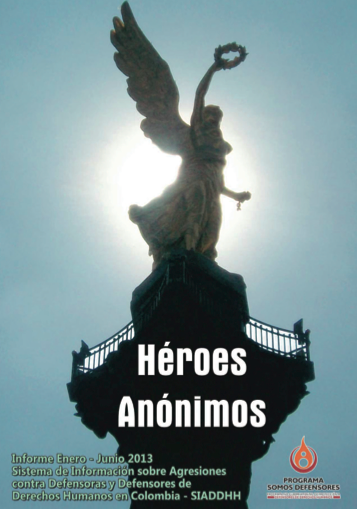 The non-governmental programme ‘Somos Defensores’ published a half-yearly report on Sunday showing a 27% increase in killings of human rights defenders and social leaders in Colombia.
Between January and June 2013, 37 human rights activists were murdered, according to the programme, which is supported by national and international NGOs. This represents a 27% increase compared with the same period of last year, when 29 activists were killed.
The report, called ‘Héroes Anónimos‘ (‘Anonymous Heroes’), states that most of the activists killed, 32 men and 5 women, were leaders of social and farmers’ organisations.
Diana Sánchez, spokeswoman for the programme, stated that “there is a lower number of aggressions [153 cases] compared to the same period last year [163 cases]” but “paradoxically, murders have increased, which is more serious.”
Sánchez explained that the first half of the year was marked by “a constant tension in political and human rights issues,” referring to the numerous protests that have taken place in Colombia this year. She also denounced that “there are armed groups and gangs (heirs to the paramilitary groups involved in drug trafficking) that when they feel that a [social] leader or an NGO threaten their mafias or their territories, they have no qualms about killing them.”
(photo courtesy of ‘Somos Defensores’)
Featured Video
Matt Bracken: Hezbollah Re-Arming With Massive Help From Iran
or go to
Aletho News Archives – Video-Images
From the Archives
Examples of hate speech by Israel against Palestine
1. “There is a huge gap between us (Jews) and our enemies, not just in ability but in morality, culture, sanctity of life, and conscience. They are our neighbors here, but it seems as if at a distance of a few hundred meters away, there are people who do not belong to our continent, to our world, but actually belong to a different galaxy.” Israeli president Moshe Katsav. The Jerusalem Post, May 10, 2001
2. “The Palestinians are like crocodiles, the more you give them meat, they want more”…. Ehud Barak, Prime Minister of Israel at the time – August 28, 2000. Reported in the Jerusalem Post, August 30, 2000
3. ” [The Palestinians are] beasts walking on two legs.” Menahim Begin, speech to the Knesset, quoted in Amnon Kapeliouk, “Begin and the Beasts”. New Statesman, 25 June 1982.
4. “The Palestinians” would be crushed like grasshoppers … heads smashed against the boulders and walls.” Isreali Prime Minister (at the time) in a speech to Jewish settlers New York Times April 1, 1988
5. “When we have settled the land, all the Arabs will be able to do about it will be to scurry around like drugged cockroaches in a bottle.” Raphael Eitan, Chief of Staff of the Israeli Defence Forces, New York Times, 14 April 1983.
6. “How can we return the occupied territories? There is nobody to return them to.” Golda Maier, March 8, 1969.
… Continue
Blog Roll
 Aletho News
- The accession of Ukraine could signal the collapse of the EU
- Italy puts Ukraine weapons package on hold – media
- US kills 5 in Pacific as unproven drug smuggling claims persist
- Iran Respects International Law, US & Israel are Rogue States
- Russia Helping Build a New Middle East /Trita Parsi
- Barghouti: ‘Netanyahu has fallen,’ era of Smotrich, Ben-Gvir over
- China slams US policy on Iran as Russia rejects legality of nuclear meeting at UN
- The Mecca Pact Courts Iran: Containment Comes Full Circle
- Oman FM: Persian Gulf states, Iran, Iraq should form security pact excluding US
- Trump peddles fresh falsehoods, claims Iran ‘started the war’ as US aggression drags on
- If Americans Knew
- An error has occurred; the feed is probably down. Try again later.
- No Tricks Zone
- Sudden Stratospheric Warming, Powerful El Niño Combination May Lead To Extreme Europe Cold, Energy Crisis!
- Two New Studies Find Thwaites Glacier Melt Cannot Be Driven By Human Activity Or A Warming Ocean
- E-Cars Reduce CO2 Emissions By Only 41% Compared To Internal Combustion Engine Vehicles
- Predictions Made By Renowned Climate Professor Over Past Decades Have Been Proven To Be Poor
- New Study Suggests Large Regions Of The Pacific Ocean Have Been Cooling For The Last 80 Years
- Germany’s Green Energy Debacle: High Energy Costs Force Kahla Porzellan to Close After 182 Years!
- New Study: 50 Years Of The Most Aggressive ‘Net Zero’ Policies Can Only Affect The Global Climate By 0.03°C
- US September “Heat” Was No Record…Many Records Set Decades Ago
- Latest European Green Energy Debacle; Portugal’s Largest Flagship Solar Park Insolvent!
- Green Energy Debacle: German Expert Professor Fritz Vahrenholt Warns Of Severe Economic And Social Consequences

