Israeli military court sentences cartoonist to five months in jail
Palestine Information Center – 06/04/2013
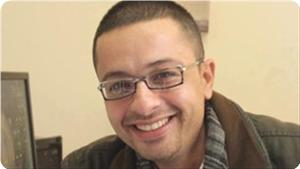 JENIN — The Israeli military court in Salem, north of Jenin, has sentenced Palestinian cartoonist Mohammed Sabana to five months imprisonment on the charge of contacting “hostile parties”.
Family members told the PIC reporter on Saturday that the court passed the sentence on Friday and charged Sabana with making such contacts during his visit to Jordan.
They said that the charges were unfounded, adding that the sentence was illegal and proved the summary trials conducted against Palestinian citizens.
The relatives affirmed that Sabana was not involved with any political party or organization and was just an activist who employs his cartoons in exposing the Israeli occupation’s crimes.
Sabana was arrested on his return from Jordan last February and held for interrogation. His brother, Thamer, was also detained for his pro-prisoners’ activities.
Related articles
- Israel detains Palestinian cartoonist, family says (alethonews.wordpress.com)
- Palestinian Journalists jailed by Israelis (english.pravda.ru)
Italy’s president pardons US colonel with no justifiable reason
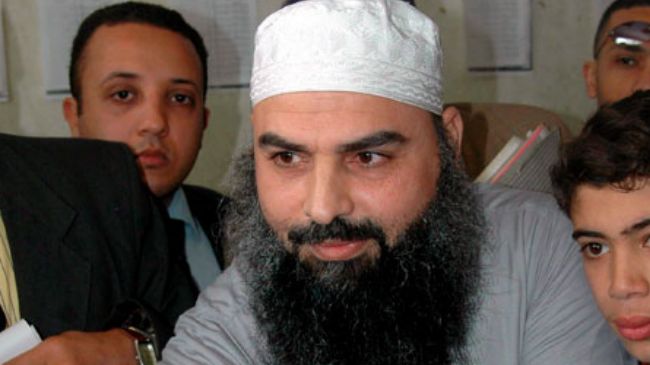
Egyptian cleric Hassan Mustafa Osama Nasr, also known as Abu Omar
Press TV – April 6, 2013
Italy’s President Giorgio Napolitano has pardoned, without presenting a justifiable reason, a US Air Force colonel, who has been convicted in absentia of the abduction and illegal imprisonment of an Egyptian Muslim cleric.
Napolitano’s office said in a statement on Friday that the president had granted the pardon “in hopes of giving a solution to a situation to an affair considered by the United States to be without precedent because of the aspect of convicting a US military officer of Nato for deeds committed on Italian soil.”
Napolitano said he had pardoned Joseph Romano because the US and Italy are close allies and share the ‘common goal of promoting democracy.’ This is while the move to pardon the US convict is believed to be unjustifiable in concrete terms.
Romano was one of the 23 Americans tried and sentenced by Italian courts over the operation to kidnap Egyptian cleric Hassan Mustafa Osama Nasr, also known as Abu Omar, in 2003.
Italian courts convicted 22 CIA personnel in the Abu Omar case. The CIA agents are believed to be living in the United States. They are unlikely to serve their sentences.
Romano was the only American convicted who was not a CIA employee.
Abu Omar, who was abducted in a joint operation by the CIA and the Italian military intelligence agency SISMI, enjoyed political asylum in Italy at the time.
He was allegedly taken to a US air base in northeastern Italy and then transferred to a US base in Germany and subsequently to Cairo.
Romano was the security chief of northern Italy’s Aviano airbase, where Abu Omar was taken to.
The Muslim cleric, who was released in 2007, says he was tortured in prison by his kidnappers.
Related article
- Italy Imprisons Military Intelligence Chief for Helping CIA Kidnap Egyptian Cleric (alethonews.wordpress.com)
Palestinian prisoner was cancer-stricken for ‘years’: autopsy report
Al-Akhbar | April 4, 2013
Deceased Palestinian prisoner Maysara Abu Hamdiyeh had been stricken with cancer for ‘years’ and was treated with improper medication, official doctors from the Palestinian Authority and Jordan have found.
Israeli doctors did not stop Abu Hamdiyeh’s cancer from spreading, although he had been complaining of bodily pains since 2003, Palestinian Prisoner Affairs Minister Issa Qaraqe said Thursday as he announced the results of an autopsy.
The 64 year old former Fatah member succumbed to oesophageal cancer on Tuesday. More than 6,000 Palestinians, reported to include all factions, poured into the streets of Hebron for his funeral.
Prison authorities disclosed his diagnosis in February, and said they tried to secure his release shortly after.
A statement from the Israeli Prison Service after his death said: “The prisoner was diagnosed with oesophageal cancer in February and was under the medical supervision of experts at the hospital. About a week ago, after being diagnosed as terminal, the IPS appealed to the release committee to secure his early release, a process which had been started but not yet concluded.”
Lawyers and relatives report that prison doctors ran biopsy tests on him in 2012 but refused to inform him of his disease.
“Instead of providing him with the correct treatment, the doctors gave him flu shots that caused severe pain in his chest, which he could hardly sleep after,” said Abu Hamdiyeh’s lawyer al-Alami.
His sister Itidal told an online magazine that she visited him in January, one month before his official diagnosis, and found that his voice was completely gone.
Angered by Abu Hamdiyeh’s death, the entire Palestinian prisoner population refused their morning meal Wednesday, according to a statement by the IPS, and the Palestinian Authority announced a three-day general strike across the West Bank.
Abu Hamdiyeh is the second Palestinian to die in Israeli custody this year. Arafat Jaradat, 30, died after an interrogation session in February. Palestinian officials said he had been tortured, an allegation Israel denied.
Two Palestinian youths shot dead
Israeli troops shot dead two Palestinian youths in Tulkarem, officials said Thursday, heightening tension ahead of Abu Hamdiyeh’s funeral.
Palestinian security officials said Amer Nassar, 17, was killed by shots to the head. According to AFP, the body of his 18-year-old cousin, Naji Balbisi, was discovered at the site at dawn on Thursday with wounds to the chest.
However, Palestine’s Ma’an News Agency reports that Israeli forces detained Balbisi’s for several hours, and then at 4 a.m., handed the body to a Red Crescent ambulance.
Both teenagers were to be buried after midday prayers.
The Israeli army said troops opened fire at rioters who hurled petrol bombs at a military post at Tulkarem late on Wednesday, as violent protests erupted in the West Bank. The Palestinian Authority called for a general strike Tuesday after the death of Maysara Abu Hamdiyeh in an Israeli jail.
Following mass protests in the West Bank over the death of Abu Hamdiyeh, Israeli planes had gone into action on Tuesday, targeting what the military described as “two extensive terror sites in the northern Gaza Strip.”
Hours after it launched its first air strikes in the Palestinian enclave in four months, the Israeli military said two rockets fired from the Gaza Strip struck the southern town of Sderot on Wednesday morning, causing no casualties.
Fighters in the Gaza Strip early Thursday fired a mortar shell across the border, the army confirmed, adding that there were no casualties or damage.
Prime Minister Benjamin Netanyahu had issued a stern warning, saying: “If calm is disrupted, we will respond forcefully.”
Related article
- Gaza fighters launch retaliatory strikes over prisoner’s death (alethonews.wordpress.com)
Gaza fighters launch retaliatory strikes over prisoner’s death
Al-Akhbar | April 2, 2013
Gaza fighters fired retaliatory strikes on Tuesday, hours after the death in custody of a Palestinian who was denied appropriate cancer treatment, witnesses and the Israeli military said.
Witnesses told AFP that militants in Gaza City had fired three mortar rounds, but the army said only one projectile had landed, without causing any casualties.
Meanwhile, over 40 Palestinians angered by the death of Maisara Abu Hamdiyeh, 64, were injured in clashes with Israeli police and prison guards. Riots are believed to have swept through Israeli prisons, while guards used live fire and tear gas against the protesters.
Hamas spokesman Sami Abu Zuhri told AFP that the faction was watching the developments with “the greatest concern” and that Israel would “regret its continuing crimes”.
The last time Gaza fighters launched rocket fire was on March 21 during a visit by US President Barack Obama, when two rockets landed causing some damage but no injuries.
Maysara Abu Hamdiyeh’s death threatened to raise tensions in the Israeli-occupied West Bank and Gaza, after reports surfaced that Israeli authorities had denied care to the prisoner. Palestinian Prisoner Affairs Minister Issa Qaraqe likened Israel’s handling of Abu Hamdiyeh’s condition to a “slow death penalty.”
Israeli authorities claim they informed Abu Hamdiyeh, 64, of his illness in February, however, prisoner’s rights groups say the diagnosis occurred in August 2012. His lawyers and relatives report that Israeli doctors ran biopsies on him after he repeatedly complained of throat pains.
Palestinians have held several protests in recent weeks in support of more than 7,000 prisoners in Israeli jails, including over 300 children.
Palestinian Authority President Mahmoud Abbas said Israel had ignored long-standing pleas to free Abu Hamdiyeh, 64, sentenced to life in prison in 2002 for recruiting a bomber who planted explosives in a Jerusalem cafe. The bomb did not detonate.
“The Israeli government in its intransigence and arrogance refused to respond to Palestinian efforts to save the life of the prisoner,” Abbas told members of his Fatah party in the West Bank city of Ramallah.
Abu Hamdiyeh is the second Palestinian to die in Israeli custody this year. Arafat Jaradat, 30, died after an interrogation session in February. Palestinian officials said he had been tortured, an allegation Israel denied.
News of Abu Hamdiyeh’s death touched off protests by Palestinian inmates in several Israeli prisons. At Ramon jail, in southern Israel, inmates threw objects at guards, who fired tear gas at them, the Prisons Service spokeswoman said.
Three prisoners and six guards were treated at the jail for tear gas inhalation, she said.
In Abu Hamdiyeh’s West Bank home city of Hebron, masked stone-throwers confronted Israeli soldiers. No serious injuries were reported.
Israel holds 178 Palestinians in administrative detention, who have been jailed without trial as suspected militants for renewable three- to six-month terms based on classified evidence.
Hundreds of sick Palestinians are perishing in Israeli jails, according to the Palestinian Prisoner Affairs Minister and activists. The Palestinian Prisoners Club says some 25 Palestinian prisoners held by Israel are suffering from cancer.
Palestinians are expected to hold strikes across the West Bank and Gaza, and Palestinian members of the Israeli Knesset have issued strongly worded condemnations of the Israeli government over Abu Hamdiyeh’s deah.
Rights groups, as well as Qaraqe, described Abu Hamdiyeh’s eight-hour trips to and from the hospital as hellish. He was transported in a corrugated metal van with no windows or seats.
The Palestinian Authority said they expected him to be released on Monday. Israel’s refusal to free Abu Hamdiyeh had sparked protests in several Israeli prisons, where 17 detainees have begun a hunger strike.
In recent weeks, Abbas and Prime Minister Salam Fayyad made intense efforts to secure Abu Hamdiyeh’s release in the light of his deteriorating health.
(Al-Akhbar, Reuters, AFP)
“We’re Witnessing a Reactivation of the Death Squads of the ‘80s”
An Interview with Bertha Oliva of COFADEH
By Alex Main | cepr Americas Blog | March 29, 2013
Bertha Oliva is the General Coordinator of COFADEH, the Committee of Relatives of the Disappeared and Detained in Honduras. Bertha’s husband was “disappeared” in 1981, a period when death squads were active in Honduras. She founded COFADEH together with other women who lost their loved ones, in order to seek justice and compensation for the families of the hundreds of dissidents that were “disappeared” between 1979 and 1989. Since then Bertha and COFADEH have taken on some of the country’s most emblematic human rights cases and were a strong voice in opposition to the 2009 coup d’Etat and the repression that followed. We interviewed her in Washington, D.C. on March 15th, shortly after she participated in a hearing on the human rights situation in Honduras at the Inter-American Commission on Human Rights (IACHR). During the hearing she said that death squads are targeting social leaders, lawyers, journalists and other groups and called on the IACHR to visit Honduras in the next six months to take stock of the human rights situation ahead of the November general elections (Bertha’s testimony can be viewed here, beginning at 17:40).
Q: On various occasions you’ve said that what you’re seeing today in Honduras is reminiscent of the difficult times you experienced in the ‘80s and I’d like you to elaborate on that.
In the ‘80s we had armed forces that were excessively empowered. Today Honduras is extremely similar, with military officers exercising control over many of the country’s institutions. The military is now in the streets playing a security role – often substituting for the work of the police forces of the country.
In the ‘80s we also witnessed the practice of forced disappearances and assassinations. In that era it was clear that they were killing social leaders, political opponents, but they also assassinated people who had no ties to dissident groups in order to generate confusion in public opinion and try to disqualify our denunciations of the killings of family members who were political opponents.
Today they assassinate young people in a more atrocious fashion than in the ‘80s and we’re seeing a marked pattern of assassinations of women and youth. And within this mass of people that are assassinated there are political opponents. We refuse to dismiss these assassinations as simply a result of the extreme violence that we’re experiencing, as they try to tell the country. We say that it is a product of impunity and Honduras’ historical debt for failing to resolve cases perpetrated by state agents…
In the ‘80s the presence of the U.S. in the country was extremely significant. Today it’s the same. New bases have opened as a result of an anti-drug cooperation agreement signed between Honduras and the U.S.
In the ‘80s it was clear that political opponents were being eliminated. Today they’re also eliminating those who claim land rights, as exemplified in the Bajo Aguán. More than 98 land rights activists have been assassinated. The campesino sector in the Bajo Aguán has been psychologically and emotionally tortured on top of the physical torture that certain campesino leaders have been subjected to.
Q: Today in the hearing on human rights in Honduras at the Inter-American Commission on Human Rights you discussed death squads. Death squads were active in the ‘80s and now you believe that this sinister phenomenon is coming back.
It’s certain that death squads are a product of the impunity that we’ve seen in Honduras. The death squads of the past were never really dismantled. What we’re witnessing is a reactivation of these death squads. And we’re seeing it quite clearly. We’ve seen videos of incidents in the street where masked men with military training and unmarked vehicles assassinate young people. There is the recent case of the journalist Julio Ernesto Alvarado who gave up his news program from 10pm to midnight on Radio Globo because members of a death squad came to kill him, and to save his own life he had to stop doing his program.
In Honduras we had a military coup d’Etat and this resulted in persecution, an implosion of the state’s institutions which has left us with a dysfunctional judicial system and this has provided cover to those who wish to break the law.
And, what’s worse, state agents seem to have no political interest in improving and changing the situation. What we’re witnessing is a growing professionalization of the capacity to justify illegal acts: authorities’ assertion that they intend to investigate these acts, when that’s simply not true. In reality it seems the intention is to continue terrorizing the Honduran people, to make them submissive so as to undermine citizen action.
What we’d like to see in Honduras is real action to try to prevent crime rather than continued justification of the lack of progress of investigations into crimes.
Q: COFADEH is providing legal counsel to the victims and the families of the victims of the emblematic case that took place in May of last year in Ahuas, in which there was a police operation that involved U.S. agents and Honduran security agents that killed four people and injured a few others. Can you discuss the status of that case, over ten months after the killings took place?
Yes, we are the legal representatives of the victims in this case and, on the one hand, we are filing a complaint with Honduras’ judicial authorities to show or verify the responsibility of Honduran agents and DEA agents that participated in this incident.
But we’re also trying to reach out to the general public so that the case is better known and debated as this is the only real recourse we human rights defenders have: publicly denouncing the incident to see whether this will allow for some protection of the victims and of ourselves. But legally we see this as a very difficult case to move forward and this is where we can see that the authorities aren’t interested in investigating, let alone sanctioning, those responsible. The crime of the tragic attack against this indigenous community has been compounded by the crime of violating due process in the investigation.
We the legal representatives of the victims should have access to the case file. The Public Ministry [equivalent to the Attorney General’s Office in the U.S. – ed.] shouldn’t allow any obstacle to come in the way of our access to the file. They can’t legally prevent us from learning about the actions that have been taken in the course of the investigation because we are part of the defense. It is prohibited for either of the parties to be denied access to the case file. The file can be classified with regard to the general public, but not with regard to the parties representing the victims and the accused.
We haven’t seen all the files in this case. They haven’t been inserted in a binder [as is normally the case] in order to allow them to remove information when we ask for the file. How can we participate effectively in a trial when we can’t see all of the case file?
Q: And what evidence do you have of their having removed parts of the case file before sharing it with you?
One is that when we’ve been shown the case file it basically only contains documents that we’ve produced. We know the Public Ministry has carried out its own investigations; it has carried out the exhumation and autopsies of the deceased victims’ bodies for instance. As a side note, we weren’t informed that they were carrying out the exhumations of the victims. We’re left with the impression that the intention isn’t to find evidence but rather to remove [borrar] evidence… Our Public Ministry should be called a “Public Laundromat” because they’re engaged in destroying evidence.
Q: So you didn’t see the reports on the exhumations and autopsies of the victims in the Ahuas case file?
We haven’t seen them, just as we didn’t see the report that was sent by [Honduran Attorney General equivalent] Luís Alberto Rubi to the State Department of the United States. This indicates to us that they remove information and documentation from the case file that they don’t want us to see.
The Public Prosecutor [Attorney General equivalent] sent a report to a representative of the State Department, Maria Otero, with – for instance – the names of the Honduran police agents and military personnel that participated in the operation, though not the names of the DEA agents, with the apparent goal of barring them from any sort of responsibility.
Q: But you did end up managing to see the Public Ministry report sent to the State Department?
Yes, but not through the Public Ministry, but thanks to people outside Honduras who managed to get hold of a copy.
Q: In this report there is information based on testimony provided to the Public Ministry by police agents that participated in the Ahuas operation. Have you been able to see any of this original testimony?
No, we haven’t seen any of the testimony of the police agents.
Q: What is the current situation of the surviving victims of the Ahuas incident, and of the families of the victims?
The situation of the families, of the survivors, of the community is really very critical. They are emotionally and psychologically affected. Being on the receiving end of an armed aerial attack is a shock for a remote community that never expected an attack of this nature. Some of the community members were woken up by armed agents, were physically attacked and had certain belongings stolen.
I think that those that survived are no longer directly threatened but not all of them have recovered their physical abilities. For instance, a young man sustained a serious injury to his hand requiring an operation that cost 100,000 lempiras [over $5,000 – ed.]. Where can this boy, who doesn’t have anything, find this kind of money?
COFADEH ended up having to take care of him and he’s still in treatment in Tegucigalpa, far from his community. We are paying for his treatment and lodging him, feeding him and paying for his studies. This is the responsibility of the state and it has refused to assume this responsibility even though we requested urgent protective measures from the state. The state is good at providing technically well-designed reports before the Inter-American Commission on Human Rights, but it has been incapable of dealing with the needs of the survivors of this attack.
This sort of thing is a clear demonstration of their lack of interest in resolving and combatting the insecurity we’re experiencing, the political violence and the high level of impunity.
Q: What about the other injured victims?
We’ve had to bring them to Tegucigalpa to be treated. In the case of one boy they left studs [clavos] jutting out of his arm. He almost lost his arm because after the operation they sent him back to his community but with no medicine.
We’ve also had to provide care for other relatives of the survivors and the deceased victims. It’s impressive the level of neglect of these victims on the part of the state.
We [the human rights defenders] return to our country with the fear that the attacks will extend to us as a result of our decision to come and denounce a state that has shown itself incapable of assuming its responsibility.
Q: COFADEH has received threats and recently its offices were raided. Can you talk to me about your situation, your vulnerability, and what people in the U.S. can do to help?
Our situation isn’t good at all. I confess that we’re frightened because we love life, that’s why we dedicate ourselves to defending the lives of others. And I don’t want to die or be tortured. And I don’t want to have to confront state agents. But despite their machinery of hate and actions against us, they should know that they can’t stop us.
Fortunately we can count on support from people in the U.S. and the rest of the world, and I can reaffirm today that this support and this commitment of people abroad inspires us and makes us feel less alone. Because the worst that can happen for a human rights defender facing threats is to feel alone. That’s why we call on you to continue supporting us to defend the life and liberty of the citizens that need our help.
Related articles
- World Bank Must End Support for Honduran Palm Oil Company Implicated in Murder (alethonews.wordpress.com)
- Will Congress act to stop US support for Honduras’ death squad regime? | Mark Weisbrot (guardian.co.uk)
Female Bahraini Doctor ‘Severely’ Tortured in Jail
Al-Manar | March 31, 2013
A female Bahraini doctor says the Al Khalifa regime forces have ‘severely’ tortured her and several other doctors, who treated injured anti-regime protesters, in order to extract false confessions.
“We were forced to sign false confession blindly without reading them and these confessions were taken or extracted by severe torture and I mean by severe torture physical and psychological torture,” Dr. Fatima Haji said in a recent interview with Russia Today.
“We’d been denied sleep for days and had been standing for days. We were not given food or fluids and were hardly allowed to go the toilet,” Haji stated.
She further said the inmates were beaten by wooden sticks and hollow pipes. They were also electrocuted, sexually harassed and threatened with death and rape.
Haji is one of a group of doctors who were sentenced to five years in jail for their role in anti-regime protests. However, they were acquitted in 2012.
The confession they were forced to sign said that they were in possession of arms in the hospital where they worked and that they were trying to topple the Manama regime.
~
Israeli forces attack annual “Land Day” protests
 Olive trees are planted to commemorate Land Day (Photo credit – ISM)

Al-Akhbar | March 30, 2013
Israeli forces fired tear gas and rubber coated bullets at Palestinians marking the annual Land Day in towns across the West Bank and Gaza on Saturday, local media reported.
Eyewitnesses told Ma’an News Agency that hundreds of Palestinians gathered in agricultural lands near the West Bank village of Jayyus to plant trees in commemoration of Land Day before Israeli troops stormed the area.
The soldiers fired tear gas canisters at the Palestinians, injuring dozens who inhaled the thick fumes.
In Ramallah in the central West Bank, Israeli forces fired tear gas and rubber bullets near the Qalandiya checkpoint which separates Ramallah and Jerusalem, a Ma’an reporter said.
In southern Gaza, east of Rafah, Israeli troops fired tear gas at Palestinian demonstrators, injuring several of them.
Palestinians also marked Land Day near Erez crossing and in the town of Beit Hanoun, both in northern Gaza.
Israeli forces had deployed heavily across the occupied West Bank and East Jerusalem, and on the northern border with Lebanon, since Friday in preparation for the yearly demonstrations.
Palestinians worldwide have marked every March 30 Land Day since Israeli police killed six Palestinians from inside the Green Line in 1976 who were protesting the theft of thousands of dunums of Arab land.
In Bethlehem, activists marked Land Day near Rachel’s Tomb where they raised Palestinian flags. Lawmaker Mustafa Barghouti, secretary-general of the Palestinian National Initiative, joined the commemoration.
“Each day for our people is a land day during our battle with the occupation who steals our land and our future,” Barghouti said. “The only way to respond to the plots against our land is by escalating popular resistance across homeland.”
(Ma’an, WAFA)
Related articles
Obama’s Peace Antics in Israel – Four More Years of This?
By Ramzy Baroud | Palestine Chronicle | March 26, 2013
At the precise moment US President Barack Obama’s Air Force One touched down at Ben Gurion Airport on March 20, persisting illusions quickly began to shatter. And as he walked on the red carpet, showered with accolades and warm embraces of top Israeli government and military officials, a new/old reality began to sink in: Obama was no different than his predecessors. He never had been.
On the day of Obama’s arrival, Israeli rights group B’Tselem, released a disturbing video. It was of Israeli soldiers carrying out a ‘mass arrest’ of nearly 30 Palestinian children on their way to school in the Palestinian city of al-Khalil (Hebron). The children plead and cried to no avail. Their terrified shrieks echoed throughout the Palestinian neighborhood as they tried to summon the help of passersby. “‘Amo’ – Uncle,” one begged, “for God sake don’t let them take me.” Nonetheless, several military vehicles were filled with crying children and their school bags. But what made the release of the video truly apt is the fact that it was released on the day president Obama was meeting Israeli children at a welcoming ceremony at the home of Israeli President Shimon Peres.
“Their dreams are much the same as children everywhere,” he said, referring to Israeli children, of course. “In another sense though their lives reflect the difficult reality that Israelis face every single day. They want to be safe, they want to be free from rockets that hit their homes or their schools.”
Many Palestinians immediately pointed out the moral discrepancies in most of Obama’s statements throughout his stay in Israel. Still, his visit was ‘historic’ declared numerous headlines in the US and Israeli media.
However, aside from the fact that it was his first trip to Israel as a president, it was barely momentous. His unconditional support for Israel has been tedious and redundant, predictable even. Those who have followed his unswerving pro-Israel legacy – including his visit to Israel as a presidential candidate in 2008, his talks before the Israeli lobby group AIPAC and many other examples – could barely discern a shift, except perhaps, in the total disinterest in political sensibility and balance.
He truly delivered in Israel. This was to the total satisfaction of the Israeli Prime Minister and his pro-settler government which was assembled shortly before Obama’s arrival. Obama spoke as if he were entirely oblivious to the political shift to the extreme right underway in Israel. Indeed, the new Israeli government is more right-wing than ever before. The extremist Jewish Home party has three important ministries, including Jerusalem and Housing and the ultra-nationalists of Yisraeli Beiteinu have been awarded the tourism ministry. It means that the next few years will be a settlement construction bonanza, ‘ethnic cleaning’ and greater Apartheid.
“It’s good to be back in The Land (Israel),” Obama said in Hebrew, at the Tel Aviv airport. “The United States is proud to stand with you as your strongest ally and your greatest friend.”
It is believed that for four years, Obama has failed to live up to the nearly impossible expectations of Israel. Israel requires a president with good oratory skills – for example, to emphasize the ‘eternal’ bond between his country and Israel, as Obama did – who is able to sign big checks and ask few questions. Obama has of course done that and more. Aside from the 3.1 billion dollars in financial support, he has rerouted hundreds of millions of US funds to bankroll Israel’s air defense system, the Iron Dome, whose efficiency is questionable at best.
Obama’s past transgression, as far as Israel is concerned, is that he dared ask the right-wing government of Netanyahu to temporarily freeze settlement construction as a pre-condition to restart the stalled – if not dead – peace process. Of course, there is the widely reported matter of Obama’s lack of fondness of Netanyahu, his antics and renowned arrogance. But that matters little, since Israel’s illegal settlements continued to thrive during Obama’s first term in office.
Expectedly, Netanyahu was gloating. He has managed to assemble a government that will cater mostly to extremist Jewish settlers in the West Bank and also masterfully managed to humble the US president, or at least quash his ambitions that the US is capable of operating independently in the Middle East, without Israeli consent or interests in mind.
Now that Jewish colonies are flourishing – with occupied East Jerusalem area EI being another major exploit – Netanyahu is once more aspiring for a war against Iran, one that would not be possible without US funding, support and likely direct involvement. “Thank you for standing by Israel at this time of historic change in the Middle East,” Netanyahu said while standing near the mostly US-funded Iron Dome. “Thank you for unequivocally affirming Israel’s sovereign right to defend itself, by itself against any threat.”
Obama did in fact spare a few, although, spurious thoughts for Palestinians. “Put yourself in their shoes — look at the world through their eyes,” he said to an Israeli audience. “It is not fair that a Palestinian child cannot grow up in a state of her own, and lives with the presence of a foreign army that controls the movements of her parents every single day.”
One would even applaud the seeming moral fortitude if it were not for the pesky matter that the US had voted against a Palestinian state at the United Nations last November and tried to intimidate those who did. And of course, much of the horror that Palestinian ‘eyes’ have seen throughout the years was funded and defended by US money and action. If Obama is trying to resurrect the myth that the US is a well-intentioned bystander or an ‘honest broker’ in some distant conflict, then he has utterly failed. His country is fully embroiled in the conflict, and directly so. Many Palestinian children would still be alive today if the US government had conditioned its massive support of Israel on ending the occupation and ceasing the brutality against Palestinians.
In a joint press conference in Ramallah, alongside Palestinian Authority President Mahmoud Abbas, Obama even demanded Palestinians drop their condition (proposed by Obama himself) of a settlement freeze in order to return to the so-called peace talks. “That’s not to say settlements aren’t important, that’s to say if we resolve the (main) problems, then settlements will be resolved,” he said. “If to begin the conversation we have to get everything right from the outset … then we’re never going to get to the broader issue,” Obama added. The broader issue, according to the US president is “how do you structure a state of Palestine,” which again, Obama voted against last year, and passionately so.
Aside from resounding rhetoric about peace, Obama is finally towing the Israeli line exactly as Netanyahu and the lobby would expect of him, or of any other US president. He has little to offer Palestinians, or Arab nations, but much to expect from them. Arab states must seek normalized relations with Israel, and Palestinians must “recognize that Israel will be a Jewish state, and that Israelis have the right to insist upon their security,” he lectured in Jerusalem on the second day of his trip, reported CNN online. The obvious danger here lies in the fact that Israel oftentimes conflates ‘security’ and its ‘right to defend itself’ by mass arresting children on their way to school in Hebron, or by inflicting or supporting wars against other nations – Lebanon, Iraq and now Iran.
Obama will eventually get back to his Oval Office desk, ready to resume work as usual. This will include the signing of many papers concerning additional funds, loans, military technology transfers and much more for Israel. Palestinians meanwhile will carry on with their long fight for freedom, without his noted oratory skills.
Meanwhile, the families of the 30 children kidnapped by the Israeli army in Hebron will have many days ahead of them in Israeli military court. But that, of course, is a different matter, of no concern to Obama and his many quotable peace antics.
– Ramzy Baroud (www.ramzybaroud.net) is an internationally-syndicated columnist and the editor of PalestineChronicle.com. His latest book is: My Father was A Freedom Fighter: Gaza’s Untold Story.
Related article
- Obama Gives Up on Peace (nationalinterest.org)
Featured Video

Death Spikes & Rising Cancer In Our Youth Explained
or go to
Aletho News Archives – Video-Images
From the Archives
Politicians lie
By Mazin Qumsiyeh | Popular Resistance | August 18, 2013
There is no way to say this truth nicely: Politicians lie. That includes Japanese, American, Egyptian, Israeli, and Palestinian politicians! Is there something more common sense than that? Yet, so many citizens around the world believe their own politicians or wistfully acknowledge lies but think it is part of the job needed to run things. They believe even when politicians contradict themselves blatantly. This phenomenon is rather remarkable. It is a dissonance and disconnect from reality that many seem oblivious to. It is very dangerous because it can lead to accepting rationales for going to war. These can be deadly wars that lead to millions of lives lost as happened in what was called World War 1 and WW2. Even when incredible and declassified evidence abound, politicians continue to lie and old mythologies refuse to die. Here are just a few of the countless lies told to us over the past few decades… continue
Blog Roll
 Aletho News
- China pushes back against US on Cuba, Iran
- Ukrainian Soldiers, Potential Mercenaries: Have Gun, Will Travel!
- Burnham’s UN debut… A masterclass in British disinformation
- Iran flights continue despite US aviation sanctions
- Global Tipping Points Lead the World Into a State of Entropy
- The day-after at the White House: USA and Xi Jinping
- The Geopolitical Balance in the Red Sea: The UAE Being Displaced by New Players
- Iraqi resistance group vows to stage airport sit-ins over Iran aerial blockade
- Turkish parliament to review Saudi-Pakistan defense pact next month
- DEATH SPIKES & RISING CANCER IN OUR YOUTH EXPLAINED
- If Americans Knew
- Deconstructing Netanyahu’s pants-on-fire UN rant – Daily Update
- Trump betrayed voters with his campaign lies and prioritized a foreign country once he took office
- Netanyahu calls Israel’s war in Gaza ‘opposite of genocide’ in UN speech to near-empty hall
- Settler Kidnappings: Torture, Sexual Abuse and Terrorisation of Palestinian Abductees as Israel Deepens Annexation of West Bank
- Gaza winter nears as 162,000 tents become unusable, raising fears of humanitarian crisis
- Netanyahu says, “It’s the opposite of genocide”; UN says Gaza economy is world’s ‘most severe crisis on record’ – Daily Update
- Israel’s US-Backed Assault on Gaza Has Created the ‘World’s Most Severe Economic Crisis on Record’: UN
- ‘Protecting U.S. Citizens’… From Israel
- ‘This is where I live now, the back of a truck’: a day in the life of a grandmother in Gaza
- In UN Speech, Iran’s President Displays Pictures of Children Killed by US, Brings Attention to Israel’s Nuclear Arsenal
- No Tricks Zone
- New Study: Earth And Venus Surface Warmth Largely Explained By Convection And Lapse Rate, Not CO2 Or Radiation
- 2025 Nature Paper Claiming Worsening Global Drought Gets RETRACTED …Heavily Flawed
- New Study: ‘Global Drought Shows No Detectable Recent Acceleration Under Climate Warming’
- Economic Masterminds: German Socialists Suggest Taxing Productivity Gains Stemming From Using AI
- The South China Sea Has Not Been Cooperating With The Climate Change Narrative
- Energy Crisis: Germany Enters Heating Season With Historically Low Gas Reserve Fill Levels
- New Study: The Antarctic Ice Sheet Gained Mass From 2020-2024 Due To Staggering Snow And Ice Accumulation
- Study: Ocean Heating Rates From Thousands Of Years Ago ‘Dwarf’ Modern Ocean Heating Rates
- Climate Extremists Target, Attack Large-Scale Power Grid Infrastructure In Germany!
- New Study: Antarctic Ice Melt Has Contributed Less Than 1 Centimeter To Sea Level Rise In The Last 30 Years

